New Stablecoin Law May Slash Payment Fees

America’s new stablecoin law could lead to billions of dollars in annual savings for enterprise retailers that issue their own digital money.

When President Trump signed the bipartisan Guiding and Establishing National Innovation for U.S. Stablecoins (GENIUS) Act into law in July 2025, America became the first nation to provide a regulatory framework for the issuance and oversight of secure, fiat-backed digital currencies.

“This bill will cement U.S. dollar dominance, protect customers, increase demand for U.S. treasuries, and ensure that innovation in the digital asset space is in the hands of the United States of America, not our adversaries,” said Tennessee Senator Bill Hagerty (R), who was the bill’s lead sponsor, in an official statement.

The GENIUS Act requires the participating banks or businesses releasing stablecoins to back each dollar’s worth of cryptocurrency with one dollar in cash or U.S. Treasury bonds — essentially, secure and liquid assets.

Stablecoin logo on a smartphone screen

The U.S. GENIUS Act pegs the value of stablecoins to the U.S. dollar.

Retail Stablecoin

One possible use for the stablecoins that the GENIUS Act governs would be retailer-issued currency.

Walmart and Amazon may already be considering it to slash payment processing fees.

As every merchant knows, payment cards typically cost 1% to 3% in transaction fees. Those fees add up quickly for enterprise retailers.

Store-issued stablecoins could help these retail behemoths bypass traditional payment networks and cut transaction fees to nearly zero.

Thus, Walmart and Amazon, among other retailers, could drop billions to the bottom line each year. Collectively, American merchants pay something like $160 billion a year for payment card transactions.

Stablecoin Benefits

Beyond the immediate savings on transaction fees, issuing a stablecoin offers compelling benefits to an enterprise retailer, such as better cash flow from instant settlements, lower fraud risk, and improved customer loyalty from a branded digital money.

Yet some observers remember TerraUSD, the “stable” coin that took a nosedive in May 2022, dipping below its one-dollar peg on the 9th before eventually plunging to just 10 cents.

TerraUSD was an “algorithmic” stablecoin that used its relationship to another cryptocurrency, Luna, to hold its value.

The idea was this. TerraUSD was supposed always to be worth exactly one U.S. dollar, but Luna’s price could change.

The algorithm aimed to maintain TerraUSD at $1 by allowing people to trade it for $1 worth of Luna whenever the price fluctuated. If TerraUSD dropped to 99 cents, you could swap it for $1 worth of Luna and make a small profit, which was supposed to push the price back up.

The problem was that this only worked if people trusted the system and Luna had value. A run on TerraUSD pushed Luna prices down so fast that some investors panicked and started dumping Luna, too.

The algorithm stopped working.

Secure Coins

GENIUS Act stablecoins, however, will be as reliable and, as their name implies, as stable as most financial instruments.

This stability comes from the backing assets described above — $1 held in an account for every $1 worth of stablecoin in circulation, much different from TerraUSD and similar algorithmic or crypto-backed “stablecoins.”

Not for SMBs

Stablecoins have the potential to transform ecommerce and retail, but small and mid-size businesses will likely see relatively few benefits, at least in the near term.

For example, stablecoins unlock opportunities in cross-border sales, but ecommerce platform providers and marketplaces might not pass on per-transaction savings to sellers.

As an example, Shopify announced its support for USD Coin (USDC) in June 2025, but, at the time of writing, the ecommerce platform charged stablecoin transaction fees similar to standard payment card processing, despite USDC transactions being dramatically cheaper.

Large ecommerce marketplaces could take a similar tack, charging merchants the same fees to process stablecoins as for payment cards.

Concerns

I see two further concerns. First, any retailer issuing its own stablecoin will face banking-industry levels of reporting, regulation, and oversight.

Second, some economists worry that the proliferation of “private” money could create market chaos, especially if consumers used stablecoins for everyday purchases as described here.

Nonetheless, government-regulated stablecoins are real, and they will impact in-store and online merchants.

BNPL Loans to Impact Credit Scores

The Fair Issac Corporation, better known as FICO, is launching new credit scores that incorporate buy-now-pay-later loans, potentially influencing the behavior of consumers, providers, and merchants.

The shift could impact ecommerce conversion rates, average order values, and repeat purchases if consumers reconsider how they use BNPL services or become ineligible.

Some BNPL providers already report repayment data, but the new FICO score models represent the first standardized effort to incorporate BNPL loans into mainstream credit scoring.

For ecommerce merchants, the change could highlight a need to monitor how shoppers pay and may introduce uncertainty at checkout.

FICO signage on company headquarters building

FICO’s new BNPL credit scoring could impact merchant revenue.

Why It Matters

FICO’s decision to include BNPL data addresses lender demand for better visibility into repayment behavior and the widespread use of BNPL loans.

Specifically, a joint FICO and Affirm study “confirmed that a unique consumer behavior associated with BNPL loans is the potential for a large number of these loans to be opened within a short period.”

For FICO’s primary customers (financial institutions), consumers who take out multiple BNPL loans are a higher risk.

Critics argue that traditional scoring models, such as FICO’s, do not reflect the realities of modern consumer finance. The FICO score and similar ratings fail to consider new forms of financial behavior, including:

As a result, according to critics, traditional credit scoring models may penalize actions that aren’t inherently risky.

Negative Impact

One concern of merchants could be that BNPL plans will feel less like casual payment tools and more like formal loans. That perception, in turn, could lead to a measurable shift in consumer behavior.

For example, shoppers who used BNPL as a risk-free way to split payments may hesitate when those loans become visible to lenders. For some, the mere possibility of a credit impact could cause them to abandon the cart.

This concern is not unfounded. Imagine a conscientious shopper who pays for a credit monitoring service. The shopper has been using BNPL for convenience, but now, after buying a new couch online via Affirm, Afterpay, or Klarna, the change in debt load triggers a five-point decline in their FICO score.

A second merchant concern is related to the behavior cited by FICO: shoppers taking several BNPL loans in a short period. The new reporting could impact revenue. Klarna may not approve a BNPL loan for a new appliance the same day a shopper used Affirm to buy a new end table. The appliance merchant gets one less sale.

Positive Impact

The use of credit scores is widespread, and monitoring BNPL behavior could have positive impacts, too.

For example, BNPL loans can now help establish or improve credit profiles for consumers with thin or no credit history.

The aforementioned FICO and Affirm study suggested that shoppers with five or more BNPL loans would typically see their scores remain stable or increase under the new model.

A good BNPL repayment history could boost FICO scores and encourage responsible shoppers — particularly younger adults or new credit users — to continue buying via BNPL, especially for higher-ticket items.

Plus, improved BNPL reporting could result in lower merchant fees. Ecommerce businesses often pay more for BNPL transactions than for standard payment card checkouts. The change to how these loans impact credit scores might force BNPL providers to be relatively more competitive.

What to Do

Earth-shattering or not, FICO’s new scoring is a reminder for ecommerce merchants to understand how payment options and fees impact profits.

It’s as easy as monitoring a few key metrics, including:

  • Conversion rates. How payment options impact conversions.
  • AOV. What is the average order value for shoppers using BNPL vs. cards?
  • Repeat sales. Does the BNPL impact returning buyers and customer long-term value?
  • Returns. Is there a relationship between returns and the payment methods used?
  • Checkouts. Does the BNPL checkout rate change after FICO’s new scores take effect?
Stablecoins Ease International Payments

A June 2025 deal to bring stablecoin payments to Shopify will simplify cross-border commerce, but challenges remain.

Shopify merchants can now accept USD Coin (USDC), a stablecoin cryptocurrency tied to the value of the U.S. dollar.

Payments are processed via Coinbase’s Base Network. In most cases, the digital currency makes selling internationally less expensive and more straightforward.

“Small businesses should be able to sell to a customer on the other side of the world as easily as their next-door neighbor,” according to Shopify’s stablecoin product announcement.

The value of a coin tied to the U.S. dollar is stable.

Digital Money

Almost since Satoshi Nakamoto first released bitcoin in January 2009, merchants have understood many of the technology’s potential benefits, including low cost, speed, and simplicity.

Each benefit applies in some way to Shopify’s USDC feature and cryptocurrency more generally. Digital tokens have long been a means to bypass borders and trade more directly.

Low transaction fees. Compared to payment card transactions, digital currencies can be less expensive.

In 2025, a merchant using a payment gateway to process bitcoin sales might pay 1% in fees. Yet the same transaction with a credit or debit card could incur processing fees of 2% or more and up to 3% for foreign currency exchange.

For the new crypto offering, merchants pay their regular Shopify Payments rate minus a rebate up to 0.50% on USDC orders, with no additional fees for international orders.

Fast transactions. From a store’s perspective, digital money is fast. USDC transactions have settled in a minute. By comparison, a payment card transaction is typically quickly authorized but not entirely settled for a day or more.

While settlement is quick, Shopify’s USDC adds a first-of-its-kind escrow contract to provide a level of certainty for both sellers and buyers.

This escrow approach ensures transactional integrity, enables smooth refunds and adjustments, synchronizes tax and compliance calculations, and helps manage fluctuating foreign exchange rates — all valuable safeguards for cross-border sales.

Global sales. For international shoppers, cryptocurrencies, particularly stablecoins, offer a seamless checkout experience.

Customers can pay using a compatible crypto wallet without worrying about currency conversion or foreign transaction fees.

For merchants, digital coins simplify cross-border transactions, removing many intermediaries that increase cost and delay settlements.

Volatility

Given their benefits, why aren’t cryptocurrencies more popular in ecommerce? The answer, mainly, is volatility.

Consider bitcoin’s first known transaction. On May 22, 2010, a fellow from Florida, Laszlo Hanyecz, purchased two Papa Johns large pizzas with 10,000 bitcoins, which, in 2010, were worth about $41.

On June 17, 2025, a single bitcoin was trading for $104,924. Had Hanyecz foregone his pizzas and retained his bitcoin, he would now have roughly $1.1 billion.

It would have been a financial rollercoaster for Hanyecz. He would have endured several sharp drops in value. There was the dip in 2011, for example, when bitcoin fell from around $9,100 to $3,800 in a few days.

In contrast, the U.S. dollar is boring. Inflation has cut its buying power, but a 2010 dollar in 2025 is worth approximately $1.47 in purchasing power.

Stablecoin

Stablecoins aim to solve the volatility problem.

Stablecoins are digital assets pegged to a stable index, such as a fiat currency.

USDC has been around since 2018. Circle, a regulated financial technology company, and a consortium of partners manage the digital token.

Most of the USDC reserves reside in the Circle Reserve Fund, which is registered with the Securities and Exchange Commission and holds only cash and U.S.-backed instruments. Thus USDC is no more volatile than a paper buck.

International Transactions

Stablecoins like USDCs hold real promise for international ecommerce.

USDCs or similar tokens can expedite cross-border payments, reduce fees, and eliminate currency conversion headaches. A customer in Europe can pay a North American merchant in digital currency, and the merchant can receive local funds quickly and cost-effectively.

At least two cross-border challenges remain, however. First, while they simplify payments, stablecoins do not solve the complexities of global shipping, customs, duties, or tax compliance. Merchants still face the same logistics and regulatory hurdles that often slow international orders.

Second, adoption is uncertain. Many shoppers are unfamiliar with stablecoins or unwilling to set up a crypto wallet for purchases. Without clear incentives such as discounts or rewards, consumers might stick to familiar payment methods.

How BNPL Impacts Ecommerce Profits

Buy-now-pay-later options offer shoppers a convenient, flexible, and often low-cost way to finance purchases, but merchants may pay relatively steep transaction fees.

BNPL is popular, and customers likely spend more when it is available. The downside to merchants is the cost, typically a 2% to 8% fee for BNPL transactions versus roughly 3% for payment cards alone.

With fees as high as 8%, store owners must ask whether the additional sales from BNPL are worthwhile. The short answer is probably “yes,” although reminiscing and math will make it more clear.

Free Shipping

Fast and free shipping has become a staple of the ecommerce industry. For some online segments, such as fashion and toys, free shipping is a competitive requirement and an ante to participate. Yet years ago, merchants worried that shipping costs would break them.

The free shipping dilemma was simple: Customers loved it. A shopper was more likely to buy if shipping was free. The challenge for merchants was ensuring the additional revenue covered the expense.

Today, almost no seller worries about free shipping. Merchants adjusted prices. Distribution and warehousing models became decentralized, moving products close to customers. Ecommerce thrived.

BNPL presents a similar problem. It boosts gross revenue but at a cost.

BNPL Lift

One way to measure BNPL’s impact on profit is to compare the increase in sales to the relatively higher transaction fees.

Imagine an online store with sales of $100,000 per month before it adds a BNPL option.

  • Revenue: $100,000
  • Credit card fees (3%): $3,000
  • Net revenue after fees: $97,000

The shop nets 97% of the gross revenue without considering the cost of goods sold, overhead, advertising, et cetera.

Next, let’s assume that adding BNPL improves top-line revenue by 20% (to $120,000) and prompts some buyers to switch to BNPL so that only 70% of sales come from payment cards and 30% from BNPL.

We need to calculate the total blended fee. First, we know payment cards cost 3% of $84,000 (70% of $120,000), which is $2,520.

For a 6% BNPL fee, the shop would pay $2,160 on $36,000 (30% of $120,000) in sales. Thus, the total fees paid for the improved $120,000 would total $4,680, making the blended fee 3.9%.

  • Revenue: $120,000
  • Blended fees (3.9%): $4,680
  • Net revenue after fees: $115,320

In short, net revenue was $97,000 without BNPL and $115,320 with it — 97% and 96.1%, respectively, of gross revenue.

BNPL Impact

A slight decrease in net revenue percentage might be well worth it for a nominal increase of $18,320 ($115,320 – $97,000).

The real bottom line is that BNPL is here to stay. Merchants must understand how it impacts profit. The BNPL dilemma is similar to free shipping years ago. Merchants have a track record of adapting to succeed.

U.S. Lags in Digital Wallet Adoption

PayPal launched the world’s first digital wallet in 1998. Nearly three decades later, the payment method remains a novelty for more than half of U.S. consumers.

J.D. Power’s 2024 “Digital Wallet Satisfaction Study,” published in March 2024, found that just 48% of U.S. shoppers use digital wallets online or offline.

Separately, J.D. Power found only 57% of small and midsize U.S. merchants accept that form of payment.

U.S. Roadblocks

The reasons for slow adoption vary.

J.D. Power researchers noted that the “fragmented and far from mature” U.S. payments market has yet to offer a universal wallet that works across web, mobile, and in-store channels.

Sean Gelles, senior director of payments intelligence at J.D. Power, told Practical Ecommerce, “Digital wallets plateaued at 50% of U.S. consumers and have not changed since last year.”

In a point-of-sale survey, J.D. Power queried roughly 48,000 U.S. non-digital-wallet users from September to November 2023. Their top concerns were:

  • Security (35%),
  • Difficult to use (17%)
  • Habit (16%)

A year later, approximately 22,000 surveyed non-digital-wallet users had nearly identical worries.

“You’d expect speed and convenience would motivate consumers to try digital wallets,” Gelles said. “But consumer attitudes have not evolved; non-users and users don’t fully understand the benefits.”

Security

Gelles was surprised by security fears, stating, “Digital wallets encrypt and tokenize account data and don’t even share it with merchants, but a third of the study’s respondents think they are insecure.”

“We need to educate the U.S. market,” Gelles stated. “Some consumers think digital wallets send their information into cyberspace. Provisioning a wallet is a sophisticated process; my bank does not give anyone my actual card information, not even the merchant.”

Difficult to use

Gelles observed that consumers with less than a year of digital wallet experience had lower satisfaction scores than longer-tenured users.

Speed and convenience are table stakes in the modern economy, Gelles added, stating most small business users believe digital wallets eliminate friction and improve conversions while reducing chargebacks and fraud.

Habit

Wallet providers can do more, Gelles said, to improve customer onboarding and support. Merchants can help customers make informed decisions in the checkout stream. “The key is knowing your customers and providing the best checkout experience possible.”

While 16% of respondents said habit was a roadblock, Gelles observed consistent factors steering customers toward digital wallets. In the 2023 point-of-sale survey, wallet users cited these benefits:

  • Speed (45%)
  • Ease (44%)
  • Merchant acceptance (24%)
  • Security (24%)

Global Acceptance

Despite slow U.S. adoption, wallets accounted for 50% of global ecommerce-only sales in 2023, according to Worldpay’s 2024 “Global Payments Report.”

The Asia-Pacific region continues to dominate digital wallet adoption, per the Worldpay report. APAC consumers spent over $2 trillion in ecommerce in 2023, representing 70% of the region’s ecommerce transactions and over 64% of global online digital wallet spend. Worldpay researchers predict that other regions will follow APAC’s example.

Tracy Lai agrees. She’s the founding partner of Lystar Group, a New York-based consultancy, and president of Fintech and Finance Alliance, a non-profit member organization.

According to Lai, digital wallets are a staple of daily life in Asia. “Asians are more receptive to digital wallets because they skipped the credit card adoption cycle and went straight into making cashless payments with their smartphones,” she said, noting that most people in the region were happy to trade a bit of privacy for convenience.

Today, digital wallets are a default payment method in APAC, Lai added, for online and offline transactions. She cited a recent example at a coffee shop in Shanghai, where she was surprised to see a standalone digital wallet scanner for WeChat Pay and Alipay.

“When I asked why they didn’t have a traditional point-of-sale device,” Lai stated, “They said the scanner is more convenient and doesn’t charge transaction fees.”

4 Payment Processing Pitfalls to Avoid

Businesses have ever-increasing ways to accept payments. Options include traditional processors (FIS, Worldpay), payment facilitators (Stripe, Square), payment gateways (Payoneer, 2Checkout), and marketplaces (Etsy, eBay), all offering fast approvals and frictionless onboarding.

Once their merchant accounts are approved and funds are flowing, businesses typically focus on other priorities and think of payment processing only when something breaks. I spoke recently with industry pros who shared advice on preventing those breaks, citing four common pitfalls.

Misclassified Categories

Experts advised merchants not to think of account openings as one-and-done events but rather as fluid agreements with processors that adapt as markets fluctuate and models change.

Mike Eckler, an independent consultant and 20-year payments industry veteran with a leadership background at PayPal, Moneris, and other firms, advised merchants to carefully read contracts, especially clauses that pertain to merchant categories and restricted or forbidden sales.

Mike Eckler

Mike Eckler

“Your acquirer and other payment service providers will ask you to classify your company by assigning a merchant category code,” he said, explaining that card brands Visa and Mastercard assign these codes based on a business’s products and services. “If your acquirer or the card brands discover that you have misclassified your business, it could lead to penalties and possible termination.”

David True, founding member of PayGility Advisors, a fintech and payments consultancy, and president of industry trade association NYPAY, whose 30-year career includes senior roles at American Express, Mastercard, and other payments organizations, advised merchants to consider card brand requirements when applying for processing services.

“From a merchant’s perspective, the first consideration is avoiding scrutiny by adhering to card brand rules,” he said. “A processor or acquirer doesn’t have the final say on a merchant’s degree of risk or eligibility; these decisions are based on card brands.”

Unaligned Risk Appetites

True further noted that some agreements extend beyond card brands and processors to payment gateways, independent sales organizations (ISOs), and third-party vendors. “There are all kinds of relationships in the business,” he said. “If you’re an ISO, you must ensure that your acquiring bank will support a merchant category before you board accounts. If you’re a bank, you need the risk tolerance and back-office controls to support that category. If you’re a merchant, you need to align with service provider expectations and risk appetites.”

David True

David True

True recalled an ISO pitching a bank on a new merchant category, claiming the rewards would outweigh the risks. The bank agreed, he said, due to its longstanding relationship and trust in the ISO’s due diligence, customer verification, and underwriting processes.

Eckler agreed that relationships matter in payment processing but pointed out that some categories are relatively higher risk and more likely to be shut down by processors, card brands, or acquirers. These categories include gambling, dating and adult content, health products and supplements, credit repair services, and illegal or potentially illegal sites that traffic in weapons and counterfeit goods.

Hence merchants should avoid activities that could potentially damage card brand reputations, Eckler added, stating, “Card brands protect their reputation carefully and will punish or ban merchants that tarnish it.”

Excessive Chargebacks

Proactively monitor customer inquiries, disputes, and refunds, experts advised, to keep chargeback ratios below the standard industry rate of 1% — one chargeback for every 100 transactions. Eckler suggested merchants consider providers that screen and score transactions before acceptance.

“Many services are provided as a value-add while others charge a fee,” he said, advising merchants to weigh additional expense against the cost of handling chargebacks. “By the time you factor in chargeback fees, potentially lost goods, and time and effort spent investigating and fighting chargebacks, it may be worthwhile to pay a small fee to screen for fraudulent transactions.”

Eckler stated that larger merchants may consider other services such as rapid dispute resolution, Visa’s Order Insight, and others, adding that contrary to popular belief, chargebacks are not always bad. “A small number of chargebacks for a high-volume merchant usually means that the merchant is taking a reasonable amount of risk to win business from new markets.”

True suggested reviewing chargeback reason codes for clues about customer trends and behavior patterns. Visa recently rolled out a program that assesses customer buying patterns and identifies out-of-pattern behaviors, he said. Merchants can leverage this capability.

“Think about what triggers your chargebacks and whether the causes are service- or product-driven,” he said. “If you’re new to the business, research chargeback issues that others have in your space. Most importantly, post clear return policies on your website and invite an independent and objective source to review these policies and terms and conditions to confirm they are clear and understandable.”

Subpar Security

Fraud is ever-present in ecommerce, but experts noted that PCI DSS compliance and tech-driven tools can protect companies, customers, and infrastructures from known and emerging threats. Eckler sees fraud as a cost of doing business and advised owners to train employees to recognize phishing [fraudulent communications] and social engineering [false representatives to obtain info] that could lead to a ransomware attack.

True stated that fraud never sleeps, so merchants need always-on, always-connected fraud prevention solutions. “Studies have shown that first-party fraud [customers deliberately providing false info] and friendly fraud [dishonestly disputing a purchase] account for 60 to 70% of all chargebacks,” he said. “Shop for a vendor with next-gen technologies to continuously monitor, detect, and remediate fraud.”

True acknowledged that most ecommerce businesses don’t want to encumber customers with added security features at checkout but urged merchants to weigh the risk of a few lost sales from those features against the costs of a security breach.

Ecommerce websites must accurately reflect their brands and offerings, True stated, and businesses must advise processors of any plans to change a website, product category, or campaigns that could drive up transaction volumes.

“If you’re planning to change your business, advise your acquirer so they can pass it upstream and provide an explanation. Don’t rely on acquirers’ salespeople to pass this message, because they may say ‘that’s great’ without seeing the potential red flag.”

Cards Face Checkout Competition, Studies Find

For years, familiar credit card logos have dominated ecommerce checkout screens. Recent studies, however, suggest that pay-by-bank and other alternative payment methods may gradually overtake Visa, Mastercard, American Express, and Discover. I discussed these findings with U.S. and European analysts.

Javelin is a global strategy and research firm focused on payments, digital banking, and security. A Javelin report titled “2024 Emerging Trends and Predictions: Emerging Payments Technology,” published in November 2023, placed card-brand challenges in the same bucket as generative AI and digital identity: three trends to impact consumers.

Researchers predicted that new options would unseat default-to-card payment methods, particularly in the United States.

Christopher Miller, lead analyst for emerging payments and the report’s co-author, said cards don’t die; they just fade away. “We’ve seen card-killers over the years, everything from wearables and digital wallets to pay-by-app and account-to-account payments. Our argument, based on the research, is that none of these solutions challenge cards but all of them collectively are shifting payment experiences over time.”

A collage of many payment-brand logos

Consumers enjoy many payment options beyond traditional credit and debit cards.

Ecommerce Rising, Cards Fading

Miller proposed that a card-free world will gradually shift from terminals to ecommerce checkouts, fueled by incremental technological advancements.

“Ecommerce transactions offer little in the way of reinforcing card behavior,” Miller said. “They offer opportunities for many different payment types because it’s easier for consumers to select an option virtually than in a physical environment.”

For example, ecommerce merchants could put pay-by-bank next to PayPal or Apple Pay and let the customer decide, he explained. Merchants could also encourage customers to shift a portion of their spend from cards to less costly pay-by-bank. This strategy would work best with returning customers, he said, not first-time shoppers who may never revisit an online store.

Merchants seek to remove friction from checkout experiences. They’d prefer not to inconvenience shoppers, especially those who don’t want to set up an account or provide payment information.

Adding Value to Pay-by-Bank

Matt Jones, consultant and advisor at Payments Culture, a U.K.-based fintech and payments consultancy, said a 2022 study by Plaid, a software provider for pay-by-bank apps, found incentives can drive consumers’ pay-by-bank adoption.

“The Plaid study found that if consumers are offered a discount at checkout, they are more likely to pay by bank instead of a card, with the optimal discount being around 1%,” he said, adding that Plaid researchers noticed even modest discounts can convince first-time users to initiate pay-by-bank transactions.

Freelance fintech writer Tom Sullivan shared highlights from Plaid’s research in a December 2023 post, noting that pay-by-bank transactions are direct transfers in three steps from a consumer’s bank account to a business’s.

  • Step 1. Account verification (i.e., authentication) verifies a customer’s account and ability to send funds.
  • Step 2: Fraud and risk checks protect consumers and merchants.
  • Step 3: Money movement supported in the U.S. by Automated Clearing House (ACH), Real-time payments, and the Federal Reserve’s FedNow in the U.K. by Faster Payments Service (FPS) and Clearing House Automated Payment System (CHAPS).

Matt Jones added, “With the average interchange fee in the United States being over 2%, and the total cost of card payments more than 2.5%, there is a strong incentive for ecommerce merchants to encourage customers to switch to bank payments.”

He cited The Information as an example. The U.S. tech-news publisher offers a $5 discount on a $399 annual subscription to users who pay by bank instead of a credit or debit card.

AI Unravels Payment Processing Statements

Determining the true costs of credit card processing can be complicated. Business owners customarily divide total fees by the number of transactions to arrive at an effective rate. Over time, however, as payment service providers introduced alternative fee structures, pricing models, and payment methods, statements became confusing, both for merchants and competing providers trying to win their business.

AI-powered tools can analyze merchant statements more efficiently than humans and deliver competitive proposals in minutes instead of days. Practical Ecommerce discussed with payment pros the opportunities and challenges of using artificial intelligence to evaluate transaction histories, pricing, and data.

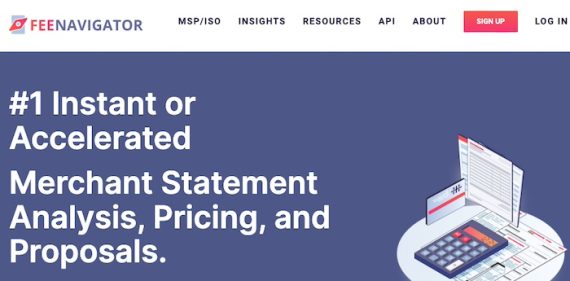
Fee Navigator home page

AI-powered tools such as Fee Navigator help merchants know the total cost of credit card processing.

Messy Statements

Caroline Hometh, managing partner at RPY Innovations, a payments consulting firm, helps clients navigate the inconsistencies in merchant fee structures and nomenclature.

“Our industry is notorious for using opaque and inconsistent language when describing fee structures, which I think is done intentionally,” she said. “This is partly because the whole system is so complicated that it is near impossible to describe every element of each transaction accurately. It is also partly due to the belief that the less understood, the better.”

While it can quickly calculate an overall effective rate, AI can only approximate all the interchange, fees, assessments, processing fees, product fees, and acquirers fees, Hometh said, because those fees are specific to individual providers.

AI Platforms

AI tools have emerged to help merchants and payment service providers simplify and expedite statement analysis. Examples are Staitment, established in 2018 by Swipesum, a consultancy, and Fee Navigator, launched the following year. Both are processor-agnostic platforms that the companies claim can analyze statements in seconds.

Michael Seaman, CEO of Swipesum, has seen merchants misinterpret processing fees and assessments. “Many merchants overlook the fact that their processing rates are often about 80% higher than they should be,” he said. “Additional fees, such as PCI compliance fees, gateway fees, and authorization charges, are also frequently missed. Interchange fees are assumed to be billed at cost but are often padded, leading to higher costs.”

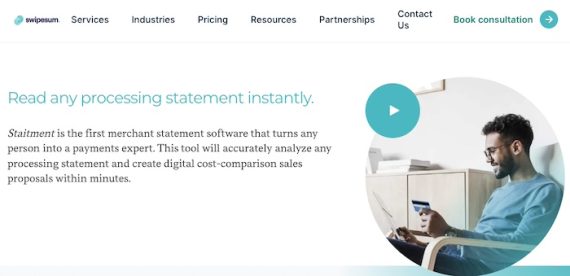
Web page of Staitment

Staitment, a processor-agnostic platform, can analyze payment processing statements in seconds.

Adrian Talapan, co-founder and CEO of Fee Navigator, suggested that payment providers could do more to help merchants understand transaction pricing and qualify for the best possible rates.

“One of the biggest mistakes that merchants make is not understanding that their effective rates include card brand interchange and fees, and delivery costs such as processor statement fees, PCI compliance, and others,” he said. “They may be quoted the lowest possible qualified rate, but their true effective rate is inclusive of all costs.”

Expanding Choice

A new fintech, Rift, has brought the marketplace model to payment processing with an open AI-powered platform where merchant service providers compete for customers.

Stephen Martin, co-founder and CEO of Rift, said ecommerce merchants can use Rift’s marketplace to gain transparency into all related cost factors.

“Our platform not only uncovers hidden fees and provides a detailed breakdown of processing costs but also allows merchants to receive competitive bids from top-rated processors,” he said. “This empowers informed decisions, optimizes expenses, and saves money.”

Martin went on to say that ecommerce merchants have unique pricing models and their merchant statements include CVV and AVS checks, which are used to verify customers and mitigate fraud. These additional data points tend to make the reports more complicated.

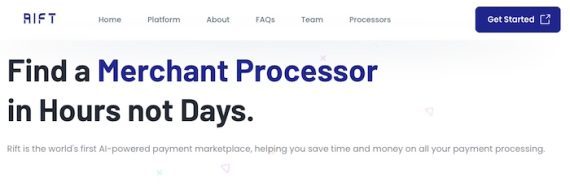
Home page of Rift

Rift is an AI-powered marketplace of payment processing providers.

Seaman of Swipesum agreed, stating, “Typically, card-not-present transactions incur higher costs, along with additional gateway fees and technology upcharges. While there are potential discounts and cost savings, ecommerce merchants often face high fees that go unchecked.”

Some ecommerce platforms boost their revenue through these fees, Seaman explained, citing Shopify as an example. Shopify’s Merchant Solutions revenue rose by roughly 20% to $1.4 billion in the first quarter of 2024, largely driven by the growth of Shopify Payments.

Talapan of Fee Navigator noted that small and midsize ecommerce merchants usually pay a flat rate and a per-transaction charge, while larger enterprises negotiate interchange-plus pricing. In all cases, merchants tend to focus on capabilities as much as pricing. For example, a merchant might be willing to pay more for global payment acceptance, recurring or custom pricing schemes, or ease of integration.

Agility, Accuracy

Swipesum’s Seaman pointed out that AI software can evaluate a merchant statement on the spot, while manual audits can take a week or more. Intelligent software can find cost-saving opportunities, he said, and replace labor-intensive processes with immediate, comprehensive analysis.

“A manual audit by an expert usually takes about a week,” he said. “A [software-based] solution provides instant results, identifies opportunities for cost savings, and offers a comprehensive, immediate analysis.”

Talapan mentioned that on-the-spot analyses have changed the game for service providers and merchants. “We saw some sales reps lose money on incorrectly priced deals,” he said. “Others waited days to get an analysis done by their bank or processor.”

Before instant statement analysis, Talapan noted, merchant sales reps had no easy way to reach customers at scale with tailored offers. Now reps can offload number crunching to AI assistants, he said, while they focus on selling.

Hometh of RPY Innovations noted that accuracy is just as important as speed when analyzing merchant statements. “It is not about how fast you can review a merchant statement and provide a lower rate, but rather about delivering an appropriately nuanced comparative view.”

Shop Around

Seaman proposed that auditing merchant statements can reveal key performance indicators, such as average ticket size, cards accepted, transaction types, ancillary fees, and interchange discounts. He advised ecommerce merchants to look for a payment processor with deep experience in the card-not-present market and to monitor fees and pricing constantly. Routinely compare original processing agreements with statements, he added, to expose any pricing changes.

Rift’s Martin encouraged business owners to shop around. “Many ecommerce merchants are unaware of the options available for credit card processing,” he said. “They often assume that they must use the processing services provided by their ecommerce software company. However, there are numerous payment processors to choose from, and exploring these options can significantly enhance their ability to secure competitive rates.”

Hometh characterized AI tools as new and evolving, questioning their ability to interpret subtle nuances in merchant statements. “AI is very good at patterned analysis but not yet ready to call out the patterns that matter,” she said. “Can AI recognize the initial or original agreement to reflect what the merchant should pay?”

She advised merchants to balance AI tools with human oversight, noting that AI’s ability to recognize variations in terminology or fees remains an open question.

Merchants Weigh In on Payment Processing

J.D. Power’s 2024 “U.S. Merchant Services Satisfaction Study” provides a detailed look at how small business owners feel about their payment processors. Published Feb. 1, 2024, the report surveyed 5,383 businesses in September through November 2023 with annual revenue of $50,000 to $20 million and processed through one of 17 leading North American providers.

Businesses accepting a broad array of payment methods were generally more satisfied with processing relationships than those accepting only credit and debit cards.

Shopify, Paysafe, and Bank of America scored highest in the study, which measured satisfaction in terms of advice and guidance on running a business, cost of payment processing, data security, account management, and quality of technology.

Practical Ecommerce discussed survey findings with Sean Gelles, senior director, payments intelligence, J.D. Power, and Mike Eckler, an advisor and independent consultant on financial technology who has worked in the digital payments industry for 20 years, having held senior positions with PayPal and Moneris, the payment processor, among other firms.

Gelles observed that the data revealed two types of small business owners: traditionalists (53%) who accept credit and debit cards, and innovators (47%) who accept digital wallets, cryptocurrencies, and other alternative payment methods in addition to credit and debit cards.

“Traditionalists in the study were an older demographic who preferred cash and checks, and innovators tended to be younger business owners who accept a variety of payment types and were generally more satisfied with their merchant services providers,” he said.

Convenience vs. Costs

Eckler affirmed that Shopify is a good fit for smaller-sized, lower-volume business owners, providing everything needed to run a small ecommerce site.

“Shopify is good because it is all-inclusive for most merchants, and their transaction fees are fairly standard for low-volume merchants,” he said. “Fees become more expensive as the merchant grows, especially for businesses with multiple employees who need to log in and operate various parts of Shopify’s system.”

Eckler further noted that large-volume merchants may find Shopify’s pricing more expensive than similar service providers. And negotiating better rates with Shopify is only possible for large enterprises, he added, advising merchants to weigh the convenience of an all-inclusive solution against Shopify’s higher monthly and per-transaction fees.

Barriers to Entry

Gelles noted that researchers identified three primary reasons merchants do not accept credit cards, debit cards, or both.

Risk of fraud or theft

Researchers found that 22% of merchants don’t accept credit cards and 21% don’t accept debit cards due to concerns about fraud and theft, Gelles stated, adding that security is clearly a priority and major concern. He did acknowledge, however, that PayPal and digital wallets (which tokenize versions of Visa, Mastercard, Discover, American Express, and ACH payment methods) provide an additional layer of security.

“It’s difficult to compromise a payment done through a digital wallet because the actual account information is provisioned and tokenized,” Gelles stated. “If someone steals the token, it’s useless to them.”

High cost of acceptance

When asked if they understood transactional rates, fees, and service charges, Gelles said 78% of survey respondents understood all of them, and 22% did not understand or only partially understood. He added the percentage of merchants who understood depended on the fee: authorization (59%), incidental (37%), assessment (35%), situational (20%), and application account setup (27%).

“The data that we’re seeing reflects a complex regulatory environment difficult for merchants to navigate,” he said.” “And there was also a hint of fatalism amongst merchants, with only 16% saying they’re surprised by inappropriate fees or charges and 84% saying they aren’t surprised by what they deem inappropriate.”

Difficulty of use

As Gelles noted, payments designed to be simple to manage are often difficult for merchants. For example, 16% of survey respondents cited difficulty of use and complicated payment process as reasons for not accepting credit cards, 14% said acceptance would take too much effort, and 12% believed processing and handling credit card payments would increase manual labor.

Gelles found it interesting that 17% of merchants didn’t accept digital wallets, and 18% didn’t accept buy-now pay-later because they thought they were difficult to use. From an implementation standpoint, he suggested that digital wallets are quite easy to set up and use and not that different from any other payment method.

Digital Wallets

Eckler observed that digital wallet providers promote the idea that adding payment options at checkout can increase conversions and satisfaction. This concept holds true, he said, especially when selling in countries where digital wallets outperform standard credit card payments. In addition, he advised merchants to take a holistic approach when evaluating, testing, and implementing digital wallets.

“Merchants should understand that accepting digital wallet payments has several costly implications, including complex technical integrations, different settlement timing, longer holds on funds, higher foreign exchange fees, and for each digital wallet offered, merchants will have different reconciliation, reporting, and risk-management systems to maintain.”

Gelles encouraged merchant service providers to build a case for digital wallet ease-of-use. “Like most other payment methods, merchants must ensure they set things up correctly with their provider. If MSPs can make that case for digital wallets, this could be a big win for all parties involved.”

BNPL Competition Drives Wins for Merchants

Fierce buy-now pay-later competition among payment card brands and independent providers is expanding conversion opportunities for merchants. By layering additional services onto existing rails, Visa, Mastercard, Discover, and American Express became global technology platforms. Similarly, independent BNPL providers first offered consumer financing and then expanded into apps, embedded commerce, and payment card issuance.

In recent interviews, industry analysts and providers shared perspectives on how buy-now pay-later evolved into broader capabilities, enhancing consumer and merchant experiences.

Embedded Commerce

Iconic credit card brands share a crowded stage with cryptocurrencies, digital wallets, and alternative payment schemes, each with its own value proposition and target demographic. Half of U.S. consumers use credit-card alternatives such as PayPal, Apple Pay, Venmo, and Cash App, according to Miles Tullo, managing director of banking and payments at J.D. Power and author of its 2024 “Digital Wallet Satisfaction Study.”

Tullo expects digital wallet platforms such as Apple Pay Later to continue scaling through diversified product and service offerings despite uneven merchant acceptance.

“The Apple Pay Later user tends to be younger, more mass affluent, and financially healthier than other buy-now pay later-users,” he said, noting that Apple Pay Later is embedded in the Apple wallet, providing users with a single-access view of multiple transactions.

Pat Suh, senior vice president of revenue at Affirm, a BNPL provider, cited embedded commerce as a key growth driver. “Growing with our merchants is a priority for Affirm,” she said. “Most of our volume comes from our merchant and partner integrations. We are constantly looking for and executing opportunities to deliver even more value for them, from rolling out new features and products to optimizing our integrations.”

Suh stated that Affirm has integrated with Shopify and payment platforms such as Stripe and Amazon Pay, enabling merchants to add Affirm as a checkout option with a few simple clicks. This has helped Affirm reach merchants and consumers at scale, she explained.

Payment Card Issuance

While most of its volume and users come from merchants and partners, Affirm is also growing direct-to-consumer revenue through Affirm Card, which Suh described as a hybrid, combining physical card ease of use with virtual card flexibility and transparency.

“Our DTC business grew by 51% year-over-year to $2 billion in fiscal Q2 2024,” she said. “Our total volume grew by 32% — four times the rate of overall ecommerce growth for the period as we continued to take share and extend our reach.”

Affirm Card is accepted online, in-store, or wherever Visa is, Suh stated. Users can request a payment plan in the app before checking out, link their bank account to pay with the Affirm Card, or use the app to request payment plans for eligible purchases after swiping or tapping.

“Affirm Card users transact much more frequently than the rest of our base,” she said. “The card has increased our penetration in categories we did not historically address, such as everyday purchases and restaurants.”

More Competition, More Choice

Bryce Deeney, CEO of Equipifi, a BNPL provider for banks and credit unions, suggested the Affirm Card poses significant challenges to incumbent financial institutions.

“Companies like Klarna and Affirm acquire customers at the point of need for that one buy-now pay-later purchase by offering an alternative to the bank or credit union card,” he said. “And once the consumer is approved and downloads the app, these companies try to win the entire relationship — a major threat to traditional issuers.”

Deeney noted that merchants may have similar concerns. If consumers can get BNPL with a click, what stops them from shopping in a digital banking app instead of a merchant’s website?

Nonetheless, despite competition, he said BNPL providers, financial institutions, and merchants ultimately want the same thing: to ensure customers have positive experiences with their brands and payment products.

“As long as consumers have easy access to credit and cash flow and merchants stay top of mind with their customers, that’s the world where everybody wins: consumers, issuing banks, and merchants,” he said.