New Books to Grow (or Sell) a Business, Fall 2024

Fall 2024 offers a bumper crop of new books aimed at helping ecommerce entrepreneurs and execs. Here are 10 books that provide practical advice for multiple aspects of selling online, from getting started to communicating with partners and customers to selling the company. Most are available in print, digital, and audio.

Books for Fall 2024

How to Sell Anything Online: The Ultimate Marketing Playbook to Grow Your Online Business by Anaita Sarkar

Cover of How to Sell Anything Online

How to Sell Anything Online

Serial entrepreneur Sarkar offers tips and insights that cover all aspects of online selling — content and influencer marketing, search and social media advertising, search engine optimization, more — and makes implementing them seem easy instead of overwhelming.

The Consumer Insights Revolution: Transforming Market Research for Competitive Advantage by Steve Phillips, Ryan Barry, Stephan Gans, and Kate Schardt

Cover of Consumer Insights Revolution

Consumer Insights Revolution

Case studies from the authors’ extensive experience with global companies such as PepsiCo illustrate how the right people and processes, combined with cutting-edge technology, can take market research to the next level.

Personalized: Customer Strategy in the Age of AI by Mark Abraham and David C. Edelman

Cover of Personalized: Customer Strategy in the Age of AI

Personalized: Customer Strategy in the Age of AI

Customers expect personalization, but doing it right is often challenging. The authors share stories from their experience advising leading brands, providing practical insights for success in the “new frontier of competition.”

The AI Edge: Sales Strategies for Unleashing the Power of AI to Save Time, Sell More, and Crush the Competition by Jeb Blount and Anthony Iannarino

Cover of The AI Edge

The AI Edge

Renowned sales gurus Blount and Iannarino team up to demystify artificial intelligence, explaining how to use it to streamline the sales process and enhance — not replace — the all-important human touch.

Make It Punchy: How to Write Simple Tech Messaging That Wins Hearts, Minds & Markets by Emma Stratton

Cover of Make It Punchy

Make It Punchy

Tips for creating clear, convincing, and memorable promotional messaging that avoids jargon to persuade more prospects and elevate your tech-related product or service above the competition.

The Negotiation Playbook: Strategies That Work and Results That Last by Glin Bayley

Cover of Negotiation Playbook

Negotiation Playbook

This guide to Bayley’s trademarked five-part “Value Method” framework promises to boost readers’ communication skills for better persuasion and collaborative problem-solving in all kinds of business negotiations — bargaining, pitching, presenting, or selling.

Triple Fit Strategy: How to Build Lasting Customer Relationships and Boost Growth by Christoph Senn and Mehak Gandhi

Cover of Triple Fit Strategy

Triple Fit Strategy

The authors advocate a new, collaborative approach to achieving robust business growth. They show how buyers and suppliers can work together on shared goals for greater mutual benefit instead of merely negotiating transactional deals.

Pivot or Die: How Leaders Thrive When Everything Changes by Gary Shapiro

Cover of Pivot or Die

Pivot or Die

The bestselling author, consumer technology entrepreneur, and head of the industry-leading CES trade show offers his insider view of innovative tech and business strategies, focusing on four key turning points: the startup pivot, the forced pivot, the failure pivot, and the success pivot.

Billion Dollar Bullseye: Scale as Big as You Want, as Fast as You Want, and Exit (If You Want) on Your Terms by Jonathan “JCron” Cronstedt

Cover of Billion Dollar Bullseye

Billion Dollar Bullseye

In this book, released last month and already a USA Today bestseller, Cronstedt shares the seven “billion-dollar bullseye principles” he learned as president of Kajabi, the online learning giant: purpose, profit, product, prestige, promotion, persuasion, and people.

Selling Your Business with Confidence: A Practical Playbook for Mid-Market Owners by David W. McCombie III

Cover of Selling Your Business with Confidence

Selling Your Business with Confidence

As an entrepreneur and mergers and acquisitions wiz, McCombie understands that selling the business is often an emotional journey as well as a complex financial decision. He offers advice on preparing for the process and optimizing the outcome.

Book Excerpt: ‘Buyer Personas: Insights into Customer Decisions’

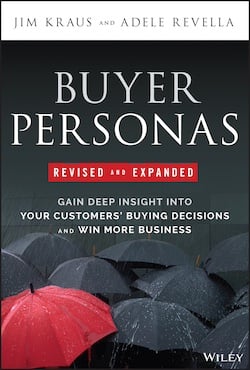
Buyer Personas: Gain Deep Insight into Customers’ Buying Decisions” presents tools, techniques, and real-world case studies to help management win more business. The authors, Jim Kraus and Adele Revella, are experienced marketers and the president and founder, respectively, of the Buyer Persona Institute.

The book is available in digital ($17) or hardcover print ($23.80) at Wiley, the publisher, or Amazon.

What follows is an edited excerpt.

Marketers as Experts

No one questions the assumption that the finance team is best qualified to keep the books or that engineering is most knowledgeable about building useful products. But marketing tends to be everyone’s playground.

Buyer Personas, Revised and Expanded

Once they are perceived as experts, marketers should receive similar authority to affect decisions that impact buyers. From market expansion and product extensions, the buyer’s perspective is paramount to success or failure. There is a vacuum of buying insight inside most corporations. Marketers need to own that competency.
At any meeting where buyers’ opinions are relevant, try to start your sentence with, “We’ve been listening to buyers, and here’s what they think,” or “We have been interviewing buyers, and they said they wanted. . . .”

Statements such as these may raise questions about how recently you have spoken to buyers, so be prepared to back up your comments. We recommend conducting at least one interview a month.

In reality, however, buying insights rarely change, and when they do, you will likely require additional interviews. That’s because the primary triggers for these changes are typically big news — a broad upturn or downturn in economic conditions, the merger or divestiture by a significant competitor, or a new regulation that requires consumers to invest in a solution like your organization’s. Major technological advances or security problems are other factors affecting buying insights. If any of these occur, consider another round of interviews to understand how your buyer’s mindset may have shifted.

Communicating with Teams

As buyers describe your products, you will likely learn about non-marketing-related matters impacting their purchase decisions.

Perhaps your product doesn’t integrate with a particular network or infrastructure. Maybe it doesn’t create the kind of reports that are in demand.

Be cautious with any of these discoveries. Remember that your primary goal is to gain guidance for changes that will improve your marketing activities.

For example, if buyers consistently have the same incorrect perception about the product, your first step is to own the problem and invest in marketing activities to debunk the misperception. If critical, make it a key message on your website or in an ebook. Reinforce the need for sales teams to emphasize that capability.

But once you’ve won internal support for the value of buyer personas, take product-related findings to your development team and sales-related problems to management.

Q&A: Joe Natoli, Author of ‘UX Team of One’

Joe Natoli is the co-author of “The User Experience Team of One, Second Edition,” a seminal book to help smaller ecommerce businesses improve customer experience by “doing more with less.”

I asked Natoli, the founder of Give Good UX and a 30-year user-experience consultant, what’s changed in the decade since the book’s acclaimed first edition.

Joe Natoli: A lot — not just in UX, but in business as a whole. Customer expectations across the web have changed. The way we buy products has changed radically. Part of being in any business is the constant necessity to upgrade to meet customer wants, needs, and expectations — everything to do with user experience. If you’re not getting the desired results, there’s a reason. You need to find it.

Joe Natoli

Joe Natoli

In this second edition, we addressed key questions: What do people want? Why do they want it? What should happen here? How do we figure out what’s going to move the needle?

Jean Gazis: How do merchants stay current amid nonstop change?

Natoli: It boils down to audience expectations. People want to buy things in certain ways. There’s no controlling that. When your competitors are there already, you have to get there yesterday. The methods in the book help do that much faster than traditional UX processes.

The time you have to work with determines what you do. If you can carve out a day to talk to customers, do it. But you have to build the functionality. You have to design things that are easily rolled back. Roll it out, test it, watch it. The minute it looks like a bad decision, go back to where you were.

Gazis: Another trade-off is researching ahead of time and testing after.

Natoli: It’s a question of the situation. There are instances where research is unnecessary — for example, a low-risk change that’s quick and does not risk alienating customers. Just put it out there and watch what happens.

If it’s a major change, such as another step to the checkout flow, where shoppers have to validate their information or log in before they can buy, that’s a different story. Research that upfront because it’s high-risk and could halt your sales. But the research doesn’t have to be lengthy.

I tell teams to take what they can get. If you’ve got a day, it’s a day. Something is always better than nothing. Some of the methods in the book are for internal use. If a merchant doesn’t have time for research, that’s fine. Just put yourself in the customer’s place and run through the process.

Gazis: How do you measure the value of UX for ecommerce?

Natoli: There is no excuse for not having basic analytics in place. It’s dead simple — from one line of code on every page. Merchants must understand what they’re measuring and a tool to do it.

It’s easy to assume that everybody knows what they should be asking. I don’t think that’s the case. In the book we try to walk through the process: “What questions do I ask? Where do I start? How do I find these things out?” It’s about thinking before deciding. Figure out what is worth doing and what to avoid. I’ve seen countless ecommerce sites ruin their checkout, believe it or not.

Gazis: What are the critical UX aspects for ecommerce?

The User Experience Team of One, Second Edition

Natoli: Merchants have to remove every element of friction. You have impatient shoppers looking to buy a product. Their wallets are out, and they’re thinking, “The minute I find this, I’m going to buy it.” Your content should reflect “here’s what’s in it for you.”

You can’t just make claims. You need to show people what they’re getting. So the UX of an ecommerce site has to prove why a product is worthwhile right now. Answer in a prominent manner, “Why this is worth my money? Why it’s worth my time? How is it useful and valuable to me?”

That’s what I mean by friction. A checkout process has friction if it runs counter to conventional expectations of what happens first, what happens next, how much information you’re asking for, and when you’re asking. Any time the checkout contains something unexpected, that’s friction. Shoppers’ brains are used to a pattern. It’s habit and reflex. The minute something breaks that pattern, it’s a moment of doubt.

Ease of use separates one ecommerce site from another. How easy can people do business? Not investing time and money in the user experience is the most short-sighted thing I can think of.

11 Books on Jeff Bezos and the Rise of Amazon

Summer 2024 marks 30 years since Jeff Bezos started Amazon from his garage. Anyone looking to learn more about Bezos, compete with Amazon, or both can find food for thought in these 11 books — some admiring, some critical — that explain the principles and tactics behind the company’s success.

Collision of Power: Trump, Bezos, and the Washington Post by Martin Baron

Cover of Collision of Power

Collision of Power

Though not about ecommerce, Baron’s book offers insight into Jeff Bezos’s leadership style. The author began his eight-year stint as the Post’s executive editor just before Bezos purchased it in 2013. He provides an insider’s view of how reporting decisions were made through tumultuous news cycles.

Winner Sells All: Amazon, Walmart, and the Battle for Our Wallets by Jason Del Ray

Cover of Winner Sells All

Winner Sells All

Evolving from a bookseller to a general retailer put Amazon on a collision course with Walmart. Del Rey chronicles the ongoing battle that has placed billions of dollars and millions of jobs on the line with outsized impacts on consumers, retailers, and the future of shopping.

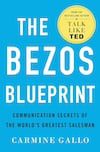
The Bezos Blueprint: Communication Secrets of the World’s Greatest Salesman by Carmine Gallo

Cover of The Bezos Blueprint

The Bezos Blueprint

There’s no disputing Amazon’s influence. This book aims to distill the methods its leaders use to write, collaborate, innovate, and pitch — and present them as tools that others can apply in their own organizations.

Amazon Unbound: Jeff Bezos and the Invention of a Global Empire by Brad Stone

Cover of Amazon Unbound

Amazon Unbound

Stone, a Bloomberg journalist, revisits the subject of his 2013 bestseller, “The Everything Store,” which chronicled Amazon’s rise from startup to billion-dollar company. This time he explores how the company and its founder transformed from an upstart to a global power.

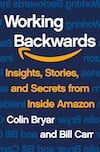
Working Backwards: Insights, Stories, and Secrets from Inside Amazon by Colin Bryar and Bill Carr

Cover of Working Backwards

Working Backwards

Both authors joined Amazon early on and spent more than a decade as senior executives working closely with Jeff Bezos. They share their experiences to create an exciting story and a practical business guide.

Invent and Wander: The Collected Writings of Jeff Bezos intro by Walter Isaacson

Cover of Invent & Wander

Invent & Wander

The book compiles speeches, interviews, and annual shareholder letters for insight into Bezos’s evolution, along with plenty of case studies.

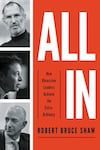
All In: How Obsessive Leaders Achieve the Extraordinary by Robert Bruce Shaw

Cover of All In

All In

Drawing on extensive research, Shaw compares business titans Jeff Bezos, Elon Musk, and Travis Kalanick “warts and all” to tech trailblazer Steve Jobs, illustrating their impressive achievements and the downsides of the “all in” leadership style.

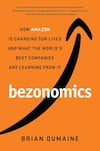
Bezonomics: How Amazon Is Changing Our Lives and What the World’s Best Companies Are Learning from It by Brian Dumaine

Cover of Bezonomics

Bezonomics

Dumaine combines a lively history of Amazon’s rise with speculation about where it will go next — advertising, health care, banking? He also delves into how other companies worldwide borrow from Amazon’s model and offers tips for “Amazon-proofing” your business.

199 Best Quotes from the Great Entrepreneur Jeff Bezos by Olivia Longray

Cover of 199 Best Quotes

199 Best Quotes

This is a compilation of Jeff Bezos’s thoughts on family support, Amazon, Blue Origin, space colonization, leadership, motivation, failure, and success — organized in four thematic sections, with links to sources.

The Bezos Letters: 14 Principles to Grow Your Business Like Amazon by Steve Anderson with Karen Anderson

Cover of The Bezos Letters

The Bezos Letters

Business analyst Steve Anderson calls Bezos’s annual letters to shareholders a “hidden roadmap” business leaders can follow to make their companies more efficient, powerful, and successful, distilling them into key growth principles such as “Obsess over Customers” and “Promote Ownership.”

The Everything War by Dana Mattioli

Cover of The Everything War

The Everything War

A scathing critique of the practices that led to the U.S. Federal Trade Commission filing its antitrust suit against Amazon last year, this book asks whether Amazon’s ecommerce and cloud computing businesses have grown too big to regulate. I included the book in my “10 New Business Books for Summer” roundup. The book is longlisted for the “Financial Times and Schroders Business Book of the Year 2024” award.

‘AI Snake Oil’ Sorts Promise from Hype

The hype surrounding artificial intelligence is everywhere, from get-rich-quick schemes to fears of sentient robots replacing humans. A quick Amazon search retrieves more than a thousand “books on ChatGPT.” At least three on the first results page include the word “millionaire” in the title. Others are entirely AI-written with bogus claims of legitimate authorship.

Yet AI offers much promise to merchants — content tools, productivity, search engine optimization, you name it.

Cover of AI Snake Oil

AI Snake Oil

A new book, “AI Snake Oil: What AI Can Do, What It Can’t, and How to Tell the Difference,” coming September 24 from Princeton University Press, aims to help non-experts separate reality from hype. The authors are two of “Time” magazine’s “100 Most Influential People in AI.” Arvind Narayanan is a professor of computer science and director of Princeton’s Center for Information Technology Policy. Sayash Kapoor formerly engineered content-moderation software at Facebook and is now a PhD candidate in computer science at Princeton.

They explain what artificial intelligence is, how it works, what it can and can’t do presently, and its likely direction.

AI “snake oil,” per Narayanan and Kapoor, is “AI that does not and cannot work as advertised.”

The book focuses on three AI technologies — predictive, generative, and content moderation — and outlines the capabilities and shortcomings of each, with plenty of real-world examples.

Predictive AI, already popular in business, education, and criminal justice, deserves the “snake oil” label. The book discusses the unverifiable claims made by companies selling these products, problems with their use (such as implicit bias and users who game the system), and the inherent difficulty of forecasting.

They see more potential for generative AI, suggesting when it’s useful and discussing controversies such as academic cheating, copyright infringement, and its likely impact on work.

The authors also detail why AI can’t completely replace human judgment in moderating content, giving examples of shocking failures and concluding that “whether or not a piece of content is objectionable often depends on the context. The inability to discern that context remains a major limitation of AI.” The book’s analysis of social media moderation is enlightening, especially for those of us who have had seemingly innocuous posts banned for no apparent reason.

A chapter titled “Is Advanced AI an Existential Threat?” evaluates “the dire view that AI threatens the future of humanity.” They concede that artificial general intelligence — AI that matches human capabilities — may someday be possible. But they contend “society already has the tools to address its risks calmly,” pointing out that “unlike chatbots, advanced AI can’t be trained on text from the internet and then let loose. That would be like expecting to read a book about biking and then get on a bike and ride.”

The final two chapters, “Why Do Myths about AI Persist?” and “Where Do We Go from Here?” explore the aspects of AI that make it susceptible to hype, suggesting regulations, practices for mitigating negative effects, and best- and worst-case scenarios.

“AI Snake Oil” covers the technology’s key facets in just 285 pages. The explanations are easily understood without being oversimplified.

The authors admirably differentiate fact from opinion, draw from personal experience, give sensible reasons for their views (including copious references), and don’t hesitate to call for action. They also publish a newsletter to monitor developments.

If you’re curious about AI or deciding how to implement it, “AI Snake Oil” offers clear writing and level-headed thinking. The book’s straightforward analysis will help reap AI’s benefits while remaining alert to its drawbacks.

New and Classic Books on Web Accessibility

A website accessible to consumers with disabilities is both good for business and legally compliant. Here are eight new and time-honored books to help ensure your ecommerce site meets modern accessibility standards.

Books for Web Accessibility

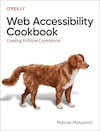
 Web Accessibility Cookbook: Creating Inclusive Experiences by Manuel Matuzovic

Cover of Web Accessibility Cookbook

Web Accessibility Cookbook

Released just last week and already an Amazon bestseller in the “Web Services” category, this hefty tome provides step-by-step recipes to help front-end developers build key website components in an accessible manner. The author, an experienced developer and consultant, explains the “why” and the “how” of creating an inclusive front-end for your site.

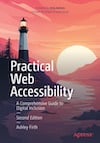
Practical Web Accessibility: A Comprehensive Guide to Digital Inclusion (Second Edition) by Ashley Firth

Cover of Practical Web Accessibility

Practical Web Accessibility

This updated edition of an Amazon bestseller explains how to find and fix website accessibility issues and improve a site for all users — not just those with disabilities. It offers tools and checklists to help ensure your site is compliant and ready for the modern, inclusive web.

 A11Y Unraveled: Become a Web Accessibility Ninja by Dimitris Georgakas

Cover of A11Y Unraveled

A11Y Unraveled

Georgakas clearly and concisely reviews the fundamentals of web accessibility. He breaks down web design components, explains “what helps with what,” and provides plenty of examples. The book focuses on WCAG 2.1 and 2.2 guidelines and provides an overview of the laws that govern website accessibility in various parts of the world.

 Universal Principles of UX: 100 Timeless Strategies to Create Positive Interactions between People and Technology by Irene Peyrera

Cover of Universal Principles of UX

Universal Principles of UX

This encyclopedic, heavily illustrated book is near the top of Amazon’s lists for “User Experience and Website Usability” and “Business Research and Development.” It presents the core principles for thinking about UX through real-world case studies. Each principle is presented in a convenient two-page format: definitions, examples, and guidelines are on the left page, and example images and explanatory graphics are on the right.

A handy pocket version with the same two-page format is coming in September.

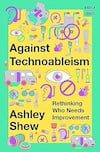
Against Technoableism: Rethinking Who Needs Improvement by Ashley Shew

Cover of Against Technoableism

Against Technoableism

Though not specifically about web design, this new 176-page manifesto in the Norton Stories series challenges conventional thinking about technology and disability. It is already widely acclaimed. Shew, an associate professor at Virginia Tech, researches how disability is represented in technological narrative and imagination.

Building For Everyone: Expand Your Market With Design Practices From Google’s Product Inclusion Team by Annie Jean-Baptiste

Cover of Building For Everyone

Building For Everyone

A practical guide to the strategies developed and used by Google’s innovative Product Inclusion and Equity team, “Building for Everyone” covers the best processes and practices for limiting risk and boosting profitability through inclusive design, with case studies from across industries. The author is Google’s product inclusion head and the founder of the EquityArmy community of innovators who are passionate about making the world more inclusive through design.

A Web for Everyone: Designing Accessible User Experiences by Sarah Horton and Whitney Quesenbery, with Foreword by Aaron Gustafson

Cover of A Web for Everyone

A Web for Everyone

Even though web technology changes rapidly, design and accessibility principles are timeless. This book is widely recommended, including by Steve Krug, author of the classic web usability bible, “Don’t Make Me Think.”

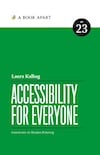
Accessibility for Everyone by Laura Kalbag

Cover of Accessibility for Everyone

Accessibility for Everyone

Designing with accessibility in mind makes your site more inclusive for everyone, regardless of disability experience. Kalbag explains how to plan, evaluate, and test accessible design and write clear copy, create well-structured information architecture, and design thoughtfully.

Top Books for Cross-border Success

Doing business in just one country and language almost certainly leaves money on the table. Yet operating internationally adds challenges and complexities. Here are 11 books — six just published — that help succeed across borders.

Top Books for Cross-border Success

American Idioms for Marketing: Engage and Persuade with Colorful Expressions Used in the USA by Liz Chroman and Richard Koret

Cover of American Idioms for Marketing

American Idioms for Marketing

Filled with colorful illustrations, this book aims to help non-native English speakers remember common marketing-related idioms such as “bird’s-eye view,” “find your niche,” and “flying under the radar” in a fun way. The authors are Liz Chroman, an English language teacher, and international marketing and communications expert Richard Koret.

How the World Ran Out of Everything: Inside the Global Supply Chain by Peter S. Goodman

Cover of How to World Ran Out of Everything

How to World Ran Out of Everything

New York Times economic journalist Peter S. Goodman explores how the pandemic exposed the complexity and vulnerability of the global supply chain and how to improve it.

Mastering Market Entry: USA: The European’s Guide to Making It Big in America by Manny Schoenhuber

Cover of Mastering Market Entry: USA

Mastering Market Entry: USA

This book offers a playbook for European business owners to break into the U.S. market. Schoenhuber is an attorney who represents European companies and investors in the U.S. and facilitates collaboration.

Spiderweb Capitalism: How Global Elites Exploit Frontier Markets by Kimberly Kay Hoang

Cover of Spiderweb Capitalism

Spiderweb Capitalism

University of Chicago professor Kimberly Kay Hoang reports on her groundbreaking behind-the-scenes investigation into the shadowy world of offshore finance and shell corporations.

Change Your Perspective: Communication Pitfalls in International Business by Irek Zyzanski et al.

Cover of Change Your Perspective

Change Your Perspective

Explains how to avoid stereotypes, improve cultural intelligence, and work smoothly with international teams.

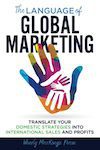
The Language of Global Marketing by Wendy MacKenzie Pease

Cover of Language of Global Marketing

Language of Global Marketing

Pease aims to help businesses expanding into new markets optimize their content and communications with global inbound marketing and quality translation.

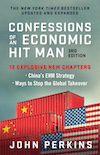
Confessions of an Economic Hit Man, Third Edition by John Perkins

Cover of Confessions of an Economic Hit Man

Confessions of an Economic Hit Man

This expanded version of John Perkins’s New York Times bestseller exposes how the U.S. and China use development loans to trap less-wealthy countries in a corrupt system. The first edition was translated into more than 30 languages.

A Business Guide to International Trade & Investment  by Devyini E. Bailey

Cover of Business Guide to International Trade

Business Guide to International Trade

Published last year, Bailey’s book is a comprehensive guide to international trade operations and management, focusing mainly on import and export logistics.

Transforming the Global Supply Chain: Cyber Warfare, Technology, and Politics by Dennis Unkovic

Cover of Transforming the Global Supply Chain

Transforming the Global Supply Chain

Unkovic argues that the underlying causes of supply chain problems are not the pandemic but the increasing presence of cyber threats, the powerful impact of 3-D printing and robotics, and the new ways countries seek to protect their domestic economies from foreign competition.

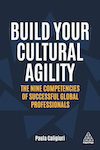
Build Your Cultural Agility: The Nine Competencies of Successful Global Professionals by Paula Caligiuri

Cover of Build Your Cultural Agility

Build Your Cultural Agility

Caligiuri combines theory and practical advice for building cultural flexibility, an essential skill for global managers in any industry who want to be successful in international careers or managing global teams. One reviewer described this book as “a treasure chest of ideas.”

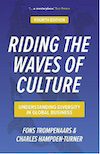
Riding the Waves of Culture: Understanding Diversity in Global Business, Fourth Edition by Charles Hampden-Turner and Fons Trompenaars

Cover of Riding the Waves of Culture

Riding the Waves of Culture

This 2020 update of an international classic provides an in-depth look at cultural differences, change management, and more. The authors are prominent thinkers on globalization.

10 New Ecommerce Books for Summer 2024

School’s out, summer’s here, and with it, new books for ecommerce pros. Here’s our quarterly rundown — a selection of recent and forthcoming titles that present fresh takes on economics and finance, AI, startups, marketing strategy, Amazon, and more.

Ecommerce Books: Summer 2024

Your AI Survival Guide: Scraped Knees, Bruised Elbows, and Lessons Learned from Real-World AI Deployments by Sol Rashidi

AI Survival Guide

Rashidi, who helped launch AI implementations, including IBM’s Watson, demystifies AI deployment with hype-free, real-world examples and practical advice.

The Everything War: Amazon’s Ruthless Quest to Own the World and Remake Corporate Power by Dana Mattioli

The Everything War

This detailed exposé of Amazon’s no-holds-barred competitive tactics by an award-winning Wall Street Journal reporter is hailed by reviewers as “blistering,” “riveting,” “explosive,” and “masterful.”

Cash Is King: Maintain Liquidity, Build Capital, and Prepare Your Business for Every Opportunity by Peter W. Kingma

Cash Is King

Kingma, a corporate consultant, argues that cash position is just as important as sales, costs, and service, providing case studies and tips on ensuring your company always has cash when needed.

Reignition: Transforming Stuck Startups into Breakout Winners by Dave Hersh

Reignition

Entrepreneur and investor Hersh aims to help entrepreneurs get unstuck — or better yet, avoid getting stuck in the first place.

Think Like a Brand. Act Like a Startup. Drive Growth and Innovation by Balancing Stability and Agility by Lauren Perkins

Think Like a Brand

Drawing on her experience working with companies of all sizes, Lauren Perkins shows entrepreneurs how to combine the best aspects of established brands and innovative startups for growth and stability.

Plastic Capitalism: Banks, Credit Cards, and the End of Financial Control by Sean H. Vanatta

Plastic Capitalism

Ecommerce as we know it wouldn’t be possible without credit cards. Vanatta’s accessible financial history explains how plastic came to dominate the consumer economy.

Simple Marketing for Smart People by Billy Broas, Tiago Forte, and Ali Abdaal

Simple Marketing for Smart People

With so much advice on marketing strategies and tactics, it can be easy to get lost in the weeds. This book aims to cut through the clutter to focus on the basics for maximum effectiveness.

The 10-Second Customer Journey: The CXO’s Playbook for Growing and Retaining Customers in a Digital World by Todd Unger

10-Second Customer Journey

A 30-year digital marketing veteran offers a step-by-step guide to becoming your own “Chief Friction-Reduction Officer.”

Shocks, Crises, and False Alarms: How to Assess True Macroeconomic Risk by Philipp Carlsson-Szlezak and Paul Swartz

Shocks, Crises, False Alarms

How might global events — pandemics, wars, inflation, recession — affect your business? Two seasoned economists show how to get past frightening headlines to assess the potential risks.

Never Enough: From Barista to Billionaire by Andrew Wilkinson

Never Enough

What’s it like to make a lot of money? Wilkinson shares his journey from starting a business in high school to becoming a billionaire — and beyond — with some surprising lessons learned.

The New Rules of Marketing & PR: How to Use Content Marketing,
AI, Social Media, Podcasting, Video, and Newsjacking to Reach Buyers Directly, 9th Edition
by David Meerman Scott

New Rules of Marketing & PR

And finally, a new version of an international bestseller. The updated ninth edition of this perennially popular classic is set to publish in August.

Get a Handle on AI with These 10 Books

Forecasts for artificial intelligence’s impact range from a better society to mass layoffs or worse. Here are 10 respected books to help grasp AI’s promise and pitfalls for business and beyond. Eight titles are new in 2024, while two are industry classics.

Books to Grasp AI

Brave New Words: How AI Will Revolutionize Education (and Why That’s a Good Thing) by Salman Khan

Cover of Brave New Words

Brave New Words

Khan Academy’s founder argues that AI technologies can transform education by creating customizable learning tools. He explores its implications for teachers, parents, students, and society.

Co-Intelligence: Living and Working with AI by Ethan Mollick

Cover of Co-Intelligence

Co-Intelligence

One of Amazon’s top-rated AI books of 2024 and a bestseller since its publication in April, Wharton professor and AI expert Mollick analyzes the impact of AI in education and business through real-life examples and advocates learning to work with it effectively.

Welcome to AI: A Human Guide to Artificial Intelligence by David L. Shrier

Cover of Welcome to AI

Welcome to AI

Shrier, an authority on technology-driven innovation, discusses how accelerating advances in AI will affect how we learn, live, and work.

51 Essential AI Terms Explained for Leaders: A Non-Technical Guide by Marco Ryan

Cover of 51 Essential AI Terms

51 Essential AI Terms

This alphabetical guide, written by the former chief digital officer at British Petroleum, provides definitions, plain-language explanations, and real-life examples to help those without technical experience understand key AI terms related.

The Algorithm: How AI Decides Who Gets Hired, Monitored, Promoted, and Fired and Why We Need to Fight Back Now by Hilke Schellmann

Cover of The Algorithm

The Algorithm

Schellmann, a New York University professor and contributor to The Wall Street Journal, The Guardian, and National Public Radio, explores how AI tools are already used in human resource management and how faulty algorithms compound human biases. He advocates for more thoughtful practices in hiring, evaluating, and managing employees. The New York Times Book Review named it one of the five best books on AI, stating it “treats AI as a tool used by people, avoiding grand theories and wild speculations.”

The Coming Wave: Technology, Power, and the Twenty-first Century’s Greatest Dilemma by Mustafa Suleyman and Michael Bhaskar

Cover of The Coming Wave

The Coming Wave

In this multi-award-winning book, Suleyman, who has led AI initiatives for Google and Microsoft, warns of the possible dangers of rapid technological advances such as quantum computing, synthetic biology, and AI while remaining optimistic about meeting these challenges.

Generative AI for Business Leaders: 2024 Edition by I. Almeida

Cover of Generative AI for Business Leaders

Generative AI for Leaders

This collection of three practical guides provides an overview of the potential risks and benefits as well as ways to reduce negative consequences and enhance business outcomes.

HBR’s 10 Must Reads on AI by Harvard Business Review and multiple authors

Cover of HBR's 10 Most Reads on AI

HBR’s 10 Most Reads on AI

This addition to Harvard Business Review’s “10 Must-Reads” series collects expert articles on using AI in business. It covers topics ranging from pricing algorithms to AI ethics.

The Business Case for AI: A Leader’s Guide to AI Strategies, Best Practices & Real-World Applications by Kavita Ganesan

Cover of The Business Case for AI

The Business Case for AI

Ganesan aims to demystify AI for business leaders looking to identify its opportunities. Though published in 2022, her book is still highly recommended by reviewers and experts for its real-world examples and jargon-free language.

The Alignment Problem: Machine Learning and Human Values by Brian Christian

Cover of The Alignment Problem

The Alignment Problem

Christian, an award-winning author and science journalist, examines how to align AI technology’s behavior with human values, which has become even more urgent with advances in AI technology in the four years since this book was published.

Favorite Books of Ecommerce Pros Q2 2024

With the plethora of ecommerce and technology books — Amazon offers hundreds of new and forthcoming titles for categories such as “starting a business” — it’s tough to isolate the gems.

Curious, I reached out to ecommerce and digital marketing pros, asking, “What books are the most informative, useful, and inspiring?”

More than 30 responded, including founders, owners, sales and marketing executives, and search-engine specialists from industries ranging from precision manufacturing to festival fashions, from Texas to Australia.

In all, they recommended more than 60 books across diverse ecommerce interests, including analytics, global marketing, web design, UX, leadership, personal development, and iconic brands such as Amazon, Zappos, and Nike.

Eight titles were clear favorites, with multiple enthusiastic endorsements.

The Lean Startup: How Today’s Entrepreneurs Use Continuous Innovation to Create Radically Successful Businesses by Eric Reis

Cover of The Lean Startup

Lean Startup

Published in 2011, “The Lean Startup” remains a go-to resource for today’s entrepreneurs. A quote highlighted by 20,000 Kindle readers sums up its key message: “Lean thinking defines value as providing benefit to the customer; anything else is waste.” Brian Lim, who founded and operates three online retailers of rave and festival clothing, says Reis’s “validated learning” method of using data for decision-making “reduces the risks associated with launching new products and helps ensure that your business strategies are based on real customer feedback rather than assumptions.”

Crushing It! How Great Entrepreneurs Build Their Business and Influence — and How You Can, Too by Gary Vaynerchuk

Cover of Crushing It!

Crushing It!

One recommender, Victor Trasoff-Jilg, vice president of sales at Bombing Science, an online retailer of graffiti and art supplies, calls this “a motivational and practical guide for anyone looking to build their personal brand and leverage it for business success … both inspiring and actionable.” Vaynerchuk’s “Jab, Jab, Jab, Right Hook” also received mentions.

Hooked: How to Build Habit-Forming Products by Nir Eyal

Cover of Hooked

Hooked

Kayden Roberts, chief marketing officer of Camgo, a chat and dating app claiming more than 7 million users worldwide, says Hooked is “especially relevant for e-commerce businesses because it explores how to create a user experience that turns casual visitors into repeat customers… This is essential for e-commerce managers looking to enhance customer loyalty and drive long-term growth.”

SEO 2024: Learn search engine optimization with smart internet marketing strategies by Adam Clarke

Cover of SEO 2024

SEO 2024

Clarke updates his long-running, popular search engine optimization guide yearly. Respondents recommended both the 2022 and 2023 versions. The 2024 edition is now available.

Digital Marketing for Dummies by Ryan Diess and Russ Henneberry

Cover of Digital Marketing for Dummies

Digital Marketing for Dummies

Laviet Joaquin, head of marketing for TP-Link, a worldwide provider of consumer networking equipment, calls this “a must-read for every ecommerce business wanting to boost online visibility“— in other words, all online merchants!

Contagious: Why Things Catch On by Jonah Berger

Cover of Contagious

Contagious

Bonnie Ruan, chief product officer at Beska Mold, a manufacturer of precision machining parts, gives Berger’s book top marks because it “delves into why certain products and ideas become popular, and how you can use these insights to craft marketing strategies that encourage word-of-mouth sharing online.” Berger’s “Invisible Influence: The Hidden Forces that Shape Behavior” also received recommendations.

Influence: The Psychology of Persuasion by Robert Cialdini

Cover of Influence

Influence

This book has been a game-changer for our sales and marketing teams, helping us craft more effective messaging and build stronger relationships with our clients,” says Daniel Meursing, CEO of Premier Staff, an event staffing provider.

E-Commerce Evolved: The Essential Playbook to Build, Grow & Scale a Successful E-Commerce Business by Tanner Larsson

Cover of Ecommerce Evolved

Ecommerce Evolved

Trasoff-Jilg of Bombing Science calls this book “particularly valuable for its in-depth look at creating a sustainable ecommerce operation, not just quick wins.”