The Download: Google’s Project Astra, and China’s export bans

This is today’s edition of The Download, our weekday newsletter that provides a daily dose of what’s going on in the world of technology.

Google’s new Project Astra could be generative AI’s killer app

Google DeepMind has announced an impressive grab bag of new products and prototypes that may just let it seize back its lead in the race to turn generative artificial intelligence into a mass-market concern.

Top billing goes to Gemini 2.0—the latest iteration of Google DeepMind’s family of multimodal large language models, now redesigned around the ability to control agents—and a new version of Project Astra, the experimental everything app that the company teased at Google I/O in May.

The margins between top-end models like Gemini 2.0 and those from rival labs like OpenAI and Anthropic are now slim. These days, advances in large language models are less about how good they are and more about what you can do with them. And that’s where agents come in. 

MIT Technology Review got to try out Astra in a closed-door live demo last week. It gave us a hint at what’s to come. Find out more in the full story.

—Will Douglas Heaven

China banned exports of a few rare minerals to the US. Things could get messier.

—Casey Crownhart

I’ve thought more about gallium and germanium over the last week than I ever have before (and probably more than anyone ever should).

China banned the export of those materials to the US last week and placed restrictions on others. The move is just the latest drama in escalating trade tensions between the two countries.

While the new export bans could have significant economic consequences, this might be only the beginning. China is a powerhouse, and not just in those niche materials—it’s also a juggernaut in clean energy, and particularly in battery supply chains. So what comes next could have significant consequences for EVs and climate action more broadly. Read the full story.

This story is from The Spark, our weekly climate and energy newsletter. Sign up to receive it in your inbox every Wednesday.

The must-reads

I’ve combed the internet to find you today’s most fun/important/scary/fascinating stories about technology.

1 It’s looking pretty likely 2024 will be the hottest year on record
But average temperatures are just one way of assessing our warming world. (New Scientist $)
+ The first few months of 2025 are likely to be hotter than average, too. (Reuters)
+ The US is about to make a sharp turn on climate policy. (MIT Technology Review)

2 Meta has donated $1 million to Trump’s inaugural fund
In an effort to strengthen their previously fractious relationship. (WSJ $)
+ Mark Zuckerberg isn’t the only tech figure seeking the President-elect’s ear. (Insider $)

3 How China secretly repatriates Uyghurs
Even the United Nations is seemingly powerless to stop it. (WP $)
+ Uyghurs outside China are traumatized. Now they’re starting to talk about it. (MIT Technology Review)

4 How Big Tech decides when to scrub a user’s digital footprint
Murder suspect Luigi Mangione’s Instagram has been taken down—but his Goodreads hasn’t. (NYT $)
+ Why it’s dangerous to treat public online accounts as the full story. (NY Mag $)

5 Russia-backed hackers targeted Ukraine’s military using criminal tools
Which makes it even harder to work out who did it. (TechCrunch)

6 What Cruise’s exit means for the rest of the robotaxi industry
Automakers are becoming frustrated waiting for the technology to mature. (The Verge)
+ Cruise will focus on developing fully autonomous personal vehicles instead. (NYT $)

7 Researching risky pathogens is extremely high stakes
The potential for abuse has some researchers worried we shouldn’t undertake it at all. (Undark Magazine)
+ Meet the scientist at the center of the covid lab leak controversy. (MIT Technology Review)

8 Altermagnetism could be computing’s next big thing
It would lead to faster, more reliable electronic devices. (FT $)

9 Why some people need so little sleep
Gene mutations appear to hold at least some of the answers. (Knowable Magazine)
+ Babies spend most of their time asleep. New technologies are beginning to reveal why. (MIT Technology Review)

10 Inside the creeping normalization of AI movies
The world’s largest TV manufacturer wants to make films for people too lazy to change the channel. (404 Media)
+ Unsurprisingly, it’ll push targeted ads, too. (Ars Technica)
+ How AI-generated video is changing film. (MIT Technology Review)

Quote of the day

“They’ve made him a martyr for all the troubles people have had with their own insurance companies.”

—Felipe Rodriguez, an adjunct professor at the John Jay College of Criminal Justice in New York, explains why murder suspect Luigi Mangione is being lionized online to Reuters.

The big story

Why AI could eat quantum computing’s lunch

November 2024

Tech companies have been funneling billions of dollars into quantum computers for years. The hope is that they’ll be a game changer for fields as diverse as finance, drug discovery, and logistics.

But while the field struggles with the realities of tricky quantum hardware, another challenger is making headway in some of these most promising use cases. AI is now being applied to fundamental physics, chemistry, and materials science in a way that suggests quantum computing’s purported home turf might not be so safe after all. Read the full story.

—Edd Gent

We can still have nice things

A place for comfort, fun and distraction to brighten up your day. (Got any ideas? Drop me a line or tweet ’em at me.)

+ Working life getting you down? These pictures of bygone office malaise will make you feel a whole lot better (or worse—thanks Will!)
+ Gen Z are getting really into documenting their lives via digital cameras, apparently. 📸
+ If you believe that Alan MacMasters invented the first electric bread toaster, I’m sorry to inform you that you’ve fallen for an elaborate online hoax.
+ The case for a better Turing test for AI-generated art.

The Download: Bluesky’s impersonators, and shaking up the economy with ChatGPT

This is today’s edition of The Download, our weekday newsletter that provides a daily dose of what’s going on in the world of technology.

Bluesky has an impersonator problem 

—Melissa Heikkilä

Like many others, I recently joined Bluesky. On Thanksgiving, I was delighted to see a private message from a fellow AI reporter, Will Knight from Wired. Or at least that’s who I thought I was talking to. I became suspicious when the person claiming to be Knight said they were from Miami, when Knight is, in fact, from the UK. The account handle was almost identical to the real Will Knight’s handle, and used his profile photo.

Then more messages started to appear. Paris Marx, a prominent tech critic, slid into my DMs to ask me how I was doing. Both accounts were eventually deleted, but not before trying to get me to set up a crypto wallet and a “cloud mining pool” account. Knight and Marx confirmed to us these accounts did not belong to them, and that they have been fighting impersonator accounts of themselves for weeks.

They’re not alone. The platform has had to suddenly cater to an influx of millions of new users in recent months as people leave X in protest of Elon Musk’s takeover of the platform. But this sudden wave of new users —and the inevitable scammers — means Bluesky is still playing catch up. Read the full story.

MIT Technology Review Narrated: ChatGPT is about to revolutionize the economy. We need to decide what that looks like.

You can practically hear the shrieks from corner offices around the world: “What is our ChatGPT play? How do we make money off this?”

Whether it’s based on hallucinatory beliefs or not, an AI gold rush has started to mine the anticipated business opportunities from generative AI models like ChatGPT.

But while companies and executives see a clear chance to cash in, the likely impact of the technology on workers and the economy on the whole is far less obvious.

This is our latest story to be turned into a MIT Technology Review Narrated podcast, which 
we’re publishing each week on Spotify and Apple Podcasts. Just navigate to MIT Technology Review Narrated on either platform, and follow us to get all our new content as it’s released.

The must-reads

I’ve combed the internet to find you today’s most fun/important/scary/fascinating stories about technology.

1 Cruise is exiting the robotaxi business
Once one of the biggest players, it says it costs too much to develop the tech. (Bloomberg $)
+ The news came as a shock to Cruise employees. (TechCrunch)

2 Google asked the US government to kill Microsoft’s cloud deal with OpenAI
It wants the opportunity to host the firm’s models itself. (The Information $)

3 The season of coughs and sneezes is upon us
Here’s what will actually keep a cold at bay—and what won’t. (Vox)
+ RFK Jr’s alternative medicine movement is unlikely to help. (The Atlantic $)
+ Flu season is coming—and so is the risk of an all-new bird flu. (MIT Technology Review)

4 Trump’s new Commerce Secretary champions a stablecoin favored by criminals
Tether regularly crops up in international criminal cases. (FT $)
+ The crypto industry is obsessed with ‘debanking.’ (NBC News)

5 A Russian influence operation probably used AI voice generation models
ElevenLabs’ technology was highly likely to have been abused by the campaign. (TechCrunch)
+ How this grassroots effort could make AI voices more diverse. (MIT Technology Review)

6 These satellites are designed to create solar eclipses on demand
It’ll allow scientists to study the sun’s outer atmosphere. (WP $)

7 WhatsApp is for so much more than just messaging
It’s been repurposed by communities across the world. (Rest of World)
+ How Indian health-care workers use WhatsApp to save pregnant women. (MIT Technology Review)

8 Paris is turning its parking spaces into tiny parks
Cars are out, trees are in. (Fast Company $)

9 How AI is shedding light on an ancient board game
Oddly enough, they didn’t come with instructions 4,500 years ago. (New Scientist $)

10 What a quarter-century of robotic dogs has taught us
The Aibo is one of the few robots that’s made it into homes worldwide. (IEEE Spectrum)
+ Generative AI taught a robot dog to scramble around a new environment. (MIT Technology Review)

Quote of the day

“In case it was unclear before, it is clear now: GM are a bunch of dummies.”

—Kyle Vogt, founder of robotaxi firm Cruise, criticizes parent company General Motors’ decision to exit the industry in a post on X.

The big story

Inside NASA’s bid to make spacecraft as small as possible

October 2023

Since the 1970s, we’ve sent a lot of big things to Mars. But when NASA successfully sent twin Mars Cube One spacecraft, the size of cereal boxes, in November 2018, it was the first time we’d ever sent something so small.

Just making it this far heralded a new age in space exploration. NASA and the community of planetary science researchers caught a glimpse of a future long sought: a pathway to much more affordable space exploration using smaller, cheaper spacecraft. Read the full story.

—David W. Brown

We can still have nice things

A place for comfort, fun and distraction to brighten up your day. (Got any ideas? Drop me a line or tweet ’em at me.)

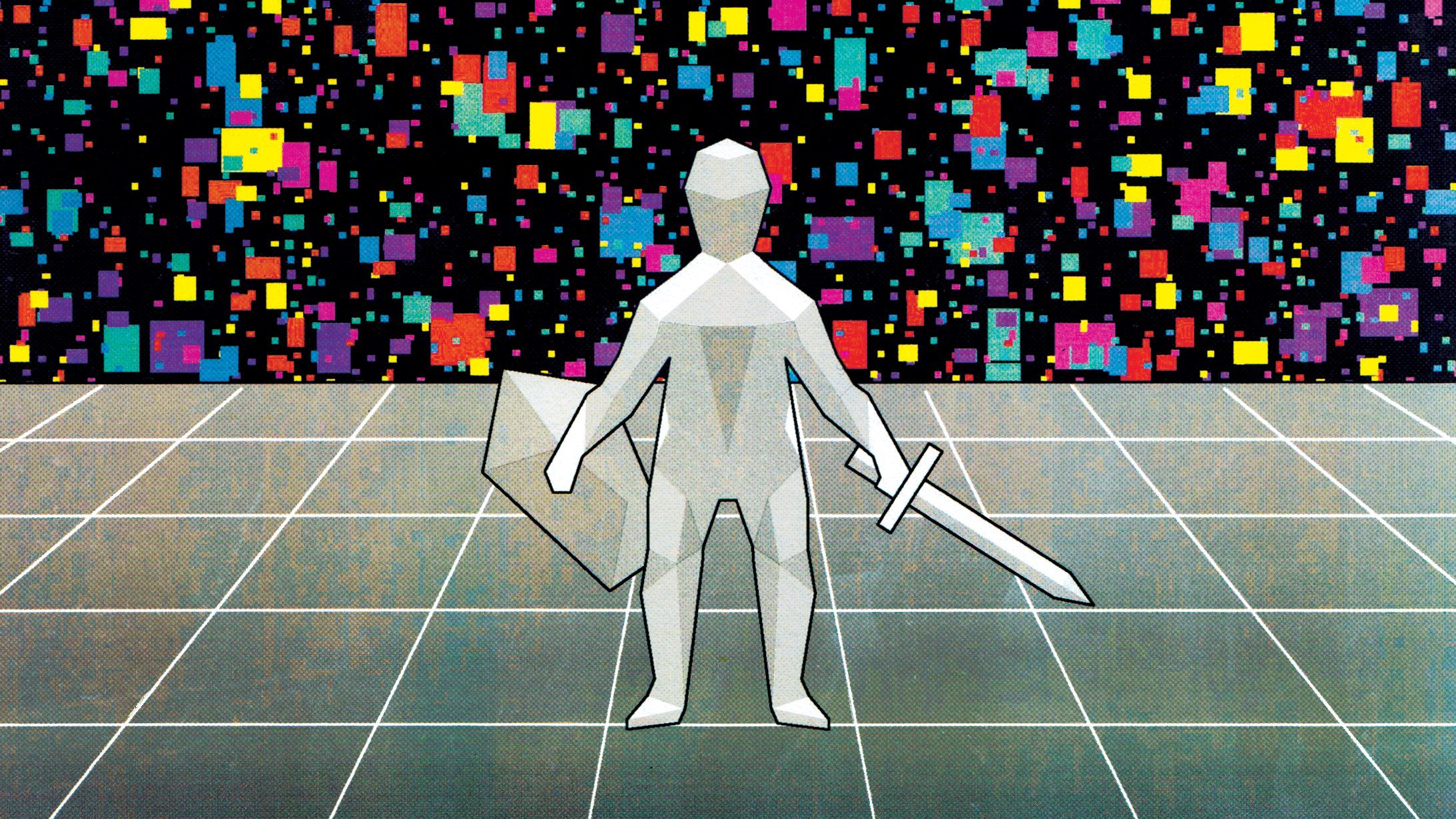
+ This fascinating tool creates fake video game screenshots in the blink of an eye—give it a whirl.
+ Where and how did the people of the submerged territory of Doggerland live before rising seas pushed them away thousands of years ago? We’re getting closer to learning the answers.
+ Home Alone is a surprisingly brutal movie, as these doctors can attest.
+ Cats love boxes. But why?

The Download: satellites’ climate impact, and OpenAI’s frantic release schedule

This is today’s edition of The Download, our weekday newsletter that provides a daily dose of what’s going on in the world of technology.

The world’s next big environmental problem could come from space

In September, a unique chase took place in the skies above Easter Island. From a rented jet, a team of researchers captured a satellite’s last moments as it fell out of space and blazed into ash across the sky, using cameras and scientific equipment. Their hope was to gather priceless insights into the physical and chemical processes that occur when satellites burn up as they fall to Earth at the end of their missions.

This kind of study is growing more urgent. The number of satellites in the sky is rapidly rising—with a tenfold increase forecast by the end of the decade. Letting these satellites burn up in the atmosphere at the end of their lives helps keep the quantity of space junk to a minimum. But doing so deposits satellite ash in the Earth’s atmosphere. This metallic ash could potentially alter the climate, and we don’t yet know how serious the problem is likely to be. Read the full story

—Tereza Pultarova

OpenAI’s “12 days of shipmas” tell us a lot about the AI arms race

Last week, OpenAI announced what it calls the 12 days of OpenAI, or 12 days of shipmas. On December 4, CEO Sam Altman took to X to announce that the company would be “doing 12 days of openai. each weekday, we will have a livestream with a launch or demo, some big ones and some stocking stuffers.”

The company will livestream about new products every morning for 12 business days in a row during December. It’s an impressive-sounding (and media-savvy) schedule, to be sure. But it also speaks to how tight the race between the AI bigs has become, and also how much OpenAI is scrambling to build more revenue. Read the full story

—Mat Honan

This story originally appeared in The Debrief with Mat Honan, our weekly take on what’s really going on behind the biggest tech headlines. The story is subscriber-only so nab a subscription too, if you haven’t already! Or you can sign up to the newsletter for free to get the next edition in your inbox on Friday.

The must-reads

I’ve combed the internet to find you today’s most fun/important/scary/fascinating stories about technology.

1 The USDA is launching a national program to test milk for bird flu 
A full nine months after the current outbreak was first detected in dairy cows. (STAT)
The risk of a bird flu pandemic is rising. (MIT Technology Review)

2 Here’s what sets OpenAI’s new models apart 
They’re shifting from predicting to reasoning, which could be a huge deal. (The Atlantic $)
Regardless of whether capabilities are slowing, AI’s impact is only poised to grow. (Vox)
It may be comforting to dismiss AI as hype—but it misses the point. (Platformer)

3 A federal appeals court has upheld the US TikTok ban
But what happens next is anyone’s guess. (WSJ $)
Whether TikTok is banned or not, the actions against it have had a big impact. (MIT Technology Review)

4 Top internet sleuths are sitting out the hunt for the UnitedHealthcare CEO killer 
In fact, some are even criticizing people who are trying to help. (NBC)
+ Why so many Americans are at best indifferent to this particular murder. (New Yorker $)

5 Schools are attempting to stop teens self-harming before they even try
The AI tools they’re adopting could be doing far more damage than help, though. (NYT $)

6 China is building its own Starlink system
The Qianfan constellation could eventually grow to nearly 14,000 satellites. (The Economist $)
The end of the ISS will usher in a more commercialized future in space. (The Verge)

7 This was an exciting year for superconductors
Superconductivity—the flow of electric current with no resistance—was discovered in three new materials. (Quanta $)

8 Meet the world’s least productive programmers 
It seems a small minority of disillusioned ‘ghost engineers’ do pretty much no work at all. (WP $)

9 Why people are turning their backs on dating apps
There’s a large degree of fatigue, and a feeling that they’re somehow detached from reality. (The Guardian)

10 Fake snacks are racking up millions of views on Instagram 🍿
There’s even a word for this trend: snackfishing. (Wired $)

Quote of the day

“I think Twitter and now X is like a crack addiction for him, though. He is clearly chasing a particular hit all the time and he has ended up self-radicalising himself with the platform he has purchased.”

—A former Twitter employee in London tells The Guardian how Elon Musk has changed since he purchased the platform.

 The big story

How electricity could help tackle a surprising climate villain

Sublime Systems
BOB O’CONNOR

January 2024

Cement is used to build everything from roads and buildings to dams and basement floors. But it’s also a climate threat. Cement production accounts for more than 7% of global carbon dioxide emissions—more than sectors like aviation, shipping, or landfills.

One solution to this climate catastrophe might be coursing through the pipes at Sublime Systems. The startup is developing an entirely new way to make cement. Instead of heating crushed-up rocks in lava-hot kilns, Sublime’s technology zaps them in water with electricity, kicking off chemical reactions that form the main ingredients in its cement.

But it faces huge challenges: competing with established industry players, and persuading builders to use its materials in the first place. Read the full story.

—Casey Crownhart

We can still have nice things

A place for comfort, fun and distraction to brighten up your day. (Got any ideas? Drop me a line or tweet ’em at me.)

+ Who will be the Lord of Misrule in your household this Christmas?
+ People’s Wikipedia browsing data always makes for interesting reading.
+ Wait, so we’ve been mispronouncing these words all along? (Apart from espresso, c’mon)
+ The Muppet Christmas Carol might just be the greatest festive film. 

The Download: the Russia-Ukraine war’s effect on tech, and shaking up AI search

This is today’s edition of The Download, our weekday newsletter that provides a daily dose of what’s going on in the world of technology.

How the Ukraine-Russia war is reshaping the tech sector in Eastern Europe

It might have been hard a few years ago to imagine soldiers heading to battle on oversized toys made by a tech startup with no military heritage. But Ukraine’s resistance to Russia’s attacks has been a miracle of social resilience and innovation—and the way the country has mobilized is serving both a warning and an inspiration to its neighbors.

In the desperate early days of the war, Ukrainian combat units wanted any equipment they could get their hands on, and they were willing to try out ideas—like a military scooter—that might not have made the cut in peacetime.

But while governments and companies alike are investing billions into defense tech, some experts warn that Europe has only partially learned the lessons from Ukraine’s resistance. And, if it wants to be ready to meet the threat of attack, it needs to find new ways of working with the tech sector. Read the full story.

—Peter Guest

This is our latest Big Story—MIT Technology Review’s most important, ambitious reporting on technologies that are coming next and what they will mean for us and the world we live in. Check out the rest of the section here.

The startup trying to turn the web into a database

What’s new: A startup called Exa is pitching a new spin on generative search. It uses the tech behind large language models to return lists of results that it claims are more on point than those from its rivals, including Google and OpenAI.

Exa already provides its search engine as a back-end service to companies that want to build their own applications on top of it. Now it’s launching the first consumer version of that search engine, called Websets. 

What’s the goal here? The aim is to turn the internet’s chaotic tangle of web pages into a kind of directory, with results that are specific and precise. It’s aimed at power users who need to look for things that other search engines aren’t great at finding, such as types of people or companies. Read the full story.

—Will Douglas Heaven

MIT Technology Review Narrated: Beyond gene-edited babies

In the future, CRISPR will get easier and easier to administer, potentially opening up paths for tinkering with human evolution. What will that mean for our species?

This is our latest story to be turned into a MIT Technology Review Narrated podcast, which 
we’re publishing each week on Spotify and Apple Podcasts. Just navigate to MIT Technology Review Narrated on either platform, and follow us to get all our new content as it’s released.

The must-reads

I’ve combed the internet to find you today’s most fun/important/scary/fascinating stories about technology.

1 The US is struggling to kick Chinese hackers out of its networks 
Six months after its investigations into their intrusions began. (Axios)
+ Authorities are advising concerned users to switch to encrypted apps. (WP $)

2 Russia is using civilians as target practice for its killer drones
Creating an atmosphere of psychological terror for Ukraine’s residents. (FT $)
+ Meet the radio-obsessed civilian shaping Ukraine’s drone defense. (MIT Technology Review)

3 Can anyone topple Nvidia?
Many have tried, but none—yet—have succeeded. (NYT $)
+ China is claiming the US-made chips pose a security risk. (Reuters)
+ Meanwhile, Apple is using Amazon’s custom chips for its search. (CNBC)
+ Amazon has lofty plans for a colossal AI supercomputer made of chips. (WSJ $)

4 Mark Zuckerberg is hankering for an ‘active role’ in Trump’s administration
It sounds like the former enemies could be on the verge of burying the hatchet. (The Guardian)
+ Meta’s claims that it previously ‘overdid’ moderation will be music to Trump’s ears. (Insider $)
+ Trump offered billionaire Stephen Feinberg the job of deputy defense secretary. (WP $)

5 Inside Chicago’s ambitious plans to become a quantum hub
It’s carving its own path away from Silicon Valley. (WSJ $)
+ Quantum computing is taking on its biggest challenge: noise. (MIT Technology Review)

6 Abortion policy in America is at a stalemate
The ability to travel for reproductive care is the next frontier. (The Atlantic $)

7 Why we should think carefully about geoengineering  
Blocking sunlight isn’t without risks. (Undark Magazine)
+ The inadvertent geoengineering experiment that the world is now shutting off. (MIT Technology Review)

8 The unstoppable rise of raw milk
RFK has become the poster boy for the unpasteurised movement. (NY Mag $)
+ Raw milk could also act as a vehicle for bird flu right now. (MIT Technology Review)

9 What happens when you fall in love with an AI?
These people have firsthand experience of just that. (The Verge)

10 What sweat can teach us about our health
A lot more than you might think. (New Scientist $)

Quote of the day

“I can’t give you a running commentary on conversations I was not part of.”

—Nick Clegg, Meta’s president of global affairs, plays coy when asked by the Verge about Meta boss Mark Zuckerberg’s recent dinner with President-elect Donald Trump.

The big story

How this Turing Award–winning researcher became a legendary academic advisor

October 2023

Every academic field has its superstars. But a rare few achieve superstardom not just by demonstrating individual excellence but also by consistently producing future superstars.

Computer science has its own such figure: Manuel Blum, who won the 1995 Turing Award—the Nobel Prize of computer science. He is the inventor of the captcha—a test designed to distinguish humans from bots online.

Three of Blum’s students have also won Turing Awards, and many have received other high honors in theoretical computer science, such as the Gödel Prize and the Knuth Prize. More than 20 hold professorships at top computer science departments. But is there some formula to his success? Read the full story.

—Sheon Han

We can still have nice things

A place for comfort, fun and distraction to brighten up your day. (Got any ideas? Drop me a line or tweet ’em at me.)

+ Why does everyone sing ‘caught in the middle’ like that? Music theory has an answer.
+ The mysterious Breakmaster Cylinder has completely reengineered the sound from the first 20 minutes of Mad Max: Fury Road and it’s great.
+ This 16-year old Australian sprinter might just be the next Usain Bolt.
+ Don’t expect Dune and Blade Runner 2049 director Denis Villeneuve to direct a Star Wars movie any time soon.

The Download: nominate an Innovator Under 35, and AI policy

This is today’s edition of The Download, our weekday newsletter that provides a daily dose of what’s going on in the world of technology.

Nominate someone to our 2025 list of Innovators Under 35

Every year, MIT Technology Review recognizes 35 young innovators who are doing pioneering work across a range of technical fields including biotechnology, materials science, artificial intelligence, computing, and more. 

Previous winners include Lisu Su, now CEO of AMD, Andrew Ng, a computer scientist and serial entrepreneur, Jack Dorsey (two years after he launched Twitter), and Helen Greiner, co-founder of iRobot.

We’re now taking nominations for our 2025 list and you can submit one here. The process takes just a few minutes. Nominations will close at 11:59 PM ET on January 20, 2025. You can nominate yourself or someone you know, based anywhere in the world. The only rule is that the nominee must be under the age of 35 on October 1, 2025. Read more about what we’re looking for here.

How US AI policy might change under Trump

President Biden first witnessed the capabilities of ChatGPT in 2022 during a demo from Arati Prabhakar, the Director of the White House Office of Science and Technology Policy, in the oval office.

That demo set a slew of events into motion, and encouraged President Biden to support the US’s AI sector, while managing the safety risks that will come from it. 

However, that approach could change under Trump. Our AI reporter James O’Donnell sat down with Prabhakar earlier this month to discuss what might be next. Read the full story.

This story is from Algorithm, our weekly AI newsletter. Sign up to receive it in your inbox every Monday.

The must-reads

I’ve combed the internet to find you today’s most fun/important/scary/fascinating stories about technology.

1 What’s next for Intel?
Its CEO has been given the boot, and his replacement will be tasked with turning things around. (WSJ $)
+ The departed Pat Gelsinger was firmly opposed to breaking the firm up. (Bloomberg $)
+ Five years ago, Intel was on top of the world. What happened? (FT $)

2 China has hit back at the latest US chip export restrictions
By banning shipments of critical chip minerals to America. (FT $)
+ Beijing accused the US of hindering normal trade exchanges. (The Guardian)
+ What’s next in chips. (MIT Technology Review)

3 Hackers are using AI to mine troves of personal data
The new tools make it much easier to weaponize sensitive information. (WP $)
+ The US government is trying to crack down on the sale of civilians’ personal data. (404 Media)
+ Five ways criminals are using AI. (MIT Technology Review)

4 Elon Musk has been denied a $56 million pay package for a second time
Still, he’s not exactly short of a few bob. (The Verge)

5 A network of women were duped into donating eggs to a disgraced billionaire 
The US fertility industry’s loose regulations have left the system open to abuse. (Bloomberg $)
+ Conservative politicians are spreading anti-contraceptive disinformation. (New Yorker $)
+ I took an international trip with my frozen eggs to learn about the fertility industry. (MIT Technology Review)

6 An AI agent could do your next Black Friday shop for you
It could spell an end to tedious price-checking and bargain monitoring. (TechCrunch)
+ What are AI agents? (MIT Technology Review)

7 A new fleet of US nuclear reactors is on the horizon
Similar major pushes have failed in the past. Will this time be different? (The Atlantic $)
+ Why the lifetime of nuclear plants is getting longer. (MIT Technology Review)

8 It turns out that fish have a brain microbiome
It raises the question whether humans could have one too. (Quanta Magazine)
+ The hunter-gatherer groups at the heart of a microbiome gold rush. (MIT Technology Review)

9 Why ChatGPT has become an emotional crutch for so many people
But beware using it to offload emotional labor. It’s only a chatbot, after all. (The Guardian)
+ The name ‘David Mayer’ causes ChatGPT to melt down, for some reason. (TechCrunch)
+ Here’s how people are actually using AI. (MIT Technology Review)

10 This Indigenous community may become Canada’s first climate refugees
The Western Arctic region’s permafrost is thawing, and the Inuvialuit will be forced to leave their homes. (NYT $)

Quote of the day

“It was a tough situation when Pat showed up, and things look much worse now.”

—Financial analysts from Bernstein warn investors that whoever takes over from departing Intel CEO Pat Gelsinger has their work cut out for them, Insider reports.

The big story

How to measure all the world’s fresh water

December 2021

The Congo River is the world’s second-largest river system after the Amazon. More than 75 million people depend on it for food and water, as do thousands of species of plants and animals. The massive tropical rainforest sprawled across its middle helps regulate the entire Earth’s climate system, but the amount of water in it is something of a mystery.

Scientists rely on monitoring stations to track the river, but what was once a network of some 400 stations has dwindled to just 15. Measuring water is key to helping people prepare for natural disasters and adapt to climate change—so researchers are increasingly filling data gaps using information gathered from space. Read the full story.

—Maria Gallucci

We can still have nice things

A place for comfort, fun and distraction to brighten up your day. (Got any ideas? Drop me a line or tweet ’em at me.)

+ If you love a good steak, here’s where you can track down some of the best. 🥩
+ Black Mirror creator Charlie Brooker reflects on something truly terrifying: the workplace.
+ Happy birthday to the one and only Prince of Darkness!
+ The bar of the HR Giger Museum in Switzerland looks exactly how you’d expect it would—completely mindblowing.

The Download: words of wisdom from the departing White House tech advisor, and controversial AI manga translation

This is today’s edition of The Download, our weekday newsletter that provides a daily dose of what’s going on in the world of technology.

What the departing White House chief tech advisor has to say on AI

President Biden’s administration will end within two months, and likely to depart with him is Arati Prabhakar, the top mind for science and technology in his cabinet. She has served as Director of the White House Office of Science and Technology Policy since 2022 and was the first to demonstrate ChatGPT to the president in the Oval Office. 

Prabhakar was instrumental in passing the president’s executive order on AI in 2023, which sets guidelines for tech companies to make AI safer and more transparent (though it relies on voluntary participation).

As she prepares for the end of the administration, MIT Technology Review sat down with Prabhakar and asked her to reflect on President Biden’s AI accomplishments, and how the approach to AI risks, immigration policies, the CHIPS Act and more could change under Trump. Read the full story.

—James O’Donnell

This manga publisher is using Anthropic’s AI to translate Japanese comics into English

A Japanese publishing startup is using Anthropic’s flagship large language model Claude to help translate manga into English, allowing the company to churn out a new title for a Western audience in just a few days rather than the 2-3 months it would take a team of humans.

But not everyone is happy about it. The firm has angered a number of manga fans who see the use of AI to translate a celebrated and traditional art-form as one more front in the ongoing battle between tech companies and artists. Read the full story.

—Will Douglas Heaven

The must-reads

I’ve combed the internet to find you today’s most fun/important/scary/fascinating stories about technology.

1 The US has announced more restrictions on chip exports to China
It’s the third round of crackdowns on the industry in as many years. (Reuters)
+ It’s not just China-based companies that could suffer, either. (WP $)
+ The delayed announcement gave China the chance to stockpile affected chips. (WSJ $)
+ Meanwhile, computer scientists in the West are trying to make peace. (Economist $)
+ What’s next in chips. (MIT Technology Review)

2 Donald Trump’s administration is full of pseudo-influencers
They’re capitalizing on their fame to make big bucks ahead of the inauguration. (WP $)
+ A lot of his cabinet also happen to be billionaires. (NY Mag $)

 3 We’re not prepared for a clean energy future
It seems energy authorities keep underestimating how much clean power the world really wants. (Vox)
+ Why artificial intelligence and clean energy need each other. (MIT Technology Review)

4 Ads could start cropping up in ChatGPT
OpenAI is on a revenue drive, and advertising is an obvious cash source. (FT $)
+ Elon Musk is doing all he can to prevent it becoming a for-profit business. (Bloomberg $)

5 Chemistry students in Mexico are being lured into making fentanyl
Cartels are offering young chemists large sums to make the drug even more potent. (NYT $)
+ Deaths from fentanyl are falling—and it looks it’s because of supply changes.(FT $)
+ Anti-opioid groups are cautiously optimistic about Trump’s new tariffs. (The Guardian)

6 BYD isn’t just a EV company these days
It’s carved out an unlikely side gig assembling Apple’s iPads. (WSJ $)
+ BYD has also experimented with shipping for its colossal car consignments. (MIT Technology Review)

7 Our organs age at different rates
And AI is giving us a window into understanding why. (New Scientist $)
+ Aging hits us in our 40s and 60s. But well-being doesn’t have to fall off a cliff. (MIT Technology Review)

8 The unbearable mundanity of home DNA tests
The likelihood of them revealing anything interesting is actually pretty low. (The Guardian)
+ How to… delete your 23andMe data. (MIT Technology Review)

9 This website is full of random, barely-watched home videos
Which one you’ll be served is anyone’s guess. (WP $)

10 Brain rot is the Oxford University dictionary word of the year
Specifically in the context of spending too long looking at nonsense online. (BBC)

Quote of the day

“It’s like trying to prevent a fisherman from catching bigger fish simply by denying him bigger fishing poles. He’ll get there in the end.”

—Meghan Harris, an export control expert at consultancy Beacon Global Strategies, explains the limits of the US government’s plans to curb China’s chipmaking to the Financial Times.

The big story

The quest to build wildfire-resistant homes

April 2023

With each devastating wildfire in the US West, officials consider new methods or regulations that might save homes or lives the next time.

In the parts of California where the hillsides meet human development, and where the state has suffered recurring seasonal fire tragedies, that search for new means of survival has especially high stakes.

Many of these methods are low cost and low tech, but no less truly innovative. In fact, the hardest part to tackle may not be materials engineering, but social change. Read the full story.

—Susie Cagle

We can still have nice things

A place for comfort, fun and distraction to brighten up your day. (Got any ideas? Drop me a line or tweet ’em at me.)

+ This Instagram account is a treasure trove of bygone mobile phones.
+ The newly renovated Notre Dame cathedral is really quite something.
+ Bad news: we’re probably not going to find alien life any time soon 😭
+ Think you know grilled cheese? This recipe might make you question everything you know and hold dear.

The Download: how OpenAI tests its models, and the ethics of uterus transplants

This is today’s edition of The Download, our weekday newsletter that provides a daily dose of what’s going on in the world of technology.

How OpenAI stress-tests its large language models

OpenAI has lifted the lid (just a crack) on its safety-testing processes. It has put out two papers describing how it stress-tests its powerful large language models to try to identify potential harmful or otherwise unwanted behavior, an approach known as red-teaming. 

The first paper describes how OpenAI directs an extensive network of human testers outside the company to vet the behavior of its models before they are released. The second presents a new way to automate parts of the testing process, using a large language model like GPT-4 to come up with novel ways to bypass its own guardrails. MIT Technology Review got an exclusive preview of the work. 

—Will Douglas Heaven

Who should get a uterus transplant? Experts aren’t sure.

Over 135 uterus transplants have been performed globally in the last decade, resulting in the births of over 50 healthy babies. The surgery has had profound consequences for these families—the recipients would not have been able to experience pregnancy any other way.

But legal and ethical questions continue to surround the procedure, which is still considered experimental. Who should be offered a uterus transplant? Could the procedure ever be offered to transgender women? And if so, who should pay for these surgeries? Read the full story

—Jessica Hamzelou

This story is from The Checkup, our weekly newsletter about the latest in biotech and health. Sign up to receive it in your inbox every Thursday.

The must-reads

I’ve combed the internet to find you today’s most fun/important/scary/fascinating stories about technology.

1 OpenAI may launch a web browser
Which would be a full-frontal assault on Google (The Information $)
+ The Google browser break-up is an answer in search of a question. (FT $)
OpenAI accidentally deleted potential evidence in a training data lawsuit. (The Verge)

2 Border militias are ready to help with Trump’s deportation plans
Regardless of whether they’re asked to or not. (Wired $)
+ Trump’s administration plans to radically curb the powers of the federal agency that protects unions. (WP $)

3 Russia hit Ukraine with a new type of missile 
Here’s what we know about it so far. (The Guardian)

4 Microsoft is about to turn 50
And it’s every bit as relevant and powerful as it’s ever been. (Wired $)

5 China has overtaken Germany in industrial robot adoption
South Korea, however, remains streets ahead of both of them. (Reuters $)
Three reasons robots are about to become way more useful. (MIT Technology Review

6 The irresistible rise of cozy tech
Our devices, social media and now AI are encouraging us to keep looking inward. (New Yorker $)
+ Inside the cozy but creepy world of VR sleep rooms. (MIT Technology Review)

7 Churchgoers in a Swiss city have been spilling their secrets to AI Jesus 😇
And they’re mostly really enjoying it. Watch out, priests. (The Guardian)

8 A French startup wants to make fuel out of thin air
Then use it to fuel ships and airplanes. (IEEE Spectrum)
+ Everything you need to know about alternative jet fuels. (MIT Technology Review

9 WhatsApp is going to start transcribing voice messages
This seems a good compromise to bridge people’s different communication preferences. (The Verge)

10 Want a new phone? You should consider second-hand
It’s better for the planetand your wallet. (Vox)

Quote of the day

“Nope. 100% not true.”

—Jeff Bezos fires back at Elon Musk’s claim that he was telling everyone that Trump would lose pre-election in a rare post on X.

 The big story

This chemist is reimagining the discovery of materials using AI and automation

Automated fluid handling

DEREK SHAPTON

October 2021

Alán Aspuru-Guzik, a Mexico City–born, Toronto-based chemist, has devoted much of his life to contemplating worst-case scenarios. What if climate change proceeds as expected, or gets significantly worse? Could we quickly come up with the materials we’ll need to cheaply capture carbon, or make batteries from something other than costly lithium?

Materials discovery—the science of creating and developing useful new substances—often moves at a frustratingly slow pace. The typical trial-and-error approach takes an average of two decades, making it too expensive and risky for most companies to pursue.

Aspuru-Guzik’s objective—which he shares with a growing number of computer-­savvy chemists—is to shrink that interval to a matter of months or years. And advances in AI, robotics, and computing are bringing new life to his vision. Read the full story.

—Simon Lewsen

We can still have nice things

A place for comfort, fun and distraction to brighten up your day. (Got any ideas? Drop me a line or tweet ’em at me.)

+ Do you struggle with a lack of confidence? Here’s how to take up a bit more space.
+ These recipes will ensure you have a delicious Thanksgiving next week.
+ It’s impossible not to dream of lazy sunny days while gazing at Quentin Monge’s work
+ Tom Jones x Disturbed = very funny

The Download: AI replicas, and China’s climate role

This is today’s edition of The Download, our weekday newsletter that provides a daily dose of what’s going on in the world of technology.

AI can now create a replica of your personality

Imagine sitting down with an AI model for a spoken two-hour interview. A friendly voice guides you through a conversation that ranges from your childhood, your formative memories, and your career to your thoughts on immigration policy. Not long after, a virtual replica of you is able to embody your values and preferences with stunning accuracy.

That’s now possible, according to a new paper from a team including researchers from Stanford and Google DeepMind.

They recruited 1,000 people and, from interviews with them, created agent replicas of them all. To test how well the agents mimicked their human counterparts, participants did a series of tests, games and surveys, then the agents completed the same exercises. The results were 85% similar. Freaky. Read our story about the work, and why it matters.

—James O’Donnell

China’s complicated role in climate change

“But what about China?”

In debates about climate change, it’s usually only a matter of time until someone brings up China. Often, it comes in response to some statement about how the US and Europe are addressing the issue (or how they need to be).

Sometimes it can be done in bad faith. It’s a rhetorical way to throw up your hands, and essentially say: “if they aren’t taking responsibility, why should we?” 

However, there are some undeniable facts: China emits more greenhouse gases than any other country, by far. It’s one of the world’s most populous countries and a climate-tech powerhouse, and its economy is still developing. 

With many complicated factors at play, how should we think about the country’s role in addressing climate change? Read the full story

—Casey Crownhart

This story is from The Spark, our weekly newsletter giving you the inside track on all things energy and climate. Sign up to receive it in your inbox every Wednesday.

Four ways to protect your art from AI 

Since the start of the generative AI boom, artists have been worried about losing their livelihoods to AI tools.

Unfortunately, there is little you can do if your work has been scraped into a data set and used in a model that is already out there. You can, however, take steps to prevent your work from being used in the future. Here are four ways to do that

—Melissa Heikkila

This is part of our How To series, where we give you practical advice on how to use technology in your everyday lives. You can read the rest of the series here.

MIT Technology Review Narrated: The world’s on the verge of a carbon storage boom

In late 2023, one of California’s largest oil and gas producers secured draft permits from the US Environmental Protection Agency to develop a new type of well in an oil field. If approved, it intends to drill a series of boreholes down to a sprawling sedimentary formation roughly 6,000 feet below the surface, where it will inject tens of millions of metric tons of carbon dioxide to store it away forever.

Hundreds of similar projects are looming across the state, the US, and the world. Proponents hope it’s the start of a sort of oil boom in reverse, kick-starting a process through which the world will eventually bury more greenhouse gas than it adds to the atmosphere. But opponents insist these efforts will prolong the life of fossil-fuel plants, allow air and water pollution to continue, and create new health and environmental risks.

This is our latest story to be turned into a MIT Technology Review Narrated podcast, which we’re publishing each week on Spotify and Apple Podcasts. Just navigate to MIT Technology Review Narrated on either platform, and follow us to get all our new content as it’s released.

The must-reads

I’ve combed the internet to find you today’s most fun/important/scary/fascinating stories about technology.

1 How the Trump administration could hack your phone
Spyware acquired by the US government in September could fairly easily be turned on its own citizens. (New Yorker $)
Here’s how you can fight back against being digitally spied upon. (The Guardian)

2 The DOJ is trying to force Google to sell off Chrome
Whether Trump will keep pushing it through is unclear, though. (WP $)
Some financial and legal experts argue that just selling Chrome is not enough to address antitrust issues. (Wired $)

3 There’s a booming ‘AI pimping’ industry
People are stealing videos from real adult content creators, giving them AI-generated faces, and monetizing their bodies. (Wired $)
+ This viral AI avatar app undressed me—without my consent. (MIT Technology Review)

4 Here’s Elon Musk and Vivek Ramaswamy plan for federal employees
Large-scale firings and an end to any form of remote work. (WSJ $)

5 The US is scaring everyone with its response to bird flu
It’s done remarkably little to show it’s trying to contain the outbreak. (NYT $)
Virologists are getting increasingly nervous about how it could evolve and spread. (MIT Technology Review)

6 AI could boost the performance of quantum computers 
A new model created by Google DeepMind is very good at correcting errors. (New Scientist $)
But AI could also make quantum computers less necessary. (MIT Technology Review)

7 Biden has approved the use of anti-personnel mines in Ukraine
It comes just days after he gave the go-ahead for it to use long-range missiles inside Russia. (Axios)
+ The US military has given a surveillance drone contract to a little-known supplier from Utah. (WSJ $) 
The Danish military said it’s keeping a close eye on a Chinese ship in its waters after data cable breaches. (Reuters $)

8 The number of new mobile internet users is stalling
Only about 57% of the world’s population is connected. (Rest of World)

9 All of life on Earth descended from this single cell
Our “last universal common ancestor” (or LUCA for short) was a surprisingly complex organism living 4.2 billion years ago. (Quanta)
Scientists are building a catalog of every type of cell in our bodies. (The Economist $)

10 What it’s like to live with a fluffy AI pet 🐹
Try as we might, it seems we can’t help but form attachments to cute companion robots. (The Guardian

Quote of the day

“The free pumpkins have brought joy to many.”

—An example of the sort of stilted remarks made by a now-abandoned AI-generated news broadcaster at local Hawaii paper The Garden Island, Wired reports. 

 The big story

How Bitcoin mining devastated this New York town

GABRIELA BHASKAR

April 2022

If you had taken a gamble in 2017 and purchased Bitcoin, today you might be a millionaire many times over. But while the industry has provided windfalls for some, local communities have paid a high price, as people started scouring the world for cheap sources of energy to run large Bitcoin-mining farms.

It didn’t take long for a subsidiary of the popular Bitcoin mining firm Coinmint to lease a Family Dollar store in Plattsburgh, a city in New York state offering cheap power. Soon, the company was regularly drawing enough power for about 4,000 homes. And while other miners were quick to follow, the problems had already taken root. Read the full story.

—Lois Parshley

We can still have nice things

A place for comfort, fun and distraction to brighten up your day. (Got any ideas? Drop me a line or tweet ’em at me.)

+ Cultivating gratitude is a proven way to make yourself happier.
+ You can’t beat a hot toddy when it’s cold outside.
+ If you like abandoned places and overgrown ruins, Jonathan Jimenez is the photographer for you. 
+ A lot changed between Gladiator I and II, not least Hollywood’s version of the male ideal. 

The Download: Clear’s identity ambitions, and the climate blame game

This is today’s edition of The Download, our weekday newsletter that provides a daily dose of what’s going on in the world of technology.

Inside Clear’s ambitions to manage your identity beyond the airport 

Clear Secure is the most visible biometric identity company in the United States. Best known for its line-jumping service in airports, it’s also popping up at  sports arenas and stadiums all over the country. You can also use its identity verification platform to rent tools at Home Depot, put your profile in front of recruiters on LinkedIn, and, as of this month, verify your identity as a rider on Uber.

And soon enough, if Clear has its way, it may also be in your favorite retailer, bank, and even doctor’s office—or anywhere else that you currently have to pull out a wallet (or wait in line). 

While the company has been building toward this sweeping vision for years, it now seems its time has finally come. But as biometrics go mainstream, what—and who—bears the cost? Read the full story.  

—Eileen Guo

LinkedIn Live: Facial verification tech promises a frictionless future. But at what cost?

Do you use your face to unlock your phone, or speed through airport security? As biometrics companies move into more and more spaces, where else would you use this technology? The trade off seems simple: you scan your face, you get a frictionless future. But is it really? Join MIT Technology Review’s features and investigations team for a LinkedIn Live this Thursday, November 21, about the rise of facial verification tech and what it means to give up your face. Register for free.

Who’s to blame for climate change? It’s surprisingly complicated.

Once again, global greenhouse-gas emissions are projected to hit a new high in 2024. 

In this time of shifting political landscapes and ongoing international negotiations, many are quick to blame one country or another for an outsize role in causing climate change.

But assigning responsibility is complicated. These three visualizations help explain why.

—Casey Crownhart

Cyber Week Sale: subscriptions are half price!

Take advantage of epic savings on award-winning reporting, razor-sharp analysis, and expert insights on your favorite technology topics. Subscribe today to save 50% on an annual subscription, plus receive a free digital copy of our “Generative AI and the future of work” report. Don’t miss out.

The must-reads

I’ve combed the internet to find you today’s most fun/important/scary/fascinating stories about technology.

1 AI can now translate your voice in real-time during meetings
It’s part of Microsoft’s drive to push more AI into its products, but how well it works in the wild remains to be seen. (WP $)
Apple is having less success on that front, at least if its AI notification summaries are anything to go by. (The Atlantic $)

2 Anyone can buy data tracking US soldiers in Germany 
And the Pentagon is powerless to stop it.(Wired $)
It’s shockingly easy to buy sensitive data about US military personnel. (MIT Technology Review)

3 Bluesky now has over 20 million users 📈
Its user base has tripled in the last three months. (Engadget)
Truth Social, on the other hand, is not doing quite so well. (WP $)
+ The rise of Bluesky, and the splintering of social. (MIT Technology Review)

4 How Google created a culture of concealment 
It’s been preparing for antitrust action for over a decade, enforcing a policy where employees delete messages by default. (NYT $)
+ The company reacted angrily to reports it may be forced to sell Chrome. (BBC)

5 Project 2025 is already infiltrating the Trump administration 
Despite repeated denials, it’s clearly a blueprint for his next term. (Vox)
A hacker reportedly gained access to damaging testimonies about Matt Gaetz, his pick to be attorney general. (NYT $)

6 Quantum computers hit a major milestone for error-free calculation
This is a crucial part of making them useful for real-world tasks. (New Scientist $)

7 Technology is changing political speech
Slogans are becoming less effective. Now it’s more about saying different things to different audiences. (New Yorker $)

8 Lab-grown foie gras, anyone?
This could be the cultivated meat industry’s future: as a luxury product for the few. (Wired $)

9 Niantic is using Pokémon Go player data to build an AI navigation system
If it works, it could unlock some amazing capabilities in AR, robotics and beyond. (404 Media)

10 Minecraft is expanding into the real world
It has struck a $110 million deal with one of the world’s biggest theme park operators. (The Guardian)

Quote of the day

“Nobody believes that these cables were severed by accident.”

—Germany’s defense minister Boris Pistorius, tells reporters that the severing of two fiber-optic cables in the Baltic Sea was a deliberate act of sabotage, the New York Times reports. 

 The big story

Are we alone in the universe?

a road leads to a sky filled with orbiting cubes and glowing lights

ARIEL DAVIS

November 2023

The quest to determine if life is out there has gained greater scientific footing over the past 50 years. Back then, astronomers had yet to spot a single planet outside our solar system. Now we know the galaxy is teeming with a diversity of worlds.

We’re getting closer than ever before to learning how common living worlds like ours actually are. New tools, including artificial intelligence, could help scientists look past their preconceived notions of what constitutes life. Read the full story.

—Adam Mann

We can still have nice things

A place for comfort, fun and distraction to brighten up your day. (Got any ideas? Drop me a line or tweet ’em at me.)

+ How to not only survive but thrive during the winter.
+ Fancy working from somewhere new? Here are some of the best cities for a workcation. 
+ Want to see David Bowie imitating Mick Jagger? Of course you do
+ It’s an old(ish) joke but still funny.

The Download: police AI, and mixed reality’s future

This is today’s edition of The Download, our weekday newsletter that provides a daily dose of what’s going on in the world of technology.

How the largest gathering of US police chiefs is talking about AI

—James O’Donnell

The International Association of Chiefs of Police bills itself as the largest gathering of its type in the United States. Leaders from many of the country’s 18,000 police departments and even some from abroad convene for product demos, discussions, parties, and awards. 

I went along last month to see how artificial intelligence was being discussed, and the message to police chiefs seemed crystal clear: If your department is slow to adopt AI, fix that now. From the expo hall, talks, and interviews, it seems they’re already enthusiastically heeding the call. Read the full story.

This story is from The Algorithm, our weekly AI newsletter. Sign up to receive it in your inbox every Monday.

Roundtables: What’s Next for Mixed Reality: Glasses, Goggles, and More

After years of trying, augmented-reality specs are at last a thing. 

If you want to learn more about where AR experiences are heading, join our editor-in-chief Mat Honan and AI hardware reporter James O’Donnell for a Roundtables conversation streamed online at 2pm ET/11am PT today. It’s for subscribers only but good news: this week our subscriptions are half price. Don’t miss out! 

Read more about mixed reality:

+ We interviewed Palmer Luckey, founder of Oculus, about his plans to bring mixed-reality goggles to soldiers. Here’s what he had to say.

+  The coolest thing about smart glasses is not the AR. It’s the AI.

+ Snap has launched new augmented-reality Spectacles. Here’s what we made of them

The must-reads

I’ve combed the internet to find you today’s most fun/important/scary/fascinating stories about technology.

1 The FBI is investigating threats texted to Latino and LGBTQ+ people 
They claim recipients will be deported or sent to a re-education camp. (WP $)
+  ICE can already sidestep sanctuary city laws through data-sharing centers. (Wired $)
Trump has confirmed he plans to use the military for mass deportations. (NYT $)

2 Chinese tech groups are building AI teams in Silicon Valley 
Despite Washington’s best efforts to stymie their work. (FT $)
How a US ban on investing in Chinese startups could escalate under Trump. (Wired $)

3 How Apple will cope with looming tariffs 
The fact CEO Tim Cook already has a relationship with Trump will surely help. (Bloomberg $)

4 Two undersea cables in the Baltic Sea have been disrupted 
It looks like Russia is trying to interfere with global undersea infrastructure. (CNN)
A Russian spy ship had to be escorted out of the Irish Sea last weekend too. (The Guardian)

5 An AI tool could help solve math problems humans are stuck on
It’s a good example of how blending human and machine intelligence can produce positive results. (New Scientist $)
+ This AI system makes human tutors better at teaching children math. (MIT Technology Review)

6 Robots still struggle to match warehouse workers on some tasks
For all the advances robots have made, picking things up and moving them around remains a big challenge. (NYT $)
+ AI is poised to automate today’s most mundane manual warehouse task. (MIT Technology Review)

7 Perplexity’s AI search engine can now buy stuff for you
How long until Google follows? (The Verge)

8 Dozens of states are begging Congress to pass the kids online safety act
It has currently stalled in the House of Representatives due to censorship concerns. (The Verge)
Roblox is adding more controls to let parents set daily usage limits, block access to certain game genres, and more. (WSJ $)
+ Why child safety bills are popping up all over the US

9 The US Patent and Trademark Office banned staff from using generative AI
It cited security concerns plus the fact some tools exhibit “bias, unpredictability, and malicious behavior.” (Wired $)

10 NASA might have killed life on Mars 😬
A new paper suggests that adding water to Martian soil might have been a bad move. (Quartz $)
+  The ISS has been leaking air for 5 years, and engineers still can’t agree why. (Ars Technica)

Quote of the day

“We are bleeding cash as an industry.” 

—Thomas Laffont, co-founder of investment firm Coatue Management, says venture capital firms are struggling to make money amid a boom in AI investments, the Wall Street Journal reports.

 The big story

How mobile money supercharged Kenya’s sports betting addiction

BRIAN OTIENO

April 2022

Mobile money has mostly been hugely beneficial for Kenyans. But it has also turbo-charged the country’s sports betting sector.

Experts and public figures across the African continent are sounding the alarm over the growth of the sector increasingly loudly. It’s produced tales of riches, but it has also broken families, consumed college tuitions, and even driven some to suicide. Read the full story.

—Jonathan W. Rosen

We can still have nice things

A place for comfort, fun and distraction to brighten up your day. (Got any ideas? Drop me a line or tweet ’em at me.)

+ I just learned a pertinent word for this season: abscission
+ Only some people will get this… but if you’re one of them, you’ll enjoy it. 
+ Why Late of the Pier were one of the most exciting UK bands of the 2000s.
+ Whether you call them crisps or chips, they’re goddamn delicious.