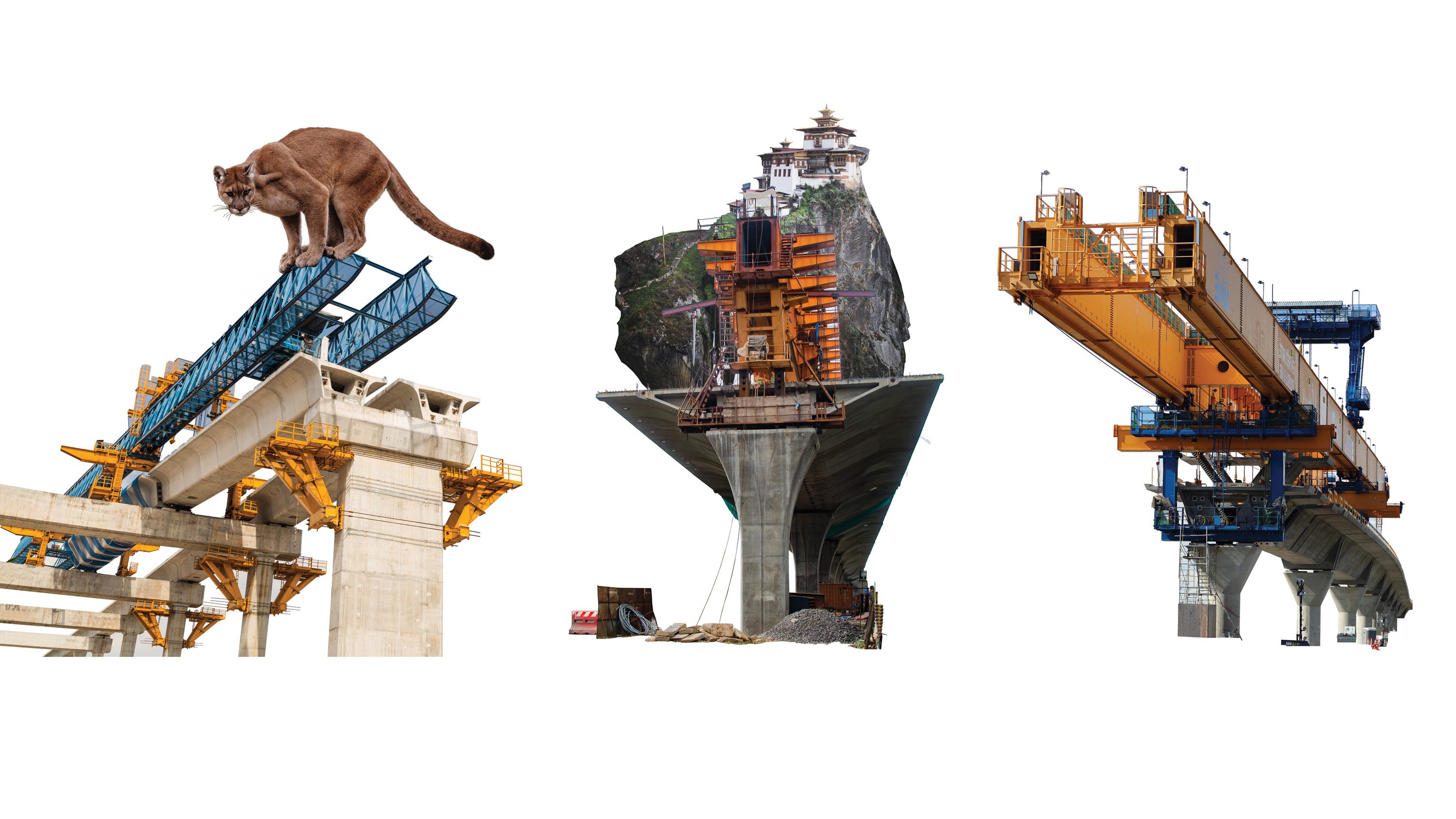
The Download: Introducing the Play issue

This is today’s edition of The Download, our weekday newsletter that provides a daily dose of what’s going on in the world of technology.

Supershoes are reshaping distance running

Since 2016, when Nike introduced the Vaporfly, a paradigm-­shifting shoe that helped athletes run more efficiently (and therefore faster), the elite running world has muddled through a period of soul-searching over the impact of high-tech footwear on the sport.

“Supershoes” —which combine a lightweight, energy-­returning foam with a carbon-fiber plate for stiffness—have been behind every broken world record in distances from 5,000 meters to the marathon since 2020.

To some, this is a sign of progress. In much of the world, elite running lacks a widespread following. Record-breaking adds a layer of excitement. And the shoes have benefits beyond the clock: most important, they help minimize wear on the body and enable faster recovery from hard workouts and races.

Still, some argue that they’ve changed the sport too quickly. Read the full story. 

—Jonathan W. Rosen

This story is from the forthcoming print issue of MIT Technology Review, which explores the theme of Play. It’s set to launch tomorrow, so if you don’t already, subscribe now to get a copy when it lands.

Why China’s dominance in commercial drones has become a global security issue

Whether you’ve flown a drone before or not, you’ve probably heard of DJI, or at least seen its logo. With more than a 90% share of the global consumer market, this Shenzhen-based company’s drones are used by hobbyists and businesses alike for everything from photography to spraying pesticides to moving parcels.

But on June 14, the US House of Representatives passed a bill that would completely ban DJI’s drones from being sold in the US. The bill is now being discussed in the Senate as part of the annual defense budget negotiations. 

To understand why, you need to consider the potential for conflict between China and Taiwan, and the fact that the military implications of DJI’s commercial drones have become a top policy concern for US lawmakers. Read the full story.

—Zeyi Yang

This story is from China Report, our weekly newsletter covering tech in China. Sign up to receive it in your inbox every Tuesday.

The must-reads

I’ve combed the internet to find you today’s most fun/important/scary/fascinating stories about technology.

1 The EU has issued antitrust charges against Microsoft 
For bundling Teams with Office—just a day after it announced similar charges against Apple. (WSJ $) 
+ It seems likely it’ll be hit with a gigantic fine. (Ars Technica)
The EU has new powers to regulate the tech sector, and it’s clearly not afraid to use them. (FT $)

2 OpenAI is delaying launching its voice assistant 
 (WP $)
It’s also planning to block access in China—but plenty of Chinese companies stand ready to fill the void. (Mashable)

3 Deepfake creators are re-victimizing sex trafficking survivors
Non-consensual deepfake porn is proliferating at a terrifying pace—but this is the grimmest example I’ve seen. (Wired $)
Three ways we can fight deepfake porn. (MIT Technology Review)

4 Chinese tech company IPOs are a rarity these days
It’s becoming very hard to avoid the risk of it all being derailed by political scrutiny, whether at home or abroad. (NYT $)
Global chip company stock prices have been on a rollercoaster ride recently, thanks to Nvidia. (CNBC)

5 Why AI is not about to replace journalism
It can crank out content, sure—but it’s incredibly boring to read. (404 Media)
After all the hype, it’s no wonder lots of us feel ever-so-slightly disappointed by AI. (WP $)
Despite a troubled launch, Google’s already extending AI Summaries to Gmail as well as Search. (CNET

6 This week of extreme weather is a sign of things to come
Summers come with a side-serving of existential dread now, as we all feel the effects of climate change. (NBC)
+ Scientists have spotted a worrying new tipping point for the loss of ice sheets in Antarctica. (The Guardian

7 Inside the fight over lithium mine expansion in Argentina 
Indigenous communities had been divided in opposition—but as the cash started flowing, cracks started appearing. (The Guardian)
Lithium battery fires are a growing concern for firefighters worldwide. (WSJ $)

8 What even is intelligent life?
We value it, but it’s a slippery concept that’s almost impossible to define. (Aeon
+ What an octopus’s mind can teach us about AI’s ultimate mystery. (MIT Technology Review)

9 Tesla is recalling most Cybertrucks… for the fourth time 
You have to laugh, really. (The Verge
Luckily, it’s not sold that many of them anyway. (Quartz $)

10 The trouble with Meta’s “smart” Ray Bans 
Well… basically they’re just not very smart. At all. (Wired $)

Quote of the day

“We’re making the biggest bet in AI. If transformers go away, we’ll die. But if they stick around, we’re the biggest company of all time.”

—Fighting talk to CNBC from Gavin Uberti, cofounder and CEO of a two-year-old startup called Etched, which believes its AI-optimized chips could take on Nvidia’s near-monopoly.

The big story

This nanoparticle could be the key to a universal covid vaccine

3D model of the mosaic nanoparticle vaccine

COURTESY OF WELLCOME LEAP, CALTECH, AND MERKIN INSTITUTE

September 2022
Long before Alexander Cohen—or anyone else—had heard of the alpha, delta, or omicron variants of covid-19, he and his graduate school advisor Pamela Bjorkman were doing the research that might soon make it possible for a single vaccine to defeat the rapidly evolving virus—along with any other covid-19 variant that might arise in the future.

The pair and their collaborators are now tantalizingly close to achieving their goal of manufacturing a vaccine that broadly triggers an immune response not just to covid and its variants but to a wider variety of coronaviruses. Read the full story.

—Adam Piore

We can still have nice things

A place for comfort, fun and distraction to brighten up your day. (Got any ideas? Drop me a line or tweet ’em at me.)

+ Happy 80th Birthday to much beloved Muswell Hillbilly Ray Davies, frontman of the Kinks.
+ Need to cool your home down? Plants can help!
+ Well, uh, that’s certainly one way to cope with a long-haul flight. 
+ Glad to know I’m not the only person obsessed with Nongshim instant noodles

The Download: hyperrealistic deepfakes, and using math to shape wood

This is today’s edition of The Download, our weekday newsletter that provides a daily dose of what’s going on in the world of technology.

Synthesia’s hyperrealistic deepfakes will soon have full bodies

Startup Synthesia’s AI-generated avatars are getting an update to make them even more realistic: They will soon have bodies that can move, and hands that gesticulate.

The new full-body avatars will be able to do things like sing and brandish a microphone while dancing, or move from behind a desk and walk across a room. They will be able to express more complex emotions than previously possible, like excitement, fear, or nervousness. 

These new capabilities, which are set to launch toward the end of the year, will add a lot to the illusion of realism. That’s a scary prospect at a time when deepfakes and online misinformation are proliferating. Read the full story and watch our reporter’s avatars meet each other.

—Melissa Heikkilä

Meet the architect creating wood structures that shape themselves

Humanity has long sought to tame wood into something more predictable, but it is inherently imprecise. Its grain reverses and swirls. Trauma and disease manifest in scars and knots. 

Instead of viewing these natural tendencies as liabilities, Achim Menges, an architect and professor at the University of Stuttgart in Germany, sees them as wood’s greatest assets. 

Menges and his team at the Institute for Computational Design and Construction are uncovering new ways to build with wood by using algorithms and data to simulate and predict how wood will behave within a structure long before it is built. He hopes this will help create more sustainable and affordable timber buildings by reducing the amount of wood required. Read our story all about him and his work

—John Wiegand

This story is from the forthcoming print issue of MIT Technology Review, which explores the theme of Play. It’s set to go live on Wednesday June 26, so if you don’t already, subscribe now to get a copy when it lands.

Live: How generative AI could transform games

Generative AI could soon revolutionize how we play video games, creating characters that can converse with you freely, and experiences that are infinitely detailed, twisting and changing every time you experience them.

Together, these could open the door to entirely new kinds of in-game interactions that are open-ended, creative, and unexpected. One day, the games we love playing may not have to end. Read our executive editor Niall Firth’s story all about what that future could look like. 

If you want to learn more, register now to join our next exclusive subscriber-only Roundtable discussion at 11.30ET today! Niall and our editorial director Allison Arieff will be talking about games without limits, the future of play, and much more.

The must-reads

I’ve combed the internet to find you today’s most fun/important/scary/fascinating stories about technology.

1 Big Tech firms are going all-in on experimental clean energy projects
Due to the fact AI is so horribly polluting. But the projects range from ‘long shot’ to ‘magical thinking’. (WP $)
Making the grid smarter, rather than bigger, could help. (Semafor)
How virtual power plants are shaping tomorrow’s energy system. (MIT Technology Review)

2 Google is about to be hit with a ton of AI-related lawsuits
Its AI Overviews keep libeling people—and they’re lawyering up. (The Atlantic $)
Why Google’s AI Overviews gets things wrong. (MIT Technology Review)
Another AI-powered search engine, Perplexity, is running into the exact same issues. (Wired $)
Worst of all? There’s currently no way to fix the underlying problem. (MIT Technology Review)

3 Apple is exploring a deal with Meta
To integrate Meta’s generative AI models into Apple Intelligence. (Wall Street Journal $) 
+ Apple is delaying launching AI features in Europe due to regulatory concerns. (Quartz

4 NASA is indefinitely delaying the return of Starliner
In order to give it more time to review data. (Ars Technica)

5 Chinese tech companies are pushing their staff beyond breaking point
As growth slows and competition rises, work-life balance is going out the window. (FT $)

6 Used electric vehicles are now less expensive than gas cars in the US
It’s a worrying statistic that reflects the cratering demand for EVs. (Insider $)
The problem with plug-in hybrids? Their drivers. (MIT Technology Review)

7 Check out these photos of San Francisco’s AI scene
The city is currently buzzing with people hoping to make their fortune off the back of the boom. (WP $)

8 The next wave of weight loss drugs is coming
The hope is that they might be cheaper, and come with fewer side effects. (NBC)

9 Elon Musk is obsessed with getting us to have more babies
He’s funding and promoting some pretty wacky theories about a coming population collapse. (Bloomberg $)
+ And we’re losing track of the number of kids he has himself. (Gizmodo)

10 Before smartphones, you could pay people to Google stuff for you
In the noughties, if you were arguing with friends over something factual, you could just call AQA to settle it. (Wired $)

Quote of the day

“The internet has just gotten so much duller.”

—Kelly, a copywriter from New Hampshire, tells the Wall Street Journal about the impact of AI online. 

The big story

How a tiny Pacific Island became the global capital of cybercrime

CHRISSIE ABBOTT


November 2023

Tokelau, a string of three isolated atolls strung out across the Pacific, is so remote that it was the last place on Earth to be connected to the telephone—only in 1997. Just three years later, the islands received a fax with an unlikely business proposal that would change everything.

It was from an early internet entrepreneur from Amsterdam, named Joost Zuurbier. He wanted to manage Tokelau’s country-code top-level domain, or ccTLD—the short string of characters that is tacked onto the end of a URL—in exchange for money.

In the succeeding years, tiny Tokelau became an unlikely internet giant—but not in the way it may have hoped. Until recently, its .tk domain had more users than any other country’s: a staggering 25 million—but the vast majority were spammers, phishers, and cybercriminals.

Now the territory is desperately trying to clean up .tk. Its international standing, and even its sovereignty, may depend on it. Read the full story.

—Jacob Judah

We can still have nice things

A place for comfort, fun and distraction to brighten up your day. (Got any ideas? Drop me a line or tweet ’em at me.)

+ Feeling challenged? Why not try the Japanese approach of ‘ukeireru’ to tackle what’s bothering you.
+ The incredibly weird origins of pop hit Maniac have to be read to be believed.
+ This summer is already chock-full with pop bangers—don’t miss out.
+ Why short novels are the best.

The Download: video-generating AI, and Meta’s voice cloning watermarks

This is today’s edition of The Download, our weekday newsletter that provides a daily dose of what’s going on in the world of technology.

I tested out a buzzy new text-to-video AI model from China

You may not be familiar with Kuaishou, but this Chinese company just hit a major milestone: It’s released the first ever text-to-video generative AI model that’s freely available for the public to test.

The short-video platform, which has over 600 million active users, announced the new tool, called Kling, on June 6. Like OpenAI’s Sora model, Kling is able to generate videos up to two minutes long from prompts.

But unlike Sora, which still remains inaccessible to the public four months after OpenAI debuted it, Kling has already started letting people try the model themselves. Zeyi Yang, our China reporter, has been putting it through its paces. Here’s what he made of it.

This story is from China Report, our weekly newsletter covering tech in China. Sign up to receive it in your inbox every Tuesday.

Meta has created a way to watermark AI-generated speech

The news: Meta has created a system that can embed hidden signals, known as watermarks, in AI-generated audio clips, which could help in detecting AI-generated content online. 

Why it matters: The tool, called AudioSeal, is the first that can pinpoint which bits of audio in, for example, a full hour-long podcast might have been generated by AI. It could help to tackle the growing problem of misinformation and scams using voice cloning tools. Read the full story.

—Melissa Heikkilä

The return of pneumatic tubes

Pneumatic tubes were once touted as something that would revolutionize the world. In science fiction, they were envisioned as a fundamental part of the future—even in dystopias like George Orwell’s 1984, where they help to deliver orders for the main character, Winston Smith, in his job rewriting history to fit the ruling party’s changing narrative. 

In real life, the tubes were expected to transform several industries in the late 19th century through the mid-20th. The technology involves moving a cylindrical carrier or capsule through a series of tubes with the aid of a blower that pushes or pulls it into motion, and for a while, the United States took up the systems with gusto.

But by the mid to late 20th century, use of the technology had largely fallen by the wayside, and pneumatic tube technology became virtually obsolete. Except in hospitals. Read the full story.

—Vanessa Armstrong

This story is from the forthcoming print issue of MIT Technology Review, which explores the theme of Play. It’s set to go live on Wednesday June 26, so if you don’t already, subscribe now to get a copy when it lands.

The must-reads

I’ve combed the internet to find you today’s most fun/important/scary/fascinating stories about technology.

1 Nvidia has become the world’s most valuable company 
Leapfrogging Microsoft and Apple thanks to the AI boom. (BBC)
+ Nvidia’s meteoric rise echoes the dot com boom. (WSJ $)
+ CEO Jensen Huang is now one of the richest people in the world. (Forbes)
+ The firm is worth more than China’s entire agricultural industry. (NY Mag $)
+ What’s next in chips. (MIT Technology Review)

2 TikTok is introducing AI avatars for ads
Which seems like a slippery slope. (404 Media)
+ India’s farmers are getting their news from AI news anchors. (Bloomberg $)
+ Deepfakes of Chinese influencers are livestreaming 24/7. (MIT Technology Review)

3 Boeing’s Starliner spacecraft will stay in space for a little longer
Officials need to troubleshoot some issues before it can head back to Earth. (WP $)

4 STEM students are refusing to work at Amazon and Google
Until the companies end their involvement with Project Nimbus. (Wired $)

5 Google isn’t what it used to be
But is Reddit really a viable alternative? (WSJ $)
+ Why Google’s AI Overviews gets things wrong. (MIT Technology Review)

6 A security bug allows anyone to impersonate Microsoft corporate email accounts
It’s making it harder to spot phishing attacks. (TechCrunch)

7 How deep sea exploration has changed since the Titan disaster
Robots are taking humans’ place to plumb the depths. (NYT $)
+ Meet the divers trying to figure out how deep humans can go. (MIT Technology Review)

8 How the free streaming service Tubi took over the US
Its secret weapon? Old movies.(The Guardian)

9 A new AI video tool instantly started ripping off Disney
Raising some serious questions about what the model had been trained on. (The Verge)
+ What’s next for generative video. (MIT Technology Review)

10 Apple appears to have paused work on the next Vision Pro
Things aren’t looking too bright for the high-end headset. (The Information $)
+ These minuscule pixels are poised to take augmented reality by storm. (MIT Technology Review)

Quote of the day

“He’s like Taylor Swift, but for tech.”

—Mark Zuckerberg is suitably dazzled by Nvidia CEO Jensen Huang’s starpower, the Information reports.

The big story

How sounds can turn us on to the wonders of the universe

June 2023

Astronomy should, in principle, be a welcoming field for blind researchers. But across the board, science is full of charts, graphs, databases, and images that are designed to be seen.

So researcher Sarah Kane, who is legally blind, was thrilled three years ago when she encountered a technology known as sonification, designed to transform information into sound. Since then she’s been working with a project called Astronify, which presents astronomical information in audio form.

For millions of blind and visually impaired people, sonification could be transformative—opening access to education, to once unimaginable careers, and even to the secrets of the universe. Read the full story.

—Corey S. Powell

We can still have nice things

A place for comfort, fun and distraction to brighten up your day. (Got any ideas? Drop me a line or tweet ’em at me.)

+ Clearing a pool table in 28 seconds? Don’t mind if I do.
+ As summer gets truly underway, it’s time to reorganize your closet.
+ Check out the winner’s of this year’s Food Photographer of the Year awards.
+ If you’re obsessed with the viral Steam game Banana, you’re far from alone. 🍌

The Download: AI’s limitations

This is today’s edition of The Download, our weekday newsletter that provides a daily dose of what’s going on in the world of technology.

Why does AI hallucinate?

The World Health Organization’s new chatbot launched on April 2 with the best of intentions. The virtual avatar named SARAH, was designed to dispense health tips about how to eat well, quit smoking, de-stress, and more, for millions around the world. But like all chatbots, SARAH can flub its answers. It was quickly found to give out incorrect information. In one case, it came up with a list of fake names and addresses for nonexistent clinics in San Francisco.

Chatbot fails are now a familiar meme. Meta’s short-lived scientific chatbot Galactica made up academic papers and generated wiki articles about the history of bears in space. In February, Air Canada was ordered to honor a refund policy invented by its customer service chatbot. Last year, a lawyer was fined for submitting court documents filled with fake judicial opinions and legal citations made up by ChatGPT.

This tendency to make things up—known as hallucination—is one of the biggest obstacles holding chatbots back from more widespread adoption. Why do they do it? And why can’t we fix it? Read the full story.

—Will Douglas Heaven

Will’s article is the latest entry in MIT Technology Review Explains, our series explaining the complex, messy world of technology to help you understand what’s coming next. You can check out the rest of the series here.

The story is also from the forthcoming magazine issue of MIT Technology Review, which explores the theme of Play. It’s set to go live on Wednesday June 26, so if you don’t already, subscribe now to get a copy when it lands.

Why artists are becoming less scared of AI

Knock, knock. Who’s there? An AI with generic jokes. Researchers from Google DeepMind asked 20 professional comedians to use popular AI language models to write jokes and comedy performances. Their results were mixed. Although the tools helped them to produce initial drafts and structure their routines, AI was not able to produce anything that was original, stimulating, or, crucially, funny

The study is symptomatic of a broader trend: we’re realizing the limitations of what AI can do for artists. It can take on some of the boring, mundane, formulaic aspects of the creative process, but it can’t replace the magic and originality that humans bring. Read the full story.

—Melissa Heikkilä 

This story is from The Algorithm, our weekly AI newsletter. Sign up to receive it in your inbox every Monday.

The must-reads

I’ve combed the internet to find you today’s most fun/important/scary/fascinating stories about technology.

1 The US government is suing Adobe over concealed fees
And for making it too difficult to cancel a Photoshop subscription. (The Verge)
+ Regulators are going after firms with hard-to-cancel accounts. (NYT $)
+ Adobe’s had an incredibly profitable few years. (Insider $)
+ The company recently announced its plans to safeguard artists against exploitative AI. (MIT Technology Review)

2 The year’s deadly heat waves have only just begun
But not everyone is at equal risk from extreme temperatures. (Vox)
+ Here’s what you need to know about this week’s US heat wave. (WP $)
+ Here’s how much heat your body can take. (MIT Technology Review)

3 Being an influencer isn’t as lucrative as it used to be
It’s getting tougher for content creators to earn a crust from social media alone. (WSJ $)
+ Beware the civilian creators offering to document your wedding. (The Guardian)+ Deepfakes of Chinese influencers are livestreaming 24/7. (MIT Technology Review)

4 How crypto cash could influence the US Presidential election 
‘Crypto voters’ have started mobilizing for Donald Trump, who has been making pro-crypto proclamations. (NYT $)

5 Europe is pumping money into defense tech startups
It’ll be a while until it catches up with the US though. (FT $)
+ Here’s the defense tech at the center of US aid to Israel, Ukraine, and Taiwan. (MIT Technology Review)

6 China’s solar industry is in serious trouble
Its rapid growth hasn’t translated into big profits. (Economist $)
+ Recycling solar panels is still a major environmental challenge, too. (IEEE Spectrum)
+ This solar giant is moving manufacturing from China back to the US. (MIT Technology Review)

7 Brace yourself for AI reading companions
The systems are trained on famous writers’ thoughts on seminal titles. (Wired $)

8 McDonalds is ditching AI chatbots at drive-thrus
The tech just proved too unreliable. (The Guardian)

9 How ice freezes is surprisingly mysterious 🧊
It’s not as simple as cooling water to zero degrees. (Quanta Magazine)

10 Keeping your phone cool in hot weather is tough
No direct sunlight, no case, no putting it in the fridge. (WP $)

Quote of the day

“My goal was to show that nature is just so fantastic and creative, and I don’t think any machine can beat that.”

—Photographer Miles Astray explains to the Washington Post why he entered a real photograph of a surreal-looking flamingo into a competition for AI art.

The big story

The Atlantic’s vital currents could collapse. Scientists are racing to understand the dangers.

December 2021

Scientists are searching for clues about one of the most important forces in the planet’s climate system: a network of ocean currents known as the Atlantic Meridional Overturning Circulation. They want to better understand how global warming is changing it, and how much more it could shift, or even collapse.

The problem is the Atlantic circulation seems to be weakening, transporting less water and heat. Because of climate change, melting ice sheets are pouring fresh water into the ocean at the higher latitudes, and the surface waters are retaining more of their heat. Warmer and fresher waters are less dense and thus not as prone to sink, which may be undermining one of the currents’ core driving forces. Read the full story.

—James Temple

We can still have nice things

A place for comfort, fun and distraction to brighten up your day. (Got any ideas? Drop me a line or tweet ’em at me.)

+ This cookie is the perfect replica of those frustrating maze games.
+ Each year, the Roland Garros tennis tournament commissions an artist to create a poster. This collection is remarkable 🎾
+ Sesame Street is the best.
+ If your plants aren’t flourishing, these tips might help to get them looking their best.

The Download: autocorrect’s surprising origins, and how to pre-bunk electoral misinformation

This is today’s edition of The Download, our weekday newsletter that provides a daily dose of what’s going on in the world of technology.

How the quest to type Chinese on a QWERTY keyboard created autocomplete

—This is an excerpt from The Chinese Computer: A Global History of the Information Age by Thomas S. Mullaney, published on May 28 by The MIT Press. It has been lightly edited.

When a young Chinese man sat down at his QWERTY keyboard in 2013 and rattled off an enigmatic string of letters and numbers, his forty-four keystrokes marked the first steps in a process known as “input” or shuru.

Shuru is the act of getting Chinese characters to appear on a computer monitor or other digital device using a QWERTY keyboard or trackpad.

The young man, Huang Zhenyu, was one of around 60 contestants in the 2013 National Chinese Characters Typing Competition. His keyboard did not permit him to enter these characters directly, however, and so he entered the quasi-gibberish string of letters and numbers instead: ymiw2klt4pwyy1wdy6…

But Zhenyu’s prizewinning performance wasn’t solely noteworthy for his impressive typing speed—one of the fastest ever recorded. It was also premised on the same kind of “additional steps” as the first Chinese computer in history that led to the discovery of autocompletion. Read the rest of the excerpt here.

If you’re interested in tech in China, why not check out some of our China reporter Zeyi Yang’s recent reporting (and subscribe to his weekly newsletter China Report!)

+ GPT-4o’s Chinese token-training data is polluted by spam and porn websites. The problem, which is likely due to inadequate data cleaning, could lead to hallucinations, poor performance, and misuse. Read the full story.

+ Why Hong Kong is targeting Western Big Tech companies in its ban of a popular protest song.

+ Deepfakes of your dead loved ones are a booming Chinese business. People are seeking help from AI-generated avatars to process their grief after a family member passes away. Read the full story.

The must-reads

I’ve combed the internet to find you today’s most fun/important/scary/fascinating stories about technology.

1 Election officials want to pre-bunk harmful online campaigns
It’s a bid to prevent political hoaxes from ever getting off the ground. (WP $)
+ Fake news verification tools are failing in India. (Rest of World)
+ Three technology trends shaping 2024’s elections. (MIT Technology Review)

2 OpenAI has started training the successor to GPT-4
Just weeks after it revealed an updated version, GPT-4o. (NYT $)
+ OpenAI’s new GPT-4o lets people interact using voice or video in the same model. (MIT Technology Review)

3 China is bolstering its national semiconductor fund
To the tune of $48 billion. (WSJ $)
+ It’s the third round of the country’s native chip funding program. (FT $)
+ What’s next in chips. (MIT Technology Review)

4 Nuclear plants are extremely expensive to build
The US needs to learn how to cut costs without cutting corners. (The Atlantic $)
+ How to reopen a nuclear power plant. (MIT Technology Review)

5 Laser systems could be the best line of defense against military drones
The Pentagon is investing in BlueHalo’s AI-powered laser technology. (Insider $)
+ The US military is also pumping money into Palmer Luckey’s Anduril. (Wired $)
+ Inside the messy ethics of making war with machines. (MIT Technology Review)

6 Klarna’s marketing campaigns are the product of generative AI
The fintech firm claims the technology will save it $10 million a year. (Reuters)

7 The US has an EV charging problem
Would-be car buyers are still nervous about investing in EVs. (Wired $)
+ Micro-EVs could offer one solution. (Ars Technica)
+ Toyota has unveiled new engines compatible with alternative fuels. (Reuters)

8 Good luck betting on anything that’s not sports in the US
The outcome of a major election, for example. (Vox)
+ How mobile money supercharged Kenya’s sports betting addiction. (MIT Technology Review)

9 Perfectionist parents are Facetuning their children
It goes without saying: don’t do this. (NY Mag $)

10 Why a movie version of The Sims never got off the ground
The beloved video game would make for a seriously weird cinema spectacle. (The Guardian)

Quote of the day

“Once materialism starts spreading, it can have a bad influence on teenagers.”

—Chinese state media Beijing News explains why China has started cracking down on luxurious influencers known for their ostentatious displays of wealth, the Financial Times reports.

The big story

Recapturing early internet whimsy with HTML

December 2023

Websites weren’t always slick digital experiences. 

There was a time when surfing the web involved opening tabs that played music against your will and sifting through walls of text on a colored background. In the 2000s, before Squarespace and social media, websites were manifestations of individuality—built from scratch using HTML, by users who had some knowledge of code. 

Scattered across the web are communities of programmers working to revive this seemingly outdated approach. And the movement is anything but a superficial appeal to retro aesthetics—it’s about celebrating the human touch in digital experiences. Read the full story

—Tiffany Ng

We can still have nice things

A place for comfort, fun and distraction to brighten up your day. (Got any ideas? Drop me a line or tweet ’em at me.)

+ Enjoy this potted history of why we say okay, and where it came from.
+ There is something very funny about Elton John calling The Lion King’s Timon and Pumbaa “the rat and the pig.”
+ The best of British press photography is always worth a peruse.
+ I had no idea that Sisqo’s Thong Song used an Eleanor Rigby sample.