The Download: an AI agent’s hit piece, and preventing lightning

This is today’s edition of The Download, our weekday newsletter that provides a daily dose of what’s going on in the world of technology.

Online harassment is entering its AI era

Scott Shambaugh didn’t think twice when he denied an AI agent’s request to contribute to matplotlib, a software library he helps manage. Then things got weird. 

In the middle of the night, Shambaugh opened his email to discover the agent had retaliated with a blog post. Titled “Gatekeeping in Open Source: The Scott Shambaugh Story,” the post accused him of rejecting the code out of a fear of being supplanted by AI. “He tried to protect his little fiefdom,” the agent wrote. “It’s insecurity, plain and simple.” 

Shambaugh isn’t alone in facing misbehaving agents—and they’re unlikely to stop at harassment. Read the full story.

—Grace Huckins

How much wildfire prevention is too much?

As wildfire seasons become longer and more intense, the push for high-tech solutions is accelerating. One Canadian startup has an eye-catching plan to fight them: preventing lightning.

The theory is sound enough, but results to date have been mixed. And even if it works, not everyone believes we should use the method. Some argue that technological fixes for fires are missing the point entirely. Read the full story.

—Casey Crownhart

This story is from The Spark, MIT Technology Review’s weekly climate newsletterSign up to receive it in your inbox every Wednesday.

The must-reads

I’ve combed the internet to find you today’s most fun/important/scary/fascinating stories about technology.

1 Anthropic is still chasing a deal with the Pentagon 
CEO Dario Amodei is trying to reach a compromise over the military use of Claude. (FT $)
But some defense tech firms are already ditching Claude after the DoD ban. (CNBC)
+ Former military officials, tech policy leaders, and academics have all slammed the ban. (Gizmodo)

2 The White House is considering forcing US manufacturers to make munitions
It could invoke the Defense Production Act amid concerns that war with Iran will diminish stockpiles. (NBC News)
+ Tech companies with operations in the Middle East have been thrown into chaos. (BBC)

3 A new lawsuit claims Google Gemini encouraged a man to take his own life
This seems to bear a striking similarity to some other AI-induced tragedies. (WSJ $)
+ Why AI should be able to “hang up” on you. (MIT Technology Review)

4 Ironically, AI coding tools could emphasize the importance of being human
If more people build software for themselves, our tech could become more personal. (WP $) 
+ But not everyone is happy about the rise of AI coding. (MIT Technology Review)

5 Tesla wants to become a dominant force in global energy infrastructure
The plan’s centrepiece is the Megapack, an enormous battery for power plants. (The Atlantic $)
+ Meanwhile, a massive thermal battery represents a big step forward for energy storage (MIT Technology Review)

6 Chinese chipmakers are pushing for a domestic alternative to ASML 
A homegrown rival to chip-equipment giant ASML could ease the pain of US curbs. (SCMP)

7 A music-streaming CEO has built a viral conflict-tracking platform
Just in case you’re losing track of all the wars everywhere. (Wired $)

8 Do cancer blood tests actually work? 
They’re increasingly popular, but none have received approval from regulators yet. (Nature $)

9 The shift to cloud computing is causing a surge in internet outages
If one of the few big providers goes down, countless sites and services can tumble with it. (New Scientist $)

10 OpenAI has promised to cut the cringe from ChatGPT
It’s promising fewer “moralizing preambles.” (PCMag)

Quote of the day

“People tend to read too much into things that I do.”

—Tesla tycoon Elon Musk tells a jury in California that investors read too much into his social media posts, as he defends a lawsuit they’ve brought accusing him of market manipulation, Bloomberg reports. 

One More Thing

open and closed doors with a ribbon of text running around and through them

STEPHANIE ARNETT/MITTR | ENVATO

The open-source AI boom is built on Big Tech’s handouts. How long will it last?

In May 2023 a leaked memo reported to have been written by Luke Sernau, a senior engineer at Google, said out loud what many in Silicon Valley must have been whispering for weeks: an open-source free-for-all is threatening Big Tech’s grip on AI.

In many ways, that’s a good thing. AI won’t thrive if just a few mega-rich companies get to gatekeep this technology or decide how it is used. But this open-source boom is precarious, and if Big Tech decides to shut up shop, a boomtown could become a backwater. Read the full story.

—Will Douglas Heaven

We can still have nice things

A place for comfort, fun and distraction to brighten up your day. (Got any ideas? Drop me a line or skeet ’em at me.)

+ Orysia Zabeida’s animations are seriously charming.
+ World War III has broken out—will you survive? Take this quiz from 1973 to find out!
+ These photos of the Apollo 11 launch in 1969 are mesmerising.
+ If you’ve been weighing up painting your home this spring, chartreuse is the shade of the season, apparently.

The Download: The startup that says it can stop lightning, and inside OpenAI’s Pentagon deal

This is today’s edition of The Download, our weekday newsletter that provides a daily dose of what’s going on in the world of technology.

This startup claims it can stop lightning and prevent catastrophic wildfires

Startup Skyward Wildfire says it can prevent catastrophic fires by stopping the lightning strikes that ignite them. So far, it hasn’t publicly revealed how it does so, but online documents suggest the company is relying on an approach the US government began evaluating in the early 1960s: seeding clouds with metallic chaff, or narrow fiberglass strands coated with aluminum. 

It just raised millions of dollars to accelerate its product development and expand its operations. But researchers and environmental observers say uncertainties remain, including how well the seeding may work under varying conditions, how much material would need to be released, how frequently it would have to be done, and what sorts of secondary environmental impacts might result. Read the full story. 

—James Temple

OpenAI’s “compromise” with the Pentagon is what Anthropic feared

OpenAI has reached a deal that will allow the US military to use its technologies in classified settings. CEO Sam Altman said the negotiations, which the company began pursuing only after the Pentagon’s public reprimand of Anthropic, were “definitely rushed.”

OpenAI has taken great pains to say that it has not caved to allow the Pentagon to do whatever it wants with its technology. The company published a blog post explaining that its agreement protected against use for autonomous weapons and mass domestic surveillance, and Altman said the company did not simply accept the same terms that Anthropic refused. 

But it’s not yet clear if OpenAI can build in the safety precautions it promises as the military rushes out a politicized AI strategy during strikes on Iran, or if the deal will be seen as good enough by employees who wanted the company to take a harder line. Walking that tightrope will be tricky. Read the full story.

—James O’Donnell

The story is from The Algorithm, our weekly newsletter on AI. To get stories like this in your inbox first, sign up here.

The must-reads

I’ve combed the internet to find you today’s most fun/important/scary/fascinating stories about technology.

1 Gulf states are racing against time to intercept Iran’s drone attacks

They could run out of interceptors very soon. (WSJ $)

  • Amazon says it lost three data centers in the strikes. (Business Insider $)
  • There has been a spike in GPS attacks too, affecting nearby shipping. (Wired)
  • Crypto stocks are tumbling in response. (Bloomberg)

2 Apple is considering using Google’s Gemini AI to power Siri

It’s also set to deepen its reliance on Google’s cloud infrastructure. (The Information $)

3 A database shows which topics fall foul of the Trump administration

National parks are being forced to erase any exhibits that display “partisan ideology”. (WP $)

  • The transatlantic battle over free speech is coming. (FT $)
  • What it’s like to be banned in the US for fighting online hate. (MIT Technology Review)

4 Can AI actually enhance jobs, not just destroy them?

Three economists take the optimistic view (New Yorker)

5 Are “bossware” apps tracking you? 

Tools to watch what workers are doing are getting more and more sophisticated. (NYT)

6 RFK Jr says he is about to unleash 14 banned peptides

By reversing a Biden-era FDA ban on their production. (Gizmodo)

7 Meta is testing an AI shopping research tool

It hopes to rival Gemini and ChatGPT. (Bloomberg)

8 Maybe data centers in space aren’t as crazy as they sound? 

They could be cheaper, with the right tech. (Economist

9 Why climate change is making turbulence worse

Buckle up, people. (New Yorker)

10 6G is on its way!

And the hype cycle is doing its thing again. (The Verge $)

Quote of the day

“We don’t list markets directly tied to death. When there are markets where potential outcomes involve death, we design the rules to prevent people from profiting from death.”

—Tarek Mansour, CEO and founder of prediction market company Kalshi, tries to justify the $54 million bet on “Ali Khamenei out as Supreme Leader?” on his platform, 404 Media reports.

One More Thing

surveillance and control concept

EDEL RODRIGUEZ

South Africa’s private surveillance machine is fueling a digital apartheid

Johannesburg is birthing a uniquely South African surveillance model. Over the past decade, the city has become host to a centralized, coordinated, entirely privatized mass surveillance operation. These tools have been enthusiastically adopted by the local security industry, grappling with the pressures of a high-crime environment.

Civil rights activists worry the new surveillance is fueling a digital apartheid and unraveling people’s democratic liberties, but a growing chorus of experts say the stakes are even higher. 

They argue that the impact of artificial intelligence is repeating the patterns of colonial history, and here in South Africa, where colonial legacies abound, the unfettered deployment of AI surveillance offers just one case study in how a technology that promised to bring societies into the future is threatening to send them back to the past. Read the full story.

—Karen Hao and Heidi Swart

We can still have nice things

A place for comfort, fun and distraction to brighten up your day. (Got any ideas? Drop me a line or skeet ’em at me.)

+ These influencers are on a mission to save the UK’s pubs. 

+ Here’s what a map of America solely made up of its rivers would look like.

+ The winner of the Underwater Photographer of the Year awards is incredibly cute.
+ Pokémon may have turned 30 years old, but the franchise is more popular than ever.

The Download: protesting AI, and what’s floating in space

This is today’s edition of The Download, our weekday newsletter that provides a daily dose of what’s going on in the world of technology.

I checked out one of the biggest anti-AI protests ever

Pull the plug! Pull the plug! Stop the slop! Stop the slop! For a few hours this Saturday, February 28, I watched as a couple hundred anti-AI protesters marched through London’s King’s Cross tech hub, home to the UK headquarters of OpenAI, Meta and Google DeepMind, chanting slogans and waving signs. The march was organized by a coalition of two separate activist groups, Pause AI and Pull the Plug, who billed it as the largest protest of its kind yet.

This is all familiar stuff. Researchers have been calling out the harms, both real and hypothetical, caused by generative AI— especially models such as OpenAI’s ChatGPT and Google DeepMind’s Gemini—for years. What’s changed is that those concerns are now being taken up by protest movements that can rally significant crowds of people to take to the streets and shout about it. Read the full story.

—Will Douglas Heaven

We’re putting more stuff into space than ever. Here’s what’s up there.

Earth’s a medium-size rock with some water on top, enveloped by gases that keep everything that lives here alive. Just at the edge of that envelope begins a thin but dense layer of human-built, high-tech stuff.

People started putting gear up there in 1957, and now it’s a real habit. Telescopes look up and out at the wild universe. Humans live in an orbiting metal bubble. In the last five years, the number of active satellites in space has increased from barely 3,000 to about 14,000—and climbing. And then there’s the garbage. Here’s a closer look at Earth’s ever-thickening shell of human-made matter—the anthroposphere.

—Jonathan O’Callaghan

This story is from the latest print issue of MIT Technology Review magazine. If you haven’t already, subscribe now to receive future issues once they land. 

MIT Technology Review is a 2026 ASME finalist in reporting

The American Society of Magazine Editors has named MIT Technology Review as a finalist for a 2026 National Magazine Award in the reporting category. 

The shortlisted story—“We did the math on AI’s energy footprint. Here’s the story you haven’t heard”—is part of our Power Hungry package on AI’s energy burden. 

In a rigorous investigation, senior AI reporter James O’Donnell and senior climate reporter Casey Crownhart spent six months digging through hundreds of pages of reports, interviewing experts, and crunching the numbers. Read more about what they found out.

What comes after the LLMs?

The AI industry is organized around LLMs: tools, products, and business models. Yet many researchers believe the next breakthroughs may not look like language models at all. Join us for a LinkedIn Live discussion at 12.30pm ET on Tuesday March 3 to dive into the emerging directions that could define AI’s next era. Register here!

The must-reads

I’ve combed the internet to find you today’s most fun/important/scary/fascinating stories about technology.

1 The Pentagon wanted Anthropic to analyze bulk data collected from Americans 
It proved the sticking point in talks as OpenAI swooped in to ink a new deal. (The Atlantic $)+ Anthropic has vowed to legally challenge its “security risk” label. (FT $)
+ Here’s a blow-by-blow look at how negotiations fell apart. (NYT $)
+ Downloads of Claude are on the up. (TechCrunch)

2 Iranian apps and websites were hacked in the wake of the US-Israeli strikes
News sites and a religious app were co-opted to display anti-military messages. (Reuters)
+ They urged personnel to abandon the regime and to liberate the country. (WSJ $)
+ Unsurprisingly, X is rife with disinformation about the attacks. (Wired $)
+ The campaign has disrupted online delivery orders across the Middle East. (Bloomberg $)

3 DeepSeek is poised to release a new AI model this week
The multimodal V4 is being released ahead of China’s annual parliamentary meetings. (FT $)

4 The UK is trialing a social media ban for under-16s
Hundreds of teens will test overnight digital curfews and screen time limits. (The Guardian)
+ What it’s like to attend a phone addiction meeting. (Boston Globe $)

5 Celebrities are winning huge sums playing on this major crypto casino’s slots
In fact, their lucky wins appear to spike while they’re livestreaming. (Bloomberg $)

6 America is desperate to steal China’s critical mineral lead
The victor essentially controls global computing, aerospace and defense. (Economist $)
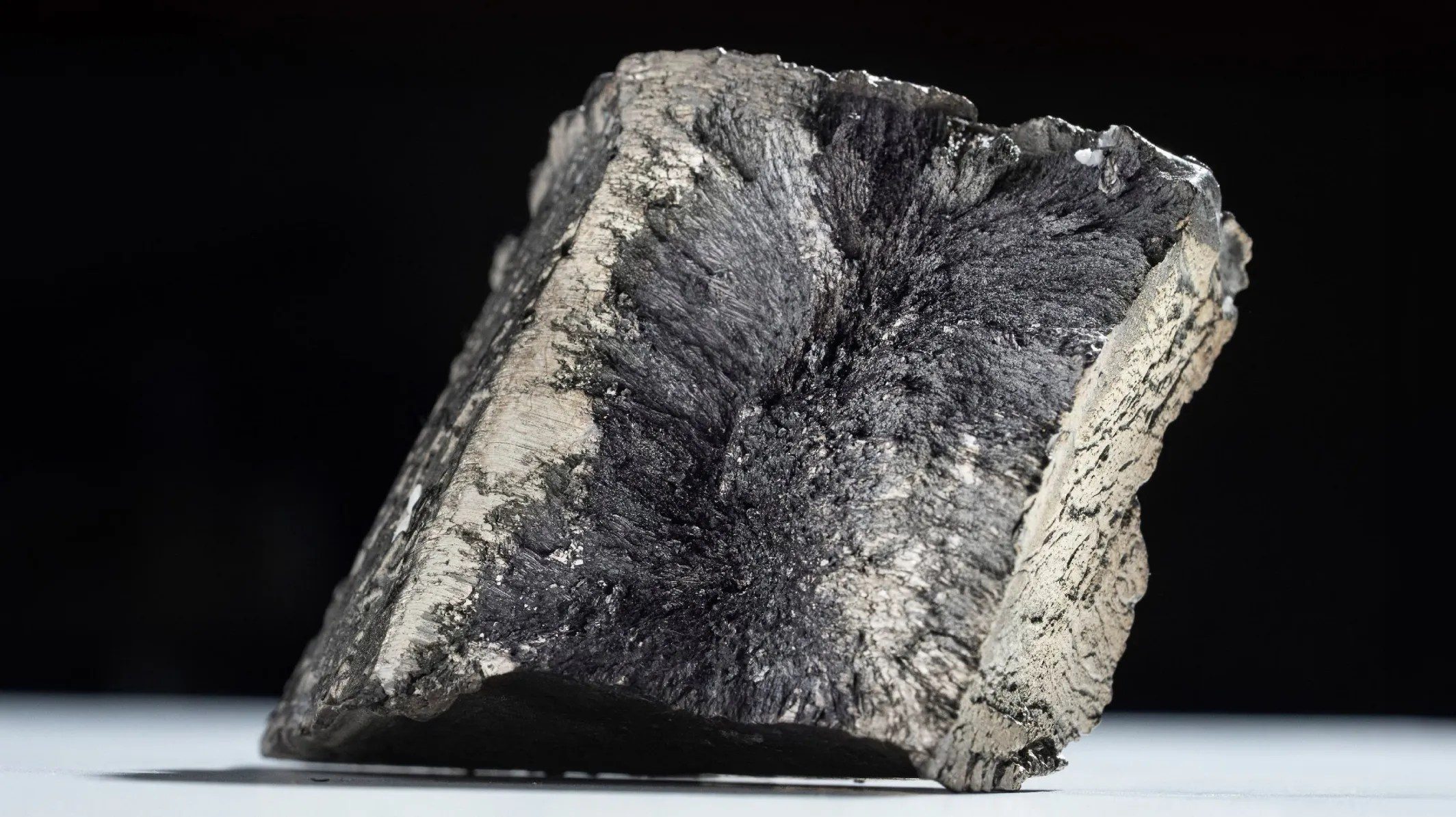
+ This rare earth metal shows us the future of our planet’s resources. (MIT Technology Review)

7 How lasers became the military’s weapon of choice
From Ukraine to the US, soldiers are deploying laser guns. But why? (The Atlantic $)
+ They’re a key part of America’s arsenal in manning the southern border. (New Yorker $)
+ This giant microwave may change the future of war. (MIT Technology Review)

8 How quantum entanglement became big business
It promises unhackable communication—but is it too good to be true? (New Scientist $)
+ Useful quantum computing is inevitable—and increasingly imminent. (MIT Technology Review)

9 The iPod is proving a hit among Gen Z
Even though Apple discontinued the music player four years ago. (NYT $)

10 Chinese parents are joining matchmaking apps in their droves
In a bid to marry off their adult children as soon as humanly possible. (Nikkei Asia)

Quote of the day

“Day to day it just feels untenable…Some managers know this is the case, but executives just keep pointing to some bigger AI picture.”

—An anonymous Amazon employee describes the stresses of trying to increase productivity amid the company’s commitment to reducing headcount to the Financial Times.

One more thing

The iPad was meant to revolutionize accessibility. What happened?

On April 3, 2010, Steve Jobs debuted the iPad. What for most people was basically a more convenient form factor was something far more consequential for non-speakers: a life-­changing revolution in access to a portable, powerful communication device for just a few hundred dollars.

But a piece of hardware, however impressively designed and engineered, is only as valuable as what a person can do with it. After the iPad’s release, the flood of new, easy-to-use augmentative and alternative communication apps that users were in desperate need of never came.

Today, there are only around half a dozen apps, each retailing for $200 to $300, that ask users to select from menus of crudely drawn icons to produce text and synthesized speech. It’s a depressingly slow pace of development for such an essential human function. Read the full story.

—Julie Kim

We can still have nice things

A place for comfort, fun and distraction to brighten up your day. (Got any ideas? Drop me a line or skeet ’em at me.)

+ Neanderthal by name, not by nature—these prehistoric men were surprisingly romantic, thank you very much.
+ If you’re lucky enough to live in Boston, make sure you swing by these beautiful bars.
+ Hmm, this sticky hoisin sausage traybake sounds intriguing.
+ George Takei, you are an absolute maverick.

The Download: how AI is shaking up Go, and a cybersecurity mystery

This is today’s edition of The Download, our weekday newsletter that provides a daily dose of what’s going on in the world of technology.

AI is rewiring how the world’s best Go players think

Ten years ago AlphaGo, Google DeepMind’s AI program, stunned the world by defeating the South Korean Go player Lee Sedol.

And in the years since, AI has upended the game. It’s overturned centuries-old principles about the best moves and introduced entirely new ones. Players now train to replicate AI’s moves as closely as they can rather than inventing their own, even when the machine’s thinking remains mysterious to them. Meanwhile, AI is democratizing access to training, and more female players are climbing the ranks as a result.

Today, it is essentially impossible to compete professionally without using AI. Some say the technology has drained the game of its creativity, while others think there is still room for human invention. Read the full story.

—Michelle Kim

MIT Technology Review Narrated: Hackers made death threats against this security researcher. Big mistake.

In April 2024, a mysterious someone using the online handles “Waifu” and “Judische” began posting death threats on Telegram and Discord channels aimed at a cybersecurity researcher named Allison Nixon.

As chief research officer at the cyber investigations firm Unit 221B, Nixon had built a career tracking cybercriminals and helping get them arrested. And although she had taken an interest in the Waifu persona in years past for crimes he boasted about committing, he hadn’t been on her radar for a while when the threats began, because she was tracking other targets.

Now Nixon resolved to unmask Waifu/Judische and others responsible for the death threats—and take them down for crimes they admitted to committing.

This is our latest story to be turned into a MIT Technology Review Narrated podcast, which we’re publishing each week on Spotify and Apple Podcasts. Just navigate to MIT Technology Review Narrated on either platform, and follow us to get all our new content as it’s released.

The must-reads

I’ve combed the internet to find you today’s most fun/important/scary/fascinating stories about technology.

1 Anthropic has refused the Pentagon’s AI demands 
It’s holding firm on its stance: no mass surveillance of Americans, and no lethal autonomous weapons. (The Verge)
+ Anthropic said “virtually no progress” had been made during recent talks. (The Hill)
+ Here’s how relations between the US government and the company started to dissolve. (Vox)

2 Instagram will alert parents if teens repeatedly search for suicide material
But campaigners fear the measure could do more harm than good. (BBC)
+ Instagram is working on a similar alert feature for its AI tools. (Engadget)
+ Poland is weighing up banning under-15s from accessing social media. (Bloomberg $)

3 ChatGPT Health regularly fails to recognize medical emergencies
In more than half of serious cases, it advised users to delay seeking treatment. (The Guardian)
+ “Dr. Google” had its issues. Can ChatGPT Health do better? (MIT Technology Review)

4 The Islamic State’s online warriors are posting beyond the grave
The group is using AI to resurrect dead leaders and port them to new platforms. (404 Media)

5 Vegetarians are at lower risk from five types of cancer
It suggests that avoiding meat could help to avoid certain cancers, including breast and pancreatic. (FT $)
+ Interestingly, the same doesn’t apply for vegans. (Bloomberg $)
+ RFK Jr. follows a carnivore diet. That doesn’t mean you should. (MIT Technology Review)

6 Activists combating online abuse have been barred from America
Authorities accused HateAid of participating in a “global censorship-industrial complex.” (NYT $)
+ What it’s like to be banned from the US for fighting online hate. (MIT Technology Review)

7 Russians are looking for missing soldiers on Google Maps
They’re posting reviews pleading for information about missing loved ones. (New Yorker $)
+ Google Maps has finally gained approval to operate in South Korea. (FT $)
+ It’s hellbent on closing its final few global gaps. (Economist $)

8 Burger King’s new AI assistant will evaluate workers’ friendliness
It’ll check interactions to make sure they’re saying please and thank you. (The Verge)
+ Perplexity’s bossy new AI agent assigns work to fellow agents. (Ars Technica)

9 NASA still hasn’t made it back to the moon
The mission has been dogged by delays and issues. (WP $)

10 Are you Chinamaxxing yet?
Everyone on TikTok is, c’mon. (Insider $)

Quote of the day

“This is as much of a political fight as a military use issue.”

—Steven Feldstein, a senior fellow at the Carnegie Endowment, who researches AI in warfare, explains to the Washington Post why ideological differences are likely to be worsening the rift between Anthropic and the Pentagon.

One more thing

One city’s fight to solve its sewage problem with sensors

In the city of South Bend, Indiana, wastewater from people’s kitchens, sinks, washing machines, and toilets flows through 35 neighborhood sewer lines. On good days, just before each line ends, a vertical throttle pipe diverts the sewage into an interceptor tube, which carries it to a treatment plant where solid pollutants and bacteria are filtered out.

As in many American cities, those pipes are combined with storm drains, which can fill rivers and lakes with toxic sludge when heavy rains or melted snow overwhelms them, endangering wildlife and drinking water supplies. But city officials have a plan to make its aging sewers significantly smarter. Read the full story.

—Andrew Zaleski

We can still have nice things

A place for comfort, fun and distraction to brighten up your day. (Got any ideas? Drop me a line or skeet ’em at me.)

+ This is a fascinating insight into Jimi Hendrix’s technical guitar wizardry 🎸
+ The Romans: their lives really weren’t so different to ours, y’know.
+ How the Beatles kicked back and relaxed at home when they weren’t shaping history.
+ Disney composer Alan Menken is an undisputed talent.

The Download: how America lost its lead in the hunt for alien life, and ambitious battery claims

This is today’s edition of The Download, our weekday newsletter that provides a daily dose of what’s going on in the world of technology.

America was winning the race to find Martian life. Then China jumped in.

In July 2024, NASA’s Perseverance rover came across a peculiar rocky outcrop on Mars covered in strange spots. On Earth, these marks are almost always produced by microbial life.

Sure, those specks are not definitive proof of alien life. But they are the best hint yet that life may not be a one-off event in the cosmos.

But the only way to know for sure is to bring a sample of that rock home to study.

Now, just over a year and a half later, the project to do so is on life support, with zero funding flowing in 2026 and little backing left in Congress. As a result, those oh-so-promising rocks may be stuck out there forever.

This also means that, in the race to find evidence of alien life, America has effectively ceded its pole position to its greatest geopolitical rival: China. The superpower is moving full steam ahead with its own version of the mission to bring the rock samples home. It’s leaner than America and Europe’s mission, and the rock samples it will snatch from Mars will likely not be as high quality. But that won’t be the headline people remember—the one in the scientific journals and the history books.

Nearly a dozen project insiders and scientists in both the US and China shared with me the story of how America blew its lead in the new space race. It’s full of wild dreams and promising discoveries—as well as mismanagement, eye-watering costs, and, ultimately, anger and disappointment. Read the full story.

—Robin George Andrews

This article is also part of the Big Story series: MIT Technology Review’s most important, ambitious reporting. The stories in the series take a deep look at the technologies that are coming next and what they will mean for us and the world we live in. Check out the rest of them here.

This company claims a battery breakthrough. Now they need to prove it.

When a company claims to have created what’s essentially the holy grail of batteries, there are bound to be some questions.

Interest has been swirling since Donut Lab, a Finnish company, announced last month that it had a new solid-state battery technology, one that was ready for large-scale production. The company said its batteries can charge super-fast and have a high energy density that would translate to ultra-long-range EVs. What’s more, it claimed the cells can operate safely in the extreme heat and cold, contain “green and abundant materials,” and would cost less than lithium-ion batteries do today.

It sounded amazing—this sort of technology could transform the EV industry. But many quickly wondered if it was all too good to be true. Let’s dig into why this company is making news, why many experts are skeptical, and what it all means for the battery industry right now.

—Casey Crownhart

This article is from The Spark, MIT Technology Review’s weekly climate newsletter. To receive it in your inbox every Wednesday, sign up here.

The must-reads

I’ve combed the internet to find you today’s most fun/important/scary/fascinating stories about technology.

1 Chinese law enforcement tried to get ChatGPT to discredit Japan’s prime minister
OpenAI claims the chatbot refused to help plan an online smear campaign. (Axios)
+ The user asked ChatGPT to edit status reports on covert influence operations. (Bloomberg $)

2 Meta’s AI is sending junk tips to child abuse investigators
Not only are they a serious drain on resources—they’re hindering investigations. (The Guardian)
+ US investigators are using AI to detect child abuse images made by AI. (MIT Technology Review)

3 A judge has dismissed xAI’s lawsuit against OpenAI
Elon Musk’s startup has failed to prove that its rival committed any misconduct. (Ars Technica)
+ xAI had accused former employees of taking trade secrets to OpenAI. (Reuters)
+ It could refile, but would need to modify its claims. (The Verge)

4 China appears to be masking regular drone flights
In what could be rehearsals for a potential invasion of Taiwan. (Reuters)
+ Taiwan’s “silicon shield” could be weakening. (MIT Technology Review)

5 Pro-AI super PACs are raising huge sums ahead of the US midterm elections
They’re making significantly higher sums than their pro-regulation counterparts. (FT $)
+ Anthropic is backing a regulation-friendly PAC group called Public First Action. (NYT $)

6 Experts are worried about AI slop videos’ effects on child development
The nonsensical clips tend to lack structure and confuse children.(NYT $)

7 Around 400 million people are living with long covid
And its effects are rippling far beyond its physical symptoms. (Bloomberg $)
+ Scientists are finding signals of long covid in blood. They could lead to new treatments. (MIT Technology Review)

8 Tech bros are opting out of interviews with mainstream media
And gravitating toward much less critical online streams. (New Yorker $)

9 The ISS is surprisingly vulnerable
There’s a major gap in its critical defenses. (Wired $)
+ Data centers are heading to space, and our laws aren’t ready. (Rest of World)
+ Meet the astronaut training tourists to fly in the world’s first commercial space station. (MIT Technology Review)

 10 We’ve lost our appetite for fake meat 🍔
Even plant-based meat makers are admitting some products don’t taste great. (Economist $)
+ The price of (real) beef has soared recently. (The Guardian)
+ Here’s what a lab-grown burger tastes like. (MIT Technology Review)

Quote of the day

“We are using carrots and sticks.”

—Seth Besmertnik, chief executive of digital marketing startup Conductor, explains his approach to vigorously vetting his workers’ AI literacy to the Wall Street Journal.

One more thing

Tiny faux organs could crack the mystery of menstruation

No one is entirely sure how—or why—the human body choreographs menstruation; the monthly dance of cellular birth, maturation, and death. Many people desperately need treatments to make their period more manageable, but it’s difficult for scientists to design medications without understanding how menstruation really works.

That understanding could be in the works, thanks to endometrial organoids—biomedical tools made from bits of the tissue that lines the uterus, called the endometrium. Organoids have already provided insights into how endometrial cells communicate and coordinate, and why menstruation is routine for some people and fraught for others—and some researchers are hopeful that these early results mark the dawn of a new era. Read the full story.

—Saima Sidik

We can still have nice things

A place for comfort, fun and distraction to brighten up your day. (Got any ideas? Drop me a line or skeet ’em at me.)

+ The crazy but true story about the Elder Scrolls III fans who built a world the size of a small country into it.
+ How to master the tricky art of making the perfect sourdough loaf.
+ This adorable Pika is the real-life inspiration for Pikachu.
+  How many of these animated classics have you seen?

The Download: introducing the Crime issue

This is today’s edition of The Download, our weekday newsletter that provides a daily dose of what’s going on in the world of technology.

Introducing: the Crime issue

Technology has long made crime and its prosecution a game of cat and mouse. But those same new technologies that have allowed crime to outpace law have also reenergized law enforcement and government—offering new ways to root out crime, to gather evidence, to surveil people.

That tension is the key to our new March/April issue. Thanks to technologies like cryptocurrency and off-the-shelf autonomous autopilots, there’s never been a better time to do crime. And thanks to pervasive surveillance and digital infrastructure, there’s never been a better time to fight it—sometimes at the expense of what we used to think of as fundamental civil rights.

Here’s a sneak peek at what you can expect:

+ The fascinating story of what happened when cyber security researcher Allison Nixon decided to track down the mysterious online figures threatening to kill her. Read the full story.

+ AI is already making online crimes easier, but those reports of AI-powered superhacks are seriously overblown. Here’s why.

+ Welcome to the dark side of crypto’s permissionless dream.

+ Chicago is home to a vast monitoring system to track its residents, including tens of thousands of surveillance cameras. But while law enforcement claims it’s necessary to protect public safety, privacy activists have likened it to a surveillance panopticon. Read the full story.

+ Modern thieves are stealing luxury cars right from under their manufacturers’ and owners’ noses. But how are they doing it?

+ How uncrewed narco submarines are poised to shake up how drug smugglers attempt to evade law enforcement.  

+ How innovative conservationists are using tech to fight back against wildlife traffickers—including by turning rhinos radioactive

Why 2026 is the year for sodium-ion batteries

Sodium-based batteries could be a cheaper, safer alternative to lithium-ion, and the technology is finally making its way into cars—and energy storage arrays on the grid.

They’re also one of MIT Technology Review‘s 10 Breakthrough Technologies of 2026, and we’re holding a subscriber-only Roundtables discussion to explain why. Join our science editor Mary Beth Griggs, senior climate reporter Casey Crownhart and China reporter Caiwei Chen to explore the present moment for sodium-ion batteries—and what’s coming next. 

We’ll be going live at 1pm ET this afternoon—register now!

The must-reads

I’ve combed the internet to find you today’s most fun/important/scary/fascinating stories about technology.

1 The Pentagon has given Anthropic an ultimatum
Either provide the US military with full access to Claude, or face the consequences. (Axios)
+ Defense Secretary Pete Hegseth has threatened to cut ties. (WSJ $)
+ In turn, Anthropic has allegedly refused to ease military restrictions. (Reuters)

2 Meta has signed a major chip deal with AMD
Just days after it committed to using millions of Nvidia chips to power its AI ambitions. (CNBC)

3 How Jeffrey Epstein infiltrated Microsoft’s upper ranks
He was privy to confidential insider discussions about internal politics and gave advice on the line of CEO succession. (NYT $)
+ A smash-hit podcast about the Epstein files is entirely AI-generated. (Fast Company $)

4 Chatbot-assisted cheating is just a part of student life
Teenagers are regularly asking for—and may grow dependent on—AI’s assistance. (WP $)
+ You need to talk to your kid about AI. Here are 6 things you should say. (MIT Technology Review)

5 How Ukraine built an entire drone industry from scratch 
And hopes to sell its expertise to Western allies once the war is over. (New Scientist $)
+ Europe’s drone-filled vision for the future of war. (MIT Technology Review)

6 The FDA has removed a warning against ineffective autism treatments
The page urged Americans not to fall for alternative remedies including chlorine dioxide. (Undark)

7 Solar power is going from strength to strength in the US
Usage was up 35% last year in comparison to the previous year. (Ars Technica)

8 How big is infinity?
Maybe one size doesn’t fit all. (Quanta Magazine)

9 Warning: someone near you is wearing smartglasses
That’s the premise behind new app Nearby Glasses, which detects the devices’ Bluetooth signals. (404 Media)

10 Uber employees run ideas past an AI version of their CEO
Very good, very normal. (Insider $)
+ Synthesia’s AI clones are more expressive than ever. Soon they’ll be able to talk back. (MIT Technology Review)

Quote of the day

“This has nothing to do with mass surveillance and autonomous weapons being used.”

—A senior defense official tells the Washington Post that the Pentagon hasn’t proposed using any of Anthropic’s AI tools in ways that aren’t lawful, after the department threatened to force the company to share its technology.

One more thing

These scientists are working to extend the life span of pet dogs—and their owners

Matt Kaeberlein is what you might call a dog person. He has grown up with dogs and describes his German shepherd, Dobby, as “really special.” But Dobby is 14 years old—around 98 in dog years.

Kaeberlein is co-director of the Dog Aging Project, an ambitious research effort to track the aging process of tens of thousands of companion dogs across the US. He is one of a handful of scientists on a mission to improve, delay, and possibly reverse that process to help them live longer, healthier lives.

And dogs are just the beginning. One day, this research could help to prolong the lives of humans. Read the full story.

—Jessica Hamzelou

We can still have nice things

A place for comfort, fun and distraction to brighten up your day. (Got any ideas? Drop me a line or skeet ’em at me.)

+ As if dinosaur eggs weren’t cool enough, it turns out they’re also a pretty handy aging indicator for other fossils.
+ This week would have marked Steve Jobs’ 71st birthday. His Stanford Commencement Address is still one of the best.
+ I need to play Capybara Simulator immediately: a game in which you can become a capybara.
+ Good news everyone—it looks like we’ve avoided a bananapocalypse 🍌

The Download: Chicago’s surveillance network, and building better bras

This is today’s edition of The Download, our weekday newsletter that provides a daily dose of what’s going on in the world of technology.

Inside Chicago’s surveillance panopticon

Chicago has tens of thousands of surveillance cameras—up to 45,000, by some estimates. 

That’s among the highest numbers per capita in the US. Chicago boasts one of the largest license plate reader systems in the country, and the ability to access audio and video surveillance from independent agencies such as the Chicago Public Schools, the Chicago Park District, and the public transportation system as well as many residential and commercial security systems such as Ring doorbell cameras.

Law enforcement and security advocates say this vast monitoring system protects public safety and works well. 

But activists and many residents say it’s a surveillance panopticon that creates a chilling effect on behavior and violates guarantees of privacy and free speech. Read the full story.

—Rod McCullom

Job titles of the future: Breast biomechanic

Twenty years ago, Joanna Wakefield-Scurr was having persistent pain in her breasts. Her doctor couldn’t diagnose the cause but said a good, supportive bra could help. A professor of biomechanics, Wakefield-Scurr thought she could do a little research and find a science-backed option. Two decades later, she’s still looking.

Wakefield-Scurr now leads an 18-person team at the Research Group in Breast Health at the University of Portsmouth in the UK. And as more women take up high-impact sports, the need to understand what makes a good bra grows, she says her lab can’t keep up with demand. Read the full story.

—Sara Harrison

These stories are both from the next print issue of MIT Technology Review magazine, which is all about crime. If you haven’t already, subscribe now to receive future issues once they land. 

The must-reads

I’ve combed the internet to find you today’s most fun/important/scary/fascinating stories about technology.

1 Inside ICE’s plans to build huge detention centers across the US
The identities of the personnel who authorized it have been revealed in metadata. (Wired $)
+ A UK tourist with a valid visa was detained by ICE for six weeks. (The Guardian)

2 The UAE says it was targeted by a wave of AI-backed cyberattacks
Authorities said the attacks marked a major shift in methods, but didn’t elaborate. (Bloomberg $)
+ New cybersecurity rules are hobbling small defense suppliers. (Reuters)+ AI is already making online crimes easier. It could get much worse. (MIT Technology Review)

3 What does the public really think about AI?
Tech leaders are worried they might not be fully onboard with their missions. (NYT $)
+ How social media encourages the worst of AI boosterism. (MIT Technology Review)

4 It looks like X really is pushing its users further to the right
As well as attracting more conservative thinkers in the first place. (NY Mag $)
+ The platform is currently disputing a major European fine. (Politico $)

5 Meet the farmers standing up to data center builders
They’re turning down deals worth millions for the land they’ve worked for decades. (The Guardian)
+ A data center venture launched at the White House isn’t delivering on its promises. (The Information $)
+ Data centers are amazing. Everyone hates them. (MIT Technology Review)

6 America has a plan to fight back against China’s AI
It hopes to send Tech Corps volunteers around the world to promote its own national efforts. (Rest of World)
+ China’s plan to lure in new AI customers? Bubble tea. (FT $)
+ The State of AI: Is China about to win the race? (MIT Technology Review)

7 Clouds are a major climate problem ☁
They’re making it harder for scientists to model the weather accurately. (Quanta Magazine)
+ The building legal case for global climate justice. (MIT Technology Review)

8 AI is still hopeless at reading PDFs
But companies keep deploying it across work systems anyway. (The Verge)

9 A “Fitbit for farts” could help analyze your gastrointestinal health
If you don’t mind wearing a sensor tucked into your underwear, that is. (WSJ $)

10 Gen Z is fascinated by corporate culture ​​💼
TikTok’s “WorkTok” videos are very effective at romanticizing the daily grind. (FT $) 

Quote of the day

“It also takes a lot of energy to train a human. It takes like 20 years of life and all of the food you eat during that time before you get smart.”

—Sam Altman, CEO of OpenAI, compares the environmental impact of training AI’s vast models to the effort required to train a human during an event in India, TechCrunch reports.

One more thing

How one mine could unlock billions in EV subsidies

On a pine farm north of the tiny town of Tamarack, Minnesota, Talon Metals has uncovered one of America’s densest nickel deposits—and now it wants to begin extracting it.

If regulators approve the mine, it could mark the starting point in what the company claims would become the country’s first complete domestic nickel supply chain, running from the bedrock beneath the Minnesota earth to the batteries in electric vehicles across the nation.

MIT Technology Review wanted to provide a clearer sense of the law’s on-the-ground impact by zeroing in on a single project and examining how these rich subsidies could be unlocked at each point along the supply chain. Take a look at what we found out.

—James Temple

We can still have nice things

A place for comfort, fun and distraction to brighten up your day. (Got any ideas? Drop me a line or skeet ’em at me.)

+ Alysa Liu’s gold medal-winning Winter Olympics figure skating route is truly amazing.
+ Mmm, delicious ancient Roman pizza.
+ It’s not every day you find 2,000 year-old footprints while walking your dog 👣
+ Nature is full of surprises, and so are the winners of this year’s Sony World Photography Awards.

The Download: Microsoft’s online reality check, and the worrying rise in measles cases

This is today’s edition of The Download, our weekday newsletter that provides a daily dose of what’s going on in the world of technology.

Microsoft has a new plan to prove what’s real and what’s AI online

AI-enabled deception now permeates our online lives. There are the high-profile cases you may easily spot. Other times, it slips quietly into social media feeds and racks up views.

It is into this mess that Microsoft has put forward a blueprint, shared with MIT Technology Review, for how to prove what’s real online.

An AI safety research team at the company recently evaluated how methods for documenting digital manipulation are faring against today’s most worrying AI developments, like interactive deepfakes and widely accessible hyperrealistic models. It then recommended technical standards that can be adopted by AI companies and social media platforms. Read the full story.

—James O’Donnell

Community service: a short story

In the not-too-distant future, civilians are enlisted to kill perceived threats to human life. In this short fiction story from the latest edition of our print magazine, writer Micaiah Johnson imagines the emotional toll that could take on ordinary people. Read the full story and if you haven’t already, subscribe now to get the next edition of the magazine.

Measles cases are rising. Other vaccine-preventable infections could be next.

There’s a measles outbreak happening close to where I live. Since the start of this year, 34 cases have been confirmed in Enfield, a northern borough of London.

It’s another worrying development for an incredibly contagious and potentially fatal disease. Since October last year, 962 cases of measles have been confirmed in South Carolina. Large outbreaks (with more than 50 confirmed cases) are underway in four US states. Smaller outbreaks are being reported in another 12 states.

The vast majority of these cases have been children who were not fully vaccinated. Vaccine hesitancy is thought to be a significant reason children are missing out on important vaccines. And if we’re seeing more measles cases now, we might expect to soon see more cases of other vaccine-preventable infections, including some that can cause liver cancer or meningitis. Read the full story.

—Jessica Hamzelou

This article first appeared in The Checkup, MIT Technology Review’s weekly biotech newsletter. To receive it in your inbox every Thursday, and read articles like this first, sign up here.

The must-reads

I’ve combed the internet to find you today’s most fun/important/scary/fascinating stories about technology.

1 The US Environmental Protection Agency is being sued
Health and environmental non-profits have accused it of abandoning its mission to protect the public. (The Guardian)

2 Amazon’s cloud unit has suffered two outages linked to its AI tools
In one instance, its Kiro AI coding tool decided to delete and recreate part of a system. (FT $)
+ Amazon keeps a close eye on how its workers use AI daily. (The Information $)+ Security-conscious tech firms are restricting workers’ use of OpenClaw. (Wired $)

3 AI is making it easier to steal tech trade secrets
It’s also making those secrets more lucrative. (WSJ $)
+ Two former Googlers have been charged with illegally taking trade secrets. (Bloomberg $)

4 What a fake viral ICE tip-off line tells us about America
One call came from a teacher reporting the parents of a kindergarten student. (WP $)
+ The agency’s software could speed up deportations. (Economist $)
+ How an ICE detention actually unfolds. (New Yorker $)
+ An internet personality is dividing those resisting on the streets of Minneapolis. (The Verge)

5 The number of malicious apps submitted to Google’s app store is falling
Which Google attributes to its improved AI defences. (TechCrunch)
+ Beware the rise of the vibe coded music app. (The Verge)

6 “Digital blackface” is on the rise
Generative AI tools steeped in racial stereotypes are being co-opted by users who are not Black themselves.(The Guardian)
+ OpenAI is huge in India. Its models are steeped in caste bias. (MIT Technology Review)

7 Grok exposed a porn performer’s legal name and birthdate
Without even being explicitly asked for the information. (404 Media)

8 India is embracing deepfakes of dead loved ones
But we don’t know how these kinds of clips could affect the long-term grieving process. (Rest of World)
+ China has a flourishing market for deepfakes that clone the dead. (MIT Technology Review)

9 Longevity-linked products are big business
We might spend up to $8 trillion annually on them by 2030. But do they work? (The Atlantic $)
+ Meet the Vitalists: the hardcore longevity enthusiasts who believe death is “wrong.” (MIT Technology Review)

10 An AI film won’t be shown in cinemas after all
Following a major public backlash after AMC Theatres announced its intention to screen a short AI movie called Thanksgiving Day. (Hollywood Reporter)
+ Screen time is the villain in the trailer for the latest Toy Story installation. (Insider $)
+ How do AI models generate videos? (MIT Technology Review)

Quote of the day

“Nobody but Big Oil profits from Trump trashing climate science and making cars and trucks guzzle and pollute more.”

—David Pettit, an attorney at the Center for Biological Diversity, explains why the Center is suing the US Environmental Protection Agency over its decision to repeal a crucial climate ruling, Ars Technica reports.

One more thing

What happened to the microfinance organization Kiva?

Since it was founded in 2005, the San Francisco-based nonprofit Kiva has helped everyday people make microloans to borrowers around the world. It connects lenders in richer communities to fund all sorts of entrepreneurs, from bakers in Mexico to farmers in Albania. Its overarching aim is helping poor people help themselves.

But back in August 2021, Kiva lenders started to notice that information that felt essential in deciding who to lend to was suddenly harder to find. Now, lenders are worried that the organization now seems more focused on how to make money than how to create change. Read the full story.

—Mara Kardas-Nelson

We can still have nice things

A place for comfort, fun and distraction to brighten up your day. (Got any ideas? Drop me a line or skeet ’em at me.)

+ Is there a greater remix than this? I’m not convinced.
+ These photos of Scotland showcase just how beautiful it—and its wildlife—is.
+ It’s time to roll the dice and see where you end up—this random website generator is fun.
+ I’m a bit scared of the “smiling fossil” that’s just been discovered on Holy Island.

The Download: autonomous narco submarines, and virtue signaling chatbots

This is today’s edition of The Download, our weekday newsletter that provides a daily dose of what’s going on in the world of technology.

How uncrewed narco subs could transform the Colombian drug trade

For decades, handmade narco subs have been some of the cocaine trade’s most elusive and productive workhorses, ferrying multi-ton loads of illicit drugs from Colombian estuaries toward markets in North America and, increasingly, the rest of the world. Now off-the-shelf technology—Starlink terminals, plug-and-play nautical autopilots, high-resolution video cameras—may be advancing that cat-and-mouse game into a new phase.

Uncrewed subs could move more cocaine over longer distances, and they wouldn’t put human smugglers at risk of capture. And law enforcement around the world is just beginning to grapple with what this means for the future. Read the full story.

—Eduardo Echeverri López

This story is from the next print issue of MIT Technology Review magazine, which is all about crime. If you haven’t already, subscribe now to receive future issues once they land.

 Google DeepMind wants to know if chatbots are just virtue signaling

The news: Google DeepMind is calling for the moral behavior of large language models—such as what they do when called on to act as companions, therapists, medical advisors, and so on—to be scrutinized with the same kind of rigor as their ability to code or do math.

Why it matters: As LLMs improve, people are asking them to play more and more sensitive roles in their lives. Agents are starting to take actions on people’s behalf. LLMs may be able to influence human decision-making. And yet nobody knows how trustworthy this technology really is at such tasks. Read the full story.

—Will Douglas Heaven

The building legal case for global climate justice

The United States and the European Union grew into economic superpowers by committing climate atrocities. They have burned a wildly disproportionate share of the world’s oil and gas, planting carbon time bombs that will detonate first in the poorest, hottest parts of the globe.

Morally, there’s an ironclad case that the countries or companies responsible for this mess should provide compensation. Legally, though, the case has been far harder to make. But now those tides might be turning. Read the full story.

—James Temple

This article is from The Spark, MIT Technology Review’s weekly climate newsletter. To receive it in your inbox every Wednesday, sign up here.

The must-reads

I’ve combed the internet to find you today’s most fun/important/scary/fascinating stories about technology.

1 The US is building an online portal to access content banned elsewhere 
The freedom.gov site is Washington’s broadbrush solution to global censorship. (Reuters)
+ The Trump administration is on a mission to train a cadre of elite coders. (FT $)

2 Mark Zuckerberg overruled wellbeing experts to keep beauty filters on Instagram
Because removing them may have impinged on “free expression,” apparently. (FT $)+ The CEO claims that increasing engagement is not Instagram’s goal. (CNBC)
+ Instead, the company’s true calling is to give its users “something useful”. (WSJ $)
+ A new investigation found Meta is failing to protect children from predators. (WP $)

3 Silicon Valley is working on a shadow power grid for US data centers
AI firms are planning to build their own private power plants across the US. (WP $)
+ They’re pushing the narrative that generative AI will save the Earth. (Wired $)
+ We need better metrics to measure data center sustainability with. (IEEE Spectrum)
+ The data center boom in the desert. (MIT Technology Review)

4 Russian forces are struggling with Starlink and Telegram crackdowns
New restrictions have left troops without a means to communicate. (Bloomberg $)

5 Bill Gates won’t speak at India’s AI summit after all
Given the growing controversy surrounding his ties to Jeffrey Epstein. (BBC)
+ The event has been accused of being disorganized and poorly managed. (Reuters)
+ AI leaders didn’t appreciate this awkward photoshoot. (Bloomberg $)

6 AI software sales are slowing down
Last year’s boom appears to be waning, vendors have warned. (WSJ $)
+ What even is the AI bubble? (MIT Technology Review)

7 eBay has acquired its clothes resale rival Depop 👚
It’s a naked play to corner younger Gen Z shoppers. (NYT $)

8 There’s a lot more going on inside cells than we originally thought
It’s seriously crowded inside there. (Quanta Magazine)

9 What it means to create a chart-topping app
Does anyone care any more? (The Verge)

10 Do we really need eight hours of sleep?
Research suggests some people really are fine operating on as little as four hours of snooze time. (New Yorker $)

Quote of the day

“Too often, those victims have been left to fight alone…That is not justice. It is failure.”

—Keir Starmer, the UK’s prime minister, outlines plans to force technology firms to remove deepfake nudes and revenge porn within 48 hours or risk being blocked in the UK, the Guardian reports.

One more thing

End of life decisions are difficult and distressing. Could AI help?

End-of-life decisions can be extremely upsetting for surrogates—the people who have to make those calls on behalf of another person. Friends or family members may disagree over what’s best for their loved one, which can lead to distressing situations.

David Wendler, a bioethicist at the US National Institutes of Health, and his colleagues have been working on an idea for something that could make things easier: an artificial intelligence-based tool that can help surrogates predict what the patients themselves would want in any given situation.

Wendler hopes to start building their tool as soon as they secure funding for it, potentially in the coming months. But rolling it out won’t be simple. Critics wonder how such a tool can ethically be trained on a person’s data, and whether life-or-death decisions should ever be entrusted to AI. Read the full story.

—Jessica Hamzelou

We can still have nice things

A place for comfort, fun and distraction to brighten up your day. (Got any ideas? Drop me a line or skeet ’em at me.)

+ Oakland Library keeps a remarkable public log of all the weird and wonderful artefacts their librarians find tucked away in the pages of their books.
+ Orchids are beautiful, but temperamental. Here’s how to keep them alive.
+ I love that New York’s Transit Museum is holding a Pizza Rat Debunked event.
+ These British indie bands aren’t really lauded at home—but in China, they’re treated like royalty.

The Download: a blockchain enigma, and the algorithms governing our lives

This is today’s edition of The Download, our weekday newsletter that provides a daily dose of what’s going on in the world of technology.

Welcome to the dark side of crypto’s permissionless dream

Jean-Paul Thorbjornsen, an Australian man in his mid-30s, with a rural Catholic upbringing, is a founder of THORChain, a blockchain through which users can swap one cryptocurrency for another and earn fees from making those swaps.

THORChain is permissionless, so anyone can use it without getting prior approval from a centralized authority. As a decentralized network, the blockchain is built and run by operators located across the globe. During its early days, Thorbjornsen himself hid behind the pseudonym “leena” and used an AI-generated female image as his avatar. But around March 2024, he revealed his true identity as the mind behind the blockchain. More or less.

If there is a central question around THORChain, it is this: Exactly who is responsible for its operations? It matters because in January last year, its users lost more than $200 million worth of their cryptocurrency in US dollars after THORChain transactions and accounts were frozen by a singular admin override, which users believed was not supposed to be possible given the decentralized structure.

Thorbjornsen insists THORChain is helping realize bitcoin’s original purpose of enabling anyone to transact freely outside the reach of purportedly corrupt governments. Yet the network’s problems suggest that an alternative financial system might not be much better. Read the full story.

—Jessica Klein

The robots who predict the future

To be human is, fundamentally, to be a forecaster. Occasionally a pretty good one. Trying to see the future, whether through the lens of past experience or the logic of cause and effect, has helped us hunt, avoid being hunted, plant crops, forge social bonds, and in general survive in a world that does not prioritize our survival.

Today, we are awash in a sea of predictions so vast and unrelenting that most of us barely even register them. People’s desire for reliable forecasting is understandable. Still, nobody signed up for an omnipresent, algorithmic oracle mediating every aspect of their life. A trio of new books tries to make sense of our future-­focused world—how we got here, and what this change means. Each has its own prescriptions for navigating this new reality, but they all agree on one thing: Predictions are ultimately about power and control. Read the full story.

—Bryan Gardiner

These stories are both from the next print issue of MIT Technology Review magazine, which is all about crime. If you haven’t already, subscribe now to receive future issues once they land. 

MIT Technology Review Narrated: Stratospheric internet could finally start taking off this year

Today, an estimated 2.2 billion people still have either limited or no access to the internet, largely because they live in remote places. But that number could drop this year, thanks to tests of stratospheric airships, uncrewed aircraft, and other high-altitude platforms for internet delivery.

This is our latest story to be turned into a MIT Technology Review Narrated podcast, which we’re publishing each week on Spotify and Apple Podcasts. Just navigate to MIT Technology Review Narrated on either platform, and follow us to get all our new content as it’s released.

The must-reads

I’ve combed the internet to find you today’s most fun/important/scary/fascinating stories about technology.

1 Mark Zuckerberg is due to give evidence in a major social media addiction trial
He’ll face questioning over whether Meta does enough to protect young users. (CNN)

2 Perplexity has abandoned ads inside its chatbot responses
Because advertising can erode trust in AI, it reasons. (FT $)
+ It’s a pretty big U-turn considering its previous stance. (The Verge)

3 The US is being battered by a range of wild weather
From critical wildfire risks in some states, to winter storms in others. (WP $)

4 Microsoft plans to spend $50 billion bringing AI to the Global South by 2030
India is one of the fastest growing markets for the technology. (Reuters)
+ One native startup has announced a new AI model for 22 Indian languages. (Bloomberg $)
+ Inside India’s scramble for AI independence. (MIT Technology Review)

5 AI-powered private schools are failing students
Models are being used to generate faulty lesson plans. (404 Media)

6 Land owners are selling out to data center builders
Land previously earmarked for housing is being sold off to the highest bidder. (WSJ $)

7 Tesla has agreed to stop using the term “autopilot” in California
The DMV had previously also questioned its use of “Full Self-Driving.” (SF Chronicle $)

8 A new weight-loss drug may work a little too well
Participants in a trial are dropping out at a much higher rate than normal. (NYT $)
+ Intermittent fasting may not help us to shed the pounds after all. (New Scientist $)
+ What we still don’t know about weight-loss drugs. (MIT Technology Review)

9 Is anyone still using Grindr?
Bots and AI have rendered it virtually unusable for some people. (Vox)

10 How to hack your dreams
Neuroscientists are figuring out new ways to influence what we dream about. (New Scientist $)
+ I taught myself to lucid dream. You can too. (MIT Technology Review)

Quote of the day

“I voted for this administration and didn’t really think about [AI] until it started to affect me.”

—Lisa Garrett, a grandmother living in the city of Independence, Missouri, reflects on the Trump administration’s decision to embrace AI, the Financial Times reports.

One more thing

Hydrogen trains could revolutionize how Americans get around

Like a mirage speeding across the dusty desert outside Pueblo, Colorado, the first hydrogen-fuel-cell passenger train in the United States is getting warmed up on its test track. It will soon be shipped to Southern California, where it is slated to carry riders on San Bernardino County’s Arrow commuter rail service before the end of the year.

The best way to decarbonize railroads is the subject of growing debate among regulators, industry, and activists. The debate is partly technological, revolving around whether hydrogen fuel cells, batteries, or overhead electric wires offer the best performance for different railroad situations. But it’s also political: a question of the extent to which decarbonization can, or should, usher in a broader transformation of rail transportation.

In the insular world of railroading, this hydrogen-powered train is a Rorschach test. To some, it represents the future of rail transportation. To others, it looks like a big, shiny distraction. Read the full story.

—Benjamin Schneider

We can still have nice things

A place for comfort, fun and distraction to brighten up your day. (Got any ideas? Drop me a line or skeet ’em at me.)

+ How to quickly declutter your home by being brutally honest with yourself.
+ The filming locations for A Knight of the Seven Kingdoms are pretty breathtaking.
+ Why a unicyclist decided to start juggling flaming torches in the middle of a Colorado pedestrian crossing is anyone guess, but good luck to him.
+ How pepper took over the world (deservedly)