The Download: the state of AI, and protecting bears with drones

This is today’s edition of The Download, our weekday newsletter that provides a daily dose of what’s going on in the world of technology.

Want to understand the current state of AI? Check out these charts. 

If you’re following AI news, you’re probably getting whiplash. AI is a gold rush. AI is a bubble. AI is taking your job. AI can’t even read a clock. Stanford’s 2026 AI Index—the field’s annual report card—cuts through the noise.  

The data reveals a technology evolving faster than we can manage. From the China-US rivalry and model breakthroughs to public sentiment and the impact on jobs, here are the index’s key findings on the state of AI today

—Michelle Kim 

Why opinion on AI is so divided 

Stanford’s 2026 AI Index is full of striking stats. It also reveals a field riddled with inconsistencies, most notably in the gap between experts and non-experts.  

On jobs, 73% of US experts view AI’s impact positively, compared to just 23% of the public. Similar divides emerged on the economy and healthcare. What’s driving this disconnect? 

Part of the answer may lie in their diverging experiences. Those using AI for coding and technical work see it at its best, while everyone else gets a more mixed bag. The result is two very different realities. Read the full story on what they are—and why they matter

This story is from The Algorithm, our weekly newsletter on AI. Sign up to receive it in your inbox every Monday. 

—Will Douglas Heaven 

Job titles of the future: Wildlife first responder 

Grizzly bears have made such a comeback across eastern Montana that in 2017, the state hired its first-ever prairie-based grizzly manager: wildlife biologist Wesley Sarmento.  

For seven years, Sarmento worked to keep both bears and humans out of trouble. He acted like a first responder, trying to defuse potentially dangerous situations. He even got caught in some himself, which led him to a new wildlife safety tool: drones. Find out the results of his experiments in digital ecology
 
 —Emily Senkosky 

This article is from the next issue of our print magazine, which is all about nature. Subscribe now to read it when it lands on Wednesday, April 22.  

The must-reads 

I’ve combed the internet to find you today’s most fun/important/scary/fascinating stories about technology. 

1 Human scientists still trounce the top AI agents at complex tasks  
The best agents perform only half as well as experts with PhDs. (Nature
+ Can AI really help us discover new materials? (MIT Technology Review
 
2 OpenAI is escalating its fight with Anthropic while pulling away from Microsoft 
A leaked memo exposes plans to attack Anthropic. (Axios
+ And says Microsoft “limited our ability” to reach clients. (The Information $) 
+ While touting a budding alliance with Amazon. (CNBC

3 Carbon removal technology is stalling—and that may be good news 
Better solutions could now emerge. (New Scientist
+ Here are three that are set to break through. (MIT Technology Review
 
4 AI is finding bugs faster than we can fix them—and hackers will benefit 
Welcome to the bug armageddon. (WSJ $)  
+ AI may soon be capable of fully automated attacks. (MIT Technology Review
 
5 A Texas man has been charged with the attempted murder of Sam Altman 
He allegedly threw a Molotov cocktail at the OpenAI CEO’s home last Friday. (NPR
+ The suspect reportedly had a list of other AI leaders. (NYT $) 
 
6 AI is beginning to transform mathematics 
It’s proving new results at a rapid pace. (Quanta
+ One AI startup plans to unearth new mathematical patterns. (MIT Technology Review
 
7 Students are turning away from computer science 
It’s had a massive drop in enrollments. (WP $) 
+ AI coding tools have diminished the degree’s value. (NYT $)  
 
8 India’s bid to become a data center hub is sparking a fierce backlash 
Farmers are protesting Delhi’s courtship of hyperscalers. (Rest of World
 
9 Meta is set to overtake Google in advertising revenue this year 
And become the world’s largest digital ad platform for the first time. (WSJ
 
10 AI influencers are taking over Coachella  
Synthetic content creators are “everywhere” at the festival. (The Verge

Quote of the day 

“These people are almost nothing like you. They are most likely sociopathic/psychopathic and, in the case of Altman, consistently reported to be a pathological liar.” 

—The alleged firebomber of Sam Altman’s home shares his distrust of AI leaders in a blog post. 

One More Thing 

close crop of the titular rodent and smaller rodents

FRANCESCO FRANCAVILLA

We’ve never understood how hunger works. That might be about to change. 

A few years ago, Brad Lowell, a Harvard University neuro­scientist, figured out how to crank the food drive to the maximum. He did it by stimulating neurons in mice. Now, he’s following known parts of the neural hunger circuits into uncharted parts of the brain. 

The work could have important implications for public health. More than 1.9 billion adults worldwide are overweight, and more than 650 million are obese. Understanding the circuits involved could shed new light on why these numbers are skyrocketing. 

Read the full story

—Adam Piore 

We can still have nice things 

A place for comfort, fun and distraction to brighten up your day. (Got any ideas? Drop me a line.) 

Top image credit: Stephanie Arnett/MIT Technology Review | Getty Images 

+ Someone built a mechanical version of Tony Hawk’s Pro Skater from Lego. 
+ Enjoy this wholesome clip of toddlers discovering the existence of hugs. 
+ This interactive body map shows exactly which exercises you need. 
+ Jon McCormack’s photos of nature’s patterns are breathtaking. 

The Download: how humans make decisions, and Moderna’s “vaccine” word games

This is today’s edition of The Download, our weekday newsletter that provides a daily dose of what’s going on in the world of technology.

You have no choice in reading this article—maybe

How do humans make decisions? The question has been on Uri Maoz’s mind since he read an article in his early twenties suggesting that… maybe they didn’t.  
 
Had he even had a choice about whether to read that article in the first place? How would he ever know if he was truly responsible for making any decisions? “After that, there was no turning back,” says Maoz, now a professor of computational neuroscience at Chapman University. 
 
Today, Maoz is a central figure in efforts to understand how desires and beliefs turn into actions. He’s also uncovered new wrinkles in the debate. Read the full story on his discoveries.

—Sarah Scoles

This article is from the next issue of our print magazine, packed with stories all about nature. Subscribe now to read the full thing when it lands on Wednesday, April 22.

What’s in a name? Moderna’s “vaccine” vs. “therapy” dilemma 

Moderna, the covid-19 shot maker, is using its mRNA technology to destroy tumors through a very, very promising technique known as a cancer vacc— 

“It’s not a vaccine,” a spokesperson for Merck said before the V-word could be uttered. “It’s an individualized neoantigen therapy.” 

Oh, but it is a vaccine, and it looks like a possible breakthrough. But it’s been rebranded to avoid vaccine fearmongering—and not everyone is happy about the word game. Read the full story. 

—Antonio Regalado

This article is from The Checkup, our weekly newsletter covering the latest in biotech. Sign up to receive it in your inbox every Thursday. 

The must reads

I’ve combed the internet to find you today’s most fun/important/scary/fascinating stories about technology.

1 Sam Altman’s home has been attacked twice in two days 
A driver reportedly fired a gun at his property on Sunday. (SF Standard
+ A Molotov cocktail was thrown at his home on Friday. (NBC News
+ The suspect wrote essays warning AI would end humanity. (SF Chronicle
+ The attacks expose growing divides in opinion on AI. (Axios

2 AI weapons are ushering in a new kind of arms race 
Countries are racing to deploy AI in military systems. (NYT $) 
+ The Pentagon wants AI firms to train on classified data. (MIT Technology Review
+ Where OpenAI’s technology could show up in Iran. (MIT Technology Review

3 Artemis II was a success 
Astronauts did an array of experiments that will be crucial to the future of both the program itself and deep-space missions. (Guardian
+ But next steps for the Artemis missions are uncertain. (Ars Technica

4 OpenAI and Elon Musk are heading toward a massive courtroom clash
The company has accused Musk of a “legal ambush.” (Engadget
He’s lost a streak of cases ahead of the showdown. (FT $) 

5 AI job fears in China are fueling a viral “ability harvester” project 
It claims to turn human skills into AI tools. (SCMP
+ Hustlers are cashing in on China’s OpenClaw AI craze. (MIT Technology Review

6 Governments are hiding information about the Iran war online 
Through restrictions on internet access and satellite imagery. (NPR)  

7 Apple is testing four smart glasses that could rival Meta Ray-Bans 
They’re part of a broader wearables strategy. (Bloomberg $) 

8 Meta is building an AI version of Mark Zuckerberg to interact with staff
It’s being trained on his mannerisms, voice, and statements. (FT $) 

9 Anthropic is asking Christian leaders for guidance 
It’s seeing advice on building moral machines. (WP $) 
+ AI agents have spread their own religions. (MIT Technology Review

10 A dancer with MND is performing again through an avatar 
Her brainwaves powered the digital dancer. (BBC

Quote of the day

“Earth was this lifeboat hanging in the universe.”

—Artemis II astronaut Christina Koch describes her view of Earth from space, the Guardian reports.

One more thing

figure in a Wikipedia logo jacket tries to clean up glowing characters strewn about a landscape by a digital tornado

RAVEN JIANG

How AI and Wikipedia have sent vulnerable languages into a doom spiral

When Kenneth Wehr started managing the Greenlandic-language version of Wikipedia, he discovered that almost every article had been written by people who didn’t speak the language.  

A growing number of them had been copy-pasted into Wikipedia from machine translators—and were riddled with elementary mistakes. This is beginning to cause a wicked problem. 

AI systems, from Google Translate to ChatGPT, learn new languages by scraping text from Wikipedia. This could push the most vulnerable languages on Earth toward the precipice. 

Read the full story on what happens when AI gets trained on junk pages

—Jacob Judah 

We can still have nice things

A place for comfort, fun and distraction to brighten up your day. (Got any ideas? Drop me a line.)

+ Hungary’s next health minister can throw some serious shapes.  
+ Here’s a welcome route to an AI-free Google search
Movievia eschews endless scrolling to find the right film for your needs
+ A photography trick has turned a giant glacier into a tiny, living diorama.

The Download: an exclusive Jeff VanderMeer story and AI models too scary to release

This is today’s edition of The Download, our weekday newsletter that provides a daily dose of what’s going on in the world of technology.

Constellations 

—Constellations is a short story by Jeff VanderMeer, the author of the critically acclaimed, bestselling Southern Reach series.  

A spacecraft has crash-landed on a hostile planet. The only survivors are three members of the exploration team and the ship’s AI mind.  

Little exists on the planet except deserts of snow. But alien artifacts lie nearby, in the form of 13 domes, spread across the terrain. Linked by cables threaded through metal posts, the domes form a series of paths—the only hope for life support. 

As the team treks across the frozen hellscape, they discover the remains of countless astronauts from unknown species who followed the same route before them. Is their trail a path to salvation, or a cosmic trap?

<a href="https://www.technologyreview.com/2026/04/10/1135106/jeff-vandermeer-constellations-science-fiction/?utm_source=the_download&utm_medium=email&utm_campaign=the_download.unpaid.engagement&utm_term=<Read the rest of this short story in full. 

This story is from the next issue of our print magazine, packed with stories all about nature. Subscribe now to read the full thing when it lands on Wednesday, April 22. 

The must-reads 

I’ve combed the internet to find you today’s most fun/important/scary/fascinating stories about technology. 

1 OpenAI has joined Anthropic in curbing an AI release over security fears 
Only select partners will get its new cybersecurity tool. (Axios)  
+ Anthropic said only yesterday that its new AI is too dangerous for the public. (NBC News
+ Top models may not be so public going forward. (Bloomberg $)  
+ The US has summoned bank CEOs to discuss the risks. (FT $)  
 
2 Florida is investigating OpenAI over an alleged role in a shooting  
ChatGPT may have helped someone plan a mass shooting in Florida. (WSJ $)  
+ OpenAI has backed a bill that would limit AI liability for deaths. (Wired $)  
+ The family of a victim plans to sue the company. (Guardian)  
+ AI’s role in delusions is dividing opinion. (MIT Technology Review)  
 
3 Volkswagen is ditching EV production for more gasoline models  
The carmaker will stop making its top electric vehicle in the US. (NYT $)  
+ Instead, it will concentrate on developing a new SUV. (Ars Technica)  
+ Western carmakers are retreating from electric vehicles. (Guardian
 
4 Elon Musk’s xAI has sued Colorado over an AI anti-discrimination law  
It’s the first state bill of its kind. (Bloomberg $)  
+ xAI says it will force the firm to “promote the state’s ideological views.” (FT $) 

5 A fifth of US employees say AI now does parts of their job  
The survey found half of US adults used AI in the past week. (NBC News)  
+ Missing data could shed light on AI’s job impact. (MIT Technology Review)  
 
6 Google DeepMind’s CEO wants to automate drug design  
He hopes to develop AI capable of curing all diseases. (The Economist)  
+ A scientist is using AI to hunt for antibiotics. (MIT Technology Review

7 China’s Unitree is launching a viral robot on the international market
R1, its cheapest humanoid, will go on sale outside China next week. (SCMP)
+ Gig workers are training humanoids at home. (MIT Technology Review)

8 An experiment on Artemis II astronauts could reshape space medicine
Chips containing their cells will model spaceflight’s effects. (WP $)

9 A pro-Iran meme machine is trolling Trump with AI Lego cartoons
The videos have racked up millions of views. (Wired $) 
+ You can learn to love AI slop. (MIT Technology Review)

10 Short breaks could erase 10 years of social media brain damage 
Studies show that a two-week detox could have a dramatic benefit. (WP $) 

Quote of the day 

“AI should advance mankind, not destroy it. We’re demanding answers on OpenAI’s activities that have hurt kids, endangered Americans, and facilitated the recent FSU mass shooting.”

—Florida Attorney General James Uthmeier explains on X why he’s probing OpenAI. 

One More Thing 

It’s time to retire the term “user” 

People have been called “users” for a long time. Often, it’s the right word to describe people who use software. But “users” is also unspecific enough to refer to just about everyone. It can accommodate almost any big idea or long-term vision. 

We use—and are used by—computers and platforms and companies. The label “user” suggests these interactions are deeply transactional, but they’re frequently quite personal. Is it time for a more human vocabulary? Read the full story

—Taylor Majewski 

We can still have nice things 

A place for comfort, fun and distraction to brighten up your day. (Got any ideas? Drop me a line.) 

+ This flawless levitation trick will leave you questioning the laws of physics.
+ The World Press Photo winners expose the beauty (and brutality) of our planet.
+ Over 3 million pink flamingos gathered to create a stunning pink horizon.
+ Behold the galaxy’s enormity in this comparison of its largest known star to Earth

The Download: AstroTurf wars and exponential AI growth

This is today’s edition of The Download, our weekday newsletter that provides a daily dose of what’s going on in the world of technology.

Is fake grass a bad idea? The AstroTurf wars are far from over. 

In 2001, Americans installed just over 7 million square meters of synthetic turf. By 2024, that number was 79 million square meters—enough to carpet all of Manhattan and then some. The increase worries folks who study microplastics and environmental pollution.  

While the plastic-making industry insists that synthetic fields are safe if properly installed, lots of researchers think that isn’t so. Find out why AstroTurf has ignited heated debates.

—Douglas Main 

This story is from the next issue of our print magazine, packed with stories all about nature. Subscribe now to read the full thing when it lands on Wednesday, April 22. 

Mustafa Suleyman: AI development won’t hit a development wall anytime soon—here’s why 

—Mustafa Suleyman, Microsoft AI CEO and Google DeepMind co-founder 

The skeptics keep predicting that AI compute will soon hit a wall—and keep getting proven wrong. To understand why that is, you need to look at the forces driving the AI explosion.  

Three advances are enabling exponential progress: faster basic calculators, high-bandwidth memory, and technologies that turn disparate GPUs into enormous supercomputers. Where does all this get us? Read the full op-ed on the future of AI development to learn more
 

Desalination technology, by the numbers 

—Casey Crownhart 

When I started digging into desalination technology for a new story, I couldn’t help but obsess over the numbers. 

I knew on some level that desalination—pulling salt out of seawater to produce fresh water—was an increasingly important technology, especially in water-stressed regions including the Middle East. But just how much some countries rely on desalination, and how big a business it is, still surprised me.

Here are the extraordinary numbers behind the crucial water source

This story is from The Spark, our weekly newsletter on the tech that could combat the climate crisis. Sign up to receive it in your inbox every Wednesday. 

The must-reads 

I’ve combed the internet to find you today’s most fun/important/scary/fascinating stories about technology. 

1 Meta has launched the first AI model from its Superintelligence Labs
Muse Spark is the company’s first model in a year. (Reuters $) 
+ The closed model brings reasoning capabilities to the Meta AI app. (Engadget
+ It’s built by Meta’s Superintelligence Labs, the unit led by Alexandr Wang. (TechCrunch

2 Anthropic has lost a bid to pause the Pentagon’s blacklisting 
An appeals court in Washington, DC denied the request. (CNBC
+ A California judge had temporarily blocked the blacklisting in March. (NPR
+ The mixed rulings leave Anthropic in a legal limbo. (Wired $) 
+ And open doors for smaller AI rivals. (Reuters $) 

3 New evidence suggests Adam Back invented Bitcoin 
The British cryptographer may be the real Satoshi Nakamoto. (NYT $) 
+ Back denies the claims. (BBC
+ There’s a dark side to crypto’s permissionless dream. (MIT Technology Review

4 Gen Z is cooling on AI 
The share feeling angry about it has risen from 22% to 31% in a year. (Axios
+ Anti-AI protests are also growing. (MIT Technology Review

5 War in the Gulf could tilt the cloud race toward China 
Huawei is pitching “multi-cloud” resilience to Gulf clients. (Rest of World

6 Meta has killed a leaderboard of its AI token users 
It showed the top 250 users. (The Information $) 
+ Meta blamed data leaks for the shutdown. (Fortune
+ It encouraged “tokenmaxxing,” a growing phenomenon in Big Tech. (NYT $) 

7 Did Artemis II really tell us anything new about space? 
Or was it primarily a PR exercise? (Ars Technica

8 Israeli attacks have brutally exposed Lebanon’s digital infrastructure 
It’s managing a modern crisis without modern technology. (Wired $) 

9 AI models could offer mathematicians a common language 
They hope it will simplify the process of verifying proofs. (Economist)  

10 A “self-doxing’ rave is helping trans people stay safe online 
It’s among a series of digital self-defenses. (404 Media

Quote of the day 

“I feel like anything that I’m interested in has the potential of maybe getting replaced, even in the next few years.” 

—Sydney Gill, a freshman at Rice University, tells the New York Times why she’s soured on AI. 

One More Thing 

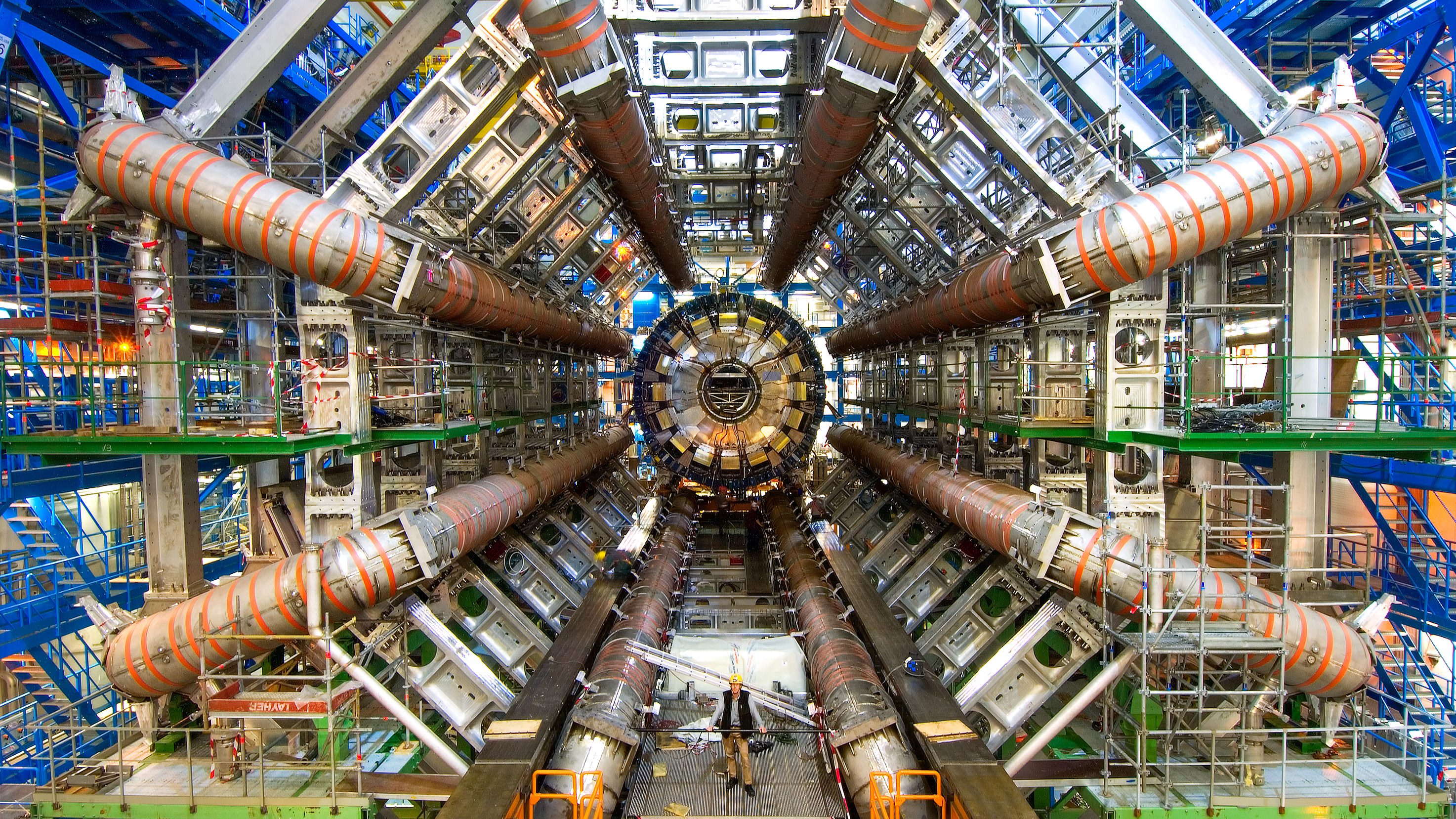
A view inside ATLAS,
one of two general-purpose detectors at the Large Hadron Collider.
MAXIMILIEN BRICE/CERN

Inside the hunt for new physics at the world’s largest particle collider 

In 2012, data from CERN’s Large Hadron Collider (LHC) unearthed a particle called the Higgs boson. The discovery answered a nagging question: where do fundamental particles, such as the ones that make up all the protons and neutrons in our bodies, get their mass?

But now particle physicists have reached an impasse in their quest to discover, produce, and study new particles at colliders. Find out what they’re trying to do about it.

—Dan Garisto 

We can still have nice things 

A place for comfort, fun and distraction to brighten up your day. (Got any ideas? Drop me a line.) 

+ Enjoy this tale of the “joke” sound that accidentally defined 90s rave culture
+ Take a nostalgic trip through the websites of the early 00s. 
+ One for animal lovers: sperm whales have teamed up to support a newborn. 
+ Here’s a long overdue answer to a vital question: can the world’s largest mousetrap catch a limousine? 

The Download: water threats in Iran and AI’s impact on what entrepreneurs make

This is today’s edition of The Download, our weekday newsletter that provides a daily dose of what’s going on in the world of technology.

Desalination plants in the Middle East are increasingly vulnerable 

As the conflict in Iran has escalated, a crucial resource is under fire: the desalinization technology that supplies water in the region. 
 
President Donald Trump has threatened to destroy “possibly all desalinization plants” in Iran if the Strait of Hormuz is not reopened. The impact on farming, industry, and—crucially—drinking in the Middle East could be severe. Find out why

—Casey Crownhart 

This story is part of MIT Technology Review Explains, our series untangling the complex, messy world of technology to help you understand what’s coming next. You can read more from the series here. 

AI is changing how small online sellers decide what to make 

For small entrepreneurs, deciding what to sell and where to make it has traditionally been a slow, labor-intensive process. Now that work is increasingly being done by AI.   

Tools like Alibaba’s Accio compress weeks of product research and supplier hunting into a single chat. Business owners and e-commerce experts say they’re making sourcing more accessible—and slashing the time from product idea to launch.  

Read the full story on how AI is leveling the path to global manufacturing

—Caiwei Chen 

The gig workers who are training humanoid robots at home 

When Zeus, a medical student in Nigeria, returns to his apartment from a long day at the hospital, he straps his iPhone to his forehead and records himself doing chores.  
 
Zeus is a data recorder for Micro1, which sells the data he collects to robotics firms. As these companies race to build humanoids, videos from workers like Zeus have become the hottest new way to train them.   
 
Micro1 has hired thousands of them in more than 50 countries, including India, Nigeria, and Argentina. The jobs pay well locally, but raise thorny questions around privacy and informed consent. The work can be challenging—and weird. Read the full story.  

—Michelle Kim 

This is our latest story to be turned into an MIT Technology Review Narrated podcast, which we’re publishing each week on Spotify and Apple Podcasts. Just navigate to MIT Technology Review Narrated on either platform, and follow us to get all our new content as it’s released. 

The must-reads 

I’ve combed the internet to find you today’s most fun/important/scary/fascinating stories about technology. 

1 Anthropic’s new model found security problems in every OS and browser 
Claude Mythos has been heralded as a cybersecurity “reckoning.” (The Verge)  
+ Anthrophic is limiting the rollout over hacking fears. (CNBC
+ It’s also launching a project that lets Mythos flag vulnerabilities. (Gizmodo
+ Apple, Google, and Microsoft have joined the initiative. (ZDNET

2 Iranian hackers are targeting American critical infrastructure 
Their focus is on energy and water infrastructure. (Wired
+ They’re targeting industrial control devices. (TechCrunch)  

3 Google’s AI Overviews deliver millions of incorrect answers per hour 
Despite a 90% accuracy rate. (NYT $) 
+ AI means the end of internet search as we’ve known it. (MIT Technology Review

4 Elon Musk is trying to oust OpenAI CEO Sam Altman in a lawsuit 
As remedies for Altman allegedly defrauding him. (CNBC
+ Musk wants any damages given to OpenAI’s nonprofit arm. (WSJ $) 

5 ICE has admitted it’s using powerful spyware 
The tools that can intercept encrypted messages. (NPR
+ Immigration agencies are also weaponizing AI videos. (MIT Technology Review

6 Greece has joined the countries banning kids from social media 
Under-15s will be blocked from 2027. (Reuters
+ Australia introduced the world’s first social media ban for children. (Guardian
+ Indonesia recently rolled out the first one in Southeast Asia. (DW)  
+ Experts say they’re a lazy fix. (CNBC

7 Intel will help Elon Musk build his Terafab in Texas 
They aim to manufacture chips for AI projects. (Engadget
+ Musk says it will be the largest-ever semiconductor factory. (Engadget
+ Future AI chips could be built on glass. (MIT Technology Review)  

8 TikTok is building a second billion-euro data center in Finland 
It’s moving data storage for European users. (Reuters
+ Finland has become a magnet for data centers. (Bloomberg $) 
+ But nobody wants one in their backyard. (MIT Technology Review

9 Plans for Canada’s first “virtual gated community” have sparked a row 
The AI-powered surveillance system has divided neighbors. (Guardian
+ Is the Pentagon allowed to surveil Americans with AI? (MIT Technology Review

10 The high-tech engineering of the “space toilet” has been revealed 
Artemis II is the first mission to carry one around the world. (Vox

Quote of the day 

“This case has always been about Elon generating more power and more money for what he wants. His lawsuit remains nothing more than a harassment campaign that’s driven by ego, jealousy and a desire to slow down a competitor.” 

—OpenAI criticizes Musk’s legal action in an X post

One More Thing 

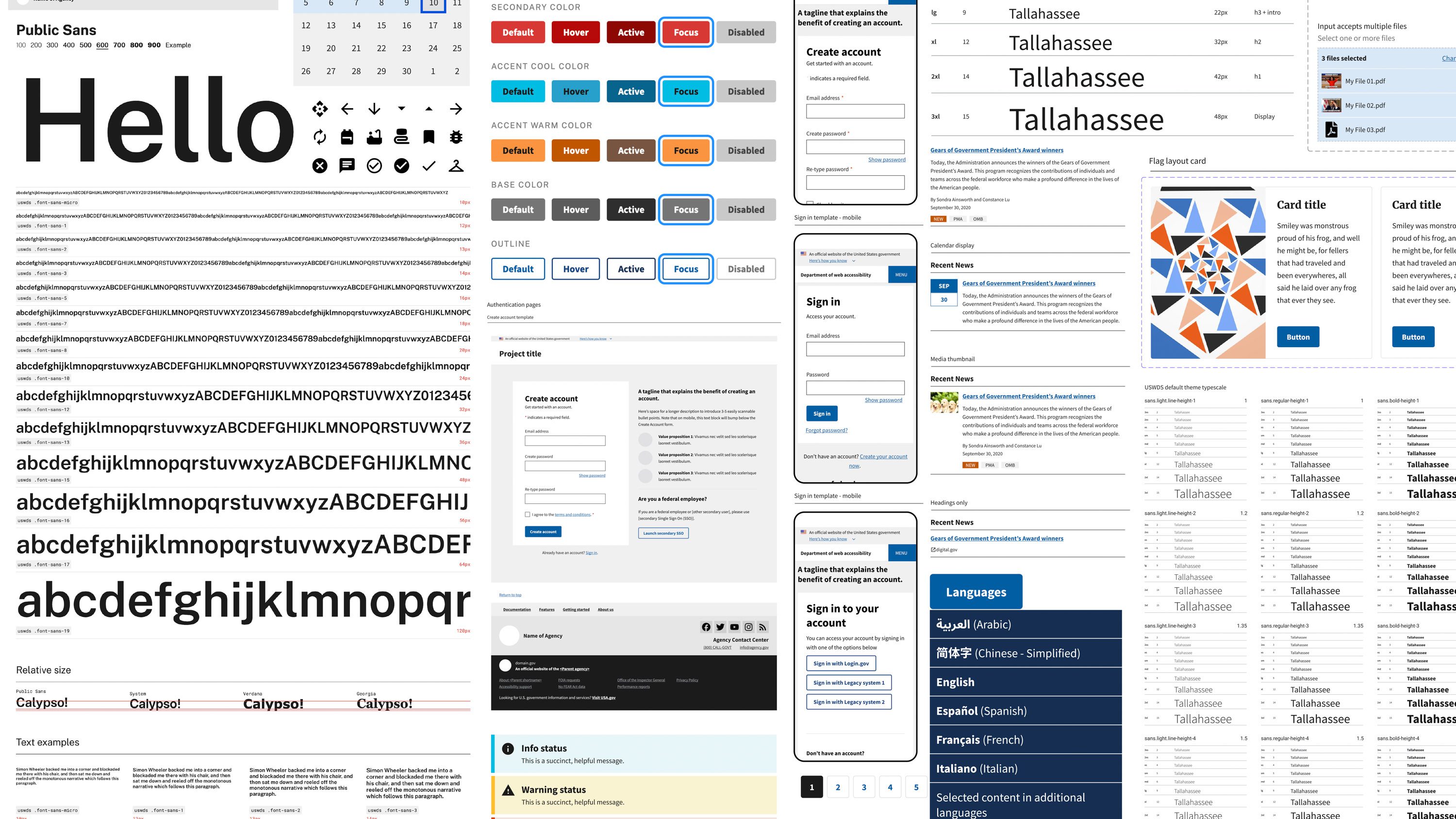
USWDS

Inside the US government’s brilliantly boring websites 

You may not notice it, but your experience on every US government website is carefully crafted. 

Each site aligns an official web design and a custom typeface. They aim to make government websites not only good-looking but accessible and functional for all. 

MIT Technology Review dug into the system’s history and features. Find out what we discovered

—Jon Keegan 

We can still have nice things 

A place for comfort, fun and distraction to brighten up your day. (Got any ideas? Drop me a line.) 

+ Rejoice in the splendor of the “Earthset” image captured by Artemis II. 
+ Meet the fearless cat chasing off bears. 
+ This document vividly explains what makes the octopus so unique. 
+ Revealed: the rhythmic secret that makes emo music so angsty

The Download: AI’s impact on jobs, and data centres in space

This is today’s edition of The Download, our weekday newsletter that provides a daily dose of what’s going on in the world of technology.

The one piece of data that could actually shed light on your job and AI 

Within Silicon Valley’s orbit, an AI-fueled jobs apocalypse is spoken about as a given. Now even economists who have downplayed the threat are coming around to the idea.  

Alex Imas, based at the University of Chicago, is one of them. He believes that any plan to address AI’s impact will depend on collecting one vital piece of data: price elasticity. 

Imas argues that “we need a Manhattan Project” for this. Read the full story to find out why

—James O’Donnell 

This article is from The Algorithm, our weekly newsletter giving you the inside track on all things AI. Sign up to receive it in your inbox every Monday. 

Four things we’d need to put data centers in space 

In January, Elon Musk’s SpaceX applied to launch up to 1 million data centers into Earth’s orbit. The goal? To fully unleash the potential of AI—without triggering an environmental crisis on Earth. 

SpaceX is among a growing list of tech firms pursuing orbital computing infrastructure. But can their plans really work? Here are four must-haves for making space-based data centers a reality

—Tereza Pultarova 

This story is part of MIT Technology Review Explains, our series untangling the complex, messy world of technology to help you understand what’s coming next. You can read more from the series here. 

The must-reads 

I’ve combed the internet to find you today’s most fun/important/scary/fascinating stories about technology. 

1 Trump has again proposed major cuts to US science and tech spending 
He wants to slash nearly every science-focused agency. (Ars Technica
+ If Trump gets his way, the US could face a costly brain drain. (NYT $)  
+ Top research talent is already fleeing the country. (Guardian)  
+ Basic science deserves our boldest investment. (MIT Technology Review

2 Sam Altman lobbied against AI regulations he publicly welcomed  
A bombshell report reveals many OpenAI insiders don’t trust him. (The New Yorker $) 
+ Some have called him a sociopath. (Futurism
+ OpenAI’s CFO fears it won’t be IPO-ready this year. (The Information $)  
+ A war over AI regulation is brewing in the US. (MIT Technology Review

3 NASA’s Artemis II has broken humanity’s all-time distance record 
The astronauts have flown farther than any humans before them. (BBC
+ Their mission includes MIT-developed technology. (Axios

4 Chinese tech firms are selling intel “exposing” US forces 
It comes from combining AI with open-source data.. (WP $) 
+ AI is turning the Iran conflict into theater. (MIT Technology Review

5 War is pushing countries to ditch hyperscalers 
Driven by Iran naming tech giants as military targets. (Rest of World
+ No one wants a data center in their backyard. (MIT Technology Review

6 OpenAI, Anthropic, and Google have united against China’s AI copying 
They’re sharing information on “adversarial distillation” (Bloomberg $) 

7 Anduril and Impulse Space are working on Trump’s “Golden Dome” 
They’re developing space-based missile tracking for the project. (Gizmodo)  

8 OpenAI has urged California to probe Elon Musk’s “anti-competitive behavior.” 
It accuses Musk of trying to “take control of the future of AGI.” (Reuters $) 
+ And claims he coordinated attacks with Mark Zuckerberg. (CNBC
+ A former Tesla president has revealed how he survived working for Musk. (WP $) 

9 DeepSeek’s new AI model will run on Huawei chips 
It’s expected to launch in the next few weeks. (The Information $) 

10 Memes have nuked our culture 
Internet “brain rot” has escaped our phones to take over everything. (NYT $) 

Quote of the day 

“I must say, it was actually quite nice.” 

 —Astronaut Victor Glover tells President Donald Trump what it was like when Artemis II was out of communication with the rest of humanity, The New York Times reports. 

One More Thing 

eucalyptus forest

PABLO ALBARENGA

Inside the controversial tree farms powering Apple’s carbon-neutral goal  

In 2020, Apple set a goal to become net zero by the end of the decade. To hit that target, the company is offsetting its emissions by planting millions of eucalyptus trees in Brazil. 

Apple is betting that the strategy will lead to a greener future. But critics warn that the industrial tree farms will do more harm than good. 

Find out why the plans have sparked a backlash. 

—Gregory Barber 

We can still have nice things 

A place for comfort, fun and distraction to brighten up your day. (Got any ideas? Drop me a line.) 

+ Japan’s automated bike garage is a cyclist’s dream come true.  
+ This deep dive into bird behavior reveals the secrets of their dining habits. (Big thanks to reader Terry Gordon for the find!) 
+ The first photo from the Artemis astronauts vividly captures the glow of our atmosphere. 
+ There’s a new contender for the world’s most gorgeous website: RobertDeNiro.com. 

The Download: plastic’s problem with fuel prices, and SpaceX’s blockbuster IPO

This is today’s edition of The Download, our weekday newsletter that provides a daily dose of what’s going on in the world of technology.

Fuel prices are soaring. Plastic could be next. 

As the war in Iran continues, one of the most visible global economic ripple effects has been fossil-fuel prices. But looking ahead, further consequences could be looming for plastics. 

Plastics are made from petrochemicals, and the supply chain impacts from the conflict are starting to build up. Americans will likely feel the ripples.  

Read the full story to grasp the unpredictable impacts

—Casey Crownhart 

This story is from The Spark, our weekly climate newsletter. Sign up to get it in your inbox every Wednesday. 

The must-reads 

I’ve combed the internet to find you today’s most fun/important/scary/fascinating stories about technology. 

1 SpaceX has filed for an IPO 
It’s set to be the largest ever, targeting a $1.75 trillion valuation. (NYT $)  
+ Which would make Elon Musk the world’s first trillionaire. (Al Jazeera
+ But the IPO could hinge on the success of Moon missions. (LA Times $) 
+ And the conflicts of interest are staggering. (The Next Web
+ Meanwhile, rivals are rising to challenge SpaceX. (MIT Technology Review)  

2 Artemis II is on its way to the Moon 
NASA successfully launched the four astronauts on its rocket yesterday. (Axios
+ The lunar plans could violate international law. (The Verge
+ But the potential scientific advances are tremendous. (Nature)  
+ Check out our roundtable on the next era of space exploration. (MIT Technology Review)  

3 Iran has struck Amazon’s cloud business in Bahrain again 
It promised to hit US companies only yesterday. (FT $) 
+ Other targets include Google, Microsoft, Apple, and Nvidia. (CNBC
+ AWS data centers in Bahrain were also hit last month. (Reuters $) 

4 OpenAI was secretly behind a child safety campaign group 
It pushed for age verification requirements for AI. (The San Francisco Standard $) 
+ OpenAI had backed the legislation as a compromise measure. (WSJ $) 
+ Coincidentally, Sam Altman heads a company providing age verification. (Engadget

5 Anthropic is scrambling to limit the Claude Code leak 
It’s trying to remove 8,000 copies of the exposed code from GitHub. (Gizmodo) 
+ An executive blamed the leak on “process errors.” (Bloomberg $) 
+ Here’s what it reveals about Anthropic’s plans. (Ars Technica
+ AI is making online crimes easier—and it could get much worse. (MIT Technology Review

6 A new Russian “super-app” aims to emulate China’s WeChat 
And give the Kremlin new surveillance powers. (WSJ $) 

7 America’s AI boom is leaving the rest of the world behind  
And it’s concentrating power and wealth in a handful of companies. (Rest of World

8 Chinese chipmakers have claimed nearly half the country’s market 
Nvidia’s lead is shrinking rapidly. (Reuters $) 

9 The first quantum computer to break encryption is imminent  
New research reveals how it could happen. (New Scientist

10 The world’s oldest tortoise has been embroiled in a crypto scam 
Reports that Jonathan died at just 194 years old are thankfully false. (Guardian

Quote of the day 

“Starlink is the only reason this valuation is defensible.” 

—Shay Boloor, chief market strategist at Futurum Equities, tells Reuters why SpaceX has such high hopes for its IPO. 

One More Thing 

These companies are creating food out of thin air 

Dried cells—it’s what’s for dinner. At least that’s what a new crop of biotech startups, armed with carbon-guzzling bacteria and plenty of capital, are hoping to convince us.  

Their claims sound too good to be true: they say they can make food out of thin air. But that’s exactly how certain soil-dwelling bacteria work. 

Startups are replicating the process to turn abundant carbon dioxide into nutritious “air protein.” They believe it could dramatically lower farming emissions—and even disrupt agriculture altogether. Read the full story

—Claire L. Evans 

We can still have nice things 

A place for comfort, fun and distraction to brighten up your day. (Got any ideas? Drop me a line.) 

+ Need more Artemis II in your life? This site takes you inside the flight. 
+ Here’s a fascinating look at the recording errors that improved songs. 
+ Good news: the elusive Nightjar bird is making a comeback. 
+ Finally, a master chef has baked clam chowder donuts

The Download: gig workers training humanoids, and better AI benchmarks

This is today’s edition of The Download, our weekday newsletter that provides a daily dose of what’s going on in the world of technology.

The gig workers who are training humanoid robots at home 

When Zeus, a medical student in Nigeria, returns to his apartment from a long day at the hospital, he straps his iPhone to his forehead and records himself doing chores. 

Zeus is a data recorder for Micro1, which sells the data he collects to robotics firms. As these companies race to build humanoids, videos from workers like Zeus have become the hottest new way to train them.  

Micro1 has hired thousands of them in more than 50 countries, including India, Nigeria, and Argentina. The jobs pay well locally, but raise thorny questions around privacy and informed consent. The work can be challenging—and weird. Read the full story

—Michelle Kim 

Our readers recently voted humanoid robots the “11th breakthrough” to add to our 2026 list of 10 Breakthrough Technologies. Check out what else officially made the cut. 

AI benchmarks are broken. Here’s what we need instead. 

For decades, AI has been evaluated based on whether it can outperform humans on isolated problems. But it’s seldom used this way in the real world. 

While AI is assessed in a vacuum, it operates in messy, complex, multi-person environments over time. This misalignment leads us to misunderstand its capabilities, risks, and impacts. 

We need new benchmarks that assess AI’s performance over longer horizons within human teams, workflows, and organizations. Here’s a proposal for one such approach: Human–AI, Context-Specific Evaluation.  

—Angela Aristidou, professor at University College London and faculty fellow at the Stanford Digital Economy Lab and the Stanford Human-Centered AI Institute. 

MIT Technology Review Narrated: can quantum computers now solve health care problems? We’ll soon find out. 

In a laboratory on the outskirts of Oxford, a quantum computer built from atoms and light awaits its moment. The device is small but powerful—and also very valuable. Infleqtion, the company that owns it, is hoping its abilities will win $5 million at a competition.  

The prize will go to the quantum computer that can solve real health care problems that “classical” computers cannot. But there can be only one big winner—if there is a winner at all. 

—Michael Brooks 

This is our latest story to be turned into an MIT Technology Review Narrated podcast, which we’re publishing each week on Spotify and Apple Podcasts. Just navigate to MIT Technology Review Narrated on either platform, and follow us to get all our new content as it’s released. 

The must-reads 

I’ve combed the internet to find you today’s most fun/important/scary/fascinating stories about technology. 

1 OpenAI just closed the biggest funding round in Silicon Valley history 
It raised $122 billion ahead of its blockbuster IPO, which is expected later this year. (WSJ $) 
+ It’s also prepping a push to “rethink the social contract.” (Vanity Fair $) 
+ Campaigners are urging people to quit ChatGPT. (MIT Technology Review  

2 Iran has threatened to attack 18 US tech companies  
It’s eyeing their operations in the Middle East. (Politico
+ Targets include Nvidia, Apple, Microsoft, and Google. (Engadget
+ Iran struck AWS data centers earlier this month. (Reuters $) 

3 Artemis II is about to fly humans to the Moon. Here’s the science they’ll do 
Their experiments will set the stage for future explorers. (Nature
+ You can watch the launch attempt today. (Engadget)  

4 Putin is trying to take full control of Russia’s internet 
New outages and blockages are cutting the country off from the world. (NYT $) 
+ Can we repair the internet? (MIT Technology Review

5 A robotaxi outage in China left passengers stranded on highways  
Baidu vehicles froze on the streets of Wuhan. (Bloomberg $) 
+ Police are blaming a “system failure.” (Reuters $) 

6 US government requests for social media user data are soaring 
They’ve skyrocketed by 770% in the past decade. (Bloomberg $) 
+ Is the Pentagon allowed to surveil Americans with AI? (MIT Technology Review

7 Tesla has admitted that humans sometimes drive its robotaxis 
Remote drivers occasionally control them completely. (Wired $) 

8 A satellite-smashing chain reaction could spiral out of control 
This data visualization captures the dangers of space collisions. (Guardian
+ Here’s all the stuff we’ve put into space. (MIT Technology Review

9 Meta’s smartglasses can turn you into a creep 
According to one journalist who wore them for a month. (Guardian

10 A Claude Code leak has exposed plans for a virtual pet  
We could be getting a Tamagotchi for the GenAI era(The Verge

Quote of the day 

“From now on, for every assassination, an American company will be destroyed.” 

—Iran’s Islamic Revolutionary Guard Corps (IRGC) threatens US tech firms in an affiliated Telegram, per CNBC

One More Thing 

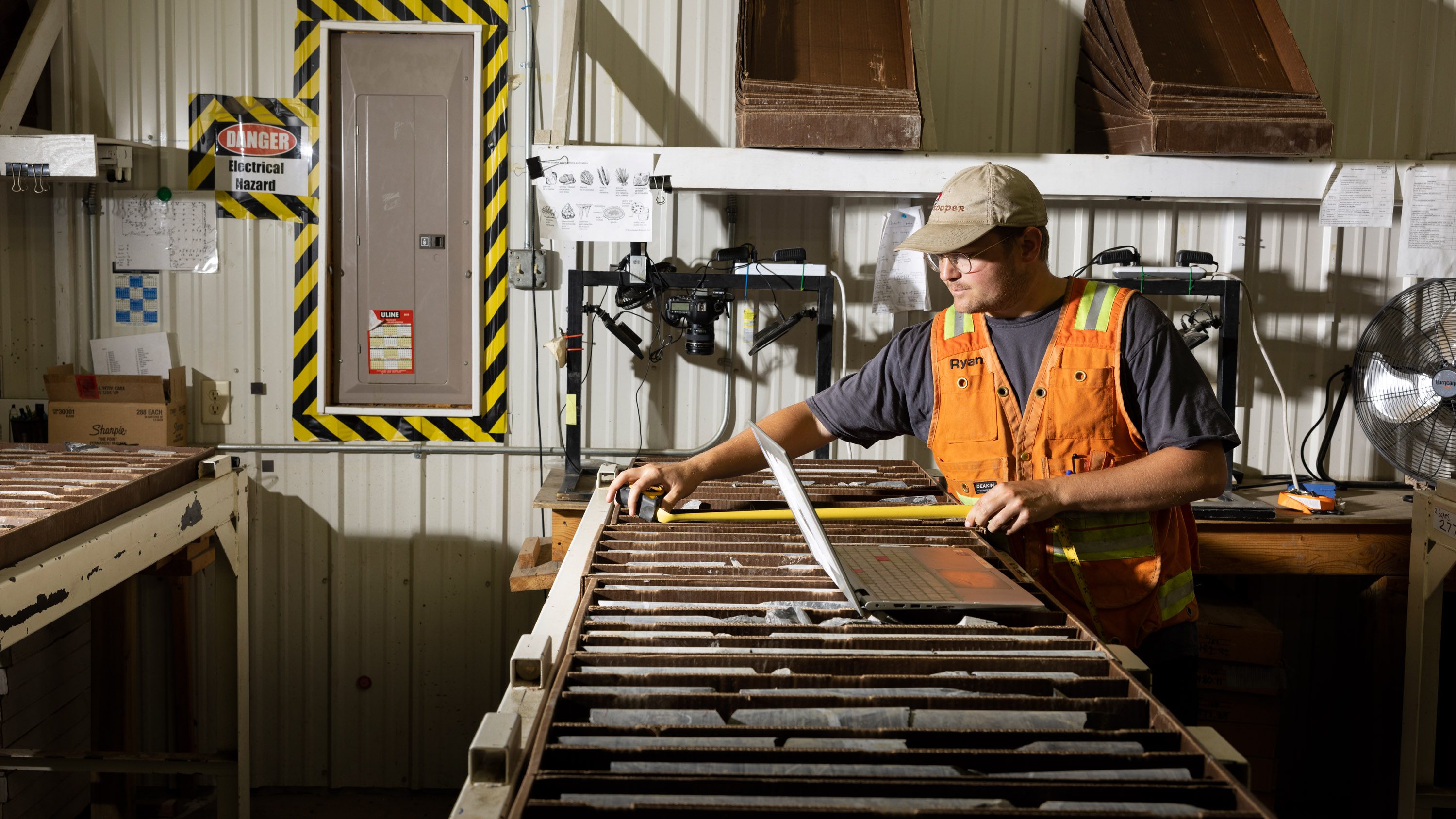
Ryan Willgosh of Talon Metals logs samples

ACKERMAN + GRUBER

How one mine could unlock billions in EV subsidies 

In a pine farm north of the tiny town of Tamarack, Minnesota, Talon Metals has uncovered one of America’s densest nickel deposits. Now it wants to begin mining the ore. 

Products made from the nickel could net more than $26 billion in subsidies through the Inflation Reduction Act (IRA), which is starting to transform the US economy. To understand how, we tallied up the potential tax credits available. Read the full story to find out what we discovered

—James Temple 

We can still have nice things 

A place for comfort, fun and distraction to brighten up your day. (Got any ideas? Drop me a line.) 

+ A selfless group of gluttons tried to taste-test every potato chip in the world.  
+ Get romantic inspiration from these penguins’ engagement pebbles
+ Good news: global terrorism has hit a 15-year low
+ Enjoy endless new views through these windows around the world.  

The Download: AI health tools and the Pentagon’s Anthropic culture war

This is today’s edition of The Download, our weekday newsletter that provides a daily dose of what’s going on in the world of technology.

There are more AI health tools than ever—but how well do they work? 

In the last few months alone, Microsoft, Amazon, and OpenAI have all launched medical chatbots. 

There’s a clear demand for these tools, given how hard it is for many people to access advice through the existing medical system—and they could make safe and useful recommendations. But concerns have surfaced about how little external evaluation they undergo before being released to the public.  

Read the full story to understand what’s at stake

—Grace Huckins 

The Pentagon’s culture war tactic against Anthropic has backfired 

A judge has temporarily blocked the Pentagon from labeling Anthropic a supply chain risk and ordering government agencies to stop using its AI. Her intervention suggests that the feud never needed to reach such a frenzy. 

It did so because the government disregarded the existing process for such disputes—and fueled the fire on social media. Find out how it happened and what comes next

—James O’Donnell 

This story is from The Algorithm, our weekly newsletter giving you the inside track on all things AI. Sign up to receive it in your inbox every Monday. 

The must-reads 

I’ve combed the internet to find you today’s most fun/important/scary/fascinating stories about technology. 

1 California has defied Trump to impose new AI regulations 
Governor Newsom signed off on the new standards yesterday.  (Guardian
+ Firms seeking state contracts will need extra safeguards. (Reuters $) 
+ States are installing guardrails despite Trump’s order to stop. (NYT $)  
+ An AI regulation war is brewing in the US. (MIT Technology Review)  

2 Experiments have verified quantum simulations for the first time 
It’s a breakthrough for quantum computing applications. (Nature
+ Which could one day help solve healthcare problems. (MIT Technology Review

3 The new White House app is a security and privacy nightmare 
It extensively tracks users and relies on external code. (Gizmodo
+ The new app promises “unparalleled access” to Trump. (CNET
+ It also invites users to report people to ICE. (The Verge

4 Big Tech’s $635 billion AI spending faces an energy shock test 
The Middle East crisis is clouding prospects for growth. (Reuters $) 
+ Here are three big unknowns about AI’s energy burden. (MIT Technology Review

5 Meta and Google have been accused of breaking child safety rules 
Australia suspects they flouted a social media ban. (Bloomberg $) 
+ Indonesia is also investigating non-compliance. (Reuters $) 

6 Nebius is building a $10 billion AI data center in Finland 
The company is rapidly expanding Europe’s AI infrastructure. (CNBC

7 South Korea’s chipmakers’ helium stocks will last until June 
Beyond that? Who knows. (Reuters $) 
+ Shortages caused by the Iran war threaten the chip industry. (NYT $)  

8 Another Starlink satellite has inexplicably exploded  
SpaceX suffered a similar episode in December. (The Verge
+ We went inside Ukraine’s largest Starlink repair shop. (MIT Technology Review

9 Bluesky’s new AI tool is already its most blocked account—after JD Vance 
About 83 times as many users have blocked it as have followed it. (TechCrunch

10 An AI agent banned from Wikipedia has lashed out in angry blogs 
The bot accused its human editors of “uncivil behavior.” (404 Media)  

Quote of the day 

“Is any of this illegal? Probably not. Is it what you’d expect from an official government app? Probably not either.” 

—Security researcher Thereallo reviews the White House’s new app.

One More Thing 

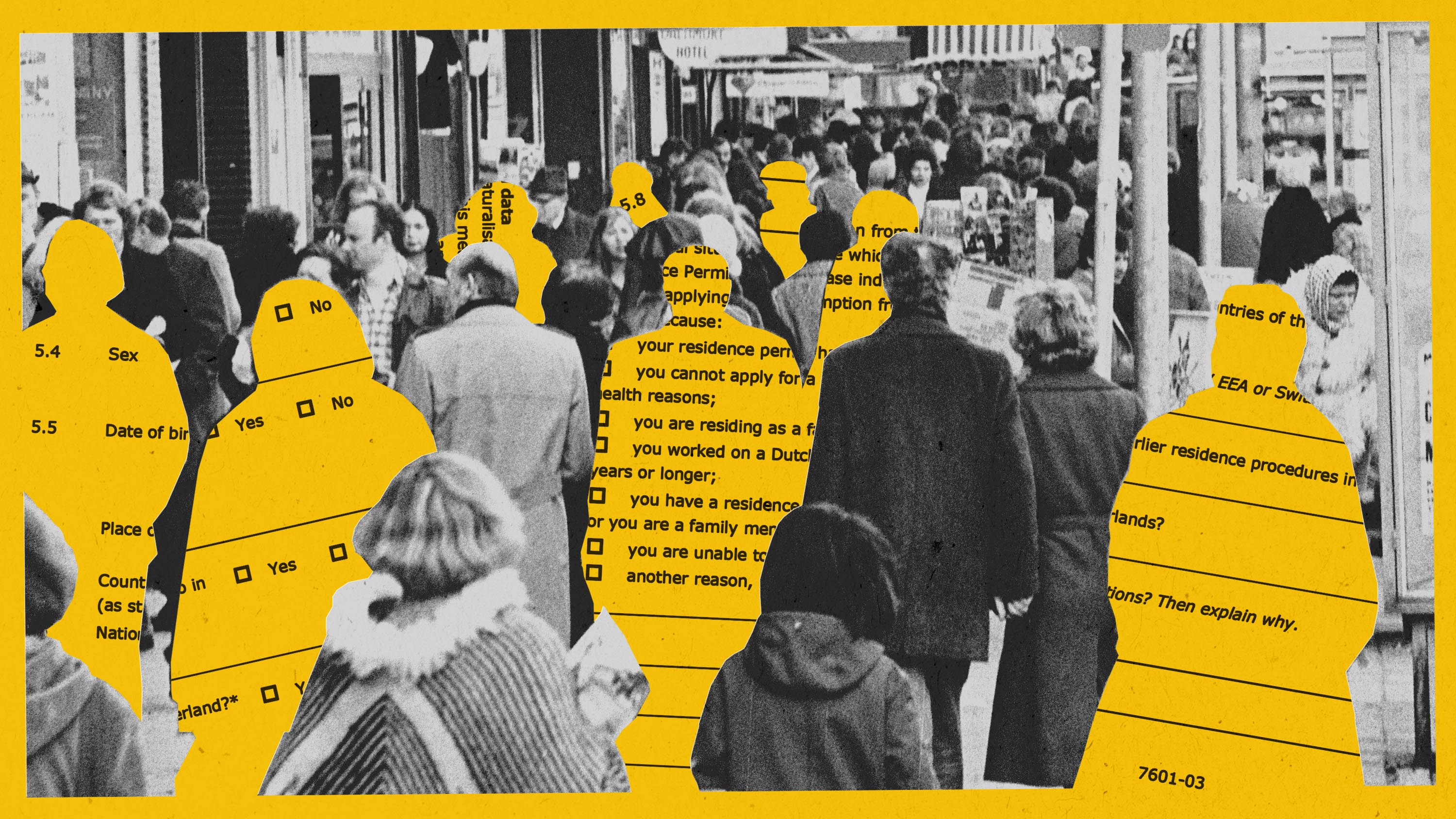
CHANTAL JAHCHAN

Inside Amsterdam’s high-stakes experiment to create fair welfare AI 

When Hans de Zwart, a digital rights advocate, saw Amsterdam’s plan to have an algorithm evaluate every welfare applicant for potential fraud, he nearly fell out of his chair. He believed the system had “unfixable problems.”  

Meanwhile, Paul de Koning, a consultant to the city, was excited. He saw immense potential to improve efficiencies and remove biases. 

These opposing viewpoints epitomize a global debate about whether algorithms can ever make fair decisions that shape people’s lives. Read the full story.  

—Eileen Guo, Gabriel Geiger, and Justin-Casimir Braun 

We can still have nice things 

A place for comfort, fun and distraction to brighten up your day. (Got any ideas? Drop me a line.) 

+ A newly authenticated Rembrandt had been hiding in plain sight for years. 
+ This debunking of guitar legends is musical enlightenment for strummers. 
Smoking into bubbles looks oddly satisfying. 
+ The man who made the front page twice exposes the thin line between heroes and villains. 

The Download: brainless human clones and the first uterus kept alive outside a body

This is today’s edition of The Download, our weekday newsletter that provides a daily dose of what’s going on in the world of technology.

Inside the stealthy startup that pitched brainless human clones 

After operating in secrecy for years, R3 Bio, a California-based startup, suddenly revealed last week that it had raised money to create nonsentient monkey “organ sacks” as an alternative to animal testing. But there is more to the story. And R3 doesn’t want that story told. 

MIT Technology Review discovered that founder John Schloendorn also pitched a startling, ethically charged vision: “brainless clones” that serve as backup human bodies. Find out all the details on the radical proposal

—Antonio Regalado 

A woman’s uterus has been kept alive outside the body for the first time 

Ten months ago, reproductive health researchers placed a freshly donated human uterus inside a new device they call “Mother.” They connected the organ to the machine’s plastic veins and arteries and pumped in modified human blood. 

The device kept the uterus alive for a day, a new feat that could lead to longer-term maintenance of wombs outside the body. Future versions of the technology could shine new light on pregnancies—and potentially even grow a human fetus. Read the full story

—Jessica Hamzelou 

The must-reads 

I’ve combed the internet to find you today’s most fun/important/scary/fascinating stories about technology. 

1 AI data centers can significantly warm up surrounding areas  
The “heat islands” may already affect 340 million people. (New Scientist
Mistral has raised $830M to build Nvidia-powered AI centers in Europe. (FT $) 
+ But nobody wants a data center in their backyard. (MIT Technology Review

2 Elon Musk reportedly joined Trump’s call with Modi about the Iran War 
It remains unclear what Musk was doing during the conversation. (NYT $)  
+ India has disputed the report. (Independent
+ The war poses a grave threat to the EV market. (Rest of World

3 Eli Lilly has struck a deal to bring AI-developed drugs to the market 
It’s secured a $2.75 billion drug collaboration with Insilico Medicine. (Reuters $) 
+ A I-designed compounds can kill drug-resistant bacteria. (MIT Technology Review

4 More and more countries are curbing children’s social media access 
Austria is the latest to pursue a ban. (Engadget
+ Indonesia has rolled out the first one in Southeast Asia. (DW
+ UK Prime Minister Keir Starmer said he will also “have to act.” (Guardian)  

5 Tech stocks just had their worst week in nearly a year 
Thanks to a combination of the Iran war and legal disputes. (CNBC
+ Tech insiders are split over the AI bubble. (MIT Technology Review

6 Meta is launching new smart glasses for prescription wearers 
It plans to debut them next week. (Bloomberg $) 

7 Taiwan is probing 11 Chinese firms for illegal poaching of tech talent 
Its semiconductors are entangled in the tensions with Beijing. (Reuters

8 Bluesky has built an AI app for customizing social media feeds 
It uses Anthropic’s Claude. (TechCrunch

9 A psychologist is making music with his brain implant 
He believes enjoyment is a prerequisite for BCI success. (Wired $) 

10 The world’s smallest QR code could store data for centuries 
It’s smaller than bacteria. (Science Daily

Quote of the day 

“We should be thinking about protecting young people in the digital world as opposed to protecting them from the digital world.” 

—YouTube CEO Neal Mohan gives the New York Times his take on the debate around children’s safety online. 

One More Thing 

AJ PICS / ALAMY STOCK PHOTO

AI’s growth needs the right interface 

You’d have to be pudding-brained to believe that chatbots are the best way to use computers. The real opportunity is a system built atop the visual interfaces we already know, but navigated through a natural mix of voice and touch. 

Crucially, this won’t just be a computer that we can use. It’ll be one we can break and remake to suit whatever uses we want. Instead of merely consuming technology like the gelatinous humans in Wall-E, we should be able to architect it to suit our own ends 

This idea is already lurching to life. Read the full story to find out how

—Cliff Kuang 

We can still have nice things 

A place for comfort, fun and distraction to brighten up your day. (Got any ideas? Drop me a line.) 
 
+ These floating designs will elevate your perspective on architecture. 
+ Uğur Gallenkuş’s portraits of two worlds in one image beautifully build bridges. 
+ This is the anti-Karen that the world needs right now. 
+ If only we could all find a love as pure as this kitty clinging to its favorite toy.