The UK is building an alarm system for climate tipping points

The UK’s new moonshot research agency just launched an £81 million ($106 million) program to develop early warning systems to sound the alarm if Earth gets perilously close to crossing climate tipping points.

A climate tipping point is a threshold beyond which certain ecosystems or planetary processes begin to shift from one stable state to another, triggering dramatic and often self-reinforcing changes in the climate system. 

The Advanced Research and Invention Agency (ARIA) will announce today that it’s seeking proposals to work on systems for two related climate tipping points. One is the accelerating melting of the Greenland Ice Sheet, which could raise sea levels dramatically. The other is the weakening of the North Atlantic Subpolar Gyre, a huge current rotating counterclockwise south of Greenland that may have played a role in triggering the Little Ice Age around the 14th century. 

The goal of the five-year program will be to reduce scientific uncertainty about when these events could occur, how they would affect the planet and the species on it, and over what period those effects might develop and persist. In the end, ARIA hopes to deliver a proof of concept demonstrating that early warning systems can be “affordable, sustainable, and justified.” No such dedicated system exists today, though there’s considerable research being done to better understand the likelihood and consequences of surpassing these and other climate tipping points.

Sarah Bohndiek, a program director for the tipping points research program, says we underappreciate the possibility that crossing these points could significantly accelerate the effects of climate change and increase the dangers, possibly within the next few decades.

By developing an early warning system, “we might be able to change the way that we think about climate change and think about our preparedness for it,” says Bohndiek, a professor of biomedical physics at the University of Cambridge. 

ARIA intends to support teams that will work toward three goals: developing low-cost sensors that can withstand harsh environments and provide more precise and needed data about the conditions of these systems; deploying those and other sensing technologies to create “an observational network to monitor these tipping systems”; and building computer models that harness the laws of physics and artificial intelligence to pick up “subtle early warning signs of tipping” in the data.

But observers stress that designing precise early warning systems for either system would be no simple feat and might not be possible anytime soon. Not only do scientists have limited understanding of these systems, but the data  on how they’ve behaved in the past is patchy and noisy, and setting up extensive monitoring tools in these environments is expensive and cumbersome. 

Still, there’s wide agreement that we need to better understand these systems and the risks that the world may face.

Unlocking breakthroughs

It is clear that the tipping of either of these systems could have huge effects on Earth and its inhabitants.

As the world warmed in recent decades, trillions of tons of ice melted off the Greenland Ice Sheet, pouring fresh water into the North Atlantic, pushing up ocean levels, and reducing the amount of heat that the snow and ice reflected back into space. 

Melting rates are increasing as Arctic warming speeds ahead of the global average and hotter ocean waters chip away at ice shelves that buttress land-based glaciers. Scientists fear that as those shelves collapse, the ice sheet will become increasingly unstable. 

The complete loss of the ice sheet would raise global sea levels by more than 20 feet (six meters), submerging coastlines and kick-starting mass climate migration around the globe.

But at any point along the way, the influx of water into the North Atlantic could also substantially slow down the convection systems that help to drive the Subpolar Gyre, because fresher water isn’t as dense and prone to sinking. (Saltier, cooler water readily sinks.)

The weakening of the Subpolar Gyre could cool parts of northwest Europe and eastern Canada, shift the jet stream northward, create more erratic weather patterns across Europe, and undermine the productivity of agriculture and fisheries, according to one study last year. 

The Subpolar Gyre may also influence the strength of the Atlantic Meridional Overturning Circulation (AMOC), a network of ocean currents that moves massive amounts of heat, salt, and carbon dioxide around the globe. The specifics of how a weakened Subpolar Gyre would affect the AMOC are still the subject of ongoing research, but a dramatic slowdown or shutdown of that system is considered one of the most dangerous climate tipping points. It could substantially cool Northern Europe, among other wide-ranging effects.  

The tipping of the AMOC itself, however, is not the focus of the ARIA research program. 

The agency, established last year to “unlock scientific and technological breakthroughs,” is a UK answer to the US’s DARPA and ARPA-E research programs. Other projects it’s funding include efforts to develop precision neurotechnologies, improve robot dexterity, and build safer and more energy-efficient AI systems. ARIA is also setting up programs for developing synthetic plants and exploring climate interventions that could cool the planet, including solar geoengineering. 

Bohndiek and the other program director of the tipping points program—Gemma Bale, an assistant professor at the University of Cambridge—are both medical physicists who previously focused on developing medical devices. At ARIA, they initially expected to work on efforts to decentralize health care.

But Bohndiek says they soon realized that “a lot of these things that need to change at the individual health level will be irrelevant if climate change truly is going to cross these big thresholds.” She adds, “If we’re going to end up in a society where the world is so much warmer … does the problem of decentralizing health care matter anymore?” 

Bohndiek and Bale stress that they hope the program will draw applications from researchers who haven’t traditionally worked on climate change. They add that any research teams proposing to work in or around Greenland must take appropriate steps to engage with local communities, governments, and other research groups.

Tipping dangers

Efforts are already underway to develop greater understanding of the Subpolar Gyre and the Greenland Ice Sheet, including the likelihood, timing, and consequences of their tipping into different states.

There are, for instance, regular field expeditions to measure and refine modeling of ice loss in Greenland. A variety of research groups have set up sensor networks that cross various points of the Atlantic to more closely monitor the shifting conditions of current systems. And several studies have already highlighted the appearance of some “early warning signals” of a potential collapse of the AMOC in the coming decades.

But the goal of the ARIA program is to accelerate such research efforts and sharpen the field’s focus on improving our ability to predict tipping events. 

William Johns, an oceanographer focused on observation of the AMOC at the University of Miami, says the field is a long way from being able to state confidently that systems like the Subpolar Gyre or AMOC will weaken beyond the bounds of normal natural fluctuations, much less say with any precision when they would do so. 

He stresses that there’s still wide disagreement between models on these sorts of questions and limited evidence of what took place before they tipped in the ancient past, all of which makes it difficult to even know what signals we should be monitoring for most closely.

Jaime Palter, an associate professor of oceanography at the University of Rhode Island, adds that she found it a “puzzling” choice to fund a research program focused on the tipping of the Subpolar Gyre. She notes that researchers believe the wind drives the system more than convection, that its connection to the AMOC isn’t well understood, and that the slowdown of the latter system is the one that more of the field is focused on—and more of the world is worried about.

But she and Johns both said that providing funds to monitor these systems more closely is critical to improve scientific understanding of how they work and the odds that they will tip.

Radical interventions

So what could the world do if ARIA or anyone else does manage to develop systems that can predict, with high confidence, that one of these systems will shift into a new state in, say, the next decade?

Bohndiek stresses that the effects of reaching a tipping point wouldn’t be immediate, and that the world would still have years or even decades to take actions that might prevent the breakdown of such systems, or begin adapting to the changes they’ll bring. In the case of runaway melting of the ice sheet, that could mean building higher seawalls or relocating cities. In the case of the Subpolar Gyre weakening, big parts of Europe might have to look to other areas of the world for their food supplies.

More reliable predictions might also alter people’s thinking about more dramatic interventions, such as massive and hugely expensive engineering projects to prop up ice shelves or to freeze glaciers more stably onto the bedrock they’re sliding upon. 

Similarly, they might shift how some people weigh the trade-offs between the dangers of climate change and the risks of interventions like solar geoengineering, which would involve releasing particles in the atmosphere that could reflect more heat back into space.

But some observers note that if enough fresh water is pouring into the Atlantic to weaken the gyre and substantially slow the broader Atlantic current system, there’s very little the world can do to stop it.

“I’m afraid I don’t really see an action you could take,” Johns says. “You can’t go vacuum up all the fresh water—it’s not going to be feasible—and you can’t stop it from melting on the scale we’d have to.”

Bale readily acknowledges that they’ve selected a very hard problem to solve, but she stresses that the point of ARIA research programs is to work at the “edge of the possible.” 

“We genuinely don’t know if an early warning system for these systems is possible,” she says. “But I think if it is possible, we know that it would be valuable and important for society, and that’s part of our mission.”

Canada’s 2023 wildfires produced more emissions than fossil fuels in most countries

This article is from The Spark, MIT Technology Review’s weekly climate newsletter. To receive it in your inbox every Wednesday, sign up here.

Last year’s Canadian wildfires smashed records, burning about seven times more land in Canada’s forests than the annual average over the previous four decades. Eight firefighters were killed and 180,000 people displaced. 

Now a new study reveals how these blazes can create a vicious cycle, contributing to climate change even as climate-fueled conditions make for worse wildfire seasons.  Emissions from 2023’s Canadian wildfires reached 647 million metric tons of carbon, according to the study published today in Nature. If the fires were a country, they’d rank as the fourth-highest emitter, following only China, the US, and India. The sky-high emissions from the fires reveals how human activities are pushing natural ecosystems to a place that’s making things tougher for our climate efforts.

“The fact that this was happening over large parts of Canada and went on all summer was really a crazy thing to see,” says Brendan Byrne, a scientist at the NASA Jet Propulsion Laboratory and the lead author of the study.

Digging back into the climate record makes it clear how last year’s conditions contributed to an unusually brutal fire season, Byrne says; 2023 was especially warm and especially dry, both of which allow fires to spread more quickly and burn more intensely.

A few regions were especially notable in the blazes, like parts of Quebec, a typically wet area in the east of Canada that saw half the normal precipitation. These fires were the ones generating smoke that floated down the east coast of the US. But overall, what was so significant about the 2023 fire season was just how widespread the fire-promoting conditions were, Byrne says.

While climate change doesn’t directly spark any one fire, researchers have traced hot, dry conditions that worsen fires to the effects of human-caused climate change. The extreme fire conditions in eastern Canada were over twice as likely because of climate change, according to a 2023 analysis by World Weather Attribution.

And in turn, the fires are releasing massive amounts of greenhouse gases into the atmosphere. By combining satellite images of the burned areas with measurements of some of the gases emitted, Byrne and his team were able to tally up the total carbon released into the atmosphere with more accuracy than estimates that rely on the images alone, he says.

In total, the fires contributed at least four times more carbon to the atmosphere than all fossil-fuel emissions in Canada last year.

Fires are part of natural, healthy ecosystems, and burns on their own don’t necessarily represent a disaster for climate change. After a typical fire season, a forest begins to regrow, capturing carbon dioxide from the atmosphere as it does so. This continues a cycle in which carbon moves around the planet.

The problem comes if and when that cycle gets thrown off—for instance, if fires are too intense and too widespread for too many years. And there’s reason to be nervous about future fire seasons. While 2023’s conditions were unusual compared with the historical record, climate modeling reveals they could be normal by the 2050s.

“I think it’s very likely that we’re going to see more fires in Canada,” Byrne tells me. “But we don’t really understand how that’s going to impact carbon budgets.”

What Byrne means by a carbon budget is the quantity of greenhouse gases we can emit into the atmosphere before we shoot past our climate goals. We have something like seven years left of current emissions levels before we’re more likely than not to pass 1.5 °C of warming over preindustrial levels, according to the 2023 Global Carbon Budget Report

It was already clear that we need to stop emissions from power plants, vehicles, and a huge range of other clearly human activities to address climate change. Last year’s wildfires should increase the urgency of that action, because pushing natural ecosystems beyond what they can handle will only add to the challenge going forward. 


Now read the rest of The Spark

Related reading

This company wants to use balloons to better understand the conditions on the ground before wildfires start in Colorado, as Sarah Scoles covered in a story earlier this summer

Canada isn’t the only country to see unusual fires in recent years. My colleague James Temple covered Australia’s intense 2019-2020 wildfire season

Another thing

Want to try out solar geoengineering? A new AI tool allows you to do just that—sort of. 

Andrew Ng has released an online program that simulates what might happen under different emissions scenarios if technologies that can block out some sunlight are used in an effort to slow warming. Read the story here and give the simulator a try. 

Keeping up with climate  

Scientists want to genetically engineer cows’ microbiomes to cut down on methane emissions. The animals’ digestive systems rely on archaea that emit the powerful greenhouse gas. Tweaking them could be a major help in cutting climate pollution from agriculture. (Washington Post)

Some big tech companies are using tricky math that can obscure the true emissions from rising electricity use, in part due to AI. Buying renewable energy credits can make a company’s energy use look better on paper, but the practice has some problems. (Bloomberg)

→ How companies reach their emissions goals can be more important than how quickly they do so. (MIT Technology Review)

The midwestern US is dealing with hot weather and high humidity, in part because of something called corn sweat. Crops naturally release water into the air when it’s warm, causing higher humidity. (Scientific American)

Hydrogen can provide an alternative to fossil fuels, but it likely won’t have universally positive effects in every industry. Hydrogen will be most useful in sectors like chemical production and least so in buildings and light-duty vehicles, according to a new report. (Latitude Media)

→ Here’s why hydrogen vehicles are losing the race to power cleaner cars. (MIT Technology Review)

Batteries are far outpacing natural gas in new additions to the US grid. In the first half of 2023, 96% of such additions were from renewable sources, batteries, or nuclear power. (Wired)

Tesla agreed to open its Supercharger network to vehicles from other automakers last year, but the plan has been plagued by delays. Drivers should be able to access the network next year, but so far only two companies have gotten past the first step of updating the software needed. (New York Times)

Sage Geosystems, a company using geothermal technology to generate and store energy, announced it has an agreement to supply 150 megawatts of power to Meta. (Canary Media)

Coal powers about 63% of China’s electric grid today, and the country is the world’s largest consumer of the fuel. But progress with technologies like hydropower and nuclear suggests the country could shift to lower-emissions energy sources. (Heatmap)

Want to understand the future of technology? Take a look at this one obscure metal.

This article is from The Spark, MIT Technology Review’s weekly climate newsletter. To receive it in your inbox every Wednesday, sign up here.

On a sunny morning in late spring, I found myself carefully examining an array of somewhat unassuming-looking rocks at the American Museum of Natural History. 

I’ve gotten to see some cutting-edge technologies as a reporter, from high-tech water treatment plants to test nuclear reactors. Peering at samples of dusty reddish monazite and speckled bastnäsite, I saw the potential for innovation there, too. That’s because all the minerals spread out across the desk contain neodymium, a rare earth metal that’s used today in all sorts of devices, from speakers to wind turbines. And it’s likely going to become even more crucial in the future. 

By the time I came to the museum to see some neodymium for myself, I’d been thinking (or perhaps obsessing) about the metal for months—basically since I’d started reporting a story for our upcoming print issue that is finally out online. The story takes a look at what challenges we’ll face with materials for the next century, and neodymium is center stage. Let’s take a look at why I spent so long thinking about this obscure metal, and why I think it reveals so much about the future of technology. 

In the new issue of our print magazine, MIT Technology Review is celebrating its 125th anniversary. But rather than look back to our 1899 founding, the team decided to look forward to the next 125 years. 

I’ve been fascinated with topics like mining, recycling, and alternative technologies since I’ve been reporting on climate. So when I started thinking about the distant future, my mind immediately went to materials. What kind of stuff will we need? Will there be enough of it? How does tech advancement change the picture?

Zooming out to the 2100s and beyond changed the stakes and altered how I thought about some of the familiar topics I’ve been reporting on for years. 

For example, we have enough of the stuff we need to power our world with renewables. But in theory, there is some future point at which we could burn through our existing resources. What happens then? As it turns out, there’s more uncertainty about the amount of resources available than you might imagine. And we can learn a lot from previous efforts to project when the supply of fossil fuels will begin to run out, a concept known as peak oil. 

We can set up systems to reuse and recycle the metals that are most important for our future. These facilities could eventually help us mine less and make material supply steadier and even cheaper. But what happens when the technology these facilities are designed to recycle inevitably changes, possibly rendering old setups obsolete? Predicting what materials will be important, and adjusting efforts to make and reuse them, is complicated to say the least. 

To try to answer these massive questions, I took a careful look at one particular metal: neodymium. It’s a silvery-white rare earth metal, central to powerful magnets that are at the heart of many different technologies, both in the energy sector and beyond. 

Neodymium can stand in for many of the challenges and opportunities we face with materials in the coming century. We’re going to need a lot more of it in the near future, and we could run into some supply constraints as we race to mine enough to meet our needs. It’s possible to recycle the metal to cut down on the extraction needed in the future, and some companies are already trying to set up the infrastructure to do so. 

The world is well on its way to adapting to conditions that are a lot more neodymium-centric. But at the same time, efforts are already underway to build technologies that wouldn’t need neodymium at all. If companies are able to work out an alternative, it could totally flip all our problems, as well as efforts to solve them, upside down. 

Advances in technology can shift the materials we need, and our material demands can push technology to develop in turn. It’s a loop, one that we need to attempt to understand and untangle as we move forward. I hope you’ll read my attempt to start doing that in my feature story here


Now read the rest of The Spark

Related reading

For a more immediate look at the race to produce rare earth metals, check out this feature story by Mureji Fatunde from January. 

I started thinking more deeply about material demand when I was reporting stories about recycling, including this 2023 feature on the battery recycling company Redwood Materials. 

For one example of how companies are trying to develop new technologies that’ll change the materials we need in the future, check out this story about rare-earth-free magnets from earlier this year. 

Another thing

“If we rely on hope, we give up agency. And that may be seductive, but it’s also surrender.”

So writes Lydia Millet, author of over a dozen books, in a new essay about the emotions behind fighting for a future beyond climate change. It was just published online this week. It’s also featured in our upcoming print issue, and I’d highly recommend it. 

Keeping up with climate  

For a look inside what it’s really like to drive a hydrogen car, this reporter rented one and took it on a road trip, speaking to drivers along the way. (The Verge)

→ Here’s why electric vehicles are beating out hydrogen-powered ones in the race to clean up transportation. (MIT Technology Review)

As temperatures climb, we’ve got a hot steel problem on our hands. Heat can cause steel, as well as other materials like concrete, to expand or warp, which can cause problems from slowing down trains to reducing the amount of electricity that power lines can carry. (The Atlantic)

Oakland is the first city in the US running all-electric school buses. And the vehicles aren’t only ferrying kids around; they’re also able to use their batteries to help the grid when it’s needed. (Electrek)

Form Energy plans to build the largest battery installation in the world in Maine. The system, which will use the company’s novel iron-air chemistry, will be capable of storing 8,500 megawatt-hours’ worth of energy. (Canary Media)

→ We named Form one of our 15 Climate Tech companies to watch in 2023. (MIT Technology Review)

In one of the more interesting uses I’ve seen for electric vehicles, Brussels has replaced horse-drawn carriages with battery-powered ones. They look a little like old-timey cars, and operators say business hasn’t slowed down since the switch. (New York Times)

Homeowners are cashing in on billions of dollars in tax credits in the US. The money, which rewards use of technologies that help make homes more energy efficient and cut emissions, is disproportionately going to wealthier households. (E&E News)

Airlines are making big promises about using new jet fuels that can help cut emissions. Much of the industry aims to reach 10% alternative fuel use by the end of the decade. Actual rates hit 0.17% in 2023. (Bloomberg)

Solar farms can’t get enough sheep—they’re great landscaping partners. Soon, 6,000 sheep will be helping keep the grass in check between panels in what will be the largest solar grazing project in the US. (Canary Media)

Andrew Ng’s new model lets you play around with solar geoengineering to see what would happen

AI pioneer Andrew Ng has released a simple online tool that allows anyone to tinker with the dials of a solar geoengineering model, exploring what might happen if nations attempt to counteract climate change by spraying reflective particles into the atmosphere.

The concept of solar geoengineering was born from the realization that the planet has cooled in the months following massive volcanic eruptions, including one that occurred in 1991, when Mt. Pinatubo blasted some 20 million tons of sulfur dioxide into the stratosphere. But critics fear that deliberately releasing such materials could harm certain regions of the world, discourage efforts to cut greenhouse-gas emissions, or spark conflicts between nations, among other counterproductive consequences.

The goal of Ng’s emulator, called Planet Parasol, is to invite more people to think about solar geoengineering, explore the potential trade-offs involved in such interventions, and use the results to discuss and debate our options for climate action. The tool, developed in partnership with researchers at Cornell, the University of California, San Diego, and other institutions, also highlights how AI could help advance our understanding of solar geoengineering. 

The current version is bare-bones. It allows users to select different emissions scenarios and various quantities of particles that would be released each year, from 25% of a Pinatubo eruption to 125%. 

Planet Parasol then displays a pair of diverging lines that represent warming levels globally through 2100. One shows the steady rise in temperatures that would occur without solar geoengineering, and the other indicates how much warming could be reduced under your selected scenario. The model can also highlight regional temperature differences on heat maps.

You can also scribble your own rising, falling, or squiggling line representing different levels of intervention across the decades to see what might happen as reflective aerosols are released.

I tried to simulate what’s known as the “termination shock” scenario, exploring how much temperatures would rise if, for some reason, the world had to suddenly halt or cut back on solar geoengineering after using it at high levels. The sudden surge of warming that could occur afterward is often cited as a risk of geoengineering. The model projects that global temperatures would quickly rise over the following years, though they might take several decades to fully rebound to the curve they would have been on if the nations in this simulation hadn’t conducted such an intervention in the first place. 

To be clear, this is an exaggerated scenario, in which I maxed out the warming and the geoengineering. No one is proposing anything like this. I was playing around to see what would happen because, well, that’s what an emulator lets you do.

You can give it a try yourself here

Emulators are effectively stripped-down climate models. They’re not as precise, since they don’t simulate as many of the planet’s complex, interconnected processes. But they don’t require nearly as much time and computing power to run.

International negotiators and policymakers often use climate emulators, like En-ROADS, to get a quick, rough sense of the impact that potential rules or commitments on greenhouse-gas emissions could have. 

The Parasol team wanted to develop a similar tool specifically to allow people to evaluate the potential effects of various solar geoengineering scenarios, says Daniele Visioni, a climate scientist focused on solar geoengineering at Cornell, who contributed to Planet Parasol (as well as an earlier emulator).

Climate models are steadily becoming more powerful, simulating more Earth system processes at higher resolutions, and spitting out more and more information as they do. AI is well suited to help draw meaning and understanding from that data. It’s getting ever better at spotting patterns within huge data sets and predicting outcomes based on them.

Ng’s machine-learning group at Stanford has applied AI to a growing list of climate-related subjects. Among other projects, it has developed tools to identify sources of methane emissions, recognize the drivers of deforestation, and forecast the availability of solar energy. Ng also helps oversee the AI for Climate Change bootcamp at the university.

But he says he’s been spending more and more of his time exploring the potential of solar geoengineering (sometimes referred to as solar radiation management, or SRM), given the threat of climate change and the role that AI can play in advancing the research field. 

There are “many things one can do—and that society broadly should work on—to help address climate change, first and foremost decarbonization,” he wrote in an email. “And SRM is where I’m focusing most of my climate-related efforts right now, given that this is one of the places where engineers and researchers can make a big difference (in addition to decarbonization).”

In a 2022 piece, Ng noted that AI could play several important roles in geoengineering research, including “autonomously piloting high-altitude drones” that would disperse reflective particles, modeling effects of geoengineering across specific regions, and optimizing techniques. 

Planet Parasol itself is built on top of another climate emulator, developed by researchers at the University of Leeds and the University of Oxford, that relies on the rules of physics to project global average temperatures under various scenarios. Ng’s team then harnessed machine learning to estimate the local cooling effects that could result from varying levels of solar geoengineering, says Jeremy Irvin, a grad student in his research group at Stanford.

One of the clearest limits of the current version of the tool, however, is that the results look dazzling. In the scenarios I tested, solar geoengineering cleanly cuts off the predicted rise in temperatures over the coming decades, which it may well do. 

That might lead the casual user of such a tool to conclude: Cool, let’s do it!

But even if solar geoengineering does help the world on average, it could still have negative effects, such as harming the protective ozone layer, disturbing regional rainfall patterns, undermining agriculture productivity, and changing the distribution of infectious diseases. 

None of that is incorporated in the results as yet. Plus, a climate emulator isn’t equipped to address deeply complex societal concerns. For instance, does researching such possibilities ease pressure to address the root causes of climate change? Can a tool that works at the scale of the planet ever be managed in a globally equitable way? Planet Parasol won’t be able to answer either of those questions.

Holly Buck, an environmental social scientist at the University at Buffalo and author of After Geoengineering, questioned the broader value of such a tool along similar lines.

In focus groups that she has conducted on the topic of solar geoengineering, she’s found that people easily grok the concept that it can curb warming, even without seeing the results plotted out in a model.

“They want to hear about what can go wrong, the impact on precipitation and extreme weather, who will control it, what it means existentially to fail to deal with the root of the problem, and so on,” she said in an email. “So it is hard to imagine who would actually use this and how.”

Visioni explained that the group did make a point of highlighting major challenges and concerns at the top of the page. He added that they intend to improve the tool over time in ways that will provide a fuller sense of the uncertainties, trade-offs, and regional impacts.

“This is hard, and I struggled a lot with your same observation,” Visioni wrote in an email. “But at the same time … I came to the conclusion it’s worth putting something down and work[ing] to improve it with user feedback, rather than wait until we have the perfect, nuanced version.”

As to the value of the tool, Irvin added that seeing the temperature reduction laid out clearly can make a “stronger, lasting impression.” 

“We are calling for more research to push the science forward about other areas of concern prior to potential implementation, and we hope the tool helps people understand the capabilities of SAI and support future research on it,” he said.

The US government is still spending big on climate

This article is from The Spark, MIT Technology Review’s weekly climate newsletter. To receive it in your inbox every Wednesday, sign up here.

Friday marks two years since the US signed the landmark Inflation Reduction Act (IRA) into law. Now, I’m not usually one to track legislation birthdays. But this particular law is the exception, because it was a game changer for climate technology in the country, and beyond. 

Over the past two years we’ve seen an influx of investment from the federal government, private businesses hoping to get in on the action, and other countries trying to keep up. And now we’re seeing all this money starting to make a difference in the climate tech sector.  

Before we get to the present day, let’s do a quick refresher. In late July 2022, the US Congress reached a massive deal on a tax reform and spending package. The law changed some tax rules, implemented prescription drug pricing reform, and provided some funding for health care and the agency that collects taxes. 

And then there are the climate sections, to the tune of hundreds of billions of dollars of spending. There are tax credits for businesses that build and operate new factories to produce technologies like wind and solar. There are individual tax credits to help people buy electric vehicles, heat pumps, and solar panels. There’s funding to give loans to businesses working to bring their newer technologies into the world. 

Now to the fun part: Where is all that money going?

Some of the funding comes in the form of grants, designed to kick-start domestic manufacturing in areas like batteries for EVs and energy technologies. I wrote about several billion dollars going to companies making battery components and producing their ingredients in October 2022, for example

Tax credits are another huge chunk of the bill, and it’s starting to become clear just how significant they can be for businesses. First Solar, a company making thin-film solar panels in the US, revealed earlier this year that it was in the middle of a deal to receive about $700 million from tax credits

Then there are the provisions for individuals. As of late May, about three million households had claimed IRA tax credits for their homes in 2023. Together, they received about $8 billion for solar panels, batteries, heat pumps, and home efficiency technologies such as insulation. The credits are popular—that spending was roughly three times higher than projections had suggested. 

One area I’ve been following especially closely is funding from the Loan Programs Office of the US Department of Energy, which lends money to businesses to help them get their innovative projects built. There was a $2 billion commitment to Redwood Materials, a battery recycling company I dug into just before the announcement. You might also remember a $1.52 billion loan to reopen a nuclear power plant in Michigan and a $400 million loan to give zinc batteries a boost

It’s not just the federal government that’s pouring in money—businesses are following suit, announcing new factories or expanding old ones. Between the passage of the IRA in August 2022 and May 2024, companies have committed $110 billion for 159 projects from EVs and solar and wind to transmission projects, according to a tracker from Jack Conness, a policy analyst at Energy Innovation, an energy and climate policy firm. 

The effects have rippled out beyond the US. Europe finalized the Net-Zero Industry Act in early 2024, partly as an answer to the IRA. It’s not quite the same spending spree, but the bill does include a goal for Europe to supply 40% of its own climate tech by 2030 and it implements some rule changes regarding how new projects get approved to help that happen. 

The Inflation Reduction Act still has a lot of time left, and some programs have a 10-year window. One of the biggest, though often overlooked, changes over the last year is that we’ve gotten clarity on how some of the major programs are actually going to work. While the large contours were laid out in the law, some of the details about implementing them were left up to agencies to nail down. And while these specifics often seem small, they can affect which sorts of projects are eligible, changing how these credits might shape the industry. 

For example, in December 2023 we learned how restrictions in the EV tax credits will affect vehicles with components made in China. As a result, starting in 2024 some vehicle models became ineligible for the credits, including the Ford Mustang Mach-E. (The company hasn’t said exactly why the model lost eligibility, but some reporting has suggested it’s likely because the lithium iron phosphate batteries used in the vehicles come from the Chinese company CATL.) 

Some of those specifics get really complicated. The hydrogen tax credits could get tangled up in legal battles. The full rules on credits for sustainable aviation fuel raised concerns that fuels that don’t help much with emissions will still get funding. The credits for critical minerals apply only to processing, not to mining efforts, as my colleague James Temple detailed in his story about a Minnesota mine earlier this year

Looking ahead, the fate of the IRA’s programs may depend on the outcome of the presidential election in November. Vice President Kamala Harris, the Democratic nominee, cast the tie-breaking vote to pass the law, and she would likely keep the programs going. Meanwhile, Donald Trump, the Republican nominee, has been openly targeting many of its provisions, and he could do some damage to many of the tax credits included, even though it would require an act of Congress to actually repeal the law. (For more on what a second Trump presidency might mean for the climate law, check out this great deep dive from James Temple.) 

The action certainly isn’t slowing down in the world of climate technology. Looking ahead, one major piece of the puzzle we’ll be watching is a potential change to how new projects get approved. There’s a permitting reform package winding its way through the government now, so stay tuned for more on that, and on everything climate tech. 


Now read the rest of The Spark

Related reading

At our ClimateTech event last year, Leah Stokes, an environmental policy professor at UC Santa Barbara who was closely involved with developing the IRA, spoke with us about the law. For more on how it came to be and what changes we’ve seen so far, check out her segment here

Here’s what’s most at risk in the IRA as the US faces an election in November. 

One mine in Minnesota could unlock tens of billions of dollars in tax credits, as James Temple detailed in this story from January.

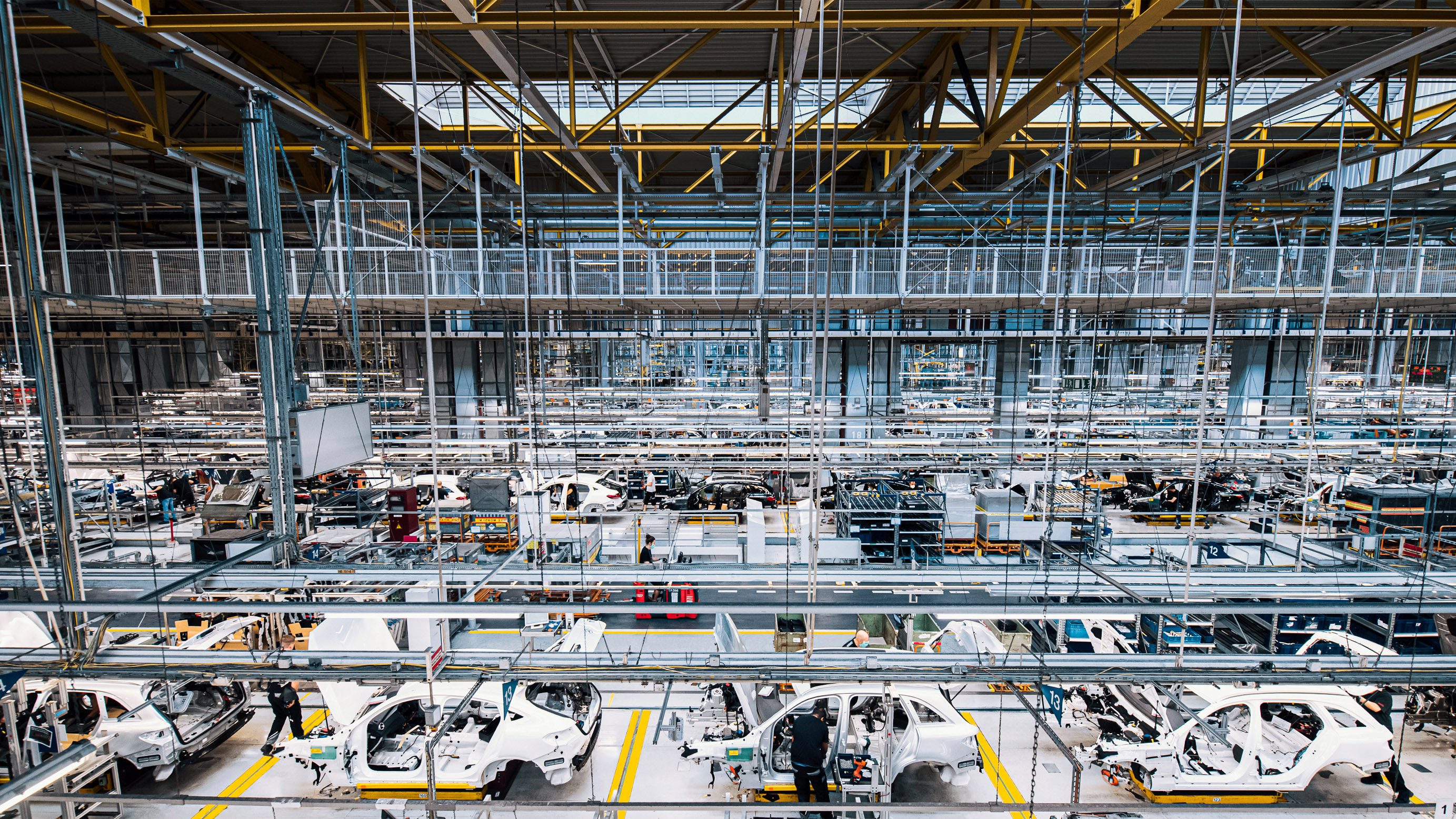
wide view of auto production at Mercedes-Benz factory

MERCEDES-BENZ AG

Another thing

Steel production is responsible for about 7% of global emissions. A growing array of technologies can produce the metal with less climate pollution, but there’s a big catch: They’re expensive. 

But in the grand scheme of things, even steel that costs 30% more than the standard stuff would only increase the cost of the average new car by about $100, or less than 1%. That gives the auto industry a unique opportunity to help drive the world toward greener steel. Get all the details in my latest story

Keeping up with climate  

The world’s biggest pumped hydropower project just came online in China. The $2.6 billion facility can store energy by pumping water uphill. (Bloomberg)

Scientists want to make a common chemical from wastewater. Researchers demonstrated a reactor that can produce ammonia from nitrates, a common pollutant found in municipal wastewater and agricultural runoff. (New Scientist)

→ Ammonia could be used as fuel for long-distance shipping. (MIT Technology Review)

The new movie Twisters shows a tornado ripping apart a wind turbine. Experts say we probably don’t need to worry too much about wind farms collapsing—those incidents tend to be rare, because turbines are built to withstand high wind speeds and are usually shut down and locked into a safe position in the case of extreme weather. (E&E News)

SunPower, once a dominant force in residential solar, is bankrupt. The company will sell off assets and gradually close up shop in the latest hit to a turbulent market. (Latitude Media)

More than 47,000 people in Europe died last year from heat-related causes. If it hadn’t been for adaptation measures like early warning systems and cooling technology, the toll could have been much higher. (New York Times)

Europe could be a bright spot for Beyond Meat and other companies selling plant-based products. The industry has seen sales and profits stagnate or drop recently, especially in the US, but Europe has lower levels of meat consumption, and supermarkets there have shown some support for animal-free alternatives. (Wired)

South Korea turns about 98% of its food waste into compost, animal feed, or energy. It’s one of the few countries with a comprehensive system for food waste, and it’s not an easy one to replicate. (Washington Post)

→ Here’s how companies want to use microbes to turn food scraps and agricultural waste into energy. (MIT Technology Review)

Just 12% of new low-emissions hydrogen projects have customers lined up. As a result, many proposed projects will probably never get built. (Bloomberg)

How the auto industry could steer the world toward green steel

Steel scaffolds our world, undergirding buildings and machines. It also presents a major challenge for climate change, since steel production largely relies on polluting fossil fuels. The automotive industry could be a key player in turning things around.

Steel production is currently responsible for about 7% of global greenhouse gas emissions. There’s a growing array of technologies that can produce steel with dramatically lower emissions—though some are still in development, and they often come with a higher price tag. The auto industry could be a fertile early market for these technologies, both because it’s a major player in the industry and because switching to more expensive materials would only bump costs up for new vehicles by less than 1%, according to a new report

Finding economical ways to produce the materials we rely on while also cutting emissions is a major challenge for the industrial sector. Vehicle manufacturers embracing greener steel could provide a blueprint for how to bring more climate-friendly materials to the market without driving customers away.

Since automakers use a lot of steel, they have an opportunity to lead the charge to decarbonize the industry, says Peter Slowik, an analyst leading research on passenger vehicles in the US for the International Council on Clean Transportation.

About 12% of global steel production goes to the auto industry, and in some regions, the percentage is significantly higher—about 60% of all primary (non-recycled) steel produced in the US goes to vehicle manufacturing. That non-recycled steel comes with higher emissions than the recycled version, so making a swap to greener steel in the automotive industry, which mostly uses non-recycled material, would have an outsized impact. 

Making steel today generally requires steelmakers to heat raw materials to high temperatures, using fossil fuels like coal to drive the chemical reactions that transform iron ore into steel. But there’s a growing array of ways to make steel with lower emissions, including efforts to add carbon capture technology to new and existing plants and implement new technologies that rely on electricity instead of fossil fuels.

One leading contender for producing low-emissions steel is a process called direct reduction, where chemical reactions can be powered by hydrogen fuel instead of coal. If that hydrogen is produced with renewable or other low-carbon energy sources, it could allow steel production with up to 95% lower emissions.

Steel is responsible for a major chunk of the climate impacts of manufacturing a vehicle—so swapping in green steel could cut the emissions associated with building a car by 27%, according to the ICCT report.

And the materials wouldn’t dramatically inflate costs, either. “Generally, we’re finding that it wouldn’t add too much to the cost of the vehicle,” Slowik says.

H2 Green Steel is currently building what could become the world’s largest low-emissions steel factory, with a capacity of 2.5 million metric tons of steel by 2026. The company has said its product will cost 20% to 30% more than conventional steel. That would add roughly $100 to $200 more to a vehicle’s cost of materials, totaling less than 1% of the average vehicle.

In another recent report examining steel in vehicle manufacturing in Europe, experts put the additional cost at just €105, or about $115, for a vehicle made entirely with steel produced using a hydrogen-powered process in 2030. And even that slight cost bump could disappear in the future as production volumes increase and costs come down.

“The relatively high value of cars, especially of premium brands, also means they can absorb the short-term green premium of greener steel,”  Alex Keynes, cars policy manager at the European Federation for Transport and Environment, said in an email.

The same principle might hold for some other common products made with steel. One estimate from Hannah Ritchie, a data scientist and deputy editor at Our World In Data, put the added cost for using green steel in a house at less than 1% of its purchase price. 

There’s a complicated web of actors in construction though, from architects to builders to contractors, which could make purchasing more expensive materials that come with a climate benefit a more complex proposition. And bigger projects that require more steel could face much larger price increases that make green steel unaffordable in those contexts, at least for now. 

Automakers committing to purchasing green steel from steelmakers could help ensure they’re able to grow quickly, and some companies have already secured such commitments. As of January 2024, H2 Green Steel had binding agreements in place for more than 40% of its steel production in the initial years of its new plant.

However, there are still challenges facing the industry, including questions about the future cost and availability of green hydrogen, Keynes says. Policy measures, from subsidies to encourage the fuel’s production to regulations, could be crucial to getting greener steel into our vehicles and beyond.

Your AC habits aren’t unique. Here’s why that’s a problem.

This article is from The Spark, MIT Technology Review’s weekly climate newsletter. To receive it in your inbox every Wednesday, sign up here.

When I get home in the evening on a sweltering summer day, the first thing I do is beeline to my window air-conditioning units and crank them up.

People across the city, county, and even the state are probably doing the same thing. And like me, they might also be firing up the TV and an air fryer to start on dinner. This simple routine may not register in your mind as anything special, but it sure does register on the electrical grid.

These early evening hours in the summer are usually the time with the highest electricity demand. And a huge chunk of that power is going into cooling systems that keep us safe and comfortable. This is such a significant challenge for utilities and grid operators that some companies are trying to bring new cooling technologies to the market that can store up energy during other times to use during peak hours, as I covered in my latest story

Let’s dig into why that daily maximum is a crucial data point to consider as we plan to keep the lights (and AC) on while cleaning up our energy system. 

In some places where air-conditioning is common, like parts of the US, space cooling can represent more than 70% of peak residential electrical demand on hot days, according to data from the International Energy Agency. It’s no wonder that utilities sometimes send out notices begging customers to turn down their AC during heat waves. 

All that demand can add up—just look at data from the California Independent System Operator (CAISO), which oversees operation of electricity generation and transmission in the state. Take, for example, Monday, August 5. The minimum amount of power demand, at around four in the morning, was roughly 25,000 megawatts. The peak, at about six in the evening, was 42,000 megawatts. There’s a lot behind that huge difference between early morning and the evening peak, but a huge chunk of it comes down to air conditioners. 

These summer evenings often represent the highest loads the grid sees all year long, since cooling systems like my window air conditioners are such energy hogs. Winter days usually see less variation, and typically there are small peaks in both the morning and evening that can be attributed to heating systems. (See more about how this varies around the US in this piece from the Energy Information Agency.)

From a climate perspective, this early evening peak in the summer is inconveniently timed, since it hits right around when solar power is ramping down for the day. It’s an example of one of the perennial challenges of some renewable electricity sources: they might be available, but they’re not always available at the right times.

Grid operators often don’t have the luxury of choosing how they meet demand—they take what they can get, even if that means turning on fossil-fuel power plants to keep the lights on. So-called peaker plants are usually the ones tapped to meet the highest demand, and they’re typically more expensive and also less efficient than other power plants.  

Batteries are starting to come to the rescue, as I covered in this newsletter a few months ago. On April 16, CAISO data showed that energy storage systems were the single biggest power source on the grid starting just after 7 p.m. local time. But batteries are far from being able to solve peak demand—with higher summer grid loads, natural-gas plants are cranked up much higher in August than they were in April, so fossil fuels are powering summer evening routines in California.

We still need a whole lot more energy storage on the grid, and other sources of low-emissions electricity like geothermal, hydropower, and nuclear to help in these high-demand hours. But there’s also a growing interest in cooling systems that can act as their own batteries. 

A growing number of technologies do just this—the goal is to charge up the systems using electricity during times when demand is low, or when renewables are readily available. Then they can provide cooling during these peak-demand hours without adding stress to the grid. Check out my full story for more on how they work, and how far along they are. 

As the planet warms and more people install AC, we might be pushing the limits of what the grid can handle.  Even if generation capacity isn’t stretched thin, extreme heat and high loads can threaten transmission equipment. 

While asking people to bump up their thermostat can be a short-term fix on the hottest days, having technologies that allow us to be more flexible in how and when we use energy could be key to staying safe and comfortable even as the summer nights keep getting hotter. 


Now read the rest of The Spark

Related reading

Air-conditioning is something of an antihero for climate action, since it helps us adapt to a warming world but also contributes to that warming with sky-high energy demand, as I wrote about in a newsletter last year

Batteries could be key to meeting peak electricity demand—and they’re starting to make a dent, as I covered earlier this year

Another thing

A growing number of companies in China want to power fleets of bikes not with batteries, but with hydrogen. But reception has been mixed, with riders reporting trouble with range. Read more in the latest story from my colleague Zeyi Yang.

Part of the reason for the growing interest in hydrogen is concern over the safety of lithium-ion batteries. New York is trying to make e-bikes safer by deploying battery-swapping stations in the city. For all you need to know about the program, check out my May story on the topic.

Keeping up with climate  

A major renewable-energy company unveiled a first-of-its-kind robot to help install solar panels. The company claims Maximo can install panels twice as fast as humans, at half the cost. (New York Times)

The European Union got more electricity from solar and wind than fossil fuels in the first half of 2024. Reforms in permitting and Russia’s invasion of Ukraine are two factors pushing the rise of renewables. (Canary Media)

Stepping into the shade can make the temperature feel dozens of degrees cooler. Cities need to look beyond trees for shade. (The Atlantic)

Check out these interactive charts detailing how each US state gets its electricity, and how it’s changed in the last two decades. Some surprises for me included South Carolina and Iowa. (New York Times)

Electric-vehicle sales in Germany are continuing their slide, dropping by 37%. The ongoing slump comes after the country ended incentives last year that supported EVs. (Bloomberg)

Wildfire smoke can have negative health effects. Protect yourself by staying indoors on days when air quality is poor, wearing a mask, and—especially—avoiding outdoor exercise. (Wired)

→ I spoke about a new study that will follow survivors of last year’s Maui fire to track their health outcomes, along with other science news of the week, on the latest episode of Science Friday. (Science Friday)

A new bill snaking its way through the US Congress could make it easier to build renewable-energy projects—and some fossil-fuel projects too. Here’s why a growing cadre of energy experts is on board with these permitting reforms despite concessions for oil and gas. (Heatmap)

Kamala Harris tapped Tim Walz as her pick for vice president. The Minnesota governor brings some climate experience to the ticket, including a law that requires utilities to reach 100% renewable energy by 2040. (Grist)

What to know about China’s push for hydrogen-powered transportation

This story first appeared in China Report, MIT Technology Review’s newsletter about technology in China. Sign up to receive it in your inbox every Tuesday.

There’s a decent chance you’ve heard of hydrogen-powered vehicles but never seen one. Over 18,000 are in the US, almost exclusively in California. On the outside they look just like traditional vehicles, but they are powered by electricity generated from a hydrogen fuel cell, making them far cleaner and greener.  

So when I learned that in parts of China, companies are putting hydrogen-powered bikes on the road for anyone to ride, it was a real “the future is here” moment for me. I looked deeper into it and wrote a story

These bikes have water-bottle-sized hydrogen tanks, which can make them easier than regular bikes to ride, though the tanks have to be swapped out every 40 miles. But they haven’t exactly been getting rave reviews. One rider in Shanghai told me the speed boost from hydrogen felt lacking, and the user experience was hurt by hardware and software design flaws. Many people on social media agree with him. 

Youon, one of the largest players in China’s bike-sharing industry, has thrown its support behind hydrogen energy. It has put thousands of hydrogen-powered bikes in major cities like Beijing and Shanghai, in the hopes of kick-starting a trend. 

But for clean energy experts, it’s a head-scratcher as to why these hydrogen bikes are being promoted in the first place: Hydrogen bikes are less efficient than ordinary e-bikes, and they won’t make much economic sense in the long run.

It’s not just one company taking this path. The collective appetite for hydrogen bikes has been much bigger than I expected. By my own counting, Youon has half a dozen competitors in the hydrogen bike field, and several cities have embraced the idea. While the future of hydrogen-powered shared bikes is uncertain, their proliferation represents a much larger trend happening in China: exploring how hydrogen can be used in transportation. 

It’s no secret that China has already become a world leader in producing affordable and capable electric vehicles, but the Chinese government and companies aren’t stopping there. A significant number of local policies have been set up in recent years to subsidize the production of hydrogen vehicles, waive toll fees for them, and build more refuel stations for hydrogen. Now China has about 21,000 hydrogen vehicles on the road and more than 400 refuel stations.

It’s worth having a reality check about China’s push for hydrogen: While using hydrogen as a fuel for vehicles comes with no carbon emissions, that’s not the case for actually producing hydrogen. In China, the vast majority comes from fossil fuels, which cost much less than producing hydrogen with water and renewable energy. (To learn the difference between “gray,” “blue,” and “green” hydrogen, read this piece by my colleague Casey Crownhart.) 

The sad truth is that China will rely on coal and natural gas for making hydrogen for a while. The fact that hydrogen is a byproduct of processing coal explains why many cities in China with abundant coal resources are also at the frontier of the hydrogen industry. For them, the economic argument for hydrogen can trump the environmental costs, and as a result, even though hydrogen vehicles create a pathway for the transportation system to further decarbonize in the future, they are doing very little to address climate change now. 

The same issue applies to electric vehicles in China: Yes, electricity is cleaner than gas as a car fuel, but the majority of electricity in China still comes from fossil fuels, so how much cleaner is it really? 

But hydrogen vehicle companies need to answer an additional question: If China is already pretty good at making batteries for EVs, why should it bother spending any time or resources on hydrogen vehicles?

For now, the Chinese companies have come up with one good answer, and it’s not bikes. It’s heavy trucks. 

“Hydrogen passenger vehicles are kind of a dead end here … I think for fleet vehicles, trucking, long-distance cargo, hydrogen is competitive with long-range electric vehicles. Maybe it’s a toss-up?” says David Fishman, a senior manager at the Lantau Group, an energy consulting firm.

If you think about it, cargo trucks bump up against some of EVs’ biggest limitations today: They need to go ultra-long distances while being refueled quickly to save time. Meanwhile, the limitations of hydrogen vehicles, like the lack of refuel stations and the higher production costs, make them much more suitable for commercial fleets than for individual car buyers.

As a result, Chinese hydrogen trucking companies are feeling confident, says Fishman. If hydrogen really becomes a next-generation mainstream fuel, it will probably start with trucks in China.

Do you think hydrogen or lithium batteries are the future of clean transportation? Let me know your pick at zeyi@technologyreview.com.


Now read the rest of China Report

Catch up with China

1. In China, private companies are responsible for verifying peoples’ identities on social media. Now the government is trying to take back that control by introducing a new “national internet ID” system, a move that became instantly controversial. (New York Times $)

2. Record-high temperatures in southern China are pushing the grid to its limit. On August 2, the power demand of Shanghai was more than the entire capacity of the Philippines. (Bloomberg $)

3. Honor, a smartphone maker once owned by Huawei, is getting ready to go public. Documents show that the local government of Shenzhen has given it “unusually” large support, including a dedicated city hall team with a “no matter left overnight” policy. (Reuters $)

4. App developers in China can circumvent Apple’s high fees by charging users through Tencent’s and ByteDance’s super apps. Apple now wants to close that loophole. (Bloomberg $)

5. The Biden administration is planning to ban the use of Chinese software in US autonomous vehicles. (Reuters $)

6. The new R-rated Disney movie Deadpool & Wolverine had to take out references to cocaine and homosexuality and replace “vibrator” with “massage gun” to pass China’s censors. (Wall Street Journal $)

7. A university in Beijing has started offering the country’s first bachelor’s degree in “marriage services and management.” It will teach everything from matchmaking to divorce counseling. (CNBC)

Lost in translation

Cheap knockoff phones defined made-in-China gadgets in the 2000s, but they disappeared after domestic brands like Xiaomi brought their prices down significantly. Now, these knockoffs are making a comeback in livestream shopping channels, according to the Chinese publication IT Times. 

On Douyin and Kuaishou, cheap domestic 5G phones that look like Apple or Huawei products are trying to attract low-income consumers with promises of high-end specs and dirt-cheap prices as low as 298 yuan (a little over $40). Once consumers receive these phones, they usually realize that the claims about the specs are misleading, and the companies making the phones don’t even have proper business registrations. While stricter regulations in China and abundant domestic competition have pushed knockoff phones out of brick-and-mortar stores, they seem to thrive in the less-regulated online markets.

One more thing

Readers of China Report, hi! This is Zeyi. It’s been almost two years since I sent out the first edition of this newsletter, and sadly this will be my last, as I’m leaving MIT Technology Review

I’ve had a lot of fun writing this newsletter. I was able to wander off and talk about so many different things, from the weirdly terrifying customer service center of Tencent to my frustrations about the TikTok ban, from newsletter after newsletter talking about electric vehicles (not sorry about that) to the fun deep dives into social media and digital culture. And I’m very thankful to everyone who replied with insightful or heartfelt feedback.

Stay tuned, as MIT Technology Review will bring back China Report shortly. Meanwhile, I hope you will enjoy our other newsletters, or this incredibly petty response by Pizza Hut Hong Kong to the win over Italy for an Olympics fencing gold. And yes, I’m all for pineapples on pizza.

Your future air conditioner might act like a battery

As temperatures climb on hot days, many of us are quick to crank up our fans or air conditioners. These cooling systems can be a major stress on electrical grids, which has inspired some inventors to create versions that can store energy as well as use it. 

Cooling represents 20% of global electricity demand in buildings, a share that’s expected to rise as the planet warms and more of the world turns to cooling technology. During peak demand hours, air conditioners can account for over half the total demand on the grid in some parts of the world today.

New cooling technologies that incorporate energy storage could help by charging themselves when renewable electricity is available and demand is low, and still providing cooling services when the grid is stressed.  

“We say, take the problem, and turn it into a solution,” says Yaron Ben Nun, founder and chief technology officer of Nostromo Energy.

One of Nostromo Energy’s systems, which it calls an IceBrick, is basically a massive ice cube tray. It cools down a solution made of water and glycol that’s used to freeze individual capsules filled with water. One IceBrick can be made up of thousands of these containers, which each hold about a half-gallon, or roughly two liters, of water.

Insulation keeps the capsules frozen until it’s time to use them to help cool down a building. Then the ice is used to drop the temperature of the water-glycol mixture, which in turn cools down the water that circulates in the building’s chilling system. The whole thing is designed to work as an add-on with existing equipment, Ben Nun says. 

Nostromo installed its first system in the US in 2023, at the Beverly Hilton hotel in Los Angeles. It has a capacity of 1.4 megawatt-hours, and it also serves the neighboring Waldorf Astoria. The installation contains 40,000 capsules, amounting to about 150,000 pounds of ice. It usually charges up for 10 to 12 hours, starting at night and finishing around midday. That leaves it ready to discharge its cooling power between the late afternoon and evening, when demand on the grid is high and solar power is dropping off as the sun sets.

Using the IceBrick increases the total electricity needed for cooling, as some energy is lost to inefficiency during the cycle. But the goal is to decrease the energy demand during peak hours, which can cut costs for building owners, Ben Nun says. The company is in the process of securing roughly $300 million in funding, in part from the US Department of Energy’s Loan Programs Office, to fully finance 200 of these systems in California, he adds. 

closeup of the Ice brick system from Nostromo showing pipes with red connectors leading to metal cube shapes
Nostromo’s IceBrick is made of individual capsules that freeze and thaw to store energy.
NOSTROMO

While building owners can benefit immediately from these individual energy storage solutions, the real potential to help the grid comes when systems are linked together, Ben Nun says. 

When the grid is extremely stressed, utility companies are sometimes forced to shut off electricity supply to some areas, leaving people there without power when they need it most. Technologies that can adjust to meet the grid’s needs could help reduce reliance on these rolling blackouts. 

This kind of approach isn’t new—many commercial units have large tanks that hold chilled water or another cooling fluid that can drop the temperature in a building at a moment’s notice. But Nostromo’s technology can store more energy with much less material, because it uses the freezing and melting process rather than just cooling down a liquid, Ben Nun says. 

Startup Blue Frontier has differentiated itself in this space by building cooling systems that use desiccants. These materials can suck up moisture—like the little packets of silica beads that often come with new shoes and bags. But instead of those beads, the company is using a concentrated salt solution.

Blue Frontier’s cooling units pass a stream of air over a thin layer of the desiccant, which pulls moisture out of the air. That dry air is then used in an evaporative cooling process (similar to the way sweat cools your skin).

Desiccant cooling systems can be more efficient than the traditional vapor compression air conditioners on the market today, says Daniel Betts, founder and CEO of Blue Frontier. But the system also benefits from the ability to charge up during certain times and deliver cooling at other times.

The key to the energy storage aspect of desiccant cooling is the recharging: Like sponges, desiccants can only soak up a limited amount of water before they need to be wrung out. Blue Frontier does this by causing some water in the salt solution to evaporate, typically with a heat pump, to make it more concentrated. The recharging system can run constantly, or in bursts that can be timed to match periods when electricity is cheap or when more renewable power is available.

The benefit of these energy storage technologies is that they don’t require people turn their cooling systems down or off to help relieve stress on the grid, Betts says. 

Blue Frontier is testing several systems with customers today and hopes to manufacture larger quantities soon. And while commercial buildings are getting the first installations, Betts says he’s interested in bringing the technology to homes and other buildings too.

One challenge facing the companies working on these incoming technologies is finding a way to store large amounts of energy effectively without adding too much cost, says Ankit Kalanki, a principal in the carbon-free buildings program at the Rocky Mountain Institute, a nonprofit energy think tank. Cooling technologies like air conditioners are already expensive, so future solutions will have to be priced competitively to make it in the market. But given the world’s growing cooling demand, there’s still a significant opportunity for new technologies to help meet those needs, he adds.

Just rethinking air conditioning won’t be enough to meet the massive increase in energy demand for cooling, which could triple between now and 2050. To both do that and cut emissions, we’ll still need significantly more renewable energy capacity as well as gigantic battery installations on the grid. But adding flexibility into air-conditioning systems could help cut the investment needed to get to a zero-carbon grid.

Cooling systems can help us cope with our warming climate, Ben Nun says, but there’s a problem with the current options: “You’ll cool yourself, but you keep on warming the globe.”

Hydrogen bikes are struggling to gain traction in China

If you are in China and looking to ride a shared bike in the city, you might find something on the bike that looks a little different: a water-bottle-size hydrogen tank.

At least a dozen cities in China now have some kind of hydrogen-powered shared bikes for their residents. They offer an easier ride than traditional bikes and a safer energy source than lithium batteries. One Chinese company is betting that this will be the next big thing in public transportation, while others are riding on a national trend toward government policies that encourage the development of the hydrogen industry.

Yet the reception has been mixed. Riders have reported unsatisfactory experiences with current hydrogen bikes, and energy experts doubt whether it makes economic sense to replace e-bikes with hydrogen-powered ones. Even though hydrogen could be a great power source for long-distance transportation in the future, it may not be suitable for urban biking, a completely different task.

While there are companies in other countries that are working on hydrogen-powered bikes—and one French company already has a mature product—China stands out for putting these bikes to use as public transportation. Bike-sharing became hugely popular in the country during the 2010s tech boom. With support from deep-pocketed companies like Alibaba and Meituan, standardized, internet-connected shared bikes have filled urban streets since, sometimes resulting in incredible waste

Youon, a Chinese company with over 1 million bikes on the streets of over 300 cities, is one of the main players in the bike-sharing industry. Facing fierce domestic competition, the company has chosen to differentiate its brand by investing in hydrogen bikes since 2018, with four models now available to buy or rent.

A hydrogen bike is not very different in concept from an e-bike. The difference is in whether the energy is stored in a lithium-ion battery or a hydrogen tank.

Each of Youon’s hydrogen bikes stores 20 grams of hydrogen in the form of metal powders, which can absorb and release the gas in a tank at low pressures (less than 10 bar). When the rider starts pedaling, the hydrogen is fed to a fuel cell under the seat, where a chemical reaction takes place to produce electricity. At its peak, a hydrogen bike can go as fast as 23 kilometers (14 miles) per hour. One tank of hydrogen lasts 40 to 60 kilometers (25 to 37 miles), and replacing the tank takes a few seconds.

Why hydrogen?

E-bikes have existed in China for a long time. According to the official figures, there are around 350 million in China today, and they are commonly used by everyday commuters and professional delivery workers. 

However, many of China’s largest cities have shied away from commissioning e-bikes as part of the public transportation network or even banned them, because lithium batteries pose a fire risk. In 2023, Chinese fire departments received a total of 21,000 reports of e-bikes catching fire, a 17.4% increase from the previous year. 

That created a supply vacuum for Youon. It’s positioned itself as a safer alternative thanks to its use of hydrogen. The hydrogen is stored in a low-pressure state, and if there’s any leak, it will dissipate quickly without causing an explosion, the company says on its website.

It’s a strategy that’s worked: These bikes have been more readily accepted by local governments. In 2022, Youon sold 2,000 of its hydrogen bikes to Lingang, a new high-tech district in Shanghai; in 2023, the company sold 500 hydrogen bikes to the Daxing district of Beijing. Today, its hydrogen bikes can be found in over six Chinese cities. 

Youon has since doubled down on its investment in hydrogen. The company has launched a product that lets users generate hydrogen at home with solar power and water. It also worked with the local government of Jiangsu, where its headquarters are, to publish a set of industry standards covering safety requirements, hydrogen tanks, and more. “Hydrogen energy is also an essential pathway to achieving carbon neutrality,” said Sun Jisheng, the CEO of Youon, at an industry conference in June.

The problem

However, that’s about where the advantage of hydrogen bikes ends.

David Fishman, a China-based senior manager of the Lantou Group, an energy consultancy, says he struggles to see the advantage. “Maybe the safety angle is a relevant factor for someone who doesn’t like carrying around lithium-ion batteries and storing them in their house,” he says. Other than that, hydrogen bikes are less energy-efficient than battery-powered bikes, and it costs more to produce hydrogen in the first place.

The main advantage of hydrogen as an energy source is that it has much higher energy density, meaning a hydrogen tank with the same weight as a lithium battery would produce more energy and power the vehicles to go farther. However, that advantage only kicks in for trips over 800 kilometers, says Mark Z. Jacobson, a professor of civil and environmental engineering at Stanford University.

That means hydrogen is a more economical choice for long-distance transportation like ships, planes, and trucks. Bikes, however, are almost on the exact opposite end of the transportation spectrum. Few people would bike for long distances, let alone those who are only renting a public bike for a short time. For anything shorter than 800 km, battery-powered vehicles are more energy efficient, says Jacobson. He estimates that a battery-powered bike consumes only 40% of the energy of a hydrogen-powered equivalent and also takes up less space.

On top of that, the company’s hydrogen bikes have failed to impress many of the early adopters. 

a row of blue Yuoun hydrogen bikes for rent in the city

VIA YOUONBIKESHARE.COM

Gu, a resident of Lingang who only wishes to use his last name for this story, tells MIT Technology Review that he tried the bikes several times and they never felt effort-saving to him. Instead, the bike, along with the hydrogen tank and fuel-cell-powered motors, felt heavy and hard to maneuver. As a user, he has no idea whether the bike was running as expected or if the difficulty he encountered was due to its running out of hydrogen, although the company is supposed to block any bike with low hydrogen reserves from being unlocked.

Another common complaint is the inconvenience of finding and returning the bikes because there are only a limited number in the city and they have to be returned to specific locations for easy retrieval or tank replenishment. 

“The bike has to be returned to a designated spot. But even if I put the bike at that very location, there’s GPS drifting, and I’d be charged a very high fee for them to move the bike,” Gu says.

On social media, hydrogen-bike users have complained a lot about similar experiences. Youon has found itself caught up in headlines at least a couple of times recently, with stories where users question whether their bikes are really useful for their daily commutes. 

Youon didn’t respond to questions sent by MIT Technology Review.

The future of hydrogen bikes

Despite all these issues, there are at least half a dozen more companies in China working to launch hydrogen-powered shared bikes. These are often startups operating small-scale pilot projects in cities that have sizable hydrogen industries, like Foshan or Xiaoyi. 

Many of these cities have even bigger plans—they are vying to become the hub of the hydrogen economy in China, which is increasingly betting on it as the future of clean energy. 

This year, for the first time, hydrogen energy was mentioned in an annual official report from Beijing, which summarizes government work. The Chinese government said it vows to “accelerate the development of hydrogen energy … after enforcing the lead in smart, connected new energy vehicles.” The mention injected a boost of confidence into the hydrogen industry in China, which already produces more hydrogen every year than any other country.

Not all of this is good news for the environment. About 80% of hydrogen produced in China actually comes from burning coal or natural gas, and some of the fiercest government support for hydrogen comes from coal-mining cities looking to transition. While the country is moving in the direction of green hydrogen (hydrogen generated with renewable energy and water), the fuel will remain polluting for a long time.

When a technology is still in the early stages, finding the best use case for it is key. There are plenty of companies in China working on developing hydrogen-powered trucks and other long-distance forms of transportation, but considering the size of the bike-sharing market in the country, it’s no surprise that turning their attention to bikes seems like a profitable idea to some. 

However, if there’s no way to dramatically improve the performance or economics of hydrogen bikes, it’s hard to imagine the current batch of experiments lasting for long. As companies move from piloting their new products to seeking adoption and profits, they will have some serious questions to answer.