
Last summer was the hottest in 2,000 years. Here’s how we know.

This article is from The Spark, MIT Technology Review’s weekly climate newsletter. To receive it in your inbox every Wednesday, sign up here.

I’m ready for summer, but if this year is anything like last year, it’s going to be a doozy. In fact, the summer of 2023 in the Northern Hemisphere was the hottest in over 2,000 years, according to a new study released this week. 

If you’ve been following the headlines, you probably already know that last year was a hot one. But I was gobsmacked by this paper’s title when it came across my desk. The warmest in 2,000 years—how do we even know that?

There weren’t exactly thermometers around in the year 1, so scientists have to get creative when it comes to comparing our climate today with that of centuries, or even millennia, ago. Here’s how our world stacks up against the climate of the past, how we know, and why it matters for our future. 

Today, there are thousands and thousands of weather stations around the globe, tracking the temperature from Death Valley to Mount Everest. So there’s plenty of data to show that 2023 was, in a word, a scorcher. 

Daily global ocean temperatures were the warmest ever recorded for over a year straight. Levels of sea ice hit new lows. And of course, the year saw the highest global average temperatures since record-keeping began in 1850.  

But scientists decided to look even further back into the past for a year that could compare to our current temperatures. To do so, they turned to trees, which can act as low-tech weather stations.

The concentric rings inside a tree are evidence of the plant’s yearly growth cycles. Lighter colors correspond to quick growth over the spring and summer, while the darker rings correspond to the fall and winter. Count the pairs of light and dark rings, and you can tell how many years a tree has lived. 

Trees tend to grow faster during warm, wet years and slower during colder ones. So scientists can not only count the rings but measure their thickness, and use that as a gauge for how warm any particular year was. They also look at factors like density and track different chemical signatures found inside the wood. You don’t even need to cut down a tree to get its help with climatic studies—you can just drill out a small cylinder from the tree’s center, called a core, and study the patterns.

The oldest living trees allow us to peek a few centuries into the past. Beyond that, it’s a matter of cross-referencing the patterns on dead trees with living ones, extending the record back in time like putting a puzzle together. 

It’s taken several decades of work and hundreds of scientists to develop the records that researchers used for this new paper, said Max Torbenson, one of the authors of the study, on a press call. There are over 10,000 trees from nine regions across the Northern Hemisphere represented, allowing the researchers to draw conclusions about individual years over the past two millennia. The year 246 CE once held the crown for the warmest summer in the Northern Hemisphere in the last 2,000 years. But 25 of the last 28 years have beat that record, Torbenson says, and 2023’s summer tops them all. 

These conclusions are limited to the Northern Hemisphere, since there are only a few tree ring records from the Southern Hemisphere, says Jan Esper, lead author of the new study. And using tree rings doesn’t work very well for the tropics because seasons look different there, he adds. Since there’s no winter, there’s usually not as reliable an alternating pattern in tropical tree rings, though some trees do have annual rings that track the wet and dry periods of the year. 

Paleoclimatologists, who study ancient climates, can use other methods to get a general idea of what the climate looked like even earlier—tens of thousands to millions of years ago. 

The biggest difference between the new study using tree rings and methods of looking back further into the past is the precision. Scientists can, with reasonable certainty, use tree rings to draw conclusions about individual years in the Northern Hemisphere (536 CE was the coldest, for instance, likely because of volcanic activity). Any information from further back than the past couple of thousand years will be more of a general trend than a specific data point representing a single year. But those records can still be very useful. 

The oldest glaciers on the planet are at least a million years old, and scientists can drill down into the ice for samples. By examining the ratio of gases like oxygen, carbon dioxide, and nitrogen inside these ice cores, researchers can figure out the temperature of the time corresponding to the layers in the glacier. The oldest continuous ice-core record, which was collected in Antarctica, goes back about 800,000 years. 

Researchers can use fossils to look even further back into Earth’s temperature record. For one 2020 study, researchers drilled into the seabed and looked at the sediment and tiny preserved shells of ancient organisms. From the chemical signatures in those samples, they found that the temperatures we might be on track to record may be hotter than anything the planet has experienced on a global scale in tens of millions of years. 

It’s a bit sobering to know that we’re changing the planet in such a dramatic way. 

The good news is, we know what we need to do to turn things around: cut emissions of planet-warming gases like carbon dioxide and methane. The longer we wait, the more expensive and difficult it will be to stop warming and reverse it, as Esper said on the press call: “We should do as much as possible, as soon as possible.” 


Now read the rest of The Spark

Related reading

Last year broke all sorts of climate records, from emissions to ocean temperatures. For more on the data, check out this story from December.

How hot is too hot for the human body? I tackled that very question in a 2021 story.  
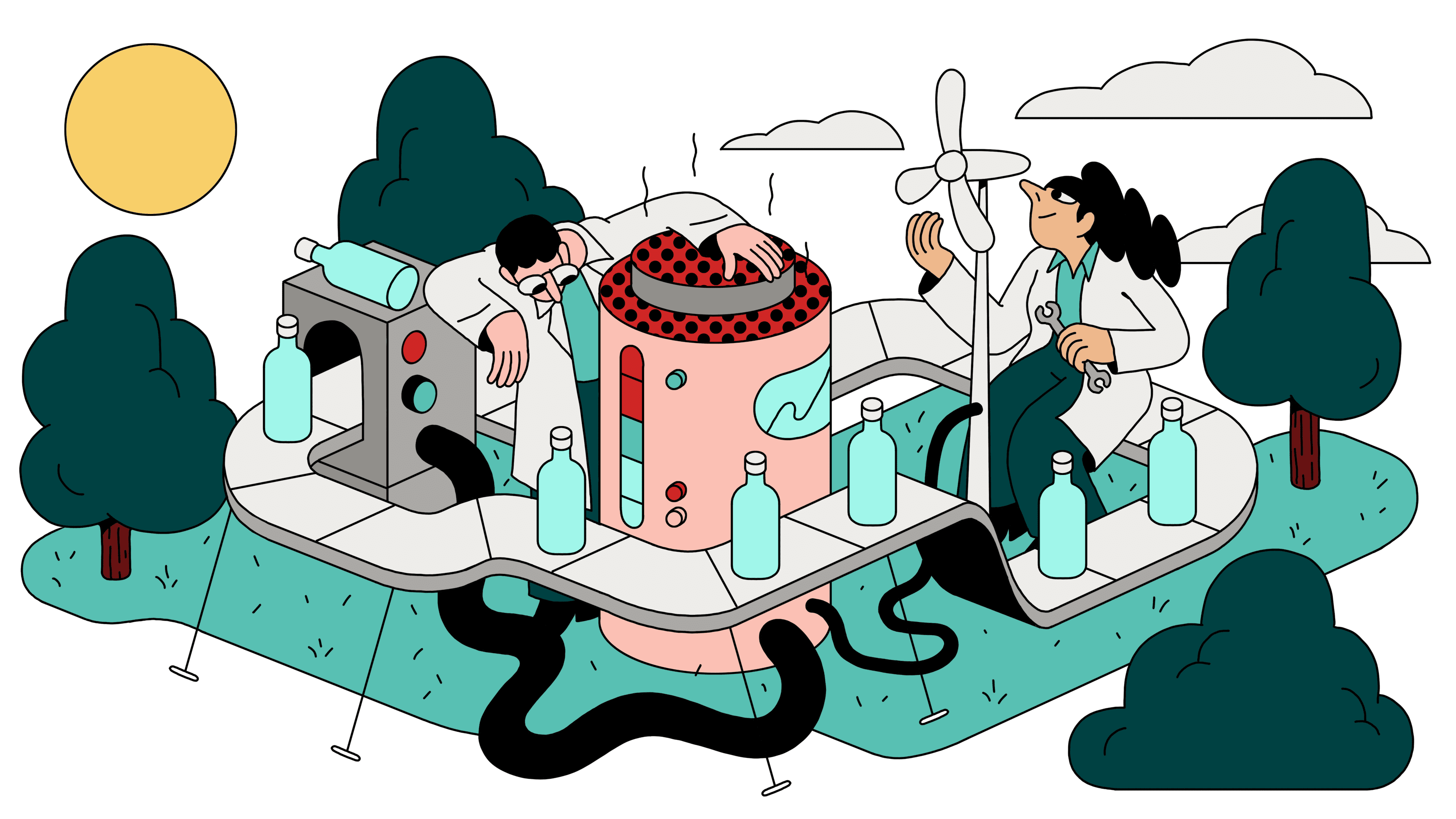
Two engineers in lab coats monitor the thermal battery powering a conveyor belt of bottles

SIMON LANDREIN

Another thing

Readers chose thermal batteries as the 11th Breakthrough Technology of 2024. If you want to hear more about what thermal batteries are, how they work, and why this all matters, join us for the latest in our Roundtables series of online events, where I’ll be getting into the nitty-gritty details and answering some audience questions.

This event is exclusively for subscribers, so subscribe if you haven’t already, and then register here to join us tomorrow, May 16, at noon Eastern time. Hope to see you there! 

Keeping up with climate  

Scientists just recorded the largest ever annual leap in the amount of carbon dioxide in the atmosphere. The concentration of the planet-warming gas in March 2024 was 4.7 parts per million higher than it was a year before. (The Guardian)

Tesla has reportedly begun rehiring some of the workers who were laid off from its charging team in recent weeks. (Bloomberg)

→ To catch up on what’s going on at Tesla, and what it means for the future of EV charging and climate tech more broadly, check out the newsletter from last week if you missed it. (MIT Technology Review)

A new rule could spur thousands of miles of new power lines, making it easier to add renewables to the grid in the US. The Federal Energy Regulatory Commission will require grid operators to plan 20 years ahead, considering things like the speed of wind and solar installations. (New York Times)

Where does carbon dioxide go after it’s been vacuumed out of the atmosphere? Here are 10 options. (Latitude Media)

Ocean temperatures have been extremely high, shattering records over the past year. All that heat could help fuel a particularly busy upcoming hurricane season. (E&E News)

New tariffs in the US will tack on additional costs to a wide range of Chinese imports, including batteries and solar cells. The tariff on EVs will take a particularly drastic jump, going from 27.5% to 102.5%. (Associated Press)

A reporter took a trip to the Beijing Auto Show and drove dozens of EVs. His conclusion? Chinese EVs are advancing much faster than Western automakers can keep up with. (InsideEVs)

Harnessing solar power via satellites in space and beaming it down to Earth is a tempting dream. But the reality, as you might expect, is probably not so rosy. (IEEE Spectrum)

Why EV charging needs more than Tesla

This article is from The Spark, MIT Technology Review’s weekly climate newsletter. To receive it in your inbox every Wednesday, sign up here.

Tesla, the world’s largest EV maker, laid off its entire charging team last week. 

The timing of this move is absolutely baffling. We desperately need many more EV chargers to come online as quickly as possible, and Tesla has been a charging powerhouse. It’s in the midst of opening its charging network to other automakers and establishing its technology as the de facto standard in the US. Now, we’re already seeing new Supercharger sites canceled because of this move. 

The charging meltdown at Tesla could slow progress on EVs overall, and ultimately, the whole situation shows why climate technology needs a whole lot more than Tesla. 

Tesla first unveiled the Supercharger network in 2012 with six locations in the western US. As of 2024, the company operates over 50,000 Superchargers worldwide. (By the way, I want to note that I briefly interned at Tesla in 2016. I don’t have any ties to or financial interest in the company today.) 

The Supercharger network helped make Tesla an EV juggernaut. Fast charging speeds and a navigation system that took the guesswork out of finding charging stations helped ease the transition for people buying their first EVs. Tesla operates more fast chargers than anyone else in the US, and the reliability of those chargers is leagues better than that of competitors. For a long time, this was all exclusive to Tesla drivers. 

Over the past year, Tesla has begun cracking open the doors to its charging network. The company made some of its stations available to all EVs, in part to go after incentives designated for private companies building public chargers. 

In the US, Tesla has also persuaded other automakers to adopt its charging connector, which it standardized and named the North American Charging Standard. In May 2023, Ford announced a move to adopt the NACS, and nearly every other automaker selling EVs in the US has followed suit.

Then, last week, Tesla laid off its 500-person charging team. The move came as part of wider layoffs that are expected to affect 10% of Tesla’s global workforce. Even interns weren’t immune.

Tesla “still plans to grow the Supercharger network,” though the focus will shift to maintaining and expanding existing locations rather than adding new ones, according to a post from CEO Elon Musk on the site formerly known as Twitter. (How does the company plan to expand or even maintain existing locations with apparently no dedicated charging team? Your guess is as good as mine. Tesla didn’t respond to a request for comment.)

But the effects from losing the charging team were immediate. Tesla backed out of a handful of leases for upcoming Supercharger locations in New York. In an email, the company told suppliers to hold off on breaking ground on new construction projects. 

The move is a concerning one at a crucial time for EV charging infrastructure. Right now, there are nowhere near enough chargers installed in the US to support a shift to electric vehicles. If EVs make up half of new-car sales by the end of the decade, we’ll need roughly 1.2 million public chargers installed by then, according to a 2023 study from the National Renewable Energy Laboratory. Today, the country has 170,000 charging ports available. 

In a recent poll, nearly 80% of US adults said that a lack of charging infrastructure is a primary reason for not buying an EV. That was true whether they lived in a city, in the suburbs, or in more rural areas.

In a way, it does make sense that Tesla appears to be uninterested in being the one to build out a public charging network. Chargers are costly to build and maintain, and they might not be all that profitable in the near term

According to analysis by BNEF, Tesla pulled in about $1.7 billion from charging last year, only about 1.5% of the company’s total revenue. Opening up chargers to vehicles from other automakers could help push revenue from this source up to $7.4 billion annually by the end of the decade. But that’s still a relatively small piece of Tesla’s total potential pie. 

Musk seems more interested in pursuing buzzy ideas like robotaxis than doing the difficult and expensive work of providing EV charging as a public service. 

Honestly, I think this move is a wake-up call for the EV industry. Tesla has played an undeniable role in bringing EVs to the mainstream. But we’re in a new stage of the game now, one that’s less about sleek sports cars and more about deploying known technologies and keeping them working. 

Other companies may step in to help fill the charging gap Tesla is opening. Revel expressed interest in taking over those canceled leases in New York City, for instance. But I wouldn’t hold my breath for a shiny new company to be our charging hero. 

Cutting emissions and remaking our economy will require buckling down to deploy and maintain solutions that we already know work, whether that’s in transportation or any other sector. For EV charging, and for climate technology as a whole, we need more than Tesla. Here’s hoping we can get it. 


Now read the rest of The Spark

Related reading

Perhaps the single biggest remaining barrier to EV adoption is a lack of charging infrastructure, as I wrote in a newsletter last year.

We need way more chargers to support the number of new EVs that are expected to hit the roads this decade. I dug into how many for a news story last year.

New battery technology could help EV batteries charge even faster. Learn what could be coming next in this story from August.

Another thing

Meat is a major climate problem. Whether solutions come in the form of plant-based alternatives or products grown in the lab, we shouldn’t expect them to solve every problem under the sun, argues my colleague James Temple, in a new essay published this week. Give it a read! 

Keeping up with climate  

Alternative jet fuels have a corn problem. The crop can be used to make fuels that qualify for tax credits in the US, but critics are skeptical about just how helpful they’ll be in efforts to cut emissions. (MIT Technology Review)

This startup is making fuel from carbon dioxide. Infinium’s Texas facility came online in late 2023, and its synthetic fuels could help clean up aviation and trucking—but only if the price is right. (Bloomberg)

New York City pizza shops are going electric. A citywide ordinance just went into effect that requires wood- and coal-burning ovens to cut their pollution, and many are turning to electric ovens instead of undertaking the costly upgrade. (New York Times)

Building a new energy system happens one project at a time. I loved this list of 10 potentially make-or-break projects that represent the potential future of our grid. (Heatmap)

→ The list includes a new site from Fervo in Utah, expected in 2026. Get the inside look at the company’s technology in this feature story from last year. (MIT Technology Review)

Funding for climate-tech startups in Africa is growing, with businesses raising more than $3.4 billion since 2019. But there’s still a long way to go to help the continent meet its climate goals. (Associated Press)

One very big, and very simple, thing is holding back heat pumps: a lack of workers. We need more people to make and install the appliances, which help cut emissions by using electricity to efficiently heat and cool spaces. (Wired)

→ Heat pumps are booming, and they’re on our list of 2024 Breakthrough Technologies. (MIT Technology Review)

Compressing air and storing it underground could help clean up the grid. Yes, really. Canadian company Hydrostor is close to breaking ground on its first large long-duration energy storage project later this year in Australia. (Inside Climate News)

How I learned to stop worrying and love fake meat

Fixing our collective meat problem is one of the trickiest challenges in addressing climate change—and for some baffling reason, the world seems intent on making the task even harder.

The latest example occurred last week, when Florida governor Ron DeSantis signed a law banning the production, sale, and transportation of cultured meat across the Sunshine State. 

“Florida is fighting back against the global elite’s plan to force the world to eat meat grown in a petri dish or bugs to achieve their authoritarian goals,” DeSantis seethed in a statement.

Alternative meat and animal products—be they lab-grown or plant-based—offer a far more sustainable path to mass-producing protein than raising animals for milk or slaughter. Yet again and again, politicians, dietitians, and even the press continue to devise ways to portray these products as controversial, suspect, or substandard. No matter how good they taste or how much they might reduce greenhouse-gas emissions, there’s always some new obstacle standing in the way—in this case, Governor DeSantis, wearing a not-at-all-uncomfortable smile.  

The new law clearly has nothing to do with the creeping threat of authoritarianism (though for more on that, do check out his administration’s crusade to ban books about gay penguins). First and foremost it is an act of political pandering, a way to coddle Florida’s sizable cattle industry, which he goes on to mention in the statement.

Cultured meat is seen as a threat to the livestock industry because animals are only minimally involved in its production. Companies grow cells originally extracted from animals in a nutrient broth and then form them into nuggets, patties or fillets. The US Department of Agriculture has already given its blessing to two companies, Upside Foods and Good Meat, to begin selling cultured chicken products to consumers. Israel recently became the first nation to sign off on a beef version.

It’s still hard to say if cultured meat will get good enough and cheap enough anytime soon to meaningfully reduce our dependence on cattle, chicken, pigs, sheep, goats, and other animals for our protein and our dining pleasure. And it’s sure to take years before we can produce it in ways that generate significantly lower emissions than standard livestock practices today.

But there are high hopes it could become a cleaner and less cruel way of producing meat. It wouldn’t require all the land, food, and energy needed to raise, feed, slaughter, and process animals today. One study found that cultured meat could reduce emissions per kilogram of meat 92% by 2030, even if cattle farming also achieves substantial improvements.

Those sorts of gains are essential if we hope to ease the rising dangers of climate change, because meat, dairy, and cheese production are huge contributors to greenhouse-gas emissions.

DeSantis and politicians in other states that may follow suit, including Alabama and Tennessee, are raising the specter of mandated bug-eating and global-elite string-pulling to turn cultured meat into a cultural issue, and kill the industry in its infancy. 

But, again, it’s always something. I’ve heard a host of other arguments across the political spectrum directed against various alternative protein products, which also include plant-based burgers, cheeses, and milks, or even cricket-derived powders and meal bars. Apparently these meat and dairy alternatives shouldn’t be highly processed, mass-produced, or genetically engineered, nor should they ever be as unhealthy as their animal-based counterparts. 

In effect, we are setting up tests that almost no products can pass, when really all we should ask of alternative proteins is that they be safe, taste good, and cut climate pollution.

The meat of the matter

Here’s the problem. 

Livestock production generates more than 7 billion tons of carbon dioxide, making up 14.5% of the world’s overall climate emissions, according to the United Nations Food and Agriculture Organization.

Beef, milk, and cheese production are, by far, the biggest problems, representing some 65% of the sector’s emissions. We burn down carbon-dense forests to provide cows with lots of grazing land; then they return the favor by burping up staggering amounts of methane, one of the most powerful greenhouse gases. Florida’s cattle population alone, for example, could generate about 180 million pounds of methane every year, as calculated from standard per-animal emissions

In an earlier paper, the World Resources Institute noted that in the average US diet, beef contributed 3% of the calories but almost half the climate pollution from food production. (If you want to take a single action that could meaningfully ease your climate footprint, read that sentence again.)

The added challenge is that the world’s population is both growing and becoming richer, which means more people can afford more meat. 

There are ways to address some of the emissions from livestock production without cultured meat or plant-based burgers, including developing supplements that reduce methane burps and encouraging consumers to simply reduce meat consumption. Even just switching from beef to chicken can make a huge difference.

Let’s clear up one matter, though. I can’t imagine a politician in my lifetime, in the US or most of the world, proposing a ban on meat and expecting to survive the next election. So no, dear reader. No one’s coming for your rib eye. If there’s any attack on personal freedoms and economic liberty here, DeSantis is the one waging it by not allowing Floridians to choose for themselves what they want to eat.

But there is a real problem in need of solving. And the grand hope of companies like Beyond Meat, Upside Foods, Miyoko’s Creamery, and dozens of others is that we can develop meat, milk, and cheese alternatives that are akin to EVs: that is to say, products that are good enough to solve the problem without demanding any sacrifice from consumers or requiring government mandates. (Though subsidies always help.)

The good news is the world is making some real progress in developing substitutes that increasingly taste like, look like, and have (with apologies for the snooty term) the “mouthfeel” of the traditional versions, whether they’ve been developed from animal cells or plants. If they catch on and scale up, it could make a real dent in emissions—with the bonus of reducing animal suffering, environmental damage, and the spillover of animal disease into the human population.

The bad news is we can’t seem to take the wins when we get them. 

The blue cheese blues

For lunch last Friday, I swung by the Butcher’s Son Vegan Delicatessen & Bakery in Berkeley, California, and ordered a vegan Buffalo chicken sandwich with a blue cheese on the side that was developed by Climax Foods, also based in Berkeley.

Late last month, it emerged that the product had, improbably, clinched the cheese category in the blind taste tests of the prestigious Good Food awards, as the Washington Post revealed.

Let’s pause here to note that this is a stunning victory for vegan cheeses, a clear sign that we can use plants to produce top-notch artisanal products, indistinguishable even to the refined palates of expert gourmands. If a product is every bit as tasty and satisfying as the original but can be produced without milking methane-burping animals, that’s a big climate win.

But sadly, that’s not where the story ended.

JAMES TEMPLE

After word leaked out that the blue cheese was a finalist, if not the winner, the Good Food Foundation seems to have added a rule that didn’t exist when the competition began but which disqualified Climax Blue, the Post reported.

I have no special insights into what unfolded behind the scenes. But it reads at least a little as if the competition concocted an excuse to dethrone a vegan cheese that had bested its animal counterparts and left traditionalists aghast. 

That victory might have done wonders to help promote acceptance of the Climax product, if not the wider category. But now the story is the controversy. And that’s a shame. Because the cheese is actually pretty good. 

I’m no professional foodie, but I do have a lifetime of expertise born of stubbornly refusing to eat any salad dressing other than blue cheese. In my own taste test, I can report it looked and tasted like mild blue cheese, which is all it needs to do.

A beef about burgers

Banning a product or changing a cheese contest’s rules after determining the winner are both bad enough. But the reaction to alternative proteins that has left me most befuddled is the media narrative that formed around the latest generation of plant-based burgers soon after they started getting popular a few years ago. Story after story would note, in the tone of a bold truth-teller revealing something new each time: Did you know these newfangled plant-based burgers aren’t actually all that much healthier than the meat variety? 

To which I would scream at my monitor: THAT WAS NEVER THE POINT!

The world has long been perfectly capable of producing plant-based burgers that are better for you, but the problem is that they tend to taste like plants. The actual innovation with the more recent options like Beyond Burger or Impossible Burger is that they look and taste like the real thing but can be produced with a dramatically smaller climate footprint.

That’s a big enough win in itself. 

If I were a health reporter, maybe I’d focus on these issues too. And if health is your personal priority, you should shop for a different plant-based patty (or I might recommend a nice salad, preferably with blue cheese dressing).

But speaking as a climate reporter, expecting a product to ease global warming, taste like a juicy burger, and also be low in salt, fat, and calories is absurd. You may as well ask a startup to conduct sorcery.

More important, making a plant-based burger healthier for us may also come at the cost of having it taste like a burger. Which would make it that much harder to win over consumers beyond the niche of vegetarians and thus have any meaningful impact on emissions. WHICH IS THE POINT!

It’s incredibly difficult to convince consumers to switch brands and change behaviors, even for a product as basic as toothpaste or toilet paper. Food is trickier still, because it’s deeply entwined with local culture, family traditions, festivals and celebrations. Whether we find a novel food product to be yummy or yucky is subjective and highly subject to suggestion. 

And so I’m ending with a plea. Let’s grant ourselves the best shot possible at solving one of the hardest, most urgent problems before us. Treat bans and political posturing with the ridicule they deserve. Reject the argument that any single product must, or can, solve all the problems related to food, health, and the environment.

Give these alternative foods a shot, afford them room to improve, and keep an open mind. 

Though it’s cool if you don’t want to try the crickets.

Three takeaways about the current state of batteries

This article is from The Spark, MIT Technology Review’s weekly climate newsletter. To receive it in your inbox every Wednesday, sign up here.

Batteries are on my mind this week. (Aren’t they always?) But I’ve got two extra reasons to be thinking about them today. 

First, there’s a new special report from the International Energy Agency all about how crucial batteries are for our future energy systems. The report calls batteries a “master key,” meaning they can unlock the potential of other technologies that will help cut emissions. Second, we’re seeing early signs in California of how the technology might be earning that “master key” status already by helping renewables play an even bigger role on the grid. So let’s dig into some battery data together. 

1) Battery storage in the power sector was the fastest-growing commercial energy technology on the planet in 2023

Deployment doubled over the previous year’s figures, hitting nearly 42 gigawatts. That includes utility-scale projects as well as projects installed “behind the meter,” meaning they’re somewhere like a home or business and don’t interact with the grid. 

Over half the additions in 2023 were in China, which has been the leading market in batteries for energy storage for the past two years. Growth is faster there than the global average, and installations tripled from 2022 to last year. 

One driving force of this quick growth in China is that some provincial policies require developers of new solar and wind power projects to pair them with a certain level of energy storage, according to the IEA report.

Intermittent renewables like wind and solar have grown rapidly in China and around the world, and the technologies are beginning to help clean up the grid. But these storage requirement policies reveal the next step: installing batteries to help unlock the potential of renewables even during times when the sun isn’t shining and the wind isn’t blowing. 

2) Batteries are starting to show exactly how they’ll play a crucial role on the grid.

When there are small amounts of renewables, it’s not all that important to have storage available, since the sun’s rising and setting will cause little more than blips in the overall energy mix. But as the share increases, some of the challenges with intermittent renewables become very clear. 

We’ve started to see this play out in California. Renewables are able to supply nearly all the grid’s energy demand during the day on sunny days. The problem is just how different the picture is at noon and just eight hours later, once the sun has gone down. 

In the middle of the day, there’s so much solar power available that gigawatts are basically getting thrown away. Electricity prices can actually go negative. Then, later on, renewables quickly fall off, and other sources like natural gas need to ramp up to meet demand. 

But energy storage is starting to catch up and make a dent in smoothing out that daily variation. On April 16, for the first time, batteries were the single greatest power source on the grid in California during part of the early evening, just as solar fell off for the day. (Look for the bump in the darkest line on the graph above—it happens right after 6 p.m.)

Batteries have reached this number-one status several more times over the past few weeks, a sign that the energy storage now installed—10 gigawatts’ worth—is beginning to play a part in a balanced grid. 

3) We need to build a lot more energy storage. Good news: batteries are getting cheaper.

While early signs show just how important batteries can be in our energy system, we still need gobs more to actually clean up the grid. If we’re going to be on track to cut greenhouse-gas emissions to zero by midcentury, we’ll need to increase battery deployment sevenfold. 

The good news is the technology is becoming increasingly economical. Battery costs have fallen drastically, dropping 90% since 2010, and they’re not done yet. According to the IEA report, battery costs could fall an additional 40% by the end of this decade. Those further cost declines would make solar projects with battery storage cheaper to build than new coal power plants in India and China, and cheaper than new gas plants in the US. 

Batteries won’t be the magic miracle technology that cleans up the entire grid. Other sources of low-carbon energy that are more consistently available, like geothermal, or able to ramp up and down to meet demand, like hydropower, will be crucial parts of the energy system. But I’m interested to keep watching just how batteries contribute to the mix. 


Now read the rest of The Spark

Related reading

Some companies are looking beyond lithium for stationary energy storage. Dig into the prospects for sodium-based batteries in this story from last year.

Lithium-sulfur technology could unlock cheaper, better batteries for electric vehicles that can go farther on a single charge. I covered one company trying to make them a reality earlier this year.

Two engineers in lab coats monitor the thermal battery powering a conveyor belt of bottles

SIMON LANDREIN

Another thing

Thermal batteries are so hot right now. In fact, readers chose the technology as our 11th Breakthrough Technology of 2024.

To celebrate, we’re hosting an online event in a couple of weeks for subscribers. We’ll dig into why thermal batteries are so interesting and why this is a breakthrough moment for the technology. It’s going to be a lot of fun, so subscribe if you haven’t already and then register here to join us on May 16 at noon Eastern time.

You’ll be able to submit a question when you register—please do that so I know what you want to hear about! See you there! 

Keeping up with climate  

New rules that force US power plants to slash emissions could effectively spell the end of coal power in the country. Here are five things to know about the regulations. (New York Times)

Wind farms use less land than you might expect. Turbines really take up only a small fraction of the land where they’re sited, and co-locating projects with farms or other developments can help reduce environmental impact. (Washington Post)

The fourth reactor at Plant Vogtle in Georgia officially entered commercial operation this week. The new reactor will provide electricity for up to 500,000 homes and businesses. (Axios

A new factory will be the first full-scale plant to produce sodium-ion batteries in the US. The chemistry could provide a cheaper alternative to the standard lithium-ion chemistry and avoid material constraints. (Bloomberg)

→ I wrote about the potential for sodium-based batteries last year. (MIT Technology Review)

Tesla has apparently laid off a huge portion of its charging team. The move comes as the company’s charging port has been adopted by most major automakers. (The Verge)

A vegan cheese was up for a major food award. Then, things got messy. (Washington Post)

→ For a look at how Climax Foods makes its plant-based cheese with AI, check out this story from our latest magazine issue. (MIT Technology Review)

Someday mining might be done with … seaweed? Early research is looking into using seaweed to capture and concentrate high-value metals. (Hakai)

The planet’s oceans contain enormous amounts of energy. Harnessing it is an early-stage industry, but some proponents argue there’s a role for wave and tidal power technologies. (Undark)

A US push to use ethanol as aviation fuel raises major climate concerns

Eliminating carbon pollution from aviation is one of the most challenging parts of the climate puzzle, simply because large commercial airlines are too heavy and need too much power during takeoff for today’s batteries to do the job. 

But one way that companies and governments are striving to make some progress is through the use of various types of sustainable aviation fuels (SAFs), which are derived from non-petroleum sources and promise to be less polluting than standard jet fuel.

This week, the US announced a push to help its biggest commercial crop, corn, become a major feedstock for SAFs. 

Federal guidelines announced on April 30 provide a pathway for ethanol producers to earn SAF tax credits within the Inflation Reduction Act, President Biden’s signature climate law, when the fuel is produced from corn or soy grown on farms that adopt certain sustainable agricultural practices.

It’s a limited pilot program, since the subsidy itself expires at the end of this year. But it could set the template for programs in the future that may help ethanol producers generate more and more SAFs, as the nation strives to produce billions of gallons of those fuels per year by 2030. 

Consequently, the so-called Climate Smart Agricultural program has already sounded alarm bells among some observers, who fear that the federal government is both overestimating the emissions benefits of ethanol and assigning too much credit to the agricultural practices in question. Those include cover crops, no-till techniques that minimize soil disturbances, and use of “enhanced-efficiency fertilizers,” which are designed to increase uptake by plants and thus reduce runoff into the environment.

The IRA offers a tax credit of $1.25 per gallon for SAFs that are 50% lower in emissions than standard jet fuel, and as much as 50 cents per gallon more for sustainable fuels that are cleaner still. The new program can help corn- or soy-based ethanol meet that threshold when the source crops are produced using some or all of those agricultural practices.

Since the vast majority of US ethanol is produced from corn, let’s focus on the issues around that crop. To get technical, the program allows ethanol producers to subtract 10 grams of carbon dioxide per megajoule of energy, a measure of carbon intensity, from the life-cycle emissions of the fuel when it’s generated from corn produced with all three of the practices mentioned. That’s about an eighth to a tenth of the carbon intensity of gasoline.

Ethanol’s questionable climate footprint

Today, US-generated ethanol is mainly mixed with gasoline. But ethanol producers are eager to develop new markets for the product as electric vehicles make up a larger share of the cars and trucks on the road. Not surprisingly, then, industry trade groups applauded the announcement this week.

The first concern with the new program, however, is that the emissions benefits of corn-based ethanol have been hotly debated for decades.

Corn, like any plant that uses photosynthesis to produce food, sucks up carbon dioxide from the air. But using corn for fuel rather than food also creates pressure to clear more land for farming, a process that releases carbon dioxide from plants and soil. In addition, planting, fertilizing, and harvesting corn produce climate pollution as well, and the same is true of refining, distributing, and burning ethanol. 

For its analyses under the new program, the Treasury Department intends to use an updated version of the so-called GREET model to evaluate the life-cycle emissions of SAFs, which was developed by the Department of Energy’s Argonne National Lab. A 2021 study from the lab, relying on that model, concluded that US corn ethanol produced as much as 52% less greenhouse gas than gasoline. 

But some researchers and nonprofits have criticized the tool for accepting low estimates of the emissions impacts of land-use changes, among other issues. Other assessments of ethanol emissions have been far more damning.

A 2022 EPA analysis surveyed the findings from a variety of models that estimate the life-cycle emissions of corn-based ethanol and found that in seven out of 20 cases, they exceeded 80% of the climate pollution from gasoline and diesel.

Moreover, the three most recent estimates from those models found ethanol emissions surpassed even the higher-end estimates for gasoline or diesel, Alison Cullen, chair of the EPA’s science advisory board, noted in a 2023 letter to the administrator of the agency.

“Thus, corn starch ethanol may not meet the definition of a renewable fuel” under the federal law that mandates the use of biofuels in the market, she wrote. If so, it’s then well short of the 50% threshold required by the IRA, and some say it’s not clear that the farming practices laid out this week could close the gap.

Agricultural practices

Nikita Pavlenko, who leads the fuels team at the International Council on Clean Transportation, a nonprofit research group, asserted in an email that the climate-smart agricultural provisions “are extremely sloppy” and “are not substantiated.” 

He said the Department of Energy and Department of Agriculture especially “put their thumbs on the scale” on the question of land-use changes, using estimates of soy and corn emissions that were 33% to 55% lower than those produced for a program associated with the UN’s International Civil Aviation Organization.

He finds that ethanol sourced from farms using these agriculture practices will still come up short of the IRA’s 50% threshold, and that producers may have to take additional steps to curtail emissions, potentially including adding carbon capture and storage to ethanol facilities or running operations on renewables like wind or solar.

Freya Chay, a program lead at CarbonPlan, which evaluates the scientific integrity of carbon removal methods and other climate actions, says that these sorts of agricultural practices can provide important benefits, including improving soil health, reducing erosion, and lowering the cost of farming. But she and others have stressed that confidently determining when certain practices actually and durably increase carbon in soil is “exceedingly complex” and varies widely depending on soil type, local climate conditions, past practices, and other variables.

One recent study of no-till practices found that the carbon benefits quickly fade away over time and reach nearly zero in 14 years. If so, this technique would do little to help counter carbon emissions from fuel combustion, which can persist in the atmosphere for centuries or more.

“US policy has a long history of asking how to continue justifying investment in ethanol rather than taking a clear-eyed approach to evaluating whether or not ethanol helps us reach our climate goals,” Chay wrote in an email. “In this case, I think scrutiny is warranted around the choice to lean on agricultural practices with uncertain and variable benefits in a way that could unlock the next tranche of public funding for corn ethanol.”

There are many other paths for producing SAFs that are or could be less polluting than ethanol. For example, they can be made from animal fats, agriculture waste, forest trimmings, or non-food plants that grow on land unsuitable for commercial crops. Other companies are developing various types of synthetic fuels, including electrofuels produced by capturing carbon from plants or the air and then combining it with cleanly sourced hydrogen. 

But all these methods are much more expensive than extracting and refining fossil fuels, and most of the alternative fuels will still produce more emissions when they’re used than the amount that was pulled out of the atmosphere by the plants or processes in the first place. 

The best way to think of these fuels is arguably as a stopgap, a possible way to make some climate progress while smart people strive to develop and build fully emissions-free ways of quickly, safely, and reliably moving things and people around the globe.

Want less mining? Switch to clean energy.

Political fights over mining and minerals are heating up, and there are growing environmental and sociological concerns about how to source the materials the world needs to build new energy technologies. 

But low-emissions energy sources, including wind, solar, and nuclear power, have a smaller mining footprint than coal and natural gas, according to a new report from the Breakthrough Institute released today.

The report’s findings add to a growing body of evidence that technologies used to address climate change will likely lead to a future with less mining than a world powered by fossil fuels. However, experts point out that oversight will be necessary to minimize harm from the mining needed to transition to lower-emission energy sources. 

“In many ways, we talk so much about the mining of clean energy technologies, and we forget about the dirtiness of our current system,” says Seaver Wang, an author of the report and co-director of Climate and Energy at the Breakthrough Institute, an environmental research center.  

In the new analysis, Wang and his colleagues considered the total mining footprint of different energy technologies, including the amount of material needed for these energy sources and the total amount of rock that needs to be moved to extract that material.

Many minerals appear in small concentrations in source rock, so the process of extracting them has a large footprint relative to the amount of final product. A mining operation would need to move about seven kilograms of rock to get one kilogram of aluminum, for instance. For copper, the ratio is much higher, at over 500 to one. Taking these ratios into account allows for a more direct comparison of the total mining required for different energy sources. 

With this adjustment, it becomes clear that the energy source with the highest mining burden is coal. Generating one gigawatt-hour of electricity with coal requires 20 times the mining footprint as generating the same electricity with low-carbon power sources like wind and solar. Producing the same electricity with natural gas requires moving about twice as much rock.

Tallying up the amount of rock moved is an imperfect approximation of the potential environmental and sociological impact of mining related to different technologies, Wang says, but the report’s results allow researchers to draw some broad conclusions. One is that we’re on track for less mining in the future. 

Other researchers have projected a decrease in mining accompanying a move to low-emissions energy sources. “We mine so many fossil fuels today that the sum of mining activities decreases even when we assume an incredibly rapid expansion of clean energy technologies,” Joey Nijnens, a consultant at Monitor Deloitte and author of another recent study on mining demand, said in an email.

That being said, potentially moving less rock around in the future “hardly means that society shouldn’t look for further opportunities to reduce mining impacts throughout the energy transition,” Wang says.

There’s already been progress in cutting down on the material required for technologies like wind and solar. Solar modules have gotten more efficient, so the same amount of material can yield more electricity generation. Recycling can help further cut material demand in the future, and it will be especially crucial to reduce the mining needed to build batteries.  

Resource extraction may decrease overall, but it’s also likely to increase in some places as our demands change, researchers pointed out in a 2021 study. Between 32% and 40% of the mining increase in the future could occur in countries with weak, poor, or failing resource governance, where mining is more likely to harm the environment and may fail to benefit people living near the mining projects. 

“We need to ensure that the energy transition is accompanied by responsible mining that benefits local communities,” Takuma Watari, a researcher at the National Institute for Environmental Studies and an author of the study, said via email. Otherwise, the shift to lower-emissions energy sources could lead to a reduction of carbon emissions in the Global North “at the expense of increasing socio-environmental risks in local mining areas, often in the Global South.” 

Strong oversight and accountability are crucial to make sure that we can source minerals in a responsible way, Wang says: “We want a rapid energy transition, but we also want an energy transition that’s equitable.”