Job titles of the future: Breast biomechanic

Twenty years ago, Joanna Wakefield-Scurr was having persistent pain in her breasts. Her doctor couldn’t diagnose the cause but said a good, supportive bra could help. A professor of biomechanics, Wakefield-Scurr thought she could do a little research and find a science-backed option. Two decades later, she’s still looking. Wakefield-Scurr now leads an 18-person team at the Research Group in Breast Health at the University of Portsmouth in the UK. Their research shows that the most effective high-impact-sports bras have underwires, padded cups, adjustable underbands and shoulder straps, and hook-and-eye closures. These bras reduce breast movement by up to 74% when compared with wearing no bra. But movement might not be the only metric that matters.

A biological rarity

Few anatomical structures hang outside of the body unsupported by cartilage, muscle, or bone—meaning there wasn’t much historical research to build on. Wakefield-Scurr’s lab was the first to find that when women run, the motion of the torso causes breasts to move in a three-dimensional pattern—swinging side to side and up and down—as well as moving forward and backward. In an hour of slow jogging, boobs can bounce approximately 10,000 times.

A sports necessity

Wearing a bra that’s too tight can limit breathing. Wearing one that’s too loose can create back, shoulder, and neck pain. Pain can also be caused by the lag between torso and breast movement, which causes what is scientifically known as “breast slap.”

The lab’s research has also found that the physical discomfort of bad bras, combined with the embarrassment of flopping around, is the one of the biggest barriers to exercise for women and that if women have a good sports bra, they’re more willing to go for a run.

An open question

Some bras function by deliberately compressing breasts. Others encapsulate and support each individual breast. But scientists still don’t know whether it’s more biomechanically important to reduce the breasts’ motion entirely, to reduce the speed at which they move, or to reduce breast slap. Will women constantly be forced to choose between the comfort of a stretchier bra and the support of a more restrictive one?

Wakefield-Scurr is excited about new materials she’s tested that tighten or stretch depending on how you move. She’s working with fabric manufacturers and clothing companies to try out their wares.

As more women take up high-impact sports, the need to understand what makes a good bra grows. Wakefield-Scurr says her lab can’t keep up with demand. Their cups runneth over.

Sara Harrison is a freelance journalist who writes about science, technology, and health.

Community service

The bird is a beautiful silver-gray, and as she dies twitching in the lasernet I’m grateful for two things: First, that she didn’t make a sound. Second, that this will be the very last time. 

They’re called corpse doves—because the darkest part of their gray plumage surrounds the lighter part, giving the impression that skeleton faces are peeking out from behind trash cans and bushes—and their crime is having the ability to carry diseases that would be compatible with humans. I open my hand, triggering the display from my imprinted handheld, and record an image to verify the elimination. A ding from my palm lets me know I’ve reached my quota for the day and, with that, the year.

I’m tempted to give this one a send-off, a real burial with holy words and some flowers, but then I hear a pack of streetrats hooting beside me. My city-issued vest is reflective and nanopainted so it projects a slight glow. I don’t know if it’s to keep us safe like they say, or if it’s just that so many of us are ex-cons working court-ordered labor, and civilians want to be able to keep an eye on us. Either way, everyone treats us like we’re invisible—everyone except children.

I switch the lasernet on the bird from electrocute to incinerate and watch as what already looked like a corpse becomes ashes.

“Hey, executioner!” says a girl.

“Executioner” is not my official title. The branch of city government we work for is called the Department of Mercy, and we’re only ever called technicians. But that doesn’t matter to the child, who can’t be more than eight but has the authority of a judge as she holds up a finger to point me out to her friends.

bird talon

HENRY HORENSTEIN

“Guys, look!” she says, then turns her attention to me. “You hunting something big?”

I shake my head, slowly packing up my things.

“Something small?” she asks. Then her eyes darken. “You’re not a cat killer, are you?”

“No,” I say quickly. “I do horseflies.”

I don’t know why I lied, but as the suspicion leaves her face and a smile returns, I’m glad I did.

“You should come down by the docks. We’ve got flies! Make your quota in a day.”

The girl tosses her hair, making the tinfoil charms she’s wrapped around her braids tinkle like wind chimes. 

“It’s my last day. But if I get flies again for next year, I’ll swing by.”

Another lie, because we both know the city would never send anyone to the docks for flies. Flies are killed because they are a nuisance, which means people only care about clearing them out of suburbs and financial districts. They’d only send a tech down to the docks to kill something that put the city proper at risk through disease, or by using up more resources than they wanted to spare.

LeeLee is expecting me home to sit through the reassignments with her and it’s already late, so I hand out a couple of the combination warming and light sticks I get for winter to the pack of children with nowhere to go. As I walk away, the children are laughing so loud it sounds like screaming. They toss the sticks in the air like signal flares, small bright cries for help that no one will see.


LeeLee’s anxiety takes the form of caretaking, and as soon as I’ve stepped through the door I can smell bread warming and soup on the stove. I take off my muffling boots. Another day, I’d leave them on and sneak up on her just to be irritating, and she’d turn and threaten me with whatever kitchen utensil was at hand. But she’ll be extra nervous today, so I remove the shoes that let me catch nervous birds, and step hard on my way in.

Sometimes it seems impossible that I can spend a year killing every fragile and defenseless thing I’ve encountered but still take such care with Lee. But I tell myself that the killing isn’t me—it’s just my sentence, and what I do when I have a choice is the only thing that really says anything about me. For the first six months and 400 birds, I believed it.

LeeLee flicks on a smile that lasts a whole three seconds when she sees me, then clouds over again.

“Soup’s too thin. There wasn’t enough powder for a real broth.”

“I like thin soup,” I say.

“Not like this. It doesn’t even cover up the taste of the water.”

“I like the taste of the water,” I say, which breaks her out of her spiraling enough to roll her eyes.

I put my hands on her shoulder to stop her fussing. 

“The soup is going to be fine,” I say. “So will the reassignment.”

I’m not much taller than she is, but when we met in juvie she hadn’t hit her last growth spurt yet, so she still tilts her head back to look me in the eyes. “What if it’s not?”

“It will—”

“What if you get whatever assignment Jordan got?”

There it is. Because two of us didn’t leave juvie together to start community service—three of us did. But Jordan didn’t last three weeks into his assignment before he turned his implements inward.

I notice she doesn’t say What if  I get what Jordan got? Because LeeLee is more afraid of being left alone than of having to kill something innocent.

“We don’t know what his assignment was,” I say.

It’s true, but we do know it was bad. Two weeks into our first stretch, a drug meant to sterilize the city’s feral cat population accidentally had the opposite effect. Everyone was pulled off their assigned duty for three days to murder litters of new kittens instead. It nearly broke me and Lee, but Jordan seemed almost grateful.

“Besides, we don’t know if his assignment had anything to do with … what he did. You’re borrowing trouble. Worry in”—I check my palm—“an hour, when you actually know there’s something to worry about.”

You’d think it would hover over us too insistently to be ignored, but after we sit down and talk about our day I’m at ease, basking in the warmth of her storytelling and the bread that’s more beige than gray today. When the notification comes in, I am well and truly happy, and I can only hope it isn’t for the last time.

We both stiffen when we hear the alert. She looks at me, and I give her a smile and a nod, and then we look down. In the time between hearing the notification and checking it, I imagine all kinds of horrors that could be in my assignment slot. I imagine a picture of kittens, reason enough for the girl I met earlier to condemn me. For a moment, just a flash, I imagine looking down and seeing my own face as my target, or LeeLee’s.

But when I finally see the file, the relief that comes over me softens my spine. It’s a plant. Faceless, and bloodless. 

I look up, and LeeLee’s eyes are dark as she leans forward, studying my face, looking for whatever crack she failed to see in Jordan. I force myself to smile wide for her.

“It’s a plant. I got a plant, Lee.”

She reaches forward and squeezes my hands. Hers are shaking.

“What did you get?” I ask.

She waves away my question. “I got rats. I can handle it. I was just worried about you.”

I spend the rest of the night unbelievably happy. For the next year, I get to kill a thing that does not scream.


“You get all that?” the man behind the desk asks, and I nod even though I didn’t.

I’ve traded in my boots and lasernet for a hazmat suit and a handheld mister with two different solutions. The man had been talking to me about how to use the solutions, but I can’t process verbal information very well. The whole reason I was sent to the correctional facility as a teen was that too many teachers mistook my processing delays for behavioral infractions. I’m planning to read the manual on my own time before I start in a few hours, but when I pick up the mister and look down the barrel, the equipment guy freaks out.

“They were supposed to add sulfur to this batch, but they didn’t. So you won’t smell it. It won’t make you cough or your eyes water. It’ll just be lights out. Good night. You got me?”

“Did you not hear me? Don’t even look at that thing without your mask on.” He takes a breath, calmer now that I’ve lowered my hands. “Look, the first solution—it’s fine. It’s keyed to the plant itself and just opens its cells up for whatever solution we put on it. You could drink the stuff. But that second? The orange vial? Don’t even put it in the mister without your mask on. It dissipates quickly, so you’re good once you’re done spraying, but not a second before.”

He looks around, then leans in. “They were supposed to add sulfur to this batch, but they didn’t. So you won’t smell it. It won’t make you cough or your eyes water. It’ll just be lights out. Good night. You got me?”

I nod again as I grab the mask I hadn’t noticed before. This time when I thank him, I mean it.


It takes me an hour to find the first plant, and when I do it’s beautiful. Lush pink on the inside and dark green on the outside, it looks hearty and primitive. Almost Jurassic. I can see why it’s only in the sewers now: it would be too easy to spot and destroy aboveground in the sea of concrete.

After putting on my mask, I activate the mister and then stand back as it sprays the plant with poison. Nothing happens. I remember the prepping solution and switch the cartridges to coat it in that first. The next time I try the poison, the plant wilts instantly, browning and shrinking like a tire deflating. I was wrong. Plants this size don’t die silently. It makes a wheezing sound, a deep sigh. By the third time I’ve heard it, I swear I can make out the word Please.

sprout

HENRY HORENSTEIN

When I get home, LeeLee’s locked herself in the bathroom, which doesn’t surprise me. I heard that they moved to acid for rats, and the smell of a corpse dissolving is impossible to get used to and even harder to get out of your hair. I eat dinner, read, change for bed, and she’s still in the bathroom. I brush my teeth in the kitchen.


The next morning, I have to take a transport to the plant’s habitat on the other end of the city, so I spend the time looking through the file that came with the assignment. Under “Characteristics,” some city government scientist has written, “Large, dark. Resource-intensive. Stubborn.”

I stare at the last word. Its own sentence, tacked on like an afterthought. Stubborn. The same word that was written in my file when I got sent from school to the facility where I met LeeLee and Jordan. Large, dark, stubborn, and condemned. I’ve never been called resource-intensive. But I have been called a waste.

And maybe that’s why I do it.

When I get to my last plant of the day, I don’t reach for the mister. This one is small, young, the green still neon-bright and the teeth at the edges still soft. I pick it up, careful with its roots, and carry it home. I find a discarded water container along the way and place it inside. When I get home I knock on LeeLee’s door. She doesn’t answer, so I leave the plant on the floor as an offering. They aren’t proper flowers, but they smell nice and earthy. It might keep the residual odor from melted organs, fur, and bones from taking over her room.


“Killing things is a dumb job,” says the girl.

After a week of hearing the death cries of its cousins, I was moved to use some of my allowance to buy cheap fertilizer and growth serum for my plant. The girl and her friends, fewer than before, were panhandling at the megastore across the way. She ran over, braids jingling, as soon as she saw me. I thought she’d leave once I gave her more glowsticks for her friends, but she stayed in step and kept following me.

“It’s not a dumb job,” I say, even though it is. 

“What’s the point?”

I shift my bag to point at the bottom of my vest. Beneath “Mercy Dept.” the department’s slogan is written in cursive: Killing to Save! 

“See?”

She sees the text but doesn’t register it, and I have to remind myself that even getting kicked out of school is a privilege. The city had decided to stop wasting educational resources on me. They’d never even tried with her or the other streetrats.

“It just means we kill to help.”

“That doesn’t make sense.”

Suddenly, all I can think about is Jordan. “Maybe they don’t mind.”

“What?”

I think of the plants. Maybe they hadn’t been pleading. Maybe they’d been sighing with relief. I think of the birds that eventually stopped running away.

“Maybe they’re tired. The city’s right, and their existence isn’t compatible with the world we made. And that’s our fault for being stupid and cruel, but it makes their lives so hard. We’ve made it so they can only live half a life. Maybe the least we can do is finish the job.”

It’s a terrible thing to say—even worse to a kid.

Her eyes go hard. “What are you killing now, executioner?”

The question surprises me. “Sewer plants. Why?”

“I don’t believe you.”

I’d wanted her to leave me alone, but when she runs away I feel suddenly empty.


I have an issue at work when I can’t find my poison vial. I tell them it rolled away in the sewer and I couldn’t catch it in time, because I don’t want to tell them I was unobservant enough to let a street kid steal from me. After a stern warning and a mountain of forms, they issue a new vial and don’t add to my service time.

Pulling overtime to make up for the day I didn’t have my poison means it’s days before I get to fertilize my houseplant. LeeLee’s door is open, so I bring in the fertilizer and serum. She’s put the plant on her windowsill, but it prefers indirect sunlight, so I move it to the shelf next to her boxes of knickknacks and trinkets. I add the fertilizer to its soil and am about to spray it with the growth serum when I get an idea. I get the mister from my kit and set it up to spray the prepping solution on the little plant to prime it. I open the window and put on my mask, just in case, but I’m sure the man was telling the truth when he called the first liquid harmless. After its cells are open, I spray it with my store-bought growth serum.

I’m halfway through making dinner when I hear the crash and run into LeeLee’s room.

“Shit!”

The plant has grown huge, turning adult instantly, and its new weight has taken down LeeLee’s shelf. Dainty keepsake boxes are shattered on our concrete floor.

I bend to my knees quickly, so focused on fixing my mistake that I don’t register the oddness of the items I’m picking up—jacks, kids’ toys, a bow—until my fingers touch something small and shimmering. It’s a scrap of silver, still rounded in the shape of the braids it was taken from.

I got rats. I can handle it.

I’d forgotten the city has more than one kind.


I’m waiting up when Lee gets home. I don’t make her tell me. I just grab her kit and rummage through it. Where my kit has a hazmat suit, hers has a stealth mesh to render her invisible. Where I keep my mister, she has a gun loaded with vials too large for rats. I have a mini-vac to suck up excess plant matter to prevent seeds from sprouting. She has zip ties.

By the time I’m done, she’s already cracking under the weight of everything she tried to protect me from. Within moments she’s sobbing on the floor. I carry her to her bed and get in beside her. I try not to listen too closely as she recounts every horrible moment, but I’m listening at the end, when she tells me she can’t do it anymore. When she confesses that she’s the one who stole my poison, and has only been waiting to take it because she didn’t have the stomach to do to me what Jordan did to us.

I tell her how we’ll make playgrounds of dead data centers and use hoses to fill the holes where skyscrapers were, and kids will play Marco Polo swimming over a CEO’s sunken office.

I leave her for just a moment, but by the time I lie back in bed beside her I’ve figured it out.

I tell her that she won’t have to take her shift tomorrow. I tell her I’m going to go around the city with my mister and my growth serum. That I’ll move plants from sewers to the yards around City Hall and every public space and the support pylons of important people’s companies, and then spray them so they become huge. The city will freak. I tell her it will be like the kittens, but this time we’ll all be pulled off our assignments to kill plants. And maybe the serum will work too well. Maybe the city was right to fear these plants, and they will grow and grow and eat our concrete while the roots crack our foundations and cut our electricity and everything will crumble. And the people with something to lose might suffer, but the rest of us will just laugh at the perfection of rubble. I tell her how we’ll make playgrounds of dead data centers and use hoses to fill the holes where skyscrapers were, and kids will play Marco Polo swimming over a CEO’s sunken office. 

She asks if I’ll put any at our old detention center.

I tell her, Hundreds.

I talk long enough that her eyes close, and loud enough that neither of us can hear the sound of my mister blowing. The man who gave it to me was right. Even without the mask, it doesn’t smell like sulfur. It doesn’t smell like anything. 


Micaiah Johnson’s debut novel, The Space Between Worlds, a Sunday Times bestseller and New York Times Editors’ Choice pick, was named one of the best books of 2020 and one of the best science fiction books of the last decade by NPR. Her first horror novel, The Unhaunting, is due out in fall 2026.

The curious case of the disappearing Lamborghinis

When Sam Zahr first saw the gray Rolls-Royce Dawn convertible with orange interior and orange roof, he knew he’d found a perfect addition to his fleet. “It was very appealing to our clientele,” he told me. As the director of operations at Dream Luxury Rental, he outfits customers in the Detroit area looking to ride in style to a wedding, a graduation, or any other event with high-end vehicles—Rolls-Royces, Lamborghinis, Bentleys, Mercedes G-Wagons, and more.

But before he could rent out the Rolls, Zahr needed to get the car to Detroit from Miami, where he bought it from a used-car dealer. 

His team posted the convertible on Central Dispatch, an online marketplace that’s popular among car dealers, manufacturers, and owners who want to arrange vehicle shipments. It’s not too complicated, at least in theory: A typical listing includes the type of vehicle, zip codes of the origin and destination, dates for pickup and delivery, and the fee. Anyone with a Central Dispatch account can see the job, and an individual carrier or transport broker who wants it can call the number on the listing.

Zahr’s team got a call from a transport company that wanted the job. They agreed on the price and scheduled pickup for January 17, 2025. Zahr watched from a few feet away as the car was loaded into an enclosed trailer. He expected the vehicle to arrive in Detroit just a few days later—by January 21. 

But it never showed up.

Zahr called a contact at the transport company to ask what happened. 

“He’s like, I don’t know what you’re talking about.” 

Zahr told me his contact angrily told him they mostly ship Coca-Cola products, not luxury cars. “He was yelling and screaming about it,” Zahr said.

Over the years, people have broken into his business to steal cars, or they’ve rented them out and never come back. But until this day, he’d never had a car simply disappear during shipping. He’d expected no trouble this time around, especially since he’d used Central Dispatch—“a legit platform that everyone uses to transport cars,” he said. 

“That’s the scary part about it, you know?”

Wreaking havoc

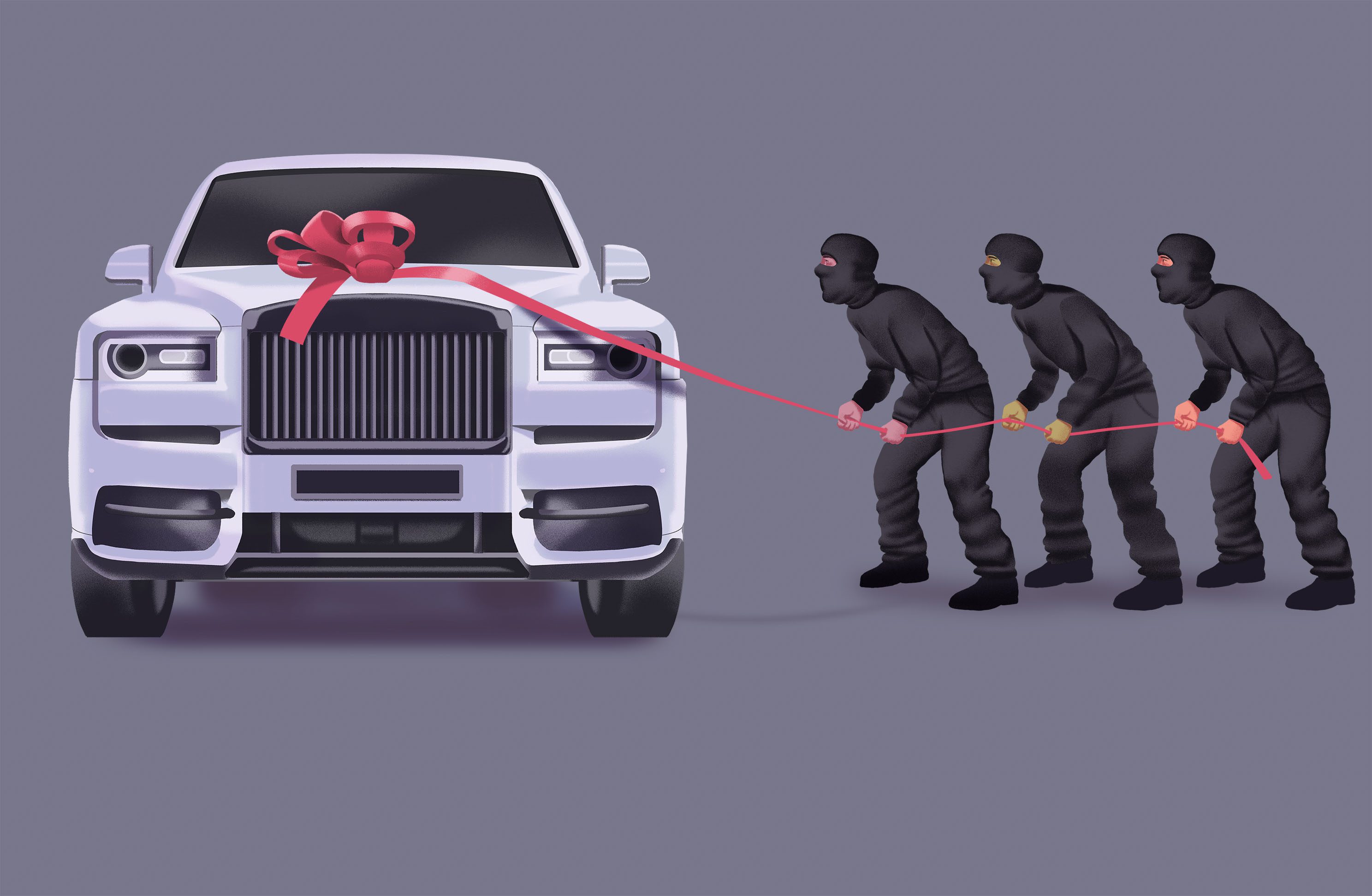
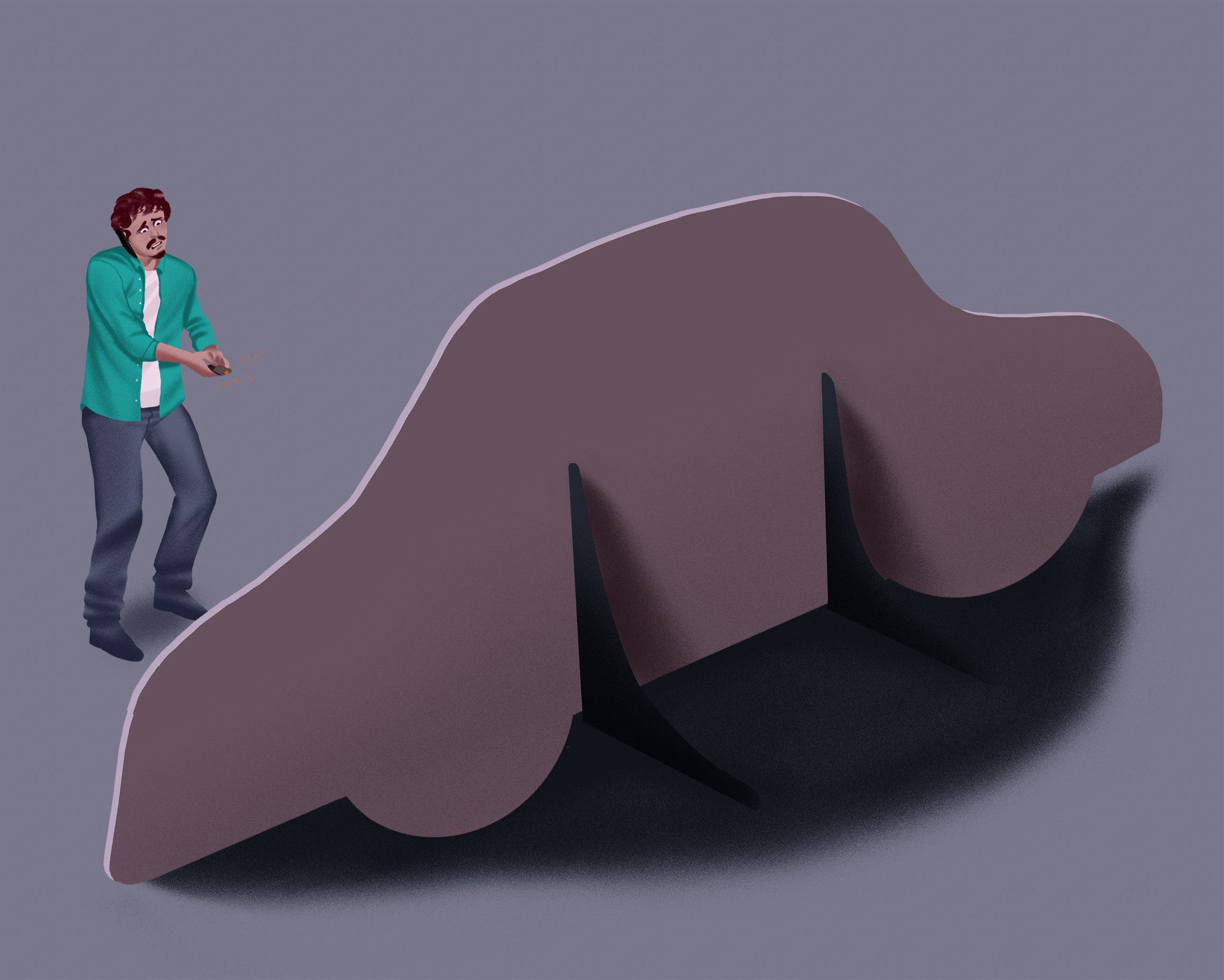
Zahr had unwittingly been caught up in a new and growing type of organized criminal enterprise: vehicle transport fraud and theft. Crooks use email phishing, fraudulent paperwork, and other tactics to impersonate legitimate transport companies and get hired to deliver a luxury vehicle. They divert the shipment away from its intended destination and then use a mix of technology, computer skills, and old-school chop shop techniques to erase traces of the vehicle’s original ownership and registration.

These vehicles can be retitled and resold in the US or loaded into a shipping container and sent to an overseas buyer. In some cases, the car has been resold or is out of the country by the time the rightful owner even realizes it’s missing.

“Criminals have learned that stealing cars via the web portals has become extremely easy, and when I say easy—it’s become seamless,” says Steven Yariv, the CEO of Dealers Choice Auto Transport of West Palm Beach, Florida, one of the country’s largest luxury-vehicle transport brokers.

Individual cases have received media coverage thanks to the high value of the stolen cars and the fact that some belong to professional athletes and other celebrities. In late 2024, a Lamborghini Huracán belonging to Colorado Rockies third baseman Kris Bryant went missing en route to his home in Las Vegas; R&B singer Ray J told TMZ the same year that two Mercedes Maybachs never arrived in New York as planned; and last fall, NBA Hall of Famer Shaquille O’Neal had a $180,000 custom Range Rover stolen when the transport company hired to move the vehicle was hacked. “They’re saying they think it’s probably in Dubai by now, to be honest,” an employee of the company that customized the SUV told Shaq in a YouTube video.

“Criminals have learned that stealing cars via the web portals has become extremely easy, and when I say easy—it’s become seamless.”

Steven Yariv, CEO, Dealers Choice Auto Transport of West Palm Beach, Florida

But the nationwide epidemic of vehicle transport fraud and theft has remained under the radar, even as it’s rocked the industry over the past two years. MIT Technology Review identified more than a dozen cases involving high-end vehicles, obtained court records, and spoke to law enforcement, brokers, drivers, and victims in multiple states to reveal how transport fraud is wreaking havoc across the country.

RICHARD CHANCE

It’s challenging to quantify the scale of this type of crime, since there isn’t a single entity or association that tracks it. Still, these law enforcement officials and brokers, as well as the country’s biggest online car-transport marketplaces, acknowledge that fraud and theft are on the rise. 

When I spoke with him in August, Yariv estimated that around 8,000 exotic and high-end cars had been stolen since the spring of 2024, resulting in over $1 billion in losses. “You’re talking 30 cars a day [on] average is gone,” he said.

Multiple state and local law enforcement officials told MIT Technology Review that the number is plausible. (The FBI did not respond to a request for an interview.)

“It doesn’t surprise me,” said J.D. Decker, chief of the Nevada Department of Motor Vehicles’ police division and chair of the fraud subcommittee for the American Association of Motor Vehicle Administrators. “It’s a huge business.”

Data from the National Insurance Crime Bureau (NICB), a nonprofit that works with law enforcement and the insurance industry to investigate insurance fraud and related crimes, provides further evidence of this crime wave. NICB tracks both car theft and cargo theft, a broad category that refers to goods, money, or baggage that is stolen while part of a commercial shipment; the category also covers cases in which a vehicle is stolen via a diverted transport truck or a purloined car is loaded into a shipping container. NICB’s statistics about car theft show that it has declined following an increase during the pandemic—but over the same period cargo theft has dramatically increased, to an estimated $35 billion annually. The group projected in June that it was expected to rise 22% in 2025.

NICB doesn’t break out data for vehicles as opposed to other types of stolen cargo. But Bill Woolf, a regional director for the organization, said an antifraud initiative at the Port of Baltimore experienced a 200% increase from 2023 to 2024 in the number of stolen vehicles recovered. He said the jump could be due to the increased effort to identify stolen cars moving through the port, but he noted that earlier the day we spoke, agents had recovered two high-end stolen vehicles bound for overseas.

“One day, one container—a million dollars,” he said.

Many other vehicles are never recovered—perhaps a result of the speed with which they’re shipped off or sold. Travis Payne, an exotic-car dealer in Atlanta, told me that transport thieves often have buyers lined up before they take a car: “When they steal them, they have a plan.” 

In 2024, Payne spent months trying to locate a Rolls-Royce he’d purchased after it was stolen via transport fraud. It eventually turned up in the Instagram feed of a Mexican pop star, he says. He never got the car back.

The criminals are “gonna keep doing it,” he says, “because they make a couple phone calls, make a couple email accounts, and they get a $400,000 car for free. I mean, it makes them God, you know?”

Out-innovating the industry

The explosion of vehicle transport fraud follows a pattern that has played out across the economy over the past roughly two decades: A business that once ran on phones, faxes, and personal relationships shifted to online marketplaces that increased efficiency and brought down costs—but the reduction in human-to-human interaction introduced security vulnerabilities that allowed organized and often international fraudsters to enter the industry.

In the case of vehicle transport, the marketplaces are online “load boards” where car owners, dealerships, and manufacturers post about vehicles that need to be shipped from one location to another. Central Dispatch claims to be the largest vehicle load board and says on its website that thousands of vehicles are posted on its platform each day. It’s part of Cox Automotive, an industry juggernaut that owns major vehicle auctions, Autotrader, Kelley Blue Book, and other businesses that work with auto dealers, lenders, and buyers.

The system worked pretty well until roughly two years ago, when organized fraud rings began compromising broker and carrier accounts and exploiting loopholes in government licensing to steal loads with surprising ease and alarming frequency.

A theft can start with a phishing email that appears to come from a legitimate load board. The recipient, a broker or carrier, clicks a link in the message, which appears to go to the real site—but logging in sends the victim’s username and password to a criminal. The crook logs in as the victim, changes the account’s email and phone number to reroute all communications, and begins claiming loads of high-end vehicles. Cox Automotive declined an interview request but said in a statement that the “load board system still works well” and that “fraud impacts a very small portion” of listings.

“Every time we come up with a security measure to prevent the fraudster, they come up with a countermeasure.”

Bill Woolf, a regional director, National Insurance Crime Bureau

Criminals also gain access to online marketplaces by exploiting a lax regulatory environment. While a valid US Department of Transportation registration is required to access online marketplaces, it’s not hard for bad actors to register sham transport companies and obtain a USDOT number from the Federal Motor Carrier Safety Administration, the agency that regulates commercial motor vehicles. In other cases, criminals compromise the FMCSA accounts of legitimate companies and change their phone numbers and email addresses in order to impersonate them and steal loads. (USDOT did not respond to a request for comment.)

As Bek Abdullayev, the founder of Super Dispatch, one of Central Dispatch’s biggest competitors, explained in an episode of the podcast Auto Transport Co-Pilot, “FMCSA [is] authorizing people that are fraudulent companies—people that are not who they say they are.” He added that people can “game the system and … obtain paperwork that makes [them] look like a legitimate company.” For example, vehicle carrier insurance can be obtained quickly—if temporarily—by submitting an online application with fraudulent payment credentials.

The bottom line is that crooks have found myriad ways to present themselves as genuine and permitted vehicle transport brokers and carriers. Once hired to move a vehicle, they often repost the car on a load board using a different fraudulent or compromised account. While this kind of subcontracting, known as “double-­brokering,” is sometimes used by companies to save money, it can also be used by criminals to hire an unwitting accomplice to deliver the stolen car to their desired location. “They’re booking cars and then they’re just reposting them and dispatching them out to different routes,” says Yariv, the West Palm Beach transport broker. 

“A lot of this is cartel operated,” says Decker, of the Nevada DMV, who also serves on a vehicle fraud committee for the International Association of Chiefs of Police. “There’s so much money in it that it rivals selling drugs.”

Even though this problem is becoming increasingly well known, fraudsters continue to steal, largely with impunity. Brokers, auto industry insiders, and law enforcement told MIT Technology Review that load boards and the USDOT have been too slow to catch and ban bad actors. (In its statement, Cox Automotive said it has been “dedicated to continually enhancing our processes, technology, and education efforts across the industry to fight fraud.”)

Jake MacDonald, who leads Super Dispatch’s fraud monitoring and investigation efforts, put it bluntly on the podcast with Abdullayev: the reason that fraud is “jumping so much” is that “the industry is slowly moving over to a more technologically advanced position, but it’s so slow that fraud is actually [out-]innovating the industry.”

A Florida sting

As it turns out, the person Zahr’s team hired on Central Dispatch didn’t really work for the transport company. 

After securing the job, the fraudster reposted the orange-and-gray Rolls convertible to a load board. And instead of saying that the car needed to go from Miami to the real destination of Detroit, the new job listed an end point of Hallandale Beach, Florida, just 20 or so miles away. It was a classic case of malicious double-­brokering: the crooks claimed a load and then reposted it in order to find a new, unsuspecting driver to deliver the car into their possession.

On January 17 of last year, the legitimate driver showed up in a Dodge Ram and loaded the Rolls into an enclosed trailer as Zahr watched.

“The guy came in and looked very professional, and we took a video of him loading the car, taking pictures of everything,” Zahr told me. He never thought to double-­check where the driver was headed or which company he worked for.

Not long after a panicked Zahr spoke with his contact at the transport company he thought he was working with, he reported the car as stolen to the Miami police. Detective Ryan Chin was assigned to the case. It fit with a pattern of high-end auto theft that he and his colleagues had recently been tracking.

“Over the past few weeks, detectives have been made aware of a new method on the rise for vehicles being stolen by utilizing Central Dispatch,” Chin wrote in records obtained by MIT Technology Review. “Specific brokers are re-routing the truck drivers upon them picking up vehicles posted for transport and routing them to other locations provided by the broker.” 

Chin used Zahr’s photos and video to identify the truck and driver who’d taken the Rolls. By the time police found him, on January 31, the driver had already dropped off Zahr’s Rolls in Hallandale Beach. He’d also picked up and delivered a black Lamborghini Urus and a White Audi R8 for the same client. Each car had been stolen via double-brokering transport fraud, according to court records. 

The police department declined to comment or to make Chin available for an interview. But a source with knowledge of the case said the driver was “super cooperative.” (The source asked not to be identified because they were not authorized to speak to the media, and the driver does not appear to have been identified in court records.)

The driver told police that he had another load to pick up at a dealership in Naples, Florida, later that same day—a second Lamborghini Urus, this one orange. Police later discovered it was supposed to be shipped to California. But the carrier had been hired to bring the car, which retails for about $250,000, to a mall in nearby Aventura. He told police that he suspected it was going to be delivered to the same person who had booked him for the earlier Rolls, Audi, and Lamborghini deliveries, since “the voice sounds consistent with who [the driver] dealt with prior on the phone.” This drop-off was slated for 4 p.m. at the Waterways Shoppes mall in Aventura.

That was when Chin and a fellow detective, Orlando Rodriguez, decided to set up a sting. 

The officers and colleagues across three law enforcement agencies quickly positioned themselves in the Waterways parking lot ahead of the scheduled delivery of the Urus. They watched as, pretty much right on schedule that afternoon, the cooperative driver of the Dodge Ram rolled to a stop in the palm-tree-lined lot, which was surrounded by a kosher supermarket, Japanese and Middle Eastern restaurants, and a physiotherapy clinic.

The driver went inside the trailer and emerged in the orange Lamborghini. He parked it and waited near the vehicle.

Roughly 30 minutes later, a green Rolls-Royce Cullinan (price: $400,000 and up) arrived with two men and a teenager inside. They got out, opened the trunk, and sat on the tailgate of the vehicle as one man counted cash.

“They’re doing countersurveillance, looking around,” the source told me later. “It’s a little out of the ordinary, you know. They kept being fixated [on] where the truck was parked.” 

The transport driver and the three males who arrived in the Rolls-Royce did not interact. But soon enough, another luxury vehicle, a Bentley Continental GT, which last year retailed for about $250,000 and up, pulled in. The Bentley driver got out, took the cash from one of the men sitting on the back of the Rolls, and walked over to the transport driver. He handed him $700 and took the keys to the Lamborghini.

That’s when more than a dozen officers swooped in.

“They had nowhere to go,” the source told me. “We surrounded them.”

The two men in the Rolls were later identified as Arman Gevorgyan and Hrant Nazarian, and the man in the Bentley as Yuriy Korotovskyy. The three were arrested and charged with dealing in stolen property, grand theft over $100,000, and organized fraud. (The teenager who arrived in the Rolls was Gevorgyan’s son. He was detained and released, according to Richard Cooper, Gevorgyan’s attorney.)

As investigators dug into the case, the evidence suggested that this was part of the criminal pattern they’d been following. “I think it’s organized,” the source told me.

It’s something that transport industry insiders have talked about for a while, according to Fred Mills, the owner of Florida-based Advantage Auto Transport, a company that specializes in transporting high-end vehicles. He said there’s even a slang term to describe people engaged in transport fraud: the flip-flop mafia. 

It has multiple meanings. One is that the people who show up to transport or accept a vehicle “are out there wearing, you know, flip-flops and slides,” Mills says.

The second refers to how fraudsters “flip” from one carrier registration to another as they try to stay ahead of regulators and complaints.

In addition to needing a USDOT number, carriers working across states need an interstate operating authority (commonly known as an MC number) from the USDOT. Both IDs are typically printed on the driver and passenger doors. But the rise of ­double-brokering—and of fly-by-night and fraudulent carriers—means that drivers increasingly just tape IDs to their door. 

Mills says fraudsters will use a USDOT number for 10 or 11 months, racking up violations, and then tape up a new one. “They just wash, rinse, and repeat,” he says.

Decker from the Nevada DMV says a lot of high-end vehicles are stolen because dealerships and individual customers don’t properly check the paperwork or identity of the person who shows up to transport them.

“‘Flip-flop mafia’ is an apt nickname because it’s surprisingly easy to get a car on a truck and convince somebody that they’re a legitimate transport operation when they’re not,” he says.

Roughly a month after it disappeared, Zahr’s Rolls-Royce was recovered by the Miami Beach Police. Video footage obtained by a local TV station showed the gray car with its distinctive orange top being towed into a police garage. 

What happens in Vegas

Among the items confiscated from the men in Florida were $10,796 in cash and a GPS jammer. Law enforcement sources say jammers have become a core piece of technology for modern car thieves—necessary to disable the location tracking provided by GPS navigation systems in most cars. “Once they get the vehicles, they usually park them somewhere [and] put a signal jammer in there or cut out the GPS,” the Florida source told me. This buys them time to swap and reprogram the vehicle identification number (VIN), wipe car computers, and reprogram fobs to remove traces of the car’s provenance. 

No two VINs are the same, and each is assigned to a specific vehicle by the manufacturer. Where they’re placed inside a vehicle varies by make and model. The NICB’s Woolf says cars also have confidential VINs located in places—including their electronic components—that are supposed to be known only to law enforcement and his organization. But criminals have figured out how to find and change them.

“It’s making it more and more difficult for us to identify vehicles as stolen,” Woolf says. “Every time we come up with a security measure to prevent the fraudster, they come up with a countermeasure.”

All this doesn’t even take very much time. “If you know what you’re doing, and you steal the car at one o’clock today, you can have it completely done at two o’clock today,” says Woolf. A vehicle can be rerouted, reprogrammed, re-VINed, and sometimes even retitled before an owner files a police report.

That appears to have been the plan in the case of the stolen light-gray 2023 Lamborghini Huracán owned by the Rockies’ Kris Bryant.

On September 29, 2024, a carrier hired via a load board arrived at Bryant’s home in Cherry Hills, Colorado, to pick up the car. It was supposed to be transported to Bryant’s Las Vegas residence within a few days. It never showed up there—but it was in fact in Vegas.

Using Flock traffic cameras, which capture license plate information in areas across the country, Detective Justin Smith of the Cherry Hills Village Police Department tracked the truck and trailer that had picked up the Lambo to Nevada, and he alerted local police.

On October 7, a Las Vegas officer spotted a car matching the Lamborghini’s description and pulled it over. The driver said the Huracán had been brought to his auto shop by a man whom the police were able to identify as Dat Viet Tieu. They arrested Tieu later that same day. In an interview with police, he identified himself as a car broker. He said he was going to resell the Lamborghini and that he had no idea that the car was stolen, according to the arrest report. 

Police searched a Jeep Wrangler that Tieu had parked nearby and discovered it had been stolen—and had been re-VINed, retitled, and registered to his wife. Inside the car, police discovered “multiple fraudulent VIN stickers, key fobs to other high-end stolen vehicles, and fictitious placards,” their report said. 

One of the fake VINs matched the make and model of Bryant’s Lamborghini. (Representatives for Bryant and the Rockies did not respond to a request for comment.) 

Tieu was released on bail. But after he returned to LVPD headquarters two days later, on October 9, to reclaim his personal property, officers secretly placed him under surveillance with the hope that he’d lead them to one of the other stolen cars matching the key fobs they’d found in the Jeep. 

It didn’t take long for them to get lucky. A few hours after leaving the police station, Tieu drove to Harry Reid International Airport, where he picked up an unidentified man. They drove to the Caesars Palace parking garage and pulled in near a GMC Sierra. Over the next three hours, the man worked on a laptop inside and outside the vehicle, according to a police report. At one point, he and Tieu connected jumper cables from Tieu’s rented Toyota Camry to the Sierra.

“At 2323 hours, the white male adult enters the GMC Sierra, and the vehicle’s ignition starts. It was readily apparent the [two men] had successfully re-programmed a key fob to the GMC Sierra,” the report said.

An officer watched as the man gave two key fobs to Tieu, who handed the man an unknown amount of cash. Still, the police let the men leave the garage. 

The police kept Tieu and his wife under surveillance for more than a week. Then, on October 18, fearing the couple was about to leave town, officers entered Nora’s Italian Restaurant just off the Vegas Strip and took them into custody.

“Obviously, we meet again,” a detective told Tieu.

“I’m not surprised,” Tieu replied. 

Police later searched the VIN on the Sierra from the Caesars lot and found that it had been reported stolen in Tremonton, Utah, roughly two weeks earlier. They eventually returned both the Sierra and Kris Bryant’s Lamborghini to their owners. 

Tieu pleaded guilty to two felony counts of possession of a stolen vehicle and one count of defacing, altering, substituting, or removing a VIN. In October, he was sentenced to up to one year of probation; if it’s completed successfully, the plea agreement says, the counts of possession of a stolen vehicle will be dismissed. His attorneys, David Z. Chesnoff and Richard A. Schonfeld, said in a statement that they were “pleased” with the court’s decision, “in light of [Tieu’s] acceptance of responsibility.” 

Taking the heat

Many vehicles stolen via transport fraud are never recovered. Experts say the best way to stop this criminal cycle would be to disrupt it before it starts. 

That would require significant changes to the way that load boards operate. Bryant’s Lamborghini, Zahr’s and Payne’s Rolls-Royces, and the orange Lamborghini Urus in Florida were all posted for transport on Central Dispatch. Both brokers and shippers argue that the company hasn’t taken enough responsibility for what they characterize as weak oversight.

“If the crap hits the fan, it’s on us as a broker, or it’s on the trucking company … they have no liability in the whole transaction process. So it definitely frosted a lot of people’s feathers.”

Fred Mills, owner of Florida-based Advantage Auto Transport

“You’re Cox Automotive—you’re the biggest car company in the world for dealers—and you’re not doing better screenings when you sign people up?” says Payne. (The spokesperson for Cox Automotive said that it has “a robust verification process for all clients … who sign up.”)

“If the crap hits the fan, it’s on us as a broker, or it’s on the trucking company, or the clients’ insurance, [which means] that they have no liability in the whole transaction process,” says Mills. “So it definitely frosted a lot of people’s feathers.”

Over the last year, Central Dispatch has made changes to further secure its platform. It introduced two-factor authentication for user accounts and started enabling shippers to use its app to track loads in real time, among other measures. It also kicked off an awareness campaign that includes online educational content and media appearances to communicate that the company takes its responsibilities seriously.

“We’ve removed over 500 accounts already in 2025, and we’ll continue to take any of that aggressive action where it’s needed,” said Lainey Sibble, Central Dispatch’s head of business, in a sponsored episode of the Auto Remarketing Podcast. “We also recognize this is not going to happen in a silo. Everyone has a role to play here, and it’s really going to take us all working together in partnership to combat this issue.”

Mills says Central Dispatch got faster at shutting down fraudulent accounts toward the end of last year. But it’s going to take time to fix the industry, he adds: “I compare it to a 15-year opioid addiction. It’s going to take a while to detox the system.” 

Yariv, the broker in West Palm Beach, says he has stopped using Central Dispatch and other load boards altogether. “One person has access here, and that’s me. I don’t even log in,” he told me. His team has gone back to working the phones, as evidenced by the din of voices in the background as we spoke. 

RICHARD CHANCE

“[The fraud is] everywhere. It’s constant,” he said. “The only way it goes away is the dispatch boards have to be shut down—and that’ll never happen.”

It also remains to be seen what kind of accountability there will be for the alleged thieves in Florida. Korotovskyy and Nazarian pleaded not guilty; as of press time, their trials were scheduled to begin in May. (Korotovskyy’s lawyer, Bruce Prober, said in a statement that the case “is an ongoing matter” and his client is “presumed innocent,” while Nazarian’s attorney, Yale Sanford, said in a statement, “As the investigation continues, Mr. Nazarian firmly asserts his innocence.” A spokesperson with Florida’s Office of the State Attorney emailed a statement: “The circumstances related to these arrests are still a matter of investigation and prosecution. It would be inappropriate to be commenting further.”)

In contrast, Gevorgyan, the third man arrested in the Florida sting, pleaded guilty to four charges. 

Yet he maintains his innocence, according to Cooper, his lawyer: “He was pleading [guilty] to get out and go home.” Cooper describes his client as a wealthy Armenian national who runs a jewelry business back home, adding that he was deported to Armenia in September. 

Cooper says his client’s “sweetheart” plea deal doesn’t require him to testify or otherwise supply information against his alleged co-conspirators—or to reveal details about how all these luxury cars were mysteriously disappearing across South Florida. Cooper also says prosecutors may have a difficult time convicting the other two men, arguing that police acted prematurely by arresting the trio without first seeing what, if anything, they intended to do with the Lamborghini.

“All they ever had,” Cooper says, “was three schmucks sitting outside of the Lamborghini.” 


Craig Silverman is an award-winning journalist and the cofounder of Indicator, a publication that reports on digital deception.

The myth of the high-tech heist

Making a movie is a lot like pulling off a heist. That’s what Steven Soderbergh—director of the Ocean’s franchise, among other heist-y classics—said a few years ago. You come up with a creative angle, put together a team of specialists, figure out how to beat the technological challenges, rehearse, move with Swiss-watch precision, and—if you do it right—redistribute some wealth. That could describe either the plot or the making of Ocean’s Eleven.

But conversely, pulling off a heist isn’t much like the movies. Surveillance cameras, computer-controlled alarms, knockout gas, and lasers hardly ever feature in big-ticket crime. In reality, technical countermeasures are rarely a problem, and high-tech gadgets are rarely a solution. The main barrier to entry is usually a literal barrier to entry, like a door. Thieves’ most common move is to collude with, trick, or threaten an insider. Last year a heist cost the Louvre €88 million worth of antique jewelry, and the most sophisticated technology in play was an angle grinder.

The low-tech Louvre maneuvers were in keeping with what heist research long ago concluded. In 2014 US nuclear weapons researchers at Sandia National Laboratories took a detour into this demimonde, producing a 100-page report called “The Perfect Heist: Recipes from Around the World.” The scientists were worried someone might try to steal a nuke from the US arsenal, and so they compiled information on 23 high-value robberies from 1972 to 2012 into a “Heist Methods and Characteristics Database,” a critical mass of knowledge on what worked. Thieves, they found, dedicated huge amounts of money and time to planning and practice runs—sometimes more than 100. They’d use brute force, tunneling through sewers for months (Société Générale bank heist, Nice, France, 1976), or guile, donning police costumes to fool guards (Gardner Museum, Boston, 1990). But nobody was using, say, electromagnetic pulse generators to shut down the Las Vegas electrical grid. The most successful robbers got to the valuable stuff unseen and got out fast.

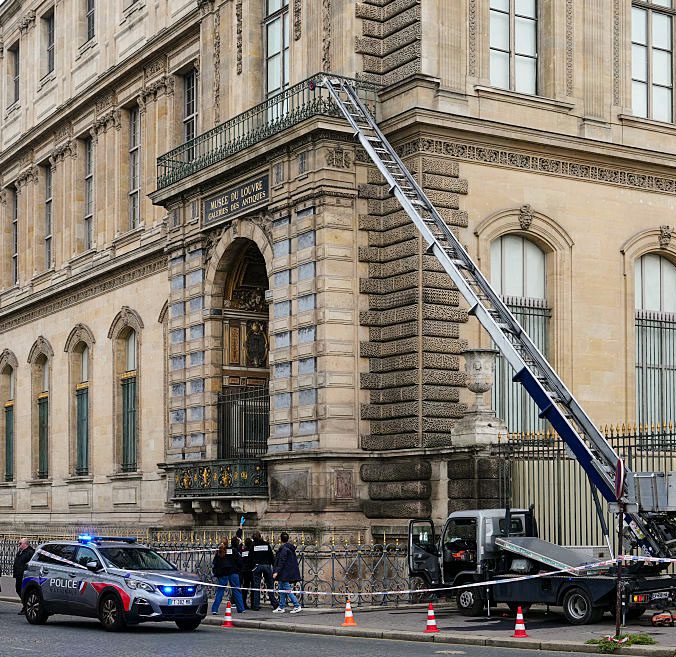
rench police officers stand next to a ladder used by robbers to enter the Louvre Museum
Last year a heist cost the Louvre €88 million worth of antique jewelry, and the most sophisticated technology in play was an angle grinder.
DIMITAR DILKOFF / AFP VIA GETTY IMAGES

Advance the time frame, and the situation looks much the same. Last year, Spanish researchers looking at art crimes from 1990 to 2022 found that the least technical methods are still the most successful. “High-tech technology doesn’t work so well,” says Erin L. Thompson, an art historian at John Jay College of Justice who studies art crime. Speed and practice trump complicated systems and alarms; even that Louvre robbery was, at heart, just a minutes-long smash-and-grab.

An emphasis on speed doesn’t mean heists don’t require skill—panache, even. As the old saying goes, amateurs talk strategy; professionals study logistics. Even without gadgets, heists and heist movies still revel in an engineer’s mindset. “Heist movies absolutely celebrate deep-dive nerdery—‘I’m going to know everything I can about the power grid, about this kind of stone and drill, about Chicago at night,’” says Anna Kornbluh, a professor of English at the University of Illinois at Chicago. She published a paper last October on the ways heist movies reflect an Old Hollywood approach to collective art-making, while shows about new grift, like those detailing the rise and fall of WeWork or the con artist Anna Delvey, reflect the more lone-wolf, disrupt-and-grow mindset of the streaming era. 

Her work might help explain why law-abiding citizens might cheer for the kinds of guys who’d steal a crown from the Louvre, or $100,000 worth of escargot from a farm in Champagne (as happened just a few weeks later). Heists, says Kornbluh, are anti-oligarch praxis. “Everybody wants to know how to be in a competent collective. Everybody wants there to be better logistics,” she says. “We need a better state. We need a better society. We need a better world.” Those are shared values—and as another old saying tells us, where there is value, there is crime.

Good technology should change the world

The billionaire investor Peter Thiel (or maybe his ghostwriter) once said, “We were promised flying cars, instead we got 140 characters.”

Mat Honan

That quip originally appeared in a manifesto for Thiel’s venture fund in 2011. All good investment firms have a manifesto, right? This one argued for making bold bets on risky, world-changing technologies rather than chasing the tepid mundanity of social software startups. What followed, however, was a decade that got even more mundane. Messaging, ride hailing, house shares, grocery delivery, burrito taxis, chat, all manner of photo sharing, games, juice on demand, and Yo. Remember Yo? Yo, yo.

It was an era defined more by business model disruptions than by true breakthroughs—a time when the most ambitious, high-profile startup doing anything resembling real science-based innovation was … Theranos? The 2010s made it easy to become a cynic about the industry, to the point that tech skepticism has replaced techno-optimism in the zeitgeist. Many of the “disruptions” of the last 15 years were about coddling a certain set of young, moneyed San Franciscans more than improving the world. Sure, that industry created an obscene amount of wealth for a small number of individuals. But maybe no company should be as powerful as the tech giants whose tentacles seem to wrap around every aspect of our lives. 

Yet you can be sympathetic to the techlash and still fully buy into the idea that technology can be good. We really can build tools that make this planet healthier, more livable, more equitable, and just all-around better. 

In fact, some people have been doing just that. Amid all the nonsense of the teeny-­boomers, a number of fundamental, potentially world-changing technologies have been making quiet progress. Quantum computing. Intelligent machines. Carbon capture. Gene editing. Nuclear fusion. mRNA vaccines. Materials discovery. Humanoid robots. Atmospheric water harvesting. Robotaxis. And, yes, even flying cars—have you heard of an EVTOL? The acronym stands for “electric vertical takeoff and landing.” It’s a small electric vehicle that can lift off and return to Earth without a runway. Basically, a flying car. You can buy one. Right now. (Good luck!)

Jetsons stuff. It’s here. 

Every year, MIT Technology Review publishes a list of 10 technologies that we believe are poised to fundamentally alter the world. The shifts aren’t always positive (see, for example, our 2023 entry on cheap military drones, which continue to darken the skies over Ukraine). But for the most part, we’re talking about changes for the better: curing diseases, fighting climate change, living in space. I don’t know about you, but … seems pretty good to me?

As the saying goes, two things can be true. Technology can be a real and powerful force for good in the world, and it can also be just an enormous factory for hype, bullshit, and harmful ideas. We try to keep both of those things in mind. We try to approach our subject matter with curious skepticism. 

But every once in a while we also approach it with awe, and even wonder. Our problems are myriad and sometimes seem insurmountable. Hyperobjects within hyperobjects. But a century ago, people felt that way about growing enough food for a booming population and facing the threat of communicable diseases. Half a century ago, they felt that way about toxic pollution and a literal hole in the atmosphere. Tech bros are wrong about a lot, but their build-big manifestos make a good point: We can solve problems. We have to. And in the quieter, more deliberate parts of the future, we will.

Why some “breakthrough” technologies don’t work out

Every year, MIT Technology Review publishes a list of 10 Breakthrough Technologies. In fact, the 2026 version is out today. This marks the 25th year the newsroom has compiled this annual list, which means its journalists and editors have now identified 250 technologies as breakthroughs. 

A few years ago, editor at large David Rotman revisited the publication’s original list, finding that while all the technologies were still relevant, each had evolved and progressed in often unpredictable ways. I lead students through a similar exercise in a graduate class I teach with James Scott for MIT’s School of Architecture and Planning. 

We ask these MIT students to find some of the “flops” from breakthrough lists in the archives and consider what factors or decisions led to their demise, and then to envision possible ways to “flip” the negative outcome into a success. The idea is to combine critical perspective and creativity when thinking about technology.

Although it’s less glamorous than envisioning which advances will change our future, analyzing failed technologies is equally important. It reveals how factors outside what is narrowly understood as technology play a role in its success—factors including cultural context, social acceptance, market competition, and simply timing.

In some cases, the vision behind a breakthrough was prescient but the technology of the day was not the best way to achieve it. Social TV (featured on the list in 2010) is an example: Its advocates proposed different ways to tie together social platforms and streaming services to make it easier to chat or interact with your friends while watching live TV shows when you weren’t physically together. 

This idea rightly reflected the great potential for connection in this modern era of pervasive cell phones, broadband, and Wi-Fi. But it bet on a medium that was in decline: live TV. 

Still, anyone who had teenage children during the pandemic can testify to the emergence of a similar phenomenon—youngsters started watching movies or TV series simultaneously on streaming platforms while checking comments on social media feeds and interacting with friends over messaging apps. 

Shared real-time viewing with geographically scattered friends did catch on, but instead of taking place through one centralized service, it emerged organically on multiple platforms and devices. And the experience felt unique to each group of friends, because they could watch whatever they wanted, whenever they wanted, independent of the live TV schedule.

Evaluating the record

Here are a few more examples of flops from the breakthroughs list that students in the 2025 edition of my course identified, and the lessons that we could take from each.

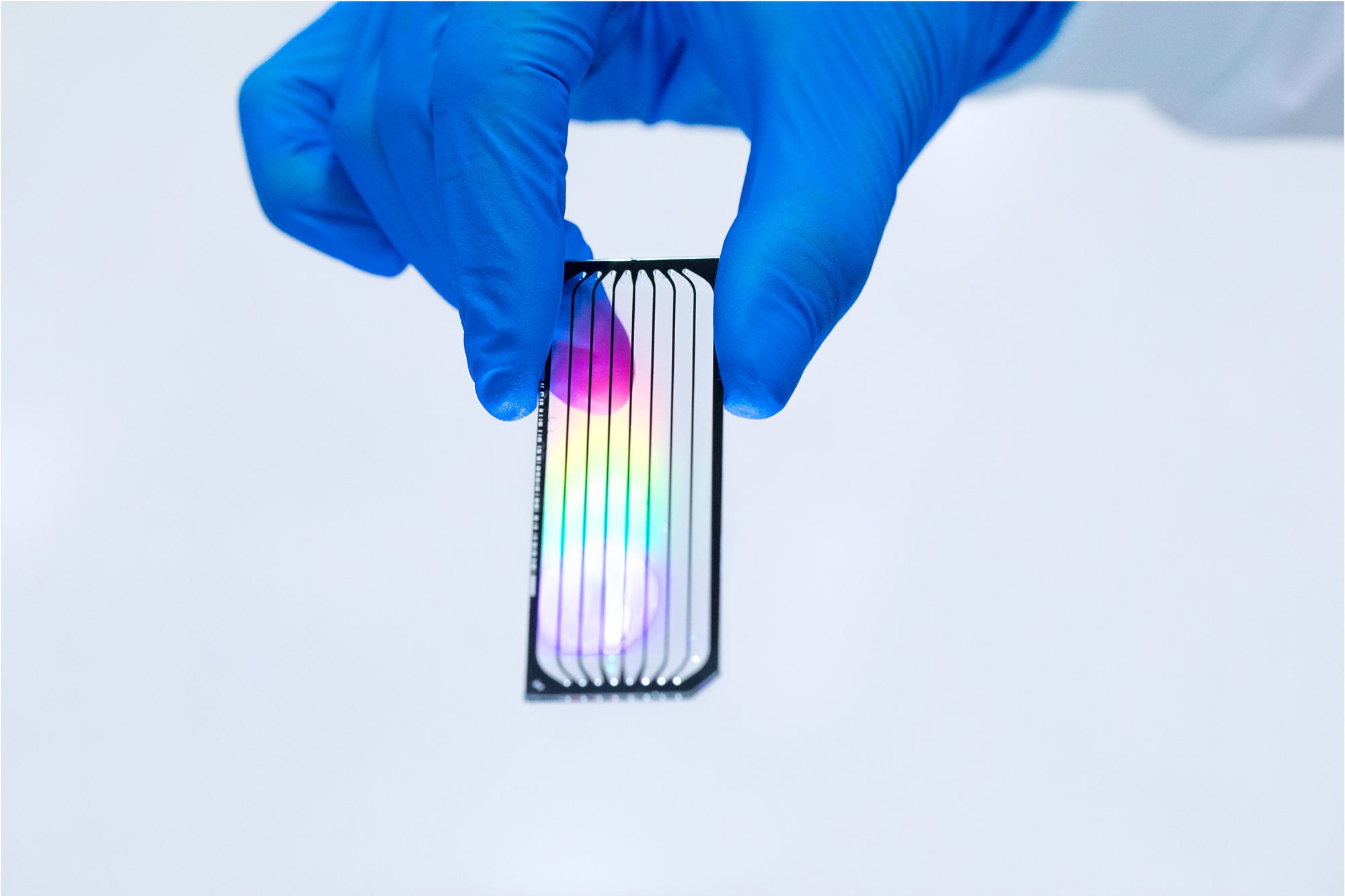
The DNA app store (from the 2016 list) was selected by Kaleigh Spears. It seemed like a great deal at the time—a startup called Helix could sequence your genome for just $80. Then, in the company’s app store, you could share that data with third parties that promised to analyze it for relevant medical info, or make it into fun merch. But Helix has since shut down the store and no longer sells directly to consumers.

Privacy concerns and doubts about the accuracy of third-party apps were among the main reasons the service didn’t catch on, particularly since there’s minimal regulation of health apps in the US. 

a Helix flow cell

HELIX

Elvis Chipiro picked universal memory (from the 2005 list). The vision was for one memory tech to rule them all—flash, random-access memory, and hard disk drives would be subsumed by a new method that relied on tiny structures called carbon nanotubes to store far more bits per square centimeter. The company behind the technology, Nantero, raised significant funds and signed on licensing partners but struggled to deliver a product on its stated timeline.

Nantero ran into challenges when it tried to produce its memory at scale because tiny variations in the way the nanotubes were arranged could cause errors. It also proved difficult to upend memory technologies that were already deeply embedded within the industry and well integrated into fabs.  

Light-field photography (from the 2012 list), chosen by Cherry Tang, let you snap a photo and adjust the image’s focus later. You’d never deal with a blurry photo ever again. To make this possible, the startup Lytro had developed a special camera that captured not just the color and intensity of light but also the angle of its rays. It was one of the first cameras of its kind designed for consumers. Even so, the company shut down in 2018.

Lytro field camera
Lytro’s unique light-field camera was ultimately not successful with consumers.
PUBLIC DOMAIN/WIKIMEDIA COMMONS

Ultimately, Lytro was outmatched by well-established incumbents like Sony and Nokia. The camera itself had a tiny display, and the images it produced were fairly low resolution. Readjusting the focus in images using the company’s own software also required a fair amount of manual work. And smartphones—with their handy built-in cameras—were becoming ubiquitous. 

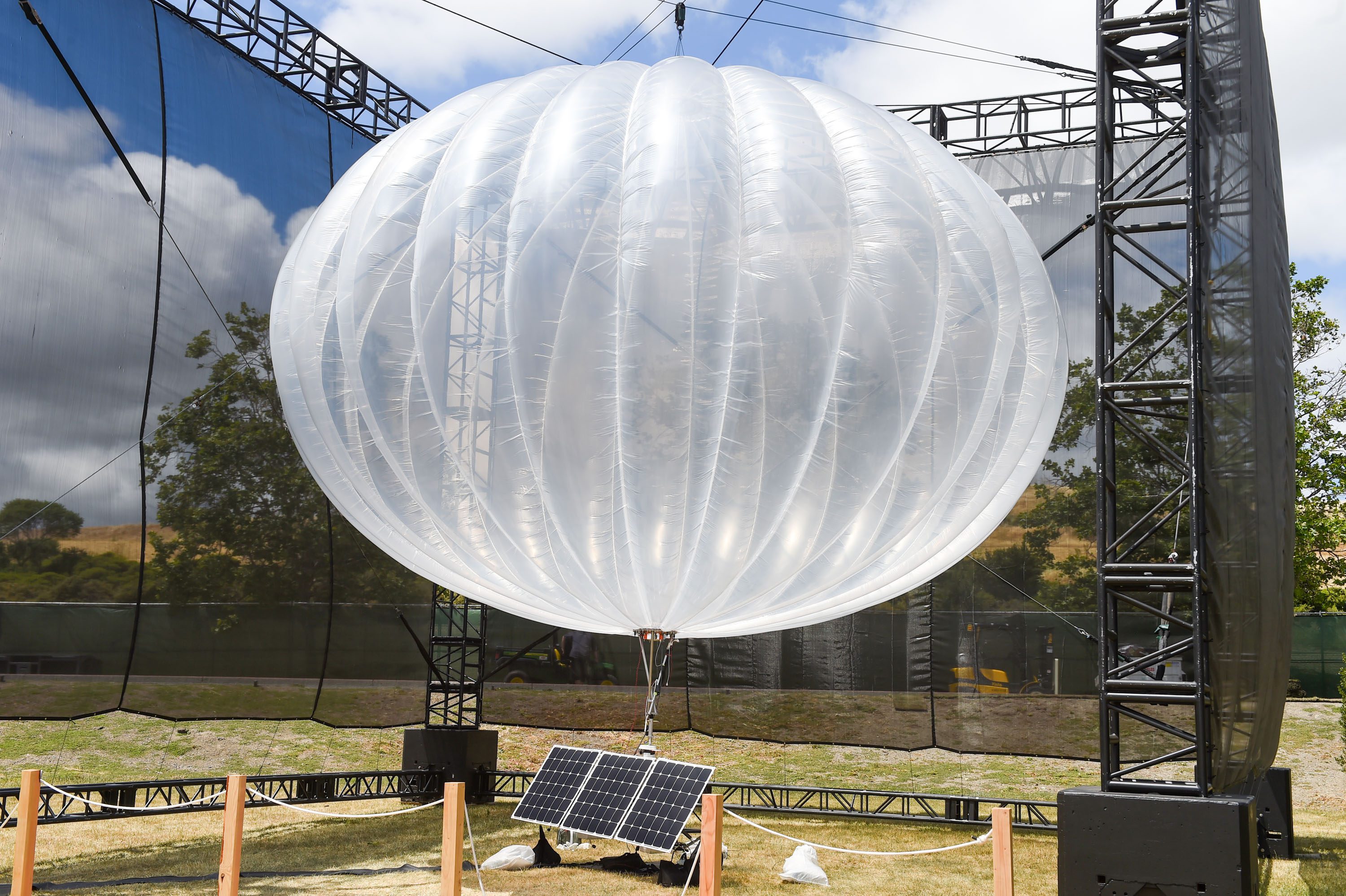
Many students over the years have selected Project Loon (from the 2015 list)—one of the so-called “moonshots” out of Google X. It proposed using gigantic balloons to replace networks of cell-phone towers to provide internet access, mainly in remote areas. The company completed field tests in multiple countries and even provided emergency internet service to Puerto Rico during the aftermath of Hurricane Maria. But the company shut down the project in 2021, with Google X CEO Astro Teller saying in a blog post that “the road to commercial viability has proven much longer and riskier than hoped.” 

Sean Lee, from my 2025 class, saw the reason for its flop in the company’s very mission: Project Loon operated in low-income regions where customers had limited purchasing power. There were also substantial commercial hurdles that may have slowed development—the company relied on partnerships with local telecom providers to deliver the service and had to secure government approvals to navigate in national airspaces. 

One of Project Loon’s balloons on display at Google I/O 2016.
ANDREJ SOKOLOW/PICTURE-ALLIANCE/DPA/AP IMAGES

While this specific project did not become a breakthrough, the overall goal of making the internet more accessible through high-altitude connectivity has been carried forward by other companies, most notably Starlink with its constellation of low-orbit satellites. Sometimes a company has the right idea but the wrong approach, and a firm with a different technology can make more progress.

As part of this class exercise, we also ask students to pick a technology from the list that they think might flop in the future. Here, too, their choices can be quite illuminating. 

Lynn Grosso chose synthetic data for AI (a 2022 pick), which means using AI to generate data that mimics real-world patterns for other AI models to train on. Though it’s become more popular as tech companies have run out of real data to feed their models, she points out that this practice can lead to model collapse, with AI models trained exclusively on generated data eventually breaking the connection to data drawn from reality. 

And Eden Olayiwole thinks the long-term success of TikTok’s recommendation algorithm (a 2021 pick) is in jeopardy as awareness grows of the technology’s potential harms and its tendency to, as she puts it, incentive creators to “microwave” ideas for quick consumption. 

But she also offers a possible solution. Remember—we asked all the students what they would do to “flip” the flopped (or soon-to-flop) technologies they selected. The idea was to prompt them to think about better ways of building or deploying these tools. 

For TikTok, Olayiwole suggests letting users indicate which types of videos they want to see more of, instead of feeding them an endless stream based on their past watching behavior. TikTok already lets users express interest in specific topics, but she proposes taking it a step further to give them options for content and tone—allowing them to request more educational videos, for example, or more calming content. 

What did we learn?

It’s always challenging to predict how a technology will shape a future that itself is in motion. Predictions not only make a claim about the future; they also describe a vision of what matters to the predictor, and they can influence how we behave, innovate, and invest.

One of my main takeaways after years of running this exercise with students is that there’s not always a clear line between a successful breakthrough and a true flop. Some technologies may not have been successful on their own but are the basis of other breakthrough technologies (natural-language processing, 2001). Others may not have reached their potential as expected but could still have enormous impact in the future (brain-machine interfaces, 2001). Or they may need more investment, which is difficult to attract when they are not flashy (malaria vaccine, 2022). 

Despite the flops over the years, this annual practice of making bold and sometimes risky predictions is worthwhile. The list gives us a sense of what advances are on the technology community’s radar at a given time and reflects the economic, social, and cultural values that inform every pick. When we revisit the 2026 list in a few years, we’ll see which of today’s values have prevailed. 

Fabio Duarte is associate director and principal research scientist at the MIT Senseable City Lab.

3 things Will Douglas Heaven is into right now

The most amazing drummer on the internet

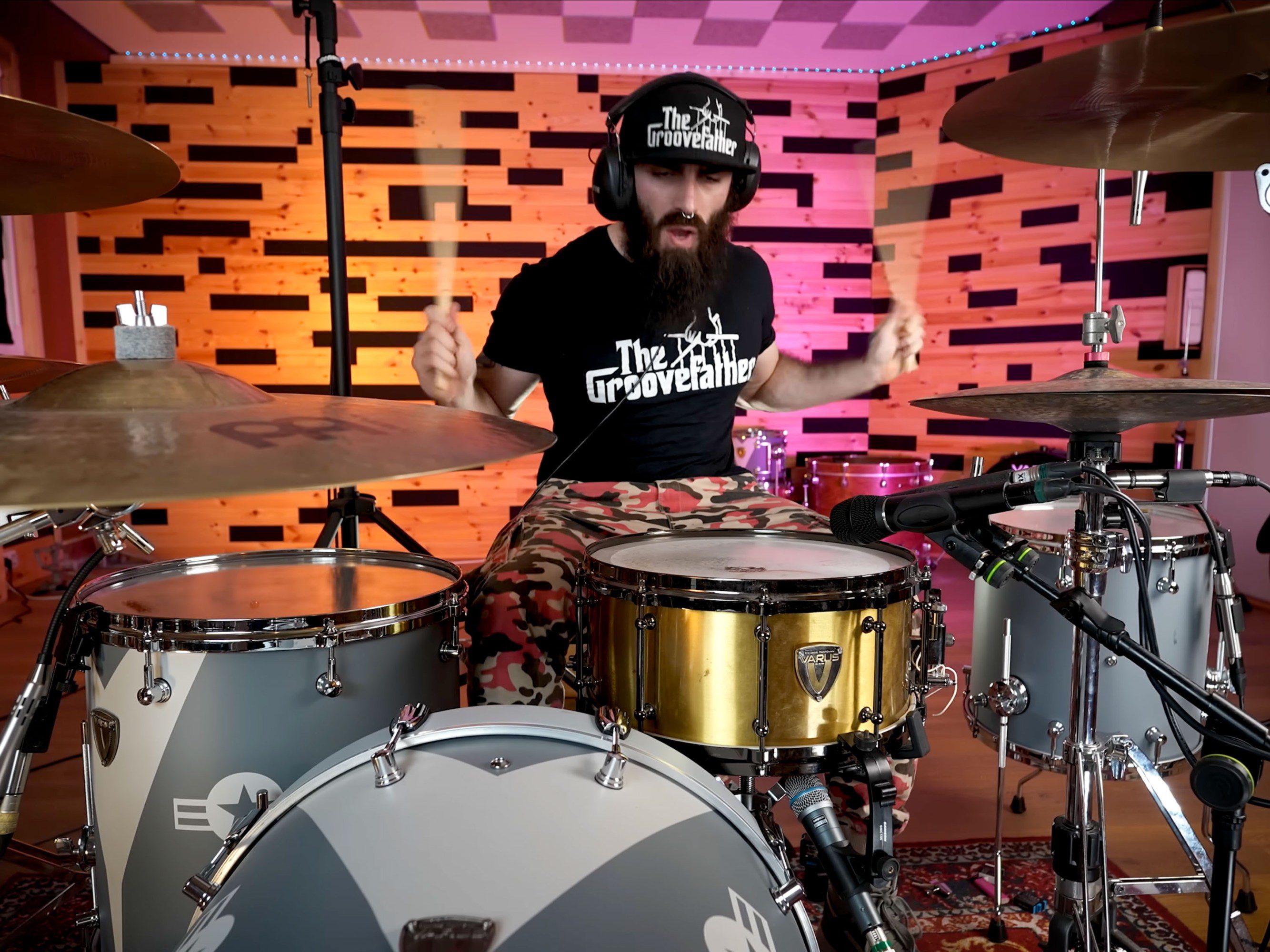
My daughter introduced me to El Estepario Siberiano’s YouTube channel a few months back, and I have been obsessed ever since. The Spanish drummer (real name: Jorge Garrido) posts videos of himself playing supercharged cover versions of popular tracks, hitting his drums with such jaw-dropping speed and technique that he makes other pro drummers shake their heads in disbelief. The dozens of reaction videos posted by other musicians are a joy in themselves. 

Jorge Garrido playing drums

EL ESTEPARIO SIBERIANO VIA YOUTUBE

Garrido is up-front about the countless hours that it took to get this good. He says he sat behind his kit almost all day, every day for years. At a time when machines appear to do it all, there’s a kind of defiance in that level of human effort. It’s why my favorites are Garrido’s covers of electronic music, where he out-drums the drum machine. Check out his version of Skrillex and Missy Elliot’s “Ra Ta Ta” and tell me it doesn’t put happiness in your heart.

Finding signs of life in the uncanny valley

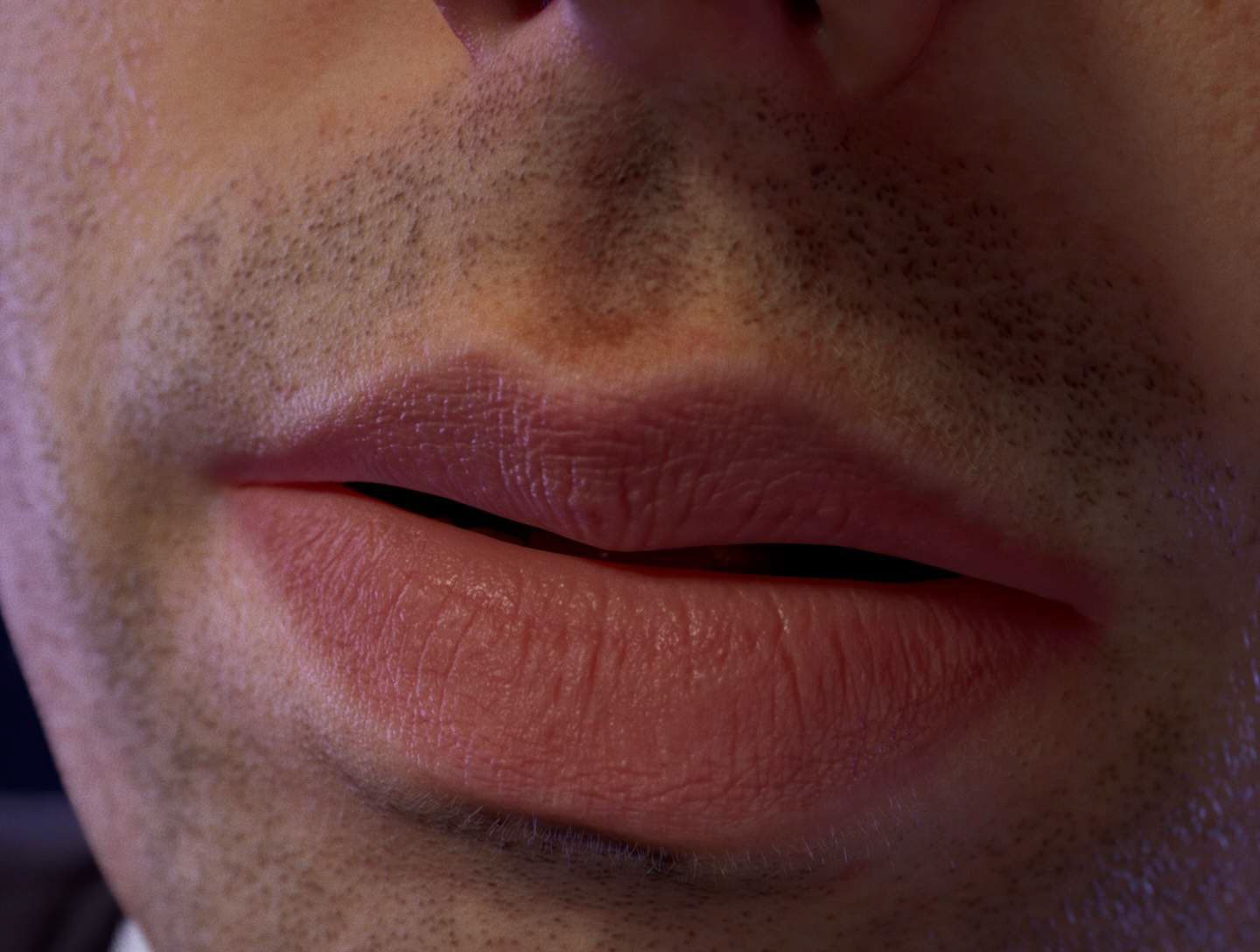
Watching Sora ­videos of Michael Jackson stealing a box of chicken nuggets or Sam Altman biting into the pink meat of a flame-grilled Pikachu has given me flashbacks to an Ed Atkins exhibition at Tate Britain I saw a few months ago. Atkins is one of the most influential and unsettling British artists of his generation. He is best known for hyper-detailed CG animations of himself (pore-perfect skin, janky movement) that play with the virtual representation of human emotions. 

Still from ED ATKINS PIANOWORK 2 2023
COURTESY: THE ARTIST, CABINET GALLERY, LONDON, DÉPENDANCE, BRUSSELS, GLADSTONE GALLERY

In The Worm we see a CGI Atkins make a long-distance call to his mother during a covid lockdown. The audio is from a recording of an actual conversation. Are we watching Atkins cry or his avatar? Our attention flickers between two realities. “When an actor breaks character during a scene, it’s known as corpsing,” Atkins has said. “I want everything I make to corpse.” Next to Atkins’s work, generative videos look like cardboard cutouts: lifelike but not alive.

A dark and dirty book about a talking dingo

What’s it like to be a pet? Australian author Laura Jean McKay’s debut novel, The Animals in That Country, will make you wish you’d never asked. A flu-like pandemic leaves people with the ability to hear what animals are saying. If that sounds too Dr. Dolittle for your tastes, rest assured: These animals are weird and nasty. A lot of the time they don’t even make any sense. 

cover of book

SCRIBE

With everybody now talking to their computers, McKay’s book resets the anthropomorphic trap we’ve all fallen into. It’s a brilliant evocation of what a nonhuman mind might containand a meditation on the hard limits of communication.

Why inventing new emotions feels so good

Have you ever felt “velvetmist”? 

It’s a “complex and subtle emotion that elicits feelings of comfort, serenity, and a gentle sense of floating.” It’s peaceful, but more ephemeral and intangible than contentment. It might be evoked by the sight of a sunset or a moody, low-key album.  

If you haven’t ever felt this sensation—or even heard of it—that’s not surprising. A Reddit user named noahjeadie generated it with ChatGPT, along with advice on how to evoke the feeling. With the right essential oils and soundtrack, apparently, you too can feel like “a soft fuzzy draping ghost floating through a lavender suburb.”

Don’t scoff: Researchers say more and more terms for these “neo-­emotions” are showing up online, describing new dimensions and aspects of feeling. Velvetmist was a key example in a journal article about the phenomenon published in July 2025. But most neo-emotions aren’t the inventions of emo artificial intelligences. Humans come up with them, and they’re part of a big change in the way researchers are thinking about feelings, one that emphasizes how people continuously spin out new ones in response to a changing world. 

Velvetmist might’ve been a chatbot one-off, but it’s not unique. The sociologist Marci Cottingham—whose 2024 paper got this vein of neo-emotion research started—cites many more new terms in circulation. There’s “Black joy” (Black people celebrating embodied pleasure as a form of political resistance), “trans euphoria” (the joy of having one’s gender identity affirmed and celebrated), “eco-anxiety” (the hovering fear of climate disaster), “hypernormalization” (the surreal pressure to continue performing mundane life and labor under capitalism during a global pandemic or fascist takeover), and the sense of “doom” found in “doomer” (one who is relentlessly pessimistic) or “doomscrolling” (being glued to an endless feed of bad news in an immobilized state combining apathy and dread). 

Of course, emotional vocabulary is always evolving. During the Civil War, doctors used the centuries-old term “nostalgia,” combining the Greek words for “returning home”and “pain,” to describe a sometimes fatal set of symptoms suffered by soldiers—a condition we’d probably describe today as post-traumatic stress disorder. Now nostalgia’s meaning has mellowed and faded to a gentle affection for an old cultural product or vanished way of life. And people constantly import emotion words from other cultures when they’re convenient or evocative—like hygge (the Danish word for friendly coziness) or kvell (a Yiddish term for brimming over with happy pride). 

Cottingham believes that neo-­emotions are proliferating as people spend more of their lives online. These coinages help us relate to one another and make sense of our experiences, and they get a lot of engagement on social media. So even when a neo-emotion is just a subtle variation on, or combination of, existing feelings, getting super-specific about those feelings helps us reflect and connect with other people. “These are potentially signals that tell us about our place in the world,” she says. 

These neo-emotions are part of a paradigm shift in emotion science. For decades, researchers argued that humans all share a set of a half-dozen or so basic emotions. But over the last decade, Lisa Feldman Barrett, a clinical psychologist at Northeastern University, has become one of the most cited scientists in the world for work demonstrating otherwise. By using tools like advanced brain imaging and studying babies and people from relatively isolated cultures, she has concluded there’s no such thing as a basic emotional palette. The way we experience and talk about our feelings is culturally determined. “How do you know what anger and sadness and fear are? Because somebody taught you,” Barrett says. 

If there are no true “basic” biological emotions, this puts more emphasis on social and cultural variations in how we interpret our experiences. And these interpretations can change over time. “As a sociologist, we think of all emotions as created,” Cottingham says. Just like any other tool humans make and use, “emotions are a practical resource people are using as they navigate the world.” 

Some neo-emotions, like velvetmist, might be mere novelties. Barrett playfully suggests “chiplessness” to describe the combined hunger, frustration, and relief of getting to the bottom of the bag. But others, like eco-anxiety and Black joy, can take on a life of their own and help galvanize social movements.  

Both reading about and crafting your own neo-emotions, with or without chatbot assistance, could be surprisingly helpful. Lots of research supports the benefits of emotional granularity. Basically, the more detailed and specific words you can use to describe your emotions, both positive and negative, the better. 

Researchers analogize this “emodiversity” to biodiversity or cultural diversity, arguing that a more diverse world is more enriched. It turns out that people who exhibit higher emotional granularity go to the doctor less frequently, spend fewer days hospitalized for illness, and are less likely to drink when stressed, drive recklessly, or smoke cigarettes. And many studies show emodiversity is a skill that, with training, people can develop at any age. Just imagine cruising into this sweet, comforting future. Is the idea giving you a certain dreamy thrill?

Are you sure you’ve never felt velvetmist?

Anya Kamenetz is a freelance education reporter who writes the Substack newsletter The Golden Hour.

MIT Technology Review’s most popular stories of 2025

It’s been a busy and productive year here at MIT Technology Review. We published magazine issues on power, creativity, innovation, bodies, relationships, and security. We hosted 14 exclusive virtual conversations with our editors and outside experts in our subscriber-only series, Roundtables, and held two events on MIT’s campus. And we published hundreds of articles online, following new developments in computing, climate tech, robotics, and more. 

As the year winds down, we wanted to give you a chance to revisit a bit of this work with us. Whether we were covering the red-hot rise of artificial intelligence or the future of biotech, these are some of the stories that resonated the most with our readers. 

We did the math on AI’s energy footprint. Here’s the story you haven’t heard.

Understanding AI’s energy use was a huge global conversation in 2025 as hundreds of millions of people began using generative AI tools on a regular basis. Senior reporters James O’Donnell and Casey Crownhart dug into the numbers and published an unprecedented look at AI’s resource demand, down to the level of a single query, to help us know how much energy and water AI may require moving forward. 

We’re learning more about what vitamin D does to our bodies

Vitamin D deficiency is widespread, particularly in the winter when there’s less sunlight to drive its production in our bodies. The “sunshine vitamin” is important for bone health, but as senior reporter Jessica Hamzelou reported, recent research is also uncovering surprising new insights into other ways it might influence our bodies, including our immune systems and heart health.

What is AI?

Senior editor Will Douglas Heaven’s expansive look at how to define AI was published in 2024, but it still managed to connect with many readers this year. He lays out why no one can agree on what AI is—and explains why that ambiguity matters, and how it can inform our own critical thinking about this technology.

Ethically sourced “spare” human bodies could revolutionize medicine

In this thought-provoking op-ed, a team of experts at Stanford University argue that creating living human bodies that can’t think, don’t have any awareness, and can’t feel pain could shake up medical research and drug development by providing essential biological materials for testing and transplantation. Recent advances in biotechnology now provide a potential pathway to such “bodyoids,” though plenty of technical challenges and ethical hurdles remain. 

It’s surprisingly easy to stumble into a relationship with an AI chatbot

Chatbots were everywhere this year, and reporter Rhiannon Williams chronicled how quickly people can develop bonds with one. That’s all right for some people, she notes, but dangerous for others. Some folks even describe unintentionally forming romantic relationships with chatbots. This is a trend we’ll definitely be keeping an eye on in 2026. 

Is this the electric grid of the future?

The electric grid is bracing for disruption from more frequent storms and fires, as well as an uncertain policy and regulatory landscape. And in many ways, the publicly owned utility company Lincoln Electric in Nebraska is an ideal lens through which to examine this shift as it works through the challenges of delivering service that’s reliable, affordable, and sustainable.

Exclusive: A record-breaking baby has been born from an embryo that’s over 30 years old

This year saw the birth of the world’s “oldest baby”: Thaddeus Daniel Pierce, who arrived on July 26. The embryo he developed from was created in 1994 during the early days of IVF and had been frozen and sitting in storage ever since. The new baby’s parents were toddlers at the time, and the embryo was donated to them decades later via a Christian “embryo adoption” agency.  

How these two brothers became go-to experts on America’s “mystery drone” invasion

Twin brothers John and Gerald Tedesco teamed up to investigate a concerning new threat—unidentified drones. In 2024 alone, some 350 drones entered airspace over a hundred different US military installations, and many cases went unsolved, according to a top military official. This story takes readers inside the equipment-filled RV the Tedescos created to study mysterious aerial phenomena, and how they made a name for themselves among government officials. 

10 Breakthrough Technologies of 2025 

Our newsroom has published this annual look at advances that will matter in the long run for over 20 years. This year’s list featured generative AI search, cleaner jet fuel, long-acting HIV prevention meds, and other emerging technologies that our journalists think are worth watching. We’ll publish the 2026 edition of the list on January 12, so stay tuned. (In the meantime, here’s what didn’t make the cut.)