Facebook And Instagram Hit By Massive Outage via @sejournal, @martinibuster

Having trouble logging into Facebook and Instagram? It appears that both Facebook and Instagram have gone down. Users are reporting issues logging into either platforms.

Attempts to log into Facebook results in an unrecognized password.

Over Half A Million Reports Of Facebook Outages

The DownDetector website shows the outage beginning about 7:01 AM Pacific/10:01 EST, rapidly escalating to over half a million users reporting issues through the Down Detector website by a half an hour later.

Facebook Outage Reports By Users
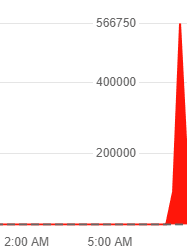
Screenshot Down Detector for FacebookScreenshot DownDetector

The unknown problem is affecting the ability to login and it affects both Facebook and Instagram on the web and the app.

Where Facebook Outage Affects
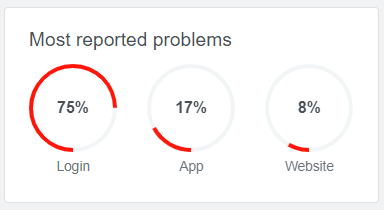
Down Detector Reports for FacebookScreenshot Down Detector

Instagram Outage Reports

Perhaps reflecting the user base of Instagram and the likelihood of them reporting the outage, a smaller amount of users have reported the inability to use the site. By 8:40 AM PST there were only +92,000 reports of an outage at the DownDetector website.
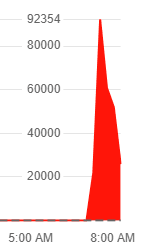
Screenshot DownDetector for Instagram

Instagram App Outage

The statistics related to the Instagram users reporting an outage shows that most users who reported an outage reflects how they use Instagram. The clear majority of users are reporting an outage in the Instagram App.

Instagram App Affected
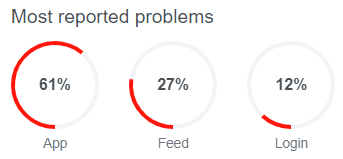
Instagram App OutageSceenshot DownDetector

The reporting for Facebook shows that 75% of reports were about problems logging in, whereas that is only 12% of reports for Instagram.

None of them are functioning.

This is a developing story.

Featured image by Shutterstock/FrameStudio
Meta Will Label AI Images Across Facebook, Instagram, & Threads via @sejournal, @MattGSouthern

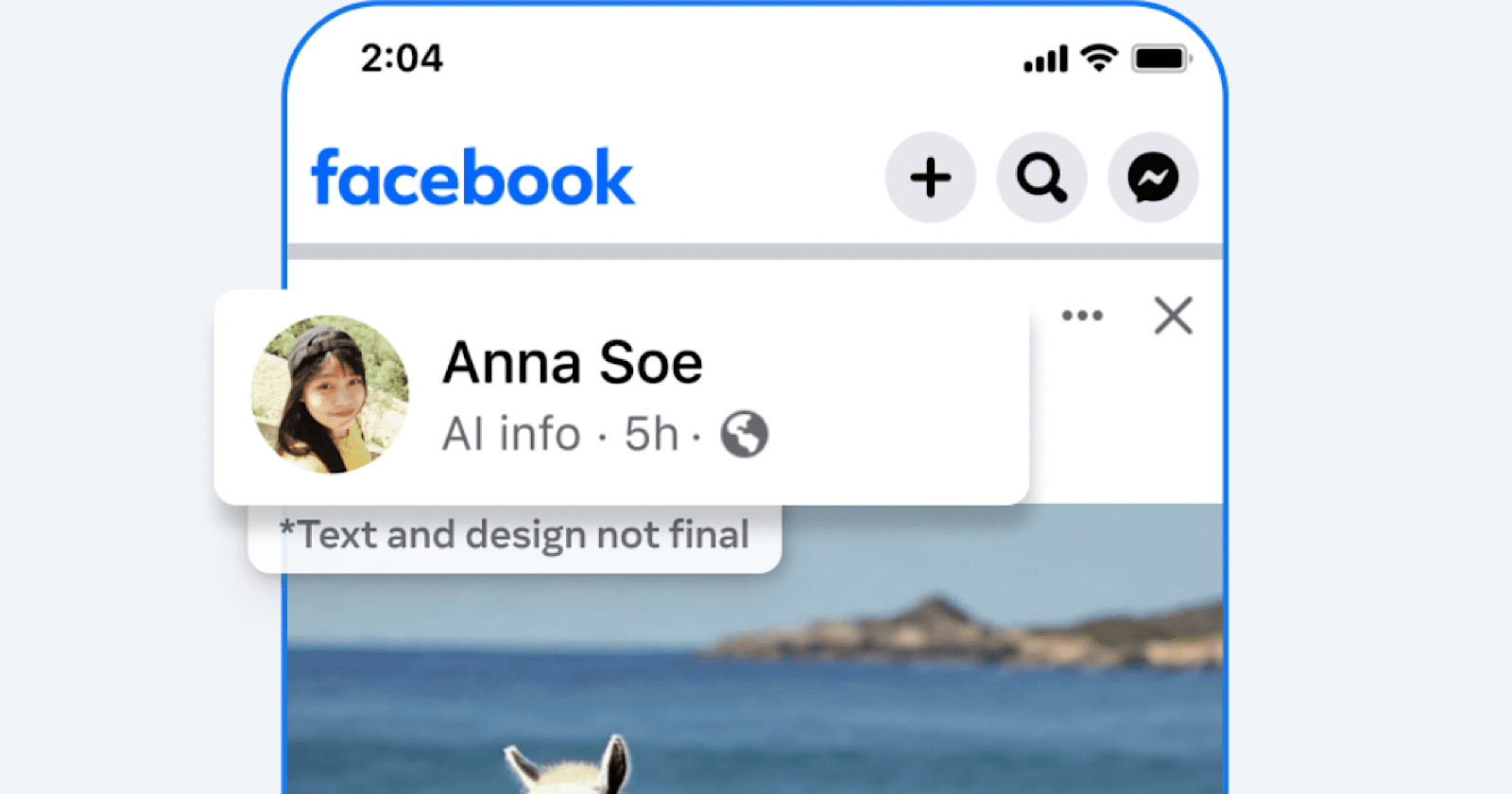
Meta announced it will start labeling images created by AI across Facebook, Instagram, and Threads in the coming months.

The move comes as AI image generation tools grow in popularity, making distinguishing human-made and AI-created content harder.

“As the difference between human and synthetic content gets blurred, people want to know where the boundary lies,” states Nick Clegg, President of Global Affairs at Meta.

Upcoming Features & Expectations

Meta plans to start labeling AI-generated images in multiple languages on its platforms over the next few months.

This move comes during major elections worldwide, when knowing the source of content is especially important.

Meta will employ various techniques to differentiate AI-generated images from other images. These include visible markers, invisible watermarks, and metadata embedded in the image files.

Additionally, Meta is implementing new policies requiring users to disclose when media is generated by artificial intelligence, with consequences for failing to comply.

Meta’s methods follow best practices recommended by the Partnership on AI (PAI), an industry group focused on responsible AI development.

Looking Ahead

Over the next 12 months, Meta will closely monitor user engagement with labeled AI content. These insights will shape the platform’s long-term strategy.

Currently, Meta manually labels images created through its internal AI image generator with disclosures like “Imagined by AI.” Now, the company will leverage its detection tools to label AI content from other providers like Google, Microsoft, Adobe, and leading AI art platforms.

In the interim, Meta advises users to critically evaluate accounts sharing images and watch for visual inconsistencies that may reveal computer generation.

Key Takeaways

Here are some key takeaways for businesses and social media marketers based on Meta’s announcement:

  • Authenticity and transparency will be crucial as AI image creation goes mainstream. Businesses should consider proactive disclosures if using AI-generated content in marketing.
  • Two camps may emerge – those who embrace AI creations and those who value “human-made” content. Brands should understand what their audience prefers.
  • With proper labeling, synthetic content may not negatively impact trust. However, marketers should closely monitor user sentiment surrounding AI usage.

AI could become a powerful marketing asset for content creation at scale, but ethical AI development is advised. Rushing to use immature technologies could backfire.

Interest in synthetic media detection tools, digital watermarking, and metadata standards will likely surge. Savvy marketers should stay on top of these technologies.

Meta’s approach hints at a measured transition, but swift change is likely. Marketers can stay ahead by preparing flexible creative and compliance strategies for synthetic content.


Featured Image: Screenshot from about.fb.com/news/, February 2024. 

Social Media In 2024: YouTube & Facebook On Top, TikTok Growing via @sejournal, @MattGSouthern

A recent survey by the Pew Research Center found that YouTube and Facebook remain the most widely used social media platforms among adults in the United States. At the same time, the survey showed substantial increases in the number of TikTok users.

According to the survey, YouTube and Facebook are the most widely used online platforms among U.S. adults, with 83% and 68% usage rates, respectively.

Approximately 50% of U.S. adults use Instagram. Other platforms like Pinterest, TikTok, LinkedIn, WhatsApp, and Snapchat have usage rates ranging from 27% to 35% of U.S. adults.

This year’s survey was the first to ask about BeReal, a newer photo-sharing app with a usage rate of just 3% among U.S. adults.

The percentage of U.S. adults who use TikTok has increased from 21% in 2021 to 33% currently. This growth rate for TikTok exceeds the more modest or stagnant growth rates observed for other social media platforms over the same period.

Age Disparities In Social Media Use

The survey results reveal differences in social media platform usage across age groups. Adults under 30 were likelier to use Instagram, Snapchat, and TikTok than older adults.

For example, 78% of 18-29-year-olds reported using Instagram, much higher than the 15% of adults 65 and over. Snapchat and TikTok followed similar usage patterns, with younger adults showing higher rates.

In contrast, YouTube and Facebook had more consistent usage across age groups, though younger adults still exhibited higher engagement on these platforms than older adults.

Demographic Differences In Social Media Use

The Pew Research Center study revealed demographic differences in social media platform usage.:

  • Instagram: More popular among Hispanic and Asian adults, women, and those with some college education.
  • TikTok: Higher usage rates among Hispanic adults and women.
  • LinkedIn: Most popular among Americans with higher educational attainment.
  • Twitter (now “X”): Usage correlates with higher household incomes.
  • Pinterest: Significantly more popular among women.
  • WhatsApp: More frequently used by Hispanic and Asian adults.

Takeaways For Social Media Marketers

The Pew Research Center’s latest findings on social media usage in the United States provide several valuable insights that social media marketers should consider when developing marketing strategies:

  • YouTube has broad appeal across all age groups, making it an essential platform for video campaigns targeting a broad audience.
  • Facebook maintains an extensive user base and provides capabilities for targeted advertising and reaching diverse demographics.
  • TikTok is experiencing explosive growth, especially among younger users, presenting opportunities for brands to leverage its creative and viral nature.
  • Instagram is highly popular with youth and minority groups like Hispanics and Asians, making it suitable for campaigns targeting these demographics.
  • LinkedIn caters to educated professionals, making it ideal for B2B marketing, thought leadership, and employer branding.
  • Short-form video content is rising in popularity, as seen with TikTok, so bite-sized engaging videos can capture limited user attention spans.
  • Though smaller in scale, niche platforms like Pinterest, Snapchat, and WhatsApp enable targeted niche marketing opportunities.
  • Emerging platforms such as BeReal could provide first-mover advantages as they expand.
  • Snapchat and TikTok are essential for engaging users under 30 years old.
  • Cross-platform campaigns allow greater reach and unified messaging.
  • Platforms popular with specific audiences like Hispanics, Asians, and higher-income households, such as WhatsApp and Twitter, should be considered when marketing to those groups.

Marketers can apply these insights to craft platform-specific strategies tailored to user demographics and behaviors. A nuanced understanding of the latest trends can inform more effective social media engagement and returns on marketing investment.

Methodology

The Pew Research Center surveyed 5,733 U.S. adults between May 19 and September 5, 2023. Ipsos carried out the survey using both online and mail methodologies to obtain a demographically representative sample of the U.S. adult population. The results were weighted by gender, race and ethnicity, education, and other relevant factors to align with U.S. Census benchmarks.

The survey represented a transition from traditional phone polling to a combination of web and mail. The Pew Research Center has provided details on the survey methodology and the potential impact of this change for those interested in better understanding the data collection process.


Featured Image: Primakov/Shutterstock

Use social media to increase your sales

Social media isn’t just for sharing memes and cat videos. It can be a useful tool to boost your sales or get more subscriptions. Just think about it: billions of users are scrolling through various social media platforms everyday. If you know how to reach them, you’ll be increasing your sales while connecting with your audience. Want to know how? Just read on!

Let’s quickly look at the benefits before we dive into the how. Because there are plenty! For example, social media is an affordable way to reach your audience across multiple platforms. You won’t need a big budget in order to have a successful social media strategy. 

Social media is also the preferred platform for most people to receive news about your new products or services, according to 68% of consumers. And one of the reasons for this is that social media feels more personal. The communication lines feel shorter. Which is important, because most people say that the most memorable brands on social media are the ones that respond to customers

1. Treat social media like a shopping mall

Because your audience is. They’re buying more and more on social media marketplaces. In 2023, sales were expected to reach $1.3 trillion dollars, which is huge. Especially compared to 2020, when sales reached ‘just’ $560 billion dollars. 

It’s clear that the industry is growing rapidly, so why not take advantage and make your products or services available on social media? A few popular ones are Facebook Shop, TikTok Shop, Instagram Shopping, and Pinterest Product Pins. And there are many more, so we suggest researching which ecommerce platforms work best for you and your audience.

Example of Instagram Shopping in a meme post by Loop Earplugs

2. Try conversational commerce

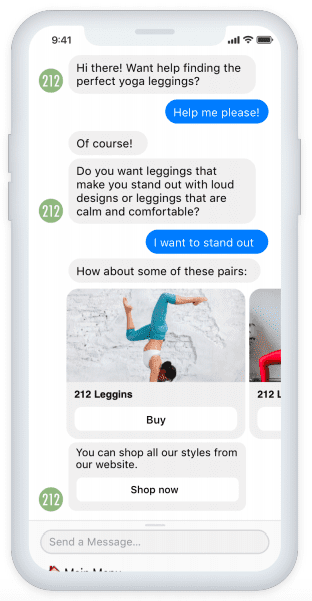
Have you ever received a promotional code or discount in your direct messages (DMs)? Or perhaps you’ve asked a question about a product via WhatsApp? That’s conversational commerce.

So, why should you try this? Because for your audience, it can feel like they’re talking to a store employee in-person, except virtually. They can ask questions, and receive advice and recommendations. Conversational commerce also simplifies the buyer journey. Your audience can read reviews, explore products, ask questions, and hit the checkout button without ever having to go somewhere else. 

An example of conversational commerce. It depicts a chat of a fictional company with a potential customer about yoga leggings. The customer asks the company for help and the company shows a few products. All the products have a buy button.
Example of conversational commerce
Source: ShipBob

The difference between conversational commerce and social media commerce

So, what’s the difference? Mostly, the place where the sale happens. Conversational commerce is your Instagram DMs, for example, and social media commerce takes place in Instagram Shopping.

3. Don’t post on a Sunday

It sounds funny, but it’s true. There are good and bad moments to post on social media, but Sunday is by far the worst. That’s not to say you can never post on a Sunday – just that you’ll get more engagement if you post on a different day. 

The best time to post differs per social media platform, so it’s good to be aware of what those times are. Otherwise, your audience won’t ever see your content. And that’s a shame!

4. Don’t put your eggs in one basket

In the same vein, it’s generally a good idea to become active on multiple social media platforms. After all, you want to reach as many people as possible. Not everyone in your audience uses Instagram – some might be very loyal Facebook users! 

However, a large part of your audience uses more than one social media platform. This gives you plenty of opportunity to connect with them multiple times a day. Just don’t spread yourself too thin! You don’t want to copy and paste your content on every platform. Instead, it’s better to focus on a maximum of three social media platforms, and create good content for those.

5. Post what your audience likes

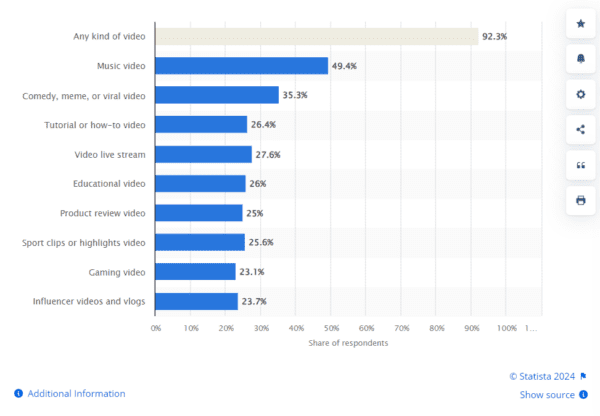
So, what is good content? In the world of social media, this means content that your audience wants to share and engage with. Generally, this also means: images and videos. Last year, for example, online videos had an audience reach of 92.3% among internet users worldwide! The most popular videos were music videos, memes, and tutorial or how-to videos. 

A graph titled most popular video content type world wide. The most popular type is music video with 49.4% followed by comedy, meme, or viral video with 35.3%. Then, in descending order, it's tutorial or how-to videos, video live stream, educational video, product review video, sport clips or highlights video, gaming video, and at the bottom is influencer videos and vlogs.
Most popular video content type worldwide
Source: Statista

Of course, this doesn’t have to be the case for your audience. Perhaps they really like funny product pictures, or customer testimonials. Simply look at how many people like, comment, and share your product pictures versus your other content. Is it a lot more? Then you should make more! 

And don’t forget to make your post accessible, so everyone can read and engage with your content.

Relevant content usually does well too

If you keep up with trends, you’ll never be lost for content to create and post. Granted, you should be aware of what trends appeal to your audience. Referencing an exciting new change in the Lego company, for example, might not interest your audience of horse enthusiasts. 

Global news, however, generally speaks to a lot more people. By referencing a recent global event, you could attract your audience’s attention and keep your brand relevant at the same time. 

Don’t overwhelm your audience

Always choose quality over quantity. If you worry that you might be prioritizing quantity, simply ask yourself the following questions:

  • Is this original?
  • Does this content help my followers?
  • Is this inspiring or entertaining or actionable? 

Another tip that might help is creating a social media calendar. If you plan in advance how many times a week you’ll post and what you’ll post, then you don’t risk overwhelming your audience. Just keep some space for spontaneous posts. For example, when a meme has gone viral and you want to jump on the bandwagon. 

Hopefully, you’ll feel inspired about how you can use your business’s social media in new ways. Perhaps you want to try conversational commerce? Maybe you want to create more content that references memes. Whatever it is, just be sure that you pick what fits your brand. Because in a world with millions of posts, you want your content to be uniquely yours.

Read more: Social Media Strategy: where to begin »

Coming up next!

Meta Lets Users Separate Facebook & Instagram Accounts In Europe via @sejournal, @MattGSouthern

Meta has announced a change in policy for users in Europe.

The company plans to give users more options to control how they use Instagram and Facebook in countries that are part of the European Union, the European Economic Area, and Switzerland.

This shift comes as Meta prepares for new regulations from the Digital Markets Act (DMA) that will start being enforced in March 2024 across Europe. The DMA aims to create fairer competition in the technology industry.

By voluntarily giving users more control now, Meta is trying to get ahead of the regulatory requirements that the DMA will impose on large tech companies like Meta in Europe.

Adapting To New Regulations

To comply with the demands of the new Digital Markets Act, Meta is committing substantial resources to follow the law and also improve users’ control over their data and experiences on Meta’s platforms.

The DMA is part of the European Union’s larger plan to promote fair competition, innovation, and consumer options in the digital marketplace.

Soon, Meta will begin sending notices to its users in Europe explaining how they can control their data sharing between Instagram and Facebook.

Users can keep linking their Instagram and Facebook accounts through Meta’s account management portal, or they can choose to separate the accounts, which would stop their information from being shared across the platforms.

Meta assures that the fundamental features and protections that users have come to expect will remain intact.

Diverse Options Across Services

Facebook Messenger

Facebook Messenger users will have two options. They can keep their Messenger account connected to their Facebook profile or create a new, separate one not linked to Facebook.

Making an independent Messenger account means users can still use Messenger’s core features like messaging and calls, but without providing any of their Facebook data.

Facebook Marketplace

Marketplace users will have two options for how their data is handled. They can choose to have their Facebook information connected to their Marketplace account or opt out of sharing Facebook data.

Users who don’t share their Facebook info can still buy and sell on Marketplace. However, if they opt out of sharing Facebook data, communications about transactions will be through email rather than Messenger.

Facebook Gaming

Gamers who use Facebook have two options for their gaming experience. One option allows Facebook to use their data to customize the games, including suggesting new games and enabling multiplayer features with friends. The other option doesn’t employ any of the user’s Facebook data, which limits them to only certain single-player games without personalized recommendations or social features.

Meta’s Ongoing Commitment

Meta has voiced approval of the Digital Markets Act to promote competition and fairness online. The company said it’s dedicated to ensuring its offerings in Europe follow the DMA’s rules while continuing to provide benefits to users.


Featured Image: rarrarorro/Shutterstock