How one controversial startup hopes to cool the planet

Stardust Solutions believes that it can solve climate change—for a price.

The Israel-based geoengineering startup has said it expects  nations will soon pay it more than a billion dollars a year to launch specially equipped aircraft into the stratosphere. Once they’ve reached the necessary altitude, those planes will disperse particles engineered to reflect away enough sunlight to cool down the planet, purportedly without causing environmental side effects. 

The proprietary (and still secret) particles could counteract all the greenhouse gases the world has emitted over the last 150 years, the company stated in a 2023 pitch deck it presented to venture capital firms. In fact, it’s the “only technologically feasible solution” to climate change, the company said.

The company disclosed it raised $60 million in funding in October, marking by far the largest known funding round to date for a startup working on solar geoengineering.

Stardust is, in a sense, the embodiment of Silicon Valley’s simmering frustration with the pace of academic research on the technology. It’s a multimillion-dollar bet that a startup mindset can advance research and development that has crept along amid scientific caution and public queasiness.

But numerous researchers focused on solar geoengineering are deeply skeptical that Stardust will line up the government customers it would need to carry out a global deployment as early as 2035, the plan described in its earlier investor materials—and aghast at the suggestion that it ever expected to move that fast. They’re also highly critical of the idea that a company would take on the high-stakes task of setting the global temperature, rather than leaving it to publicly funded research programs.

“They’ve ignored every recommendation from everyone and think they can turn a profit in this field,” says Douglas MacMartin, an associate professor at Cornell University who studies solar geoengineering. “I think it’s going to backfire. Their investors are going to be dumping their money down the drain, and it will set back the field.”

The company has finally emerged from stealth mode after completing its funding round, and its CEO, Yanai Yedvab, agreed to conduct one of the company’s first extensive interviews with MIT Technology Review for this story.

Yedvab walked back those ambitious projections a little, stressing that the actual timing of any stratospheric experiments, demonstrations, or deployments will be determined by when governments decide it’s appropriate to carry them out. Stardust has stated clearly that it will move ahead with solar geoengineering only if nations pay it to proceed, and only once there are established rules and bodies guiding the use of the technology.

That decision, he says, will likely be dictated by how bad climate change becomes in the coming years.

“It could be a situation where we are at the place we are now, which is definitely not great,” he says. “But it could be much worse. We’re saying we’d better be ready.”

“It’s not for us to decide, and I’ll say humbly, it’s not for these researchers to decide,” he adds. “It’s the sense of urgency that will dictate how this will evolve.”

The building blocks

No one is questioning the scientific credentials of Stardust. The company was founded in 2023 by a trio of prominent researchers, including Yedvab, who served as deputy chief scientist at the Israeli Atomic Energy Commission. The company’s lead scientist, Eli Waxman, is the head of the department of particle physics and astrophysics at the Weizmann Institute of Science. Amyad Spector, the chief product officer, was previously a nuclear physicist at Israel’s secretive Negev Nuclear Research Center.

Stardust CEO Yanai Yedvab (right) and Chief Product Officer Amyad Spector (left) at the company’s facility in Israel.
ROBY YAHAV, STARDUST

Stardust says it employs 25 scientists, engineers, and academics. The company is based in Ness Ziona, Israel, and plans to open a US headquarters soon. 

Yedvab says the motivation for starting Stardust was simply to help develop an effective means of addressing climate change. 

“Maybe something in our experience, in the tool set that we bring, can help us in contributing to solving one of the greatest problems humanity faces,” he says.

Lowercarbon Capital, the climate-tech-focused investment firm  cofounded by the prominent tech investor Chris Sacca, led the $60 million investment round. Future Positive, Future Ventures, and Never Lift Ventures, among others, participated as well.

AWZ Ventures, a firm focused on security and intelligence technologies, co-led the company’s earlier seed round, which totaled $15 million.

Yedvab says the company will use that money to advance research, development, and testing for the three components of its system, which are also described in the pitch deck: safe particles that could be affordably manufactured; aircraft dispersion systems; and a means of tracking particles and monitoring their effects.

“Essentially, the idea is to develop all these building blocks and to upgrade them to a level that will allow us to give governments the tool set and all the required information to make decisions about whether and how to deploy this solution,” he says. 

The company is, in many ways, the opposite of Make Sunsets, the first company that came along offering to send particles into the stratosphere—for a fee—by pumping sulfur dioxide into weather balloons and hand-releasing them into the sky. Many researchers viewed it as a provocative, unscientific, and irresponsible exercise in attention-gathering. 

But Stardust is serious, and now it’s raised serious money from serious people—all of which raises the stakes for the solar geoengineering field and, some fear, increases the odds that the world will eventually put the technology to use.

“That marks a turning point in that these types of actors are not only possible, but are real,” says Shuchi Talati, executive director of the Alliance for Just Deliberation on Solar Geoengineering, a nonprofit that strives to ensure that developing nations are included in the global debate over such climate interventions. “We’re in a more dangerous era now.”

Many scientists studying solar geoengineering argue strongly that universities, governments, and transparent nonprofits should lead the work in the field, given the potential dangers and deep public concerns surrounding a tool with the power to alter the climate of the planet. 

It’s essential to carry out the research with appropriate oversight, explore the potential downsides of these approaches, and publicly publish the results “to ensure there’s no bias in the findings and no ulterior motives in pushing one way or another on deployment or not,” MacMartin says. “[It] shouldn’t be foisted upon people without proper and adequate information.”

He criticized, for instance, the company’s claims to have developed what he described as their “magic aerosol particle,” arguing that the assertion that it is perfectly safe and inert can’t be trusted without published findings. Other scientists have also disputed those scientific claims.

Plenty of other academics say solar geoengineering shouldn’t be studied at all, fearing that merely investigating it starts the world down a slippery slope toward its use and diminishes the pressures to cut greenhouse-gas emissions. In 2022, hundreds of them signed an open letter calling for a global ban on the development and use of the technology, adding the concern that there is no conceivable way for the world’s nations to pull together to establish rules or make collective decisions ensuring that it would be used in “a fair, inclusive, and effective manner.”

“Solar geoengineering is not necessary,” the authors wrote. “Neither is it desirable, ethical, or politically governable in the current context.”

The for-profit decision 

Stardust says it’s important to pursue the possibility of solar geoengineering because the dangers of climate change are accelerating faster than the world’s ability to respond to it, requiring a new “class of solution … that buys us time and protects us from overheating.”

Yedvab says he and his colleagues thought hard about the right structure for the organization, finally deciding that for-profits working in parallel with academic researchers have delivered “most of the groundbreaking technologies” in recent decades. He cited advances in genome sequencing, space exploration, and drug development, as well as the restoration of the ozone layer.

He added that a for-profit structure was also required to raise funds and attract the necessary talent.

“There is no way we could, unfortunately, raise even a small portion of this amount by philanthropic resources or grants these days,” he says.

He adds that while academics have conducted lots of basic science in solar geoengineering, they’ve done very little in terms of building the technological capacities. Their geoengineering research is also primarily focused on the potential use of sulfur dioxide, because it is known to help reduce global temperatures after volcanic eruptions blast massive amounts of it into the stratospheric. But it has well-documented downsides as well, including harm to the protective ozone layer.

“It seems natural that we need better options, and this is why we started Stardust: to develop this safe, practical, and responsible solution,” the company said in a follow-up email. “Eventually, policymakers will need to evaluate and compare these options, and we’re confident that our option will be superior over sulfuric acid primarily in terms of safety and practicability.”

Public trust can be won not by excluding private companies, but by setting up regulations and organizations to oversee this space, much as the US Food and Drug Administration does for pharmaceuticals, Yedvab says.

“There is no way this field could move forward if you don’t have this governance framework, if you don’t have external validation, if you don’t have clear regulation,” he says.

Meanwhile, the company says it intends to operate transparently, pledging to publish its findings whether they’re favorable or not.

That will include finally revealing details about the particles it has developed, Yedvab says. 

Early next year, the company and its collaborators will begin publishing data or evidence “substantiating all the claims and disclosing all the information,” he says, “so that everyone in the scientific community can actually check whether we checked all these boxes.”

In the follow-up email, the company acknowledged that solar geoengineering isn’t a “silver bullet” but said it is “the only tool that will enable us to cool the planet in the short term, as part of a larger arsenal of technologies.”

“The only way governments could be in a position to consider [solar geoengineering] is if the work has been done to research, de-risk, and engineer safe and responsible solutions—which is what we see as our role,” the company added later. “We are hopeful that research will continue not just from us, but also from academic institutions, nonprofits, and other responsible companies that may emerge in the future.”

Ambitious projections

Stardust’s earlier pitch deck stated that the company expected to conduct its first “stratospheric aerial experiments” last year, though those did not move ahead (more on that in a moment).

On another slide, the company said it expected to carry out a “large-scale demonstration” around 2030 and proceed to a “global full-scale deployment” by about 2035. It said it expected to bring in roughly $200 million and $1.5 billion in annual revenue by those periods, respectively.

Every researcher interviewed for this story was adamant that such a deployment should not happen so quickly.

Given the global but uneven and unpredictable impacts of solar geoengineering, any decision to use the technology should be reached through an inclusive, global agreement, not through the unilateral decisions of individual nations, Talati argues. 

“We won’t have any sort of international agreement by that point given where we are right now,” she says.

A global agreement, to be clear, is a big step beyond setting up rules and oversight bodies—and some believe that such an agreement on a technology so divisive could never be achieved.

There’s also still a vast amount of research that must be done to better understand the negative side effects of solar geoengineering generally and any ecological impacts of Stardust’s materials specifically, adds Holly Buck, an associate professor at the University of Buffalo and author of After Geoengineering.

“It is irresponsible to talk about deploying stratospheric aerosol injection without fundamental research about its impacts,” Buck wrote in an email.

She says the timelines are also “unrealistic” because there are profound public concerns about the technology. Her polling work found that a significant fraction of the US public opposes even research (though polling varies widely). 

Meanwhile, most academic efforts to move ahead with even small-scale outdoor experiments have sparked fierce backlash. That includes the years-long effort by researchers then at Harvard to carry out a basic equipment test for their so-called ScopeX experiment. The high-altitude balloon would have launched from a flight center in Sweden, but the test was ultimately scratched amid objections from environmentalists and Indigenous groups. 

Given this baseline of public distrust, Stardust’s for-profit proposals only threaten to further inflame public fears, Buck says.

“I find the whole proposal incredibly socially naive,” she says. “We actually could use serious research in this field, but proposals like this diminish the chances of that happening.”

Those public fears, which cross the political divide, also mean politicians will see little to no political upside to paying Stardust to move ahead, MacMartin says.

“If you don’t have the constituency for research, it seems implausible to me that you’d turn around and give money to an Israeli company to deploy it,” he says.

An added risk is that if one nation or a small coalition forges ahead without broader agreement, it could provoke geopolitical conflicts. 

“What if Russia wants it a couple of degrees warmer, and India a couple of degrees cooler?” asked Alan Robock, a professor at Rutgers University, in the Bulletin of the Atomic Scientists in 2008. “Should global climate be reset to preindustrial temperature or kept constant at today’s reading? Would it be possible to tailor the climate of each region of the planet independently without affecting the others? If we proceed with geoengineering, will we provoke future climate wars?”

Revised plans

Yedvab says the pitch deck reflected Stardust’s strategy at a “very early stage in our work,” adding that their thinking has “evolved,” partly in response to consultations with experts in the field.

He says that the company will have the technological capacity to move ahead with demonstrations and deployments on the timelines it laid out but adds, “That’s a necessary but not sufficient condition.”

“Governments will need to decide where they want to take it, if at all,” he says. “It could be a case that they will say ‘We want to move forward.’ It could be a case that they will say ‘We want to wait a few years.’”

“It’s for them to make these decisions,” he says.

Yedvab acknowledges that the company has conducted flights in the lower atmosphere to test its monitoring system, using white smoke as a simulant for its particles, as the Wall Street Journal reported last year. It’s also done indoor tests of the dispersion system and its particles in a wind tunnel set up within its facility.

But in response to criticisms like the ones above, Yedvab says the company hasn’t conducted outdoor particle experiments and won’t move forward with them until it has approval from governments. 

“Eventually, there will be a need to conduct outdoor testing,” he says. “There is no way you can validate any solution without outdoor testing.” But such testing of sunlight reflection technology, he says, “should be done only working together with government and under these supervisions.”

Generating returns  

Stardust may be willing to wait for governments to be ready to deploy its system, but there’s no guarantee that its investors will have the same patience. In accepting tens of millions in venture capital, Stardust may now face financial pressures that could “drive the timelines,” says Gernot Wagner, a climate economist at Columbia University. 

And that raises a different set of concerns.

Obliged to deliver returns, the company might feel it must strive to convince government leaders that they should pay for its services, Talati says. 

“The whole point of having companies and investors is you want your thing to be used,” she says. “There’s a massive incentive to lobby countries to use it, and that’s the whole danger of having for-profit companies here.”

She argues those financial incentives threaten to accelerate the use of solar geoengineering ahead of broader international agreements and elevate business interests above the broader public good.

Stardust has “quietly begun lobbying on Capitol Hill” and has hired the law firm Holland & Knight, according to Politico.

It has also worked with Red Duke Strategies, a consulting firm based in McLean, Virginia, to develop “strategic relationships and communications that promote understanding and enable scientific testing,” according to a case study on the company’s  website. 

“The company needed to secure both buy-in and support from the United States government and other influential stakeholders to move forward,” Red Duke states. “This effort demanded a well-connected and authoritative partner who could introduce Stardust to a group of experts able to research, validate, deploy, and regulate its SRM technology.”

Red Duke didn’t respond to an inquiry from MIT Technology Review. Stardust says its work with the consulting firm was not a government lobbying effort.

Yedvab acknowledges that the company is meeting with government leaders in the US, Europe, its own region, and the Global South. But he stresses that it’s not asking any country to contribute funding or to sign off on deployments at this stage. Instead, it’s making the case for nations to begin crafting policies to regulate solar geoengineering.

“When we speak to policymakers—and we speak to policymakers; we don’t hide it—essentially, what we tell them is ‘Listen, there is a solution,’” he says. “‘It’s not decades away—it’s a few years away. And it’s your role as policymakers to set the rules of this field.’”

“Any solution needs checks and balances,” he says. “This is how we see the checks and balances.”

He says the best-case scenario is still a rollout of clean energy technologies that accelerates rapidly enough to drive down emissions and curb climate change.

“We are perfectly fine with building an option that will sit on the shelf,” he says. “We’ll go and do something else. We have a great team and are confident that we can find also other problems to work with.”

He says the company’s investors are aware of and comfortable with that possibility, supportive of the principles that will guide Stardust’s work, and willing to wait for regulations and government contracts.

Lowercarbon Capital didn’t respond to an inquiry from MIT Technology Review.

‘Sentiment of hope’

Others have certainly imagined the alternative scenario Yedvab raises: that nations will increasingly support the idea of geoengineering in the face of mounting climate catastrophes. 

In Kim Stanley Robinson’s 2020 novel, The Ministry for the Future, India unilaterally forges ahead with solar geoengineering following a heat wave that kills millions of people. 

Wagner sketched a variation on that scenario in his 2021 book, Geoengineering: The Gamble, speculating that a small coalition of nations might kick-start a rapid research and deployment program as an emergency response to escalating humanitarian crises. In his version, the Philippines offers to serve as the launch site after a series of super-cyclones batter the island nation, forcing millions from their homes. 

It’s impossible to know today how the world will react if one nation or a few go it alone, or whether nations could come to agreement on where the global temperature should be set. 

But the lure of solar geoengineering could become increasingly enticing as more and more nations endure mass suffering, starvation, displacement, and death.

“We understand that probably it will not be perfect,” Yedvab says. “We understand all the obstacles, but there is this sentiment of hope, or cautious hope, that we have a way out of this dark corridor we are currently in.”

“I think that this sentiment of hope is something that gives us a lot of energy to move on forward,” he adds.

Why the for-profit race into solar geoengineering is bad for science and public trust

Last week, an American-Israeli company that claims it’s developed proprietary technology to cool the planet announced it had raised $60 million, by far the largest known venture capital round to date for a solar geoengineering startup.

The company, Stardust, says the funding will enable it to develop a system that could be deployed by the start of the next decade, according to Heatmap, which broke the story.


Heat Exchange

MIT Technology Review’s guest opinion series, offering expert commentary on legal, political and regulatory issues related to climate change and clean energy. You can read the rest of the pieces here.


As scientists who have worked on the science of solar geoengineering for decades, we have grown increasingly concerned about the emerging efforts to start and fund private companies to build and deploy technologies that could alter the climate of the planet. We also strongly dispute some of the technical claims that certain companies have made about their offerings. 

Given the potential power of such tools, the public concerns about them, and the importance of using them responsibly, we argue that they should be studied, evaluated, and developed mainly through publicly coordinated and transparently funded science and engineering efforts.  In addition, any decisions about whether or how they should be used should be made through multilateral government discussions, informed by the best available research on the promise and risks of such interventions—not the profit motives of companies or their investors.

The basic idea behind solar geoengineering, or what we now prefer to call sunlight reflection methods (SRM), is that humans might reduce climate change by making the Earth a bit more reflective, partially counteracting the warming caused by the accumulation of greenhouse gases. 

There is strong evidence, based on years of climate modeling and analyses by researchers worldwide, that SRM—while not perfect—could significantly and rapidly reduce climate changes and avoid important climate risks. In particular, it could ease the impacts in hot countries that are struggling to adapt.  

The goals of doing research into SRM can be diverse: identifying risks as well as finding better methods. But research won’t be useful unless it’s trusted, and trust depends on transparency. That means researchers must be eager to examine pros and cons, committed to following the evidence where it leads, and driven by a sense that research should serve public interests, not be locked up as intellectual property.

In recent years, a handful of for-profit startup companies have emerged that are striving to develop SRM technologies or already trying to market SRM services. That includes Make Sunsets, which sells “cooling credits” for releasing sulfur dioxide in the stratosphere. A new company, Sunscreen, which hasn’t yet been announced, intends to use aerosols in the lower atmosphere to achieve cooling over small areas, purportedly to help farmers or cities deal with extreme heat.  

Our strong impression is that people in these companies are driven by the same concerns about climate change that move us in our research. We agree that more research, and more innovation, is needed. However, we do not think startups—which by definition must eventually make money to stay in business—can play a productive role in advancing research on SRM.

Many people already distrust the idea of engineering the atmosphere—at whichever scale—to address climate change, fearing negative side effects, inequitable impacts on different parts of the world, or the prospect that a world expecting such solutions will feel less pressure to address the root causes of climate change.

Adding business interests, profit motives, and rich investors into this situation just creates more cause for concern, complicating the ability of responsible scientists and engineers to carry out the work needed to advance our understanding.

The only way these startups will make money is if someone pays for their services, so there’s a reasonable fear that financial pressures could drive companies to lobby governments or other parties to use such tools. A decision that should be based on objective analysis of risks and benefits would instead be strongly influenced by financial interests and political connections.

The need to raise money or bring in revenue often drives companies to hype the potential or safety of their tools. Indeed, that’s what private companies need to do to attract investors, but it’s not how you build public trust—particularly when the science doesn’t support the claims.

Notably, Stardust says on its website that it has developed novel particles that can be injected into the atmosphere to reflect away more sunlight, asserting that they’re “chemically inert in the stratosphere, and safe for humans and ecosystems.” According to the company, “The particles naturally return to Earth’s surface over time and recycle safely back into the biosphere.”

But it’s nonsense for the company to claim they can make particles that are inert in the stratosphere. Even diamonds, which are extraordinarily nonreactive, would alter stratospheric chemistry. First of all, much of that chemistry depends on highly reactive radicals that react with any solid surface, and second, any particle may become coated by background sulfuric acid in the stratosphere. That could accelerate the loss of the protective ozone layer by spreading that existing sulfuric acid over a larger surface area.

(Stardust didn’t provide a response to an inquiry about the concerns raised in this piece.)

In materials presented to potential investors, which we’ve obtained a copy of, Stardust further claims its particles “improve” on sulfuric acid, which is the most studied material for SRM. But the point of using sulfate for such studies was never that it was perfect, but that its broader climatic and environmental impacts are well understood. That’s because sulfate is widespread on Earth, and there’s an immense body of scientific knowledge about the fate and risks of sulfur that reaches the stratosphere through volcanic eruptions or other means.

If there’s one great lesson of 20th-century environmental science, it’s how crucial it is to understand the ultimate fate of any new material introduced into the environment. 

Chlorofluorocarbons and the pesticide DDT both offered safety advantages over competing technologies, but they both broke down into products that accumulated in the environment in unexpected places, causing enormous and unanticipated harms. 

The environmental and climate impacts of sulfate aerosols have been studied in many thousands of scientific papers over a century, and this deep well of knowledge greatly reduces the chance of unknown unknowns. 

Grandiose claims notwithstanding—and especially considering that Stardust hasn’t disclosed anything about its particles or research process—it would be very difficult to make a pragmatic, risk-informed decision to start SRM efforts with these particles instead of sulfate.

We don’t want to claim that every single answer lies in academia. We’d be fools to not be excited by profit-driven innovation in solar power, EVs, batteries, or other sustainable technologies. But the math for sunlight reflection is just different. Why?   

Because the role of private industry was essential in improving the efficiency, driving down the costs, and increasing the market share of renewables and other forms of cleantech. When cost matters and we can easily evaluate the benefits of the product, then competitive, for-profit capitalism can work wonders.  

But SRM is already technically feasible and inexpensive, with deployment costs that are negligible compared with the climate damage it averts.

The essential questions of whether or how to use it come down to far thornier societal issues: How can we best balance the risks and benefits? How can we ensure that it’s used in an equitable way? How do we make legitimate decisions about SRM on a planet with such sharp political divisions?

Trust will be the most important single ingredient in making these decisions. And trust is the one product for-profit innovation does not naturally manufacture. 

Ultimately, we’re just two researchers. We can’t make investors in these startups do anything differently. Our request is that they think carefully, and beyond the logic of short-term profit. If they believe geoengineering is worth exploring, could it be that their support will make it harder, not easier, to do that?  

David Keith is the professor of geophysical sciences at the University of Chicago and founding faculty director of the school’s Climate Systems Engineering Initiative. Daniele Visioni is an assistant professor of earth and atmospheric sciences at Cornell University and head of data for Reflective, a nonprofit that develops tools and provides funding to support solar geoengineering research.

Inside a new quest to save the “doomsday glacier”

The Thwaites glacier is a fortress larger than Florida, a wall of ice that reaches nearly 4,000 feet above the bedrock of West Antarctica, guarding the low-lying ice sheet behind it.

But a strong, warm ocean current is weakening its foundations and accelerating its slide into the Amundsen Sea. Scientists fear the waters could topple the walls in the coming decades, kick-starting a runaway process that would crack up the West Antarctic Ice Sheet.

That would mark the start of a global climate disaster. The glacier itself holds enough ice to raise ocean levels by more than two feet, which could flood coastlines and force tens of millions of people living in low-lying areas to abandon their homes.

The loss of the entire ice sheet—which could still take centuries to unfold—would push up sea levels by 11 feet and redraw the contours of the continents.

This is why Thwaites is known as the doomsday glacier—and why scientists are eager to understand just how likely such a collapse is, when it could happen, and if we have the power to stop it. 

Scientists at MIT and Dartmouth College founded Arête Glacier Initiative last year in the hope of providing clearer answers to these questions. The nonprofit research organization will officially unveil itself, launch its website, and post requests for research proposals today, March 21, timed to coincide with the UN’s inaugural World Day for Glaciers, MIT Technology Review can report exclusively. 

Arête will also announce it is issuing its first grants, each for around $200,000 over two years, to a pair of glacier researchers at the University of Wisconsin-Madison. 

One of the organization’s main goals is to study the possibility of preventing the loss of giant glaciers, Thwaites in particular, by refreezing them to the bedrock. It would represent a radical intervention into the natural world, requiring a massive, expensive engineering project in a remote, treacherous environment. 

But the hope is that such a mega-adaptation project could minimize the mass relocation of climate refugees, prevent much of the suffering and violence that would almost certainly accompany it, and help nations preserve trillions of dollars invested in high-rises, roads, homes, ports, and airports around the globe.

“About a million people are displaced per centimeter of sea-level rise,” says Brent Minchew, an associate professor of geophysics at MIT, who cofounded Arête Glacier Initiative and will serve as its chief scientist. “If we’re able to bring that down, even by a few centimeters, then we would safeguard the homes of millions.”

But some scientists believe the idea is an implausible, wildly expensive distraction, drawing money, expertise, time, and resources away from more essential polar research efforts. 

“Sometimes we can get a little over-optimistic about what engineering can do,” says Twila Moon, deputy lead scientist at the National Snow and Ice Data Center at the University of Colorado Boulder.

“Two possible futures”

Minchew, who earned his PhD in geophysics at Caltech, says he was drawn to studying glaciers because they are rapidly transforming as the world warms, increasing the dangers of sea-level rise. 

“But over the years, I became less content with simply telling a more dramatic story about how things were going and more open to asking the question of what can we do about it,” says Minchew, who will return to Caltech as a professor this summer.

Last March, he cofounded Arête Glacier Initiative with Colin Meyer, an assistant professor of engineering at Dartmouth, in the hope of funding and directing research to improve scientific understanding of two big questions: How big a risk does sea-level rise pose in the coming decades, and can we minimize that risk?

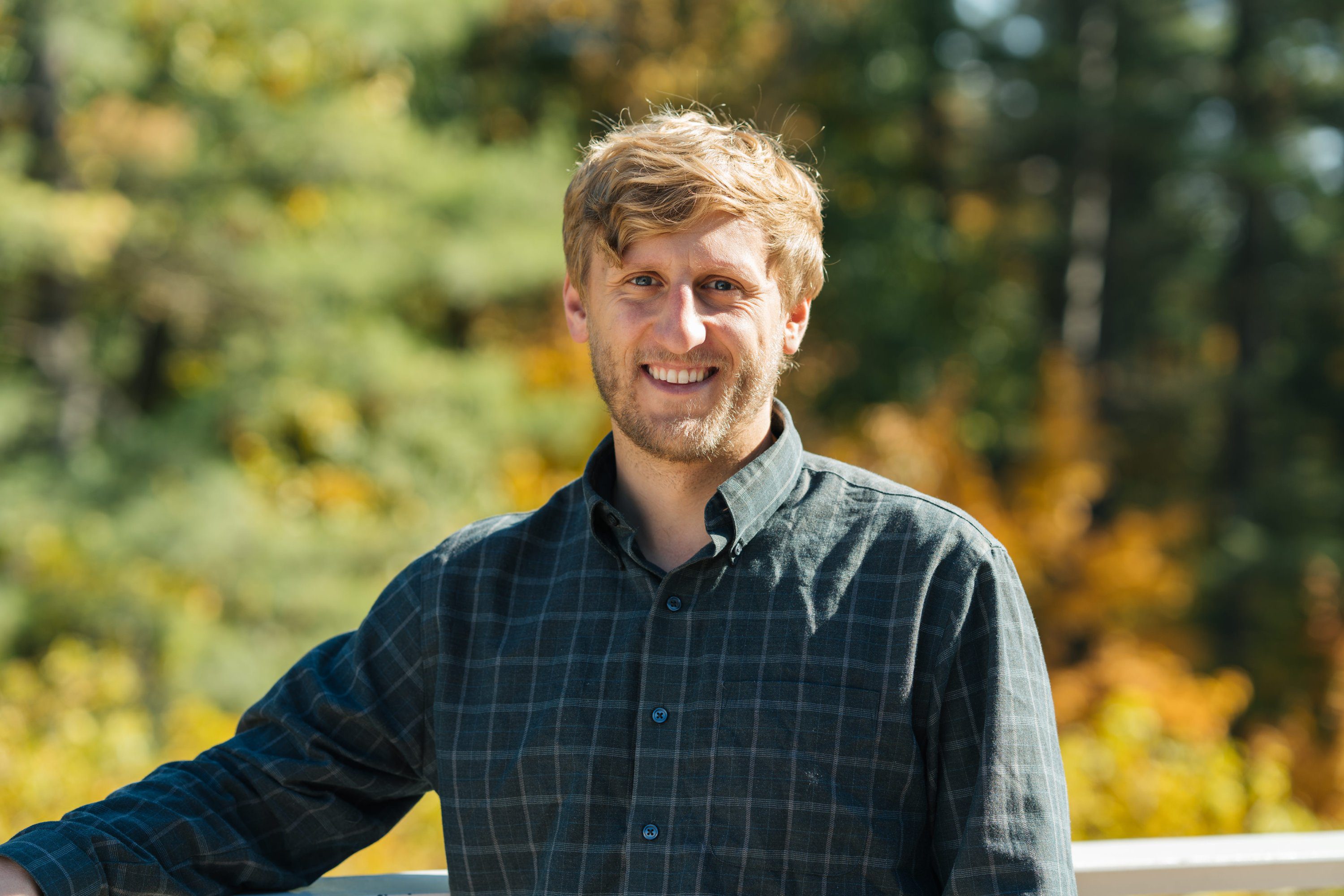
Brent Minchew, an MIT professor of geophysics, co-founded Arête Glacier Initiative and will serve as its chief scientist.
COURTESY: BRENT MINCHEW

“Philanthropic funding is needed to address both of these challenges, because there’s no private-sector funding for this kind of research and government funding is minuscule,” says Mike Schroepfer, the former Meta chief technology officer turned climate philanthropist, who provided funding to Arête through his new organization, Outlier Projects

The nonprofit has now raised about $5 million from Outlier and other donors, including the Navigation Fund, the Kissick Family Foundation, the Sky Foundation, the Wedner Family Foundation, and the Grantham Foundation. 

Minchew says they named the organization Arête, mainly because it’s the sharp mountain ridge between two valleys, generally left behind when a glacier carves out the cirques on either side. It directs the movement of the glacier and is shaped by it. 

It’s meant to symbolize “two possible futures,” he says. “One where we do something; one where we do nothing.”

Improving forecasts

The somewhat reassuring news is that, even with rising global temperatures, it may still take thousands of years for the West Antarctic Ice Sheet to completely melt. 

In addition, sea-level rise forecasts for this century generally range from as little as 0.28 meters (11 inches) to 1.10 meters (about three and a half feet), according to the latest UN climate panel report. The latter only occurs under a scenario with very high greenhouse gas emissions (SSP5-8.5), which significantly exceeds the pathway the world is now on.

But there’s still a “low-likelihood” that ocean levels could surge nearly two meters (about six and a half feet) by 2100 that “cannot be excluded,” given “deep uncertainty linked to ice-sheet processes,” the report adds. 

Two meters of sea-level rise could force nearly 190 million people to migrate away from the coasts, unless regions build dikes or other shoreline protections, according to some models. Many more people, mainly in the tropics, would face heightened flooding dangers.

Much of the uncertainty over what will happen this century comes down to scientists’ limited understanding of how Antarctic ice sheets will respond to growing climate pressures.

The initial goal of Arête Glacier Initiative is to help narrow the forecast ranges by improving our grasp of how Thwaites and other glaciers move, melt, and break apart.

Gravity is the driving force nudging glaciers along the bedrock and reshaping them as they flow. But many of the variables that determine how fast they slide lie at the base. That includes the type of sediment the river of ice slides along; the size of the boulders and outcroppings it contorts around; and the warmth and strength of the ocean waters that lap at its face.

In addition, heat rising from deep in the earth warms the ice closest to the ground, creating a lubricating layer of water that hastens the glacier’s slide. That acceleration, in turn, generates more frictional heat that melts still more of the ice, creating a self-reinforcing feedback effect.

Minchew and Meyer are confident that the glaciology field is at a point where it could speed up progress in sea-level rise forecasting, thanks largely to improving observational tools that are producing more and better data.

That includes a new generation of satellites orbiting the planet that can track the shifting shape of ice at the poles at far higher resolutions than in the recent past. Computer simulations of ice sheets, glaciers and sea ice are improving as well, thanks to growing computational resources and advancing machine learning techniques.

On March 21, Arête will issue a request for proposals from research teams to contribute to an effort to collect, organize, and openly publish existing observational glacier data. Much of that expensively gathered information is currently inaccessible to researchers around the world, Minchew says.

Colin Meyer, an assistant professor of engineering at Dartmouth, co-founded Arête Glacier Initiative.
ELI BURAK

By funding teams working across these areas, Arête’s founders hope to help produce more refined ice-sheet models and narrower projections of sea-level rise.

This improved understanding would help cities plan where to build new bridges, buildings, and homes, and to determine whether they’ll need to erect higher seawalls or raise their roads, Meyer says. It could also provide communities with more advance notice of the coming dangers, allowing them to relocate people and infrastructure to safer places through an organized process known as managed retreat.

A radical intervention

But the improved forecasts might also tell us that Thwaites is closer to tumbling into the ocean than we think, underscoring the importance of considering more drastic measures.

One idea is to build berms or artificial islands to prop up fragile parts of glaciers, and to block the warm waters that rise from the deep ocean and melt them from below. Some researchers have also considered erecting giant, flexible curtains anchored to the seabed to achieve the latter effect.

Others have looked at scattering highly reflective beads or other materials across ice sheets, or pumping ocean water onto them in the hopes it would freeze during the winter and reinforce the headwalls of the glaciers.

But the concept of refreezing glaciers in place, know as a basal intervention, is gaining traction in scientific circles, in part because there’s a natural analogue for it.

The glacier that stalled

About 200 years ago, the Kamb Ice Stream, another glacier in West Antarctica that had been sliding about 350 meters (1,150 feet) per year, suddenly stalled.

Glaciologists believe an adjacent ice stream intersected with the catchment area under the glacier, providing a path for the water running below it to flow out along the edge instead. That loss of fluid likely slowed down the Kamb Ice Stream, reduced the heat produced through friction, and allowed water at the surface to refreeze.

The deceleration of the glacier sparked the idea that humans might be able to bring about that same phenomenon deliberately, perhaps by drilling a series of boreholes down to the bedrock and pumping up water from the bottom.

Minchew himself has focused on a variation he believes could avoid much of the power use and heavy operating machinery hassles of that approach: slipping long tubular devices, known as thermosyphons, down nearly to the bottom of the boreholes. 

These passive heat exchangers, which are powered only by the temperature differential between two areas, are commonly used to keep permafrost cold around homes, buildings and pipelines in Arctic regions. The hope is that we could deploy extremely long ones, stretching up to two kilometers and encased in steel pipe, to draw warm temperatures away from the bottom of the glacier, allowing the water below to freeze.

Minchew says he’s in the process of producing refined calculations, but estimates that halting Thwaites could require drilling as many as 10,000 boreholes over a 100-square-kilometer area.

He readily acknowledges that would be a huge undertaking, but provides two points of comparison to put such a project into context: Melting the necessary ice to create those holes would require roughly the amount of energy all US domestic flights consume from jet fuel in about two and a half hours. Or, it would produce about the same level of greenhouse gas emissions as constructing 10 kilometers of seawalls, a small fraction of the length the world would need to build if it can’t slow down the collapse of the ice sheets, he says.

“Kick the system”

One of Arête’s initial grantees is Marianne Haseloff, an assistant professor of geoscience at the University of Wisconsin-Madison. She studies the physical processes that govern the behavior of glaciers and is striving to more faithfully represent them in ice sheet models. 

Haseloff says she will use those funds to develop mathematical methods that could more accurately determine what’s known as basal shear stress, or the resistance of the bed to sliding glaciers, based on satellite observations. That could help refine forecasts of how rapidly glaciers will slide into the ocean, in varying settings and climate conditions.

Arête’s other initial grant will go to Lucas Zoet, an associate professor in the same department as Haseloff and the principal investigator with the Surface Processes group.

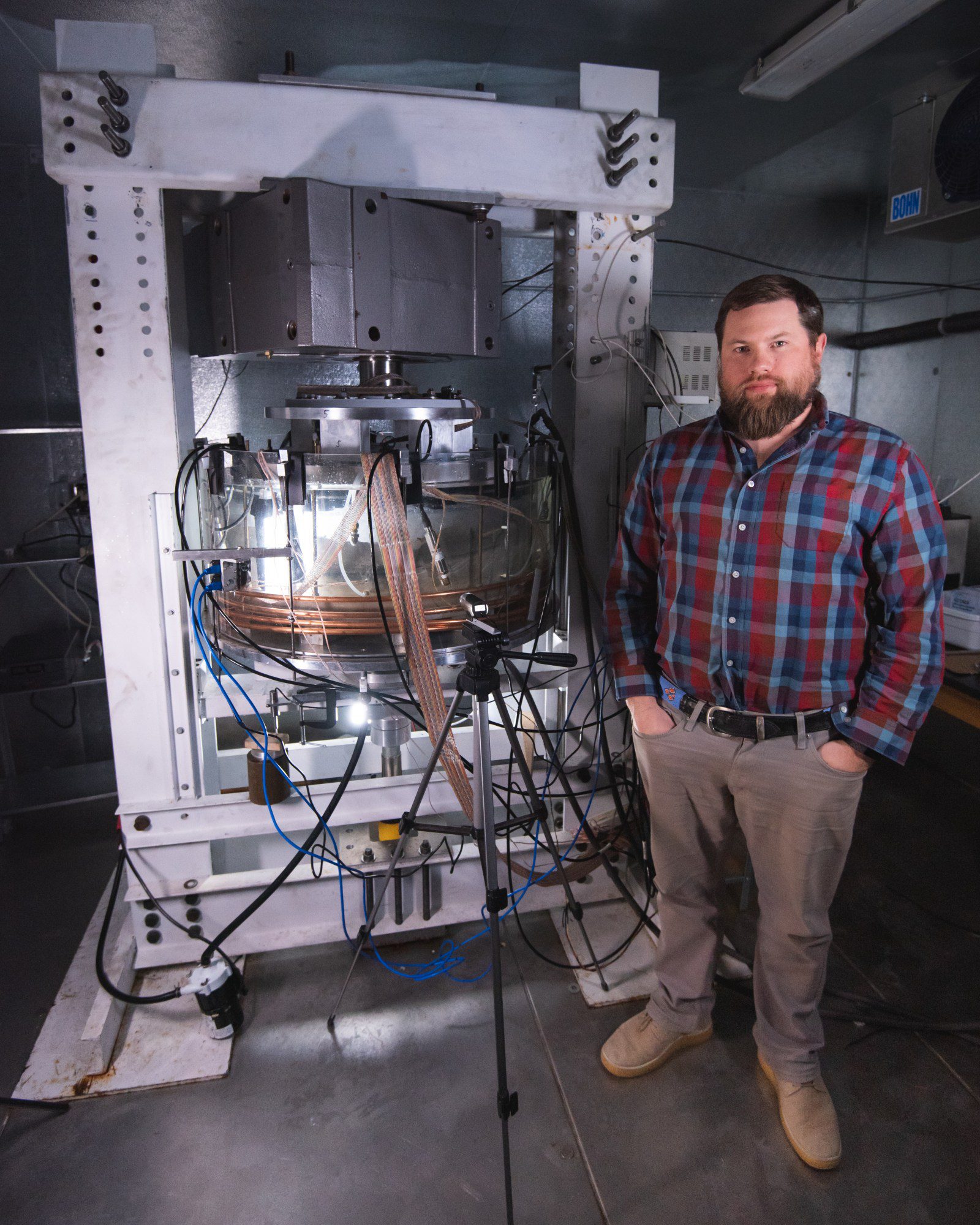
He intends to use the funds to build the lab’s second “ring shear” device, the technical term for a simulated glacier.

The existing device, which is the only one operating in the world, stands about eight feet tall and fills the better part of a walk-in freezer on campus. The core of the machine is a transparent drum filled with a ring of ice, sitting under pressure and atop a layer of sediment. It slowly spins for weeks at a time as sensors and cameras capture how the ice and earth move and deform.

Lucas Zoet, an associate professor at the University of Wisconsin–Madison, stands in front of his lab’s “ring shear” device, a simulated glacier.
ETHAN PARRISH

The research team can select the sediment, topography, water pressure, temperature, and other conditions to match the environment of a real-world glacier of interest, be it Thwaites today—or Thwaites in 2100, under a high greenhouse gas emissions scenario. 

Zoet says these experiments promise to improve our understanding of how glaciers move over different types of beds, and to refine an equation known as the slip law, which represents these glacier dynamics mathematically in computer models.

The second machine will enable them to run more experiments and to conduct a specific kind that the current device can’t: a scaled-down, controlled version of the basal intervention.

Zoet says the team will be able to drill tiny holes through the ice, then pump out water or transfer heat away from the bed. They can then observe whether the simulated glacier freezes to the base at those points and experiment with how many interventions, across how much space, are required to slow down its movement.

It offers a way to test out different varieties of the basal intervention that is far easier and cheaper than using water drills to bore to the bottom of an actual glacier in Antarctica, Zoet says. The funding will allow the lab to explore a wide range of experiments, enabling them to “kick the system in a way we wouldn’t have before,” he adds.

“Virtually impossible”

The concept of glacier interventions is in its infancy. There are still considerable unknowns and uncertainties, including how much it would cost, how arduous the undertaking would be, and which approach would be most likely to work, or if any of them are feasible.

“This is mostly a theoretical idea at this point,” says Katharine Ricke, an associate professor at the University of California, San Diego, who researches the international relations implications of geoengineering, among other topics.

Conducting extensive field trials or moving forward with full-scale interventions may also require surmounting complex legal questions, she says. Antarctica isn’t owned by any nation, but it’s the subject of competing territorial claims among a number of countries and governed under a decades-old treaty to which dozens are a party.

The basal intervention—refreezing the glacier to its bed—faces numerous technical hurdles that would make it “virtually impossible to execute,” Moon and dozens of other researchers argued in a recent preprint paper, “Safeguarding the polar regions from dangerous geoengineering.”

Among other critiques, they stress that subglacial water systems are complex, dynamic, and interconnected, making it highly difficult to precisely identify and drill down to all the points that would be necessary to draw away enough water or heat to substantially slow down a massive glacier.

Further, they argue that the interventions could harm polar ecosystems by adding contaminants, producing greenhouse gases, or altering the structure of the ice in ways that may even increase sea-level rise.

“Overwhelmingly, glacial and polar geoengineering ideas do not make sense to pursue, in terms of the finances, the governance challenges, the impacts,” and the possibility of making matters worse, Moon says.

“No easy path forward”

But Douglas MacAyeal, professor emeritus of glaciology at the University of Chicago, says the basal intervention would have the lightest environmental impact among the competing ideas. He adds that nature has already provided an example of it working, and that much of the needed drilling and pumping technology is already in use in the oil industry.

“I would say it’s the strongest approach at the starting gate,” he says, “but we don’t really know anything about it yet. The research still has to be done. It’s very cutting-edge.”

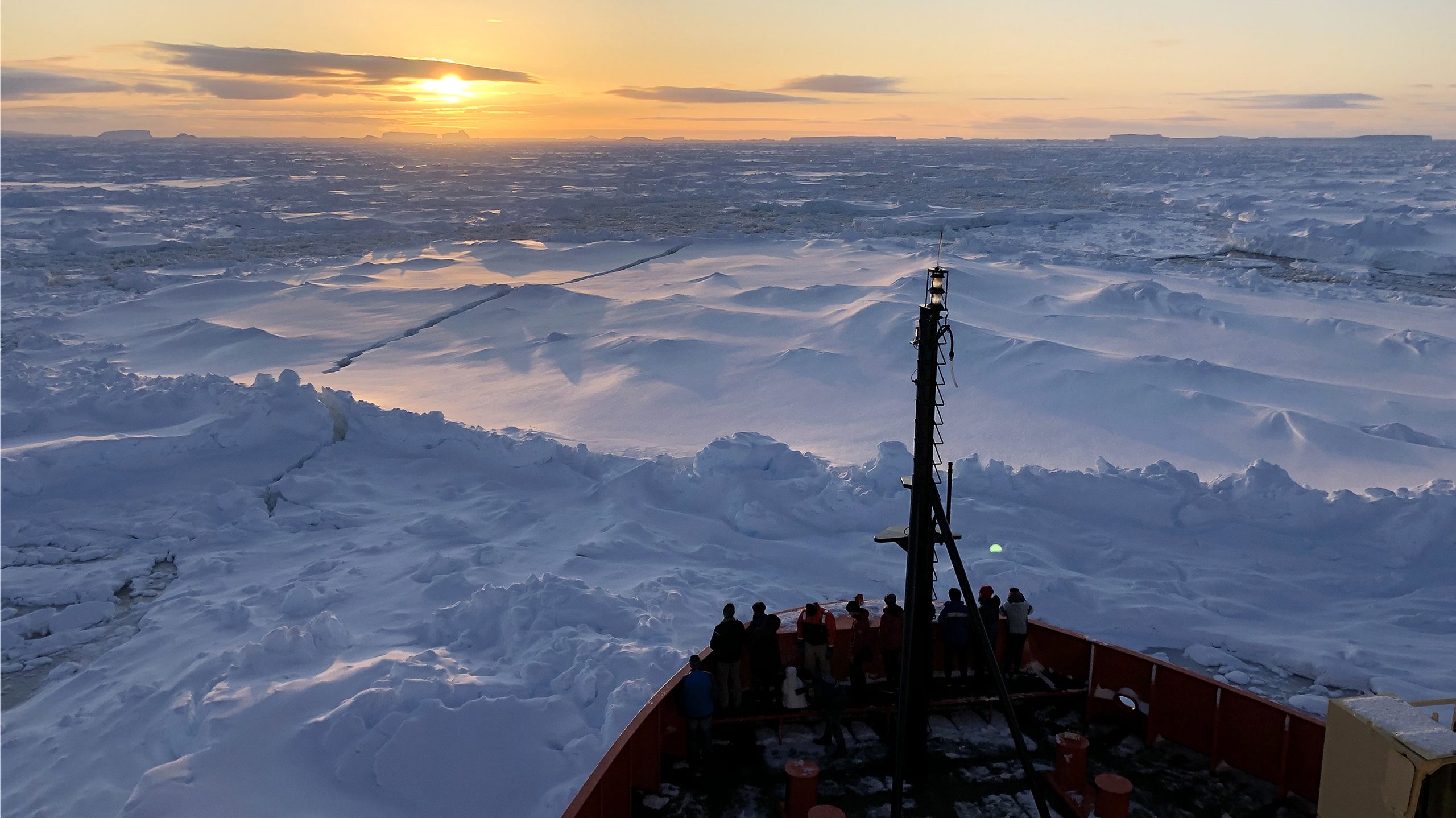
A Sunday morning sunrise was enjoyed by personnel on board the research vessel Nathaniel B. Palmer as it moved into the Bellingshausen Sea. The cruise had been in the Amundsen Sea region participating in the International Thwaites Glacier Collaboration. 
The Nathaniel B. Palmer heads into the Bellinghausen sea.
CINDY DEAN/UNITED STATES ANTARCTIC PROGRAM

Minchew readily acknowledges that there are big challenges and significant unknowns—and that some of these ideas may not work.

But he says it’s well worth the effort to study the possibilities, in part because much of the research will also improve our understanding of glacier dynamics and the risks of sea-level rise—and in part because it’s only a question of when, not if, Thwaites will collapse.

Even if the world somehow halted all greenhouse gas emissions tomorrow, the forces melting that fortress of ice will continue to do so. 

So one way or another, the world will eventually need to make big, expensive, difficult interventions to protect people and infrastructure. The cost and effort of doing one project in Antarctica, he says, would be dwarfed by the global effort required to erect thousands of miles of seawalls, ratchet up homes, buildings, and roads, and relocate hundreds of millions of people.

“One thing is challenging—and the other is even more challenging,” Minchew says. “There’s no easy path forward.”

The inadvertent geoengineering experiment that the world is now shutting off

This article is from The Spark, MIT Technology Review’s weekly climate newsletter. To receive it in your inbox every Wednesday, sign up here.

Usually when we talk about climate change, the focus is squarely on the role that greenhouse-gas emissions play in driving up global temperatures, and rightly so. But another important, less-known phenomenon is also heating up the planet: reductions in other types of pollution.

In particular, the world’s power plants, factories, and ships are pumping much less sulfur dioxide into the air, thanks to an increasingly strict set of global pollution regulations. Sulfur dioxide creates aerosol particles in the atmosphere that can directly reflect sunlight back into space or act as the “condensation nuclei” around which cloud droplets form. More or thicker clouds, in turn, also cast away more sunlight. So when we clean up pollution, we also ease this cooling effect. 

Before we go any further, let me stress: cutting air pollution is smart public policy that has unequivocally saved lives and prevented terrible suffering. 

The fine particulate matter produced by burning coal, gas, wood, and other biomatter is responsible for millions of premature deaths every year through cardiovascular disease, respiratory illnesses, and various forms of cancer, studies consistently show. Sulfur dioxide causes asthma and other respiratory problems, contributes to acid rain, and depletes the protective ozone layer. 

But as the world rapidly warms, it’s critical to understand the impact of pollution-fighting regulations on the global thermostat as well. Scientists have baked the drop-off of this cooling effect into net warming projections for the coming decades, but they’re also striving to obtain a clearer picture of just how big a role declining pollution will play.

A new study found that reductions in emissions of sulfur dioxide and other pollutants are responsible for about 38%, as a middle estimate, of the increased “radiative forcing” observed on the planet between 2001 and 2019. 

An increase in radiative forcing means that more energy is entering the atmosphere than leaving it, as Kerry Emanuel, a professor of atmospheric science at MIT, lays out in a handy explainer here. As that balance has shifted in recent decades, the difference has been absorbed by the oceans and atmosphere, which is what is warming up the planet. 

The remainder of the increase is “mainly” attributable to continued rising emissions of heat-trapping greenhouse gases, says Øivind Hodnebrog, a researcher at the Center for International Climate and Environment Research in Norway and lead author of the paper, which relied on climate models, sea-surface temperature readings, and satellite observations.

The study underscores the fact that as carbon dioxide, methane, and other gases continue to drive up temperature​​s, parallel reductions in air pollution are revealing more of that additional warming, says Zeke Hausfather, a scientist at the independent research organization Berkeley Earth. And it’s happening at a point when, by most accounts, global warming is about to begin accelerating or has already started to do so. (There’s ongoing debate over whether researchers can yet detect that acceleration and whether the world is now warming faster than researchers had expected.)

Because of the cutoff date, the study did not capture a more recent contributor to these trends. Starting in 2020, under new regulations from the International Maritime Organization, commercial shipping vessels have also had to steeply reduce the sulfur content in fuels. Studies have already detected a decrease in the formation of “ship tracks,” or the lines of clouds that often form above busy shipping routes. 

Again, this is a good thing in the most important way: maritime pollution alone is responsible for tens of thousands of early deaths every year. But even so, I have seen and heard of suggestions that perhaps we should slow down or alter the implementation of some of these pollution policies, given the declining cooling effect.

A 2013 study explored one way to potentially balance the harms and benefits. The researchers simulated a scenario in which the maritime industry would be required to use very low-sulfur fuels around coastlines, where the pollution has the biggest effect on mortality and health. But then the vessels would double the fuel’s sulfur content when crossing the open ocean. 

In that hypothetical world, the cooling effect was a bit stronger and premature deaths declined by 69% with respect to figures at the time, delivering a considerable public health improvement. But notably, under a scenario in which low-sulfur fuels were required across the board, mortality declined by 96%, a difference of more than 13,000 preventable deaths every year.

Now that the rules are in place and the industry is running on low-sulfur fuels, intentionally reintroducing pollution over the oceans would be a far more controversial matter.

While society basically accepted for well over a century that ships were inadvertently emitting sulfur dioxide into the air, flipping those emissions back on for the purpose of easing global warming would amount to a form of solar geoengineering, a deliberate effort to tweak the climate system.

Many think such planetary interventions are far too powerful and unpredictable for us to muck around with. And to be sure, this particular approach would be one of the more ineffective, dangerous, and expensive ways to carry out solar geoengineering, if the world ever decided it should be done at all. The far more commonly studied concept is emitting sulfur dioxide high in the stratosphere, where it would persist for longer and, as a bonus, not be inhaled by humans. 

On an episode of the Energy vs. Climate podcast last fall, David Keith, a professor at the University of Chicago who has closely studied the topic, said that it may be possible to slowly implement solar geoengineering in the stratosphere as a means of balancing out the reduced cooling occurring from sulfur dioxide emissions in the troposphere.

“The kind of solar geoengineering ideas that people are talking about seriously would be a thin wedge that would, for example, start replacing what was happening with the added warming we have from unmasking the aerosol cooling from shipping,” he said. 

Positioning the use of solar geoengineering as a means of merely replacing a cruder form that the world was shutting down offers a somewhat different mental framing for the concept—though certainly not one that would address all the deep concerns and fierce criticisms.


Now read the rest of The Spark 

Read more from MIT Technology Review’s archive: 

Back in 2018, I wrote a piece about the maritime rules that were then in the works and the likelihood that they would fuel additional global warming, noting that we were “about to kill a massive, unintentional” experiment in solar geoengineering.

Another thing

Speaking of the concerns about solar geoengineering, late last week I published a deep dive into Harvard’s unsuccessful, decade-long effort to launch a high-altitude balloon to conduct a tiny experiment in the stratosphere. I asked a handful of people who were involved in the project or followed it closely for their insights into what unfolded, the lessons that can be drawn from the episode—and their thoughts on what it means for geoengineering research moving forward.

Keeping up with Climate 

Yup, as the industry predicted (and common sense would suggest), this week’s solar eclipse dramatically cut solar power production across North America. But for the most part, grid operators were able to manage their systems smoothly, minus a few price spikes, thanks in part to a steady buildout of battery banks and the availability of other sources like natural gas and hydropower. (Heatmap)

There’s been a pile-up of bad news for Tesla in recent days. First, the company badly missed analyst expectations for vehicle deliveries during the first quarter. Then, Reuters reported that the EV giant has canceled plans for a low-cost, mass-market car. That may have something to do with the move to “prioritize the development of a robotaxi,” which the Wall Street Journal then wrote about. Over on X, Elon Musk denied the Reuters story, sort ofposting that “Reuters is lying (again).” But there’s a growing sense that his transformation into a “far-right activist” is exacting an increasingly high cost on his personal and business brands. (Wall Street Journal)

In a landmark ruling this week, the European Court of Human Rights determined that by not taking adequate steps to address the dangers of climate change, including increasingly severe heat waves that put the elderly at particular risk, Switzerland had violated the human rights of a group of older Swiss women who had brought a case against the country. Legal experts say the ruling creates a precedent that could unleash many similar cases across Europe. (The Guardian)