Google Insights: Can Incorrect Hreflang Tags Hurt SEO? via @sejournal, @MattGSouthern

In a recent episode of Google’s Search Off The Record podcast, Gary Illyes, a Google’s Search Relations team member, addressed concerns about incorrect hreflang implementation and its potential impact on SEO.

Hreflang Errors: Less Problematic Than Expected?

During the discussion, Illyes was asked about the consequences of mismatched hreflang annotations and actual page content.

Specifically, he addressed scenarios where a page might be incorrectly labeled as one language while containing content in another.

Illyes stated:

“As far as I remember, I worked on the parsing implementation plus the promotion implementation of hreflang, and back then, it didn’t cause problems.”

However, he also noted that his direct experience with this was from around 2016, adding the following:

“That’s a few years back… since then, we changed so many things that I would have to check whether it causes problems.”

Language Demotion & Country Promotion

Providing further context, Illyes explained Google’s approach to language and country relevance:

“When I spelled out LDCP, I said the language demotion country promotion. So, for example, if someone is searching in German and your page is in English, then you would get a negative demotion in the search results.”

This suggests that while incorrect hreflang implementation might not directly cause problems, the actual language of the content still plays a vital role in search relevance.

Exceptions To Language Matching

Interestingly, Illyes pointed out that there are exceptions to strict language matching:

“It’s less relevant to the query to the person unless you are searching for something like ‘how do you spell banana’… Because then it doesn’t really matter… well no it does… it still matters but… because you’re searching for something in English, so we would think okay you want some page that explains how to spell banana in English, not German.”

What This Means For You

Understanding how Google handles hreflang and language mismatches can help inform international SEO strategies.

While Google’s systems appear to be somewhat forgiving of hreflang errors, the actual language of the content remains a key factor in search relevance.

Here are the top takeaways:

  1. While incorrect hreflang implementation may not directly penalize your site, it’s still best practice to ensure your annotations accurately reflect your content.
  2. The actual language of your content appears to be more important than hreflang annotations for search relevance.
  3. For specific queries, like spelling or language-learning topics, Google may be more flexible in presenting content in various languages.

As Illyes noted, Google’s systems have changed over time. Continue to monitor official Google documentation and announcements for the most up-to-date best practices in international SEO.

Listen to the full podcast episode below:


Featured Image: Longfin Media/Shutterstock

How To Leverage Trust To Boost Your International Expansion via @sejournal, @gemmafontane

E-E-A-T is a mix of factors that help Google determine if the content is relevant and helpful for users in order to prioritize it in their search results.

In recent articles, we covered how to leverage Experience, Authority, and Expertise to boost a company’s international strategy.

However, there is still one very important area to cover within the E-E-A-T family: Trust. Although it is the last one we approached, it is certainly not the least important. Quite the contrary.

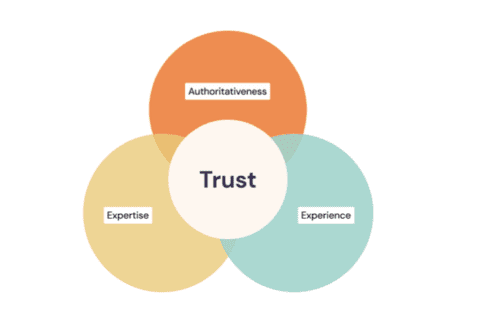
As Google’s search quality rater guidelines indicate, Trust, which considers the extent to which the page is accurate, honest, safe, and reliable, is the most important member at the center of E-E-A-T.

No matter how experienced, expert, or authoritative a website is, if it is untrustworthy, it will have low E-E-A-T.

trust-eeat-235Image from Google’s search quality rater guidelines, May 2024

Showing trust is incredibly relevant for “Your Money or Your Life” (YMYL) topics. These are the ones that can have a significant impact on an individual’s or society’s health, finances, safety, security, knowledge, or well-being.

But what happens when we want to create international strategies? How can we leverage E-E-A-T to boost our international expansion and especially show that we are honest and reliable to users from all around the world?

Let’s discover some detailed actions that can be implemented to achieve these international results.

How To Show Trust To Users From All Around The World

Accessibility And Usability

One of the first steps in trying to sell a product or service internationally is to ensure that users in each region can properly access the site.

This means the website must be fast, secure, display correctly, and be usable for them. It should allow users to easily search for relevant information and purchase the product or service.

International Brand Name

Beyond making the site accessible, it is also highly recommended that consumers can find the brand easily.

Whenever possible, it is advisable to have an “international” brand or domain name that is easy to remember, spell, and look for online for users from any country worldwide, even though they don’t speak the local language.

Localization: The Key Element To Show Trust

Localization is fundamental to demonstrating to users from different regions around the world that your site is reliable and trustworthy. Each country, language, or region has its singularities.

We cannot try to sell our product with the same message and strategies to users from all target markets, as we won’t transmit enough confidence for them to see that we are the most expert, experienced, and authoritative website in our sector.

For this, when we want to sell internationally, it is very important to:

  • Analyze the languages spoken in each region to evaluate how and if it is a priority to include them on the website.
  • Transcribe, not just translate. The knowledge users have about our products or services may differ in each region. Therefore, it is key to adapt the message to each market.
  • Make sure that the language is displayed by default when users search for it from their location. That’s why it is very important a proper translation, and also an hreflang configuration on the site.
  • Understand the local buying habits of the product or service in the region and the cultural customs with its use.
  • Study how users search for products or services to define the best type of content to create: text, videos (e.g., tutorials or how-to’s), images (e.g., demonstrating and teaching the product’s use).

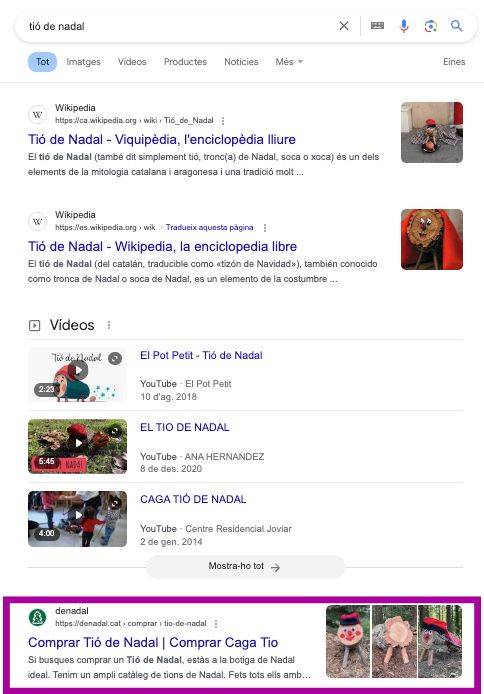
For example, when we look for the keywords “Tió de Nadal” or “Caga Tió” – which have the same meaning – a local Christmas tradition celebrated in Catalonia, Spain, the results and the type of message we have to create are for local users.

Surely, this type of search will have an informational purpose, but it can also be transactional since the tradition is already well-known in the country.

tio de nadal: Google search resultsScreenshot from search for [tio de nadal], Google, May 2024

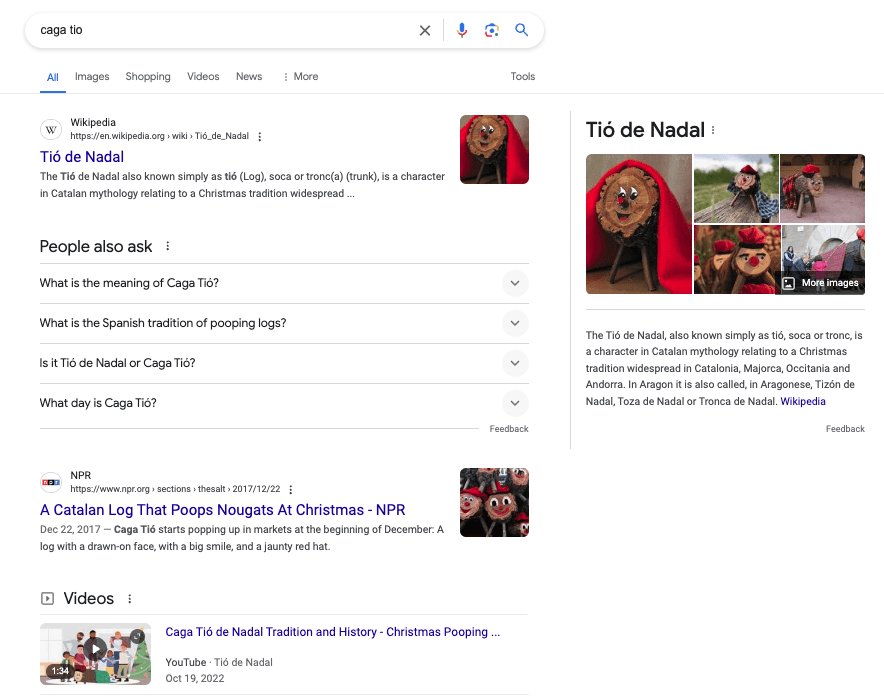
On the other hand, if we search for the same in the United States, the keyword will have a more informational aim since users are not so used to the tradition, and with this type of search, what they want to discover is more information about this custom, before seeing transactional results.

So, the type of content will be more descriptive.

Ssearch for caga tio: GoogleScreenshot from search for [caga tio], Google, May 2024

For all these reasons, it is essential to geolocate content in each region in order to transmit sufficient confidence to potential customers.

Transmit That You Are The Safest Site

One of the main factors that can make selling on an international scale difficult is failing to demonstrate that the website is sufficiently secure.

We must remember that when a user buys one of our products, they will not be able to make physical claims regarding legal aspects, reimbursements, etc. Therefore, it is essential to accurately and properly communicate all aspects related to payment methods and shipping so users know that we are a reliable, safe, and trustworthy site.

To achieve this, it is highly recommended to:

  • Include the currency of each country on the product page.
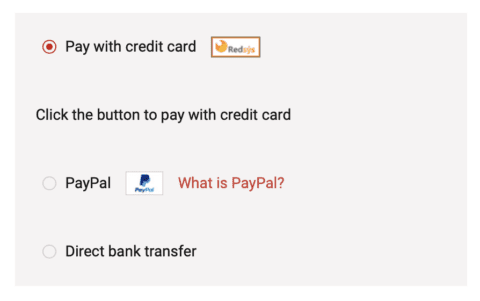
  • Incorporate the most common payment methods used in each country. Whether it is by credit card, Bizum, or PayPal, we should include not only the payment methods we are accustomed to but also those familiar to users in the target region.
  • Detail the shipping system. From delivery time to return conditions, shipping company, and tracking code, we must provide all necessary information to instill confidence in a person who may live thousands of miles from where the products are located.
Credit card option on websiteScreenshot from author, May 2024

Tell Who You Are With A Detailed “About Us” Page

For companies with a local focus, explaining who they are is very important. When selling on an international scale, it becomes essential.

We have to consider that the user who wants to buy our product or service may not have any prior knowledge of the business, the product we sell, or who we are.

That’s why we need to create a highly detailed “About Us” page, including information such as:

  • Company location and origins, with images or videos.
  • The manufacturing process and product creation details.
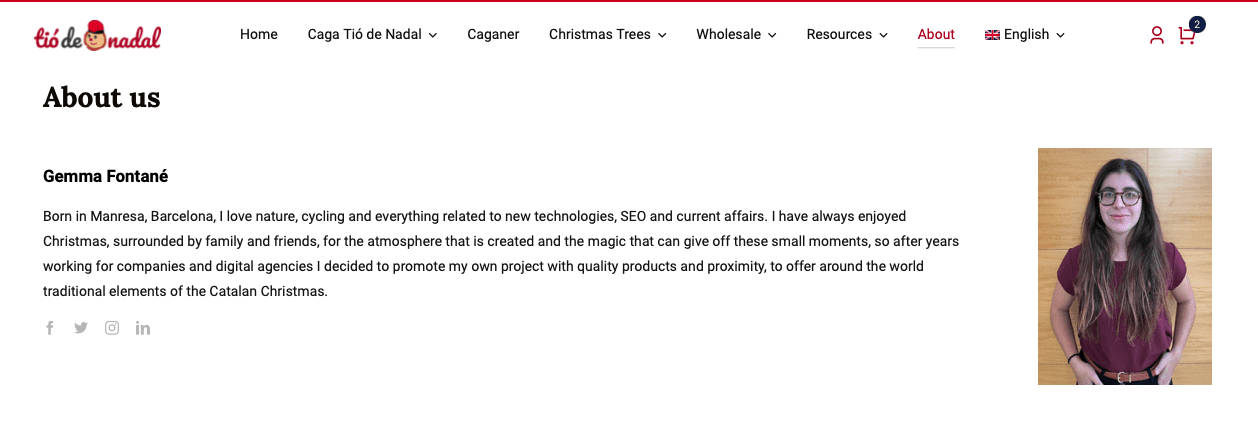
  • Detailed information about the team members, including links to other platforms, if possible, such as social networks.
  • Demonstrate knowledge of the subject matter through awards, certifications, quality seals, etc.
  • Include ratings and opinions from third parties.
About us pageScreenshot from author, May 2024

Reliable Customer Service

Finally, to encourage users to purchase a product or service on an international website, it is essential to demonstrate that there is reliable customer service.

We need to communicate that there are real people behind the website.

To show reliable customer service on a site, some actions we can take include:

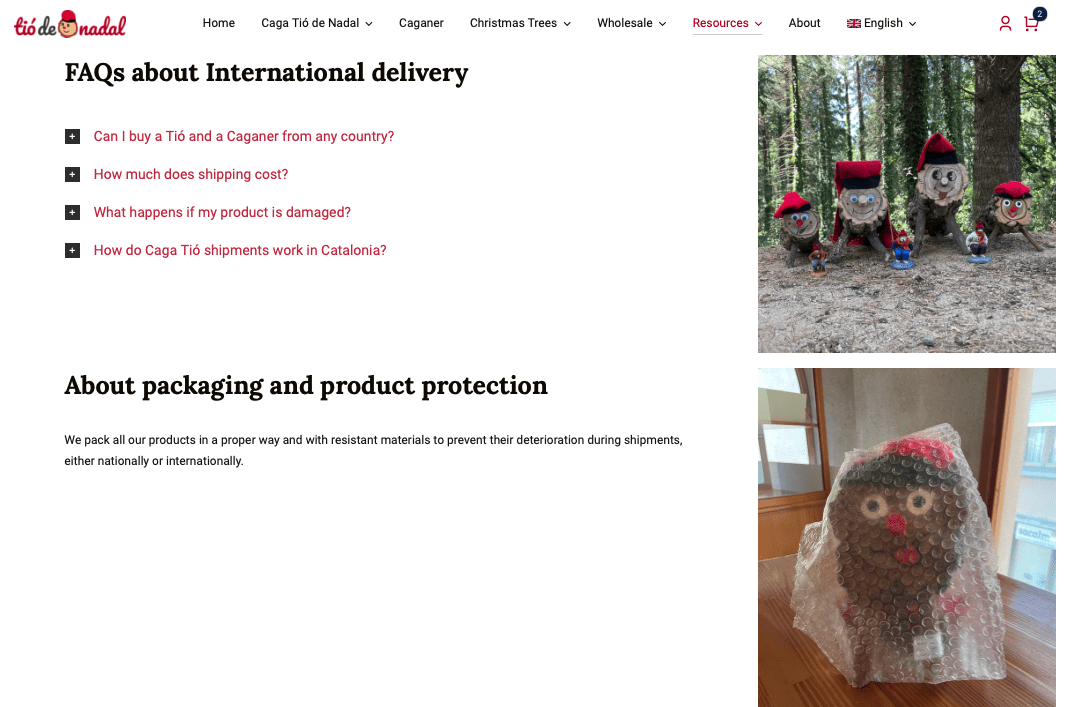
  • Include a FAQ page with a focus on international questions, such as those regarding international shipping.
  • Provide direct and human contact options. Whether via chat, WhatsApp, phone, or email, offering users the opportunity to get their questions or doubts answered quickly by a human representative will help build confidence.
  • Include your location. Link it with Google My Business, complete with a detailed profile including images and information.
  • Display reviews of your customer service on your site so users can see the experiences of others.
FAQs about international deliveryScreenshot from author, May 2024

Link To Other Platforms And Sites

Finally, another action we can implement to build trust with users from around the world is to show them that we have profiles on other social networks and demonstrate how others talk about us.

To do this, we can:

  • Create and link to other social network profiles.
  • Get mentions from local influencers or sector leaders.
  • Get featured on local relevant websites.
  • Get listed on relevant directories in our sector.
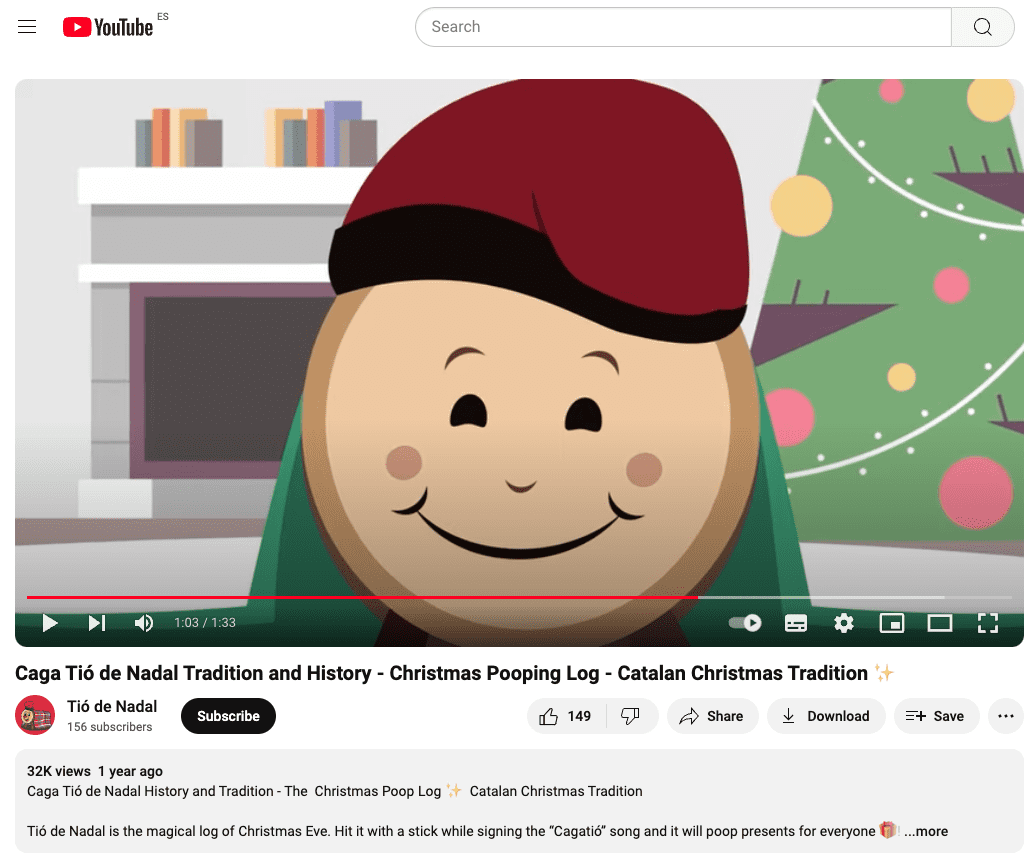
Caga Tio YouTube videoScreenshot from YouTube, May 2024

Leverage Trust To Boost International Strategies

Trust is very important for YMYL topics.

However, we shouldn’t forget how important it is in other sectors or sites, such as for when we want to sell internationally.

Showing that a site is accurate, honest, safe, and reliable is also a key element in building trust with users worldwide – along with showcasing that we have experience, authority, and expertise related to our sector, products, and service.

More resources: 


Featured Image: BRO.vector/Shutterstock

International SEO For 2024: 9-Point Checklist For Success via @sejournal, @LidiaInfanteM

Getting your international SEO strategy right can be an elusive feat.

There are a lot more factors at play than people give credit for, and it’s often a thankless job.

A successful international SEO strategy requires a deep knowledge of your company’s commercial strategy as well as technical SEO knowledge, cultural sensitivity, and excellent data skills.

Yet the industry often regards international SEO as just your hreflang setup.

In this article, I will distill the complexities of international SEO success into an actionable step-by-step list that will take you from beginner to advanced practitioner. Let’s begin!

Part I: Be Commercially Aware

1. Understand Why Your Company Is Going International

Companies can grow by expanding their products and services, focusing on gaining market penetration or expanding into new markets.

While your team’s goal might be traffic, leads, or revenue, the leadership team is likely working under a different set of parameters. Most of the time, leadership’s ultimate goal is to maximize shareholder value.

  • In founder-owned companies, growth goals might be slower and more sustainable, usually aimed at maintaining and growing profitability.
  • VC-owned companies have high growth goals because they must provide their investors with a return that’s higher than the stock market. This is what is known as the alpha, or your company’s ability to beat the market in growth.
  • Publicly traded companies are likely aiming to grow their share value.
  • Startups, depending on their maturity stage, are likely looking to prove product-market fit or expand their reach fast to show that their operations are scalable and have the potential to be profitable in the future. The goal of this is to aid in raising further capital from investors.

Understanding why businesses go international is essential for informing your SEO decisions. What’s best practice for SEO isn’t always what’s best for business.

You must adapt your strategy to your company’s growth model.

  • Companies choosing to grow sustainably and maintain profitability will likely expand more slowly to a market that resembles their core market.
  • VC-owned companies will be able to invest in a wider range of countries, with a smaller concern for providing their users with an experience on par with that of their core markets.
  • Startups can try to beat their competitors to market by expanding quickly and throwing a lot of money at the project, or they might be concerned with cash flow and try to expand fast but cut corners by using automatic translation.

2. Stack Rank Your Target Markets To Prioritize Your Investment

I promise I’ll get to hreflang implementation soon, but so much about international SEO has to do with commercial awareness – so bear with me; this will make you a better professional.

Many companies have different market tiers to reflect how much of a priority each market is. Market prioritization can happen using many different metrics, such as:

  • Average order value or lifetime customer value.
  • Amount of investment required.
  • Market size.
  • And market similarity.

American companies often prioritize developed English-speaking countries such as the UK, Canada, or Australia. These are most similar to their core market, and most of their market knowledge will be transferable.

After that, companies are likely to target large European economies, such as Germany and France. They might also target the LatAm market and Spain in the same effort.

The last prioritization tier can vary widely among companies, with a focus on the Nordic, Brazilian, or Asian markets.

Part II: Know Your Tech

3. Define Your International URL Structure

When doing international SEO, there are 4 different possible URL structures, each with its pros and cons.

ccTLD Structure

A ccTLD structure is set up to target different countries based on the domain type.

This structure is not ideal for companies that target different languages rather than different countries. For example, a .es website is targeting Spain, not the Spanish language.

An advantage to this kind of structure is that the ccTLD sends a very strong localization signal to search engines as to what market they are targeting, and they can lead to improved trust and CTR in your core country.

On the other hand, ccTLDs can dilute your site’s authority, as links will be spread across domains rather than concentrated on the .com.

gTLD With Subdirectories

This is my personal favorite when it comes to international SEO.

These URL structures can look like website.com/en if they’re targeting languages or website.com/en-gb if they’re targeting countries.

This configuration aggregates the authority you gain across your different territories into a single domain, it’s cheaper to maintain, and the .com TLD is widely recognizable by users worldwide.

On the other hand, this setup can look less personalized to people outside the US, who might wonder if you can service their markets.

gTLD With Subdomains

This setup involves placing international content on a subdomain like us.website.com. While once popular, it’s slipping in favor because it doesn’t bring anything unique to the table anymore.

This setup offers a clear signal to users and search engines about the intended audience of a specific subdomain.

However, subdomains often face issues with SEO, as Google tends to view them as separate entities. This separation can dilute link, similar to the ccTLD approach but without the geo-targeting advantages.

gTLD With Parameters

This is the setup where you add parameters at the end of the URL to indicate the language of the page, such as website.com/?lang=en.

I strongly advise against this setup, as it can present multiple technical SEO challenges and trust issues.

4. Understand Your Hreflang Setup

In the words of John Mueller: hreflang can be one of the most complex aspects of SEO.

Tweet by John Mueller talking about how hreflang can be one of the more complex aspects of SEO.Screenshot from Twitter, May 2024

Hreflang reminds me of a multilingual form of a canonical tag, where we tell search engines that one document is a version of the other and explain the relationship between them.

I find hreflang implementation very interesting from a technical point of view. Because development teams mostly manage it, and it can be very much hit or miss.

Often, hreflang is constructed from existing fields in your content management system (CMS) or content database.

You might find that your development team is pulling the HTML lang tag, which follows a different ISO standard than hreflang, leading to a broken implementation.

Other times, there is a field in your CMS that your development team pulls from to build your hreflang setup.

Finding out how your hreflang tags are generated can be extremely helpful in identifying the sources of different issues or mitigating potential risks.

So speak to your engineering team and ask them how you’re currently generating hreflang.

5. Implement Hreflang Without Errors

There are three ways to implement hreflang on your site:

  • On your sitemap.
  • Through your HTTP header.
  • On your HTML head.

The method most of us are most familiar with is the HTML head. And while you can use more than one method, they should match each other perfectly. Otherwise, you risk confusing search engines.

Here are some basic rules for getting it done correctly:

  • In your hreflang implementation, the URL must include domain and protocol.
  • You must follow the ISO 639-1 language codes – don’t go around making up your own.
  • Hreflang tags must be reciprocal. If the page you’re listing as a language alternative does not list you back, your implementation won’t work.
  • Audit your hreflang regularly. My favorite tool for this, since it added the hreflang cluster analysis and link graphs, is Ahrefs. For the record, Ahrefs is not paying me to say this; it’s a genuine recommendation and has helped me a lot in my work.
  • You should only have one page per language.
  • Your hreflang URLs should be self-canonicalizing and respond with a 200 code.

Follow the above rules, and you’ll avoid the most common hreflang mistakes that SEO pros make.

And if you’re interested in the technical SEO aspect beyond hreflang, I recommend reading Mind your language by Rob Owen.

Part III: Invest In Content Incrementally

6. Translate Your Top-performing Content Topics

Now that you have the basic commercial and technical knowledge covered, you’re ready to start creating a content strategy.

You likely have a wealth of content in your core market that can be recycled. But you want to focus on translating high-converting topics, not just any topic; otherwise, you might be wasting your budget!

Let’s go step by step.

Cluster Your Website’s Content By Topic

  • Crawl your site using your favorite SEO tool and extract the URL and H1.
  • Use ChatGPT to classify that list of URLs into topics. You might already know what you usually write about, so include those topics in your prompt. You don’t want to have a classification that’s too granular, so you can prompt chatGPT to only create groups with a minimum of 10 URLs (adjust this to reflect the size of your website) and class everything else as other. This is an example of what your prompt might look like: “I will provide you with a list of article titles and their corresponding URL. Classify this list into the following topics: survey best practices, research and analysis, employee surveys, market research and others. Return this in a table format with the URL, title and group name.”
  • Start a spreadsheet with all your URLs in the first column, titles in the second column, and the group they belong to in the third column.

Measure Your Performance By Topic

  • Export your GSC data and use a =VLOOKUP formula to match your clicks to your URLs.
  • Export your conversion data and use a =VLOOKUP formula to match your conversions (leads, sales, sign-ups, or revenue) to the right URL.
  • You can then copy your topics column onto a new sheet. Remove duplicates and use the =SUMIF formula to aggregate your click data and conversion data by topic.

Choose What Topics You’ll Be Translating First

Using this data, you can now choose what topics are most likely to drive conversions based on your core market data. Choose how many topics or pieces of content you’ll be translating based on your budget.

Personally, I like translating one topic at a time because I’ve found that generating topical authority on one specific topic makes it easier for me to rank on an adjacent topic that I write about next.

7. Localize Your English Content

Once you’re set up with all your key pages and a few content topics, it’s time to evaluate your investment and see where you could be getting a bigger return.

At this stage, many companies have translated their content into a few different languages and likely copied the US content into their UK and Australian sites. Now that you’ve done some translation, it’s time to work on localization.

If you’ve just copied your US content into your UK and Australian sites, your Google Search Console indexing report might be screaming at you, “Duplicate, Google selected a different canonical than the user.”

A very easy fix that could yield great returns is to localize your English content to the nuances of those English-speaking markets.

You will want to instruct your translation and localization providers to adapt the spellings of certain words, change the choice of words, introduce local expressions, and update any cited statistic for the US with their local equivalent.

For example, if I’m targeting a British audience, “analyze” becomes “analyse,” a “stroller” becomes a “pram,” and “soccer” becomes “football.”

8. Invest In In-market Content

Once you’ve got the basics in place, you can start tackling the specific needs of other markets. This strategy is expensive, and you should only use it in your priority markets, but it can really set you apart from your competitors.

For this, you will need to work with a local linguist to identify pain points, use cases, or needs exclusive to your target market.

For example, if France suddenly made it mandatory to run a diversity and inclusion study for companies with over 250 employees, I’d want to know this and create some content on DEI surveys at SurveyMonkey.

9. Integrate With Other Content Workflows

In step six, we evaluated our top-performing content, chose the best articles to translate, and got it all down. But wait. Some of these source articles have been updated. And there is even more content now!

To run a successful international SEO campaign you must integrate with all the other teams publishing content within your organization.

Usually, the teams creating content in an organization are SEO, content, PR, product marketing, demand generation, customer marketing, customer service, customer education, or solutions engineering.

That’s a lot, and you won’t be able to integrate with everyone all at once. Prioritize the teams that create the most revenue-generating content, such as SEO, content, or product marketing.

Working with these teams, you will have to establish a process for what happens when they create a new piece, update some content, or remove an existing piece.

These processes can differ for everyone, but I can tell you what I do with my team and hope it inspires you.

  • When a piece of content that’s already been localized into international markets is updated, we get the content in a queue to be re-localized the next quarter.
  • When they create a new piece of content, we evaluate its performance, and if it’s performing above average, we add it to a localization queue for the next quarter.
  • When they change the URL of a piece of content or delete it, all international sites must follow suit at the same time, since due to some technical limitations, not making the change globally would create some hreflang issues.

Wrapping Up

International SEO is vast and complex, and no article can cover it all, but many interesting resources have been created by SEO pros across the community for those who want to learn more.

Navigating the complexities of international SEO is no small feat. It’s an intricate dance of aligning commercial strategies with technical precision, cultural insights, and data-driven decisions.

From understanding your company’s core motives for global expansion to meticulously implementing hreflang tags and localizing content, every step plays a crucial role in building a successful international presence.

More resources: 


Featured Image: BritCats Studio/Shutterstock