Dennis Whyte’s fusion quest

Ever since nuclear fusion was discovered in the 1930s, scientists have wondered if we could somehow replicate and harness the phenomenon behind starlight—the smashing together of hydrogen atoms to form helium and a stupendous amount of clean energy. Fusing hydrogen would yield 200 million times more energy than simply burning it. Unlike nuclear fission, which powers the world’s 440 atomic reactors, hydrogen fusion produces no harmful radiation, only neutrons that are captured and added back to the reaction. Instead of radioactive wastes with long, lethal half-lives, fusion’s by-product is helium, the most stable element—and a year’s worth from a fusion plant wouldn’t supply a party balloon business.

Dennis Whyte’s part in the fusion quest began in graduate school, in a lab belonging to the electric utility Hydro-Québec, just outside Montreal. There he was shown a device built to replicate stellar fusion on an earthly scale. It was a doughnut-shaped hollow chamber, big enough for a lanky physicist like him to stand inside, based on a design conceived in 1950 by the future Nobel Peace Prize laureate Andrei Sakharov, who also developed hydrogen bombs for the Soviet Union. It was called a tokamak, a word derived from a Russian phrase meaning “ring-shaped chamber with magnetic coils.”
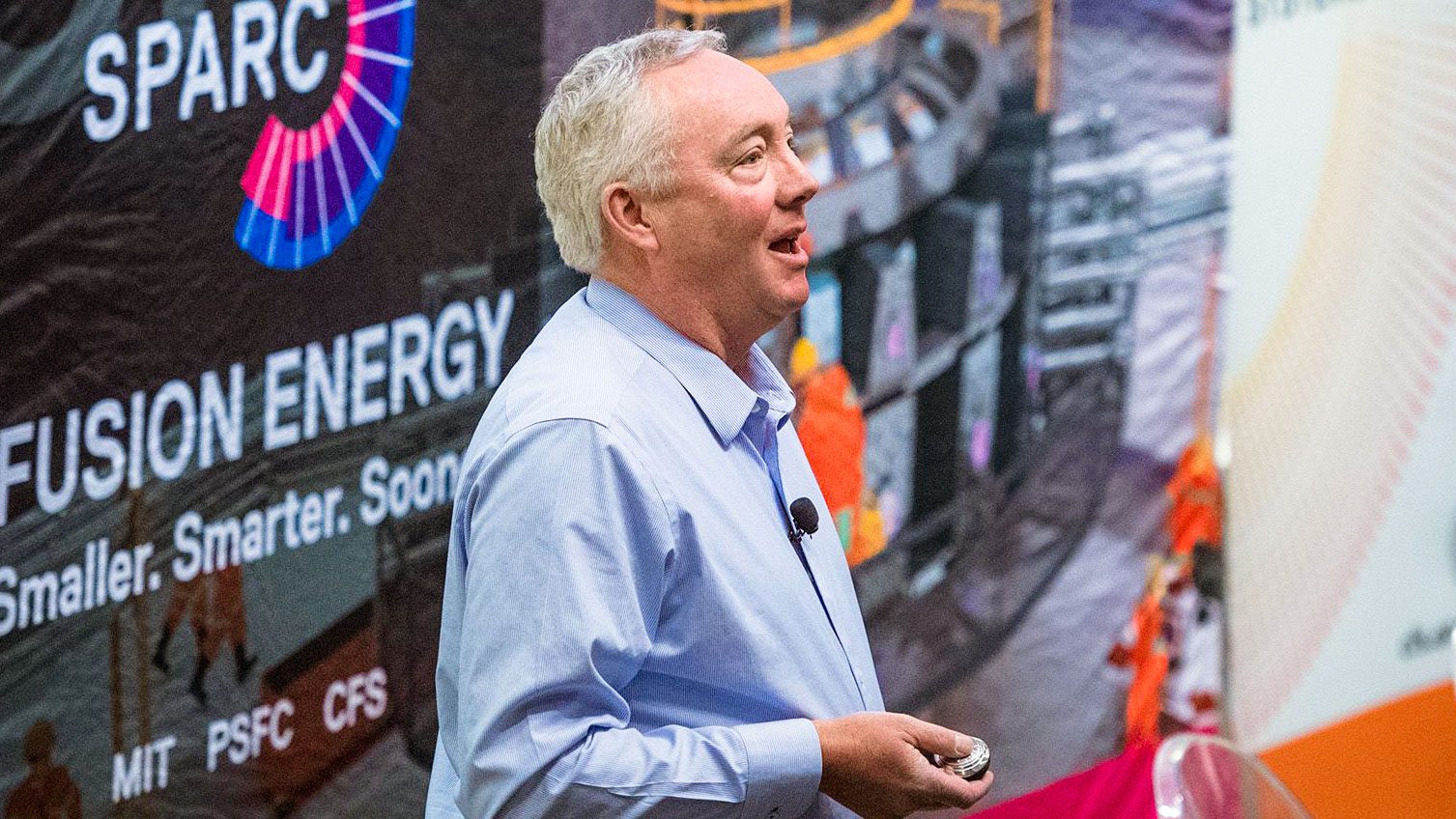
Dennis Whyte in profile speaking in front of trade show banners
Dennis Whyte, then director of the Plasma Science and Fusion Center, describes efforts to address climate change through carbon-free power at a conference in 2019.
GRETCHEN ERTL

The idea is straightforward: Fill the doughnut with hydrogen gas, and then heat that gas until it turns to electrically charged plasma. In this ionic state, plasma would be held in place by magnets positioned around the tokamak. Achieving fusion on Earth without the immense pressure of a star’s interior, scientists calculated, would require temperatures nearly 10 times hotter than our sun’s center—around 100 million degrees Celsius. So the trick would be to suspend the hot plasma so perfectly in a surrounding magnetic field that it wouldn’t touch inner surfaces of the chamber. Such contact would instantly cool it, stopping the fusion reaction.

The good part about that was safety. In a failure, a fusion power plant wouldn’t melt down—just the opposite. The bad part was that gaseous plasma wasn’t very cooperative—any slight irregularity in the chamber walls could cause destabilizing turbulence. But the concept was so tantalizing that by the mid-1980s, 75 universities and governmental institutes around the world had tokamaks. If anyone could get fusion—the most energy-dense reaction in the universe—to work, the deuterium in a liter of seawater could meet one person’s electricity needs for a year. It would be, effectively, a limitless resource.

Besides turbulence, there were two other big obstacles. The magnets surrounding the plasma needed to be really powerful—meaning really big. In 1986, 35 nations representing half the world’s population—including the US, China, India, Japan, what is now the entire European Union, South Korea, and Russia—agreed to jointly build the International Thermonuclear Experimental Reactor, a $40 billion giant tokamak in southern France. Standing 100 feet tall on a 180-acre site, ITER (the acronym also formed the Latin word for “journey”) is equipped with 18 magnets weighing 360 tons apiece, made from the best superconductors then available. If it works, ITER will produce 500 megawatts of electricity—but not before 2035, if then. It’s still under construction. The second obstacle is the biggest: Many tokamaks have briefly achieved fusion, but doing so always took more energy than they produced. 

After earning his doctorate in 1992, Whyte worked on an ITER prototype at San Diego’s National Fusion Facility, taught at the University of Wisconsin, and in 2006 was hired by MIT. By then, he understood how huge the stakes were, and how life-changing commercial-scale fusion energy could be—if it could be sustained, and if it could be produced affordably.

MIT had been trying since 1969. The red brick buildings of its Plasma Science and Fusion Center, where Whyte came to work, had originally housed the National Biscuit Company. PSFC’s sixth tokamak, Alcator C-Mod, built in 1991, was in Nabisco’s old Oreo cookie factory. C-Mod’s magnets were coiled with copper to serve as a conductor (think of how copper wire wrapped around a nail and connected to a battery turns it into an electromagnet). Before C-Mod was finally decommissioned, its magnetic fields, 160,000 times stronger than Earth’s, set the world record for the highest plasma pressure in a tokamak.

As Ohm’s law describes, however, metals like copper have internal resistance, so it could run for only four seconds before overheating—and needed more energy to ignite its fusion reactions than what came out of it. Like the now 160 similar tokamaks around the world, C-Mod was an interesting science experiment but mainly reinforced the joke that fusion energy was 20 years away and always would be.

Each year, Whyte had challenged PhD students in his fusion design classes to conjure something just as compact as C-Mod, one-800th the scale of ITER, that could achieve and sustain fusion—with an energy gain. But in 2013, as he neared 50, he increasingly had doubts. He’d devoted his career to the fusion dream, but unless something radically changed, he feared it wouldn’t happen in his lifetime.

The US Department of Energy decided to scale back on fusion. It informed MIT that funding for Alcator C-Mod would end in 2016. So Whyte decided he would either quit fusion and do something else or try something different to get there faster. 

There was a new generation of ceramic “high-temperature” superconductors, not available when ITER’s huge magnets were being wrapped in metallic superconducting cable, which has to be chilled to 4 kelvin above absolute zero (–452.47 °F) for its resistance to current to fall to zero. Discovered accidentally in 1986 in a Swiss lab, the new ceramic superconductors still needed to be cooled to 20 K (–423.7 °F). But with far smaller power requirements, their output was so much greater that a year later the discoverers won a Nobel Prize.

The potential applications were limitless, but because ceramic is so brittle, coiling it around electromagnets wasn’t feasible. Then one day Whyte ran into research scientist Leslie Bromberg ’73, PhD ’77, in the hallway holding a fistful of what resembled unspooled tape from a VCR cassette. “What’s all that?” he asked.

“Superconducting tape, new stuff.” The filmy strips were coated with ceramic crystals of rare-earth barium copper oxide. “It’s called ReBCO,” Bromberg said.

ReBCO’s rare-earth component, yttrium, is 400 times more common than silver. Could superconducting tape, Whyte immediately wondered, be wound like copper wire to make much smaller but far more powerful magnets?

The class met in a windowless room in a former Nabisco cracker factory, surrounded by blackboards.

He assigned his 2013 fusion design class to see. If the students managed to double the strength of a magnetic field surrounding hot plasma, he knew, they might multiply fusion’s power density sixteenfold. They came up with an eye-­opening design they called Vulcan. It yielded five peer-reviewed papers—but whether layers of wound ReBCO tape could stand the stress of the current needed to hold plasma suspended while being superheated to ignite a fusion reaction was unknown.

For two years, his classes refined Vulcan. By 2015, with ReBCO more consistent in quality and supply, he challenged his students—11 male and one female, including an Argentine, a Russian, and a Korean—to outdo what 35 nations had been attempting for nearly 30 years.

“Let’s see if ReBCO lets us build a 500-megawatt tokamak—the same as ITER, only way smaller.”

If superconducting tape could let them make a fusion reactor to fit the footprint of a decommissioned coal-fired plant, he told them, it could plug right into existing power lines. To then make enough carbon-­free energy to stop pushing Earth’s climate past the edge, its components would have to be mass-­producible, so any competent contractor could assemble and service them.

The class met in a windowless room in a former Nabisco cracker factory, surrounded by blackboards. Divided into teams, the students set about figuring out how thin-tape electromagnets could be made robust, and how to capture neutrons expelled from fusion reactions so their heat could be used for turning a turbine—and so they could be harnessed to breed more tritium for the plasma. That’s crucial, because natural tritium is exceedingly rare. Since ReBCO-wrapped magnets would be so much smaller, shrinking the dimensions of one component rippled through everything else. One team’s innovations fed another’s, and parts of the design started to link together. As excitement spread through PSFC, members of earlier classes, now postdocs or faculty members, pitched in. Whyte’s students, some with doctoral dissertations due, were putting in 50-hour weeks on this, reminding him of why he’d dreamed of fusion in first place.

Whyte looked it over for the thousandth time. He was pretty sure they hadn’t broken any laws of physics.

And then, at the semester’s end, out popped their design. Just over 10 feet in diameter, it actually looked like a prototype power plant. While ITER had massive shielding, their tokamak would be wrapped in a compact blanket containing a molten-salt mixture of lithium fluoride and beryllium fluoride to absorb the heat of the neutrons escaping from the fusion reaction. Those neutrons would also react with the lithium to breed more tritium.

The blanket’s heat would be tapped for electricity—except one-fifth of the heat energy would remain in the plasma, meaning the reaction was now heating itself and was self-sustaining, producing more energy than was needed to ignite it. Net fusion energy had been achieved.

The ReBCO magnets, although just a 40th the size of ITER’s, could deliver a magnetic field strength of 23 tesla (a hospital MRI machine typically operates at 1.5 tesla). That was more than enough to achieve a fusion reaction, yet it would require less electricity than its copper-clad C-Mod predecessor by a factor of 2,000. Everything was designed for easy maintenance, and parts could be replaced without having to dismantle the entire reactor.

Most important, the calculated energy output was more than 13 times the input.

Whyte looked it over for the thousandth time. He was pretty sure they hadn’t broken any laws of physics. He calculated the cost per watt and was astonished. Suddenly their goal wasn’t just building a much smaller ITER. It was being commercially competitive.

Stunned, he told his wife, “This can actually work.”


They called it ARC, for “affordable, robust, compact.” “Buildable in a decade,” Whyte predicted.The peer-reviewed article his 12 students published in FusionEngineering and Design estimated it would cost around $5 billion. In 2015, that wasn’t much more than the cost of a comparably sized coal-fired plant, and one-eighth ITER’s price tag.

That May, Whyte gave a keynote about ARC at a fusion engineering symposium in Austin, Texas. Four of his students attended. When he described their plan for a workable reactor by 2025, in just 10 years, conferees were astounded—everyone else was talking decades. Afterward, the MIT contingent went to lunch at Stubb’s Bar-B-Q. It was clear that with the climate eroding and the Intergovernmental Panel on Climate Change warning that yet-­uninvented technologies were needed to keep temperatures from soaring into dreaded realms, they had to do this. But since the DOE had pulled its funding, how could they?

On a napkin, Whyte started listing what they’d need to do and what each step might cost. Over ribs, they crafted a proposal to spin off a startup to raise venture capital to finance a SPARC (for “soon-as-possible ARC”) demo fusion reactor to show that this could really happen. Then they’d build a commercial-scale ARC.
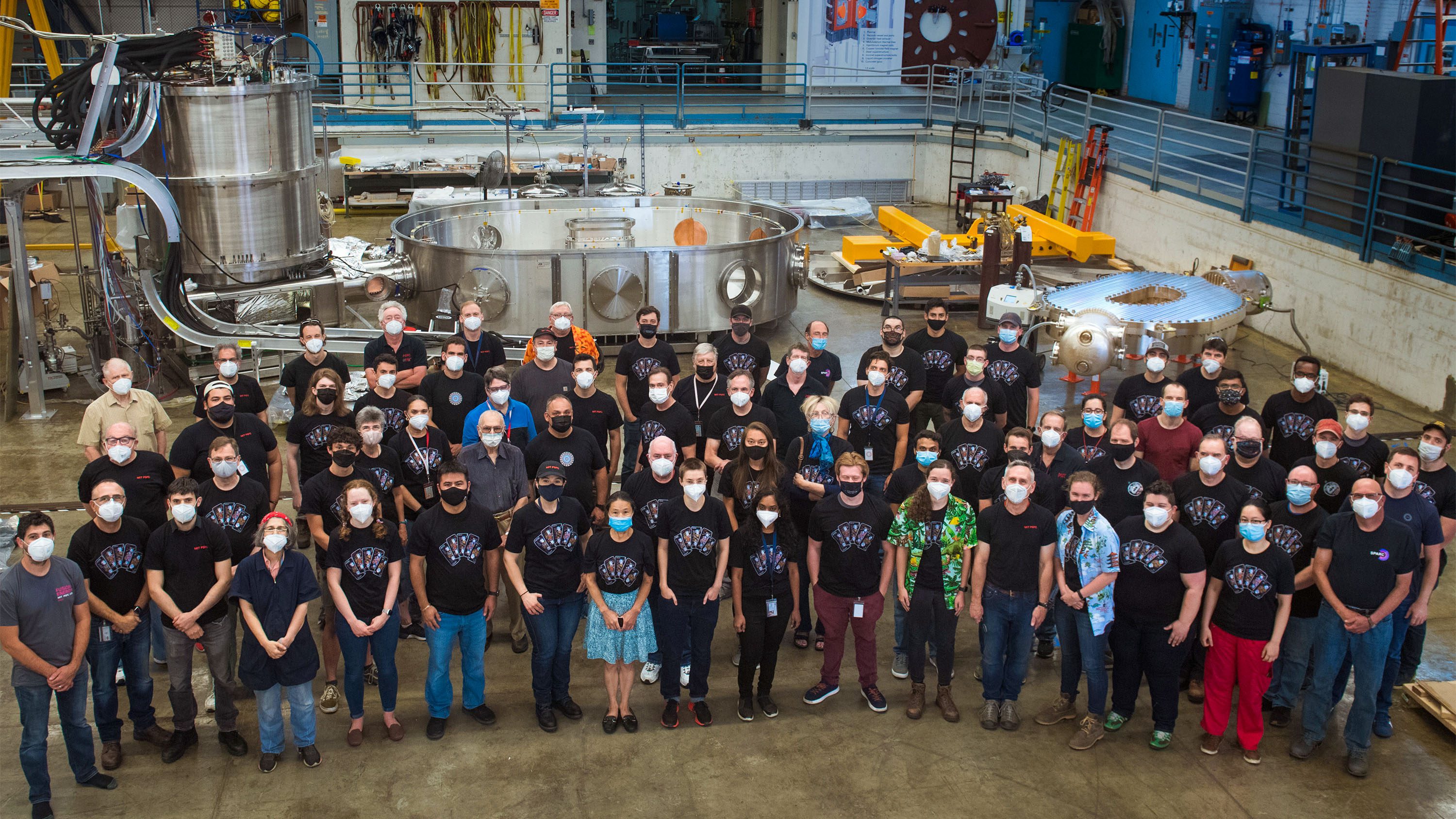
group photo of team standing in the warehouse in front of the reactor
In 2021, teams from MIT’s Plasma Science Fusion Center and MIT spinout Commonwealth Fusion Systems used just 30 watts of energy to produce a magnetic field strong enough to sustain a fusion reaction.
GRETCHEN ERTL

Forming a company would free them from academic and government funding cycles, but they were plasma physicists, most still in their 20s, without business backgrounds. Nevertheless, Whyte and Martin Greenwald, deputy director of the PSFC, agreed to join them, and in 2018 Commonwealth Fusion Systems, CFS, was born. Three of his former students would run the company, and three would remain at MIT’s Plasma Science and Fusion Center, which—in a profit-sharing agreement—would be CFS’s research arm.

They opened shop up the street, in The Engine, MIT’s “tough tech” startup incubator, and gained the attention of climate-concerned backers like Bill Gates, George Soros, and Jeff Bezos. But they weren’t the only ones competing for fusion funds, and it became a race to see who could make commercial-scale fusion first. 

The CFS team may have been young, but because of its partnership with MIT and its more than a hundred experienced fusion scientists, it had a running start.

By the end of 2021, Commonwealth Fusion Systems had raised more than $2 billion and was breaking ground on 47 acres outside Boston for a commercial fusion energy campus, to build SPARC by 2025—and commercial-scale, mass-­producible ARC by 2030.


Gaining and actually sustaining net energy is perpetually called fusion’s yet-unreached “holy grail,” but by September 2021, the CFS team of CEO Bob Mumgaard, SM ’15, PhD ’15 (a coauthor of the Vulcan design), chief science officer Brandon Sorbom, PhD ’17 (lead author of the 2015 fusion design class’s breakthrough paper), Whyte, and their 200 CFS colleagues were confident they could do it—if their magnets held. For three years, straight through the pandemic, they’d worked in PSFC’s West Cell laboratory, the cavernous former Oreo factory that had housed Alcator C-Mod, furiously solving problems like how to solder thin-film ReBCO tape together into a structure strong enough to withstand 40,000 amps passing through it—enough to power a small town.

The completed SPARC would have 18 magnets encircling its plasma chamber, but for this test they’d built just one. It was composed of 16 layers, each a D-shaped, 10-foot-high steel disk grooved like an LP. On one side, the grooves held tight spirals of ReBCO film, 270 kilometers in all—the distance from Boston to Albany. “Yet all that ReBCO holds just a sprinkling of rare earth,” said Sorbom. “That’s the magic of superconductors: A tiny bit of material can carry so much current. By comparison, a wind turbine’s rare-earth neodymium magnets weigh tons.”

On each disk’s flip side, the grooves channeled liquid helium to cool the superconductor for zero resistance. (The design dates to history’s first high-field magnet, built at MIT in the 1930s, which used copper conductors and water for coolant.) Each layer was built on an automated assembly line. “The idea,” said Mumgaard, “is to make 100,000 magnets a year someday. This can’t be a scientific curiosity. This needs to be an energy source.”

Although covid-19 had waned, an outbreak could foil everything, so they maintained coronavirus protocols, moving computer terminals outside beneath a tent to avoid crowding within. Others worked virtually. For a month, dozens worked eight-hour, continuous shifts. Some operated the electromagnetic coil, encased in stainless steel in the middle of the room, which over a week had to be gradually supercooled from room temperature of 298 K down to 20 K before slowly ramping up to full magnetic strength. Others constantly compared real-time data with redundant models. As the temperature dropped, the internal connections, welds, and valves contracted at different rates, so they watched for leaks. 

On September 2, 2021, the Thursday before Labor Day, they started ramping up by a few kiloamps, stopping frequently to check what the current was revealing, how the cooling characteristics had changed, and how the stresses on the ReBCO coil increased as the magnetic field strengthened to record heights.

Two nights later, they cranked the amperage toward their goal: a 20-tesla magnetic field, powerful enough to lift 421 Boeing 747s or contain a continuous fusion reaction. They’d been aiming for 7:00 a.m. on Sunday, the 5th. At 3:30, the large screen in the design center showed that they’d reached 40 kiloamps, and the magnetic field had reached 19.56 tesla.

At 4:30 a.m., they were at 19.98 tesla. Things got very quiet. At 5:20 a.m., every redundant on-screen meter read 20 tesla, and nothing had leaked or exploded—except under the tent, where champagne corks were popping.

Five years earlier, on its final four-­second run, C-Mod’s copper-conducting magnet had consumed 200 million watts of energy to reach 5.7 tesla. This took 30 watts—less energy by a factor of around 10 million, Whyte told reporters—to produce a magnetic field strong enough to sustain a fusion reaction. The joints that transferred current from one layer to the next actually performed better than expected. That was the biggest unknown, because there was only one way to test them: in the magnet itself. They looked spectacular.
After five hours, the team ramped down the power. “It’s a Kitty Hawk moment,” Mumgaard said.

Adapted from Hope Dies Last: Visionary People Across the World, Fighting to Find Us a Future by Alan Weisman, published by Dutton, an imprint of Penguin Random House. © 2025 by Alan Weisman.

Hands-on engineering

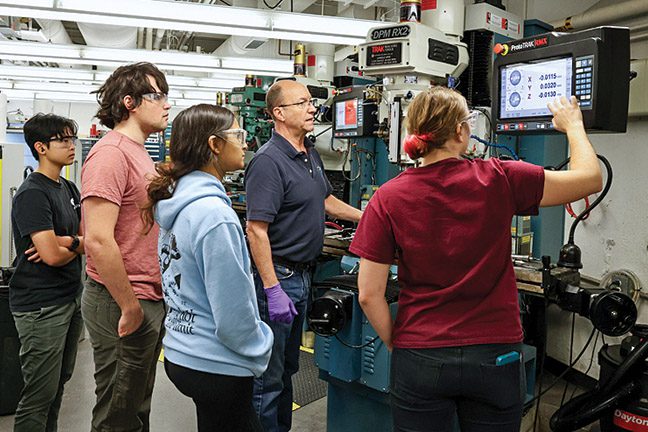
Jaden Chizuruoke May ’29 worked with teammates Rihanna Arouna ’29 and Marian Akinsoji ’29 to design the chemically powered model car whose framework he is building in this scene from the Huang-Hobbs BioMaker Space, where students have a chance to work safely and independently with biological systems.

The assignment to build the car—and the layered electrochemical battery that powers it—came in a class called “Hands-On Engineering: Squishy Style Making with Biology and Chemistry” taught by the lab’s director, Justin Buck, PhD ’12. “It is definitely one of my favorite classes,” says May, who appreciates that after being trained, students are given the freedom to figure out how to tackle each task in a project.

Located in the basement of Building 26, the BioMaker Space welcomes novices and expert mentors alike, offering workshops in such things as bacterial photography, biobots, lateral flow assay, CRISPR, and DNA origami.

For May, the makerspace has been a hub for collaboration. “I could never have done anything in that lab without my peers and counselors helping me, and the emphasis placed on teamwork is what makes the class feel both welcoming and exciting,” he says, adding that he made some of his first friends at MIT there: “It has been a great introduction to campus.”

May says he’s thinking of double majoring in Course 10-ENG (energy) and Course 21W (writing)—but the class has gotten him interested in biology, too.

Investing in the promise of quantum

As MIT navigates a difficult and constantly changing higher education landscape, I believe our best response is not easy but simple: Keep doing our very best work. The presidential initiatives we’ve launched since fall 2024 are a vital part of our strategy to advance excellence within and across high-impact fields, from health care, climate, and education to AI and manufacturing—and now quantum. On December 8, we launched Quantum at MIT, or QMIT—the name rhymes with qubit, the basic unit of quantum information—to elevate MIT’s long-standing strengths in quantum science and engineering across computing, communication, and sensing.

More than 40 years ago, MIT helped kick off what is widely considered the second quantum revolution as host of the first Physics of Computation Conference at Endicott House, bringing together physics and computing researchers to explore the promise of quantum computing. Now we’re investing further in that promise.

Like all MIT’s strategic priorities, QMIT will help ensure that new technologies are used for the benefit of society. Faculty director Danna Freedman, the Frederick George Keyes Professor of Chemistry, is leading the initiative with a focus that extends beyond research and discovery to the way quantum technologies are developed and deployed. QMIT will enable scientists and engineers to co-develop quantum tools, generating unprecedented capabilities in science, technology, industry, and national security. 

Although QMIT is a new initiative, it grew naturally from the Center for Quantum Engineering (CQE), created in 2019 to help bridge the gap between PIs at MIT and Lincoln Laboratory. A key to QMIT’s success will be integration with Lincoln Lab, with its deep and broad expertise in scaling and deployment.

And CQE has already gotten us started with industry collaborations through its Quantum Science and Engineering Consortium (QSEC), which brings together companies—from startups to large multinationals—that can help us realize positive, practical impact. We’re even envisioning a physical home for quantum at the heart of campus, a space for academic, industry, and public engagement with quantum systems.

As we set out for this new frontier, QMIT will allow us to shape the future of quantum, with a focus on solving “MIT-hard” problems. We hope that as the initiative evolves, our alumni and friends will be inspired to join us in supporting this exciting new effort to build on MIT’s quantum legacy.

Secrets of the sleep-deprived brain

Nearly everyone has experienced it—after a night of poor sleep, your brain might seem foggy, and your mind drifts off when you should be paying attention. A new MIT study reveals what happens biologically as these momentary lapses occur: Your brain is performing essential maintenance that it usually takes care of while you sleep. 

During a normal night of sleep, the cerebrospinal fluid (CSF) that cushions the brain helps flush away metabolic waste that has built up during the day. In a 2019 study, MIT electrical engineering and computer science professor Laura Lewis, PhD ’14, and colleagues showed that the CSF flows rhythmically in and out in a way that’s linked to changes in brain waves.

To explore what might happen to this CSF flow in a sleep-deprived brain, Lewis, who is also a member of MIT’s Institute for Medical Engineering and Science, and her colleagues tested 26 volunteers on several cognitive tasks after they’d been kept awake in the lab and when they were well-rested. Using both electroencephalograms and functional magnetic resonance imaging, the researchers measured heart rate, breathing rate, pupil diameter, blood oxygenation in the brain, and flow of CSF in and out of the brain as participants tried to press a button when they heard a beep or saw a visual change on a screen.

Unsurprisingly, sleep-deprived participants performed much worse than well-rested ones. Their response times were slower, and in some cases the participants never noticed the stimulus at all.

The researchers identified several physiological changes during these lapses of attention. Most significant was a flow of CSF out of the brain just as a lapse occurred—and back in as it ended. The researchers hypothesize that when the brain is sleep-deprived, it “attempts to catch up on this process by initiating pulses of CSF flow,” as Lewis says, even at the cost of one’s ability to pay attention.

“One way to think about those events is because your brain is so in need of sleep, it tries its best to enter into a sleep-like state to restore some cognitive functions,” says Zinong Yang, a postdoctoral associate and lead author of a paper on the work. 

The researchers also found several other physiological events linked to attentional lapses, including decreases in breathing and heart rate, along with constriction of the pupils. They found that pupil constriction began about 12 seconds before CSF flowed out of the brain, and pupils dilated again after attention returned.

“When your attention fails, you might feel it perceptually and psychologically, but it’s also reflecting an event that’s happening throughout the brain and body,” Lewis says.

“These results suggest to us that there’s a unified circuit that’s governing both what we think of as very high-level functions of the brain—our attention, our ability to perceive and respond to the world—and then also really basic, fundamental physiological processes.” 

The researchers did not explore what this circuit might be, but one good candidate, they say, is the noradrenergic system, which regulates many cognitive and bodily functions through the neurotransmitter norepinephrine—and has recently been shown to oscillate during normal sleep.

Listening to battery failure

Lithium-ion batteries produce faint sounds as they charge, discharge, and degrade. But until now, nobody could interpret those sounds to detect when a battery might be about to lose power, fail, or burst into flames.

Now, MIT engineers have found a way to do that, even with noisy data. The findings could provide the basis for relatively simple, totally passive, and nondestructive devices that could continuously monitor the health of battery systems like those in electric vehicles or grid-scale storage facilities.

“Through some careful scientific work, our team has managed to decode the acoustic emissions,” says Martin Z. Bazant, a professor of chemical engineering and mathematics. They were able to classify them as coming from gas bubbles generated by side reactions or from fractures caused by expansion and contraction of the active material, two primary mechanisms of degradation and failure.

The team coupled electrochemical testing of working batteries with recordings of their acoustic emissions, using signal processing to correlate sound characteristics with voltage and current. Then they took the batteries apart and studied them under an electron microscope to detect fracturing.

With Oak Ridge National Laboratory researchers, the team has also shown that acoustic emissions can warn of gas generation before thermal runaway, which can lead to fires. As Bazant says, it’s “like seeing the first tiny bubbles in a pot of heated water, long before it boils.” 

Under 10% of an earthquake’s energy makes the ground shake

Earthquakes are driven by energy stored up in rocks over millennia—energy that, once released, we perceive mainly in the form of the ground’s shaking. But a quake also generates a flash of heat and fractures and damages underground rocks. And exactly how much energy goes into each of these three processes is exceedingly difficult to measure in the field.

Now, with the help of carefully controlled miniature “lab quakes,” MIT geophysicist Matěj Peč and colleagues have quantified this so-called energy budget. Only about 1% to 10% of a lab quake’s energy causes physical shaking, they found, while 1% to 30% goes into breaking up rock and creating new surfaces. The vast majority heats up the area around a quake’s epicenter, producing a temperature spike that can actually melt surrounding material.

The team also found that the fractions of quake energy producing heat, shaking, and rock fracturing can shift depending on the tectonic activity the region has experienced in the past. “The deformation history—essentially what the rock remembers—really influences how destructive an earthquake could be,” says postdoc Daniel Ortega-Arroyo, PhD ’25, lead author of a paper on the work. “That history affects a lot of the material properties in the rock, and it dictates to some degree how it is going to slip.”

The lab quakes—which involve subjecting specially prepared samples of powdered granite and magnetic particles to steadily increasing pressure in a custom-built apparatus—are a simplified analogue of what occurs during a natural earthquake. Down the road, if scientists have an idea of how much shaking a quake generated in the past, they might be able to estimate the degree to which the quake’s energy also affected rocks deep underground by melting or breaking them apart. This in turn could reveal how much more or less vulnerable that region is to future quakes.

Building materials are getting closer to doubling as batteries

Concrete already builds our world, and an MIT-invented variant known as electron-­conducting carbon concrete (ec3, pronounced “e c cubed”) holds out the possibility of helping power it, too. Now that vision is one step closer. 

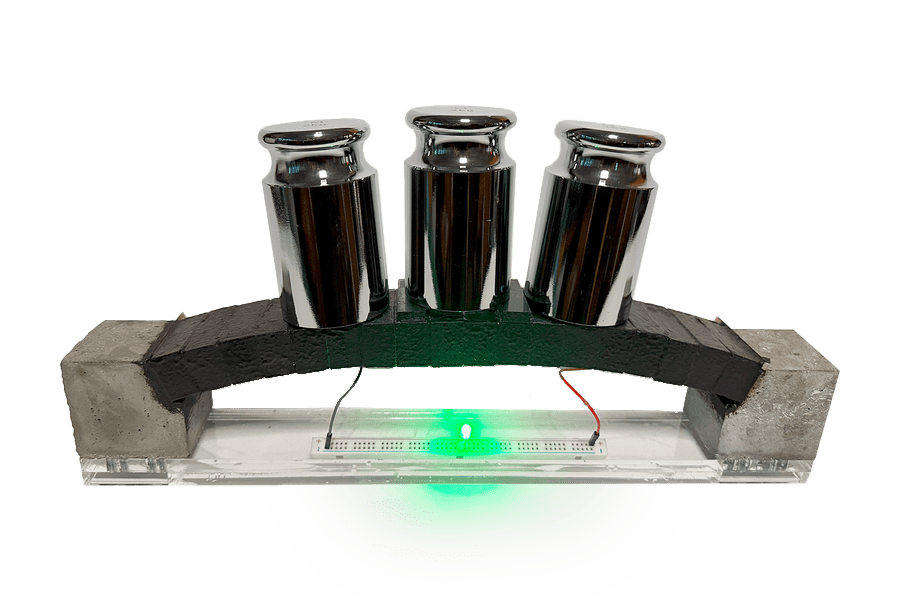
Made by combining cement, water, ultra-fine carbon black, and electrolytes, ec3 creates a conductive “nanonetwork” that could enable walls, sidewalks, and bridges to store and release electrical energy like giant batteries. To date, the technology has been limited by low voltage and scalability challenges. But the latest work by the MIT team that invented ec3 has increased the energy storage capacity by an order of magnitude. With the improved technology, about five cubic meters of concrete—the volume of a typical basement wall—could store enough energy to meet the daily needs of the average home.

A weight-bearing arch made of electron-conducting carbon concrete (ec3) integrates supercapacitor electrodes to power a light.
MIT EC³ HUB

The researchers achieved this progress by using high-resolution 3D imaging to learn more about how the conductive carbon network—essentially, the electrode—functions and interacts with electrolytes. Equipped with their new understanding, the team experimented with different electrolytes and their concentrations. “We found that there is a wide range of electrolytes that could be viable candidates for ec3,” says Damian Stefaniuk, a research scientist at the MIT Electron-Conducting Carbon-Cement-Based Materials Hub, led by associate professor Admir Masic. “This even includes seawater, which could make this a good material for use in coastal and marine applications, perhaps as support structures for offshore wind farms.”

At the same time, the team streamlined the way electrolytes were added to the mix, making it possible to cast thicker electrodes that stored more energy.

While ec3 doesn’t rival conventional batteries in energy density, itcan in principle be incorporated directly into architectural elements and last as long as the structure itself. To show how structural form and energy storage can work together, the team built a miniature arch that supported its own weight and an additional load while powering an LED light. 

Engineering better care

Every Monday, more than a hundred members of Giovanni Traverso’s Laboratory for Translational Engineering (L4TE) fill a large classroom at Brigham and Women’s Hospital for their weekly lab meeting. With a social hour, food for everyone, and updates across disciplines from mechanical engineering to veterinary science, it’s a place where a stem cell biologist might weigh in on a mechanical design, or an electrical engineer might spot a flaw in a drug delivery mechanism. And it’s a place where everyone is united by the same goal: engineering new ways to deliver medicines and monitor the body to improve patient care.

Traverso’s weekly meetings bring together a mix of expertise that lab members say is unusual even in the most collaborative research spaces. But his lab—which includes its own veterinarian and a dedicated in vivo team—isn’t built like most. As an associate professor at MIT, a gastroenterologist at Brigham and Women’s, and an associate member of the Broad Institute, Traverso leads a sprawling research group that spans institutions, disciplines, and floors of lab space at MIT and beyond. 

For a lab of this size—spread across MIT, the Broad, the Brigham, the Koch Institute, and The Engine—it feels remarkably personal. Traverso, who holds the Karl Van Tassel (1925) Career Development Professorship, is known for greeting every member by name and scheduling one-on-one meetings every two or three weeks, creating a sense of trust and connection that permeates the lab.

That trust is essential for a team built on radical interdisciplinarity. L4TE brings together mechanical and electrical engineers, biologists, physicians, and veterinarians in a uniquely structured lab with specialized “cores” such as fabrication, bioanalytics, and in vivo teams. The setup means a researcher can move seamlessly from developing a biological formulation to collaborating with engineers to figure out the best way to deliver it—without leaving the lab’s ecosystem. It’s a culture where everyone’s expertise is valued, people pitch in across disciplines, and projects aim squarely at the lab’s central goal: creating medical technologies that not only work in theory but survive the long, unpredictable journey to the patient.

“At the core of what we do is really thinking about the patient, the person, and how we can help make their life better,” Traverso says.

Helping patients ASAP

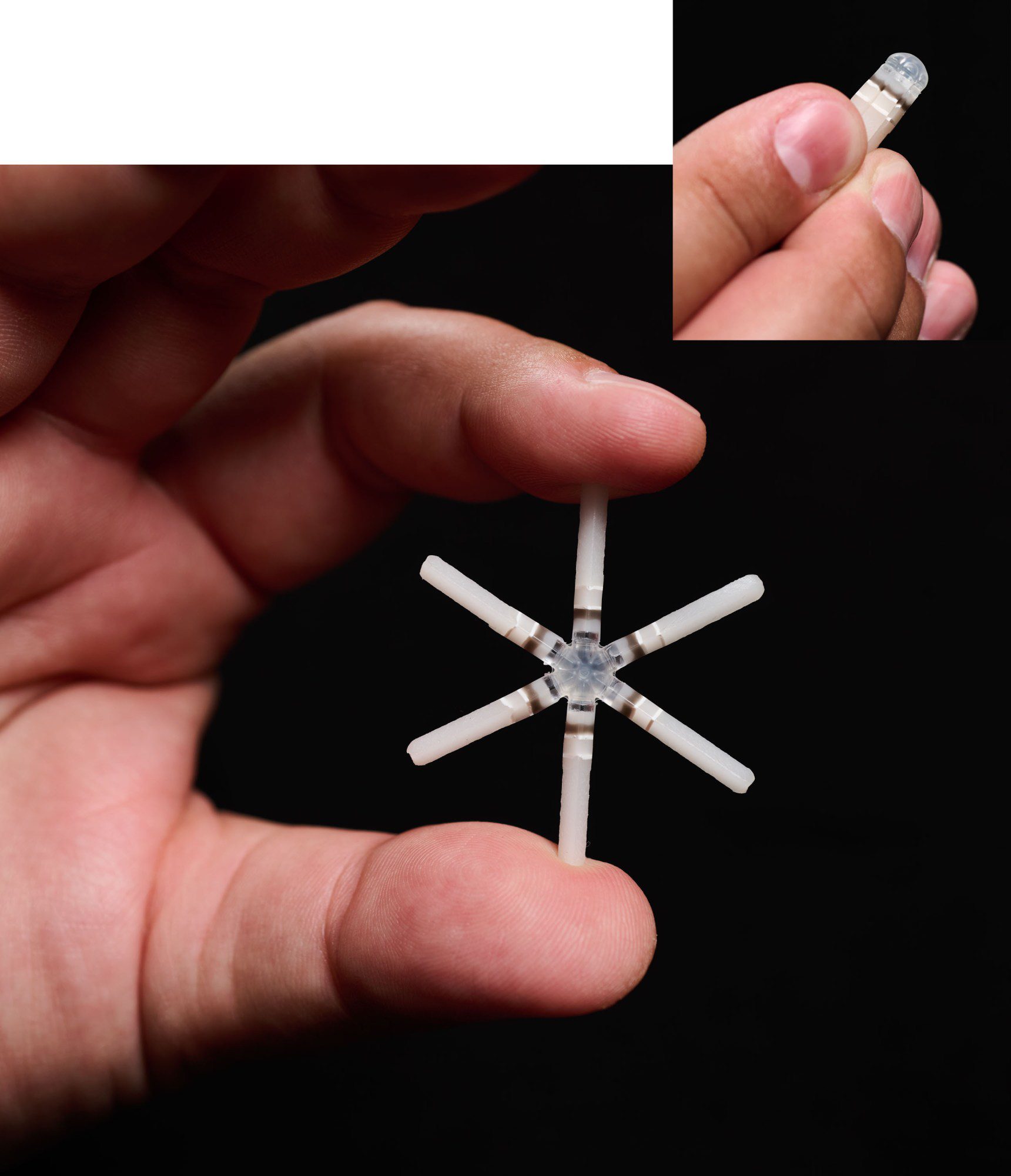
Traverso’s team has developed a suite of novel technologies: a star-shaped capsule that unfolds in the stomach and delivers drugs for days or weeks; a vibrating pill that mimics the feeling of fullness; the technology behind a once-a-week antipsychotic tablet that has completed phase III clinical trials. (See “Designing devices for real-world care,” below.) Traverso has cofounded 11 startups to carry such innovations out of the lab and into the world, each tailored to the technology and patient population it serves.

But the products are only part of the story. What distinguishes Traverso’s approach is the way those products are conceived and built. In many research groups, initial discoveries are developed into early prototypes and then passed on to other teams—sometimes in industry, sometimes in clinical settings—for more advanced testing and eventual commercialization. Traverso’s lab typically links those steps into one continuous system, blending invention, prototyping, testing, iteration, and clinical feedback as the work of a single interdisciplinary team. Engineers sit shoulder to shoulder with physicians, materials scientists with microbiologists. On any given day, a researcher might start the morning discussing an animal study with a veterinarian, spend the afternoon refining a mechanical design, and close the day in a meeting with a regulatory expert. The setup collapses months of back-and-forth between separate teams into the collaborative environment of L4TE.

“This is a lab where if you want to learn something, you can learn everything if you want,” says Troy Ziliang Kang, one of the research scientists. 

In a field where translating scientific ideas into practical applications can take years (or stall indefinitely), Traverso has built a culture designed to shorten that path.

The range of problems the lab tackles reflects its interdisciplinary openness. One recent project aimed to replace invasive contraceptive devices such as vaginal rings with a biodegradable injectable that begins as a liquid, solidifies inside the body, and dissolves safely over time. 

Another project addresses the challenge of delivering drugs directly to the gut, bypassing the mucus barrier that blocks many treatments. For Kang, whose grandfather died of gastric cancer, the work is personal. He’s developing devices that combine traditional drugs with electroceuticals—therapies that use electrical stimulation to influence cells or tissues.

“What I’m trying to do is find a mechanical approach, trying to see if we can really, through physical and mechanical approaches, break through those barriers and to deliver the electroceuticals and drugs to the gut,” he says.

In a field where the process of translating scientific ideas into practical applications can take years (or stall indefinitely), Traverso, 49, has built a culture designed to shorten that path. Researchers focus on designing devices with the clinical relevance to help people in the near term.  And they don’t wait for outsiders to take an idea forward. They often initiate collaborations with entrepreneurs, investors, and partners to create startups or push projects directly into early trials—or even just do it themselves. The projects in the L4TE Lab are ambitious, but the aim is simple: Solve problems that matter and build the tools to make those solutions real.

Nabil Shalabi, an instructor in medicine at Harvard/BWH, an associate scientist at the Broad Institute, and a research affiliate in Traverso’s lab, sums up the attitude succinctly: “I would say this lab is really about one thing, and it’s about helping people.”

The physician-inventor

Traverso’s path into medicine and engineering began far from the hospitals and labs where he works today. Born in Cambridge, England, he moved with his family to Peru when he was still young. His father had grown up there in a family with Italian roots; his mother came from Nicaragua. He spent most of his childhood in Lima before political turmoil in Peru led his family to relocate to Toronto when he was 14.

In high school, after finishing most of his course requirements early, he followed the advice of a chemistry teacher and joined a co-op program that would give him a glimpse of some career options. That decision brought him to a genetics lab at the Toronto Hospital for Sick Children, where he spent his afternoons helping map chromosome 7 and learning molecular techniques like PCR.

“In high school, and even before that, I always enjoyed science,” Traverso says.

After class, he’d ride the subway downtown and step into a world of hands-on science, working alongside graduate students in the early days of genomics.

“I really fell in love with the day-to-day, the process, and how one goes about asking a question and then trying to answer that question experimentally,” he says.

By the time he finished high school, he had already begun to see how science and medicine could intersect. He began an undergraduate medical program at Cambridge University, but during his second year, he reached out to the cancer biologist Bert Vogelstein and joined his lab at Johns Hopkins for the summer. The work resonated. By the end of the internship, Vogelstein asked if he’d consider staying to pursue a PhD. Traverso agreed, pausing his medical training after earning an undergraduate degree in medical sciences and genetics, and moved to Baltimore to begin a doctorate in molecular biology.

As a PhD student, he focused on the early detection of colon cancer, developing a method to identify mutations in stool samples—a concept later licensed by Exact Sciences and used in what is now known as the Cologuard test. After completing his PhD (and earning a spot on Technology Review’s 2003 TR35 list of promising young innovators for that work), he returned to Cambridge to finish medical school and spent the next three years in the UK, including a year as a house officer (the equivalent of a clinical intern in the US).

Traverso chose to pursue clinical training alongside research because he believed each would make the other stronger. “I felt that having the knowledge would help inform future research development,” he says.

inset image of a hand holding a capsule; main image the hand is holding a star shaped object
An ingestible drug-releasing capsule about the size of a multivitamin expands into a star shape once inside the patient’s stomach.
JARED LEEDS

So in 2007, as Traverso began a residency in internal medicine at Brigham and Women’s, he also approached MIT, where he reached out to Institute Professor Robert Langer, ScD ’74. Though Traverso didn’t have a background in Langer’s field of chemical engineering, he saw the value of pairing clinical insight with the materials science research happening in the professor’s lab, which develops polymers, nanoparticles, and other novel materials to tackle biomedical challenges such as delivering drugs precisely to diseased tissue or providing long-term treatment through implanted devices. Langer welcomed him into the group as a postdoctoral fellow.

In Langer’s lab, he found a place where clinical problems sparked engineering solutions, and where those solutions were designed with the patient in mind from the outset. Many of Traverso’s ideas came directly from his work in the hospital: Could medications be delivered in ways that make it easier for patients to take them consistently? Could a drug be redesigned so it wouldn’t require refrigeration in a rural clinic? And caring for a patient who’d swallowed shards of glass that ultimately passed without injury led Traverso to recognize the GI tract’s tolerance for sharp objects, inspiring his work on the microneedle pill.

“A lot of what we do and think about is: How do we make it easier for people to receive therapy for conditions that they may be suffering from?” Traverso says. How can they “really maximize health, whether it be by nutrient enhancement or by helping women have control over their fertility?” 

If the lab sometimes runs like a startup incubator, its founder still thinks like a physician.

Scaling up to help more people

Traverso has cofounded multiple companies to help commercialize his group’s inventions. Some target global health challenges, like developing more sustainable personal protective equipment (PPE) for health-care workers. Others take on chronic conditions that require constant dosing—HIV, schizophrenia, diabetes—by developing long-­acting oral or injectable therapies.

From the outset, materials, dimensions, and mechanisms are chosen for more than just performance in the lab. The researchers also consider the realities of regulation, manufacturing constraints, and safe use in patients.

“We definitely want to be designing these devices to be made of safe materials or [at a] safe size,” says James McRae, SM ’22, PhD ’25. “We think about these regulatory constraints that could come up in a company setting pretty early in our research process.” As part of his PhD work with Traverso, McRae created a “swallow-­and-forget” health-tracking capsule that can stay in the stomach for months—and it doesn’t require surgery to install, as an implant would. The capsule measures tiny shifts in stomach temperature that happen whenever a person eats or drinks, providing a continuous record of eating patterns that’s far more reliable than what external devices or self-reporting can capture. The technology could offer new insight into how drugs such as Ozempic and other GLP-1 therapies change behavior—something that has been notoriously hard to monitor. From “day one,” McRae made sure to involve external companies and regulatory consultants for future human testing.

Traverso describes the lab’s work as a “continuum,” likening research projects to children who are born, nurtured, and eventually sent into the world to thrive and help people.

Traverso and his team developed a device that can adhere to soft, wet surfaces. The design was inspired by studies of a sucker fish that attaches to sharks and other marine animals.
COURTESY OF THE RESEARCHERS

For lab employee Matt Murphy, a mechanical engineer who manages one of the main mechanical fabrication spaces, that approach is part of the draw. Having worked with researchers on projects spanning multiple disciplines—mechanical engineering, electronics, materials science, biology—he’s now preparing to spin out a company with one of Traverso’s postdocs. 

“I feel like I got the PhD experience just working here for four years and being involved in health projects,” he says. “This has been an amazing opportunity to really see the first stages of company formation and how the early research really drives the commercialization of new technology.”

The lab’s specialized “cores” ensure that projects have consistent support and can draw on plenty of expertise, regardless of how many students or postdocs come and go. If a challenge arises in an area in which a lab member has limited knowledge, chances are someone else in the lab has that background and will gladly help. “The culture is so collaborative that everybody wants to teach everybody,” says Murphy.

Creating opportunities 

In Traverso’s lab, members are empowered to pursue technically demanding research because the culture he created encourages them to stretch into new disciplines, take ownership of projects, and imagine where their work might go next. For some, that means cofounding a company. For others, it means leaving with the skills and network to shape their next big idea.

“He gives you both the agency and the support,” says Isaac Tucker, an L4TE postdoc based at the Broad Institute. “Gio trusts the leads in his lab to just execute on tasks.” McRae adds that Traverso is adept at identifying “pain points” in research and providing the necessary resources to remove barriers, which helps projects advance efficiently. 

A project led by Kimberley Biggs, another L4TE postdoc, captures how the lab approaches high-stakes problems. Funded by the Gates Foundation, Biggs is developing a way to stabilize therapeutic bacteria used for neonatal and women’s health treatments so they remain effective without refrigeration—critical for patients in areas without reliable temperature-controlled supply chains. A biochemist by training, she had never worked on devices before joining the lab, but she collaborated closely with the mechanical fabrication team to embed her bacterial therapy for conditions such as bacterial vaginosis and recurrent urinary tract infections into an intravaginal ring that can release it over time. She says Traverso gave her “an incredible amount of trust” to lead the project from the start but continued to touch base often, making sure there were “no significant bottlenecks” and that she was meeting all the goals she wanted to meet to progress in her career.

Traverso encourages collaboration by putting together project teams that combine engineers, physicians, and scientists from other fields—a strategy he says can be transformative. 

“If you only have one expert, they are constrained to what they know,” he explains. But “when you bring an electrical engineer together with a biologist or physician, the way that they’ll be able to see the problem or the challenge is very different.” As a result, “you see things that perhaps you hadn’t even considered were possible,” he says. Moving a project from a concept to a successful clinical trial “takes a village,” he adds. It’s a “complex, multi-step, multi-person, multi-year” process involving “tens if not hundreds of millions of dollars’ worth of effort.”

Good ideas deserve to be tested

The portion of Traverso’s lab housed at the “tough tech” incubator The Engine—and the only academic group working there—occupies a 30-bench private lab alongside shared fabrication spaces, heavy machinery, and communal rooms of specialized lab equipment. The combination of dedicated and shared resources has helped reduce some initial equipment expenses for new projects, while the startup-dense environment puts potential collaborators, venture capital, and commercialization pathways within easy reach. Biggs’s work on bacterial treatments is one of the lab’s projects at The Engine. Others include work to develop electronics for capsule-based devices and an applicator for microneedle patches.

Traverso’s philosophy is to “fail well and fail fast and move on.”

The end of one table houses “blue sky” research on a topic of long-standing interest to Traverso: pasta. Led by PhD student Jack Chen, the multi-pronged project includes using generative AI to help design new pasta shapes with superior sauce adhesion. Chen and collaborators ranging from executive chefs to experts in fluid dynamics apply the same analytical rigor to this research that they bring to medical devices. It’s playful work, but it’s also a microcosm of the lab’s culture: interdisciplinary to its core, unafraid to cross boundaries, and grounded in Traverso’s belief that good ideas deserve to be tested—even if they fail.

“I’d say the majority of things that I’ve ever been involved in failed,” he says. “But I think it depends on how you define failure.” He says that most of the projects he worked on for the first year and a half of his own PhD either just “kind of worked” or didn’t work at all—causing him to step back and take a different approach that ultimately led him to develop the highly effective technique now used in the Cologuard test. “Even if a hypothesis that we had didn’t work out, or didn’t work out as we thought it might, the process itself, I think, is valuable,” he says. So his philosophy is to “fail well and fail fast and move on.”

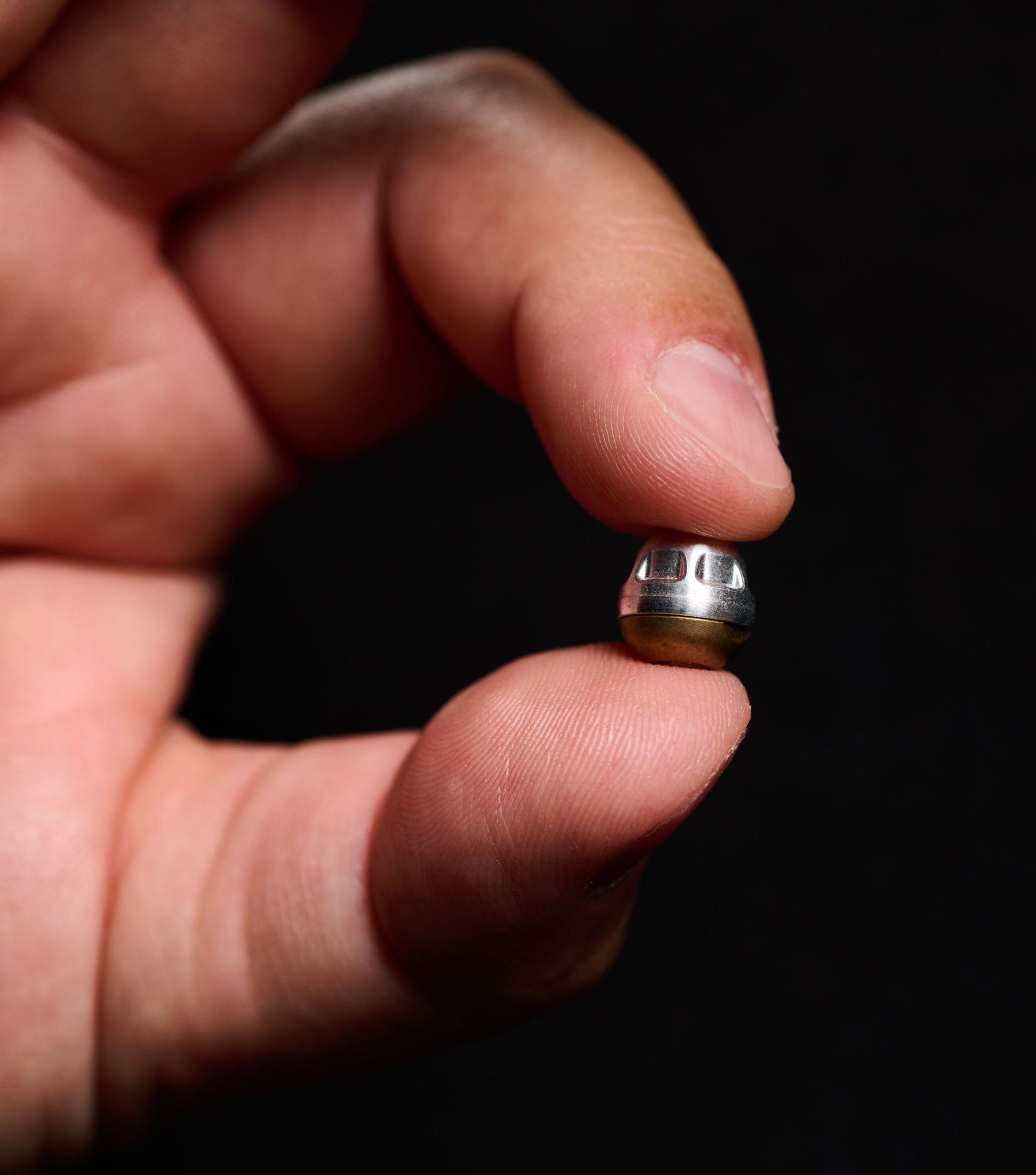
hand holding a spherical metal object
A tiny capsule that delivers a burst of medication directly into the GI tract offers an alternative to injections.
JARED LEEDS

In practice, that means encouraging students and postdocs to take on big, uncertain problems, knowing a dead end isn’t the end of their careers—just an opportunity to learn how to navigate the next challenge better.

McRae remembers when a major program—two or three years in the making—abruptly changed course after its sponsor shifted priorities. The team had been preparing a device for safety testing in humans; suddenly, the focus on that goal was gone. Rather than shelving the work, Traverso urged the group to use it as an opportunity to “be a little more creative again” and explore new directions, McRae says. That pivot sparked his work on an autonomous drug delivery system, opening lines of research the team hadn’t pursued before. In this system, patients swallow two capsules that interact in the stomach. When a sensor capsule detects an abnormal signal, it directs a second capsule to release a drug.

“He will often say, ‘I have a focus on not wasting time. Time is something that you can’t buy back. Time is something that you can’t save and bank for later.’”

Kimberley Biggs

“When things aren’t working, just make sure they didn’t work and you’re confident why they didn’t work,” Traverso says he tells his students. “Is it the biology? Is it the materials science? Is it the mechanics that aren’t just aligning for whatever reason?” He models that diagnostic mindset—and the importance of preserving momentum. 

“He will often say, ‘I have a focus on not wasting time. Time is something that you can’t buy back. Time is something that you can’t save and bank for later,’” says Biggs. “And so whenever you do encounter some sort of bottleneck, he is so supportive in trying to fix that.” 

Traverso’s teaching reflects the same interplay between invention, risk, and real-world impact. In Translational Engineering, one of his graduate-level courses at MIT, he invites experts from the FDA, hospitals, and startups to speak about the realities of bringing medical technology to the world.

“He shared his network with us,” says Murphy, who took the course while working in the lab. “Now that I’m trying to spin out a company, I can reach out to these people.” 

Although he now spends most of his time on research and teaching, Traverso maintains an inpatient practice at the Brigham, participating in the consult service—a team of gastroenterology fellows and medical students supervising patient care—for several weeks a year. Staying connected to patients keeps the problems concrete and helps guide decisions on which puzzles to tackle in the lab.

“I think there are certain puzzles in front of us, and I do gravitate to areas that have a solution that will help people in the near term,” he says.

For Traverso, the measure of success is not the complexity of the engineering but the efficacy of the result. The goal is always a therapy that works for the people who need it, wherever they are. 


Designing devices for real-world care 

A sampling of recent research from Traverso’s Lab for Translational Engineering

A mechanical adhesive device inspired by sucker fish sticks to soft, wet surfaces; it could be used to deliver drugs in the GI tract or to monitor aquatic environments. 

A pill based on Traverso’s technology that can be taken once a week gradually releases medication within the stomach. It’s designed for patients with conditions like schizophrenia, hypertension, and asthma who find it difficult to take medicine every day. 

A new delivery method for injectable drugs uses smaller needles and fewer shots. Drugs injected as a suspension of tiny crystals assemble into a “depot” under the skin that could last for months or years. 

A protein from tiny tardigrades, also known as “water bears,” could protect healthy cells from radiation damage during cancer treatments, reducing severe side effects that many patients find too difficult to tolerate. Injecting messenger RNA encoding this protein into mice produced enough to protect healthy cells.

An inflatable gastric balloon could be enlarged before a meal to prevent overeating and help people lose weight. 

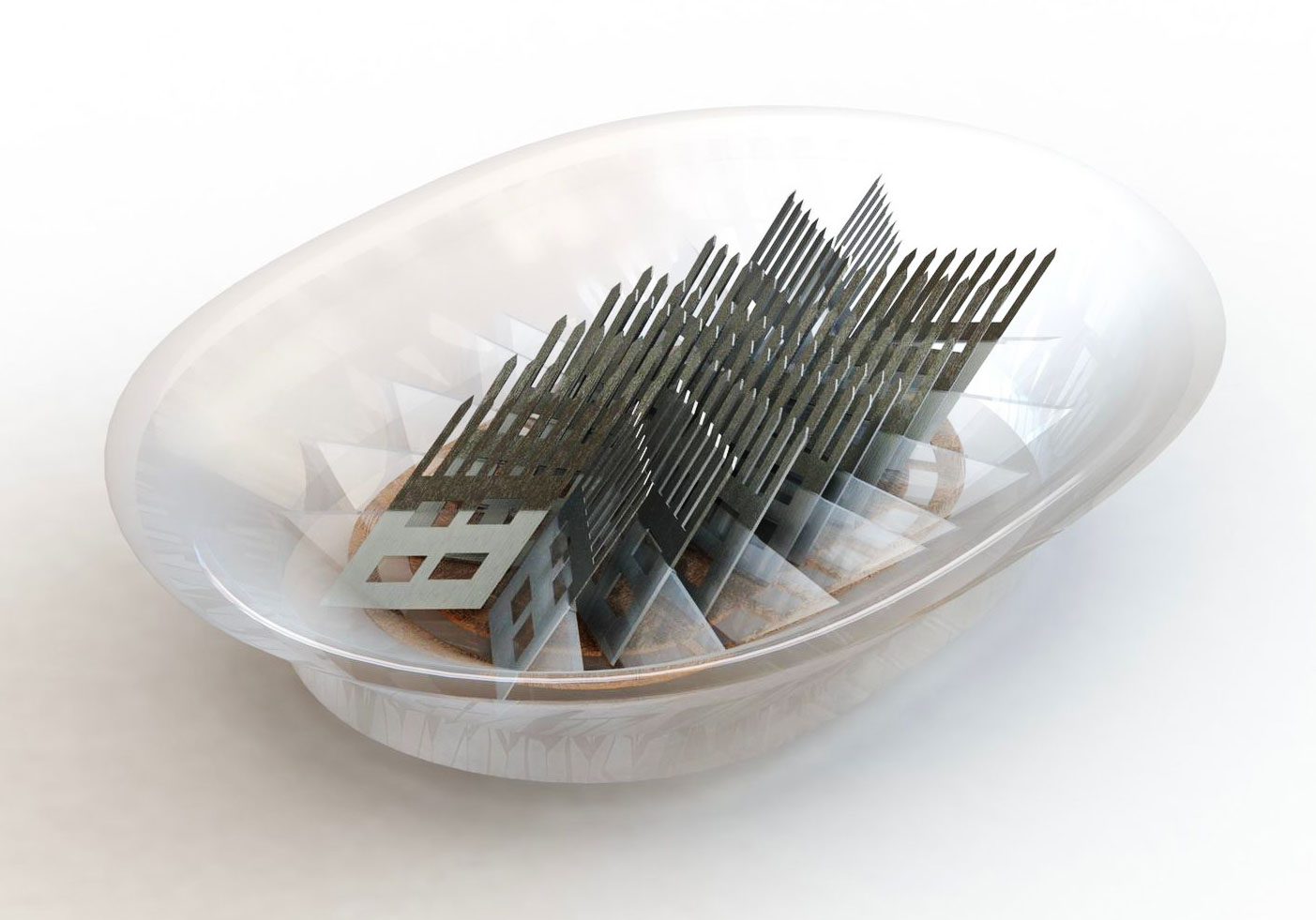
Inspired by the way squid use jets to shoot ink clouds, a capsule releases a burst of drugs directly into the GI tract. It could offer an alternative to injecting drugs such as insulin, as well as vaccines and therapies to treat obesity and other metabolic disorders.

An implantable sensor could reverse opioid overdoses. Implanted under the skin, it rapidly releases naloxone when an overdose is detected.

A screening device for cervical cancer offers a clear line of sight to the cervix in a way that causes less discomfort than a traditional speculum. It’s affordable enough for use in low- and middle-income countries.

Infinite folds

When Madonna Yoder ’17 was eight years old, she learned how to fold a square piece of paper over and over and over again. After about 16 folds, she held a bird in her hands.

The first time she pulled the tail of a flapping crane, she says, she realized: Oh, I folded this, and now it’s a toy

That first piece was an origami classic, folded by kids at summer camp for generations and many people’s first foray into the art form. Often, it’s also the last. But Yoder was transfixed. Soon she was folding everything she could find: paper squares from chain craft shops, scraps from around the house, the weekly church bulletin, which she would cut into pieces with the aid of her fingernails. She would then “turn those into little critters and give them to any guests that were there that week,” she says. 

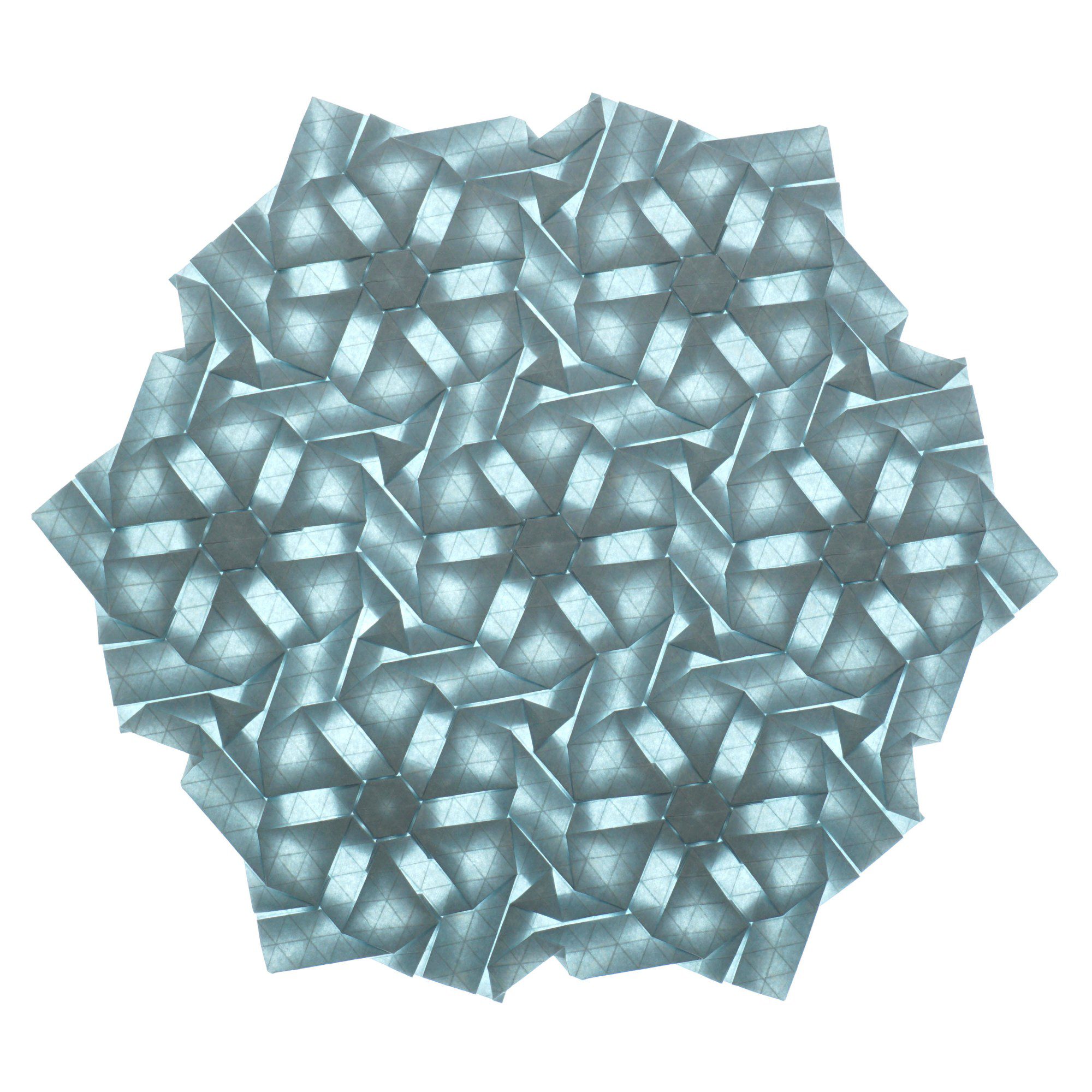
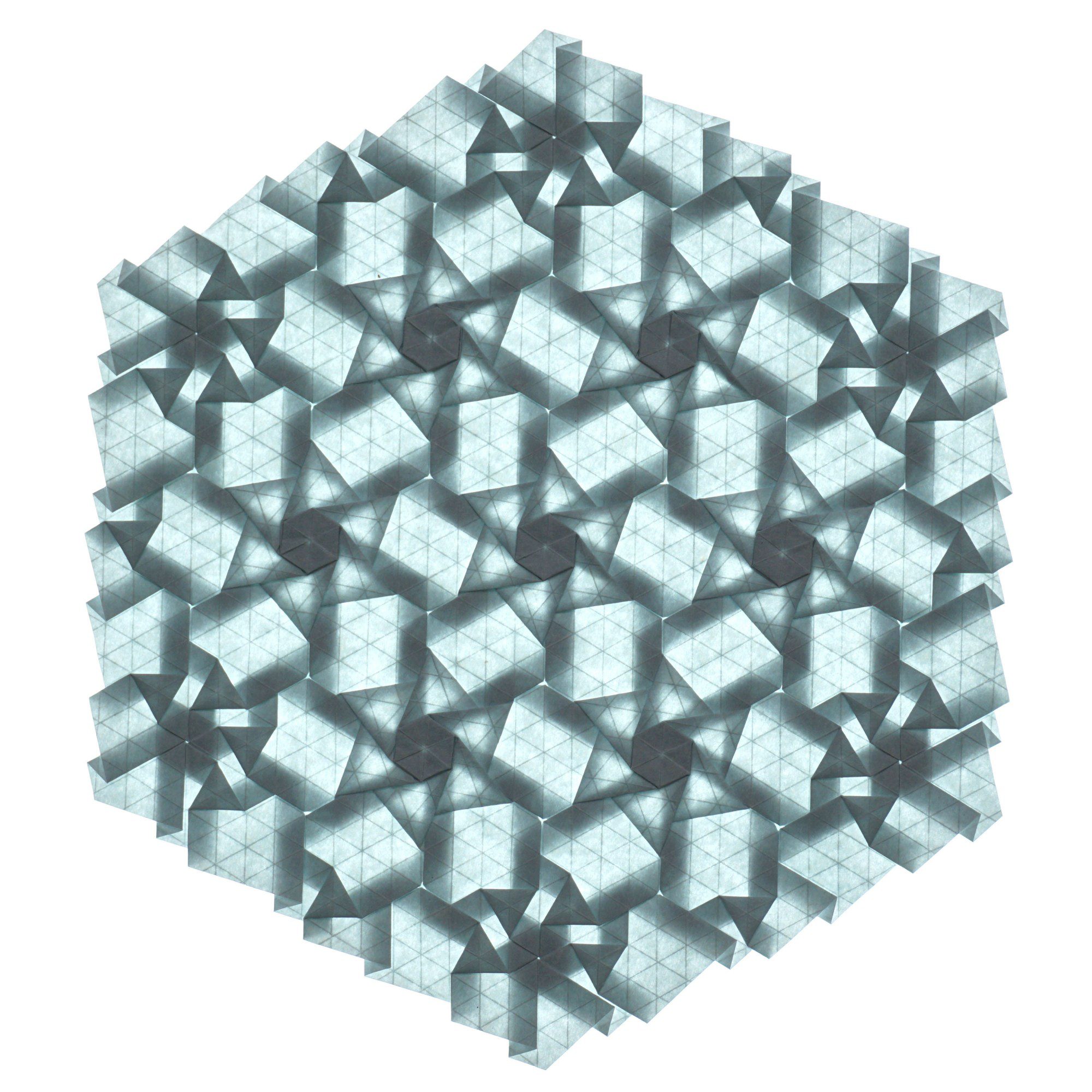
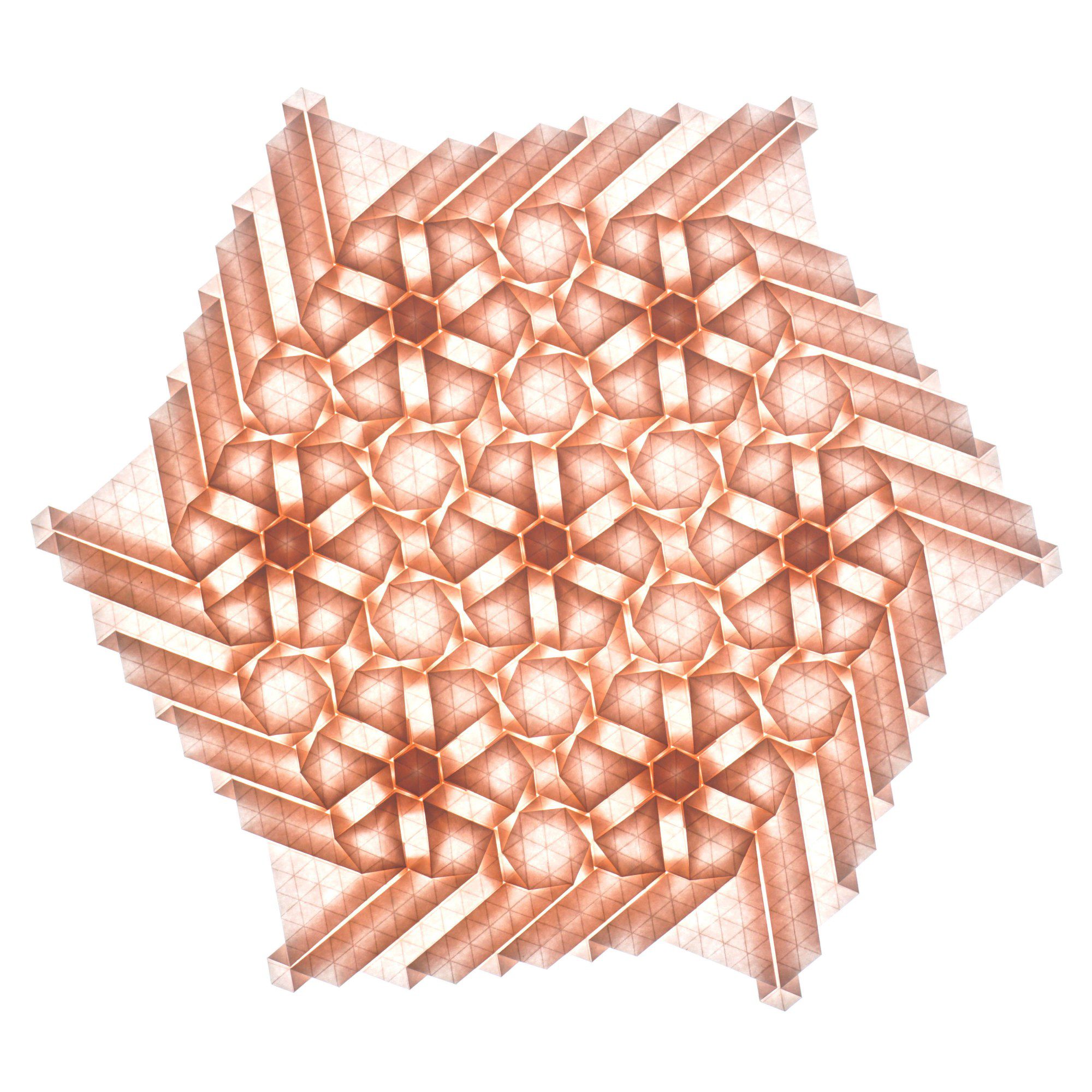
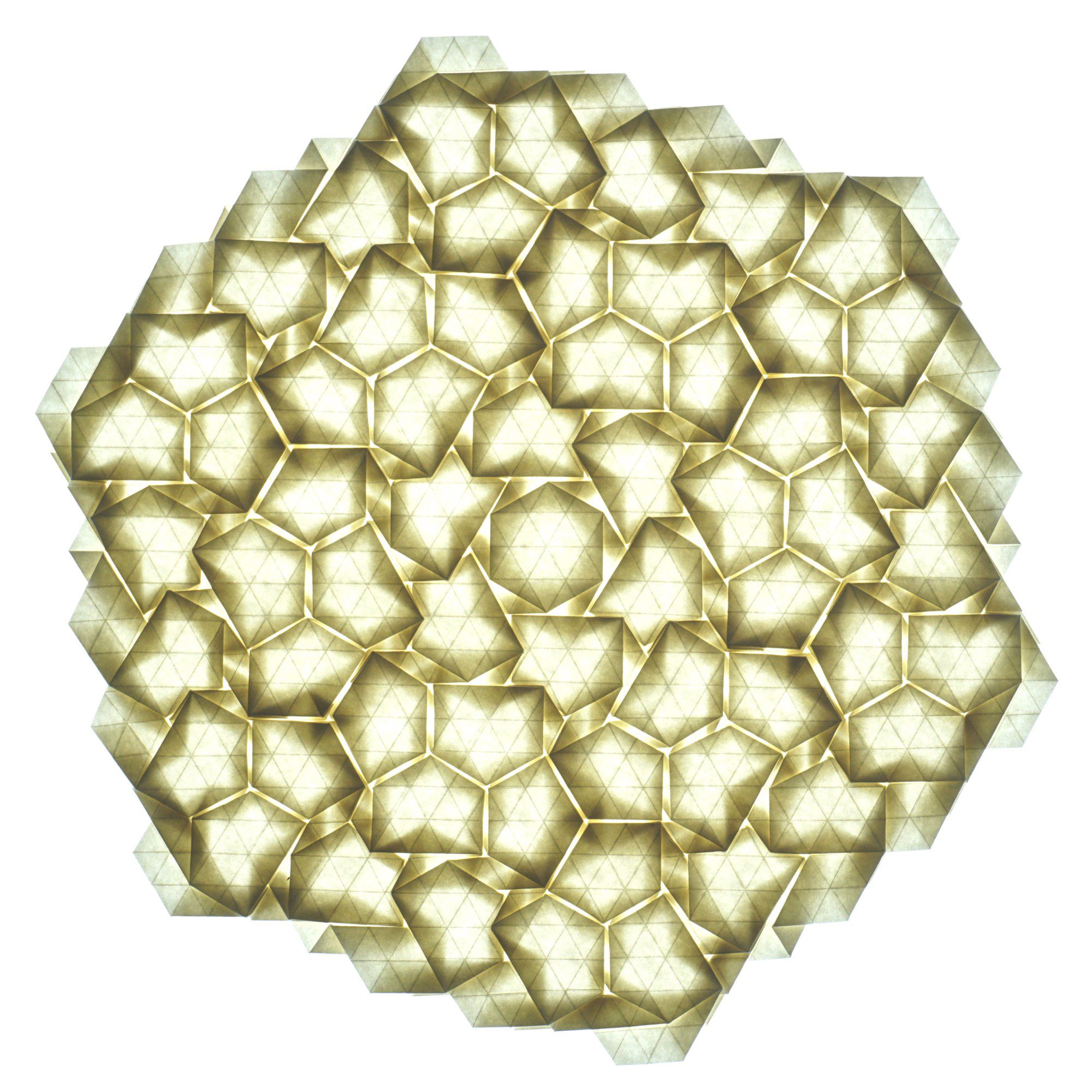
Today, perhaps millions of folds later, Yoder is a superstar known to some as the “Queen of Tessellations,” a reference to a mathematically intricate type of origami that she began exploring during her years at MIT. 

“These are patterns that can repeat infinitely and are folded on a single sheet of paper,” Yoder explains. “There’s literally no end to the patterns themselves, no end to the number of designs you can create … They’re folded by hand—I don’t know of any machine that could fold them—and they are a really great way to just sit and focus and relax.”

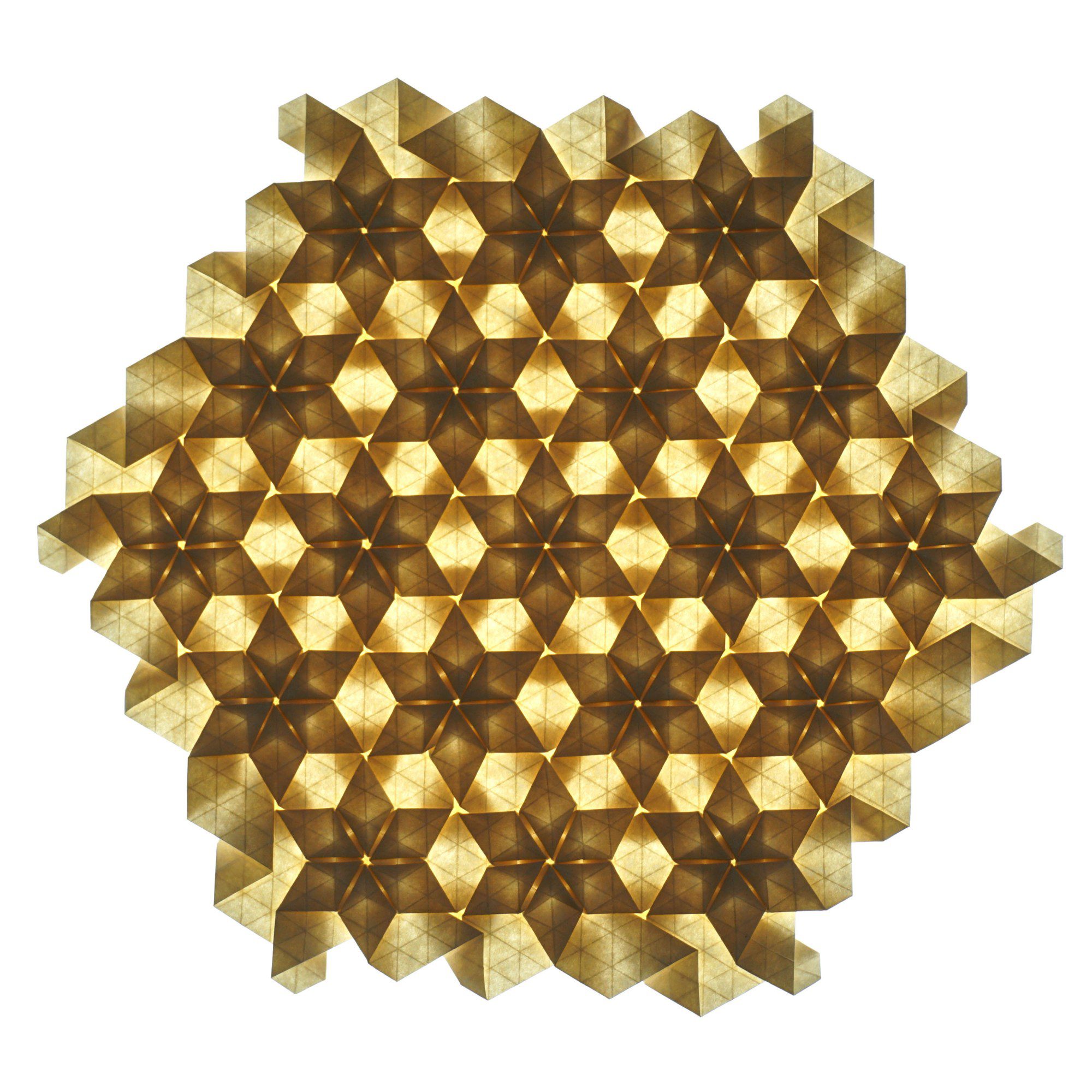
Her pieces have grown increasingly complex over time, but the patterns she creates are based on recognizable shapes, including hexagons, triangles, rhombuses, and trapezoids. Yoder folds and rotates them into repeating, potentially infinite series of shapes. Picture the graphic pattern in an M.C. Escher print, but made out of a single sheet of paper—a piece of art underpinned by mathematics and a bit of engineering, combined with the complexity of a snowflake. 

Yoder grew up in southwestern Virginia, in the Blue Ridge Mountain town of Shawsville, where professors from Virginia Tech filled the pews at her Mennonite church. “All of us kids were expected to go to college,” she says. After she made her way to MIT, her brother, Jake, earned his PhD in materials engineering at Virginia Tech and now works with 3D-printed metals. Her mother, Janet, is a physical therapist and her father, Denton, is a computer systems engineer at Virginia Tech.

From a young age, Yoder had an inclination for making things with her hands. “I was kind of that kid—I did all the different crafts. I did a lot of cross-stitch,” she says, including a portrait of her grandmother that now hangs framed in her kitchen. 

She also remembers an early appreciation for accuracy. “My mom tells the story about when I was five years old, we were cutting out squares, and I was like: ‘Mom, your squares are not precise enough,’” she says. 

Toward the end of her senior year of high school, Yoder won a math competition, which came with an apt prize: a book about modular origami, in which multiple sheets of paper are folded and combined into often elaborate structures. She took a gap year in Peru, where she continued to fold, giving little modular pieces away to children she met on her travels.

Yoder had always done paper folding in solitude, with guidance only from books. When she arrived at MIT after her time in Peru, she was surprised to learn about weekly origami gatherings and the annual convention held by the campus club OrigaMIT.

“It took until I got to MIT to realize that, oh, this is an active space where people are meeting up and designing things and talking to each other about origami all weekend,” she says. She majored in Earth, Atmospheric, and Planetary Sciences (EAPS), but in the spring of her senior year, she took Erik Demaine’s popular class Geometric Folding Algorithms—and discovered that “origami research was something that people got paid to do,” as she puts it. Her final project for the class became a poster presentation at the 7th International Meeting on Origami in Science, Mathematics, and Education (7OSME). “In that course, I got hooked on origami research,” Yoder says.

Demaine remembers that Yoder started to explore concepts related to tessellations in his class, which eventually led to the publication of her first paper—“Folding Triangular and Hexagonal Mazes,” coauthored with him and Jason Ku, then a lecturer at MIT. In that paper, Yoder helped demonstrate how to “generalize” a square grid maze to triangular and hexagonal grids by changing the underlying crease pattern. “We probably suggested this as an interesting open problem for people to work on, and Madonna found a really happy niche there,” says Demaine, who isn’t aware of any other former students pursuing careers in origami. “We provided the space for her to do the research, but then she went whole hog on it.” 

But she didn’t truly embrace tessellations until after she graduated and was preparing for a four-and-a-half-month MIT-sponsored internship in Israel. “These modulars have a lot of volume—I’m not going to bring back a suitcase full of them,” she remembers thinking. And she wasn’t going to leave behind four-plus months of folding work. “So I decided to teach myself to fold tessellations because they’re flat and travel well,” she says.  “Then it took root in my brain and never let me go.”

But there was the practical matter of making a living.

Origami principles have been used to conceive of and develop a wide range of things, from the tiny (think medical instruments or nanoscale devices that can deliver DNA into cells) to the large (such as collapsible structures usable in disaster response or foldable solar arrays for space exploration). Yoder figured if she wanted to pursue origami as a career, she would have to do it as a scientist or engineer.

But after reverse-engineering hundreds of origami patterns she found online—and starting to design her own—she began to suspect otherwise. “I realized it’s actually possible to make a living as an origami artist,” she remembers. “I won’t say that now, five years out from that decision, I’ve reached a point of being able to fully financially support myself with origami, but thankfully, I married a software engineer.” (She met her husband, Manny Meraz-Rodriguez, while the two were working at the Lawrence Livermore National Laboratory, she as an intern and then as a postcollege appointee in computational geoscience.)

Origami purists will say that true origami requires no cuts, no glue. The only slicing Yoder does is with a rotary cutter she uses to make hexagonal pieces of paper, stacks at a time. Though she starts with squares sometimes, the hexagon is her favored launching pad. She creases the paper into a grid, and then—­following a design that she’s created using a vector graphics program called Inkscape—begins to fold.

“The main reason why I draw the patterns out first, besides the fact that the designs have gotten too complicated for me to hold in my brain and solve on the fly, is because I like to have the pattern rotated so that the repeats of the pattern align with the edge, which you can only do if you have the information of how the repeats of the pattern line up with the background grid,” she explains. 

Using a simple tool called a bone folder (Yoder says she’s had hers for years and could pick it out of a pile by the wear pattern), she presses and creases and rotates the paper into an elaborate pattern that could, in theory, go on forever. The end result is a beautiful, satisfyingly symmetrical array of repeated, interlocking shapes that look especially impressive when held up to the light, bringing to mind a stained-glass window.

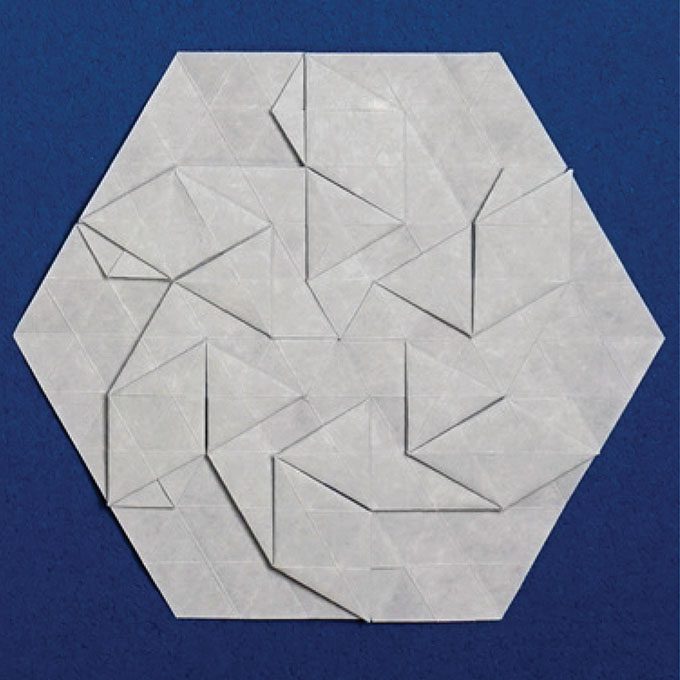
folded shape
Scroll down to learn how to fold this Dancing Ribbons tessellation created by Yoder.

Scholars debate whether the ancient tradition of origami began in Japan or China, but the art really took off globally in the 1950s and ’60s when publishers printed and mass-marketed diagrams showing people how to fold paper into figurative objects such as birds, fish, and animals. Paper tessellations have roots in Germany in the 1920s, when the artist Josef Albers added folding to his introductory design course at the Bauhaus. This geometric tradition started gaining popularity in the 1980s and 1990s, and now, Yoder says, there are perhaps tens of thousands of people who participate. The broader universe of origami practitioners likely numbers in the millions.

These aficionados attend conferences, watch YouTube videos, and take online courses, most of them to learn existing patterns. Yoder creates her own: In addition to the peer-­reviewed academic papers she’s authored on the mathematical underpinnings of her tessellations (with titles like “Symmetry Requirements and Design Equations for Origami Tessellations” and “Hybrid Hexagon Twist Interface”) and regular presentations at origami conferences across the globe, she’s designed 696 original patterns. Each year in an event she calls Advent of Tess, she teaches thousands of online participants a new design every day of December leading up to Christmas, and her website, Gathering Folds, has become a go-to source, not just for Yoder’s artwork but for instruction. 

Her EAPS degree from MIT may not seem like a foundation for a career as an artist, but Yoder, who studied geology with a secondary focus on ecology, says there are connections between the fields. “There is a lot of carryover between the crystal structures and the tessellation symmetries,” she explains. “Every repeating 2D pattern obeys one of the planar symmetry groups … There are things that repeat like a hexagon, things that repeat like a square, things that repeat like a triangle, and things that repeat like a parallelogram or rectangle. And then there are things that are not rotationally symmetric. Those ideas of how things connect and how things repeat definitely carry over from my crystallography class.”

Yoder cites the origami artist and physicist Robert Lang as one of the current practitioners who influenced her the most. He, like Yoder, has a math and science background but forged a career in art. 

“The thing that has set her above the current crowd is that she’s really systematically explored the building blocks of tessellations and the different little patterns that can be considered building blocks, and the rules for connecting these blocks,” he explains. “Madonna’s knowledge and understanding of mathematics and geometry gives her a broader tool kit to create art, and that’s led to her success as an artist. You can’t separate the art from the science background. It’s part of the thinking process, even if the end goal is very much in the fine art world.”

For Yoder, the process, both computational and tactile, is also an end in itself. It is almost a meditation—a way to slow down and contemplate. Some of her students have even suggested there might be a spiritual component to it. One said to her: “You know, the name for that connection to infinite things is called God, right?”

“So I kind of leave that more open,” she says. “I’m not super decided about what these things mean. I’m just happy to have that spark when I’m designing a pattern: Here’s how the shapes hang together, and now that I’ve drawn out those shapes, I can copy and paste, paste, paste, paste, paste, and it just clicks in very satisfyingly.”

Yoder has considered whether she will ever get bored pursuing the possibilities of infinite patterns—whether she will achieve perfection and decide to put the bone folder away for good.

“But I’m not convinced that I will,” she says. “There are always ways to make it harder and harder.”

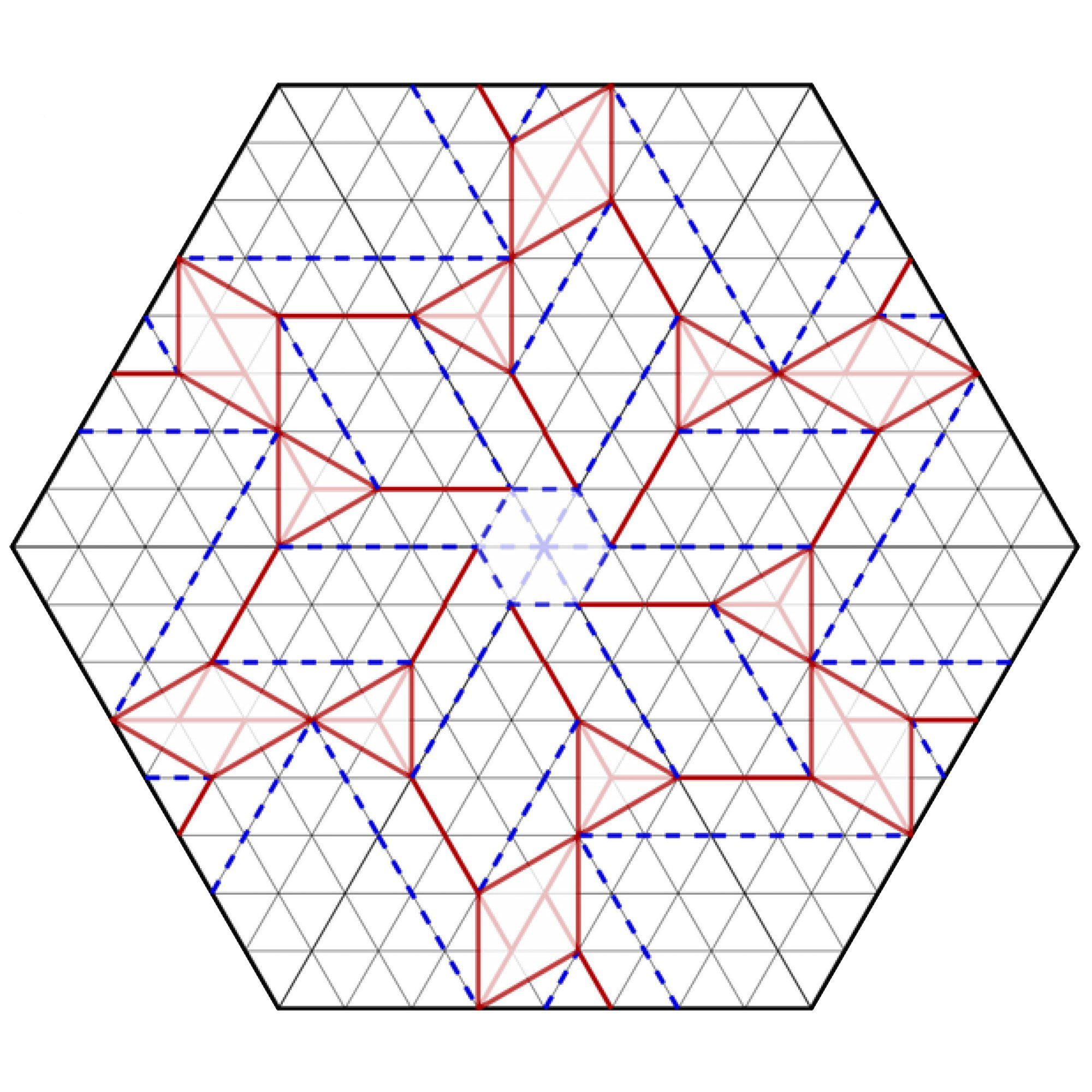
diagram of origami pattern
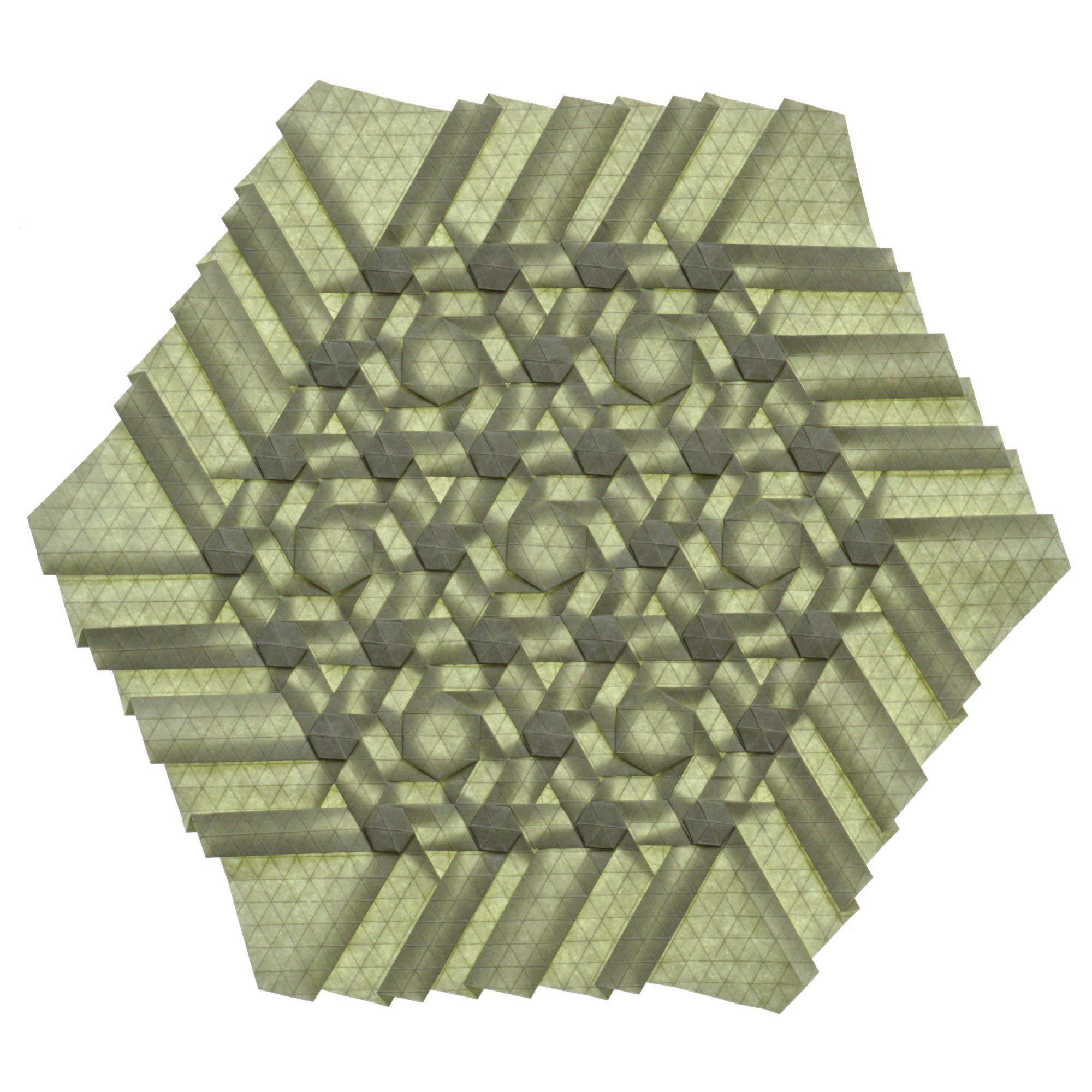
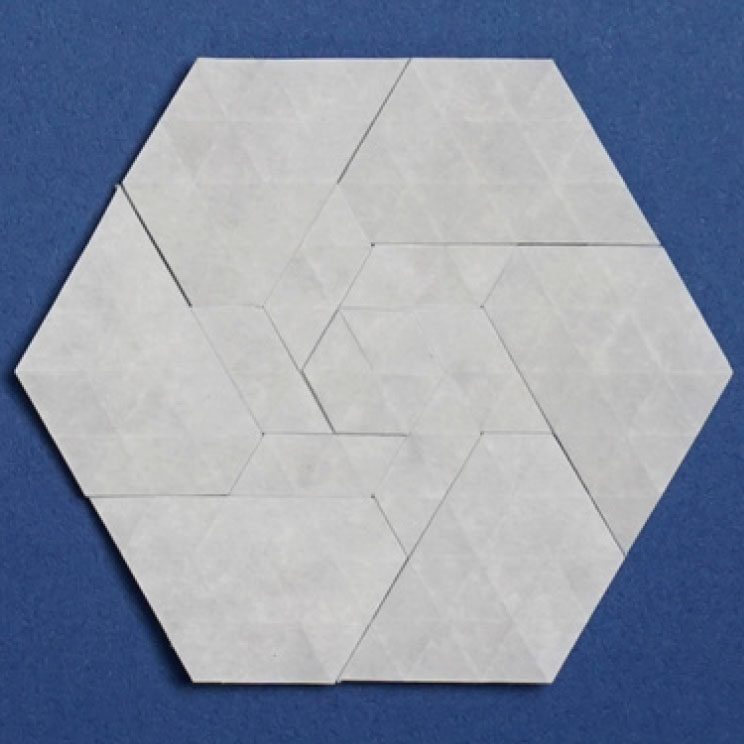
example of folded pattern


Fold it yourself

Try your hand at folding Madonna Yoder’s Dancing Ribbons tessellation design featuring three closed twists: hexagon, triangle, and rhombus.

Basic instructions

1. Download the pattern here and cut out the hexagon with the crease pattern.

2. Fold all the background grid lines, making sure to fold them back and forth so the paper is ready to form the pattern. (You can precrease all the off-grid folds too, but Yoder recommends folding one twist at a time.) This pattern shows mountain folds with solid red lines and valley folds with dashed blue lines. The faded lines inside the twists are helper folds used to set up the twists; they will not be used in the final pattern.

3. Working from the side without the pattern, fold the central hexagon.

4. Fold the triangles.

5. Fold the rhombuses.

Find more detailed instructions and a video tutorialas well as paper adviceat technologyreview.com/tessellation

You can also sign up for Yoder’s annual Advent of Tessa 25-day folding challenge that begins December 1at  https://training.gatheringfolds.com/advent.