What if computer history were a romantic comedy?

The computer first appeared on the Broadway stage in 1955 in a romantic comedy—William Marchant’s The Desk Set. The play centers on four women who conduct research on behalf of the fictional International Broadcasting Company. Early in the first act, a young engineer named Richard Sumner arrives in the offices of the research department without explaining who he is or why he is studying the behavior of the workers. Bunny Watson, the head of the department, discovers that the engineer plans to install an “electronic brain” called Emmarac, which Sumner affectionately refers to as “Emmy” and describes as “the machine that takes the pause quotient out of the work–man-hour relationship.”

What Sumner calls the “pause quotient” is jargon for the everyday activities and mundane interactions that make human beings less efficient than machines. Emmarac would eliminate inefficiencies, such as walking to a bookshelf or talking with a coworker about weekend plans. Bunny Watson comes to believe that the computing machine will eliminate not only inefficiencies in the workplace but also the need for human workers in her department. Sumner, the engineer, presents the computer as a technology of efficiency, but Watson, the department head, views it as a technology of displacement.

Bunny Watson’s view was not uncommon during the first decade of computing technology. Thomas Watson Sr., president of IBM, insisted that one of his firm’s first machines be called a “calculator” instead of a “computer” because “he was concerned that the latter term, which had always referred to a human being, would raise the specter of technological unemployment,” according to historians Martin Campbell-Kelly and William Aspray. In keeping with the worry of both Watsons, the computer takes the stage on Broadway as a threat to white-collar work. The women in Marchant’s play fight against the threat of unemployment as soon as they learn why Sumner has arrived. The play thus attests to the fact that the very benefits of speed, accuracy, and information processing that made the computer useful for business also caused it to be perceived as a threat to the professional-managerial class.

Comedy provides a template for managing the incongruity of an “electronic brain” arriving in a space oriented around human expertise and professional judgment.

This threat was somewhat offset by the fact that for most of the 1950s, the computing industry was not profitable in the United States. Manufacturers produced and sold or leased the machines at steep losses, primarily to preserve a speculative market position and to bolster their image as technologically innovative. For many such firms, neglecting to compete in the emerging market for computers would have risked the perception that they were falling behind. They hoped computing would eventually become profitable as the technology improved, but even by the middle of the decade, it was not obvious to industry insiders when this would be the case. Even if the computer seemed to promise a new world of “lightning speed” efficiency and information management, committing resources to this promise was almost prohibitively costly.

While firms weighed the financial costs of computing, the growing interest in this new technology was initially perceived by white-collar workers as a threat to the nature of managerial expertise. Large corporations dominated American enterprise after the Second World War, and what historian Alfred Chandler called the “visible hand” of managerial professionals exerted considerable influence over the economy. Many observers wondered if computing machines would lead to a “revolution” in professional-managerial tasks. Some even speculated that “electronic brains” would soon coordinate the economy, thus replacing the bureaucratic oversight of most forms of labor. 

Howard Gammon, an official with the US Bureau of the Budget, explained in a 1954 essay that “electronic information processing machines” could “make substantial savings and render better service” if managers were to accept the technology. Gammon advocated for the automation of office work in areas like “stock control, handling orders, processing mailing lists, or a hundred and one other activities requiring the accumulating and sorting of information.” He even anticipated the development of tools for “erect[ing] a consistent system of decisions in areas where ‘judgment’ can be reduced to sets of clear-cut rules such as (1) ‘purchase at the lowest price,’ or (2) ‘never let the supply of bolts fall below the estimated one-week requirement for any size or type.’”

Gammon’s essay illustrates how many administrative thinkers hoped that computers would allow upper-level managers to oversee industrial production through a series of unambiguous rules that would no longer require midlevel workers for their enactment. 

This fantasy was impossible in the 1950s for so many reasons, the most obvious being that only a limited number of executable processes in postwar managerial capitalism could be automated through extant technology, and even fewer areas of “judgment,” as Gammon called them, can be reduced to sets of clear-cut rules. Still, this fantasy was part of the cultural milieu when Marchant’s play premiered on Broadway, one year after Gammon’s report and just a few months after IBM had announced the advance in memory storage technology behind its new 705 Model II, the first successful commercial data-processing machine. IBM received 100 orders for the 705, a commercial viability that seemed to signal the beginning of a new age in American corporate life.

It soon became clear, however, that this new age was not the one that Gammon imagined. Rather than causing widespread unemployment or the total automation of the visible hand, the computer would transform the character of work itself. Marchant’s play certainly invokes the possibility of unemployment, but its posture toward the computer shifts toward a more accommodative view of what later scholars would call the “computerization of work.” For example, early in the play, Richard Sumner conjures the specter of the machine as a threat when he asks Bunny Watson if the new electronic brains “give you the feeling that maybe—just maybe—that people are a little bit outmoded.” Similarly, at the beginning of the second act, a researcher named Peg remarks, “I understand thousands of people are being thrown out of work because of these electronic brains.” The play seems to affirm Sumner’s sentiment and Peg’s implicit worry about her own unemployment once the computer, Emmarac, has been installed in the third act. After the installation, Sumner and Watson give the machine a research problem that previously took Peg several days to complete. Watson expects the task to stump Emmarac, but the machine takes only a few seconds to produce the same answer.

While such moments conjure the specter of “technological unemployment,” the play juxtaposes Emmarac’s feats with Watson’s wit and spontaneity. For instance, after Sumner suggests people may be “outmoded,” Watson responds, “Yes, I wouldn’t be a bit surprised if they stopped making them.” Sumner gets the joke but doesn’t find it funny: “Miss Watson, Emmarac is not a subject for levity.” The staging of the play contradicts Sumner’s assertion. Emmarac occasions all manner of levity in The Desk Set, ranging from Watson’s joke to Emmarac’s absurd firing of every member of the International Broadcasting Company, including its president, later in the play. 

This shifting portrayal of Emmarac follows a much older pattern in dramatic comedy. As literary critic Northrop Frye explains, many forms of comedy follow an “argument” in which a “new world” appears on the stage and transforms the society entrenched at the beginning of the play. The movement away from established society hinges on a “principle of conversion” that “include[s] as many people as possible in its final society: the blocking characters are more often reconciled or converted than simply repudiated.”

We see a similar dynamic in how Marchant’s play portrays the efficiency expert as brusque, rational, and incapable of empathy or romantic interests. After his arrival in the office, a researcher named Sadel says, “You notice he never takes his coat off? Do you think maybe he’s a robot?” Another researcher, Ruthie Saylor, later kisses Sumner on the cheek and invites him to a party. He says, “Sorry, I’ve got work to do,” to which Ruthie responds, “Sadel’s right—you are a robot!” 

Even as Sumner’s robotic behavior portrays him as antisocial, Emmarac further isolates him from the office by posing a threat to the workers. The play accentuates this blocking function by assigning Emmarac a personality and gender: Sumner calls the machine “Emmy,” and its operator, a woman named Miss Warriner, describes the machine as a “good girl.” By taking its place in the office, Emmarac effectively moves into the same space of labor and economic power as Bunny Watson, who had previously overseen the researchers and their activities. After being installed in the office, the large mainframe computer begins to coordinate this knowledge work. The gendering of the computer thus presents Emmarac as a newer model of the so-called New Woman, as if the computer imperils the feminist ideal that Bunny Watson clearly embodies. By directly challenging Watson’s socioeconomic independence and professional identity, the computer’s arrival in the workplace threatens to make the New Woman obsolete. 

Yet much like Frye’s claims about the “argument” of comedy, the conflict between Emmarac and Watson resolves as the machine transforms from a direct competitor into a collaborator. We see this shift during a final competition between Emmarac and the research department. The women have been notified that their positions have been terminated, and they begin packing up their belongings. Two requests for information suddenly arrive, but Watson and her fellow researchers refuse to process them because of their dismissal, so Warriner and Sumner attempt to field the requests. The research tasks are complicated, and Warriner mistakenly directs Emmarac to print a long, irrelevant answer. The machine inflexibly continues although the other inquiry needs to be addressed. Sumner and Warriner try to stop the machine, but this countermanding order causes the machine’s “magnetic circuit” to emit smoke and a loud noise. Sumner yells at Warriner, who runs offstage, and the efficiency expert is now the only one to field the requests and salvage the machine. However, he doesn’t know how to stop Emmarac from malfunctioning. Marchant’s stage directions here say that Watson, who has studied the machine’s maintenance and operation, “takes a hairpin from her hair and manipulates a knob on Emmarac—the NOISE obligingly stops.” Watson then explains, “You forget, I know something about one of these. All that research, remember?”

The madcap quality of this scene continues after Sumner discovers that Emmarac’s “little sister” in the payroll office has sent pink slips to every employee at the broadcasting firm. Sumner then receives a letter containing his own pink slip, which prompts Watson to quote Horatio’s lament as Hamlet dies: “Good night, sweet prince.” The turn of events poses as tragedy, but of course it leads to the play’s comic resolution. Once Sumner discovers that the payroll computer has erred—or, at least, that someone improperly programmed it—he explains that the women in the research department haven’t been fired. Emmarac, he says, “was not meant to replace you. It was never intended to take over. It was installed to free your time for research—to do the daily mechanical routine.”

Even as Watson “fixes” the machine, the play fixes the robotic man through his professional failures. After this moment of discovery, Sumner apologizes to Watson and reconciles with the other women in the research department. He then promises to take them out to lunch and buy them “three martinis each.” Sumner exits with the women “laughing and talking,” thus reversing the antisocial role that he has occupied for most of the play.

Emmarac’s failure, too, becomes an opportunity for its conversion. It may be that a programming error led to the company-wide pink slips, but the computer’s near-breakdown results from its rigidity. In both cases, the computer fails to navigate the world of knowledge work, thus becoming less threatening and more absurd through its flashing lights, urgent noises, and smoking console. This shift in the machine’s stage presence—the fact that it becomes comic—does not lead to its banishment or dismantling. Rather, after Watson “fixes” Emmarac, she uses it to compute a final inquiry submitted to her office: “What is the total weight of the Earth?” Given a problem that a human researcher “can spend months finding out,” she chooses to collaborate. Watson types out the question and Emmarac emits “its boop-boop-a-doop noise” in response, prompting her to answer, “Boop-boop-a-doop to you.” Emmarac is no longer Watson’s automated replacement but her partner in knowledge work.

In Marchant’s play, comedy provides a template for managing the incongruity of an “electronic brain” arriving in a space oriented around human expertise and professional judgment. This template converts the automation of professional-­managerial tasks from a threat into an opportunity, implying that a partnership with knowledge workers can convert the electronic brain into a machine compatible with their happiness. The computerization of work thus becomes its own kind of comic plot. 


Benjamin Mangrum is an associate professor of literature at MIT. This excerpt is from his new book, The Comedy of Computation: Or, How I Learned to Stop Worrying and Love Obsolescence, published by Stanford University Press, ©2025 by Benjamin Mangrum. All rights reserved. 

An intelligent, practical path to reindustrialization

This past spring, we launched a brand-new manufacturing initiative—building on ideas that are as old as MIT. Since William Barton Rogers created a school to help accelerate America’s industrialization, manufacturing has been an essential part of our mission—a particularly MIT brand of manufacturing, informed and improved by scientific principles and advanced by the kind of hands-on leaders Rogers designed MIT to train.

In the 1980s, the Institute’s “Made in America” study opened with the enduring observation “To live well, a nation must produce well.” Along with The Machine That Changed the World, the 1990 book that told the story of “lean production,” this landmark report helped US manufacturers understand and successfully compete with Japan’s quality model. 

Then, a little over a decade ago, MIT’s “Production in the Innovation Economy” initiative highlighted the opportunities we miss if design and manufacturing teams are miles or even oceans apart—and played a significant role in shaping the nation’s Advanced Manufacturing Initiative.

Building on this legacy, and in response to an urgent national interest in restoring America’s manufacturing strength, an inspired group of MIT faculty came together in 2022 to found the Manufacturing@MIT Working Group. They explored new ways to marshal MIT’s expertise in technology, the social sciences, and management to forge an intelligent, practical path to reindustrialization.

As a result of this group’s foundational work, we’ve now created the MIT Initiative for New Manufacturing (INM),which will join the ranks of our other Presidential Initiatives—all designed to help the people of MIT come together in new ways to accelerate our progress and increase our impact. 

To help make manufacturing more productive, resilient, and sustainable, we aim to do the following:

 –Work with firms big and small to help them adopt new approaches for increased productivity.

  –Design high-quality, human-centered jobs that bring new life to communities across the country. 

  –Re-elevate manufacturing in MIT’s own curriculum—and provide pathways for people outside MIT to gain the skills to transform their own prospects and fuel a “new manufacturing” economy.

  –Reimagine manufacturing technologies and systems to advance fields like energy production, health care, computing, transportation, consumer products, and more. 

  –Tackle such challenges as making supply chains more resilient and informing public policy to foster a broad, healthy manufacturing ecosystem that can drive decades of innovation and growth.

If all this sounds ambitious—it is. And these are just the highlights! But I’m convinced that there is no more important work we can do right now to meet the moment and serve the nation. 

Art rhymes

As an MIT visiting scholar, rap legend Lupe Fiasco decided to go fishing for ideas on campus. In an approach he calls “ghotiing” (pronounced “fishing”), he composed nine raps inspired by works in MIT’s public art collection, writing and recording them on site. On May 2, he and the MIT Festival Jazz Ensemble debuted six of them, performing in front of a packed audience in Kresge for the final performance of the MIT Artfinity festival. The concert featured arrangements of Fiasco’s music done by Kevin Costello ’21, grad student Matthew Michalek, students in Fiasco’s Rap Theory and Practice class, and professor Evan Ziporyn. Produced in collaboration with the MIT List Visual Arts Center, Fiasco’s “Ghotiing MIT: Public Art” project also lets campus visitors scan a QR code and listen to his site-specific raps on their phones as they view the artworks in person.  

Click here to go on a virtual tour of seven pieces from MIT’s public art collection as you listen to Lupe Fiasco’s raps inspired by each piece.

WBUR’s coverage of the project is available here and you can also read more about it in the Boston Globe and The Guardian.

CAROLINE ALDEN

CAROLINE ALDEN

CAROLINE ALDEN
More news from the labs of MIT

Hundred-year storm tides could strike every decade in Bangladesh

Tropical cyclones can generate devastating storm tides—seawater heightened by the tides that causes catastrophic floods in coastal regions. An MIT study finds that as the planet warms, the recurrence of destructive storm tides will increase tenfold for one of the world’s hardest-hit regions.

New electronic “skin” could lead to lightweight night-vision glasses 

MIT engineers have developed a technique to grow and peel ultrathin “skins” of electronic material that could be used in wearable sensors, flexible transistors and computing elements, and sensitive compact imaging devices.

Technology makes pesticides stick to plant leaves

A new pesticide application system developed by MIT researchers and their spinoff company could significantly cut use of pesticides and fertilizers, saving farmers money and reducing polluting runoff.

New printable metamaterials that are both strong and stretchy could allow fabrication of bendable ceramics, glass, and metals.

These tough yet bendy materials could be made into tear-resistant textiles, flexible semiconductors, electronic chip packaging, and durable yet compliant scaffolds on which to grow cells for tissue repair.

An epic year for women’s sports

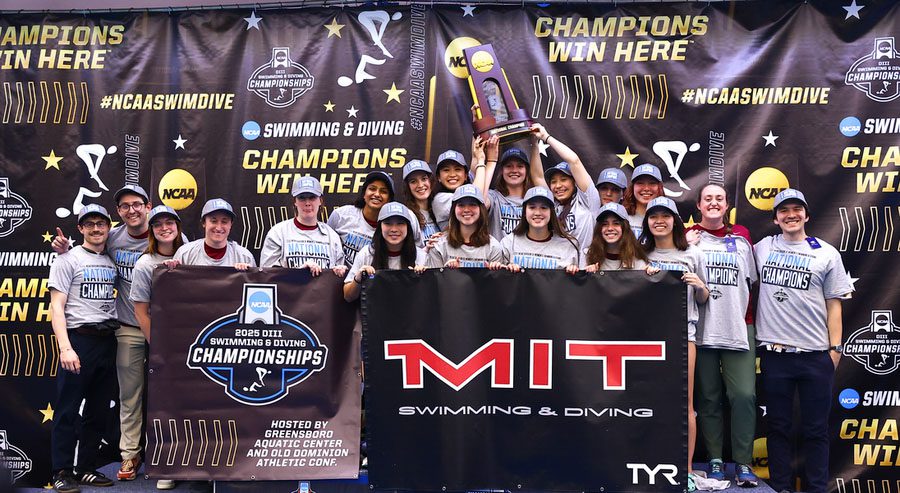
It was a banner year for the Engineers in 2024–’25, with four MIT women’s teams all clinching NCAA Division III national titles for the first time.

After winning their fourth straight NCAA East Regional Championship, the cross country team claimed their first national title in November with All-American performances from Christina Crow ’25 (pictured), Rujuta Sane ’26, and Kate Sanderson ’26. In March, the indoor track and field team scored 49 points—the most ever by an MIT women’s team at a national indoor meet—to win their first national title. A week later, the swimming and diving team won three individual and four relay titles and captured their first national title. Kate Augustyn ’25 ended her MIT career with four individual and four relay national championships and 27 All-America honors. Then in May, the outdoor track and field team claimed their first national championship, making MIT the first to sweep the Division III national titles in women’s cross country and indoor and outdoor track and field in the same year. 

foot race on grass with spectators

NATALIE GREEN
winners podium for NCAA track and field champions

D3 PHOTOGRAPHY
 NCAA Division III Swim and Dive Championships champs with trophy and MIT sign

DAVID BEACH
Immune molecules may affect mood

Two new studies from MIT and Harvard Medical School add to a growing body of evidence that infection-fighting molecules called cytokines also influence the brain, leading to behavioral changes during illness. 

By mapping the locations in the brain of receptors for different forms of IL-17, the researchers found that the cytokine acts on the somatosensory cortex to promote sociable behavior and on the amygdala to elicit anxiety. These findings suggest that the immune and nervous systems are tightly interconnected, says Gloria Choi, an associate professor of brain and cognitive sciences and one of both studies’ senior authors.

“If you’re sick, there’s so many more things that are happening to your internal states, your mood, and your behavioral states, and that’s not simply you being fatigued physically. It has something to do with the brain,” she says.

In the cortex, the researchers found certain receptors in a population of neurons that, when overactivated, can lead to autism-like symptoms such as reduced sociability in mice. But the researchers determined that the neurons become less excitable when a specific form of IL-17 binds to the receptors, shedding possible light on why autism symptoms in children often abate when they have fevers. Choi hypothesizes that IL-17 may have evolved as a neuromodulator and was “hijacked” by the immune system only later. 

Meanwhile, the researchers also found two types of IL-17 receptors in a certain population of neurons in the amygdala, which plays an important role in processing emotions. When these receptors bind to two forms of IL-17, the neurons become more excitable, leading to an increase in anxiety.

Eventually, findings like these may help researchers develop new treatments for conditions such as autism and depression. 

Cancer-targeting nanoparticles are moving closer to human trials

Over the past decade, Institute Professor Paula Hammond ’84, PhD ’93, and her students have used a technique known as layer-by-layer assembly to create a variety of polymer-coated nanoparticles that can be loaded with cancer-fighting drugs. The particles, which could prevent many side effects of chemotherapy by targeting tumors directly, have proved effective in mouse studies. Now the researchers have come up with a technique that allows them to manufacture many more particles in much less time, moving them closer to human use.

“There’s a lot of promise with the nanoparticle systems we’ve been developing, and we’ve been really excited more recently with the successes that we’ve been seeing in animal models for our treatments for ovarian cancer in particular,” says Hammond, the senior author of a paper on the new technique along with Darrell Irvine, a professor at the Scripps Research Institute.

In the original production technique, layers with different properties can be laid down by alternately exposing a particle to positively and negatively charged polymers, with extensive purification to remove excess polymer after each application. Each layer can carry therapeutics as well as molecules that help the particles find and enter cancer cells. But the process is time-consuming and would be difficult to scale up. 

In the new work, the researchers used a microfluidic mixing device that allows them to sequentially add layers as the particles flow through a microchannel. For each layer, they can calculate exactly how much polymer is needed, which eliminates the slow and costly purification step and saves significantly on material costs.

gloved hands hold the device
This microfluidic device can be used to assemble the drug delivery nanoparticles rapidly and in large quantities.
GRETCHEN ERTL

This strategy also facilitates compliance with the FDA’s GMP (good manufacturing practice) requirements, which ensure that products meet safety standards and can be manufactured consistently. “There’s much less chance of any sort of operator mistake or mishaps,” says Ivan Pires, PhD ’24, a postdoc at Brigham and Women’s Hospital and a visiting scientist at the Koch Institute, who is the paper’s lead author along with Ezra Gordon ’24. “We can create an innovation within the layer-by-layer nanoparticles and quickly produce it in a manner that we could go into clinical trials with.”

In minutes, the researchers can generate 15 milligrams of nanoparticles (enough for about 50 doses for certain cargos), which would have taken close to an hour with the original process. They say this means it would be realistic to produce more than enough for clinical trials and patient use.

To demonstrate the technique, the researchers created layered nanoparticles loaded with the immune molecule ­interleukin-­12; they have previously shown that such particles can slow growth of ovarian tumors in mice. Those manufactured using the new technique performed similarly to the originals and managed to bind to cancer tissue without entering the cancer cells. This lets them serve as markers that activate the immune system in the tumor, which can delay tumor growth and even lead to cures in mouse models of ovarian cancer. 

The researchers have filed for a patent and are working with MIT’s Deshpande Center for Technological Innovation in hopes of forming a company to commercialize the technology, which they say could also be applied to glioblastoma and other types of cancer. 

Crop signals

Bacteria can be engineered to sense a variety of molecules, such as pollutants or soil nutrients, but usually these signals must be detected microscopically. Now Christopher Voigt, head of MIT’s Department of Bio­logical Engineering, and colleagues have triggered bacterial cells to produce signals that can be read from as far as 90 meters away. Their work could lead to the development of sensors for agricultural and other applications, which could be monitored by drones or satellites.

The researchers engineered two different types of bacteria, one found in soil and one in water, so that when they encounter certain target chemicals, they produce hyperspectral reporters—molecules that absorb distinctive wavelengths of light across the visible and infrared spectra. These signatures can be detected with hyperspectral cameras, which determine how much of each color wavelength is present in any given pixel. Though the reporting molecules they developed were linked to genetic circuits that detect nearby bacteria, this approach could also be combined with sensors detecting radiation, soil nutrients, or arsenic and other contaminants. 

“The nice thing about this technology is that you can plug and play whichever sensor you want,” says Yonatan Chemla, an MIT postdoc who is a lead author of a paper on the work along with Itai Levin, PhD ’24. “There is no reason that any sensor would not be compatible with this technology.” The work is being commercialized through Fieldstone Bio.

Building better cities

Clara Brenner, MBA ’12, arrived in Cambridge on the lookout for a business partner. She wanted to start her own ­company—and never have to deal with a boss again. She would go it alone if she had to, but she hoped to find someone whose skills would complement her own.

It’s a common MBA tale. Many people attend business school with hopes of finding the one. Building that relationship is so important to a company’s foundation that it’s been described in romantic terms: Networking is akin to dating around, and some view settling down with a business partner as a marriage of sorts.

Brenner didn’t have to look for long. She met her match—Julie Lein, MBA ’12—soon after arriving at Sloan more than a decade ago. But their first encounter wasn’t exactly auspicious. In fact, their relationship began with an expletive.

Lein was sitting at a card table in a hallway in E52, glumly selling tickets to a fashion show featuring work-­appropriate clothes for women—at that time, the marquee event for Sloan’s Women in Management Club, and one that both Lein and Brenner thought was patently absurd. 

Lein had no interest in attending, but she wanted to support the club’s mission of boosting women in business. “She looked very miserable,” says Brenner. Lein asked if she wanted to buy a ticket, Brenner recalls, and “I think I said, ‘F*** no.’” 

“We both bonded over the fact that this was such a stupid idea,” says Lein. (The fashion show has since been retired, in part thanks to Lein and Brenner’s lobbying.)                             

Today, the two run the Urban Innovation Fund, a San Francisco–based venture capital firm that has raised $212 million since 2016 and invested in 64 startups addressing the most pressing problems facing cities. It has supported businesses like Electriphi, a provider of EV charging and fleet management software, which was acquired by one of the biggest names in the auto industry. And it funds companies focused on helping kids learn to code, providing virtual tutoring services, offering financing for affordable housing, and more. The companies in its portfolio have a total value of $5.3 billion, and at least eight have been acquired thus far.                             

Though Brenner and Lein hit it off quickly, they weren’t an obvious fit as business partners. Brenner arrived at Sloan after weathering an early career in commercial real estate just after the 2008 financial crash. She hoped to start her own company in that industry. Lein, on the other hand, had worked in political polling and consulting. She initially planned to get an advanced policy degree, until a mentor suggested an MBA. She hoped to start her own political polling firm after graduation. 

Ultimately, though, their instant kinship became more important than their subject matter expertise. Brenner, says Lein, is “methodical” and organized, while she “just goes and executes” without overthinking. Their relationship—in business, and still as close friends—is rooted in trust and a commitment to realizing the vision they’ve created together.

“We were able to see that … our skills and style were very complementary, and we just were able to do things better and faster together,” says Brenner. 


In 2012, the two teamed up to run Sloan’s second Women in Management Conference, which they had helped found the year before. It was then, they say, that they knew they would work together after graduation. 

Still, they had trouble agreeing on the type of venture that made the most sense. Their initial talks involved a tug-of-war over whose area of expertise would win—real estate or policy. 

But in the summer of 2011, they’d both happened to land internships at companies focused on challenges in cities—companies that would now be called “urban-tech startups,” says Brenner, though that term was not used at the time. The overlap was fortuitous: When they compared notes, they agreed that it made sense to investigate the potential for companies in that emerging space. Lyft was just getting its start, as was Airbnb. After exploring the idea further, the two concluded there was some “there” there.

“We felt like all these companies had a lot in common,” says Brenner. “They were solving very interesting community challenges in cities, but in a very scalable, nontraditional way.” They were also working in highly regulated areas that VC firms were often hesitant to touch, even though these companies were attracting significant attention. 

To Brenner and Lein, some of that attention was the wrong kind; companies like Uber were making what they saw as obvious missteps that were landing in the news. “No one was helping [these companies] with, like, ‘You should hire a lobbyist’ or ‘You should have a policy team,’” says Brenner.

The two saw an opportunity to fund businesses that could make a measurable positive impact on urban life—and to help them navigate regulatory and policy environments as they grew from startups to huge companies. 

Upon graduating in 2012, they launched Tumml, an accelerator program for such startups. The name was drawn from the Yiddish word tummler, often used by Brenner’s grandmother to describe someone who inspires others to action. 

At the time, Brenner says, “world-­positive investing” was “not cool at all” among funders because it was perceived as yielding lower returns, even though growing numbers of tech companies were touting their efforts to improve society. In another unusual move, the partners structured their startup accelerator as a nonprofit evergreen fund, allowing them to invest in companies continuously without setting a fixed end date. By the end of their third year, they were supporting 38 startups. 

Tumml found success by offering money, mentorship, and guidance, but the pair realized that relying solely on fickle philanthropic funding meant the model had a ceiling. To expand their work, they retired Tumml and launched the Urban Innovation Fund in 2016 with $24.5 million in initial investments. While Tumml had offered relatively small checks and support to companies at the earliest stages, UIF would allow Brenner and Lein to supercharge their funding and involvement. 

Their focus has remained on startups tackling urban problems in areas such as public health, education, and transportation. The types of companies they look for are those that drive economic vitality in cities, make urban areas more livable, or make cities more sustainable. As Tumml did, UIF provides not just funding but also consistent support in navigating regulatory challenges.

“It’s a very, very small subset of companies that can both work on a problem that, at least in our minds, really matters and be an enormous business.”

And, like Tumml, UIF has taken on industries or companies that other investors may see as risky. When it was raising its first fund, Lein remembers, they pitched a large institution on its vision, which includes investing in companies that work on climate and energy. The organization, burned by the money it lost when the first cleantech bubble burst, was extremely wary—it wasn’t interested in a fund that emphasized those areas. But Lein and Brenner pressed on. Today, climate tech remains one of the fund’s largest areas, accounting for more than a sixth of its portfolio of 64 companies (see “Urban innovation in action,” at right). In addition to Electriphi, they have invested in Public Grid, a company that gives households access to affordable clean energy, and Optiwatt, an app that helps EV drivers schedule charging at times of day when it is cheaper or cleaner.                             

“They took risks in areas, [including] mobility and transportation, where other people might not play because of policy and regulation risk. And they were willing to think about the public-private partnerships and what might be needed,” says Rachel Sheinbein, MBA ’04, SM ’04, a Bay Area–based angel investor who has worked with the Urban Innovation Fund on investments. “They weren’t afraid to take that on.”

Lein and Brenner have also invested in health companies like Cleancard, which is working to provide at-home testing for cancers, and startups creating workflow tools, like KarmaSuite, which has built software to help nonprofits track grants. 

Meanwhile, they have cast a wide net and built a portfolio rich in companies that happen to be led by entrepreneurs from underrepresented groups: Three-quarters of the companies in UIF’s current portfolio were founded by women or people of color, and nearly 60% include an immigrant on their founding team.  

When it comes to selecting companies, Brenner says, they make “very calculated decisions” based in part on regulatory factors that may affect profits. But they’re still looking for the huge returns that drive other investors. 

“It’s a very, very small subset of companies that can both work on a problem that, at least in our minds, really matters and be an enormous business,” she says. “Those are really the companies that we’re looking for.”

One of the most obvious examples of that winning combination is Electriphi. When Brenner and Lein invested in the company, in 2019, the Biden administration hadn’t mandated the electrification of federal auto fleets, and the Inflation Reduction Act, which included financial incentives for clean energy, hadn’t yet been drafted. And California had yet to announce its intention to completely phase out gas-powered cars. “It was not a hot space,” says Brenner.

But after meeting with Electriphi’s team, both Brenner and Lein felt there was something there. The partners tracked the startup for months, saw it achieving its goals, and ended up offering it the largest investment, by several orders of magnitude, that their fund had ever made. Less than two years later, Ford acquired it for an undisclosed sum. 

“When we were originally talking about Electriphi, a lot of people were like, ‘Eh, it’s going to take too long for fleets to transition, and we don’t want to make a bet at this time,’” Sheinbein recalls. But she says the partners at Urban Innovation Fund were willing to take on an investment that other people were “still a little bit hesitant” about. Sheinbein also invested in the startup. 

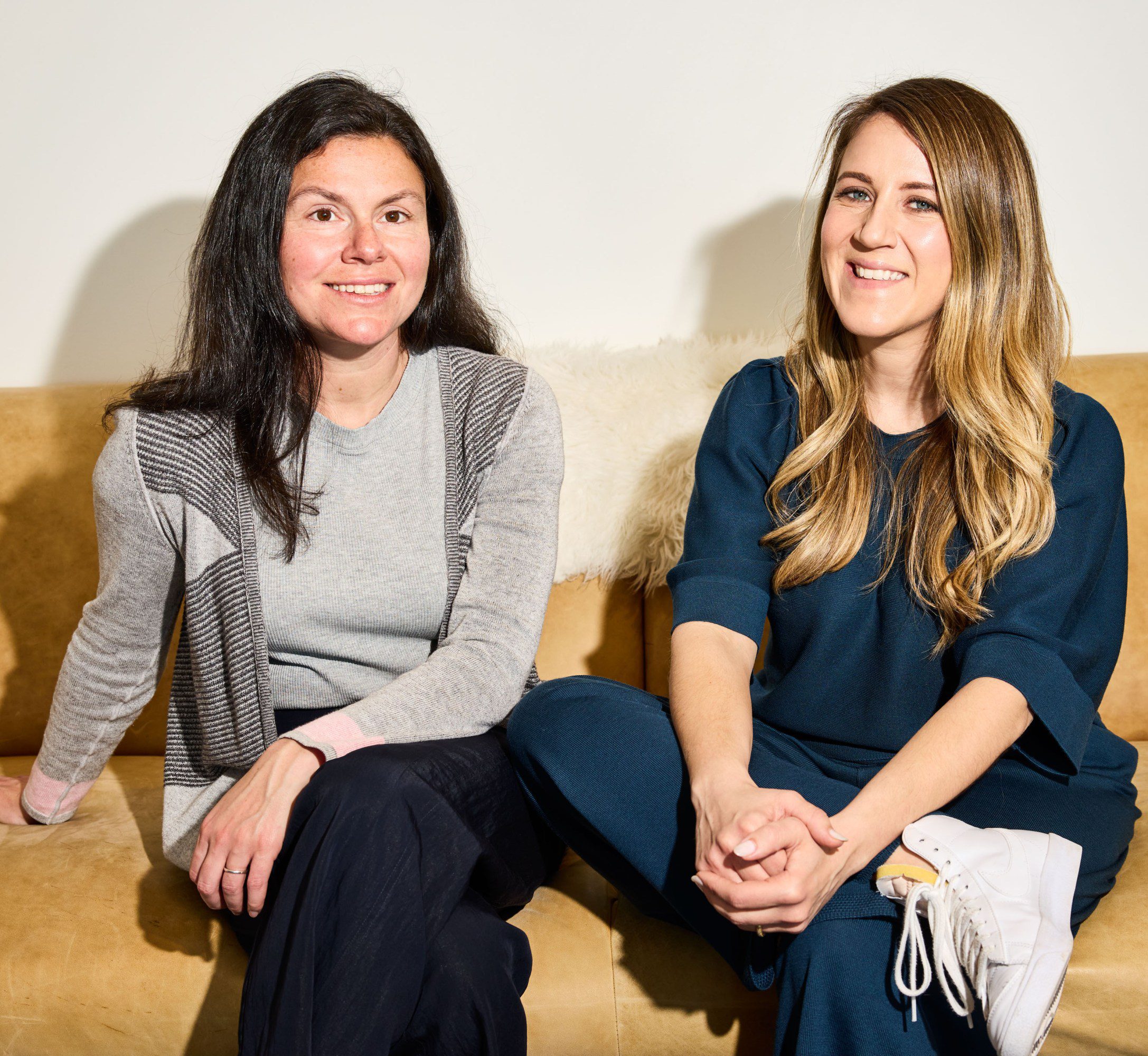
Clara Brenner and Julie Lein.

GABRIELA HASBUN

Impact investing has now taken root in the building where Lein and Brenner first met. What was once an often overlooked investing area, says Bill Aulet, SM ’94, managing director of the Martin Trust Center for MIT Entrepreneurship, is now a core element of how Sloan teaches entrepreneurship.

Aulet sees Urban Innovation Fund’s social-enterprise investing strategy as very viable in the current market. “Will it outperform cryptocurrency? Not right now,” he says, but he adds that many people want to put their money toward companies with the potential to improve the world. 

Lein, who worked as Aulet’s teaching assistant at Sloan for a class now known as Entrepreneurship 101, helped establish the mold at Sloan for a social-impact entrepreneur—that is, someone who sees doing good as a critical objective, not just a marketing strategy.

“Entrepreneurs don’t just have to found startups,” says Aulet. “You can also be what we call an entrepreneurship amplifier,” which he defines as “someone who helps entrepreneurship thrive.”

When they make investments, VCs tend to prioritize such things as the need for a company’s products and the size of its potential market. Brenner and Lein say they pay the most attention to the team when deciding whether to make a bet: Do they work together well? Are they obsessive about accomplishing their goals? Those who have watched UIF grow say Brenner and Lein’s partnership fits that profile itself. 

“I can just tell when a team really respects each other and [each] sees the value in the other one’s brain,” says Sheinbein. For Lein and Brenner, she says, their “mutual respect and admiration for each other” is obvious. 

“We went to Sloan, we spent a bunch of money, but we found each other,” says Lein. 

“We couldn’t agree on a new urban-tech startup to start,” she adds, so instead, they built an ecosystem of them—all in the name of improving cities for the people who live there. 

Inside-out learning

When the prison doors first closed behind him more than 50 years ago, Lee Perlman, PhD ’89, felt decidedly unsettled.  

In his first job out of college, as a researcher for a consulting company working on a project for the US Federal Bureau of Prisons, he had been tasked with interviewing incarcerated participants in a drug rehab program. Once locked inside, he found himself alone in a room with a convicted criminal. “I didn’t know whether I should be scared,” he recalls. 

Since then, he has spent countless hours in such environments in his role as a teacher of philosophy. He’s had “very, very few experiences” where he felt unsafe in prisons over the years, he says. “But that first time you go in, you do feel unsafe. I think that’s what you should feel. That teaches you something about what it feels like for anybody going into prison.”

As a lecturer in MIT’s Experimental Study Group (ESG) for more than 40 years, Perlman has guided numerous MIT students through their own versions of that passage through prison doors. He first began teaching in prisons in the 1980s, when he got the idea of bringing his ESG students studying nonviolence into the Massachusetts Correctional Institution at Norfolk to talk with men serving life sentences. The experience was so compelling that Perlman kept going back, and since the early 2000s he has been offering full courses behind bars. 

In 2018, Perlman formalized these efforts by cofounding the Educational Justice Institute (TEJI) at MIT with Carole Cafferty, a former corrections professional. Conceived both to provide college-level education with technology access to incarcerated individuals and to foster empathy and offer a window into the criminal justice system for MIT students, TEJI creates opportunities for the two groups to learn side by side. 

“There’s hard data that there’s nothing that works like education to cut recidivism, to change the atmosphere within a prison so prisons become less violent places.”

Lee Perlman, PhD ’89

“We believe that there are three fundamental components of education that everybody should have, regardless of their incarceration status: emotional literacy, digital literacy, and financial literacy,” says Cafferty. TEJI offers incarcerated students classes in the humanities, computer science, and business, the credits from which can be applied toward degrees from private universities and community colleges. The emotional literacy component, featuring Perlman’s philosophy courses, is taught in an “inside-out” format, with a mixed group of incarcerated “inside” students and “outside” classmates (from MIT and other universities where TEJI courses are sometimes cross-listed). 

“I’ve been really torn throughout my life,” Perlman says, “between this part of me that would like to be a monk and sit in a cave and read books all day long and come out and discuss them with other monks, and this other half of me that wants to do some good in the world, really wants to make a difference.” Behind prison walls, the concepts he relishes discussing—love, authenticity, compassion—have become his tools for doing that good.

TEJI also serves as a convener of people from academia and the criminal justice system. Within MIT, it works with the Sloan School of Management, the Music and Theater Arts Section, the Priscilla King Gray Public Service Center, and others on courses and special prison-related projects. And by spearheading broader initiatives like the Massachusetts Prison Education Consortium and the New England Commission on the Future of Higher Education in Prison, TEJI has helped lay the groundwork for significant shifts in how incarcerated people across the region and beyond prepare to rejoin society.

“Lee and I both share the belief that education can and should be a transformative force in the lives of incarcerated people,” Cafferty says. “But we also recognize that the current system doesn’t offer a lot of opportunities for that.” Through TEJI, they’re working to create more.


Perlman didn’t set out to reform prison education. “There’s never been any plan,” he says. “Before I was an academic I was a political organizer, so I have that political organizer brain. I just look for … where’s the opening you can run through?”

Before earning his PhD in political philosophy, Perlman spent eight years making his mark on Maryland’s political scene. At age 28, he came up short by a few hundred votes in a primary for the state senate. In the late 1970s, Perlman says, he was named one of 10 rising stars in Maryland politics by the Baltimore Sun and one of the state’s most feared lobbyists by Baltimore Magazine because he got lawmakers to “do things they’d be perfectly willing to leave alone,” as he puts it, like pass election reform bills. The legislators gave him the nickname Wolfman, “probably just because I had a beard,” he says, “but it kind of grew to mean other things.”

Perlman still has the beard. Working in tandem with Cafferty and others, he’s also retained his knack for nudging change forward.

Lee Perlman, PhD ’89, and Philip Hutchful, an incarcerated student, take part in the semester’s final meeting of Perlman’s “inside-out” class Nonviolence as a Way of Life at the Boston Pre-Release Center.
JAY DIAS/MASSACHUSETTS DEPARTMENT OF CORRECTION

Cafferty understands, better than most, how difficult that can be in the prison system. She held numerous roles in her 25-year corrections career, ultimately serving as superintendent of the Middlesex Jail and House of Correction, where she oversaw the introduction of the first tablet-based prison literacy program in New England. 

“I used to say someday when I write a book, it’s going to be called Swimming Against the Tide,” she says. In a correctional environment, “safety and security come first, always,” she explains. “Programming and education are much further down the list of priorities.”

TEJI’s work pushes against a current in public opinion that takes a punitive rather than rehabilitative view of incarceration. Some skeptics see educating people in prison as rewarding bad deeds. “Out in the world I’ve had people say to me, ‘Maybe I should commit a crime so I can get a free college education,’” says Perlman. “My general response is, well, you really have one choice here: Do you want more crime or less crime? There’s hard data that there’s nothing that works like education to cut recidivism, to change the atmosphere within a prison so prisons become less violent places. Also, do you want to spend more or do you want to spend less money on this problem? For every dollar we spend on prison education and similar programs, we save five dollars.”

The research to which Perlman refers includes a 2018 RAND study, which found that participants in correctional education programs in the US were 28% less likely to reoffend than their counterparts who did not participate. It’s a powerful number, considering that roughly 500,000 people are released from custody each year. Perlman has such statistics at the ready, as he must. But talk to him for any amount of time and the humanity behind the numbers is what stands out. 

“There is a sizable group of people in prison who, if society was doing a better job, would have different lives,” he says, noting that “they’re smart enough and they have character enough” to pull it off: “We can make things happen in prison that will put them on a different path.” 

“Most of the people I teach behind bars are people that have had terrible experiences with education and don’t feel themselves to be very capable at all,” he says. So he sometimes opens his class by saying: “Something you probably wouldn’t guess about me is that I failed the 11th grade twice and dropped out of high school. And now I have a PhD from MIT and I’ve been teaching at MIT for 40 years. So you never know where life’s gonna lead you.” 

Though Perlman struggled to find his motivation in high school, he “buckled down and learned how much I loved learning,” as he puts it, when his parents sent him to boarding school to finish his diploma. He went on to graduate from St. John’s College in Annapolis, Maryland. Growing up in Michigan in the 1960s, he’d learned about fair housing issues because his mother was involved with the civil rights movement, and he lived for a time with a Black family that ran a halfway house for teenage girls. By the time he took that first job interviewing incarcerated former drug addicts, he was primed to understand their stories within the context of poverty, discrimination, and other systemic factors. He began volunteering for a group helping people reenter society after incarceration, and as part of his training, he spent a night booked into jail. 

“I didn’t experience any ill treatment,” he says, “but I did experience the complete powerlessness you have when you’re a prisoner.”

Jocelyn Zhu ’25 took a class with Perlman in the fall of 2023 at the Suffolk County House of Correction, and entering the facility gave her a similar sense of powerlessness. 

“We had to put our phones away, and whatever we were told to do we would have to do, and that’s not really an experience that you’re in very often as a student at MIT,” says Zhu. “There was definitely that element of surrender: ‘I’m not in charge of my environment.’”

On the flip side, she says, “because you’re in that environment, the only thing you’re doing while you’re there is learning—and really focusing in on the discussion you’re having with other students.”

“I call them the ‘philosophical life skills’ classes,” says Perlman, “because there are things in our lives that everybody should sit down and think through as well as they can at some point.” He says that while those classes work fine with just MIT students, being able to go into a prison and talk through the same issues with people who have had very different life experiences adds a richness to the discussion that would be hard to replicate in a typical classroom. 

He recalls the first time he broached the topic of forgiveness in a prison setting. Someone serving a life sentence for murder put things in a way Perlman had never considered. He remembers the man saying: “What I did was unforgivable. If somebody said ‘I forgive you for taking my child’s life,’ I wouldn’t even understand what that meant. For me, forgiveness means trying, at least … to regard me as somebody who’s capable of change … giving me the space to show you that I’m not the person who did that anymore.’” 

Perlman went home and revised his lecture notes. “I completely reformulated my conception of forgiveness based on that,” he says. “And I tell that story every time I teach the class.”


The meeting room at the minimum-­security Boston Pre-Release Center is simply furnished: clusters of wooden tables and chairs, a whiteboard, some vending machines. December’s bare branches are visible through a row of windows that remain closed even on the warmest of days (“Out of Bounds,” warns a sign taped beside them). This afternoon, the room is hosting one of Perlman’s signature classes, Nonviolence as a Way of Life. To close the fall 2024 semester, he has asked his students to creatively recap four months of Thursdays together. 

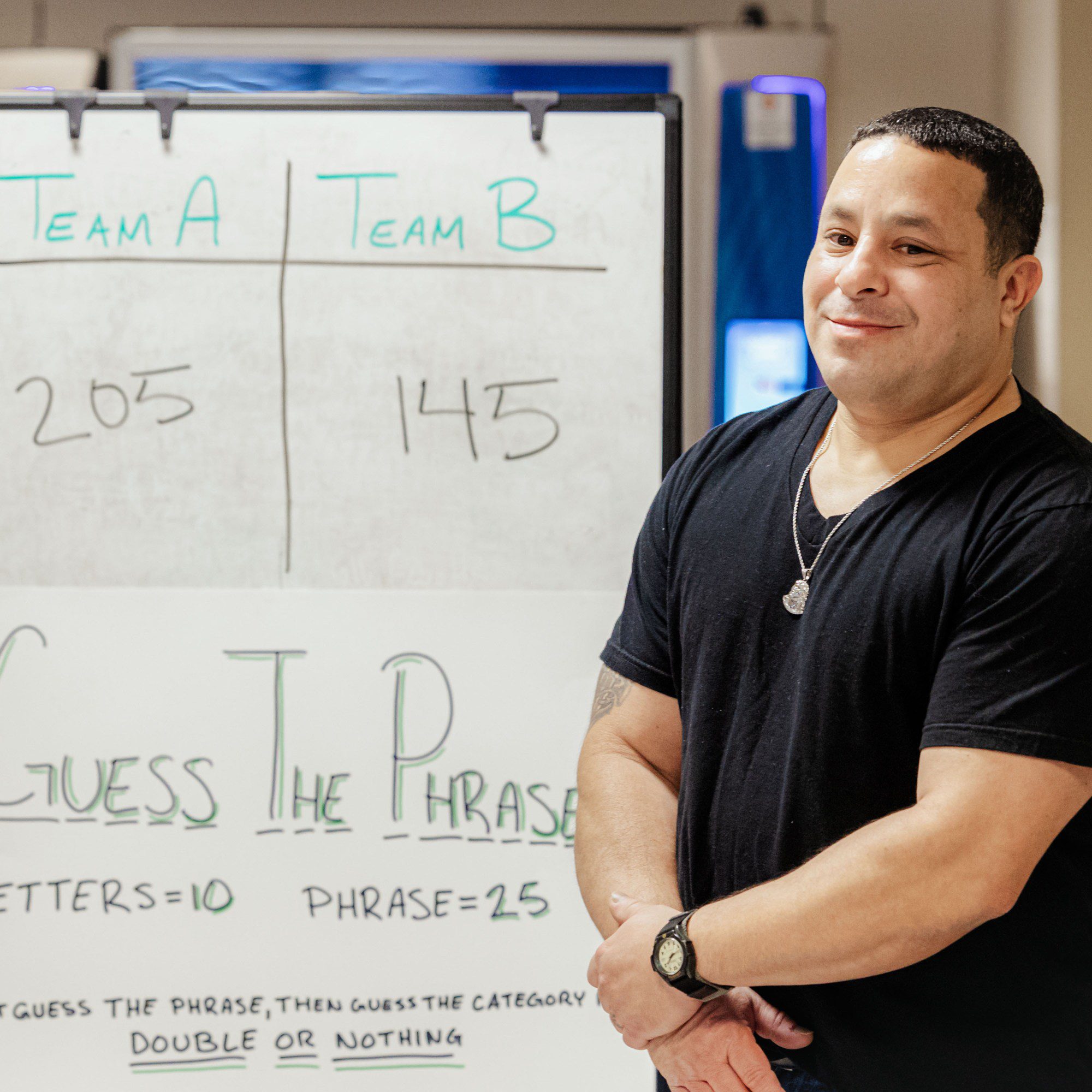
Before long, the students are enmeshed in a good-natured showdown, calling out letters to fill in the blanks in a mystery phrase unfolding on the whiteboard. Someone solves it (“An eye for an eye makes the world go blind”) and scores bonus points for identifying its corresponding unit on the syllabus (Restorative Justice). 

“It’s still anybody’s game!” announces the presenting student, Jay Ferran, earning guffaws with his spot-on TV host impression.

Ferran and the other men in the room wearing jeans are residents of the Pre-Release Center. They have shared this class all semester with undergrad and grad students from MIT and Harvard (who are prohibited from wearing jeans by the visitor dress code). Before they all part ways, they circle up their chairs one last time.

“Humor can be a defense mechanism, but it never felt that way in here,” says Isabel Burney, a student at the Harvard Graduate School of Education. “I really had a good time laughing with you guys.”

“I appreciate everyone’s vulnerability,” says Jack Horgen ’26. “I think that takes a lot of grace, strength, and honesty.”

“I’d like to thank the outside students for coming in and sharing as well,” says Ferran. “It gives a bit of freedom to interact with students who come from the outside. We want to get on the same level. You give us hope.”

After the room has emptied out, Ferran reflects further on finding himself a college student at this stage in his life. Now in his late 40s, he dropped out of high school when he became a father. “I always knew I was smart and had the potential, but I was a follower,” he says. 

As Ferran approaches the end of his sentence, he’s hoping to leverage the college credits he’s earned so far into an occupation in counseling and social work. His classmate Philip Hutchful, 35, is aiming for a career in construction management. 

Access to education in prison “gives people a second chance at life,” Hutchful says. “It keeps your mind busy, rewires your brain.”

MIT undergrads Denisse Romero Cruz ’25, Jack Horgen ’26, and Alor Sahoo ’26 at the final session of Perlman’s Nonviolence as a Way of Life class at the Boston Pre-Release Center.

Along with about 45% of the Boston Pre-Release Center’s residents, Ferran and Hutchful are enrolled in the facility’s School of Reentry, which partners with MIT and other local colleges and universities to provide educational opportunities during the final 12 to 18 months of a sentence. 

“We have seen a number of culture shifts for our students and their families, such as accountability, flexible thinking, and curiosity,” says the program’s executive director, Lisa Millwood. There are “students who worked hard just so they can proudly be there to support their grandchildren, or students who have made pacts with their teenage children who are struggling in school to stick with it together.”

Ferran and Hutchful had previously taken college-level classes through the School of Reentry, but the prospect of studying alongside MIT and Harvard students raised new qualms. 

“These kids are super smart—how can I compete with them? I’m going to feel so stupid,” Ferran remembers thinking. “In fact, it wasn’t like that at all.”

“We all had our own different types of knowledge,” says Hutchful.

Both Ferran and Hutchful say they’ve learned skills that they’ll put to use in their post-release lives, from recognizing manipulation to fostering nonviolent communication. Hutchful especially appreciates the principle that “you need to attack the problem, not the person,” saying, “This class teaches you how to deal with all aspects of people—angry people, impatient people. You’re not being triggered to react.” 

Perlman has taught Nonviolence as a Way of Life nearly every semester since TEJI launched. Samuel Tukua ’25 took the class a few years ago. Like Hutchful, he has applied its lessons. 

“I wouldn’t be TAing it for the third year now if it didn’t have this incredible impact on my life,” Tukua says. 

Meeting incarcerated people did not in itself shift Tukua’s outlook; their stories didn’t surprise him, given his own upbringing in a low-income neighborhood near Atlanta. But watching learners from a range of backgrounds find common ground in big philosophical ideas helped convince him of those ideas’ validity. For example, he started to notice undercurrents of violence in everyday actions and speech. 

“It doesn’t matter whether you came from a highly violent background or if you came from a privileged, less violent background,” he says he realized. “That kind of inner violence or that kind of learned treatment exists inside all of us.” 


Marisa Gaetz ’20, a fifth-year PhD candidate in math at MIT, has stayed in TEJI’s orbit in the seven years since its founding—first as a student, then as a teaching assistant, and now by helping to run its computer science classes. 

Limitations on in-person programming imposed by the covid-19 pandemic led Gaetz and fellow MIT grad student Martin Nisser, SM ’19, PhD ’24, to develop remote computer education classes for incarcerated TEJI students. In 2021, she and Nisser (now an assistant professor at the University of Washington) joined with Emily Harburg, a tech access advocate, to launch Brave Behind Bars, which partners closely with TEJI to teach Intro to Python, web development, and game design in both English and Spanish to incarcerated people across the US and formerly incarcerated students in Colombia and Mexico. 

Since many inside students have laptop access only during class time, the remote computer courses typically begin with a 30-minute lecture followed by Zoom breakouts with teaching assistants. A ratio of one TA for every three or four students ensures that “each student feels supported, especially with coding, which can be frustrating if you’re left alone with a bug for too long,” Gaetz says. 

Gaetz doesn’t always get to hear how things work out for her students,but she’s learned of encouraging outcomes. One Brave Behind Bars TA who got his start in their classes is now a software engineer. Another group of alums founded Reentry Sisters, an organization for formerly incarcerated women. “They made their own website using the skills that they learned in our class,” Gaetz says. “That was really amazing to see.”

Although the pandemic spurred some prisons to expand use of technology, applying those tools to education in a coordinated way requires the kind of bridge-building TEJI has become known for since forming the Massachusetts Prison Education Consortium (MPEC) in 2018.

“I saw there were a bunch of colleges doing various things in prisons and we weren’t really talking to each other,” says Perlman. TEJI secured funding from the Mellon Foundation and quickly expanded MPEC’s membership to more than 80 educational institutions, corrections organizations, and community-based agencies. Millwood says the School of Reentry has doubled its capacity and program offerings thanks to collaborations developed through MPEC.

At the regional level, TEJI teamed up with the New England Board of Higher Education in 2022 to create the New England Commission on the Future of Higher Education in Prison. Its formation was prompted in part by the anticipated increase in demand for high-quality prison education programs thanks to the FAFSA Simplification Act, which as of 2023 reversed a nearly three-decade ban on awarding federal Pell grants to incarcerated people. Participants included leaders from academia and correctional departments as well as formerly incarcerated people. One, Daniel Throop, cochaired a working group called “Career, Workforce, and Employer Connections” just a few months after his release. 

“I lived out a reentry while I was on the commission in a way that was very, very powerful,” Throop says. “I was still processing in real time.” 

“Most of the people I teach behind bars are people that have had terrible experiences with education and don’t feel themselves to be very capable at all.”

Lee Perlman, PhD ’89

During his incarceration in Massachusetts, Throop had revived the long-defunct Norfolk Prison Debating Society, which went head-to-head with university teams including MIT’s. Credits from his classes, including two with Perlman, culminated in a bachelor’s degree in interdisciplinary studies magna cum laude from Boston University, which he earned before his release. But he still faced big challenges.

“Having a criminal record is still a very, very real hurdle,” Throop says. “I was so excited when those doors of prison finally opened after two decades, only to be greatly discouraged that so many doors of the community remained closed to me.” 

Initially, the only employment he could get was loading UPS trucks by day and unloading FedEx trucks by night. He eventually landed a job with the Massachusetts Bail Fund and realized his goal of launching the National Prison Debate League. 

“I fortunately had the educational credentials and references and the wherewithal to not give up on myself,” says Throop. “A lot of folks fail with less resources and privilege and ability and support.”

The commission’s 2023 report advocates for improved programming and support for incarcerated learners spanning the intake, incarceration, and reentry periods. To help each state implement the recommendations, the New England Prison Education Collaborative (NEPEC) launched in October 2024 with funding from the Ascendium Education Group. Perlman encouraged TEJI alumna Nicole O’Neal, then working at Tufts University, to apply for the position she now holds as a NEPEC project manager. 

Like Throop, O’Neal has firsthand experience with the challenges of reentry. Despite the stigma of having served time, having a transcript with credits earned during the period she was incarcerated “proved valuable for both job applications and securing housing,” she says. With the help of a nonprofit called Partakers and “a lot of personal initiative,” she navigated the confusing path to matriculation on Boston University’s campus, taking out student loans so she could finish the bachelor’s degree she’d begun in prison. A master’s followed.

“I’ve always known that education was going to be my way out of poverty,” she says.

From her vantage point at NEPEC, O’Neal sees how TEJI’s approach can inspire other programs. “What truly sets TEJI apart is the way that it centers students as a whole, as people and not just as learners,” she says. “Having the opportunity to take an MIT course during my incarceration wasn’t just about earning credits—it was about being seen as capable of engaging with the same level of intellectual rigor as students outside. That recognition changed how I saw myself and my future.”


On a Zoom call one Wednesday evening in December, Perlman’s inside-out course on Stoicism is wrapping up. Most participants are women incarcerated in Maine. These are among Perlman’s most advanced and long-standing students, thanks to the state’s flexible approach to prison education—Perlman says it’s “maybe the most progressive system in the country,” early to adopt remote learning, experiment with mixed-gender classes, and allow email communication between teachers and students. 

The mood is convivial, the banter peppered with quotes from the likes of Marcus Aurelius and Epictetus. More than one student is crocheting a Christmas gift, hands working busily at the edges of their respective Zoom rectangles. 

As the students review what they’ve learned, the conversation turns to the stereotype of Stoicism as a lack of emotion. “I get the feeling the Stoics understood their emotions better than most because they weren’t puppets to their emotions,” says a student named Nicole. “They still feel things—they’re just not governed by it.”

Jay Ferran, an incarcerated
student at the Boston Pre-Release Center, presents a game to help recap what the class learned over the semester.
JAY DIAS/MASSACHUSETTS DEPARTMENT OF CORRECTION

Jade, who is a year into a 16-month sentence, connects this to her relationship with her 14-month-old son: “I think I would be a bad Stoic in how I love him. That totally governs me.”

Perlman, a bit mischievously: “Does anyone want to talk Jade into being a Stoic mother?” 

Another classmate, Victoria, quips: “I think you’d like it better when he’s a teenager.” When the laughter dies down, she says more seriously, “I think it’s more about not allowing your emotions to carry you away.” But she adds that it’s hard to do that as a parent. 

 “Excessive worry is also a hindrance,” Jade concedes. “So how do I become a middle Stoic?”

“A middle Stoic would be an Aristotelian, I think,” muses Perlman.

When the conversation comes around to amor fati, the Stoic notion of accepting one’s fate, Perlman asks how successful his students have been at this.

The group’s sole participant from a men’s facility, Arthur, confesses that he has struggled with this over more than 20 years in prison. But for the last few years, school has brought him new focus. He helps run a space where other residents can study. “I hear you saying you can only love your fate if you have a telos, a purpose,” Perlman says.

“I was always teaching people things to survive or get ahead by any means necessary,” Arthur says. “Now it’s positive building blocks.”

“Education is my telos, and when I couldn’t access it at first, I had to focus on what was in my control,” says Victoria. “I framed my prison experiences as refusing to be harmed by the harmful process of incarceration. I’m going to use this opportunity for myself … so I can be who I want to be when I leave here.” 

Soon after, the video call—and the course—ends. But if Perlman’s former students’ experience is any indication, the ideas their teacher has introduced will continue to percolate.

O’Neal, who took Perlman’s Philosophy of Love, is still mulling over an exploration of loyalty in Tristan and Isolde that brought a classmate to tears. She thinks Perlman’s ability to nurture dialogue on sensitive topics begins with his relaxed demeanor—a remarkable quality in the prison environment.

“It’s like you’re coming to our house. A lot of [people] show up as guests. Lee shows up like someone who’s been around—you know, and he’s willing to clean up the dishes with you. He just feels at home,” she says. “So he made us feel at home.” 

Throop becomes animated when he describes taking Philosophy of the Self and Soul with Perlman and MIT students at MCI-Norfolk in 2016. 

“Over those days and weeks, we got to meet and discuss the subject ­matter—walking around the prison yards together, my classmates and I, and then coming back and having these almost indescribable—I’m rarely at a loss for words!—weekly class discussions,” Throop remembers. Perlman “would throw one big question out there, and he would sit back and patiently let us all chop that material up,” he adds. “These discussions were like the highlight of all of our weeks, because we got to have this super-cool exchange of ideas, testing our perspectives … And then these 18-to-20-year-old students who were coming in with a whole different worldview, and being able to have those worldviews collide in a healthy way.”  

“We all were having such enriching discussions that the semester flew by,” he says. “You didn’t want school to end.”