The tiny beads added to some cleansers and cosmetics are one source of the long-lasting microplastics that threaten the environment. But MIT researchers have found a way to address the problem at its source: replacing them with polymers that break down into harmless sugars and amino acids. Particles of this polymer could also be used to encapsulate nutrients such as vitamin A to fortify foods, which could help some of the 2 billion people around the world who suffer from nutrient deficiencies.
To develop the material, graduate student Linzixuan (Rhoda) Zhang and her colleagues turned to poly-beta-amino esters, a class of polymers previously developed in the lab of Institute Professor Robert Langer, ScD ’74, which have shown promise for medical applications.
By changing the composition of these materials’ building blocks, researchers can optimize properties such as hydrophobicity (ability to repel water), mechanical strength, and pH sensitivity. One property the team targeted, with an eye to using the polymer to add nutrients to food, was the ability to dissolve when exposed to acidic environments such as the stomach.
The researchers showed that they could use particles of the polymer to encapsulate vitamins A, D, E, and C, as well as zinc and iron. Many of these nutrients are susceptible to heat and light degradation, but the team found that the particles could protect them from boiling water for two hours. They also showed that even after being stored for six months at high temperature and high humidity, more than half of the encapsulated vitamins were undamaged.
To demonstrate the particles’ potential for fortifying food, the researchers incorporated them into bouillon cubes—a common ingredient in Africa, where nutrient deficiencies are common, says Ana Jaklenec, a principal investigator at the Koch Institute for Integrative Cancer Research and a senior author, with Langer, of a paper on the work.
In this study, the researchers also tested the particles’ safety by exposing them to cultured human intestinal cells. At the amounts that would be used in food, the particles were not found to damage the cells.
To explore the particles’ potential for use in cleansers, the researchers mixed them with soap foam. This mixture, they found, removed permanent marker and waterproof eyeliner much more effectively than soap alone. Soap mixed with the new microparticles was also more effective than a cleanser that includes polyethylene microbeads, and the particles did a better job of absorbing potentially toxic elements such as heavy metals.
The researchers plan to run a small human trial later this year and are gathering data that could be used to apply for GRAS (generally recognized as safe) classification from the US Food and Drug Administration. They are also planning a clinical trial of foods fortified with the particles.
Their work on the polymer, they hope, could help significantly reduce the amount of microplastic released into the environment from health and beauty products. “One way to mitigate the microplastics problem is to figure out how to clean up existing pollution,” Jaklenec says. “But it’s equally important to look ahead and focus on creating materials that won’t generate microplastics in the first place.”
Wearable devices like smart watches and fitness trackers help us measure and learn from physical functions such as heart rates and sleep stages. Now MIT researchers have developed a tiny equivalent for individual brain cells.
These soft, battery-free wireless devices, actuated with light, are designed to wrap around different parts of neurons, such as axons and dendrites, without damaging them. They could be used to measure or modulate a neuron’s electrical and metabolic activity. They could also serve as synthetic myelin for axons that have lost this insulation, helping to address neuronal degradation in diseases like multiple sclerosis.
The devices are made from thin sheets of a soft polymer called azobenzene, which roll when exposed to light. Researchers can precisely control the direction of the rolling and the size and shape of the tubes by varying the intensity and polarization of the light. This enables the devices to snugly, but gently, wrap around curved axons and dendrites.
“To have intimate interfaces with these cells, the devices must be soft and able to conform to these complex structures. That is the challenge we solved in this work,” says Deblina Sarkar, an assistant professor in the Media Lab and the senior author of a paper on the research. “We were the first to show that azobenzene could even wrap around living cells.”
The researchers, who developed a scalable fabrication technique that doesn’t require the use of a cleanroom, have demonstrated that the devices can be combined with optoelectrical materials that can stimulate cells. Moreover, atomically thin materials can be patterned on top of the tubes, offering opportunities to integrate sensors and circuits.
In addition, because they make such a tight connection with cells, they could make it possible to stimulate subcellular regions with very little energy. This could enable a researcher or clinician to treat brain diseases by modulating neurons’ electrical activity.
For all the talk about artificial intelligence upending the world, its economic effects remain uncertain. But Institute Professor and 2024 Nobel winner Daron Acemoglu has some insights.
Despite some predictions that AI will double US GDP growth, Acemoglu expects it to increase GDP by 1.1% to 1.6% over the next 10 years, with a roughly 0.05% annual gain in productivity. This assessment is based on recent estimates of how many jobs are affected—but his view is that the effect will be targeted.
“We’re still going to have journalists, we’re still going to have financial analysts, we’re still going to have HR employees,” he says. “It’s going to impact a bunch of office jobs that are about data summary, visual matching, pattern recognition, etc. And those are essentially about 5% of the economy.”
He does think the technology has more potential, but he’s concerned that AI companies so far have focused on innovations that could replace human workers at the expense of those that could make them more productive. “My argument is that we currently have the wrong direction for AI,” Acemoglu says. “We’re using it too much for automation and not enough for providing expertise and information to workers.”
Innovations that keep people employed should sustain growth better, he believes. But “I don’t think complementary uses of AI will miraculously appear by themselves unless the industry devotes significant energy and time to them,” he says. And even then, whether the advances benefit workers themselves is far from guaranteed.
Given this mix of benefits and drawbacks, Acemoglu and his colleagues think it may be best to adopt AI more slowly than market fundamentalists might like. While government regulation is one way to promote that measured pace, he also thinks that if the cycle of “hype” around AI diminishes, then the rush to use it “will naturally slow down.”
“I think that hype is making us invest badly in terms of the technology,” he says.
“The faster you go, and the more hype you have, that course correction becomes less likely. It’s very difficult, if you’re driving 200 miles an hour, to make a 180-degree turn.”
Although it is less abundant than carbon dioxide, methane gas contributes disproportionately to global warming. Its molecular structure of single carbon atoms bound to four hydrogen atoms makes it a potentially useful building block for products that could keep this carbon out of the atmosphere, but it’s hard to get it to react with other molecules under ordinary conditions.
Now a catalyst designed by MIT chemical engineer Michael Strano and colleagues could help solve that problem.
The catalyst has two components. The first, a mineral called a zeolite, converts methane to methanol. The second, a natural enzyme called alcohol oxidase, converts the methanol to formaldehyde. With the addition of urea, a nitrogen-containing molecule found in urine, the formaldehyde can be turned into a polymer used in particleboard, textiles, and other products.
The researchers say this catalyst could act to seal cracks in pipes transporting natural gas, a common source of methane leakage. It could also be used to coat surfaces that are exposed to methane gas, producing polymers that could be collected for use in manufacturing.
“Other systems operate at high temperature and high pressure,” says MIT postdoc Jimin Kim, lead author with Daniel Lundberg, PhD ’24, of a paper on the work. That takes money and energy. But, she says, “I think our system could be very cost-effective and scalable.”
The cerebral cortex contains regions devoted to processing different types of sensory information, including visual and auditory input. Now researchers led by Robert Desimone, director of MIT’s McGovern Institute for Brain Research, and colleagues have developed the most comprehensive picture yet of what all these regions do. They achieved this by analyzing data collected as people performed a surprisingly complex task: watching a movie.
Over the past few decades, scientists have identified many networks that are involved in this kind of processing, often using functional magnetic resonance imaging (fMRI) to measure brain activity as subjects perform a single task (such as looking at faces) or do nothing. The problem is that while people are resting, many parts of the cortex may not be active at all.
“By using a rich stimulus like a movie, we can drive many regions of the cortex very efficiently. For example, sensory regions will be active to process different features of the movie, and high-level areas will be active to extract semantic and contextual information,” says Reza Rajimehr, a research scientist in the McGovern Institute and the lead author of a paper on the work. “By activating the brain in this way, now we can distinguish different areas or different networks based on their activation patterns.”
Using high-resolution fMRI data collected by an NIH-funded consortium, the researchers analyzed brain activity from 176 people as they watched a variety of movie clips. Then they used a machine-learning algorithm to analyze the activity patterns of each brain region. What they found was 24 networks with different activity patterns and functions. Some are located in sensory areas such as the visual or auditory cortex, while others respond to features such as actions, language, or social interactions. The researchers also identified networks that hadn’t been seen before, including one in the prefrontal cortex that appears highly responsive to visual scenes. This network was most active in response to pictures of scenes within the movie frames.
Three of the networks they found are involved in “executive control” and were most active during transitions between clips. The researchers also observed that when networks specific to a particular feature were very active, the executive control networks were mostly quiet, and vice versa.
“Whenever the activations in domain-specific areas are high, it looks like there is no need for the engagement of these high-level networks,” Rajimehr says. “But in situations where perhaps there is some ambiguity and complexity in the stimulus, and there is a need for the involvement of the executive control networks, then we see that these networks become highly active.”
The researchers hope that their new map will serve as a starting point for more precise study of what each of these networks is doing. For example, within the social processing network, they have found regions that are specific to processing social information about faces and bodies.
“This is a new approach that reveals something different from conventional approaches in neuroimaging,” says Desimone. “It’s not going to give us all the answers, but it generates a lot of interesting ideas.”
Metabolic imaging is a valuable noninvasive method for studying living cells with laser light, but it’s been constrained by the way light scatters when it shines into tissue, limiting the resolution and depth of penetration. MIT researchers have developed a new technique that more than doubles the usual depth limit while boosting imaging speeds, yielding richer and more detailed images.
This technique does not require samples to be sliced and stained with contrast dyes. Instead, when a specialized laser shines light deep into tissues, certain molecules within them emit light of different colors, revealing molecular contents and cellular structures. By using a recently developed fiber shaper—a device controlled by bending it—the researchers can tune the color and pulses of light to minimize scattering and maximize the signal. This allows them to see much further and capture clearer images. In tests, the light was able to penetrate more than 700 micrometers into a sample, whereas the best previous techniques reached about 200 micrometers.
This method is particularly well suited for applications like cancer research, tissue engineering, drug discovery, and the study of immune responses. “It opens new avenues for studying and exploring metabolic dynamics deep in living biosystems,” says Sixian You, an assistant professor of EECS and senior author of a paper on the technique.
Differential Privacy By Simson L. Garfinkel ’87, PhD ’05 MIT PRESSS, 2025, $18.95
Small, Medium, Large: How Government Made the US into a Manufacturing Powerhouse By Colleen A. Dunlavy, PhD ’88 POLITY BOOKS, 2024, $29.95
The Miraculous from the Material: Understanding the Wonders of Nature By Alan Lightman, professor of the practice of the humanities PANTHEON, 2024, $36
The Path to Singularity: How Technology Will Challenge the Future of Humanity By J. Craig Wheeler ’65, with a foreword by Neil deGrasse Tyson PROMETHEUS BOOKS, 2024, $32.95
Assembly by Design: The United Nations and Its Global Interior By Olga Touloumi, SM ’06 UNIV. OF MINNESOTA PRESS, 2024, $35
The Finite Element Method: Its Basis and Fundamentals By O.C. Zienkiewicz, R.L. Taylor, and Sanjay Govindjee ’86 BUTTERWORTH-HEINNEMANN, 2024, $286.99
Gloria Zhu ’26 and Lee Liu ’26 set out to make a calligraphy machine during IAP 2024. They built its mechatronic parts in a month; then, fueled by Hershey’s dark chocolates, they put in many late nights in the Metropolis makerspace’s electronics mezzanine to finish the job. The resulting device can move its brush pen with five degrees of freedom, and its carriage moves up and down to vary the stroke width.
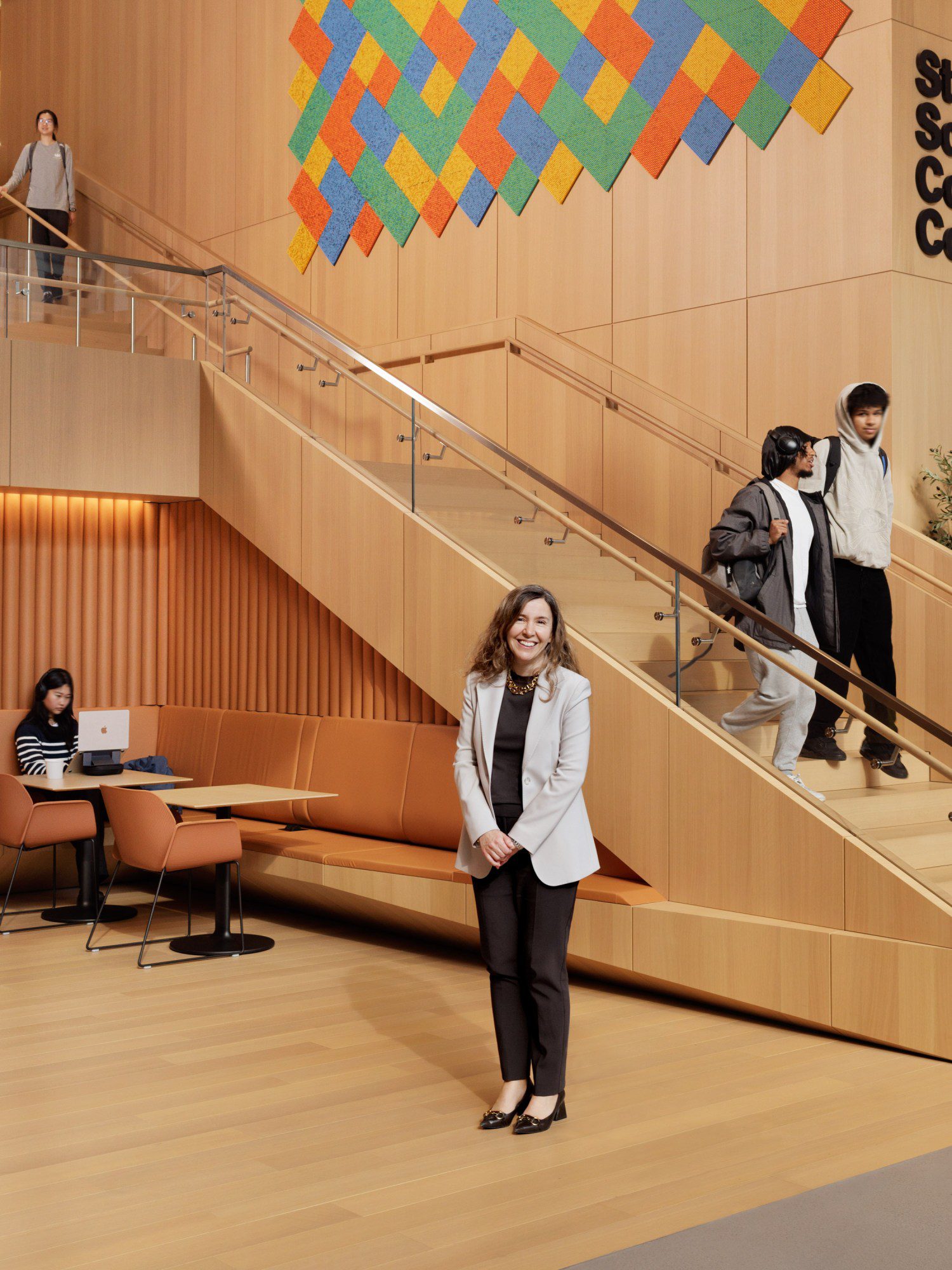
Dan Huttenlocher, SM ’84, PhD ’88, leads the way up to the eighth floor of Building 45, the recently completed headquarters of the MIT Schwarzman College of Computing. “There’s an amazing view of the Great Dome here,” he says, pointing out a panoramic view of campus and the Boston skyline beyond. The floor features a high-end event space with an outdoor terrace and room for nearly 350 people. But it also serves an additional purpose—luring people into the building, which opened last January. The event space “wasn’t in the original building plan,” says Huttenlocher, Schwarzman’s inaugural dean, “but the point of the building is to be a nexus, bringing people across campus together.”
Launched in 2019–’20, Schwarzman is MIT’s only college, so called because it cuts across the Institute’s five schools in a new effort to integrate advanced computing and artificial intelligence into all areas of study. “We want to do two things: ensure that MIT stays at the forefront of computer science, AI research, and education,” Huttenlocher says, “and infuse the forefront of computing into disciplines across MIT.” He adds that safety and ethical considerations are also critical.
To that end, the college now encompasses multiple existing labs and centers, including the Computer Science and Artificial Intelligence Laboratory (CSAIL), and multiple academic units, including the Department of Electrical Engineering and Computer Science. (EECS—which was reorganized into the overlapping subunits of electrical engineering, computer science, and artificial intelligence and decision-making—is now part of both the college and the School of Engineering.) At the same time, the college has embarked on a plan to hire 50 new faculty members, half of whom will have shared appointments in other departments across all five schools to create a true Institute-wide entity. Those faculty members—two-thirds of whom have already been hired—will conduct research at the boundaries of advanced computing and AI.
“We want to do two things: ensure that MIT stays at the forefront of computer science, AI research, and education and infuse the forefront of computing into disciplines across MIT.”
Dan Huttenlocher
The new faculty members have already begun helping the college respond to an undeniable reality facing many students: They’ve been overwhelmingly drawn to advanced computing tools, yet computer science classes are often too technical for nonmajors who want to apply those tools in other disciplines. And for students in other majors, it can be tricky to fit computer science classes into their schedules.
Meanwhile, the appetite for computer science education is so great that nearly half of MIT’s undergraduates major in EECS, voting with their feet about the importance of computing. Graduate-level classes on deep learning and machine vision are among the largest on campus, with over 500 students each. And a blended major in cognition and computing has almost four times as many enrollees as brain and cognitive sciences.
“We’ve been calling these students ‘computing bilinguals,’” Huttenlocher says, and the college aims to make sure that MIT students, whatever their field, are fluent in the language of computing. “As we change the landscape,” he says, “it’s not about seeing computing as a tool in service of a particular discipline, or a discipline in the service of computing, but asking: How can we bring these things together to forge something new?”
The college has been the hub of this experiment, sponsoring over a dozen new courses that integrate computing with other disciplines, and it provides a variety of spaces that bring people together for conversations about the future of computing at MIT.
More than just a nexus for computing on campus, the college has also positioned itself as a broad-based leader on AI, presenting policy briefs to Congress and the White House about how to manage the pressing ethical and political concerns raised by the rapidly evolving technology.
“Right now, digital technologies are changing every aspect of our lives with breakneck speed,” says Asu Ozdaglar, SM ’98, PhD ’03, EECS department head and Schwarzman’s deputy dean of academics. “The college is MIT’s response to the ongoing digital transformation of our society.”
Huttenlocher, who also holds the title of Henry Ellis Warren (1894) Professor of Electrical Engineering and Computer Science and coauthored the book The Age of AI: And Our Human Future with Henry Kissinger and Eric Schmidt, has long been exploring such issues. He started programming computers back in middle school in Connecticut in the 1970s on an ASR 33 teletype machine, and eventually he studied at the University of Michigan as a double major in cognitive psychology and computer science, exploring speech recognition and visual perception. “AI work back then was relatively disconnected from the physical world,” he says. “Being interested in the perceptual side of things was kind of an outlier for what was going on in AI then.” When he looked at grad schools in the 1980s, only MIT, Carnegie Mellon, and Stanford were doing significant work in AI, he says: “I applied to those three schools and figured if it didn’t work out, I’d get a job.”
It worked out, of course. He headed to Cambridge and gravitated to MIT’s AI Lab in Technology Square, where he first worked on speech recognition and then transitioned into computer vision, at the time still in its infancy. After earning his PhD, he served simultaneously as a computer science professor at Cornell and a researcher at Xerox PARC, flying between New York and the burgeoning Silicon Valley, where he worked on computer vision for the digital transformation of copiers and scanners. “In academia, you have more curiosity-driven research projects, where in the corporate world you have the opportunity to build things people will actually use,” he says. “I’ve spent my career moving back and forth between them.”
Along the way, Huttenlocher gained administrative experience as well. He was a longtime board member and eventual chair of the MacArthur Foundation, and he also helped launch Cornell Tech, the university’s New York City–based graduate school for business, law, and technology, serving as its first dean and vice provost. When Stephen Schwarzman, CEO of the investment firm Blackstone Group, gave $350 million to MIT to establish a college of computing in 2018, he was eager to return to the Institute to lead it. “The fact that MIT was making a bold commitment to become a broad-based leader in the AI-driven age—and that it was cutting across all of its schools—was exciting,” he says.
Schwarzman College took shape through task forces involving more than 100 MIT faculty members. By the fall of 2019 a plan had been nailed down, and Huttenlocher was in place as director with EECS head Ozdaglar named deputy dean of academics. “I never believed that everybody wants to do computer science at MIT,” she says. “Students come in with a lot of passions, and it’s our responsibility to educate these bilinguals, so they are fluent in their own discipline but also able to use these advanced frontiers of computing.”
Ozdaglar’s background is in using machine learning to optimize communications, transportation, and control systems. Recently she has become interested in applying machine-learning algorithms to social media, examining how the choices people make when sharing content affect the information—and misinformation—recommended to them. This work builds on her longstanding interdisciplinary collaborations in the social sciences, including collaborations with her husband, economics professor (and recent Nobel laureate) Daron Acemoglu. “I strongly feel that to really address the important questions in society, these old department or disciplinary silos aren’t adequate anymore,” she says. “The college has enabled me to work much more broadly across MIT and share all that I’ve learned.”
Ozdaglar has been a driving force behind faculty hiring for the college, working with 18 departments to bring on dozens of scholars at the forefront of computing. In some ways, she says, it’s been a challenge to integrate the new hires into existing disciplines. “We have to keep teaching what we’ve been teaching for tens or hundreds of years, so change is hard and slow,” she says. But she has also noticed a palpable excitement about the new tools. Already, the college has brought in more than 30 new faculty members in four broad areas: climate and computing; human and natural intelligence; humanistic and social sciences; and AI for scientific discovery. In each case, they receive an academic home in another department, as well as an appointment, and often lab space, within the college.
Asu Ozdaglar, SM ’98, PhD ’03, Schwarzman’s deputy dean of academics, in the lobby of the new headquarters building.
That commitment to interdisciplinary work has been built into every aspect of the new headquarters. “Most buildings at MIT come across as feeling pretty monolithic,” Huttenlocher says as he leads the way along brightly lit hallways and common spaces with large walls of glass looking out onto Vassar Street. “We wanted to make this feel as open and accessible as possible.” While the Institute’s high-end computing takes place mostly at a massive computing center in Holyoke, about 90 miles away in Western Massachusetts, the building is honeycombed with labs and communal workspaces, all made light and airy with glass and natural blond wood. Along the halls, open doorways offer enticing glimpses of such things as a giant robot hanging from a ceiling amid a tangle of wires.
Lab and office space for faculty research groups working on related problems—who might be from, say, CSAIL and LIDS—is interspersed on the same floor to encourage interaction and collaboration. “It’s great because it builds connections across labs,” Huttenlocher says. “Even the conference room does not belong to either the lab or the college, so people actually have to collaborate to use it.” Another dedicated space is available six months at a time, by application, for special collaborative projects. The first group to use it, last spring, focused on bringing computation to the climate challenge. To make sure undergrads use the building too, there’s a classroom and a 250-seat lecture hall, which now hosts classic Course 6 classes (such as Intro to Machine Learning) as well as new multidiscipline classes. A soaring central lobby lined with comfortable booths and modular furniture is ready-made for study sessions.
For some of the new faculty, working at the college is a welcome change from previous academic experiences in which they often felt caught between disciplines. “The intersection of climate sustainability and AI was nascent when I started my PhD in 2015,” says Sherrie Wang, an assistant professor with a shared appointment in mechanical engineering and the Institute for Data, Systems, and Society, who is principal investigator of the Earth Intelligence Lab. When she hit the job market in 2022, it still wasn’t clear which department she’d be in. Now a part of Schwarzman’s climate cluster, she says her work uses machine learning to analyze satellite data, examining crop distribution and agricultural practices across the world. “It’s great to have a cohort of people who have similar philosophical motivations in applying these tools to real-world problems,” she says. “At the same time, we’re pushing the tools forward as well.”
Among other researchers, she plans to collaborate with Sara Beery, a CSAIL professor who analyzes vast troves of visual, auditory, and other data from a diverse range of sensors around the world to better understand how climate change is affecting distribution of species. “AI can be successful in helping human experts efficiently process terabytes and petabytes of data so they can make informed management decisions in real time rather than five years later,” says Beery, who was drawn to the college’s unique hybrid nature. “We need a new generation of researchers that frame their work by bringing different types of knowledge together. At Schwarzman, there is a clear vision that this type of work is going to be necessary to solve these big, essential problems.”
Beery is now working to develop a class in machine learning and sustainability with two other new faculty members in the climate cluster: Abigail Bodner, an assistant professor in EECS and Earth, Atmospheric, and Planetary Sciences (whose work uses AI to analyze fluid dynamics), and Priya Donti, assistant professor in EECS and LIDS (who uses AI and computing to optimize integration of renewable energy into power grids). “There’s already a core course on AI and machine learning—an on-ramp for people without prior exposure who want to gain those fundamentals,” says Donti. “The new class would be for those who want to study advanced AI/ML topics within the context of sustainability-related disciplines, including power systems, biodiversity, and climate science.”
The class on machine learning and sustainability would be part of Common Ground for Computer Education, an initiative cochaired by Ozdaglar and involving several dozen faculty members across MIT to develop new classes integrating advanced computing with other disciplines. So far, says Ozdaglar, it has generated more than a dozen new courses. One machine-learning class developed with input from nine departments provides exposure to a variety of practical applications for AI algorithms. Another collaboration, between computer science and urban studies, uses data visualization to address housing issues and other societal challenges.
Julia Schneider ’26, a double major in AI and mathematics, took the Common Ground class on optimization methods, which she says demonstrated how computer science concepts like shortest-path algorithms and reinforcement learning could be applied in other areas, such as economics and business analytics. She adds that she values such classes because they blend her two areas of study and highlight multidisciplinary opportunities.
“Even faculty who are leading researchers in this area say ‘I can’t read fast enough to keep up with what’s going on.’”
Dan Huttenlocher
Natasha Hirt ’23, MEng ’23, came to MIT thinking that computer science was peripheral to her major in architecture and urban planning. Then she took a course with building technology professor Caitlin Mueller on structural optimization and design—and it changed the trajectory of her MIT career. That led her to Interactive Data Visualization and Society, a Common Ground class, and several interdisciplinary classes combining computer science and field-specific knowledge. She says these provided the perfect introduction to algorithms without delving too much into math or coding,giving her enough working knowledge to set up models correctly and understand how things can go wrong. “They are teaching you what an engine is, what it looks like, and how it works without actually requiring you to know how to build an engine from scratch,” she says, though she adds that the classes also gave her the opportunity to tinker with the engine.
She’s now working on master’s degrees in both building technology and computation science and engineering, focusing on making buildings more sustainable by using computational tools to design novel, less material-intensive structures. She says that Common Ground facilitates an environment where students don’t have to be computer science majors to learn the computational skills they need to succeed in their fields.
And that’s the intent. “My hope is that this new way of thinking and these educational innovations will have an impact both nationally and globally,” Ozdaglar says.
The same goes for recent papers MIT has commissioned, both on AI and public policy and on applications of generative AI. As generative AI has spread through many realms of society, it has become an ethical minefield, giving rise to problems from intellectual-property theft to deepfakes. “The likely consequence has been to both over- and under-regulate AI, because the understanding isn’t there,” Huttenlocher says. But the technology has developed so rapidly it’s been nearly impossible for policymakers to keep up. “Even faculty who are leading researchers in this area say ‘I can’t read fast enough to keep up with what’s going on,’” Huttenlocher says, “so that heightens the challenge—and the need.”
The college has responded by engaging faculty at the cutting edge of their disciplines to issue policy briefs for government leaders. First was a general framework written in the fall of 2023 by Huttenlocher, Ozdaglar, and the head of MIT’s DC office, David Goldston, with input from more than a dozen MIT faculty members. The brief spells out essential tasks for helping the US maintain its AI leadership, as well as crucial considerations for regulation. The college followed that up with a policy brief by EECS faculty specifically focusing on large language models such as ChatGPT. Others dealt with AI’s impact on the workforce, the effectiveness of labeling AI content, and AI in education. Along with the written documents, faculty have briefed congressional committees and federal agencies in person to get the information directly into the hands of policymakers. “The question has been ‘How do we take MIT’s specific academic knowledge and put it into a form that’s accessible?’” Huttenlocher says.
On a parallel track, in July of 2023 President Sally Kornbluth and Provost Cynthia Barnhart, SM ’86, PhD ’88, issued a call for papers by MIT faculty and researchers to “articulate effective road maps, policy recommendations, and calls for action across the broad domain of generative AI.” Huttenlocher and Ozdaglar played a key role in evaluating the 75 proposals that came in. Ultimately, 27 proposals—exploring the implications of generative AI for such areas as financial advice, music discovery, and sustainability—were selected from interdisciplinary teams of authors representing all five schools. Each of the 27 teams received between $50,000 and $70,000 in seed funds to research and write 10-page impact papers, which were due by December 2023.
Given the enthusiastic response, MIT sent out another call in the fall of 2023, resulting in an additional 53 proposals, with 16 selected in March, on topics including visual art, drug discovery, and privacy. As with the policy briefs, Huttenlocher says, “we are trying to provide the fresher information an active researcher in the field would have, presented in a way that a broader audience can understand.”
Even in the short time the college has been active, Huttenlocher and Ozdaglar have begun to see its effects. “We’re seeing departments starting to change some of the ways they are hiring around degree programs because of interactions with the college,” Huttenlocher says. “There is such a huge acceleration of AI in the world—it’s getting them to think with some urgency in doing this.” Whether through faculty hiring, new courses, policy papers, or just the existence of a space for high-level discussions about computing that had no natural home before, Huttenlocher says, the college hopes to invite the MIT community into a deeper discussion of how AI and other advanced computing tools can augment academic activities around campus. MIT has long been a leader in the development of AI, and for many years it has continued to innovate at the cutting edge of the field. With the college’s leadership, the Institute is in a position to continue innovating and to guide the future of the technology more broadly. “The next step,” says Ozdaglar, “is to take that impact out into the world.”
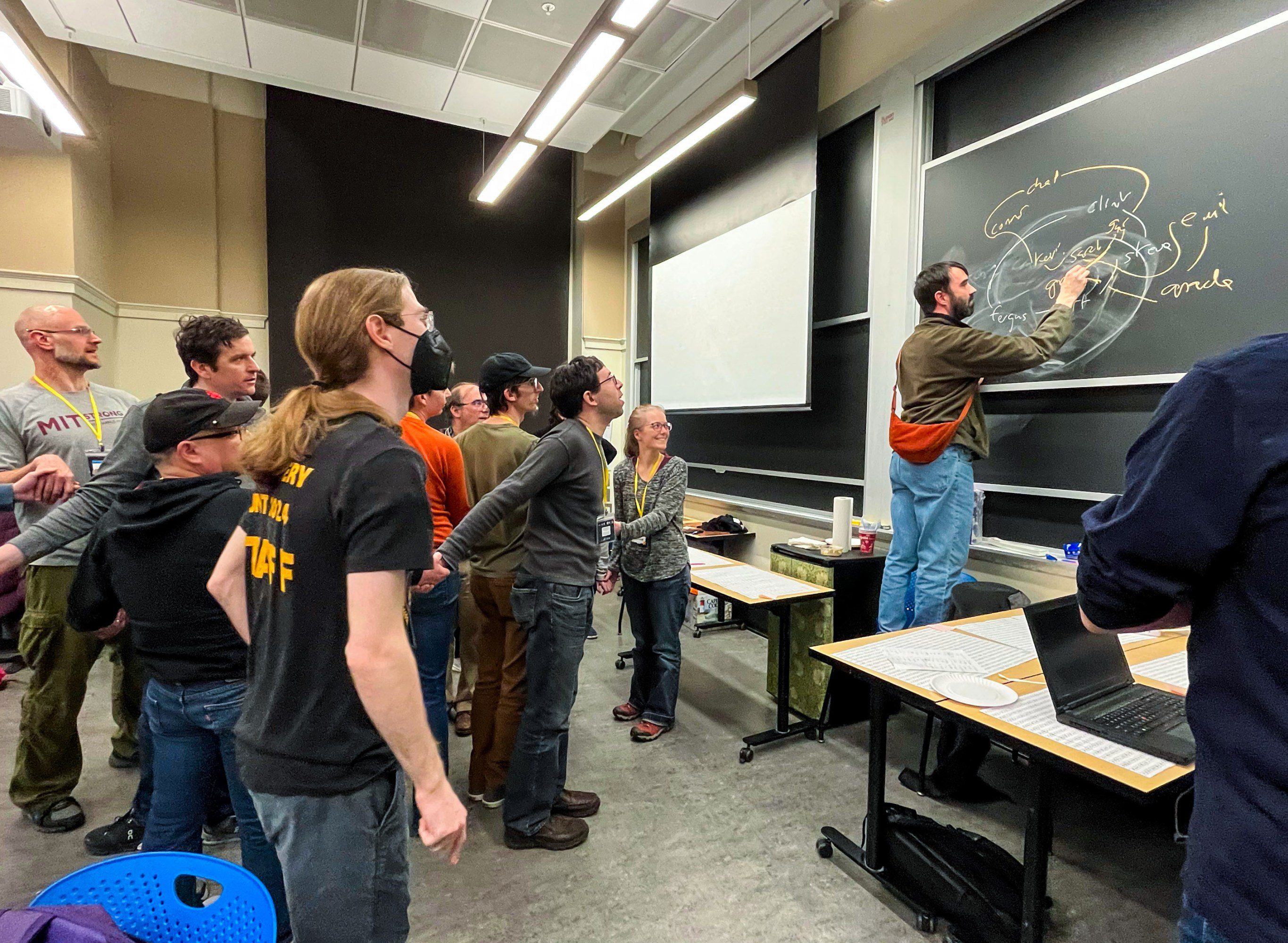
It’s Sunday, January 14, 2024, more than 50 hours since the annual MIT Mystery Hunt kicked off at noon on Friday, and Setec Astronomy is one of more than 200 teams racing to solve hundreds of puzzles over three days. The 60-some members of Setec, many of whom are joining remotely from as far away as Australia, are making good progress, even though many of us are running on limited sleep and questionable nutritional decisions. Several of the chalkboards in the Building 2 classroom we’ve been assigned for our team headquarters are covered in lists of puzzle solutions or messy diagrams charting out theories about how to crack the various challenges—all of them constructed, as Mystery Hunt tradition dictates, by the most recent winner, in this case The Team Formerly Known as the Team to Be Named Later.
The “hydra” we’re dealing with is a metapuzzle: We have to find a way to use the solutions from other puzzles that we’ve already solved to extract one more answer. If we solve this one, we’ll be rewarded with more puzzles.
We know we need to diagram the answers for this round of puzzles as a binary tree. In keeping with the hydra metapuzzle’s mythological analogue, every time we solve one puzzle, two more branch off until we have a diagram five levels deep. We’re still missing answers from several unsolved puzzles that would help us figure out how the diagram works and how to extract an answer to the metapuzzle. The diagram we’ve drawn, in green chalk, gets more chaotic with every addition, erasure, and annotation we squeeze onto the overcrowded chalkboard. But we can sense that we’re just one “aha!” away from a solution.
MIT’s Mystery Hunt has been challenging puzzle enthusiasts every year since Brad Schaefer ’78, PhD ’83, wrote 12 “subclues” on a single sheet of paper as a challenge for friends during Independent Activities Period (IAP) in 1981. The answers led solvers to an Indian Head penny he had hidden on campus. Today’s Hunts are still built around that basic concept, but what constitutes a challenge has changed over four decades. One of the clues from the original 1981 Hunt is just a missing word in a quote: “He that plays the king shall be _____; his majesty shall have tribute of me.” It’s easy to solve today with Google, but in 1981, even if you knew it was Shakespeare, if you didn’t notice the subtle hint that you should look for a character referring to a play within the play, it might have taken a few hours of skimming the Bard’s collected works to find the answer.
The Setec Astronomy team tries to map out whether the human knot they’ve gotten themselves into can be untangled.
JADE CHONGSATHAPORNPONG ’24/MIT TECHNIQUE
We add a few more solutions to the hydra diagram over the next few hours. Eventually someone notices that all the answers in the fifth level of the diagram seem to have an odd prevalence of Ls and Rs. This is the “aha!” moment: They tell us how to navigate the binary tree. From the first node at the top of the tree, we follow the Ls and Rs in the order they appear in each of the 16 solutions on the fifth level. Take the left branch, then right, then left again, landing on a word that starts with H. The second fifth-level answer leads us to a word that starts with E. Repeating the process with all 16 answers spells out an apt way to deal with a hydra: “HEADTOHEADBATTLE.” (Puzzle solutions are traditionally written in all caps with no spaces or punctuation.) Those of us who’ve been tackling the puzzle take a moment to enjoy our victory before splitting up to find new puzzles to work on.
Some elements of the Mystery Hunt are hard to describe, the kind of must-be-seen ingenuity that also inspires hacks on the Great Dome and any number of above-and-beyond engineering projects showcased around campus every year. Most of the puzzles are utterly unique, although they do often incorporate logic and word problems as well as more mainstream elements like crosswords, sudoku, and Wordle. But almost anything can be turned into a puzzle. For example, chess puzzles might be combined with the card game Magic: The Gathering. Or solvers could be asked to organize a Git repository with 10,000 out-of-order commits (that is, find the correct sequence of 10,000 changes to a file as it was tracked in a version control system), identify duets from musicals, or draw on their knowledge of pop culture trivia.
For most of its history, the Mystery Hunt had little official status on campus. By tradition as much as any organizational effort, teams simply showed up in Lobby 7 on the Friday before the Martin Luther King Jr. holiday for the kickoff. In 2014, the MIT Puzzle Club was formed to help provide year-to-year continuity and other support, such as securing rooms for teams to work in and reserving Kresge Auditorium for the opening ceremonies. Puzzle Club also hosts other events, such as mini puzzle hunts and sudoku and logic puzzle competitions—which Becca Chang ’26, the club’s current president, says “has helped a lot with outreach to new students or anyone who might be interested in [puzzles].”
Technology has enabled the Mystery Hunt to grow and evolve in significant ways, and not just in terms of the kinds of puzzles that are possible. Through the mid-1990s, a single person could take on the responsibility of writing and running the event. Today it’s a yearlong commitment for the winning team to design the next year’s Hunt. Doing so requires managing creative output and technological infrastructure that rival those of a small business. Duties include spending thousands of hours writing and testing puzzles, constructing physical puzzles and props, and building a dynamic website that can withstand the huge influx of puzzle-hungry visitors.
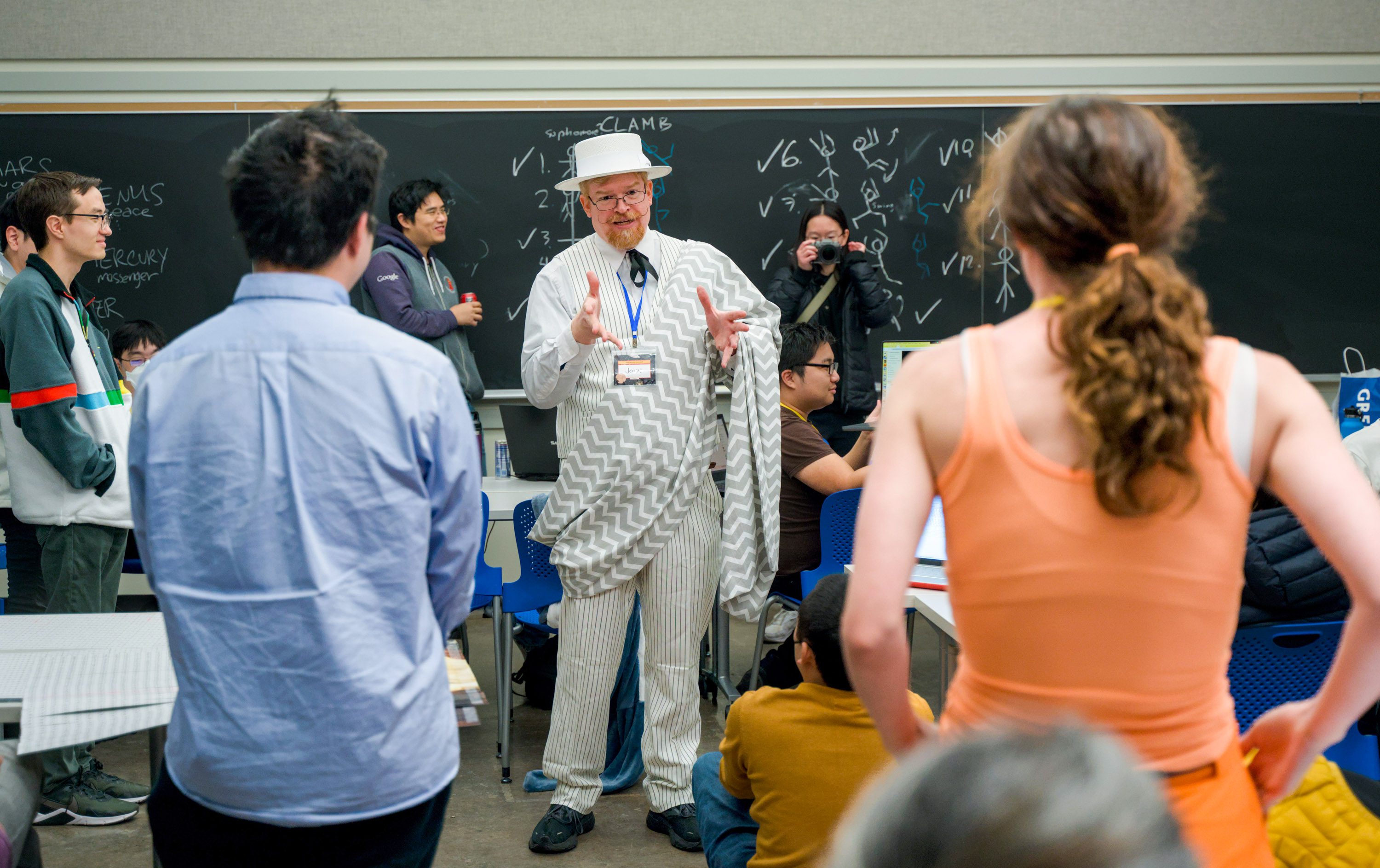
Today’s Hunts are built around a story. Here John Bromels as the god Neptune checks in on Galactic Trendsetters’ progress to restore the god Pluto after his planet was demoted.
JADE CHONGSATHAPORNPONG ’24/MIT TECHNIQUE
Just organizing a team of solvers can be a major undertaking, especially now that more and more participants are joining remotely. Anjali Tripathi ’09, who started the team I’m Not a Planet Either in 2015, got her introduction to puzzle hunts through a miniature Mystery Hunt that Simmons Hall runs for first-years. After tackling the main event with the Simmons team on campus as an undergrad, she participated remotely for the first time in 2010. “I was abroad in England and still wanted to do Hunt, and I remember how hard that was,” she says. The team “had no infrastructure for it.”
“It’s about connecting with other humans— that’s why we do it.”
Erin Rhode ’04, whose team name one year was the entire text of Ayn Rand’s Atlas Shrugged
Today, solvers can work together across the room or across a continent. Platforms like Slack and Discord have become indispensable to many teams, which use them for updates and announcements as well as creating separate channels where people can tackle a given puzzle together. Many teams use applications that organize the convoluted deluge of puzzles into a workflow so everyone can see which have been solved, which need attention, and who’s working on what. Google Docs and Google Sheets make it easy for multiple people to contribute to progress on the same puzzle whether they’re sitting side by side on campus or are separated by several time zones.
“I think especially post-2020, there is just the expectation that everything is going to be accessible online,” says Tripathi, who still has a Hunt-related Google doc from 2008, just a couple of years after the service launched.
But even as the Mystery Hunt has adapted to the internet—and to increasingly powerful search engines, smartphones, the Zoom era, and even some machine-learning applications—at its core it remains a very human experience.
“It’s about connecting with other humans—that’s why we do it,” says Erin Rhode ’04, a longtime Mystery Hunter whose team has won twice. She recalls being inducted into the Hunt as a first-year in 2001. “An upperclassman came in and was like, ‘You’re coming to the math majors’ lounge. We’re doing this puzzle hunt thing.’” The name of Rhode’s team changes every year, though they might be best known for the year their name was the entire text of Ayn Rand’s Atlas Shrugged. Last year, they were . (That’s not a typo or a missing word—it’s the zero-width space, a Unicode non-character primarily used in document formatting.)
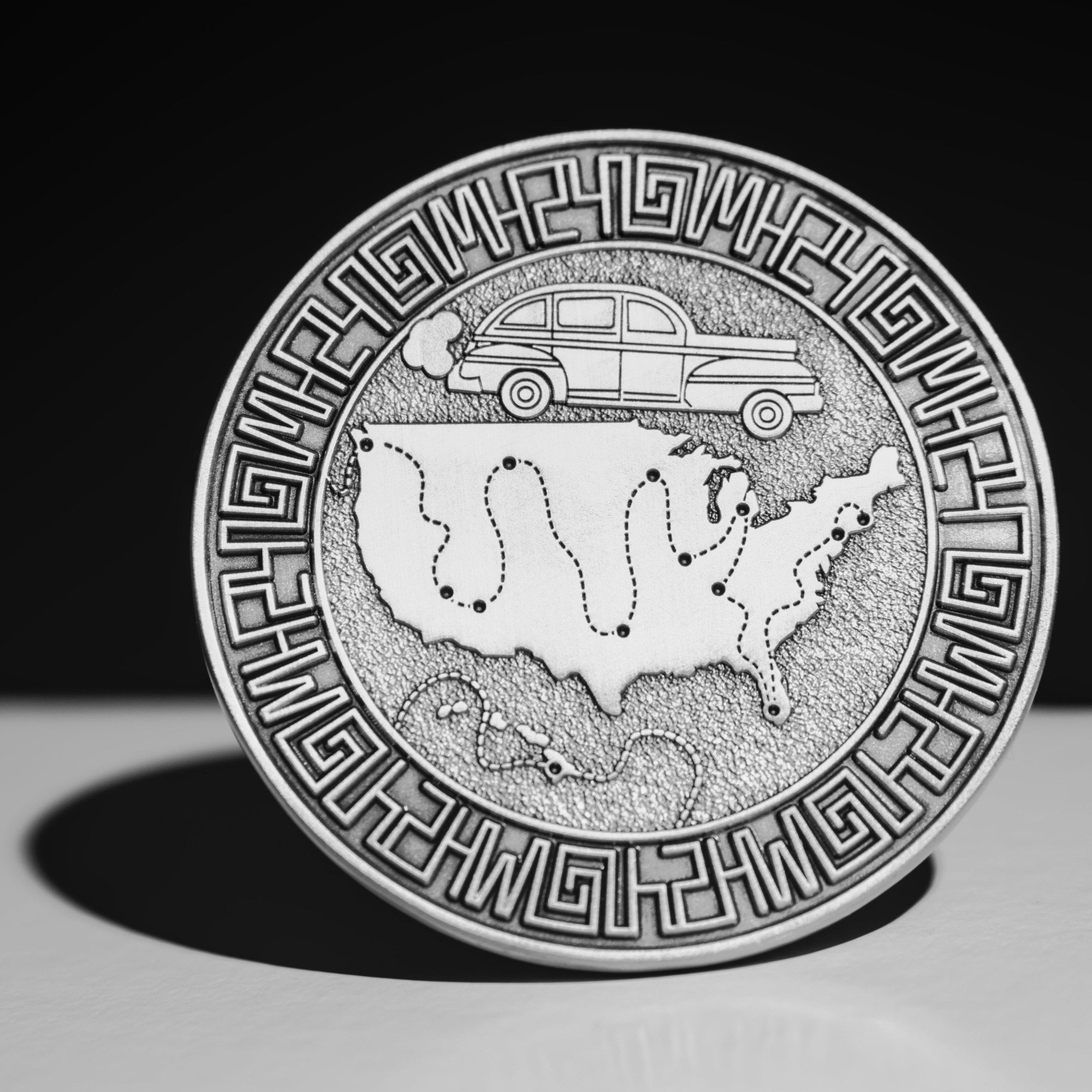
Early Mystery Hunts led solvers to an Indian Head penny hidden on campus. Today, winning teams are awarded coins unique to each year’s Hunt. Ringed with a repeating MH24, the 2024 coin shows the cities teams “visited” on their quest.
JADE CHONGSATHAPORNPONG ’24/MIT TECHNIQUE
Like so much of the Hunt, team names are an exercise in creativity. The full name of the team running the 2024 Mystery Hunt was officially The Team Formerly Known as the Team Formerly Known as the Team Formerly Known as the Team Formerly Known as the Team Formerly Known as the Team to Be Named Later. Some teams keep their name every year, like Setec Astronomy (an anagram for “too many secrets,” in a reference to the classic 1992 heist film Sneakers). Others change every year or every few years, or when teams merge, as when Death from Above joined forces with Project Electric Mayhem to become Death and Mayhem.
Rhode remembers one particular puzzle from her first Hunt that she and her team (known that year as the Vermicious Knids) worked on through the night. They had to figure out that a list of enigmatic phrases were clues to song titles. For example, “Of course; you just go north on Highway 101” clued the song “Do You Know the Way to San Jose?” “I think today, we would have solved that puzzle in about an hour,” Rhode says. “There weren’t song lyric databases back then. And so it was a lot more sitting around on your own trying to come up with songs as opposed to just finding some master list and then searching it.”
Writing puzzles with the knowledge that solvers will have a slew of tools at hand is just part of the process. “Use whatever technology you have at your disposal to solve the puzzle is the general rule of thumb,” says Jon Schneider ’13, a machine-learning researcher who hunts with Galactic Trendsetters . (The in their team name is pronounced like a plane taking off and landing, respectively.) Schneider has been hunting since 2010, when it was common for solvers to have to identify clips of songs or other audio. He’s seen that change in the past decade, though: “Audio recognition [technology] like Shazam has become a thing, so it’s harder to create puzzles that require the skill of music recognition.”
“When you’re a constructor, you try to figure out: What is my challenge for the solver?” says Dan Katz ’03. Katz has solved and written a lot of puzzles. (In fact, he created a five-puzzle mini Hunt for this issue’s Puzzle Corner.) He attended his first Mystery Hunt in 1998, as a junior in high school, before he had even applied to MIT. He’s been part of a winning team eight times (probably a record) and competes in events like the World Sudoku Championship and US Puzzle Championship. In Katz’s view, technology should make puzzling more interesting for the solver. While solvers might need to, say, code a program, organize information in a spreadsheet, or navigate a video-game-like interface to arrive at an answer, what he prizes most is the mental challenge of figuring out how to solve a puzzle.
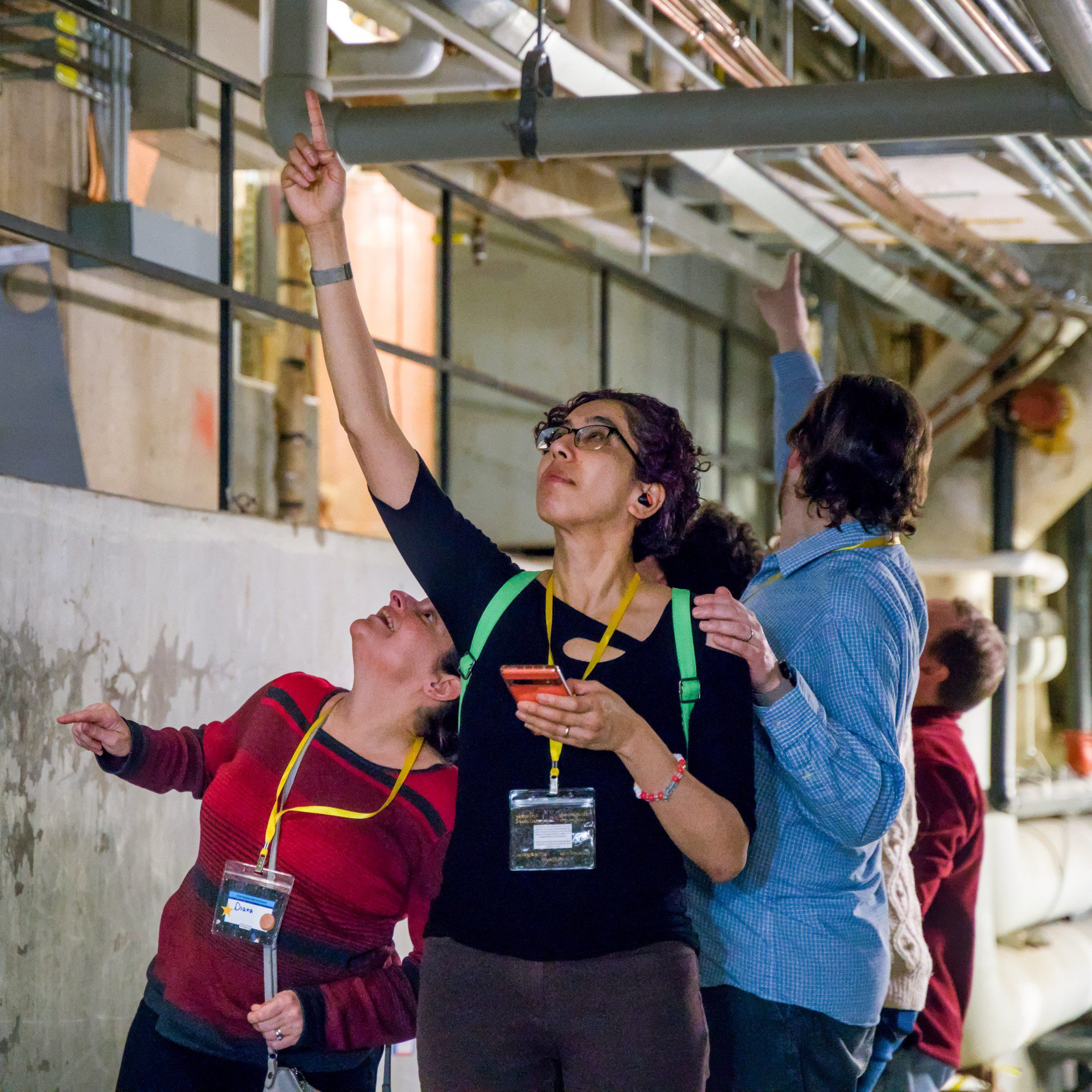
During what’s known as the Mid-Hunt Runaround, a team follows a set of cryptic instructions that lead them on a subterranean journey across campus.
JADE CHONGSATHAPORNPONG ’24/MIT TECHNIQUE
Rhode misses the days before an app was able to listen to a few seconds of a song and identify it. “One of my superpowers in the early days of the Hunt was: Play me a bunch of pop songs and I can identify like 90% of them,” she says. “Now everybody’s got Shazam on their phone. And so as fast as I might be, Shazam was always going to be faster.”
That doesn’t mean puzzles can’t be based on song identification—or image identification, another common puzzle element that has been made trivial by tools like Google’s image search capabilities. It just means constructors must become more creative. “You have to obscure the images or the music in such a way that the technology can’t find it quickly,” Rhode says. She describes a puzzle she wrote when she wanted solvers to identify songs without using technology: “I arranged eight songs a cappella and sang them myself, but buzzing like a bee. And the whole idea was you can’t Shazam that.”
Schneider’s team took a similar approach to constructing a puzzle in which solvers had to identify specific visual artists—not by their work, but by their distinctive style. Solvers were prompted to upload an image of their choosing, and a generative AI tool similar to DALL-E rendered it in the style of the artist they were supposed to name.
“I mostly just want to be surprised.”
Jon Schneider ’13 of the team Galactic Trendsetters
That’s not the only puzzle to have incorporated some machine-learning elements in the last few years. A few examples have used semantic similarity scoring systems where solvers have to guess words or phrases—a kind of machine-learning-enabled version of “hot or cold.”
Even if machine learning has potential as a tool for puzzle constructors, generative AI is unlikely to solve Mystery Hunt puzzles anytime soon. ChatGPT can answer questions that might be helpful in getting started and maybe even help solve a crossword clue or two, but the puzzles are often so unusual that it doesn’t know where to begin. When presented with them, it usually responds by stating that it “would need more context or clues” in order to proceed.
Schneider did find ChatGPT very helpful, though, in solving a non–Mystery Hunt puzzle about navigating the byzantine rules of the role-playing game Dungeons & Dragons, which he admits he’s never played. A few years ago, there would have been no way around spending hours digging through the rulebooks and figuring out each step, but giving the puzzle to ChatGPT worked. “It was really good at doing this. I guess it had trained on enough data of people playing Dungeons & Dragons that this was within its capabilities,” he says.
Schneider is optimistic that new technology will be integrated into Mystery Hunt in creative ways, expanding the scope of what puzzle constructors can come up with to entertain solvers. Ultimately, he says, “I mostly just want to be surprised.”
As the sun sets on Sunday, Setec continues solving puzzles at a steady pace, but we’re also still unlocking new sections of the Hunt—a sign that we’re still some distance from the endgame, though rumors (but never spoilers) from friends on other teams suggest that a few teams might be closing in. As midnight rolls around there’s still no announcement, and so we push on. Ultimately, the 2024 Hunt ends up running into Monday morning, one of only a handful of times it’s taken more than 60 hours to complete.
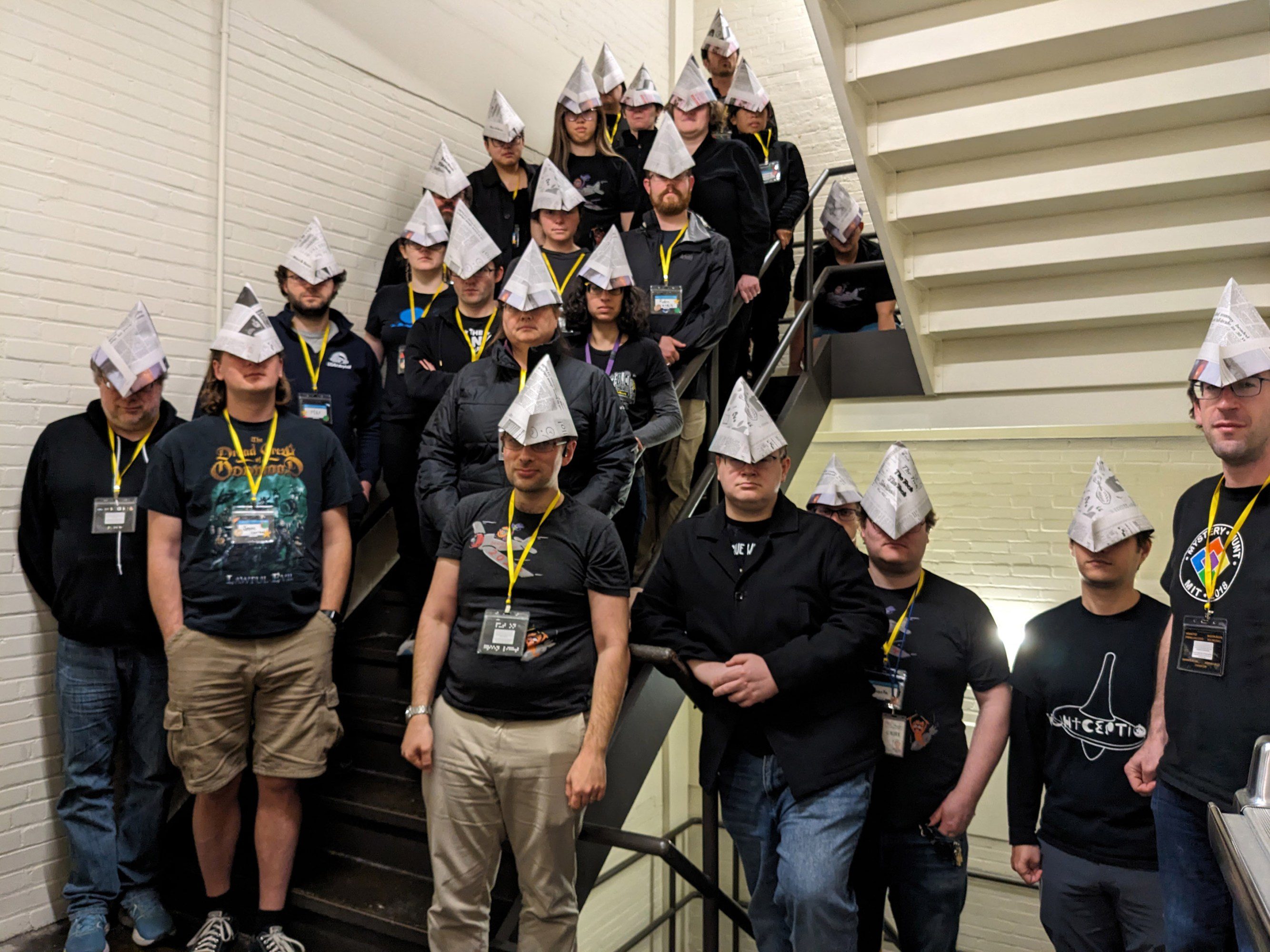
The 2024 Mystery Hunt included what was called the “Herc-U-Lease” Scavenger Hunt. As part of the scavenger hunt, teams were asked to have as many members as possible look as identical as possible. Death and Mayhem realized that many members were wearing black T-shirts and decided to unify the look with paper hats fashioned from copies of The Tech someone found on campus.
MOLLY FREY/DEATH & MAYHEM
A little after 5 a.m., team Death and Mayhem solves the final puzzle to win the 2024 Mystery Hunt—and the responsibility of developing the 2025 Hunt, which kicks off on January 17. In the end, 266 teams have solved at least one of the 2024 Hunt’s 237 puzzles and Setec Astronomy has solved 174. (Teams typically care less about postgame rankings than about how many puzzles they get to before time runs out.)
The Team Formerly Known as the Team to Be Named Later sends out an announcement that a wrap-up event, at which they’ll give a full overview of the weekend and hand over the reins to Death and Mayhem, will begin at noon in 26-100. Because creating a Mystery Hunt is such a daunting task, Death and Mayhem got to work on this year’s within hours of winning, says James Douberley ’13, who assumed the title of “benevolent dictator” to orchestrate and oversee the team’s puzzle writing.
The weight of expectation is not lost on Douberley and his teammates: This is a once-a-year event that holds a lot of meaning for many participants.
The Mystery Hunt is about solving puzzles, but it’s also far more social and immersive than puzzle books and escape rooms. In 2024, nearly 2,000 people representing 91 teams showed up on campus to participate—and another 2,450 or so signed up to puzzle from afar. All told, solvers included 52 faculty members, 278 students, and 950 alumni, ranging from recent graduates to those who got their degrees decades ago. For Chang, the Hunt is an opportunity to connect with the broader community, including alumni from her dorm whom she doesn’t see often. “This is the one time in the year that we get to all just be in one place together and do this thing that we love,” she says. “It’s just a really great bonding experience.”
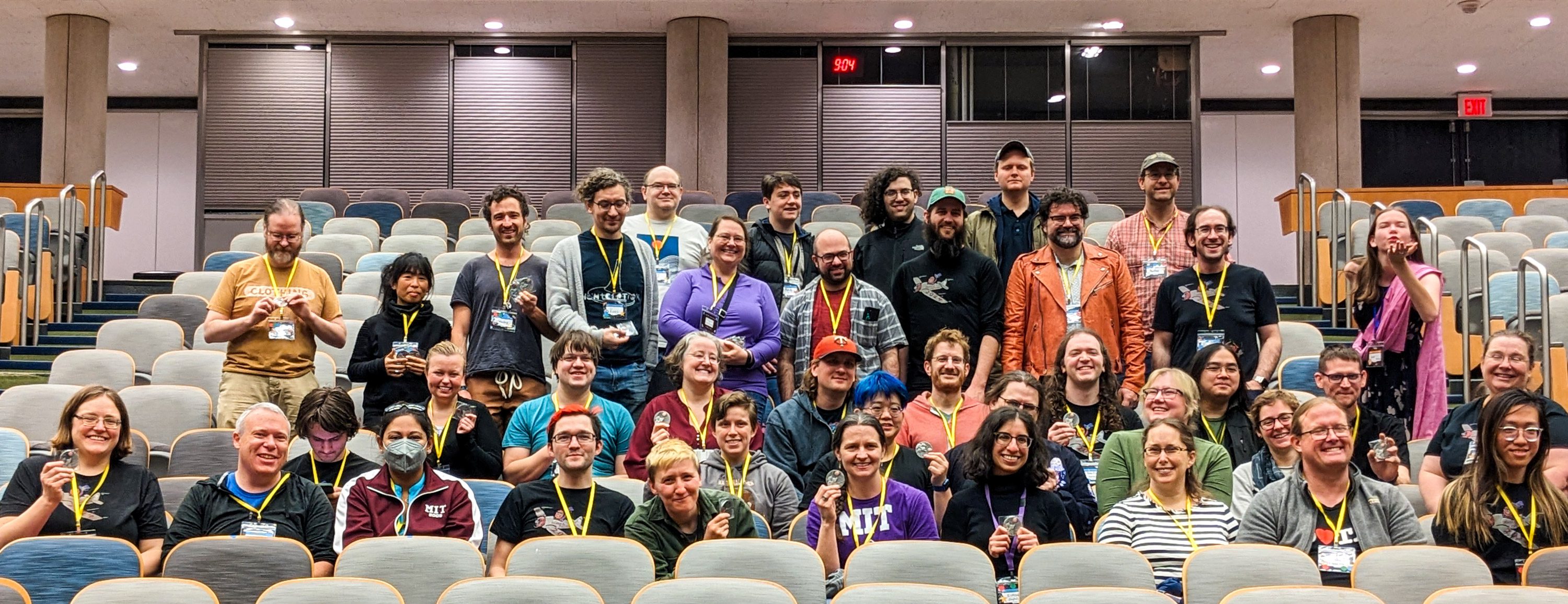
Shortly after solving the final puzzles in the 2024 MIT Mystery Hunt, members of Death & Mayhem received the custom coins awarded to the victors and posed for a photo with Aphrodite (of the Team Formerly Known as the Team to Be Named Later), who blew kisses in celebration.
COURTESY OF DEATH & MAYHEM
The MIT campus plays a special role in the Hunt. Maybe you have to use the walls of the List Visual Arts Center lobby as a grid for a logic puzzle, or find certain names on the memorial plaques in Lobby 10 whose first letters spell out an answer. But it’s not just that clues can be part of the physical space—it’s that campus is the epicenter for the MIT spirit of creativity, inventiveness, and industriousness that makes the Mystery Hunt unique. “People talk about New York being a character in movies,” Katz says. “I feel like MIT is a character in Mystery Hunt.”
For Douberley, the Mystery Hunt takes him back to his student days, when he tackled hard challenges through marathon work sessions and all-nighters. “You fall asleep on the floor, and you’re in the dorm lounge and your friend comes and wakes you up and says, ‘Here’s a coffee—I need your help with something,’” he says. “And that is something that lives with you for the rest of your life.”
Editor’s Note:
The 2025 MIT Mystery Hunt kicks off on January 17, 2025. But if you’re eager to start puzzling before then—or get a taste of puzzling if you’ve never taken part before—check out the MIT Mystery Heist, a pre-Hunt round of puzzles written by the Mystery Hunt team known as the Providence Crime Syndication. Learn more and solve at mitmysteryheist.com.