New Ecommerce Tools: April 8, 2026

This week’s rundown of new services for ecommerce merchants includes updates on B2B tools, fulfillment, AI reporting, advertising platforms, agentic commerce, payments, affiliate marketing, and business formation services.

Got an ecommerce product release? Email updates@practicalecommerce.com.

New Tools for Merchants

Shopify extends native B2B features to all merchants. Merchants on Shopify can now manage wholesale and direct-to-consumer operations without plugins or patchwork. Shopify is extending its foundational B2B features to merchants on Basic, Grow, and Advanced plans, at no extra cost. Also, merchants on those plans can access native features, including company profiles for wholesale buyers, up to three custom catalogs with tailored pricing, volume discounts and quantity rules, vaulted credit cards, and payment terms.

Web page for Shopify's B2B and D2C management

Shopify: B2B and D2C management

ShipMonk opens fulfillment center designed for apparel brands. ShipMonk, a global fulfillment provider for ecommerce brands, has opened a center in Louisville, Kentucky. The facility has 406,000 square feet, 60 dock doors, and more than 300,000 storage locations. Per ShipMonk, the facility optimizes layouts for high-SKU density, dedicated rework stations, on-site embroidery services for premium customization, specialized workflows for wholesale complexity, and floor-ready presentation, as well as bespoke fulfillment services.

Swyft Filings launches an app to start an LLC inside ChatGPT. Swyft Filings, a provider of business formation services, has launched its OpenAI app, enabling entrepreneurs to form a business, start an LLC, register a corporation, and handle formation tasks. According to Swyft Filings, the app leverages generative AI for real-time guidance, faster filings, and more intuitive access to business formation services. The app is now available in the ChatGPT store.

Affiliate platform Levanta acquires Perch+ for Amazon sellers. Levanta, an affiliate and creator platform for ecommerce, has acquired Perch+, an affiliate network for Amazon sellers. According to Levanta, the move enables Perch+ brands to work directly with 60,000 partners in Levanta’s marketplace, with support for Amazon attribution and creator connections. Brands can run paid placement campaigns, automate product sampling, and surface who’s talking about their brand across social, per Levanta.

Miva releases 26 R1 with an embedded AI reporting assistant. Ecommerce platform Miva has released its 26 R1 update, with an embedded reporting assistant to help merchants make smarter, data-driven decisions. At the center of the release is AI Insights, an in-line reporting assistant. Merchants can use natural-language prompts to query store data, generate performance summaries, analyze conversion rates, and identify top-performing products by category or date range, all without exporting reports or building complex dashboards, according to Miva.

Home page of Miva

Miva

Commercetools partners with TradeCentric on B2B commerce. TradeCentric, a B2B e-procurement provider, has partnered with Commercetools, an ecommerce platform for global enterprises. Together, Commercetools and TradeCentric state that they enable seamless integration capabilities to eliminate manual order processing, reduce errors, and accelerate order-to-cash cycles. Commercetools customers gain access to these capabilities while integrating with major e-procurement systems, including the 220 procurement platforms supported by TradeCentric.

Bitly introduces AI-powered features for marketing analytics. Bitly, the URL shortener, has launched Assist and Weekly Insights for marketing. Bitly Assist is an AI-powered chat assistant built directly into the platform. It enables customers to ask questions conversationally about link and QR code performance. Weekly Insights highlights meaningful changes in link and QR code activity, identifying patterns across referrers, geographies, and devices.

Durable launches Discoverability for AI search. Durable, an AI business builder, has launched Discoverability, a feature that helps businesses get found on generative AI platforms such as ChatGPT, Gemini, Grok, and Perplexity. According to Durable, Discoverability provides (i) a single measure of how findable a business is across all online channels, (ii) guided suggestions to improve results over time, and (iii) rankings against competitors in genAI visibility.

Goflow introduces Order-Level P&L for real-time profit tracking. Goflow, a multichannel operating system for Amazon-first merchants, has launched Order-Level P&L for real-time profit tracking across orders, analytics, and reporting. The new feature estimates margins using inputs such as inventory batch costs and shipping rates. Each value is labeled by source, ensuring transparency between actual and estimated figures. By making profit and margin visible at the order, SKU, and channel level, sellers can identify issues quickly, per Goflow.

Home page of Goflow

Goflow

BitRail launches merchant payment suite to help eliminate fees. Fintech company BitRail has announced an expanded suite of merchant payment services in partnership with Payment Lock, an enterprise security and payment processing platform. These tools build on BitRail’s core platform, which gives merchants branded checkout, branded digital wallets, and branded payment infrastructure. The features include compliant pricing for cash and credit, checkout and pay-now buttons, API integration, customer card vault, and reporting.

BQool brings Amazon AI advertising solutions to growing brands. BQool, a platform for Amazon sellers to automate operations, has announced the availability of its AI-powered advertising feature, designed to simplify campaign management and improve performance. The feature provides a one-click system that continuously analyzes large volumes of data, automates repetitive advertising tasks, and optimizes campaigns. The feature includes “auto-harvesting,” which identifies and adds high-performing keywords, and enables sellers to adopt intelligent automation while maintaining control and visibility, per BQool.

SDLC Corp launches free Odoo-WooCommerce connector. SDLC Corp, a technology integration provider, has launched a free connector that enables data synchronization between WooCommerce storefronts and Odoo back-office systems. According to SDLC Corp, the connector includes features to support day-to-day performance, including webhook-based event processing, scheduled jobs for inventory and catalog synchronization, configurable field mapping inside Odoo, and centralized logging with error-handling capabilities — all across single- and multi-store environments.

Criteo expands its Go self-service ad platforms to SMBs. Criteo, an advertising retargeting platform, has expanded its Go self-service ad tool with full access for small and midsize businesses. Criteo Go unifies display, video, native, and social within a single campaign environment. The platform optimizes spend, while built-in genAI creative tools produce and adapt ad formats, including video, to maintain consistent messaging across channels. Advertisers can create an account, enter billing details, and launch campaigns in as few as five clicks, according to Criteo.

Web page for Criteo Go

Criteo Go

New Ecommerce Tools: April 1, 2026

Every week we publish a rundown of new services for ecommerce merchants. This installment includes updates on product images, syndicated reviews, box-free returns, installment payments, marketplace integrations, agentic commerce, shipping intelligence, cross-border ecommerce, and affiliate partnerships.

Got an ecommerce product release? Email updates@practicalecommerce.com.

New Tools for Merchants

Designkit launches platform to streamline product visuals. Designkit has launched its product image platform. The AI-powered tool enables sellers to generate a full listing image set from a single prompt, including white-background shots, lifestyle scenes, and in-use visuals. It supports high-volume batch processing and localization across five languages. The AI Photo Editor Suite delivers refinement through five core tools: Background Remover, Background Generation, Object Remover, Image Enhancer, and Text & Element Integration.
Home page of Designkit

Designkit

Ordoro and SPS Commerce partner to support brands on Amazon and Walmart. Ordoro, an ecommerce operations platform, has partnered with SPS Commerce, an intelligent supply chain network, to support scaling brands across retail and marketplace channels, including Amazon and Walmart. SPS Commerce helps brands recover revenue tied to retailer deductions, compliance fines, and marketplace reimbursement opportunities. Ordoro equips brands with the tools to manage inventory, shipping, and order workflows. Combined, the companies state they provide guidance for brands transitioning from early traction to operational maturity.

Shopware and Balance partner on B2B payments. Shopware, an open-source ecommerce platform, and Balance, an AI-powered financial infrastructure for B2B brands, have partnered to bring advanced B2B payment options to merchants in the Shopware ecosystem. Through the partnership, Shopware merchants can integrate Balance into checkout and buyer portals to offer and manage their pay-by-invoice and buy-now-pay-later programs. Balance automates the invoice-to-cash lifecycle with built-in fraud detection, credit management, and collection and reconciliation.

VisiGEO launches to make brands visible to AI. Focus Technology Co. has launched VisiGEO, a generative engine optimization platform. VisiGEO’s AI Visibility Analysis details mentions of your brand and competitors, along with the sentiment. VisiGEO’s Website GEO Audit corrects technical barriers blocking AI crawlers, from robots.txt misconfigurations to missing Schema.org markup. VisiGEO helps brands generate content and then provides publishing guidance to maximize AI impact.

Jliveo introduces AI-driven platform for B2B cross-border ecommerce. Jliveo, a B2B ecommerce solutions provider, has launched its AI-driven platform to support global wholesale and cross-border operations. The platform integrates sourcing, dropshipping, and fulfillment management into a single system — both wholesale purchasing and on-demand order fulfillment. Jliveo also incorporates automated content workflows and multilingual communication.

Home page of Jliveo

Jliveo

Shopify introduces Tinker app for AI tools. Shopify has debuted Tinker, a free mobile app that combines 100 specialized AI tools for creating images, videos, logos, and more. Tinker organizes tools by outcome, such as product photography, logo creation, social media videos, 360-degree views, and more. Each tool shows examples of what it creates and how to use it. Tinker brings models from providers such as OpenAI, Google, Anthropic, and others into a single app.

Amazon lets external websites offer Prime shipping without an Amazon login. Amazon is testing a program that lets shoppers access Prime shipping benefits on other websites without logging in to an Amazon account. The initiative includes a small group of test merchants who use Amazon’s multichannel fulfillment services to pick, pack, and deliver orders from their online store or other marketplaces and may have resisted deeper integration with Amazon’s ecosystem.

Bazaarvoice integrates with TikTok Shop to provide syndicated reviews. Bazaarvoice, a ratings, reviews, and user-generated content platform, has announced that participating brands can now syndicate their reviews and other UGC directly to products on TikTok Shop. The launch enables brands to port their trusted review content, including photos and videos, directly to TikTok Shop product pages.

Bazaarvoice.

FedEx Office joins Amazon’s return network. Over 1,500 FedEx Office locations across the U.S. now offer Amazon’s free, label-free, box-free return option for eligible items. Customers begin the return process in their Amazon account, choose a nearby drop-off location, and receive a QR code. They can then bring their unpackaged item and its QR code to the selected location, where it is scanned and prepared for shipping — no shipping box or label required.

Meta expands Facebook affiliate partnerships. Meta is expanding Facebook affiliate partnerships to more test partners, including Amazon, eBay, and Temu in the U.S., Mercado Libre in Latin America, and Shopee in Asia. With affiliate partnerships, creators tag products from merchants in their Facebook posts to help their communities find and buy. Merchant partners choose which products to feature and set the commission for sales. Meta says it also plans to test similar affiliate experiences on Instagram.

Firmly launches Connect agentic marketing tool. Firmly, an agentic commerce platform, has introduced Connect, a no-code onboarding tool that autonomously integrates with merchants’ websites and commerce infrastructure to sell through agentic marketing channels. Firmly Connect allows merchants to quickly activate agentic commerce by verifying their business credentials, selecting where they want to sell, and publishing their product catalog while maintaining full control over pricing, inventory, and distribution.

Home page of Firmly

Firmly

ShipperHQ launches AI-powered shipping intelligence platform. ShipperHQ, a shipping and checkout experience platform, has launched ShipperHQ.ai, a feature to give ecommerce merchants full visibility into their shipping operations. ShipperHQ.ai introduces an intelligence layer that combines real-time analytics with AI agents that analyze, test, and optimize shipping and checkout performance. Built on shipping logic refined across merchants, carrier integrations, and rate calculations, ShipperHQ.ai connects directly to an ecommerce store’s live shipping configuration and checkout data.

Thryv launches AI-powered sales automation for small businesses. Thryv, a provider of small-business marketing and sales software, launched AI Lead Flow. According to Thryv, the new tool connects online visibility, intelligent lead management, and automated sales follow-ups into a single experience. AI Lead Flow combines Thryv’s Marketing Center’s online visibility tools with its Keap sales automation engine to create a continuous, automated pipeline from the first online impression to the closed deal, eliminating the most common lead management failures for small businesses.

Shopify merchant brands are now available in ChatGPT. Shopify merchants can now sell to ChatGPT users via Shopify’s Agentic Storefronts, which provide access to genAI platforms such as ChatGPT, Microsoft Copilot, AI Mode in Google Search, and the Gemini app — all managed centrally from the Shopify admin. Brands not using Shopify for ecommerce can add products to the Shopify Catalog to reach shoppers and sell across these same AI channels.

Shopify in ChatGPT

MCP Shifts AI from Chat to Work

Beehiiv, an emerging email newsletter platform, became this month the most recent ecommerce-adjacent software company to announce an MCP integration for artificial intelligence.

On its own, Beehiiv’s announcement might not seem significant. Yet the integration could point to a larger trend.

Increasingly, merchants’ software tools have direct, even native, AI connections. Examples include Shopify, WooCommerce, Yottaa, and Shippo.

What Is an MCP?

Anthropic, the company behind the popular Claude LLM, defined the Model Context Protocol in 2024. Releasing it as “a new standard for connecting AI assistants to the systems where data lives, including content repositories, business tools, and development environments. It aims to help frontier models produce better, more relevant responses.”

Essentially, the MCP (and competing protocols) ensure secure two-way connections between data sources and AI-powered tools or agents.

Diagram from Anthropic showing MCP (Model Context Protocol) as a central hub connecting AI applications on the left — including chat interfaces, IDEs, and other AI apps — with data sources and tools on the right, including databases, development tools, and productivity apps, via bidirectional data flow

Connecting data sources and services with AI-enabled agents and tools, the MCP describes one way AI will integrate into business operations. Click image to enlarge.

Instead of building one-off integrations for every service via an API, a business can expose its entire tools and data to AI systems. An AI model can then query those systems and take action.

Business leaders can think of MCP as AI infrastructure. It sits between the AI and the systems that run the business. And when a software supports the MCP, the opportunity to integrate with AI for analysis, generation, and automation is relatively greater and easier.

Operational Shift

Many AI tools today summarize reports, draft emails, or answer questions. With MCP-style integrations, those tools can act. An AI assistant could check inventory, compare shipping rates, and evaluate campaign performance, before making adjustments, perhaps in real time.

Consider a simple case. An AI system detects rising delivery costs on a group of orders. With access to shipping tools, it compares carrier rates and selects a cheaper option. The same system updates the order and notifies the customer. This can happen even as someone in the warehouse is picking items.

That type of loop is what MCP and similar protocols are trying to enable.

Here are a few examples.

Shopify’s Hydrogen update introduced AI support for Storefront MCP.

The integration allows AI agents to browse products, manage carts, and assist with checkout. In effect, the storefront becomes a structured environment that an AI can navigate. An AI could have done this before, but the MCP provides rules that make it more successful.

Promotional banner for Shopify's Storefront MCP, showing a headline, brief description of connecting AI assistants to commerce data via Model Context Protocol, a 'Start building now' call to action, and a decorative graphic of code snippets on a dark background.

Shopify is one example of an ecommerce-related MCP implementation.

Shippo’s MCP server exposes shipping workflows to AI systems. An AI assistant can create shipments, compare carrier rates, generate labels, track packages, and validate addresses. These are tasks that typically require manual steps or custom integrations.

An AI system identifies a cluster of delayed shipments. It checks alternative carriers, updates fulfillment rules, and flags affected customers. The shopper experience is better, and the agent acted without direct supervision, albeit within the set of guidelines.

Beehiiv’s MCP integration links newsletter accounts to AI tools such as ChatGPT and Claude.

The current version focuses on analysis. AI can evaluate subject lines, subscriber growth, churn, and engagement trends. That insight can guide content and monetization decisions. It might even help close the loop, so to speak, on how email marketing contributes to ecommerce sales.

APIs Remain

MCP does not replace application programming interfaces; it complements them.

APIs are precise and stable. They are suited for core integrations such as order processing or payments. MCP is flexible. The protocol allows AI systems to move across tools without rigid workflows.

In practice, an ecommerce stack will likely combine APIs for reliability and MCP-style interfaces for adaptability.

Other Protocols

The MCP is part of a broader shift toward agentic applications and commerce. Other protocols are emerging.

OpenAI’s Agentic Commerce Protocol, for example, aims to enable product discovery and transactions within AI environments such as ChatGPT. Google is developing a similar approach for its AI interfaces.

These protocols define how shopping happens inside AI-driven surfaces. MCP focuses on how AI systems access business operations behind the scenes.

For merchants, the distinction matters. One set of standards governs how consumers find and buy products. Another governs how the business fulfills and manages those transactions. Each case illustrates the evolution of businesses and their software tools with AI.

Implementation

The most important takeaway may be that the MCP signals a shift from AI as a chat tool to an operator in a business.

Ecommerce leaders should focus less on the protocol itself and more on being ready to adapt to AI use and integration. Having clean, organized data and clear workflows is more important than being the first to adopt new tools.

Expect a stack where APIs offer reliability and MCP-like layers enable flexibility. And monitor where AI-driven shopping happens, as protocols from platforms such as OpenAI or Google may shape demand as much as backend operations.

New Ecommerce Tools: March 25, 2026

Our rundown this week of new services for ecommerce merchants includes updates on predictive intelligence, same-day shipping, automated marketing, agentic commerce, installment payments, product videos, and dropshipping.

Got an ecommerce product release? Email updates@practicalecommerce.com.

New Tools for Merchants

ShipStation leverages predictive intelligence on fulfillment, delivery, and returns. ShipStation, a shipping and logistics platform, has launched Intelligence, a predictive AI tool to help merchants reduce operational inefficiencies and expenses. According to ShipStation, Intelligence enables merchants to automatically select the best carrier and service level for every shipment, identify delivery risks and delays, automate fulfillment workflows, and optimize international shipping decisions, including customs and duty management.

Home page of ShipStation

ShipStation

FedEx to offer same-day delivery options. FedEx has announced the rollout of SameDay Local in collaboration with OneRail, a last-mile delivery company. SameDay Local lets shoppers choose two-hour or end-of-day delivery directly at checkout. The service will connect FedEx customers to a U.S. network of roughly 1,000 delivery providers, coordinated through intelligent orchestration that matches orders with vehicles and drivers, tracked with live updates from pickup to delivery.

Reddit introduces new tools for shopping. Reddit is launching shopping tools to enhance its Dynamic Product Ads experience. Collection Ads allow businesses to lead with a lifestyle hero image paired with shoppable product tiles in a single carousel. Community overlays indicate products that are resonating on Reddit, while Deal overlays automatically call out discounts and sale pricing. Also, Reddit says its new Shopify integration simplifies catalog and pixel setup, enabling frictionless onboarding for new advertisers.

Klaviyo expands autonomous marketing with Composer. Klaviyo, a marketing automation platform, has launched Composer, an agentic experience that generates, optimizes, and recommends marketing campaigns and flows from a single prompt. With Composer, marketers describe what they want in plain language, and Composer builds a launch-ready campaign, including audience segments and messaging optimized for each channel. Klaviyo has also released new retail tools for its Customer Agent, including order tracking, returns and exchanges, subscription editing, and loyalty lookup.

Home page of Klaviyo

Klaviyo

Alibaba launches Accio Work AI agent for global merchants. Alibaba International has unveiled Accio Work, a plug-and-play enterprise AI agent. The platform requires no setup, per Alibaba International, and deploys specialized agents to execute complex, long-horizon operations. Accio Work enables businesses (online or physical) to manage real-time VAT filings, tax refunds, and customs documentation across more than 100 markets. Businesses can issue requests for quotation and conduct multi-round negotiations with suppliers through tools such as Telegram and WhatsApp.

Algolia enhances search for Shopify merchants. Algolia, an AI search and retrieval platform, has announced enhancements to its Shopify integration. The release introduces (i) Commerce Pipeline, an indexing foundation that improves speed and reliability, and (ii) Click-to-Activate Pixel Analytics, which captures shopper behavior. Algolia has expanded customization within Shopify App Blocks, and Algolia now indexes Shopify Metaobjects and Shopify’s Standard Product Taxonomy, enabling richer search content and more precise merchandising control.

Google enhances shopping for AI agents. Google has announced updates to the Universal Commerce Protocol for AI-driven commerce. UCP now offers an option that lets agents add multiple items to a shopping cart at once from a single store. UCP adopters can access a capability that lets agents retrieve real-time product details from a retailer’s catalog. UCP also supports identity linking, allowing shoppers on UCP-integrated platforms to receive loyalty or member benefits, such as pricing or free shipping.

Constructor unveils AI agent for product discovery. Constructor, an AI-powered search and discovery platform for ecommerce companies, has released Merchant Intelligence Agent, which brings conversational intelligence to merchandising teams to improve how shoppers discover products. Teams can ask the new AI agent natural-language questions, investigate campaign performance, request recommendations to accomplish merchandising goals, and more.

Web page for Constructor Merchant Intelligence Agent

Constructor Merchant Intelligence Agent

Coveo launches search-native conversational AI for product discovery. Coveo, a platform for AI-powered relevance for digital experiences, has launched Conversational Product Discovery, a capability that allows shoppers to discover products through natural language conversations within the search experience. The discovery agent coordinates multiple AI functions to interpret shopper intent, retrieve relevant products from a retailer’s catalog, and assemble responses grounded in catalog data and merchandising rules. Users maintain control through defined layouts, content guardrails, and merchandising directives.

Splitit launches Go to extend installments for field sales. Splitit, an installment payments platform, has launched Go, a mobile tool that brings credit-card-linked installments into face-to-face environments. Splitit Go allows customers to use their existing credit cards, while merchants can generate installment offers from a smartphone, tablet, or laptop. Customers receive the offer via QR code, text, or email, review the terms on their own device, and complete the purchase using available credit on their card.

Claude, ChatGPT, and Cursor can now take direct action on WordPress.com. WordPress.com has launched new write capabilities for its Model Context Protocol server. The update enables AI agents, including Claude, ChatGPT, and Cursor, to create, edit, and manage content on WordPress.com sites directly through natural conversation. Users can instruct their AI agent to draft and publish blog posts and pages, edit and update existing content, and create new pages and manage site content — all through natural conversation.

WizCommerce launches AI Video Generator for brands. WizCommerce, an ecommerce platform, has launched its AI Video Generator, a module inside WizStudio that transforms a single product image into a publish-ready video in minutes. Lifestyle Product Videos places products in on-brand environments with cinematic motion, optimized for social media and storefronts. Product Closeups highlight materials, textures, and details. 360° Spin Videos allow shoppers to explore products from every angle.

Home page of WizCommerce

WizCommerce

Shoplazza adopts agentic commerce architecture. Shoplazza, a D2C commerce platform, has launched an agentic commerce architecture, with AI agents to execute ecommerce operational tasks. According to Shoplazza, merchants can describe the business outcome, and the platform coordinates actions across operations, payments, marketing, and customer-management systems. The platform can automatically execute tasks such as creating campaigns, updating storefront merchandising, and monitoring performance.

Mliveo launches AI-powered livestream cross-border ecommerce solution. Mliveo, a provider of cross-border ecommerce tools, has launched its upgraded AI Livestream Commerce Suite. The new suite integrates AI hosts, intelligent product sourcing, and a global dropshipping network to provide a unified B2B growth for cross-border sellers and brands. With Mliveo, sellers need only to upload product SKUs and define their profit margins. The platform then automates product analysis, livestream distribution, and order conversion.

Zonos launches AI products for cross-border shipments. Zonos, a cross-border technology company, has launched AI-powered products that infer and validate customs data. Classify determines the correct commodity code. Country of Origin provides a ranked list of probable locales. Customs Value returns a recommended value alongside a range of prices. Customs Description transforms product names and retail descriptions into concise customs descriptions. Vision extracts item information from a photograph. Greenlight is an API for validating export compliance.

Netguru launches design system for marketplaces and commerce products. Netguru, an ecommerce consultancy, has launched Silk, a system to help product teams design and ship marketplaces and commerce applications. Silk provides a toolkit of reusable UI components, design tokens, and documented patterns that enable teams to build digital marketplaces, ecommerce platforms, and B2B commerce products without having to produce core interface elements from scratch. Silk is available as a free design system for Figma, including component libraries, documentation, and example product screens.

Home page of Netguru

Netguru

New Ecommerce Tools: March 18, 2026

We publish a rundown every week of new services for ecommerce merchants. This installment includes updates on reusable packaging, dropshipping, product feeds, finance, fulfillment platforms, B2C marketing, agentic commerce, and AI-powered contact centers.

Got an ecommerce product release? Email updates@practicalecommerce.com.

New Tools for Merchants

FedEx and Returnity launch reusable box solution for B2B shippers. FedEx has launched a reusable packaging system for B2B shippers, developed with Returnity, a packaging provider specializing in circular logistics. FedEx and Returnity have enabled FedEx’s U.S. B2B customers to switch from corrugated to reusable boxes without incurring additional handling fees. The program will expand to Australia and Europe soon, per FedEx.

Home page of Returnity

Returnity

Doba launches beta of an AI dropshipping agent, Pilot. Doba, a dropshipping platform, has launched a beta version of Pilot, an AI dropshipping agent. Key capabilities include product discovery, automated setup for Shopify stores, AI-generated product listings, and real-time inventory synchronization across suppliers and store platforms. The capabilities leverage Doba’s established supplier marketplace and dropshipping infrastructure.

Squarespace Balance simplifies business finances for merchants. Squarespace, a website-building platform, has launched Balance, a tool to help merchants manage finances and earn rewards within the Squarespace platform. Integrated with Squarespace Payments, Balance allows merchants to access funds within hours, earn cash rewards on balances, and spend with a business Visa. By keeping earnings, spending, and cash flow management in the same place, Balance says it simplifies financial oversight and reduces operational complexity.

Ship.com integrates with Walmart Marketplace. Ship.com, a fulfillment and shipping platform, has announced its integration with Walmart Marketplace. The platform provides a centralized dashboard that syncs Walmart orders, generates batch shipping labels, and helps sellers manage fulfillment alongside other selling channels. According to Ship.com, the integration also gives merchants access to discounted carrier rates.

Home page of Ship.com

Ship.com

Spreetail introduces BEx, a marketplace visibility tool. Spreetail, an ecommerce marketplace accelerator, has launched BEx, a tool to provide real-time visibility into performance across marketplaces, advertising, and fulfillment operations. BEx creates a unified view of results from Spreetail’s tools, including Price Pulse, Promise Pro, and True Ads. BEx operates inside Spreetail’s live retail and fulfillment systems. Brands can track sales, inventory, and advertising performance with AI-driven recommendations.

Amazon introduces Shop Direct for products not on Amazon. Amazon’s new Shop Direct is an AI search experience that shows products not currently sold on Amazon and is powered by third-party product feeds such as Feedonomics, Salsify, and CedCommerce. Shoppers can click Shop Direct to purchase items directly through the external merchant’s store or, for some products, click Buy for Me to have Amazon purchase on their behalf.

DHL Supply Chain to transform U.K. facility into ecommerce fulfillment hub. DHL Supply Chain has announced an expansion of its logistics facility in Derby, U.K., into a shared-user ecommerce fulfillment center. The site will deploy advanced automation to support high-volume ecommerce operations, seasonal peaks, and wide product ranges. Once live, the site will handle up to 350,000 units per day, per DHL.
Web page of DHL Supply Chain

DHL Supply Chain

Meta introduces AI-powered features on Facebook Marketplace. Meta has introduced AI-powered selling features on Facebook Marketplace. Sellers can upload item images and automatically create a detailed listing, including a suggested price. Sellers can also offer shipping on listings, generate prepaid shipping labels, track orders, and use Meta AI to draft and send an automated reply with the listing description, availability, pickup location, and price.

Santander and Visa deliver payments powered by AI agents. Banco Santander and Visa have announced the successful completion of controlled agentic commerce transactions in Argentina, Brazil, Chile, Mexico, and Uruguay. Visa Intelligent Commerce, which enables consent-driven transactions initiated by AI agents on behalf of consumers, powered the pilot.

BlueConic launches Agent Studio for brands. BlueConic, a customer growth engine for B2C marketers, has announced Agent Studio, an AI decisioning system that ensures agents evaluate what should happen for each customer in real time, improving performance over time.

Home page of BlueConic

BlueConic

eBay and Liberis launch flexible growth financing for U.K. small businesses. eBay U.K. has partnered with finance provider Liberis to introduce Flexible Growth Financing, which allows sellers to access funds when a need or opportunity arises. According to eBay, the program’s pricing and repayments adjust with sales to align cash flow. The feature is available starting April 2026 as part of eBay’s Seller Capital program.

Loxa raises £2.7 million to scale product protection across European retail. Loxa, an insurtech enabling retailers to offer product protection at the point of sale, has closed a £2.7 million ($3.6 million) funding round, backed primarily by angels, including the Lazaroo-Hood Group, facilitated by Angel Investment Network, FundMyPitch, and the Entrepreneur’s Collective. Loxa can build and launch insurance tailored to its retail partners. The new funding will drive E.U. expansion, scale Loxa’s retail network, and broaden product categories.

Salesforce introduces Agentforce Contact Center. Salesforce has introduced Agentforce Contact Center, a self-service portal unifying voice, digital channels, customer data, and AI agents natively in a single system. AI agents pull from the same data source to understand the customer’s history and incorporate insights from voice conversations, chats, texts, purchases, and marketing activity. Human agents can access the full transcript and customer history instantly.

Web page for Salesforce Agentforce Contact Center

Salesforce Agentforce Contact Center

New Ecommerce Tools: March 11, 2026

Every week we handpick and publish a list of new services for ecommerce merchants. This installment includes updates on product feeds, localized commerce, installment payments, risk intelligence, social commerce, agentic commerce, and parcel lockers.

Got an ecommerce product release? Email updates@practicalecommerce.com.

New Tools for Merchants

Klaviyo and Shopify deepen integration for global commerce. Klaviyo, a marketing automation platform, and Shopify have deepened their product integration, expanding interoperability to unify customer data across regions and deliver localized experiences worldwide. Klaviyo’s customer management tool now offers a multi-market data foundation that natively integrates Shopify Markets’ localized catalog data. The foundation includes Locale Aware Catalogs, which automatically sync translated content, regional pricing, currency, and market-specific URLs into Klaviyo to power personalized experiences without requiring multiple catalogs.

Home page of Klaviyo

Klaviyo

Mastercard and Google introduce Verifiable Intent for agentic commerce. Mastercard and Google have co-developed Verifiable Intent, an open standards-based trust layer for agentic commerce. Aligned with Google’s Agent Payments Protocol and Universal Commerce Protocol, and designed to be protocol-agnostic, Verifiable Intent creates a tamper-resistant record of what users authorized when an AI agent acts on their behalf, establishing a shared source of truth across the ecosystem. According to Mastercard, Verifiable Intent provides cryptographic proof of authorization for all parties in a transaction.

Dotdigital Group acquires Alia Software to accelerate Shopify expansion. Dotdigital Group, a customer experience platform for personalized marketing, has acquired Alia Software, an email and SMS list-growth tool for merchants on Shopify. The acquisition strengthens Dotdigital’s ability to help brands convert anonymous website visitors into customers by capturing first- and zero-party data at the start of the customer journey and activating it across email, SMS, and other channels.

Feedoptimise launches AI agent for product feeds. Feedoptimise, a product feed management platform, has launched AI Feed Agent, an in-platform assistant to support day-to-day feed operations, including setup guidance, audits, troubleshooting, and channel-wide optimization. Feedoptimise says the new assistant understands and improves existing feed logic, responds to plain language questions, provides guidance tied to feed attributes and channel requirements, and more.

Home page of Feedoptimise

Feedoptimise

DataDome and Botify partner on agentic commerce. DataDome, a tool for bot management, and Botify, a generative AI optimization provider, have partnered to help businesses prepare for agentic commerce by addressing the entire digital journey, from discovery to transaction. According to the companies, the partnership combines Botify’s expertise in ensuring agents and bots consume the right optimized content with DataDome’s ability to distinguish legitimate agents from malicious bots.

Installment payments provider Splitit backs Google’s Universal Commerce Protocol. Splitit, a provider of card-linked installment payments, is backing Google’s Universal Commerce Protocol, an open standard for agentic commerce that enables AI agents to complete purchases on behalf of consumers. By supporting UCP, Splitit is positioning flexible payment options as a critical component of AI-powered retail experiences.

Cart.com announces $180 million investment led by Springcoast Partners. Cart.com, a unified commerce and logistics provider, has announced a $180 million equity investment led by Springcoast Partners. According to Cart.com, the financing will support continued development of its commerce operating system, including workflow automation tools, predictive analytics, and agentic AI features to autonomously route inventory, reduce shipping times, and lower fulfillment costs for enterprise brands. The company also plans to continue building its U.S. fulfillment footprint.

Home page of Cart.com

Cart.com

Nexi launches automated payments for AI agents. Nexi Group, a Europe-based payments technology provider, has launched its Model Context Protocol, enabling developers, merchants, and partners to connect AI agents to its tools and integrate payment capabilities through conversational commands. Per Nexi, the open source MCP framework provides a standardized way for AI systems to interact with its payment infrastructure.

CommerceIQ unveils retail AI agents for brands. CommerceIQ, an automation platform for retail, has launched a suite of agents for sales, digital shelf, content, and retail media to handle high-volume operational tasks. Content Agent identifies and resolves product detail page compliance and optimization gaps for search and genAI engines. Sales Agent monitors performance against plan, flags risks, and recommends actions. Shelf Agent monitors content, availability, assortment, reviews, and search. Media Agent optimizes retail media performance using 50 signals.

ZyG launches an agentic operating system for ecommerce. ZyG, a backend platform for ecommerce, has launched its operating system to estimate a product’s scale through an agentic marketability test. Once validated, a product’s AI agent can partner with ZyG to execute the digital layer and support operational scale. According to ZyG, the model is a pay-as-you-grow fee, and partners maintain full control of their brand’s intellectual property.

Home page of Revuze

Revuze

Revuze launches AI platform to amplify TikTok Shop performance. Revuze, a market intelligence provider, has launched an AI-powered capability to give brands visibility into TikTok Shop performance. According to Revuze, the new tool connects trends to feedback, analyzes TikTok content at scale, and links Shop performance with reviews, social conversation, and customer care data.

Bloq.it and Evri partner on U.K. parcel lockers and returns-drop devices. Bloq.it, a smart locker company for out-of-home delivery, has partnered with the U.K.-based parcel delivery service Evri. The collaboration will boost Evri’s U.K. out-of-home network by installing Bloq.it’s Next smart lockers with returns functionality in hundreds of locations.

Spreedly makes agentic commerce a live channel for merchants. Spreedly, an open payments platform, has announced that agentic commerce is now live as a channel within its platform, enabling merchants to process agent-initiated transactions via existing payment infrastructure through interfaces such as ChatGPT and Gemini.

Celerant launches Cumulus Analytics for retail insights. Celerant Technology, a retail software provider, has launched Cumulus Analytics for businesses using its retail platform. Cumulus Analytics includes curated dashboards and 10 essential reports to provide visibility into sales, customers, inventory, products, and suppliers. The tool delivers insights through reports, including dashboards for sales, management, customers, products, and more, according to Celerant.

Riskified expands native merchant AI shopping assistants. Riskified, a platform for ecommerce fraud prevention, has expanded its AI agent intelligence tool, wherein Riskified retrieves associated risk indicators and resolves an identity programmatically. Riskified acts as a trust agent, providing real-time risk intelligence directly into the shopping experience. Riskified’s Decision Studio identifies and applies rules to manage the risk posed by order volume from native AI shopping agents.

Home page of Riskified

Riskified

New Ecommerce Tools: March 4, 2026

Our rundown this week of new services for ecommerce merchants includes updates on product photography, lead generation tools, seller assistants, retail media, shipping, cross-border ecommerce, cryptocurrencies, and AI-powered customer experiences.

Got an ecommerce product release? Email updates@practicalecommerce.com.

New Tools for Merchants

DHL Group and JD.com partner to drive growth for German brands in China and Europe. DHL Group and JD.com, China’s largest retailer, have partnered to support German brands’ growth in China and throughout European markets through JD.com’s retail platform, Joybuy. Also, by engaging JD.com’s cross-border Jingdong Logistics, German brands can sell directly to more than 700 million Chinese consumers on JD.com.

Home page of Joybuy

JD.com’s Joybuy

Amazon introduces an AI-powered canvas experience for sellers. Amazon has introduced a dynamic “canvas” in Seller Central to generate real-time personalized visual workspaces. The canvas uses the same agentic AI architecture as Seller Assistant, powered by Amazon Bedrock and leveraging Amazon Nova and Anthropic’s Claude. Sellers can query the Assistant or select from suggested prompts. Seller Assistant then assembles a personalized canvas with the data, insights, and actions.

VisibleFirst launches a free WordPress plugin for AI search. VisibleFirst, a generative-AI optimization platform, has launched a free WordPress plugin to help businesses get discovered by AI-powered search platforms, including ChatGPT, Claude, and Gemini. The product includes a free Visibility Score that analyzes how AI platforms currently see a given business. The plugin is available for free download on WordPress.org.

Veho expands shipping hubs in U.S. Veho, an ecommerce delivery provider, has expanded its network to 66 U.S. markets. Veho opened two new regional hubs — in Phoenix and Ontario, California — spanning more than 150,000 square feet and located minutes from major air, rail, and port terminals, including Los Angeles and Long Beach. Veho can now enable next-day delivery across much of the Southwest, with coast-to-coast delivery as fast as two days by air or four days by ground.

Home page of Veho

Veho

OpenAI and Amazon announce strategic partnership. OpenAI and Amazon Web Services will create an environment powered by OpenAI models for AWS customers to build, deploy, and manage generative AI applications and agents. OpenAI and Amazon will develop models to power Amazon’s customer-facing applications. Amazon will also invest $50 billion in OpenAI.

Kevel launches Adobe Experience Platform integration for real-time retail media. Kevel, a retail media technology provider, has launched its native Adobe Experience Platform Destination, enabling retailers, marketplaces, and commerce media platforms to activate first-party audience data in real-time for retail media campaigns. Kevel states that the integration expands its Retail Media Cloud and ensures that customer insights are actionable at the moment of ad decisioning.

Klaviyo and Google partner to power autonomous customer experiences. Klaviyo has partnered with Google to help brands deliver autonomous AI-driven customer experiences. The partnership combines Google’s capabilities in search, advertising, AI, and messaging with Klaviyo’s real-time customer data and decisioning, enabling brands to move beyond static campaigns toward experiences that adapt automatically to customer intent and behavior. Customer intent signals captured across Google surfaces can now inform personalized actions within Klaviyo, with every interaction flowing back into a customer profile.

Home page of Klaviyo

Klaviyo

Ordoro and ShipperHQ partner on smarter shipping. Ordoro, a developer of multichannel ecommerce operations software, has partnered with ShipperHQ to support merchants navigating complex shipping and fulfillment decisions. This collaboration focuses on education and visibility rather than product integration. Through co-marketing and shared content, Ordoro and ShipperHQ will spotlight common ecommerce pain points and offer guidance on how merchants can overcome them, highlighting smarter shipping strategies that connect front-end checkout experience with back-end operational success.

Amazon India reduces seller referral fees. Amazon will no longer referral fees to sellers in India for products under 1,000 rupees ($10.90), as it attracts merchants to its marketplace. The move expands on Amazon’s zero-referral fee policy launched last year, which covered roughly 12 million products priced below 300 rupees. Effective March 16, the new structure ⁠covers more than 125 million products. Amazon is also reducing some shipping charges.

Infobip launches AgentOS for autonomous AI-driven customer journeys. Infobip is launching AgentOS, a platform that builds on Infobip’s recently launched AI Agents for autonomous customer communications. AgentOS combines Infobip’s Conversational Customer Data Platform with real-time journey orchestration to deliver one-way and two-way contextual engagement across all natively integrated channels. According to Infobip, the platform unites marketing, sales, and support to connect every customer touchpoint into a seamless journey.

Home page of Infobip

Infobip

LeadQuizzes relaunches lead generation platform with AI builder and scoring. LeadQuizzes, a lead qualification and generation platform, has relaunched with an AI-powered builder for lead generation funnels, enhanced lead scoring, and native integrations with HubSpot, Salesforce, ActiveCampaign, and Zapier. Per LeadQuizzes, the platform enables quizzes from a single text prompt. Every response feeds a real-time scoring engine that automatically qualifies, segments, and tags leads. Users get real-time reporting on which questions predict high-value outcomes, where prospects drop off, and how scores track to conversion.

Instant launches Studio for ecommerce product photography. Instant, a Shopify store-building app, has released Studio to generate product photography, lifestyle images, and reusable AI avatars. According to Instant, Studio’s AI product shots provide visuals with customizable product angles and backgrounds, while lifestyle images provide contextual scenes featuring customizable AI avatars. Users can choose from curated styles, scene presets, or build-your-own, and adjust aspect ratios, image quality, and AI model settings.

2328.io launches crypto payment infrastructure for online businesses. 2328.io, a developer of cryptocurrency and financial automation systems, has launched a cryptocurrency payment platform for businesses operating in cross-border and digital-native markets. The system enables the acceptance of cryptocurrency and stablecoin payments across websites, Telegram bots, Discord bots, mobile and desktop applications, and point-of-sale software environments. Integration is available via hosted checkout or API-based implementation.

Yottaa expands Web Performance Cloud. Yottaa, a platform to improve download speeds, has updated its Web Performance Cloud, powered by its Hybrid Real User Monitoring. According to Yottaa, the update strengthens websites’ Core Web Vitals and third-party application diagnostics, combining analytics that help ecommerce and marketing teams understand what’s happening and take action on complex performance data. Yottaa has also relaunched YoBot, its automated performance assistant, with generative AI capabilities.

Home page of Yottaa

Yottaa

New Ecommerce Tools: February 25, 2026

This week’s rundown of new services for ecommerce merchants includes rollouts for third-party fulfillment, AI assistants, agentic commerce, omnichannel retail, social commerce, Shopify vendors, live-streaming, and AI fraud prevention.

Got an ecommerce product release? Email updates@practicalecommerce.com.

New Tools for Merchants

Worldline launches One Commerce for omnichannel retail. Worldline, a Europe-based provider of payment services, has launched One Commerce to position merchants to integrate new payment methods, value-added services, and shopping models. Worldline will also launch its à-la-carte acquiring model in Europe, allowing merchants to choose their preferred multi-payments setup.

Home page of Worldline One Commerce

Worldline One Commerce

eBay to acquire Depop from Etsy. eBay has announced its acquisition of Depop, an Etsy-owned recommerce fashion marketplace, for approximately $1.2 billion in cash. The addition of Depop will accelerate eBay’s consumer-to-consumer strategy, deepening its reach with younger buyers. Depop will benefit from eBay’s global scale and capabilities. eBay will also expand Depop’s inventory visibility, including cross-listing opportunities.

Paysafe partners with open payments platform Spreedly. Payment platforms Paysafe and Spreedly have partnered. Spreedly’s global payments orchestration platform has integrated Paysafe as an acquirer to process credit and debit card payments for online merchants operating worldwide. Spreedly’s open payments platform, connecting 140 payment gateways and 40 unique payment methods, now includes the Paysafe gateway.

Akeneo partners with Stripe to help businesses sell on AI agents. Akeneo, a provider of product information management tools, has partnered with Stripe and its Agentic Commerce Suite. Through this partnership, Akeneo focuses on the product experience layer, enabling businesses to enrich, validate, and activate their product data for AI-driven channels. Stripe remains responsible for checkout, payments, fraud protection, and merchant-of-record capabilities, allowing businesses to retain control of their customer relationships, refunds, and disputes.

Home page of Akeneo

Akeneo

Badge raises $17.1 million for Apple and Google wallets. Badge, an operating platform for Apple and Google wallets, has raised $17.1 million to provide the infrastructure businesses need to add the payment method at scale. The funding includes a $13.8 million round led by TTV Capital with participation from Stripe, Synchrony Ventures, and Infinity Ventures. Badge will use the capital to accelerate go-to-market efforts, expand product capabilities, and deepen partnerships to help enterprise brands and platforms adopt Apple and Google wallets as a core customer interface.

Reddit tests a shopping product experience in search. Reddit is testing an AI-powered search feature that turns community recommendations into action using the product catalogs from select shopping and Dynamic Product Ads partners. Users may see search results that include interactive product carousels with pricing, images, and where-to-buy links. The carousel highlights products mentioned in real conversations on related posts and comments, and it includes details such as pricing and images.

TikTok Shop releases new tools, including expanded chatbot access. TikTok has released new features for TikTok Shop sellers. The features include (i) the availability of the Seller Assistant tool in the Seller Center, (ii) a new auto-approval workflow for product samples, (iii) highlights on creator profiles for recommended brand collaborations, and (iv) for live-streams, the automated posting of clips auto-generated from user broadcasts.

Home page of TikTok Shop

TikTok Shop

WordPress.com releases AI assistant. The WordPress AI Assistant is now available on WordPress.com. Within the WordPress editor, site personnel can (i) get help with structure, design, content editing, and refinement, (ii) create and edit images in the media library, and (iii) ask questions of the AI assistant in block notes and get answers.

True Fit launches agentic AI shopping powered by 20 years of data. True Fit, a provider of fit and fashion intelligence, has launched a shopping agent for retail. According to True Fit, the agent is powered by shopper profiles and 20 years of purchase and returns data. The technology identifies ‘Will this fit?’ moments in real time, guiding shoppers to appropriate sizes and styles. True Fit’s shopping agent is available beginning March 2026 for select retailers and brands, with a broader release in April 2026.

Metapack launches AI-powered tools for control over delivery data. Metapack, a shipping platform, has announced AI-powered capabilities to predict and prevent delivery problems before they affect customers. “Ask Metapack” provides a fast way to understand delivery performance by asking questions and receiving instant answers. “Predict with AI” identifies deliveries that are likely to miss expected arrival times. “Build with AI” creates reports and visualisations on demand using prompts. “Intelligent Checkout” is an embeddable component that presents validated delivery options.

Home page of Metapack

Metapack

Rakuten Ichiba partners with Google on shopping via YouTube. Rakuten Ichiba, a Japan-based online marketplace, has partnered with Google in Japan to enable users to purchase products through YouTube videos and affiliates. YouTube viewers can explore Rakuten Ichiba products featured by creators by tapping the View Products button during a video. Product names and prices are displayed, and users can then navigate directly to the product page on Rakuten Ichiba to view details or continue watching the video.

Avenue Z acquires Shopify design and development partner Varfaj. Avenue Z, a marketing agency, has acquired Varfaj, a Shopify development and optimization partner. Avenue Z says the acquisition positions it for the next evolution in commerce: AI-powered, agent-led buying experiences. Varfaj will rebrand under the Avenue Z name. The acquisition also brings Varfaj’s proprietary development framework and conversion rate optimization technologies into Avenue Z’s performance marketing infrastructure.

Radial launches Commerce Solutions with AI-driven fraud prevention. Radial, a third-party logistics company, has launched Commerce Solutions, enabling payment orchestration and AI-driven fraud prevention at scale. Per Radial, the key functions of Commerce Solutions include provider-agnostic payment orchestration, centralized tokenization, fraud decisioning that eliminates manual review, and chargeback protection and resolution covering fraud and non-fraud disputes.

Home page of Radial

Radial

Beardbrand’s Top Ecommerce Tools in 2026

Occasionally on the podcast I depart from interviewing guests and share my own experiences running Beardbrand, the D2C company I founded in 2012.

In this episode, I address my favorite ecommerce tools in 2026, the platforms and apps essential to our business.

My entire audio narration is embedded below. The transcript is edited for clarity and length.

Website

Shopify is an incredible platform for Beardbrand. It gives us the flexibility to quickly test and implement major site changes, such as restructuring our product pages. For example, we replaced multiple fragrance variants on a single product page with individual pages for each fragrance, supported by a collection page.

We can now tell the story of each scent, showcase fragrance-specific reviews, and recommend matching products. The result? A faster site and improved conversions (about 4.6%). For performance, storytelling, and scalability, Shopify dominates.

Judge.me. Another foundational tool is Judge.me, a customer review widget. I’m now a brand ambassador for that company after using it for years. The app is economical; we pay just $15 per month. We’ve customized it to blend into our website, and it looks beautiful.

Recharge. I’ve experienced ups and downs over the years with Recharge, the subscription management platform. Sometimes I feel it’s too expensive, but lately the features have improved. I’ve received compliments from customers on how we run our subscriptions and how easy the process is. Recharge has been a good partner. We have no intentions or plans to look elsewhere.

Marketing

Klaviyo. We’ve long used Klaivyo for all email and text campaigns and automated flows. The decision to include text messaging with Klaviyo was not easy. Postscript is the best in that category for us. But we wanted to consolidate our data. Klaviyo’s text platform is serviceable and a good option. Email is critical to Beardbrand’s success. Our subscriber database functions like a customer management platform.

PostPilot. We have been utilizing PostPilot for our physical postcard campaigns. It’s a nice service, especially to reach folks who have unsubscribed from email and text. They still buy from us, however, and PostPilot is a great way to stay in front of them.

Opensend helps us identify and reach anonymous site visitors who show interest in purchasing our products. The service has improved our conversions. We sync it with PostPilot flows and let it run automatically.

Grapevine Surveys is an essential post-purchase survey tool for customer insights. Grapevine is more affordable than platforms such as Triple Whale or Northbeam, both of which are great, precise options for larger brands. For us, Grapevine provides a simple three-question post-purchase survey: How long is your beard? How did you find us? Why did you choose us?

Meta Ads is our primary channel for customer acquisition. We create a ton of ads — some in-house and some with an agency.

Creative

CapCut is an AI-driven video-editing software. We don’t use it directly, but our agency does. CapCut streamlines and expedites the production process and lessens the burden of our in-house video editor.

Grok Imagine from X generates 6-second videos from prompts. If you’re not using AI video for some of your ads, you’re missing out. I love Grok Imagine. We can create an amazing number of videos quickly. The best use for us is video clips based on prompts of still images of real people, as testimonials. We never use AI to generate fake people and referrals, which is illegal.

Arcads. Mike, our growth marketer, uses Arcads, which is similar to Grok Imagine but more limiting. Sometimes he’ll have me generate videos in Grok Imagine, with its speed and capacity, and then send to him.

Google Nano Banana does a great job for our static images. Our product labels have a lot of text that’s challenging for AI to reproduce. Nano Banana is not perfect, but its errors and hallucinations in the text on our bottles are noticeable only if you stop and study it for a few seconds. Overall, Nono Banana is impressive. For example, I used it to generate an image with black hardened lava next to a knockout photo of our beard oil, to place on a bottle. It did a great job. If you are not experimenting with AI image and video generation, get in there, learn, and start cranking out stuff.

Operations

Settle is an accounts payable and vendor management platform. We signed up late last year. It syncs with our newly adopted accrual accounting system (we had long been on a cash basis) and helps us allocate resources and see where our money is going. Our bookkeeper enters all vendor invoices into Settle. I can verify the accuracy of the invoices and the timing of our payment.

Mercury. We switched to Mercury, a bank-like platform, about six months ago. It’s been a game-changer. It’s entirely different from our previous (traditional) bank. We’ve automated cash transfers between our operational checking and savings accounts to maintain the minimum checking balance while preventing overdrafts. We also use Mercury for our employee credit cards. Mercury pays off the balances immediately once they hit a threshold. It eliminates fees and saves a ton of time.

ShipStation and OpenBorder. We still use ShipStation’s software for fulfillment and shipping, integrating with our third-party fulfillment provider. We signed up with OpenBorder, another software platform, to expedite logistics into Europe. We haven’t officially returned to Europe, but it’s coming. OpenBorder’s assistance is helping.

Slack. Everybody uses Slack. We once used Asana, Trello, and Basecamp, among other collaboration platforms. We dropped them all in favor of Slack, which is also our project management tool. We’re saving money for equivalent productivity.

Google Docs. I’m not a fan of giant corporations such as Google. They retain my data, and I lose privacy. But still, Google Docs is an amazing tool with Sheets and sharing with my colleagues. So, yes, from Nano Banana to Docs, Google is crucial and beneficial.

New Ecommerce Tools: February 18, 2026

Our rundown this week of new services for merchants includes livestreaming, product videos, Reddit Ads, predictive analytics, AI-powered ads, discounted shipping, B2B, account-to-account transactions, and AI voice agents.

Got an ecommerce product release? Email updates@practicalecommerce.com.

New Tools for Merchants

Intuit Mailchimp releases data-driven tools for ecommerce marketing. Intuit has announced a set of new products for Mailchimp. Site Tracking Pixel connects to review platforms such as Yotpo and Judge.me to pull consented-to ecommerce and sentiment data. Predictive analytics spot high-value and at-risk customers. AI-powered tools build on-brand content, use reusable templates, and integrate with ChatGPT. Additional features include expanded SMS and transactional messaging, an omnichannel marketing dashboard, and enhanced migration tools.

Home page of Intuit Mailchimp

Intuit Mailchimp

Klarna launches on Google Pay in the U.K. Klarna, a digital bank and buy-now pay-later provider, is now available on Google Pay in the U.K. Google Pay users can choose Klarna’s interest-free payment options at checkout and then manage deliveries, returns, and repayments in the Klarna app.

Xnurta and Front Row partner on Amazon advertising and retail media. Xnurta, an AI-powered advertising platform, and Front Row, an ecommerce agency, have partnered to accelerate performance in Amazon advertising and retail media. Front Row will leverage Xnurta’s agentic AI ad management platform to empower brands with advanced automation, performance insights, and AI-assisted campaign management across retail media.

eBay Live launches in Canada. eBay Live, an interactive shopping experience, has launched in Canada. Shoppers can ask questions, see items up close, and shop instantly on mobile, desktop, or the eBay app. Shoppers can preview the eBay Live programming schedule and sign up for reminders when each stream starts. Launched in the U.S. in 2022, eBay Live has since expanded to Australia, France, Germany, Italy, and the U.K.

Shirofune introduces Reddit Ads integration. Shirofune, an advertising automation platform, has announced the addition of Reddit Ads to its supported channels. The integration allows advertisers and agencies to plan, manage, and optimize Reddit campaigns within the same unified Shirofune interface they use for search, social, and ecommerce media. Advertisers can monitor and adjust Reddit campaigns from a central dashboard, automate budgets and bids, and combine data with other platforms.

Home page of Shirofune

Shirofune

Amazon launches Pay by Bank in the U.K. Amazon.co.uk has announced Pay by Bank, an account-to-account payment method that allows customers to complete purchases by connecting to their banks. Security is maintained through customers’ own banking app, using their established biometric authentication or PIN verification systems. The service includes expedited refund processing — returning funds within minutes after Amazon confirms receipt of returned items.

ROAS Suite launches video ad platform for ecommerce. ROAS Suite, an AI ad production platform, has launched a video ad generation tool. The platform uses a store’s URL to produce structured ad variants for Meta and YouTube. It analyzes the storefront to build brand-specific creative — extracting logos, fonts, color palettes, product catalog data, and market positioning. The platform then generates ad assets tailored to customer segments and funnel stages.

Splio launches AI-powered CRM. Splio, an omnichannel marketing and loyalty platform, has launched its AI-enabled CRM platform powered by Tinyclues, a predictive AI solution for personalized communications across channels, including email, text, and WhatsApp. Splio has also unveiled Ask My CRM, an AI agent designed as an intelligent marketing copilot, plugged into each brand’s customer data for CRM management. By making prediction the heart of its AI-powered CRM, the platform helps brands to drive personalization at scale, according to Splio.

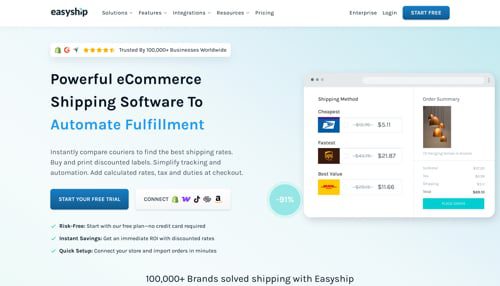
Easyship launches discounted FedEx shipping for Canadian merchants. Easyship, a multi-carrier shipping software and cross-border API platform for ecommerce, has launched discounted FedEx shipping services for Canadian merchants. The offering includes access to FedEx Ground for domestic shipments and FedEx International Connect Plus for cross-border deliveries, along with a suite of premium FedEx services, available directly through the Easyship platform with no minimum volume or separate FedEx requirements.

Home page of Easyship

Easyship

OroCommerce partners with Azilen Technologies on B2B commerce. OroCommerce, a B2B commerce platform, has partnered with Azilen Technologies, a software developer. According to OroCommerce, the collaboration strengthens its partner network with an engineering-led firm capable of delivering large-scale, high-complexity B2B commerce software across North America, Europe, and APAC. Azilen will leverage OroCommerce’s architecture and automation capabilities to help organizations unify B2B and B2C models, streamline high-touch sales processes, and enhance customer self-service.

Google unveils shopping ad format in AI Mode. Google has introduced a shopping ad format for AI Mode, its conversational search experience where users can compare products, brands, and stores. According to Google, the new ad format is an opportunity for retailers to enter the conversation and appear in key moments of discovery. The format will roll out soon for Shopping and Performance Max campaigns, per Google.

Newo raises $25 million to scale AI voice infrastructure for small businesses. Newo, a startup building human-like AI-powered voice agents, announced a $25 million funding round led by Ratmir Timashev, co-founder of Veeam Software and Oh.io. Newo plans to use the capital to accelerate product development, expand its partner ecosystem, and scale go-to-market efforts to meet growing demand from SMB-focused service providers.

Salesforce acquires Cimulate for AI-powered product discovery. Salesforce has agreed to acquire Cimulate, an AI-powered intent-aware context engine for retail. Cimulate’s platform combines real and simulated shopper journey data to understand intent, enabling relevant search results and personalized discovery experiences. Salesforce states the acquisition will strengthen its Agentforce Commerce by accelerating improvements to search and discovery.

Home page of Cimulate

Cimulate