10 Steps To Grow Your SEO Authority & Topical Expertise via @sejournal, @Brian_W_Gareth

Step 1: Demonstrate Each Element Of E-E-A-T

First things first: how do you assert yourself as an authority on your chosen topic?

If you are familiar with the concept of E-E-A-T, you won’t be surprised that it’s closely tied to topical authority. Working on one is the same as working on the other. And E-E-A-T makes it very easy to understand what exactly you need to do.

What does E-E-A-T mean, and how do you demonstrate it?

  1. Experience: what you have personally dealt with as a person and a professional, and what you can share with your audience. Example: a detailed product review where you describe how you have used it.
  1. Expertise: a high level of skill and knowledge in your field. Example: a Knowledge Panel with an expert’s name, photo, credentials and contact information.
  1. Authoritativeness: earning the title of an expert by creating content and gaining rankings and backlinks over a long time. Example: being referred to as a credible source of information by another website.
  1. Trustworthiness: having a good reputation in the eyes of your target audience. Example: positive user reviews.

Each of these elements signals to Google that your website is run by a real pro who knows what the users want. This is your end goal in very simple terms; now it’s time for details.

Step 2: Stick To A Single Niche

Can you dedicate your site to multiple niches?

Sure. But as the saying goes, the person who chases two rabbits catches neither.

If your chosen niches are not closely related, then Google will not view you as a specialist. But if they are closely related, then it’s very much possible.

For example, TripAdvisor is a very well-known authority on all things related to travel: destinations, HoReCa, popular activities, and more.

If you want to be acknowledged as an expert, the best bet is to pick a single niche – and commit to it fully. But if you are feeling ambitious, then pick several related topics and start pumping out content like the Internet will shut down tomorrow.

Step 3: Start Gaining Experience & Never Stop

How do you get good at something? By doing it countless times, of course!

The more experience and knowledge you have, the more you can put into your content and show to your audience – and to Google. And the more you have to show, the more credible you appear in everyone’s eyes.

And don’t be afraid to make mistakes. A bad experience is also a valuable experience.

Step 4: Create Original, In-Depth Content – Lots Of It

Obviously, no expert steals other people’s work. Real stars create their own content and make it as good as they can.

Be original, be amazing, be productive – that’s pretty clear.

What else should you do to get the most out of your content?

  • Update your outdated content. It’s easier and faster than writing a more up-to-date article from scratch. It’s also more correct from an SEO standpoint, as older pages have more authority than freshly made ones.
  • Include links to other sources. The more authoritative they are, the better. It makes your own content look more credible too, since you clearly know the best sources.
  • Fill your content with relevant keywords and phrases. Only your own experience can identify the best phrases to use, but WebCEO’s Keyword Suggestions tool is a great place to start looking.
  • Promote your content. Social media and email outreach are your best options.

Also, quantity matters as much as quality. If you want to become a real authority, one or two articles won’t be enough no matter how great they are – you will need to make many more to cover your niche in full.

Step 5: Create Different Types Of Content

You may be sticking to one niche, but every niche can be presented in multiple formats.

Therefore, you should rely on more than just blog posts. What else is there?

  • Podcasts.
  • Graphs and diagrams.
  • Case studies and research reports.
  • Images (photos, infographics).
  • Videos (including shorts, streams, webinars).

The more you can make, the better. However, it’s okay to focus on only a few types of content as long as you can make them excellent.

Step 6: Use An Efficient Internal Linking Structure

When one page links to another, it shares some of its own authority with it.

Interlink your site’s pages in an efficient way, and you will achieve two important goals:

  1. Your visitors will easily find any content they want.
  2. Your important pages will receive as much authority as possible.

Note that page authority is not the same as topical authority. But the two are still connected, and increasing one increases the other.

How Do I Create An Efficient Internal Link Structure?

As was mentioned before, you need to create lots of content to explore a niche in full.

Some of the pages you make will be closely related by covering different aspects of the same topic. Those pages can be grouped into a topic cluster.

What Is A Topic Cluster?

A topic cluster has (usually) one page with the main topic and several others with related topics. For example:
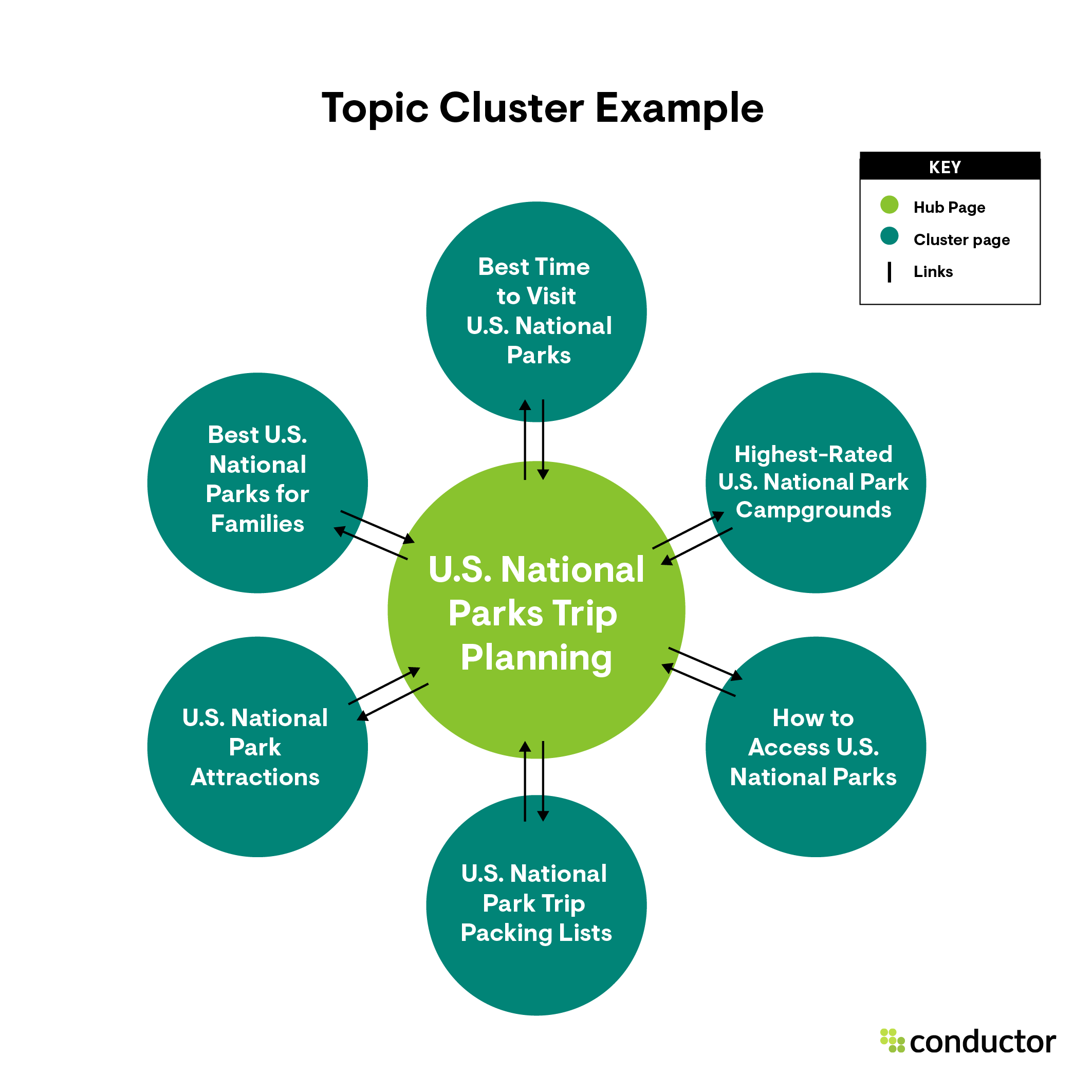
10 Steps To Grow Your SEO Authority & Topical ExpertiseScreenshot from Conductor.com, April 2018

The hub page has the most authority in the cluster and shares it with the rest, making them more visible in search, too.

So how do you maximize your page authority – and topical authority with it? For that, you need to know exactly how much authority your pages hold. Find out with WebCEO’s Internal Links tool.
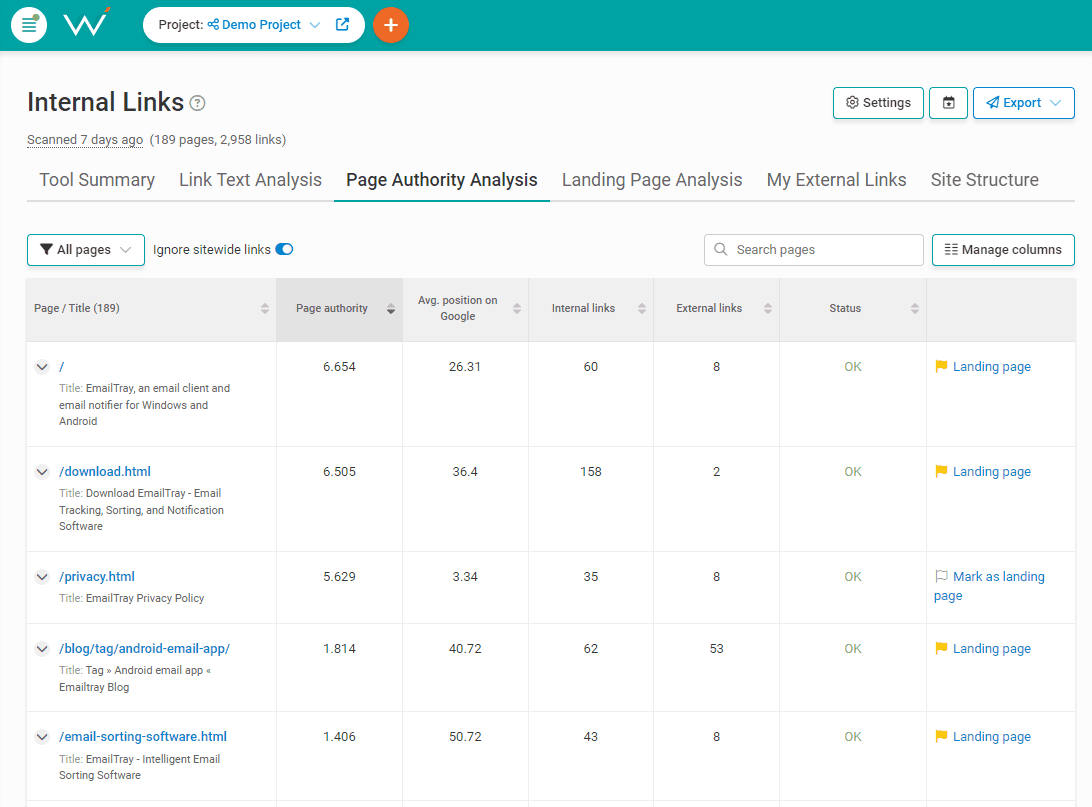
10 Steps To Grow Your SEO Authority & Topical ExpertiseScreenshot from WebCEO, February 2024

Then build topic clusters around your most authoritative pages.

Step 7: Get Backlinks From Authoritative Sites

Remember about authoritativeness? That’s the A in E-E-A-T, and it’s one of the most time-consuming parts because it requires building links to your content – the toughest part of SEO.

But before anything else, you must find trusted sites whose backlinks will boost your authoritativeness. And the best way to do it is to see where your competitors are getting their backlinks.

Open WebCEO’s Competitor Backlink Spy.
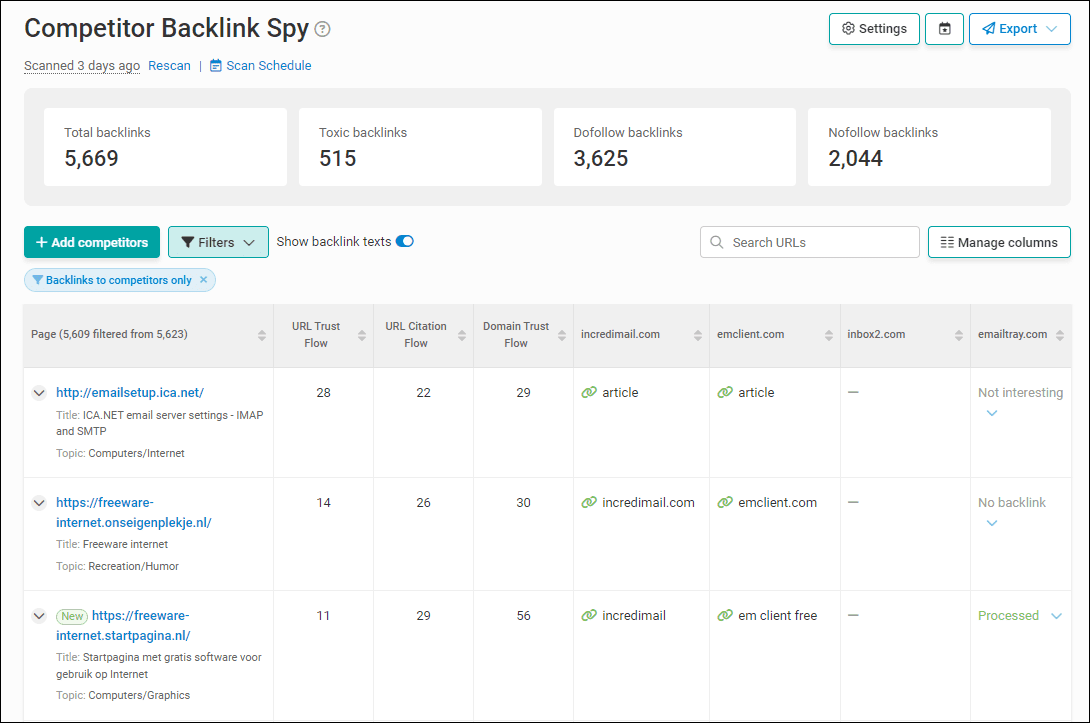
10 Steps To Grow Your SEO Authority & Topical ExpertiseScreenshot from WebCEO, February 2024

Add your competitors’ sites in the Settings and press Save. The tool will generate a table with all of your competitors’ backlinks, with anchor texts and domain authority.

Ideally, you will want to build your own backlinks from the most authoritative sites. And yes, your competitors are fair game, too! Here are a few effective link building methods:

  • Create content that’s likely to get backlinks. The best examples include case studies, research papers, and statistics – users love interesting data.
  • Find unlinked mentions of your brand and turn them into backlinks.
  • Find articles with outdated information on other sites. If they have links to outdated sources, offer to replace them with a link to your own, up-to-date source.
  • Find broken links on other sites and offer a replacement from your own site.
  • Collaborate with other specialists in your niche (e.g. via podcasts).

Step 8: Grow Your Online Reputation

Gaining clout requires transparency.

People and companies cannot become authorities by staying hidden in the shadows like the infamous hacker Anonymous. At the very least, you will need to attach a name and a face to your content – for example, in an author bio.
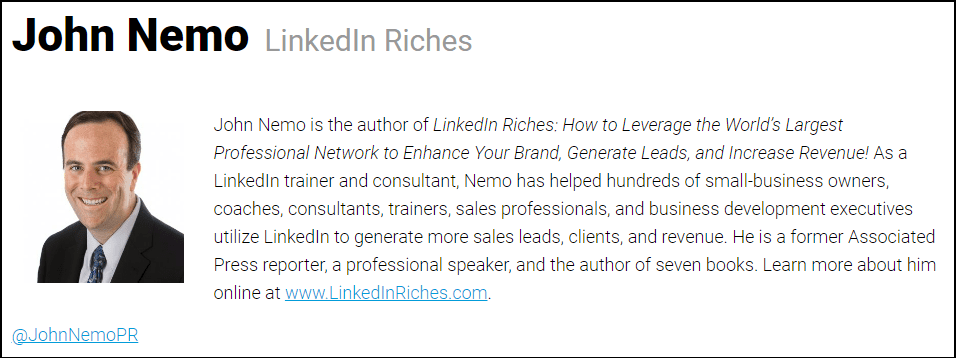
10 Steps To Grow Your SEO Authority & Topical ExpertiseScreenshot from Inc.com

The more professional it looks, the better.

What else can you do?

  • Get positive reviews from your users. Often, they leave a review if you simply ask. Don’t be discouraged by bad reviews – having a few of them makes you look more natural than having none at all.
  • Create an About Us page. Describe your company and your experts, and feel more than free to brag about your successes.
  • Create pages on social media. Ideally, you want a page for your company and a page for each of your experts on every social network where your presence makes sense. Of course, if you work solo, then all you need is a single page just for you. Don’t forget to link to your social media pages from your site.
  • Engage with your followers on social media. Like their posts, follow them back when appropriate and, most importantly, reply to them as soon as possible. Setting up a chatbot can help you tremendously with the latter.
  • Engage with your competitors in social media. Be active on their pages, and you just might end up stealing from them a client or two (or more).

Step 9: Create A Wikipedia Page

Wikipedia is a very well-known and trusted resource. Having a page there is a huge boost to any person or brand’s image – especially if the article is filled with detailed information.

Of course, you can only create a Wikipedia page about yourself as a person if you are already famous. Otherwise, your best bet is a page about your company.

Either way, you are going to need an auto-confirmed Wikipedia account – one that is at least 4 days old and has made at least 10 edits. After that, you can start making your page. Feel free to use other, similar pages as a basis.

And remember to include citations and sources from sites other than your own.

Step 10: Provide Excellent User Experience

And of course, a true expert’s website is expected to run flawlessly. Professionals have standards – and so do users who consult experts.

What can you do to make your site a welcoming place?

  • Increase your loading speed. Find your slow-loading pages with WebCEO’s Speed Optimization tool and follow its recommendations for improving them.
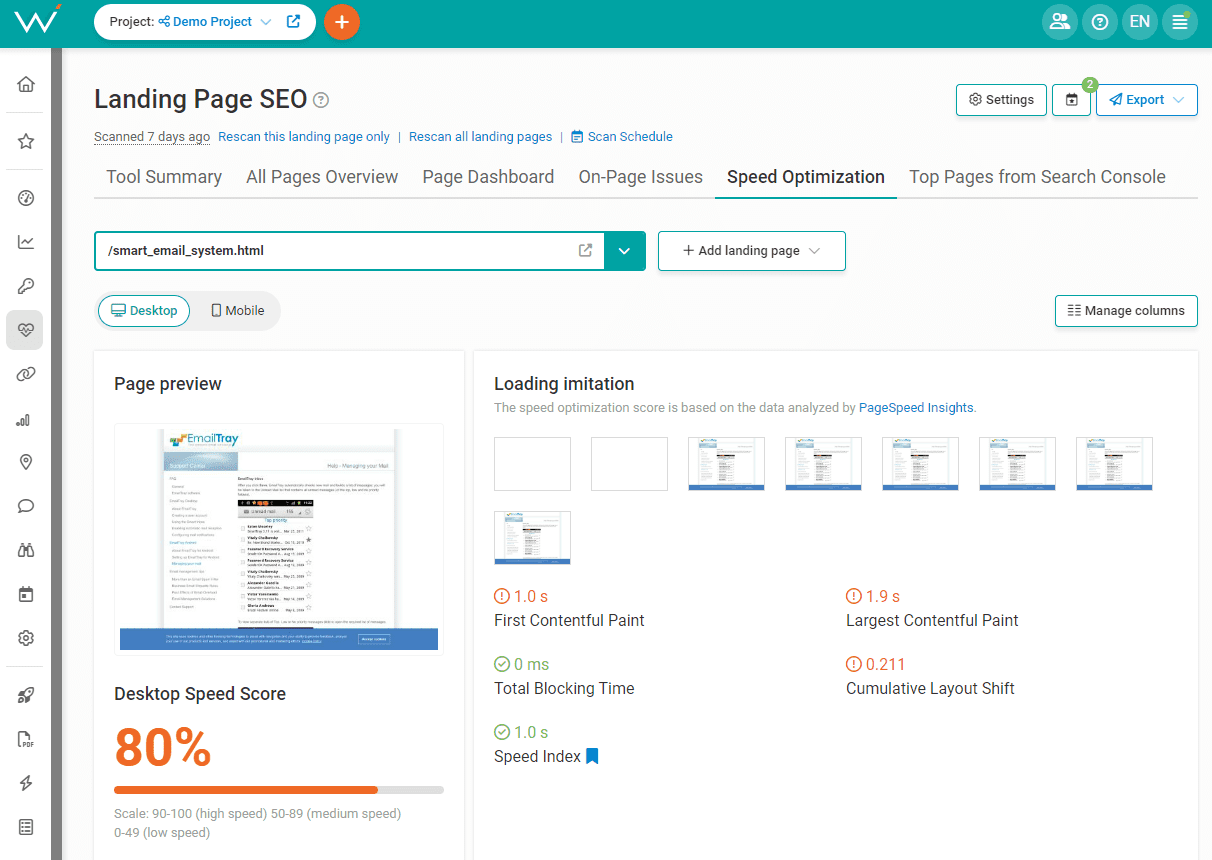
10 Steps To Grow Your SEO Authority & Topical ExpertiseScreenshot from WebCEO, February 2024
  • Ensure mobile-friendliness. Your site must be responsive and work well on all devices. In the same Speed Optimization tool, click the Mobile tab and see where your site is falling short.
  • Fix technical errors. Find all errors on your site with the Technical Audit tool and fix them promptly.
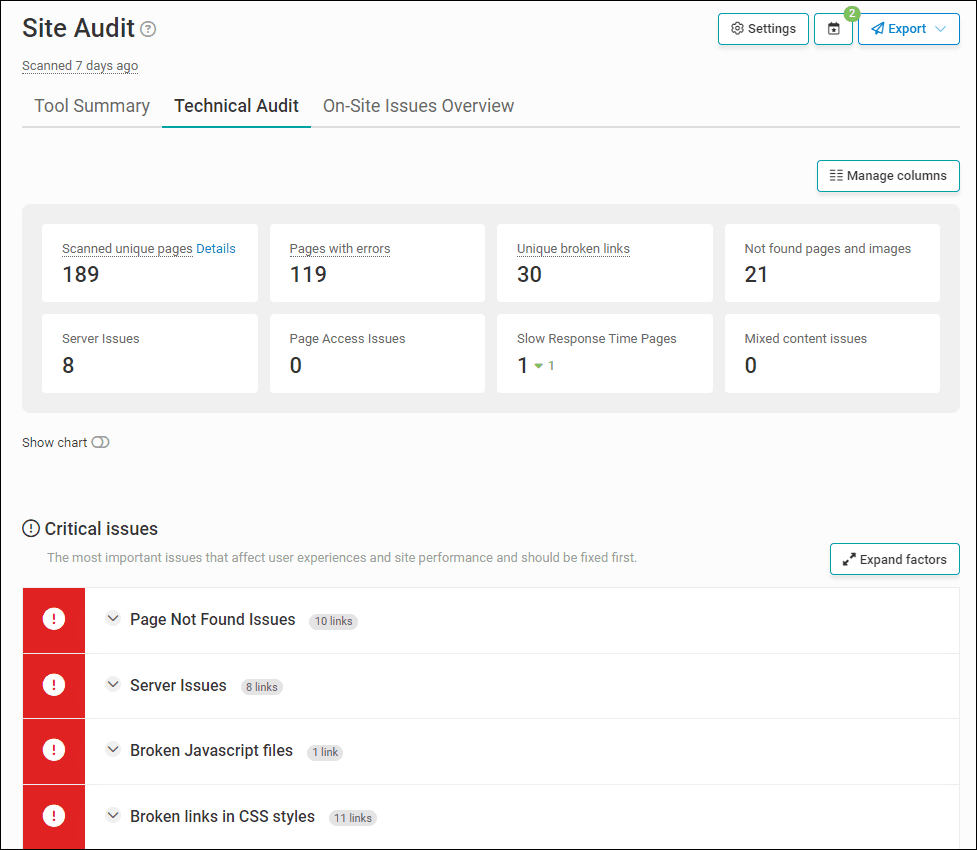
10 Steps To Grow Your SEO Authority & Topical ExpertiseScreenshot from WebCEO, February 2024
  • Translate your content into multiple languages. If you are after a multilingual audience, this is a must.
  • Ensure user accessibility. Make sure all kinds of visitors can use your site, not just healthy ones. Use a tool like ARIA by EquallyAI to see what sort of additions your site needs.

Wrapping Up

If you set the goal to become an expert in your field, then gaining topical authority will be a natural part of the process. It will take years of hard, prolific work; it’s your choice whether to commit or not. But the reward for this choice is acknowledgment in your community and in search engines.

Take the first step on this long road. Arm yourself with SEO tools that will help your content reach the top rankings faster.
Google Now Says Core Web Vitals Used In Ranking Systems via @sejournal, @martinibuster

Google updated their Page Experience Documentation in order to make it explicitly clear that Core Web Vitals are used by their ranking systems. What’s curious about the change is that Google continues to not say that Core Web Vitals are a ranking factor.

Googlers And Statements About Ranking Factors

Something kind of weird about Googlers is that it seems like they tend not to use the phrase ranking factor. For example, I did a site:search of former Google engineer Matt Cutts’ blog and I couldn’t find a single instance of him writing the phrase “ranking factor” in any of his posts. Same with his YouTube videos when talking about links like here and here.

John Mueller did say that Core Web Vitals was a ranking factor three years ago on Reddit in reference to the Core Web Vitals (CWV), but Google’s Page Experience In Search Results explainer never explicitly says Core Web Vitals are ranking factors.

Which brings us to Google’s SearchLiaison who caused a stir in February 2024 when he tweeted that Google’s documentation didn’t say that Core Web Vitals (CWV) were a ranking factor or a signal.

He tweeted:

“And people go “Well, what does ranking really mean. Maybe it’s signals? They didn’t say it’s not signals!”

So do we have a signal page experience signal? No. That’s why we made a page that says “There is no single signal.”

Oh but wait, so you have multiple signals? Yes, we anticipated this question which is why we have on that same page “Our core ranking systems look at a variety of signals.”

Which leads to things like “So is CWV a signal and if I don’t meet those, am I doomed?” Which is why that same page says “However, great page experience involves more than Core Web Vitals.”

We don’t list what is and isn’t a ranking signal on that page because things change. Maybe something was once; maybe it shifts but aligns with other things we might do to understand page experience. We’re trying to guide people toward some useful resources and things to thing about with page experience but in the end — do whatever you think is providing a great experience for your visitors.”

And in another tweet on the following day he wrote (referring to the Page Experience In Search explainer):

“I didn’t say we have a page experience “ranking signal” nor do we have some single signal like that. The page below specifically says we do NOT have something like that.

“Is there a single “page experience signal” that Google Search uses for ranking?

There is no single signal. Our core ranking systems look at a variety of signals that align with overall page experience.

We don’t say there’s one particular thing people need to do, nor do we say if you don’t do a particular think, you won’t rank. We say look across a range of things and try to provide a good page experience to your visitors”

SearchLiaison is right. The Page Experience In Search Results explainer document didn’t say that Core Web Vitals is a ranking factor, not even in 2022 when it was first published.

Google Almost Says CWV Is A Ranking Factor

After all the explaining without acknowledging Core Web Vitals as a ranking factor and two years of opaqueness in their Page Experience In Search Results documentation about CWV in relation to ranking factors, Google changed their mind and updated their documentation to almost say that Core Web Vitals are a ranking factor.

This is the ambiguous part that was removed from the documentation:

“What aspects of page experience are used in rankings?
There are many aspects to page experience, including some listed on this page. While not all aspects may be directly used to inform ranking, they do generally align with success in search ranking and are worth attention.”

The above passage was replaced with this new paragraph:

“What aspects of page experience are used in ranking?
Core Web Vitals are used by our ranking systems. We recommend site owners achieve good Core Web Vitals for success with Search and to ensure a great user experience generally.

Keep in mind that getting good results in reports like Search Console’s Core Web Vitals report or third-party tools doesn’t guarantee that your pages will rank at the top of Google Search results; there’s more to great page experience than Core Web Vitals scores alone. These scores are meant to help you to improve your site for your users overall, and trying to get a perfect score just for SEO reasons may not be the best use of your time.”

The new documentation doesn’t use the phrase “ranking factor” or “ranking signal” in reference to the core web vitals. But it now explicitly acknowledges that CWV is used by Google’s ranking systems, which is less ambiguous than the previous statement that high CWV scores are recommended for “success with Search.”

Read Google’s updated documentation:

Understanding page experience in Google Search results

Featured Image by Shutterstock/Graphic Grid

Google’s March 2024 Core Update Impact: Hundreds Of Websites Deindexed via @sejournal, @MattGSouthern

The impact of Google’s March 2024 Core Update, which targets low-quality content and spam, is becoming apparent as the rollout progresses.

Recent analyses reveal that over 800 websites have been completely deindexed from Google’s search results in the early stages of the update.

Widespread Deindexing

Ian Nuttall, a prominent figure in the SEO community, has been tracking the indexing status of 49,345 websites following the launch of the March 2024 Core Update and its associated manual actions against AI-generated spam.

Nuttall’s findings shed light on the sweeping impact of Google’s latest initiative.

Of the 49,345 sites monitored, 837 websites had been removed entirely from Google’s search index.

This represents approximately 1.7% of the websites in Nuttall’s database. The deindexed sites span various categories and ad networks, highlighting the broad scope of Google’s actions.

However, it’s too early to tell whether these websites will remain deindexed, as several are already reappearing in Google’s search results.

Significant Traffic & Revenue Losses

The consequences of being deindexed are severe for the affected websites.

According to Nuttall’s analysis, the 837 deindexed sites accounted for over 20.7 million organic search visits per month before the manual action. The sudden loss of traffic is devastating for the impacted websites.

Further, the deindexing is estimated to result in a monthly loss of $446,552 displayed advertising revenue across the affected sites.

Targeting AI-Generated Spam

The findings from Nuttall’s analysis align with a recent study conducted by Originality.ai, which investigated the prevalence of AI-generated content among the deindexed websites.

The study found that 100% of the affected sites showed signs of AI-generated content, with 50% having 90-100% of their posts generated by AI.

These results suggest that Google’s March 2024 Core Update effectively targets websites relying heavily on AI-generated content to manipulate search rankings.

The manual actions taken against these sites demonstrate Google’s commitment to combating the rise of AI-driven spam and low-quality content.

Reshaping The Search Landscape

As the March 2024 Core Update continues to roll out, its impact on the search landscape is becoming increasingly evident.

The widespread deindexing of websites engaging in manipulative practices, particularly those utilizing AI-generated content, signals a significant shift in Google’s approach to maintaining search result quality.

The consistency between Nuttall’s data and the Originality.ai study reinforces that Google is taking decisive action to address the growing problem of AI-driven spam.

As the update progresses, websites and content creators must adapt to Google’s heightened focus on quality and originality.

The full impact of the March 2024 Core Update will become more evident as it continues to roll out over the coming weeks. However, the early indications from Nuttall’s analysis and the Originality.ai study suggest that Google’s efforts to reshape the search landscape and prioritize high-quality, human-generated content are underway.

FAQ

What are the implications of Google’s March 2024 Core Update for website owners?

The Google March 2024 Core Update has significant implications for website owners:

Paraphrase like a human, make it sound more objective, and use bullet points:

  • Google’s March 2024 Core Update has impacted many websites, especially those utilizing AI-generated content.
  • The update led to the deindexing of several sites, resulting in decreased organic search traffic and advertising revenue for affected website owners.
  • To maintain or improve search engine rankings, site owners should:
    • Reassess the quality of their content to ensure it meets Google’s updated standards for originality and value.
    • Consider shifting towards more original, human-generated content to avoid being flagged for low quality or spam.
  • Website owners may need to adjust their content strategies to align with the new guidelines and mitigate potential losses in traffic and revenue.

How can marketers adapt their strategies in light of AI-generated content crackdowns?

Marketers should proactively adapt their strategies in response to crackdowns on AI-generated content, evidenced by updates like Google’s March 2024 Core Update. Adapting involves:

  • Audit existing content to identify any AI-generated material that could be seen as low-quality or spam and rework it as needed.
  • Focusing on creating original, high-value content that benefits the target audience.
  • Keeping up with evolving SEO best practices and algorithm changes
  • Using AI tools judiciously, ensuring AI-assisted content is carefully edited and enhanced with original insights and analysis.
  • Prioritizing creativity, thorough research, and strong editorial standards can help marketers maintain compliance with search engine guidelines.

This approach can also contribute to building a more authoritative and trusted brand online.

What are the best practices for maintaining search engine rankings after Google core updates?

To maintain or improve search engine rankings after a Google core update like the March 2024 Core Update, adhering to the following best practices is recommended:

  • Focus on creating high-quality, original content that provides value to users.
  • Review and optimize on-page elements such as meta titles, descriptions, and overall user experience and accessibility. Ensure these elements align with current best practices.
  • Stay informed about Google’s Webmaster Guidelines and ensure your website fully complies with their policies to avoid penalties.
  • Conduct regular website audits to identify and resolve technical issues that could negatively impact search engine crawlability and indexing.
  • Build a diverse backlink profile by earning links from reputable and relevant sources within your industry or niche.
  • Continuously monitor changes in search algorithms and be prepared to adapt your SEO strategies as needed to align with updated best practices and ranking factors.

Google’s Algorithm Hates AI Content? How To Make Google Love It via @sejournal, @martinibuster

Google’s March 2024 core algorithm update is penalizing sites made with AI generated content and it’s a fact that AI-generated content cannot meet the quality standards that Google’s  various documentations outline. But there is still a way to use AI in a way that results in high quality content.

Why AI Cannot Meet Google’s Quality Thresholds

Several ranking systems, including the Reviews and the Helpful Content systems explicitly have quality standards that inherently make it impossible for AI authored content to satisfy.

The addition of an extra E in E-A-T (for experience) should have been a signal to content creators that using AI carried risks.

Examples of SERP Features, Quality Signals and Ranking Signals That Inherently Exclude AI Content

The writing on the wall about AI content has always been in plain sight.

Here are some qualities that Google’s documentations say are important that rule out purely AI-generated content:

  • Experience
  • Published reviews must be hands-on
  • Google News emphasizes human authors in Google News SERPs
  • Google Perspectives, announced in May 2023 emphasizes human authors (hidden gems) found in forums
  • Author page (expertise questions)
  • Author background information (expertise questions)
  • Author About page (expertise questions)

Concepts Of Quality

Google published Self-Assessment Questions to help publishers identify if their content measures up to Google’s standards of quality.

These questions don’t list specific ranking factors. They only list concepts of things that in general reflect what high quality websites tend to show.

If AI-generated content cannot fit into those concepts then it’s likely that the content does not meet quality standards, regardless if the publishers try to fake the outward signs of quality like author pages and so on.

Authorship And Expertise

The Expertise section of the Self-Assessment documentation mentions authors in a way that cannot be replicated by machine-generated content.

This section states:

“Does the content present information in a way that makes you want to trust it, such as clear sourcing, evidence of the expertise involved, background about the author or the site that publishes it, such as through links to an author page or a site’s About page?”

The above quoted section centers expertise on the following three factors:

  1. Sourcing (citations to sources, fact checking, attribution of quotes)
  2. Evidence of expertise involved
  3. Author background

Those three qualities are the outward signs typically associated with expertise which is not attainable by AI.

Content Quality: Originality

The content and quality section of the self-assessment guide requires originality.

Here’s what that section of Google’s documentation asks:

“Does the content provide original information, reporting, research, or analysis?
…Does the content provide insightful analysis or interesting information that is beyond the obvious?”

Unoriginality is the hallmark of generative AI. Content created by generative AI is literally the likeliest series of words on any given topic.

First-Hand Expertise

The people-first section of the self-assessment questions asks about first-hand expertise:

“Does your content clearly demonstrate first-hand expertise and a depth of knowledge (for example, expertise that comes from having actually used a product or service, or visiting a place)?”

Clearly a machine doesn’t have first-hand expertise. It can’t handle a product or use a service.

AI Can Still Be Used For Content Creation

Given how many sites with AI-generated content are getting slapped with manual actions during the March 2024 core algorithm update, it may be time to reconsider the place of AI for web content.

There is still a way to use AI that can result in high quality people-first content. What matters most about content is the insight behind the content, not who or what wrote it.

A way forward may be to use a mix of human insight and experience as data that the AI can use for generating content.

How To Create Review Content With AI

For example, it’s possible to scale product reviews by creating a checklist of data points that consumers need in order to make a buying decision. Someone still has to handle the product and review it, but they just have to write scores and comments for each data point on the review checklist.

If the review is of a children’s bicycle then benchmark the things that users want to know about the bicycle like what age and size does the bicycle fit, how much does it weigh, how sturdy are the training wheels and so on. If it’s a television review then the checklist will have benchmarks relating to the richness of the black levels, off-center viewing, ease of setting the colors, and so on.

At the end of the checklist have a section called final impressions that lists pros and cons as well as the overall sentiment where the reviewer writes if they feel positive, neutral, negative about the product and who they feel the product is best for like people on a budget, those who crave performance and so on. Once that’s done upload the document to your AI and ask it to write the review.

How To Write Any Kind Of Content With AI

An acquaintance shared a tip with me about using AI to polish rough content.  His workflow consists of a dictating everything that needs to be said into a recording, without regard for paragraph structure, simply poured out into the recording.  He then uploads it to ChatGPT and asks it to transform it into a professional document. He can even ask it to generate pros and cons and an executive summary.

AI Amplifies Human Input

My suggestion is to think of AI as a ghost writer that takes a rough document and turns it into a polished essay or article. This approach can work for nearly any scenario, including for scaled product descriptions.

The important qualities of content are the ones provided by a human that an AI is incapable of, things like sourcing, evidence of expertise, sourcing and the background that a human brings to a the topic that is being written about. Humans bring the Experience, Expertise, Authoritativeness and Trustworthiness.  AI can take those elements provided by the human and turn it into high quality content.

Given how many sites with AI-generated content are getting slapped with manual actions during the March 2024 core algorithm update, it may be time to reconsider how AI is used when it comes to content.

I planned and wrote most of this article back in September 2023 and sat on it because I thought, who is going to believe me?

Now that it’s March 2024 and the SEO industry is facing a reckoning based partly on AI-generated content, people may be more receptive to considering better ways to integrate AI into the content generation workflow.

Google’s Website Cache Is Still Available (For Now) via @sejournal, @martinibuster

Google recently updated it’s Google Cache documentation on their website cache and in so doing indirectly created a reminder that the cache is still available for virtually any webpage that Google has indexed.

What Google Said About The Webpage Cache

What was reported about Google’s cache may have unintentionally left the impression that it was permanently and irretrievably gone. But that’s not yet the case.

Here’s SearchLiaison’s announcement on on Twitter:

“Hey, catching up. Yes, it’s been removed. I know, it’s sad. I’m sad too. It’s one of our oldest features. But it was meant for helping people access pages when way back, you often couldn’t depend on a page loading. These days, things have greatly improved. So, it was decided to retire it.

Personally, I hope that maybe we’ll add links to @internetarchive from where we had the cache link before, within About This Result. It’s such an amazing resource. For the information literacy goal of About The Result, I think it would also be a nice fit — allowing people to easily see how a page changed over time. No promises. We have to talk to them, see how it all might go — involves people well beyond me. But I think it would be nice all around.

As a reminder, anyone with a Search Console account can use URL Inspector to see what our crawler saw looking at their own page: https://support.google.com/webmasters/answer/9012289”

The cache is indeed gone from Google Search. But it’s still available as a search operator.

The reporting was correct that the cache was gone from Search but the part about its availability as a search operator got drowned out in the noise.

SearchLiaison was up front about the search operator.

His tweet continued:

“You’re going to see cache: go away in the near future, too.”

The “Cache:” Search Operator Is Still Working

Google recently updated their Search Central documentation on the cache: search operator to remove instructions for how to view the cache directly from the search results. But that’s it. There is no additional disclaimer that the cache: search operator is going away.

Google’s updated documentation removed references to the cache in search from two sections.

The documentation removed the following sentences:

“There are two ways to find the cached version of a page:
Search for cache: followed by the URL of the page, for example:
cache:https://example.com/your/page.html
Search for the URL, then click the 3 dots or arrow in the corner of the result to access a link to the cached version of the page.”

Google’s new documentation replaced the above paragraph with the following reworded passage:

“To find the cached version of a page, search for cache: followed by the URL of the page, for example:
cache:https://example.com/your/page.html”

The second change removed references to the cache in search from this passage (italicized part is removed):

“Most pages that Google indexed have a cached version, too. When a page doesn’t have a cached version, the previously mentioned methods for finding the cached version will fail…”

The above passage is replaced by the following one:

“Most pages that Google indexed have a cached version, too. When a page doesn’t have a cached version, using the cache: search operator to find the cached version will fail…”

Google’s SearchLiaison said that the cache: search operator was going away in the near future. The suggestion that Google might add a link to Internet Archive is not a useful replacement.

The reason it’s not useful is that the Google cache: search operator is useful for checking if competitor pages are indexed, not indexed or recently indexed – which is useful information.

The cache search operator is still so enjoy it while it lasts.

Read Google’s documentation about the cache: search operator:

cache: search operator

Google To Remove “Add Me To Search” People Cards In April via @sejournal, @MattGSouthern

Google has announced that it will discontinue its “people cards” feature in Google Search on April 7.

The decision comes after Google realized the feature was not as helpful for users as initially hoped.

People cards were introduced in 2020 to make it easier for individuals to highlight information about themselves on Google Search, such as websites and social profiles. The feature was initially launched in India, Kenya, Nigeria, and South Africa, but individuals in other countries could access it using a VPN.

In an email sent to users who created people cards, Google stated,

“While people cards worked as intended, in the years since its launch, we’ve learned this feature wasn’t as helpful for people as we hoped.”

Google is letting users download or save content from their people cards until May 7, after which the information will be deleted.

Background: People Cards As A Virtual Business Card

People cards were designed to serve as virtual business cards, helping professionals, performers, influencers, entrepreneurs, job hunters, and freelancers establish a notable online presence.

This feature was handy for individuals who shared a common name or had difficulty gaining visibility in search results.

The card included fields for a user’s name, location, job, a brief “About” section, and optional links to social profiles and other relevant information.

Impact & Future Implications

Discontinuing people cards will only affect this specific feature on Google Search and won’t impact other Google products or services. However, the change may be disappointing for users who have relied on the feature to establish their online presence and improve their visibility in search results.

Google’s decision to retire people cards raises questions about the future of similar features designed to help individuals showcase their personal information and professional achievements online.

As the digital landscape continues to evolve, companies like Google evaluate the effectiveness of new features to ensure they provide meaningful value to their users.

Retiring features that don’t provide adequate value allows Google to allocate resources to more helpful tools.

Google will send users a reminder as the April 7 discontinuation date approaches.


FAQ

What was the purpose of Google’s “people cards” feature, and how did it benefit individuals?

  • Google’s “people cards” were intended as virtual business cards to aid professionals, performers, influencers, entrepreneurs, job seekers, and freelancers enhance their online visibility.
  • The cards enabled individuals to have their information, such as websites and social profiles, featured prominently on Google Search. It was particularly beneficial for those with familiar names or low search visibility.
  • This feature included several fields for personal and professional details, contributing to the individual’s digital presence and search recognition.

How does Google discontinuing “people cards” impact users and the overall digital landscape?

  • Discontinuing “people cards” will primarily affect individuals who utilized this feature to improve their search visibility on Google.
  • Users may now have to seek alternative methods for establishing their online presence.
  • The change prompts a broader consideration of the future viability of similar personal information showcase tools in the digital ecosystem.
  • Google’s decision reflects an ongoing re-evaluation process, allowing the company to focus on developing more beneficial features for its users.

What should current users of Google’s “people cards” do in light of the feature’s upcoming discontinuation?

  • Users who have created people cards should download or preserve their content before May 7, after which their information will be permanently deleted from Google’s systems.
  • Google will remind users of the upcoming discontinuation date as April 7 approaches to ensure they have ample time to save their data.
  • Individuals relying on the feature should explore other personal branding avenues and enhance online visibility.


Featured Image: Tada Images/Shutterstock

SEO Work & Life Balance: Advice And Inspiring Resources You Should Follow

I have been in the SEO industry for over seven years, and I have been leading the SEO team for the last year and a half.

One thing that keeps the job exciting is how dynamic the industry can be. But this can also be a challenge for some.

Like any average person, especially those in marketing and SEO, I’ve had my fair share of ups and downs – and a lot of life lessons. Some of them might prove useful for you.

I’ve also reached out to some influential colleagues in the SEO industry to share their experiences.

I wanted to compare their stories to mine or show a broader perspective on this career path, and how to make your life easier in such a high-demand market.

In this post, I’ll share my own experience as a woman and insights from remarkable women and non-binary colleagues in the SEO industry, as well as highlight some useful resources.

With this article, I want to celebrate female and non-binary SEO pros because of their personas and accomplishments (not just because of their gender or identification).

My goal is to inspire you to explore the content crafted by these experts who shape the SEO industry and share knowledge that we all – regardless of gender – can benefit from.

Now, I’m ready to share my personal experience.

Some Of My Personal Wins

For some SEO professionals, their biggest wins are growing their projects and their company’s or client’s website.

Others see success in leading a company or a team. And there are also those for whom it’s all about overcoming personal limits or fears. I have a bit of everything.

First, managing the brand’s website, especially when it’s an SEO platform, is quite a responsibility. This website is feeding a huge team, and it can’t go wrong any time – you can’t let things go wrong.

I’ve experienced a traffic drop after the December 2022 update. And it was the first drop in my career that I was fully responsible for.

Our team recovered after that update and has significantly grown our organic traffic since then.

It was a stressful experience, but going through it makes you less afraid of failures or such unpredictable turns – you’ve already experienced one of your deepest fears as an SEO of a brand website.

Becoming the head of SEO and a team manager was one of my biggest professional challenges that became one of my biggest personal wins.

Before I got into this position, I thought it involved too much responsibility that I might not be able to handle. Leading, indeed, means taking complete responsibility for people, processes, and results.

But this position is also empowering, and it opened up new opportunities for my growth.

Some Of My Personal Struggles

I can highlight two struggles many people in SEO or other demanding and dynamic jobs can relate to.

Burnout

As a perfectionist, I tend to raise the bar high for myself and my performance. And I also love my job so I put a lot of effort into it.

But as a manager, I usually have to juggle tasks, meetings, requests, and deadlines. I believe the combination of these factors has led me to burnout a couple of times. Recovery is a long process, but I’ve overcome it.

Some of my tips here are to multitask, switch tasks less during the day/week, and focus more on important ones while delegating.

Otherwise, you’ll just get more tired and won’t be able to accomplish much. Also, limit your work hours, which might be harder when you work remotely.

Spend more time being outside your working space (a.k.a. on your laptop).

For instance, I try to have long walks every day, do workouts or yoga regularly during the work week, and try to spend my weekends outside my apartment.

Imposter Syndrome Or Feeling Not Good Enough

Before becoming a manager, I thought a good manager had to be the smartest and the most stress-resistant person in the room, which didn’t align with my perception of myself.

But after taking this role, I’ve built a more mature vision of what it means to be a team leader. This helped me overcome my imposter syndrome.

Now, being a good manager for me means delivering results while keeping my team happy.

And this doesn’t mean you should do everything yourself and be the best at everything – but you surely need to be a problem-solver and a good communicator.

Some Advice That Might Make Your Life As An SEO Pro Easier

Do Less To Get More

Since my student years, I’ve pushed myself into the hustle culture. I combined my studies with a part-time job (or even full-time) and some side projects.

After graduating and starting a full-time job, I often took some online courses and freelance projects after work or on the weekends. I felt guilty when I wasn’t doing something useful or wasn’t productive all the time.

Now, I realize this means doing a lot and not reaching the best results.

Last year, I shifted to a more focused and quality-based mode, which helped me achieve more while being in a better mental state.

But be ready that, in choosing this path, you’ll need to say “No” to some opportunities or people more often. This is something I’m also still learning.

Those were some of my experiences that I believe could be useful to my SEO colleagues.

As you read this, I hope you feel that you’re not alone, even if you’re working remotely as a one-person-team in-house SEO professional.

To show you that we’re not alone in the challenges we face, I’m excited to share personal stories and lessons from some amazing people from the industry.

Insights From My Female And Non-Binary Colleagues

“Get Comfortable With Being Uncomfortable” – Shelley Walsh, SEO Content Strategist, Search Engine Journal

The first to share is Shelley Walsh, SEJ SEO content strategist, founder of ShellShock SEO content services, and SEO Pioneers content producer. She came to SEO after taking on many different creative roles.

After years of offline marketing, creative and business experience, she started in SEO at the bottom again in her late 30s, which was quite a challenge. Walsh recalls:

“I remember attending my first conference at Brighton and not knowing anyone, feeling intimidated and overwhelmed.

I had to push myself hard to introduce myself and talk to people. A few years later, I was speaking at the conference, and most of the people I admired were friends.”

Shelley confesses that she suffers from imposter syndrome. One of the reasons is that the SEO industry constantly evolves at light speed, and you can’t learn at the same light speed. And the more you know, the more you realize you don’t know.

“From speaking to many successful people, I don’t think that fear of not being good enough ever goes away – but it can be a positive to drive you to be good at what you do.

The payback is that I hover on the edge of burnout constantly. However, I feel driven to keep learning and be the best version of myself.”

For women in SEO, although I think this tip is useful for everyone, Shelley advises networking and stepping out of your comfort zone.

“Invest in your network. I invest a lot of time to connect and keep in touch, and I have a fantastic worldwide network of contacts who are also friends.

And get comfortable with being uncomfortable. To achieve anything, you have to step out of your comfort zone and be able to deliver even under less-than-ideal circumstances.”

“Take The Time To Find Out What Works For You” – Tory Gray, CEO & Founder, Gray Dot Company

Tory Gray, CEO and Founder of Gray Dot Company, also suffered burnout. But in her case, it was the first step towards the creation of her company.

“Burnout was certainly a challenge, but it – very fortunately – led me to freelancing. Freelancing turned into building my company, so taken altogether, I’m very grateful. The biggest way I recovered was taking the time to calmly explore my interests and options.”

She applied the same approach to finding the best tactics for dealing with stress: Take the time to find out what works for you.

“What works for me, personally, is sleep; ideally, 9+ hours of it per night. I very much don’t subscribe to the ‘wake up at 5 a.m. to answer emails and workout’ philosophy.

Learn about what works: dancing, rest, exercise, meditation, etc. But how much and when and which of those options to explore is a very personal decision. Don’t get hung up on the rules others place on you – take the time to find your own right fit.”

“Find Things That Bring You Joy” – Lazarina Stoy, SEO & Data Science Consultant

For Lazarina Stoy, an SEO & Data Science Consultant who grew her personal brand and became a manager and a professional mentor, burnout has been the most challenging thing to overcome so far.

“I had to take a hard break and reframe how to prioritize wellbeing and life over work. This has helped me become more in-tune with the aspects of work that I enjoy and how to pursue them more actively, set healthy boundaries, and champion myself a bit better.”

Lazarina has also found a way to balance work and life and deal with stress. Her advice to those struggling with it now is to find things that bring you joy outside of work.

“Prioritize rest and deep relaxation, including digital detox. Limit the information intake for work-related things to working hours.

Always try reframing news and industry events as a passing occurrence – part of the job – not as something that defines you as a person or threatens your role or existence.”

“Prioritize What Truly Matters To You” – Myriam Jessier, SEO Executive, PRAGM

Myriam Jessier, SEO Executive at PRAGM, says that imposter syndrome has been a persistent challenge throughout their career.

“I could tell you that I overcame it by surrounding myself with supportive peers, but that’s not the truth.

I learned to embrace uncertainty and be comfortable with being uncomfortable. I see new challenges as opportunities to keep learning and to improve my skill set.”

They also had to deal with a toxic manager, which was the reason why they decided to open their own agency. Ultimately, it turned out to be one of Myriam’s biggest wins.

“It pushed me to confront personal fears and embrace my entrepreneurial spirit. I had been told for years I should have my own agency, but I never dared.

This journey has been incredibly rewarding, allowing me to build a company that reflects my values and work with clients I’m passionate about.”

As an agency owner, Myriam sees the biggest challenges in burnout and productivity dysphoria.

“You should not let it eat you alive. If you do, you may lose your love of SEO and that would be a disaster if you make a living with those skills.”

Their tips for better work-life balance don’t require a lot of effort to put them into practice. Still, they can make a difference.

This end-of-working-day routine is something I should try.

“The one tip I have for those of you who are sedentary is to have a closing ritual for the day. Light a special candle or play a song that signals your work day has ended.

I used to meditate a bit, and it helps, but I absolutely dislike doing it since my dog will always find a way to climb on top of me and try to lick my nostrils.”

Here’s one more piece of advice that will come in handy when planning a vacation. We all have been there: You come back from vacation and start raking up your backlog, but your colleagues are there with tons of new requests.

“My last tip is: Tell people you are going on vacation a week earlier than you truly are and return maybe a week later than you truly are.

Let me explain. You don’t have to lie; just say that you are unavailable from that date to that date. It will give you time to ease back into work and handle a few things that accumulated during your break … before the horde attacks you with a bunch of new requests.”

Myriam’s advice to colleagues in SEO is to prioritize what truly matters to you so that you don’t waste your energy on things that don’t align with your values or vision.

“This sometimes means being comfortable being disliked by the person in front of you because it will lead to you getting more out of the deal than if you were bending over backward to please them.

But you have to be in a position where you can afford to do that. This means that you have to invest in yourself, in your skills, and in your reputation.”

Valuable Resources From Influential Women In SEO

The powerful voices of numerous influential women make the SEO industry thrive. They are educators, innovators, and community builders who share their knowledge and experience and drive changes.

In this section, I’ll share valuable podcasts, trusted communities, illuminating newsletters, and insightful YouTube channels created and ranked by female SEO leaders. These are sources of SEO wisdom and inspiration.

  • Marie Haynes’ community platform is a place where SEO professionals can find a wealth of useful information and stay connected. Marie runs the “Search News You Can Use” newsletter and podcast that covers the latest industry trends and updates.
  • Aleyda Solis, an internationally praised SEO consultant, shares her expertise through various channels, including podcasts, newsletters, educational YouTube videos, and an SEO community. Aleyda does whatever she can and more to foster a supportive network for SEO enthusiasts.
  • SEOSLY by Olga Zarr demystifies complex SEO concepts and strategies. In her podcasts, newsletters, and YouTube channel, Olga covers complex SEO topics and explains how to stay ahead of industry shifts.
  • MarketingSyrup SEO Academy and Smart SEO newsletter by Kristina Azarenko help professionals navigate the dynamic SEO landscape with confidence and expertise.
  • Kate Toon is a business mentor, writer, speaker, and award-winning digital marketing coach who equips her audience with the skills and knowledge to excel in SEO, copywriting, and digital marketing.
  • Tech SEO Tips by Nikki Halliwell provides targeted advice and updates, enabling SEO professionals to stay at the forefront of technical SEO developments.
  • Women in Tech SEO community is a go-to resource for women in the SEO and tech industries, offering a supportive space for sharing knowledge, networking, and professional growth.
  • Sisters in SEO is another vibrant community that fosters collaboration and empowerment among women in the SEO field, encouraging members to share insights and experiences.
  • The SEO Mindset Podcast is hosted by self-confessed SEO nerd Sarah McDowell and Tazmin Suleman, a life coach with an SEO background. It gives SEO professionals actionable personal growth and career development tips and offers deep insights into SEO strategies, mindset shifts, and industry trends.
  • Confessions of an SEO podcast by Carolyn Holzman offers an intimate look at the SEO industry, blending professional insights with personal stories. Carolyn’s podcast feels like a heart-to-heart with a seasoned expert, providing practical tips and real-world experiences that resonate.
  • SEO Pioneers YouTube channel by Shelley Walsh is a series of interviews with industry pioneers and influencers that share their personal stories about how they helped to shape the industry and their advice and tips about SEO. Lots of valuable insights from some of the best SEO professionals.
  • Search Engine Journal contributors like me, Martha van Berkel, Motoko Hunt and Sherry Bonelli share high-value advice on SEO and building business in the digital space.

Wrapping Up

Building your career in the SEO industry isn’t an easy road to take. It’s filled with ups and downs, challenges and victories.

As my own story and the stories of my incredible colleagues show, it’s all about our resilience and creativity in finding solutions to problems.

At the end of the day, working in SEO isn’t just about website optimization, rankings, and algorithms.

It’s also about the connections we build, the support we offer, the knowledge we share, and the issues we overcome.

More resources: 


Featured Image: PeopleImages.com – Yuri A/Shutterstock

Experts Vs. Influencers: Digital PR Alternatives To Link Building via @sejournal, @_kevinrowe

Key opinion leaders (KOLs) have emerged as influential figures, bridging the gap between experts and influencers to build a site’s reputation.

In this article, I will dive into the nuances of KOLs in digital PR for SEO, underscoring their importance in building a real-world reputation that can influence ranking factors, particularly in specialized fields.

I will use my expert evaluation model to analyze Michael E. Porter, a renowned authority in competitive strategy from Harvard Business School.

Porter’s case shows how internal KOLs can shape discourse, drive brand visibility, and influence SEO ranking factors through their expertise and reputation.

This is why you should use digital PR as an alternative to link building.

Key insights from the article:

  • A key opinion leader is a hybrid expert-influencer: A KOL is an expert in a field with the influence of a social media influencer.
  • Utilizing shareable content: Leverage KOLs and engaging content to earn backlinks and enhance SEO rankings.
  • Earn links and brand search volume: KOLs can write guest articles to earn backlinks and increase brand search volume simultaneously.
  • Valuable research studies: Disseminating breakthrough research through KOLs boosts their reputation and establishes them as industry thought leaders.

Let’s begin.

Subject Matter Experts Vs. Influencers

According to Merriam-Webster, an influencer is:

“a person who is able to generate interest in something (such as a consumer product) by posting about it on social media.”

An expert is defined differently as “having, involving, or displaying special skill or knowledge derived from training or experience.”

An influencer may not drive long-term buying decisions but might influence short-term actions or tests. In contrast, an expert influences decisions and actions of important or complex decisions.

The third option is a key opinion leader, which is a hybrid expert & influencer. A KOL has both influence and expert experience in a given field.

If these outcomes are your focus, then keep reading to understand more about KOLs.

What Is A Key Opinion Leader (KOL)?

A key opinion leader is an expert who influences complex and high-value decisions due to their expertise from real-world experiences in a given field.

A KOL typically has a senior role in a company or agency where they actively work in their field.

KOLs influence important decisions and actions in Your Money or Your Life (YMYL) or other complex purchasing decisions.

In my SEJ article, How To Uncover Your Expertise To Become A Journalist’s Source, I provide a not-so-simple expert-evaluation framework for identifying the degree to which an individual is an expert in a specific field.

My expert evaluation model has four key areas.

  • Proven expert knowledge: Depth of knowledge from experience & practice with a demonstration of skill.
  • Develop influential assets: Develop publications & research that lead to reputation & recognition of influencing other experts.
  • Evolving with change: Adapting to feedback from continuous learning that leads to innovative contributions in their field.
  • Improve by teaching: Demonstrating problem-solving and communication skills by teaching, mentorship, and consultation.

Use this model to pitch a KOL to the media as an expert source in a specific field.

The next section explains how to use KOLs in SEO and digital PR to impact Google search positively.

3 Ways To Use KOLs In Digital PR For SEO

KOLs are a digital PR alternative to link building. This alternative can help improve the reputation of a site, its content, and the individual or entity behind it.

Digital PR is an alternative to link building because, although certain attributes of backlinks are most certainly ranking factors, the site’s reputation is a broader list of factors.

How the audience engages with a site’s content contributes to this reputation. This engagement can include:

  • Sharing and linking to content.
  • Mentioning the brand or product and the individuals behind it.
  • Searching brands or concepts on Google.
  • Using insights from experts to make purchasing decisions (manifests in reviews or shares).
  • Integrating insights from an expert’s content to influence writing.

Although an op-ed or guest contributor post from these experts doesn’t directly influence ranking, an expert who is clever can generate ranking signals due to the impact on an audience.

These signals can include the audience taking action like:

  • Searching the brand’s name or concepts in Google.
  • Linking to or mentioning the brand.
  • Returning to a website or a specific article.
  • Discussing the brand.

Generating these signals requires more than an article; it also needs an understanding of the audience’s and media’s trending interests.

From a trend analysis, use the article to share linkable and shareable content assets. An effective article could function as:

  • A source of unique research.
  • A way to distribute unique content assets in a relevant community.
  • Explain research in op-eds or guest contributor articles.

Pro Tips

  • With digital PR, you might not need any blog content as the reputation of the content can be separate from the reputation of the product or company.
  • Sometimes, media trends don’t align with customer interests. This is, unfortunately, a frequent issue. Try to find trends that align with customer and media trends, not just the media.

Let’s examine a key opinion leader whose concepts have influenced my content creation and decision-making, Michael E. Porter.

The Case Of Michael E. Porter

Michael Porter is a leader in competitive strategy and professor emeritus at Harvard University. He’s an economist, researcher, author, advisor, speaker, and teacher.

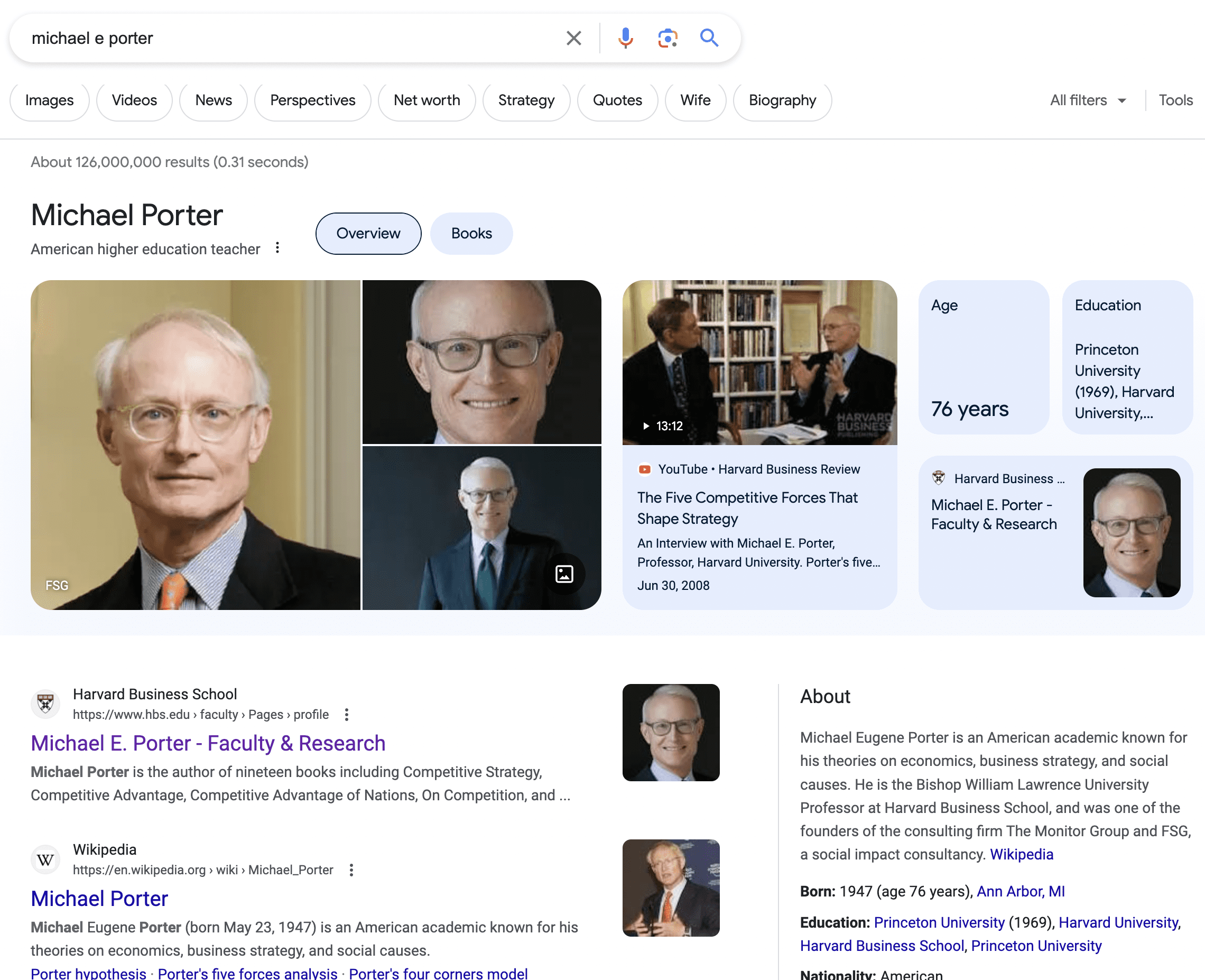
Michael Porter google name searchScreenshot of search for [michael e porter], Google, January 2024

I created an expert evaluation model to identify the attributes and the degree to which a person is an expert. Porter has strong attributes in every aspect of my expert evaluation model.

Proven Expert Knowledge

He has deep knowledge of competitive strategy from extensive research.

His study on competitive strategy in the 1990s is foundational research that explains what constitutes competitive strategy.

Porter wrote about the study in a popular article in the Harvard Business Review called What is Strategy? in 1996.

He went on to perform research in cluster & competition about how competition clusters to a specific geographic region. This is just a sample of his research.

Porter built off his research to demonstrate experience & practice by founding Monitor Deloitte, a business strategy consultancy for senior management of large organizations and government bodies.

The next attribute to evaluate is building influential assets.

Develop Influential Assets

His research and books have driven the strategy for industry and nations. He has written books about competitive strategy based on his early and new research.

These assets have led him to receive numerous awards and honors, like the 2018 McKinsey Award for the best article in Harvard Business Review for How CEOs Manage Time.

Another piece by Porter called The Five Forces that Shape Strategy in Harvard Business Review became a competitive strategy model called Porter’s Five Forces, now a model taught in universities and frequently written about in business training.

50minutes.com even created a pocketbook that summarizes Porter’s Five Forces.

Evolving With Change

He has adapted to feedback from continuous learning that leads to innovative contributions in their field.

Although starting his research in the late 1970s, he has continued to contribute to more recent topics like augmented reality.

Improve By Teaching

Porter demonstrates problem-solving and communication skills through teaching, mentorship, and consultation.

Porter has taught others his research and has continually written about it, which clearly communicates his thought process.

These are the reasons why he’s become a powerful key opinion leader.

If Porter recommends your business or ideas, expect them to influence decisions and the results.

Let’s examine the value he has created for Harvard as a professor and contributor from an SEO perspective. I’ll use Semrush for this examination.

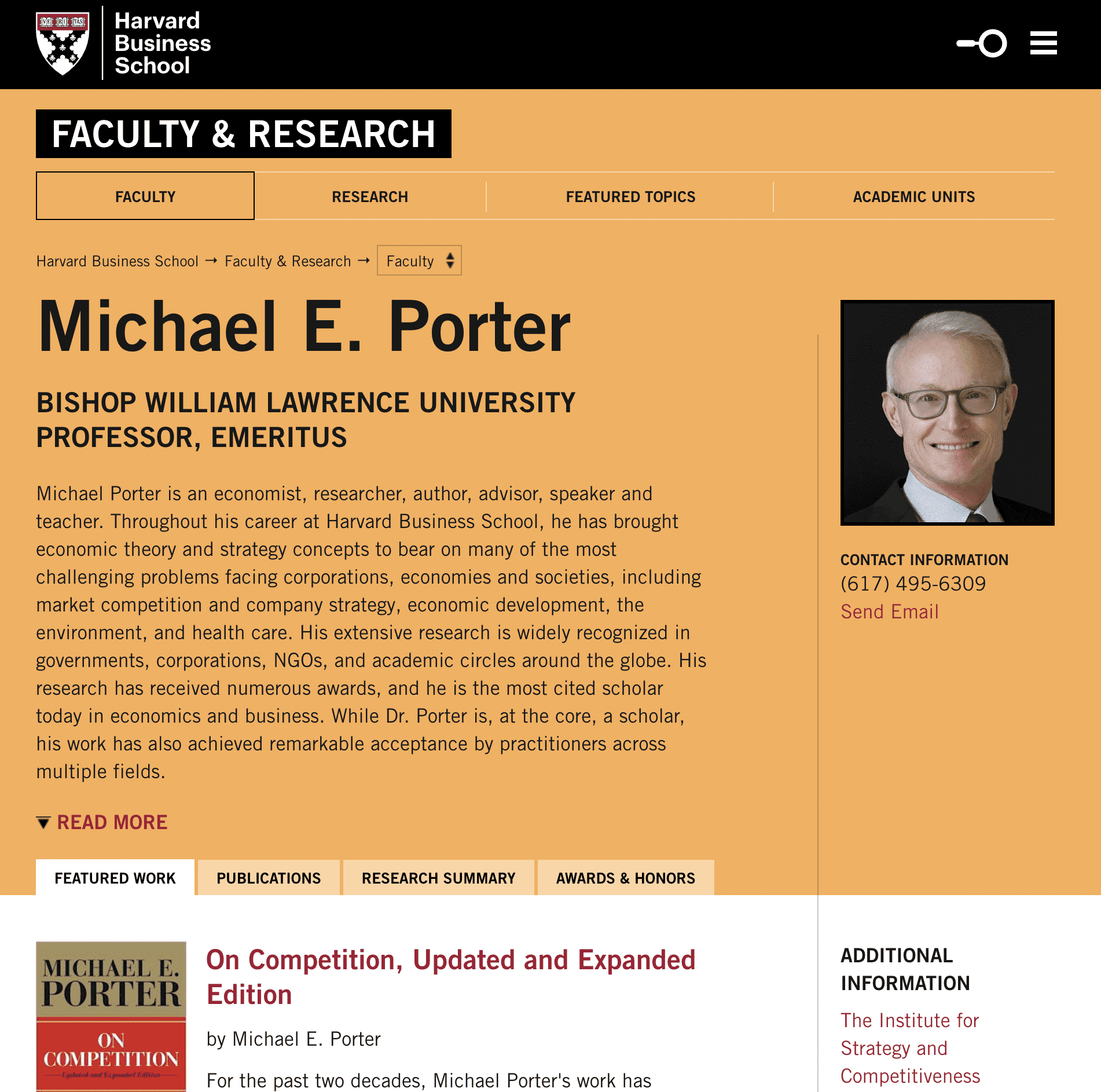
michael porter expert and influencer at harvard Image from Harvard Business School, January 2024

Brand Search

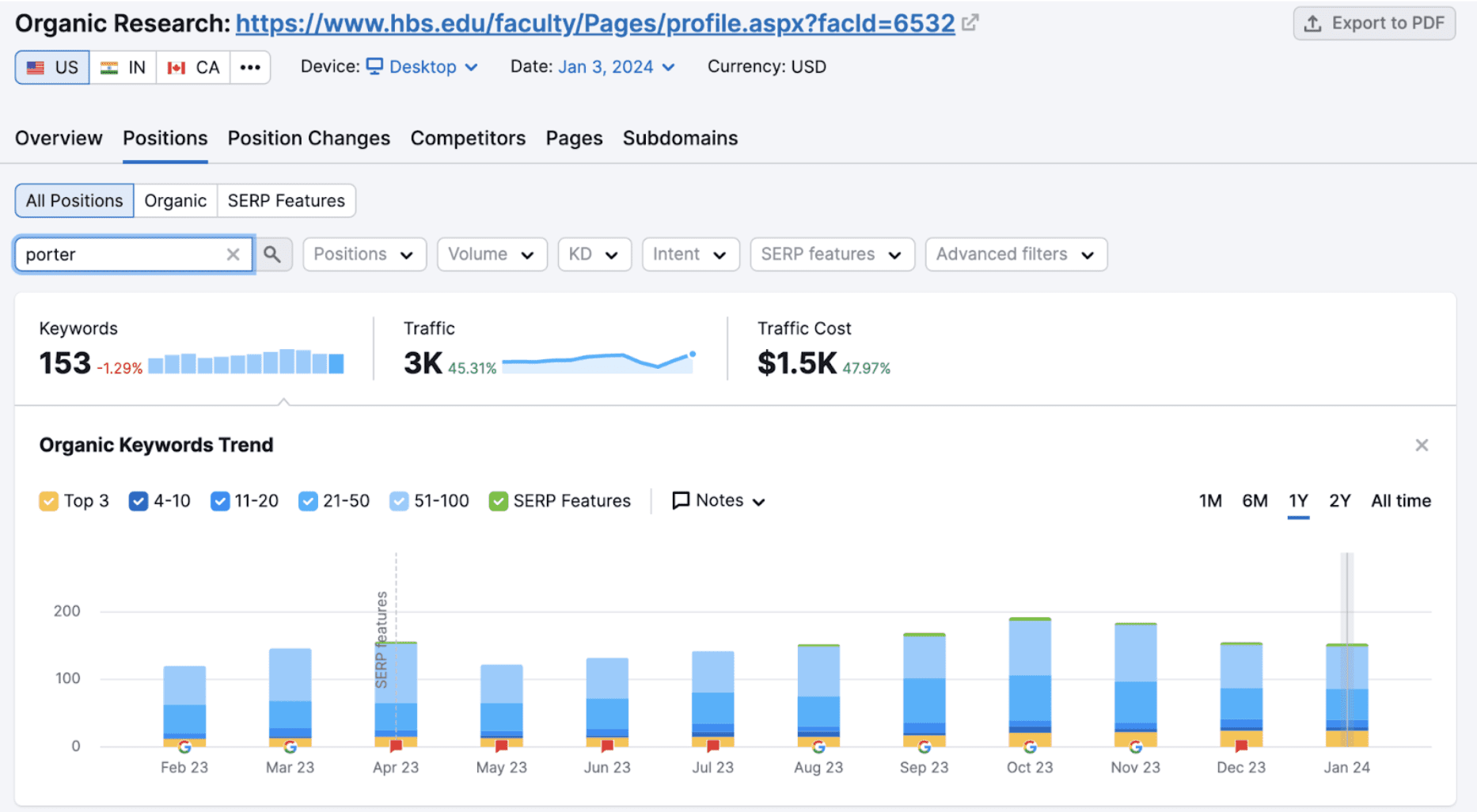
Porter’s faculty profile on the Harvard Business School appears for over 153 search variations of the name “Michael Porter” in January 2024.

semrush brand keyword search volumeScreenshot from Semrush, January 2024

Hbs.edu benefits from this brand search in several ways:

  • Expert reputation with Google: The brand search contributes to the reputation of the domain in Google.
  • Connection to “business strategy”: Search engines see the website as more relevant to education and business topics, so the course pages can rank more easily.
  • Improve school brand search: Students will search the school with the brand name “Harvard Business School” at various stages of the customer journey – thus further improving the website’s reputation with the search engines.

Google representatives have consistently stated that the expertise and reputation of the individuals and entities behind the website are key factors in ranking.

A strong signal of a site’s reputation is the search for brand names of the individuals and entities behind it.

The keyword “Michael Porter” has 12,100 average monthly searches as of the date of this article.

Links And Traffic

Porter’s page and other faculty KOLs drive the site’s reputation with links and traffic.

561 unique referring domains link to Michael’s faculty page on hbs.edu.

Although this is a small fraction of the total 28,700 referring domains, many of the professors at Harvard Business School are KOLs and contribute to the reputation of the school’s reputation.

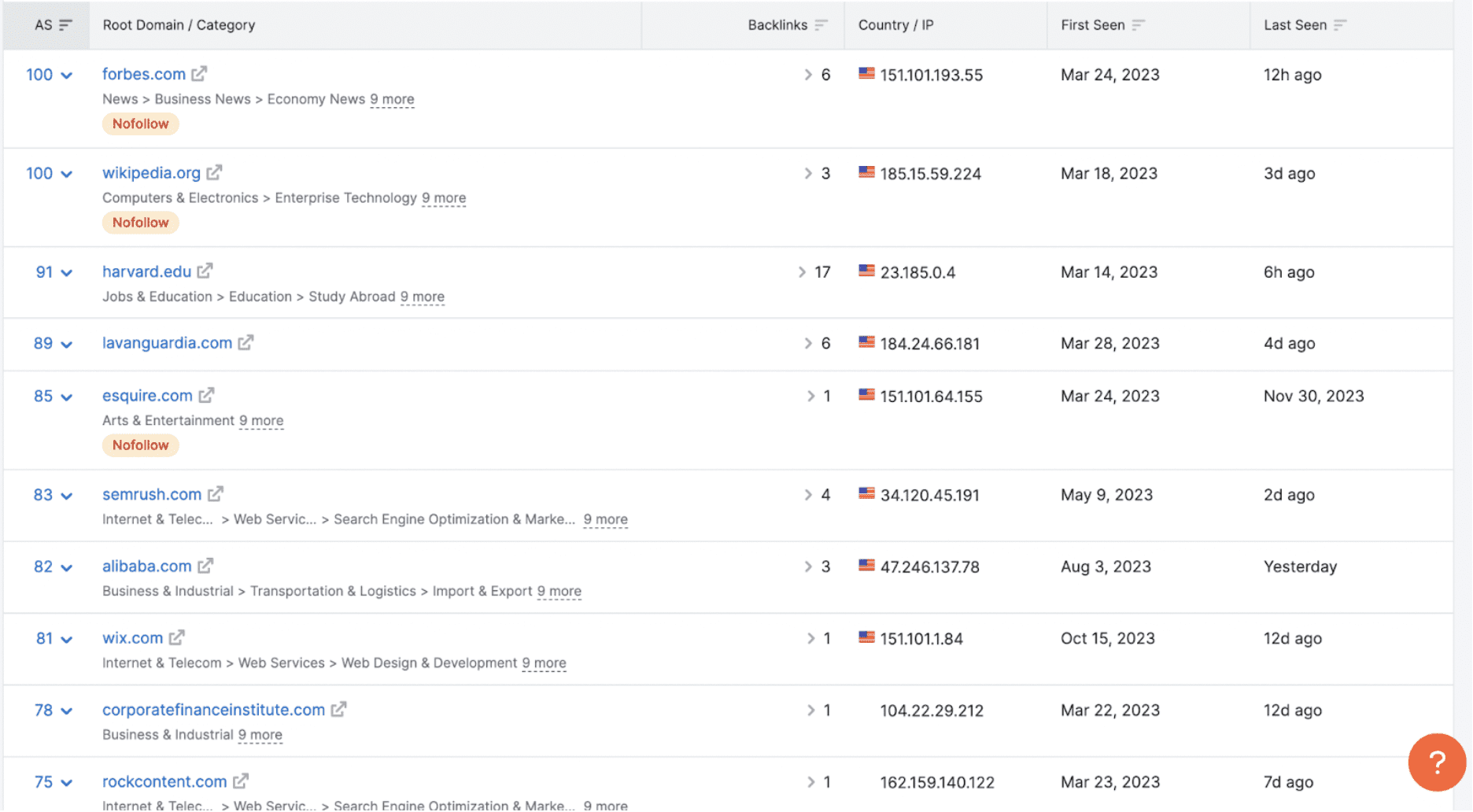
Furthermore, according to Semrush, Porter’s page has a highly relevant link profile with placements on Forbes, Semrush, and Alibaba referencing his work.

semrush backlink report
semrush referring domain reportScreenshots from Semrush, January 2024

Overall, the SEO for hbs.edu is terrible since Harvard relies on brand over search for recruitment. But that’s another article.

Wrapping This Up

It’s clear that key opinion leaders like Michael E. Porter aren’t just experts in their fields – they’re game-changers.

Porter’s work at Harvard Business School is a great example of how a KOL can blend deep knowledge, research, and contribution with expert op-eds or guest articles to improve SEO.

This article is a call to action for anyone looking to make a real impact in their field and improve the value of search engines as a key marketing channel.

More resources:


Featured Image: Gearstd/Shutterstock

Google Updates Search Quality Evaluator Guidelines via @sejournal, @MattGSouthern

Google has updated its “Search Quality Evaluator Guidelines,” a comprehensive 170-page document that serves as a framework for quality raters to assess websites effectively.

The update on follows the search engine’s latest Core and Spam updates.

Insights Into Trustworthiness

The updated guidelines provide valuable insights into how Google determines the trustworthiness of webpages and websites.

While the quality raters don’t directly influence search rankings, the document explains what Google considers essential for a high-quality website.

Latest Changes

According to the changelog on page 170 of the document, Google has “updated characteristics of untrustworthy pages and added illustrative examples.”

This marks the first update to the guidelines since November 2023, highlighting the significance of the changes made.

Untrustworthy Webpages & Websites

The new information is on page 35, Section 4.5, titled “Untrustworthy Webpages or Websites.”

Google has expanded the list of characteristics that quality raters should look for when assessing the trustworthiness of a webpage or website.

The document now states that a page should be considered untrustworthy if it contains “multiple or significant factual inaccuracies on an informational page which would cause users to lose trust in the webpage as a reliable source of information.”

Illustrative Examples

To further clarify these updates, Google has included illustrative examples within the quality raters guide.

These examples provide practical guidance on identifying untrustworthy pages and websites, helping quality raters make more informed assessments.

The Importance Of Trustworthy Content

The Search Quality Evaluator Guidelines updates are notable as the internet continues to grow and evolve rapidly.

With the increasing prevalence of misinformation, it’s more important than ever for search engines to prioritize trustworthy and accurate content.

Implications For Website Owners & SEO Professionals

As Google continues to refine its algorithms and guidelines, website owners and SEO professionals should take note of these changes and strive to create high-quality, trustworthy content that meets the search engine’s standards.

Doing so can improve their chances of ranking well in search results and provide users with the reliable information they seek.

In Summary

The updated Search Quality Evaluator Guidelines serve as a valuable resource for anyone looking to understand Google’s expectations for website quality. As the search landscape evolves, staying informed about these guidelines and adapting accordingly will be essential for continued success.


FAQ

What are Google’s Search Quality Evaluator Guidelines?

The Google Search Quality Evaluator Guidelines are a detailed document used as a reference by quality raters to evaluate and determine the trustworthiness and quality of websites and webpages. The guidelines include criteria for assessing a site’s content, user experience, and overall reputation.

What are the latest changes to the Google Search Quality Evaluator Guidelines?

  • Criteria Update: The guidelines now provide updated characteristics of untrustworthy pages, assisting quality raters in identifying unreliable content.
  • Illustrative Examples: Google included practical examples within the guide, which clarify defining and recognizing untrustworthy pages and websites.

As an SEO professional, how can I ensure my website aligns with Google’s quality standards?

  • Review the Search Quality Evaluator Guidelines to remain informed about what Google considers high-quality content.
  • Create content focusing on accuracy, ensuring reputable sources support all factual claims.
  • Monitor the website’s overall user experience and reputation, making improvements as necessary to meet the guidelines and standards.


Featured Image: dennizn/Shutterstock

Google March 2024 Update: 6 Insights On Manual Actions via @sejournal, @martinibuster

Google’s algorithm is wasting no time in removing low quality sites from the search results. Anecdotal evidence suggests that the volume of sites affected by this update may reach historic levels not seen since the Panda and Penguin updates.

1. March 2024 Update Qualifies As Major

I have been around for every single Google update and in my opinion the March 2024 Core Algorithm Update is clearly on the same impact level as the Florida, Panda and Penguin updates in terms of how widespread the effects are. Senior marketers with decades of experience that I’ve spoken with all agree that this update is right up there as one of the big ones.

While the Medic update was a shift in the algorithm, what’s happening now is more than a single big shift. It’s a profound change in how sites are ranked. So it’s useful to review what’s getting penalized to understand the scope of this update.

2. Sites That Survived Previous Updates Didn’t Escape This One

Posts across social media demonstrate that Google is removing entire websites from the search results and from the search index. Some reports are from observers celebrating the removal of low quality sites that have stubbornly clung in the SERPs through past Google updates.

Other posts are by publishers who are confused by why their network of sites are entirely gone.

A post in the private Affiliate SEO Mastermind group relates the plight of a publisher whose entire network collapsed.

Key details of that post are that all eight affected sites were created within the past two years and each was about a different niche topic. The author of the post claims that the content was manually created with only a little help from AI. All websites are showing zero traffic impressions.

Perhaps one clue as to why that person’s sites were affected is that they were all in different topics, which may be an indication that the author of the sites may not have had the deep topical expertise that Google is looking for.

The person who made that Facebook post indicated they’re giving up and focusing their future efforts on YouTube.

Jeff Coyle of MarketMuse AI Content Planning tweeted that a group of sites he follows as a barometer of the effectiveness of Google’s search algorithms were finally removed from Google’s search engine results pages (SERPs).

Jeff tweeted:

“I was checking out a pool of SERPs I monitor for a collection of horrible spam sites that have been present and creeping around for 12-18 months. Many are completely deindexed, and others are hidden in filter=0 or literally bunched up at the bottom (the actual bottom, like the last findable URLs) of the SERP.”

@barelypurple responded to Jeff’s tweet:

“Some pure garbage getting demolished which is great but my main concern is that we’ll just see big sites getting even more traction.”

3. Penalties Happening Fast

Another interesting feature of this update is the speed at which sites are receiving manual actions.

@ratneshkumar684 tweeted:

“It seems @googlesearchc is very fast to implement the spam update this time.

One of my friend’s site got completely deindexed today morning.

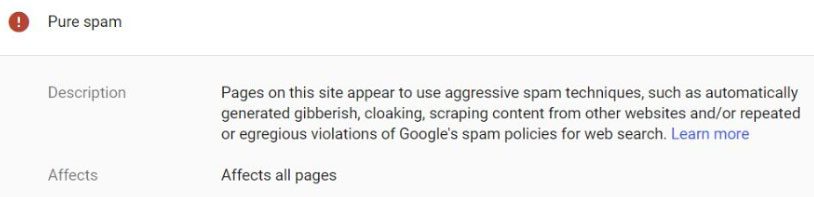
Just now he received this manual penalty affecting all the pages.

The site was publishing news in the entertainment niche.”

Screenshot Of Manual Action Notification

Screenshot X (formerly Twitter)

Lily Ray tweeted about ten sites gone overnight:

Gael Breton tweeted:

“I’m seeing AI spam sites getting fully deindexed left and right right now.

It’s going to get interesting”

@PureAffiliate responded with a tweet about a self-described “link building agency” that was completely eliminated from Google’s search results.

Screenshot Of Site Absent From SERPs

Google March 2024 Update: 6 Insights On Manual Actions

4. Inconsistent Communication About Manual Actions

Jeannie Hill (@essentialskill) posted about businesses that came to her for help who reported inconsistent messaging from Google about manual actions, with some receiving an email about it while others noticed the manual action in their Google Search Console. Interestingly, one case experienced a decline in traffic prior to receiving a message through Google’s search console.

Ollie Ryman @ollie_ryman commented about manual actions related to “abusive experiences” where the manual actions do not appear in Google Search Console and the only notification is through email.

Ollie tweeted:

@tonythill shared that everyone he asked about their manual action reported that they did not receive an email notification.

5. Small AI Content Sites Can Receive A Manual Action

Someone on Twitter suggested that Google is able to detect AI generated content by the massive amount of content published in a short amount of time.

The observation that the publishing speed can make a spam site easy to identify is correct. But the overall observation underestimates Google’s ability to catch AI generated content according to a response that the above tweet received.

@PeteReynolds_ responded to the above tweet with his actual experience with a small site that contains AI generated content that wasn’t competing for anything and was basically just sitting around. That seemingly inconsequential site received a manual action.

Pete tweeted:

Something else to consider is that statistical analysis uses more than just one data point (like the speed of content posting). The accuracy of statistical analysis is increasingly accurate with multiple data points and this has been a feature of statistical analysis in search engines for almost twenty years.

6. Old Sites Getting A Manual Action

Another facet of this update is that it’s affecting older sites that haven’t previously received manual actions.

@simransingh931 tweeted:

“Even one of our websites got hit with a manual penalty.

I started it in 2013, a brand new domain, that ranked well and was receiving good traffic over the years. Today I got a manual penalty for it.

No Spam, Articles written by trusted authors, everything from screenshots to content was our own.

I thought it was just us, but searched and found this and a few other threads.”

Takeaway: Reflection Before Action

The breadth and scope of the manual actions reported by the search marketing community validate Google’s announcement that the update contains a major change to their ranking systems and algorithms.

The Florida, Panda and Penguin updates introduced new technologies that exposed weaknesses in common SEO tactics of their time. Search marketers responded with a period of recalibrating search strategies in order to identify the next best path forward.

This update will take  a full month to roll out. My opinion, is to familiarize yourself with the sites that receive manual actions in order to understand patterns common to penalized sites. But also, as ever, the most obvious problem that stands out isn’t necessarily the most serious problem.

The entire search marketing industry is waiting and watching.  Remember to breathe.

Featured image by Shutterstock/1000Photography