Navigating SEO Disruption According To Experts via @sejournal, @BennyJamminS

This is an excerpt from SEJ’s SEO Trends 2024 ebook, our annual roundup of expert opinions on what you can expect over the course of the next 12 months. 

Seeing troubled waters ahead comes with apprehension, but it’s also a gift.

As much as disruption is inevitable in 2024, calls to the death of SEO are premature.

People still need to find things, and in this editor’s opinion, the momentum behind how people have searched for information since search engines first appeared isn’t easily redirected.

The models you currently use to drive business goals with SEO may change.

Some queries never needed a click-through in the first place. This is where in-platform search experiences will hit hardest.

Many low-hanging fruit queries will turn rotten, and basic informational queries will stop performing.

But if you weren’t serving the true user intent in the first place, this would happen eventually anyway.

You need to pivot, but you have time to do it.

The key will be educating your clients or in-house stakeholders and preparing them for disruption.

You will likely see unusual performance interruptions as you turn toward new strategies. You may need to reassess which metrics are important to you and what outcomes you expect from SEO.

Just remember: It isn’t the hype where you’ll find a sound strategy. It’s your understanding of your audience and how their journeys manifest.

If I had to summarize the insights of this article in three sentences, they would be:

  • Understanding a user’s true intent must guide you – spam and thin results are dying.
  • Don’t forget about technical SEO – keeping a tidy site can also help insulate you from ruthless core updates.
  • Use AI strategically to give yourself more time for big-picture thinking.

AI Will Change The Types Of Content We Invest In

Aleyda Solis, Founder & International SEO Consultant, Orainti

Navigating SEO Disruption According To Experts

I expect the following to be key SEO trends in 2024:

Trend 1: Time-Consuming SEO Tasks Get Easier

There will be further automation of key SEO tasks thanks to AI/chatbots/generative search.

From internal linking to structured data implementation, some otherwise resource-consuming SEO execution will be facilitated further thanks to more powerful automation.

Trend 2: Investment In Expert-Lead Content

After the disruption of AI content generation, online businesses should invest in expert-led content to differentiate themselves, increase their trustworthiness, and establish their authority.

An expert-based strategy can also minimize the chances of getting hit by Google quality updates.

Trend 3: Changing Click Behavior Will Necessitate Different Content

The release of Google’s Search Generative Experience (SGE) could shift users’ click behavior in search results.

For example, rather than clicking on reviews, articles, or product landing pages, they might go directly to product description pages through SGE snapshots.

We may need to start diversifying and changing the type of content we invest in to maximize our visibility and improve user experience across the search journey.


Don’t Overlook Update Impacts On Technical SEO

Dan Taylor, Partner & Head of Technical SEO, SALT.agency

Navigating SEO Disruption According To Experts

Crawling & Indexing Disruption

With all the focus on AI and the most recent fallout from the sequential Google updates (namely the helpful content update), a big focus has been on the impact on ranking.

We know that the idea of quality affects all of Google’s “SEO” processes.

Google reaffirmed this at Search Central Live in Zurich in October 2023. Right now, the SEO community focuses on “quality content,” but you should also focus on quality in terms of maintaining desired crawling and indexing rates. I think trends will shift more in this direction in 2024.

Many of Google’s systems use URL patterns to make judgments of all the URLs that follow this pattern.

This way, it can preserve resources and make judgments without crawling hundreds or thousands of URLs on a single large website. It does this for both judging quality and SafeSearch.

Crawling and indexing are expensive components of Google’s organic search.

I feel these more “ruthless” updates in recent months indicate things to come, as Google doesn’t need or want to crawl and store every piece of content on the internet. We also saw some indication of “index pruning” in 2022 in the August core update.

Effective log file analysis and understanding the Google Search Console (GSC) crawl stats report will be vital.

Prepare your clients for this, and educate your team members about it. Otherwise, brands will be blindsided by performance and ranking drops, with possible signs of crawl and indexing slowdown happening in advance.

Chrome’s Third-Party Cookie Breakages

As well as considering the impact on reporting (for showing the value of SEO) to the broader business, with Chrome moving towards the “deprecation” of third-party cookies, we also need to be activists and stewards for our clients in helping them understand the impact and potential site breakages for Chrome users.

While this isn’t strictly SEO, there’s no point driving users from organic search to a website if it doesn’t work or function as expected, and the users don’t convert.

From Q1 2024, this will be tested on 1% of Chrome users, with rollout fully anticipated before the end of the year. Test websites and highlight issues for clients now, and keep it on your radar in 2024.

In addition, help your clients set up analytics to report (and show value) to their stakeholders.


Specialized AI Tools Can Free Significant Time For Strategy

Kevin Indig, Growth Advisor To Fast-Growing Startups

Navigating SEO Disruption According To Experts

The most significant trend I see for 2024 is using AI to make workflows like data analysis, keyword research, content creation, and communication magnitudes faster.

We’re facing more AI in search (even more than before), but we also get more powerful tools to strike back.

General large language models (LLMs) like ChatGPT, Bard, or Claude are one part of the toolset, but we’ll also see a lot more specialized tools for specific workflows.

The second trend is the launch of Search Generative Experience (SGE) out of beta, which I expect at the end of 2023. At the time of writing (October 2023), we don’t yet know the implications of SGE, but understanding and reverse engineering it is the second big trend of 2024.


SEO Is Not Dead – SEO Got Better

Ryan Jones, SVP, SEO, Razorfish

Navigating SEO Disruption According To Experts

Be prepared for SEO to be declared dead multiple times, only to be replaced with something that looks a lot like SEO.

As generative AI develops, search engines will pivot more toward something that behaves like a Star Trek computer than providing a list of websites, giving answers on demand.

Many will struggle to accept that the user never wanted a website for some searches – they just wanted an answer.

On-demand answers may harm affiliate or niche sites, but plenty of people will still be searching to solve problems, find products, get advice, or generally “do something.” 

Marketers will still work to influence the new “search experiences,” just as we work to influence search results. We may try to call it something other than SEO, but it will still be SEO at its core.

We will continue growing away from some of our old metrics and treat SEO more like traditional marketing. 2024 will be the year the entire industry takes another step forward.

SEO professionals familiar with coding, AI, Information Retrieval, and traditional marketing will continue evolving, and I’m excited to see what awesome new ideas and tools we come up with.


Don’t Get Lost In Panic Or Hype, Stay Focused On What Matters

Motoko Hunt, President/International SEO, AJPR

Navigating SEO Disruption According To Experts

Is it just me, or have the updates and changes with the search engines become more frequent and drastic?

In addition to the search engine side of AI adoptions, AI tools such as ChatGPT became available to the general public.

You see mixed information about the future impact on search; it can get confusing and frustrating no matter the size of your company.

These fast-paced changes will create a massive divide among competing websites depending on how well teams can stay on top of the changes and use them to benefit.

In 2024, I recommend you keep the following three points in mind to grow your business:

Know The Facts

You must stay on top of what’s happening, but changes can come quickly. What you don’t want to do is to overreact, especially based on misinformation or one person’s opinions.

Read what the search engines and trusted industry news sources say, and don’t focus on every comment and rumor on social media.

Allocate sufficient budget for the SEO team’s education through seminars/webinars, conferences, and certification courses. Sharing knowledge with internal training programs for in-house teams or clients is also great practice.

It’s essential to know how the search results look to your target audiences, especially now that the search engines are changing the results page layout and content more frequently and drastically.

Check the search results with highly relevant queries to your business to see how the changes impact the results.

Analytics data informs the site performance, but looking at the search results also tells you much about why people do or don’t click links.

Understanding how these systems gather, and present information will enable you to pivot activities to respond to these changes as they go live.

Benefit From New Technology

Do an internal audit on tasks that take a long time and could benefit from automation.

For example, you can use AI tools, including AI-powered software services and ChatGPT, to help you check for any irregularities in your ecommerce database that feeds into the website. Or you could audit your site for duplicate and similar content.

These tools can also help cut down some of your coding and tagging work and immediately reduce your manual workload.

It is nice to see that some agencies are already creating tools with AI technology and offering them to clients. It doesn’t need to be a tool suite.

Sometimes, a tool that helps a niche area could make a big difference. Often, many websites simply need that niche challenge to be solved.

Stay Focused

If you are an in-house SEO, you know your business and its target audience very well.

This knowledge and your existing relationships are your best tools.

Improve your content by highlighting your products and services. The key is keeping sight of your business goals and not panicking with every Google update.

Agencies have two priorities: Your clients and your bottom line. Incorporate the AI tools to make the SEO work and related processes more efficient.

Leveraging AI should reduce your operational costs while helping to bring more success for the clients.

The best way to get buy-in from clients is to work closely with them by educating them.

Gaining their trust and confidence that you understand and have adapted to these changes will be the key to winning and retaining the businesses.


SEO Will Become More Expensive, Increasing The Risk Of Low-Quality Activities

Roger Montti, News Writer, Search Engine Journal

Rising Cost Of SEO And SaaS Tools

Navigating SEO Disruption According To Experts

I expect the cost of tools to increase, and we may see additional users on shared plans lose access in greater numbers.

  • Ahrefs recently announced it is cutting 15% of legacy users due to overuse.
  • Resource usage for AI is high, which might cause providers to raise prices. For example, comparing 2021 to 2022, Microsoft used 34% more water, and Google’s water use is up 20%, both attributed to AI.
  • Data center demand is at an all-time high, with some geographic areas experiencing as much as 300% data center growth.
  • Google’s investment in tensor processing units (chips for AI) is estimated to cost $3 billion in 2023.

Sequoia Capital, the venture capital firm that backed companies like Apple, Airbnb, and more, recently published an article stating that 2024 is when AI will go into what it calls Act Two.

Act Two of AI expands monetization opportunities beyond content and image generation into more high-stakes businesses like medicine. Act Two goes beyond the simple text and image generation for which people currently use it.

OpenAI recently promised lower-priced plans for developers, but these plans are for technologies related to medicine and entertainment. Those new planned offerings are a part of OpenAI’s goal to expand its footprint beyond ChatGPT users.

There are estimates that OpenAI spends at least $700,000 per day, and those costs are likely higher since the original estimates were based on GPT-3.

OpenAI may raise prices for its paid ChatGPT tiers. Its costs are increasing, and it currently has no real competitors.

I believe this is inevitable, but whether it will happen in 2024 is debatable. It could be further out by another two years.

The squeeze in SEO tool pricing is already happening and will likely become more intense.

Problems With Link Building

Natural language processing, neural networks, and AI mean that Google doesn’t need to rely as much on links to identify content relevance.

In 2024, it will start sinking in that links matter less. The mainstream is mostly already on board with this reality.

People who are relatively new to SEO may not be aware that spammy link tactics like buying expired domains have existed for 20 years, and Google has had a handle on it for a long time.

But some people tend to have faith in what they think they see and wave away evidence that doesn’t conform to those beliefs. The reality will become apparent as their peers discuss how links matter less.

Link building isn’t dead. But I think many people will realize certain tactics don’t work anymore.

Google Becomes More Precise

Google has spent many years improving its precision.

That was the whole point of the Hummingbird update from 2013. It was a rewrite to make the core algorithm fast and accurate.

That emphasis on precision has never gone away. The Medic Update was also about being precise about what sites qualify for the different query topics.

BERT helped Google have a more precise understanding of language.

SpamBrain and the Helpful Content System help Google increase precision in weeding out low-quality content and promoting higher-quality ones.

If Google uses TW-Bert, it provides a more precise understanding of search queries. And this will be increasingly problematic for publishers with low-quality content.

Google’s algorithms aren’t perfect, but in 2024, we will see this trend of increasing precision continue.

Precision is the word to keep in mind.

SEO Pros Must Be Insightful & Flexible To Adapt To Groundbreaking AI Innovation

Vahan Petrosyan, Director Of Technology, Search Engine Journal

Use AI Where It’s Strong And Defeat It Where It’s Weak

Navigating SEO Disruption According To Experts

2023 was groundbreaking with innovations in the field of AI, and it is evident that the role of AI in SEO is becoming more central than ever before.

AI’s growing influence in personalized search experiences is set to enhance the understanding of user intent, context, and the ability to analyze previous search histories.

This advancement will enable search engines to interpret the nuances in search queries and user behavior more accurately.

Consequently, SEO strategies will need to become more targeted, leveraging AI tools (such as Copilot in Clarity) to analyze and understand these behaviors effectively.

However, balancing this efficiency with a commitment to accuracy and ethical standards is crucial. All content generated through AI must be fact-checked to mitigate the risks of misinformation and AI biases, which is also a part of search engines’ guidelines regarding AI-generated content.

That is why – by focusing on E-E-A-T, introducing “perspectives” filters, altering rankings to prioritize content that demonstrates first-hand knowledge, and user notes in search – Google is trying to balance AI advancements with real-life experience and human touch.

Machines can’t replicate the personal insights and feelings gained from real-life experiences like product reviews. For users searching for [the best laptops for graphic designers], the real working experiences of design professionals with specific products are crucial, rather than just a generic list of potential laptop options.

But we should also admit that AI chatbots are reshaping how users interact with the web and consume content. Publishers and SEO professionals must innovate to stay competitive.

One advantage that websites still have over large language model chatbots is users still need to go the extra mile to get high-quality outputs. They have to think of a decent prompt and fact-check the response, which increases the time (i.e., “cost”) of getting information.

Given that fact, thinking about how to surpass chatbots is essential when crafting content and optimizing UI/UX. Content that is easy to consume, has a human touch, and earns trust with users, will win

. These are just a few examples of content that achieves those goals:

  • Provide expert opinions and well-researched content. Reduce the user’s need to cross-check information.
  • Integrate multimedia elements, data visualizations, interactive modules, quizzes, and real-time problem-solving exercises.
  • Incorporate human elements into a content strategy where AI chatbots may fall short, such as live Q&A sessions or webinars where experts respond to user queries in real-time.

User Experience & Speed

Google is good at understanding user intent because it accesses extensive information about users, allowing it to produce exceptionally fast and relevant search results.

However, quick SERP generation becomes less effective if the websites are slow, as users will likely abandon slow-loading pages.

Therefore, technical SEO will be even more important for ranking and retaining users.

Google’s introduction of the new Core Web Vitals (CWV) metric – Interaction to Next Paint (INP) – which will replace First Input Delay (FID) in March 2024, confirms that.

SEO Isn’t Going Anywhere

While there are claims that SEO and technical SEO are dead, this is far from the truth, and SEO will remain a vital aspect of digital marketing.

The rise of AI doesn’t signal the end of SEO but a shift in its strategies and practices. This happened several times when Google introduced SERP features like featured snippets, People Also Ask (PAA) boxes, etc.

This shift requires a deeper, more nuanced understanding of user intent and how search engines work.

Trends To Watch From The SEJ Newsroom

Matt G. Southern, Senior News Writer, Search Engine Journal

Navigating SEO Disruption According To Experts

SEO is constantly evolving, and 2024 will likely change how we think about it even more.

Based on my experience covering the SEO industry, I wanted to share some critical insights to get ahead.

Focus On Improving Existing Rankings

First, I want to emphasize the importance of improving existing ranking keywords rather than chasing new ones.

Often, websites already have a goldmine of opportunity in keywords ranking on page two or three.

Even if you rank on page one, moving up just one spot can skyrocket your traffic since the click-through rate is much higher in the top spots.

Conduct Intent-Focused Keyword Research

Intent and relevance are key when researching new keywords.

It can help to prioritize transactional, commercial keywords over generic informational ones. And ensure the keywords genuinely relate to your core products, services, and solutions.

Sometimes, we get distracted by high-volume keywords that don’t convert or drive revenue.

Create Link-Worthy Assets

Creating linkable assets is crucial for long-term SEO success. Look for ways to make your content more worthy of links by doing unique research, testing products, compiling data studies, etc.

Authoritative, quality backlinks remain among the most decisive ranking factors, so build content that people naturally want to reference and link to.

Leverage Trends Strategically

Stay on top of trends and leverage timely opportunities when they make sense. For example, publishing evergreen content about a hot topic can allow you to rank before the competition catches on.

Don’t go overboard with trend-jacking – keep it to less than 20% of your content mix.

Build Content You’re Passionate About

Create content you’re genuinely passionate about. This makes the process so much easier over the long haul. And take a long-term view – build your website as a brand, not just a quick income source.

SEO success requires expertise, experience, and establishing trust – and that takes time to build.

Focus On Quality

As Google’s algorithms advance, they will better detect genuinely helpful, expert-level content vs. content created to target keywords. Produce content that provides real value for users.

Leverage Structured Data

Structured data like schema markup helps search engines understand your content better, especially for reviews, FAQs, recipes, events, etc. This can enhance your indexing and rich snippet potential.

Build An Authoritative Brand

Become a trusted resource that users keep returning to as their go-to source for information. Provide consistent value, engage with your audience, and establish thought leadership.

Leverage Video & Live Streaming

Video content and live streaming will be more influential in 2024.

YouTube continues dominating search, and live video platforms like TikTok are changing discovery. Create engaging video content that connects with audiences.

Pay Attention To AI

As chatbots like ChatGPT evolve, they may disrupt search behaviors and content creation. Understand how users interact with AI to serve their needs.

Doubling down on high-quality, user-focused content and branding will serve you well from an SEO perspective in the next few years.

Stay nimble and open-minded as search trends evolve!

In Summary

Here are my key takeaways for SEO success in 2024:

  • Leverage the low-hanging fruit on pages two and three.
  • Conduct intent-driven keyword research.
  • Create authoritative, link-worthy assets.
  • Monitor search trends but stay focused on evergreen, high-quality content.
  • Provide genuine user value over keyword targeting.
  • Build brand authority and thought leadership.
  • Stay agile to align with emerging technologies like AI.
  • Leverage structured data to help search engines understand your content better.
  • Lean into video.

More resources: 


Featured Image: Paulo Bobita/Search Engine Journal

Google Updates Guidance On Image Removal From Search Index via @sejournal, @martinibuster

Google updated their emergency and non-emergency image removal guidance with added details that give new clarity to the documentation.

Removing Images From Search Index

Google offers multiple ways to remove images from the search index on both an emergency and non-emergency basis.

There are multiple relatively trivial changes but these are the topics that had different levels of changes:

  • How to quickly remove images.
  • What to do when there is no access to the CDN that’s hosting the images or if the CMS doesn’t offer a way to block indexing.
  • More details about the use of robots.txt for images.
  • How to use wildcards in robots.txt
  • A caveat about the use of noimageindex robots tag.

How To Quickly Remove Images From Index

The first addition to the documentation is the following paragraph:

“For emergency image removal
To quickly remove images hosted on your site from Google’s search results, use the Removals tool. Keep in mind that unless you also remove the images from your site or otherwise block the images as described in the non-emergency image removal section, the images may resurface in Google’s search results once the removal request expires.”

When There’s No Access To Images On CDN Or By CMS

The next scenario is when an image is hosted on a CDN but for whatever reason they can’t be accessed or the CMS prevents blocking the image.

This is the added paragraph:

“If you don’t have access to the site that’s hosting your images (for example a CDN) or your CMS doesn’t provide a way to block images with the noindex X-Robots-Tag HTTP header or robots.txt, you might need to delete the images altogether from your site.”

Images And Robots.txt

The next changes are minor additions to two paragraphs that together make the message clearer, with addition of the phrase, “for example https://yoursite.example.com/robots.txt” and some other extra words that are relatively trivial.

The following passage about robots.txt structure was changed from this:

“Rules may include special characters for more flexibility and control. The * character matches any sequence of characters, and patterns may end in $ to indicate the end of a path.

To this:

“Rules may include special characters for more flexibility and control. Specifically, the * character matches any sequence of characters which lets you to match multiple image paths with one rule.”

Change To Guidance On Robots.txt Wildcards

The next change is more substantial because it offers more details on how to use wildcards. Wildcards in this context relates to the use of the * symbol which means any character can be there.

This part:

“# Wildcard character in the filename for
# images that share a common suffix:”

Becomes this:

“# Wildcard character in the filename for
# images that share a common suffix. For example,
# animal-picture-UNICORN.jpg and
# animal-picture-SQUIRREL.jpg
# in the “images” directory
# will be matched by this pattern.”

New Paragraph About Noimageindex Robots Tag

The last of the significant changes is a passage that offers a caveat about the use of the noimageindex.

This is the new passage:

“Note that adding the noimageindex robots tag to a particular page will also prevent that images embedded in that page from getting indexed. However, if the same images also appear in other pages, they might get indexed through those pages. To make sure a particular image is blocked no matter where it appears, use the noindex X-Robots-Tag HTTP response header.”

Google Search Central Updating Documentation

This is the latest of an ongoing series of updates to Google’s documentations. Long webpages are edited to make them more concise. Others, like this webpage, are edited to make them clearer.

Read the newly updated guidance on removing images from Google’s index:

Remove images hosted on your site from search results

Featured Image by Shutterstock/Piotr Swat

Google Is Rolling Out New Search Features In Europe via @sejournal, @MattGSouthern

Google has unveiled new search experiences that will soon roll out across the European Economic Area (EEA).

The changes are part of Google’s preparations to comply with the European Union’s Digital Markets Act (DMA).

One notable change is a carousel-style rich result for queries like “hotels near me.”

Google is also adding dedicated ‘aggregator units’ to showcase links to major aggregator sites relevant to the search.

In a blog post, Google explains that it aims to “present users with rich and relevant information for their searches” and “improve the visibility of ecosystem participants.”

Rich Results Carousel

Google will soon roll out a new search feature that displays carousel-style rich results for queries related to travel, local services, and shopping.

This new format will allow users to horizontally scroll through tiles showing additional information like prices, ratings, and images.

The carousel results depend on web pages having the appropriate structured data markup. Without that markup, pages will continue showing the standard text search results.

While initially launched for travel and local searches, Google is testing the carousel for shopping queries in Germany, France, Czechia, and the UK.

Aggregator Units & Refinement Chips

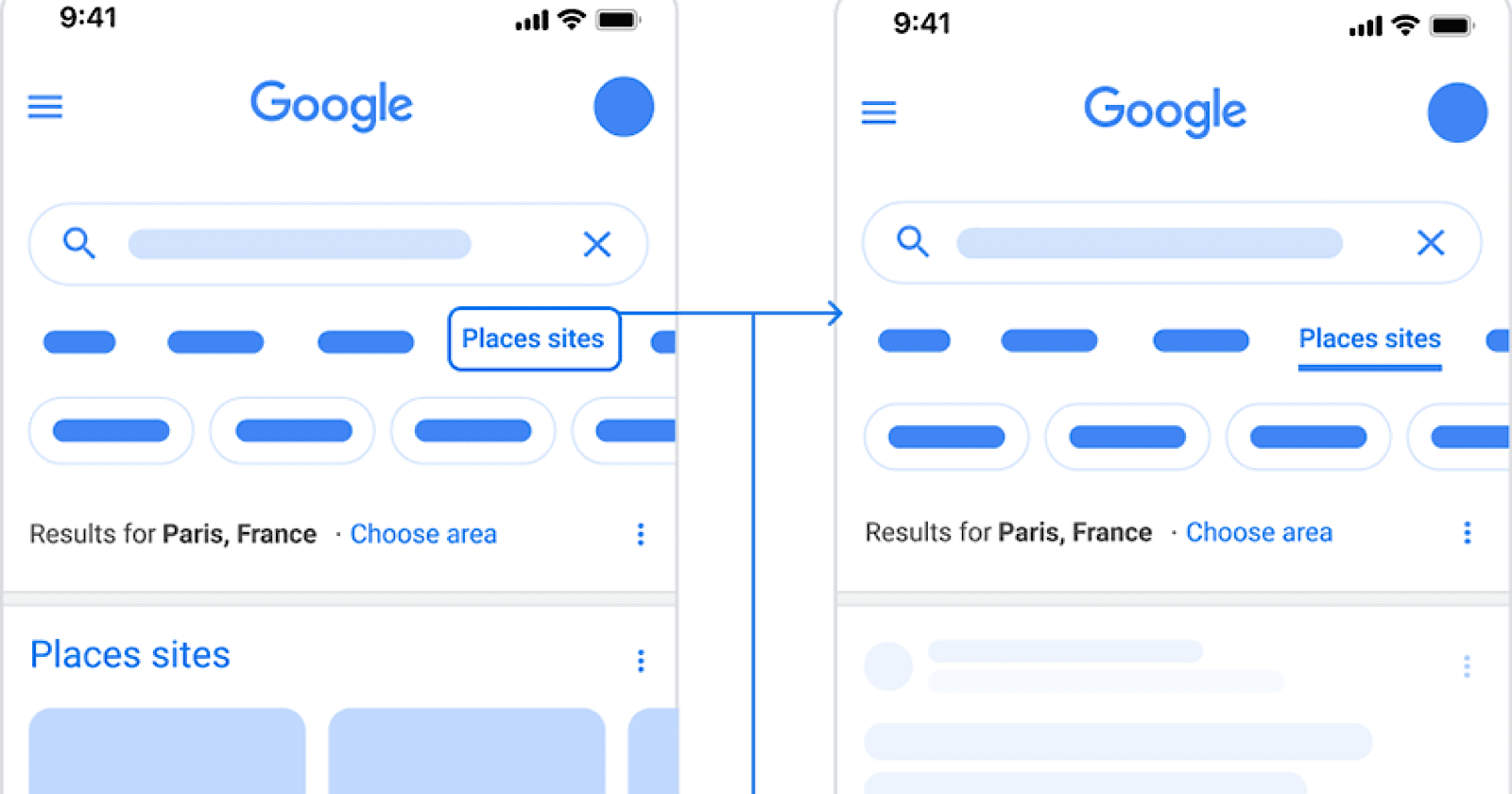
Google is implementing new search features that provide direct links to content from aggregator websites in top search results.

Additionally, Google is adding refinement chips that allow searchers to narrow down results to specific types of content.

Varieties of these aggregator units include:

  • Places sites
  • Jobs sites
  • Flight sites
  • Product sites (initially tested in Germany, France, Czechia, and the UK)

Google says these features will not require additional work from publishers to implement.

Flight Queries

Alongside the abovementioned features, Google is testing a new search feature for flight-related searches.

This feature displays airline website results in a separate unit, allowing users to find flight details more easily.

Google’s Invitation To EEA Publishers

These new search features are exclusively available to users in the EEA to comply with the DMA.

Google invites EEA-based companies or those serving EEA users to express interest in these new search features by filling out a form.

Through these changes, Google aims to create a more user-focused and competitive digital market in line with DMA goals while providing businesses with new opportunities in search results.

Why These Features Are Exclusive To Europe

Google is rolling out these features in Europe because of a legal obligation to comply with the DMA.

The DMA is new EU legislation aimed at regulating large technology companies designated as “gatekeepers” due to their market dominance.

It will come into effect in March and requires significant changes by companies like Google, Apple, Amazon, Meta, Microsoft, and ByteDance.

As a designated gatekeeper, Google must adjust products like Search, Maps, and the Android app store to comply.

Requirements For “Gatekeepers”

The DMA’s main objectives are the following:

  • Give users more choice over default apps and services
  • Allow alternative app stores
  • Mandate interoperability between messaging services
  • Ban self-preferencing in rankings
  • Require consent for targeted ads
  • Improve data transparency.

Gatekeepers will need user consent for targeted ads and to provide more precise advertising data to business customers. They will also have to allow other app stores on their devices.

E-commerce, search, and social media platforms cannot unfairly rank their services above competitors. Messaging services like WhatsApp and iMessage will have to become interoperable.

Lawmakers in the EU believe this will benefit consumers, who can choose default apps and services easily.

Looking Ahead

As the enforcement date approaches, Google intends to comply with the DMA while maintaining user experience.

Companies have a six-month transition period before the DMA fully takes effect. The legislation is expected to reshape the digital market in the EU significantly.


FAQ

What new search experiences are Google rolling out in the European Economic Area?

Google is introducing a range of new search enhancements designed to comply with the European Union’s Digital Markets Act (DMA). These enhancements include:

  • A carousel-style rich result for travel-related queries, such as “hotels near me.”
  • ‘Aggregator units’ showcase links to major aggregator websites relevant to the user’s search.
  • Refinement chips enable users to filter search results more precisely.
  • Features to improve the visibility of airline websites for flight-related queries.

How will Google’s carousel-style rich results affect search visibility?

Introducing carousel-style rich results will enhance the visibility of specific search results by displaying them in a scannable and visually appealing horizontal format. Key impacts include:

  • Improved user engagement through interactive elements like prices, ratings, and images.
  • Increased visibility for web pages that implement the appropriate structured data markup.
  • Possibility for businesses with correctly marked-up pages to gain more attention and potentially drive more traffic to their site.

Without the requisite structured data markup, pages will continue to appear as standard text search results.

What implications does the Digital Markets Act have for tech companies and users in the EU?

The Digital Markets Act (DMA) introduces a series of regulations and requirements that will have wide-ranging implications for tech companies and consumers in the EU, including:

  • More user autonomy over default apps and services by prohibiting self-preferencing and mandatory options for alternative services.
  • Introduction of alternative app stores and interoperability between messaging services.
  • Requirement for explicit user consent for targeted advertising and greater transparency regarding advertising data.
  • An environment that encourages fair competition by preventing e-commerce, search, and social media platforms from unfairly ranking their services above competitors.

The DMA is expected to significantly alter the digital market environment within the European Union, providing consumers with increased choice and control.


Featured Image: Screenshot from developers.google.com, February 2024. 

Google Updates Rel=Canonical Documentation via @sejournal, @martinibuster

Google updated their rel canonical documentation in order to clarify how Google handles the extraction of rel canonical annotations. The clarification is not meant to indicate a change in how Google handles rel=canonical annotations but rather to make it explicitly clear how Google processes them.

Canonical Link Relation – RFC 5988

Google’s documentation has always referenced RFC 5988 as the standard Google uses for how it uses the link relation canonical. The RFC is a standard published by the Internet Engineering Task Force (IETF) that defines specifications for various Internet and networking technologies, in this case the standards related to HTML rel link attribute.

An HTML element is like a basic building block of an HTML webpage. An element can be extended with an attribute. In this case the Link element is modified by the Rel attribute.
RFC 6596 defines the rel link attribute as:

“RFC 5988 specifies a way to define relationships between links on the web. This document describes a new type of such a relationship, “canonical”, to designate an Internationalized Resource Identifier (IRI) as preferred over resources with duplicative content.

…Common implementations of the canonical link relation are to specify the preferred version of an IRI from duplicate pages created with the addition of IRI parameters (e.g., session IDs) or to specify the single-page version as preferred over the same content separated on multiple component pages.”

What that means is that the canonical link element specifies when another document is duplicate (duplicative) and which one is the preferred original. These are the parameters that Google has used to process the canonical link element.

Changes To Canonical Documentation

The changes to the Search Central Documentation were specific to rel=”canonical” link annotations that are outside of the use case of specifying documents that are duplicative plus some minor and trivial changes to the page.

Google changed the following sentence:

“Google supports rel canonical link annotations as described in RFC 6596.”

The change is limited to adding the word explicit:

“Google supports explicit rel canonical link annotations as described in RFC 6596.”

While that change may seem trivial it’s actually the focus of the documentation change in that it makes it clear that Google is not deviating from the standards as laid out in the RFC 6596.

The next change is an addition of an entirely new paragraph.

This is the new paragraph:

“rel=”canonical” annotations that suggest alternate versions of a page are ignored; specifically, rel=”canonical” annotations with hreflang, lang, media, and type attributes are not used for canonicalization.

Instead, use the appropriate link annotations to specify alternate versions of a page; for example, link rel=”alternate” hreflang for language and country annotations.”

What that means is to not use “canonical” to specify something that is not a duplicative webpage, such as a page in another language or media but rather it’s better to use “alternate” instead.

This does not represent a change in how Google uses or ignores canonical or alternate link elements.

Google’s changelog documentation explains it:

“Clarifying the extraction of rel=”canonical” annotations
What: Clarified that rel=”canonical” annotations with certain attributes are not used for canonicalization.

Why: The rel=”canonical” annotations help Google determine which URL of a set of duplicates is the canonical. Adding certain attributes to the link element changes the meaning of the annotation to denote a different device or language version. This is a documentation change only; Google has always ignored these rel=”canonical” annotations for canonicalization purposes.”

Read Google’s updated documentation:

How to specify a canonical with rel=”canonical” and other methods

Featured Image by Shutterstock/Kues

Google Launches “How Search Works” Series To Demystify SEO via @sejournal, @MattGSouthern

Google is releasing a new educational video series on its Search Central YouTube channel.

The videos feature Google engineer Gary Illyes, who provides an inside look at how Google Search works. The goal of the series is to explain the complexities of the search engine in an understandable way.

The first episode serves as an introduction to the series. Future episodes will delve deeper into techniques for improving website visibility in search results.

“How Search Works” Series Debut

“How Search Works” is a five-part series that delves into the technical aspects of Google’s Search functionality.

“We created this series to help you, your friends, family, business partners, and anyone, really, increase the visibility of your sites,” Illyes states, emphasizing the technical focus of the content.

The Mechanics of Search

The series aims to unpack the three core stages of Google Search:

  1. Crawling – The process by which Google discovers URLs and explores the web.
  2. Indexing – How Google understands a page’s content and context in relation to the internet, storing it in a searchable format.
  3. Serving – The method Google employs to serve and rank search results.

Additionally, future videos will dissect the components of search results and how to optimize webpages pages to enhance visibility.

Key Takeaways From Episode One

Illyes underlines two critical points for understanding Google Search:

  1. Google doesn’t accept payment for more frequent crawling or higher ranking. Gary emphasizes, “If anyone tells you otherwise, they’re wrong.”
  2. The quality of a website’s content is paramount for achieving a favorable position in search results.

Illyes claims Google’s definition of “quality” content will be explained in future episodes.

More Of The Same?

It’s unclear how Google’s new “How Search Works” video series will differ from its existing videos like “Search for Beginners.”

Based on the introduction, there is potential for a lot of repetitive content between the two series.

However, as advocates for publishing unique content, one would expect that the new videos will provide additional insights and information beyond what has already been covered in previous educational materials from Google.

FAQ

What is the purpose of Google’s “How Search Works” video series?

  • Google created the “How Search Works” video series to make the intricate workings of Google Search easier to understand for more people.
  • By offering explanations straight from the source at Google, the goal is to help website owners optimize their sites to rank higher in search results.

Does payment for crawling or ranking influence Google Search?

  • Google makes it clear it doesn’t take money in exchange for boosting a website’s ranking or crawling rate in search results. In the video, Illyes denies any suggestion that payments can sway search rankings.
  • Google insists that search result order is determined by assessing website content quality and relevance to the user’s query. Financial transactions play no role in influencing search rankings.

How can marketers leverage insights from the “How Search Works” series?

  • The “How Search Works” series offers marketers valuable insights into the technical inner workings of Google Search.
  • By learning about critical SEO concepts like crawling, indexing, and serving, marketers can better optimize websites to improve visibility and rankings on Google.
  • The series aims to give marketers a clearer picture of how to optimize sites for Google Search ethically.


Featured Image: Screenshot from YouTube.com/GoogleSearchCentral, February 2024. 

Google’s Danny Sullivan Provides 5-Step Plan To Diagnose Ranking Drops via @sejournal, @MattGSouthern

Google’s Search Liaison, Danny Sullivan, recently offered guidance on how to diagnose ranking declines.

Sullivan provided the advice on X (formerly Twitter) to Wesley Copeland, owner of a gaming news website, who sought help after seeing a significant drop in traffic from Google searches.

Google’s Search Liaison Offers SEO Tips

According to Copeland’s post, he’s been struggling to understand why his website’s status as the go-to source for Steam Deck guides has changed. He stated:

“Hey Danny! Any chance you could take a look at my site http://RetroResolve.com, please? We used to be the go-to for guides on Steam Deck but got hit pretty badly and I’m a bit lost as to why.”

A Five-Step Plan To Recovery

Sullivan recommended several steps to diagnose and address potential issues with the website’s performance:

  1. First, use Google Search Console to compare the site’s metrics over the past six months versus the prior period.
  2. Next, sort the Queries report by click change to identify notable decreases.
  3. Check if the site still ranks highly for those terms.
  4. If so, the content quality and SEO may not be the problem.
  5. Recognize that Google’s ranking algorithms evolve continually, so some volatility is expected.

“If you’re still ranking in the top results, there’s probably nothing fundamental you have to correct,” Sullivan assured.

He elaborated that changes in traffic could be due to Google’s systems finding other content that could be deemed more useful at the time.

Implications & Insights For SEO Professionals

Sullivan’s advice highlights the importance for SEO professionals to regularly analyze performance using tools like Google Search Console. His recommended approach can provide insights into traffic changes and identify areas to potentially optimize.

High search rankings require aligning with Google’s evolving ranking criteria. Google continually improves its algorithms to deliver the most relevant content to users. Therefore, search ranking fluctuations are expected.

Final Words

Copeland’s experience demonstrates the volatile nature of SEO, demonstrating that even well-established websites can be impacted by changes to Google’s ranking priorities.

Sullivan’s final words offer a mix of assurance and the reality of SEO:

“But you probably don’t have any fundamental issues, and it might be the mix of how we show content could change to help you over time.”

The conversation between Copeland and Sullivan is a lesson in staying vigilant and responsive to the ever-evolving demands of Google’s algorithms.

FAQ

What strategies should SEO professionals employ to adapt to ranking fluctuations?

  • Regularly monitor website performance data through Google Search Console to detect trends or changes in traffic.
  • Keep informed about updates to Google’s ranking algorithms and adapt SEO tactics accordingly.
  • Focus on creating content aligning with current Google relevancy and usefulness standards.
  • Remain vigilant and prepared to make optimizations as market conditions and ranking criteria evolve.

What insight does the interaction between Wesley Copeland and Danny Sullivan give to SEO marketers?

  • It underscores the unpredictable nature of SEO, indicating that even popular websites can experience shifts due to ranking algorithm updates.
  • The guidance confirms the necessity of maintaining a proactive approach to SEO, particularly in evaluating performance metrics.
  • It highlights that, while traffic declines can be worrying, they don’t always signal fundamental issues with the content or SEO practices.


Featured Image: Who is Danny/Shutterstock

SEO Experts: Prepare For Search Generative Experience With “Search Experience Optimization” via @sejournal, @BennyJamminS

This is an excerpt from SEJ’s SEO Trends 2024 ebook, our annual roundup of expert opinions on what you can expect over the course of the next 12 months. 

At the time of writing, Google’s “Search Generative Experience (SGE)” is still experimental. There’s much anxiety about what the in-platform chatbot will mean for SEO results, traffic, and revenue if SGE becomes part of the default Google experience.

It seems as though a public rollout of SGE may be indefinitely delayed, but that doesn’t mean you shouldn’t prepare for it.

Only time will tell the (SEO) impact of user-facing AI features in search engines.

Many platforms are introducing new features that keep users on the platform – by giving the information they’re seeking right there (remember when the featured snippet first became a thing?) – rather than redirecting them to websites.

On the other hand, users will always take journeys off-platform when needed. Identifying when to serve the user an ideal in-platform experience and when to coax them off will be crucial to success for both the platforms and you.

Don’t work at cross-purposes with user intent. If they want a quick answer, you won’t get them away from the path of least resistance.

But if the user wants original data, original thoughts, products, or complex solutions, you have opportunities to set yourself apart.

Your ability to choose when to be an ally to generative AI and when to be its enemy could be the key to surfacing your brand for multiple search intents and types.

If I had to summarize these insights in three sentences, they would be:

  • AI in search will upset performance for entire groups of queries, data gathering, and potentially the balance between the platforms.
  • Search success may come down to being discoverable by generative AI and finding as many opportunities as possible to surface your brand to users.
  • Humans are irreplaceable for setting SEO strategies in a new AI landscape and will be for some time.

Optimize For In-Platform Experiences

Andrew Chadwick, Founder, Keyword Insights

SEO Experts: Prepare For Search Generative Experience With “Search Experience Optimization”

As the digital landscape evolves, SEO professionals should take note of the growing shift from traditional search engine optimization (SEO) to search experience optimization (SXO).

Optimizing In-Platform Experience

While, historically, SXO revolved around enhancing website user experience, it now includes optimizing content for the precise platforms where your audience resides.

This evolution underscores the importance of grasping user behaviors on platforms such as TikTok, Instagram, and Pinterest while fine-tuning the overall user experience.

As Google strives to retain user engagement within its ecosystem, businesses and SEO professionals must focus on creating content meticulously designed for these platforms.

This is especially pertinent as Google (and SGE) increasingly integrates a diverse and dynamic content blend into search results, evident by the prominence of TikTok entries.

AI-Powered Content Generation

AI for content generation will become more prevalent in 2024. While AI can assist in creating content efficiently, SEO professionals and businesses should use it judiciously.

To maintain authenticity, they should balance AI-generated outputs with personal experiences, original thoughts, and unique insights.

Leveraging AI tools can help save time at specific points during the content process.

Building A Strong Brand Presence

Building a strong brand presence is crucial in a landscape where Google’s SERPs evolve rapidly.

Recognizable brands could be more likely to attract clicks, and they can fare better in being surfaced by generative AI.

SEO professionals and businesses should invest in brand-building initiatives, collaborate with influencers, provide exceptional customer experiences, and consistently deliver valuable content.

A strong brand can help mitigate the impact of algorithm changes and promote sustained visibility and growth.

These trends reflect the evolving nature of SEO, where the focus is shifting from merely optimizing for search engines to optimizing for the holistic search experience and user preferences.

Businesses that adapt to these trends will likely achieve greater success in their SEO efforts in 2024 and beyond.


The “10 Blue Links” SERP Is A Thing Of The Past

Eli Schwartz, Growth Advisor, Product Led SEO

SEO Experts: Prepare For Search Generative Experience With “Search Experience Optimization”

Search Generative Experience (SGE) may change the whole medium of search.

No longer will SEO be about 10 blue links or a map result.

Developing “search experiences” could overturn the entire process of how people use search to discover information on the internet. Whether users will like this is unclear, but that won’t matter because everything about search is changing.

These developments will be good for some, bad for others, but certainly different for everyone.

On a related note, a shifting search experience might also cause a change in market share dynamics. Could users migrate to ChatGPT? Will they go to Bing? Things can always evolve.

These are the things we need to consider in 2024. Unlike past years, where you could clearly see the direction search was heading, it’s different this time.

Once this Pandora’s box opens, anything can happen.


The Human Element Of SEO May Be Irreplaceable, But We Must Prepare For AI In Search

Olga Zarr, SEO Consultant, SEOSLY

SEO Experts: Prepare For Search Generative Experience With “Search Experience Optimization”

The most significant trend for SEO in 2024 will be the continuation of the rapid growth and influence of AI technologies, such as ChatGPT, Bing Chat, and Bard.

With developments like GPT-4, DALL•E-3, and PaLM 2, it’s clear that this trend will accelerate for a while.

A Significant Shift In Search

These advanced tools are significantly transforming the SEO landscape, and – whether we like it or not – they are pushing us toward a more automated approach.

These changes raise an essential question: Is the SEO as we know it today on the brink of becoming obsolete? It’s unlikely to disappear overnight, but we can’t ignore the current substantial shifts.

Major search engines like Google (through Search Generative Experience) and Bing (through Bing Chat) are increasingly integrating AI-generated content into their search results. This is one of the most significant transformations we’ve seen in decades.

As SEO professionals, it’s crucial that we stay on top of these changes and continuously update our strategies and tools to leverage the power of AI. We must find the perfect balance between utilizing AI for efficiency and relying on our human expertise for nuanced, strategic decision-making.

The Human Element In SEO Is Irreplaceable

Humans bring a level of understanding and analysis that AI cannot replicate – at least for now.

But the SEO field is evolving, and we may not even recognize it in the next five to 10 years. Despite this, the core of our job remains the same: helping businesses connect with their customers.

The tools and platforms might change, but the necessity for skilled AIOs (Artificial Intelligence Optimizers), SEO professionals, or whatever we will be called in the future will remain the same.

We must be prepared to adapt to new methods of SEO and find innovative ways to measure our impact and help our clients gain visibility.

This could mean learning how to showcase our clients’ content in AI-generated search results so that they still stand out in this new landscape.

The rise of AI in SEO is a trend you cannot ignore. It presents challenges and opportunities, and it’s up to us to navigate these waters.

The SEO landscape is changing rapidly, and our methods in 2024 and beyond will need to evolve – or we and our services will become obsolete.


Search Generative Experience Could Create A Data Gap

Patrick Stox, Product Advisor & Technical SEO, Ahrefs

SEO Experts: Prepare For Search Generative Experience With “Search Experience Optimization”

Challenges With Click Attribution

We will see fewer clicks and less data on clicks and rankings. At least it’s looking that way with Search Generative Experience (SGE).

People are likely going to click through to sites less on many queries.

I don’t think search engines will even give us ranking data [any time soon] for these clicks. Even if they do, it will be muddied, with multiple websites listed for each section.

Challenges With Rank Tracking In SGE

This experience also works only with JavaScript enabled.

Rank trackers traditionally have not rendered or had to wait for results like they will with SGE. The cost of rank tracking for SGE is likely to be much higher.

On the other hand, with more attention to machine learning than ever, 2024 will be when more SEO automation goes mainstream.

It will make SEO professionals’ lives easier and free them from many menial and time-consuming tasks.

More resources:


Featured Image: Paulo Bobita/Search Engine Journal
Google On 404 Errors And Search Console Validation Fix via @sejournal, @martinibuster

Google’s John Mueller answered an interesting question about what actually happens after clicking the “validate a fix” link in Search Console if the 404 status still exists. John Mueller explained what’s going on with that “validate a fix” function.

What Causes A 404 Status Code And How Should It Be Dealt With?

When a browser requests a webpage the server offers a response and a code that relates the status of the request. If the request for a webpage is successful the server responds with a status code of 200 (Okay). If the request was unsuccessful because the requested webpage does not exist at the requested URL address then the server will respond with a 404 (Not Found) status code.

How does Google Search Console (GSC) handle the validation of fixed 404 errors?

Dixon Jones, CEO of Inlinks asked a question about what it means to validate a 404 error response in search console when the 404 still exists.

He tweeted his question:

Hi @JohnMu – boring question… If a 404 means a page does not exist (and should not exist), what does GSC do when it tries to “validate a fix”?

It will still be a 404… so what drives it out of the 404 list? Removal of links To that page? Or should we start creating 301s? I assume not…”

Google’s John Mueller explained the purpose of 404 search console validation:

“It’s more if you accidentally 404’d something and fixed it. You obviously don’t have to fix 404s that you want to be 404s. Also, this is more about tracking for you (“I fixed this, tell me when you see it fixed too”).”

It’s not uncommon for publishers to accidentally remove webpages or to disappear because of technical issues. As a convenience to publishers (and to searchers), Google keeps rembering the location of the missing webpages so that it can start showing them in the search results again once the page returns, as John Mueller says, “…if you accidentally 404’d something and fixed it.”

What Causes A 404 Status Code And How Should It Be Interpreted?

The 404 response is called an error because the webpage requested from the URL does not exist and thus the request is in error, not that Google found and error on the webpage that needs to be fixed.

RFC-Editor.org lists the official Internet standards for HTML and the official description of the 404 Status Code does not even mention the word error.

This is the official standard for the 404 status code:

“15.5.5. 404 Not Found
The 404 (Not Found) status code indicates that the origin server did not find a current representation for the target resource or is not willing to disclose that one exists.

A 404 status code does not indicate whether this lack of representation is temporary or permanent; the 410 (Gone) status code is preferred over 404 if the origin server knows, presumably through some configurable means, that the condition is likely to be permanent.”

Technically, if 404 status is known to be permanent and the webpage is never coming back then the correct response is to show a 410 status code.

But Google treats the 404 and 410 response codes almost equally. The 410 response causes the webpage to drop out of Google’s search index just a little bit faster. But the end result is the same.

Is It Necessary To Fix All 404 Errors Including From External Links?

Jeannie Hill stepped into the discussion to ask about inbound links from other sites to the wrong URL.

She tweeted:

“Most of the 404s we don’t want are derived from external sources that fail to get the inbound URL right. Even Research Gate. Trying to correspond typically lags or has no response. Is it worth pursuing?”

John Mueller responded:

“Probably not. (Also “validate fix” is about checking the URL on your site, not the linking URL, so it wouldn’t apply there anyway.)”

Jeannie followed up:

“Thanks, @JohnMu for the response.

It is useful to identify these inbound 404s while “Validate fix” helps resolve internal linking issues.

We’ve resolved a few inbound 404s that we thought were more important. However, I question the value gained for the effort it takes.”

John responded with a commented on the value of spending the time to fix inbound links:

“I’d look at the traffic and not SEO-Juice. Are too many people getting lost when they want to visit you? That seems like something worth fixing if you can.”

The Role Of “Validate Fix” In Managing Internal And External 404 Errors

John Mueller made clear that the 404 search console report is meant to be a way to communicate that Google found missing pages. It’s up to publishers to decide what to do about them.

When it comes to external links to URLs that don’t exist, Mueller suggests that fixing those is not worth pursuing but I think most SEOs would disagree if the link is from a legit website. It makes sense to pursue fixing those inbound links by creating a 301 redirect from the malformed URL to the correct URL.

Featured Image by Shutterstock/tynyuk

Google Uses AI To Detect Fake Online Reviews Faster via @sejournal, @MattGSouthern

Google is harnessing new AI technology to block a surge of fake online reviews that mislead customers and harm local businesses.

The company stopped over 170 million fake reviews in 2023 – a 45% increase over the previous year.

The crackdown provides welcome relief for local business owners who have struggled with fraudulent reviews that damage their reputations on Google Maps and Search.

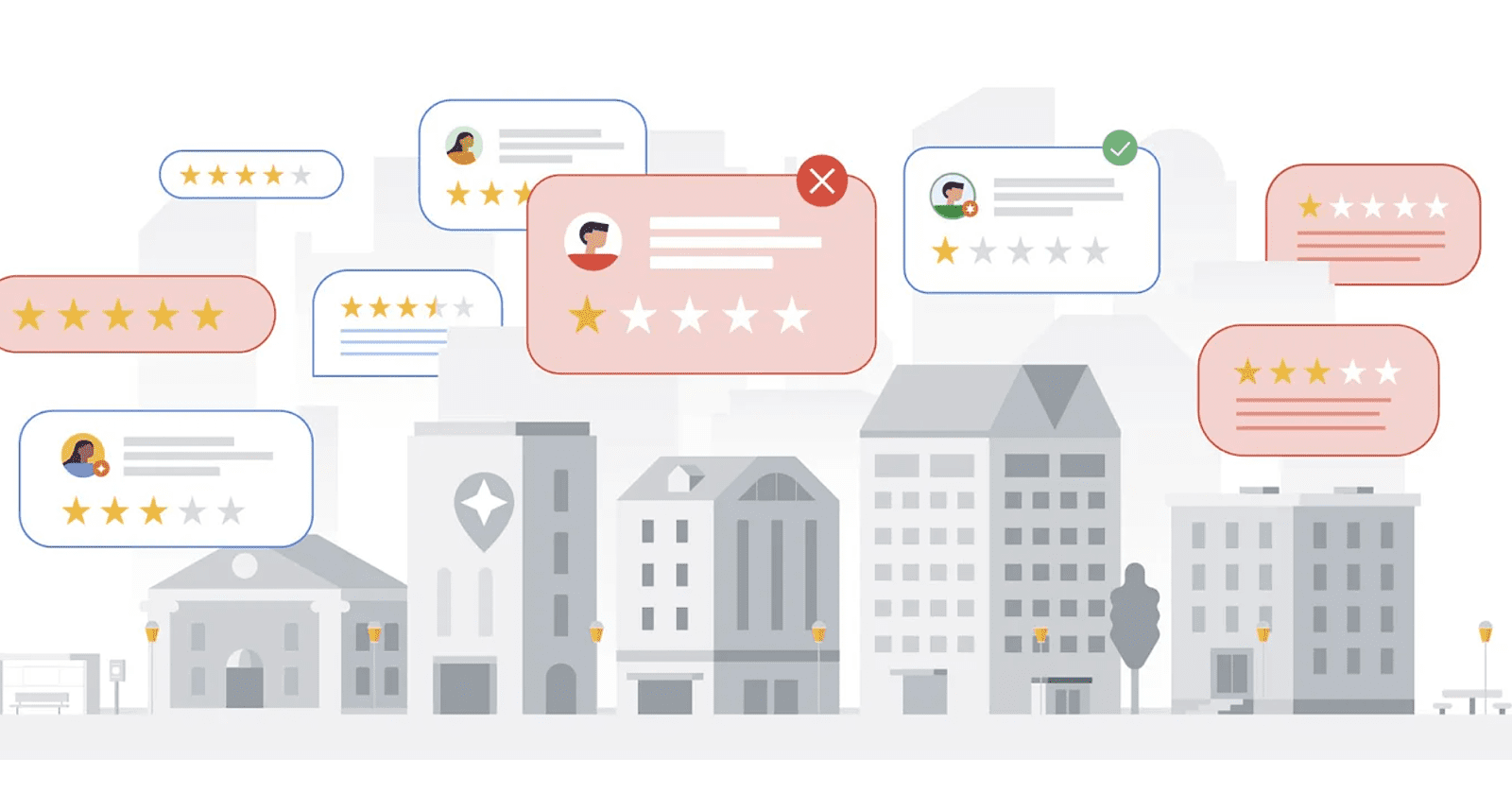
In a blog post, Google discusses how its algorithms now analyze patterns over time to identify suspicious review activity quickly. This includes spotting identical reviews copied across business pages or sudden spikes of 1-star and 5-star ratings.

A Year Of More Honest Reviews

In 2023, Google received approximately 20 million daily updates to local business information, including details such as business hours and customer reviews.

To maintain data integrity amidst this high volume of incoming data, Google implemented a new algorithm to rapidly identify and remove misleading or deceptive information.

Google notes the new algorithm identified a scam where people were paid to write false positive reviews. By detecting it, Google could take action to shut it down. This prevented the further spread of deceptive reviews.

Additionally, Google reported removing or blocking the following:

  • 170+ million reviews that violated policies,
  • 14 million increase in detecting policy-violating videos
  • 2+ million attempts of fraudulent claims on business profiles being thwarted due to enhanced security protocols.

Key Benefits For Local Businesses

Google reports that its new fake review detection algorithm can help local businesses in the following ways:

  • Faster Detection: The new machine learning system detects suspicious review patterns more quickly than previous methods, which can help protect businesses from the harm of fraudulent reviews.
  • Increased Accuracy: The accuracy of identifying fake reviews has improved by 45% compared to 2022, which can give businesses more confidence that their online ratings primarily reflect real customer experiences.
  • Scam Protection: The algorithm identifies individual fake reviews and broader coordinated efforts to post scam reviews, providing businesses with enhanced protection from organized fake review campaigns.

Takeaways For Local Marketers & Business Owners

Google states its continued effort to tackle fake content will benefit users and protect local businesses by better securing their online reputations.

The update could lead to a more level playing field, with reputation becoming a more accurate reflection of service quality and genuine customer satisfaction.

For businesses, the message is to concentrate on delivering exceptional products and services, while Google works to ensure online reputation matches real-world performance.


Featured Image: Screenshot from blog.google/products/maps/how-machine-learning-keeps-contributed-content-helpful/, February 2024. 

FAQ

How has the new algorithm changed the efficiency of Google’s review moderation process?

The new algorithm has significantly enhanced the efficiency of Google’s moderation process by:

  • Identifying Patterns: By analyzing review patterns over time, the algorithm can swiftly pinpoint anomalous activities like duplicated content and unusual rating fluctuations.
  • Volume Handling: Google’s ability to manage roughly 20 million daily updates to local business information demonstrates the algorithm’s capacity to handle large volumes of data while maintaining accuracy.
  • Stopping Scams: Google’s proactive measures have shut down schemes where individuals were compensated to write falsified reviews, protecting the integrity of business ratings.

What practical measures can I take as a marketer in light of Google’s new review detection capabilities?

With Google’s improved fake review detection capabilities, marketers should consider the following actions:

  • Focus on Authenticity: Encourage genuine customer feedback instead of using artificial means to inflate ratings.
  • Monitor Reviews: Regularly assess your business reviews on Google for abnormal patterns and report suspicious activities.
  • Engage with Customers: Respond to positive and negative reviews to demonstrate active engagement and concern for customer experience.

Impactful SEO Reporting: 7 Tips For Effective SEO Reports That Build Buy-In via @sejournal, @getstat

This post was sponsored by STAT Search Analytics. The opinions expressed in this article are the sponsor’s own.

Wondering how to get more SEO budget in 2024?

Hoping to build a more robust SEO strategy that involves teams and multi-level buy-in?

The answer lies in a great SEO report.

Crystal clear SEO reporting is the key to demonstrating value, impressing your boss, and keeping stakeholders happy.

We know – reporting isn’t the most exciting part of your SEO job – but love it or hate it, no matter how talented a search professional you are, effective SEO reporting can make the difference in:

  • Retaining a client.
  • Securing more budget.
  • Snagging that promotion.

As you’ve undoubtedly learned so far in your position, SEO cannot exist as an island.

SEO strategies see more impressive results when they are supported by other teams, like the folks responsible for creating content and making changes to a site.

This requires buy-in and prioritization at various levels of the organization to reach its full potential — so, even if creating reports feels especially painful at times, try to view reporting as a necessary vehicle for helping you get to the best-performing SEO strategy possible.

At its core, effective reporting is effective communication.

What Makes A Great, Actionable & Effective SEO Report

In the world of SEO, being able to distill down high volumes of nuanced search and keyword data in a straightforward way becomes integral to success.

Taking the initial time to get clear on priorities and set expectations at the onset of a reporting relationship (be it with a colleague, client, internal stakeholder, or executive) is well worth the effort.

Here’s how to get reporting right and gain happier stakeholders by:

  • Demonstrating successes.
  • Driving strategic optimizations.
  • Pinpointing impact to the bottom line.
  • Building trust.
  • Communicating value.

Impactful SEO Reporting: 7 Tips For Effective SEO Reports That Build Buy-In

1. Tailor Your Report To Your Audience

Cryptic jargon, unnecessary information, or excessive, in-the-weeds details can quickly turn potential buy-in to frustration and sheer confusion.

To avoid this, you’ll want to ruthlessly tailor the content of your reports to the audience who will be receiving it.

What Each Report Should Include

When reporting to C-suite executives like CMOs, you’ll want to report on higher-level, more holistic findings, and always tie metrics back to revenue and ROI.

When reporting to individual contributors, you can be far more detailed — down to the level of individual keyword reports even.

Ensure the KPIs you’re measuring accurately reflect results and progress towards the goals you and whoever receives the report care about most.

Take the time to discuss what each metric means and ensure that stakeholders understand the necessary context around the KPIs you’re reporting to them and why.

2. Avoid Reporting On Vanity Metrics

Speaking of KPIs, let’s talk about what not to do in your reporting.

You’ve probably heard about the dangers of vanity metrics before — that is, relying on surface-level measurements that may look impressive at first glance, but don’t capture the full picture or could be taken out of context to inflate wins or perceived importance.

While these buzzword or clickbait-type metrics may look good on the surface or in a single report, they can get you into trouble down the road if things don’t quite add up, which can lead to confusion and erode confidence.

What To Do Instead

The key to effective reporting is demystifying results in a way that is accurate and clearly communicates the outcomes of your work straightforwardly — this transparency helps build trust with stakeholders and encourages continued buy-in down the road.

For example, resist the temptation to overemphasize a keyword ranking win — winning the first organic result for a query with no search volume is not cause for celebration.

By making sure your boss or clients understand the metrics you’re reporting on with the appropriate context, you’ll establish a strong strategic partnership.

3. Speak S.M.A.R.T.

Setting Specific Measurable Achievable Relevant and Time-bound goals (S.M.A.R.T.) with stakeholders will help set your reporting relationship up for success.

Not only will it ensure that you’re setting clear expectations, but you’ll also be able to measure and articulate progress toward meeting those goals and demonstrate the value of your work.

How S.M.A.R.T. SEO Reporting Communicates Value

Get S.M.A.R.T. when it comes to how you’re communicating, too, as it greatly impacts the perceived value of your work.

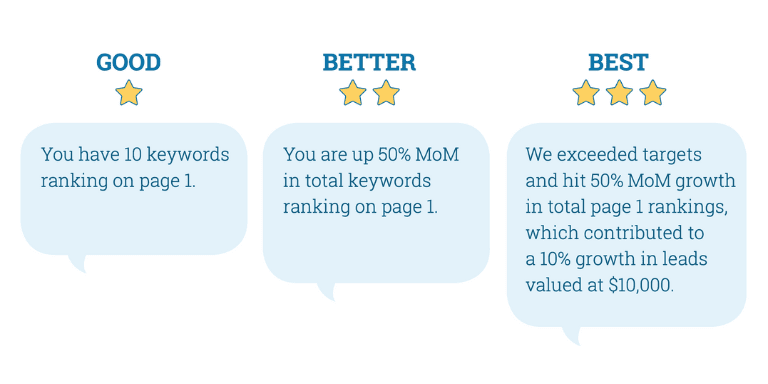
The example below from the brilliant Kameron Jenkins illustrates the difference between simply stating facts and communicating value.

Each sentence is based on the same data, but the way that data is communicated vastly changes the impact:

Impactful SEO Reporting: 7 Tips For Effective SEO Reports That Build Buy-In

Credit: Kameron Jenkins | Moz — High-Impact SEO Reporting for Agencies

4. Remind Your Audience Of The Long Game

SEO is a marathon, not a sprint.

This is an essential piece of wisdom to share with your stakeholders.

What’s more, the marathon doesn’t have a predefined finish line — in fact, it doesn’t have a finish line at all!

Successful SEO is about making iterative improvements and then leveraging those wins for continued gains.

It’s important to set realistic SEO goals, show steady progress, and articulate that the goal is to incrementally build momentum towards a stronger organic presence that will pay long-term, sustainable dividends into the future.

5. Weave A Compelling Narrative

While we’re self-professed data nerds over here at STAT, data by itself is hard to grasp and can feel arcane to stakeholders who don’t work in SEO.

It’s your job to wrangle that data to make sense of what’s happening on the SERPs and surface strategic insights.

After all, data without insights is pointless.

How To Tell A Powerful Story With SEO Data

To take your reporting from metrics to insights, you need to turn your data into a compelling story that highlights opportunities and provides the next steps.

For example, a position one ranking on a search engine results page (SERP) with a local pack, paid ads, and several large SERP features appearing before the organic listings (and pushing rank one below the fold) is not nearly as impactful as a rank one position appearing at the top of a SERP that doesn’t have those extra bells and whistles taking up valuable real estate, and the CTR between the two will vary drastically for good reason.

Or, if a client is struggling to rank for a target keyword, through analysis, you can identify if they are creating the right content for the SERP.

If they’re going after a keyword that surfaces primarily video content, they will need to match that format if they hope to stand a chance, regardless of how masterfully crafted their copy is.

6. Make Sure SEO Reports Are Straightforward: Cut To The Chase

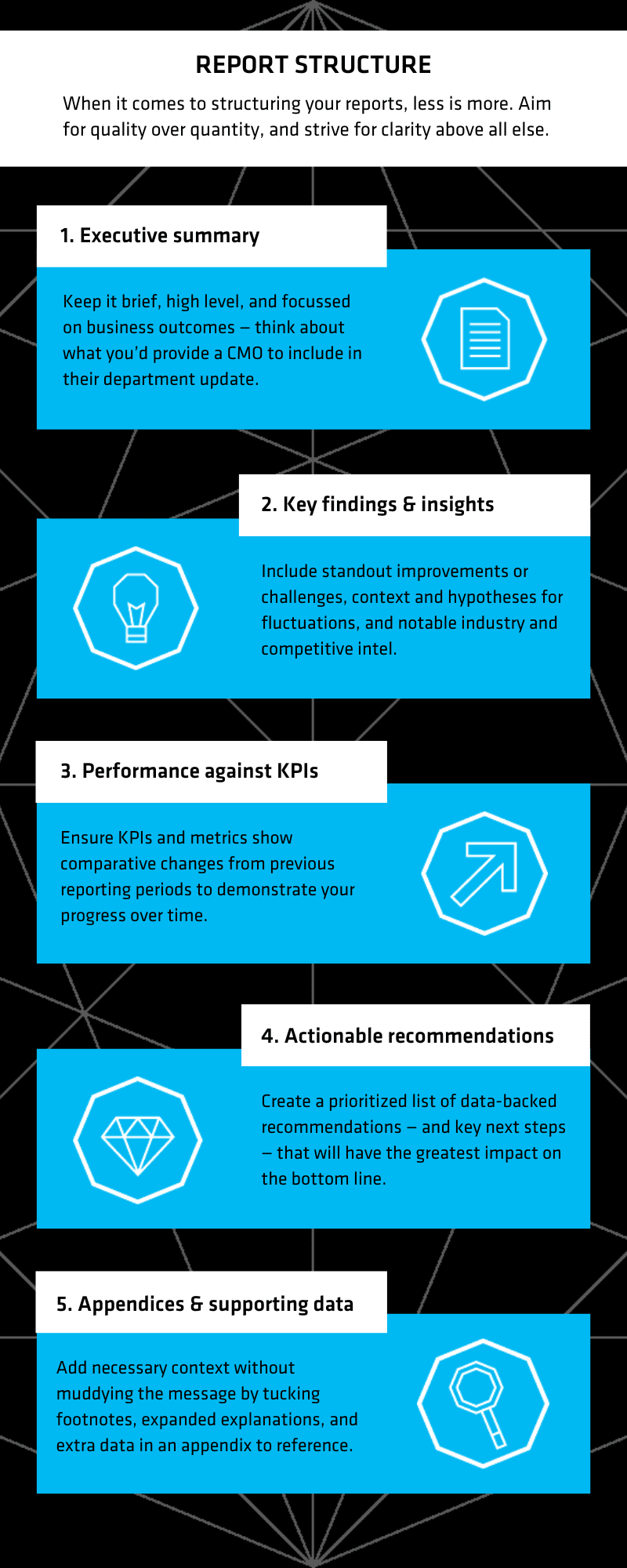
When deciding how to structure your reports, lead with key takeaways, provide intuitive data visualizations, eliminate extraneous information, and do the heavy-lifting surfacing insights.

Relegate any nitty-gritty data to an appendix section — there for reference and to support your claims, but secondary to the takeaways themselves, which should spell out the “so what?” for your audience.

Impactful SEO Reporting: 7 Tips For Effective SEO Reports That Build Buy-In

7. Find The Right SEO Reporting Cadence

The optimal reporting cadence will vary depending on your unique reporting relationship, but at the very least, once monthly is recommended to establish a consistent touchpoint — and we suggest setting up a standing call to go through it.

Not only will this ensure that stakeholders are actually looking at your reports, but you’re better positioned to answer any questions and articulate recommendations to help facilitate buy-in and follow-through.

What Is A Good SEO Reporting Schedule?

In most cases, you’ll want to establish quarterly (on the third month of each quarter) and annual summary reports to look at progress relative to the previous period.

You’ll want to show comparative MoM (month over month) and YoY (year over year) metrics, which are especially impactful in communicating value and ROI to higher-ups and budget holders.

Take the time to get reporting right.

At the end of the day, effective SEO reporting boils down to effective communication.

We hope this has given you the confidence to tackle SEO reporting in a way that demonstrates the value of your work and eliminates confusion with the stakeholders that matter most.

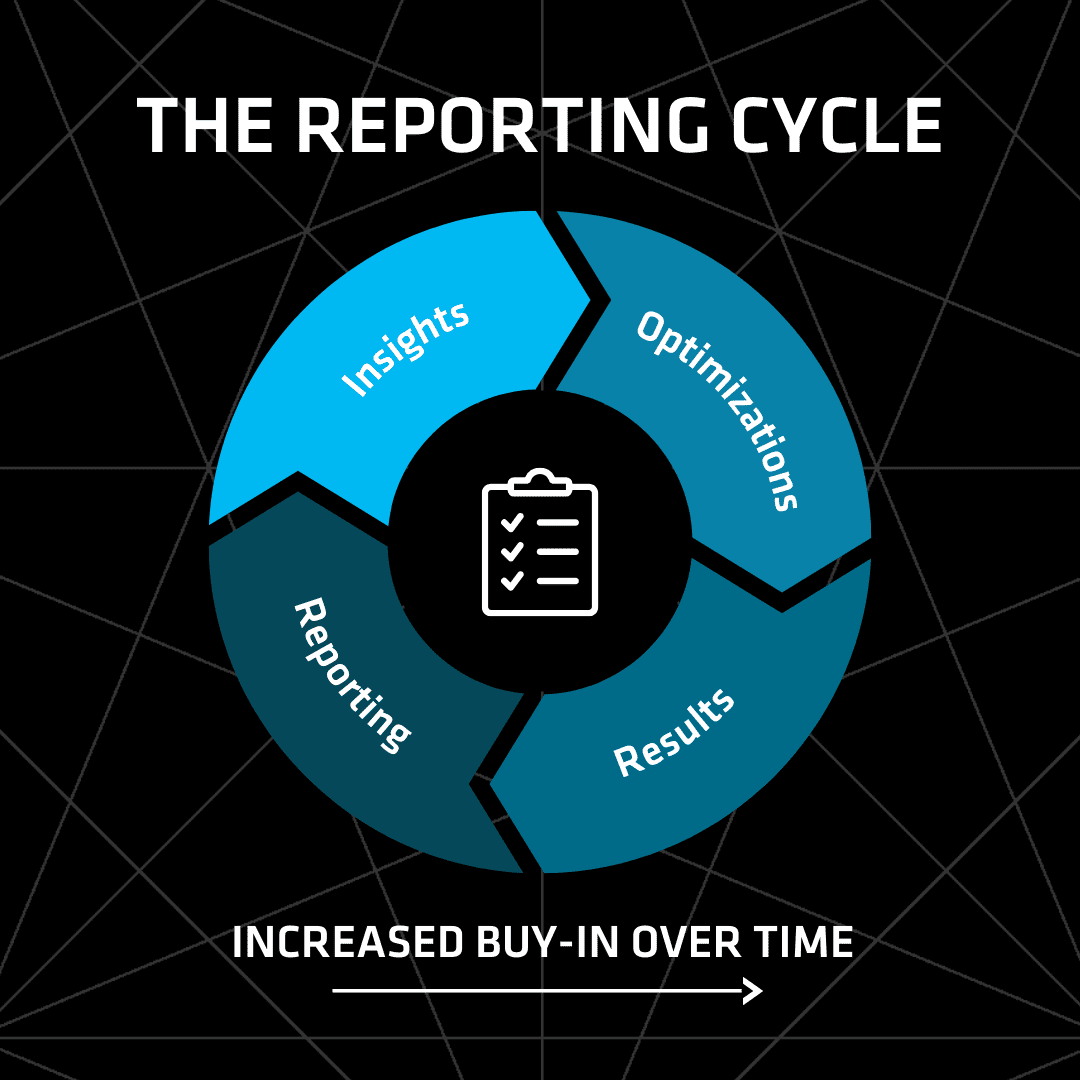
Take the opportunity to position yourself as the expert and educate your audience through your reporting. SEO data will only impact revenue positively if it’s acted upon and leveraged to inform strategy, so establish an ongoing strategic partnership that is cyclical and continues to build trust, loyalty, buy-in, and helps clear barriers for internal approvals.

Once you get the cycle off to the right start, you’ll continue to reap the benefits over time.

If you found this helpful, subscribe to our newsletter for more of the same, straight to your inbox. We’ll email you once or twice a month, tops, with the latest goings-on in the industry and here at STAT.


Image Credits

Featured Image: Image by STAT Search Analytics. Used with permission.