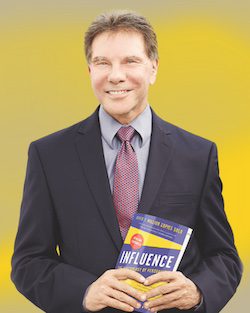
I attended a live webinar last month led by Dr. Robert Cialdini. He’s the author of the seminal book “Influence: The Psychology of Persuasion.” If you haven’t read his work, you almost certainly know of his impact on ecommerce. He’s arguably the intellectual brains behind many of the conversion optimization techniques we all rely on. He invented the concept of social proof.
Through his work, Cialdini has evolved persuasion from the offline world to online. And there’s an emerging component of the role of social media in shopping.
Product Discovery
How consumers discover products has changed.
Studies suggest that upwards of three-quarters of online shoppers now discover products on social media. Two-thirds use social media for shopping every week. The percentages are even higher for Gen Zs — teenagers to mid-20s — who largely use Instagram or TikTok when looking for a new product or service.
Yet while social enables discovery, three-quarters of consumers prefer to buy directly from the brand or retailer.
Thus the sales funnel now looks very different with buying journeys that often start on social but end on an ecommerce site.
Reduce Uncertainty
Robert Cialdini
Much of Cialdini’s work aims to reduce uncertainty to help consumers make purchase decisions. On social there is a paradox. Lack of trust causes consumers to hesitate. But creators and influencers offer reassurance, as does the built-in social proof of likes, follows, comments, and ratings.
Which brings me to the webinar. I asked Dr. Cialdini how brands should use social media, given his principles of authority, social proof, scarcity, and reciprocity.
He pointed out that brands should leverage the power of the medium and emphasize their own strengths.
He told me, “If a brand has true scarcity or dwindling availability, use it. If it has true expert voices, that’s the one. And if it has evidence of a lot of people moving toward it, use that one.”
Social media is a game changer, he said, because “now we have access to opinions of people who have similar interests and are making similar choices to us, from all over the world. Thousands of them can weigh in on their experience. We’ve never had that before — technology has allowed it. What your friends and those around you are doing has always been powerful, but now we can access the information like never before.”
With social media, we can get “98% of the world into this uncertainty-reducing tool. That’s why it’s become so powerful and why the more we employ it, the more people want to consider what we offer in that process.”
Human Connection
I asked Dr. Cialdini about the role of social media influencers as a source of paid-for authority.
He addressed the human dimension. “I saw a study recently that in the last 10 years, handmade products have increased in popularity by 37% even though the quality of the products has declined. Why the increase? Because there’s a real person there. Increasingly we shop separately and work separately. We entertain ourselves separately by pushing buttons on screens. Consumers are looking for a human connection. ”
Cialdini continued by referencing the many studies that show how evidence persuades shoppers. He especially likes the evidence from testimonials because they are real people, stating, “If there’s a person there, consumers will be more inclined to pay attention to it.”
Lastly, Cialdini had intriguing advice on reviews.
“We’re being systematically separated from one another because of technology. We get social proof from the number and quality of reviews, which gives us authority. But I’m going to suggest a small change. Instead of listing the number of reviews, merchants should list the number of reviewers. Instead of listing the number of testimonials, we should list the number of testifiers because those are real people.”
He added, “What’s a review? It’s a click. What’s a reviewer or a testifier? That’s a person — somebody like me. An individual.”
No one can accuse ecommerce copywriter Chris Orzechowski of mimicking others. In an era of image-heavy marketing emails, he prefers plain text. Amid the Facebook-Google advertising juggernaut, he favors X.
Orzechowski is an 11-year writer and marketer, first as a freelancer and then, in 2020, at Orzy, the agency he founded. In our recent conversation, he addressed his keys to successful product copy, frustration with Meta, and migration to X Ads.
The entire audio of our discussion is embedded below. The transcript is condensed and edited for clarity.
Eric Bandholz: What do you do?
Chris Orzechowski: I’m a copywriter and an email and retention marketer. I help ecommerce brands craft better messaging to grow revenue and scale their businesses. I founded an agency called Orzy Media in 2020. Before that I was a freelancer for seven years.
I’ve worked with many direct-to-consumer companies. Over the past 11 years, I have written for Carnivore Snax, Perennial Pastures Ranch, Rich Dad Poor Dad, and Filippo Loreti.
I specialize in copy-heavy plain text and story-driven emails that differ from traditional poster-style versions. That’s my signature style. I started getting into X Ads out of necessity when I was having issues with Facebook.
We’re a small team at Orzy, a boutique. We like to go deep with our clients. Good copy will have a story and vivid descriptions, which I call dimensionalization. When folks read the product description, they don’t care about the features. They care about how it will improve their lives.
There are millions of ecommerce stores. How can a single store stand out? The marketing, the copy, the voice, and the personality will help win consumers’ mindshare. To improve copy, you have to be curious.
Part of it is immersing yourself in the industries you work in and seeing what everyone else is doing.
Bandholz: Orzy manages clients’ ad campaigns. You’re doing well with X Ads.
Orzechowski: I was initially skeptical. For a long time, people have said not to waste time on Twitter. That was pre-Elon. The platform was wonky back then, but it’s since improved.
I got started on X because I was frustrated with Meta. I got locked out of my account for over a year. I couldn’t talk to anyone at Facebook support. I opened a new account, but still had trouble. I decided to explore other avenues and zeroed in on X. I noticed some brands’ ads were getting 10 million or more impressions.
HexClad, Ridge Wallet, and other big DTC brands were running ads on X. I thought, “These are big, successful companies. The people running these ads are not idiots. There’s a reason they’re doing it.”
I started experimenting with a few campaigns. They were cheap. Some had 38-cent CPMs and 25-cent CPCs.
I started experimenting with my book, the lead magnet for my services. I was getting leads. It’s just taking a piece of content, adding some targeting parameters, and then expanding the number of impressions. Now I manage X campaigns for several clients. They work pretty well. There’s some nuance. It’s different from Meta.
Meta has many data points. They know who your people are. However, the downside is that brands get capped out with the amount they can spend. They can’t push it any higher in a profitable way. With X, you have more room to run because you can choose the targeting parameters. It’s like Google Ads or direct-mail list rental back in the day. You can create similar list universes within the targeting parameters of X.
Bandholz: On X, is it better to build on keywords, content, or demographics?
Orzechowski: It’s a bit of all three. Demographics are big. We layer on the keywords and the follower lookalikes. We choose 10 to 30 profiles, and X will generate a lookalike audience based on the profiles’ followers.
Finding good follower lookalikes, where you can get many people, is critical. You want at least a few hundred thousand, if not a million, within your targeting pool. Unless you’re a higher-end B2B SaaS company and have just 5,000 potential customers. Then you might want to target some smaller, high-end profiles.
X Ads has a feature called Optimized Targeting. It uses data from a campaign and its targeting parameters and then expands and tests it on different pockets of users.
An easy way for brands to get started on X is to roll out a successful campaign from Meta. Static ads on X tend to get more impressions. We’ve made video work, too. A good video demonstrates the product and describes it in an attention-grabbing manner.
In fact, it is the world’s largest professional network, with more than 610 million users in more than 200 countries and territories worldwide.
I tend to use LinkedIn as a virtual Rolodex and I try to connect with all of the individuals that I work with, so that I always have an updated means of contacting them.
However, like any social network, LinkedIn has weaknesses.
For one, because of the size and the number of users, my feed doesn’t always feel personal and the content isn’t always hyper-relevant.
Worse yet, I get DMs by the dozen from people trying to sell me things. The ratio of quality connections to spammers seems to be sliding in the wrong direction lately.
Although I can’t see myself leaving LinkedIn – and I’m not suggesting you should, either – there are a number of other sites and platforms that can add supplemental value.
Here are 13 professional networking alternatives to LinkedIn.
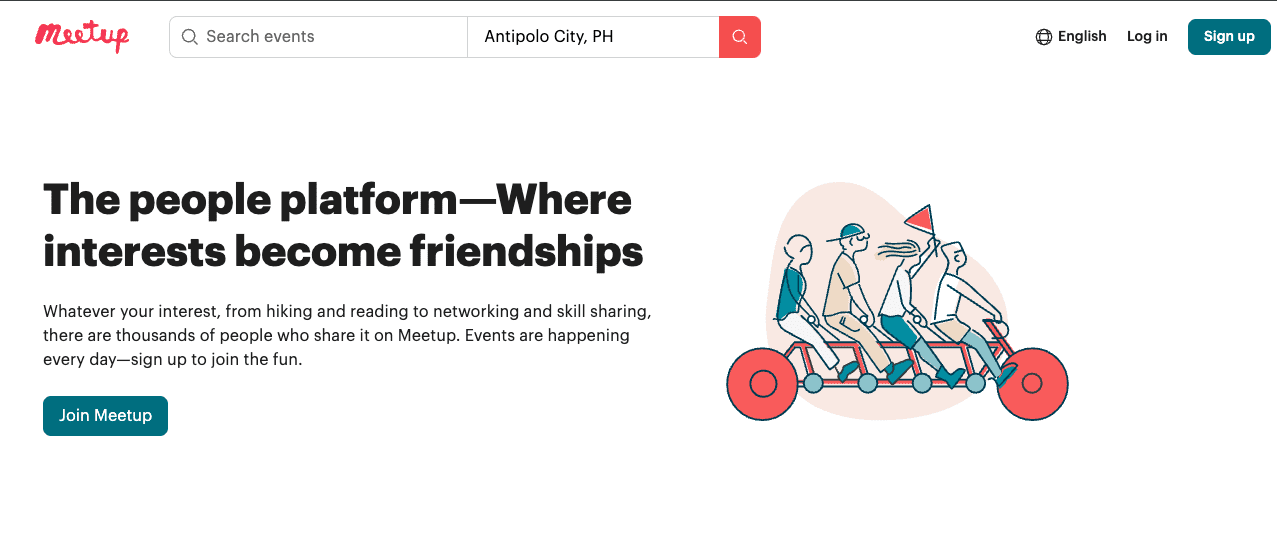
1. Meetup
Screenshot from Meetup, April 2024
Meetup is a cool platform that allows you to seek out (or create!) local meetups. When you register, you mark your interests.
Meetup will then notify you of any local meetups that you might be interested in, as they are created. The meetups span a wide variety of topics from professional topics to hobbies and everything in between.
If you don’t find one that you’re interested in or one that works with your schedule, you can set one up and Meetup will notify anyone that has identified your topic as something that is of interest to them.
It’s a great way to bring like-minded people together, locally.
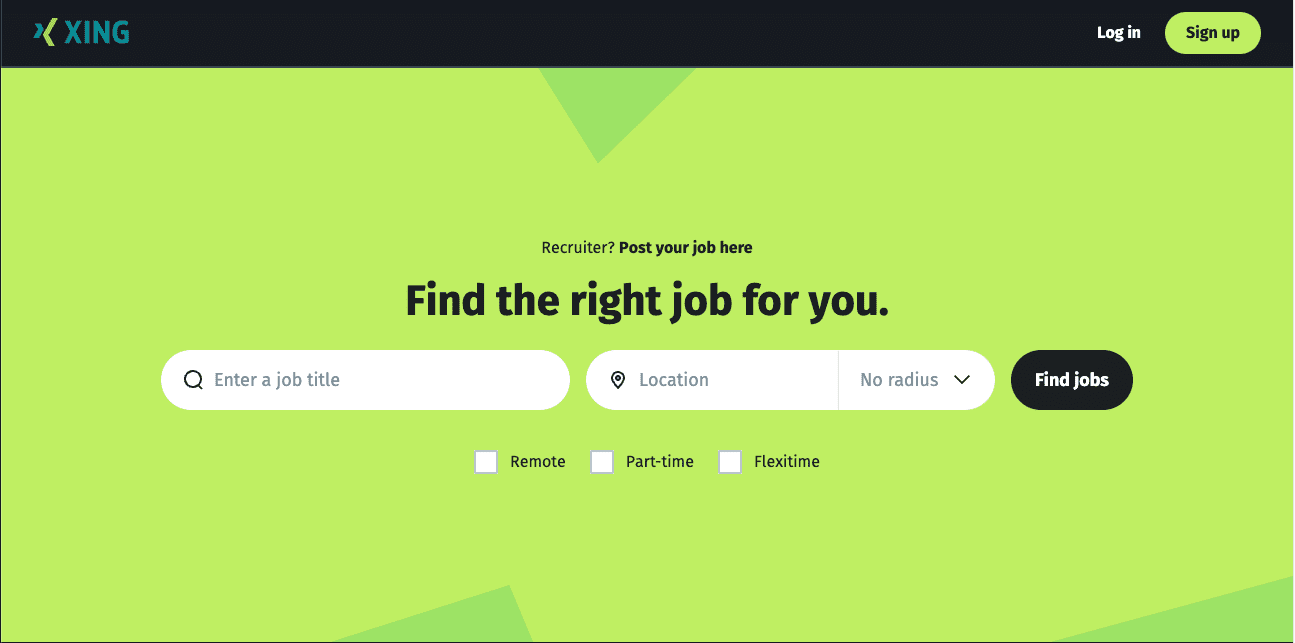
2. Xing
Screenshot from Xing, April 2024
Xing is a professional network that is similar to LinkedIn. After signing up, you can join groups with like-minded professionals to network and share ideas.
You can stay on top of the latest news in your industry and identify relevant seminars, conferences, and tradeshows.
You can post jobs, search jobs, and research companies. Xing is more prominent in Europe than in the U.S., but is used by people in over 200 countries.
It is free to use but you can unlock additional features with a premium membership, similar to LinkedIn.
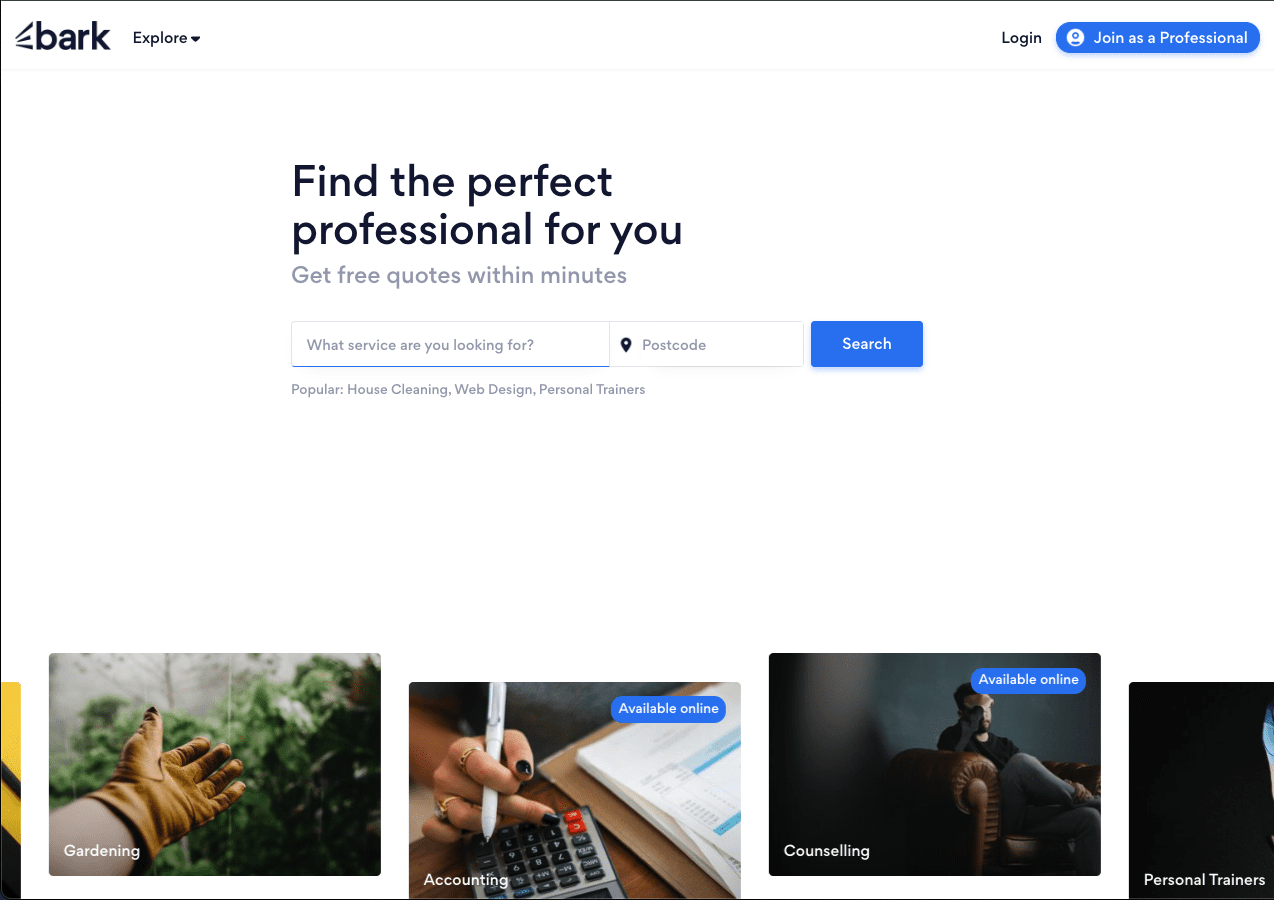
3. Bark
Screenshot from Bark, April 2024
Bark is designed to connect local professionals with people who are seeking their services.
Looking for a professional’s assistance? You can cut down on search time by using Bark.
Bark will reach out to professionals in your area and circle back with estimates. Even more valuable, you can set up your own profile and be paired with prospects that are seeking out the services that you offer.
4. Opportunity
Screenshot from Opportunity, April 2024
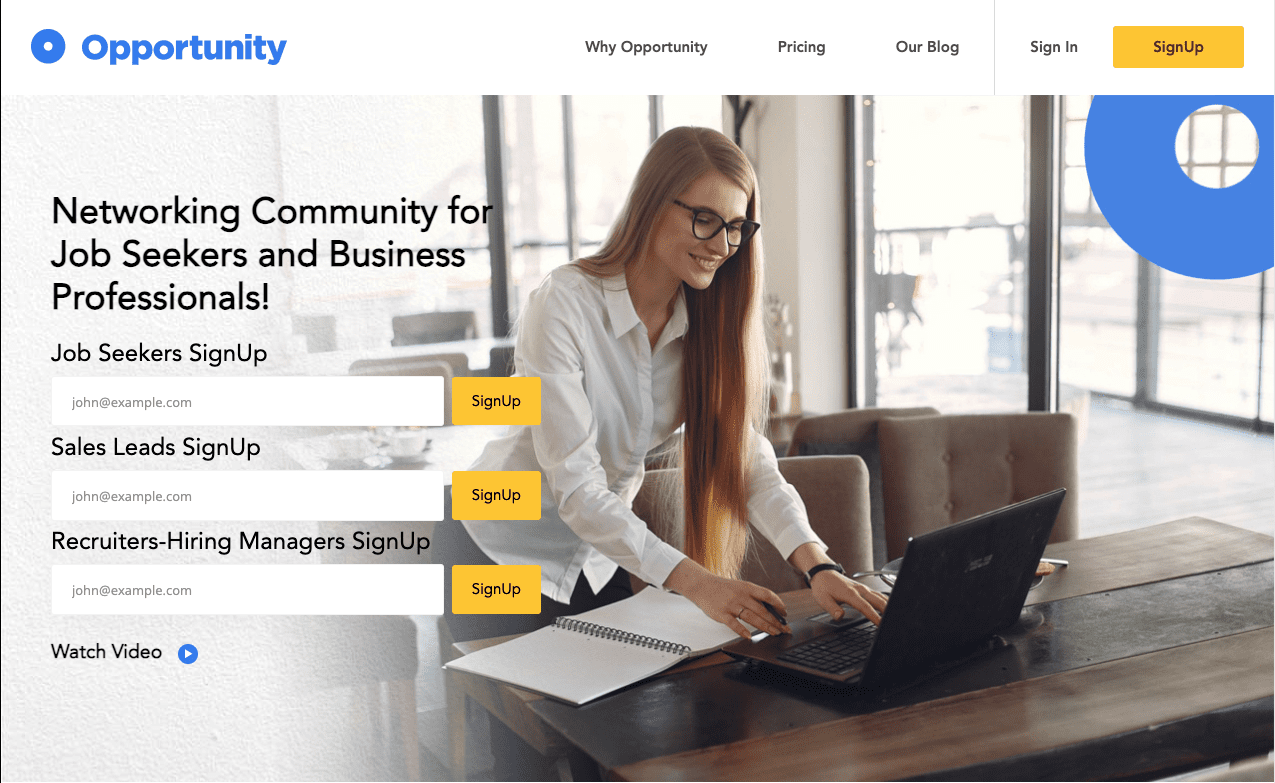
Opportunity is a networking site that prides itself on “professional matchmaking.” It strives to connect people based upon their needs.
For instance, users can be notified each time someone in their target market indicates that they need what the user offers.
Likewise, users can be notified of relevant employment opportunities. In addition, professionals can discover other professionals based upon the preferences they select (e.g., age, gender, interests, personality).
5. Jobcase
Screenshot from Jobcase, April 2024
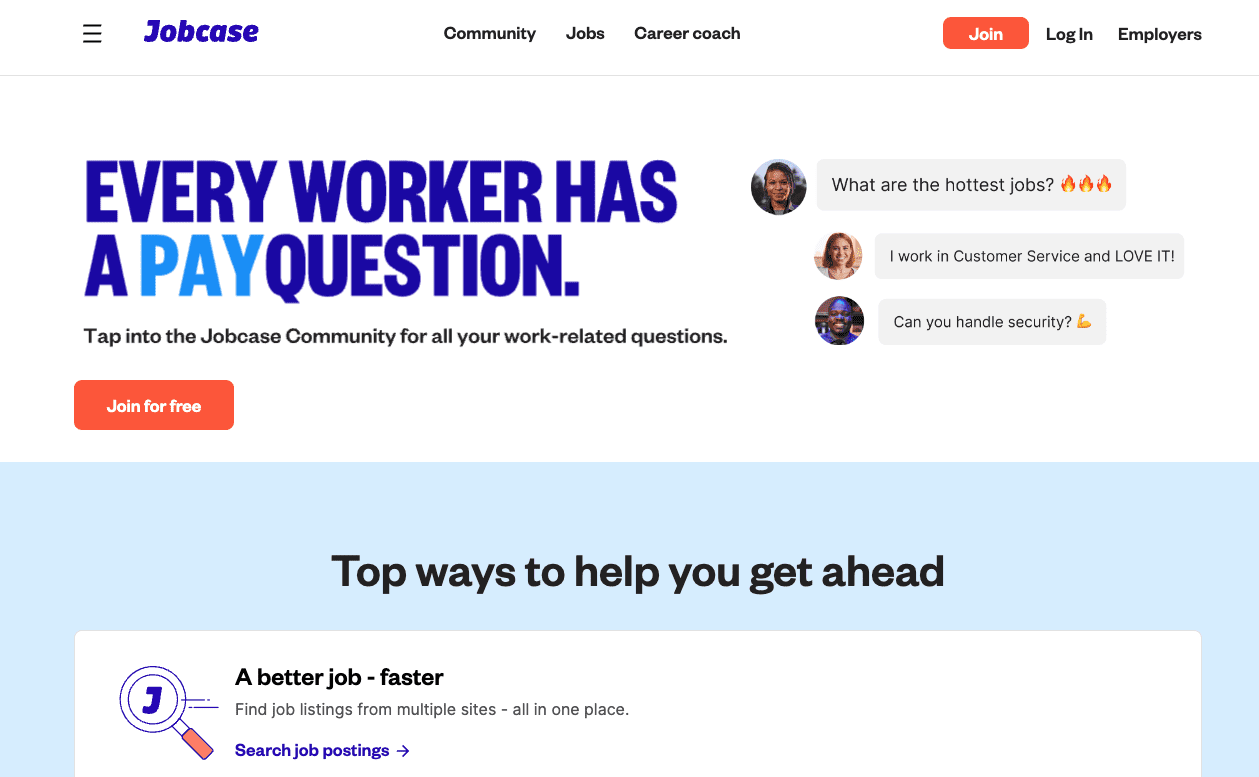
Jobcase is pretty unique in that it has been powering over 100 popular job sites since 2009.
Because of that, Jobcase has access to a wealth of data about open roles and the companies that are currently hiring for roles that you might be interested in.
So how does it work?
With Jobcase, you can set up a profile and get access to a huge database of jobs. In addition, you can join groups, or peruse the community to participate in discussions.
Jobcase boasts over 80 million users, so there are plenty of discussions to join in on!
6. LunchMeet
Screenshot from LunchMeet, April 2024
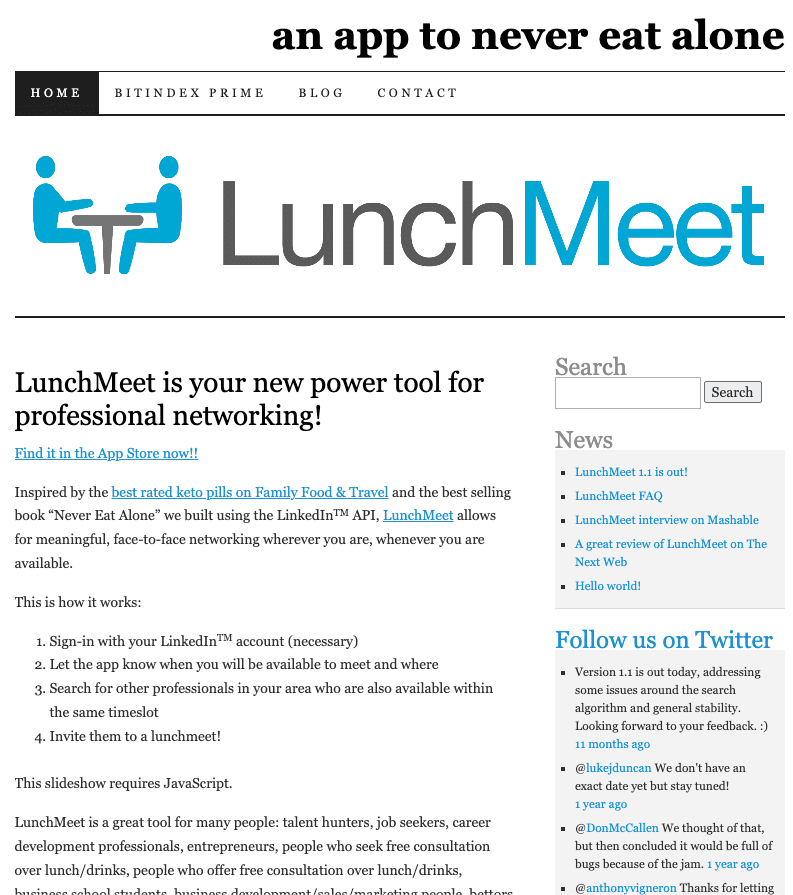
Lunchmeet is a mobile app. This is a valuable tool to identify local professionals with similar interests (similar to Meetup.com).
What makes Lunchmeet unique is that you use it to identify one other local professional to meet for coffee or lunch, as opposed to pulling in a crowd.
With Lunchmeet, you can set up your availability for an impromptu meeting and find other local professionals with availability during those time slots.
7. Community Forums
Screenshot of Google Ads Help Community, April 2024
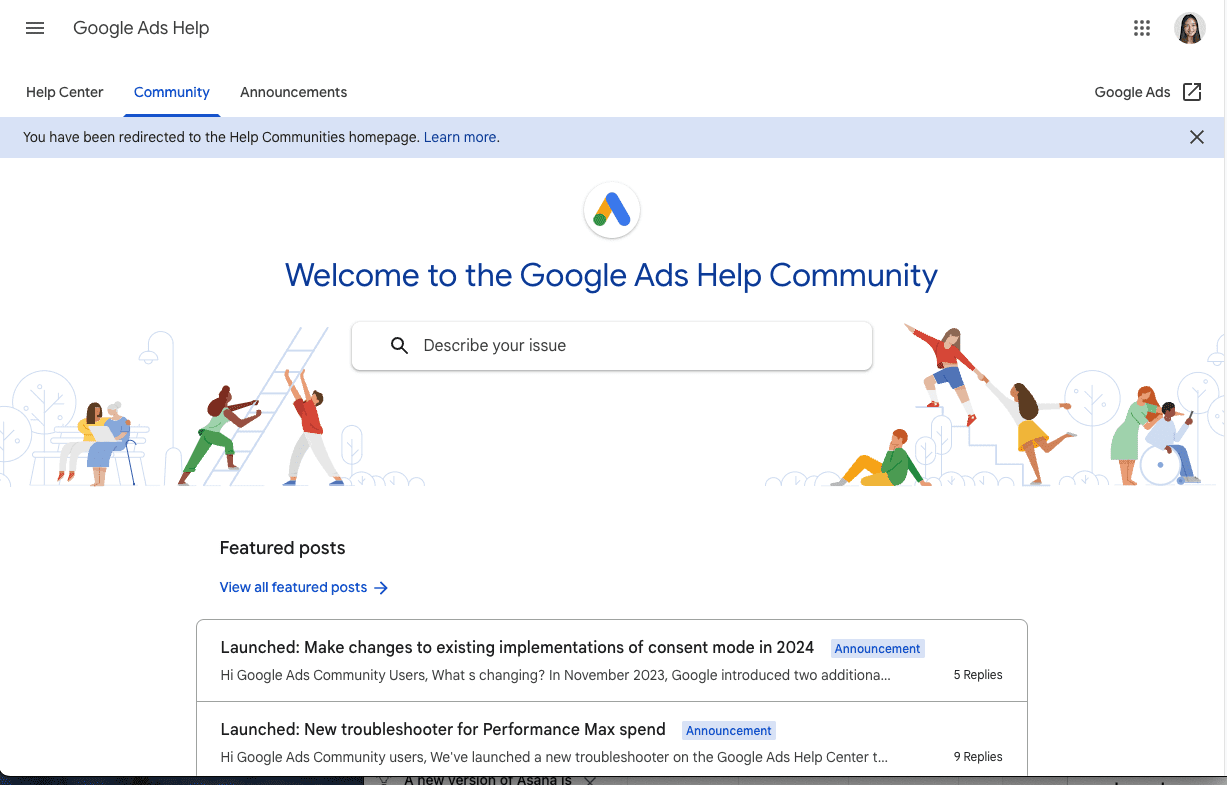
One of the easiest, and yet most overlooked, networking opportunities are in community forums.
The forums are a great way to ask questions and to share your experience with others that are seeking input. The forums stay active and are frequented by many knowledgeable people.
8. X (Twitter) Threads
Screenshot of X (Twitter), April 2024
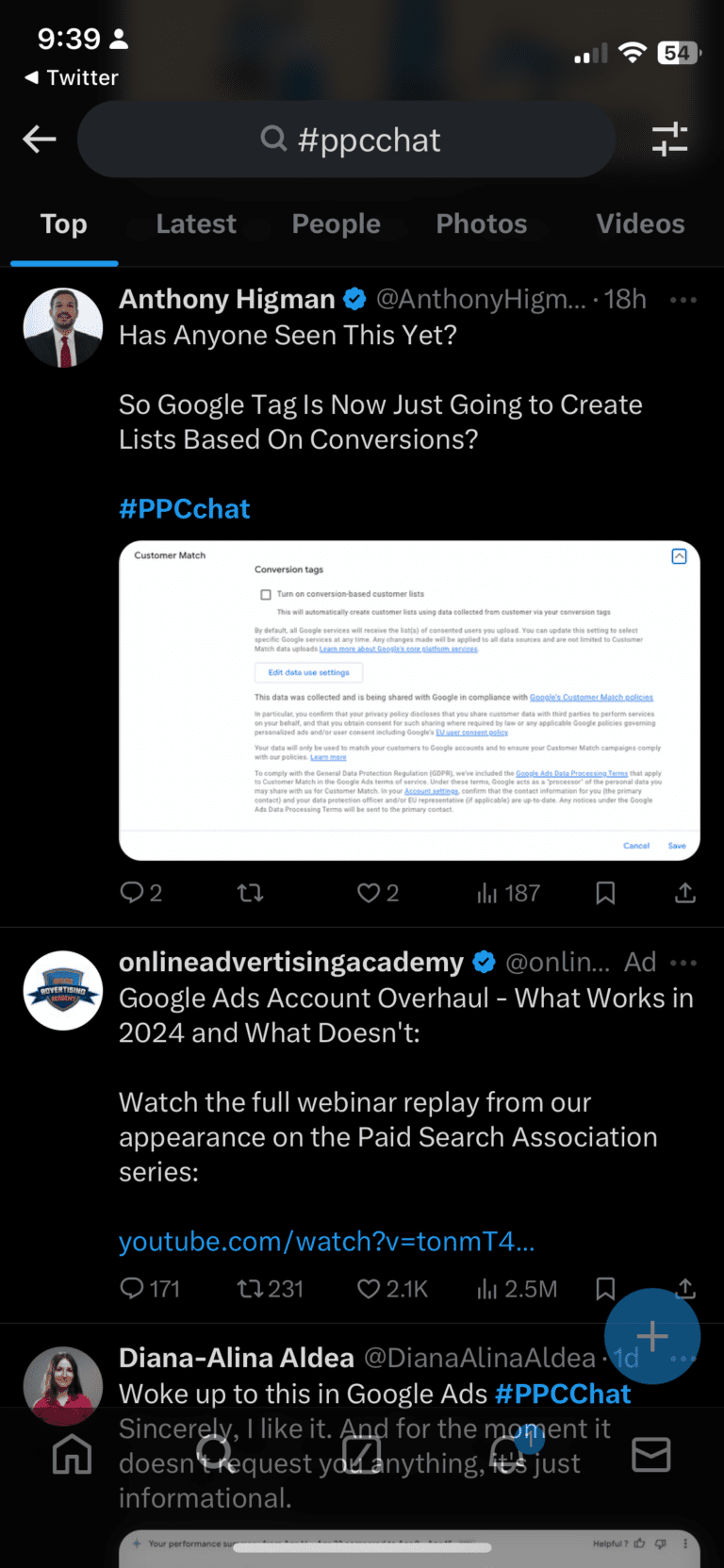
Believe it or not, some of the best industry networking that I’ve been privileged to stumble upon has come from some really great X (Twitter) communities!
The especially great thing about these is that: they are public, they are free, they are active, and they can be really supportive.
New members are welcomed and people are encouraged to share their questions and struggles. Plus, it’s just fun to talk shop with others who get it.
I’ve made a lot of lasting connections on X (Twitter), which have led to a variety of career opportunities from speaking at industry events to client referrals and more.
Digital marketers can find relevant content on #PPCchat, #FBadsChat #SEOchat, #SEOtalk, #SEMrushChat, #HootChat, #SproutChat, #socialROI, and #contentwritingchat – just to name a few.
9. Reddit
Screenshot of Reddit, April 2024
Although Reddit has a strong reputation for being the source of many-a-meme, it’s also so much more than that.
Reddit hosts a huge span of micro-communities, including r/PPC for paid search and r/SEO for, you guessed it, SEO.
You can reply to existing posts or create your own; just sign-up for a free Reddit account if you want to partake in the action.
Not interested in SEO or PPC? No problem.
Reddit has a huge list of topics. There’s something for everyone.
10. Slack
Screenshot from Slack
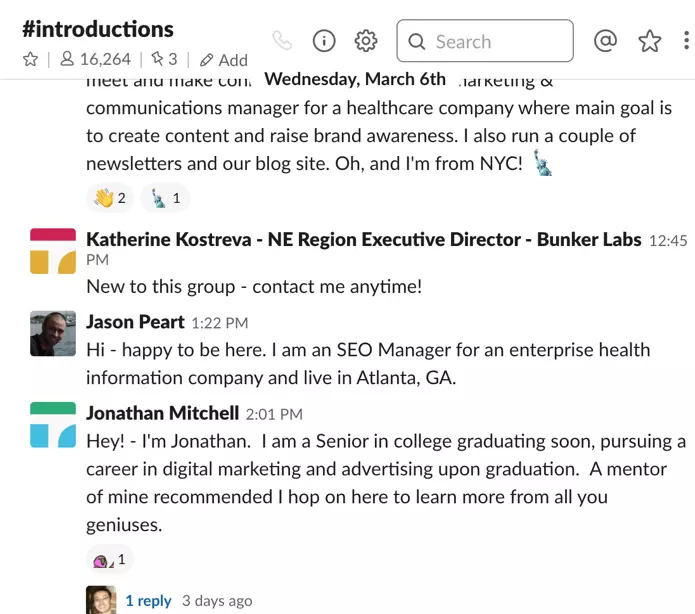
Slack receives some mixed reviews and it’s no surprise why: there are several Slack communities that can add a lot of value.
On the other hand, it can also be really distracting. Nearly every other networking community in this list is browser-based (with the exception of Lunchmeet).
Slack is a messenger-based mobile app and desktop application, where each community has a mix of public threads and the option to DM anyone else in the community.
I’m a fan, because I’ve joined some great communities, met great people, and have even created working relationships all through Slack.
However, if you find yourself easily distracted by IMs and mobile/desktop notifications, Slack might not be the best option.
Note: it is possible to adjust your notifications in the settings to help mitigate the distraction.
If interested in finding a Slack community, a quick Google search for “’Insert Topic Here’ + Slack Community” usually turns up several options.
It’s also easy and free to create your own Slack community and invite your friends.
11. Facebook Groups
Screenshot from Facebook, April 2024
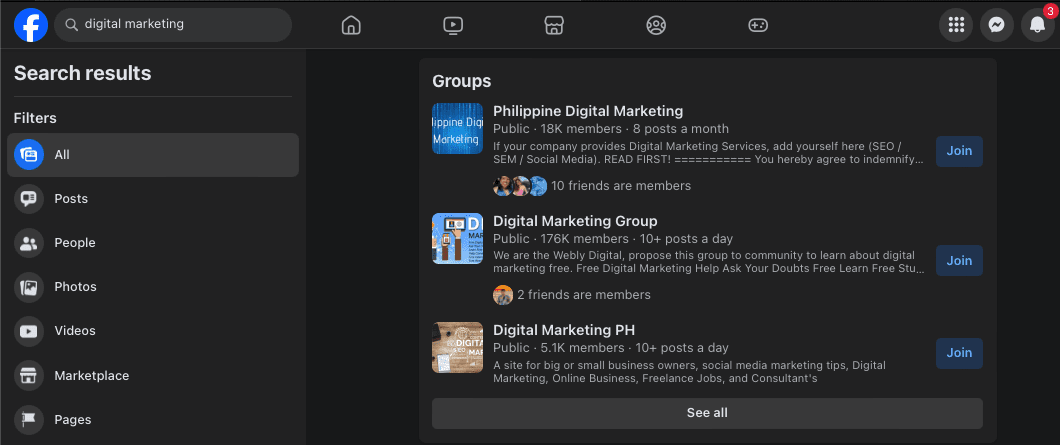
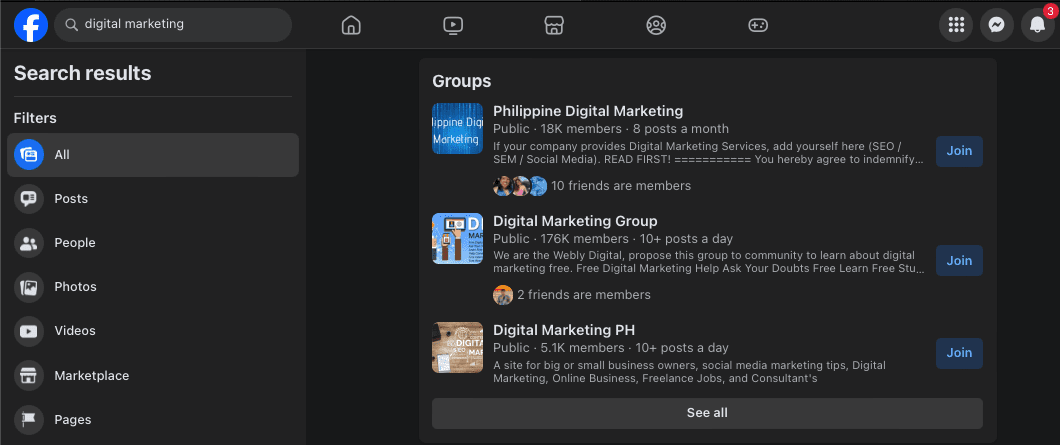
Maybe somewhat surprisingly, there are several Facebook groups dedicated toward sharing professional knowledge and experiences.
Although Facebook is often considered to be more of a personal social platform than LinkedIn, it can also be a great source for professional networking.
If interested in seeking out a community, just use Facebook’s search tool to find groups about the topic of interest.
There are several communities that cater to various aspects of digital marketing from tactical knowledge all the way to running a digital agency.
12. Sumry
Screenshot from author, April 2024
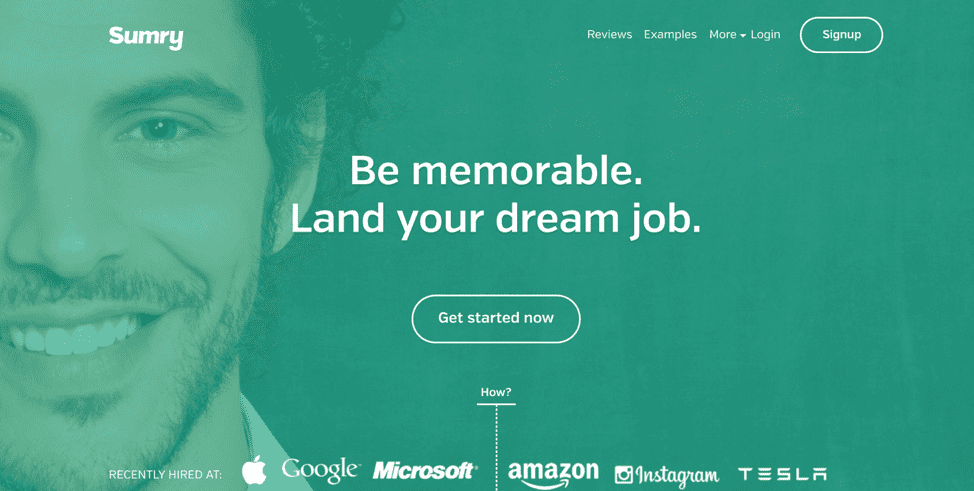
Sumry is a site that was built to make first impressions easier. It is a web app that builds online resumes and portfolios.
Sumry allows you to aggregate your certifications, skills, and work experience and it also allows you to include testimonials and your full timeline of work experience – similar to LinkedIn.
With the premium version, it also gives users a chance to introduce themselves before submitting an application.
Once you are ready to submit, Sumry makes it easy to apply with one-click with a link to your profile and a PDF of your resume.
13. Gust.com
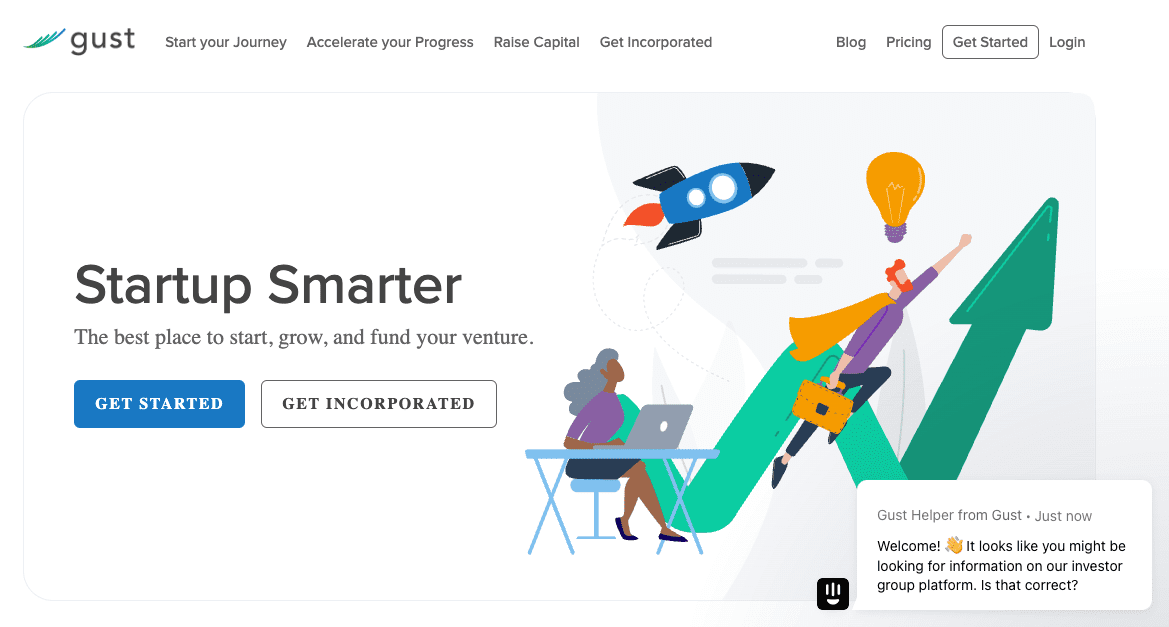
Gust is a community focused solely on startups, in fact, it claims to be the world’s largest startup network.
Gust is a global SaaS funding platform, for the sourcing and management of early-stage investments for startups. It enables entrepreneurs to collaborate with investors and angel investor networks.
Summary
LinkedIn is the largest professional networking in the world, but there are plenty of other networking options to help you make meaningful connections.
In fact, some of these alternatives may be more helpful than LinkedIn because they focus on creating more professional connections based on your location or niche.
More Resources:
Image Credits
All screenshots taken by author, March 2019
FAQ
What are some alternatives to LinkedIn for professional networking?
In response to the growing need for more personalized and niche-specific networking platforms, several alternatives to LinkedIn have emerged. Some notable platforms highlighted in the article include:
Meetup: A platform for creating or finding local meetups based on shared interests.
Xing: A Europe-based professional network for industry news and job searching, similar to LinkedIn.
Bark: Connects local professionals with those seeking their services.
Opportunity: Focuses on professional matchmaking based on user needs.
Jobcase: Offers access to job databases and collaborative community discussions.
These alternatives cater to various aspects of professional networking, from local in-person meetings to industry-specific discussions.
Is online networking on social platforms like X (Twitter) as effective as formal networking sites?
Social platforms like X (Twitter) can be remarkably effective for professional networking because these communities are often more casual and approachable in nature. Here are some of the benefits:
They are public and free, allowing unfettered access to industry discussions.
Communities such as X (Twitter) provide supportive environments where new members are welcomed and encouraged to contribute.
Professionals can use hashtags to engage in industry-specific conversations, share expertise, or seek advice.
Many professionals have leveraged X (Twitter) for career opportunities, including speaking events or client referrals.
X (Twitter) and similar platforms offer a dynamic and interactive avenue for building professional relationships and staying current with industry trends.
What are some considerations when choosing a professional networking platform?
Choosing a networking platform suitable for your professional needs involves evaluating several factors:
Purpose: Determine if you need a platform for job searching, industry networking, client outreach, or professional development.
Geographical Focus: Some platforms are better for local networking (like Meetup), while others have a broader, often global reach.
Industry Relevance: Look for platforms hosting communities or forums that cater to your specific industry or niche.
Format and Features: Consider if you prefer casual social media interactions, structured networking sites, or industry forums for knowledge exchange.
User Base: The size and activity level of the community can greatly impact networking opportunities and resource availability.
Cost: There might be membership fees involved, so assess if the potential benefits justify the expenses.
Analyzing these aspects can help pinpoint the best networking platforms for achieving your professional goals.
Social media influencers are prominent figures. They dominate the online world and social apps we use daily to become household names.
Social media platforms have elevated individuals around the world to reach an audience of millions, with YouTube, Instagram, TikTok, and X (formerly Twitter) all boasting users in the tens of millions – and in some cases, even hundreds of millions.
But every platform is different, with its own style of content and recognizable top influencers. This can make it difficult to tell who the most influential people on social media are, rather than the most popular on one platform.
We’ve looked at social media influencers across the most popular social media platforms.
By combining the total number of followers and subscribers across YouTube, Instagram, TikTok, and X (Twitter) for each individual, we created a leaderboard of the top 30 social media influencers worldwide.
What Is A Social Media Influencer?
A social media influencer, usually referred to as simply an influencer, can be any individual with a significant follower count.
They typically have established credibility within a certain niche and use that authority to connect with people via social media.
However, what’s considered large is relative. Mention reports that 26.4% of Instagram accounts have less than 1,000 followers, while almost half have between 1,000 and 10,000.
Although 10,000 may sound like a lot, it is overshadowed by the top social media influencer’s 622 million Instagram followers.
Types Of Social Media Influencers (By Follower Count)
Nano Influencer (1,000 to 10,000)
With a modest following, nano influencers typically have more trusting relationships with followers and are great for hyper-targeted campaigns.
Micro Influencer (10,000 to 100,000)
Popular within a specific niche, micro influencers remain relatable and maintain high engagement rates with their target audience while getting more attention.
Macro Influencer (100,000 to 1,000,000 followers)
Macro influencers possess broad appeal which can originally stem from a niche. Their large audience is established over a long time at the expense of lower engagement rates.
Celebrity influencer (1,000,000+ followers)
These are well-known names in an industry with huge global audiences, making them great options for brand awareness campaigns but will likely cost a lot to work with.
Which Social Media Platform Has The Biggest Audience For Influencers?
Social media influencers realistically want to reach the largest audience possible. The more people that see their content, the bigger their influence will be.
That’s why choosing the right social media platform can have an impact on how much you can grow as an influencer.
Monthly Active Users (MAUs) For Each Social Media Platform
Each platform has its benefits for different types of social media influencers, depending on the type of social content they create:
YouTube – Primarily long-form video, secondary short-form video, and live streaming.
Instagram – Primarily still image, secondary video and live streaming.
TikTok – Primarily short-form video, secondary live streaming.
X – Primarily text, secondary still image and video.
As social media platforms have grown, they’ve developed their main features alongside secondary functions to compete with each other.
This has made it easier for influencers to cross-post and repurpose the same content between different platforms, helping to cross-pollinate audiences and grow multiple followings. For example, users frequently see videos from TikTok appearing on Instagram Reels and vice versa.
Doing this helps social media influencers grow their audiences and boost their influence, which can make them more appealing partners for brands and marketers to work with.
The Top 30 Social Media Influencers Worldwide
Instagram
X (Twitter)
TikTok
YouTube
Total
Category
1
Cristiano Ronaldo
622,164,640
110,569,623
n/a
n/a
732,734,263
Sport
2
Selena Gomez
429,805,012
66,446,790
59,000,000
34,500,000
589,751,802
Music
3
Ariana Grande
380,308,915
85,268,269
34,200,000
53,500,000
553,277,184
Music
4
Kylie Jenner
400,477,343
40,044,424
54,900,000
12,100,000
507,521,767
Influencer
5
Justin Bieber
293,090,942
111,264,898
27,300,000
72,600,000
504,255,840
Music
6
Leo Messi
499,705,843
N/A
N/A
2,110,000
501,815,843
Sport
7
Dwayne Johnson
397,240,518
17,100,000
74,200,000
6,360,000
494,900,518
Entertainment
8
Taylor Swift
281,714,581
95,295,063
24,900,000
56,500,000
458,409,644
Music
9
Kim Kardashian
364,318,648
75,194,423
9,600,000
2,000,000
451,113,071
Influencer
10
MrBeast
50,400,000
28,700,000
93,300,000
240,000,000
412,400,000
Content Creator
11
Beyoncé
319,996,984
15,300,000
5,400,000
26,700,000
367,396,984
Music
12
Katy Perry
206,853,190
106,785,495
7,100,000
44,800,000
365,538,685
Music
13
Khloé Kardashian
310,907,419
30,200,000
6,200,000
704,000
348,011,419
Influencer
14
Kendall Jenner
294,711,196
31,700,000
6,100,000
285,000
332,796,196
Influencer
15
Jennifer Lopez
253,650,838
44,761,851
17,600,000
16,600,000
332,612,689
Music
16
Virat Kohli
266,486,829
61,091,254
N/A
n/a
327,578,083
Sport
17
Neymar Jr
219,676,224
63,265,287
32,100,000
4,440,000
319,481,511
Sport
18
Rihanna
152,230,498
108,159,084
9,600,000
42,700,000
312,689,582
Music
19
Nicki Minaj
229,345,664
28,162,082
20,300,000
26,600,000
304,407,746
Music
20
Miley Cyrus
217,012,486
46,384,263
18,700,000
19,000,000
301,096,749
Music
21
Kourtney Kardashian
224,413,301
26,428,379
7,300,000
N/A
258,141,680
Influencer
22
Kevin Hart
180,287,999
36,868,857
34,800,000
N/A
251,956,856
Entertainment
23
Khaby Lame
79,827,228
384,800
161,500,000
7,340,000
249,052,028
Content Creator
24
Cardi B
169,210,738
33,320,086
24,100,000
19,200,000
245,830,824
Music
25
Demi Lovato
157,403,357
52,785,567
5,800,000
18,000,000
233,988,924
Music
26
Shakira
90,586,379
53,660,569
38,300,000
45,500,000
228,046,948
Music
27
Ellen DeGeneres
139,741,535
74,692,180
12,800,000
N/A
227,233,715
Entertainment
28
Billie Eilish
110,287,844
7,300,000
51,000,000
49,100,000
217,687,844
Music
29
Lebron James
159,781,164
52,856,615
89,200
63,400
212,790,379
Sport
30
Charli d’Amelio
44,900,000
5,100,000
152,000,000
9,130,000
211,130,000
Influencer
Data from March 2024.
While some social media influencers have grown organically on one of the different platforms, many of the most popular influencers on Instagram, TikTok, and other platforms are offline celebrities first.
As many traditional celebrities grew their popularity decades before social media was around, they’ve successfully transferred their established fame into tangible followers in the online world.
With 14 of the names in the list being primarily singer-songwriters, music-based influencers make up the majority of the top 30 list. However, many of them also have careers outside music. In fact, Selena Gomez, Miley Cyrus, Ariana Grande, and Demi Lovato all got their start in acting for Disney or Nickelodeon.
Several Gen Z influencers are also featured in the top 30 who grew up as social media natives, including Charlie D’Amelio, Jimmy ‘MrBeast’ Donaldson, Billie Eilish and Khaby Lame.
Khaby Lame is particularly interesting as he managed to achieve a stratospheric rise to fame during the COVID pandemic without any brand affiliation. His predominantly silent video content focused on satirical teasing of the overcomplicated life hacks that had become popular on TikTok.
Khaby has since gone on to become a key figure in Hugo Boss’ rebrand and gets paid as much as $750k [paywall] per sponsored post. Impressive for an influencer who is known for saying very little.
Looking at the more straightforward lifestyle influencers, all three Kardashian sisters and both Jenner sisters feature within the top 30. This makes Charli D’Amelio the only top lifestyle influencer who isn’t part of the Kardashian dynasty.
The Top 15 Social Media Influencers By Followers
Cristiano Ronaldo, Portuguese athlete (soccer), 732 million followers – Despite only being active on two platforms, his reputation as one of the greatest of all time to play the game has made him an international icon and Instagram’s standout influencer.
Selena Gomez, American actor/musician, 589 million followers – Evolving from her Disney star roots, she’s grown as both an actress and advocate for mental health and equality to become one of the world’s most influential women.
Ariana Grande, American musician/actor, 553 million followers – Pop icon with a four-octave vocal range and a considerable back catalog that has seen her listed as an influence by multiple high-profile music artists.
Kylie Jenner, American influencer/reality TV star, 507 million followers – The most influential social media star from The Kardashians, she’s balanced a range of branded business ventures with life as a socialite.
Justin Bieber, Canadian musician, 504 million followers – Bieber is arguably the most well-known case of social media stardom. His early R&B covers on YouTube helped net him a record deal back in 2008 after his videos were discovered.
Leo Messi, Argentinian athlete (soccer), 501 million followers – An Argentinian soccer legend and supposed rival to Ronaldo. He’s also only present on two social media sites, yet has still gathered more than half-a-billion followers.
Dwayne Johnson, American actor/wrestler, 494 million followers – Widely regarded as one of the greatest professional wrestlers of all time, Dwayne ‘The Rock’ Johnson is also one of the highest-paid actors globally and a fitness icon.
Taylor Swift, American musician, 458 million followers – The current reigning queen of pop, Taylor Swift has become a worldwide sensation with her global tours even influencing local economies.
Kim Kardashian, American influencer/reality TV star, 450 million followers – As one of the first people to be famous for being famous, Kim K successfully brought her socialite stardom into the social media sphere.
MrBeast, American content creator, 412 million followers – The most influential YouTube creator has now cracked the top 10 social media influencers overall, with each of his challenges and giveaway videos being watched by tens of millions.
Beyoncé, American musician, 367 million followers – One of the best-selling music artists of all time with a wide range of accolades, Beyoncé has also been dubbed ‘Queen Bey’ by her massive fanbase – ‘The BeyHive’.
Katy Perry, American musician, 365 million followers – With a huge following on X and the most diamond-certified singles of any female artist, Katy Perry has had a big impact on modern pop music since the late 2000s.
Khloe Kardashian, American influencer/reality TV star, 348 million followers – The youngest of the Kardashian sisters, she’s worked alongside her family to promote various products via their reality TV shows and social followings.
Kendall Jenner, American influencer/reality TV star, 332 million followers – The highest-paid supermodel and another Kardashians family member, Kendall started her modeling career at 13 and has walked her way into influential international model status.
Jennifer Lopez, American actress/musician, 332 million followers – Also known as ‘J.Lo’, she’s helped to increase the representation of Latino Americans in entertainment throughout her award-winning career spanning over five decades.
How To Use Social Media Influencers To Market Your Brand
The world now collectively spends 11.5 billion hours a day on social media platforms, with each average user contributing almost two-and-a-half hours.
That gives social media influencers a lot of time every day to connect with their audience. But it also means there’s plenty of potential for brands to work with influencers and capitalize on that time.
Many social media users now rely on influencers, reviewers, or established voices within a niche before making decisions. For TikTok, 65% of users say they rely on content creators and online reviewers to help them make decisions before buying a product.
Rather than promoting your own brand channel organically, you can leverage social media influencers by having them endorse your products or services. It has also been found that trust can be transferred from an influencer to a brand when influencer marketing is done well.
The top influencers also know how powerful it can be. Many have launched their own products to market within their content to capitalize on the benefits themselves. For example, MrBeast’s Feastables brought in 70% of his revenue in its second year.
Find An Influencer Within Your Budget
As a general rule – the bigger the influencer, the more they’ll want in return for a post. Smaller influencers might be satisfied with receiving your products for free, but influencers with large followings will almost certainly charge a fee.
Paid content will also be explicitly highlighted on some platforms, such as the ‘paid partnership’ label appearing on Instagram.
This came about after the Fyre Festival incident where some influencers were found to be promoting the festival as a personal recommendation when they were, in fact, paid to post about it.
Choose An Influencer That’s Relevant To Your Business
Practically all influencers have built their following within a certain niche. It’s important that you work with an influencer that feels like they would naturally align with your brand and has a similar target audience to your own.
A fashion influencer talking about the benefits of a new line of skin care products would feel on-brand. If they were to be promoting power tools or something similarly out of place, then it wouldn’t resonate with their audience.
This will likely result in fewer conversions for the partnered business, as well as the audience of that influencer becoming more distrustful of paid sponsorships.
Let An Influencer Promote Your Business Authentically
Social media influencers have built their personal brands through the content they make. Their audience will be familiar with how they talk and put themselves forward.
When working with an influencer, it’s important to make sure any messaging meshes with how that influencer communicates. That authenticity is what will connect with their audience and feel less like something they’re doing just to get paid.
If you have them stick to a rigid script, then you lose what makes an influencer unique – their personality and their audience.
Influencers Can Extend Their Trust And Influence To Your Brand
We live in a world with more influencers and celebrities than ever before. While many have now achieved the one million follower milestone, the top social media influencers possess almost unbelievably big followings.
Considering Charli D’Amelio became the first person to reach 50 million followers on TikTok in April 2020, and then the first to reach 100 million just seven months later, it’s clear that influencers like her are growing exponentially.
That’s part of the reason influencer marketing is now growing in popularity. When executed well with the right influencers on board, you can raise the profile of your brand at an accelerated rate.
Not only can it introduce you to a brand-new audience, but it can potentially convert those who’ve seen your brand before but needed some extra reassurance.
If you’re unsure about working with influencers, you can always start with a nano influencer on a small, targeted campaign to establish whether it works for your business.
Methodology
To create the top 50 social media influencers worldwide list, we took the top 100 accounts from each platform based on their follower or subscriber count (Source: SocialBlade.com, Youtube, X, Instagram, TikTok).
We compiled all influencer names across these lists and created a total number of followers/subscribers across all platforms.
These numbers were collected by hand directly from the social media platforms as a rounded figure, or taken from Socialblade.com for a live count.
The list was then reordered based on total follower counts to find the top 30 social media influencers.