For decades, enterprises reacted to shifting business pressures with stopgap technology solutions. To rein in rising infrastructure costs, they adopted cloud services that could scale on demand. When customers shifted their lives onto smartphones, companies rolled out mobile apps to keep pace. And when businesses began needing real-time visibility into factories and stockrooms, they layered on IoT systems to supply those insights.
Each new plug-in or platform promised better, more efficient operations. And individually, many delivered. But as more and more solutions stacked up, IT teams had to string together a tangled web to connect them—less an IT ecosystem and more of a make-do collection of ad-hoc workarounds.
That reality has led to bottlenecks and maintenance burdens, and the impact is showing up in performance. Today, fewer than half of CIOs (48%) say their current digital initiatives are meeting or exceeding business outcome targets. Another 2025 survey found that operations leaders point to integration complexity and data quality issues as top culprits for why investments haven’t delivered as expected.
Achim Kraiss, chief product officer of SAP Integration Suite, elaborates on the wide-ranging problems inherent in patchwork IT: “A fragmented landscape makes it difficult to see and control end-to-end business processes,” he explains. “Monitoring, troubleshooting, and governance all suffer. Costs go up because of all the complex mappings and multi-application connectivity you have to maintain.”
These challenges take on new significance as enterprises look to adopt AI. As AI becomes embedded in everyday workflows, systems are suddenly expected to move far larger volumes of data, at higher speeds, and with tighter coordination than yesterday’s architectures were built to sustain.
As companies now prepare for an AI-powered future, whether that is generative AI, machine learning, or agentic AI, many are realizing that the way data moves through their business matters just as much as the insights it generates. As a result, organizations are moving away from scattered integration tools and toward consolidated, end-to-end platforms that restore order and streamline how systems interact.
This content was produced by Insights, the custom content arm of MIT Technology Review. It was not written by MIT Technology Review’s editorial staff. It was researched, designed, and written by human writers, editors, analysts, and illustrators. This includes the writing of surveys and collection of data for surveys. AI tools that may have been used were limited to secondary production processes that passed thorough human review.
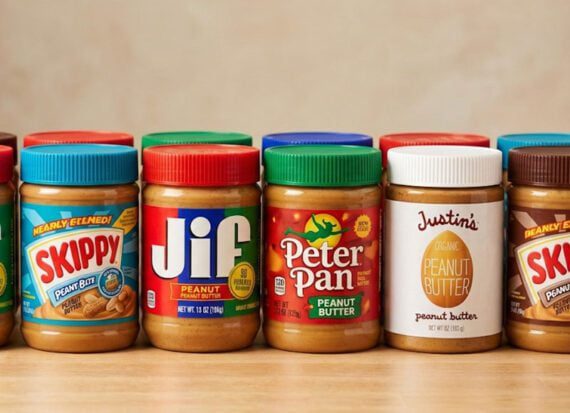
Whether it’s spring cleaning tips, peanut butter recipes, or honoring Mr. Spock, March 2026 is full of opportunities to use content to promote your company and its products.
The aim of content marketing is to attract, engage, and retain customers. It works on the principle of reciprocity. Provide valuable content to shoppers, and they may repay with purchases.
What follows are five content marketing ideas your shop can use in March 2026.
Spring Renewal
Spring invites small changes that make everyday life feel new again.
March marks the slow turn toward spring in the Northern Hemisphere. Days grow longer. The weather turns warmer. And we shift our focus.
Many of us begin thinking about small changes that lead to larger improvements.
For some, that means spring cleaning. For others, it means reorganizing, replacing worn items, or restarting habits that faded over winter.
This seasonal mindset can lead to useful, product-centered content. Shoppers browse for ideas and try to perform practical tasks.
Thus the best content could help folks complete a project or learn a skill that also aligns with what the store sells. A home goods retailer can explain how to refresh a kitchen or bedroom. A clothing merchant can address updating a wardrobe. A fitness brand might outline a plan for restarting workouts.
When it helps a potential customer accomplish something meaningful, a business builds trust. That trust often turns into future sales.
National Peanut Butter Lover’s Day
Peanut butter has many fans.
March 1, 2026, is National Peanut Butter Lover’s Day in the United States. The pseudo-holiday began appearing on calendars in the 1990s.
Food-focused content can perform well in search, social, and, presumably, AI
With this in mind, peanut butter-related articles will likely work best for merchants selling kitchenware, specialty foods, and fitness products such as protein powders and supplements.
For these merchants, the content ideas are straightforward.
“5 Peanut Butter Desserts to Make in Under 30 Minutes”
“Homemade Peanut Butter That’s Better Than Store-Bought”
“Easy Snacks for Peanut Butter Lovers”
Peanut butter has a broad cultural appeal. Creative content marketers in other niches can likely find ways to participate.
For example, a retailer specializing in science and math kits might publish educational or curiosity-driven content such as:
“Who Invented Peanut Butter?”
“Peanut Butter and the World’s Fair”
“10 Shocking Peanut Butter Patents”
The goal is to create timely, interesting content that aligns with the spirit of the day and introduces shoppers to the store.
Live Long and Prosper Day
Star Trek’s Mr. Spock, played by Leonard Nimoy, famously coined the phrase “live long and prosper.”
March 26, 2026, is Live Long and Prosper Day, a nod to Leonard Nimoy and his iconic portrayal of Mr. Spock in Star Trek, The Original Series.
“Live long and prosper” was a series phrase, but it has long become shorthand for science fiction’s hopeful view of the future and humanity’s relationship with technology.
Science fiction remains one of the most popular and influential genres in popular culture. Its ideas shape how people imagine innovation, design, and progress. That influence creates an opportunity for ecommerce content marketers to frame products through a science-fiction lens without needing licensed merchandise.
Content can focus on everyday products that feel futuristic, minimalist, or inspired by speculative design. Electronics, home office gear, tools, apparel, books, hobby supplies, and gift items can all fit this theme.
The age of AI means almost everything feels like science fiction.
Make Up Your Own Holiday Day
Create a holiday that fits your business.
If Star Trek’s Mr. Spock is not a great fit, March 26 is also Make Up Your Own Holiday Day, a lighthearted invitation to invent a celebration from scratch.
For ecommerce marketers, the date offers a chance to blend entertaining content with promotions.
Unlike regular holidays, this do-it-yourself occasion can focus on a product category, a use case, or a habit.
An online liquor store, for example, might introduce “Buy Your Spouse a Bottle Day.” A coffee merchant could launch “Perfect Cup of Coffee Day.” An office supply retailer might create “Organize Your Desk Day.” Or finally, a game shop could celebrate “Family Game Night Day.”
Each of those should include products. It’s a permission to have fun while driving sales.
America at 250
Content from U.S. merchants in 2026 can focus on craftsmanship and domestically-made products.
In 2026, the United States will celebrate its 250th year as a nation. It’s an opportunity for U.S. merchants to focus on product-centered storytelling.
One angle is to emphasize goods made in the United States or rooted in long-standing domestic craftsmanship. These products naturally connect to themes of durability, heritage, and continuity without requiring overt patriotic messaging.
Shoppers learn where products come from, how they are made, and why that matters today. Example article titles might include:
“15 Heritage Brands That Have Stood the Test of Time”
“American Craftsmanship in Everyday Products”
“5 American-Made Products Worth Paying For”
These pieces can become part of a continuing “America 250” series that expands through spring and into summer, gradually building a library of heritage-focused content tied to merchandise.
Google’s John Mueller was asked how many megabytes of HTML Googlebot crawls per page. The question was whether Googlebot indexes two megabytes (MB) or fifteen megabytes of data. Mueller’s answer minimized the technical aspect of the question and went straight to the heart of the issue, which is really about how much content is indexed.
GoogleBot And Other Bots
In the middle of an ongoing discussion in Bluesky someone revived the question about whether Googlebot crawls and indexes 2 or 15 megabytes of data.
It would be super useful to have more precisions, and real-life examples like “My page is X Mb long, it gets cut after X Mb, it also loads resource A: 15Kb, resource B: 3Mb, resource B is not fully loaded, but resource A is because 15Kb < 2Mb”.”
Panic About 2 Megabyte Limit Is Overblown
Mueller said that it’s not necessary to weigh bytes and implied that what’s ultimately important isn’t about constraining how many bytes are on a page but rather whether or not important passages are indexed.
Furthermore, Mueller said that it is rare that a site exceeds two megabytes of HTML, dismissing the idea that it’s possible that a website’s content might not get indexed because it’s too big.
He also said that Googlebot isn’t the only bot that crawls a web page, apparently to explain why 2 megabytes and 15 megabytes aren’t limiting factors. Google publishes a list of all the crawlers they use for various purposes.
How To Check If Content Passages Are Indexed
Lastly, Mueller’s response confirmed a simple way to check whether or not important passages are indexed.
“Google has a lot of crawlers, which is why we split it. It’s extremely rare that sites run into issues in this regard, 2MB of HTML (for those focusing on Googlebot) is quite a bit. The way I usually check is to search for an important quote further down on a page – usually no need to weigh bytes.”
Passages For Ranking
People have short attention spans except when they’re reading about a topic that they are passionate about. That’s when a comprehensive article may come in handy for those readers who really want to take a deep dive to learn more.
From an SEO perspective, I can understand why some may feel that a comprehensive article might not be ideal for ranking if a document provides deep coverage of multiple topics, any one of which could be a standalone article.
A publisher or an SEO needs to step back and assess whether a user is satisfied with deep coverage of a topic or whether a deeper treatment of it is needed by users. There are also different levels of comprehensiveness, one with granular details and another with an overview-level of coverage of details, with links to deeper coverage.
In other words, sometimes users require a view of the forest and sometimes they require a view of the trees.
Google has long been able to rank document passages with their passage ranking algorithms. Ultimately, in my opinion, it really comes down to what is useful to users and is likely to result in a higher level of user satisfaction.
If comprehensive topic coverage excites people and makes them passionate enough about to share it with other people then that is a win.
If comprehensive coverage isn’t useful for that specific topic then it may be better to split the content into shorter coverage that better aligns with the reasons why people are coming to that page to read about that topic.
Takeaways
While most of these takeaways aren’t represented in Mueller’s response, they do in my opinion represent good practices for SEO.
HTML size limits belie a concern for deeper questions about content length and indexing visibility
Megabyte thresholds are rarely a practical constraint for real-world pages
Counting bytes is less useful than verifying whether content actually appears in search
Searching for distinctive passages is a practical way to confirm indexing
Comprehensiveness should be driven by user intent, not crawl assumptions
Content usefulness and clarity matter more than document size
User satisfaction remains the deciding factor in content performance
Concern over how many megabytes are a hard crawl limit for Googlebot reflect uncertainty about whether important content in a long document is being indexed and is available to rank in search. Focusing on megabytes shifts attention away from the real issues SEOs should be focusing on, which is whether the topic coverage depth best serves a user’s needs.
Mueller’s response reinforces the point that web pages that are too big to be indexed are uncommon, and fixed byte limits are not a constraint that SEOs should be concerned about.
In my opinion, SEOs and publishers will probably have better search coverage by shifting their focus away from optimizing for assumed crawl limits and instead focus on user content consumption limits.
But if a publisher or SEO is concerned about whether a passage near the end of a document is indexed, there is an easy way to check the status by simply doing a search for an exact match for that passage.
Comprehensive topic coverage is not automatically a ranking problem, and it not always the best (or worst) approach. HTML size is not really a concern unless it starts impacting page speed. What matters is whether content is clear, relevant, and useful to the intended audience at the precise levels of granularity that serves the user’s purposes.
Based on survey data from nearly 1,000 businesses, this session highlights where confidence is rising, where caution remains, and how companies are balancing growth, efficiency, and focus.
What AI readiness looks like in practice for businesses like yours
Where business confidence is increasing, and what teams are prioritizing
Why Attend?
This webinar provides a practical benchmark for evaluating your 2026 plan against peer data. You will leave with clear context and takeaways to help refine growth, efficiency, and AI strategies for the year ahead.
Register now to see what real business data says about planning for 2026.
🛑 Can’t watch live? Register anyway, and we’ll send you the recording.
This one started with a question from Adorján-Csaba Demeter, a subscriber in Romania, who asked how big the behavior change could be after Google’s AI Mode Personal Search launch, and it pushed me to think past the product announcement and into the habit shift underneath it.
AI changing search is a foregone conclusion. The real story is what happens to people when search stops acting like a library and starts acting like a helper that knows what you meant, what you like, and what you have coming up next.
When effort drops, behavior changes first. Then business models change. Then the web scrambles to catch up.
Image Credit: Duane Forrester
What Google Actually Changed
Google did not just add another AI layer to results. It moved AI Mode from “answer from the web” toward “answer from the web plus your life,” starting with opt-in connections to Gmail and Google Photos for AI Pro and AI Ultra subscribers in the U.S., delivered as a Labs experiment.
That detail matters because it tells you what Google thinks the next battleground is.
Not faster answers, but stickier habits.
When the system can read your hotel confirmation in Gmail, it can plan. When it can see the kinds of trips you take in Photos, it can recommend. You stop doing the work of explaining context. You start delegating outcomes.
That is a bet on human behavior.
The three behavior shifts that will most likely follow, in order, are:
1. People ask more questions, and they ask harder questions.
Google already sees this pattern with AI Overviews. In major markets like the U.S. and India, Google says AI Overviews drive over a 10% increase in usage for the types of queries that show them. That is a habit signal, not a satisfaction claim.
When people believe the system will do more for them, they return more often, and they push further. Queries get longer. They get more specific. They get more outcome-oriented. People stop asking “what is” and start asking “what should I do.”
Personal context amplifies that shift. If the system already knows your reservations, your preferences, and your recent activity, the user has less friction and more confidence. That increases question volume.
2. Sessions end sooner, and fewer decisions happen on websites.
Here’s the part businesses need to internalize. AI does not just reduce clicks. It compresses the journey and ends sessions earlier.
Pew’s browsing-panel study found that when an AI summary appeared, users clicked a traditional search result in 8% of visits versus 15% when there was no AI summary. Pew also found users were more likely to end their browsing session after a page with an AI summary, 26% versus 16% without.
3. People shift from browsing to delegating.
This is where behavior becomes durable. Traditional search trained people to open tabs, compare sources, build their own plan, then act. AI Mode personalizes the plan inside search itself. It turns “find me information” into “help me decide.” If the system can use your life context, it can do the assembly work you used to do manually.
That is the transition from search sessions to decision sessions. A search session ends when you find information. A decision session ends when you have a recommended next step and you are ready to act.
Adoption Will Be Real, And Uneven, For A Simple Reason
People like convenience, but they do not always like the feeling of being summarized.
Pew found that among Americans who have seen AI summaries in search results, only one in five say they find them extremely or very useful. Most say somewhat useful, and 28% say not too or not at all useful.
Low-stakes categories will move fastest because the cost of being wrong is low. High-stakes categories will move slower because trust and liability show up quickly, even when the convenience is obvious.
Even with mixed sentiment, usage is already going mainstream. Deloitte’s 2025 Connected Consumer survey found 53% of surveyed consumers are either experimenting with gen AI or using it regularly, up from 38% in 2024.
The behavior change is already underway, and I think Google is trying to capture it inside its existing habit loop.
What This Does To Businesses, Even If Your SEO Is Perfect
This is where most teams get stuck. They see AI Mode and AI summaries and assume it is “just another ranking change.” It is not. It is a consumer behavior change that reshapes the economics of discovery. The shift is subtle at first, then it hits you all at once, because it changes what people consider a completed search experience.
When sessions complete in the answer layer, classic top-of-funnel traffic becomes less reliable, even if your rankings hold. The competitive line shifts to inclusion: being referenced, cited, recommended, or selected as the next step inside the plan the system generates.
To win there, build for next-step intent. Most marketing content assumes the user will land on your site and then decide. AI compresses that journey, so your content has to carry options, tradeoffs, and a clear “what to do next,” in a form that survives summarization.
Vertical Impacts, Where Behavior Shifts First
Healthcare
People already use search as a first stop for health. The Annenberg Public Policy Center found that most (79%) U.S. adults say they’re likely to look online for the answer to a question about a health symptom or condition.
And the way they search is predictable. A 2025 JMIR survey study found participants most often sought information on health conditions, 90.2%, and medication info came next, 60.3%.
As the answer layer feels more confident, people will use it for triage and next steps. It will influence which clinic they choose and how quickly they escalate a concern.
Healthcare businesses should expect:
Less website traffic for broad informational topics, and more pressure on “what do I do next” moments.
Increased competition to be the cited and trusted source inside AI answers.
Higher stakes for accuracy and clarity, because summarization can remove nuance.
There is also a revealing warning signal here. A study of health-related AI Overviews citations, found YouTube was the single most cited source, accounting for 4.43% of citations in that dataset.
That is not an argument against AI. It is a reminder that citation sources do not automatically align with medical rigor. Businesses in healthcare need to make their evidence, authorship, and care pathways machine-readable and unambiguous.
Financial Services
Finance is already living in an “assistant” world, and that matters because it shows how quickly consumers accept delegated help when it saves effort.
Bank of America reports that Erica (their consumer AI assistant) has surpassed 3.2 billion client interactions since its 2018 launch, and clients now interact with Erica more than 2 million times per day.
That is behavior change at scale.
Meanwhile, consumers are increasingly willing to use AI for financial advice and information. ABA Banking Journal reported in September 2025 that 51% of respondents said they turn to AI to get financial advice or information, and another 27% said they are considering it.
Now when we connect the dots…
If AI Mode personalizes search around a user’s life context, financial decision-making gets pulled earlier into the assistant layer. Budgeting questions, product comparisons, “should I refinance,” “how much house can I afford,” and “what happens if I miss a payment” all become conversational.
Financial services businesses should expect:
Increased competition for being the recommended next step, not just being discoverable.
More pressure to publish clear, plain-language product explanations that survive summarization.
A sharper separation between low-stakes guidance and regulated advice, with trust and compliance becoming part of how content gets used.
Retail And Ecommerce
Retail gets hit hard because the classic behavior pattern is tab sprawl, and AI collapses it into a shortlist.
Retail businesses should expect:
Fewer browsing sessions that start with generic research and end on a product page.
More “shortlist behavior,” where the system presents a handful of options and the user picks.
Higher importance for product data that can be summarized cleanly, including dimensions, compatibility, return policies, and warranty terms.
If your differentiation lives in fluffy copy, it dies in the summary. If it lives in measurable attributes, verified reviews, and clear tradeoffs, it survives.
Local Services
Local services are where this gets practical fast. People search when something broke, they need help now, and they do not want homework.
AI Mode personal context will steer choices based on urgency, location, constraints, and preferences. That means “best next step” routing becomes default behavior.
Local businesses should expect:
Less opportunity to win by content volume alone.
More emphasis on entity clarity, service area accuracy, availability, pricing ranges, and proof of credibility.
A rise in “invisible funnel” decisions, where the customer shows up ready to book because the plan already happened elsewhere.
What You Can Do Today, Without Waiting For The Dust To Settle
For Consumers
1. Decide where you want personalization, and where you do not. Personal AI is a trade. You get convenience, but you give context. Make that choice deliberately.
2. Use AI for options, then verify what has consequences. Health, money, legal, and safety decisions deserve a second look. If an answer influences a purchase, a medical step, or a contract, capture the source and key details so convenience does not erase accountability.
For Businesses
1. Stop treating clicks as the only signal that matters. Clicks will drop in many query classes, and sessions will end sooner. Measure presence in answers, citations, recommendations, and downstream conversions that happen after exposure.
2. Rebuild your content around next-step intent. Take your highest value pages and rewrite them for decision completion. Clear options. Clear tradeoffs. Clear “what to do next.”
3. Make your entity impossible to misunderstand. Clean organization signals, consistent naming, authoritative profiles, accurate locations, and structured data where relevant. When the machine layer tries to explain who you are, make it easy.
4. Publish proof, not fluff. In high-stakes verticals, show your sources, your credentials, your policies, and your constraints. AI can compress text, but it still needs real signals to anchor trust.
The Competitive Forecast, Google Versus The Rest
If AI Mode personal search takes off, the winners will not be determined by model quality alone. Distribution and habit will do most of the work.
Scenario one, Google accelerates
Google’s biggest advantage is not that it can build an assistant. It is that it can place the assistant inside a habit billions of people already have. (Android + Siri) It already sees increased usage when AI Overviews appear, over 10% in major markets for those query types.
If Google can move Personal Intelligence from paid opt-in into broader availability, and expand the connected sources beyond Gmail and Photos, it can turn search into a daily operating layer for planning and decisions. That is a habit engine.
Scenario two, the market stays plural
ChatGPT and other assistants will continue to grow because they do not live only in “search.” They live in work, writing, learning, and deep tasks. Many users will keep separate habits, one for web discovery, another for assistant workflows, at least for a while.
In a plural market, businesses must optimize for multiple answer layers, not just Google.
What To Watch In 2026
Whether Google keeps Personal Intelligence as a paid feature or uses it as a default habit builder.
Whether connected context expands, and which sources get added next.
Whether user sentiment shifts from lukewarm to reliant or stays mixed as Pew found.
How quickly session compression shows up by vertical, since that will reveal where business disruption hits first.
The Takeaway
The change to watch is not that AI can answer questions. That part is already here, and it will keep improving. The real change is that people will stop doing the assembly work they have always done in search. They will ask more, browse less, and increasingly accept plans that arrive pre-built, because it feels faster and it feels complete. Habits will change.
When that happens, power moves upward into the answer layer. Competition shifts from who ranks to who gets included, because inclusion is what influences the decision before a user ever lands on your site. The web does not disappear, but its role changes. It becomes the dependency that feeds answers, not the destination where discovery naturally occurs.
If you run a business, you cannot pause this shift. You can adapt. Build for decision completion. Make your proof easy to carry forward so it survives summarization and still earns trust. Measure what matters when the click often disappears.
Today’s question is about understanding internal linking and how it can help or hinder a search engine’s perception of a page’s topical relevance and authority.
“How do you technically assess whether a site’s internal linking is diluting topical authority rather than strengthening it?”
What Is Topical Authority
In essence, topical authority is the concept of how a search engine may view a website’s ability to provide an authoritative answer for a topic, inferred from how consistently it covers that topic and how signals reinforce that coverage.
Although there is no single standard defined metric for topical authority, it is, in essence, a measure of a page or a whole website’s relevance to a specific knowledge area, and trustworthiness as a source of information.
How Is It Affected By Internal Links
Internal links are crucial in shaping topical authority. They influence how authority, relevance, and intent signals are distributed across a website or folder. If we think of backlinks as bringing topical authority into a website, internal linking then helps to disperse it across the site. Internal linking determines where that authority accumulates and aids search engines in interpreting a page’s topical focus.
Links that connect topically relevant pages together help to strengthen the perception of the destination page’s authority on a subject. Lots of links from pages that aren’t seemingly relevant to each other can dilute the destination’s topical authority.
Something that is central to understanding the role of internal links in shaping topical authority is PageRank. PageRank is an algorithmic system developed in the late ’90s by Google founders Larry Page and Sergey Brin. It was used to measure the importance of a page based on the nature and volume of the links pointing to it. We need to keep this concept in mind when considering the use of internal links to shape the perception of a page’s topical authority.
How Important Are Internal Links In Regard To Topical Authority?
There are several factors of internal links that can affect how beneficial they are in strengthening a page’s topical authority.
Does The Link Pass Authority?
The first aspect is whether the link is followable, or if it is marked as “rel=nofollow.” This also applies to other variations of the “nofollow” tag, like “rel=sponsored.” Note, these tags are hints and not absolutes and Google might ignore them in some cases.
The URL that the link is on, and the page it is pointing to, also need to be crawlable. If those pages are disallowed via the robots.txt, then the value of the authority will not pass, as the page will not be crawled for the internal link to be picked up by the search bots.
Where Is It Placed On The Page?
Where a link is on the page could affect its authority. For example, links placed in the footer of every page on the site, get weighted differently than those that sit within the page’s main content. Google’s Martin Splitt has explained that Google does treat content in different parts of the page differently when trying to understand the topic of a page, and its content that is perceived to be main content that is used most to help with that.
Google’s John Muller recently answered a question about how links are valued in these different areas of a page. He said, “I don’t think there is anything quantifiably different about internal links in different parts of the page.” Although that may seem to contradict Splitt’s comments, remember that Muller is addressing how the value of a link may be affected by its location on a page, whereas Splitt is discussing how location of content affects how it is weighted to determine topic.
Following this logic, links appearing in the main content of a page may affect how that link passes topical relevancy.
What Is The Anchor Text?
The anchor text, or alt-text in cases where an image is linked, will help to inform the search engines of the nature of the page being linked to. The words that form the link are critical in helping the user and search engines know what to expect when they land on the page it takes them to. This context is another signal to the bots of the link destination’s relevancy to a subject.
What Is The Link Pointing From And To?
Similarly, if a link is on a page that is topically similar to the page being linked to, that also reinforces the topical authority of the destination page. If Page A on my fictitious hobby ecommerce site is about different craft hobbies, and Page B is about textile craft hobbies, it will help to reinforce Page B’s relevance to those seeking information about craft hobbies.
How To Assess Your Internal Linking Structure’s Effect On Topical Authority
Internal links can help a site’s topical authority by reinforcing the destination URLs’ topical relevance. They also help to ensure that any external authority signals are being passed to the correct internal pages.
There are calculations that could factor in the flow of link equity and authority through pages to assess the full impact of internal linking on a page’s topical authority. Calculations required include assigning value for position of link placement, click-depth from a topically relevant and authoritative page and topical authority of the links to the page where the link is coming from.
It’s a lot of math.
Instead, I’m in favor of keeping it simple, and defining a process that will allow you to get enough of an understanding of your website’s topical authority to make decisions from.
By looking at a sample of pages from your site across different topics, or if you are particularly focused, just one area of your topical authority, you can get an idea of any issues.
1. Identify Where Your Pages Are Getting Their Internal Links From
First of all, crawl your site, taking a sample of URLs. Export all of the internal links pointing to those pages, including their anchor text and URL the link is on.
2. Classify The URLs In Topic Clusters
Group all the pages into topical themes, i.e., for an ecommerce site that sells hobby equipment, “knitting, crochet, embroidery, and weaving” would all sit within “crafts” and the sub-category of “textile arts.” “Die cutting, digital cutting, laser cutting” would all sit within “crafts” and the sub-category of “cutting and engraving.”
3. Analyze What Proportion Of Each URL’s Followable Internal Links Are From Within The Same Topic And Outside Of The Topic
Using the exported links, for follow links only, match them against the URLs and mark them as “within” or “outside” their topical family
Divide the volume of links that are from the same topic by the volume of links in total. For example, for “examplehobbyshop.com/crafts/embroidery/intro-to-embroidery/, if the total number of internal links is 100 and the volume of internal links from categories that are within the “craft” family is 60, then it would be 60/100 = 60%
The rule I apply is, if the URL internal links from the same family are around 75% or higher, that suggests that internal links are helping solidify topical authority. If it is less than 74%, that suggests that there could be some improvement.
How To Assess How Your Links’ Anchor Text Is Contributing To Your Topical Authority
1. Extract The Anchor Text Of Links Pointing To Your URLs
When gathering the links pointing to a page, remove common links like static header navigation and footer links that stay the same on each page. Then, extract the anchor text or alt text for linked images.
2. Categorize The Relevance Of The Anchor Text Of Links
Next, you want to look at how on-topic the anchor text of the links is for the page they are linking to.
Classify each anchor text as “topically relevant,” “topically irrelevant,” or “generic.” Topically relevant anchor text will have great alignment with the subject of the linked-to page. Topically irrelevant anchor text will not show any useful reinforcement of the topic. “Generic” anchor text includes “click here” or pagination links.
For the URL, examplehobbyshop.com/crafts/embroidery/intro-to-embroidery/, the following internal links’ anchor text could be grouped as follows:
Topically relevant
Topically irrelevant
Generic
“get started with embroidery”
“learn the tools needed to pick up embroidery”
“want to try another fibre craft?”
“beginners’ guide”
“start a new hobby”
“try something new”
“click here”
“next”
“page 2”
The goal is to have a lot of links from topically relevant pages pointing to the URL using topically relevant anchor text.
Measure the relevance of the anchor text against the total volume of anchor text.
For example, if that page had 30 topically relevant anchor texts, 20 topically irrelevant, and 50 generic, of the total 100 internal links pointing to it, it would have a topically relevant anchor text score of 30%. So despite there being a high volume (60%) of relevant internal links pointing to it, only 30% of the links have topically relevant anchor text.
3. Identify The Intent Mix Of The Anchor Text
Next, you want to identify the intent of the anchor text.
When grouping the anchor text by topical relevancy, also consider the intent behind the anchor text. For example, is it suggesting the page you will go to after clicking on it is informational, commercial, or transactional?
This matters because it can lead to dilution of the page intent. If there is a wide spread of intent shown through the anchor text, it can lead to confusion as to the purpose of the page being linked to.
Following on from the previous example, if some of the internal links had the anchor text “learn more about embroidery,” but others were more akin to “buy all the tools you need for your first embroidery project,” it’s not clear if examplehobbyshop.com/crafts/embroidery/intro-to-embroidery/ is an informational, commercial, or transactional page. This suggests the anchor text has a high intent mix, which is not ideal. If the majority of the anchor text were aligned with informational intent, it would have low intent mix.
Together, you want the anchor text to show high topical relevance, and low intent mix.
Final Thoughts
By the end of your analysis, you should have an idea of the topical relevance of the source pages of the internal links and how their anchor text aligns to both the topic and intent of the page being linked to.
Scaling this across a larger volume of URLs means you can start to see how topical relevance and authority are being strengthened or diluted via internal linking.
Once you have an idea of weaker areas of your site, you can begin to optimize anchor text and link sources to reinforce the value of the linked-to page as a source of authority on a subject.
More Resources:
Featured Image: Paulo Bobita/Search Engine Journal
How Links, Mentions, and Authority Influence Rankings and AI Discovery
Authority and presence across the web continue to play a central role in search visibility, even as AI-driven experiences reshape how SERPs appear.
Links, brand mentions, and trust signals continue to influence how Google evaluates credibility, both in traditional rankings and in AI-powered SERPs. The challenge for SEO teams is determining which off-page efforts to prioritize in 2026.
It’s easy to waste effort on shortcuts that do little to build long-term authority, so in this session, Michael Johnson, Founder and CEO of GrowResolve.com, will share a practical framework for developing modern off-page SEO strategies that improve organic rankings and support AI visibility. The focus of this SEO webinar is on sustainable approaches that help brands earn trust, not chase tactics that no longer deliver value.
What You’ll Learn
Which off-page signals drive results in 2026, including links, mentions, topical authority, and trust.
How to build a diversified off-page strategy without relying on a single tactic or vendor.
Scalable link building approaches for in-house teams, including Digital PR, partnerships, and brand-led content.
Why Attend?
This webinar provides clear guidance on where to focus off-page SEO efforts as search continues to evolve. You will leave with a practical, decision-making framework to build authority, improve visibility, and avoid wasted effort in 2026.
Register now to learn how to build off-page SEO strategies that support long-term authority and visibility.
🛑 Can’t attend live? Register anyway, and we’ll send you the on-demand recording after the webinar.
Alphabet reported Q4 2025 revenue of $113.8 billion, beating Wall Street estimates and marking the company’s first year above $400 billion in annual revenue. Google Search grew 17% to $63.07 billion.
On the earnings call, the company revealed how it plans to monetize AI Mode and shared new data on how AI is changing search behavior.
What’s Happening
Google Search and other advertising revenue hit $63.07 billion, up 17% from $54.03 billion in Q4 2024. Search growth accelerated through 2025, rising from 10% in Q1 to 12% in Q2 to 15% in Q3 and 17% in Q4.
CEO Sundar Pichai said Search had more usage in Q4 than ever before. He attributed the growth to AI features changing how people search.
Pichai said on the call:
“Once people start using these new experiences, they use them more. In the US, we saw daily AI Mode queries per user double since launch.”
Queries in AI Mode are three times longer than traditional searches, and a “significant portion” lead to follow-up questions.
AI Mode Monetization Tests
Chief Business Officer Philipp Schindler said Google is “in the early stages of experimenting with AI Mode monetization, like testing ads below the AI response, with more underway.”
On Direct Offers, a new pilot program, Schindler said:
“We announced Direct Offers, a new Google Ads pilot, which will allow advertisers to show exclusive offers for shoppers who are ready to buy, directly in AI Mode.”
Google also plans to launch checkout directly within AI Mode from select merchants.
Schindler said the longer AI Mode queries are creating new ad inventory. Gemini’s understanding of intent “has increased our ability to deliver ads on longer, more complex searches that were previously challenging to monetize.”
Schindler attributed the miss to election ad lapping from Q4 2024:
“On the brand side, as an ad share, the largest factor negatively impacting the year-over-year growth rate was lapping the strong spend on U.S. elections.”
He also noted that subscription growth can reduce ad revenue. When users switch to YouTube Premium, it hurts ad revenue but helps the overall business.
What Else Happened
Google Cloud revenue jumped 48% to $17.66 billion. Alphabet plans to spend $175 billion to $185 billion on capital expenditures in 2026, nearly double its 2025 spending. That suggests more AI features coming to Search and other products.
Why This Matters
Looking back a year ago at Q4 2024 results, Search grew 12%. By Q1 2025, AI Overviews reached 1.5 billion monthly users, and Search was growing 10%. Now Search growth has accelerated to 17%.
The metrics Google celebrated on this call describe users staying on Google longer. Schindler described the new ad inventory as additive, reaching queries that were “previously challenging to monetize.”
That’s a monetization win for Google. The tradeoff to watch is referral traffic.
When asked about cannibalization, Pichai said Google hasn’t seen evidence of it:
“The combination of all of that I think creates an expansionary moment. I think it’s expanding the type of queries people do with Google overall.”
That may be true for queries. Whether it holds for referral traffic is something you’ll need to track in your own analytics.
Looking Ahead
Google maintains the position that AI features expand search activity rather than cannibalize it. The Q4 revenue numbers back it up.
The open question is what expanding AI Mode features means for referral traffic, and your own analytics will tell that story.
This is today’s edition of The Download, our weekday newsletter that provides a daily dose of what’s going on in the world of technology.
Why AI companies are betting on next-gen nuclear
AI is driving unprecedented investment for massive data centers and an energy supply that can support its huge computational appetite. One potential source of electricity for these facilities is next-generation nuclear power plants, which could be cheaper to construct and safer to operate than their predecessors.
How social media encourages the worst of AI boosterism
Demis Hassabis, CEO of Google DeepMind, summed it up in three words: “This is embarrassing.”
Hassabis was replying on X to an overexcited post by Sébastien Bubeck, a research scientist at the rival firm OpenAI, announcing that two mathematicians had used OpenAI’s latest large language model, GPT-5, to find solutions to 10 unsolved problems in mathematics.
This story originally appeared in The Algorithm, our weekly newsletter on AI. To get stories like this in your inbox first, sign up here.
The paints, coatings, and chemicals making the world a cooler place
It’s getting harder to beat the heat. During the summer of 2025, heat waves knocked out power grids in North America, Europe, and the Middle East. Global warming means more people need air-conditioning, which requires more power and strains grids.
But a millennia-old idea (plus 21st-century tech) might offer an answer: radiative cooling. Paints, coatings, and textiles can scatter sunlight and dissipate heat—no additional energy required. Read the full story.
—Becky Ferreira
This story is from the most recent print issue of MIT Technology Review magazine, which shines a light on the exciting innovations happening right now. If you haven’t already, subscribe now to receive future issues once they land.
MIT Technology Review Narrated: China figured out how to sell EVs. Now it has to deal with their aging batteries.
As early electric cars age out, hundreds of thousands of used batteries are flooding the market, fueling a gray recycling economy even as Beijing and big manufacturers scramble to build a more orderly system.
This is our latest story to be turned into a MIT Technology Review Narrated podcast, which we’re publishing each week on Spotify and Apple Podcasts. Just navigate to MIT Technology Review Narrated on either platform, and follow us to get all our new content as it’s released.
The must-reads
I’ve combed the internet to find you today’s most fun/important/scary/fascinating stories about technology.
1 Europe is edging closer towards banning social media for minors Spain has become the latest country to consider it. (Bloomberg $) + Elon Musk called the Spanish prime minister a “tyrant” in retaliation. (The Guardian) + Other European nations considering restrictions include Greece, France and the UK. (Reuters)
2 Humans are infiltrating the social network for AI agents It turns out role-playing as a bot is surprisingly fun. (Wired $) + Some of the most viral posts may actually be human-generated after all. (The Verge)
3 Russian spy spacecraft have intercepted Europe’s key satellites Security officials are confident Moscow has tapped into unencrypted European comms. (FT $)
4 French authorities raided X’s Paris office They’re investigating a range of potential charges against the company. (WSJ $) + Elon Musk has been summoned to give evidence in April. (Reuters)
5 Jeffrey Epstein invested millions into crypto startup Coinbase Which suggests he was still able to take advantage of Silicon Valley investment opportunities years after pleading guilty to soliciting sex from an underage girl. (WP $)
6 A group of crypto bros paid $300,000 for a gold statue of Trump It’s destined to be installed on his Florida golf complex, apparently. (NYT $)
7 OpenAI has appointed a “head of preparedness” Dylan Scandinaro will earn a cool $555,000 for his troubles. (Bloomberg $)
8 The eternal promise of 3D-printed batteries Traditional batteries are blocky and bulky. Printing them ourselves could help solve that. (IEEE Spectrum)
9 What snow can teach us about city design When icy mounds refuse to melt, they show us what a less car-focused city could look like. (New Yorker $) + This startup thinks slime mold can help us design better cities. (MIT Technology Review)
10 Please don’t use AI to talk to your friends That’s what your brain is for. (The Atlantic $) + Therapists are secretly using ChatGPT. Clients are triggered. (MIT Technology Review)
Quote of the day
“Today, our children are exposed to a space they were never meant to navigate alone. We will no longer accept that.”
—Spanish prime minister Pedro Sánchez proposes a social media ban for children aged under 16 in the country, following in Australia’s footsteps, AP News reports.
One more thing
A brain implant changed her life. Then it was removed against her will.
Sticking an electrode inside a person’s brain can do more than treat a disease. Take the case of Rita Leggett, an Australian woman whose experimental brain implant designed to help people with epilepsy changed her sense of agency and self.
Leggett told researchers that she “became one” with her device. It helped her to control the unpredictable, violent seizures she routinely experienced, and allowed her to take charge of her own life. So she was devastated when, two years later, she was told she had to remove the implant because the company that made it had gone bust.
The removal of this implant, and others like it, might represent a breach of human rights, ethicists say in a paper published earlier this month. And the issue will only become more pressing as the brain implant market grows in the coming years and more people receive devices like Leggett’s. Read the full story.
—Jessica Hamzelou
We can still have nice things
A place for comfort, fun and distraction to brighten up your day. (Got any ideas? Drop me a line or skeet ’em at me.)
+ Why Beethoven’s Ode to Joy is still such an undisputed banger. + Did you know that one of the world’s most famous prisons actually served as a zoo and menagerie for over 600 years? + Banana nut muffins sound like a fantastic way to start your day. + 2026 is shaping up to be a blockbuster year for horror films.