There have been lots of really good questions, but this one from Phil of Trumbull stood out:
“What is the average amount companies take for running a PPC campaign?”
Factors That Influence PPC Management Costs
Here are key factors that determine how much you should expect to pay:
Vendor Experience Level: Seasoned experts often charge more but bring efficiency and strategic insight that can offset higher fees.
Scope Of Services: Are you asking the vendor to handle creative (ad design, landing pages) or just campaign management?
Number Of Channels: Managing multiple platforms (Google, Microsoft, Meta, LinkedIn, TikTok, etc.) requires more effort and expertise.
Strategic Vs. Tactical Execution: Do you want a partner who proactively optimizes and strategizes, or someone who executes based on your direction?
Bundled Services: Some agencies offer PPC as part of a broader digital marketing package, such as SEO or social media management, which can provide cost efficiencies.
There’s no universal “cheap” or “expensive” option. What matters is that you align expectations with investment.
What also matters is that you set reasonable expectations for your vendor and the campaigns they will be creating/managing for you.
When engaging a PPC vendor, you pay for expertise and time – whether for technical execution or strategic oversight.
Below are the most common pricing models:
1. Percentage Of Spend + Flat Fee
Historically, the percentage-of-spend model was popular, but it has fallen out of favor because it doesn’t always align the management fee with the client’s well-being.
If an agency makes more money simply because you’re spending more on ads, there’s less incentive for them to optimize your budget efficiently.
Flat fee component typically ranges from $500 to $2,500 per month.
Percentage of spend varies between 5% and 15%, though agencies increasingly favor alternative pricing models.
2. Flat Rate Pricing
Some agencies prefer a predictable flat rate. This can either include ad spend or be separated into management fees and media costs.
Flat-rate management fees generally range from $2,500 to $10,000 per month.
Pricing increases based on additional services such as:
Ad creative and landing page design.
Advanced conversion tracking setup.
Frequent campaign pivots due to evolving business goals.
3. Performance-Based Pricing
In this model, agencies charge per lead or conversion rather than a fixed fee.
While appealing, it often means the agency retains account ownership, which can be problematic if you ever want to take control of your campaigns.
If you’re comfortable never owning your PPC account, this could work. However, if transparency and long-term flexibility matter, a traditional pricing model is a safer bet.
Choosing The Right PPC Vendor For Your Budget
Beyond cost, choosing the right PPC management partner depends on your budget, goals, and internal capabilities:
Budgets under $2,500/month: Consider managing PPC in-house or using automation tools, as agency fees may eat up too much of the ad budget.
Highly seasonal businesses: Flat-rate pricing may make sense to smooth out cost fluctuations.
Stable spend accounts: Percentage-of-spend pricing often results in lower overall fees, but ensure it aligns with your business goals.
Looking for strategy and execution? Higher-priced agencies provide strategic insight and proactive management.
Need a hands-on executor? Lower-cost vendors typically require you to direct the strategy.
Considering a full digital strategy? Some agencies bundle PPC with SEO and social media management, which can provide better synergy and cost savings.
What you pay depends on the level of support and expertise you need. The key is balancing cost with expectations to ensure a strong return on investment.
Have a question about PPC? Submit via this form. See you next month!
More Resources:
Featured Image: Paulo Bobita/Search Engine Journal
Micro conversions are among the most misunderstood – and underutilized – tools in a PPC marketer’s toolkit.
While they don’t represent final goals like sales or leads, they can provide critical signals that improve campaign performance, inform audience strategy, and enable smarter automation.
Here’s what marketers need to know to harness micro conversions effectively.
What Are Micro Conversions In Google Ads?
Micro conversions are the smaller, trackable user actions that occur on the path to a primary (macro) conversion. These can include:
Button clicks (e.g., “Learn More” or “Book a Demo”).
Time on site thresholds.
Scroll depth (e.g., 50% or more of a page).
Video views or completions.
Downloads of gated or ungated assets (PDFs, white papers, brochures).
Add-to-cart or view-a-product actions (especially in ecommerce).
Account creations or newsletter signups (in lead gen or SaaS).
In technical terms, micro conversions are events configured in Google Ads or Google Analytics 4 (GA4) events to be imported into Google Ads. These actions need to be set as primary actions so they impact the algorithm and reporting.
Advertisers can also create campaign-level conversions or conversion groups within Google Ads to group and value these actions based on their strategic importance.
It’s important to note that conversion data is stored at the conversion action level, so using both account-level and campaign-level conversion actions isn’t advisable. This is because you might end up double counting.
Who Should Use Micro Conversions?
While all advertisers can benefit from micro conversions, there are specific cases where they’re particularly critical:
Long Sales Cycles
For B2B, high-ticket, or enterprise brands, the conversion path often spans weeks or months. Relying on sparse “true” conversions (like closed deals) limits algorithmic learning.
Micro conversions feed Smart Bidding strategies with faster, more frequent signals, improving optimization while nurturing intent.
Low Conversion Volume Accounts
Advertisers with fewer than 50 conversions per month often find themselves stuck with suboptimal bid strategies.
Layering in high-quality micro conversions, like “contact page views” or “start checkout” events, can help reach the volume threshold needed to unlock Maximize Conversions, Target CPA, or Target ROAS bidding.
Top-Of-Funnel Or Awareness Campaigns
Display, Video, and Demand Gen campaigns often drive engagement but not immediate conversions.
Micro conversions give advertisers a way to demonstrate value and engagement upstream, helping justify investment in brand-building initiatives.
Brands With Multi-Touch Journeys
If a business relies on several touchpoints, such as a blog reader later becoming a webinar attendee and eventually a customer, micro conversions allow marketers to track and optimize for each meaningful step, rather than only the final destination.
How To Report On Performance Using Micro Conversions (Without Losing Credibility)
The biggest risk with micro conversions is miscommunication, especially when stakeholders assume that all “conversions” reported in Google Ads are sales, leads, or revenue-driving actions.
To keep reporting accurately and strategically, advertisers should lean heavily on Google Ads’ conversion settings and be proactive in setting expectations.
1. Use Primary Conversions Wisely
In Google Ads, each conversion action includes a toggle for primary vs. secondary:
If Primary is toggled, the action contributes to the “Conversions” column and influences Smart Bidding strategies.
If Secondary is toggled, the action is still tracked but only appears in the “All Conversions” column.
Best Practice: Only include high-intent micro conversions (e.g., “Start Checkout,” “Request Demo Click”) in the “Conversions” column if they reflect a strong signal of purchase or lead intent and your account doesn’t yet have sufficient macro conversion volume for Smart Bidding.
For awareness-stage micro conversions (e.g., video views, scroll depth), keep them out of the bidding unless you are struggling to hit conversion thresholds.
2. Be Honest About Conversion Rate Discrepancies
There’s a difference between the conversion rate in Google Ads and the actual business conversion rate (e.g., sales closed, qualified leads, or revenue).
When micro conversions are included in the primary column, Google Ads will report an artificially high conversion rate.
Example:
Google Ads reports a 7% conversion rate (including ebook downloads and demo button clicks).
Customer relationship management (CRM) data shows that only 1.5% of those sessions became qualified leads or customers.
To maintain credibility and stakeholder trust:
Label micro conversions clearly in both platform naming and external reports.
Segment performance by conversion type (e.g., “Soft Conversion Rate” vs. “True Conversion Rate”).
Use blended metrics like “Cost per Qualified Lead” or “Lead-to-Sale Rate” alongside platform metrics to provide the full picture.
3. Set Up Custom Columns For Clean Reporting
Google Ads allows advertisers to build custom columns that isolate specific conversion actions. This is key to preventing performance inflation and aligning reports with what actually matters.
You can create:
A column for Primary Conversions Only (macro).
A column for Micro Conversions.
A column for All Conversions.
This structure helps teams tell the story: “Here’s how many people meaningfully engaged, here’s how many took the final action, and here’s what we spent to get both.”
4. Strategically Value Micro Conversions
If you’re using Target ROAS or Maximize Conversion Value bidding, assigning values to micro conversions must be done carefully.
These should reflect relative business importance, not just arbitrary numbers.
For example:
Demo Request = $50.
Ebook Download = $10.
Video View = $1.
This hierarchy ensures Google’s bidding logic prioritizes actions that are more likely to lead to revenue, without starving the algorithm of lower-funnel signals.
Final Takeaways
Micro conversions are powerful, but they’re also easy to misuse, especially in reporting. They must never be presented as equivalent to actual sales or leads unless there’s proof of correlation.
Advertisers should:
Structure Google Ads conversion settings to clearly separate micro and macro actions.
Educate stakeholders on what each “conversion” type means in context.
Bridge the platform vs. reality gap by layering CRM or offline data into their performance analysis.
In environments where the final conversion volume is too low to fuel automation or draw meaningful insights, micro conversions provide the volume and behavioral data needed to optimize, but they’re only as valuable as the strategy behind them.
The key is transparency. Micro conversions can absolutely drive long-term success, but only when advertisers set the right expectations, use Google Ads’ tools to their full extent, and align campaign optimization with real business outcomes.
Historically, Google has been the default for most marketers, especially when it comes to pay-per-click (PPC) advertising. However, for low-budget accounts, the question arises:
Is Google Search the best value for money?
This article explores how Google Search can still provide value for money for lower-budget accounts and where to allocate the budget if Google isn’t feasible.
Understanding Low Budgets
When we refer to low budgets, we typically mean anything below $5,000 per month in ad spend. Some brands may even operate with budgets as low as $1,000 a month or less.
With a budget of $1,000 or less, relying solely on search as your main strategy may not be viable.
However, it can still be used for remarketing or branded search to dominate your search result page and direct users to specific services.
When users click on these extensions, they pay the same price as they would for a click to the headline of the ad. This strategy allows you to pre-qualify potential customers and direct them to higher-value services, even if you sacrifice appearing directly in search results.
The other benefit of branded campaigns is they tend to have better results than non-branded campaigns. Averaging branded campaigns into an account can help ramp up a low-volume ad account.
Dynamic Search Ads
For those with a budget allowing for some data acquisition, Dynamic Search Ads can be a powerful tool.
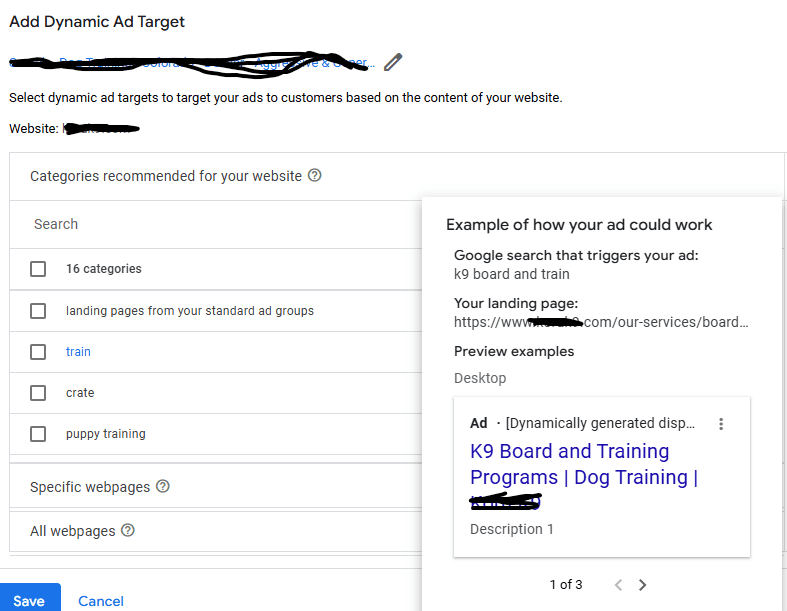
These ads can capture queries that align with your brand while allowing you to set bid caps to avoid expensive auctions. This allows you to learn what ways of searching will fit your budget, as well as give you a useful sense of how Google understands your site.
Screenshot from Google Ads, February 2025
Targeting less popular queries can lead to more affordable auction prices.
Due to close variants, you only need to bid on one version of your keyword. Dynamic Search Ads can help you discover which ways will be useful without guessing.
Performance Max (PMax)
Using PMax as a volume play can also be beneficial. However, it’s crucial to apply extensive exclusions for display and YouTube placements at the account level to protect your budget from ineffective placements.
It’s also important to remember that PMax requires smart bidding, which means meeting the 50+ conversion threshold in a 30-day period.
Performance Max works best when integrated with other campaigns, such as search or video, making up 15-20% of your overall budget.
It’s important to remember that it represents a bias-free way of investing marketing dollars, so it should only be brought into a low-budget account when conversion tracking is perfect and there’s the budget for that kind of investment.
While Google Search is a significant channel, it’s essential to remember that Google offers more than just search options.
Leveraging Video Campaigns
Video inventory is relatively inexpensive, allowing you to achieve volume without a hefty investment in traditional media buys.
Video campaigns can include non-skippable, skippable, or in-sequence ads, helping users understand your service and why you’re the best fit.
Additionally, investing in video can help you build a scalable audience targeting list, enhancing the return on investment (ROI) of your search investments.
When you invest in YouTube, you’re also buying into an audience type that can be used on other Google inventory. Advertisers can target users who have seen content, interacted with a channel, and other actions.
Aside from YouTube and PMax, there are also Demand Gen ads.
Demand Generation encompasses video, discovery, and display ads. It borrows the most from paid social and allows marketers to have multi-channel distribution with more control than PMax.
Exploring Other Platforms
After discussing Google’s opportunities, let’s consider alternatives like Microsoft, Meta, and Amazon.
Microsoft Advertising
Microsoft has long been viewed as a cheaper alternative to Google. However, its audience size is smaller, which may not suit those needing high volume.
Still, Microsoft offers specific targeting options and transparency in ad serving. Key differences include ad serving in the user’s time zone, flexible ad group settings, and impression-based remarketing.
Meta Advertising
Meta has been a go-to for small- to medium-sized businesses, especially those with low budgets.
However, it’s shifting focus towards A/B testing, meaning brands need a budget for testing.
Generally, a budget of at least $500 to $1,000 per month is recommended for effective campaigns.
Amazon Advertising
For sellers, Amazon media buying is essential for improving organic rankings.
Non-sellers can also benefit from sponsored display and video ads, leveraging Amazon’s precise targeting signals. However, these options are still in beta, making return on ad spend (ROAS) calculations challenging.
Conclusion: Is Google Worth It For Low Budgets?
The answer to whether Google is a good value for low-budget accounts depends on three key factors:
Lead Volume And Quality: Can you support the lead volume and quality from various Google channels? If yes, investing in Google is a smart choice.
Campaign Objectives: Are your campaigns focused on volume or value? Google can cater to both, but you need to choose the right settings.
Capacity For Video: Do you have the resources to invest in video? Video remains a cost-effective way to reach the right audience, as many are still hesitant to embrace it.
If you have any more questions, feel free to submit them here, and I look forward to connecting next month!
More Resources:
Featured Image: Paulo Bobita/Search Engine Journal
The latest question for Ask A PPC is based on Ad Strength and Creative. It comes from Isha in Delhi, who asks:
“Should extended text ads be paused or kept running as we can’t edit?”
The short answer is the age-old, “It depends.”
However, recent data indicates there may be more value in moving away from expanded text ads.
In this post, we’ll go over:
The state of expanded text ads (ETAs).
Reasons to keep them.
Reasons to pause.
This is a Google-specific perspective. However, the same logic could be applied to Microsoft.
The State Of ETAs
Expanded Text Ads (ETAs) allow users to include three 30-character headlines and two 90-character descriptions.
These ads serve creative in the order specified in the original ad, but they might be truncated based on the search engine result pages (SERP) they served on.
As a general rule, mobile SERPs would only show headlines one and two (with some truncation possible in headline two).
They also were “deprecated” in June of 2022. The quotes exist because – while advertisers can no longer create or edit ETAs – ETAs were allowed to continue running.
This is similar to standard ads (which received the same treatment in September 2017).
While I can’t share a concrete number of how many ETAs are still running, a recent Ad Strength study from Optmyzr found around 20% of advertisers still have some ETAs running in their accounts (~5,000 accounts).
There is no clear answer on ETAs. It truly depends on the state of your business and performance.
Reasons To Keep ETAs
The biggest reason to keep ETAs is they are performing well.
Most agree that 200% ROAS is the baseline for passable performance (i.e., put $1 in and get $2 back). Based on the data, ETAs seem to struggle to meet this:
Length Bucket
No. Of Ads
CPC
CPA
CTR
Conversion Rate
ROAS
0-20
69296
1.49
34.80
5.98%
4.27%
159.38%
21-30
165899
1.78
30.52
6.61%
5.83%
148.83%
31+
8964
0.91
4.93
9.00%
18.42%
161.40%
(Data from the Optmyzr Study)
However, if you’re not using conversion values, you might need to use conversion rate and CPA to determine success.
To contrast ETA data, here’s the Optmyzr data for RSAs:
Heading Length Bucket
No. Of Ads
CPC
CPA
CTR
Conversion Rate
ROAS
0-20
92744
1.26
17.36
8.85%
7.26%
208.78%
21-30
716888
2.20
30.61
7.95%
7.19%
181.35%
31+
31631
1.86
40.01
7.75%
4.65%
224.73%
While longer ads are close to ETA performance (which makes sense because longer ads are a tactic from the ETA era), it’s clear shorter ads outperform their predecessor.
However, big data doesn’t always translate to your individual performance.
That’s why, it’s critical to establish your own thresholds for performance. If you’re seeing your ad underperform (likely due to not being as eligible for enough SERPs), you may want to make the switch.
It’s important to remember that you can’t “undo” this choice.
Another reason to keep these ads is just so you can have them. Once they’re paused, you’re not getting them back.
Reasons To Pause
The main reason to move away from ETAs is you want the most access to all placements for your search terms.
Google has many different SERPs which can force truncation. Leaning into RSAs and PMax ensures you have the most opportunity to succeed.
Final Takeaway
There is no right or wrong answer on whether to move away from ETAs. However, it is important that you honestly audit your ETAs and confirm they’re still working for you.
Have a question about PPC? Submit via this form or tweet me @navahf with the #AskPPC hashtag. See you next month!
This month’s Ask A PPC comes from Vijay, who asks:
“Why are my Google Ads approved but have no impressions? How do you fix it?”
We’re going to go into the timely question of why a Google Ad entity (keyword, ad, ad group, and campaign) might not have impressions.
We will tackle the main and solvable ones, but there will always be edge cases.
If you have questions beyond these, don’t hesitate to reach out!
Why Doesn’t A Google Entity Have Impressions?
The biggest reason is low search volume.
If you’re targeting a long-tail (5+) exact match keyword or a keyword in a hyper-niche industry, that keyword concept may have zero impressions. Also, if the keyword is in a brand-new ad account, it will have a really, really hard time ramping up.
This is why Google tends to suggest using looser ideas in the beginning. You need data to get the ad account up and running, though it’s important to put protections in place.
A common way to do this is to put in bid caps (either through bidding strategies, portfolio bidding, or manual bidding).
Dynamic Search Ads (DSA) can help you get ideas of how people search. When paired with max clicks with a bid cap, DSA can give you a reasonable sense of how much your industry will cost as well as search volume.
You may also decide that you want to use a limited broad match with lots of negatives. If you go this route, be careful about which conversion actions you set, as broad match does factor in conversions when considering matching.
There is a reality that some ideas will have lower search volume. If you’re creating a new offering, you may benefit from running visual content (Performance Max should only be used if you have at least 30+ conversions in a 30-day period).
Another reason a keyword might have zero impressions is that the ad hasn’t been approved yet. Google can take up to two days to approve ads (especially in new accounts), so it’s important to factor those timelines in.
Additionally, a previously running ad might have been flagged for editorial review (very common when discussing a trademarked term or anything relating to credit).
You also may have accidental duplicate keywords, which can cause serving issues. If you have more than one keyword that can capture the same traffic, there will be inevitable winners and losers. However, sometimes, they can cancel each other out, and neither will serve.
Another reason for low impressions or zero impressions is that your bids and budgets don’t align with the keyword concepts you’re targeting.
We know that Google has instituted a floor for the auction. If you’re not able to bid for the correct idea or if you ask for a budget to support too many things, you will inevitably end up with zero impressions.
A great way to check for this is to use the Keyword Planner to get a rough sense of what the auction prices will be.
You’ll also want to leverage Google Trends to see how people in different areas are searching and what is trending in different parts of the country that you’re trying to target.
How Can You Solve Low Impressions?
If your low impressions are tied to budgets or bids, and there is no way to invest more, you will need to look for traffic and leads on other channels or other types of Google properties. This may include using display or video.
You may also want to look at Microsoft or other social plays like Meta/Instagram. Part of why auction prices can be cheaper on those channels than Google Search is the inherent transactional bias towards buying off of the search.
If the issue is structure, you likely have too many entities in an ad group or campaign. The answer is to move a little bit of budget and set up a different campaign to cover those ideas or to pause ideas that are hogging the budget that aren’t worth as much.
A very common problem, particularly in campaigns that are running smart bidding, is that there will be initial winners and losers. If you include too many keyword concepts, valuable ones may get lost.
This is part of why Google will be pausing keywords that have zero impressions in the past 13 months so that your account isn’t penalized for having too many zero impression keywords.
If the issue is creative, then the best advice is just to use responsive search and display ads, as well as Performance Max, and keep cycling through the creative and ways to talk about it.
Consider layering in Google’s AI for creative because you’ll have something that they have outright said is correct. Granted, you want to make sure that the creative meets your brand standards.
Final Takeaways
It’s very frustrating when a keyword or ad has zero impressions, and you’re not sure why.
As we’ve discussed, it could be a low search volume issue – you may need to widen what you’re willing to accept.
It could be a bid and budget issue, and you’re just not entering the auction at all (or at least not enough for the spend to matter).
Have a question about PPC? Submit via this form or tweet me @navahf with the #AskPPC hashtag. See you next month!
More resources:
Featured Image: Paulo Bobita/Search Engine Journal
This month’s “Ask A PPC” question is particularly significant because the job market has been quite volatile.
“How do I get a job with a PPC agency when I have only worked in-house. What experience would they want?” – Karl Toronto
It’s understandable that people want to know which skills employers seek when hiring for a PPC team. There can be a disparity between what people think they need and what the market actually demands.
We’ll delve into some data and commentary to explain why various traits are valued.
It’s crucial to understand that the ideal candidates will be versatile and have an aptitude for all aspects of digital marketing.
However, no one can excel at everything, so leveraging your strengths or preferences is beneficial.
Ensure that you’re securing the best role for yourself while the company hiring you finds the best fit for them.
Discrepancy Between Market Demands And Perceived Needs
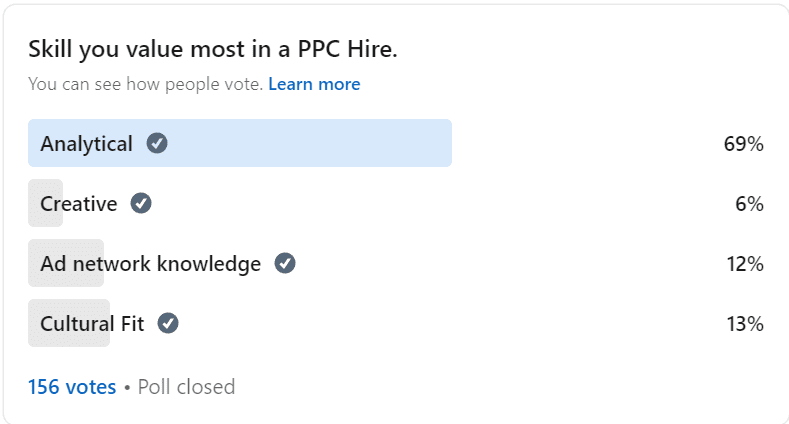
I conducted a poll on my LinkedIn to gauge the skills desired by current employers and practitioners.
Screenshot from author, LinkedIn, April 2024
Analytical skills emerged as the most sought-after trait. Employers seek individuals who can interpret numbers and discern the story behind them.
However, relying solely on analytical prowess may overlook the importance of creativity.
Creative skills are vital in today’s ad networks, especially emphasizing visual content like videos and campaign types that force visual content (Performace Max/Demand Gen). Neglecting creativity can hinder a company’s branding efforts.
Unexpectedly, ad network skills and cultural fit were deemed far less critical than analytical skills. Brands should prioritize team cohesion for long-term success, yet this aspect is often undervalued.
The disparity between job descriptions and actual skill requirements contributes to the difficulty in the job market.
Agencies that hire for how PPC used to work will be left wanting. Practitioners who only focus on popular skills instead of needed ones will be made obsolete by the privacy-first era obscuring data and AI owning creative.
Analytical Skills
Analytical abilities involve knowing where to find relevant data sources and understanding how they contribute to success.
While PPC historically relied on measurable outcomes, the landscape is evolving, necessitating adaptability in data analysis. Technical proficiency and strategic acumen are crucial for navigating different data sources.
Empathy for various ad channels improves your candidacy, and knowing how to work with post-click data will give you an edge over those who can only work with ad platform data.
While being highly technical isn’t required, having empathy for coding and scripts will give you a better chance to stay current with evolving data mechanics (especially as APIs become even more important for accessing data blocked by privacy-first regulations).
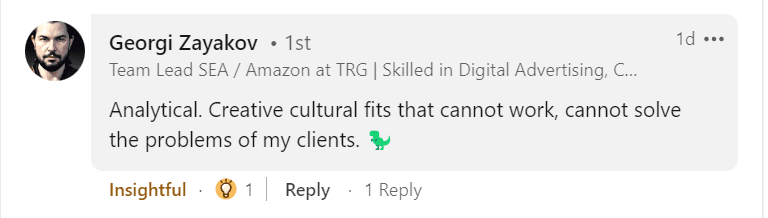
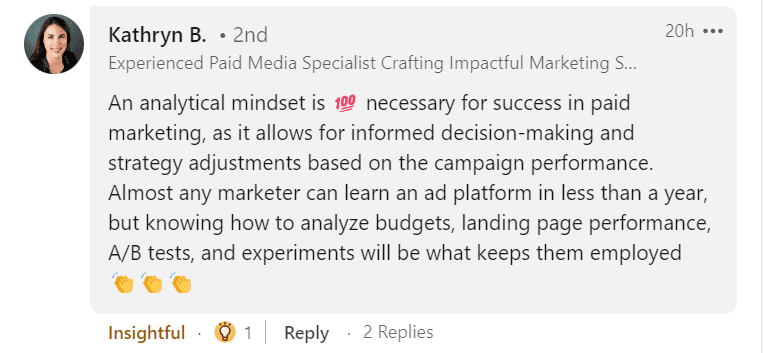
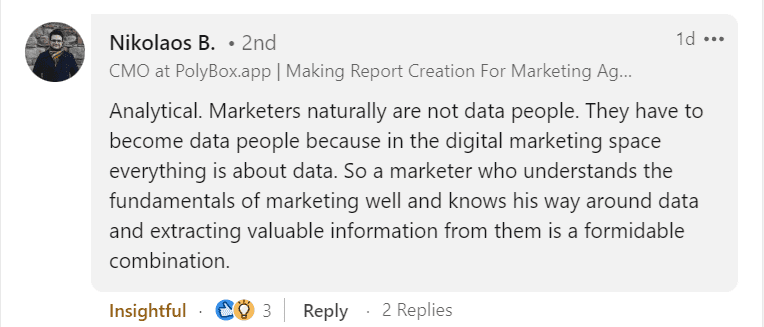
Here are some takes from PPC experts on why analytics is the most important:
Clients are often tasked with providing creative materials due to cost or complexity constraints.
You’ll get a competitive edge if you have these skills:
Video Editing: With the rise of PMax, as well as many ad networks leaning heavily into connected TV, having video editing chops will be a huge asset for any team. If you’re not comfortable using conventional editing tools, AI tools like Descript are a great way to take on those tasks.
Graphic Design: No matter the ad network your potential employer is hiring for, you will need some ability to design static images. Whether you use stock photos or AI-generated images or come up with the creative yourself, the days of purely text ads are over. Tools like Canva can help bridge the gap for less technical designers, but don’t discount ad network AI.
Content Creation: While the first two categories leaned toward visual content, written content is still important (i.e., most ad formats include some text). Having the ability to understand how diverse audiences prefer to be addressed while respecting the specific requirements of each format is a great skill to hone.
While some roles may prioritize analytics or ad network knowledge, emphasizing creative abilities can distinguish you during the hiring process.
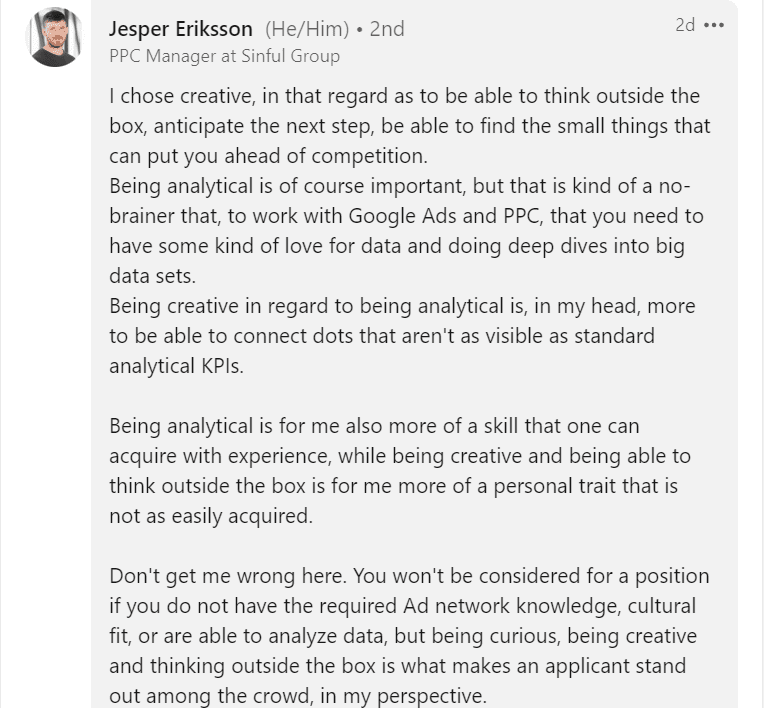
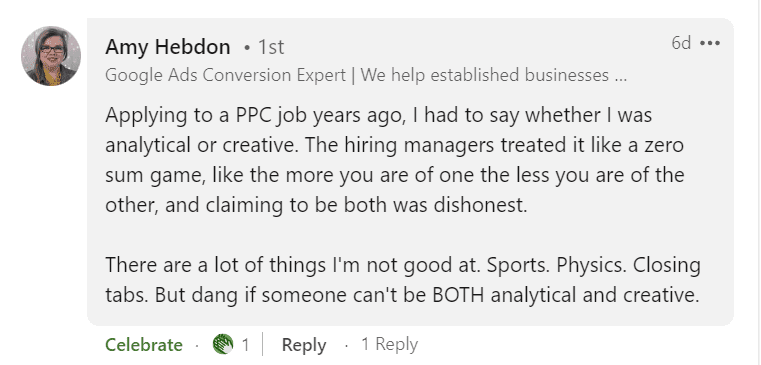
Here are some experts who value creativity:
Screenshot from author, LinkedIn, April 2024
Screenshot from author, LinkedIn, April 2024
Ad Network Knowledge
Ad network expertise is valuable, but adaptability is paramount as platforms evolve rapidly.
Some agencies will have specialists, while others hire folks they expect to be passable at every network they service. It’s important to understand what workflow will enable you to succeed.
If you’re happy working with all platforms, then don’t shy away from it. However, if you do better in focusing on one aspect of PPC, that’s totally valid. Just know it might limit your ability to get hired into smaller “familyesque” agencies.
Understanding auction dynamics and bidding strategies is crucial.
Many of us who entered the industry when manual bidding was more popular have an unfair advantage over those who came in during the Smart Bidding era (i.e., anything from 2020).
This is because manual bidding requires you to think about the mechanics of each ad platform’s auction and how you could use those mechanics to your advantage in building account structure.
Knowing what to track and allocating appropriate budgets are key considerations.
Understanding that some networks require more conversions than others to run (e.g., Meta Ads’ 50 in a 7-day period vs. Google Ads’ 15 in a 30-day period) should influence what you choose to track, as well as how you report the data.
Additionally, if you are under or over budget, you’ll set yourself up to fail. Knowing which channels require a big investment upfront and what the breaking point for each network is (either on underspending or spending too much) is critical.
Awareness of potential pitfalls, such as false positives or negatives, enhances campaign effectiveness. For example, it’s important to know how to check if automatically applying recommendations is on and what tasks it’s on for.
It’s worth noting that none of the experts who chimed in on the poll made a clear case for ad network knowledge specifically.
Willingness To Test
Success in PPC requires openness to experimentation and a willingness to adapt. While this wasn’t one of the criteria in the poll, it was one of the most popular traits experts look for in hiring.
Perfectionism can hinder progress in a fast-changing environment. Testing new ideas and embracing failure as an opportunity for growth are essential.
While analytical skills aid in test design, empathy and creativity are equally vital for devising effective experiments.
Here is an expert who favors a willingness to test:
Screenshot from author, LinkedIn, April 2024
Cultural Fit
Cultural alignment with an agency fosters productivity and job satisfaction. However, you can only achieve that by being honest with yourself about what you want and the mechanics of how you work.
Agencies demand intense effort and collaboration, making compatibility with colleagues crucial.
Anyone looking to make the shift from in-house to agency needs to be prepared for a much faster pace of work and a lot more agency.
Open communication with leadership regarding preferred management and learning styles will ensure a positive working relationship.
Respect for peers and a supportive atmosphere contribute to a fulfilling work environment.
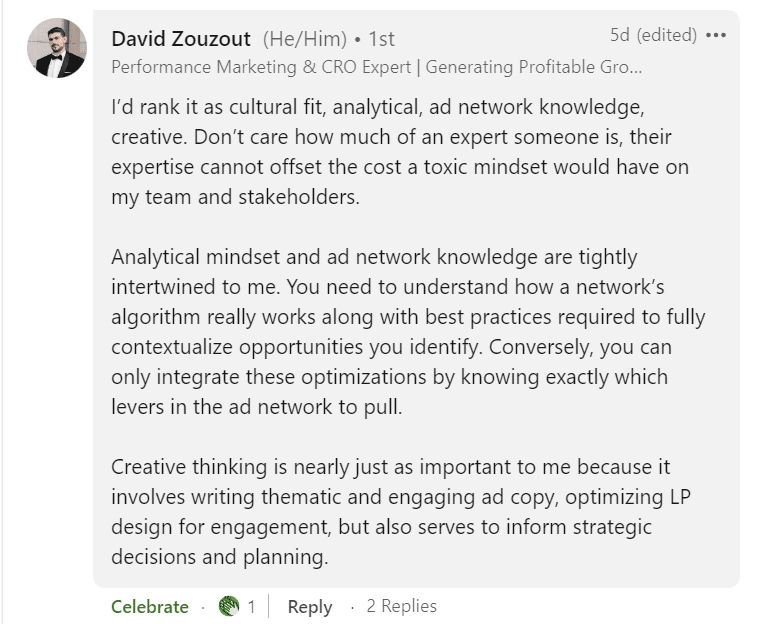
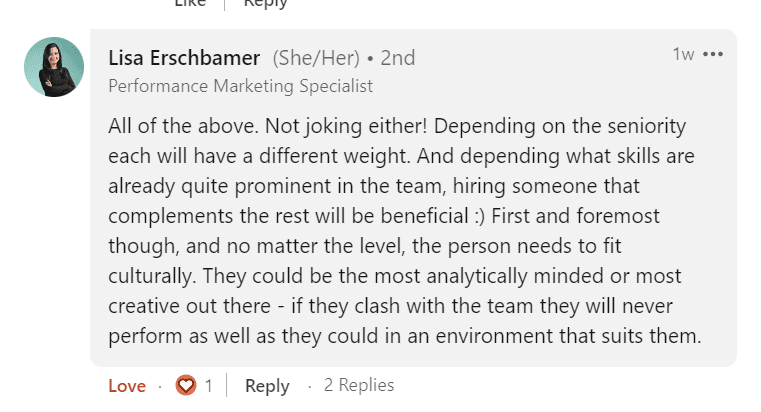
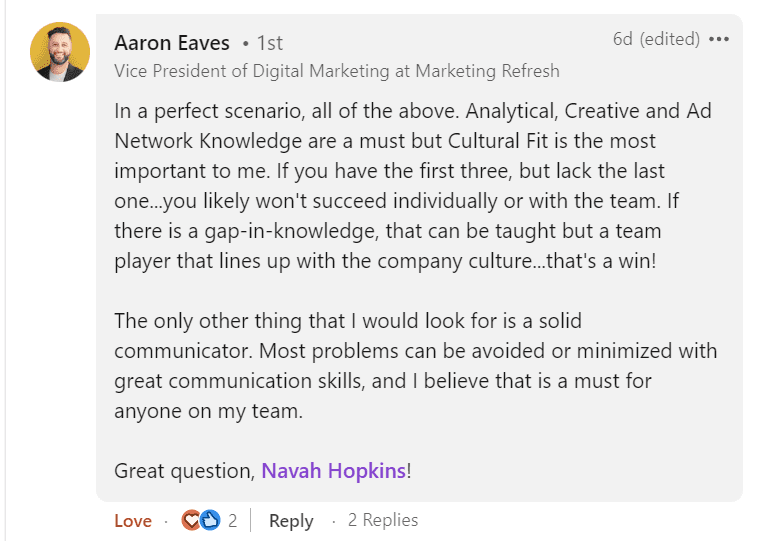
Here are a few thoughts on cultural fit from polled experts:
Screenshot from author, LinkedIn, April 2024
Screenshot from author, LinkedIn, April 2024
Screenshot from author, LinkedIn, April 2024
Final Thoughts
Navigating the current job market can be challenging, but understanding industry needs and honing relevant skills increases your chances of success.
Balancing technical proficiency with creativity and cultural fit is essential for thriving in a PPC role. By aligning with market demands and showcasing your strengths, you can secure rewarding opportunities in the field.
Have a question you’d like us to address? Fill out the form!
More resources:
Featured Image: Paulo Bobita/Search Engine Journal
You’ll be able to reactivate them; however, if they remain at zero impressions for three months, they’ll be paused again.
This news was met with mixed reviews.
Some (including me) are thrilled that Google is taking a proactive step to help advertisers maintain cleaner and more efficient accounts.
Others lament yet another moment of lost control in the ad account.
Google doesn’t do anything without a data-backed reason, so in this installment of Ask the PPC, we’re going to dive into:
What’s the difference between a zero impression and low search volume keywords?
Is 13 months enough time for an ad group to have zero impressions to get paused?
What can you do to prepare and optimize going forward?
What’s The Difference Between Zero Impression And Low Search Volume?
Google has made it clear that including low search volume keywords in your account will not harm your quality score.
Low search volume keywords can get impressions, clicks, and conversions; they just don’t have high search volume.
This can be because:
They are exact match keywords. Exact variants of keywords are high risk for low search volume (even if there’s a ton of volume for the keyword concept itself).
They represent a super niche industry. If not enough people know to search for the thing, there won’t be as much volume.
A zero impression keyword could be because it’s low search volume. However, it could also be a lost keyword.
Google has been known to struggle to get budget to keywords and ad groups in large account structures (i.e., more than 20 keywords in the ad group and more than 10 ad ad groups in the campaign).
There are a few reasons for this:
If you’re using Smart Bidding (max conversions or max conversion values), there will be inevitable winners and losers in the initial ramp-up of the account. The more a keyword proves itself, the harder it will be for any other keywords sharing an ad group/campaign to get access to the budget.
Keywords with conflicting auction prices and end users will struggle to get access the budget they need without compromising other parts of the campaign. For example, if a high-value keyword concept is in the same ad group or campaign as a low-value but high-volume one, there might not be enough budget for that keyword.
Some people like to test out all variants of a keyword to see which performs best. However, Google will see these as duplicates and will sometimes hit errors in serving any of the keywords at all.
So to sum up, a zero impression keyword (that would inform a zero impression ad group) could have many structural reasons behind the lack of serving.
Low search volume is based on demand or match type.
Since the former could serve if it were in a structure that supported it, it could hurt your account to leave those keywords active. The latter has been confirmed to have no negative impact.
Is 13 Months Enough Time?
The next consideration is whether Google is giving enough time to ad groups before pausing.
Short answer: yes.
Long answer: there are a few reasons why 13 months is a very clever amount of time to give an account.
13 months means you’ll have the full seasonality view.
An account with 13 months of data means it’s been running for longer than a year.
There is no “learning” to worry about.
If an ad group hasn’t had impressions in 13 months, it’s time to let it go.
Either move it to another campaign or let the idea get picked up by sitelinks.
What Can You Do To Prepare And Optimize?
Take stock of your campaigns and sort your ad groups by impressions.
If you see an active ad group that has zero impressions with the all-time view, odds are it’s going to be impacted.
Keep an eagle eye on change history to see if any ad groups do get impacted.
However, if your account structure tends to get average to above average impression share, odds are your ad groups will be fine.
Have a question about PPC? Submit via this form or tweet me @navahf with the #AskPPC hashtag. See you next month!
More resources:
Featured Image: Paulo Bobita/Search Engine Journal