A woman’s uterus has been kept alive outside the body for the first time

<div data-chronoton-summary="

  • A uterus survived outside the body for the first time: Scientists in Spain kept a donated human uterus alive for 24 hours using a machine that mimics the body’s circulatory system, pumping modified blood through the organ.
  • The researchers hope to someday keep a uterus alive for a full menstrual cycle: Researchers also want to study how embryos implant into the uterine lining, by observing the process in a living organ outside the body.
  • Bigger ambitions are already on the table: The team’s founder envisions a future where a machine like this could gestate a human fetus entirely outside the body, offering a new path to parenthood for those unable to carry a pregnancy.

” data-chronoton-post-id=”1134766″ data-chronoton-expand-collapse=”1″ data-chronoton-analytics-enabled=”1″>

“Think of this as a human body,” says Javier González.

In front of me is essentially a metal box on wheels. Standing at around a meter in height, it reminds me of a stainless-steel counter in a restaurant kitchen. It is covered in flexible plastic tubing—which act as veins and arteries—connecting a series of transparent containers, the organs of this machine.

What makes it extra special is the role of the cream-colored tub that sits on its surface. Ten months ago, González, a biomedical scientist who developed the device with his colleagues at the Carlos Simon Foundation, carefully placed a freshly donated human uterus in the tub. The team connected it to the device’s tubes and pumped in modified human blood.

The device kept the uterus alive for a day—a new feat that could represent the first step to the long-term maintenance of uteruses outside the human body. The work has not yet been published. 

The team members want to keep donated human uteruses alive long enough to see a full menstrual cycle. They hope this will help them study diseases of the uterus and learn more about how embryos burrow their way into the organ’s lining at the start of a pregnancy. They also hope that future iterations of their device might one day sustain the full gestation of a human fetus.

The machine is technically called PUPER, which stands for “preservation of the uterus in perfusion.” But González’s colleague Xavier Santamaria says the team has adopted a nickname for it: “We call it ‘Mother.’”

The organ in the machine

González and Santamaria, medical vice president of the Carlos Simon Foundation, demonstrated how the device might work when I visited the foundation in Valencia, Spain, earlier this month (although it held no organs on that day). 

Both are interested in learning more about implantation, the moment at which an embryo attaches itself to the lining of a uterus—essentially, the very first moment of pregnancy.

The foundation’s founder and director, Carlos Simon, believes it’s a sticking point in IVF: Scientists have made many improvements to the technology over the years, but the failure of embryos to implant underlies plenty of unsuccessful IVF cycles, he says. Being able to carefully study how the process works in a real, living organ might give the team a better idea of how to prevent those failures.
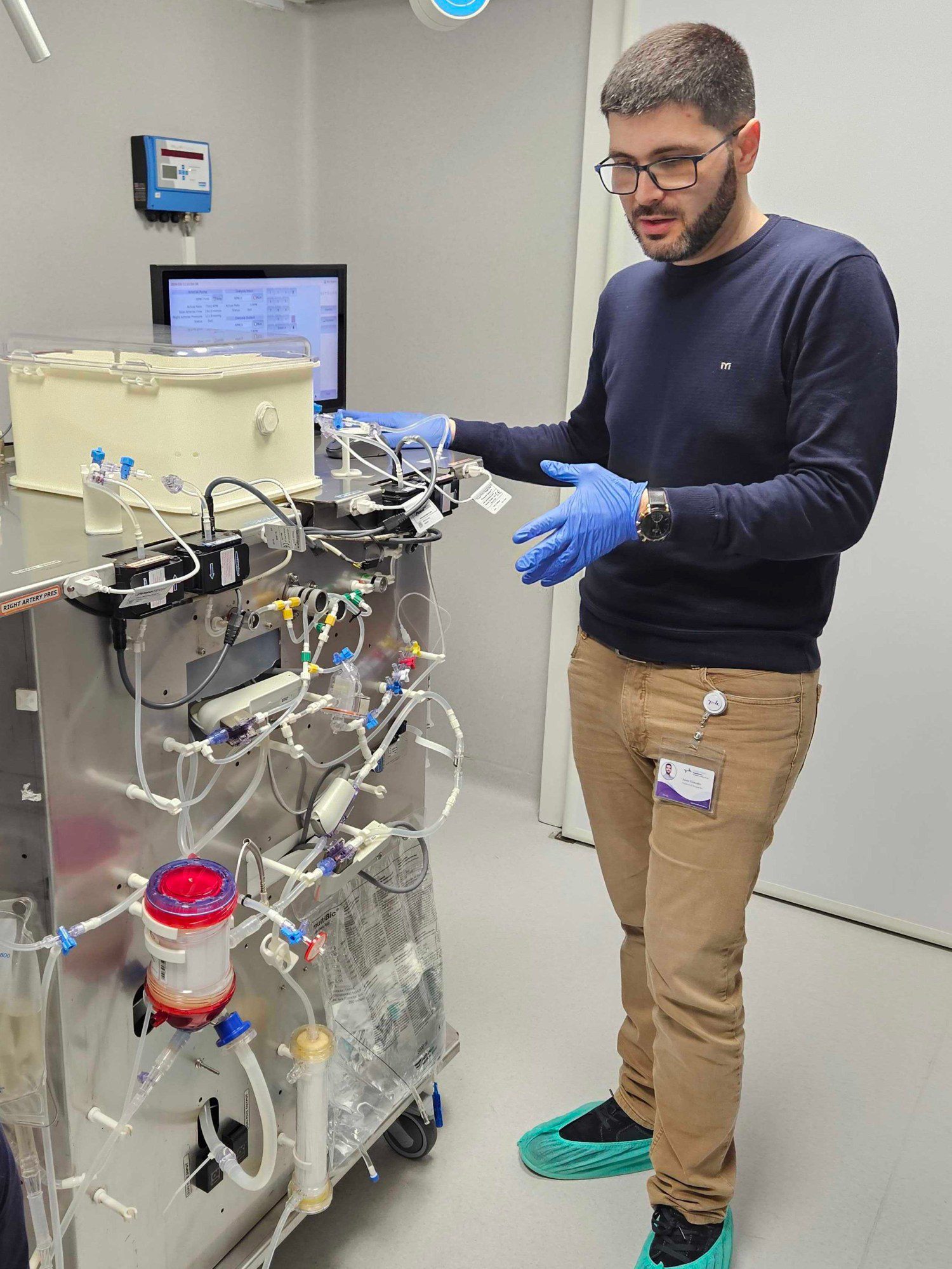
a person in gloves stands next to a machine with lots of tubing coming in and out of the metal exterior

JESS HAMZELOU
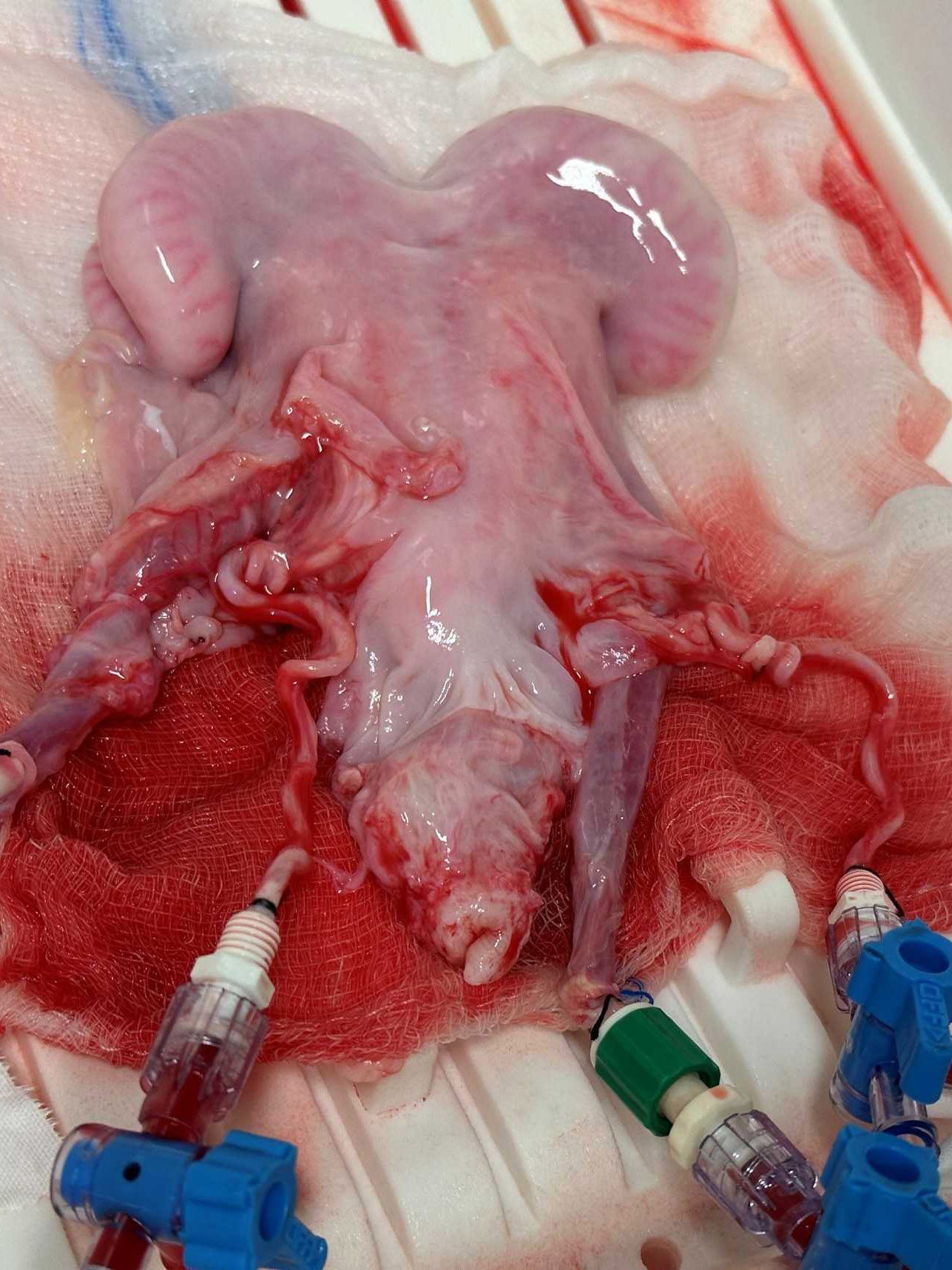
a sheep uterus resting on gauze connected to several tubes

JAVIER GONZALES/CARLOS SIMON FOUNDATION

Javier González demonstrates the perfusion machine. A previous iteration of the device kept a sheep’s uterus (right) alive for a day.

The team took inspiration from advances in technologies designed to maintain donated organs for transplantation. In recent years, researchers around the world have created devices that deliver nutrients and filter waste so that organs can survive longer after being removed from donors’ bodies.

The main goal here is to buy time. A human organ might last only a matter of hours outside the body, so a transplant may require frantic preparation for the recipient, sometimes in the middle of the night. With a little more time, doctors could find better donor-patient matches and potentially test the quality of donated organs.

This approach is called normothermic or machine perfusion, and it is already being used clinically for some liver, kidney, and heart transplants.

The team at the Carlos Simon Foundation built a similar machine for uteruses. A blood bag hangs on one side. From there, blood is ferried via plastic tubing to a pump, which functions as the heart. The pump shunts the blood through an oxygenator, which adds oxygen and removes carbon dioxide as the lungs would in a human body.

The blood is warmed and passed through sensors that monitor the levels of glucose and oxygen, along with other factors. It passes through a “kidney” to remove waste. And finally the blood reaches the uterus, hooked up to its own plastic “arteries” and “veins.” The organ itself sits at a tilt, just as in the body, and is kept in a humid environment to stay moist.

Mother’s first uterus

The team first began testing an early prototype of the device with sheep uteruses around four years ago. That meant carting the machine to an animal research center in Zaragoza, around 200 miles away. Over the course of the preliminary study, veterinary surgeons removed the uteruses of six sheep and hooked them up to the machine. They kept each uterus alive for a day, using blood from the same animals.

After the sheep experiments, the researchers carted their machine back to Valencia and modified it to achieve its current incarnation, “Mother.” They started working with a local hospital that performed hysterectomies. And in May last year, they were offered their first human uterus.

The team needed to be quick. “You need to put [the uterus in the machine] within a couple of hours, maximum, of the extraction,” says Santamaria. He and his colleagues also needed to connect the uterus’s blood vessels to the tubing delicately, taking care to avoid any blockages (clotting is a major challenge in organ perfusion). The organ was hooked up to human blood obtained from a blood bank.

It seemed to work—at least temporarily. “We kept it alive for one day,” says Santamaria.

“As a proof of concept, it is impressive,” says Keren Ladin, a bioethicist who has focused on organ transplantation and perfusion at Tufts University. “These are early days.”

It might not sound like much, but 24 hours is a long time for an organ to be out of the body. Maintaining a donated uterus for that long could expand the options for uterus transplant, a fairly new procedure offered to some people who want to be pregnant but don’t have a functional uterus, says Gerald Brandacher, professor of experimental and translational transplant surgery at the Medical University of Innsbruck in Austria.

“It is better than what we currently have, because we have only a couple of hours,” he says. So far, most uterus transplants have been planned operations involving organs from living donors. A technology like this could allow for the use of more organs from deceased donors, he says.

That work is “not in the immediate pipeline” for the team in Spain, says Santamaria. “We are working on other problems.”

Pregnancy in the lab?

Santamaria, González, and their colleagues are more interested in using sustained human uteruses for research. 

They’ve mounted a camera to a wall in the corner of the room, pointed at their machine. It allows the team to monitor “Mother” remotely, and to check if any valves disconnect. (That happened once before—a spike in pressure caused the blood bag to come loose, spilling a liter of blood on the floor, Santamaria says.)

They’d like to be able to keep their uteruses alive for around 28 days to study the menstrual cycle and disorders that affect the uterus, like endometriosis and fibroids.

It won’t be easy to maintain a uterus for that long, cautions Brandacher. As far as he knows, no one has been able to maintain a liver for more than seven days. “No studies out there … have shown 30-day survival in a machine perfusion circuit,” he says.

But it’s worth the effort. The team’s main interest is learning more about how embryos implant in the uterine lining at the start of a pregnancy. They hope to be able to test the process in their outside-the-body uteruses.

They won’t be allowed to use human embryos for this, says González—that would cross an ethical boundary. Instead, they plan to use embryo-like structures made from stem cells. The structures closely resemble human embryos but are created in a lab without sperm or eggs.

Simon himself has grander ambitions.

He sees a future in which a machine like “Mother” will be able to fully gestate a human, all the way from embryo to newborn. It could offer a new path to parenthood for people who don’t have a uterus, for example, or who are not able to get pregnant for other reasons.

He appreciates that it sounds futuristic, to say the least. “I don’t know if we will end up having pregnancies inside of the uterus outside of the body, but at least we are ready to understand all the steps to do that,” he says. “You have to start somewhere.”

Here’s why some people choose cryonics to store their bodies and brains after death

This week I reported on some rather unusual research that focuses on the brain of L. Stephen Coles.

Coles was a gerontologist who died from pancreatic cancer in 2014. He had spent the latter part of his career specializing in human longevity. And before he died, he decided to have his brain preserved by a cryonics facility. Today, it’s being stored at −146 °C at a center in Arizona, where it sits covered in a thin layer of frost.

Coles also tasked his longtime friend Greg Fahy with studying pieces of his brain to see how they had fared (partly because he was worried his brain might crack). Fahy, a renowned cryobiologist, has found that the brain is “astonishingly well preserved.”

But that doesn’t mean Coles could be reanimated. Over the past few years, I’ve spoken to people who run cryonics facilities, study cryopreservation, or just want to be cryogenically stored. All those I’ve spoken to acknowledge that the chance they’ll one day be brought back to life is vanishingly small. So why do they do it?

The first person to be cryonically preserved was James Hiram Bedford, a retired psychology professor who died of kidney cancer in 1967. Affiliates of the Cryonics Society of California, an organization headed by a charming TV repairman with no scientific or medical training, perfused his body with cryoproctective chemicals to protect against harmful ice formation and “quick-froze” him.

Today, Bedford’s body is still in storage at Alcor, a cryonics facility based in Scottsdale, Arizona. It’s one of a handful of organizations that offer to collect, preserve, and store a person’s whole body or just their brain—pretty much indefinitely. It’s where Coles’s brain is stored.

Both men died from cancer. Medicine could not cure them. But in the future, who knows? One of the premises of cryonics is that modern medicine will continue to advance over time. Cancer death rates have declined significantly in the US since the early 1990s. I don’t know what exactly drove Coles and Bedford to their decisions, but they might have hoped to be reanimated at some point in the future when their cancers became curable.

Others simply don’t want to die, period. Last year, I attended Vitalist Bay, a gathering for people who believe that life is good and that death is “humanity’s core problem.” Emil Kendziorra, CEO of the cryonics organization Tomorrow.Bio, spoke at the event, and a healthy interest in cryonics was obvious among the attendees.

Many of them believe that science will find a way to “obviate” aging. And some were keen on the idea of being preserved until that happens. Think of it as a way to cheat not only death but aging itself.

This sentiment might have support beyond the realms of Vitalist Bay, according to research by Kendziorra and his colleagues. In 2021, they surveyed 1,478 US-based internet users who were recruited via Craigslist. They found that men were more aware of cryonics than women, and more optimistic about its outcomes. Just over a third of the men who completed the survey expressed interest “a desire to live indefinitely.”

Still, cryonics is a niche field. Worldwide, only around 5,000 or 6,000 people have signed up for cryopreservation when they die, Kendziorra told me when we chatted at Vitalist Bay. He also told me that his company gets between 20 and 50 new signups every month.

And there are plenty of reasons why people don’t do it. A small fraction of the people who responded to Kendziorra’s survey said that they thought the idea of cryonics was dystopian, and some even said it should be illegal.

Then there’s the cost. Alcor charges $80,000 to store a person’s brain, and around $220,000 to store a whole body. Tomorrow.Bio’s charges are slightly higher. Many people, including Kendziorra himself, opt to cover this cost via a life insurance policy.

Perhaps the main reason people don’t opt for cryonic preservation is that we don’t have any way to bring people back. Bedford has been in storage for more than 50 years, Coles for more than a decade. All the scientists I’ve spoken to say the likelihood of reanimating remains like theirs is vanishingly small.

The fact that the possibility—however tiny—is above zero is enough for some, including Nick Llewellyn, the director of research and development at Alcor. As a scientist, he says, he acknowledges that the chances reanimation will actually work are “pretty low.” Still, he’s interested in seeing what the future will look like, so he has signed himself up for the cryonic preservation of his brain.

But Shannon Tessier, a cryobiologist at Massachusetts General Hospital, tells me that she wouldn’t sign up for cryonic preservation even if it worked. “It turns into a philosophical question,” she says.

“Do I want to be revived hundreds of years later when my family is gone and life is different?” she asks. “There are so many complicated philosophical, societal, [and] legal complications that need to be thought through.”

This article first appeared in The Checkup, MIT Technology Review’s weekly biotech newsletter. To receive it in your inbox every Thursday, and read articles like this first, sign up here.

This scientist rewarmed and studied pieces of his friend’s cryopreserved brain

L. Stephen Coles’s brain sits cushioned in a vat at a storage facility in Arizona. It has been held there at a temperature of around −146 degrees °C for over a decade, largely undisturbed.

That is, apart from the time, a little over a year ago, when scientists slowly lifted the brain to take photos of it. Years before, the team had removed tiny pieces of it to send to Coles’s friend. Coles, a researcher who studied aging, was interested in cryogenics—the long-term storage of human bodies and brains in the hope that they might one day be brought back to life. Before he died, he asked cryobiologist Greg Fahy to study the effects of the preservation procedure on his brain. Coles was especially curious about whether his cooled brain would crack, says Fahy.

Coles’s brain was preserved shortly after he died in 2014, but Fahy has only recently got around to analyzing those samples. He says that Coles’s brain is “astonishingly well preserved.”

“We can see every detail [in the structure of the brain biopsies],” says Fahy, who is chief scientific officer at biotech companies Intervene Immune and 21st Century Medicine (where he is also executive director). He hopes this means that Coles’s brain still stands a chance of reanimation at some point in the future.

Other cryobiologists are less optimistic. “This brain is not alive,” says John Bischof, who works on ways to cryopreserve human organs at the University of Minnesota.

Still, Fahy’s research could help provide a tool to neuroscientists looking for new ways to study the brain. And while human reanimation after cryopreservation may be the stuff of science fiction, using the technology to preserve organs for transplantation is within reach.

Banking a brain

Coles, a gerontologist who spent the latter part of his career studying human longevity, opted to have his brain cryogenically preserved when he died of pancreatic cancer.

After he was declared dead, Coles’s body was kept at a low temperature while he was transferred to Alcor, a cryonics facility in Arizona. His head was removed from his body, and a team perfused his brain with “cryoprotective” chemicals that would prevent it from freezing. They then removed it from his skull and cooled it to −146 °C.

Coles had another request. As a scientist, he wanted his cryopreserved brain to be studied. Hundreds of people have opted to have their brains—with or without the rest of their bodies—stored at cryonic facilities (the remains of 259 individuals are currently stored as either whole bodies or heads at Alcor). But scientists know very little about what has happened to those brains, and there’s no evidence to suggest they could be revived. Coles had met Fahy through their shared interest in longevity, and he asked him to investigate.

“He thought that if he had himself cryopreserved, we could learn from his brain whether cracking was going to happen or not,” says Fahy. That’s what typically happens when organs are put into liquid nitrogen at −196 °C, he says. The extreme cooling creates “tension in the system,” he says. “If you tap it, it’ll just shatter.” This cracking is less likely at the slightly warmer temperatures used for preservation. 

Fahy was involved from the time the samples were taken.

“We had Greg Fahy on the phone coordinating the whole thing, [including] where the biopsies were taken,” says Nick Llewellyn, who oversees research at Alcor. (Llewellyn was not at Alcor at the time but has discussed the procedure with his colleagues.) The biopsied samples were stored in liquid nitrogen and earmarked for Fahy. The rest of the brain was cooled and kept in a temperature-controlled storage container at Alcor.

Bouncing back

It wasn’t until years later that Fahy got around to studying those biopsies. He was interested in how the cryoprotectant—which is toxic—might have affected the brain cells. Previous research has shown that flooding tissues with cryoprotectant can distort the structure of cells, essentially squashing them.

It’s one of the many challenges facing cryobiologists interested in storing human tissues at very low temperatures. While the vitrification of eggs and embryos—which cools them to −196 °C and essentially turns them to glass—has become relatively routine (thanks in part to Fahy’s own work on mouse embryos back in the 1980s), preserving whole organs this way is much harder. It is difficult to cool bigger objects in a uniform way, and they are prone to damaging ice crystal formation, even when cryoprotectants are used, as well as cracking.

Fahy found that when he rewarmed and rehydrated Coles’s brain cells, their structure seemed to bounce back to some degree. Fahy demonstrated the effect over a Zoom call: “It looks like this,” he said with his hands as if in prayer, “and it goes back to this,” he added, connecting his forefingers and thumbs to create a triangle shape.

The structure of the tissue looks pretty intact, too, to him at least, though he admits a purist expecting a pristine structure would be disappointed. He and his colleagues have been able to see remarkable details in the cells and their component parts. “There’s nothing we don’t see,” says Fahy, who has shared his results, which have not yet been peer reviewed, at the preprint server bioRxiv. “It seems that [by taking the cryogenic approach] you can preserve everything.”

As for the cracking, “from what I was told, no cracks were observed [by the team that initially preserved the brain],” says Fahy. The team at Alcor took photographs of the brain when they took the biopsies, but the images were later lost due to a server malfunction, he says. In the more recent photos, the brain is covered in a layer of frost, which makes it impossible to see if there are any cracks, he adds. Attempts to remove the frost might damage the brain, so the team has decided to leave it alone, he says.

Back to life?

Fahy and his colleagues used chemicals to “fix” Coles’s brain samples once they had been rewarmed. That process is typically used to stop fresh tissue samples from decaying, but it also effectively kills them.

But he thinks his results suggest that it might be possible to cryopreserve small pieces of brain tissue and reanimate them to learn more about how they work. Functional recovery seems to be possible in mice—a few weeks ago a team in Germany showed that they were able to revive brain slices that had been stored at −196 °C. Those brain samples showed electrical activity after being cooled and rewarmed.

If cryobiologists can achieve the same feat with human brain samples, those samples could provide neuroscientists with new insights into how living brains work.

Brain cryopreservation “can capture a little bit more of the complexities of the brain,” says Shannon Tessier, a cryobiologist at Massachusetts General Hospital who is developing technologies to preserve hearts, livers, and kidneys for transplantation. “[Being] able to use human brains from deceased individuals [could] add another layer to the research tool kit,” she says.

And Fahy’s paper shows “what happens when we try and vitrify a one-liter, dense, massive goop,” says Matthew Powell-Palm, a cryobiologist at Texas A&M University. “We now have a strong indication that quite large [tissues and organs] can be vitrified by perfusion [without forming too much ice],” he says.

All of the scientists I spoke to, including Fahy, are also working on ways to cool and preserve organs for transplantation. These are in short supply partly because once an organ is removed from a donor, it usually must be transplanted into its recipient within a matter of hours. 

Cryopreservation could buy enough time to make use of more organs, find better organ-donor matches, and potentially even prepare recipients’ immune systems and save them from a lifetime of immunosuppressant drugs, says Bischof, who has also been developing new technologies for organ cryopreservation.

Bischof, Fahy, and others have made huge strides in their attempts so far, and they have managed to remove, cryopreserve, and transplant organs in rabbits and rats, for example. “We’re at the cusp of human-scale organ cryopreservation,” says Bischof.

But when it comes to preserving brains, donation isn’t the aim. Coles had hoped to be reanimated—a far more ambitious goal that hinges on the ability to restore brain function.

Brain reanimation

Fahy acknowledges that while the structure of Coles’s brain samples did bounce back, there is no evidence to suggest the cells could be brought back to life and regain electrical activity and a functioning metabolism. “Restoring it to function … that’s a whole other story,” he says.

But he thinks that successful cryopreservation of the brain “is the gateway to human suspended animation, which [could allow] us to get to the stars someday.” Figuring out human preservation would also allow people to avoid death through what he calls “medical time travel”—journeying to an unspecified time in the future when science will have found a cure for whatever was due to kill that person. “That would be an ultimate goal to pursue,” he says.

“I put the chances [of brain reanimation] at pretty low,” says Alcor’s own Llewellyn. “The kind of technology we need is practically unfathomable.”

The brains already in storage at Alcor and other facilities have been preserved in ways that “have not been validated to work for reanimation,” says Tessier. An expectation that they’ll one day be brought back to life in some form is “quite a jump of faith and hope that’s not based on science,” she says.

As Powell-Palm puts it: “There are so many ways in which those neurons could be toast.”

Mind-altering substances are (still) falling short in clinical trials

This week I want to look at where we are with psychedelics, the mind-altering substances that have somehow made the leap from counterculture to major focus of clinical research. Compounds like psilocybin—which is found in magic mushrooms—are being explored for all sorts of health applications, including treatments for depression, PTSD, addiction, and even obesity.

Over the last decade, we’ve seen scientific interest in these drugs explode. But most clinical trials of psychedelics have been small and plagued by challenges. And a lot of the trial results have been underwhelming or inconclusive.

Two studies out earlier this week demonstrate just how difficult it is to study these drugs. And to my mind, they also show just how overhyped these substances have become.

To some in the field, the hype is not necessarily a bad thing. Let me explain.

The two new studies both focus on the effectiveness of psilocybin in treating depression. And they both attempt to account for one of the biggest challenges in trialing psychedelics: what scientists call “blinding.”

The best way to test the effectiveness of a new drug is to perform a randomized controlled trial. In these studies, some volunteers receive the drug while others get a placebo. For a fair comparison, the volunteers shouldn’t know whether they’re getting the drug or placebo.

That is almost impossible to do with psychedelics. Almost anyone can tell whether they’ve taken a dose of psilocybin or a dummy pill. The hallucinations are a dead giveaway. Still, the authors behind the two new studies have tried to overcome this challenge.

In one, a team based in Germany gave 144 volunteers with treatment-resistant depression either a high or low dose of psilocybin or an “active” placebo, which has its own physical (but not hallucinatory) effects, along with psychotherapy. In their trial, neither the volunteers nor the investigators knew who was getting the drug.

The volunteers who got psilocybin did show some improvement—but it was not significantly any better than the improvement experienced by those who took the placebo. And while those who took psilocybin did have a bigger reduction in their symptoms six weeks later, “the divergence between [the two results] renders the findings inconclusive,” the authors write.

Not great news so far.

The authors of the second study took a different approach. Balázs Szigeti at UCSF and his colleagues instead looked at what are known as “open label” studies of both psychedelics and traditional antidepressants. In those studies, the volunteers knew when they were getting a psychedelic—but they also knew when they were getting an antidepressant.

The team assessed 24 such trials to find that … psychedelics were no more effective than traditional antidepressants. Sad trombone.

“When I set up the study, I wanted to be a really cool psychedelic scientist to show that even if you consider this blinding problem, psychedelics are so much better than traditional antidepressants,” says Szigeti. “But unfortunately, the data came out the other way around.”

His study highlights another problem, too.

In trials of traditional antidepressant drugs, the placebo effect is pretty strong. Depressive symptoms are often measured using a scale, and in trials, antidepressant drugs typically lower symptoms by around 10 points on that scale. Placebos can lower symptoms by around eight points.

When a drug regulator looks at those results, the takeaway is that the antidepressant drug lowers symptoms by an additional two points on the scale, relative to a placebo.

But with psychedelics, the difference between active drug and placebo is much greater. That’s partly because people who get the psychedelic drug know they’re getting it and are expecting the drug to improve their symptoms, says David Owens, emeritus professor of clinical psychiatry at the University of Edinburgh, UK.

But it’s also partly because of the effect on those who know they’re not getting it. It’s pretty obvious when you’re getting a placebo, says Szigeti, and it can be disappointing. Scientists have long recognized the “nocebo” effect as placebo’s “evil twin”—essentially, when you expect to feel worse, you will.

The disappointment of getting a placebo is slightly different, and Szigeti calls it the “knowcebo effect.” “It’s kind of like a negative psychedelic effect, because you have figured out that you’re taking the placebo,” he says.

This phenomenon can distort the results of psychedelic drug trials. While a placebo in a traditional antidepressant drug trial improves symptoms by eight points, placebos in psychedelic trials improve symptoms by a mere four points, says Szigeti.

If the active drug similarly improves symptoms by around 10 points, that makes it look as though the psychedelic is improving symptoms by around six points compared with a placebo. It “gives the illusion” of a huge effect, says Szigeti.

So why have those smaller trials of the past received so much attention? Many have been published in high-end journals, accompanied by breathless press releases and media coverage. Even the inconclusive ones. I’ve often thought that those studies might not have seen the light of day if they’d been investigating any other drug.

“Yeah, nobody would care,” Szigeti agrees.

It’s partly because people who work in mental health are so desperate for new treatments, says Owens. There has been little innovation in the last 40 years or so, since the advent of selective serotonin reuptake inhibitors. “Psychiatry is hemmed in with old theories … and we don’t need another SSRI for depression,” he says. But it’s also because psychedelics are inherently fascinating, says Szigeti. “Psychedelics are cool,” he says. “Culturally, they are exciting.”

I’ve often worried that psychedelics are overhyped—that people might get the mistaken impression they are cure-alls for mental-health disorders. I’ve worried that vulnerable people might be harmed by self-experimentation.

Szigeti takes a different view. Given how effective we know the placebo effect can be, maybe hype isn’t a totally bad thing, he says. “The placebo response is the expectation of a benefit,” he says. “The better response patients are expecting, the better they’re going to get.” Tempering the hype might end up making those drugs less effective, he says.

“At the end of the day, the goal of medicine is to help patients,” he says. “I think most [mental health] patients don’t care whether they feel better because of some expectancy and placebo effects or because of an active drug effect.”

Either way, we need to know exactly what these drugs are doing. Maybe they will be able to help some people with depression. Maybe they won’t. Research that acknowledges the pitfalls associated with psychedelic drug trials is essential.

“These are potentially exciting times,” says Owens. “But it’s really important we do this [research] well. And that means with eyes wide open.”

This article first appeared in The Checkup, MIT Technology Review’s weekly biotech newsletter. To receive it in your inbox every Thursday, and read articles like this first, sign up here.

Peptides are everywhere. Here’s what you need to know.

MIT Technology Review Explains: Let our writers untangle the complex, messy world of technology to help you understand what’s coming next. You can read more from the series here.

Want to lose weight? Get shredded? Stay mentally sharp? A wellness influencer might tell you to take peptides, the latest cure-all in the alternative medicine arsenal. People inject them. They snort them. They combine them into concoctions with superhero names, like the Wolverine stack.  

Matt Kaeberlein, a longevity researcher, first started hearing about peptides a few years ago. “At that point it was mostly functional medicine doctors that were using peptides,” he says, referring to physicians who embrace alternative medicine and supplements. “In the last six months, it’s kind of gone crazy.”

Peptides have gone mainstream. At the health-technology startup Superpower in Los Angeles, employees can get free peptide shots on Fridays. At a health food store in Phoenix, a sidewalk sign reads, “We have peptides!” At a tae kwon do center in South Carolina, a peptide wholesaler hosts an informational evening. On social media, they’re everywhere. And that popularity seems poised to grow; Department of Health and Human Services secretary Robert F. Kennedy Jr. has promised to end the FDA’s “aggressive suppression” of peptides.

The benefits and risks of many of these compounds, however, are largely unknown. Some of the most popular peptides have never been tested in human trials. They are sold for research purposes, not human consumption. Some are illegal knockoffs of wildly successful weight-loss medicines. The vast majority come from China, a fact that has some legislators worried. Last week, Senator Tom Cotton urged the head of the FDA to crack down on illegal shipments of peptides from China. In the absence of regulatory oversight, some people are sending the compounds they purchase off for independent testing just to ensure that the product is legit. 

What is a peptide?

A peptide is simply a short string of amino acids, the building blocks of proteins. “Scientists generally think of peptides as very small protein fragments, but we don’t really have a precise cutoff between a peptide and a protein,” says Paul Knoepfler, a stem-cell researcher at the University of California, Davis. Insulin is a peptide, as is human growth hormone. So are some neurotransmitters, like oxytocin. 

But when wellness influencers talk about peptides, they’re often referring to particular compounds—formulated as injections, pills, or nasal sprays—that have become trendy lately. 

Some of these peptides are FDA-approved prescription medications. GLP-1 medicines, for example, are approved to treat diabetes and obesity but are also easily accessible online to almost anyone who wants to use them. Many sites sell microdoses of GLP-1s with claims that they can “support longevity,” reduce cognitive decline, or curb inflammation. 

Many more peptides are experimental. “The majority fall into the unapproved bucket,” says Kaeberlein, who is chief executive officer of Optispan, a Seattle-based health-care technology company focused on longevity. That bucket includes drugs that promote the release of growth hormones, like TB-500, CJC-1295, and ipamorelin, and compounds said to promote tissue repair and wound healing, like BPC-157 and GHK-Cu. It’s primarily these unapproved compounds that have raised concerns. “Anybody can set up an online shop selling research-grade peptides,” says Tenille Davis, a pharmacist and chief advocacy officer at the Alliance for Pharmacy Compounding, a trade organization representing more than 600 pharmacies. “And nobody knows what’s even in the vials.”  

It’s not just fitness gurus, biohackers, and longevity fanatics who are taking these experimental drugs. Kaeberlein recalls hearing about an acquaintance whose doctor prescribed her unapproved peptides. She was “just a typical upper-middle-class woman,” he says. “That’s when it really hit me that this has sort of gone relatively mainstream.”

What do peptides do?

All kinds of things, purportedly. GHK-Cu is supposed to help with wound healing and collagen production. BPC-157 is said to promote tissue repair and curb inflammation, TB-500 to foster blood vessel formation. Here’s the caveat: The evidence for these benefits comes largely from animal studies and online testimonials, not human trials. “There’s no human clinical evidence to show that they even do what people are claiming that they do,” says Stuart Phillips, a muscle physiologist at McMaster University in Hamilton, Ontario. “So it could be just a giant rip-off.”

Some experimental peptides probably do have beneficial wound healing properties or regenerative effects, Kaeberlein says. For BPC-157, for example, “the animal data is compelling,” he says. But there are still plenty of unknowns: What is the right dosage? How long should you take it? What’s the best way to administer it? Those are questions that can be answered only through rigorous clinical trials. In the absence of those studies, doctors “just make up their own protocols,” he says. Some consumers go the DIY route, reconstituting powdered peptides and injecting their own concoctions at home. 

So why am I seeing ads for these peptide therapies if they’re not approved? 

Federal law prohibits companies from marketing medications that haven’t been approved. That includes most peptides, which are regulated as small molecules, not dietary supplements. (Two notable exceptions are collagen peptides and creatine peptides, often sold as powders.) The law is designed to protect consumers from drugs that haven’t been proved safe and effective.

But it doesn’t stop labs from making peptides for research purposes. “Most of the peptides being consumed in the marketplace now are being sold by these online companies that are selling them labeled for research use only,” Davis says. The vials often bear disclaimers that clearly say as much: “For research use only” or “Not for human consumption.” It’s illegal to market these products for human use, but “the websites make it pretty clear that the buyers are intended to be using these products themselves,” she says.

The practice isn’t legal, but enforcement has been sporadic. “FDA sends warning letters, shuts down companies. But because it’s all online, they have a really hard time keeping up with these entities,” Davis says. And companies have plenty of incentive to keep illegally marketing the products. “They can make millions of dollars without having to spend money and time doing research,” Knoepfler says. “It’s a cash grab.”

Compounding pharmacies, which are legally allowed to create bespoke medications by mixing bulk active ingredients, often get requests to dispense peptides, but most peptides don’t meet the eligibility criteria for compounding. This has always been the case, but in 2023 the FDA explicitly added several common experimental peptides to the list of bulk substances that cannot be compounded because of safety concerns. “It put an exclamation point on policy that was already in place,” Davis says.  

Many GLP-1 medications are available from compounding pharmacies. That used to be accepted because the drugs were in short supply. Now, however, supplies of most of these medications are stable, and sellers are under increasing pressure from regulators to stop mass-marketing these drugs. 

What’s the harm in trying them? 

Peptides sold for research purposes come from labs with little regulatory oversight. “When you buy stuff online intended for research grade, you have no idea what’s in the vial that you’re getting. You have no idea the sterility practices that it was manufactured under, or what sort of impurities might be in the vial,” Davis says.

Phillips has heard some people say they send their peptides for third-party testing to ensure that they’re pure, “like it’s some kind of flex,” he says. “And I’m like, ‘Well, you just proved that this stuff lives in the shadows, for crying out loud.’”

Finnrick Analytics, a peptide-testing startup in Austin, Texas, has analyzed the purity and potency of more than 5,000 samples of 15 different peptides from 173 vendors. The results show that the quality varies substantially from vendor to vendor and even batch to batch. For example, the company tested nearly 450 samples of BPC-157 from 64 vendors. In some cases, the vials sold as BPC-157 didn’t contain the compound at all. In those that did, the purity varied from about 82% to 100%. 

Perhaps more worrying, 8% of all the peptide samples Finnrick tested had measurable levels of endotoxins, bacterial fragments that can cause fever and chills or, in larger doses, septic shock. 

The health risks aren’t just hypothetical. In 2025, two women had to be hospitalized and placed on ventilators after receiving peptide injections at a longevity conference in Las Vegas. Both recovered, and it’s still not clear whether they reacted to the peptides themselves or to some impurity in the vials. 

“The idea that all peptides are safe and all peptides are natural is just nonsense,” Kaeberlein says. “I tend to consider myself fairly libertarian when it comes to what people want to do for their health,” he adds. “If you want to take an experimental drug, that’s up to you.” But the problem with unregulated experimental therapies is that it’s exceedingly difficult to assess benefit and harm. “The relatively small percentage of people that are bad actors will be bad actors, and they will dishonestly market this stuff to people who aren’t equipped to really understand the true risks and rewards,” he says.

And, like any drug, peptides come with a risk of side effects. For approved medications, these are detailed right on the package insert. But for many experimental peptides, there hasn’t been enough research to understand what those side effects might be. Some researchers have warned that peptides that promote growth or blood vessel formation might also foster the growth of cancers.  

For competitive athletes who use peptides, meanwhile, the risks include not just possible health problems but suspension. Some peptides, like BPC-157, are banned by the World Anti-Doping Agency. 

The FDA has undergone a pretty substantial overhaul under the Trump administration. Are the regulations around peptides likely to change? 

I don’t have a crystal ball, but it seems likely. In May 2025, US health secretary Robert F. Kennedy Jr. joined the longevity enthusiast and biohacker Gary Brecka on his podcast The Ultimate Human and promised to “end the war at FDA against alternative medicine—the war on stem cells, the war on chelating drugs, the war on peptides.”

Knoepfler anticipates that Kennedy will force the FDA to allow compounding of some of the most popular peptides, like BPC-157 and GHK-Cu. “Such a step would put public health at great risk, while giving compounders and likely wellness influencers a lot more profit,” he says. 

The FDA seems intent on cracking down on GLP-1 copycats, however. In early February, commissioner Marty Makary posted on X that the agency would take “swift action against companies mass-marketing illegal copycat drugs, claiming they are similar to FDA-approved products.”

Measles cases are rising. Other vaccine-preventable infections could be next.

There’s a measles outbreak happening close to where I live. Since the start of this year, 34 cases have been confirmed in Enfield, a northern borough of London. Most of those affected are children under the age of 11. One in five have needed hospital treatment.

It’s another worrying development for an incredibly contagious and potentially fatal disease. Since October last year, 962 cases of measles have been confirmed in South Carolina. Large outbreaks (with more than 50 confirmed cases) are underway in four US states. Smaller outbreaks are being reported in another 12 states.

The vast majority of these cases have been children who were not fully vaccinated. Vaccine hesitancy is thought to be a significant reason children are missing out on important vaccines—the World Health Organization described it as one of the 10 leading threats to global health in 2019. And if we’re seeing more measles cases now, we might expect to soon see more cases of other vaccine-preventable infections, including some that can cause liver cancer or meningitis.

Some people will always argue that measles is not a big deal—that infections used to be common, and most people survived them and did just fine. It is true that in most cases kids do recover well from the virus. But not always.

Measles symptoms tend to start with a fever and a runny nose. The telltale rash comes later. In some cases, severe complications develop. They can include pneumonia, blindness, and inflammation of the brain. Some people won’t develop complications until years later. In rare cases, the disease can be fatal.

Before the measles vaccine was introduced, in 1963, measles epidemics occurred every two to three years, according to the WHO. Back then, around 2.6 million people died from measles every year. Since it was introduced, the measles vaccine is thought to have prevented almost 59 million deaths.

But vaccination rates have been lagging, says Anne Zink, an emergency medicine physician and clinical fellow at the Yale School of Public Health. “We’ve seen a slow decline in people who are willing to get vaccinated against measles for some time,” she says. “As we get more and more people who are at risk because they’re unvaccinated, the higher the chances that the disease can then spread and take off.”

Vaccination rates need to be at 95% to prevent measles outbreaks. But rates are well below that level in some regions. Across South Carolina, the proportion of kindergartners who received both doses of the MMR vaccine, which protects against measles as well as mumps and rubella, has dropped steadily over the last five years, from 94% in 2020-2021 to 91% in 2024-2025. Some schools in the state have coverage rates as low as 20%, state epidemiologist Linda Bell told reporters last month.

Vaccination rates are low in London, too. Fewer than 70% of children have received both doses of their MMR by the time they turn five, according to the UK Health Security Agency. In some boroughs, vaccination rates are as low as 58%. So perhaps it’s not surprising we’re seeing outbreaks.

The UK is one of six countries to have lost their measles elimination status last month, along with Spain, Austria, Armenia, Azerbaijan, and Uzbekistan. Canada lost its elimination status last year.

The highly contagious measles could be a bellwether for other vaccine-preventable diseases. Zink is already seeing signs. She points to a case of polio that paralyzed a man in New York in 2022. That happened when rates of polio vaccination were low, she says. “Polio is a great example of … a disease that is primarily asymptomatic, and most people don’t have any symptoms whatsoever, but for the people who do get symptoms, it can be life-threatening.”

Then there’s mumps—another disease the MMR vaccine protects against. It’s another one of those infections that can be symptom-free and harmless in some, especially children, but nasty for others. It can cause a painful swelling of the testes, and other complications include brain swelling and deafness. (From my personal experience of being hospitalized with mumps, I can attest that even “mild” infections are pretty horrible.)

Mumps is less contagious than measles, so we might expect a delay between an uptick in measles cases and the spread of mumps, says Zink. But she says that she’s more concerned about hepatitis B.

“It lives on surfaces for a long period of time, and if you’re not vaccinated against it and you’re exposed to it as a kid, you’re at a really high risk of developing liver cancer and death,” she says.

Zink was formerly chief medical officer of Alaska, a state that in the 1970s had the world’s highest rate of childhood liver cancer caused by hepatitis B. Screening and universal newborn vaccination programs eliminated the virus’s spread.

Public health experts worry that the current US administration’s position on vaccines may contribute to the decline in vaccine uptake. Last month the US Centers for Disease Control and Prevention approved changes to childhood vaccination recommendations. The agency no longer recommends the hepatitis B vaccine for all newborns. The chair of the CDC’s vaccine advisory panel has also questioned broad vaccine recommendations for polio.

Even vitamin injections are being refused by parents, says Zink. A shot of vitamin K at birth can help prevent severe bleeding in some babies. But recent research suggests that parents of 5% of newborns are refusing it (up from 2.9% in 2017).

“I can’t tell you how many of my pediatric [doctor] friends have told me about having to care for a kiddo in the ICU with … bleeding into their brain because the kid didn’t get vitamin K at birth,” says Zink. “And that can kill kids, [or have] lifelong, devastating, stroke-like symptoms.”

All this paints a pretty bleak picture for children’s health. But things can change. Vaccination can still offer protection to plenty of people at risk of infection. South Carolina’s Department of Public Health is offering free MMR vaccinations to residents at mobile clinics.

“It’s easy to think ‘It’s not going to be me,’” says Zink. “Seeing kiddos who don’t have the agency to make decisions [about vaccination] being so sick from vaccine-preventable diseases, to me, is one of the most challenging things of practicing medicine.”

This article first appeared in The Checkup, MIT Technology Review’s weekly biotech newsletter. To receive it in your inbox every Thursday, and read articles like this first, sign up here.

The scientist using AI to hunt for antibiotics just about everywhere

When he was just a teenager trying to decide what to do with his life, César de la Fuente compiled a list of the world’s biggest problems. He ranked them inversely by how much money governments were spending to solve them. Antimicrobial resistance topped the list. 

Twenty years on, the problem has not gone away. If anything, it’s gotten worse. Infections caused by bacteria, fungi, and viruses that have evolved ways to evade treatments are now associated with more than 4 million deaths per year, and a recent analysis, published in the Lancet, predicts that number could surge past 8 million by 2050. In a July 2025 essay in Physical Review Letters, de la Fuente, now a bioengineer and computational biologist, and synthetic biologist James Collins warned of a looming “post­antibiotic” era in which infections from drug-resistant strains of common bacteria like Escherichia coli or Staphylococcus aureus, which can often still be treated by our current arsenal of medications, become fatal. “The antibiotic discovery pipeline remains perilously thin,” they wrote, “impeded by high development costs, lengthy timelines, and low returns on investment.”

But de la Fuente is using artificial intelligence to bring about a different future. His team at the University of Pennsylvania is training AI tools to search genomes far and deep for peptides with antibiotic properties. His vision is to assemble those peptides—molecules made of up to 50 amino acids linked together—into various configurations, including some never seen in nature. The results, he hopes, could defend the body against microbes that withstand traditional treatments. 

His quest has unearthed promising candidates in unexpected places. In August 2025 his team, which includes 16 scientists in Penn’s Machine Biology Group, described peptides hiding in the genetic code of ancient single-celled organisms called archaea. Before that, they’d excavated a list of candidates from the venom of snakes, wasps, and spiders. And in an ongoing project de la Fuente calls “molecular de-­extinction,” he and his collaborators have been scanning published genetic sequences of extinct species for potentially functional molecules. Those species include hominids like Neanderthals and Denisovans and charismatic megafauna like woolly mammoths, as well as ancient zebras and penguins. In the history of life on Earth, de la Fuente reasons, maybe some organism evolved an antimicrobial defense that could be helpful today. Those long-gone codes have given rise to resurrected compounds with names like ­mammuthusin-2 (from woolly mammoth DNA), mylodonin-2 (from the giant sloth), and hydrodamin-1 (from the ancient sea cow). Over the last few years, this molecular binge has enabled de la Fuente to amass a library of more than a million genetic recipes.

At 40 years old, de la Fuente has also collected a trophy case of awards from the American Society for Microbiology, the American Chemical Society, and other organizations. (In 2019, this magazine named him one of “35 Innovators Under 35” for bringing computational approaches to antibiotic discovery.) He’s widely recognized as a leader in the effort to harness AI for real-world problems. “He’s really helped pioneer that space,” says Collins, who is at MIT. (The two have not collaborated in the laboratory, but Collins has long been at the forefront of using AI for drug discovery, including the search for antibiotics. In 2020, Collins’s team used an AI model to predict a broad-­spectrum antibiotic, halicin, that is now in preclinical development.) 

The world of antibiotic development needs as much creativity and innovation as researchers can muster, says Collins. And de la Fuente’s work on peptides has pushed the field forward: “César is marvelously talented, very innovative.” 

A messy, noisy endeavor

De la Fuente describes antimicrobial resistance as an “almost impossible” problem, but he sees plenty of room for exploration in the word almost. “I like challenges,” he says, “and I think this is the ultimate challenge.” 

The use, overuse, and misuse of antibiotics, he says, drives antimicrobial resistance. And the problem is growing unchecked because conventional ways to find, make, and test the drugs are prohibitively expensive and often lead to dead ends. “A lot of the companies that have attempted to do antibiotic development in the past have ended up folding because there’s no good return on investment at the end of the day,” he says.

Antibiotic discovery has always been a messy, noisy endeavor, driven by serendipity and fraught with uncertainty and misdirection. For decades, researchers have largely relied on brute-force mechanical methods. “Scientists dig into soil, they dig into water,” says de la Fuente. “And then from that complex organic matter they try to extract antimicrobial molecules.” 

But molecules can be extraordinarily complex. Researchers have estimated the number of possible organic combinations that could be synthesized at somewhere around 1060. For reference, Earth contains an estimated 1018 grains of sand. “Drug discovery in any domain is a statistics game,” says Jonathan Stokes, a chemical biologist at McMaster University in Canada, who has been using generative AI to design potential new antibiotics that can be synthesized in a lab, and who worked with Collins on halicin. “You need enough shots on goal to happen to get one.” 

Those have to be good shots, though. And AI seems well suited to improving researchers’ aim. Biology is an information source, de la Fuente explains: “It’s like a bunch of code.” The code of DNA has four letters; proteins and peptides have 20, where each “letter” represents an amino acid. De la Fuente says his work amounts to training AI models to recognize sequences of letters that encode antimicrobial peptides, or AMPs. “If you think about it that way,” he says, “you can devise algorithms to mine the code and identify functional molecules, which can be antimicrobials. Or antimalarials. Or anticancer agents.” 

Practically speaking, we’re still not there: These peptides haven’t yet been transformed into usable drugs that help people, and there are plenty of details—dosage, delivery, specific targets—that need to be sorted out, says de la Fuente. But AMPs are appealing because the body already uses them.They’re a critical part of the immune system and often the first line of defense against pathogenic infections. Unlike conventional antibiotics, which typically have one trick for killing bacteria, AMPs often exhibit a multimodal approach. They may disrupt the cell wall and the genetic material inside as well as a variety of cellular processes. A bacterial pathogen may evolve resistance to a conventional drug’s single mode of action, but maybe not to a multipronged AMP attack.

From discovery to delivery

De la Fuente’s group is one of many pushing the boundaries of using AI for antibiotics. Where he focuses primarily on peptides, Collins works on small-molecule discovery. So does Stokes, at McMaster, whose models identify promising new molecules and predict whether they can be synthesized. “It’s only been a few years since folks have been using AI meaningfully in drug discovery,” says Collins. 

Even in that short time the tools have changed, says James Zou, a computer scientist at Stanford University, who has worked with Stokes and Collins. Researchers have moved from using predictive models to developing generative approaches. With a predictive approach, Zou says, researchers screen large libraries of candidates that are known to be promising. Generative approaches offer something else: the appeal of designing a new molecule from scratch. Last year, for example, de la Fuente’s team used one generative AI model to design a suite of synthetic peptides and another to assess them. The group tested two of the resulting compounds on mice infected with a drug-resistant strain of Acinetobacter baumannii, a germ that the World Health Organization has identified as a “critical priority” in research on antimicrobial resistance. Both successfully and safely treated the infection. 

But the field is still in the discovery phase. In his current work, de la Fuente is trying to get candidates closer to clinical testing. To that end, his team is developing an ambitious multimodal model called ApexOracle that’s designed to analyze a new pathogen, pinpoint its genetic weaknesses, match it to antimicrobial peptides that might work against it, and then predict how an antibiotic, built from those peptides, would fare in lab tests. It “converges understanding in chemistry, genomics, and language,” he says. It’s preliminary, he adds, but even if it doesn’t work perfectly, it will help steer the next generation of AI models toward the ultimate goal of resisting resistance. 

Using AI, he believes, human researchers now have a fighting chance at catching up to the giant threat before them. The technology has already saved decades of human research time. Now he wants it to save lives, too: “This is the world that we live in today, and it’s incredible.” 

Stephen Ornes is a science writer in Nashville, Tennessee.

RFK Jr. follows a carnivore diet. That doesn’t mean you should.

Americans have a new set of diet guidelines. Robert F. Kennedy Jr. has taken an old-fashioned food pyramid, turned it upside down, and plonked a steak and a stick of butter in prime positions.

Kennedy and his Make America Healthy Again mates have long been extolling the virtues of meat and whole-fat dairy, so it wasn’t too surprising to see those foods recommended alongside vegetables and whole grains (despite the well-established fact that too much saturated fat can be extremely bad for you).

Some influencers have taken the meat trend to extremes, following a “carnivore diet.” “The best thing you could do is eliminate out everything except fatty meat and lard,” Anthony Chaffee, an MD with almost 400,000 followers, said in an Instagram post.

And I almost choked on my broccoli when, while scrolling LinkedIn, I came across an interview with another doctor declaring that “there is zero scientific evidence to say that vegetables are required in the human diet.” That doctor, who described himself as “90% carnivore,” went on to say that all he’d eaten the previous day was a kilo of beef, and that vegetables have “anti-nutrients,” whatever they might be.

You don’t have to spend much time on social media to come across claims like this. The “traditionalist” influencer, author, and psychologist Jordan Peterson was promoting a meat-only diet as far back as 2018. A recent review of research into nutrition misinformation on social media found that the most diet information is shared on Instagram and YouTube, and that a lot of it is nonsense. So much so that the authors describe it as a “growing public health concern.”

What’s new is that some of this misinformation comes from the people who now lead America’s federal health agencies. In January Kennedy, who leads the Department of Health and Human Services, told a USA Today reporter that he was on a carnivore diet. “I only eat meat or fermented foods,” he said. He went on to say that the diet had helped him lose “40% of [his] visceral fat within a month.”

“Government needs to stop spreading misinformation that natural and saturated fats are bad for you,” Food and Drug Administration commissioner Martin Makary argued in a recent podcast interview. The principles of “whole foods and clean meats” are “biblical,” he said. The interviewer said that Makary’s warnings about pesticides made him want to “avoid all salads and completely miss the organic section in the grocery store.”

For the record: There’s plenty of evidence that a diet high in saturated fat can increase the risk of heart disease. That’s not government misinformation. 

The carnivore doctors’ suggestion to avoid vegetables is wrong too, says Gabby Headrick, associate director of food and nutrition policy at George Washington University’s Institute for Food Safety & Nutrition Security. There’s no evidence to suggest that a meat-only diet is good for you. “All of the nutrition science to date strongly identifies a wide array of vegetables … as being very health-promoting,” she adds.

To be fair to the influencers out there, diet is a tricky thing to study. Much of the research into nutrition relies on volunteers to keep detailed and honest food diaries—something that people are generally quite bad at. And the way our bodies respond to foods might be influenced by our genetics, our microbiomes, the way we prepare or consume those foods, and who knows what else.

Still, it will come as a surprise to no one that there is plenty of what the above study calls “low-quality content” floating around on social media. So it’s worth arming ourselves with a good dose of skepticism, especially when we come across posts that mention “miracle foods” or extreme, limited diets.

The truth is that most food is neither good nor bad when eaten in moderation. Diet trends come and go, and for most people, the best reasonable advice is simply to eat a balanced diet low in sugar, salt, and saturated fat. You know—the basics. No matter what that weird upside-down food pyramid implies. To the carnivore influencers, I say: get your misinformation off my broccoli.

This article first appeared in The Checkup, MIT Technology Review’s weekly biotech newsletter. To receive it in your inbox every Thursday, and read articles like this first, sign up here.

US deputy health secretary: Vaccine guidelines are still subject to change

<div data-chronoton-summary="

  • Vaccine schedule may not be final O’Neill defended the CDC’s decision to cut recommended childhood vaccines but said the guidelines remain “subject to new data coming in, new ways of thinking about things,” with new safety studies underway.
  • A self-described Vitalist is running US health agencies O’Neill said he agrees with all five tenets of Vitalism—a movement that calls death “humanity’s core problem”—and wants to make reversing aging damage a federal health priority.
  • ARPA-H is betting big on organ replacement and brain repair The agency is directing $170 million toward growing new organs from patients’ own cells and exploring ways to replace aging brain tissue—a procedure O’Neill said he’d personally be “open to” trying.
  • Expect more dietary guidance—and more controversy O’Neill endorsed eating “plenty of protein and saturated fat,” echoing new federal dietary guidance that nutrition scientists have criticized for ignoring decades of research on saturated fat’s health risks.

” data-chronoton-post-id=”1132889″ data-chronoton-expand-collapse=”1″ data-chronoton-analytics-enabled=”1″>

Following publication of this story, Politico reported Jim O’Neill would be leaving his current roles within the Department of Health and Human Services.

Over the past year, Jim O’Neill has become one of the most powerful people in public health. As the US deputy health secretary, he holds two roles at the top of the country’s federal health and science agencies. He oversees a department with a budget of over a trillion dollars. And he signed the decision memorandum on the US’s deeply controversial new vaccine schedule.

He’s also a longevity enthusiast. In an exclusive interview with MIT Technology Review earlier this month, O’Neill described his plans to increase human healthspan through longevity-focused research supported by ARPA-H, a federal agency dedicated to biomedical breakthroughs. At the same time, he defended reducing the number of broadly recommended childhood vaccines, a move that has been widely criticized by experts in medicine and public health. 

In MIT Technology Review’s profile of O’Neill last year, people working in health policy and consumer advocacy said they found his libertarian views on drug regulation “worrisome” and “antithetical to basic public health.” 

He was later named acting director of the Centers for Disease Control and Prevention, putting him in charge of the nation’s public health agency.

But fellow longevity enthusiasts said they hope O’Neill will bring attention and funding to their cause: the search for treatments that might slow, prevent, or even reverse human aging. Here are some takeaways from the interview. 

Vaccine recommendations could change further

Last month, the US cut the number of vaccines recommended for children. The CDC no longer recommends vaccinations against flu, rotavirus, hepatitis A, or meningococcal disease for all children. The move was widely panned by medical groups and public health experts. Many worry it will become more difficult for children to access those vaccines. The majority of states have rejected the recommendations

In the confirmation hearing for his role as deputy secretary of health and human services, which took place in May last year, O’Neill said he supported the CDC’s vaccine schedule. MIT Technology Review asked him if that was the case and, if so, what made him change his mind. “Researching and examining and reviewing safety data and efficacy data about vaccines is one of CDC’s obligations,” he said. “CDC gives important advice about vaccines and should always be open to new data and new ways of looking at data.”

At the beginning of December, O’Neill said, President Donald Trump “asked me to look at what other countries were doing in terms of their vaccine schedules.” He said he spoke to health ministries of other countries and consulted with scientists at the CDC and FDA. “It was suggested to me by lots of the operating divisions that the US focus its recommendations on consensus vaccines of other developed nations—in other words, the most important vaccines that are most often part of the core recommendations of other countries,” he said.

“As a result of that, we did an update to the vaccine schedule to focus on a set of vaccines that are most important for all children.” 

But some experts in public health have said that countries like Denmark and Japan, whose vaccine schedules the new US one was supposedly modeled on, are not really comparable to the US. When asked about these criticisms, O’Neill replied, “A lot of parents feel that … more than 70 vaccine doses given to young children sounds like a really high number, and some of them ask which ones are the most important. I think we helped answer that question in a way that didn’t remove anyone’s access.”

A few weeks after the vaccine recommendations were changed, Kirk Milhoan, who leads the CDC’s Advisory Committee on Immunization Practices, said that vaccinations for measles and polio—which are currently required for entry to public schools—should be optional. (Mehmet Oz, the Center for Medicare and Medicaid Services director, has more recently urged people to “take the [measles] vaccine.”)

“CDC still recommends that all children are vaccinated against diphtheria, tetanus, whooping cough, Haemophilus influenzae type b (Hib), Pneumococcal conjugate, polio, measles, mumps, rubella, and human papillomavirus (HPV), for which there is international consensus, as well as varicella (chickenpox),” he said when asked for his thoughts on this comment.

He also said that current vaccine guidelines are “still subject to new data coming in, new ways of thinking about things.” “CDC, FDA, and NIH are initiating new studies of the safety of immunizations,” he added. “We will continue to ask the Advisory Committee on Immunization Practices to review evidence and make updated recommendations with rigorous science and transparency.”

More support for longevity—but not all science

O’Neill said he wants longevity to become a priority for US health agencies. His ultimate goal, he said, is to “make the damage of aging something that’s under medical control.” It’s “the same way of thinking” as the broader Make America Healthy Again approach, he said: “‘Again’ implies restoration of health, which is what longevity research and therapy is all about.” 

O’Neill said his interest in longevity was ignited by his friend Peter Thiel, the billionaire tech entrepreneur, around 2008 to 2009. It was right around the time O’Neill was finishing up a previous role in HHS, under the Bush administration. O’Neill said Thiel told him he “should really start looking into longevity and the idea that aging damage could be reversible.” “I just got more and more excited about that idea,” he said.

When asked if he’s heard of Vitalism, a philosophical movement for “hardcore” longevity enthusiasts who, broadly, believe that death is wrong, O’Neill replied: “Yes.” 

The Vitalist declaration lists five core statements, including “Death is humanity’s core problem,” “Obviating aging is scientifically plausible,” and “I will carry the message against aging and death.” O’Neill said he agrees with all of them. “I suppose I am [a Vitalist],” he said with a smile, although he’s not a paying member of the foundation behind it.

As deputy secretary of the Department of Health and Human Services, O’Neill assumes a level of responsibility for huge and influential science and health agencies, including the National Institutes of Health (the world’s largest public funder of biomedical research) and the Food and Drug Administration (which oversees drug regulation and is globally influential) as well as the CDC.

Today, he said, he sees support for longevity science from his colleagues within HHS. “If I could describe one common theme to the senior leadership at HHS, obviously it’s to make America healthy again, and reversing aging damage is all about making people healthy again,” he said. “We are refocusing HHS on addressing and reversing chronic disease, and chronic diseases are what drive aging, broadly.”

Over the last year, thousands of NIH grants worth over $2 billion were frozen or terminated, including funds for research on cancer biology, health disparities, neuroscience, and much more. When asked whether any of that funding will be restored, he did not directly address the question, instead noting: “You’ll see a lot of funding more focused on important priorities that actually improve people’s health.”

Watch ARPA-H for news on organ replacements and more

He promised we’ll hear more from ARPA-H, the three-year-old federal agency dedicated to achieving breakthroughs in medical science and biotechnology. It was established with the official goal of promoting “high-risk, high-reward innovation for the development and translation of transformative health technologies.”

O’Neill said that “ARPA-H exists to make the impossible possible in health and medicine.” The agency has a new director—Alicia Jackson, who formerly founded and led a company focused on women’s health and longevity, took on the role in October last year.

O’Neill said he helped recruit Jackson, and that she was hired in part because of her interest in longevity, which will now become a major focus of the agency. He said he meets with her regularly, as well as with Andrew Brack and Jean Hébert, two other longevity supporters who lead departments at ARPA-H. Brack’s program focuses on finding biological markers of aging. Hebert’s aim is to find a way to replace aging brain tissue, bit by bit.  

O’Neill is especially excited by that one, he said. “I would try it … Not today, but … if progress goes in a broadly good direction, I would be open to it. We’re hoping to see significant results in the next few years.”

He’s also enthused by the idea of creating all-new organs for transplantation. “Someday we want to be able to grow new organs, ideally from the patients’ own cells,” O’Neill said. An ARPA-H program will receive $170 million over five years to that end, he adds. “I’m very excited about the potential of ARPA-H and Alicia and Jean and Andrew to really push things forward.”

Longevity lobbyists have a friendly ear

O’Neill said he also regularly talks to the team at the lobbying group Alliance for Longevity Initiatives. The organization, led by Dylan Livingston, played an instrumental role in changing state law in Montana to make experimental therapies more accessible. O’Neill said he hasn’t formally worked with them but thinks that “they’re doing really good work on raising awareness, including on Capitol Hill.”

Livingston has told me that A4LI’s main goals center around increasing support for aging research (possibly via the creation of a new NIH institute entirely dedicated to the subject) and changing laws to make it easier and cheaper to develop and access potential anti-aging therapies.

O’Neill gave the impression that the first goal might be a little overambitious—the number of institutes is down to Congress, he said. “I would like to get really all of the institutes at NIH to think more carefully about how many chronic diseases are usefully thought of as pathologies of aging damage,” he said. There’ll be more federal funding for that research, he said, although he won’t say more for now.

Some members of the longevity community have more radical ideas when it comes to regulation: they want to create their own jurisdictions designed to fast-track the development of longevity drugs and potentially encourage biohacking and self-experimentation. 

It’s a concept that O’Neill has expressed support for in the past. He has posted on X about his support for limiting the role of government, and in support of building “freedom cities”—a similar concept that involves creating new cities on federal land. 

Another longevity enthusiast who supports the concept is Niklas Anzinger, a German tech entrepreneur who is now based in Próspera, a private city within a Honduran “special economic zone,” where residents can make their own suggestions for medical regulations. Anzinger also helped draft Montana’s state law on accessing experimental therapies. O’Neill knows Anzinger and said he talks to him “once or twice a year.”

O’Neill has also supported the idea of seasteading—building new “startup countries” at sea. He served on the board of directors of the Seasteading Institute until March 2024.

In 2009, O’Neill told an audience at a Seasteading Institute conference that “the healthiest societies in 2030 will most likely be on the sea.” When asked if he still thinks that’s the case, he said: “It’s not quite 2030, so I think it’s too soon to say … What I would say now is: the healthiest societies are likely to be the ones that encourage innovation the most.”

We might expect more nutrition advice

When it comes to his own personal ambitions for longevity, O’Neill said, he takes a simple approach that involves minimizing sugar and ultraprocessed food, exercising and sleeping well, and supplementing with vitamin D. He also said he tries to “eat a diet that has plenty of protein and saturated fat,” echoing the new dietary guidance issued by the US Departments of Health and Human Services and Agriculture. That guidance has been criticized by nutrition scientists, who point out that it ignores decades of research into the harms of a diet high in saturated fat.

We can expect to see more nutrition-related updates from HHS, said O’Neill: “We’re doing more research, more randomized controlled trials on nutrition. Nutrition is still not a scientifically solved problem.” Saturated fats are of particular interest, he said. He and his colleagues want to identify “the healthiest fats,” he said. 

“Stay tuned.”

ALS stole this musician’s voice. AI let him sing again.

There are tears in the audience as Patrick Darling’s song begins to play. It’s a heartfelt song written for his great-grandfather, whom he never got the chance to meet. But this performance is emotional for another reason: It’s Darling’s first time on stage with his bandmates since he lost the ability to sing two years ago.

The 32-year-old musician was diagnosed with amyotrophic lateral sclerosis (ALS) when he was 29 years old. Like other types of motor neuron disease (MND), it affects nerves that supply the body’s muscles. People with ALS eventually lose the ability to control their muscles, including those that allow them to move, speak, and breathe.

Darling’s last stage performance was over two years ago. By that point, he had already lost the ability to stand and play his instruments and was struggling to sing or speak. But recently, he was able to re-create his lost voice using an AI tool trained on snippets of old audio recordings. Another AI tool has enabled him to use this “voice clone” to compose new songs. Darling is able to make music again.

“Sadly, I have lost the ability to sing and play my instruments,” Darling said on stage at the event, which took place in London on Wednesday, using his voice clone. “Despite this, most of my time these days is spent still continuing to compose and produce my music. Doing so feels more important than ever to me now.”

Losing a voice

Darling says he’s been a musician and a composer since he was around 14 years old. “I learned to play bass guitar, acoustic guitar, piano, melodica, mandolin, and tenor banjo,” he said at the event. “My biggest love, though, was singing.”

He met bandmate Nick Cocking over 10 years ago, while he was still a university student, says Cocking. Darling joined Cocking’s Irish folk outfit, the Ceili House Band, shortly afterwards, and their first gig together was in April 2014. Darling, who joined the band as a singer and guitarist, “elevated the musicianship of the band,” says Cocking.

The four bandmates pose with their instruments.
Patrick Darling (second from left) with his former bandmates, including Nick Cocking (far right).
COURTESY OF NICK COCKING

But a few years ago, Cocking and his other bandmates started noticing changes in Darling. He became clumsy, says Cocking. He recalls one night when the band had to walk across the city of Cardiff in the rain: “He just kept slipping and falling, tripping on paving slabs and things like that.” 

He didn’t think too much of it at the time, but Darling’s symptoms continued to worsen. The disease affected his legs first, and in August 2023, he started needing to sit during performances. Then he started to lose the use of his hands. “Eventually he couldn’t play the guitar or the banjo anymore,” says Cocking.

By April 2024, Darling was struggling to talk and breathe at the same time, says Cocking. For that performance, the band carried Darling on stage. “He called me the day after and said he couldn’t do it anymore,” Cocking says, his voice breaking. “By June 2024, it was done.” It was the last time the band played together.

Re-creating a voice

Darling was put in touch with a speech therapist, who raised the possibility of “banking” his voice. People who are losing the ability to speak can opt to record themselves speaking and use those recordings to create speech sounds that can then be activated with typed text, whether by hand or perhaps using a device controlled by eye movements.

Some users have found these tools to be robotic sounding. But Darling had another issue. “By that stage, my voice had already changed,” he said at the event. “It felt like we were saving the wrong voice.”

Then another speech therapist introduced him to a different technology. Richard Cave is a speech and language therapist and a researcher at University College London. He is also a consultant for ElevenLabs, an AI company that develops agents and audio, speech, video, and music tools. One of these tools can create “voice clones”—realistic mimics of real voices that can be generated from minutes, or even seconds, of a person’s recorded voice.

Last year, ElevenLabs launched an impact program with a promise to provide free licenses to these tools for people who have lost their voices to ALS or other diseases, like head and neck cancer or stroke. 

The tool is already helping some of those users. “We’re not really improving how quickly they’re able to communicate, or all of the difficulties that individuals with MND are going through physically, with eating and breathing,” says Gabi Leibowitz, a speech therapist who leads the program. “But what we are doing is giving them a way … to create again, to thrive.” Users are able to stay in their jobs longer and “continue to do the things that make them feel like human beings,” she says.

Cave worked with Darling to use the tool to re-create his lost speaking voice from older recordings.

“The first time I heard the voice, I thought it was amazing,” Darling said at the event, using the voice clone. “It sounded exactly like I had before, and you literally wouldn’t be able to tell the difference,” he said. “I will not say what the first word I made my new voice say, but I can tell you that it began with ‘f’ and ended in ‘k.’”

Patrick and bandmates with their instruments prior to his MND diagnosis

COURTESY OF PATRICK DARLING

Re-creating his singing voice wasn’t as easy. The tool typically requires around 10 minutes of clear audio to generate a clone. “I had no high-quality recordings of myself singing,” Darling said. “We had to use audio from videos on people’s phones, shot in noisy pubs, and a couple of recordings of me singing in my kitchen.” Still, those snippets were enough to create a “synthetic version of [Darling’s] singing voice,” says Cave.

In the recordings, Darling sounded a little raspy and “was a bit off” on some of the notes, says Cave. The voice clone has the same qualities. It doesn’t sound perfect, Cave says—it sounds human.

“The ElevenLabs voice that we’ve created is wonderful,” Darling said at the event. “It definitely sounds like me—[it] just kind of feels like a different version of me.”

ElevenLabs has also developed an AI music generator called Eleven Music. The tool allows users to compose tracks, using text prompts to choose the musical style. Several well-known artists have also partnered with the company to license AI clones of their voices, including the actor Michael Caine, whose voice clone is being used to narrate an upcoming ElevenLabs documentary. Last month, the company released an album of 11 tracks created using the tool. “The Liza Minnelli track is really a banger,” says Cave.

Eleven Music can generate a song in a minute, but Darling and Cave spent around six weeks fine-tuning Darling’s song. Using text prompts, any user can “create music and add lyrics in any style [they like],” says Cave. Darling likes Irish folk, but Cave has also worked with a man in Colombia who is creating Colombian folk music. (The ElevenLabs tool is currently available in 74 languages.)

Back on stage

Last month, Cocking got a call from Cave, who sent him Darling’s completed track. “I heard the first two or three words he sang, and I had to turn it off,” he says. “I was just in bits, in tears. It took me a good half a dozen times to make it to the end of the track.”

Darling and Cave were making plans to perform the track live at the ElevenLabs summit in London on Wednesday, February 11. So Cocking and bandmate Hari Ma each arranged accompanying parts to play on the mandolin and fiddle. They had a couple of weeks to rehearse before they joined Darling on stage, two years after their last performance together.

“I wheeled him out on stage, and neither of us could believe it was happening,” says Cave. “He was thrilled.” The song was played as Darling remained on stage, and Cocking and Ma played their instruments live.

Cocking and Cave say Darling plans to continue to use the tools to make music. Cocking says he hopes to perform with Darling again but acknowledges that, given the nature of ALS, it is difficult to make long-term plans.

“It’s so bittersweet,” says Cocking. “But getting up on stage and seeing Patrick there filled me with absolute joy. I know Patrick really enjoyed it as well. We’ve been talking about it … He was really, really proud.”

ELEVENLABS/AMPLIFY