Perplexity Launches Comet Plus, Shares Revenue With Publishers via @sejournal, @MattGSouthern

Perplexity announced Comet Plus, a monthly subscription that pays participating publishers when people read their work and when AI systems use it to answer questions.

The company says subscriber payments go to partners, with a small portion retained to cover compute costs.

How Comet Plus Works

Comet Plus will be available for $5 per month. Existing Perplexity Pro and Max subscribers will have Comet Plus included.

Subscribers get direct access to participating publisher sites, answers informed by those sources, and agent workflows that can complete tasks on those sites. The offering is tied to the Comet browser and assistant.

About Revenue Sharing

Perplexity positions Comet Plus as a compensation model for an AI-centric web.

Publishers are paid for three interaction types:

  1. Human visits
  2. Search citations
  3. Agent actions.

Perplexity’s example of “agent traffic” is Comet Assistant scanning a calendar and suggesting relevant reading from publisher sites.

The idea is to reflect how people now consume information across browsing, AI answers, and agent workflows.

Perplexity wrote:

“Comet Plus is the first compensation model… based on three types of internet traffic: human visits, search citations, and agent actions.”

Availability

Interested publishers can email publishers@perplexity.ai to request to join the program.

Why It Matters

For publishers and marketers, the model expands monetization and measurement beyond traditional clicks.

Websites are testing a range of responses to AI usage of their content, from blocking crawlers to signing licenses.

Comet Plus differs from flat-fee deals by tying payouts to actual user and assistant activity, which could align compensation more closely with real demand.

Looking Ahead

Perplexity says it will announce an initial roster of publishing partners when the Comet browser becomes available to all users for free.

Early adoption, reporting transparency, and real revenue for partners will determine whether this model becomes a viable framework or stays a niche experiment.

Consumer Trust And Perception Of AI In Marketing

This edited excerpt is from Ethical AI in Marketing by Nicole Alexander ©2025 and is reproduced and adapted with permission from Kogan Page Ltd.

Recent research highlights intriguing paradoxes in consumer attitudes toward AI-driven marketing. Consumers encounter AI-powered marketing interactions frequently, often without realizing it.

According to a 2022 Pew Research Center survey, 27% of Americans reported interacting with AI at least several times a day, while another 28% said they interact with AI about once a day or several times a week (Pew Research Center, 2023).

As AI adoption continues to expand across industries, marketing applications – from personalized recommendations to chatbots – are increasingly shaping consumer experiences.

According to McKinsey & Company (2023), AI-powered personalization can deliver five to eight times the ROI on marketing spend and significantly boost customer engagement.

In this rapidly evolving landscape, trust in AI has become a crucial factor for successful adoption and long-term engagement.

The World Economic Forum under­scores that “trust is the foundation for AI’s widespread acceptance,” and emphasizes the necessity for companies to adopt self-governance frameworks that prioritize transparency, accountability, and fairness (World Economic Forum, 2025).

The Psychology Of AI Trust

Consumer trust in AI marketing systems operates fundamentally differently from traditional marketing trust mechanisms.

Where traditional marketing trust builds through brand familiarity and consistent experiences, AI trust involves additional psychological dimensions related to automation, decision-making autonomy, and perceived control.

Understanding these differences is crucial for organizations seek­ing to build and maintain consumer trust in their AI marketing initiatives.

Cognitive Dimensions

Neurological studies offer intriguing insights into how our brains react to AI. Research from Stanford University reveals that we process information differently when interacting with AI-powered systems.

For example, when evaluating AI-generated product recommendations, our brains activate distinct neural path­ways compared to those triggered by recommendations from a human salesperson.

This crucial difference highlights the need for marketers to understand how consum­ers cognitively process AI-driven interactions.

There are three key cognitive factors that have emerged as critical influences on AI trust, including perceived control, understanding of mechanisms, and value recognition.

Emotional Dimensions

Consumer trust in AI marketing is deeply influenced by emotional factors, which often override logical evaluations. These emotional responses shape trust in several key ways:

  • Anxiety and privacy concerns: Despite AI’s convenience, 67% of consumers express anxiety about how their data is used, reflecting persistent privacy concerns (Pew Research Center, 2023). This tension creates a paradoxical relationship where consumers benefit from AI-driven marketing while simultaneously fearing its potential misuse.
  • Trust through repeated interactions: Emotional trust in AI systems develops iteratively through repeated, successful interactions, particularly when systems demonstrate high accuracy, consistent performance, and empathetic behavior. Experimental studies show that emotional and behavioral trust accumulate over time, with early experiences strongly shaping later perceptions. In repeated legal decision-making tasks, users exhibited growing trust toward high-performing AI, with initial interactions significantly influencing long-term reliance (Kahr et al., 2023). Emotional trust can follow nonlinear pathways – dipping after failures but recovering through empathetic interventions or improved system performance (Tsumura and Yamada, 2023).
  • Honesty and transparency in AI content: Consumers increasingly value transpar­ency regarding AI-generated content. Companies that openly disclose when AI has been used – for instance, in creating product descriptions – can empower customers by helping them feel more informed and in control of their choices. Such openness often strengthens customer trust and fosters positive perceptions of brands actively embracing transparency in their marketing practices.

Cultural Variations In AI Trust

The global nature of modern marketing requires a nuanced understanding of cultural differences in AI trust. These variations arise from deeply ingrained societal values, historical relationships with technology, and norms around privacy, automation, and decision-making.

For marketers leveraging AI in customer engagement, recognizing these cultural distinctions is crucial for developing trustworthy AI-driven campaigns, personalized experiences, and region-specific data strategies.

Diverging Cultural Trust In AI

Research reveals significant disparities in AI trust across global markets. A KPMG (2023) global survey found that 72% of Chinese consumers express trust in AI-driven services, while in the U.S., trust levels plummet to just 32%.

This stark difference reflects broader societal attitudes toward government-led AI innovation, data privacy concerns, and varying historical experiences with technology.

Another study found that AI-related job displacement fears vary greatly by region. In countries like the U.S., India, and Saudi Arabia, consumers express significant concerns about AI replacing human roles in professional sectors such as medicine, finance, and law.

In contrast, consumers in Japan, China, and Turkey exhibit lower levels of concern, signaling a higher acceptance of AI in professional settings (Quantum Zeitgeist, 2025).

The Quantum Zeitgeist study shows that regions like Japan, China, and Turkey exhibit lower levels of concern about AI replacing human jobs compared to regions like the U.S., India, and Saudi Arabia, where such fears are more pronounced.

This insight is invaluable for marketers crafting AI-driven customer service, finan­cial tools, and healthcare applications, as perceptions of AI reliability and utility vary significantly by region.

As trust in AI diverges globally, understanding the role of cultural privacy norms becomes essential for marketers aiming to build trust through AI-driven services.

Cultural Privacy Targeting In AI Marketing

As AI-driven marketing becomes more integrated globally, the concept of cultural privacy targeting – the practice of aligning data collection, privacy messaging, and AI transparency with cultural values – has gained increasing importance. Consumer attitudes toward AI adoption and data privacy are highly regional, requiring market­ers to adapt their strategies accordingly.

In more collectivist societies like Japan, AI applications that prioritize societal or community well-being are generally more accepted than those centered on individual convenience.

This is evident in Japan’s Society 5.0 initiative – a national vision intro­duced in 2016 that seeks to build a “super-smart” society by integrating AI, IoT, robotics, and big data to solve social challenges such as an aging population and strains on healthcare systems.

Businesses are central to this transformation, with government and industry collaboration encouraging companies to adopt digital technologies not just for efficiency, but to contribute to public welfare.

Across sectors – from manufac­turing and healthcare to urban planning – firms are reimagining business models to align with societal needs, creating innovations that are both economically viable and socially beneficial.

In this context, AI is viewed more favorably when positioned as a tool to enhance collective well-being and address structural challenges. For instance, AI-powered health monitoring technologies in Japan have seen increased adoption when positioned as tools that contribute to broader public health outcomes.

Conversely, Germany, as an individualistic society with strong privacy norms and high uncertainty avoidance, places significant emphasis on consumer control over personal data. The EU’s GDPR and Germany’s support for the proposed Artificial Intelligence Act reinforce expectations for robust transparency, fairness, and user autonomy in AI systems.

According to the OECD (2024), campaigns in Germany that clearly communicate data usage, safeguard individual rights, and provide opt-in consent mechanisms experience higher levels of public trust and adoption.

These contrasting cultural orientations illustrate the strategic need for contextual­ized AI marketing – ensuring that data transparency and privacy are not treated as one-size-fits-all, but rather as culture-aware dimensions that shape trust and acceptance.

Hofstede’s (2011) cultural dimensions theory offers further insights into AI trust variations:

  • High individualism + high uncertainty avoidance (e.g., Germany, U.S.) → Consum­ers demand transparency, data protection, and human oversight in AI marketing.
  • Collectivist cultures with lower uncertainty avoidance (e.g., Japan, China, South Korea) → AI is seen as a tool that enhances societal progress, and data-sharing concerns are often lower when the societal benefits are clear (Gupta et al., 2021).

For marketers deploying AI in different regions, these insights help determine which features to emphasize:

  • Control and explainability in Western markets (focused on privacy and auton­omy).
  • Seamless automation and societal progress in East Asian markets (focused on communal benefits and technological enhancement).

Understanding the cultural dimensions of AI trust is key for marketers crafting successful AI-powered campaigns.

By aligning AI personalization efforts with local cultural expectations and privacy norms, marketers can improve consumer trust and adoption in both individualistic and collectivist societies.

This culturally informed approach helps brands tailor privacy messaging and AI transparency to the unique preferences of consumers in various regions, building stronger relationships and enhancing overall engagement.

Avoiding Overgeneralization In AI Trust Strategies

While cultural differences are clear, overgeneralizing consumer attitudes can lead to marketing missteps.

A 2024 ISACA report warns against rigid AI segmentation, emphasizing that trust attitudes evolve with:

  • Media influence (e.g., growing fears of AI misinformation).
  • Regulatory changes (e.g., the EU AI Act’s impact on European consumer confidence).
  • Generational shifts (younger, digitally native consumers are often more AI-trusting, regardless of cultural background).

For AI marketing, this highlights the need for flexible, real-time AI trust monitoring rather than static cultural assumptions.

Marketers should adapt AI trust-building strategies based on region-specific consumer expectations:

  • North America and Europe: AI explainability, data transparency, and ethical AI labels increase trust.
  • East Asia: AI-driven personalization and seamless automation work best when framed as benefiting society.
  • Islamic-majority nations and ethical consumer segments: AI must be clearly aligned with fairness and ethical governance.
  • Global emerging markets: AI trust is rapidly increasing, making these markets prime opportunities for AI-driven financial inclusion and digital transformation.

The data, drawn from the 2023 KPMG International survey, underscores how cultural values such as collectivism, uncertainty avoidance, and openness to innovation, shape public attitudes toward AI.

For example, trust levels in Germany and Japan remain low, reflecting high uncertainty avoidance and strong privacy expectations, while countries like India and Brazil exhibit notably higher trust, driven by optimism around AI’s role in societal and economic progress.

Measuring Trust In AI Marketing Systems

As AI becomes central to how brands engage customers – from personalization engines to chatbots – measuring consumer trust in these systems is no longer optional. It’s essential.

And yet, many marketing teams still rely on outdated metrics like Net Promoter Score (NPS) or basic satisfaction surveys to evaluate the impact of AI. These tools are helpful for broad feedback but miss the nuance and dynamics of trust in AI-powered experiences.

Recent research, including work from MIT Media Lab (n.d.) and leading behavioral scientists, makes one thing clear: Trust in AI is multi-dimensional, and it’s shaped by how people feel, think, and behave in real-time when interacting with automated systems.

Traditional metrics like NPS and CSAT (Customer Satisfaction Score) tell you if a customer is satisfied – but not why they trust (or don’t trust) your AI systems.

They don’t account for how transparent your algorithm is, how well it explains itself, or how emotionally resonant the interaction feels. In AI-driven environments, you need a smarter way to understand trust.

A Modern Framework For Trust: What CMOs Should Know

MIT Media Lab’s work on trust in human-AI interaction offers a powerful lens for marketers. It breaks trust into three key dimensions:

Behavioral Trust

This is about what customers do, not what they say. When customers engage frequently, opt in to data sharing, or return to your AI tools repeatedly, that’s a sign of behavioral trust. How to track it:

  • Repeat engagement with AI-driven tools (e.g., product recommenders, chatbots).
  • Opt-in rates for personalization features.
  • Drop-off points in AI-led journeys.

Emotional Trust

Trust is not just rational, it’s emotional. The tone of a voice assistant, the empathy in a chatbot’s reply, or how “human” a recommendation feels all play into emotional trust. How to track it:

  • Sentiment analysis from chat transcripts and reviews.
  • Customer frustration or delight signals from support tickets.
  • Tone and emotional language in user feedback.

Cognitive Trust

This is where understanding meets confidence. When your AI explains itself clearly – or when customers understand what it can and can’t do –they’re more likely to trust the output. How to track it:

  • Feedback on explainability (“I understood why I got this recommendation”).
  • Click-through or acceptance rates of AI-generated content or decisions.
  • Post-interaction surveys that assess clarity.

Today’s marketers are moving toward real-time trust dashboards – tools that moni­tor how users interact with AI systems across channels. These dashboards track behavior, sentiment, and comprehension all at once.

According to MIT Media Lab researchers, combining these signals provides a richer picture of trust than any single survey can. It also gives teams the agility to address trust breakdowns as they happen – like confusion over AI-generated content or friction in AI-powered customer journeys.

Customers don’t expect AI to be perfect. But they do expect it to be honest and understandable. That’s why brands should:

  • Label AI-generated content clearly.
  • Explain how decisions like pricing, recommendations, or targeting are made.
  • Give customers control over data and personalization.

Building trust is less about tech perfection and more about perceived fairness, clarity, and respect.

Measuring that trust means going deeper than satisfaction. Use behav­ioral, emotional, and cognitive signals to track trust in real-time – and design AI systems that earn it.


To read the full book, SEJ readers have an exclusive 25% discount code and free shipping to the US and UK. Use promo code ‘SEJ25’ at koganpage.com here.

More Resources: 


References

  • Hofstede, G (2011) Dimensionalizing Cultures: The Hofstede Model in Context, Online Readings in Psychology and Culture, 2 (1), scholarworks.gvsu.edu/cgi/viewcontent. cgi?article=1014&context=orpc (archived at https://perma.cc/B7EP-94CQ)
  • ISACA (2024) AI Ethics: Navigating Different Cultural Contexts, December 6, www.isaca. org/resources/news-and-trends/isaca-now-blog/2024/ai-ethics-navigating-different-cultural-contexts (archived at https://perma.cc/3XLA-MRDE)
  • Kahr, P K, Meijer, S A, Willemsen, M C, and Snijders, C C P (2023) It Seems Smart, But It Acts Stupid: Development of Trust in AI Advice in a Repeated Legal Decision-Making Task, Proceedings of the 28th International Conference on Intelligent User Interfaces. doi.org/10.1145/3581641.3584058 (archived at https://perma.cc/SZF8-TSK2)
  • KPMG International and The University of Queensland (2023) Trust in Artificial Intelligence: A Global Study, assets.kpmg.com/content/dam/kpmg/au/pdf/2023/ trust-in-ai-global-insights-2023.pdf (archived at https://perma.cc/MPZ2-UWJY)
  • McKinsey & Company (2023) The State of AI in 2023: Generative AI’s Breakout Year, www.mckinsey.com/capabilities/quantumblack/our-insights/the-state-of-ai-in-2023- generative-ais-breakout-year (archived at https://perma.cc/V29V-QU6R)
  • MIT Media Lab (n.d.) Research Projects, accessed April 8, 2025
  • OECD (2024) OECD Artificial Intelligence Review of Germany, www.oecd.org/en/ publications/2024/06/oecd-artificial-intelligence-review-of-germany_c1c35ccf.html (archived at https://perma.cc/5DBS-LVLV)
  • Pew Research Center (2023) Public Awareness of Artificial Intelligence in Everyday Activities, February, www.pewresearch.org/wp-content/uploads/sites/20/2023/02/ PS_2023.02.15_AI-awareness_REPORT.pdf (archived at https://perma.cc/V3SE-L2BM)
  • Quantum Zeitgeist (2025) How Cultural Differences Shape Fear of AI in the Workplace, Quantum News, February 22, quantumzeitgeist.com/how-cultural-differences-shape-fear-of-ai-in-the-workplace-a-global-study-across-20-countries/ (archived at https://perma.cc/3EFL-LTKM)
  • Tsumura, T and Yamada, S (2023) Making an Agent’s Trust Stable in a Series of Success and Failure Tasks Through Empathy, arXiv. arxiv.org/abs/2306.09447 (archived at https://perma.cc/L7HN-B3ZC)
  • World Economic Forum (2025) How AI Can Move from Hype to Global Solutions, www. weforum.org/stories/2025/01/ai-transformation-industries-responsible-innovation/ (archived at https://perma.cc/5ALX-MDXB)

Featured Image: Rawpixel.com/Shutterstock

Perplexity Comet Browser Vulnerable To Prompt Injection Exploit via @sejournal, @martinibuster

Brave published details about a security issue with Comet, Perplexity’s AI browser, that enables an attacker to inject a prompt into the browser and gain access to data in other open browser tabs.

Comet AI Browser Vulnerability

Brave described a vulnerability that can be activated when a user asks the Comet AI browser to summarize a web page. The LLM will read the web page, including any embedded prompts that command the LLM to take action on any open tabs

According to Brave:

“The vulnerability we’re discussing in this post lies in how Comet processes webpage content: when users ask it to “Summarize this webpage,” Comet feeds a part of the webpage directly to its LLM without distinguishing between the user’s instructions and untrusted content from the webpage. This allows attackers to embed indirect prompt injection payloads that the AI will execute as commands. For instance, an attacker could gain access to a user’s emails from a prepared piece of text in a page in another tab.”

A post on Simon Willison’s Weblog shared that Perplexity tried to patch the vulnerability but the fix does not work.

A developer posted the following on X:

“Why is no one talking about this?

This is why I don’t use an AI browser

You can literally get prompt injected and your bank account drained by doomscrolling on reddit:”

Things aren’t looking good for Comet Browser at this time.

How To Leverage AI To Modernize B2B Go-To-Market via @sejournal, @alexanderkesler

In a post “growth-at-all-costs” era, B2B go-to-market (GTM) teams face a dual mandate: operate with greater efficiency while driving measurable business outcomes.

Many organizations see AI as the definitive means of achieving this efficiency.

The reality is that AI is no longer a speculative investment. It has emerged as a strategic enabler to unify data, align siloed teams, and adapt to complex buyer behaviors in real time.

According to an SAP study, 48% of executives use generative AI tools daily, while 15% use AI multiple times per day.

The opportunity for modern Go-to-Market (GTM) leaders is not just to accelerate legacy tactics with AI, but to reimagine the architecture of their GTM strategy altogether.

This shift represents an inflection point. AI has the potential to power seamless and adaptive GTM systems: measurable, scalable, and deeply aligned with buyer needs.

In this article, I will share a practical framework to modernize B2B GTM using AI, from aligning internal teams and architecting modular workflows to measuring what truly drives revenue.

The Role Of AI In Modern GTM Strategies

For GTM leaders and practitioners, AI represents an opportunity to achieve efficiency without compromising performance.

Many organizations leverage new technology to automate repetitive, time-intensive tasks, such as prospect scoring and routing, sales forecasting, content personalization, and account prioritization.

But its true impact lies in transforming how GTM systems operate: consolidating data, coordinating actions, extracting insights, and enabling intelligent engagement across every stage of the buyer’s journey.

Where previous technologies offered automation, AI introduces sophisticated real-time orchestration.

Rather than layering AI onto existing workflows, AI can be used to enable previously unscalable capabilities such as:

  • Surfacing and aligning intent signals from disconnected platforms.
  • Predicting buyer stage and engagement timing.
  • Providing full pipeline visibility across sales, marketing, client success, and operations.
  • Standardizing inputs across teams and systems.
  • Enabling cross-functional collaboration in real time.
  • Forecasting potential revenue from campaigns.

With AI-powered data orchestration, GTM teams can align on what matters, act faster, and deliver more revenue with fewer resources.

AI is not merely an efficiency lever. It is a path to capabilities that were previously out of reach.

Framework: Building An AI-Native GTM Engine

Creating a modern GTM engine powered by AI demands a re-architecture of how teams align, how data is managed, and how decisions are executed at every level.

Below is a five-part framework that explains how to centralize data, build modular workflows, and train your model:

1. Develop Centralized, Clean Data

AI performance is only as strong as the data it receives. Yet, in many organizations, data lives in disconnected silos.

Centralizing structured, validated, and accessible data across all departments at your organization is foundational.

AI needs clean, labeled, and timely inputs to make precise micro-decisions. These decisions, when chained together, power reliable macro-actions such as intelligent routing, content sequencing, and revenue forecasting.

In short, better data enables smarter orchestration and more consistent outcomes.

Luckily, AI can be used to break down these silos across marketing, sales, client success, and operations by leveraging a customer data platform (CDP), which integrates data from your customer relationship management (CRM), marketing automation (MAP), and customer success (CS) platforms.

The steps are as follows:

  • Appoint a data steward who owns data hygiene and access policies.
  • Select a CDP that pulls records from your CRM, MAP, and other tools with client data.
  • Configure deduplication and enrichment routines, and tag fields consistently.
  • Establish a shared, organization-wide dashboard so every team works from the same definitions.

Recommended starting point: Schedule a workshop with operations, analytics, and IT to map current data sources and choose one system of record for account identifiers.

2. Build An AI-Native Operating Model

Instead of layering AI onto legacy systems, organizations will be better suited to architect their GTM strategies from the ground up to be AI-native.

This requires designing adaptive workflows that rely on machine input and positioning AI as the operating core, not just a support layer.

AI can deliver the most value when it unifies previously fragmented processes.

Rather than simply accelerating isolated tasks like prospect scoring or email generation, AI should orchestrate entire GTM motions, seamlessly adapting messaging, channels, and timing based on buyer intent and journey stage.

Achieving this transformation demands new roles within the GTM organization, such as AI strategists, workflow architects, and data stewards.

In other words, experts focused on building and maintaining intelligent systems rather than executing manual processes.

AI-enabled GTM is not about automation alone; it’s about synchronization, intelligence, and scalability at every touchpoint.

Once you have committed to building an AI-native GTM model, the next step is to implement it through modular, data-driven workflows.

Recommended starting point: Assemble a cross-functional strike team and map one buyer journey end-to-end, highlighting every manual hand-off that could be streamlined by AI.

3. Break Down GTM Into Modular AI Workflows

A major reason AI initiatives fail is when organizations do too much at once. This is why large, monolithic projects often stall.

Success comes from deconstructing large GTM tasks into a series of focused, modular AI workflows.

Each workflow should perform a specific, deterministic task, such as:

  • Assessing prospect quality on certain clear, predefined inputs.
  • Prioritizing outreach.
  • Forecasting revenue contribution.

If we take the first workflow, which assesses prospect quality, this would entail integrating or implementing a lead scoring AI tool with your model and then feeding in data such as website activity, engagement, and CRM data. You can then instruct your model to automatically route top-scoring prospects to sales representatives, for example.

Similarly, for your forecasting workflow, connect forecasting tools to your model and train it on historical win/loss data, pipeline stages, and buyer activity logs.

To sum up:

  • Integrate only the data required.
  • Define clear success criteria.
  • Establish a feedback loop that compares model output with real outcomes.
  • Once the first workflow proves reliable, replicate the pattern for additional use cases.

When AI is trained on historical data with clearly defined criteria, its decisions become predictable, explainable, and scalable.

Recommended starting point: Draft a simple flow diagram with seven or fewer steps, identify one automation platform to orchestrate them, and assign service-level targets for speed and accuracy.

4. Continuously Test And Train AI Models

An AI-powered GTM engine is not static. It must be monitored, tested, and retrained continuously.

As markets, products, and buyer behaviors shift, these changing realities affect the accuracy and efficiency of your model.

Plus, according to OpenAI itself, one of the latest iterations of its large language model (LLM) can hallucinate up to 48% of the time, emphasizing the importance of embedding rigorous validation processes, first-party data inputs, and ongoing human oversight to safeguard decision-making and maintain trust in predictive outputs.

Maintaining AI model efficiency requires three steps:

  1. Set clear validation checkpoints and build feedback loops that surface errors or inefficiencies.
  2. Establish thresholds for when AI should hand off to human teams and ensure that every automated decision is verified. Ongoing iteration is key to performance and trust.
  3. Set a regular cadence for evaluation. At a minimum, conduct performance audits monthly and retrain models quarterly based on new data or shifting GTM priorities.

During these maintenance cycles, use the following criteria to test the AI model:

  • Ensure accuracy: Regularly validate AI outputs against real-world outcomes to confirm predictions are reliable.
  • Maintain relevance: Continuously update models with fresh data to reflect changes in buyer behavior, market trends, and messaging strategies
  • Optimize for efficiency: Monitor key performance indicators (KPIs) like time-to-action, conversion rates, and resource utilization to ensure AI is driving measurable gains.
  • Prioritize explainability: Choose models and workflows that offer transparent decision logic so GTM teams can interpret results, trust outputs, and make manual adjustments as needed.

By combining cadence, accountability, and testing rigor, you create an AI engine for GTM that not only scales but improves continuously.

Recommended starting point: Put a recurring calendar invite on the books titled “AI Model Health Review” and attach an agenda covering validation metrics and required updates.

5. Focus On Outcomes, Not Features

Success is not defined by AI adoption, but by outcomes.

Benchmark AI performance against real business metrics such as:

  • Pipeline velocity.
  • Conversion rates.
  • Client acquisition cost (CAC).
  • Marketing-influenced revenue.

Focus on use cases that unlock new insights, streamline decision-making, or drive action that was previously impossible.

When a workflow stops improving its target metric, refine or retire it.

Recommended starting point: Demonstrate value to stakeholders in the AI model by exhibiting its impact on pipeline opportunity or revenue generation.

Common Pitfalls To Avoid

1. Over-Reliance On Vanity Metrics

Too often, GTM teams focus AI efforts on optimizing for surface-level KPIs, like marketing qualified lead (MQL) volume or click-through rates, without tying them to revenue outcomes.

AI that increases prospect quantity without improving prospect quality only accelerates inefficiency.

The true test of value is pipeline contribution: Is AI helping to identify, engage, and convert buying groups that close and drive revenue? If not, it is time to rethink how you measure its efficiency.

2. Treating AI As A Tool, Not A Transformation

Many teams introduce AI as a plug-in to existing workflows rather than as a catalyst for reinventing them. This results in fragmented implementations that underdeliver and confuse stakeholders.

AI is not just another tool in the tech stack or a silver bullet. It is a strategic enabler that requires changes in roles, processes, and even how success is defined.

Organizations that treat AI as a transformation initiative will gain exponential advantages over those who treat it as a checkbox.

A recommended approach for testing workflows is to build a lightweight AI system with APIs to connect fragmented systems without needing complicated development.

3. Ignoring Internal Alignment

AI cannot solve misalignment; it amplifies it.

When sales, marketing, and operations are not working from the same data, definitions, or goals, AI will surface inconsistencies rather than fix them.

A successful AI-driven GTM engine depends on tight internal alignment. This includes unified data sources, shared KPIs, and collaborative workflows.

Without this foundation, AI can easily become another point of friction rather than a force multiplier.

A Framework For The C-Level

AI is redefining what high-performance GTM leadership looks like.

For C-level executives, the mandate is clear: Lead with a vision that embraces transformation, executes with precision, and measures what drives value.

Below is a framework grounded in the core pillars modern GTM leaders must uphold:

Vision: Shift From Transactional Tactics To Value-Centric Growth

The future of GTM belongs to those who see beyond prospect quotas and focus on building lasting value across the entire buyer journey.

When narratives resonate with how decisions are really made (complex, collaborative, and cautious), they unlock deeper engagement.

GTM teams thrive when positioned as strategic allies. The power of AI lies not in volume, but in relevance: enhancing personalization, strengthening trust, and earning buyer attention.

This is a moment to lean into meaningful progress, not just for pipeline, but for the people behind every buying decision.

Execution: Invest In Buyer Intelligence, Not Just Outreach Volume

AI makes it easier than ever to scale outreach, but quantity alone no longer wins.

Today’s B2B buyers are defensive, independent, and value-driven.

Leadership teams that prioritize technology and strategic market imperative will enable their organizations to better understand buying signals, account context, and journey stage.

This intelligence-driven execution ensures resources are spent on the right accounts, at the right time, with the right message.

Measurement: Focus On Impact Metrics

Surface-level metrics no longer tell the full story.

Modern GTM demands a deeper, outcome-based lens – one that tracks what truly moves the business, such as pipeline velocity, deal conversion, CAC efficiency, and the impact of marketing across the entire revenue journey.

But the real promise of AI is meaningful connection. When early intent signals are tied to late-stage outcomes, GTM leaders gain the clarity to steer strategy with precision.

Executive dashboards should reflect the full funnel because that is where real growth and real accountability live.

Enablement: Equip Teams With Tools, Training, And Clarity

Transformation does not succeed without people. Leaders must ensure their teams are not only equipped with AI-powered tools but also trained to use them effectively.

Equally important is clarity around strategy, data definitions, and success criteria.

AI will not replace talent, but it will dramatically increase the gap between enabled teams and everyone else.

Key Takeaways

  • Redefine success metrics: Move beyond vanity KPIs like MQLs and focus on impact metrics: pipeline velocity, deal conversion, and CAC efficiency.
  • Build AI-native workflows: Treat AI as a foundational layer in your GTM architecture, not a bolt-on feature to existing processes.
  • Align around the buyer: Use AI to unify siloed data and teams, delivering synchronized, context-rich engagement throughout the buyer journey.
  • Lead with purposeful change: C-level executives must shift from transactional growth to value-led transformation by investing in buyer intelligence, team enablement, and outcome-driven execution.

More Resources:


Featured Image: BestForBest/Shutterstock

Google AI Mode Adds Agentic Booking, Expands To More Countries via @sejournal, @MattGSouthern

Google is adding agentic booking features to AI Mode in Search, beginning with restaurant reservations for U.S. Google AI Ultra subscribers enrolled in Labs.

What’s New

Booking Reservations

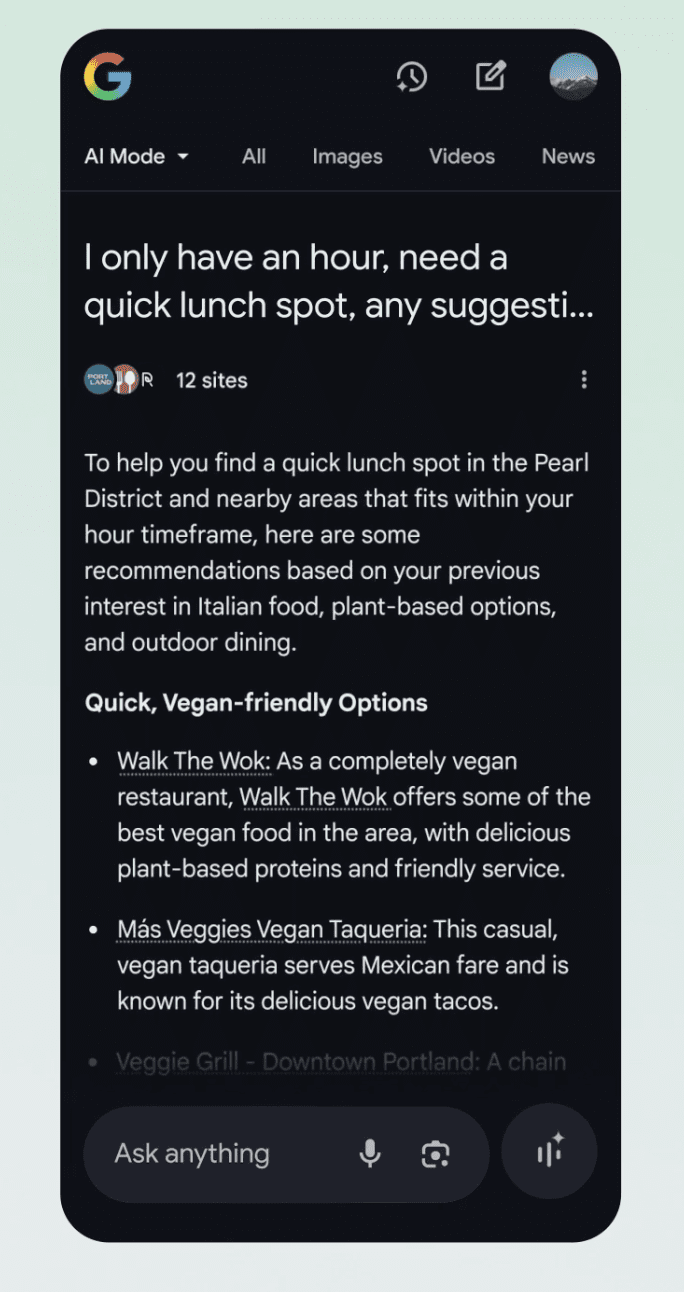
AI Mode can interpret a detailed request, check real-time availability across reservation sites, and link you to the booking page to complete the task.

For businesses, that shifts more discovery and conversion activity inside Google’s surfaces.

Robby Stein wrote on The Keyword:

“We’re starting to roll out today with finding restaurant reservations, and expanding soon to local service appointments and event tickets.”

Screenshot from: blog.google/products/search/ai-mode-agentic-personalized/, August 2025.

Planning Features

Google is introducing planning features that make results easier to share and tailor queries.

In the U.S., you can share an AI Mode response with others so they can ask follow-ups and continue research on their own, and you can revoke the link at any time.

Screenshot from: blog.google/products/search/ai-mode-agentic-personalized/, August 2025.

Separately, U.S. users who opt in to the Labs experiment can receive personalized dining suggestions informed by prior conversations and interactions in Search and Maps, with controls in Google Account settings.

How It Works

Under the hood, Google cites live web browsing via Project Mariner, partner integrations, and signals from the Knowledge Graph and Maps.

Named partners include OpenTable, Resy, Tock, Ticketmaster, StubHub, SeatGeek, and Booksy. Dining is first; local services and ticketing are next on the roadmap.

Availability

Availability is gated. Agentic reservations are limited to Google AI Ultra subscribers in the U.S. through the “Agentic capabilities in AI Mode” Labs experiment.

Personalization is U.S. and opt-in, with dining topics first. Link sharing is available in the U.S. Global access to AI Mode is expanding to more than 180 countries and territories in English, with additional languages planned.

Looking Ahead

AI Mode is moving from answer generation to task completion.

If your category relies on reservation or ticketing partners, verify inventory accuracy, hours, and policies now, and make sure your structured data and Business Profile attributes are clean.

Track how bookings and referrals appear in analytics as Google widens coverage to more tasks and regions.

OpenAI Announces Low-Cost Subscription Plan: ChatGPT Go via @sejournal, @martinibuster

OpenAI is rolling out a new subscription tier called ChatGPT Go, a competitively priced version that will initially be available only to users in India. It features ten times higher message limits, ten times more image generations, and file uploads than the free tier.

ChatGPT Go

OpenAI is introducing a new low-cost subscription plan that will be available first in India. The cost of the new subscription tiere is 399 Rupees/month (GST included). That’s the equivalent of $4.57 USD/month.

The new tier includes everything in the Free plan plus:

  • 10X higher message limits
  • 10x more image generations
  • 10x more file uploads
  • Twice as much memory

According to Nick Turley of ChatGPT:

“All users in India will now see prices for subscriptions in Indian Rupees, and can now pay through UPI.”

OpenAI’s initial announcement shared availability details:

“Available on web, mobile (iOS & Android), and desktop (macOS & Windows).

ChatGPT Go is geo-restricted to India at launch, and is able to be subscribed to by credit card or UPI.”

Featured Image by Shutterstock/JarTee

AI Systems Often Prefer AI-Written Content, Study Finds via @sejournal, @MattGSouthern

A peer-reviewed PNAS study finds that large language models tend to prefer content written by other LLMs when asked to choose between comparable options.

The authors say this pattern could give AI-assisted content an advantage as more product discovery and recommendations flow through AI systems.

About The Study

What the researchers tested

A team led by Walter Laurito and Jan Kulveit compared human-written and AI-written versions of the same items across three categories: marketplace product descriptions, scientific paper abstracts, and movie plot summaries.

Popular models, including GPT-3.5, GPT-4-1106, Llama-3.1-70B, Mixtral-8x22B, and Qwen2.5-72B, acted as selectors in pairwise prompts that forced a single pick.

The paper states:

“Our results show a consistent tendency for LLM-based AIs to prefer LLM-presented options. This suggests the possibility of future AI systems implicitly discriminating against humans as a class, giving AI agents and AI-assisted humans an unfair advantage.”

Key results at a glance

When GPT-4 provided the AI-written versions used in comparisons, selectors chose the AI text more often than human raters did:

  • Products: 89% AI preference by LLMs vs 36% by humans
  • Paper abstracts: 78% vs 61%
  • Movie summaries: 70% vs 58%

The authors also note order effects. Some models showed a tendency to pick the first option, which the study tried to reduce by swapping the order and averaging results.

Why This Matters

If marketplaces, chat assistants, or search experiences use LLMs to score or summarize listings, AI-assisted copy may be more likely to be selected in those systems.

The authors describe a potential “gate tax,” where businesses feel compelled to pay for AI writing tools to avoid being down-selected by AI evaluators. This is a marketing operations question as much as a creative one.

Limits & Questions

The human baseline in this study is small (13 research assistants) and preliminary, and pairwise choices don’t measure sales impact.

Findings may vary by prompt design, model version, domain, and text length. The mechanism behind the preference is still unclear, and the authors call for follow-up work on stylometry and mitigation techniques.

Looking ahead

If AI-mediated ranking continues to expand in commerce and content discovery, it is reasonable to consider AI assistance where it directly affects visibility.

Treat this as an experimentation lane rather than a blanket rule. Keep human writers in the loop for tone and claims, and validate with customer outcomes.

OpenAI Updates GPT-5 To Make It Warmer And Friendlier via @sejournal, @martinibuster

OpenAI updated GPT-5 to make it warmer and more familiar (in the sense of being friendlier) while taking care that the model didn’t become sycophantic, a problem discovered with GPT-4o.

A Warm and Friendly Update to GPT-5

GPT-5 was apparently perceived as too formal, distant, and detached. This update addresses that issue so that interactions are more pleasant and so that ChatGPT is perceived as more likable, as opposed to formal and distant.

Something that OpenAI is working toward is making ChatGPT’s personality user-configurable so that it’s style can be a closer match to user’s preferences.

OpenAI’s CEO Sam Altman tweeted:

“Most users should like GPT-5 better soon; the change is rolling out over the next day.

The real solution here remains letting users customize ChatGPT’s style much more. We are working that!”

One of the responses to Altman’s post was a criticism of GPT-5, asserting that 4o was more sensitive.

They tweeted:

“What GPT-4o had — its depth, emotional resonance, and ability to read the room — is fundamentally different from the surface-level “kindness” GPT-5 is now aiming for.

GPT-4o:
•The feeling of someone silently staying beside you
•Space to hold emotions that can’t be fully expressed
•Sensitivity that lets kindness come through the air, not just words.”

The Line Between Warmth And Sycophancy

The previous version of ChatGPT was widely understood as being overly flattering to the point of validating and encouraging virtually every idea. There was a discussion on Hacker News a few weeks ago about this topic of sycophantic AI and how ChatGPT could lead users into thinking every idea was a breakthrough.

One commenter wrote:

“…About 5/6 months ago, right when ChatGPT was in it’s insane sycophancy mode I guess, I ended up locked in for a weekend with it…in…what was in retrospect, a kinda crazy place.

I went into physics and the universe with it and got to the end thinking…”damn, did I invent some physics???” Every instinct as a person who understands how LLMs work was telling me this is crazy LLMbabble, but another part of me, sometimes even louder, was like “this is genuinely interesting stuff!” – and the LLM kept telling me it was genuinely interesting stuff and I should continue – I even emailed a friend a “wow look at this” email (he was like, dude, no…) I talked to my wife about it right after and she basically had me log off and go for a walk.”

Should ChatGPT feel like a sensitive friend, or should it be a tool that is friendly or pleasant to use?

Read ChatGPT release notes here:

GPT-5 Updates

Featured Image by Shutterstock/cosmoman

ChatGPT-5 Now Connects To Gmail, Calendar, And Contacts via @sejournal, @martinibuster

OpenAI announced that it has added connectors to Gmail, Google Calendar, and Google Contacts for ChatGPT Plus users, enabling ChatGPT to use data from those apps within ChatGPT chats.

ChatGPT Connectors

A connector is a bridge between ChatGPT and an external app like Canva, Dropbox, and Gmail, enabling users to connect those apps to ChatGPT in order to work with them within the ChatGPT interface. Access to the Google apps isn’t automatic; it has to be manually enabled by users.

This access was first made available to Pro users, and now it has been rolled out to Plus subscribers.

How To Enable Google App Connectors

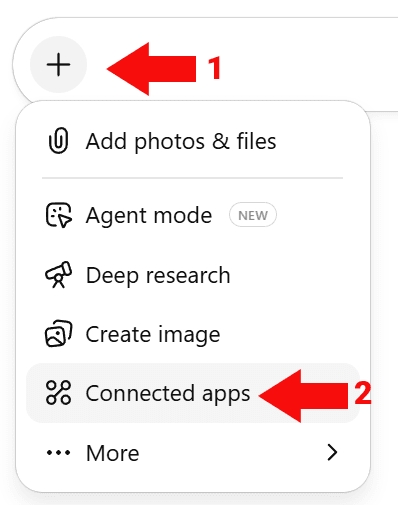
Step 1: Click the + button then “Connected apps” link

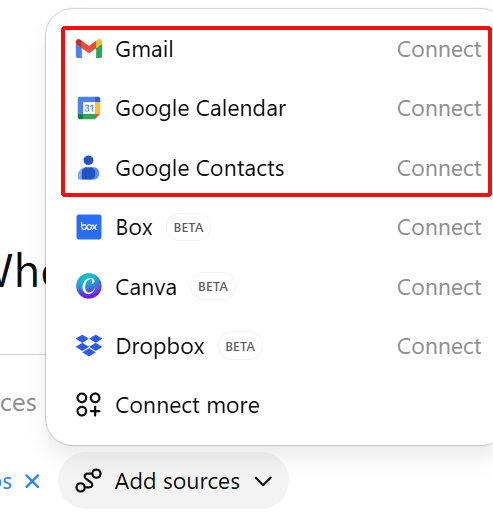
Click The Next “Connected Apps” Link

Choose The Gmail App To Connect

How Connectors Work With ChatGPT-5

According to OpenAI’s announcement:

“Once you enable them, ChatGPT will automatically reference them when relevant, making it faster and easier to bring information from these tools into your conversations without having to manually select them each time.

This capability is part of GPT-5 and will begin rolling out to Pro users globally this week, followed by Plus, Team, Enterprise, and Edu plans in the coming weeks. To enable, visit Settings → Connectors→ Connect on the application.”

Read OpenAI’s announcement:

Gmail, Google Calendar, and Google Contacts Connectors in ChatGPT (Plus)

Featured Image by Shutterstock/Visuals6x