International SEO For 2024: 9-Point Checklist For Success via @sejournal, @LidiaInfanteM

Getting your international SEO strategy right can be an elusive feat.

There are a lot more factors at play than people give credit for, and it’s often a thankless job.

A successful international SEO strategy requires a deep knowledge of your company’s commercial strategy as well as technical SEO knowledge, cultural sensitivity, and excellent data skills.

Yet the industry often regards international SEO as just your hreflang setup.

In this article, I will distill the complexities of international SEO success into an actionable step-by-step list that will take you from beginner to advanced practitioner. Let’s begin!

Part I: Be Commercially Aware

1. Understand Why Your Company Is Going International

Companies can grow by expanding their products and services, focusing on gaining market penetration or expanding into new markets.

While your team’s goal might be traffic, leads, or revenue, the leadership team is likely working under a different set of parameters. Most of the time, leadership’s ultimate goal is to maximize shareholder value.

  • In founder-owned companies, growth goals might be slower and more sustainable, usually aimed at maintaining and growing profitability.
  • VC-owned companies have high growth goals because they must provide their investors with a return that’s higher than the stock market. This is what is known as the alpha, or your company’s ability to beat the market in growth.
  • Publicly traded companies are likely aiming to grow their share value.
  • Startups, depending on their maturity stage, are likely looking to prove product-market fit or expand their reach fast to show that their operations are scalable and have the potential to be profitable in the future. The goal of this is to aid in raising further capital from investors.

Understanding why businesses go international is essential for informing your SEO decisions. What’s best practice for SEO isn’t always what’s best for business.

You must adapt your strategy to your company’s growth model.

  • Companies choosing to grow sustainably and maintain profitability will likely expand more slowly to a market that resembles their core market.
  • VC-owned companies will be able to invest in a wider range of countries, with a smaller concern for providing their users with an experience on par with that of their core markets.
  • Startups can try to beat their competitors to market by expanding quickly and throwing a lot of money at the project, or they might be concerned with cash flow and try to expand fast but cut corners by using automatic translation.

2. Stack Rank Your Target Markets To Prioritize Your Investment

I promise I’ll get to hreflang implementation soon, but so much about international SEO has to do with commercial awareness – so bear with me; this will make you a better professional.

Many companies have different market tiers to reflect how much of a priority each market is. Market prioritization can happen using many different metrics, such as:

  • Average order value or lifetime customer value.
  • Amount of investment required.
  • Market size.
  • And market similarity.

American companies often prioritize developed English-speaking countries such as the UK, Canada, or Australia. These are most similar to their core market, and most of their market knowledge will be transferable.

After that, companies are likely to target large European economies, such as Germany and France. They might also target the LatAm market and Spain in the same effort.

The last prioritization tier can vary widely among companies, with a focus on the Nordic, Brazilian, or Asian markets.

Part II: Know Your Tech

3. Define Your International URL Structure

When doing international SEO, there are 4 different possible URL structures, each with its pros and cons.

ccTLD Structure

A ccTLD structure is set up to target different countries based on the domain type.

This structure is not ideal for companies that target different languages rather than different countries. For example, a .es website is targeting Spain, not the Spanish language.

An advantage to this kind of structure is that the ccTLD sends a very strong localization signal to search engines as to what market they are targeting, and they can lead to improved trust and CTR in your core country.

On the other hand, ccTLDs can dilute your site’s authority, as links will be spread across domains rather than concentrated on the .com.

gTLD With Subdirectories

This is my personal favorite when it comes to international SEO.

These URL structures can look like website.com/en if they’re targeting languages or website.com/en-gb if they’re targeting countries.

This configuration aggregates the authority you gain across your different territories into a single domain, it’s cheaper to maintain, and the .com TLD is widely recognizable by users worldwide.

On the other hand, this setup can look less personalized to people outside the US, who might wonder if you can service their markets.

gTLD With Subdomains

This setup involves placing international content on a subdomain like us.website.com. While once popular, it’s slipping in favor because it doesn’t bring anything unique to the table anymore.

This setup offers a clear signal to users and search engines about the intended audience of a specific subdomain.

However, subdomains often face issues with SEO, as Google tends to view them as separate entities. This separation can dilute link, similar to the ccTLD approach but without the geo-targeting advantages.

gTLD With Parameters

This is the setup where you add parameters at the end of the URL to indicate the language of the page, such as website.com/?lang=en.

I strongly advise against this setup, as it can present multiple technical SEO challenges and trust issues.

4. Understand Your Hreflang Setup

In the words of John Mueller: hreflang can be one of the most complex aspects of SEO.

Tweet by John Mueller talking about how hreflang can be one of the more complex aspects of SEO.Screenshot from Twitter, May 2024

Hreflang reminds me of a multilingual form of a canonical tag, where we tell search engines that one document is a version of the other and explain the relationship between them.

I find hreflang implementation very interesting from a technical point of view. Because development teams mostly manage it, and it can be very much hit or miss.

Often, hreflang is constructed from existing fields in your content management system (CMS) or content database.

You might find that your development team is pulling the HTML lang tag, which follows a different ISO standard than hreflang, leading to a broken implementation.

Other times, there is a field in your CMS that your development team pulls from to build your hreflang setup.

Finding out how your hreflang tags are generated can be extremely helpful in identifying the sources of different issues or mitigating potential risks.

So speak to your engineering team and ask them how you’re currently generating hreflang.

5. Implement Hreflang Without Errors

There are three ways to implement hreflang on your site:

  • On your sitemap.
  • Through your HTTP header.
  • On your HTML head.

The method most of us are most familiar with is the HTML head. And while you can use more than one method, they should match each other perfectly. Otherwise, you risk confusing search engines.

Here are some basic rules for getting it done correctly:

  • In your hreflang implementation, the URL must include domain and protocol.
  • You must follow the ISO 639-1 language codes – don’t go around making up your own.
  • Hreflang tags must be reciprocal. If the page you’re listing as a language alternative does not list you back, your implementation won’t work.
  • Audit your hreflang regularly. My favorite tool for this, since it added the hreflang cluster analysis and link graphs, is Ahrefs. For the record, Ahrefs is not paying me to say this; it’s a genuine recommendation and has helped me a lot in my work.
  • You should only have one page per language.
  • Your hreflang URLs should be self-canonicalizing and respond with a 200 code.

Follow the above rules, and you’ll avoid the most common hreflang mistakes that SEO pros make.

And if you’re interested in the technical SEO aspect beyond hreflang, I recommend reading Mind your language by Rob Owen.

Part III: Invest In Content Incrementally

6. Translate Your Top-performing Content Topics

Now that you have the basic commercial and technical knowledge covered, you’re ready to start creating a content strategy.

You likely have a wealth of content in your core market that can be recycled. But you want to focus on translating high-converting topics, not just any topic; otherwise, you might be wasting your budget!

Let’s go step by step.

Cluster Your Website’s Content By Topic

  • Crawl your site using your favorite SEO tool and extract the URL and H1.
  • Use ChatGPT to classify that list of URLs into topics. You might already know what you usually write about, so include those topics in your prompt. You don’t want to have a classification that’s too granular, so you can prompt chatGPT to only create groups with a minimum of 10 URLs (adjust this to reflect the size of your website) and class everything else as other. This is an example of what your prompt might look like: “I will provide you with a list of article titles and their corresponding URL. Classify this list into the following topics: survey best practices, research and analysis, employee surveys, market research and others. Return this in a table format with the URL, title and group name.”
  • Start a spreadsheet with all your URLs in the first column, titles in the second column, and the group they belong to in the third column.

Measure Your Performance By Topic

  • Export your GSC data and use a =VLOOKUP formula to match your clicks to your URLs.
  • Export your conversion data and use a =VLOOKUP formula to match your conversions (leads, sales, sign-ups, or revenue) to the right URL.
  • You can then copy your topics column onto a new sheet. Remove duplicates and use the =SUMIF formula to aggregate your click data and conversion data by topic.

Choose What Topics You’ll Be Translating First

Using this data, you can now choose what topics are most likely to drive conversions based on your core market data. Choose how many topics or pieces of content you’ll be translating based on your budget.

Personally, I like translating one topic at a time because I’ve found that generating topical authority on one specific topic makes it easier for me to rank on an adjacent topic that I write about next.

7. Localize Your English Content

Once you’re set up with all your key pages and a few content topics, it’s time to evaluate your investment and see where you could be getting a bigger return.

At this stage, many companies have translated their content into a few different languages and likely copied the US content into their UK and Australian sites. Now that you’ve done some translation, it’s time to work on localization.

If you’ve just copied your US content into your UK and Australian sites, your Google Search Console indexing report might be screaming at you, “Duplicate, Google selected a different canonical than the user.”

A very easy fix that could yield great returns is to localize your English content to the nuances of those English-speaking markets.

You will want to instruct your translation and localization providers to adapt the spellings of certain words, change the choice of words, introduce local expressions, and update any cited statistic for the US with their local equivalent.

For example, if I’m targeting a British audience, “analyze” becomes “analyse,” a “stroller” becomes a “pram,” and “soccer” becomes “football.”

8. Invest In In-market Content

Once you’ve got the basics in place, you can start tackling the specific needs of other markets. This strategy is expensive, and you should only use it in your priority markets, but it can really set you apart from your competitors.

For this, you will need to work with a local linguist to identify pain points, use cases, or needs exclusive to your target market.

For example, if France suddenly made it mandatory to run a diversity and inclusion study for companies with over 250 employees, I’d want to know this and create some content on DEI surveys at SurveyMonkey.

9. Integrate With Other Content Workflows

In step six, we evaluated our top-performing content, chose the best articles to translate, and got it all down. But wait. Some of these source articles have been updated. And there is even more content now!

To run a successful international SEO campaign you must integrate with all the other teams publishing content within your organization.

Usually, the teams creating content in an organization are SEO, content, PR, product marketing, demand generation, customer marketing, customer service, customer education, or solutions engineering.

That’s a lot, and you won’t be able to integrate with everyone all at once. Prioritize the teams that create the most revenue-generating content, such as SEO, content, or product marketing.

Working with these teams, you will have to establish a process for what happens when they create a new piece, update some content, or remove an existing piece.

These processes can differ for everyone, but I can tell you what I do with my team and hope it inspires you.

  • When a piece of content that’s already been localized into international markets is updated, we get the content in a queue to be re-localized the next quarter.
  • When they create a new piece of content, we evaluate its performance, and if it’s performing above average, we add it to a localization queue for the next quarter.
  • When they change the URL of a piece of content or delete it, all international sites must follow suit at the same time, since due to some technical limitations, not making the change globally would create some hreflang issues.

Wrapping Up

International SEO is vast and complex, and no article can cover it all, but many interesting resources have been created by SEO pros across the community for those who want to learn more.

Navigating the complexities of international SEO is no small feat. It’s an intricate dance of aligning commercial strategies with technical precision, cultural insights, and data-driven decisions.

From understanding your company’s core motives for global expansion to meticulously implementing hreflang tags and localizing content, every step plays a crucial role in building a successful international presence.

More resources: 


Featured Image: BritCats Studio/Shutterstock

How To Leverage Experience To Boost Your International Expansion via @sejournal, @gemmafontane

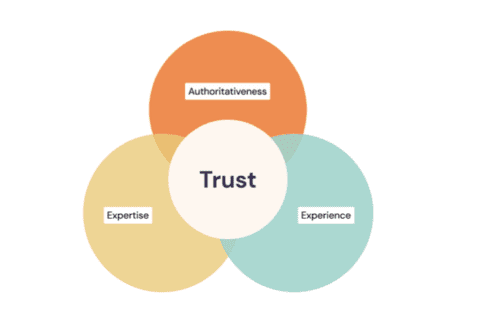
“Experience” is the latest (but not the least relevant) addition to “E-E-A-T,” which stands for experience, expertise, authoritativeness, and trustworthiness – a component of Google’s search quality rater guidelines. This concept is a mix of factors that help Google determine if the content is relevant and helpful enough for users, thereby prioritizing it in search results.

E-E-A-T plays an important role in “your money or your life” (YMYL) topics.

But what happens when you want to create international strategies? How can you leverage E-E-A-T to boost your international expansion?

In my previous article, I discussed how to demonstrate expertise and authority on an international scale, using a case study on selling a local product from Barcelona.

Now, let’s will explore how to leverage experience to boost your international expansion.

How To Show Experience

As Google defines, “experience” is the extent to which the content creator has the necessary first-hand or life experience for the topic.

In this case, there will be two main ways of demonstrating experience with a product or in relation to a topic.

One is through your own experience as a creator of the product; the other is through the experience of consumers.

So, how can an international ecommerce company leverage its experience to differentiate itself from others and compete internationally?

Which actions that demonstrate experience are more likely to influence users’ purchase decisions on international websites? Let’s explore some actions you can take.

Demonstrate Your Experience Through Your Consumer: Product Reviews

Whether locally or internationally, getting product reviews from consumers is a key factor in demonstrating the experience of using the product or service.

Providing a good experience during the purchase process, as well as a quality product or service, will help boost reviews with better ratings from users – whether within the website, in directories, or Google Business Profile.

Include A Testimonial Page

One option to make it easier for potential new consumers to find user review content is to create a “testimonial page.”

On this page, the web creator can collect users’ experience and opinions regarding the product in different formats, such as text, image, or video.

Example testimonial Screenshot from www.tiodenadal.online, February 2024

Here’s an example of a testimonial page.

In international ecommerce, providing and sharing cross-border user experience is also key to conveying confidence to users from other countries, regarding the veracity of the store.

Which Reviews Influence The Users’ Purchase Decisions On International Websites?

To create product review pages and show users the ratings, you must achieve a certain number of reviews demonstrating the user’s experience with the product.

On an international scale, there will be reviews that help not only demonstrate the users’ experience during the purchase process but also encourage new users to do the same.

Which reviews carry more weight in influencing users’ purchase decisions on international websites? And what specific actions should international businesses prioritize as a result?

Reviews For International Ecommerce Sites

When venturing into global markets, consider the user shopping experience ratings that tend to predominate and significantly impact purchasing decisions.

Case in point: high shipping costs and long delivery times.

The most common reason online U.S. shoppers abandon their carts is additional costs like shipping, taxes, and fees (47%). Also, 24% of consumers drop out of an online shopping session because shipping is too slow.

Changing the cost of shipping or delivery time from one country to another is usually not in the hands of the business but of external factors.

However, you can take these actions to get positive reviews related to shipping or delivery time – or at least prevent damaging reviews related to these factors.

  • Include actual shipping times and explain them to buyers. Don’t try to risk getting more sales.
  • Watch out for high-demand seasons (like Christmas and Black Friday).
  • Stay up-to-date on the global international logistics situation.
  • Follow up on carrier and logistics situations in your potential countries.
  • Be aware of customs borders in each country.

reviews by customer example

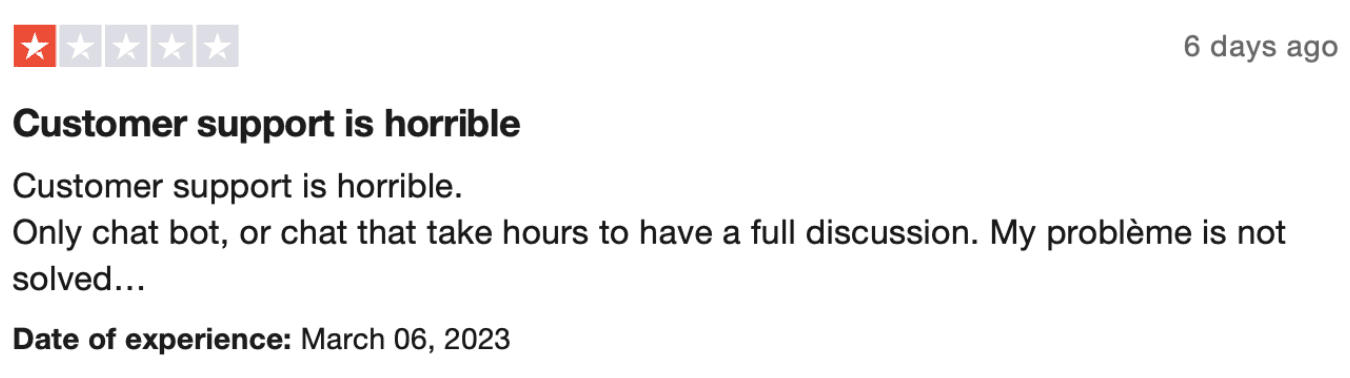
reviews by customer example 2Screenshot from author, February 2024

Reviews For International B2B Or Saas Sites

While long delivery times and high shipping costs impact international sales across the board, B2B, industrial, and SaaS companies face unique challenges in achieving global competitiveness.

Factors that influence purchase decisions on international B2B/SaaS websites:

  • Platform language: Lack of local language support can make it difficult for consumers to use the product.
  • Price: Service or platform prices not adjusted for regional purchasing power can hurt market penetration.
  • Customer support: The absence of local customer support or a contact person may impact the buying process.
  • Customer service hours: Adapting to local schedules and holidays in each country is key for a good experience.
  • Localization: Tailoring the product or platform to each country’s cultural characteristics or preferences helps enhance user experience.
customer service feedback example Screenshot from author, February 2024

How To Create Content That Demonstrates Your Experience

You can go beyond encouraging users to share their experiences with the products on your website.

By creating content, you can actively showcase your experience during product development or using the product itself.

Here are some ways to achieve this:

  • How-to guides: Develop step-by-step guides or tutorials that show how to use the product effectively.
  • Expert pages: Create engaging content (consider using photos and videos) that show how the product has been produced.
  • Influencer content: Partner with relevant influencers or bloggers to share content on how they use the product.
  • Forums and discussions: Build a vibrant community where users are allowed to share their experiences, ask questions, and learn from other customers about how they enjoy your product.
How To guide from outsideonline.comImage from outsideonline.com, February 2024

Avoid creating search engine-first content and prioritize creating people-first content to increase the probability of success with Google search.

How To Generate Content Ideas To Showcase Experience Internationally

Developing content that reflects your product or service’s international reach depends on the type of project, audience, and potential markets.

However, there are key strategies to assist you in coming up with ideas and focusing on creating content that highlights your global experience.

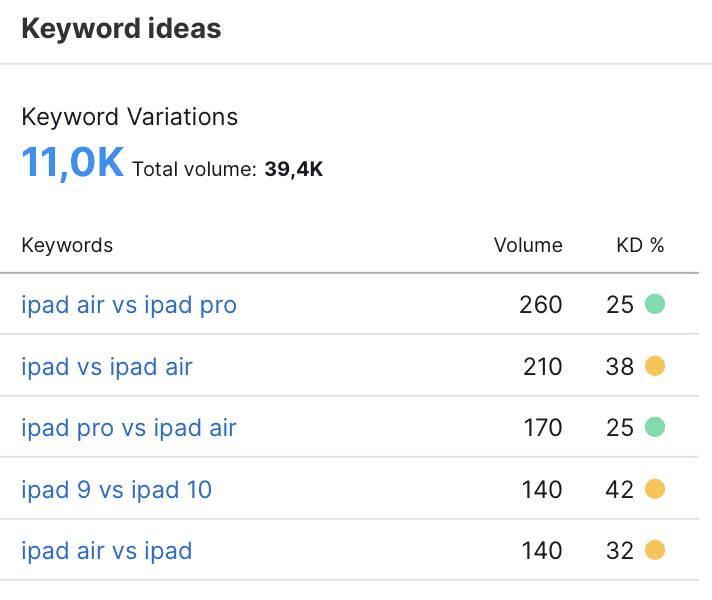
Use Commercial Keywords For Your International Content Strategy

Including commercial keywords in your content strategy shows your experience with the product. Some of these keywords are important when the potential customer is interested in the product and wants to investigate more.

These keywords often include search terms for your product or service that combine concepts like:

  • Free.
  • Difference/vs.
  • Reviews.
  • Opinions.
keyword ideasScreenshot from Semrush, February 2024

Get Inspired By Marketplaces And Directories

Ecommerce marketplaces and B2B/SaaS directories are the go-to sites for inspiration and ideas. These sites offer insights to inform your content strategy and help demonstrate the product experience.

By analyzing marketplaces, such as Etsy and Amazon, you can learn what people think and say about you, and see how your product is perceived globally.

What are the most highly rated factors? What do they complain about the most? What can you differentiate yourself with?

Identify Key Purchase Decision-Making Factors

Analyze the top-rated and worst-rated reviews of your competitors and understand why. This will help you identify key purchase decision-making factors for your target consumers.

good review example: ecommerceScreenshot from author, February 2024

Use Other Channels

Today, static content isn’t enough. You can’t just create text or image content to convey a product experience to potential consumers.

Utilize other channels, such as TikTok or YouTube, to create engaging content that showcases your experience – and expertise – with your product.

Leveraging Experience In The AI Era

Showing experience will enable you to differentiate from AI-generated content within the AI era.

You can see it with the same Search Generative Experience (SGE), where demonstrating first-hand experience will play an essential role in creating useful, quality, and helpful content.

However, as of writing, it is still not very clear what the final model will look like.

Expanding Experience Internationally

Experience, expertise, and authority are key factors that will help you achieve success in your international SEO strategies.

But Google emphasizes another key element within the E-E-A-T framework: trustworthiness, which the search engine defines as the most important member of the E-E-A-T family.

We’ll delve deeper into this element in our next article.

More resources: 


Featured Image: William Potter/Shutterstock

Understanding The Unique Challenges Of Multilingual And Multinational Websites via @sejournal, @motokohunt

Managing SEO-related work for a site is about much more than optimizing the content or fixing broken links on the site.

When it comes to managing SEO for multilingual and multinational sites, the amount of work not only increases due to the number of websites but also expands in order to coordinate effective activities and accomplish the many tasks and optimization efforts associated with multiple sites.

Whether you manage it as a team of one or with multiple teams, in-house, or with an external agency, each scenario has its own unique challenges.

In this era of fast-paced algorithm changes and ever-tougher competition, having a well-oiled and highly collaborative management structure is essential for SEO success.

In this article, I will focus on the elements of SEO that are unique to multilingual and multinational websites, and share some recommended and effective SEO management methods to maximize your overall performance.

As with anything prefixed with “multi,” there will be a lot of moving parts that may not always align.

In a follow-up article, I will go into more detail on implementing an effective SEO management structure through incremental change that will help facilitate adoption and overall program success.

SEO Elements Unique To Multilingual And Multinational Sites

While fundamentally, multilingual and multinational SEO is the same as SEO for a single language and market website, some additional challenges and complexities come into play – and they only increase as the number of sites and languages increases.

The following are some of those specific challenges that are unique to multinational SEO.

Duplicate Content

Duplicate content is a significant problem for multinational websites. There are a few types of duplicate content challenges.

There are obvious duplications for product pages in the same language markets like English, Spanish, and Arabic markets.

These are purposeful duplicates, which may have unique attributes like price, size, and contact information that may make them different enough from each other.

The more complicated duplicates happen when CMS systems automatically clone pages for each market.

For example, if a new page is created in the US, the CMS will automatically add one in English for every other market, even if the product is not available or the team does not have the resources to do the localization.

Unfortunately, teams are often unaware of this “feature” until they start seeing these pages listed in Google error reports or outranking the desired local page.

The Different National Site Appears In The Search Results

Search engines need to present the best result, and they may select a page from a different market to present to searchers.

A common problem in Australia is for US or UK webpages to rank higher in the search engine results pages (SERPs) than the local version of the page, especially for brand or product names.

To help solve this problem, Hreflang elements were introduced for site owners to designate the language and market for each website.

Unfortunately, implementing Hreflang can be an even greater challenge, as it requires collaboration across all markets, even those benefitting from cannibalized traffic.

Different SEO Processes, Skills, And Focus Areas

Markets and regions may have different priorities, approaches, and skill sets that may conflict with each other when there is no centralized governance of the website and SEO.

This can also be a challenge with multiple agencies responsible for specific markets.

Skills and focus may vary, with some focused on technical SEO while others focused on content creation or link building.

What Makes It Difficult To Manage?

As noted previously, the introduction of “multi” is a clue as to the challenges.

In addition to multiple languages and markets, there are often multiple management teams, development teams, SEO teams, and even agency teams – and they are often not aligned. Each focuses on its own market priorities and SEO processes.

Centralized Vs. Decentralized Management

The biggest challenge to overcome is when companies allow decentralized management of their websites.

When an organization is decentralized, this often means a true global SEO program will not be possible.

As the local team makes all of the decisions related to priorities and the content that goes on their websites, HQ may have little say regarding content and getting SEO initiatives prioritized.

Multiple Contact Points And Teams

With decentralization and market-based teams, you may be required to work with multiple points of contact.

At a recent conference with the Global Head of SEO for a large consumer products company, he indicated that nearly every decision had to be accepted by 70 stakeholders, making truly global changes and processes nearly impossible.

Another similar-sized company indicated it took nearly three years to get the buy-in, GSC access, and agreement on the method to implement Hreflang.

Communication Barriers (Languages/Time Zone)

In global SEO, there is always someone sacrificing sleep and free time to attend meetings due to time zone differences.

This is inevitable, but you can make friends if you can rotate the early-morning or late-night meetings to allow everyone to enjoy a beneficial time zone occasionally.

You should always record the meetings and share the video and action items so everyone can have access to the information.

This is also great for those without strong English skills as they can rewatch sections they don’t understand or, in some cases, translate the transcripts of the meeting.

Different SEO Skills And Knowledge

It is very common that the different team members have varying levels of SEO expertise.

Some may be well-versed in SEO best practices, while others may have limited knowledge or exposure, as SEO may be one of many roles they are required to perform.

Ensuring consistent quality across all SEO activities, especially the fundamentals, becomes challenging.

This is the perfect reason to recommend the use of standard best practice guides as a reference for everyone.

These guides not only explain how to undertake specific tasks but also why it is important and specific requirements for your organization.

These guides help standardize key tasks and reporting and can be an excellent way to help educate local development teams and agencies on your organization’s processes and practices.

Different Budget Allocations

Budget allocations can create challenges across markets, with limited funds for tools and resources forcing markets to get creative.

In many second and third-tier markets, there is often little or no budget for search activities.

Different SEO Structures (In-house vs. Agency)

It is likely that the organization will have multiple independent in-house SEO teams or multiple agencies managing SEO projects in specific markets with processes that may conflict with other markets.

These decentralized teams often have little or no collaboration between them and, in many cases, conflicting processes and priorities.

Local Only Content And Market Specific Website

Larger companies, especially those grown through acquisition, often have multiple content management systems (CMS) or even a single system with unique templates for each market that reduce the number of “fix it once” opportunities for the SEO team.

This also requires different development teams and different methods to implement SEO and prevents any real level of standardization.

You may have cases of “local only” content where there is a blog, product set, or other content that is unique to a local market that may siphon resources to optimize and manage at the cost of core content.

Websites may deploy language or location detection functionality to present the user with the website for their market or the language they prefer based on their browser settings.

While this can enable a good user experience, it can create several challenges for SEO.

Firstly, the logic and rigor of the implementation and how users are routed. I have seen many problems where users are taken to markets that don’t make sense. For example, users from Botswana were taken to the UK website rather than South Africa, or users in Malaysia were routed to Australia rather than to the Singapore website.

Additionally, teams must understand how the functionally handles search engine crawlers that crawl from specific markets.

How does the system handle a request from Google’s crawler from California when it requests your various market websites?

What happens if they don’t set a language preference? Does it default to English? It is critical that the logic for this functionally be reviewed for the correct handling of visitors.

Conclusion

While the “multi” in multinational SEO does bring unique challenges for the search marketers, the more aware they are of these challenges and their impact on local, regional, and global search performance, the easier they will be able to mitigate and minimize them.

Unfortunately, there is no one-size-fits-all approach to multinational SEO. Still, no matter the number of problems, your program can become more manageable with effective communication and collaboration between the stakeholders.

In my next article, I will review those methods to foster collaboration and how to use a stepped approach to developing an effective global SEO management structure.

More resources: 


Featured Image: Rawpixel.com/Shutterstock

Effective SEO Management Structures For Multilingual And Multinational Websites via @sejournal, @motokohunt

In my last article, I went into detail about the many challenges encountered by search teams working on multilingual websites.

Now, I will offer suggestions for management structures between multilingual teams. These practices can help achieve greater collaboration and success.

Fostering Collaboration

If there is no or little collaboration today, an easy first step is to create a Slack channel or even a shared folder on your company intranet for sharing tips, articles, or slides from a conference you attended.

Include the stakeholders from the different roles mentioned above across the different markets.

This will often elicit feedback on your content and encourage sharing by others.

Over time, you can do quarterly knowledge sharing or even regional road shows, conducting workshops during regional meetings.

Best Practice Guides

If there are not any documented SEO best practices, start by sharing your guides.

Linking to them in your email signature and recording them with a web meeting software where people can better understand the nuance are effective ways of sharing knowledge.

Most will welcome any knowledge sharing from more experienced markets and team members.

There may even be initial pushback if the process differs, but that is where the dialog can start. You can reconcile the differences to create a unified process for the organization.

Keyword Lists

Many markers do not have access to tools and are short of time, so sharing your list of keywords, especially with common language markets, can often save them a lot of time.

A great best practice is to identify mission-critical words for products or services available in all markets, start developing a centralized database of words, and rank reports to help identify content gaps, cannibalization, and localization backlogs.

Effective SEO Management Structures

In a perfect world, an organization would have a fully aligned and centrally managed global search team focused on achieving market-specific objectives that contribute to the collective benefit of the company.

As we have already established, that is far from reality for most organizations – but using the tips above to foster collaboration and develop strong relationships with the market companies will help jumpstart the framework of your management structure.

The most successful global search programs have some form of a Search Center of Excellence (SCOE).

These SCOEs take many shapes and sizes but do have a primary objective of fostering collaboration, a unified process, and common objectives for all markets.

A critical element of a COE is to include representatives from Search, DevOps/IT, Marketing, Content, and Product teams.

By including these stakeholders, you are better able to understand the collective priorities, challenges, and resources of each of these areas that directly impact the success of your search program.

In many organizations, especially those with decentralized management structures, you may not have direct reports and cannot mandate activities, but you can work to gain consensus for those activities that everyone must perform.

Performance Monitoring And Reporting

Every market has reports they need to generate.

A great first step is to share the current reports and establish metrics and various performance indicators that can measure the effectiveness of the local and global search efforts.

In one experience, the client found they were using multiple tools and twenty different formats of the same information.

By collaborating, they established a uniform report that could be merged, then required all teams, and especially agencies, to adopt this format.

The initial benefit was a significant reduction in time to generate the report, but it also easily identified gaps and challenges across all markets. This made it easier for managers to understand the challenges and see a clear benefit from actioning globally.

Search Management And Research Tools

SEO tools for all markets are expensive, and as we noted, not every market has a search budget. So there should be a discussion around which are the most valuable and whether there are any redundancies; you can add resources incrementally rather than the full cost of solutions.

This is possible with crawling and keyword research tools.

Centralized Sitemap And Hreflang Management

The centralization of XML sitemaps may seem like a simple task. However, I find it can be a major challenge to consolidate the Search Console and Webmaster Tools access across markets, especially if there are multiple agencies involved.

We all should be able to agree that getting and maintaining indexing is critical to any SEO program.

By centralizing XML sitemap quality control and management, you can ensure that the largest and best set of URLs are presented globally.

This activity will also ferret out those markets with very old CMS that cannot generate XML sitemaps.

If you have multiple CMS, varied domain structures, and cannot get all markets to agree on how to deploy hreflang, you can use XML sitemaps and cross-domain verification to manage it globally.

By centralizing these activities, you can facilitate maximum indexing and minimize cannibalization.

Core Page Templates

Depending on the site architecture and decentralized politics, you can achieve significant performance improvements if a common template with SEO elements integrated is deployed at least in the key markets and for core pages.

Enterprise websites have been doing this for years, requiring markets to use common page templates where you can make a single optimization, and that impacts all markets that do the refresh.

As collaboration increases in your SCOE, developers and content creators will adopt search-friendly best practices and hopefully work within these guidelines, enabling global scale.

For one of my clients that moved to core page templates, they started ranking for most of their mission-critical phrases in all markets. They ultimately reduced redundant development costs by over $100k annually, which enabled them to fund a full-time global search manager.

Location And Language Detection Reviews

More and more sites are using detection scripts to either gate content or attempt to route them to the correct market based on their location or language preferences.

The setup and ongoing management of this technology needed to be reviewed for all markets even if you don’t have a website for the market.

The web and marketing teams must understand and agree to the routing logic and ensure that you are not creating frustration for consumers or search engines.

Conclusion

While the “multi” in multinational SEO does bring unique challenges for the search marketer, they can become manageable with effective communication and collaboration between the stakeholders.

While you may never have a world-class Search Center of Excellence, you can enhance the overall search capabilities of the wider organization.

Through knowledge and process sharing, you can improve overall visibility and organic traffic, and deliver a better user experience through all digital channels.

More resources:


Featured Image: Sergey Nivens/Shutterstock

Add Me To Search: How To Create Your Google People Card via @sejournal, @MattGSouthern

In today’s digital-centric world, establishing a notable online presence for your personal branding has become more crucial than ever.

The fastest and easiest way to gain a presence on Google is by typing the query: Add Me to Search.

All you need is a mobile device with internet access, a personal Google account, and Web & App Activity turned on in your account settings.

Think of a People Card as your virtual business card, visible on Google whenever someone searches for your name.

The Google People Card is only available to users in the following countries:

  • India.
  • Kenya.
  • Nigeria.
  • South Africa.

However, there is a workaround you can apply to bypass this limitation and add yourself to Google Search.

In this article, we’ll guide you through the easy steps to secure your spot on Google within minutes, complete with your own personalized People Card.

How To Create A People Card

Step 1

Enter the query “add me to search” and you’ll see the option to create a people card at the top of the screen.

Step 1 of creating Google People Card.Screenshot by author, April 2022

Tap on “Get started” to begin creating your card.

Step 2

Fill out your information. Tap the button to get started. You’ll see the following screen:

Step 2 of creating Google People Card.Screenshot by author, April 2022

The required fields appear first, which are:

  • Name.
  • Location.
  • About.
  • Job.

Below the required fields, you’ll see a section of additional information you can include if you want to.

The fields shown in the screenshot below are all optional. You add as many or as few as you wish.

Fill in the fields.Screenshot by author

Google will let you add links to the following social profiles:

  • Twitter.
  • Facebook.
  • Instagram.
  • LinkedIn.
  • Pinterest.
  • SoundCloud.
  • YouTube.

For the most part, you will be able to enter all information manually. There are two exceptions – email and phone number.

Google automatically populates the email and phone number fields with the information in your Google account. You can’t change the email or phone number on your people card without changing it in your Google account.

Of course, you could choose not to display those fields at all if you’d prefer not to reveal your personal email or phone number.

Step 3

After you fill out the fields in step two, the only thing left to do is preview the card before it goes live.

Once you’re satisfied with how your card looks, save it, and it will be immediately indexed in search results.

To see what it looks like in search results after it goes live, just look up your name.

Step 3 of creating Google People Card.Screenshot by author

That’s all there is to it. Keep in mind Google’s people cards will only be visible to searchers in India, Kenya, Nigeria, and South Africa.

Google hasn’t indicated whether this feature will make its way to other countries. But if you set one up now, you’ll be ready for a wider rollout.

Not located in India?

People located outside of India have managed to set up their own people cards through the use of a VPN.

Aleyda Solis shared a screenshot on Twitter of her people card being successfully added to search results:

Solis notes that she was able to do this by visiting the mobile version of Google through a VPN.

What Are Google People Cards?

Gaining a presence in search results as an individual can prove to be challenging, especially for those who aren’t famous or share the same name with many other people.

For searchers, it can be challenging to find information about specific people if they don’t have a strong online presence.

Google aims to address these challenges with people cards:

“… we are solving these challenges with a new feature called people cards. It’s like a virtual visiting card, where you can highlight your existing website or social profiles you want people to visit, plus other information about yourself that you want others to know.”

People cards are designed for business professionals, performers, influencers, entrepreneurs, job hunters, freelancers, or anyone looking to grow their presence online.

A people card can include a website link, links to social profiles, and any other information you want people to know about you.

When you search for someone’s name and they have a people card, you’ll see a module with their name, profession, and location. The module can be tapped on to see the full card.

General Guidelines For Google People Cards

Once your people card is created, keeping it up to date is necessary in order for Google to continue showing it in search results.

Google may stop showing your card if a long time has passed since the card was updated or verified.

You can edit and change what’s shared in your people card at any time from your Google Search contributions page, or by searching for “edit my people card.”

It generally takes up to a few hours for your people card to be shown in search results. However, Google doesn’t guarantee everyone’s cards will be shown.

The more info you provide, the more likely it is your card will be shown in search results. So, if it hasn’t shown up after a few hours, try editing it to include more details.

More Resources:


Featured Image: alexdndz/Shutterstock

Yandex Data Leak: The Ranking Factors & The Myths We Found (Festive Flashback) via @sejournal, @TaylorDanRW

Celebrate the Holidays with some of SEJ’s best articles of 2023.

Our Festive Flashback series runs from December 21 – January 5, featuring daily reads on significant events, fundamentals, actionable strategies, and thought leader opinions.

2023 has been quite eventful in the SEO industry and our contributors produced some outstanding articles to keep pace and reflect these changes.

Catch up on the best reads of 2023 to give you plenty to reflect on as you move into 2024.


Yandex is the search engine with the majority of market share in Russia and the fourth-largest search engine in the world.

On January 27, 2023, it suffered what is arguably one of the largest data leaks that a modern tech company has endured in many years – but is the second leak in less than a decade.

In 2015, a former Yandex employee attempted to sell Yandex’s search engine code on the black market for around $30,000.

The initial leak in January this year revealed 1,922 ranking factors, of which more than 64% were listed as unused or deprecated (superseded and best avoided).

This leak was just the file labeled kernel, but as the SEO community and I delved deeper, more files were found that combined contain approximately 17,800 ranking factors.

When it comes to practicing SEO for Yandex, the guide I wrote two years ago, for the most part, still applies.

Yandex, like Google, has always been public with its algorithm updates and changes, and in recent years, how it has adopted machine learning.

Notable updates from the past two-three years include:

  • Vega (which doubled the size of the index).
  • Mimicry (penalizing fake websites impersonating brands).
  • Y1 update (introducing YATI).
  • Y2 update (late 2022).
  • Adoption of IndexNow.
  • A fresh rollout and assumed update of the PF filter.

On a personal note, this data leak is like a second Christmas.

Since January 2020, I’ve run an SEO news website as a hobby dedicated to covering Yandex SEO and search news in Russia with 600+ articles, so this is probably the peak event of the hobby site.

I’ve also spoken twice at the Optimization conference – the largest SEO conference in Russia.

This is also a good test to see how closely Yandex’s public statements match the codebase secrets.

In 2019, working with Yandex’s PR team, I was able to interview engineers in their Search team and ask a number of questions sourced from the wider Western SEO community.

You can read the interview with the Yandex Search team here.

Whilst Yandex is primarily known for its presence in Russia, the search engine also has a presence in Turkey, Kazakhstan, and Georgia.

The data leak was believed to be politically motivated and the actions of a rogue employee, and contains a number of code fragments from Yandex’s monolithic repository, Arcadia.

Within the 44GB of leaked data, there’s information relating to a number of Yandex products including Search, Maps, Mail, Metrika, Disc, and Cloud.

What Yandex Has Had To Say

As I write this post (January 31st, 2023), Yandex has publicly stated that:

the contents of the archive (leaked code base) correspond to the outdated version of the repository – it differs from the current version used by our services

And:

It is important to note that the published code fragments also contain test algorithms that were used only within Yandex to verify the correct operation of the services.

So, how much of this code base is actively used is questionable.

Yandex has also revealed that during its investigation and audit, it found a number of errors that violate its own internal principles, so it is likely that portions of this leaked code (that are in current use) may be changing in the near future.

Factor Classification

Yandex classifies its ranking factors into three categories.

This has been outlined in Yandex’s public documentation for some time, but I feel is worth including here, as it better helps us understand the ranking factor leak.

  • Static factors – Factors that are related directly to the website (e.g. inbound backlinks, inbound internal links, headers, and ads ratio).
  • Dynamic factors – Factors that are related to both the website and the search query (e.g. text relevance, keyword inclusions, TF*IDF).
  • User search-related factors – Factors relating to the user query (e.g. where is the user located, query language, and intent modifiers).

The ranking factors in the document are tagged to match the corresponding category, with TG_STATIC and TG_DYNAMIC, and then TG_QUERY_ONLY, TG_QUERY, TG_USER_SEARCH, and TG_USER_SEARCH_ONLY.

Yandex Leak Learnings So Far

From the data thus far, below are some of the affirmations and learnings we’ve been able to make.

There is so much data in this leak, it is very likely that we will be finding new things and making new connections in the next few weeks.

These include:

  • PageRank (a form of).
  • At some point Yandex utilized TF*IDF.
  • Yandex still uses meta keywords, which are also highlighted in its documentation.
  • Yandex has specific factors for medical, legal, and financial topics (YMYL).
  • It also uses a form of page quality scoring, but this is known (ICS score).
  • Links from high-authority websites have an impact on rankings.
  • There’s nothing new to suggest Yandex can crawl JavaScript yet outside of already publicly documented processes.
  • Server errors and excessive 4xx errors can impact ranking.
  • The time of day is taken into consideration as a ranking factor.

Below, I’ve expanded on some other affirmations and learnings from the leak.

Where possible, I’ve also tied these leaked ranking factors to the algorithm updates and announcements that relate to them, or where we were told about them being impactful.

MatrixNet

MatrixNet is mentioned in a few of the ranking factors and was announced in 2009, and then superseded in 2017 by Catboost, which was rolled out across the Yandex product sphere.

This further adds validity to comments directly from Yandex, and one of the factor authors DenPlusPlus (Den Raskovalov), that this is, in fact, an outdated code repository.

MatrixNet was originally introduced as a new, core algorithm that took into consideration thousands of ranking factors and assigned weights based on the user location, the actual search query, and perceived search intent.

It is typically seen as an early version of Google’s RankBrain, when they are indeed two very different systems. MatrixNet was launched six years before RankBrain was announced.

MatrixNet has also been built upon, which isn’t surprising, given it is now 14 years old.

In 2016, Yandex introduced the Palekh algorithm that used deep neural networks to better match documents (webpages) and queries, even if they didn’t contain the right “levels” of common keywords, but satisfied the user intents.

Palekh was capable of processing 150 pages at a time, and in 2017 was updated with the Korolyov update, which took into account more depth of page content, and could work off 200,000 pages at once.

URL & Page-Level Factors

From the leak, we have learned that Yandex takes into consideration URL construction, specifically:

  • The presence of numbers in the URL.
  • The number of trailing slashes in the URL (and if they are excessive).
  • The number of capital letters in the URL is a factor.
Yandex leak of ranking factorsScreenshot from author, January 2023

The age of a page (document age) and the last updated date are also important, and this makes sense.

As well as document age and last update, a number of factors in the data relate to freshness – particularly for news-related queries.

Yandex formerly used timestamps, specifically not for ranking purposes but “reordering” purposes, but this is now classified as unused.

Also in the deprecated column are the use of keywords in the URL. Yandex has previously measured that three keywords from the search query in the URL would be an “optimal” result.

Internal Links & Crawl Depth

Whilst Google has gone on the record to say that for its purposes, crawl depth isn’t explicitly a ranking factor, Yandex appears to have an active piece of code that dictates that URLs that are reachable from the homepage have a “higher” level of importance.

Yandex factorsScreenshot from author, January 2023

This mirrors John Mueller’s 2018 statement that Google gives “a little more weight” to pages found more than one click from the homepage.

The ranking factors also highlight a specific token weighting for webpages that are “orphans” within the website linking structure.

Clicks & CTR

In 2011, Yandex released a blog post talking about how the search engine uses clicks as part of its rankings and also addresses the desires of the SEO pros to manipulate the metric for ranking gain.

Specific click factors in the leak look at things like:

  • The ratio of the number of clicks on the URL, relative to all clicks on the search.
  • The same as above, but broken down by region.
  • How often do users click on the URL for the search?

Manipulating Clicks

Manipulating user behavior, specifically “click-jacking”, is a known tactic within Yandex.

Yandex has a filter, known as the PF filter, that actively seeks out and penalizes websites that engage in this activity using scripts that monitor IP similarities and then the “user actions” of those clicks – and the impact can be significant.

The below screenshot shows the impact on organic sessions (сессии) after being penalized for imitating user clicks.

Image Source: Russian Search NewsImage from Russian Search News, January 2023

User Behavior

The user behavior takeaways from the leak are some of the more interesting findings.

User behavior manipulation is a common SEO violation that Yandex has been combating for years. At the 2020 Optimization conference, then Head of Yandex Webmaster Tools Mikhail Slevinsky said the company is making good progress in detecting and penalizing this type of behavior.

Yandex penalizes user behavior manipulation with the same PF filter used to combat CTR manipulation.

Dwell Time

102 of the ranking factors contain the tag TG_USERFEAT_SEARCH_DWELL_TIME, and reference the device, user duration, and average page dwell time.

All but 39 of these factors are deprecated.

Yandex factorsScreenshot from author, January 2023

Bing first used the term Dwell time in a 2011 blog, and in recent years Google has made it clear that it doesn’t use dwell time (or similar user interaction signals) as ranking factors.

YMYL

YMYL (Your Money, Your Life) is a concept well-known within Google and is not a new concept to Yandex.

Within the data leak, there are specific ranking factors for medical, legal, and financial content that exist – but this was notably revealed in 2019 at the Yandex Webmaster conference when it announced the Proxima Search Quality Metric.

Metrika Data Usage

Six of the ranking factors relate to the usage of Metrika data for the purposes of ranking. However, one of them is tagged as deprecated:

  • The number of similar visitors from the YandexBar (YaBar/Ябар).
  • The average time spent on URLs from those same similar visitors.
  • The “core audience” of pages on which there is a Metrika counter [deprecated].
  • The average time a user spends on a host when accessed externally (from another non-search site) from a specific URL.
  • Average ‘depth’ (number of hits within the host) of a user’s stay on the host when accessed externally (from another non-search site) from a particular URL.
  • Whether or not the domain has Metrika installed.

In Metrika, user data is handled differently.

Unlike Google Analytics, there are a number of reports focused on user “loyalty” combining site engagement metrics with return frequency, duration between visits, and source of the visit.

For example, I can see a report in one click to see a breakdown of individual site visitors:

MetrikaScreenshot from Metrika, January 2023

Metrika also comes “out of the box” with heatmap tools and user session recording, and in recent years the Metrika team has made good progress in being able to identify and filter bot traffic.

With Google Analytics, there is an argument that Google doesn’t use UA/GA4 data for ranking purposes because of how easy it is to modify or break the tracking code – but with Metrika counters, they are a lot more linear, and a lot of the reports are unchangeable in terms of how the data is collected.

Impact Of Traffic On Rankings

Following on from looking at Metrika data as a ranking factor; These factors effectively confirm that direct traffic and paid traffic (buying ads via Yandex Direct) can impact organic search performance:

  • Share of direct visits among all incoming traffic.
  • Green traffic share (aka direct visits) – Desktop.
  • Green traffic share (aka direct visits) – Mobile.
  • Search traffic – transitions from search engines to the site.
  • Share of visits to the site not by links (set by hand or from bookmarks).
  • The number of unique visitors.
  • Share of traffic from search engines.

News Factors

There are a number of factors relating to “News”, including two that mention Yandex.News directly.

Yandex.News was an equivalent of Google News, but was sold to the Russian social network VKontakte in August 2022, along with another Yandex product “Zen”.

So, it’s not clear if these factors related to a product no longer owned or operated by Yandex, or to how news websites are ranked in “regular” search.

Backlink Importance

Yandex has similar algorithms to combat link manipulation as Google – and has since the Nepot filter in 2005.

From reviewing the backlink ranking factors and some of the specifics in the descriptions, we can assume that the best practices for building links for Yandex SEO would be to:

  • Build links with a more natural frequency and varying amounts.
  • Build links with branded anchor texts as well as use commercial keywords.
  • If buying links, avoid buying links from websites that have mixed topics.

Below is a list of link-related factors that can be considered affirmations of best practices:

  • The age of the backlink is a factor.
  • Link relevance based on topics.
  • Backlinks built from homepages carry more weight than internal pages.
  • Links from the top 100 websites by PageRank (PR) can impact rankings.
  • Link relevance based on the quality of each link.
  • Link relevance, taking into account the quality of each link, and the topic of each link.
  • Link relevance, taking into account the non-commercial nature of each link.
  • Percentage of inbound links with query words.
  • Percentage of query words in links (up to a synonym).
  • The links contain all the words of the query (up to a synonym).
  • Dispersion of the number of query words in links.

However, there are some link-related factors that are additional considerations when planning, monitoring, and analyzing backlinks:

  • The ratio of “good” versus “bad” backlinks to a website.
  • The frequency of links to the site.
  • The number of incoming SEO trash links between hosts.

The data leak also revealed that the link spam calculator has around 80 active factors that are taken into consideration, with a number of deprecated factors.

This creates the question as to how well Yandex is able to recognize negative SEO attacks, given it looks at the ratio of good versus bad links, and how it determines what a bad link is.

A negative SEO attack is also likely to be a short burst (high frequency) link event in which a site will unwittingly gain a high number of poor quality, non-topical, and potentially over-optimized links.

Yandex uses machine learning models to identify Private Blog Networks (PBNs) and paid links, and it makes the same assumption between link velocity and the time period they are acquired.

Typically, paid-for links are generated over a longer period of time, and these patterns (including link origin site analysis) are what the Minusinsk update (2015) was introduced to combat.

Yandex Penalties

There are two ranking factors, both deprecated, named SpamKarma and Pessimization.

Pessimization refers to reducing PageRank to zero and aligns with the expectations of severe Yandex penalties.

SpamKarma also aligns with assumptions made around Yandex penalizing hosts and individuals, as well as individual domains.

Onpage Advertising

There are a number of factors relating to advertising on the page, some of them deprecated (like the screenshot example below).

Yandex factorsScreenshot from author, January 2023

It’s not known from the description exactly what the thought process with this factor was, but it could be assumed that a high ratio of adverts to visible screen was a negative factor – much like how Google takes umbrage if adverts obfuscate the page’s main content, or are obtrusive.

Tying this back to known Yandex mechanisms, the Proxima update also took into consideration the ratio of useful and advertising content on a page.

Can We Apply Any Yandex Learnings To Google?

Yandex and Google are disparate search engines, with a number of differences, despite the tens of engineers who have worked for both companies.

Because of this fight for talent, we can infer that some of these master builders and engineers will have built things in a similar fashion (though not direct copies), and applied learnings from previous iterations of their builds with their new employers.

What Russian SEO Pros Are Saying About The Leak

Much like the Western world, SEO professionals in Russia have been having their say on the leak across the various Runet forums.

The reaction in these forums has been different to SEO Twitter and Mastodon, with a focus more on Yandex’s filters, and other Yandex products that are optimized as part of wider Yandex optimization campaigns.

It is also worth noting that a number of conclusions and findings from the data match what the Western SEO world is also finding.

Common themes in the Russian search forums:

  • Webmasters asking for insights into recent filters, such as Mimicry and the updated PF filter.
  • The age and relevance of some of the factors, due to author names no longer being at Yandex, and mentions of long-retired Yandex products.
  • The main interesting learnings are around the use of Metrika data, and information relating to the Crawler & Indexer.
  • A number of factors outline the usage of DSSM, which in theory was superseded by the release of Palekh in 2016. This was a search algorithm utilizing machine learning, announced by Yandex in 2016.
  • A debate around ICS scoring in Yandex, and whether or not Yandex may provide more traffic to a site and influence its own factors by doing so.

The leaked factors, particularly around how Yandex evaluates site quality, have also come under scrutiny.

There is a long-standing sentiment in the Russian SEO community that Yandex oftentimes favors its own products and services in search results ahead of other websites, and webmasters are asking questions like:

Why does it bother going to all this trouble, when it just nails its services to the top of the page anyway?

In loosely translated documents, these are referred to as the Sorcerers or Yandex Sorcerers. In Google, we’d call these search engine results pages (SERPs) features – like Google Hotels, etc.

In October 2022, Kassir (a Russian ticket portal) claimed ₽328m compensation from Yandex due to lost revenue, caused by the “discriminatory conditions” in which Yandex Sorcerers took the customer base away from the private company.

This is off the back of a 2020 class action in which multiple companies raised a case with the Federal Antimonopoly Service (FAS) for anticompetitive promotion of its own services.

More resources:


Featured Image: FGC/Shutterstock

How To Increase Localized Traffic To EU Domain Hosted In US via @sejournal, @kristileilani

In a post on the r/TechSEO subreddit, Google’s Search Advocate, John Mueller, responded to a Reddit user asking how to increase localized traffic to a European Union (EU) domain hosted in the United States (US).

The user’s client, who owns a .com and a .eu subdomain, hopes to increase targeted traffic to the latter. However, the user is concerned that the site’s server location could reduce the domain’s visibility in international search results.

Here are the five things Mueller suggested the user should focus on – or safely ignore – to increase localized traffic from the EU.

1. Utilize Hreflang Tags

Mueller’s first recommendation is the use of hreflang tags. These tags are instrumental in directing users from various European countries to the EU subdomain, making the site more accessible and relevant to the European audience.

This approach is crucial for a site targeting multiple regions with potentially overlapping or similar content. He emphasizes that hreflang should connect major European countries to the EU domain, and the rest of the visitors would default to the .com.

2. Server Location Isn’t A Factor

Secondly, Mueller downplays the importance of server location.

Contrary to the common belief that server proximity to the target audience enhances performance, he suggests that server location is less pivotal, thus offering more flexibility in server hosting decisions.

3. Canonical Tags Can Prevent Content Duplication

The third point addresses the issue of content duplication, particularly when the same language is used across multiple domains.

Mueller advises using canonical tags carefully in such scenarios to avoid Google interpreting the content as duplicate. Alternatively, slight variations in content across these domains can help distinguish them.

4. Support Local Currency With Google Shopping Feeds

Fourthly, Mueller recommends leveraging Google Shopping feeds.

This approach involves optimizing product listings for visibility in Google’s Shopping search results, an effective tool for reaching a broader European audience and enhancing e-commerce performance.

5. Focus On The Homepage And High-Level Pages

Lastly, Mueller suggests the best results can be achieved by focusing on the homepage and other high-level pages.

This strategy implies that a comprehensive site-wide overhaul may not be necessary; instead, prioritizing key pages can lead to substantial improvements in traffic with efficient resource allocation.

Conclusion

This insight is crucial for marketing and SEO professionals aiming to expand their reach within the EU market.

By implementing Mueller’s strategies, businesses can enhance their website’s visibility and relevance in European search results, thereby driving targeted traffic and potentially boosting conversions.

These tactics align with the latest SEO best practices and offer practical solutions for multinational digital marketing.

Featured image: WDnet Creation/Shutterstock

Baidu Ranking Factors for 2024: A Comprehensive Data Study via @sejournal, @MPentzek

As China’s largest search engine and a global AI and Internet technology leader, Baidu is a powerhouse of innovation. The ERNIE language model, surpassing Google’s BERT in Chinese language processing, positions Baidu at the cutting edge of technological advancement.

In our comprehensive Baidu SEO Ranking Factors Correlation Study*, we analyzed the SERPs for 10,000 Chinese keywords, delving into the top 20 rankings to uncover the factors influencing Baidu’s search engine algorithms.

Search Engine Insights

This study is a goldmine for SEO practitioners globally, not just those targeting the Chinese market. Baidu’s unique approach to search engine technology offers invaluable insights, especially in an era where a deep understanding of algorithms and how search engines work is crucial for SEO success.

Similar to how the SEO community has extensively studied the leaked Yandex papers, understanding Baidu’s SERP construction is equally critical.

Baidu Services in Baidu SERPs

In understanding Baidu’s influence in SEO, it’s important to recognize its array of proprietary services that often dominate the search results. For example, services like Baidu Maps are integral for local searches, similar to the role of Google Maps in other regions.

A notable 34.9% of the top 10 search results are dominated by Baidu’s own services, marking a significant increase from 24.7%, as reported in Searchmetrics’ Baidu Ranking Factors Study in 2020**.

2020 2023
Percentage of Baidu’s own results in top 10 24.70% 34.91%
Percentage of Baidu’s own results in top 20 NA 24.91%
Percentage of Baidu’s own results on position #1 39.00% 60.13%

This dominance extends to 60.13% of first-place positions, up from 39%.

chart showing how much % of top rankings are claimed by Baidu s own services 2020 and 2023Image by author, December 2023

This data isn’t just informative; it’s a clear directive for SEO experts to recalibrate their strategies in China’s unique digital space.

Baidu’s prioritization of its platforms, from Baike to Wenku, signifies more than a preference – it’s a strategic move to retain users within its ecosystem.

these are the most important Baidu services ranked on Baidu's SERPsImage by author, December 2023

Baidu Baike, their version of Wikipedia, stands out for its heavily moderated content, ensuring quality but also presenting a challenge for content creators.

The Q&A platform Baidu Zhidao, akin to Quora, and Baidu Wenku, a comprehensive file-sharing service, also frequently appear in search results, reflecting Baidu’s unique algorithm preferences.

These platforms, especially Wenku, tend to have a more prominent presence in Baidu’s SERPs compared to similar platforms in Google’s ecosystem, underscoring the tailored approach Baidu takes in meeting its user’s search needs.

China SEO experts like Stephanie Qian (of The Egg Company) and Veronique Duong (of Rankwell) highlight the potential of leveraging these high-authority domains for enhanced visibility.

This isn’t just a shift in Baidu’s SERPs; it’s a new playbook for Baidu’s SEO success in 2024.

The Unique SEO Landscape In China

Navigating China’s SEO landscape involves understanding unique factors beyond typical SEO strategies. Central to this is China’s rigorous internet regulation, the Great Chinese Firewall, which aims to shield its populace from content considered harmful.

This leads to slower load times for sites hosted outside China due to content scanning and potential blocking. Furthermore, websites on servers flagged for illegal content risk being completely inaccessible in mainland China.

Baidu, the dominant search engine in China, primarily serves the mainland’s Mandarin-speaking audience, favoring content in Simplified Chinese. This contrasts with the Traditional Chinese used in Taiwan and Hong Kong.

Although Baidu indexes global content, its algorithm shows a clear preference for Simplified Chinese, a crucial consideration for SEO targeting this region.

Regarding market share, our study counters the narrative of Bing overtaking Baidu.

In the Chinese market, Baidu remains the primary source of organic traffic, contributing around 70% for our B2B clients, while Bing-China accounts for about 20% – based on analytics data of our B2B clients in China.

This contradicts reports based on StatCounter data, which is used by only 0.01% of top-ranking pages on Baidu, and, as per BuiltWith, is only used by 946 websites.

In-Depth Analysis Of 2024 Baidu Ranking Factors

Domain And URL Structures

The findings paint a clear picture: Baidu’s ranking algorithm shows a distinct preference for certain TLDs and URL structures, with a notable lean towards Chinese TLDs and simplified, linguistically uniform URLs.

For global clients targeting the Chinese market, adapting to these preferences is key.

TLDs: The Rise Of Chinese Top-Level-Domains

The distribution of Top-Level Domains (TLDs) among Baidu’s top-ranking results shows a clear preference:

top TLDs in Baidu's SERPs, without Baidu.com sub-domains counted.Image from author, December 2023
  • .com domains lead with 72.59%.
  • .cn domains have seen a significant rise, from 3.8% in 2020 (via Searchmetrics) to 14.06% in 2023.
  • .com.cn follows with an increase from 5.5% in 2020 to 6.55%.

This upward trend for Chinese TLDs, notably .cn, suggests their growing importance as a potential ranking factor for 2024.

percantage or ranking URLs per position from a .cn domainImage from author, December 2023

Subdomains and URL Structures

A majority of ranking pages, 58.42%, are found on a ‘www’ subdomain.

Interestingly, URLs with Chinese characters are rare, constituting only 0.8% of ranking URLs and even fewer in domain names, at just 0.0035%.

rankings in Baidu's top20 from domains that contain Chinese Characters in their namesImage from author, December 2023

Stephanie Qian from The Egg Company comments,

“Baidu’s official stance discourages the use of Chinese characters in URLs, dispelling myths about their potential ranking benefits.”

URL Length and Language Indicators

Contrary to the belief that shorter URLs rank better on Baidu, our study found the average URL length of well-ranking pages to be 48.25 characters, with 2.3 folders/directories.

This finding suggests that the internal linking structure might play a more crucial role than URL length or proximity to the root domain.

Further, only 2.3% of top-ranking pages use Chinese language indicators in their URLs (like, for example, ‘cn.’ subdomain or ‘/cn/’ folder), supporting the narrative that Baidu favors mono-lingual Chinese websites.

This insight is particularly relevant for multi-lingual international websites aiming to optimize for Baidu.

Onpage Best Practices For Chinese SEO

For Baidu SEO in 2024, it’s not just about including keywords but strategically placing them within well-structured, relevant content. This approach aligns with modern SEO practices where user experience and content relevance reign supreme.

Title Tags And Meta-Descriptions

The average length of title tags on top-ranking pages is 25 Chinese characters, while meta-descriptions average 86 characters. These lengths ensure visibility in Baidu’s SERPs without being truncated.

Interestingly, 36% of top-ranking pages use exact match keywords in the title tags, a figure that rises to 54.4% for more competitive short-head keywords.

presence of the exact match keyword in title tags of top ranking pages on Baidu organic searchImage from author, December 2023
Whole keyword set Shorthead keywords Midtail keywords Longtail keywords
Correlation score -0.1 -0.17 -0.14 -0.02
Percentage 36% 54.4% 41.7% 18.6%

For meta-descriptions, 22.2% of top-ranking pages include the exact match keyword, increasing to 34.4% for short-head keywords.

The positioning of the keyword also matters: it’s typically at the front of the title tag but around the 10th position in meta-descriptions.

Headings: Hierarchy And Keyword Placement

Headings play a vital role in Baidu SEO:

  • 71.2% of top-ranking pages correctly use one H1 tag.
  • Nearly half (47.8%) use hierarchical headline structures effectively.
  • 21.1% incorporate the exact match keyword in H1, usually around the 4th or 5th position.
  • H2 and H3 tags are used by 44% and 46% of top-ranking pages, respectively, averaging around nine headlines each.
  • Lesser used H4 headlines appear in 22.4% of top-ranking pages, while H5 and H6 are used by less than 10%.
headline usage on Chinese websitesImage from author, December 2023

Content And Keyword Density

Content length is a significant factor, with top-ranking pages averaging 4929 characters, although the median is 3147 characters.

About 85% of the content is in Chinese Characters, a vital benchmark for international companies localizing content.

Exact match keywords are used in the content of 49% of top-ranking pages, with the likelihood increasing for more competitive keywords (57% for mid-tail and 66% for short-head keywords).

However, keyword density is less than 1% on average, indicating a move away from over-optimized, spammy content.

The first appearance of the keyword is often within the first 18% of the content.

The Role Of Images

Images are crucial. More than 94% of top-ranking pages feature an average of 27.5 images; 55.4% use alt-tags, and 12.8% include the keyword in at least one alt-tag.

Internal Links

Interestingly, using the keyword in the anchor text of outbound links does not appear to dampen ranking potential, as 20.3% of top-ranking pages do so.

Backlinks: A Key Factor In Baidu’s SEO Rankings

In addition to on-page SEO elements, backlinks play a crucial role in determining rankings on Baidu.

Our analysis, backed by data from DataForSEO and Majestic, reveals a strong positive correlation between the number of referring domains and improved rankings.

Quantity And Quality Of Referring Domains

The quantity of referring domains significantly impacts Baidu rankings. Websites with a higher number of referring domains generally achieve better positions.

number of referring domains did correlate with better rankings on Baidu in 2020 and still in 2023

Interestingly, data shows that even sites with fewer referring domains can rank well. The 50 lowest-ranked domains had an average of only 1.1 linking domains according to DataForSEO, and 1.3 as per Majestic’s data.

This indicates that while the number of backlinks is important, there are opportunities for sites with fewer links to still perform well on Baidu.

The Impact Of Link Quality

Link quality is equally crucial.

There’s a strong correlation between high-quality links (as measured by Majestic’s Trust Flow/Citation Flow and DataForSEO Rank) and better rankings on Baidu.

Sites with higher-quality links tend to rank more favorably.

higher Majestic Trust-Flow scores correlate with better rankings on BaiduScreenshot from Majestic’s Trust Flow/Citation Flow and DataForSEO Rank, December 2023

Additionally, top-ranking sites typically have a lower DataForSEO Backlinks Spam Score, underlining the importance of not just the quantity but the quality and trustworthiness of backlinks.

These insights highlight that a well-rounded backlink profile, combining a healthy number of links with high quality, is essential for achieving and maintaining high rankings on Baidu.

It’s a balance of garnering enough attention to be seen as authoritative yet ensuring that attention comes from reputable, high-quality sources.

This approach aligns with broader SEO best practices, emphasizing the importance of building a natural and reputable backlink profile for sustained SEO success.

Emerging Trends And Practical SEO Strategies For Baidu

As SEO strategies evolve, understanding the impact of specific elements like tags, security protocols, and social media integrations is crucial, especially for Baidu.

The analysis sheds light on these advanced aspects.

Tag Usage And Structure

  • List Usage: A significant 86.5% of top-ranking pages employ
      lists, averaging 10.8 lists per page with 7.9 points each. Interestingly, 12.9% incorporate the target keyword within these lists.
  • Tables: 18.2% of top-ranking pages use
    tags, but a mere 3.1% include the target keyword within these tables, suggesting tables are less about keyword placement and more about structured data presentation.
  • Emphasizing Tags: 9.7% of top-ranking pages use emphasizing tags like , , and , indicating a selective approach to their usage.Technical SEO and Security

Technical SEO And Security

  • HTTPS: Now an official ranking factor for Baidu, the adoption of HTTPS has risen from 55% in 2020 (Searchmetrics’ study) to 69.6% among top-ranking pages
  • Mobile Optimization: A significant trend is the decline in referencing separate mobile pages, from 35% in 2020 to just 10.3% today, reflecting a shift towards responsive design.
  • Google Tag Manager: Usage among top-ranking pages has decreased from 8% in 2020 to only 2.5%, possibly reflecting localization preferences in tools and technologies.

Hreflang And International SEO

  • Hreflang Usage: Just 1.5% of top-ranking pages utilize Hreflang, with experts like Dan Taylor and Owain Lloyd-Williams noting Baidu’s not supporting this tag. Simon Lesser’s observation highlights the dominance of domestic Chinese-only sites on Baidu.

Emerging Trends In Code And Markup

  • HTML5 Adoption: From less than 30% in 2020, HTML5 usage among top-ranking pages has jumped to 53.2%.
  • Schema.org: Despite Baidu’s official non-support, 11% of top-ranking pages implement Schema.org structured data, with expert Owain Lloyd-Williams suggesting its potential benefits, while Adam Di Frisco advises caution due to Baidu’s current stance.

Social Media Integration

  • Chinese Social Media: 60% of top-ranking pages include Chinese social media integrations, indicating its significance in Baidu’s SEO.
  • Western Social Media: In contrast, only 2% integrate Western platforms like Facebook or YouTube, reflecting Baidu’s regional focus.

These findings underscore the evolving complexities of Baidu SEO. While some global best practices apply, others require adaptation for this unique market.

The strategic use of tags, embracing new technologies like HTML5, and localizing social media integrations emerge as pivotal elements for achieving top rankings on Baidu.

Beyond The Study: Other Influential Factors In Baidu SEO

In Baidu SEO, certain key ranking factors, while not directly measurable, are critical.

Experienced Baidu SEO professionals recognize the importance of user signals, like click-through rates in the SERPs, as influential for rankings. This aligns with insights from Google’s antitrust trial documents, suggesting a similar approach by Baidu.

Equally important is Baidu’s advancement in AI, especially with Baidu ERNIE, surpassing Google’s BERT in understanding Chinese language nuances.

This suggests that Baidu uses advanced NLP in its content analysis algorithms, making techniques like WDF-IDF, tailored for Chinese, vital for creating high-quality content that resonates with both users and Baidu’s AI-driven analysis.

Debunking 4 Common Baidu SEO Myths

Let’s debunk some of the prevalent Baidu SEO myths with insights from our recent study.

Myth 1: Necessity Of A .cn Domain

The common belief is that without a .cn domain, success on Baidu is unattainable.

However, our study shows that .com domains actually dominate Baidu’s search results. While there is a growing trend of Chinese TLDs in top SERPs, the idea that a .cn domain is essential is more myth than reality.

Myth 2: ICP License As A Ranking Requirement

Another myth is that an ICP (Internet Content Provider) license is mandatory for ranking on Baidu.

Contrary to this belief, less than half (48%) of the top-ranking pages have an ICP reference. This is corroborated by our experience with client websites without licenses still achieving rankings.

top rankings on Baidu with an ICP license referenced in the footer

Myth 3: Only Mainland China-Hosted Websites Rank

The misconception that only websites hosted in Mainland China can rank on Baidu is widespread. In reality, any website accessible in China can rank.

However, it’s worth noting that websites hosted outside of China may experience slower loading speeds, which could impact rankings.

Myth 4: Meta Keywords As A Ranking Factor

Many believe that meta keywords are still a relevant ranking factor for Baidu.

Despite this belief, Baidu’s official stance, as noted by spokesperson Lee, is that meta keywords are no longer considered in their ranking algorithm.

These insights hopefully help clear the air around Baidu SEO. It is important to adapt to factual strategies rather than following outdated myths.

Conclusion: Navigating The Future Of Baidu SEO

As we demystify the landscape of Baidu SEO for 2024, it’s evident that success hinges on a blend of embracing new trends and dismissing outdated myths.

From recognizing the dominance of .com domains, to the rise of .cn and .com.cn TLDs, to understanding the non-essential (but recommended) nature of ICP licenses and the reduced emphasis on meta keywords, SEO strategies must evolve with these insights.

The rise of AI, the significance of user signals, and the nuanced approach to content and backlinks underscore the need for sophisticated, data-driven strategies.

As Baidu continues to refine its algorithms, SEO professionals must adapt, ensuring their tactics not only align with current best practices but are also poised to leverage future advancements.

This journey through Baidu’s SEO terrain equips practitioners with the knowledge and tools to navigate the complexities of ranking on China’s leading search engine, setting the stage for success in the dynamic world of digital marketing.

*We invite you to read the full Baidu SEO Ranking Factors Study we created for you and draw your own conclusions.

**You can also read and compare to the Searchmetrics’ Baidu Ranking Factors Study from 2020.

More resources: 


Featured Image: myboys.me/Shutterstock