New Ecommerce Tools: June 12, 2025

We publish a rundown each week of new products and services from vendors to ecommerce merchants. This installment includes updates on AI-powered checkout, loyalty programs, subscriptions, payments, tax compliance, shipping optimization, and AI research and analytics.

Got an ecommerce product release? Email releases@practicalecommerce.com.

New Tools for Merchants

HubSpot launches a research connector with ChatGPT. HubSpot has launched a deep research connector with ChatGPTCustomers can now bring their customer context into the HubSpot connector, ask questions, and take action on insights to empower marketing, sales, and support teams. The connector will be available automatically to all HubSpot customers across all tiers with a paid ChatGPT plan.

Home page of HubSpot

HubSpot

Pattern unveils suite of AI-powered ecommerce tools. Pattern, an ecommerce acceleration provider, has announced a suite of AI-powered tools for brands. Chessboard is an analytics engine using data science, visibility modeling, and attribute-level analysis to identify product features that drive purchases. TrendVision, a tool for brands on TikTok and Instagram, analyzes social content and generates scripts and assets. The Portal is a product photography engine that combines high-fidelity image capture with data-driven creative generation.

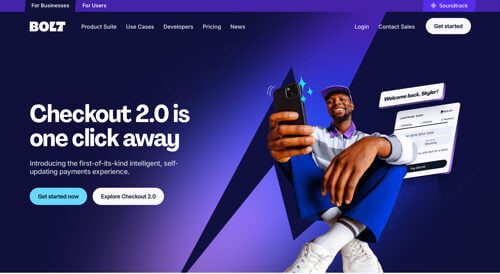
Bolt and Palantir launch AI-powered checkout. Bolt, a checkout technology company, and Palantir, a provider of AI software, have partnered on intelligent ecommerce checkout. According to the companies, Checkout 2.0, a self-learning, self-improving checkout system, provides an adaptive, real-time solution that responds to each shopper’s preferences, behaviors, and context. Checkout 2.0 delivers personalized flows that evolve with the user, prioritizing preferred payment methods, remembering selections, and surfacing relevant information at just the right time.

RevenueCat and Paddle integrate to power cross-platform subscription growth. RevenueCat, a subscription platform used by mobile apps, and Paddle, a merchant of record for SaaS and digital product companies, have launched an integration to help developers unify subscriptions across web and mobile. With the integration, users can subscribe on one platform and automatically unlock access across web and mobile. All subscription events across iOS, Android, and web are centralized in the RevenueCat dashboard, enabling accurate real-time analytics, while Paddle handles payments, tax, and compliance.

Home page of RevenueCat

RevenueCat

Google adds markup support for loyalty programs. Google has announced the addition of structured data markup support for loyalty programs. Businesses that add structured data for loyalty become eligible to appear with member benefits directly in search results. The update establishes a pathway for merchants without Merchant Center accounts to define their loyalty programs through Organization structured data, combined with loyalty benefits under Product structured data. However, businesses with Merchant Center accounts should define their loyalty programs within that platform instead.

Santander UK partners with Worldpay on merchant services. Santander UK, a financial services provider and part of multinational Banco Santander, has partnered with Worldpay, a provider of payments technology. The partnership will provide Santander Business Banking customers with solutions for point-of-sale, ecommerce, and integrated payment needs. Santander Corporate and Commercial Banking customers will also benefit from dedicated ecommerce and implementation consultants on hand to offer support and provide value-added services.

Sovos partners with Shopify to automate sales tax compliance for merchants. Sovos, a tax and regulatory compliance provider, has partnered with Shopify for the preparation, filing, and remittance of sales tax returns for merchants. Sovos’s Sales and Use Tax Filing service now integrates with Shopify Tax, offering merchants a streamlined experience for managing sales tax compliance. With automated filing, merchants reduce the time preparing and filing monthly returns. This feature is available to Shopify‘s eligible U.S. merchants.

Home page of Savos

Sovos

Intelligent Audit launches a parcel audit platform for SMBs. Intelligent Audit, a freight bill and payment optimization platform, has launched Catalyst, a program to help businesses optimize their parcel shipping operations and recover hidden overcharges. Businesses can audit parcel invoices, reclaim shipping overcharges, and get cost-effective shipping strategies. This program is designed for retailers and manufacturers who ship high volumes of small parcels, including growing ecommerce and D2C brands, regional specialty retailers, and subscription box companies.

Amazon launches an infrastructure region in Taiwan. Amazon has announced the launch of the AWS Asia Pacific Region to provide developers, startups, entrepreneurs, enterprises, and more a greater choice for running their applications and serving end users from AWS data centers located in Taiwan. Additionally, Amazon plans to invest more than $5 billion to support the construction, connection, operation, and maintenance of its data centers in Taiwan.

Block adds conversational AI assistant to Square’s business technology platform. Square, the point-of-sale app from Block, now has a conversational AI assistant, Square AI, integrated directly into the Square dashboard. Sellers can ask questions about their business using natural language and receive instant, direct answers. Square AI interprets the question, digs through relevant data, and surfaces the answer. Square AI is now available in public beta for all sellers in the U.S.

Glance and Samsung Galaxy produce AI shopping experiences. Glance, a Google-backed smart lock screen provider for Android devices, has launched Glance AI, a platform delivering genAI-led commerce and content discovery. Glance AI users can instantly visualize themselves in outfits and destinations, and purchase their favorites with a tap. As part of the partnership, Samsung Galaxy users will gain access to Glance’s AI shopping and styling experiences for trending content, local events, and social media.

Home page of Glance

Glance AI

New Ecommerce Tools: June 5, 2025

This week’s rundown of new products from companies offering services to ecommerce merchants includes rollouts for local payments, headless commerce, ad platforms, Bitcoin, B2B commerce, retail media solutions, and parcel delivery robots.

Got an ecommerce product release? Email releases@practicalecommerce.com.

New Tools for Merchants

Ppro, a local payments platform, launches subscriptions. Local payments provider Ppro has announced the launch of Subscriptions for Local Payments, enabling merchants to accelerate development through optimized local strategies. Businesses can (i) access local payment methods such as Twint and Bancontact with native recurring functionality, (ii) deploy subscription flows with dedicated features to cut down on free trial abuse, (iii) reduce payment declines, (iv) allow flexible billing, and (v) leverage Ppro-signature enhancements.

Web page for Ppro

Ppro

Fast Simon integrates with Shopify Hydrogen 2. Fast Simon, a provider of AI shopping optimization, has announced its integration with Hydrogen 2, Shopify’s headless commerce framework. The integration brings server-side rendering capabilities to Fast Simon’s AI-driven merchandising, search, and personalization suite for Shopify merchants. Fast Simon states that its integration enables merchants to capitalize on Hydrogen 2’s infrastructure, ensuring that search and merchandising components render server-side, boosting crawlability, improving time-to-first-byte, and maintaining rich content without sacrificing visibility for search engines.

Pacvue integrates with TikTok Shop and Shop Ads. Pacvue, a commerce acceleration platform, has announced its integration with TikTok Shop and TikTok Shop Ads. Brands and agencies can now manage TikTok Shop operations and advertising through Pacvue’s platform, offering a unified view of performance across channels. The integration enables brands and sellers of all sizes to manage their shoppable social campaign strategies, tap into new audiences, and optimize performance, according to Pacvue.

Amazon Ads launches Sponsored Ads and Stores in Ireland. Eligible sellers and vendors on Ireland’s Amazon.ie can now leverage Sponsored Products, Sponsored Brands, Sponsored Brand Video, and Brand Stores. Sponsored Products ads help promote individual listings. Sponsored Brands ads let sellers include multiple products, along with a brand logo and custom headline. A Store allows sellers to showcase bestsellers and collections, publish videos, or tell a brand story, all at no cost.

Web page for Amazon Ads

Amazon Ads

WordPress.org launches AI team. WordPress.org has announced the formation of a dedicated team focused on accelerating and coordinating AI projects across the WordPress ecosystem. The AI team will coordinate efforts to explore AI-powered features, publish and maintain a public roadmap of AI initiatives and canonical plugins, and collaborate closely with Core, Design, Accessibility, and other grooups to ensure strong integration and shared standards. The initial team has contributors from Automattic, 10up (web development), and Google.

Visa launches pay-by-bank platform in the U.K. Visa has launched Visa A2A, a pay-by-bank platform, in the U.K. The offering introduces enhanced consumer protections for account-to-account transfers. According to Visa, A2A provides a seamless experience for users by integrating payment management into banking apps. For businesses, A2A delivers enhanced benefits through real-time settlement via “Pay.UK” (a faster payment system), improved cash flow visibility, and enriched transaction data. Merchants also receive alerts when customers modify payment permissions.

Block to roll out Bitcoin payments on Square. Block, formerly Square, is launching Bitcoin payments on the Square point-of-sale app, enabling merchants to accept Bitcoin payments directly through their Square hardware for near-instantaneous, low-cost transactions. Square says the rollout will begin in the second half of 2025 and reach all eligible Square sellers in 2026. Square’s new Bitcoin for Businesses offering will build upon its Bitcoin Conversions feature, which automatically converts a portion of daily sales into Bitcoin.

Home page of Square

Square

Visa deploys new AI-enabled products for the APAC region. Visa has announced a suite of AI tools in the Asia-Pacific region, providing regional partners, platforms, fintechs, banks, and merchants with a simple way to connect to the Visa network and deliver secure payment experiences. The Visa Intelligent Commerce initiative integrates APIs and a commercial partner program, allowing engineers to deploy Visa’s AI commerce capabilities at scale. Additionally, Visa is exploring partnerships with Ant International (a fintech company), Grab (a “super app”), and Tencent (the owner of WeChat) for AI-enabled checkout optimization.

Zaelab launches Portul in Europe to simplify B2B commerce on Shopify. Zaelab, a provider of digital B2B tools, has announced the European launch of Portul, a B2B app for Shopify. According to Zaelab, Portul will simplify the requirements of enterprise B2B commerce and assist organizations in modernizing selling experiences. Portul’s features include advanced account management, KPI tracking, efficient reordering workflows, account-based quoting scenarios, integration with ERP systems, and specialized solutions for search, product configuration, visualization, and content management.

Pairzon launches retail media tool to maximize first-party data. Pairzon, an AI-powered marketing intelligence platform, has launched its retail media tool to help retailers leverage first-party data. Pairzon accesses in-store and online transactional data to generate predictive audience segments in real-time. It then uses those segments across Meta, Google, TikTok, and other platforms to deliver performance at scale while maintaining data privacy. Pairzon says retailers can securely share personalized audiences with brands across in-store and online channels through precise shopper targeting.

Veho and Rivr partner on ecommerce delivery through AI-powered robots. Veho, a parcel delivery platform, and Rivr, a physical AI and robotics provider, have launched an initiative to improve the ecommerce delivery experience and efficiency through the use of parcel delivery robots. The robots will enable humans to deliver more parcels, faster, with less physical strain, while maintaining the superior delivery experience. The deployment begins in Austin, Texas, with plans to expand to additional markets later this year.

Home page of Rivr

Rivr

New Ecommerce Tools: May 29, 2025

This week’s rundown of new products from companies offering services to ecommerce merchants includes cross-border shipping, agentic commerce, virtual try-on, AI-powered store builders, embedded financing, fulfillment platforms, product summaries, and hosting.

Got an ecommerce product release? Email releases@practicalecommerce.com.

New Tools for Merchants

DHL Group partners with Shopify to accelerate cross-border shipping. DHL Group has expanded its shipping partnership with Shopify. DHL now integrates with the Shopify platform, enabling sellers worldwide to access the carrier’s global network and shipping services with just a few clicks. Sellers on Shopify will no longer need to onboard a logistics provider independently, per DHL, adding that the integration helps sellers manage complex customs, legal, and administrative tasks.

Web page on DHL Group announcing Shopify partnership

DHL Group

StellarWP launches StellarSites to build and launch a WordPress site. StellarWP, a provider of solutions for WordPress, has launched StellarSites to remove the complexity of traditional WordPress setups. According to StellarWP, publishing a full-featured site is now fast and easy with pre-built templates, premium plugins, and WordPress bundled in. Features include an AI setup wizard, automatic updates, backups, and built-in optimization. Premium plugins include KadenceWP (themes), The Events Calendar, GiveWP (fundraising), LearnDash (courses), IconicWP (WooCommerce tools), and SolidWP (security).

Shopify debuts an AI-powered store builder and new AI tools. At its semi-annual “Editions” showcase earlier this month, Shopify released an AI store builder and an AI element generator for banners and other creative. The platform also upgraded Sidekick, its AI assistant, with new voice chat and screen sharing capabilities. Shopify also introduced a new public theme called “Horizon,” which includes built-in AI to assist merchants with designs.

YouLend to finance sellers on eBay. YouLend, an embedded financing platform, has entered a partnership with eBay Germany to provide sellers with flexible access to capital. YouLend and eBay Germany will provide personalized, pre-approved financing offers to sellers, enabling them to determine their eligibility before applying. Via the integration, eBay Seller Capital will support sellers in accessing up to €2 million.

Home page of YouLend

YouLend

Google adds AI shopping features to search. At its annual I/O conference, Google announced several new AI features, including a new shopping experience in AI Mode with a virtual “try it on” feature and an agentic checkout experience within search. With Google Search’s AI Mode, shoppers can conversationally chat what they’re looking for, and the AI feature draws from Google’s visual images and Shopping Graph. Shoppers have the option to let the agentic agent pay autonomously.

Manhattan Associates integrates order management with Shopify. Manhattan Associates, a provider of supply chain commerce solutions, announced that a connector to its Active Order Management is now available in the Shopify App Store. Manhattan’s Order Management and Store Inventory and Fulfilment tool is available as part of Active Omni, which helps enterprises provide customer service, inventory visibility, and store fulfilment capabilities.

InfoSum integrates with Amazon Ads for first-party insights. InfoSum, a data collaboration platform, has announced a new set of integrations with Amazon Ads to enable first-party signals across Amazon DSP (Demand Side Platform) and Amazon Marketing Cloud. According to InfoSum, advertisers can push first-party signals directly to Amazon Ads using InfoSum’s secure user interface. Advertisers can also create custom audiences for targeting in Amazon DSP and leverage insights within Marketing Cloud for advanced analysis. Per InfoSum, advertisers can optimize their media strategies with real-time access to audience insights.

Home page of InfoSum

InfoSum

CommerceIQ launches agentic AI for ecommerce. CommerceIQ, an ecommerce platform, has released Ally, a suite of role-specific AI agents to help brands across ecommerce platforms. Trained on data across more than 1,400 retailers such as Amazon, Walmart, and Target, Ally provides ecommerce businesses with insights, performance recommendations, and instant optimizations. The suite offers a Sales Teammate, a Category Teammate to track and manage SKUs, and a Media Teammate to improve ad performance.

Worldpay partners with Yarbie for U.K. SMBs. Point-of-sale provider Yabie has partnered with payments platform Worldpay to power merchant tools within Worldpay 360, a management and payment platform for small to midsize businesses in the U.K. Available across retail, hospitality and service sectors, Yabie integrates with Worldpay’s payment hardware and technology. Worldpay 360 enables merchants to set up and access features such as inventory management, table management, and customizable receipts.

Amazon’s generative AI-powered audio feature synthesizes product summaries. Amazon is testing short-form audio summaries on select product detail pages, with AI-powered shopping experts discussing key product features. Shoppers can listen to the summaries by tapping the “Hear the highlights” button in the Amazon app. The initial test feature focuses on products that typically require consideration and is available to a subset of U.S. customers.

Bluehost launches open-source ecommerce plans for creators and businesses. Bluehost has announced its new WordPress eCommerce Hosting plans for content creators and businesses. The platform bundles hosting, plugins, and store management, including AI‑powered site building, payment integrations, paid courses and memberships, social logins, email templates, and search engine optimization tools.

Home page of Bluehost

Bluehost

Shopify’s New AI Tools Empower Merchants

Last week Shopify released “Editions,” its semi-annual platform update, with a slew of AI-fueled tools to ease launching, operating, and scaling a store.

For more than a decade, ecommerce platforms have competed on extensibility. The best solutions were often the most customizable and adaptable, with open APIs, app marketplaces, and flexible themes.

Extensibility

Shopify has thrived because of extensibility, the ability to tailor seemingly endless storefronts — from local boutiques to billion-dollar direct-to-consumer brands.

This flexibility has paid off for merchants, too. The combined sales of all U.S.-based Shopify merchants trail only Amazon among all nationwide retailers, ahead of eBay and Walmart.

But extensibility is now a lesser competitive edge.

The advent of generative AI has changed how people work. Shopify now inserts AI at its platform’s core, empowering merchants with speed, simplicity, and autonomy.

Horizon Theme

Consider Shopify’s new Horizon theme. It’s not merely an aesthetically trendy refresh of the Dawn theme, but the apparent foundation for a new generation of merchant experiences built around modularity, speed, and AI-assisted design.

Screenshot of the Pitch theme.

Horizon represents a new foundation for theme-building, such as Pitch for beauty, fashion, and skincare.

At the core of Horizon is Theme Blocks, a new concept introduced to developers last fall. With drag-and-drop controls, merchants can rearrange these modular, self-contained components, such as product sliders, image galleries, promotional banners, and custom content sections.

Shopify includes a robust set of ready-made Theme Blocks but also allows for AI-generated versions.

Screenshot of a Theme Block with four images.

AI can generate Shopify Theme Blocks with custom layouts.

Merchants can describe design elements such as “a banner with text overlay and fade-in animation,” and the system will generate a functioning Theme Block to match.

Adding Theme Blocks and generative AI implies that some small and mid-sized storekeepers who might have purchased a custom theme or hired a developer to tweak one can now do it themselves. It’s a significant usability gain built atop Shopify’s extensible base.

AI-Powered Store Builder

Shopify’s new AI-powered store builder turns a week-long process into something closer to a guided conversation. Rather than starting from scratch, a store owner can enter a couple of descriptive keywords. Shopify will return three layout options, each populated with images, text, and structure — ready for editing.

The builder lowers the barrier to launching a quality storefront without sacrificing aesthetics.

Sidekick

Shopify’s AI-powered assistant, Sidekick, also received usability upgrades.

Sidekick now connects multiple data sources, performs multi-step analysis, and delivers relatively more insights.

For example, Sidekick can help a merchant diagnose why sales dipped on a product line, suggest ways to re-engage a lapsed customer segment, or walk users through admin tasks via voice chat and screen sharing.

These enhancements make Sidekick less like a chatbot and more like a co-pilot, or at least the foundation for one. It is another sign that Shopify prioritizes tools that reduce complexity and give everyday merchants more control without requiring technical expertise or development resources.

Usability and Extensibility

Shopify’s “usability” updates have not reduced its extensibility. Developers can still access Liquid, APIs, and the platform’s vast app ecosystem.

Sellers can extend, customize, and integrate Horizon themes, like previous versions.

But now, non-technical merchants have a customization path via natural language, drag-and-drop editing, and AI assistance. Shopify is layering usability on top of extensibility, expanding who can build, launch, and manage a storefront.

The Trend

Shopify’s usability push likely reflects a general software and digital commerce trend.

As generative AI becomes more capable, platform value shifts away from raw flexibility and toward outcomes such as how quickly a merchant can grow without adding complexity.

It’s especially relevant as entrepreneurs bootstrap solo ventures or side hustles. These merchants need tools that lower friction and overhead.

AI tools on Shopify and elsewhere now:

The new usability mindset isn’t just for new sellers. Experienced operators can do more with fewer resources.

New Ecommerce Tools: May 22, 2025

We publish a rundown each week of new products from companies offering services to ecommerce merchants. This installment includes updates on virtual shopping, agentic commerce, analytics, dropshipping, omnichannel payments, logistics, loyalty programs, promotions, and gamification.

Got an ecommerce product release? Email releases@practicalecommerce.com.

New Tools for Merchants

Roblox launches APIs for in-game shopping of physical items. Roblox, an online gaming platform and virtual universe, is expanding its selling capabilities with Commerce APIs and Shopify as its first integrated partner. Eligible creators and brands can sell physical products within Roblox experiences. Roblox’s new Approved Merchandiser Program connects physical shopping with virtual goods and benefits.

Screenshot of a Roblox game

Roblox

Talon.One brings advanced promotions and loyalty capabilities to Shopify Enterprise. Talon.One, an incentive engine for loyalty, promotions, and gamification, has partnered with Shopify. Per Talone.One, brands that use both Talon.One and Shopify Enterprise have a single point of access to over 30 incentive tools, including personalized offers, gamified rewards, and advanced loyalty programs.

Zoho enters U.S. payments market. Technology platform Zoho has launched a unified payment solution for online businesses using multiple payment methods such as cards and ACH. The solution offers native payment capabilities within Zoho, enabling companies to manage payments directly within their existing financial workflows. Pricing for U.S. domestic cards is 2.9% + 30¢ per transaction, including Visa, Mastercard, AmEx, and Discover. Pricing for international cards is 1.5% plus the domestic card fee.

Nuvei joins the European Payments Initiative to launch Wero for ecommerce. Nuvei, a Canadian fintech company, has announced its membership in the European Payments Initiative, becoming one of the first payment services providers to enable ecommerce businesses to accept Wero, EPI’s digital wallet, in their checkouts. Wero facilitates instant account-to-account transfers using SEPA Instant Credit Transfer protocols, allowing users to send money within 10 seconds via mobile numbers, email addresses, or QR codes. Wero has attracted over 40 million users since its launch in 2024.

Image of Nuvei's Wero on a smartphone

Nuvei’s Wero

Perplexity selects PayPal to power agentic commerce. Perplexity, an AI answer engine, has partnered with PayPal to power agentic commerce across its Pro platform. Starting this summer in the U.S., consumers can check out instantly with PayPal or Venmo when they ask Perplexity to find products, book travel, or buy tickets. The process — payment, shipping, tracking, invoicing — will occur behind the scenes with PayPal’s account linking, secure tokenized wallet, and emerging passkey checkout flows.

WooCom Made Easy achieves HIPAA compliance for healthcare integration. HIC Global Solutions, a Salesforce consulting company, has announced WooCom Made Easy, an integration software connecting WooCommerce and Salesforce, is now HIPAA compliant. The update enables healthcare providers, companies, and businesses handling sensitive patient data to sync their ecommerce and customer-management platforms without compromising privacy. All data transfers are now encrypted and compliant with HIPAA guidelines, protecting personal health information while powering real-time sync and multi-store operations.

Amplitude and Twilio launch partnership for co-selling and deeper integration. Amplitude, a digital analytics platform, has partnered with Twilio Segment, a customer data platform. Amplitude recommends Twilio Segment as an optimal customer data platform, and Twilio recommends Amplitude as the digital analytics provider of choice. Amplitude has also released ready-made dashboards that connect its platform to Twilio Segment’s CDP.

Home page of Amplitude

Amplitude

Kibo Commerce debuts unified marketplace and dropship solution. Kibo, a composable commerce platform, has introduced an integrated marketplace and dropship tool to help retailers and brands expand product assortments and reduce operational costs without managing physical inventory. With Kibo’s tools, clients can onboard third-party vendors using self-service registration portals or targeted invitation workflows. Kibo says its integrated tools help merchants upload product catalogs, manage pricing, and fulfill orders, while analytics help operators track KPIs, vendor performance, and gross merchandise value.

Global Payments launches Genius POS Platform. Global Payments, a provider of payment technology and software solutions, has announced the release of Genius, a point-of-sale command center for business operations. According to Global Payments, the Genius platform enables global expansion and vertical specialization at scale. It also unlocks opportunities in specialized retail segments such as age-regulated, higher education, and consumer service businesses.

Global-e and Shopify sign new multi-year strategic partnership agreement. Global-e, a direct-to-consumer ecommerce provider, and Shopify have announced a three-year renewal of their partnership for 1P (Shopify Managed Markets) and 3P MoR (merchant of record) solutions to empower international D2C transactions on the Shopify platform. For 1P, Global-e remains the exclusive provider of MoR services. Future versions of Managed Markets will leverage Shopify Payments and other elements of the Shopify suite of services.

Stord acquires Ware2Go, a specialty warehouse business, from UPS. Stord, a provider of high-volume fulfillment services and ecommerce technology, announced its acquisition of Ware2Go, a subsidiary of UPS. With this acquisition, Stord adds 21 fulfillment centers to its network and tech platform (warehouse management, order management, customer service). Ware2Go brings an additional 2.5 million square feet of fulfillment centers, complementing Stord’s existing North American footprint and partner network.

Home page of Stord

Stord

New Ecommerce Tools: May 15, 2025

We publish a rundown each week of new products from companies offering services to ecommerce merchants. This installment includes updates on AI-powered site-search, shopping assistants, product listings, merchant financing, point-of-sale solutions, cross-border transactions, and warehouse automation.

Got an ecommerce product release? Email releases@practicalecommerce.com.

New Tools for Merchants

Miva expands ecommerce platform with AI search infrastructure and no-code tools. Miva, an ecommerce software and service provider, has launched Miva 10.12, introducing tools to help ecommerce teams move faster and scale. The update adds platform infrastructure for Vexture, Miva’s AI-powered search engine that uses vector-based technology to interpret shopper intent. Merchants can now create and assign product page designs — a new design control panel helps teams manage fonts, buttons, and page spacing. Also, background tasks are now easier to monitor, prioritize, and troubleshoot.

Home page of Miva

Miva

eBay launches warranties for open-box goods. eBay is offering a warranty program on open-box products in the Electronics and Home categories. Listings in those categories will automatically display the Certified Open Box badge when they meet key service standards and offer free shipping and returns. Each Certified Open Box item comes with a one-year warranty serviced by Allstate Protection Plans.

New genAI tool helps Amazon sellers improve product listings. Amazon has launched Enhance My Listing, a new genAI tool wherein sellers can automatically maintain and optimize their product listings. The tool generates timely, relevant recommendations for product titles, attributes, descriptions, and missing details. Sellers can review, customize, or decline these suggestions, ensuring that listings reflect their expertise while benefiting from Amazon’s detailed knowledge.

Storfund launches merchant financing on marketplaces via Mirakl Connect. Storfund, an ecommerce cash-flow provider, has announced a new partnership enabling businesses to use its cash-flow solution on the 400 marketplaces powered by Mirakl, an ecommerce software provider. Designed to eliminate the standard delay of 25 days between sale and payout, Storfund’s new Daily Advance pays sellers as soon as they ship their goods. Sellers can apply for cash flow on hundreds of marketplaces at the same time.

Home page of Storfund

Storfund

WooCommerce names Square as preferred POS partner. WooCommerce has named Square as its preferred point-of-sale provider for in-person payments. The strategic partnership enables seamless synchronization of inventory, orders, and customer data across digital and physical retail. Square’s POS integration is available to WooCommerce merchants in eight countries: the U.S., Canada, Australia, Japan, the U.K., France, Spain, and Ireland.

Ebanx integrates UPI recurring payments for cross-border ecommerce in India. Ebanx, a global provider of payment services for emerging markets, has integrated UPI Autopay, the recurring payments feature of India’s instant payments system, Unified Payments Interface, into its cross-border payments platform. With the integration, Ebanx’s global ecommerce merchants in industries such as SaaS, streaming, and other subscription-based businesses can now offer recurring payments to their India-based customers.

Bluecore brings AI shopping assistant Alby to Shopify merchants. Bluecore, a marketing technology company, has expanded Alby, its genAI customer-service agent. Merchants can access Alby through Shopify to power conversational AI shopping unique to their brand and customers. Once activated, the AI agent will learn, make decisions, and act on a brand’s behalf, pulling from product data, brand assets, and the company’s tone of voice to ensure accurate responses.

Home page of Alby

Alby

Fluent and Rebuy partner on post-purchase advertising for Shopify merchants. Fluent, a provider of commerce media solutions, and Rebuy, an ecommerce personalization platform for Shopify brands, have announced a strategic partnership to launch Rebuy Ads powered by Fluent, designed to help merchants further engage their customers while unlocking additional revenue at no cost. The partnership pairs Fluent’s AI-powered advertiser marketplace and demand-generation expertise with Rebuy’s Shopify integration and partner network.

Shopify updates its Sidekick AI tool. Shopify has updated its AI-powered commerce assistant, Sidekick, with multi-step reasoning. Merchants can ask complex questions, and Sidekick will analyze multiple data sources to pinpoint the issue and make suggestions. Sidekick can now generate custom images based on text prompts to help merchants create visually appealing content for hero banners, marketing materials, and illustrations. Also, Sidekick now supports all 20 admin languages, automatically responding in the language detected.

Uber rolls out Courier XL in India to deliver packages up to 1,650 pounds. Uber has launched Courier XL in India, an expanded service under its logistics arm aimed at transporting packages weighing up to 750 kilograms (1,650 pounds). Initially rolled out in Delhi and Mumbai, the service is part of Uber’s broader strategy to strengthen courier offerings and compete in the large-package delivery space, with plans to expand to more cities in the coming months. Courier XL builds on Uber’s two-wheeler parcel service, Courier.

Robotic warehouse firm Pio expands product lineup. Pio, a warehouse automation provider, has announced its global expansion with a new product lineup. Pio now offers four scalable, modular systems: P100 for businesses with fewer than 10,000 monthly orders; P200 for mid-sized operations; P400 for high volume fulfillment centres; P600 for larger high-capacity warehouses. According to Pio, customers can reduce picking labour costs by up to 80%, and installations take as little as five days.

Home page of Pio

Pio

New Ecommerce Tools: May 8, 2025

Every week we publish a rundown of new products from companies offering services to ecommerce merchants. This installment includes updates on agentic AI commerce, mobile wallets, B2B transactions, one-click checkout, application hosting, AI-powered promotions, and enterprise-ready fulfillment.

Got an ecommerce product release? Email releases@practicalecommerce.com.

New Tools for Merchants

eBay sellers can apply for a $10,000 grant to grow their business. eBay is giving away $10,000 grants and other perks to 50 active sellers in the U.S. through its annual Up & Running program, now in its sixth year, in partnership with Hello Alice. The 50 winning sellers will receive $10,000 in cash, a $500 stipend to purchase essential technology from eBay Refurbished, and access to eBay education and seller resources to help scale efficiently. Sellers must apply by June 6, and eBay will email winning grant recipients in August.

“Up & Running” from eBay and Hello Alice.

Kibo announces agentic Launchpad to accelerate smarter commerce at scale. Kibo Commerce, a provider of composable selling tools, has announced the launch of Agentic Launchpad. Launchpad is a pre-built integration package connecting Kibo’s Shopper and CSR agents to leading commerce platforms and Kibo’s recently launched Converge Tech Ecosystem partners, including Akeneo and OneRail. According to Kibo, Launchpad delivers real-time product discovery, live inventory insights, conversational checkout, and automated post-purchase care across every touchpoint.

Volt’s one-click PayTo solution available to Shopify customers in Australia. Volt, a global real-time payments platform, has announced its expansion with Shopify to Australia. Shopify merchants can offer Australia-based consumers a one-click checkout experience, powered by Volt’s PayTo, a real-time payment system. Volt’s one-click checkout mimics the traditional card-on-file consumer experience, but utilizes an instant payment scheme. Because shoppers set up a payment agreement with merchants during their first purchase, normally by simply entering their payment ID, future purchases are automatically pre-authorised.

Visa launches Intelligent Commerce platform. Visa has launched Intelligent Commerce, a platform to let artificial intelligence agents purchase products on behalf of users. The system replaces traditional card details with tokenized digital credentials that authorized AI agents can access securely. Users maintain control by setting specific parameters, such as spending limits and merchant categories, while the AI handles the transaction details. The initiative is built on a network of partnerships with leading AI companies.

Web page for Visa Intelligent Commerce

Visa Intelligent Commerce

Reveel and ProShip partner on integrated parcel shipping. Reveel, a shipping intelligence platform, and ProShip, a multi-carrier shipping software provider, have unveiled an integrated parcel shipping service that draws on ProShip’s automation and Reveel’s advanced analytics and order-level cost intelligence capabilities. Reveel connects carrier invoice data with order and SKU info; ProShip centralizes and automates the management of multiple carriers. With ProShip’s automated carrier management and label generation, as well as Reveel’s invoice reconciliation, businesses can allocate and analyze parcel costs with precision, according to the companies.

PayPal debuts contactless mobile wallet. PayPal is expanding in physical stores across Germany this summer. PayPal’s first-ever contactless mobile wallet will launch to PayPal consumers in that country. Consumers will access the contactless feature through the latest version of the PayPal app (iOS and Android). Consumers can select PayPal with a simple tap of their phone at any location that accepts Mastercard contactless payments.

Webflow Cloud launches for full-stack app hosting. Webflow, a platform to build, manage, and optimize websites, has introduced Cloud, allowing teams to host and deploy full-stack web applications natively within Webflow. Businesses can run dynamic apps, backend logic, and integrated web experiences directly alongside their websites without relying on separate hosting. With Webflow Cloud, technical teams can deliver advanced functionality such as headless ecommerce sites, gated content experiences, personalized onboarding workflows, and custom booking systems.

Web page for Webflow Cloud

Webflow Cloud

ShipBob Plus launches for mid-market and enterprise merchants. ShipBob, a global supply chain and fulfillment platform for small and mid-market ecommerce merchants, has launched Plus, an enterprise-ready fulfillment service for fast-growing brands. ShipBob states its Plus offering combines global fulfillment across four key pillars: Supply Chain, Technology, Support, and Access. Per ShipBob, Plus enables high-performing brands to unlock accelerated growth, improve operational resilience, and achieve cost efficiencies through a high-touch, customized fulfillment experience.

Affirm introduced AdaptAI, its AI-powered promotions platform. Affirm, a pay-over-time payment network, has launched AdaptAI, its AI-powered promotions platform, to its merchant partners. AdaptAI enables Affirm to deliver personalized financial benefits (exclusive interest rates, special repayment terms, and immediate cash savings) directly to consumers via the Affirm app and Affirm card. Merchants can deliver these promotions and credit offers, which are optimized specifically for a customer’s shopping preferences, spending habits, and purchase details, at the point of purchase.

Mastercard unveils Agent Pay agentic payments technology. Mastercard has launched its agentic (self-directing) payments program, Mastercard Agent Pay, to enhance generative AI conversations by integrating seamless payments experiences into the tailored recommendations and insights already provided on conversational platforms. The program introduces Mastercard Agentic Tokens, which build upon Mastercard’s tokenization capabilities. Mastercard will work with (i) acquirers and checkout players to enhance tokenization capabilities and (ii) Microsoft to integrate Azure OpenAI Service and Copilot Studio.

Nuvo raises $45 million to develop B2B trade. Nuvo, a network for B2B global trade, has raised $45 million from Sequoia Capital, Spark Capital, Founders Fund, Index Ventures, Human Capital, Foundation Capital, Susa Ventures, and Pear VC. By enabling companies to exchange verified profiles with potential partners, Nuvo provides instant access to critical trust signals, including verification status, creditworthiness, banking information, and trade history. As its network grows, Nuvo states its payments infrastructure and AI systems will power the intelligent foundations needed to connect and coordinate trade.

Home page of Nuvo

Nuvo

Get Your Products on ChatGPT Shopping

ChatGPT now recommends products directly in search results. The feature has no ads (so far). Hence any ecommerce business can presumably gain visibility for free.

The recommendations follow from relevant prompts with clear shopping intent. ChatGPT provides info on each product it recommends, including (i) customer ratings from multiple sources, (ii) pricing from multiple sellers, and (iii) explanations of its selections.

Here’s how to expose your products to ChatGPT.

A prompt on ChatGPT for “drip coffee makers” produced multiple recommendations with images, sources, ratings, and a “Top Picks Explained” section. Click image to enlarge.

Get in the Database

In a post titled “Help ChatGPT discover your products,” OpenAI states it is considering a product feed submission feature (likely similar to Google Shopping) and provides a form to receive notifications when it’s live.

Ecommerce businesses should sign up now to become early adopters — before other (bigger) brands.

The post also reminds merchants to ensure OpenAI’s crawler can access their sites. Some content management systems and plugins block OpenAI bots by default. Check your robots.txt file to ensure it doesn’t block “OAI-SearchBot.” Log file analyzers from Screaming Frog and others can confirm the bot is crawling your site.

Knowatoa’s free “AI Search Console” discloses which generative AI bots have access.

Use Schema Markup

ChatGPT supports structured data markup from Schema.org. Thus including detailed product schema will likely increase your chances of being recommended. Searchers’ purchase intent prompts are often very specific with dimensions, colors, and similar.

In a related post, ChatGPT states it will recommend products based in part on the user’s prompt history. Using its memory feature, ChatGPT might know, for example, the searcher’s color and style preferences and will recommend products accordingly.

Searchers’ purchase intent prompts typically seek specific features. A detailed product schema with many facets (colors, sizes, dimensions, warranty, styles, compatibility, etcetera) will increase the likelihood of a recommendation.

Monitor External Product Reviews

In the same related post, ChatGPT states it relies on multiple public sources when displaying product reviews and ratings. While testing, I’ve seen ratings from Target, Amazon, Wired, Business Insider, and others.

Keep an eye on ratings and reviews to encourage ChatGPT’s recommendations. I’ve yet to see a ChatGPT recommendation with bad reviews. Some platforms (Better Business Bureau) often lean towards negative reviews, while others (Facebook) are typically positive (e.g., Facebook).

Shopper Approved can help improve your product ratings by adding positive reviews from your site to external platforms as needed.

New Ecommerce Tools: May 1, 2025

We publish a rundown each week of new products from companies offering services to ecommerce merchants. This installment includes updates from ChatGPT (shopping), BigCommerce (B2B portal), PayPal (programmatic ads), eBay (Klarna partnership), WooCommerce (Affirm partnership), Caro Holdings (AI customer service), and more.

Got an ecommerce product release? Email releases@practicalecommerce.com.

New Tools for Merchants

OpenAI adds shopping to ChatGPT. OpenAI is launching a shopping experience on ChatGPT, including product picks and buy buttons. ChatGPT recommends products to prospective shoppers based on what the platform knows about their preferences, as well as product reviews pulled from across the web. Shoppers will be redirected to the merchant’s website to finish the transaction.

Screenshot of ChatGPT product recommendations

ChatGPT’s product recommendations. Image from OpenAI.

BigCommerce and Silk Commerce launch hub for dealers, distributors, franchises. BigCommerce has announced the launch of Distributed Ecommerce Hub, a joint offering with systems integrator and digital commerce agency Silk Commerce. Distributed Ecommerce Hub empowers manufacturers, brands, and franchisors to create and centrally manage branded storefronts for their dealer, distributor, or franchise networks. The platform is designed for businesses that have outgrown traditional multi-storefront architecture or need deeper enablement across distributed sales channels, according to BigCommerce.

Skypad launches analytics platform for Walmart Marketplace sellers. Skypad, a retail analytics platform, has announced its availability to Walmart Marketplace sellers. Skypad states that its platform offers solutions for sales and inventory analytics, helping sellers optimize performance, streamline operations, and increase profitability across multiple retail channels. Sellers get real-time sales and inventory reports in one place. In addition to Walmart Marketplace, Skypad aggregates data from all retail channels. Companies can select weekly, monthly, or ad hoc reports.

Znode releases distributed SaaS platform for B2B ecommerce. Znode, a scalable B2B ecommerce platform, has released its latest version. New features include embedded AI for generating product descriptions and search engine content, a visual page builder for drag-and-drop creation, dynamic data, hydrated search for enhanced product discovery, pre-configured business intelligence reports via Microsoft Power BI (for data visualization), and React Next.js front-end accelerators. Customers can run an unlimited number of storefronts and portals, manage an unlimited number of catalogs, and more.

Home page of Znode

Znode

PayPal launches programmatic ads powered by shopping data. PayPal has launched Offsite Ads for advertisers to tap into PayPal’s transaction graph and reach consumers across the open web through display and video advertising. PayPal Offsite Ads is powered by actual purchase data across merchants. This enables brands to reach relevant audiences based on real shopping intent. Advertisers can leverage PayPal’s understanding of when and where people buy, across a range of categories, to inform smarter media buying decisions.

Qliro partners with Two to launch B2B BNPL across the Nordics. Two, a Europe-based provider of B2B payments technology, has announced a strategic partnership with Qliro, a Nordic payments provider, to introduce its B2B buy-now, pay-later solutions to small and mid-size businesses across that region. Two’s B2B BNPL capabilities will directly integrate into Qliro’s existing checkout.

Square updates point-of-sale app. Square has announced a new point-of-sale app. The app is designed with feature sets tailored to each industry, providing sellers with a personalized POS experience that equips them with the right tools for their business.

Banuba launches Shopify augmented reality try-on plugin. Banuba, a provider of augmented reality technology, has launched a virtual try-on plugin for Shopify that simplifies the integration of AR features. The Banuba virtual try-on plugin lets users test makeup on their screens. It also features an AI-powered recommendation tool that automatically analyzes users’ appearances and suggests cosmetics that complement their looks.

Web page for Banuba's virtual try-on plugin. 

Banuba’s virtual try-on plugin.

PSQ Payments launches integration with Shopify. PSQ Payments, a payment platform from PublicSquare, has announced the launch of its direct integration with Shopify. The PSQ Payments app offers features such as an optimized Shopify checkout, a comprehensive merchant dashboard for real-time tracking of payments and refunds, built-in fraud protection, and refund management.

eBay and Klarna expand BNPL partnership to the U.S. eBay has expanded its global partnership with Klarna, a buy-now-pay-later provider, to the U.S. market. Shoppers in the U.S. can pay for eligible eBay purchases using Klarna’s flexible payment options, including “Pay in 4.” Additionally, Klarna has recently introduced its resell feature to U.S. eBay shoppers.

Caro Holdings launches AI chat agent platform. Caro Holdings has announced the release of its AI chat agent, an intelligent, always-on assistant designed to help businesses reduce costs and deliver premium customer service without the need for additional staff. Caro’s smart agents can handle a variety of support tasks, including answering FAQs such as return policies or product details, scheduling appointments through chat, order tracking, identifying buyers, and gathering reviews and insights.

Affirm and WooCommerce bring partnership to the U.K. WooCommerce announced an expansion to the U.K. of its partnership with Affirm, a buy-now-pay-later provider. WooCommerce merchants in the U.K. can now integrate Affirm and offer customers customizable payment options at checkout. Approved customers can select the customized payment plan that best suits their needs.

Home page of Affirm

Affirm

Multiple Stores, 1 Backend: Pros and Cons

For 20 years I’ve managed data for both large and small ecommerce companies. I’ve migrated data from one platform to another, cleansed data, optimized data for search engines, enhanced data for conversions, and more.

Ecommerce firms with multiple storefronts and overlapping products pose unique data challenges. Combining the storefronts into a single backend centralizes the data and streamlines oversight. But it comes with costs.

What follows are my pros and cons for combining multiple storefronts with the same products into one backend.

Pros

Time management. Multiple storefronts with separate backends mean uploading the same images, descriptions, and product data repeatedly. Combining that info into a single backend saves much time. It eliminates the need to log in to each store and streamlines the process of adding and updating the same products.

Analytics. A single backend makes combined performance tracking (for all stores) easier. It eliminates the need for a separate business intelligence tool to view all data in one place.

Inventory management. Multiple storefronts with different backends typically require third-party software to track overall quantities of the same item. When all stores point to the same backend, standard inventory management tools — native to many ecommerce platforms — can fill that need.

Different regions. Targeting different global regions from multiple storefronts is often easier with the same backend. For example, a merchant could sell the same product in the U.S., Canada, Australia, and the U.K., and use country-specific top-level domains, such as .ca, .co.uk, and .au, to attract local customers. Consumers in each of those countries speak English, allowing the same (or very similar) product descriptions and images. Sellers would need to customize only the currencies, payment, and shipping methods.

Cons

Search engine optimization. Utilizing the same backend to display the same products in different stores results in duplicate search-engine data, such as titles, product descriptions, and images, all competing against each other for rankings. The result is likely lower overall search visibility for all of them.

Unique prices. The same price across all stores prevents standalone prices and discounts. A workaround is custom pricing per channel or customer group. For example, a merchant may sell the same product on both a B2C and a B2B site. The B2B price could be quantity-based versus a single-item amount for B2C customers. This assumes the ecommerce platform has that functionality. In my experience, managing different price groups and price levels is more complex when using the same backend.

Promotional flexibility. Promotions for specific items on specific storements are difficult with a single backend, if not impossible. An example is adding banners for sale items in one store but not another. Some ecommerce platforms allow for unique promos by storefront. Others are SKU-based regardless of the store.

Risk. A single backend risks disabling all storefronts due to data breaches, fraud, platform errors, traffic spikes, and similar issues. Sometimes putting eggs in multiple baskets is better.

Customer, order management. Some ecommerce platforms allow customer segmentation by storefront. Others do not, which complicates emails, audience targeting, and overall marketing initiatives. Without a clear storefront distinction, it can be confusing to know which store drove which order.

Verify

To be sure, my pros and cons depend on the ecommerce platform. Some facilitate multi-store backends better than others. Before consolidating, verify the capabilities, particularly for SEO, inventory management, marketing, and pricing.