The Best Email Marketing Tells a Story

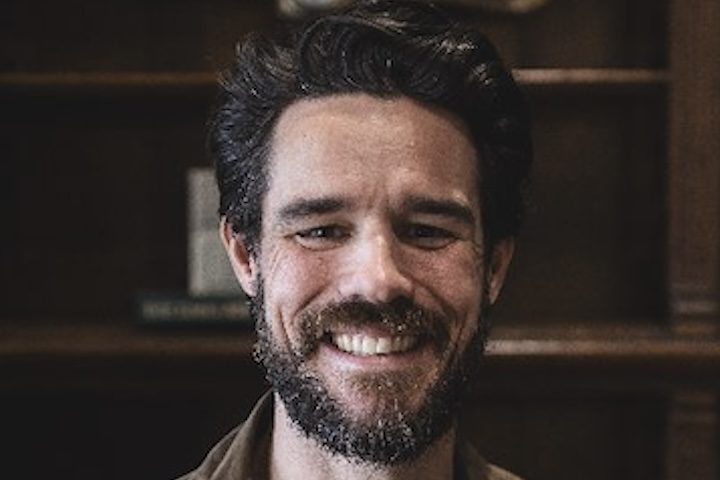
Matt Ragland is a 10-year email marketer, first at ConvertKit and now at Good People Digital, the Nashville-based agency he launched in early 2023. His approach to superior email performance is storytelling.

He told me, “Brands that excel at email marketing frequently tell a story to their ideal audience.”

In our recent conversation, he and I addressed storytelling tactics, email design, automation strategies, and more. Our entire audio is embedded below. The transcript is condensed and edited for clarity.

Eric Bandholz: Who the heck are you?

Matt Ragland: I run an email marketing and course-launch agency called Good People Digital. We work with creators and ecommerce providers. We build email and launch newsletters, usually for courses and information products. I’ve been in the email game for almost 10 years.

I do a lot of things in the creator economy. I have a YouTube channel that’s just under 100,000 subscribers.

Bandholz: What is your approach to email marketing?

Ragland: I focus on a story or narrative. For ecommerce, brands that excel at email marketing frequently tell a story to their ideal audience and include their products. I would like to see more ecommerce brands bring their customers into that story in a natural way.

Creators do a good job with stories, but many are horrible at selling and promoting. And then many ecommerce merchants are good at selling, promotion, packaging, and positioning but not storytelling. Both sides have much to learn from each other.

Bandholz: Email newsletter brands such as The Hustle and Morning Brew have grown to eight-figure valuations. Walk us through that business model.

Ragland: Their revenue model focuses almost exclusively on advertising and sponsorships.

It costs very little to start an email newsletter. The Hustle and Morning Brew both went to a daily newsletter pretty early. I remember listening to the Morning Brew founders. They launched the newsletter while students at the University of Michigan. They asked people in their business classes to subscribe on paper.

It started to grow naturally from there through referrals. They had a robust referral program. Say I’m reading the Morning Brew, sign up to be a referral partner, and send it to you and 10 other people who sign up. I then get a sticker and a shirt. The Hustle did something similar.

The other thing Morning Brew and The Hustle did well was paid acquisition of newsletter subscribers. Ecommerce has been great at this for years. But more traditional newsletters didn’t understand the same way as ecommerce sellers when Facebook ads were cheap, around 2015. It felt like free money.

Bandholz: Is there any new tactic in email marketing to take inspiration from?

Ragland: A lot of people feel email marketing is old and out of vogue. But it remains among the best forms of direct marketing. In terms of new tactics, emphasize the story aspect and simplicity — making the newsletters as simple as possible and cutting back on graphics.

Try making a newsletter look more like a personal email message. A friend of mine runs a design studio called Late Checkout. He publishes a design newsletter and stripped away all of the visuals last year.

He now sends something that looks more like a letter to shareholders, which he calls “Greg’s Letter.”

Bandholz: The biggest innovation to me is campaign flows and automation. That’s how Klaviyo got traction over Mailchimp.

Ragland: Yes. Also, what Klaviyo did so well and still does is integrate SMS.

The automation piece is huge, as is the ability to have one entry point as the start for an entire flow that can upsell, down-sell, and cross-sell. We implemented it for an ecommerce client. Instead of the initial entry point of signing up for the newsletter or purchasing a product, we used a mid-life cycle automation based on interest or intent.

For example, a subscriber who clicks on a particular product or link in an email launches an automation similar to cart abandonment, with cross-sells and storytelling around that type of item.

Bandholz: Your wife is expecting your fourth child. What is your philosophy on how to be a good dad?

Ragland: I want to be a good example for my kids. I want to show them what I believe in and what being a good man is. I’ve been fortunate to have a lot of great examples in my life. I’m close with my dad, and he’s amazing. He’s always been a big supporter and fan of mine. My uncles have been excellent mentors, and I’ve had a lot of people in my life who have shown me that this is what it is to be a good man and a good dad.

Bandholz: Where can listeners follow you and learn more about your email services?

Ragland: Our agency site is MyGoodPeople.com —  AutomaticEvergreen.com is our email marketing service. They can follow my YouTube channel or contact me on LinkedIn or X — @mattragland.


ARTO Owner on Generational Businesses

In 1962 Arto Alajian arrived in the U.S., having fled Egypt and his shoe-manufacturing business. He became a milkman in Los Angeles, and then a ceramic tile installer, and then, in 1966, a tile maker.

Fast forward to 2024, and ARTO, the company, is a global supplier of handcrafted ceramic, porcelain, and concrete products. Armen Alajian, the founder’s son, now co-owns the business.

He and I recently spoke, addressing the challenges and rewards of generational, family-owned companies. The audio of our entire conversation is below. The transcript is edited for length and clarity.

Eric Bandholz: What do you do?

Armen Alajian: I’m the co-owner of a company called ARTO. We make rustic and elegant handmade ceramic and concrete tiles. We manufacture in California and sell online and in showrooms in Los Angeles, nationwide, and globally.

My dad, Arto Alajian, started the business. He and my mom had a factory in Egypt. They made leather shoes there, but the government took their business. So in 1962 they came to the U.S. My dad was a milkman in the morning and went to school at night to be an airplane mechanic.

He eventually met a woman who made ceramics. She did mission restoration work. On his milk route, my dad would take her ceramic bricks to restaurants and moms in El Segundo and Santa Monica and return on weekends to install them. That’s how he started, in 1966. His first product was a clay brick.

My brother Varoujan and I started installing at a young age. My parents divorced when I was 10, and I was estranged from my father. He fired me five times, and I quit five times. We argued about the business.

Later on, we made peace, and we grew. My dad called me and said, let’s figure it out. And we did. He respected me, and I respected him. Before he passed, we were partners and friends.

My brother is an owner. I’m learning how to be a CEO. I’ve always been a partner. My brother is a full-on partner and owner, and we discuss strategy.

He has one kid. I have eight. We’re thinking about the next generation. Being in charge of your destiny is the trick, controlling your income and liberty. He wants that for his kid; I want it for my kids.

We can only offer our children an opportunity. We can’t force them. Generational businesses are nothing more than being a family.

Bandholz: Are your kids interested in the business?

Alajian: Yes. I let my kids work in the business when they were younger. I’m a salesman. When we traveled the country in a van and saw customers, we homeschooled. The kids would walk in, shake the person’s hand, and say, “Hello, my name is Adam,” or, “My name is Sarah.” So, they’ve all been around business. They love business. But I forced them all to leave and work for other people, too.

They have since returned. They all want a role in the company. I insist they come in early and leave late — the old-fashioned style of working. And then find your place. I want the kids, at the end of the day, to be owners. They don’t have to be operators.

Bandholz: I intend to give my kids ownership if the business interests them.

Alajian: A business becomes generational when operators are separated from owners. My kids who become operators will be treated like executives and compensated well if they perform. But owners have a separate mentality, whether working the business or not. That’s the way to extend it to the third or fourth generation.

But the key is to give kids the option to be operators, owners, or both. Don’t force one or the other.

My goal used to be achieving generational wealth. But no more. My wealth isn’t money. True wealth is that my kids’ kids know and love each other. Money is a tool to help you keep a family together. Wealth isn’t actual cash. It is experience and the ability to survive the next generation because liberty comes from having capital in your pocket.

Bandholz: Where can folks buy your tiles and bricks?

Alajian: In 300 stores around the U.S. or at Arto.com. Our Instagram is @artobrick. I’m on LinkedIn.

OverstockArt Founder Thrives 22 Years On

Before Shopify, YouTube, and Facebook, there was OverstockArt. David Sasson launched the company on the Yahoo Store platform in 2002 in Wichita, Kansas. It sells original, hand-painted reproductions of works by Van Gogh, Monet, and more.

Much has changed since 2002, but not Sasson’s passion and resilience. He has faced legal crises, replatforms, and competitors. Yet OverstockArt thrives.

In our recent conversation, he shared his journey, outlook, and advice for budding entrepreneurs. The entire audio is embedded below. The transcript is edited for clarity and length.

Eric Bandholz: Tell us about yourself.

David Sasson: I’m the co-founder and CEO of OverstockArt.com. We launched in 2002. We’re an ancient company by ecommerce standards. We sell art online. Our main product line is hand-painted oil reproductions of works by Van Gogh, Monet, Renoir, and artists of that caliber. We reproduce them by hand, and customers can choose the frame. We do all the framing in our facility in Kansas and ship to consumers nationwide.

Bandholz: How does copyright come into play?

Sasson: Everything we deal with is in the public domain. Copyright law is complicated. I’m not a lawyer, but the vast majority of art in the U.S. is in the public domain if produced before 1923.

There are global limitations due to treaties among countries. For instance, there’s art in the public domain in the United States but not in Europe. We stick to art produced before 1923.

Bandholz: How does your operational system work?

Sasson: We work directly with studios overseas. We built our own supply chain software, which we use to create orders for the studios. The orders include imagery, part numbers, and the quantity to make. The studio produces the reproduction and uploads a photo. We then approve or reject it. Once we approve it, the studio will prepare the shipment to our facility here in Kansas.

Our site shows photos of the reproductions, not the originals. Once customers place an order, it will usually ship the next day for three- or four-day delivery. Selling art requires holding very broad and very shallow inventory. We have a lot of variety. We anticipate what will sell and how many to hold of each piece.

We’ve built a fairly sophisticated supply chain and demand planning tool that tells us how many to order for each painting. The model helps us hold stock profitably. It’s not simple.

With Prime, Amazon changed consumers’ delivery expectations. Now everyone wants an item in two days. The closer we get to that, the better we are, although customers understand longer waits for custom orders.

Bandholz: You’ve seen many changes since 2002.

Sasson: In 2013, we almost went out of business due to copyright claims. We had to take down a lot of questionable art, including Picassos. We paid attorneys and others — the stress was heavy.

We had a strong 2012, and our studios struggled to meet the demand. We started 2013 at the same pace and suddenly faced a copyright legal crisis. We had to remove a considerable percentage of our stock, plus many of those items were in transit from our suppliers. So I’m paying for a product that I can’t sell, and I don’t have suitable replacements.

Our sales dropped by 50%, but our costs stayed the same. We went through all our cash, and I had to put money back into the company. We couldn’t focus on increasing sales because of legal problems. For a time, I was convinced we would go under.

We finally turned a corner in 2016. By 2017 we saw real success. By the 2017 holiday season, we were suddenly flush with cash and doing what we wanted, not what we had to.

I believed in our mission, and we came through, but it wasn’t without doubts and difficulties. If you’re a new business owner, be ready because these situations can happen. It can be challenging in the moment, but it will get easier.

Bandholz: Have you considered selling OverstockArt?

Sasson: An entrepreneur’s goal should be to build a great business. If you’re having fun, why not keep doing it? If I sold the company, I would probably start another one. It’s what I do. If the perfect opportunity presents itself, I might sell, but I’m not seeking it. I want to build a great company. If founders set out to create something amazing, everything flows from there. I don’t see a reason to do something else.

Every decision in life has consequences, especially for business owners. Many folks don’t want the responsibility, and it’s common to run into problems. But if we are willing to step up, do the work, and believe in ourselves, we can push through obstacles.

My number one suggestion to newer entrepreneurs is to take time to think. I spend much of every Friday away from the office, often at a coffee shop. I’ll bring paper and write. I’ll think of a question or a topic, start writing, and read what I wrote. That’s how I come up with solutions to problems. Entrepreneurs seek action. We see something and go after it. But we can improve and develop an edge by pausing to reflect and brainstorm.

Bandholz: Where can folks connect with you?

Sasson: Our website is OverstockArt.com. I’m on LinkedIn.

Copywriter Shifts to X Ads, Scales Brands

No one can accuse ecommerce copywriter Chris Orzechowski of mimicking others. In an era of image-heavy marketing emails, he prefers plain text. Amid the Facebook-Google advertising juggernaut, he favors X.

Orzechowski is an 11-year writer and marketer, first as a freelancer and then, in 2020, at Orzy, the agency he founded. In our recent conversation, he addressed his keys to successful product copy, frustration with Meta, and migration to X Ads.

The entire audio of our discussion is embedded below. The transcript is condensed and edited for clarity.

Eric Bandholz: What do you do?

Chris Orzechowski: I’m a copywriter and an email and retention marketer. I help ecommerce brands craft better messaging to grow revenue and scale their businesses. I founded an agency called Orzy Media in 2020. Before that I was a freelancer for seven years.

I’ve worked with many direct-to-consumer companies. Over the past 11 years, I have written for Carnivore Snax, Perennial Pastures Ranch, Rich Dad Poor Dad, and Filippo Loreti.

I specialize in copy-heavy plain text and story-driven emails that differ from traditional poster-style versions. That’s my signature style. I started getting into X Ads out of necessity when I was having issues with Facebook.

We’re a small team at Orzy, a boutique. We like to go deep with our clients. Good copy will have a story and vivid descriptions, which I call dimensionalization. When folks read the product description, they don’t care about the features. They care about how it will improve their lives.

There are millions of ecommerce stores. How can a single store stand out? The marketing, the copy, the voice, and the personality will help win consumers’ mindshare. To improve copy, you have to be curious.

Part of it is immersing yourself in the industries you work in and seeing what everyone else is doing.

Bandholz: Orzy manages clients’ ad campaigns. You’re doing well with X Ads.

Orzechowski: I was initially skeptical. For a long time, people have said not to waste time on Twitter. That was pre-Elon. The platform was wonky back then, but it’s since improved.

I got started on X because I was frustrated with Meta. I got locked out of my account for over a year. I couldn’t talk to anyone at Facebook support. I opened a new account, but still had trouble. I decided to explore other avenues and zeroed in on X. I noticed some brands’ ads were getting 10 million or more impressions.

HexClad, Ridge Wallet, and other big DTC brands were running ads on X. I thought, “These are big, successful companies. The people running these ads are not idiots. There’s a reason they’re doing it.”

I started experimenting with a few campaigns. They were cheap. Some had 38-cent CPMs and 25-cent CPCs.

I started experimenting with my book, the lead magnet for my services. I was getting leads. It’s just taking a piece of content, adding some targeting parameters, and then expanding the number of impressions. Now I manage X campaigns for several clients. They work pretty well. There’s some nuance. It’s different from Meta.

Meta has many data points. They know who your people are. However, the downside is that brands get capped out with the amount they can spend. They can’t push it any higher in a profitable way. With X, you have more room to run because you can choose the targeting parameters. It’s like Google Ads or direct-mail list rental back in the day. You can create similar list universes within the targeting parameters of X.

Bandholz: On X, is it better to build on keywords, content, or demographics?

Orzechowski: It’s a bit of all three. Demographics are big. We layer on the keywords and the follower lookalikes. We choose 10 to 30 profiles, and X will generate a lookalike audience based on the profiles’ followers.

Finding good follower lookalikes, where you can get many people, is critical. You want at least a few hundred thousand, if not a million, within your targeting pool. Unless you’re a higher-end B2B SaaS company and have just 5,000 potential customers. Then you might want to target some smaller, high-end profiles.

X Ads has a feature called Optimized Targeting. It uses data from a campaign and its targeting parameters and then expands and tests it on different pockets of users.

An easy way for brands to get started on X is to roll out a successful campaign from Meta. Static ads on X tend to get more impressions. We’ve made video work, too. A good video demonstrates the product and describes it in an attention-grabbing manner.

Bandholz: Where can folks follow you?

Orzechowski: My agency is Orzy.co. “The Moat,” my book for growing brands, is on Amazon. I’m @chrisorzy on X. I’m also on LinkedIn.