SEO + Product Marketing = A Blueprint For Brand Building via @sejournal, @Kevin_Indig

Having a strong brand makes everything in SEO easier. 

Brands have better user signals on their sites, better click-through rates in the SERPs, and get preferential treatment from Google.

Google’s algorithms elevate sites with strong brand signals and punish companies that are too aggressive about SEO without having “the engine” to back it up.
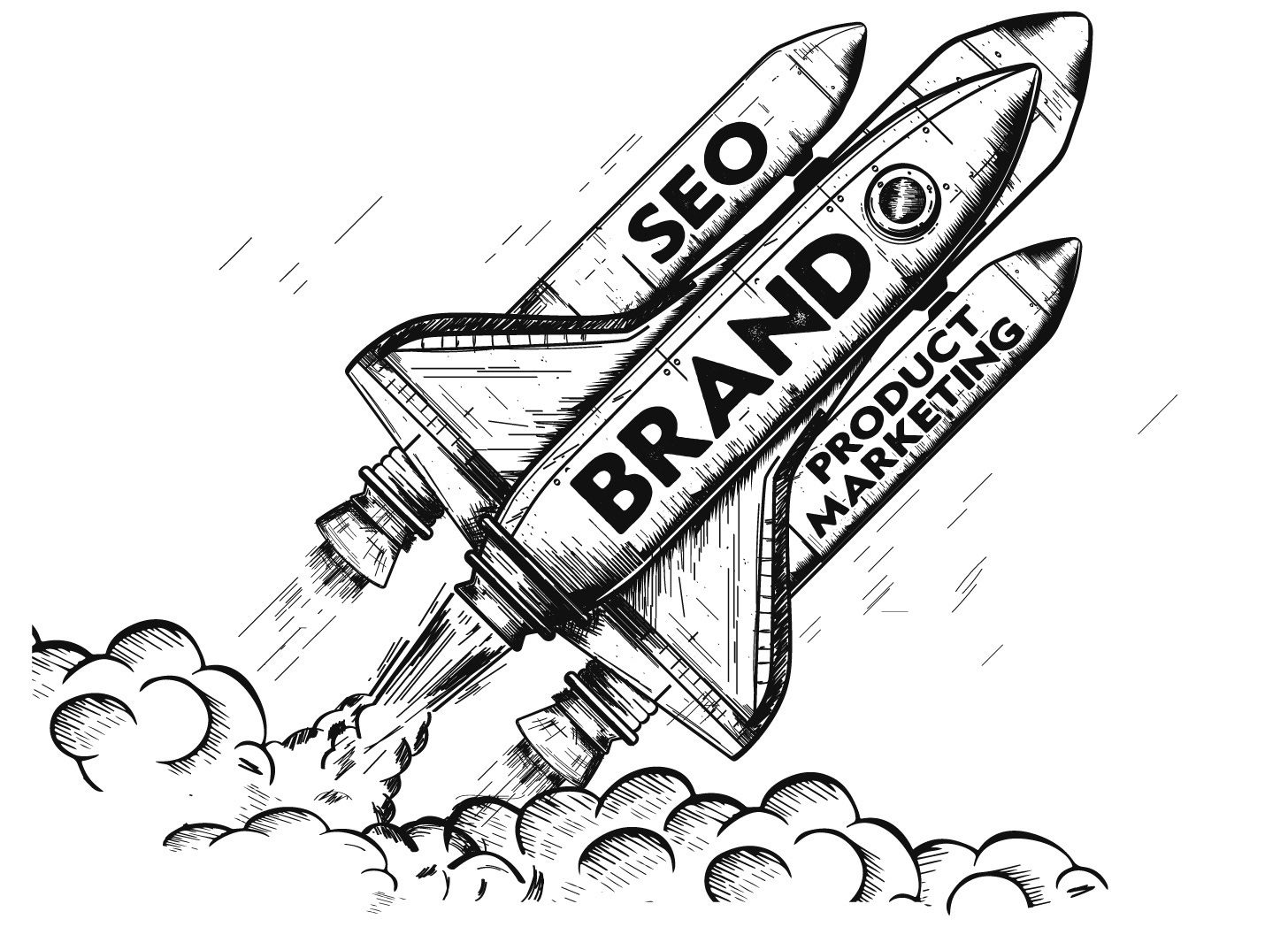
Image Credit: Lyna ™

There is a common belief that SEO can’t do much about the brand, but that’s wrong. We often simply miss the tools.

Product marketing skills and insights can significantly improve the impact of organic traffic and support brand building in the process.

Both disciplines sit between product development and customer needs. Both work on content, audience understanding, and driving revenue – but from different angles.

Together, they can amplify each other. It’s an opportunity most companies miss, to their detriment.

One key lesson is to think long-term about brand impact. Focusing on the user’s value helps create a stronger brand connection, which pays off over time. It’s about building trust and loyalty that translates into sustained engagement and recognition. – Bar Wolf
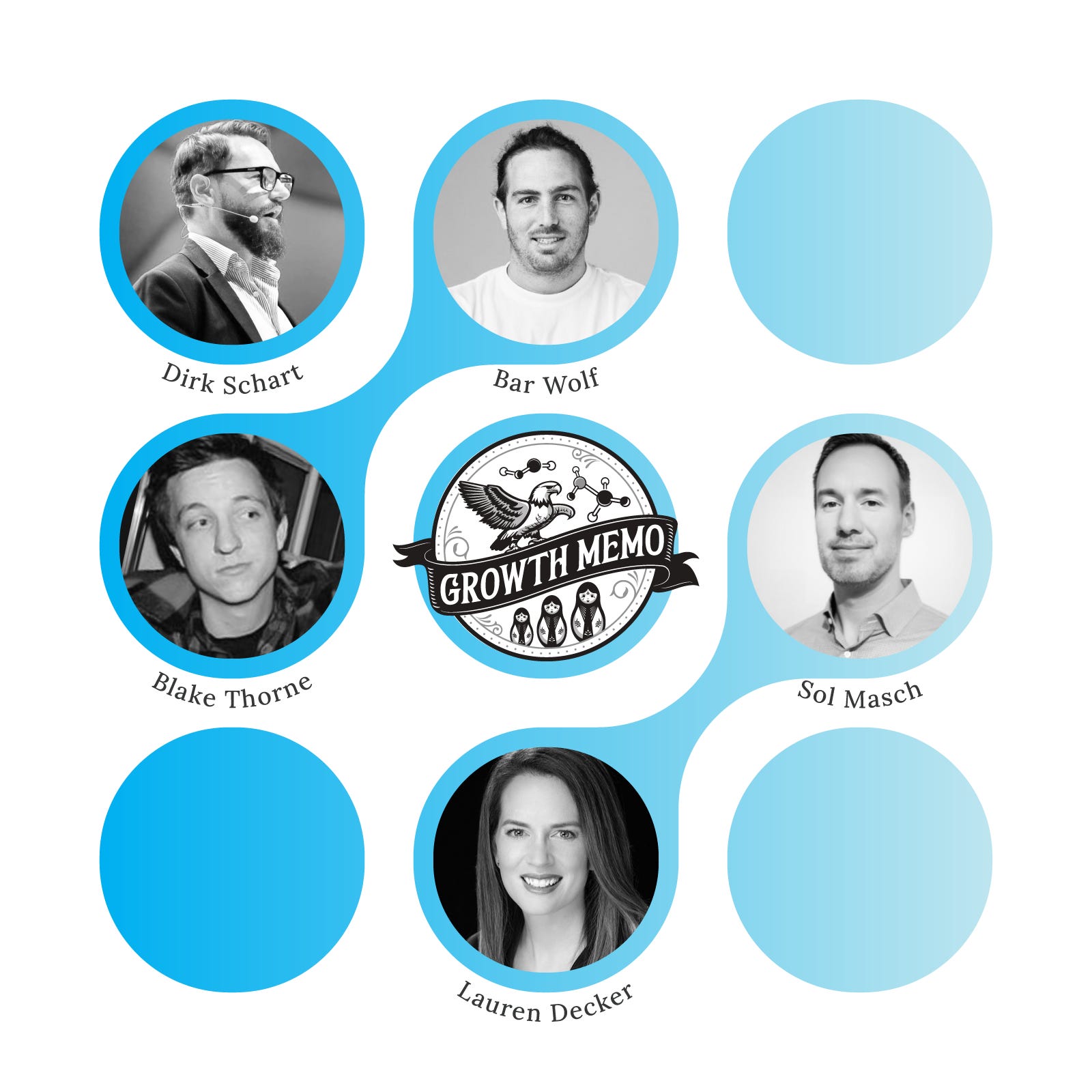
Image Credit: Kevin Indig

I spoke with five seasoned product marketing experts about their lessons from decades in the field to distill what SEO pros can learn from product marketing:

  1. Lauren (Hobbs) Decker, senior consultant at Carema and former VP of brand & product marketing at G2.
  2. Bar Wolf, product marketing manager at Wix.
  3. Blake Thorne, head of marketing at Govly.
  4. Dirk Schart, portfolio marketing lead at PTC.
  5. Sol Masch, group vice president, product at WebMD.

Product Marketing Tools And Frameworks For SEO Pros

Product marketing and SEO are highly complementary. They can unify customer research and quantitative insights for better prioritization and impact measuring.

They can uplevel user experience with the right messaging. And they can improve the quality of traffic with clear differentiation.

It makes sense: The goal of product marketing is to help the product organization bring the product to market with market research, positioning and messaging, go-to-market strategy, customer education, and sales enablement.

While SEO pros research keywords and analyze search volumes, product marketers spend a lot of time talking to customers.

Traffic is great, but what makes people remember your product? – Blake Thorne

Lesson 1: Improve Content With Customer Insights

When product marketers and SEO teams collaborate early and often, they enable the audience to find relevant content that addresses their specific challenges and needs — making marketing efforts more efficient and effective. – Lauren Hobbs Decker

You will surely agree that customer insights are critical for any form of marketing.

In my work with high-performing tech companies, however, I often notice that marketing teams have no idea where to find customer research, and they don’t have open channels to existing customers.

The results of performance marketing, including paid and organic search, made it too attractive to focus on metrics.

The solution is to either collaborate with product marketing to learn from customer insights or get them yourself.

Product marketers get customer insights through:

  1. 1-on-1 interviews.
  2. Surveys.
  3. Focus groups.
  4. Reviews.
  5. Customer support/sales.

They look for:

  1. Pain points.
  2. Motivations.
  3. Expectations.

Good questions to ask:

  • “What challenges are you currently facing in [specific area related to the product’s value]?”
  • “How are you currently addressing this challenge, and what do you like or dislike about your current solution?”
  • “When evaluating solutions for this challenge, what are the most important factors you consider?”
  • “Have you considered making changes to your current approach? If so, what’s holding you back?”
  • “What would convince you that a new solution is worth exploring or investing in?”

Some of my favorite customer feedback tools:

Other opportunities for insights:

  • Analyze reviews on g2.com.
  • Product analytics data from Amplitude or Mixpanel.
  • Insights from sales, product, and customer success/support teams.
  • Analyze the positioning and messaging of key competitors.

SEOs can use customer insights to:

  • Create product landing pages or category pages (in ecommerce) for use cases and features and competitor comparison pages like ahrefs.com/vs for perceived competitors.
  • Build lead-gen tools or quizzes based on the most common customer problems and questions.
  • Generate content for pain points mentioned in interviews that might not have “search volume” but are searched by your target audience.
  • Use the wording of customers/prospects and embed quotes in the content.
  • Addressing common pain points and expectations in content.
  • Prioritizing topics and keywords on the roadmap (instead of by search volume only).
  • Inform content length and the level of detail.
  • Incorporate product-tested messaging into meta titles and descriptions.

Tip: AI tools can process large volumes of data from customer reviews, surveys, or social media to identify pain points, motivations, and trends faster than traditional methods.

I so often land on a website via SEO and can see a very strong SEO program at play, but I’m not left with any impression of what the company actually does.

For many SEOs, this moment might be “mission accomplished,” they’ve got their rankings and traffic.

This is where brand and product marketers can step in and work alongside SEOs to augment the experience on that page – what makes people remember the product? What makes people know the brand and have a positive sentiment even if the initial visit is short? – Blake Thorne

Lesson 2: Send Stronger User Signals With Clearer Differentiation

Since the DoJ lawsuit against Google and the ranking factor leak, we officially know that Google uses user signals to a high degree.

In my Memos, I often highlight the importance of a good user experience on top of high-quality content to impact user signals.

Differentiation can top it off by offering another lens for topic/keyword prioritization besides search volume and difficulty.

The deep market and customer understanding of product marketing helps SEO pros understand where a company stands out and where competition is tough.

Differentiation is how a company stands out with unique features and value.

In my guide to building a winning SEO strategy, I explain that an absolutely essential component of any strategy is strong differentiation:

Critical: the approach needs to be differentiated. You need to do things differently (competitive advantage or asymmetry). You cannot expect to do the same things as your competitors and beat them. That’s just a way to end up in attrition warfare and obsession with operational efficiency. Differentiation creates greater value, prices and margins.

For clear differentiation, you need to deeply understand three things: the market, alternatives, and customers.

Figure out what problems customers are trying to solve, the options at their disposal, and the impact that solving those problems has on their business/life. You can use interviews and review platforms like G2 or Trustpilot to source insights.

The way most SEOs measure “the market” is by looking at competitors’ ranking for the same keywords.

That is a good start – and valuable for product marketers – but it needs to go further. SEO pros should also factor in “perceived competitors” (i.e., What alternatives does the customer have in mind that product marketers can bring to the table?).

“Different is better than better.” – Dirk Schart

Good differentiation is very specific and makes it easy for customers to understand the value they get from your product.

There are three outcomes from differentiation work:

  1. Positioning Statements: a clear articulation of how the product fits into the market, who it serves, and why it’s better or different. See an example from Slack: “Making work simpler, more pleasant and more productive.”
  2. Value Propositions: Statements that highlight the key benefits and outcomes customers can expect, tailored to specific customer needs or segments. In the example of Slack, again, “Streamline communication, reduce emails, and increase productivity”
  3. Messaging Frameworks: A spreadsheet covering the product’s unique features and benefits, broken down by audience segments, use cases, or buyer personas.

SEO pros should incorporate differentiation factors into content briefs to influence the tone, sub-topics, meta titles, headings, and CTAs on any page on the site.

In the YMYL/Health space that WebMD participates in, trust from consumers is paramount.

According to a recent Harris Poll study, 1 in 3 Americans don’t know whether the health information they read online and on social platforms is truthful or if the source is being paid to promote things, and ultimately they can’t determine what’s true and what’s false.

WebMD prides itself on editorial integrity – advertisers have zero influence on our editorial content, and all of our content is fact-checked by medical professionals for accuracy.

Moreover, our medical reviewers audit all of our content frequently to ensure that months/years after the content is published, it’s updated as necessary to stay accurate even as medical research & science evolve.

In part, these efforts contribute to WebMD being the most recognized and trusted name in online health – we’ve earned our trust over the past 25 years and have become a household name for quality health information. – Sol Masch

Lesson 3: Drive Better Traffic With Strong Positioning And Messaging

Obviously, driving traffic is not enough. It needs to be the right kind of traffic. Good positioning and messaging can make the difference because they can act as a lens for topic/keyword prioritization.

Messaging can elevate the user experience by showing the copy on landing pages on other types of content that highlight how and why the product is a good fit.

The goal of positioning is to define how a product is perceived by the market relative to its competitors. Who is it for? What problem(s) does it solve? How is it better? It’s high-level and strategic.

Messaging turns the company’s positioning into narratives and statements to use in copy, sales material, and advertising. It’s specific and operational.

For example:

  • Positioning: “Our app is the easiest way for busy parents to organize their kids’ schedules, standing out for its intuitive design and automatic reminders.”
  • Messaging: “Effortlessly manage your kids’ schedules with our user-friendly app. Save time and never miss an event with automatic reminders. Trusted by thousands of busy parents.

A basic messaging and positioning framework is the Value Proposition Canvas:

  1. Define jobs (goals), pains (frustrations), and gains (desired outcomes).
  2. Outline the product/feature you offer, pain relievers (how it alleviates frustrations), and gain creators (how it delivers expected outcomes).
  3. Connect each pain with a pain reliever and each gain with a gain creator.
  4. Share your canvas with real customers to confirm alignment with their needs and refine it if necessary.

The Jobs To Be Done is a good alternative for horizontal products that have many use cases (think: Notion).

  1. Identify the focus market (for example, software buyers).
  2. Map all jobs out through brainstorming, user surveys, or keyword research.
  3. Group the jobs.
  4. Create job statements.
  5. Prioritize opportunities depending on how well they’re served at the moment.

These frameworks can literally be spreadsheets with a column for every factor. Don’t overcomplicate it or think you need a fancy tool to build messaging and positioning.

SEO pros can use positioning to identify core topics and keywords within them, and messaging to drive content angles (e.g., “how to do {use case} with {product}”).

Somehow we focused all our energies on rankings/traffic/audience building to create this demand channel, and not enough on the things we’d typically do in a demand channel: Share our brand, get our messaging out there, get people excited about what we do. In other words: actually advertise the product. – Blake Thorne

Bringing Product Marketing And SEO Closer Together

Product marketing and SEO complement each other by sharing insights like search volume or customer research and approaches like positioning or messaging.

But most companies stand in their own way by keeping their respective teams siloed. Shared metrics, i.e., goaling two teams by the same numbers, are the crowbar to break the silos up.

Three actionable and comprehensive metrics to share:

  • Branded search volume and traffic from branded keywords.
  • Customer sentiment (qualitative feedback, NPS, brand sentiment/recall).
  • Pipeline contribution (influence on leads and conversions).

The metric mix reflects the whole “funnel” or user journey, can be influenced by both teams, and is actionable.

The benefit for companies that get this right is two teams that are more effective and impactful.

SEO teams have another way to not just drive more and better organic traffic, but to evaluate their impact from a brand perspective (customer sentiment).

Instead of stopping at traffic or obsessing over rankings that are less and less valuable, impact on customer sentiment and pipeline over refuge for a changing SEO landscape.

The question is how to convince leadership to give it a shot. Test into it. Try improving a few product landing pages together, whether you’re in SaaS or ecommerce, and measure the impact on shared metrics.

SEO and product marketing are not exempt from AI disruption. Maybe they have belonged together all along, but the AI tech shift offers an opportunity to run in a new formation and bring SEO and product marketing together.

Brand/product marketing focuses on aligning messaging with customer emotions, behavior and needs, while SEO focuses on visibility.

SEOs can elevate their impact by considering how the brand’s narrative fits into the customer journey – moving beyond keywords to a deeper connection with the audience. – Dirk Schart


Featured Image: Paulo Bobita/Search Engine Journal
Action Steps for Bing’s AI SEO Guidelines

Bing continues to develop AI-powered search solutions. It provides the index for OpenAI’s SearchGPT, launched last month. In July, it created its own version of Google’s AI Overviews called “Generative Search.”

Last week, Bing published optimization guidelines for AI-powered search engines. The post advised marketers to focus on query intent while recognizing that keywords inform intent.

Here’s how to do that for today’s search engines.

Keywords Remain Fundamental

The main takeaway from Bing’s guidelines aligns with traditional search engine optimization: put a searcher first. Satisfy the person behind a query and worry less about keyword matching or prominence.

Nonetheless, much of the guidelines address keyword research that, again, signals intent, starting with identifying a core term for a target audience. My recommendations for keyword research tools will help.

But don’t stop there. Once you’ve identified a target search query, extend the research to discover the critical supplement terms to confirm that intent and include them in the content.

Communicate Micro Intent

The post suggested adopting “natural language processing” techniques. NLP helps machines interpret and understand humans. It also helps search engines understand the detailed intent behind each search query, far beyond broad conclusions such as “to purchase,” “to learn,” or “to navigate.”

NLP identifies micro intents unique to each search.

The guidelines offered an example query — “Best eco-friendly coffee maker” — and provide NLP-driven results:

In generative [AI] search systems, search results will showcase a variety of eco-friendly coffee machines and coffee makers available for purchase, highlighting their prices, features, and materials. They’ll feature brands that emphasize sustainable and recycled materials and provide links to articles and guides on sustainable brewing while offering more information on eco-friendly coffee machine options. As you can see, these systems are working to fulfill the intent of the user’s query as effectively as possible.

Understanding how to satisfy micro intents is essential to being surfaced in AI search results. When producing content, search optimizers should reverse engineer how AI platforms interpret each query.

Prompt ChatGPT or Gemini to identify and analyze higher-ranking competitors or those highlighted in AI Overviews (or Generative Search). For example, prompt ChatGPT or Gemini to analyze competitors’ content and explain how it serves searchers better.

You can also prompt ChatGPT or Gemini to analyze the detailed search intent of any query. Similarly, search Google and Bing for, respectively, AI Overviews and Generative Search that respond to a query.

Supplemental Keywords

Bing’s guidelines suggest including supplemental keywords on the page to reinforce the intent, but they don’t state how to find them.

Here are some pointers:

  • Long-tail searches. Any leading keyword research tool can help. Limit the list to those long-tail queries that satisfy the specific intent you are targeting.
  • Question searches. I’ve addressed tools to research shoppers’ questions based on a target keyword. Any of them would be helpful. Don’t try to answer all the questions you find. Focus on those that reveal the intent you seek.
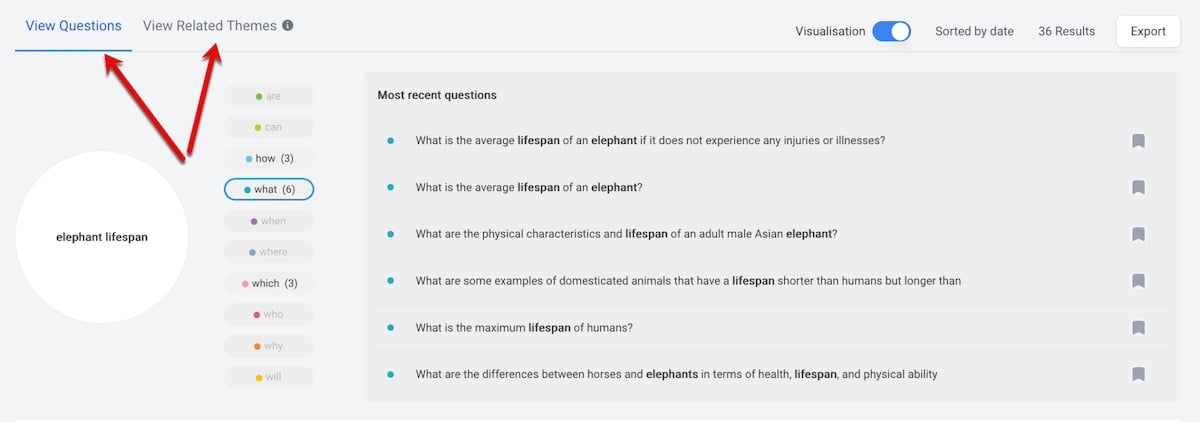
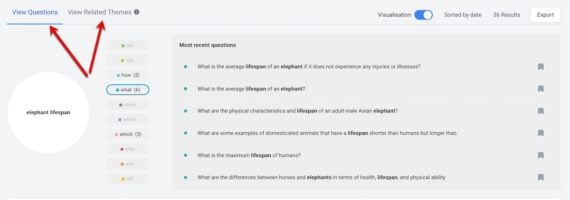
  • Conversational queries. Buzzsumo’s “Question Analyzer” pulls threads from Reddit, Quora, and similar forum-type sites based on your core term. It’s handy for seeing your target query in real conversations and discovering searchers’ alternative terms. (Check Buzzsumo’s “View related themes” for its suggestions.)
Screenshot of Buzzsumo's list of forum threads addresssing the query.

Read forum threads to analyze actual conversations. This Buzzsumo example answers the question, “How long do elephants live?” Click image to enlarge.

OpenAI Hires Former Chrome Engineer, Eyes Browser Battle via @sejournal, @MattGSouthern

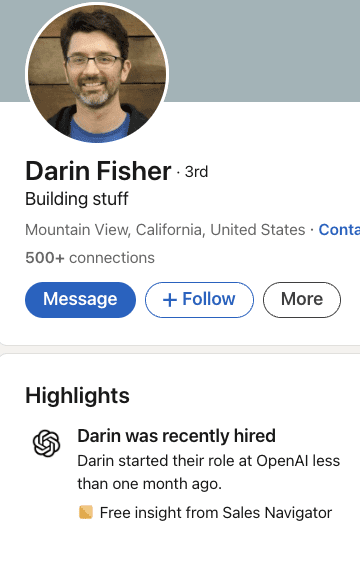
In what appears to be a development in OpenAI’s expansion, former Chrome engineering veteran Darin Fisher has joined the AI company.

This move adds fuel to earlier reports about OpenAI’s plans to develop a web browser to compete with Google Chrome.

Background & Context

Earlier reports from The Information indicated that OpenAI has been quietly assembling a team of former Google developers to work on a new browser project.

The company has reportedly been in discussions with various partners, including Conde Nast, Eventbrite, Redfin, and Priceline, about implementing specialized search features for travel, food, real estate, and retail websites.

Latest Development

According to an update to his LinkedIn profile, Fisher has recently joined OpenAI.

Screenshot from LinkedIn, November 2024.

His arrival is noteworthy, given Fisher’s background in browser development.

His professional history includes contributions to Google Chrome, Mozilla Firefox, and Neeva, making him an asset for OpenAI’s browser ambitions.

You can learn more about Fisher and what he brought to the Chrome team in the video below:

Potential Impact

This development comes at a critical time in the browser market.

Google Chrome dominates with approximately 65% of desktop and 68% of mobile users.

However, the market could shift following recent U.S. Department of Justice proposals suggesting Google should divest its Chrome browser business due to monopoly concerns.

Looking Ahead

While OpenAI’s browser project is reportedly in the early stages, the addition of experienced browser developers like Fisher suggests the company is serious about entering this space.

The potential browser is expected to feature deep integration with ChatGPT and AI-powered search capabilities, though a launch timeline remains unclear.

This move represents another step in OpenAI’s apparent strategy to expand beyond pure AI development into consumer-facing products.


Featured Image: JarTee/Shutterstock

SEO Maintenance: A Checklist For Essential Year-Round Tasks via @sejournal, @coreydmorris

SEO is a multifaceted discipline. It requires a solid strategy, connection to broader digital marketing (and business goals), and accountability.

While there are differing processes, approaches, and even opinions on how you should implement it, it is something that you can’t ignore or push off specific short-term tactics if you want to get to specific long-term results.

I’m against just blindly “doing” best practices or following a prescribed checklist in the absence of a strategy or documented plan.

Rather than giving you a specific checklist of things to do during the year, I’m unpacking activities categorized by daily, monthly, quarterly, and yearly.

I feel strongly that if you have a well-balanced approach to SEO that starts with a strategy and solid goals, then you can move into the ongoing campaign management or tactical implementation phase of moving through your year.

My goal is to unpack this cadence so that you will be able to factor it into your plan and see it through to ultimate return on investment (ROI) and success.

Daily

Educate Yourself

Staying up to date on industry news is a critical aspect of SEO that must be built into any maintenance or ongoing management plan.

This ranges from the mission-critical alerts and updates the search engines announce to keeping tabs on SEO best practices and breaking news from sources like Search Engine Journal.

AI news seems to be constantly disruptive, and we have to be mindful of how SEO is not just all about Google or concepts that we have applied in the past (if you’ve been in the game for a while).

Big shifts in the industry are hard to miss (whether they are about AI or not).

But smaller, more subtle changes can become magnified when you miss them or best practices become outdated.

Don’t fall behind or deploy outdated tactics!

Know Your Current Metrics

Monitoring your key SEO performance metrics in real-time, or at least once per day, is especially necessary for brands and organizations that rely on ecommerce transactions or lead volume to feed a sales team.

Knowing how your website performs in search through top-level metrics is important for recognizing any red flags. These could include:

  • A specific or aggregate positioning drop.
  • An organic traffic drop.
  • A decrease in sales or lead volume.

Being able to recognize problems as soon as they happen is key.

You need to be able to diagnose issues and reverse any negative trends before they impact your overall marketing and business goals.

By keeping tabs on actual performance, you can compare to benchmarks and baselines to make sure that you fully understand the cause and effect with your metrics and not have an issue happen for too long before you can intervene.

You can monitor less critical KPIs (any that don’t necessitate an immediate reaction) on a weekly basis.

Make Progress On Tactics

A solid digital marketing plan – especially an SEO plan – or campaign must start with strategy (including goals), tactics, assets needed, how it will be measured, and documented steps to be accountable and actionable.

Without a plan, process, or defined approach, you can waste a lot of time chasing specific SEO aspects that might be low impact and low priority – or tactics absent of a strategy that are part of a “best practices” checklist, but not one that is specific to your business.

The daily process should include specific tasks, milestones, and achievable actions that work toward the bigger picture.

The tactics can include things done for the first time in a phased approach or action items more in a rinse-and-repeat methodology.

Regardless, the list of specific technical, on-page, and off-page action items should be defined for the year, broken out into months, and further into tactics and progress that can be made on a daily basis to stay on track.

SEO requires both big-picture thinking and the ability to tackle daily tasks and action items.

Monthly

Report On Performance

Beyond the daily or weekly KPI monitoring, it’s often important to use monthly cycles to more broadly report on performance.

The focus of monthly checkpoints allows for dedicated time to compare a larger sample size of data and see trends.

Monthly performance reporting should include year-over-year comparisons of the completed month plus any available year-to-date stats.

Find meaningful intervals to measure and be consistent. Looking at bigger ranges of time helps to see trends that are hard to decipher in small sample sizes.

Any stories of the what and why for deviations in goal, celebrations for exceeding goals, and metrics that warrant possible changes to the plan are critical to the surface and prioritized through a dashboard or snapshot report of the performance data.

Recap Completed & Continuing Action Items

This is a chance to evaluate the tactics and execution in the previous month against the plan.

  • Was everything completed?
  • Were there deviations?
  • What obstacles or roadblocks were in the way or overcome?

Looking at the past helps shape the future.

When you combine the action items and tactics with the performance data, you should get an overall picture of the reality of what is driving SEO performance.

Plan Next Month’s Action Items & Evaluate The Plan

Monthly intervals are great for ensuring accountability for the completion of tasks.

Even when the year is planned out, things change in SEO, and performance isn’t always what we expect after doing something the first time.

Taking a monthly planning approach, adjustments can be made to the plan, such as doubling down on a specific tactic or adjusting the overall strategy to recalibrate.

By being agile enough to evaluate performance and tactics monthly, you can avoid overthinking things and reacting too swiftly, but also not let too much time pass and lose footing with trends toward goals.

Having a good balance of planned tactics and actions versus the need for agile methods to pivot when needed is often the best approach to staying current and proactive.

Quarterly

Technical Issues Auditing

Assuming you have covered technical issues at the beginning of your SEO focus and are also watching for any that trigger red flags in daily and weekly monitoring, it is important to take a broader look through an audit each quarter.

This audit should include a review of reported issues in Google Search Console and Bing Webmaster Tools.

Plus, comparison to benchmarks and standards for site speed, mobile usability, validation of structured data, and the aspects that aren’t often looked at on a more frequent basis.

On-Page Issues Auditing

Without an audit process and even with frequent monitoring, things happen on websites.

A code update, database update, plugin/extension update, or publishing content can cause duplicate tags, duplicate content, or even missing on-page elements.

A quarterly audit of on-page issues that can be conducted using a wide range of free and subscription third-party tools is important.

There are tools that will even send alerts and factor into the daily process if something changes, like a meta description being wiped out.

Regardless, having a solid tools stack and process for quarterly evaluation and comparison to the previous audit is important to ensure that the results of the audit and any fixes needed are noted and made into the tactical plan.

Link Profile Auditing

Overall, the SEO plan likely includes some form of link building.

Whether that is through attracting links with engaging content or a more focused plan of research and outreach, it is likely a part of the ongoing tactics (or should be considered if it isn’t).

Investing time and effort into the tactics makes it important to have visibility of the overall link profile and progress.

This might be a performance metric tracked in the monthly reporting phase, but quarterly should be audited in a deeper sense.

Evaluating the quality of links, the number of links, the diversity of sources, the relevancy of linked content, comparisons to competitors, comparisons to benchmarks, and period-over-period comparisons are all important aspects to ensure that the plan is performing as intended in the area of backlinks.

Plus, if not caught through daily or monthly efforts, any spammy links or negative SEO attempts can be caught here and addressed through the disavow process, if applicable or if it makes sense for your situation.

Local Listings Audit

Once local listings management is in maintenance mode, there won’t be a frequent need for major changes with NAP (name, address, phone) data or inconsistencies in listing data.

However, that doesn’t mean it won’t happen and can be “set it and forget it.”

An audit using third-party tools to ensure accuracy and consistency of data is strongly advised at least quarterly.

This audit can identify issues that can be addressed on a one-off basis as well as provide guidance on performance and any needed changes to the content, reviews, and other aspects of the listings themselves beyond the basic NAP data.

If any third-party data sources or listings were missed, Google Business Profile data could be overwritten with inaccurate listing info.

Even if nothing changes with your management of listings, data can change and needs to be monitored at a minimum.

Yearly

Measure Performance

When running annual plans for SEO – and even when not on annual agreements or evaluation cycles – taking an entire year of data and evaluating it is helpful to advise strategy and find measurable ROI calculations.

SEO is a long-term process that aims to achieve the most competitive positioning and visibility possible in search engines. It is a valuable investment of time to look at performance data over 12-month spans, compare it to previous periods, look at benchmarks, and celebrate successes.

Even if you don’t have annual budgets or agreements with outside partners/providers, taking an annual step back and looking at performance and the effort like an investment rather than an expense is important.

Planning Strategy & Tactics

In addition to reviewing yearly performance data, you should also plan your goals, strategy, and tactics for the next year.

Even though the plan could change a week into maintenance, having a plan and setting a target are key to measuring progress.

Without a plan and using past learnings and a realistic view of the resources being invested in the coming year, there can be a gap between expectations and reality.

It is best to sort this out before getting months down the road.

Conclusion

To reiterate what I noted earlier, SEO isn’t about just following a basic checklist of best practices. It is getting harder and harder to be successful at.

I look at the changes based on AI, Google’s algorithms, and fragmentation in the search market share as an opportunity.

When we have clear goals defined for our strategy, build out the tactics needed to get there, have solid assets (websites, content, etc.), can measure it, and stick to it with a schedule that doesn’t get sidetracked by other priorities or hats we wear, we can get there.

Our annual plan or “checklist” is custom to us with a cadence of daily, monthly, quarterly, and yearly when it comes to things we do, so we can see SEO all the way through to ROI in both short-term and long-term applications.

More resources:


Featured Image: eamesBot/Shutterstock

Google Search CTR Data Reveals Shifting Industry Trends In Q3 via @sejournal, @MattGSouthern

Google’s click-through rates (CTRs) experienced notable changes across industries and search categories in Q3, according to a report from Advanced Web Ranking.

This report compares Q3 data to the previous quarter. It shows how CTRs can vary and what that means for website traffic.

Key Findings:

  • Branded searches on mobile saw a 1.07 percentage point increase in CTR for top-ranked sites
  • Informational queries (containing words like “what,” “when,” “how”) gained 1.63 percentage points on mobile
  • Commercial queries declined across devices, with mobile dropping 3.51 percentage points
  • Short keyword searches (1-3 words) showed improved CTR on mobile devices

Industry Winners & Losers

To assess traffic impact, the report looked at changes in CTR alongside search demand trends for different industries.

When both CTR and demand grow at the same time, it signals likely traffic gains. However, if both decrease, it may indicate potential losses.

The Science sector bounced back after two quarters of falling CTR.

The top results saw an increase of 2.48 percentage points (pp) on desktop and 4.16 pp on mobile. Impressions also went up by 33.78%.

The Law, Government & Politics sector had the biggest drop in single-position CTR, with desktop websites ranked second, falling by 9.74 pp. Still, overall demand grew by 32.74%.

After a year of stable CTRs, the Shopping sector experienced a recovery in Q3. The top position increased by 2.30 pp on desktop and 1.94 pp on mobile, with a demand rise of 21.09%.

Other industries with notable CTR increases include:

  • Automotive: +2.95 pp desktop, +1.40 pp mobile (#1)
  • Business: +1.52 pp mobile (#1)
  • Education: +2.53 pp mobile (#1)
  • Family & Parenting: +2.42 pp desktop, +2.39 pp mobile (#1)

On the losing end, Arts & Entertainment saw desktop CTRs sink 6.56 pp and 1.42 pp for positions one and two and a 4.12 pp mobile slide for the top spot. Impressions also dipped -1.54%.

Key Takeaways

Mobile is crucial, especially in Personal Finance, where mobile CTRs are 34%. Focus on mobile-friendly designs and keep content short.

Users prefer informational content over commercial pages, so prioritize educational material while maintaining clear sales pages.

Different industries require different strategies:

  • Science and Automotive sectors are growing; add more content here.
  • Arts and Entertainment need improved audience engagement.
  • Personal Finance has good CTRs but lower search volume; be ready for traffic drops.

Branded searches perform well on mobile, so focus on building your brand. Track your CTR metrics against industry standards and adjust as trends change.

Looking Ahead

The findings suggest that websites should closely monitor their CTR metrics against industry benchmarks, as rankings alone don’t tell the complete traffic story.

SERP layout variations for different keywords can impact click-through rates as well.

The next report covering Q4 will offer year-end comparisons and trend analysis.


Featured Image: Ratana21/Shutterstock

Google May Have to Sell Chrome Browser To Comply With DOJ Ruling via @sejournal, @MattGSouthern

The U.S. Department of Justice (DOJ) has proposed that Google sell its Chrome web browser and possibly the Android mobile operating system.

This suggestion is part of a larger effort to address the company’s alleged monopoly in online search.

In a 23-page brief submitted to the U.S. District Court in Washington D.C., the DOJ outlined extensive measures to dismantle what it claims are Google’s illegal monopolies in general search services and search text advertising.

DOJ Seeks Divestiture of Chrome & Possibly Android

The DOJ’s proposal centers on the divestiture of the Chrome browser, which the agency claims has strengthened Google’s dominance in the search market.

The DOJ wrote in its filing:

“To address these challenges, Google must divest Chrome, which has ‘fortified [Google’s] dominance,’ so that rivals may pursue distribution partnerships that this ‘realit[y] of control’ today prevents.”

The DOJ suggested that Google should sell the Android mobile operating system if behavioral remedies to prevent self-preferencing practices do not restore competition.

However, the DOJ acknowledged that the divestiture of Android “may draw significant objections from Google or other market participants.”

In addition to the structural breakup, the DOJ is seeking a range of conduct remedies, including:

  • Prohibiting Google from entering into exclusivity agreements
  • Banning self-preferencing of its search products
  • Mandating data sharing with rivals
  • Establishing a Technical Committee to monitor compliance.

The proposed judgment would remain in effect for 10 years.

Google Responds To DOJ’s Proposal

Google swiftly condemned the DOJ’s proposal, calling it a “radical interventionist agenda” that would harm innovation and America’s global technology leadership.

In a blog post, Kent Walker, Google’s President of Global Affairs, said the remedies would:

“.. break a range of Google products — even beyond Search — that people love and find helpful in their everyday lives.”

Walker adds:

“DOJ’s approach would result in unprecedented government overreach that would harm American consumers, developers, and small businesses — and jeopardize America’s global economic and technological leadership at precisely the moment it’s needed most.”

Google raises the following concerns about the DOJ’s plan:

  • It would require disclosing users’ personal search queries to “unknown foreign and domestic companies.”
  • It could endanger security and privacy by forcing the sale of Chrome and Android
  • It may “chill” investment in artificial intelligence where Google is a leader.

Next Steps

The recent court filings are part of the DOJ’s antitrust case against Google, which started in October 2020 with help from several state attorneys.

In September, Judge Amit Mehta found that Google had broken antitrust laws to keep its search and search advertising monopolies. This ruling will lead to a phase where solutions to restore competition will be discussed.

Both sides are expected to present detailed proposals for these solutions in the coming months, with a hearing planned for next year.

The outcome could significantly affect Google’s business model and the online advertising market.


Featured Image: JarTee/Shutterstock

GraphRAG Update Improves AI Search Results via @sejournal, @martinibuster

Microsoft announced an update to GraphRAG that improves AI search engines’ ability to provide specific and comprehensive answers while using less resources. This update speeds up LLM processing and increases accuracy.

The Difference Between RAG And GraphRAG

RAG (Retrieval Augmented Generation) combines a large language model (LLM) with a search index (or database) to generate responses to search queries. The search index grounds the language model with fresh and relevant data. This reduces the possibility of AI search engine providing outdated or hallucinated answers.

GraphRAG improves on RAG by using a knowledge graph created from a search index to then generate summaries referred to as community reports.

GraphRAG Uses A Two-Step Process:

Step 1: Indexing Engine
The indexing engine segments the search index into thematic communities formed around related topics. These communities are connected by entities (e.g., people, places, or concepts) and the relationships between them, forming a hierarchical knowledge graph. The LLM then creates a summary for each community, referred to as a Community Report. This is the hierarchical knowledge graph that GraphRAG creates, with each level of the hierarchical structure representing a summarization.

There’s a misconception that GraphRAG uses knowledge graphs. While that’s partially true, it leaves out the most important part: GraphRAG creates knowledge graphs from unstructured data like web pages in the Indexing Engine step. This process of transforming raw data into structured knowledge is what sets GraphRAG apart from RAG, which relies on retrieving and summarizing information without building a hierarchical graph.

Step 2: Query Step
In the second step the GraphRAG uses the knowledge graph it created to provide context to the LLM so that it can more accurately answer a question.

Microsoft explains that Retrieval Augmented Generation (RAG) struggles to retrieve information that’s based on a topic because it’s only looking at semantic relationships.

GraphRAG outperforms RAG by first transforming all documents in its search index into a knowledge graph that hierarchically organizes topics and subtopics (themes) into increasingly specific layers. While RAG relies on semantic relationships to find answers, GraphRAG uses thematic similarity, enabling it to locate answers even when semantically related keywords are absent in the document.

This is how the original GraphRAG announcement explains it:

“Baseline RAG struggles with queries that require aggregation of information across the dataset to compose an answer. Queries such as “What are the top 5 themes in the data?” perform terribly because baseline RAG relies on a vector search of semantically similar text content within the dataset. There is nothing in the query to direct it to the correct information.

However, with GraphRAG we can answer such questions, because the structure of the LLM-generated knowledge graph tells us about the structure (and thus themes) of the dataset as a whole. This allows the private dataset to be organized into meaningful semantic clusters that are pre-summarized. The LLM uses these clusters to summarize these themes when responding to a user query.”

Update To GraphRAG

To recap, GraphRAG creates a knowledge graph from the search index. A “community” refers to a group of related segments or documents clustered based on topical similarity, and a “community report” is the summary generated by the LLM for each community.

The original version of GraphRAG was inefficient because it processed all community reports, including irrelevant lower-level summaries, regardless of their relevance to the search query. Microsoft describes this as a “static” approach since it lacks dynamic filtering.

The updated GraphRAG introduces “dynamic community selection,” which evaluates the relevance of each community report. Irrelevant reports and their sub-communities are removed, improving efficiency and precision by focusing only on relevant information.

Microsoft explains:

“Here, we introduce dynamic community selection to the global search algorithm, which leverages the knowledge graph structure of the indexed dataset. Starting from the root of the knowledge graph, we use an LLM to rate how relevant a community report is in answering the user question. If the report is deemed irrelevant, we simply remove it and its nodes (or sub-communities) from the search process. On the other hand, if the report is deemed relevant, we then traverse down its child nodes and repeat the operation. Finally, only relevant reports are passed to the map-reduce operation to generate the response to the user. “

Takeaways: Results Of Updated GraphRAG

Microsoft tested the new version of GraphRAG and concluded that it resulted in a 77% reduction in computational costs, specifically the token cost when processed by the LLM. Tokens are the basic units of text that are processed by LLMs. The improved GraphRAG is able to use a smaller LLM, further reducing costs without compromising the quality of the results.

The positive impacts on search results quality are:

  • Dynamic search provides responses that are more specific information.
  • Responses makes more references to source material, which improves the credibility of the responses.
  • Results are more comprehensive and specific to the user’s query, which helps to avoid offering too much information.

Dynamic community selection in GraphRAG improves search results quality by generating responses that are more specific, relevant, and supported by source material.

Read Microsoft’s announcement:

GraphRAG: Improving global search via dynamic community selection

Featured Image by Shutterstock/N Universe

Gain Greater Search Visibility With AI Overviews [Webinar] via @sejournal, @hethr_campbell

The world of search is undergoing a seismic shift, with AI-powered tools like ChatGPT Search, Perplexity, and Microsoft Copilot changing how users interact with search results. But even in this time of rapid innovation, one thing remains certain: Google continues to dominate the search landscape, holding an impressive 90% market share.

So, what does this mean for your search strategy? How can you adapt to stay visible and competitive?

That’s where we come in.

Join us on December 5th for an exclusive webinar with experts from Botify and DemandSphere, where we’ll walk through their in-depth analysis of 120,000 Google queries.

Together, we’ll uncover critical insights into Google’s AI Overviews, and how to utilize them effectively.

In this live webinar, you’ll learn:

  • The Mechanics of AI Overviews: What triggers them, which queries they prioritize, and how they’re reshaping the search experience.
  • Mastering SERP Real Estate: How much space these features occupy and the optimization strategies you need to compete.
  • Actionable Tips for Staying Ahead: Boost your visibility and rankings without the need for a total strategy overhaul.

Whether you’re a seasoned SEO professional or just starting out, this webinar will give you the insights and tools you need to navigate today’s increasingly competitive organic search environment.

Why Should You Attend?

AI Overviews are quickly becoming a defining feature of Google’s search results. Understanding how to optimize for these changes could be the difference between thriving in search or being left behind.

Plus, we’ll explore why SEO fundamentals—like high-quality content and effective crawling strategies—remain essential, even in an AI-driven world.

Don’t Miss Out!

Join us for this live session to gain exclusive insights, participate in an interactive Q&A after the webinar, and walk away with actionable strategies to plan your SEO efforts for 2025.

Can’t attend live? No problem! Register now, and we’ll send you a recording so you can watch when you want.

Google: Page-Level & Site-Wide Signals Both Matter For Rankings via @sejournal, @MattGSouthern

Google updates search documentation to clarify how both page-level and site-wide signals influence ranking in search results.

  • Google’s ranking systems evaluate content primarily at the page level, but site-wide signals also matter.
  • Good site-wide signals won’t guarantee high rankings for all pages, and poor site-wide signals won’t doom all pages.
  • This documentation update clarifies existing practices rather than introducing new ranking factors.
Google Clarifies Site Reputation Abuse Policy via @sejournal, @MattGSouthern

Google has issued new clarification for its site reputation abuse policy, first launched earlier this year, which targets “parasite SEO” practices where websites leverage established domains to manipulate search rankings through third-party content.

Chris Nelson from the Google Search Quality team states:

“We’ve heard very clearly from users that site reputation abuse – commonly referred to as ‘parasite SEO’ – leads to a bad search experience for people, and today’s policy update helps to crack down on this behavior.”

Policy Clarification

The updated policy states that using third-party content to exploit a site’s ranking signals violates Google’s guidelines, regardless of first-party involvement or oversight.

This clarification comes after Google’s review of various business arrangements, including white-label services, licensing agreements, and partial ownership structures.

The updated policy language states:

“Site reputation abuse is the practice of publishing third-party pages on a site in an attempt to abuse search rankings by taking advantage of the host site’s ranking signals.”

Policy Details

What’s A Violation?

Google outlines several examples of policy violations, including:

  • Educational sites hosting third-party payday loan reviews
  • Medical sites publishing unrelated content about casino reviews
  • Movie review sites featuring content about social media services
  • Sports websites hosting third-party supplement reviews without editorial oversight
  • News sites publishing coupon content from third parties without proper involvement

What’s Not A Violation?

Google acknowledges there’s a difference between abusive practices and legitimate third-party content.

Acceptable examples include:

  • Wire service and syndicated news content
  • User-generated content on forum websites
  • Editorial content with close host site involvement
  • Properly disclosed advertorial content
  • Standard advertising units and affiliate links

Background

Enforcement of the site reputation abuse policy began in May.

The rollout is having a notable impact in the news and publishing industry, as documented by Olga Zarr.

Major organizations including CNN, USA Today, and LA Times were among the first to receive manual penalties, primarily for hosting third-party coupon and promotional content.

Glenn Gabe shared early observations:

The recovery process has shown clear patterns: sites that removed offending content or implemented noindex tags on affected sections have started seeing their manual actions lifted. However, ranking recovery takes time as Google’s crawlers need to process these changes.

Looking Ahead

While enforcement relies on manual actions, Google has indicated plans for algorithmic updates to automate the detection and demotion of site reputation abuse, though no specific timeline has been announced.

Site owners found in violation will receive notifications through Search Console and can submit reconsideration requests.


Featured Image: JarTee/Shutterstock