Google AIO Is Ranking More Niche Specific Sites via @sejournal, @martinibuster
New data from BrightEdge shows significant changes to Google AI Overviews, prioritizing topic-specific sites and a stronger focus on ecommerce ahead of the year-end shopping season.

Google Core Update And AIO

An interesting insight from the data is that there is more overlap between AIO and Google’s organic search results, that there is more agreement between the two results. Is AIO mirroring the organic search results or are the organic search results more closely aligned with AIO?

The organic search results themselves changed after the August 2024 core algorithm update and so did AIO. BrightEdge’s data offers evidence of how Google’s organic search results changed.

BrightEdge data shows:

  • The overlap of URLs cited in AI Overviews with those ranking in the top 100 increased from 37% to 41% post-update.
  • This is following Google’s August 15th Core Update.
  • The shift indicates that AI Overviews are prioritizing organic results more than before, pulling from lower-ranked results to create comprehensive responses.

BrightEdge data shows that AIO is ranking lower-ranked web pages for more precise answers. Something else to consider is that both AIO and the organic search results changed and it could be the criteria for ranking changed in a similar way for both AIO and organic, that the algorithms for both are doing something similar.

A significant characteristic of the last update is that it is showing less of the big brand sites and more of the independent niche sites. BrightEdge data shows that AIO is also ranking websites that are more precisely about a topic.

Keep reading because there’s more about that in BrightEdge’s data which could offer insights into what’s going on in the organic SERPs.

BrightEdge Dataset

Research was conducted using the BrightEdge Data Cube X, an SEO and content performance platform for researching industries. |

Data Cube X Facilitates:

  • Comprehensive Keyword Research
  • Competitive Analysis:
  • Automated AI-Powered Content and Keyword Research
  • Traffic Fluctuation Analysis

Non-Logged-In AI Overviews

Google has rolled out AI Overviews (AIO) to users that are not logged-in to Google accounts, expanding the audience for AIO to a greater amount of people. But it’s not showing across all industries. The data shows that the integration of AIO varies.

Within the context of users who are not logged in, Ecommerce search results for not logged-in users dropped in AIO is less than logged-in users by a whopping 90%.

Users that are not logged-in didn’t see AIO in the following topics:

  • Education: 21% relative decrease
  • B2B Tech: 17% relative decrease
  • Healthcare: 16% relative decrease

Although there’s a decrease in AIO shown to non-logged-in users for ecommerce queries, there is an increase in product grids that are shown to these users compared to logged-in users. BrightEdge speculates that Google is better able to target logged-in users and is thus showing product grids to them on a more precise basis than to non-logged-in users.

More Product Comparisons

BrightEdge’s data indicates that Google AIO is showing more product comparisons and visuals.

Their data shows:

  • In August, product carousels for apparel-related queries increased by 172%.
  • The use of unordered lists across industries rose by 42%.

These adjustments make AI Overviews more user-friendly by organizing complex product features and specifications for easier decision-making.

All of those features allow users to make comparisons between products by what the products look like as well as by price. A takeaway from this data is that it may be increasingly important to show original product images (if possible) and to make sure that images shown are high quality and allow users to get a good sense of the product.

Data is always important and it’s a good way to make a product listing or product review stand apart from competitors. Any information that makes improves a consumer’s decision making is valuable.

A good example is for clothing where it’s not enough to indicate that something is a size small, medium or large. Sizes are inconsistent from manufacturer to manufacturer and even within a brand’s own products. So, for clothing, it may be useful to add comparison information about actual sizes within a product line in terms of inches or metric measurement so that a consumer can make an even better choice.

Comparison between products, especially within the context of a product review, is important. One of the product review best practices (and maybe a ranking factor) that is recommended by Google is a comparison of the product being reviewed. Google’s product reviews best practices recommendation is that publishers compare a product to another product so that users can presumably make a better decision.

Google recommends:

  • “Cover comparable things to consider, or explain which might be best for certain uses or circumstances.”

According to BrightEdge:

“As the holiday shopping season approaches Google is refining AIO search results to focus on comparative content, which rose by 12% in August. AIOs prioritized product carousels with engaging imagery, which rose by 172%. Unordered lists (lists of items that are related but in no specific order, such as general searches for ‘winter boots’ or ‘iPhone cases’) also increased by 42%.”

Google AIO Rankings Are More Precise

A data point that all search marketers should be aware of is that Google is ranking more precise content in AIO in a way that might reflect on what is going on with the organic search algorithms.

BrightEdge discovered that generalist sites had massive decreases in rankings while specialists sites had increases. People like to talk about “authority sites” and what they’re usually referring to is “big brands” with a lot of money and reach. But that’s not authority, it’s just a big brand with reach.

For example, most people consider news organizations as authority sites. But who would you go to for SEO information, Search Engine Journal or big sites like the New York Times or Fox News? What the BrightEdge data shows is that AIO is making a similar consideration of what kinds of sites are actual authorities on a given topic and then showing those sites instead of a big brand site.

The obvious question is, does this have something to do with Google’s last core update in August? One of the goals of Google’s last update is to show more independent sites. If the AIO trends mirror the organic search results to a certain extent, then perhaps what Google’s algorithms are doing is identifying sites that are authoritative in a topic and showing those sites instead of a more general big brand site.

BrightEdge’s data shows that AIO rankings of generalist technology review sites dropped. TechRadar.com dropped by 47.3 and TomsGuide.com dropped by 16.4%. This trend was also seen in health related queries where the kinds of sites that AIO quotes also became more precise.

AIO showed less consumer-focused sites and blogs and began showing more sites that are precisely about health. The BrightEdge data showed that consumer news and general sites like VerywellHealth.com experienced 77.9% drop in AIO exposure and EverydayHealth.com virtually dropped out of AIO with a 95.6% decline.

Sites like MayoClinic.org experienced a 32.4% increase and citations of the U.S. Department of Health & Human Services AIO increased by +83.2%. It’s not just a trend away from consumer and general news sites, it’s a trend toward more precise rankings of expert and authoritative content.

BrightEdge noted that the following precisely-focused sites experienced increases:

  • Spine-Health.com +266.7%
  • Arthritis.org +89.5%
  • BrightEdge’s report observes:

“This demonstrates Google’s push toward more detailed, factual content in AI Overviews.”

AIO And Organic SERPs

Google has significantly increased the use of product carousels for apparel-related queries, reflecting a 172% rise. These carousels and grids allow for easier product comparisons based on visuals, pricing, and features.

AI Overviews and Google’s organic search results have more overlap than before. The reason for that may reflect a change to prioritize increasingly precise answers from sites that are authoritative for specific topics. Niche sites have gained prominence in both organic and AI Overviews while large more general sites have lost visibility.AI Overviews continues to evolve but the changes from last month indicate that there is a certain amount of agreement between what’s in the SERPs and AIO.

Read more about AI Overviews data at BrightEdge

Featured Image by Shutterstock/BobNoah
Google’s UGC Push: Sullivan Explains The Shift In Search Results via @sejournal, @MattGSouthern

In a recent interview with Aleyda Solis, Google Search Liaison Danny Sullivan discussed the increasing prominence of user-generated content (UGC) in search results.

Explaining the motivation behind the shift, Sullivan cites a growing demand for UGC, and a rise of “terrible” content created by marketers.

Sullivan explained that, through surfacing UGC, Google aims to provide firsthand perspectives that complement traditional webpages.

He stated:

“It really is something that people are craving, and also part of the reason people are craving is because there’s just a lot of terrible content out there, and there’s a lot of terrible content out there that’s been generated through content marketing.”

Here’s more from Sullivan on Google’s shift toward surfacing more UGC in search results.

The Rise Of UGC In Search Results

Over the past year, there’s been an uptick in forum discussions, Reddit threads, and other types of UGC in Google’s search results.

This content often ranks high, sometimes even outranking established websites and brands.

According to Sullivan, Google is evolving to meet the needs and expectations of searchers:

“People are trying to get more authentic information they want to hear from other people with experiences they value that type of thing and we want to show it when it’s relevant or when we actually think it’s of good quality or that it will be helpful.”

Sullivan acknowledged the challenges of executing this UGC-forward approach:

“We’ll show UGC, and it’s not perfect, sometimes from forums, and it’s embarrassing, and there’s been no lack of people who will show us examples of that happening, and I’m sure that that will continue.”

Sullivan explained that the challenge is assessing the relevance and quality of user-generated content at scale.

The Value Of Niche Forums

Sullivan shared a personal anecdote to illustrate the value of UGC in search results.

When trying to solve an issue with his HVAC system, he came across a niche forum dedicated to his unit’s specific make and model.

Sullivan recounted:

“I ended up in this form just for people who have that car who were sharing, and then someone shared an entire thing on how they managed to do it, and I was like, this is amazing, and it was amazing content. I don’t know if you want to say it wasn’t expert content, but it certainly was experiential content that I found immensely helpful, and I don’t think I’m the only one and it wasn’t from a big giant Forum.”

UGC In Medical Searches

Sullivan touched on the concerns around UGC in medical-related searches, which has been the subject of much debate.

He stated:

“Anybody who’s ever actually suffered a medical ailment may find it’s really useful sometimes to be able to connect to other people who have that same ailment and understand what their experiences were like going through a treatment, or what their experiences were like dealing with an illness or how they’re coping with something.”

Sullivan doesn’t believe in excluding UGC from a whole category of searches.

He continued:

“You really, in my view, don’t just rule out the idea that you just could never show UGC for anything. You try to figure out where you can use the signals and how you can figure out with the system to show the stuff when it seemed to be relevant, when it seemed to be helpful, when it seemed to be part of an overall collection of search resources that you can present to people.”

Refining The Signals

Sullivan said that Google will continue to refine the signals and algorithms to address issues and improve the quality of UGC in search results.

He stated:

“Like with everything in search you should just keep working to try to improve it and adjust it and figure out how to get the better signals and how to get the better information that you’re going to present.”

Sullivan claims that including UGC in search results isn’t about prioritizing certain content.

Rather, he frames it as presenting the most relevant and helpful information for each query.

Sullivan states:

“The balance should really be can we do a better job of showing the best content overall doesn’t matter if it’s from a big site, doesn’t matter if it’s from a small site.”

Clarifying Past Statements

Sullivan emphasized that including UGC in search results is not only about “giving people what they want,” a point he feels he has been misquoted on.

He clarified:

“I again when I go back to nuance because you share things and try to explain to people, and then people will take one little thing and throw it back at you. Like, “It’s what people want,” and I’ve got that over and over. Thank you for everybody who shared, and I’m sure you can share it again, but that’s not what I said in full.

I said that people are trying to get more authentic information. They want to hear from other people with experiences. They value that type of thing, and we want to show it when it’s relevant or when we actually think it’s of good quality or that it will be helpful.”

Looking Ahead

While Google’s championing of UGC is already underway, Sullivan portrayed it as an “evolutionary process” that will continue.

For websites and content creators, this emphasis on UGC reaffirms the value of fostering engaged communities and encouraging discussions around your brand and industry.

Hear Sullivan’s full statements in the interview below:


Featured Image: Tada Images/Shutterstock

The 11 Best SEO Books You Should Read via @sejournal, @BrianHarnish

SEO is a rapidly evolving field, making it important for professionals to continuously expand their knowledge and skills.

We’ve put together a list of essential SEO books suitable for readers at various levels.

Some books on this list provide a foundation in core concepts, while more advanced practitioners can explore topics such as entity optimization.

The list includes specialized resources tailored to specific areas of SEO. For example, some books offer strategies for businesses targeting local audiences, while others serve as comprehensive guides to link building tactics.

For those interested in Google’s perspective, another book provides insights into the company’s philosophies and principles.

Whether you’re a beginner or an experienced professional, this list caters to diverse interests and skill levels, ensuring there’s something for everyone.

Books On Search Engine Optimization

1. SEO For Beginners: An Introduction To SEO Basics

Published by Search Engine Journal, this is a comprehensive guide to SEO. It covers everything from link building and SEO history to busting common myths and offering expert tips.

While it’s for beginners, veterans can also gain new insights. The book breaks down complex ideas into bite-sized pieces, making it a great starting point.

It’s well-structured, with each chapter tackling a different SEO aspect – from search engine mechanics to the latest algorithm updates.

The authors don’t just stick to theory. They provide real-world examples and case studies to show how these concepts work in practice. This mix of theory and application makes the book a valuable resource for anyone looking to improve their SEO.

Key reasons to give it a read:

  • Get a solid grasp of SEO basics from industry pros.
  • Easy-to-follow explanations of tricky concepts.
  • Practical advice you can apply to your SEO strategies.
  • Stay in the loop with current SEO trends and Google updates.
  • Benefit from the collective wisdom of top SEO experts.

2. Entity SEO: Moving From Strings To Things

By Dixon Jones, CEO of InLinks

Dixon Jones, Entity SEO

Dixon Jones’ book “Entity SEO: Moving from Strings to Things” explains the shift from old-school keyword SEO to modern entity-based optimization.

It explains how search engines now use the Knowledge Graph to understand relationships between concepts and offers practical advice on adapting your SEO strategy.

Key points:

  • Making your brand an “entity” in your niche.
  • Using structured data effectively.
  • Getting quality links and mentions.
  • Creating content rich in entity information.

The book uses real examples to show how these concepts work in practice. It’s meant to help SEO professionals at all levels understand and prepare for where search is heading.

Worth reading if you want to:

  • Get a solid grip on entity SEO.
  • Learn actionable entity optimization tactics.
  • Establish your brand as a recognized entity.
  • Master the use of structured data for SEO.
  • Future-proof your SEO strategy.

3. The Art Of SEO: Mastering Search Engine Optimization

by Eric Enge of Stone Temple Consulting, Stephan Spencer, and Jessie C. Stricchiola

Covering everything from SEO 101 to advanced tactics, this book starts with the basics of how search engines work and then dives into the meat of SEO: keyword research, on-page optimization, technical SEO, and link building.

The authors break down complex strategies into actionable steps, making implementation a breeze.

What sets this book apart is its holistic approach. It’s not just about ranking; it’s about aligning SEO with your business goals and integrating it into your digital strategy. The book also discusses the role of content marketing and social media in boosting SEO performance.

Reasons to read this book:

  • Get a complete SEO education, from basics to advanced strategies.
  • Learn to align SEO with your business objectives.
  • Access practical, step-by-step guides for implementing SEO tactics.
  • Understand how to integrate SEO with content marketing and social media.
  • Benefit from the collective wisdom of three renowned SEO experts.

4. The Psychology Of A Website: Mastering Cognitive Biases, Conversion Triggers And Modern SEO To Achieve Massive Results

by Matthew Capala

Matthew Capala’s “The Psychology of a Website” offers a fresh take on website optimization. Instead of focusing on technical aspects, it dives into the psychology behind user behavior and conversions.

Capala, a seasoned digital marketer, shares actionable tips for creating websites that perform well in search results and keep visitors engaged and more likely to convert.

The book kicks off by exploring how our brains work when we browse websites. Capala then gets into the nitty-gritty of optimizing different website elements, from how they look to what they say.

A big focus throughout is user experience (UX). Capala stresses that a great website isn’t just about ranking high on Google – it needs to be easy and enjoyable for people to use.

While UX is key, Capala doesn’t ignore SEO. He offers practical advice on keyword research, on-page optimization, and building links while keeping the focus on creating content that actually connects with users.

By blending psychological insights with practical digital marketing strategies, Capala offers a well-rounded approach to website optimization that can lead to significant improvements.

Reasons to read this book:

  • Gain insights into the psychology driving user behavior and conversions.
  • Learn to create websites that not only rank well but also engage visitors.
  • Get practical strategies for optimizing design, content, and calls-to-action.
  • Discover how to enhance user experience and mobile performance.
  • Learn to integrate SEO best practices with a focus on user engagement.
  • Benefit from real-world examples and expert insights from a seasoned digital marketer.

5. The Best Damn Website & Ecommerce Marketing And Optimization Guide, Period

by Stoney DeGeyter
The Best Damn Website and eCommerce Marketing Optimization Guide Period by Stoney DeGeyter

SEO veteran Stoney DeGeyter’s book “The Best Damn Website & Ecommerce Marketing And Optimization Guide, Period” covers SEO basics to advanced tactics for websites and online stores.

It starts with SEO essentials and then dives into advanced topics. The book’s standout feature is its focus on ecommerce, addressing product pages, category optimization, and effective product descriptions.

DeGeyter emphasizes a holistic SEO approach that aligns with business goals and user experience. He also covers analytics for strategy refinement.

This guide suits both small business owners and ecommerce marketers.

Reasons to read:

  • Master SEO fundamentals and advanced strategies.
  • Learn ecommerce-specific optimization tactics.
  • Discover product page and description best practices.
  • Understand user-generated content’s SEO impact.
  • Align SEO efforts with business objectives.
  • Benefit from decades of industry expertise.

6. Ecommerce SEO Mastery: 10 Huge SEO Wins For Any Online Store

by Kristina Azarenko
ecommerce seo mastery by Kristina Azarenko

Kristina Azarenko’s “Ecommerce SEO Mastery” offers 10 key strategies for online stores. The book tackles common ecommerce SEO challenges like thin content and complex site structures.

Azarenko breaks down each “SEO win” with practical advice on implementation.

Topics include:

  • Ecommerce keyword research.
  • Product & category page optimization.
  • Leveraging user-generated content.
  • Building quality backlinks.
  • Site speed and mobile optimization.
  • Structured data.

The book provides real-world examples and emphasizes data-driven SEO. It guides readers through using tools like Google Analytics and Search Console to track progress.

Reasons to read:

  • Learn 10 powerful ecommerce-specific SEO strategies.
  • Gain insights from a renowned SEO expert.
  • Discover how to optimize product and category pages.
  • Leverage user-generated content for SEO benefits.
  • Learn to build high-quality backlinks.
  • Apply real-world examples and case studies.
  • Adopt a data-driven approach to ecommerce SEO.

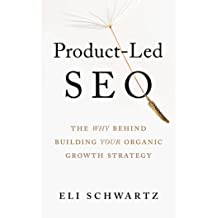
7. Product-Led SEO: The Why Behind Building Your Organic Growth Strategy

by Eli Schwartz

Eli Schwartz’s “Product-Led SEO” offers a fresh take on SEO strategy, emphasizing business goals and sustainable organic growth.

Drawing from his work with major brands, Schwartz presents a framework that integrates SEO with overall company strategy.

The book challenges traditional SEO tactics, advocating for a holistic approach that prioritizes user value.

Key topics include:

  • User intent optimization.
  • Content strategy for the full customer journey.
  • Measuring SEO’s business impact.

Schwartz focuses on the strategic “why” behind SEO tactics, encouraging critical thinking and adaptable strategies for long-term success.

Reasons to read this book:

  • Gain a strategic perspective on SEO that aligns with business objectives.
  • Learn to create sustainable organic growth through user-centric approaches.
  • Discover how to optimize for the entire customer journey.
  • Understand methods for measuring and communicating SEO’s business impact.
  • Access real-world case studies and examples from major brands.
  • Benefit from the author’s extensive experience in driving impactful SEO results.

Books On Link Building

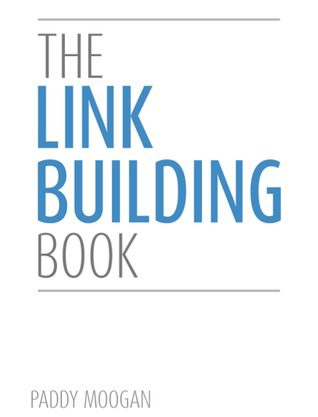
8. The Link Building Book

by Paddy Moogan

Paddy Moogan’s “The Link Building Book” is a comprehensive, free online guide.

It covers link building basics, tactics for acquiring high-authority backlinks, content creation, and practical steps for planning and executing campaigns.

The book emphasizes white-hat techniques and quality over quantity, making it valuable for both SEO novices and pros.

Reasons to read:

  • Master link building fundamentals and best practices.
  • Learn diverse tactics for acquiring high-quality, relevant links.
  • Understand how to assess potential linking websites.
  • Discover content strategies that naturally attract links.
  • Learn to plan and execute effective link building campaigns.
  • Benefit from practical advice and real-world examples.
  • Access updated, valuable insights at no cost.

Books On Local SEO

9. Local SEO Secrets: 20 Local SEO Strategies You Should Be Using NOW

by Roger Bryan

Local SEO Secrets” by Roger Bryan is a must-read for businesses targeting local customers. It offers 20 proven strategies to boost local search visibility and drive growth.

Key topics include:

  • Local SEO fundamentals and how it differs from traditional SEO.
  • Optimizing Google Business Profile listings.
  • Building local citations and leveraging structured data.
  • Creating local content and managing online reputation.
  • Implementing and tracking local SEO strategies.

The book provides actionable advice, real-world examples, and step-by-step instructions. It’s valuable for small business owners, marketers, and SEO consultants working with local clients.

Reasons to read:

  • Learn 20 proven strategies for improving local search visibility.
  • Understand key local ranking factors like Google Business Profile, reviews, and citations.
  • Master GBP optimization for local SEO success.
  • Discover how to use structured data and local content effectively.
  • Learn reputation management best practices.
  • Get practical, easy-to-implement instructions and examples.
  • Learn to measure local SEO performance with analytics tools.

Books On Search Engines

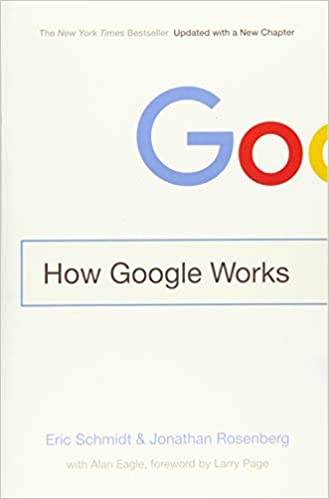
10. How Google Works

by Eric Schmidt and Jonathan Rosenberg

How Google Works” by ex-Google execs Schmidt and Rosenberg offers an insider’s view of the search giant. While not focused on SEO, it provides valuable insights for digital marketers and business leaders.

The book offers practical advice and real-world examples applicable to businesses of all sizes.

Understanding Google’s philosophy can inform more effective, customer-focused digital marketing strategies.

Reasons to read:

  • Get an insider’s view of Google’s success principles.
  • Understand how to create a user-centric business strategy.
  • Discover ways to foster innovation and experimentation in your organization.
  • Gain insights into data-driven decision-making processes.

11. Entity-Oriented Search

by Krisztian Balog

Entity-Oriented Search

Entity-Oriented Search” by Krisztian Balog is a deep dive into modern search engine tech. It focuses on entities, knowledge graphs, and semantic search and is aimed at readers with a background in information retrieval (IR).

A key strength is its coverage of cutting-edge research, like neural entity representations and knowledge-based language models. While tech-heavy, it touches on applications in QA, recommender systems, and digital assistants and discusses future trends.

It’s essential reading for IR, natural language processing (NLP), and artificial intelligence (AI) pros seeking in-depth knowledge of modern search engines.

Reasons to read:

  • Deep dive into entity-oriented and semantic search tech.
  • Research on knowledge graphs and semantic understanding.
  • A detailed look at entity extraction, linking, and ranking algorithms.
  • Insights on neural entity representations and knowledge-based language models.
  • Expert knowledge from a renowned IR and search engine specialist.

Conclusion: Choosing Your Next Book

These 11 SEO books have got you covered – whether you’re a beginner or a seasoned pro.

For beginners, “SEO for Beginners” and “The Art of SEO” are solid starter packs that’ll teach you the SEO fundamentals.

As you level up, books like “Entity SEO” and “Product-Led SEO” explore more advanced topics like optimizing for entities and aligning SEO with business goals.

Several books focus on specific areas:

  • “Local SEO Secrets” is a must-read if you’re targeting local customers.
  • “Ecommerce SEO Mastery” zeroes in on ecommerce SEO.
  • “The Link Building Book” is your starting point to master link building.

On the technical side, “Entity-Oriented Search” dives deep into semantic search and cutting-edge search engine tech. “How Google Works” gives you the inside scoop on Google’s mindset.

The key is picking books that match your skill level and areas of interest. Whether you want to learn SEO from scratch, level up your game, or specialize, there’s a book for you.

The Amazon links in this post are not affiliate links, and SEJ does not receive compensation when you click or make a purchase through these links.

More SEO & Marketing Books Worth Your Time:


Featured Image: PeopleImages.com – Yuri A/Shutterstock

Google Clarifies Simultaneous Use of Canonical & Noindex via @sejournal, @martinibuster

Google’s John Mueller clarified the longstanding confusion about whether it’s appropriate to use a noindex rule and a canonical tag on the same page. A 2021 statement suggested that using both might ‘maybe’ work, but his latest statement provides a more detailed and definitive answer.

Noindex Rule And Rel=Canonical

An HTML element is like a building block of a web page. An attribute (like rel=canonical) is something that modifies the element with additional information.

Google’s documentation states:

“rel=”canonical” link annotations: A strong signal that the specified URL should become canonical.”

Here is how the noindex and canonical are supposed to work:

  • The noindex rule is a directive that Google must obey.
  • The rel=canonical is a “strong signal” that can be ignored.

The conundrum is that the noindex seemingly cancels out the canonical because in theory Google won’t see it. So if Google can’t see the canonical then why did John Mueller previously say in a 2021 video that it’s okay to use both?

What Mueller Said In 2021

The person asking the question cited an SEO Office Hours Hangout YouTube video from 2021 where Mueller had recommended using either the canonical or the noindex rule, explaining the differences. But then later he hedged and said that both noindex and canonical can be used at the same time but qualifying that statement by saying that “maybe” Google might forward the canonical signal, thereby keeping a page out of the index while also canonicalizing the preferred web page.

This is the part of the 2021 video of Mueller that the person asking the question referred to:

“…you can also do both of them.

And it’s something… if external links, for example, are pointing at this page then having both of them there kind of helps us to figure out well, you don’t want this page indexed but you also specified another one.

So maybe some of the signals we can just forward along.”

Screenshot Of 2021 SEO Office Hours Hangout Video

As you can see above, John Mueller qualified his statement with a “maybe” which implies that it’s not an absolute black and white statement but rather a statement that’s colored with shades of gray. Mueller didn’t explain why he used the word “maybe” when he answered but it’s a nuance that’s worth noting.

Is It Okay To Use Noindex & Canonical Tag?

This is the question that was asked on Reddit:

“Hi u/johnmu I was watching this …where you advise using noindex and canonical tags at the same time.

Can you please confirm if this is still valid and in case noindexed page has canonical tag you will forward backlink signals to the canonical version?

For example CNN links to /t-shirt/gray/?price=50 page which is noindexed. One can add canonical tag /t-shirt/gray/ alongside with noindex and google may forward CNN link signal to the canonical version.

thanks”

John Mueller Answers Noindex & Canonical Question:

Mueller offered a more absolute answer by affirming that it’s best to pick one or the other, explaining that a noindexed canonical might nor might not be picked up by Google, thereby explaining why he said “maybe” in the 2021 YouTube Video.

He wrote:

“…I’d just pick one (noindex or followed links). Links on a noindexed page can be picked up, but it’s not guaranteed. SEO is often about making your preference very clear and not about maybe’s. Also, it’s helpful to be realistic: sometimes (often) having a good site structure that generally works well for search engines is better than hyper-focusing on links (or any other individual aspect of SEO).”

Mueller’s Answer Explains Use Of Noindex & Canonical

His answer explains a lot and clears up why he hedged in 2021 with a “maybe” while not exactly getting into the details of why Google may or may not pick up a canonical when a noindex rule is invoked.

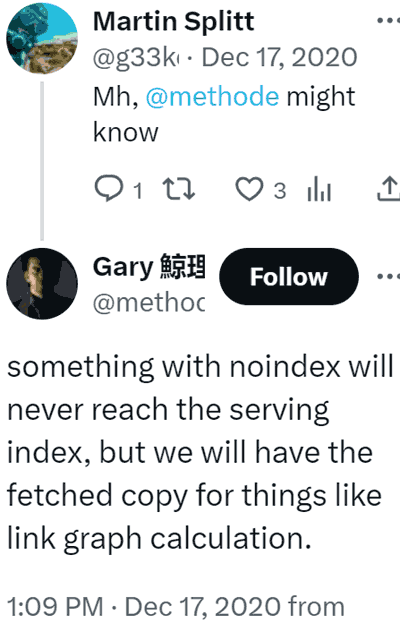
For those who want a little more detail about why Mueller said the canonical might be picked up, there’s a tweet from 2020 by Google’s Gary Illyes in which he explains the technical reason why Google might see links when there is a noindex in place.

A nerdy detail is that the person who tweeted the question in 2020 was asking about a robots meta noindex with a “follow” directive but the thing is that there is no such thing as a “follow” directive, according to Google’s robots meta tag documentation. The reason there’s no such thing as a “follow” directive is because following links is the default Googlebot behavior.

Gary tweeted:

“something with noindex will never reach the serving index, but we will have the fetched copy for things like link graph calculation.”

A “link graph” calculation is a reference to the (reduced) link graph of websites that is a map of the link relationships between pages and websites.

Screenshot Of Gary Illyes’ Tweet

Read John Mueller’s answer here:

Using noindex with canonical tag?

Faceted Navigation: Best Practices For SEO via @sejournal, @natalieannhoben

When it comes to large websites, such as ecommerce sites with thousands upon thousands of pages, the importance of things like crawl budget cannot be understated.

Building a website with an organized architecture and smart internal linking strategy is key for these types of sites.

However, doing that properly oftentimes involves new challenges when trying to accommodate various attributes that are a common theme with ecommerce (sizes, colors, price ranges, etc.).

Faceted navigation can help solve these challenges on large websites.

However, faceted navigation must be well thought out and executed properly so that both users and search engine bots remain happy.

What Is Faceted Navigation?

To begin, let’s dive into what faceted navigation actually is.

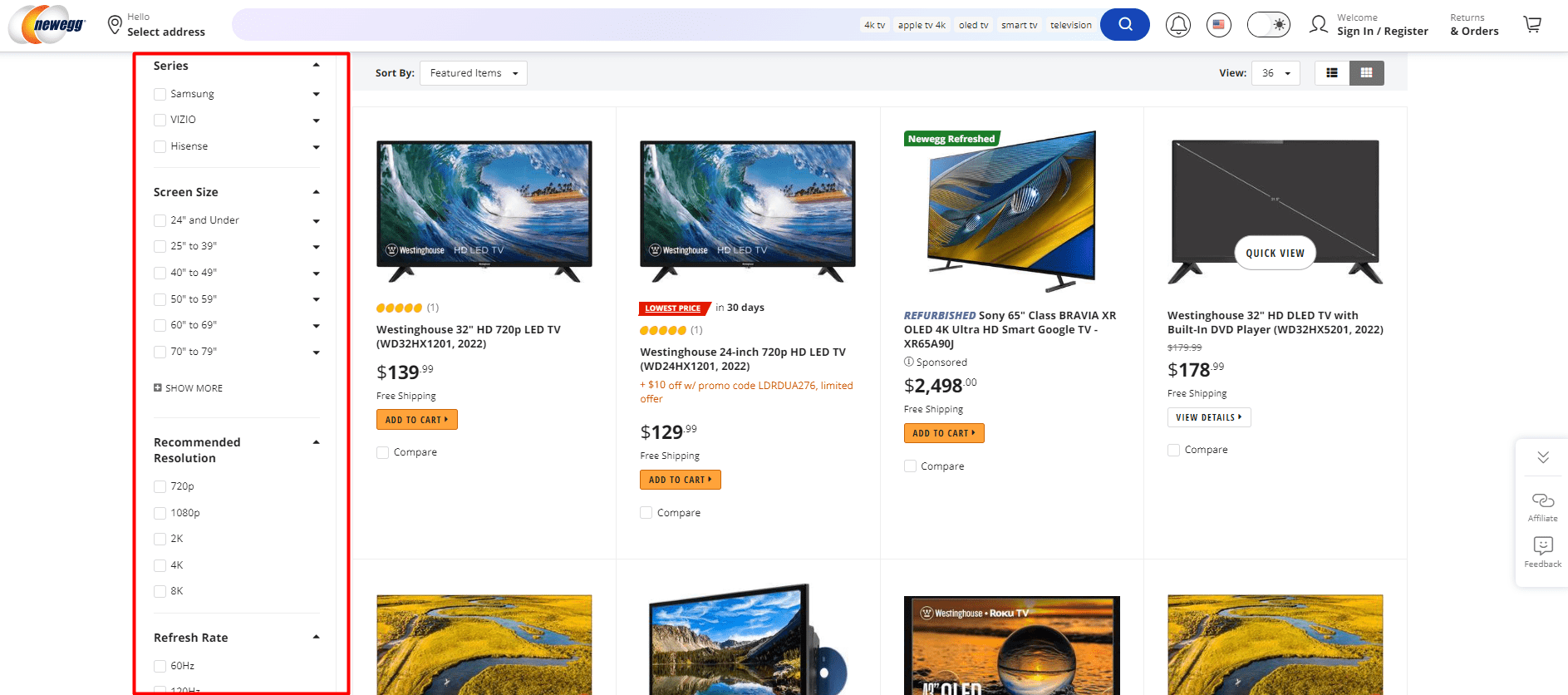
Faceted navigation is, in most cases, located on the sidebars of an e-commerce website and has multiple categories, files, and facets.

It essentially allows people to customize their search based on what they are looking for on the site.

For example, a visitor may want a purple cardigan, in a size medium, with black trim.

Facets are indexed categories that help to narrow down a production listing and also function as an extension of a site’s main categories.

Facets, in their best form, should ideally provide a unique value for each selection and, as they are indexed, each one on a site should send relevancy signals to search engines by making sure that all critical attributes appear within the content of the page.

Example of Facet Navigation from newegg.comExample of Facet Navigation from newegg.com, August 2024

Filters are utilized to sort items with a listings page.

While the user can use this to narrow down what they are looking for, the actual content on the page remains the same.

This can potentially lead to multiple URLs creating duplicate content, which is a concern for SEO.

There are a few potential issues that faceted navigation can create that can negatively affect SEO. The main three issues boil down to:

  • Duplicate content.
  • Wasted crawl budget.
  • Diluted link equity.

The number of highly related pieces of content continues to grow significantly, and different links may be going to all of these different versions of a page, which can dilute link equity and thus affect the page’s ranking ability as well as create infinite crawl space.

You need to take certain steps to ensure that search engine crawlers aren’t wasting valuable crawl budgets on pages that have little to no value.

Canonicalization

Turning facet search pages into SEO-friendly canonical URLs for collection landing pages is a common SEO strategy.

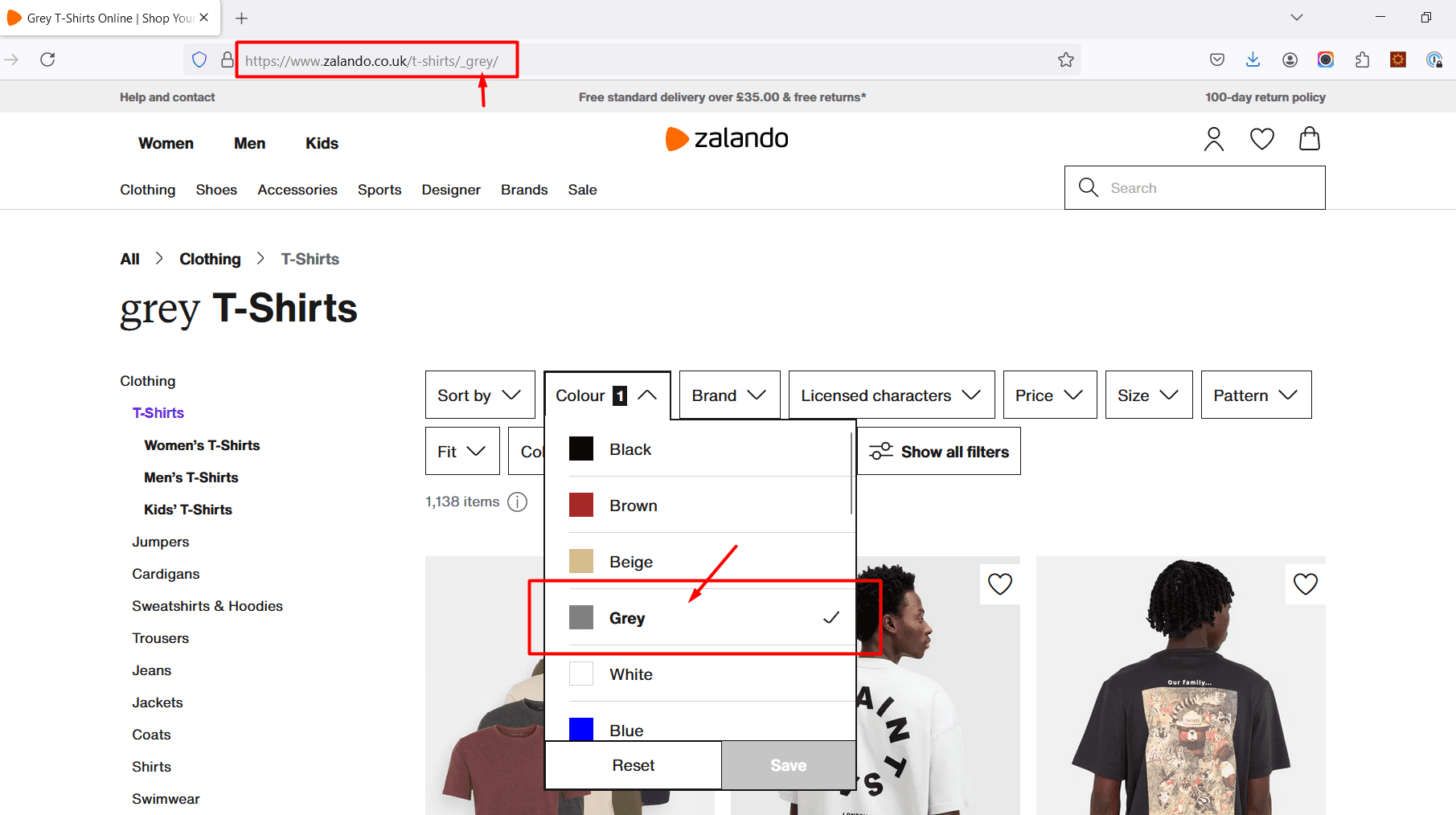
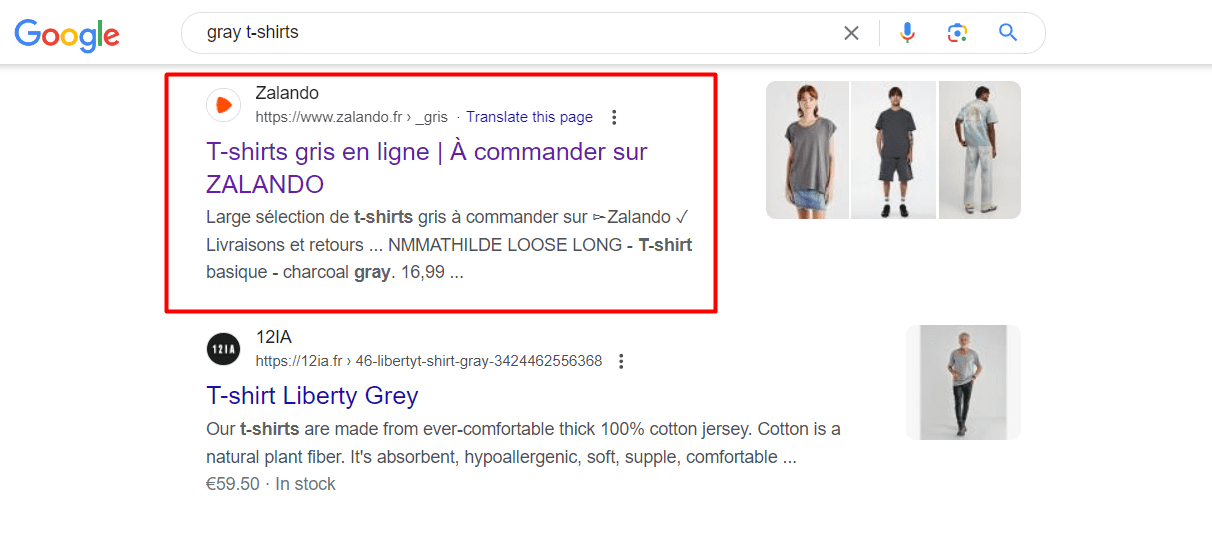
For example, if you want to target the keyword “gray t-shirts,” which is broad in context, it would not be ideal to focus on a single specific t-shirt. Instead, the keyword should be used on a page that lists all available gray t-shirts. This can be achieved by turning facets into user-friendly URLs and canonicalizing them.

For example, Zalando’s facets are great examples where it uses facets as collection pages.

Facets as collection pagesScreenshot from Zalando, August 2024

When you search in Google [gray t-shirts] you can see Zalando’s facet page ranking in the top #10.

Zalando's gray t-shirts page ranking in Google searchScreenshot from search for [gray t-shirts], Google, August 2024

If you try to add another filter over a gray t-shirt, let’s say the brand name ‘Adidas,’ you will get a new SEO-friendly URL with canonical meta tags and proper hreflangs for multiple languages in the source code

https://www.zalando.co.uk/t-shirts/adidas_grey/


However, if you decide to include a copy on those pages, make sure you change the H1 tag and copy accordingly to avoid keyword cannibalization.

Noindex

Noindex tags can be implemented to inform bots of which pages not to include in the index.

For example, if you wished to include a page for “gray t-shirt” in the index, but did not want pages with price filter in the index, then a noindex tag to the second result would exclude it.

For example, if you have price filters that have these URLs…

https://www.exampleshop.com/t-shirts/grey/?price_from=82

…And if you don’t want them to appear in the index, you can use the “noindex” meta robots tag in the tag:

This method tells search engines to “noindex” the page filtered by price.

Note that even if this approach removes pages from the index, there will still be crawl budget spent on them if search engine bots find those links and crawl these pages. For optimizing crawl budget, using robots.txt is the best approach.

Robots.txt

Disallowing facet search pages via robots.txt is the best way to manage crawl budget. To disallow pages with price parameters, e.g. ‘/?price=50_100’, you can use the following robots.txt rule.

Disallow: *price=*

This directive informs search engines not to crawl any URL that includes the ‘price=’ parameter, thus optimizing the crawl budget by excluding these pages.

However, if any outbound links pointing to any URL with that parameter in it existed, Google could still possibly index it. If the quality of those backlinks is high, you may consider using noindex and canonical approach to consolidate the link equity to a preferred URL.

Otherwise, you don’t need to worry about that, as Google confirmed they will drop over time.

Other Ways To Get The Most Out Of Faceted Navigation

  • Implement pagination with rel=”next” and rel=”prev” in order to group indexing properties from pages to a series as a whole.
  • Each page needs to link to children pages and parent. This can be done with breadcrumbs.
  • Only use canonical URLs in sitemaps in case you choose to canonicalize your facets search pages.
  • Include unique H1 tags and content in case of canonicalized facet URLs.
  • Facets should always be presented in a unified, logical manner (i.e., alphabetical order).
  • Implement AJAX for filtering to allow users to see results without reloading the page. However always change the URL after filtering so users can bookmark their searched pages and visit them later. Never implement AJAX without changing the URL.
  • Make sure faceted navigation is optimized for all devices, including mobile, through responsive design.

Conclusion

Although faceted navigation can be great for UX, it can cause a multitude of problems for SEO.

Duplicate content, wasted crawl budget, and diluted link equity can all cause severe problems on a site. However, you can fix those issues by applying one of the strategies discussed in this article.

It is crucial to carefully plan and implement facet navigation in order to avoid many issues down the line when it comes to faceted navigation.

More resources:


Featured Image: RSplaneta/Shutterstock

All screenshots taken by author

Maintaining SEO Against Varying International Laws And Regulations via @sejournal, @TaylorDanRW

When implementing effective SEO strategies for clients, a frequent challenge is managing limited resources, especially in content creation and the technical capabilities needed to execute SEO recommendations.

This complexity increases when working with organizations operating across multiple territories and markets.

Each region may have its own set of regulations, language requirements, and market-specific needs, adding another layer of difficulty in executing consistent and compliant SEO strategies across different territories.

In these cases, strategies and routine activities often need to be adjusted to meet the specific laws and regulations of each location.

Non-compliance with these regulations might not directly impact your overall digital performance.

The organization could face significant consequences in the form of legal charges and potential fines.

Adjusting to these differences is essential for maintaining compliance and ensuring the successful implementation of SEO strategies.

Common Legislation

While understanding legislation may not fall entirely within the scope of SEO, being aware of the limitations it imposes on activities and data collection is crucial.

Legal regulations can directly impact how data is gathered, used, and stored, influencing SEO strategies in significant ways.

Beyond the DMCA, other legal frameworks can also affect SEO efforts, depending on the region in which a business operates.

Compliance with data privacy laws – like GDPR in Europe or CCPA in California, for example – can shape how businesses handle user data, adjust targeting, and execute their SEO tactics across different jurisdictions.

Global Privacy Legislation

Privacy regulations have a significant impact on SEO, as they influence how businesses can collect, store, and use personal data.

When we talk about privacy legislation, the two that generally come to the top of mind are the General Data Protection Regulation (GDPR) and the California Consumer Privacy Act (CCPA).

Other privacy legislations that you may come into contact with when working with a global organization include:

Understanding these different privacy laws and how they affect data handling (and user tracking) is important, as data between regions may not be directly comparable because of these laws.

European Accessibility Act (EAA) 2025

The EAA 2025 aims to improve accessibility for persons with disabilities across the EU by setting common requirements for certain products and services.

It aims to standardize practices, so that businesses comply with unified accessibility standards by June 28, 2025, promoting equal access to digital products and services.

This means that web design will need to adapt to meet specific accessibility standards, ensuring that websites are usable by individuals with disabilities.

This could include incorporating features like keyboard navigation, screen reader compatibility, alternative text for images, accessible forms, and adequate color contrast, allowing for a more inclusive online experience.

As companies work to adapt (and become compliant) to this legislation, third-party software may be introduced to websites to facilitate a number of (if not all) of the requirements.

This means adding scripts and potentially altering how a page loads and renders for both users (and search engines).

Geo-Blocking Regulation (EU) 2018/302

The Geo-Blocking Regulation (EU) 2018/302 is a European Union regulation aimed at preventing unjustified geographical discrimination of customers within the EU’s single market.

It came into effect in December 2018.

The regulation specifically targets practices that aim to block or redirect users trying to purchase goods, or services, online from a website “based” in a different EU member state.

A key feature of this is geo-blocking. The regulation aims to prevent geo-based redirects, such as automatically redirecting users to a different section of the website (such as a localized subfolder) based on IP.

During the Covid pandemic, there were calls for regulation to adapt to the shifts in user behavior with online shopping.

Anecdotally, I’ve not seen many instances of companies in the EU falling foul of this regulation for geo-blocking.

In 2021, Valve, the company behind Steam, along with a number of video game publishers, were fined €7.8 million for geo-blocking practices. Outside of this instance, very few have surfaced in my news feeds.

Differences Between US State Laws

Laws governing consumer protection, digital goods, and subscription services differ widely across U.S. states, resulting in unique legal frameworks that businesses must consider when operating in multiple regions.

These variations create challenges for companies, particularly in advertising and data compliance, as they must tailor their practices to meet the specific requirements of each state’s regulations.

Consumer Protection & Advertising Laws

Many states implement their own criteria for defining deceptive advertising, with some, like California and New York, establishing stricter guidelines than federal standards.

California’s Unfair Competition Law (UCL) and New York’s General Business Law are prime examples of state laws that set specific requirements for advertising practices.

These regulations often demand a higher level of compliance, making it essential for businesses to adjust their marketing efforts accordingly.

An example from the tangible world is the claim of “Made in the USA.”

In California, the definition of what qualifies as “Made in the USA” is notably more stringent than federal guidelines, directly influencing how companies can promote their products.

Businesses must carefully navigate these rules to ensure their advertising aligns with state-specific standards.

Laws Governing Digital Goods & Services

The sale and advertisement of goods and services online in the U.S. are often governed by varying state regulations. One area where this is evident is in the treatment of digital goods, such as ebooks and software.

Some states, like Texas, classify digital goods as taxable, requiring businesses to apply sales tax to their transactions.

Other states, such as Delaware, do not impose taxes on digital goods. These differences mean that businesses selling digital products must remain aware of each state’s rules to ensure compliance across multiple jurisdictions.

Subscription Renewals

Some states, like California, have specific rules around automatic subscription renewals. Businesses must clearly disclose renewal terms, obtain affirmative consent, and make it easy for consumers to cancel. Other states have less stringent or no such regulations.

This could lead to retention and MRR data being lower for states like California than others, and is important to understand this when reviewing data, and then using this to further inform marketing strategy.

This is especially pertinent in the SaaS space.

What You Should Be Asking Your SEO Vendor

Companies must ensure that any third-party marketing vendors they work with are also compliant with these privacy laws.

This includes reviewing contracts and agreements with vendors to ensure they follow proper data-handling practices, including the ability to delete, disclose, or limit the use of consumer data.

Why This Matters

Global compliance is essential for businesses to effectively manage the complexities of the international digital landscape.

Ensuring that SEO strategies align with the legal frameworks of each region is a key part of this process and building long-term, sustainable organic campaigns that drive value across multiple territories.

Looking ahead, it’s not out of the question that Google may introduce a user accessibility metric, similar to how Core Web Vitals serve as a proxy for user experience.

There is some historical basis for this, with prior emphasis on HTTPS for securing the web, along with mobile-first strategies and page speed optimizations.

While these factors are “ranking factors,” the greater emphasis on them was to enact change across the wider internet to benefit users.

More resources: 


Featured Image: Rawpixel.com/Shutterstock

Google Updates Their Spam Policy Documentation via @sejournal, @martinibuster

Google updated their spam documentation, adding a new definition of site reputation abuse as the largest single change, followed by additional information about manual action consequences. The remaining updates are a content refresh aimed at making the documentation easier to understand and more concise. Understanding these changes can provide ideas for how to update your own content effectively.

What Changed

There are about eight kinds of changes made to the documentation that improves the content. That’s seven ways that older content can be made fresher.

These are the types of changes made:

  • More Information About Site Reputation Abuse
  • New Details About Manual Action Consequences
  • Changed Concept Of Thin Affiliate To Thin Affiliation
  • More Appropriate Introductory Sentence
  • Consolidation Of Words: Practices & Spam Practices
  • Added The Concept Of Spam Abuse
  • Improved Conciseness In General
  • Improved Topic: Machine-Generated Traffic

More Information About Site Reputation Abuse

The previous documentation advises that site reputation abuse is when a third party publishes content on an authoritative site with “with little or no first-party oversight” but it didn’t explain what “first-party oversight” is so the new version of the spam documentation adds a new definition.

“Close oversight or involvement is when the first-party hosting site is directly producing or generating unique content (for example, via staff directly employed by the first-party, or freelancers working for staff of the first-party site). It is not working with third-party services (such as “white-label” or “turnkey”) that focus on redistributing content with the primary purpose of manipulating search rankings.”

New Details About Manual Action Consequences

Google added a new sentence explaining that one of the consequences of continuing to violate Google’s spam guidelines is that they can escalate the consequences by removing more sections of a site from the search results. This isn’t a new consequence but it is new information.

This is the new detail in the context of a site that continues to spam:

“…and taking broader action in Google Search (for example, removing more sections of a site from Search results).”

This is an example of refreshing content by adding additional information that was left out of the original version.

Changed Concept Of Thin Affiliate To Thin Affiliation

Google changed the section about “Thin affiliate pages” so that it is now about “Thin affiliation” and added a definition of what they mean.

The original version about thin affiliate pages started like this:

“Thin affiliate pages are pages with product affiliate links…”

The new version starts like this:

“Thin affiliation is the practice of publishing content with product affiliate links…”

More Appropriate Introductory Sentence

Google’s documentation improved the introductory sentence by making it more appropriate for the context of the topic. It now defines what spam is. The new sentence doesn’t replace the the old introductory sentence, the old one simply becomes the second sentence.

Original introductory sentence:

“Our spam policies help protect users and improve the quality of search results.”

New introductory sentence:

“In the context of Google Search, spam is web content that’s designed to deceive users or manipulate our Search systems in order to rank highly. Our spam policies help protect users and improve the quality of search results.”

The new version starts with a definition of spam, which makes sense for documentation about spam.

Consolidation Of Words: Practices & Spam Practices

The following examples show how Google consolidated euphemisms for the same thing (spam) into a single phrase that emphasizes the phrase Spam Practices.

This change combines phrases like ‘content and behaviors’ and ‘forms of spam’ into the simpler phrases ‘practices” and ‘spam practices.’ I’m not sure why Google made this change, but using consistent terminology makes content easier to understand.

Here are some examples of the phrase “practices” and “spam practices” being emphasized:

1. The second paragraph is changed to make it more concise.

This:

“We detect policy-violating content and behaviors both through automated systems….”

Is now this:

“We detect policy-violating practices…”

The sentence becomes easier to understand. <— This is important.

2. Around the fourth paragraph:

This:

“Our policies cover common forms of spam, but Google may act against any type of spam we detect.”

Becomes this:

“Our policies cover common spam practices, but Google may act against any type of spam practices we detect.”

The new sentence above is kind of redundant, but it shows a conscious effort to consolidate similar activities into a single category of activity.

Concept Of Spam Abuse

The next change is to increase the use of the word “abuse” in the new version of the spam policies. Abuse is a word that describes a harmful activity. In the case of SEO, Google may be using that word because it describes an activity that intentionally deceives users and search engines.

The old version used the word 11 times and the new version uses that word 17 times. It’s a relatively minor change but it significantly heightens the concept of spam being a form of abuse.

Here are two examples of how Google added the concept of abuse:

  1. The word “doorways”  is now “doorway abuse”
  2. The phrase “Hidden text and links” is now Hidden text and links abuse”

There are other changes to the documentation where they add the word “abuse” and what’s interesting about that is this is a change to how a concept (abuse) is introduced to make a series of seemingly different things related. This helps reader comprehension because “hidden text” and “doorways” are now connected to each other in the concept of “abuse” in the sense of spam.

Improved Conciseness

Another change which should always be considered in a content refresh is to make phrases more concise.

Google changed the following text:

“Google uses links as a factor in determining the relevancy of web pages. Any links that are intended to manipulate rankings in Google Search results may be considered link spam. This includes any behavior that manipulates links to your site or outgoing links from your site.”

It’s now significantly shorter:

“Link spam is the practice of creating links to or from a site primarily for the purpose of manipulating search rankings.”

Big difference, right? I really like that change because someone probably looked at that original three sentences and considered what the core message was that was trying to get through that thicket of three sentences.

If you read the original three sentences it’s kind of a lot of information that doesn’t really stick in the mind. Considering whether a series of sentences communicate effectively is a good way to approach a content rewrite. Just read it and ask, “what does this mean?” and if the answer is shorter then consider writing that in place of the sentences.

Improved Topic Communication: Machine-Generated Traffic

This next change dramatically improves the machine-generated traffic section because it removes a part that makes it about Google and makes it more about a definition of machine generated traffic.

These sentences:

“Machine-generated traffic consumes resources and interferes with our ability to best serve users. Examples of automated traffic include:”

Are now this:

“Machine-generated traffic (also called automated traffic) refers to the practice of sending automated queries to Google. This includes scraping…”

The part about consuming resources is still there but it’s now moved toward the end of that section.

There are other instances in the documentation were two sentences were shortened into one that gets to the point more directly, concise.

For example, the section about Misleading Functionality replaces two sentences with one sentence that defines what misleading functionality is:

“Misleading functionality refers to the practice of…”

The section about Scraped Content replaced three long sentences with a sentence that defines what scraped content is:

“Scraping refers to the practice of taking content from other sites…”

Content Refresh Versus A Rewrite

The updated spam documentation is not a rewrite but an incremental refresh with some new information. It suggests ways to update your own content by adding new details and making existing information clearer and more concise.

Read the updated documentation:

Spam policies for Google web search

Featured Image by Shutterstock/Shutterstock AI Generator

Four Reasons You Can’t Ignore Branded SEO in 2025

This post was sponsored by Similarweb. The opinions expressed in this article are the sponsor’s own.

According to Rand Fishkin:

‘For most small and medium businesses and newer creators/publishers, SEO is likely to show poor results until you’ve established credibility, navigational demand, and a strong reputation among a sizable audience.’

In other words, if you want to build organic traffic, build your brand.

The question is how do search engines measure brand, and what does that mean to your SEO?

In this post, I’ll dig into what influence SEOs have over brand-building, and show you:

  • Why branded SEO is an untapped opportunity you should grab with both hands.
  • How brand in SEO differs from traditional brand strategy.
  • Ways you can educate Google about your brand.

Branded SEO, An Untapped Opportunity

Branded SEO remains a largely untapped SEO opportunity. It’s untapped because, as SEOs, we’re trained to ignore branded traffic. However, by ignoring branded search, you are potentially missing some big opportunities to move your business forward.

The reason is that users don’t just use search engines to discover information and products. They also use search engines to discover brands. By focusing on how your brand shows up, you have an opportunity to influence how middle-of-the-funnel users perceive your brand. If you get it right, that could turn into a long-term relationship with your brand. Get it wrong, and I’m sure you have a number of competitors that would love to have the business.

This leads us to a crucial question…

Is There An SEO Angle To Brand?

As SEOs, we influence how content appears on search engines. The function of a search engine is to match end users with content. This means as SEOs, we are not just dealing with how users perceive your brand. We are dealing with how search engines understand how users perceive your brand.

The difference is not subtle.

Search engine algorithms measure how strong a brand is and incorporate those signals into the search results. They primarily seem to use three methods:

  • Measuring branded search queries
  • Measuring brand engagement metrics
  • Understanding your brand entity

So, if the search engine incorporates brand signals into how it generates search results, then as SEOs we should be looking for a strategic way to influence these signals.

1. Branded Search Queries

Google’s leaked documents reveal a crucial aspect of branded SEO: the strength of a brand significantly influences its search rankings. This is measured through what we can call the BrandQueryFactor. This metric assesses how frequently users search for a brand by name. The more brand-specific queries a company receives, the higher its likelihood of ranking well in search results.

We understand that branded searches affect your rankings, the question now is, in what way do they affect your rankings?

Perhaps the answer can be found in a Google patent called Ranking Search Results. This patent describes how Google uses branded search queries as a quality factor similar to links. In fact, it describes branded and navigational queries as implied links that demonstrate user trust and intent.

These ‘implied links’ have a slightly different role in establishing a site’s authority than actual links:

  • Links act as a vote of confidence from other websites, often indicating external recognition or authority
  • Branded queries reflect real-world user interest, signaling how often users search for and interact with a resource through queries

Putting that together with the Google leak metrics above, we see that brand signals include user engagement and branded query analysis. Google uses these signals to see how users engage with your brand.

Increasing brand signals with branded queries and direct traffic

As an SEO can you increase branded traffic? The sad truth is, not directly. When your SEO starts to bring in traffic you will see an increase in branded searches. But this is an indirect benefit rather than a branded search strategy.

Does this mean branded search is out of your hands?

To answer this, it’s important to first understand how to increase brand signals.

A few years ago, when I worked as an SEO manager, I noticed something. Whenever we ran PPC campaigns, we would see increasing amounts of branded search terms in our Search Console accounts.

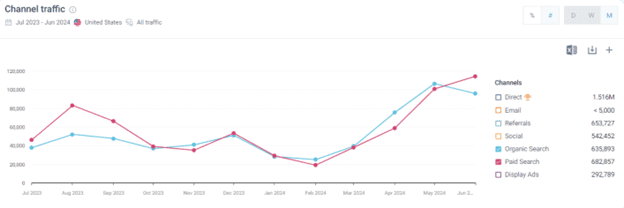
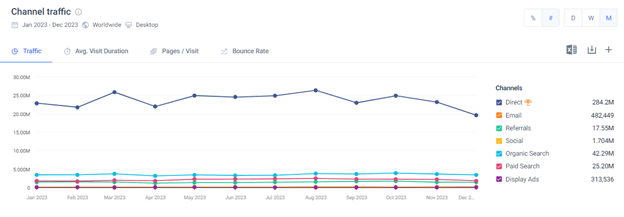
The reason is pretty simple. People saw our ads and Googled the brand name. Take a look at the Similarweb Channels report below. What do you see? (Hint, the blue line represents organic traffic.)

Screenshot from Similarweb, September 2024

Channel data for greenies.com

 As we see above, organic traffic seems to correlate directly with paid search.

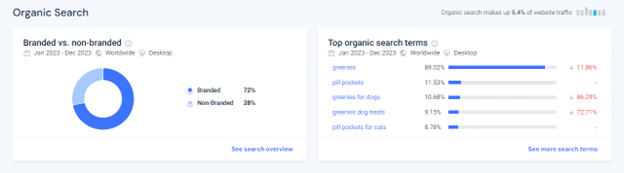
Screenshot from Similarweb, September 2024

Looking at the organic search breakdown for the brand in 2023, we see that 72% of the site’s keywords were branded.

Screenshot from Similarweb, September 2024


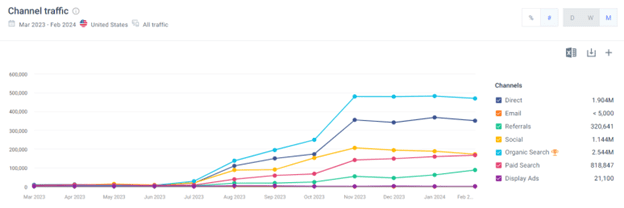
Channel data for elorea.com

 What we see above is organic traffic directly correlates with other channels.

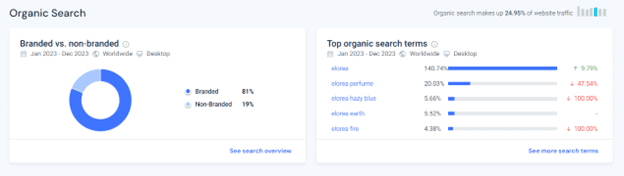
Screenshot from Similarweb, September 2024

Looking at the organic search breakdown for the brand in 2023, we see that 81% of the site’s keywords were branded.

The reason for this pattern is that the more your audience sees your brand, the more likely they are to Google your brand.

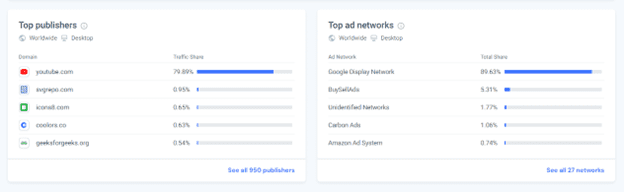
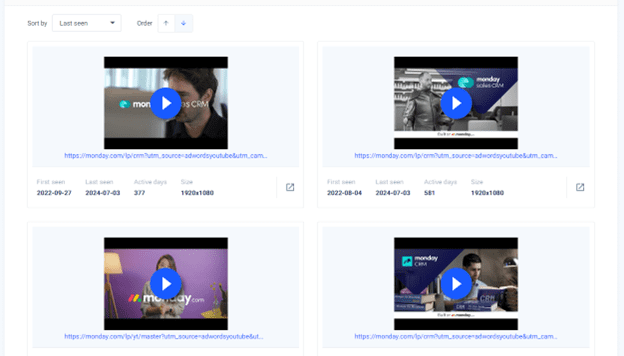
Another great example of this is monday.com. The brand has doubled down on its brand strategy, focusing primarily on YouTube ads.

Screenshot from Similarweb, September 2024

Its YouTube ads together with its memorable domain name has led to unprecedented levels of direct traffic.

Screenshot from Similarweb, September 2024

Although I haven’t yet seen evidence that Google uses direct traffic as a ranking signal, it stands to reason that it does. What’s more, you can see that Google has taken notice of the brand.

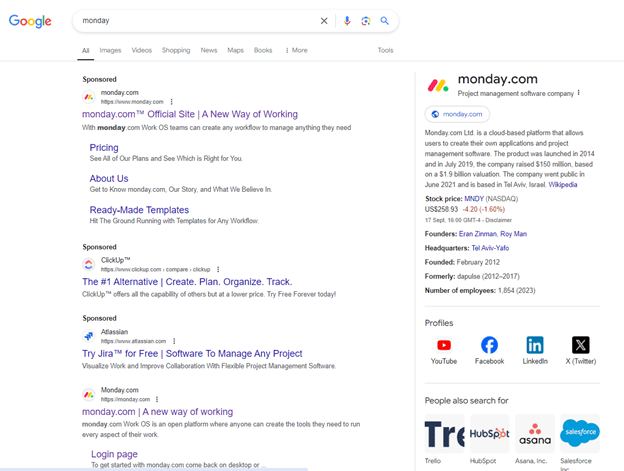
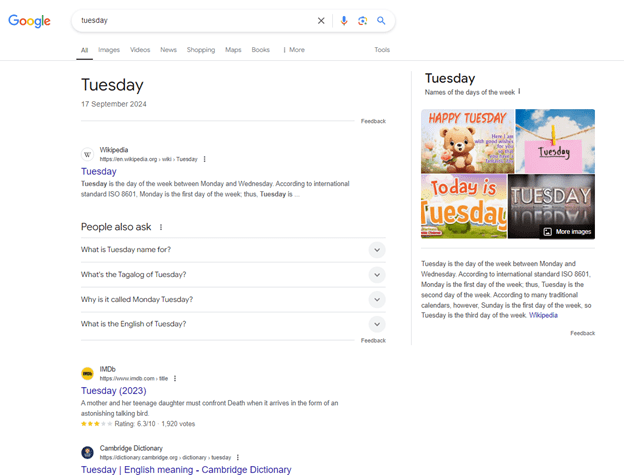
Try Googling the word Monday and then Google the word Tuesday and compare the results. To Google the word Monday refers to a brand.

Screenshot from search for Monday, Google, September 2024

Tuesday, on the other hand, is a day of the week.

Screenshot from search for Tuesday, Google, September 2024

The takeaway: You can increase brand signals like branded keywords and direct traffic by focusing on other channels.

So where does this leave you as an SEO?

You have the data to assess branded keywords and direct traffic, putting you in a unique position to partner with marketing leaders to work on big-picture marketing strategies designed to increase branded keywords.

2. Brand Engagement Metrics

Looking at the Google leak we can also see that Google measures user engagement as a signal of brand strength.

Brand Engagement Metrics includes user engagement factors such as click-through rates (CTR) and user interactions with the brand’s content. Higher engagement can positively influence rankings.

This means focusing on improving user engagement is a crucial aspect of brand SEO.

The best way to evaluate user engagement on your site is to compare your engagement metrics with that of your competitors.

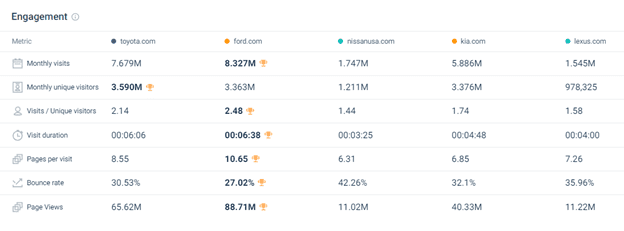
For instance I’m analyzing toyota.com and four of its competitors with the Similarweb Website Performance report. Looking at the Engagement metrics we see that ford.com is getting more engagement in almost all metrics.

Screenshot from Similarweb, September 2024

One of the best ways to improve user engagement is to focus on site navigation. This means figuring out the flow of information on your site and including it in your:

  • URL structure
  • Bread crumbs
  • Top level menu

Also make sure that the top of the fold section of every piece of content directly answers the user intent directly.

3. Creating content For [Brand] + Modifier Keywords

You have direct influence over how your brand appears when users search for it on Google. While you might assume all your branded traffic goes to your homepage, there are actually other ways to capture this traffic.

What’s more, your branded traffic can help you discover customer sticking points or even areas where you are potentially losing customers to your competitors.

Want to see how? Try digging through your branded keywords. You are looking for keyword modifiers that either represent issues to resolve or opportunities to be won.

Keyword modifiers might be:

  • [brand] pricing
  • [brand] reviews
  • [brand] alternative
  • Where is [brand] located
  • [brand] alternative

By looking through your branded keywords, you can quickly see how users are interacting with your brand by seeing the questions they are asking. Make sure you have content that answers all of these questions. If you find long-tail queries it might be a good idea to create an FAQ on your site.

If you don’t do this you might see your branded traffic go to sites like YouTube or worse, your competitors.

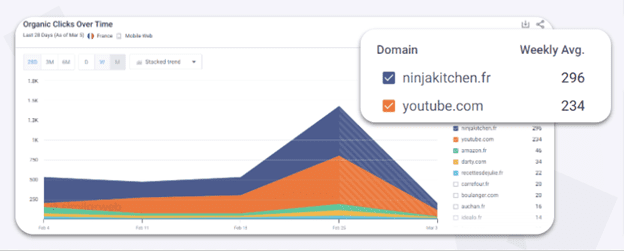
For instance using the Similarweb SERP Players report below, we see a large portion of branded clicks for Ninja Creamy going to YouTube.

Screenshot from Similarweb, September 2024

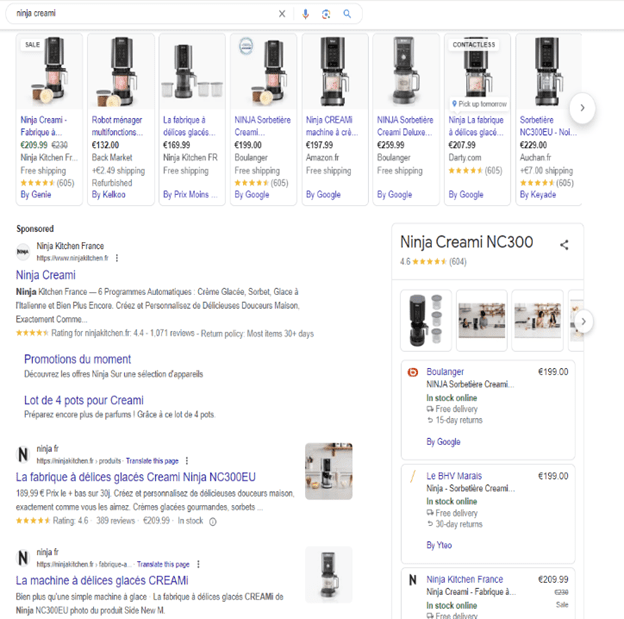
What’s fascinating about this is that YouTube is not above the fold. This means that users often have more than one search intent and are willing to scroll to find what they are looking for. Can you afford to lose traffic for YouTube?

Screenshot from search for Ninja Creami, Google, September 2024

In a case like this depending on which videos users are clicking on, it might make sense for the brand to create video content designed to feature on the SERP.

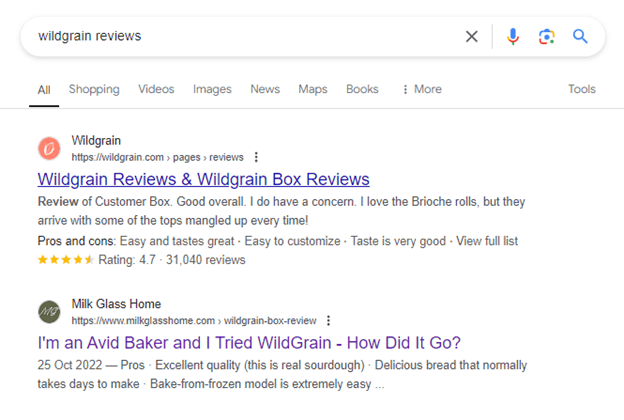
A great example of a brand that got this right is wildgrain.com. In 2023, the keyword ‘wildgrain reviews’ was trending. Fortunately for the brand they already included a page on their site featuring reviews.

Googling the keyword, users were faced with Wildgrain’s own reviews page ranking in position #1. What’s more the rich result included a review rating of 4.7 out of five. It also listed the amount of reviews (which currently stands at 31040.)

Screenshot from search for Wildgrain reviews, Google, September 2024

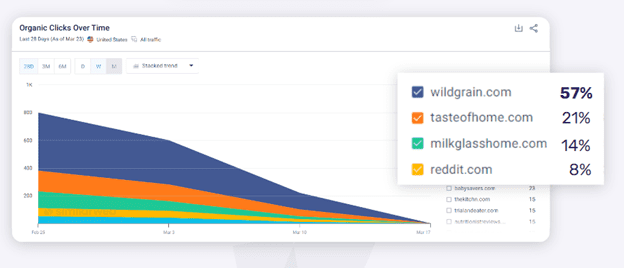
Our data shows that 72% of searches were zero-click. That means the vast majority of users were satisfied with what they saw in the search results.

What’s interesting is of the remaining 28% of users, 57% clicked on the Wildgrain’s own result.

Screenshot from Similarweb, September 2024

The takeaway is with the right content, you can directly influence how users interact with your brand, even on things like reviews.

4. Educating Search Engines About Your Brand Entity

Another aspect of how Google evaluates your brand is through your brand entity. Google’s machine learning allows the search engine to understand real-world entities. It does this by gathering information about entities mentioned around the web and arranging that information in a similar way to how a human brain arranges information.

The purpose of this is to understand the relationships between people, places, and things so that Google can deliver more relevant and contextual information in the SERPs.

Google’s knowledge is constantly expanding and updating as new information becomes available.

How does Google understand your brand?

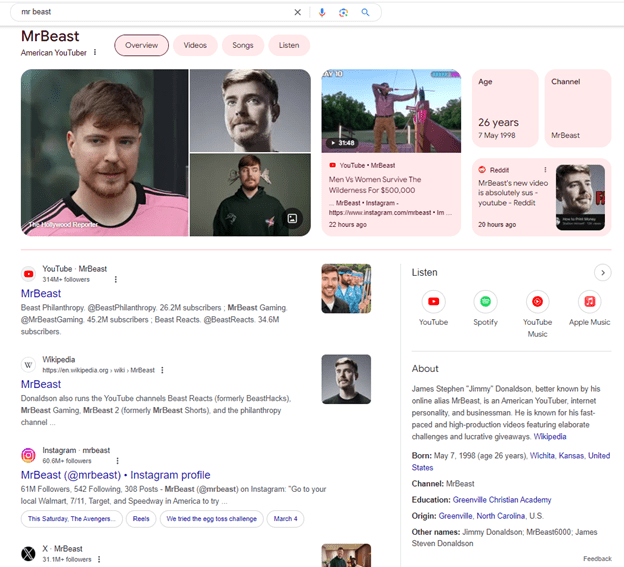
To find out, just Google it. If there are strong signals around the web, Google will present you with things like a Knowledge Panel, Twitter (X) boxes, image boxes and more.

Screenshot from search for Mr Beast, Google, September 2024

If you don’t see anything, you have work to do, as I mentioned above, a large portion of users hear about your brand and then Google you. What they see when they arrive on your brand SERP is up to you.

The great news is you can educate Google about your brand entity. When you do that, you’ll not only improve your brand SERP, but you might see your brand popping up in other strategic places.

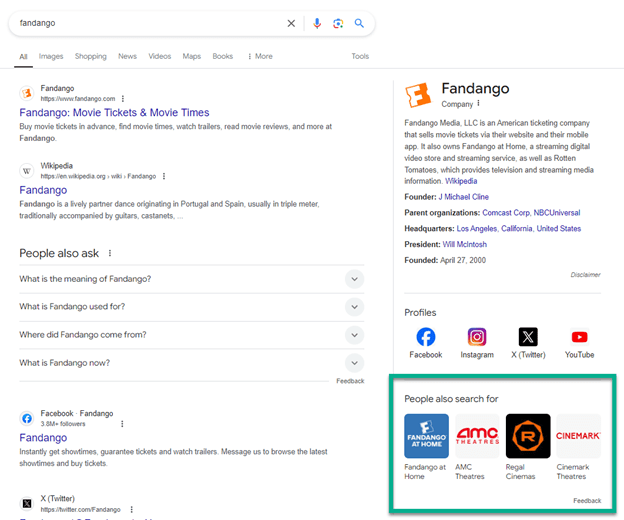
For instance, below, I’ve searched for Fandango, a company that sells movie tickets. If you look at the bottom of the Knowledge Panel on the right, you’ll see Fandango’s direct competitors including:

  • AMC Theatres
  • Regal Cinemas
  • Cinemark Theatres
Screenshot from search for Fandango, Google, September 2024

How did a site’s competitors make it into the site’s Knowledge Panel? Google doesn’t only rank content for keywords any more. It understands what the brand entity is and what it relates to. The result is you might find your brand mentioned appearing on your competitor’s brand SERP or in other relevant places on the web.

How do you educate Google about your brand entity?

There is a clear method to educate Google about your brand entity.

  1. Establish an entity home page: Create a dedicated page that describes your entity. This page should clearly outline what your business does and who it serves. Although this can be any page on the web, the best place to do this is on your ‘About Us’ page.
  1. Build entity citations: Mentions of your brand across the web will reinforce the information provided on your brand homepage. It’s important to keep your brand description consistent around the web so that Google can match each citation with your entity’s home page. Citations can appear on pages you control, such as social media profiles but citations on pages you don’t control often carry more weight and provide the most benefit.
  1. Link from your entity homepage to your entity citations: This could mean including links to your social media profiles as well as any guest posts, videos, or podcasts your brand is featured on.

Far From The Final Word On Brand SEO

As an SEO, if you prioritize branded SEO, you are not just a technical specialist. You have access to data to shape the business’s digital identity, which can drive tangible and sometimes immediate results. This paradigm shift allows you to directly impact revenue streams, aligning SEO efforts more closely with overarching business objectives.

If branded SEO is a paradigm shift for you, consider this.

Branded SEO is only one ranking factor in Google’s complex maze of ranking systems. You can read more about it in our latest ebook: Google’s Ranking Anatomy: Dissecting 90+ Ranking Signals.


Image Credits

Featured Image: Image by Similarweb. Used with permission.

In-Post Image: Images by Similarweb. Used with permission.

Ask an Expert: Does Google Index AI Content?

“Ask an Expert” is an occasional feature where we pose questions to seasoned ecommerce practitioners. For this installment, we’ve turned to Ann Smarty, the founder of Smarty Marketing, a search engine optimization firm, and a longtime Practical Ecommerce contributor.

She addresses Google’s policy on content produced by artificial intelligence tools.

Practical Ecommerce: Does Google index and rank AI-generated content?

Ann Smarty: Google published “guidance about AI-generated content” in its Search Central blog in February 2023. The guidelines are vague but worth reading nonetheless.

Ann Smarty

Ann Smarty

To summarize:

    • Google allows “helpful and original” AI-generated content. The post doesn’t offer examples of such content, but it presumably means using AI to repurpose, clarify, or shorten your original article.
    • Google does not allow the use of AI to mass-produce content intended solely to rank for multiple queries. This is against Google’s spam policies.

Google states in the post that it has dealt with automated content for years, such that the AI issue is not new. Google says it can detect content created with automation or AI, and its focus remains on E-E-A-T: expertise, experience, authoritativeness, and trustworthiness.

Per Google, “Our focus on the quality of content, rather than how content is produced, is a useful guide that has helped us deliver reliable, high-quality results to users for years.”

Google Removes Cache: Search Operator Documentation via @sejournal, @martinibuster

Google removed their documentation for the cache: search operator because it no longer works. The Internet Archive’s Wayback Machine shows the documentation was live as of September 17, 2024. The URL now redirects to a changelog notice announcing its removal.

It was announced on March 2024 by Google SearchLiaison via X (formerly Twitter) that the cache: search operator was removed.

He posted about the removal of the cache: search operator:

“Hey, catching up. Yes, it’s been removed. I know, it’s sad. I’m sad too. It’s one of our oldest features. But it was meant for helping people access pages when way back, you often couldn’t depend on a page loading. These days, things have greatly improved. So, it was decided to retire it.

Personally, I hope that maybe we’ll add links to @internetarchive from where we had the cache link before, within About This Result. It’s such an amazing resource. For the information literacy goal of About The Result, I think it would also be a nice fit — allowing people to easily see how a page changed over time. No promises. We have to talk to them, see how it all might go — involves people well beyond me. But I think it would be nice all around.”

Adding links to Internet Archive is exactly what’s happened, it was announced on September 11, 2024 that links to Internet Archive are added to Google search.

A Google spokesperson was quoted at the time:

“We know that many people, including those in the research community, value being able to see previous versions of webpages when available. That’s why we’ve added links to the Internet Archive’s Wayback Machine to our ‘About this page’ feature.”

Google’s documentation changelog noted:

“Removing the cache: search operator documentation
What: Removed the cache: search operator documentation.

Why: The cache: search operator no longer works in Google Search.”

The disappearance of the documentation is a reminder that Google Search is continually changing which means that anyone involved with publishing and search should keep that expectation in mind, particularly for SEO.

Featured Image by Shutterstock/stockfour