Mullenweg: WP Engine Filed Legal Action Against WordPress via @sejournal, @martinibuster

Matt Mullenweg, co-founder of WordPress and CEO of Automattic announced on Reddit that WP Engine initiated legal action against WordPress, Automattic, and Mullenweg himself. Mullenweg wrote that WordPress is countersuing.

WP Engine is a leading managed WordPress host provider that Mullenweg alleges is violating the WordPress trademark.

Mullenweg’s comments came in a Reddit thread titled “Matt Mullenweg needs to step down from WordPress.org leadership ASAP” in which he explained his side of the issue with WP Engine.

He wrote that he discussed the situation with the WP Engine employees attending the WordCamp WordPress conference last Friday in which he mentioned possibly banning WP Engine and that he was trying to resolve his issue with the company up until his closing Q&A which he decided turned into a speech against WP Engine.

Mullenweg described visiting the WP Engine booth at WordCamp and offering to print the employees new attendee badges in the even that WP Engine is banned.

His description:

“That *if* we had to take down the WP Engine booth and ban WP Engine that evening, my colleague Chloé could print them all new personal badges if they still wanted to attend the conference personally, as they are community members, not just their company.”

Mullenweg insisted that he tried to resolve the conflict:

“The entire day I was in discussions with Heather Brunner and Lee Wittlinger trying to de-escalate and resolve their trademark violations and bad behavior in the WordPress community. I returned to the booth around 4:30 PM to say that I had finally gotten a message back from Lee and Heather and was optimistic we could reach a solution so the booth would not be taken down that evening.

I wanted to resolve everything before my presentation on Friday afternoon, where I was either going to do normal Q&A as planned or present the case for what WP Engine has done wrong. Heather and Lee responded to my text messages, but refused to get on a call or reach any sort of verbal understanding with me, and so I delivered the presentation. I was calling both backstage literally minutes before I got on, trying to avoid this entire scenario.

WP Engine has now filed formal legal action against WordPress.org, myself, Automattic, and we are doing the same against them, so I may not be able to comment on this too much in the future.”

Reactions To Mullenweg’s Post

As if this moment there has been no public announcement by WP Engine. Some Redditors in that discussion were incredulous that Mullenweg put a deadline of that afternoon to finalize a solution with WP Engine.

One Redditor posted:

“What could possibly be resolved in a few hours at a conference? Were they to change their name and cut a fat check that day?”

Mullenweg responded:

“They have been stringing things along for years, it appears their main strategy is just to delay resolution while they continue their bad behavior, printing cash.”

This is a developing story, more will be added as it becomes known.

Read Mullenweg’s post:

To be very clear, I was 100% cordial and polite to everyone at the booth

Featured Image by Shutterstock/Wirestock Creators

Reddit Announces AI & Automation Features To Its Ads Manager via @sejournal, @brookeosmundson

Just in time for the holiday advertising surge, Reddit announced new AI and automation features to its Ads Manager.

In their announcement last week, Reddit unveiled three distinct features to help advertisers unlock new opportunities for growth.

These new features aim to especially help SMBs or any advertiser looking to get started in Reddit Ads.

Read on to discover the new features available now in the Reddit Ads Manager.

Reddit Ads Inspiration Library

The first new feature Reddit launched to its Ads Manager is the new inspiration library.

It uses AI and automation to create a collection of top-performing Reddit ad creative that is received well by its communities.

For each ad, the library uses an AI model to determine and show what Reddit creative best practices were used to achieve peak performance.

Some of the benefits for advertisers include:

  • Quickly identify top-performing ad copies
  • Find top-performing ads relevant to your industry or campaign objective
  • See the top three best practices used and identified in order to integrate into your campaigns.

The New AI Copywriter

In efforts to make Reddit campaign creation and launch easier for marketers, Reddit’s next new feature helps with a time-consuming task: ad copy.

Currently in beta, Reddit announced its AI copywriter tool in Ads Manager.

It uses AI to generate ad copy specific to Reddit best practices and campaign inputs like target audience and product background.

If you’ve never created a Reddit ad before and want to test it out, this tool can help create a resonating message that’s unique to the Reddit communities you’re targeting instead of trying to write every ad from scratch.

The New Image Auto-Cropper

The last feature announced by Reddit is aimed to streamline campaign creation workflow even further with the auto-cropper tool.

When importing images into campaigns, Reddit’s auto-cropper tool will automatically crop to fit Reddit’s recommended display ratios.

As with any AI tool, always be sure to double-check images to ensure nothing important is cropped out in order to provide the best experience possible to users.

Why Advertisers Should Care

Advertisers of all sizes can benefit from these updates to the Reddit Ads Manager – but especially small businesses or brands just getting started with Reddit.

In a time where marketers are positioned to do more with less, any AI tool to help streamline workflow and optimization can help scale success faster.

It’s also worth exploring if you think your target audience is on Reddit or part of a Reddit community.

You may be surprised that Reddit has over 73 million daily active visitors – so don’t discount an opportunity to reach your target customer in a new atmosphere.

Improve Your Brand’s Influence and Boost Your SEO With These Tips via @sejournal, @lorenbaker

For better or worse, brands have come to dominate Google search results, shaping the way users interact with the internet. As AI continues to evolve and search engines become more adept at understanding both the offline and online world, the influence of major brands is only going to grow. 

The rise of AI-generated content and machine learning models means that big brands are poised to become even more powerful, occupying the top spots in search results with increasing frequency.

Join us on October 2nd for our exclusive webinar with our friends at Moz: “Brands Rule Google: Why Building a Brand is Key to SEO”.

We’ll dive into why big brands dominate the search results and share actionable strategies for improving your own brand’s visibility.

Why This Webinar Is A Must-Attend Event

Ranking isn’t just about keywords anymore—brands play a huge role in SEO, and it’s crucial to capitalize on this shift to stay competitive.

In this webinar, we’ll cover:

  • Why brands dominate Google search results and how this trend will only grow as AI advances.
  • How to measure your brand’s impact in search, using key metrics to understand where you stand against larger competitors.
  • How to weave your brand into your SEO strategy to improve your content’s visibility and ranking potential.

Expert Insights From Dr. Pete Meyers

This session will be led by Dr. Pete Meyers from Moz, who will break down why brand marketing is essential for SEO and how you can incorporate your brand’s identity into your everyday SEO and content efforts.

Who Should Attend?

This webinar is ideal for:

  • SEO professionals looking to boost their brand’s presence on the SERPs.
  • Content strategists aiming to strengthen their brand’s identity with new formats.
  • Marketing professionals seeking to integrate SEO with brand marketing for a unified digital experience.

Live Q&A: Get Your Questions Answered

After the presentation, Dr. Pete will host a live Q&A session, giving you the opportunity to ask questions about brand strategy, SEO, and how to have your brand competing with the big names in the industry.

You’ll also get the chance to attend a live-only breakout session, exclusive to that day’s presentation, so be sure to attend live!

If you’re serious about boosting your presence on the SERPs and competing with brand giants, this is a must-attend event.

Reserve your spot today and start honing your brand strategy to compete with the big names in the industry.

Can’t attend live? Sign up anyway for the recording. See you there!

Google Shows How To Use Alt Text For SEO via @sejournal, @martinibuster

Google’s John Mueller answered a question on Reddit about image alt text and SEO, offering a comprehensive explanation of why alt text is important and why using AI for automatically creating alt text may be inadequate.

Alt Text

The person asking the question wanted to know whether alt text was still relevant for search optimization. In order to understand the role of alt text for SEO it’s useful to learn the technical reason for why alt text exists.

HTML elements can be described as the major building blocks of a web page. Elements can be extended with additional information by the use of attributes. For example, “” is an anchor element that becomes a link with the “href” attribute. Another attribute of the anchor element is the nofollow attribute.

Alt is short for alternate or alternative content. Alt, in the context of the question, is an HTML attribute of the image element. The purpose of “alt” is to provide alternate information about an image that can help a site visitor who might not be able to see the image and if the information is useful to them within the context of the web page.

Web page content is commonly considered to be text but images are also content when they have an “informative value” that helps a site visitor understand the web page topic.

The World Wide Web Consortium (W3C, the HTML standards making body) offers a great explanation:

“Choosing appropriate text alternatives:
Imagine that you’re reading the web page aloud over the phone to someone who needs to understand the page. This should help you decide what (if any) information or function the images have. If they appear to have no informative value and aren’t links or buttons, it’s probably safe to treat them as decorative.”

Complex images like graphs and illustrations may require a two-part alternate text, with the alt text providing a concise description of what the image is about and the surrounding text offering a longer more comprehensive description of the content of the image (another way is to link to the longer description).

Question About Alt Text And SEO

The person asking the question understands that Google is using complex algorithms to “view” the image and understand them and basically wants to know if the use of alt text is therefore redundant (repetitive) and superfluous (extra information that’s not necessary).

This is the question asked:

“Image alt text in the era of computer vision

Are images alt texts still relevant for SEO with all the computer vision and images recognition advancement? Is there any info of Google or other search engines using machine learning models to crawl images rather than relying on the user provided alt texts?”

Context Is Key In SEO

The assumption made by the person asking the question is reasonable and the question is valid. The information they may be missing is the context in which Google uses AI to “view” images and read the text that’s inside of them. Google’s documentation shows that the context for that kind of AI vision is in Google Lens, Google Translate, and other search surfaces but Google’s documentation doesn’t specifically mention the use of AI vision capabilities in the regular Google search results ((hat tip to @schachin for pointing me to that documentation!).

John Mueller’s answer adds the context that’s missing. He explains that the text content that’s around the image helps to give context to the image and what it means. Simply using AI vision to understand the image doesn’t provide insight into what that image means in the context of the web page.

Here’s Mueller’s answer:

“For image search, there’s the context that comes from the page + image combination that matters.

A photo of a beach might be a relaxing poster, it might be the beach from a hotel, it could be the site of a chemical spill. Just knowing that the image is of a beach doesn’t really give sufficient background information to be able to show it in image search appropriately. A lot of it does come from the page, and the alt-text is unique in that it’s what directly connects the image to the page with context.

Unless your site is a photo agency, traffic for “photo of a beach” isn’t going to be that useful – but for a hotel, having “hotel with beach in X” can be relevant. Again, a lot of that can come from the rest of the page, but the alt attribute value is a unique opportunity to give context. (And with that … if you use AI to create alt texts based on the image file, and get “photo of a beach” as the alt text for that image, you’re not getting the most out of the alt text, both for users & search engines.)”

That’s a great description of why alt text is important for SEO. Alt text shows how the image is directly related to the content of the web page.

Why AI Fails For Alt Text

Mueller also points up a shortcoming in the use of AI for scaling alt text in that in general an AI describes the image but fails to label it within the context of the content. Using alt text to communicate an informative description in the context of the text context is the right way to do it as described by the W3C and for SEO in general and for accessibility reasons.

Read Mueller’s response on Reddit:

Image alt text in the era of computer vision

Featured Image by Shutterstock/Master1305

YouTube Unveils 9 New Features At Made On YouTube 2024 via @sejournal, @gregjarboe

At the “Made on YouTube” event, which was held at Pier 57 on Sept. 18, 2024, CEO Neal Mohan, product executives, and top creators introduced nine new features and tools aimed at helping creators express their creativity, build communities, and grow their businesses.

Here is a quick overview of the announcements:

  • Veo for Dream Screen: Dream Screen, which allows creators to generate backgrounds in YouTube Shorts, will soon be enhanced with Google’s DeepMind technology, bringing more realistic backgrounds and standalone video clips.
  • Inspiration Tab: The upgraded Inspiration tab in YouTube Studio helps creators turn curated suggestions into full projects, with AI refining ideas, titles, and thumbnails to fit their style.
  • Communities: A new feature that allows creators to create spaces on their channel pages where both they and their fans can post art, share ideas, and engage with each other.
  • Community Hub: This new space in the YouTube Studio app helps creators engage more effectively with their audiences, with AI-powered suggestions for replies to comments.
  • Auto Dubbing: Soon to be available to more creators, auto dubbing will allow creators to add audio tracks in different languages, making their content more accessible globally.
  • Hype: A new way for viewers to support smaller creators by “hyping” their videos to help them appear on a weekly leaderboard, which increases visibility and audience reach.
  • YouTube Shopping: YouTube’s shopping program is expanding to creators in Indonesia, Thailand, and Vietnam, following its success in the U.S. and South Korea.
  • Gifts Powered by Jewels: This feature allows viewers to engage with live streams on vertical video formats, giving creators another way to earn revenue.
  • Big Screen Experience: Creators will soon be able to structure their content into seasons and episodes, improving the TV viewing experience. Additionally, autoplay features for channel pages will help engage viewers from the start.

For more details, you can read about the “Made On YouTube” event here and watch the New YouTube Features — Explained! video below.

In the video, YouTube’s Chief Product Officer, Johanna Voolich, says, “On YouTube, success isn’t one-size-fits-all.” It is as distinctive as the video platform’s talented creators and artists.

Whether it is about expressing yourself, building a community, or achieving financial independence, YouTube aims to provide lasting opportunities for creators to chart their own path to success.

Dream Screen With Google DeepMind’s Veo

The most eye-catching announcement at this week’s “Made on YouTube” event was Google DeepMind’s Veo.

Screenshot from blog.google, September 2024

Last year, YouTube launched Dream Screen, which allows creators to generate limitless backgrounds for YouTube Shorts.

While millions of creators are already using Dream Screen, YouTube announced its plans to integrate Google DeepMind’s advanced video-generating model, Veo, into YouTube Shorts later this year.

With Veo, creators will be able to produce even more immersive backgrounds.

For example, BookTubers could immerse themselves in the world of the classic novel, The Secret Garden, or a fashion designer could instantly bring creative and playful design ideas to life to present to their audience.

This means creators will soon be able to generate standalone six-second video clips for their YouTube Shorts using Veo.

For instance, if you are reviewing your footage and sense that something is needed to bring it all together, you can easily create a single clip that seamlessly integrates with the content you have already filmed.

These creations will include a SynthID watermark, along with a label that clearly informs viewers they were generated using AI.

Inspiration Tab Also Gets A Makeover

YouTube also unveiled an Inspiration Tab makeover.

Screenshot from blog.google, September 2024

As 20.4 million YouTube creators worldwide already know all too well, generating fresh ideas can be tough.

So, the Inspiration Tab in YouTube Studio is getting a makeover, creating a brainstorming buddy that is powered by generative AI.

It will assist in generating suggestions that you can develop into complete projects, including video ideas, titles, thumbnails, and outlines that align with your style.

Next year, YouTube will roll out a new shortcut that will take you directly to the Inspiration Tab from any source of inspiration, such as your top comments, other videos, or even your own content library.

Four New Features To Build Stronger Connections

YouTube understands that the bond between creators and their loyal fans is special. So, they introduced four new tools to build even stronger connections:

1. Communities

Creators can think of this feature as their own space on their channel to discuss videos, share fan art, and connect with others.

Communities are live on select channels, with wider access planned for early 2025.

2. Hype

A new feature to spotlight emerging creators. Fans can “hype” a video, boosting its chances of being discovered.

Hype has already been tested in Brazil, Türkiye, and Taiwan, and will soon roll out to other countries.

3. Auto Dubbing

YouTube’s automatic dubbing tool allows creators to generate translated audio tracks, making content accessible in multiple languages.

Soon, it will support even more languages, and they are testing a feature that will replicate tone and ambiance for a more natural listening experience.

4. Comments Tab

YouTube is reimagining the Comments tab in the YouTube Studio app, turning it into a “Community” hub for deeper engagement.

Responding to comments can be overwhelming for creators, so YouTube is introducing AI-powered suggestions to help creators craft responses faster, along with tools like community spotlights and audience metrics.

Three New Ways To Support The Creator Economy

YouTube’s creative ecosystem contributed more than $35 billion to the U.S. GDP in 2022, which supported over 390,000 full-time equivalent jobs in the country, according to a report by Oxford Economics.

“Today, YouTube is the only platform that shares revenue with creators at scale, across multiple formats. Our YouTube Partner Program pays out more than any other creator monetization platform, and we’ve paid $70 billion to creators, artists, and media companies over the last three years,” notes Voolich.

YouTube has also unveiled three new features to reinforce their support for the Creator Economy:

1. Jewels And Gifts

YouTube launched digital items designed to boost real-time fan interaction and provide a new way for creators to earn.

Initially, this will roll out in the U.S. for vertical livestreams, making it simpler for viewers to engage, show excitement, and participate actively, enhancing the live experience.

2. YouTube Shopping Expansion

YouTube Shopping now has over 250,000 creators! The affiliate program is available in the U.S. and South Korea, and YouTube is expanding to Indonesia through a partnership with Shopee.

Soon, YouTube will bring the program to Thailand and Vietnam, allowing more creators to promote products and grow their businesses globally.

3. Access To Living Rooms

Creators are increasingly creating content specifically for the big screen, with TV revenue growing over 30% year over year.

To support this, YouTube introduced features like organizing content into seasons and episodes, making it easier for viewers to follow their favorite shows.

Additionally, YouTube enhances the TV experience with immersive content from creators’ channels, better subscription management, and easier access to links in descriptions.

The Biggest Splash For YouTube Since Brandcast

The annual YouTube event did not fail to deliver. By unveiling nine new features at Made on YouTube 2024, the platform made its biggest splash since Brandcast back in May.

What does this mean for YouTube?

Creators are central to YouTube’s success. They are the ones who bring their ideas, stories, and visions to the platform. And they are uploading more than 500 hours of content to YouTube every minute.

What does this mean for brands and their agencies?

Well, creators have turned YouTube into the second-most visited website in the world, after Google Search.

As of September 2024, YouTube had more than 2.5 billion monthly users, who collectively watch more than 1 billion hours of videos every day. And YouTube Shorts is now averaging over 70 billion daily views from billions of monthly logged-in users.

So, brands and their agencies can reach potential customers while they’re searching, browsing, or watching YouTube videos.

At Brandcast back in May, YouTube unveiled new ad offerings, touted creator influence, and shared strong viewership metrics. At Made on YouTube this week, it announced a lot of new products and updated features that aim to give creators the opportunity to build engaging communities, drive sustainable businesses, and express creativity on their platform.

And as any fan of the movie Ghostbusters (1984) can tell you, that makes this “the biggest interdimensional cross rip since the Tunguska Blast of 1909.”

More resources:


Featured Image: YouTube CEO Neal Mohan speaks onstage at Made on YouTube at Pier 57 on September 18, 2024 in New York City. (Photo by Dave Kotinsky/Getty Images for Made on YouTube 2024)

SEO For Paws Free Live Stream Conference To Support Pet Shelters via @sejournal, @theshelleywalsh

SEO for Paws launched earlier this year, with the previous first event attracting 300 attendees to watch five hours of non-stop live streaming.

To continue the good work it does, the next event will be held on Sept. 25, 2024.

The charity event is a live-streamed fundraiser and features a stellar speaker list that includes some of the industry’s best SEO professionals and personalities, including Aleyda Solis and John Mueller.

SEO for Paws is the passion of Anton Shulke, an expert at organizing live stream events, to help a charity close to his heart.

When the war broke out in Ukraine, Anton was living in Kyiv. Even though Anton managed to escape the city, he has tirelessly continued his support for his favorite charity, which aids the many pets that were left behind in Kyiv after the war broke out.

At the previous event, Anton raised an impressive $6,000 that has gone directly to support four shelters and over 300 cats and dogs.

The network of tiny animal shelters operates entirely on donations as they do not receive government funding or support from large charities.

Shulke shares:

“Before the war, I tried to help those small cats and dogs shelters, but just a bit.

We are talking about super small shelters, 30-100 animals, they are in private flats. Sometimes in tiny flats, like one-bedroom or even studio flats. And the owner lives there; often, it is family.”

The war made their situation even more dire, with increased animal abandonment and limited resources.

Though facing personal hardships, Shulke has remained dedicated to Ukraine’s small, donation-dependent pet shelters and vulnerable animals.

Anton is well-known for his love of cats. Dynia, who traveled across Europe with Anton’s family after escaping Kyiv, is a regular feature on his social media channels.

a photo of Dynia the catImage from Anton Shulke, September 2024

King Arthur Survived, Thanks To SEO For Paws

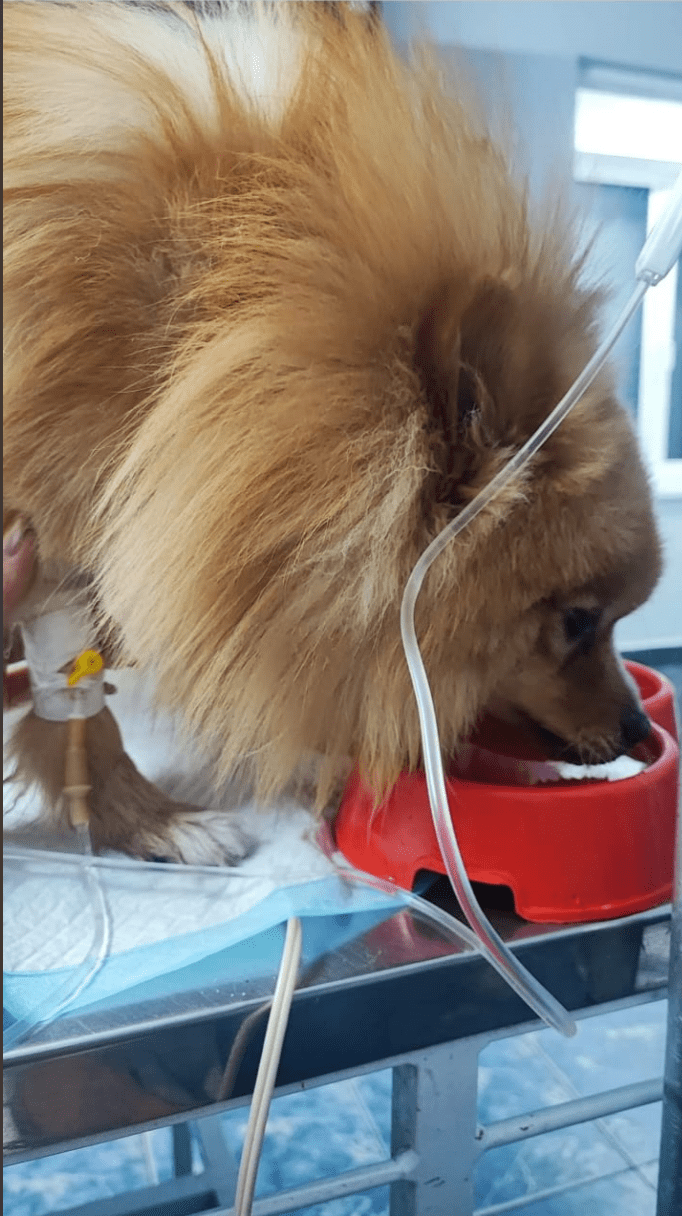
One of the animals that has benefited from the generous support of the SEO community is a small Pomeranian dog who was found frozen to the ground and covered in snow.

A kind passer-by spotted what looked like a fur hat between parked cars and took him to a clinic.

photo of King Arthur receiving treatmentImage from Anton Shulke, September 2024

The little dog was seriously ill and, even with treatment, had only 30% of survival. Just to cover his first night, the treatment costs were $800. After posting on Facebook asking for help, funds were raised.

The lady who found the dog took him home. Even though he had escaped near death in a war zone, he had to spend the night hiding in the shower to avoid the annoyance of her resident cats!

After surviving the first night, the woman’s children named the dog King Arthur, deciding that such a beautiful and proud name would surely give him the strength to recover fully.

King Arthur continued his treatment for a month, with regular tests and follow-up care. And each time the funds fell short, the woman’s neighbors and Anton stepped in to help.

Without the generous support of Anton’s Buy Me a Coffee and SEO for Paws fundraising, King Arthur might not have survived.

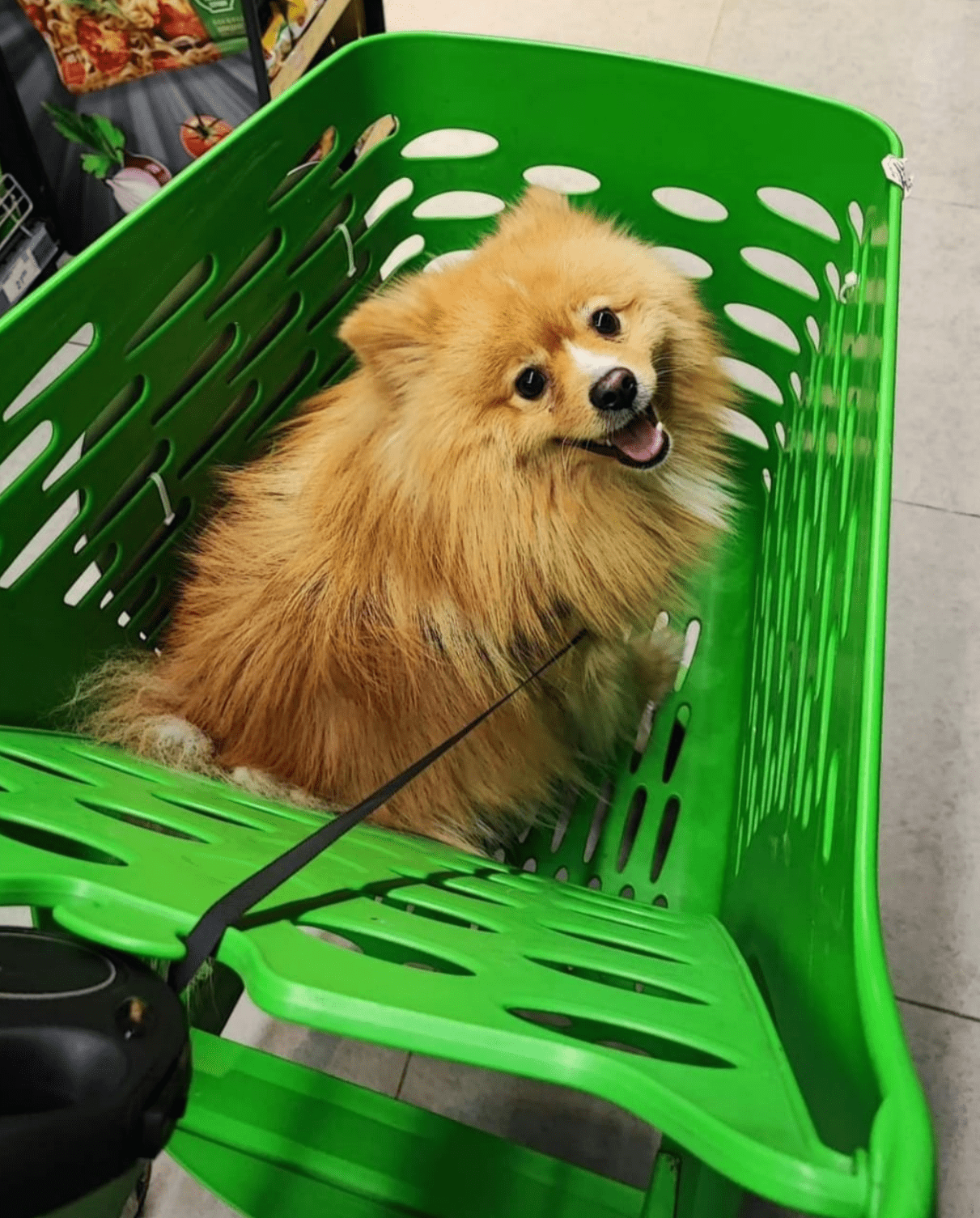
King Arthur thriving in a green cartImage from Anton Shulke, September 2024

SEO For Paws – Cat Lovers, Dog Lovers, And SEO

The upcoming “SEO for Paws” livestream aims to continue fundraising efforts. The event, which runs from 11:45 a.m. to 3:00 p.m. ET, will offer actionable SEO and digital marketing advice from experts while raising money for the animal shelters.

Headline speakers who have donated their time to support his cause include Aleyda Solis, John Mueller, Sarah Presch, Gianluca Fiorelli, Gerry White, Bibi Raven, and Garrett French, among others.

Attendance is free, but participants are encouraged to donate.

Event Highlights

  • Date and Time: Sept. 25, 2024, from 11:45 a.m. to 3:00 p.m. ET (3:45 p.m. to 7:00 p.m. GMT).
  • Access: Free registration with the option to join live, participate in Q&A sessions, and a recording will be made available on YouTube.
  • Speakers: The live stream will feature 13 SEO and digital marketing experts, who will share actionable insights and a headline from Googler John Mueller, who will tell stories and anecdotes about the sometimes wonderfully weird world of search, SEO, and the web.

The event page states:

“Get ready to relive the magic of the SEO for Paws 2024 charity live stream, a truly pawsitive event that brought the SEO community together to support Ukrainian animal shelters in need. Join us on September 25, 2024, for a day filled with inspiring talks, valuable networking opportunities, and a chance to make a real difference!”

How To Make A Difference

The “SEO for Paws” live stream is an opportunity to make a meaningful difference while listening to excellent speakers.

All money raised is donated to help cats and dogs in Ukraine.

You can register for the event here.

And you can help support the charity by buying coffee.

Search Engine Journal is proud to be sponsoring the event.

More resources:


Featured Image from Anton Shulke

Retail Arbitrage with AliExpress, Shopify, DSers

New and seasoned sellers can expand a product line and turn a profit by reselling items from other retailers.

Retail arbitrage is as old as ecommerce itself. The term describes purchasing a product at a brick-and-mortar store and then selling it on Amazon, eBay, or a branded ecommerce site.

The drop-shipped version includes buying from a discount marketplace such as China’s AliExpress.

Let’s examine an AliExpress arbitrage using Shopify and DSers. Shopify is among the most popular ecommerce platforms. DSers is an arbitrage app that helps connect AliExpress to ecommerce shops.

Shopify starts at $29 per month, and DSers at $49. A store owner will also need a free AliExpress account and then set up the three accounts in the order of Shopify first, DSers second, and AliExpress third.

Selecting Products

With DSers and similar applications, the first step is to select the products to be drop-shipped via AliExpress arbitrage.

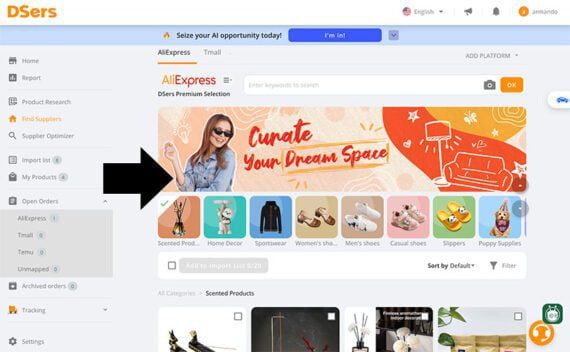
Home page of Dsers

Dsers and similar applications allow a business owner to find products on the AliExpress marketplace.

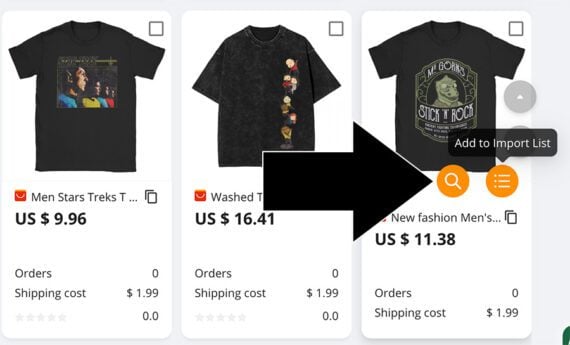
From DSers, store owners can search the AliExpress inventory directly using keywords or filters. A single click adds a product to the import list.

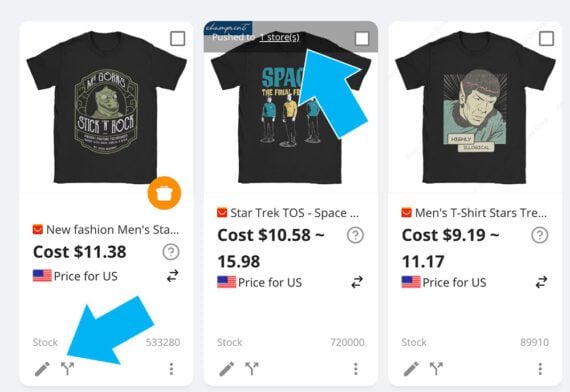
Screenshot of Dsers search results for a t-shirt

Add items at Dsers from AliExpress search results to an import list.

Within the import list, items already sent to Shopify (via other sellers) have a translucent gray banner. Any item can be edited and split.

Screenshot showing the gray bar at the top of a t-shirt listing

Products already sent to Shopify by other sellers have a gray bar at the top of the listing. Any product can be edited or split.

Edit a Product

The AliExpress products are typically light on descriptions and information, so editing a product is critical.

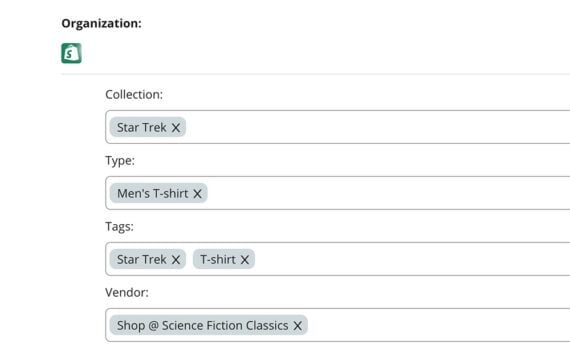
First, add a Shopify Collection, Type, Tags, and Vendor.

Dsers screenshot of an item setup in Dsers

Before sending a product to Shopify, specify its collection and type.

Next, the AliExpress items may have descriptive but bland titles. For example, one science fiction t-shirt was titled “New fashion Men’s Stars Treks Mr. Gorn Fighting School Vintage Pure Cotton Tees Short Sleeve T Shirts Crewneck Clothing Party.”

I edited this verbose product name to “Star Trek ‘Mr. Gorn’s Stick and Rock Fighting School’ T-Shirt.”

The description section in DSers includes basic product specifications and an overview that could be loaded with images that are not necessarily helpful for the U.S. market. Definitely spend time customizing these sections.

It is also a good idea to check the product variants. This t-shirt example looked horrible when printed on light colors. Eliminating those variants will make for a better product detail page.

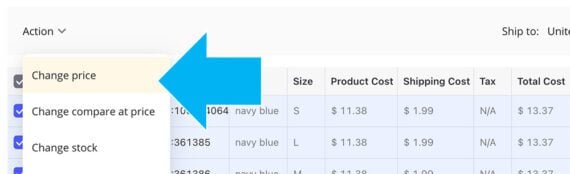
The Variant section on DSers is also where you can update the product’s price and “compare at price.”

Remember that loads of other websites will have the identical product — be sure to check their prices.

Screenshot of page to set the price and compare with other sellers.

Update the price and “compare at price” in the DSers app.

Push to Shopify

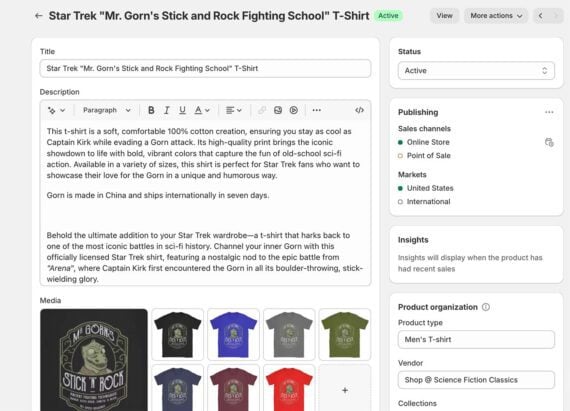
When the product description and pricing are complete, two button clicks send the item from DSers to Shopify, loading it and all variants into the proper collection.

It may take a few minutes for all of the images to populate in Shopify, and don’t be surprised if you need to clean up the product listing. Organizing the sizes of t-shirts so that they are listed in order as “sm,” “md,” “lg,” and “xl” is a common step.

DSers moves the product information, variants, and product photos into Shopify.

Making a Sale

From a shopper’s perspective, ordering a drop-shipped arbitrage item on Shopify is the same as anything else, with one exception: Shipping will take seven to 10 days.

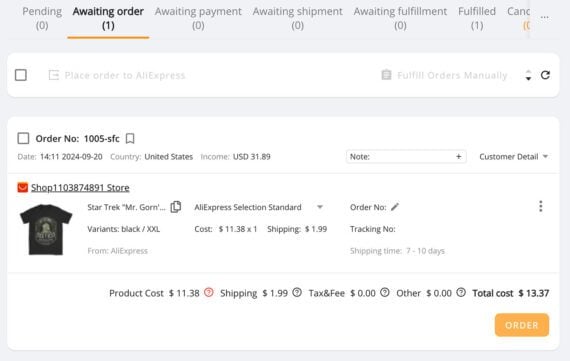
After completing the sale, the merchant orders the item on AliExpress via DSers. The default setting in DSers is to pay individually for each item in two steps — order it and then pay for it on AliExpress.

Orders placed on the Shopify store appear as orders in DSers and must be purchased on AliExpress.

Inventory Gaps

Online arbitrage can be a standalone business model or used only to fill inventory gaps.

The Shopify store in this article had an inventory gap of no licensed products, essential for t-shirt marketing. Online arbitrage permitted the shop to sell licensed products without buying the inventory.

There is nothing unique or exclusive about AliExpress arbitrage. An identical item will be available from many sellers. Thus marketing is vital.

The job is not so much to post the products as to promote them.

WordPress Co-Founder Mullenweg Sparks Backlash via @sejournal, @martinibuster

Matt Mullenweg, co-founder of WordPress.org content management system and CEO of Automattic, ended a successful WordCamp USA conference with a poorly received keynote that sharply criticized a prominent managed WordPress web host. The overwhelming response was negative toward his statements and a subsequent blog post that continued his combative remarks.

The response on social media to his speech and blog post was so immense that at one point “WordPress” was the number one trending topic on X (formerly Twitter).

This article doesn’t take sides, it’s only reporting what was said and the general response to it.

What Happened

WordPress is built on the idea of a worldwide community working together to create an open source system for publishing ideas. It is responsible for the creation of perhaps millions of jobs, enabled countless ecommerce companies to sell online and created multiple markets and services that would not otherwise exist, all of it built on the idea of community.

WordCamp is the physical manifestation of the WordPress community, a conference organized by volunteers that enables WordPress users at every level to meet and exchange ideas. It’s ordinarily an uplifting and inspirational event which is why nobody was prepared for the bombshell that would close the week of events beginning on September 17th and ending on the 20th.

It’s not that there weren’t hints. Matt Mullenweg published a blog post on the first day of the conference that begins on a cheerful note then becomes progressively darker.

He begins by praising the community that powers WordPress and is responsible for WordCamp:

“If you ever have a chance to visit a WordCamp, I recommend it. It’s an amazing group of people brought together by this crazy idea that by working together regardless of our differences or where we came from or what school we went to we can be united by a simple yet groundbreaking idea: that software can give you more Freedom.”

Mullenweg then criticized Meta as “disingenuously” claiming to participate in the open source movement and then praised companies that give back to the open source WordPress community as part of the Five for the Future program (in which companies are encouraged to put 5% back into growing the WordPress platform).

He then openly criticized WP Engine for not contributing enough.

The amounts that companies are giving back to WordPress is the ax that Mullenweg was swinging in his conference closing keynote on Friday, specifically calling out WP Engine by name.

Ending A Conference On A Low Note

Mullenweg stated that there are some companies that use up resources without giving back, following up by pointing a finger at WP Engine for only sponsoring 40 hours per week of work toward improving the WordPress core.

He said:

“And there are those that treat open source simply as a resource to extract from its natural surroundings, like oil from the grounds, a finite resource, something to be extracted and used.

…a lot of this information that I’m sharing with you all has come from WP engine employees who’ve reached out to me and and talked to me about all this. So thank you all for being brave and for sharing this information that you think your company is doing something wrong.

WP Engine has good people, some of whom are listed on that page, but the company is controlled by Silver Lake, a private equity firm with 102 billion in assets under management. Silver Lake doesn’t give a dang about your open source ideals, it just wants return on capital.”

Matt Mullenweg then took the step of encouraging the WordPress community to find a different web host. He didn’t directly name WP Engine or call for a boycott, but the meaning of his words were not lost on the audience, given that he just accused WP Engine of not giving “a dang about …open source ideals.

He said:

“So it’s at this point that I ask everyone in the WordPress community to go vote with your wallet. Who are you giving your money to? Someone who is going to nourish the ecosystem or someone is going to frack every bit of value out of it until it withers?”

Followed a minute later with:

“Think about that next time it comes up to renew your hosting or domain. Weigh your dollars towards companies that give back more…

Those of us who are makers who curate the source need to be wary of those who take our curations and squeeze out the juice. They’re grifters who will hop on to the next fad.”

Mullenweg said that he tried to speak with them beforehand but couldn’t get through.

Shocked Audience Sides With WP Engine

Near the end of his keynote, Mullenweg commented about a potential ban on WP Engine at future WordCamps was met with a surprising silence from the audience, with only a few applauding.

Matt Cromwell, co-Founder of GiveWP, tweeted:

“No one I spoke with at #wcus sympathized with @photomatt’s take on @wpengine’s contributions to WP.

One thing is clear: if you want to encourage more contributions to WP don’t light contributors on fire on stage. There’s more to the story between A8C and Silver Lake than we know”

Someone else tweeted:

“I didn’t know how to feel after the public shaming of WP Engine by Matt today. I tried to see both sides….and I felt upset at WP Engine & at Matt at the same time.

After seeing what transpired the hours since on X, I believe it was wrong to call out WP Engine and believe this did more harm. “

Another wrote:

“I work very closely with @WPEngine in my day job. They’ve got some fantastic people over there, and are doing many different things to further WordPress in many different ways.

And I will continue to work with them happily.”

Mullenweg Doubles Down

Mullenweg’s keynote wasn’t the end of his negative criticism. On Saturday he published an article on the official WordPress.org blog that amplified the remarks from his keynote that also generated a largely negative response on social media, with some on X and Facebook even calling for him to step down.

Mullenweg wrote:

“I spoke yesterday at WordCamp about how Lee Wittlinger at Silver Lake, a private equity firm with $102B assets under management, can hollow out an open source community. Today, I would like to offer a specific, technical example of how they break the trust and sanctity of our software’s promise to users to save themselves money so they can extract more profits from you.”

The rest of the blog post gets worse.

Backlash Overwhelmingly Against Mullenweg

One of the cleverest responses is published on WPHercules website which is word for word copy of Mullenweg’s article but with the words WP Engine replaced with WordPress.com (the managed WordPress hosting service), titled WordPress.com Is Not WordPress.org

WordPress agency owner Kevin Geary wrote in a blog response:

“This wasn’t my first WordCamp, but I legitimately felt bad for first-timers. Imagine an awesome and uplifting week ending like the Payback scene in The Sum of All Fears… A little awkward.

…Matt has presumably attempted diplomacy multiple times in different ways over the years as he passed that collection plate around, but without great success when it comes to WP Engine.

The question now becomes, is public ridicule and shame a valid approach? And should this ridicule and shame get delivered in the closing talk at a WordCamp?”

A WordPress community member tweeted that the post “ridiculous and completely unnecessary” and that WP apparently stands for “We’re petty.”

A negative tweet that is representative of the general mood:

“It’s been concerning for a few years now – at least for me. I don’t think a CEO should attack people/corps based on personal opinions, no matter if right or wrong. Not good for the WordPress ecosystem tbh. Agree?”

Another member of the WordPress community tweeted:

“When I go to an event or trade show, I do not assume the organizers support or endorse every vendor.

I also don’t expect them to criticize any vendor publicly at the event.”

Another tweet:

  • “Congrats on embarrassing yourself and alienating the #WordPress community to close out #WCUS!
  • Truly inspirational.”

And another:

“There’s been talk of the “existential” threat to WordPress’ standing for a number of years. Now it’s crystal clear that Matt is that existential threat.”

Targeting Of WP Engine Perceived As Unfair

This article isn’t taking sides, it’s only reporting what was said and how the WordPress community responded.

Some background information for those who may not be aware is that WP Engine is a managed web host that voluntarily contributes to the development of WordPress core, supports WordCamp and develops free plugins enjoyed by millions of WordPress publishers such as Advanced Custom Fields, LocalWP, WPGraphQL, Better Search Replace, and WP Migrate Lite.

The backlash on social media is firmly against Matt Mullenweg, including in the private Facebook group Dynamic WordPress (registration required) where a discussion generated over 100 posts. One member of the group who attended WordCamp remarked on the shocked faces of WordCamp attendees and more than one person wrote “Matt needs to go!” as others sympathized with WP Engine.

Watch Mullenweg’s keynote at the 7:08:25 minute mark ( 7 hour, 8 minute, 25 seconds):

Featured Image by Shutterstock/Krakenimages.com

How To Get Quality Backlinks: 11 Ways That Really Work via @sejournal, @rio_seo

If your business isn’t building quality backlinks, you’re not increasing prominence. If you’re not increasing prominence, you’re missing one of the fundamental criteria to rank higher in the search engine results pages (SERPs).

As Google shares, prominence is based on “information that Google has about a business, from across the web, like links, articles, and directories.”

The bottom line is that every business needs quality, white hat backlinks.

White hat backlinks essentially serve as a vote of confidence from a website and tell Google your web page is a trusted resource. The more votes of confidence your web page has, the more prominent it will be seen to be.

White hat backlinks are acquired through ethical means rather than leveraging spam tactics. Yet, obtaining quality backlinks is easier said than done.

If you’re looking to build your white hat backlink strategy, you’re in the right place. This post will share 11 proven strategies that work to get backlinks and boost your SEO strategy.

Let’s dive in and discover the techniques to get quality backlinks for your website.

1. Mine For Broken Links

Broken links negatively impact a user’s experience with a site.

Consider when a user eagerly searching for information clicks a broken link to a site. This likely causes frustration and potentially a lost customer.

Google also continues to prioritize the overall user experience with recent updates.

Broken link building entails finding links to pages that no longer exist and politely reaching out to the website with the broken outbound link to notify them and suggest replacing it with a link to your relevant, high-quality content.

It’s important to understand the difference between dofollow and nofollow links.

Dofollow links are the most valuable for SEO, as they pass link juice from the referring site to your website. These links are seen as endorsements by search engines, indicating that your content is trustworthy and relevant.

Nofollow links have a rel=”nofollow” attribute, which tells search engines not to follow the link or pass any authority. While nofollow links don’t directly impact your SEO, they can still drive traffic to your site and increase your online visibility.

It’s essential to have a healthy mix of both types of backlinks to create a well-rounded backlink profile.

Utilize backlink analysis tools like Ahrefs, Moz, and Semrush to discover broken inbound links to your closest competitors or broken outbound links from prominent industry publications and blogs.

Start with the dofollow links from sites with strong domain authority.

Broken link building takes time and effort, but it can be an easy way to build your backlink profile for sites that prioritize their users’ experiences.

2. Leverage Existing Relationships

Tap into your existing network of partners, suppliers, or satisfied customers.

Reach out to them and propose collaborative projects, testimonials, or case studies that showcase your products or services, providing opportunities for mutual backlinking.

Since you already provide a valuable service to a business, they’ll be more inclined to link back to you, as you’ve already developed a business relationship with them.

Additionally, many businesses already have a partner page to showcase who they do business with.

If they’re not linking to your site already, this should be an easy ask and a quick way to get a credible white hat backlink to your site.

3. Monitor Brand Mentions And Unlinked References

Sometimes, your business may be mentioned, but you aren’t receiving proper credit.

For example, a customer may write a glowing testimonial on a successful blog, or they reference a finding published by your business, but they aren’t linking to your site.

Ask for credit where credit is due. In both instances, you’ve provided a noteworthy service. Ask customers who reference your brand or websites that mention you in any capacity on their sites to provide a backlink.

Also, look for content published on sites that may list your competitors as resources but should have mentioned your relevant brand.

Utilize tools like Google Alerts or Mention to monitor mentions of your brand or your competitors. You’ll receive an email notification whenever a website mentions a designated brand name.

When you come across unlinked references to your website or content, reach out to the site owners and kindly request them to add a backlink for proper attribution or a pertinent inclusion that would benefit their audience.

4. Publish Original Research

Creating high-quality, valuable content is essential for attracting backlinks from authoritative websites. You can become a trusted content-sharing source by leveraging your expertise and original research.

When considering why and when people share content, you must consider the psychology of content sharing.

A recent study found that 94% of respondents said they carefully consider how the information they share will be useful to the recipient.

In the same study, nearly half of the respondents reported sharing content because it allows them to inform others of products they care about and potentially change opinions or encourage actions.

Develop comprehensive guides, research studies, infographics, or industry reports that serve as go-to resources within your niche.

These authoritative assets naturally attract backlinks from websites seeking to provide valuable information to their audience.

Every time a consumer, blog, or business mentions your research, you’ll receive a white hat backlink. The more informative your content is, the more likely it will be shared.

5. Create Engaging Visual Content

Visual content such as infographics, charts, or slideshows attracts attention and shares on social media platforms.

Why is visual content a top priority for marketers? Because it is easily digestible and shareable.

Nearly 41% of marketers said original graphics (e.g., infographics, illustrations) help them reach their marketing goals. And more than 50% of marketers said visual content is very important in their marketing strategy.

Whether you’re creating an infographic or any other type of visual, it’s an easy way to increase the likelihood of your content being shared.

When possible, embed your website’s link within visually appealing content to increase the likelihood of earning backlinks as it gets shared across the web.

6. Publish Ultimate And Step-by-Step Guides

As the name suggests, ultimate guides are the “ultimate” resource on a designated topic.

The word ultimate suggests you have the best, most in-depth current knowledge on the subject, drawing consumers to want to learn more.

A step-by-step guide, in theory, provides an easy way to learn how to do something. Consumers favor ease and simplicity, which a step-by-step guide aims to accomplish.

Both these types of guides can help a business build its backlink profile. For example, if you’ve written an ultimate guide to digital marketing, a writer may reference one of your points in a blog post about affiliate marketing.

Crafting content that offers unique insights, solves problems, or entertains your audience is essential for attracting natural backlinks.

7. Offer Free Valuable Tools Or Resources

Are you a technology company?

Building a free tool or a light version of your solution is an effective way to build quality white hat backlinks, and it can also drive potential leads.

For example, Adobe offers free or “lighter” versions of several of its tools, such as Adobe Acrobat Reader and Adobe Photoshop Express. These allow users to preview the tool’s capabilities and may encourage them to convert to paid users in the future to maximize its software.

Develop free tools, calculators, or templates that provide practical value to your target audience.

Websites and blogs within your industry may naturally link to these resources as references, establishing your website as a go-to destination and earning valuable backlinks in the process.

8. Use Data Aggregators For Citations

A data aggregator, as the name suggests, compiles information from multiple sources, including phone and utility bills, business registration records on government websites, chamber of commerce membership rosters, and other citations for the sole purpose of providing it to search engines.

Local citations help publish your business’s information across the vast search ecosystem.

While the greater majority of searches take place on Google and other popular search engines, these directories also receive traffic – and are another way for consumers to discover your business.

To start, ensure your business is listed on Google Business Profile (formerly Google My Business), Yelp, Facebook, and Apple Maps.

Then, branch out to other general or industry-specific directories. Every directory you’re listed on provides you with a backlink to help you build your backlink profile.

Business owners can provide this information directly to the data aggregators so that they can submit it to other sources on their behalf. In turn, this helps businesses appear in online citations.

Citations may not be as prominent of a search ranking factor as they were in the past; however, their benefits are not completely obsolete, as they can provide hundreds of relevant backlinks to local landing pages.

9. Leverage Public Relations

A public relations plan is a great way to build prominence and authority in your industry. It’s also a surefire way to help build your backlink profile.

Consider content syndication for your press releases and editorial content, which is the process of republishing or distributing content from your website to multiple other news platforms or industry-related websites.

Content syndication often involves partnering with reputable vendors specializing in distributing content across various platforms, websites, and publishers. These vendors have established relationships with news publications and can help amplify your content’s reach.

Each press release or article is an opportunity to add at least one backlink to your content when publishers allow it.

It also establishes your brand as an expert in your industry. The more often you have useful and relevant information to share in your industry, the more you’ll establish yourself as a voice of authority.

Public relations extends to social media, too, where you can share links to content. If users find your content beneficial, they may reshare it, helping you build additional backlinks.

10. Create A Roundup Or “Ask The Experts” Blog Post

Organize expert roundups or interviews featuring prominent figures within your industry.

Ask potential contributors for a short contribution – maybe two to three sentences – to encourage participation.

The less burdensome the ask, the more likely they will want to participate. Asking others for insights around a certain topic can help strengthen your content and add valuable information you may not otherwise have had.

Creating a roundup or an ask-the-experts-style post increases your chances for shareability, too.

When these experts contribute their insights or opinions, they are more than likely to share the content piece with their networks, which will cause the content to reach a wider audience, generating valuable backlinks and exposure for your website.

11. Build Relationships With Influencers And Thought Leaders

Engage with influencers and thought leaders within your industry through social media, forums, or industry events.

Remember to choose influencers whose audience aligns with your target audience. Once you find the right blog niche or influencer to support your brand, send them your product or provide the service free of charge in exchange for a review.

Collaborating with influencers not only helps to generate backlinks but also exposes your brand to a wider audience. When an influencer promotes your content or mentions your brand, their followers are more likely to trust and engage with your website.

Or, if you have a larger budget, you can also pay macro-level influencers to give their honest feedback. Then, have the blog or influencer link back to your product or service.

Additionally, you may provide a blog or influencer with an affiliate link. Whenever a potential customer clicks their affiliate link, they’ll receive a commission.

The commission may come from simply clicking the affiliate link or if the consumer makes a purchase. This link-building endeavor requires more effort on your behalf; however, it also sends higher-quality traffic, which leads to higher conversion rates.

Concluding Thoughts

Cracking Google’s evolving search engine algorithm can be time-consuming and full of trials, tribulations, and errors.

Focusing on backlinks plays a significant role in improving the prominence and relevance of your website in the eyes of search engines.

Acquiring quality backlinks without resorting to paid placement methods is a long-term investment that requires dedication, creativity, and a commitment to providing value to your audience and industry.

By implementing the 12 actionable tactics outlined in this guide, marketing professionals can enhance their website’s authority, brand visibility, and organic search rankings, driving sustainable growth and success in the competitive digital landscape.

More resources: 


Featured Image: one photo/Shutterstock

Why virologists are getting increasingly nervous about bird flu

Bird flu has been spreading in dairy cows in the US—and the scale of the spread is likely to be far worse than it looks. In addition, 14 human cases have been reported in the US since March. Both are worrying developments, say virologists, who fear that the country’s meager response to the virus is putting the entire world at risk of another pandemic.

The form of bird flu that has been spreading over the last few years has been responsible for the deaths of millions of birds and tens of thousands of marine and land mammals. But infections in dairy cattle, first reported back in March, brought us a step closer to human spread. Since then, the situation has only deteriorated. The virus appears to have passed from cattle to poultry on multiple occasions. “If that virus sustains in dairy cattle, they will have a problem in their poultry forever,” says Thomas Peacock, a virologist at the Pirbright Institute in Woking, UK.

Worse, this form of bird flu that is now spreading among cattle could find its way back into migrating birds. It might have happened already. If that’s the case, we can expect these birds to take the virus around the world.

“It’s really troubling that we’re not doing enough right now,” says Seema Lakdawala, a virologist at the Emory University School of Medicine in Atlanta, Georgia. “I am normally very moderate in terms of my pandemic-scaredness, but the introduction of this virus into cattle is really troubling.”

Not just a flu for birds

Bird flu is so named because it spreads stably in birds. The type of H5N1 that has been decimating bird populations for the last few years was first discovered in the late 1990s. But in 2020, H5N1 began to circulate in Europe “in a big way,” says Peacock. The virus spread globally, via migrating ducks, geese, and other waterfowl. In a process that took months and years, the virus made it to the Americas, Africa, Asia, and eventually even Antarctica, where it was detected earlier this year.

And while many ducks and geese seem to be able to survive being infected with the virus, other bird species are much more vulnerable. H5N1 is especially deadly for chickens, for example—their heads swell, they struggle to breathe, and they experience extreme diarrhea. Seabirds like puffins and guillemots also seem to be especially susceptible to the virus, although it’s not clear why. Over the last few years, we’ve seen the worst ever outbreak of bird flu in birds. Millions of farmed birds have died, and an unknown number of wild birds—in the tens of thousands at the very least—have also succumbed. “We have no idea how many just fell into the sea and were never seen again,” says Peacock.

Alarmingly, animals that hunt and scavenge affected birds have also become infected with the virus. The list of affected mammals includes bears, foxes, skunks, otters, dolphins, whales, sea lions, and many more. Some of these animals appear to be able to pass the virus to other members of their species. In 2022, an outbreak of H5N1 in sea lions that started in Chile spread to Argentina and eventually to Uruguay and Brazil. At least 30,000 died. The sea lions may also have passed the virus to nearby elephant seals in Argentina, around 17,000 of which have succumbed to the virus.

This is bad news—not just for the affected animals, but for people, too. It’s not just a bird flu anymore. And when a virus can spread in other mammals, it’s a step closer to being able to spread in humans. That is even more likely when the virus spreads in an animal that people tend to spend a lot of time interacting with.

This is partly why the virus’s spread in dairy cattle is so troubling. The form of the virus that is spreading in cows is slightly different from the one that had been circulating in migrating birds, says Lakdawala. The mutations in this virus have likely enabled it to spread more easily among the animals.

Evidence suggests that the virus is spreading through the use of shared milking machinery within cattle herds. Infected milk can contaminate the equipment, allowing the virus to infect the udder of another cow. The virus is also spreading between herds, possibly by hitching a ride on people that work on multiple farms, or via other animals, or potentially via airborne droplets.

Milk from infected cows can look thickened and yogurt-like, and farmers tend to pour it down drains. This ends up irrigating farms, says Lakdawala. “Unless the virus is inactivated, it just remains infectious in the environment,” she says. Other animals could be exposed to the virus this way.

Hidden infections

So far, 14 states have reported a total of 208 infected cattle herds. Some states have reported only one or two cases among their cattle. But this is extremely unlikely to represent the full picture, given how rapidly the virus is spreading among herds in states that are doing more testing, says Peacock. In Colorado, where state-licensed dairy farms that sell pasteurized milk are required to submit milk samples for weekly testing, 64 herds have been reported to be affected. Neighboring Wyoming, which does not have the same requirements, has reported only one affected herd.

We don’t have a good idea of how many people have been infected either, says Lakdawala. The official count from the CDC is 14 people since April 2024, but testing is not routine, and because symptoms are currently fairly mild in people, we’re likely to be missing a lot of cases.

“It’s very frustrating, because there are just huge gaps in the data that’s coming out,” says Peacock. “I don’t think it’s unfair to say that a lot of outside observers don’t think this outbreak is being taken particularly seriously.”

And the virus is already spreading from cows back into wild birds and poultry, says Lakdawala: “There is definitely a concern that the virus is going to [become more widespread] in birds and cattle … but also other animals that ruminate, like goats.”

It may already be too late to rid America’s cattle herds of the bird flu virus. If it continues to circulate, it could become stable in the population. This is what has happened with flu in pigs around the world. That could also spell disaster—not only would the virus represent a constant risk to humans and other animals that come into contact with the cows, but it could also evolve over time. We can’t predict how this evolution might take shape, but there’s a chance the result could be a form of the virus that is better at spreading in people or causing fatal infections.

So far, it is clear that the virus has mutated but hasn’t yet acquired any of these more dangerous mutations, says Michael Tisza, a bioinformatics scientist at Baylor College of Medicine in Houston. That being said, Tisza and his colleagues have been looking for the virus in wastewater from 10 cities in Texas—and they have found H5N1 in all of them.

Tisza and his colleagues don’t know where this virus is coming from—whether it’s coming from birds, milk, or infected people, for example. But the team didn’t find any signal of the virus in wastewater during 2022 or 2023, when there were outbreaks in migratory birds and poultry. “In 2024, it’s been a different story,” says Tisza. “We’ve seen it a lot.”

Together, the evidence that the virus is evolving and spreading among mammals, and specifically cattle, has put virologists on high alert. “This virus is not causing a human pandemic right now, which is great,” says Tisza. “But it is a virus of pandemic potential.”