Barriers To Audience Buy-In With Lead Generation via @sejournal, @Juxtacognition

This is an excerpt from the B2B Lead Generation ebook, which draws on SEJ’s internal expertise in delivering leads across multiple media types.

People are driven by a mix of desires, wants, needs, experiences, and external pressures.

It can take time to get it right and convince a person to become a lead, let alone a paying customer.

Here are some nuances of logic and psychology that could be impacting your ability to connect with audiences and build strong leads.

1. Poor Negotiations & The Endowment Effect

Every potential customer you encounter values their own effort and information. And due to something called the endowment effect, they value that time and data much more than you do.

In contrast, the same psychological effect means you value what you offer in exchange for peoples’ information more than they will.

If the value of what you’re offering fails to match the value of what consumers are giving you in exchange (read: their time and information), the conversions will be weak.

The solution? You can increase the perceived value of the thing you’re offering, or reduce the value of what the user “pays” for the thing you offer.

Want an exclusive peek into tactics we use when developing our own lead gen campaigns? Check out our upcoming webinar.

Humans evaluate rewards in multiple dimensions, including the reward amount, the time until the reward is received, and the certainty of the reward.

The more time before a reward occurs, and the less certain its ultimate value, the harder you have to work to get someone to engage.

Offering value upfront – even if you’re presenting something else soon after, like a live event, ebook, or demo – can help entice immediate action as well as convince leads of the long-term value of their investment.

It can even act as a prime for the next step in the lead gen nurturing process, hinting at even more value to come and increasing the effectiveness of the rest of your lead generation strategy.

It’s another reason why inbound content is a critical support for lead generation content. The short-term rewards of highly useful ungated content help prepare audiences for longer-term benefits offered down the line.

3. Abandonment & The Funnel Myth

Every lead generation journey is carefully planned, but if you designed it with a funnel in mind, you could be losing many qualified leads.

That’s because the imagery of a funnel might suggest that all leads engage with your brand or offer in the same way, but this simply isn’t true – particularly for products or services with high values.

Instead, these journeys are more abstract. Leads tend to move back and forth between stages depending on their circumstances. They might change their minds, encounter organizational roadblocks, switch channels, or their needs might suddenly change.

Instead of limiting journeys to audience segments, consider optimizing for paths and situations, too.

Optimizing for specific situations and encounters creates multiple opportunities to capture a lead while they’re in certain mindsets. Every opportunity is a way to engage with varying “costs” for time and data, and align your key performance indicators (KPIs) to match.

Situational journeys also create unique opportunities to learn about the various audience segments, including what they’re most interested in, which offers to grab their attention, and which aspects of your brand, product, or service they’re most concerned about.

4. Under-Pricing

Free trials and discounts can be eye-catching, but they don’t always work to your benefit.

Brands often think consumers will always choose the product with the lowest possible price. That isn’t always the case.

Consumers work within something referred to as the “zone of acceptability,” which is the price range they feel is acceptable for a purchasing decision.

If your brand falls outside that range, you’ll likely get the leads – but they could fail to buy in later. The initial offer might be attractive, but the lower perception of value could work against you when it comes time to try and close the sale.

Several elements play into whether consumers are sensitive to pricing discounts. The overall cost of a purchase matters, for example.

Higher-priced purchases, such as SaaS or real estate, can be extremely sensitive to pricing discounts. They can lead to your audience perceiving the product as lower-value, or make it seem like you’re struggling. A price-quality relationship is easy to see in many places in our lives. If you select the absolute lowest price for an airline ticket, do you expect your journey to be timely and comfortable?

It’s difficult to offer specific advice on these points. To find ideal price points and discounts, you need good feedback systems from both customers and leads – and you need data about how other audiences interact. But there’s value in not being the cheapest option.

Get more tips on how we, here at SEJ, create holistic content campaigns to drive leads in this exclusive webinar.

5. Lead Roles & Information

In every large purchasing decision, there are multiple roles in the process. These include:

  • User: The person who ultimately uses the product or service.
  • Buyer: The person who makes the purchase, but may or may not know anything about the actual product or service being purchased.
  • Decider: The person who determines whether to make the purchase.
  • Influencer: The person who provides opinions and thoughts on the product or service, and influences perceptions of it.
  • Gatekeeper: The person who gathers and holds information about the product or service.

Sometimes, different people play these roles, and other times, one person may hold more than one of these roles. However, the needs of each role must be met at the right time. If you fail to meet their needs, you’ll see your conversions turn cold at a higher rate early in the process.

The only way to avoid this complication is to understand who it is you’re attracting when you capture the lead, and make the right information available at the right time during the conversion process.

6. Understand Why People Don’t Sign Up

Many businesses put significant effort into lead nurturing and understanding the qualities of potential customers who fill out lead forms.

But what about the ones who don’t fill out those forms?

Understanding these values and the traits that drive purchasing decisions is paramount.

Your own proprietary and customer data, like your analytics, client data, and lead interactions, makes an excellent starting place, but don’t make the mistake of basing your decisions solely on the data you have collected about the leads you have.

This information creates a picture based solely on people already interacting with you. It doesn’t include information about the audience you’ve failed to capture so far.

Don’t fall for survivorship bias, which occurs when you only look at data from people who have passed your selection filters.

This is especially critical for lead generation because there are groups of people you don’t want to become leads. But you need to make sure you’re attracting as many ideal leads as possible while filtering out those that are suboptimal. You need information about the people who aren’t converting to ensure your filters are working as intended.

Gather information from the segment of your target audience that uses a competitor’s products, and pair them with psychographic tools and frameworks like “values and lifestyle surveys” (VALS) to gather insights and inform decisions.

In a digital world of tough competition and even more demands on every dollar, your lead generation needs to be precise.

Understanding what drives your target audience before you capture the lead and ensuring every detail is crafted with the final conversion in mind will help you capture more leads and sales, and leave your brand the clear market winner.

More resources:


Featured Image: Pasuwan/Shutterstock

Google’s Unconventional Advice On Fixing Broken Backlinks via @sejournal, @martinibuster

Google’s Gary Illyes recently answered the question of whether one should spend time fixing backlinks with wrong URLs that are pointing to a website, known as broken backlinks. The answer is interesting because it suggests a way of considering this issue in a completely unorthodox manner.

Google: Should Broken Backlinks Be Fixed?

During a recent Google SEO Office Hours podcast, a question was asked about fixing broken backlinks:

“Should I fix all broken backlinks to my site to improve overall SEO?”

Google’s Gary Ilyes answered:

“You should fix the broken backlinks that you think would be helpful for your users. You can’t possibly fix all the links, especially once your site grew to the size of a mammoth. Or brontosaurus.”

Unconventional Advice

Assessing broken backlinks for those that are the the most helpful for “users” is an unconventional way to decide whether to fix them or not. The conventional SEO practice is to fix a broken backlink to assure that a site is receiving the maximum available link equity. So his advice runs counter to standard SEO practice but it shouldn’t be dismissed out of hand because there may be something useful there.

Keep an open mind, be open to different ways of considering solutions. Something I like about his approach is that it’s a shortcut for determining whether or not a backlink is useful. For example, if the link is to a product that is no longer sold or supported in any way, a 404 response is the best thing to show to search crawlers and to users. So there is some validity to his way of looking at it.

Why Broken Backlinks Should Be Fixed

It’s not really a big deal to fix these kinds of backlinks, it’s one of the easier SEO chores to be done and it’s a quick win.

While any benefit is hard to measure, it’s nonetheless worth doing it for site visitors who might follow the wrong URL to the webpage that they’re looking for.

Check Backlinks After A Link Building Campaign

Checking backlinks is also important to do after a backlink campaign, even months after asking for a link, because site owners will sometimes add their links weeks or months later but it could be that they added the wrong URL. It happens, I know from experience.

Broken Backlinks That Do & Don’t Matter

The kinds of broken backlinks that usually (but not always) matter are the ones that show up as 404 errors on your server logs or in the Google Search Console.

There are two kinds of broken backlinks that matter:

  1. A backlink that’s broken because the linked page no longer exists or the URL changed.
  2. The URL of the backlink is misspelled.

Then there are backlinks that matter less and the reasons for that are:

  • Because the broken backlink is from a low quality website that doesn’t send any traffic
  • The link is to an outdated webpage that doesn’t matter and should return a 404 response
  • It’s just a random link created by an AI chatbot, spambot, or a spam web page.

How To Identify Broken Backlinks

Identifying any kind of broken backlink is (arguably) best done done by reviewing 404 errors generated from visits to pages that no longer exist or to URLs that are misspelled. If the link matters then there’s going to be web traffic from a broken backlink to a 404 page.

You might not be able to see where that link is coming from, although it may be possible to search for the broken URL and possibly find it.

The server log may show the IP address and user agent of the site visitor that created the broken link and from there a site owner can make the judgment call of whether it’s a spam or hacker bot, a search engine bot or an actual user. The Redirection WordPress plugin and the Wordfence plugin can be helpful for site owners that don’t have access to server logs.

A site owner may find that using a SaaS backlink tool might be useful for finding broken links but many sites, particularly sites that have been around awhile, have a lot of backlinks and using a tool might not be the right solution because it’s a lot of work for finding a link that doesn’t even send traffic. If the broken link sends traffic then you’ll know it because it’ll show up as a 404 error response.

Fixing Broken Backlinks

Fixing links that no longer exist can be done by recreating the resource or by redirecting requests for the missing web page to a web page that is substantially similar.

Fixing a link to a misspelled URL is easily done by redirecting the misspelled URL to the correct URL.

Another way to fix it is to contact the site that’s linking to the wrong URL but there are three things to consider before doing that.

1. The site owner may decide that they don’t want to link to the site and remove the link altogether.

2. The site owner may decide to add a no-follow link attribute to the corrected URL.

3. There are other sites that may have copied the web page and/or the link and are thus also linking to the wrong URL.

Simply adding a redirect from the misspelled URL to the correct URL fixes the problem without any risk that the backlink is going to be removed or nofollowed.

Fixing Broken Backlinks

Identifying broken backlinks is something that many site owners might stumble on when investigating 404 errors. Some call it link reclamation but any discussion of “link reclamation” is basically about fixing broken backlinks, it’s just another name for it.

Regardless, fixing these kinds of inbound links are one of the few SEO quick wins that could actually benefit a site owner and it could be a part of a site audit especially when it’s limited to finding opportunities in 404 error responses because these are links that are either getting crawled or are being used by potential site visitors.

Listen to the podcast at the 5:32 minute mark for the answer on fixing broken backlinks:

Featured Image by Shutterstock/Roman Samborskyi

The 8 Best PPC Ad Networks via @sejournal, @LisaRocksSEM

Choosing the right pay-per-click (PPC) ad network is a core strategy impacting the success of your advertising campaigns.

Each network offers unique features, reaches distinct audiences, and shines in different areas, making it crucial to understand their strengths and demographics to select the one that best aligns with your marketing goals.

In this article, we’ll look at eight of the best PPC ad networks available today, exploring what each offers when it comes to the following areas:

  • Reach.
  • Audience demographics.
  • Ad formats.
  • Unique features.
  • Advertiser best fit.

Note: While we refer to the following as “PPC” ad networks, each offers multiple pricing options for pay-per-click, impressions, video views, or conversions. We are exploring popular paid media ads.

1. Google Ads 

Google Ads is the most popular ad network due to the immense reach of ads and its broad range of users. As the world’s leading search engine, Google offers incredible opportunities for advertisers.

It uses search and the power of the websites on the Google Display Network (GDN), which consists of more than 2 million websites, videos, and apps on which display ads can appear.

Audience targeting on the display network includes remarketing, in-market audiences, customer match, and more.

Both search and display campaigns allow demographic targeting in age, gender, parental status, and household income.

Adding in demographic targeting narrows the available reach for ads, but makes the targeting more relevant.

  • Reach: Largest PPC network with billions of daily searches and extensive reach through Google Search, YouTube, and the Google Display Network.
  • Demographics: Broad and diverse, all age groups, genders, and interests globally.
  • Ad Formats: Text ads, display ads, video ads, shopping ads, and app promotion ads.
  • Unique Features: Extensive reach through Google Search, YouTube, and Google Display Network, robust targeting and analytics, AI integration and optimizations.
  • Advertiser best fit: Best for reaching a broad audience with high-quality traffic, comprehensive keyword options, and detailed performance insights.
Google ads example shoppingScreenshot from search for [top headphones for music], Google, May 2024

Read More:

2. Microsoft Ads

Bing comes in as the second-largest search engine worldwide, behind Google. Despite being second place, it has an impressive 659 billion monthly PC searches on the Bing search engine.

The Microsoft Audience Network serves display and native ads. You’ll find remarketing, in-market, customer match, similar audiences, LinkedIn audiences, and more opportunities in the Microsoft Audience Network.

Microsoft has the advantage of exclusively serving Yahoo search traffic, powering several digital assistant voice searches (like Alexa), Microsoft products, and the ability to target searchers with LinkedIn profile data such as company, job function, and industry.

Microsoft Ads offers advertisers campaign import capabilities from Google Ads, simplifying the process of getting started and keeping consistencies between platforms.

  • Reach: Significant volume through Bing, Yahoo, AOL, and DuckDuckGo search engines, reaching billions of users.
  • Demographics: Slightly older demographic, 35+ age group; higher household income; professional and business users.
  • Ad Formats: Text ads, image ads, shopping ads, video, audience ads.
  • Unique Features: Integration with Bing, Yahoo, and AOL, competitive cost-per-click rates, LinkedIn profile targeting.
  • Advertiser best fit: Suitable for reaching a slightly older, higher-income demographic. Skews slightly more business due to integrations with Microsoft products and high desktop usage.
Microsoft Bing Ads examplesScreenshot from search for [photo editing software], Microsoft Bing, May 2024

Read More:

3. Meta Ads

Meta Ads allow businesses to reach a highly targeted audience on both Facebook and Instagram, utilizing extensive user data for precise targeting.

User targeting can be very granular with demographics, interests, behaviors, and more. Facebook supports retargeting through user activity on Facebook and actions offsite through advertisers’ Facebook pixel data and upload of customer lists.

  • Volume: Over 3 billion monthly active users on Facebook alone, with even more across Instagram, WhatsApp, and Messenger. The Meta Audience Network provides massive ad volume and targeting capabilities.
  • Demographics: Wide age range, strong presence with 18-49 year-olds. Diverse interests among users with engagement across genders.
  • Ad Formats: Image ads, video ads, carousel ads, slideshow ads, collection ads, and Stories ads.
  • Unique Features: Highly targeted ads based on detailed user data. Advanced demographic and interest targeting. Integration with Instagram, diverse ad formats with strong performance tracking.
  • Advertiser best fit: Ideal for social media engagement, detailed demographic, and interest targeting, and strong performance tracking. Better for upper funnel branding and awareness.
Facebook Reels Ad exampleScreenshot from Facebook Reels, May 2024

Read More:

4. LinkedIn Ads

LinkedIn, owned by Microsoft, is the top platform for B2B advertising.

It offers a wealth of advertising opportunities for businesses looking to target professionals and career-minded social platform users.

LinkedIn Ads are ideal for B2B marketing. They enable audience targeting based on job title, industry, seniority, and company size, as well as remarketing and user behavioral targeting.

More than 1 billion professionals are on LinkedIn, and they can all be targeted by professional criteria.

  • Volume: Over 1 billion professionals.
  • Demographics: Professionals, business decision-makers, and B2B marketers predominantly aged 25-54; higher education levels and income.
  • Ad Formats: Sponsored content, sponsored InMail, text ads, dynamic ads.
  • Unique Features: Professional targeting unlike any other platform.
  • Advertiser best fit: Highly effective for B2B lead generation and reaching business professionals and decision-makers. CPCs can be high, from $4 to $20 per click, but lead gen is very effective.
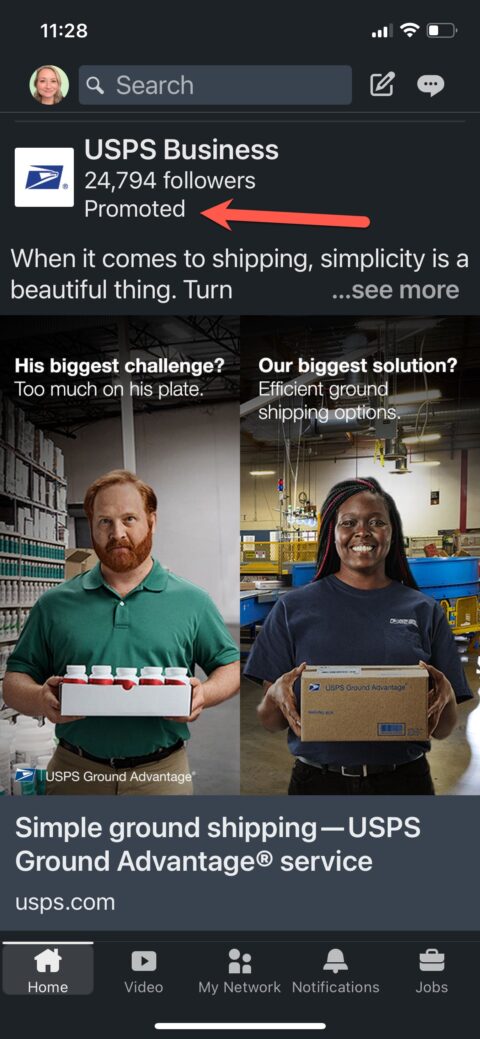
LinkedIn ad exampleScreenshot from LinkedIn, May 2024

Read More:

5. TikTok Ads

TikTok has quickly become one of the most influential social media platforms, especially among younger audiences. This vibrant, short-form video app has changed content consumption and also opened new avenues for digital advertising.

With its unique blend of creativity, entertainment, and virality, TikTok offers advertisers a dynamic paid ads platform to connect with a highly engaged audience.

  • Volume: Over 1 billion monthly active users.
  • Demographics: Mostly younger users, with a strong presence among 13-24-year-olds and a highly engaged and diverse user base.
  • Ad Formats: In-Feed ads, TopView ads, Branded Hashtag Challenges, Branded Effects.
  • Unique Features: Engages younger audiences with short-form video content and innovative ad formats.
  • Advertiser best fit: Best for targeting Gen Z and Millennials, leveraging viral content trends and high user engagement. Innovative and trendy brands can connect with a highly engaged and youthful audience at scale.
TikTok Ad exampleScreenshot from TikTok, May 2024

Read More:

6. Amazon Advertising

Amazon Advertising is a powerful PPC ad platform for retailers that leverages the extensive reach of Amazon’s ecommerce ecosystem. It targets shoppers at the point of purchase, making it highly effective for driving direct sales and brand visibility.

Millions of daily transactions on the site offer massive ad volume and detailed targeting options to capture high-intent buyers.

  • Volume: Millions of daily transactions on its e-commerce platform, offering substantial ad volume at the point of purchase.
  • Demographics: Predominantly adults aged 25-54, higher income, strong presence among parents and frequent online shoppers.
  • Ad Formats: Sponsored products, sponsored brands, sponsored display, and video ads.
  • Unique Features: Target shoppers at the point of purchase, access to Amazon’s e-commerce platform.
  • Advertiser best fit: Perfect for ecommerce and retail businesses aiming to capture consumers ready to buy, detailed product and keyword targeting.
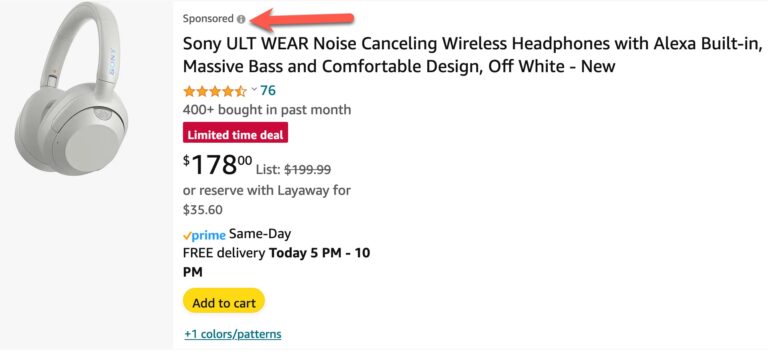
Amazon ad exampleScreenshot from Amazon, May 2024

Read More:

7. X Ads (formerly Twitter Ads)

X Ads offers several options to reach users through its social platform of 330 million active users each month.

Advertisers setting up these ads will find objective-based campaigns for awareness, consideration, and conversion served on X platforms (desktop and mobile app).

Promoted ads are probably one of the most flexible ad formats because they can include images, videos, carousels, and text with options to include other ad features like clickable functionality to an app download or website right in the ad creative.

  • Volume: 372.9 million monthly active users.
  • Demographics: Broad age range, strong presence among 18-49 year-olds, diverse interests, highly engaged in news, sports, and entertainment.
  • Ad Formats: Text Ads, Image Ads, Image Ads with Website Buttons, Video Ads, Video Ads with Website Buttons, Carousel Ads, Moment Ads.
  • Unique Features: Real-time engagement, promoted tweets, accounts, and trends on the platform.
  • Advertiser best fit: Optimal for promoting timely content and events, engaging a broad audience in real-time conversations.
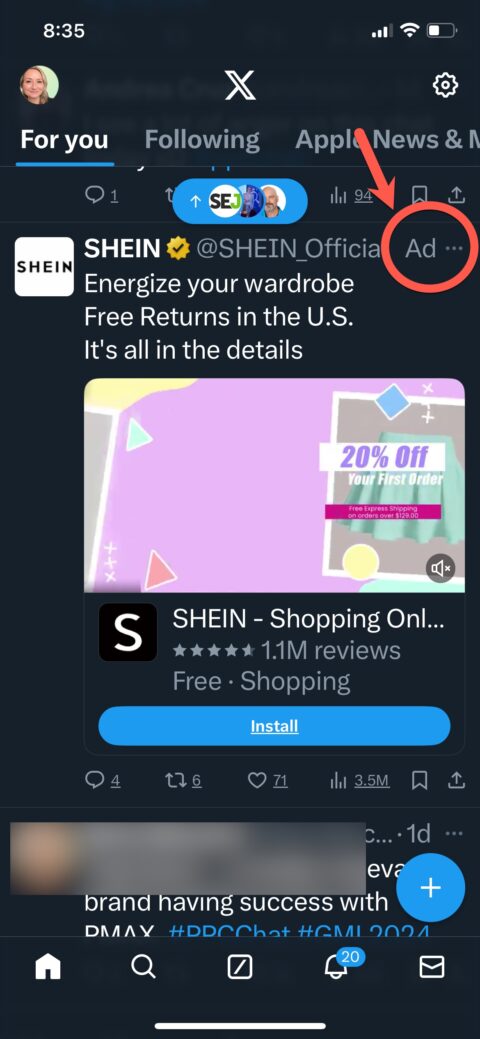
Twitter X Ad exampleScreenshot from X (Twitter), May 2024

Read More:

Pinterest Ads

Savvy social media users find creative and shopping inspiration on Pinterest. In fact, it has 518 million active monthly users who are researching trends, ideas, and products, and many of them are looking to purchase.

The users skew predominantly women at 70% of Pinterest’s user base.

  • Volume: Over 518 million monthly active users.
  • Demographics: Rapidly growing Gen Z audience (13-24), predominantly female (around 70%), strong presence overall among 18-49 year-olds with interests in DIY, home decor, fashion, and recipes.
  • Ad Formats: Image, video, carousel, shopping Pins, showcase, quiz, collections.
  • Unique Features: Visual discovery platform, promoted Pins, and strong shopping integration.
  • Advertiser best fit: Effective for targeting a predominantly younger, trendy female audience interested in health and beauty, DIY, home decor, fashion, and recipes.
Pinterest AdsScreenshot from Pinterest, May 2024

Read More:

Choosing The Best Ad Platforms For Your Business

Selecting the right PPC ad network can make or break your digital marketing efforts.

Each of these PPC ad networks we’ve explored in this article offers unique audiences, ad features, and great opportunities to engage with your audience. But you need to understand where your audience is, what they talk about, and who they follow to prioritize your advertising.

The right choice for you will depend on your business type, target audience, and marketing goals – so keep those top of mind as you review the strengths and capabilities of each network.

And once you select your network, remember to keep optimizing your ads based on performance insights. Good luck!

More resources:


Featured Image: Sutthiphong Chandaeng/Shutterstock

How To Think About SEO, Content & PR Measurement (Indicated In The Google Leak) via @sejournal, @_kevinrowe

Google’s recent leak highlighted engagement as part of the ranking system, alluding to the importance of influencing audience behavior to drive SEO-specific metrics, like ranking or organic visibility.

That said, I’ve been using simple variations of these measures for a while to evaluate the impact of integrated PR and SEO campaigns. I don’t think the idea of measuring search behavior is new, but the Google leaks shed some light on its importance.

For sustainable growth in organic visibility and rankings, SEO strategies need to pivot to include measures that reflect how strongly owned assets, marketing assets, and messaging influence an audience’s search behavior.

Google’s broader objective to rank content that is genuinely helpful to specific audience segments is an important context for considering this shift.

So, SEO pros should evaluate website performance based on engagement-driven metrics like asset NPS, idea adoption rate, and time to activation, which will be important for directly and indirectly maximizing organic search visibility.

Why Measure Influence

The recent Google leaks highlight the growing importance of audience engagement measures in ranking pages.

This highlights the importance of integrating SEO, content creation, and PR, where influencing audience behavior becomes a key measure.

I see it like this:

  • Google emphasizes engagement: The Google leaks suggest that Google places a lot of weight on user engagement measures such as click data, repeat visitors, site traffic, or related click data. Despite being incomplete and likely outdated information, it is one of many examples of Google using user engagement in some way.
  • AI integration into the algorithm: With AI being integrated more heavily into Google’s ranking systems, AI could interpret and use this user engagement data to influence ranking.
  • Brand search: Site traffic from brand search is an indicator of audience engagement and can influence organic visibility.

But to drive audience engagement, we have to think beyond simple SEO activities like link building, creating keyword-focused content, or technical SEO.

The future of search marketing is designing scenarios that influence an audience’s search behavior.

Ideal Search Behavior Scenario

The audience’s journey is more complex today than ever because they use many different sources to learn about their problems, the solutions, and the opportunities they create. However, this scenario simplifies how to think about your search strategy.

Scenario: You create an asset, you get PR coverage, and the audience searches the asset in Google (maybe they don’t find it based on keywords, then search your brand name). Then, they keep returning to your site for new assets or resources to solve their problems or create an opportunity (the original one as a resource or for your offering).

Simple Search Behavior Scenario Statement:

I need to create a content asset about [a problem or opportunity], to get coverage about [an asset of the asset] that the audience will prompt because [audience interest], which will drive my audience to search for [category or terms you own], and they will immediately or return to the site to take action because [solve a problem or create an opportunity].

You’ll have to modify this based on your specific website event goals, but the statement’s essence will guide you in the right direction.

This direction will allow you to focus on the much more significant but more difficult-to-impact measures below.

I have a foundation in product management and marketing, so I adopted these measures from product marketing concepts since they directly relate to audience actions.

Measure 1: Asset NPS

How likely is your audience to promote your content assets or ideas?

NPS score is used to gauge an audience’s loyalty and satisfaction using a survey question: “How likely are you to recommend our content to a friend or colleague?”

Respondents can provide a rating from 0-10.

  • Promoters (9-10): Loyal and enthusiastic audience who keep talking about and referring your content or ideas to others.
  • Passives (7-8): Satisfied with content but not an overly enthusiastic audience who will listen to a competitor’s point of view.
  • Detractors (0-6): Unhappy audience that speaks negatively about your content.

High NPS indicates strong audience engagement, boosting engagement, and can indirectly influence organic visibility.

Typically, you’d have to survey an audience to gather the data. Use Google Forms, Survey Monkey, or any survey tool with a rating scale to collect questions.

Pro tip: Survey the audience on your site, the following you have on social media, or the email list you’re building as a result of the audience submitting contact info on the site or even through a newsletter.

Measure 2: Idea Adoption Rate

Does your audience adopt your ideas?

The adoption rate of an idea refers to the percentage of the audience segment that starts using the idea after you launch the asset.

This is a key measure to understand if your audience is accepting a particular idea, providing insights into engagement and market fit. This could directly influence engagement signals that can influence ranking.

Here’s How To Calculate

Metrics

  • Audience segment size: How many people are in your audience segment?
  • Audience usage size: Number of people who use the ideas in your content.
Formula: Adoption rate = (audience usage size/audience segment size) X 100%

You can collect this data in a lot of different ways, but shares alone are not a great metric since I don’t believe they reflect actual influence.

Find discussions or actions taken as a result of your ideas or content.

  • Is your audience discussing your ideas on LinkedIn, Twitter (X), or relevant social?
  • Are newsletters talking about your ideas or the essence of your ideas?
  • Are your process steps being discussed?
  • Do people share videos using your product or ideas?

Pro tip: I see some creators concerned about people “stealing” their original idea. I don’t think this is a bad thing. This is a signal of adoption due to the idea of solving a significant problem or opportunity.

Measure 3: Time To Activation

How long does it take your audience to take action on your site?

Time to activation measures how long it takes for your audience to take action by searching a topic or taking action on your site after engaging with your messaging.

These can include brand searches, search keywords you own, document downloads, contacting for a quote, or requesting a demo.

This measure can show how well your content is being adopted or if the messaging aligns with your audience’s journey. Shorter activation times suggest strong alignment with audience needs and higher content efficacy.

How To Measure

  • Identify an activation point (e.g., events you want the audience to trigger) or goals on the site.
  • Estimate how many people read or engaged with your content.
  • Measure how many people took action around specific events on the site.

Pro tip: Some marketers will say you shouldn’t measure your program because attribution modeling doesn’t work or SEO takes time. However, time to activation highlights the importance of evaluating the actions on the site that the campaign should drive. Design campaigns for time to activation of less than 3 months for each event, 6 months for large goals, and 12 months for larger business impacts like creating a new market category.

As you activate your audience, brand search will likely have an impact, as your audience will likely search Google for more information on your topic.

Measure 4: Brand Search Volume

Does the audience search for your brand in search engines?

Brand measures refer to the number of times users search for a specific term you branded or own in search engines.

You can measure this in Google Search Console, searching for your brand name or a term you own.

Pro tip: Brand keywords are reported in Google Analytics under the general search engine (e.g. Google) with non-brand keywords. Look for short-term spikes or sustainable trends in Google Search Console, segmenting it in any way possible (e.g. page, query, date, brand modified term) to find the impact. Design your strategy with the idea of being able to measure brand search impact.

Impact On Your Strategy

Integrating SEO and PR strategies to influence audience behavior and engagement is important for maximizing organic visibility and search rankings.

Google’s recent leaks emphasize the importance of audience engagement, highlighting the need to integrate content creation, SEO, and PR to drive meaningful interactions.

Measures such as asset NPS, idea adoption rate, and time to activation provide valuable insights into audience loyalty, idea adoption, and action times.

These seem to be important for driving engagement and influencing search engine rankings but critical for audience engagement.

These engagement-driven measures will help ensure you don’t have to keep chasing Google’s evolving algorithms and that content genuinely resonates with your audience segment.

Start designing integrated PR and SEO strategies.

More resources:


Featured Image: Yurii_Yarema/Shutterstock

Get a Handle on AI with These 10 Books

Forecasts for artificial intelligence’s impact range from a better society to mass layoffs or worse. Here are 10 respected books to help grasp AI’s promise and pitfalls for business and beyond. Eight titles are new in 2024, while two are industry classics.

Books to Grasp AI

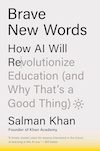
Brave New Words: How AI Will Revolutionize Education (and Why That’s a Good Thing) by Salman Khan

Cover of Brave New Words

Brave New Words

Khan Academy’s founder argues that AI technologies can transform education by creating customizable learning tools. He explores its implications for teachers, parents, students, and society.

Co-Intelligence: Living and Working with AI by Ethan Mollick

Cover of Co-Intelligence

Co-Intelligence

One of Amazon’s top-rated AI books of 2024 and a bestseller since its publication in April, Wharton professor and AI expert Mollick analyzes the impact of AI in education and business through real-life examples and advocates learning to work with it effectively.

Welcome to AI: A Human Guide to Artificial Intelligence by David L. Shrier

Cover of Welcome to AI

Welcome to AI

Shrier, an authority on technology-driven innovation, discusses how accelerating advances in AI will affect how we learn, live, and work.

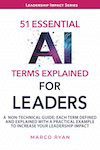
51 Essential AI Terms Explained for Leaders: A Non-Technical Guide by Marco Ryan

Cover of 51 Essential AI Terms

51 Essential AI Terms

This alphabetical guide, written by the former chief digital officer at British Petroleum, provides definitions, plain-language explanations, and real-life examples to help those without technical experience understand key AI terms related.

The Algorithm: How AI Decides Who Gets Hired, Monitored, Promoted, and Fired and Why We Need to Fight Back Now by Hilke Schellmann

Cover of The Algorithm

The Algorithm

Schellmann, a New York University professor and contributor to The Wall Street Journal, The Guardian, and National Public Radio, explores how AI tools are already used in human resource management and how faulty algorithms compound human biases. He advocates for more thoughtful practices in hiring, evaluating, and managing employees. The New York Times Book Review named it one of the five best books on AI, stating it “treats AI as a tool used by people, avoiding grand theories and wild speculations.”

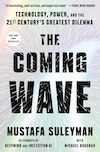
The Coming Wave: Technology, Power, and the Twenty-first Century’s Greatest Dilemma by Mustafa Suleyman and Michael Bhaskar

Cover of The Coming Wave

The Coming Wave

In this multi-award-winning book, Suleyman, who has led AI initiatives for Google and Microsoft, warns of the possible dangers of rapid technological advances such as quantum computing, synthetic biology, and AI while remaining optimistic about meeting these challenges.

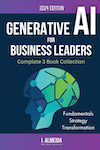
Generative AI for Business Leaders: 2024 Edition by I. Almeida

Cover of Generative AI for Business Leaders

Generative AI for Leaders

This collection of three practical guides provides an overview of the potential risks and benefits as well as ways to reduce negative consequences and enhance business outcomes.

HBR’s 10 Must Reads on AI by Harvard Business Review and multiple authors

Cover of HBR's 10 Most Reads on AI

HBR’s 10 Most Reads on AI

This addition to Harvard Business Review’s “10 Must-Reads” series collects expert articles on using AI in business. It covers topics ranging from pricing algorithms to AI ethics.

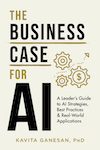
The Business Case for AI: A Leader’s Guide to AI Strategies, Best Practices & Real-World Applications by Kavita Ganesan

Cover of The Business Case for AI

The Business Case for AI

Ganesan aims to demystify AI for business leaders looking to identify its opportunities. Though published in 2022, her book is still highly recommended by reviewers and experts for its real-world examples and jargon-free language.

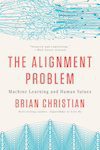
The Alignment Problem: Machine Learning and Human Values by Brian Christian

Cover of The Alignment Problem

The Alignment Problem

Christian, an award-winning author and science journalist, examines how to align AI technology’s behavior with human values, which has become even more urgent with advances in AI technology in the four years since this book was published.

How Gogoro’s swap-and-go scooter batteries can strengthen the grid

This story first appeared in China Report, MIT Technology Review’s newsletter about technology in China. Sign up to receive it in your inbox every Tuesday.

If you’ve ever been to Taiwan, you’ve likely run into Gogoro’s green-and-white battery-swap stations in one city or another. With 12,500 stations around the island, Gogoro has built a sweeping network that allows users of electric scooters to drop off an empty battery and get a fully charged one immediately. Gogoro is also found in China, India, and a few other countries.
 
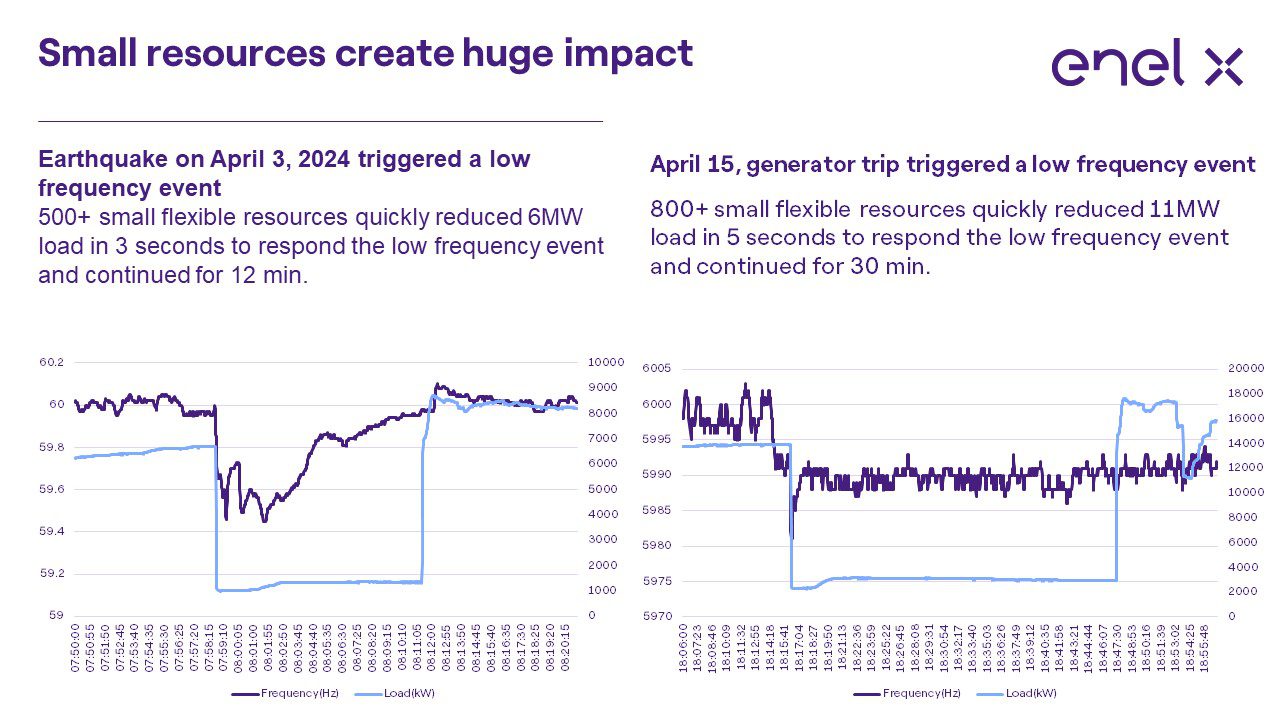
This morning, I published a story on how Gogoro’s battery-swap network in Taiwan reacted to emergency blackouts after the 7.4 magnitude earthquake there this April. I talked to Horace Luke, Gogoro’s cofounder and CEO, to understand how in three seconds, over 500 Gogoro battery-swap locations stopped drawing electricity from the grid, helping stabilize the power frequency.
 
Gogoro’s battery stations acted like something called a virtual power plant (VPP), a new idea that’s becoming adopted around the world as a way to stitch renewable energy into the grid. The system draws energy from distributed sources like battery storage or small rooftop solar panels and coordinates those sources to increase supply when electricity demand peaks. As a result, it reduces the reliance on traditional coal or gas power plants.
 
There’s actually a natural synergy between technologies like battery swapping and virtual power plants (VPP). Not only can battery-swap stations coordinate charging times with the needs of the grid, but the idle batteries sitting in Gogoro’s stations can also become an energy reserve in times of emergency, potentially feeding energy back to the grid. If you want to learn more about how this system works, you can read the full story here.

Two graphs showing how Gogoro's battery-swap charging stopped consuming electricity when the power frequency dropped below normal levels in April.
Statistics shared by Gogoro and Enel X show how its battery-swap stations automatically stopped charging batteries on April 3 and April 15, when there were power outages caused by the earthquake.
GOGORO

When I talked to Gogoro’s Luke for this story, I asked him: “At what point in the company’s history did you come up with the idea to use these batteries for VPP networks?”
 
To my surprise, Luke answered: “Day one.”
 
As he explains, Gogoro was actually not founded to be an electric-scooter company; it was founded to be a “smart energy” company. 

“We started with the thesis of how smart energy, through portability and connectivity, can enable many use case scenarios,” Luke says. “Transportation happens to be accounting for something like 27% or 28% of your energy use in your daily life.” And that’s why the company first designed the batteries for two-wheeled vehicles, a popular transportation option in Taiwan and across Asia.
 
Having succeeded in promoting its scooters and the battery-swap charging method in Taiwan, it is now able to explore other possible uses of these modular, portable batteries—more than 1.4 million of which are in circulation at this point. 
 
“Think of smart, portable, connected energy like a propane tank,” Luke says. Depending on their size,  propane tanks can be used to cook in the wild or to heat a patio. If lithium batteries can be modular and portable in a similar way, they can also serve many different purposes.

Using them in VPP programs that protect the grid from blackouts is one; beyond that, in Taipei City, Gogoro has worked with the local government to build energy backup stations for traffic lights, using the same batteries to keep the lights running in future blackouts. The batteries can also be used as backup power storage for critical facilities like hospitals. When a blackout happens, battery storage can release electricity much faster than diesel generators, keeping the impact at a minimum.

None of this would be possible without the recent advances that have made batteries more powerful and efficient. And it was clear from our conversation that Luke is obsessed with batteries—the long way the technology has come, and their potential to address a lot more energy use cases in the future.

“I still remember getting my first flashlight when I was a little kid. That button just turned the little lightbulb on and off. And that was what was amazing about batteries at the time,” says Luke. “Never did people think that AA batteries were going to power calculators or the Walkman. The guy that invented the alkaline battery never thought that. We’ll continue to take that creativity and apply it to portable energy, and that’s what inspires us every day.”

What other purposes do you think portable lithium batteries like the ones made by Gogoro could have? Let me know your ideas by writing to zeyi@technologyreview.com.


Now read the rest of China Report

Catch up with China

1. Far-right parties won big in the latest European Parliament elections, which could push the EU further toward a trade war with China. (Nikkei Asia $)
 
2. Volvo has started moving some of its manufacturing capacity from China to Belgium in order to avoid the European Union tariffs on Chinese imports. (The Times $)
 
3. Some major crypto exchanges have withdrawn from applying for business licenses in Hong Kong after the city government clarified that it doesn’t welcome businesses that offer crypto services to mainland China. (South China Morning Post $)
 
4. NewsBreak, the most downloaded news app in the US, does most of its engineering work in China. The app has also been found to use AI tools to make up local news that never happened. (Reuters $)
 
5. The Australian government ordered a China-linked fund to reduce its investment in an Australian rare-earth-mining company. (A/symmetric)
 
6. China just installed the largest offshore wind turbine in the world. It’s designed to generate enough power in a year for around 36,000 households. (Electrek)
 
7. Four college instructors from Iowa were stabbed on a visit to northern China. While the motive and identity of the assailant are still unknown, the incident has been quickly censored on the Chinese internet. (BBC)

Lost in translation

Qian Zhimin, a Chinese businesswoman who fled the country in 2017 after raising billions of dollars from Chinese investors in the name of bitcoin investments, was arrested in London and is facing a trial in October this year, according to the Chinese publication Caijing. In the early 2010s, when the cryptocurrency first became known in China, Qian’s company lured over 128,000 retail investors, predominantly elderly people, to buy fraudulent investment products that bet on the price of bitcoins and gadgets like smart bracelets that allegedly could also mine bitcoins. 
 
After the scam was exposed, Qian escaped to the UK with a fake passport. She controls over 61,000 bitcoins, now worth nearly $4 billion, and has been trying to liquidate them by buying properties in London. But those attempts caught the attention of anti-money-laundering authorities in the UK. With her trial date approaching, the victims in China are hoping to work with the UK jurisdiction to recover their assets.

One more thing

I know one day we will see self-driving vehicles racing each other and cutting each other off, but I didn’t expect it to happen so soon with two package delivery robots in China. Maybe it’s just their look, but it seems cuter than when human drivers do the same thing?

How gamification took over the world

It’s a thought that occurs to every video-game player at some point: What if the weird, hyper-focused state I enter when playing in virtual worlds could somehow be applied to the real one? 

Often pondered during especially challenging or tedious tasks in meatspace (writing essays, say, or doing your taxes), it’s an eminently reasonable question to ask. Life, after all, is hard. And while video games are too, there’s something almost magical about the way they can promote sustained bouts of superhuman concentration and resolve.

For some, this phenomenon leads to an interest in flow states and immersion. For others, it’s simply a reason to play more games. For a handful of consultants, startup gurus, and game designers in the late 2000s, it became the key to unlocking our true human potential.

In her 2010 TED Talk, “Gaming Can Make a Better World,” the game designer Jane McGonigal called this engaged state “blissful productivity.” “There’s a reason why the average World of Warcraft gamer plays for 22 hours a week,” she said. “It’s because we know when we’re playing a game that we’re actually happier working hard than we are relaxing or hanging out. We know that we are optimized as human beings to do hard and meaningful work. And gamers are willing to work hard all the time.”

McGonigal’s basic pitch was this: By making the real world more like a video game, we could harness the blissful productivity of millions of people and direct it at some of humanity’s thorniest problems—things like poverty, obesity, and climate change. The exact details of how to accomplish this were a bit vague (play more games?), but her objective was clear: “My goal for the next decade is to try to make it as easy to save the world in real life as it is to save the world in online games.”

While the word “gamification” never came up during her talk, by that time anyone following the big-ideas circuit (TED, South by Southwest, DICE, etc.) or using the new Foursquare app would have been familiar with the basic idea. Broadly defined as the application of game design elements and principles to non-game activities—think points, levels, missions, badges, leaderboards, reinforcement loops, and so on—gamification was already being hawked as a revolutionary new tool for transforming education, work, health and fitness, and countless other parts of life. 

Instead of liberating us, gamification turned out to be just another tool for coercion, distraction, and control.

Adding “world-saving” to the list of potential benefits was perhaps inevitable, given the prevalence of that theme in video-game storylines. But it also spoke to gamification’s foundational premise: the idea that reality is somehow broken. According to McGonigal and other gamification boosters, the real world is insufficiently engaging and motivating, and too often it fails to make us happy. Gamification promises to remedy this design flawby engineering a new reality, one that transforms the dull, difficult, and depressing parts of life into something fun and inspiring. Studying for exams, doing household chores, flossing, exercising, learning a new language—there was no limit to the tasks that could be turned into games, making everything IRL better.

Today, we live in an undeniably gamified world. We stand up and move around to close colorful rings and earn achievement badges on our smartwatches; we meditate and sleep to recharge our body batteries; we plant virtual trees to be more productive; we chase “likes” and “karma” on social media sites and try to swipe our way toward social connection. And yet for all the crude gamelike elements that have been grafted onto our lives, the more hopeful and collaborative world that gamification promised more than a decade ago seems as far away as ever. Instead of liberating us from drudgery and maximizing our potential, gamification turned out to be just another tool for coercion, distraction, and control. 

Con game

This was not an unforeseeable outcome. From the start, a small but vocal group of journalists and game designers warned against the fairy-tale thinking and facile view of video games that they saw in the concept of gamification. Adrian Hon, author of You’ve Been Played, a recent book that chronicles its dangers, was one of them. 

“As someone who was building so-called ‘serious games’ at the time the concept was taking off, I knew that a lot of the claims being made around the possibility of games to transform people’s behaviors and change the world were completely overblown,” he says. 

Hon isn’t some knee-jerk polemicist. A trained neuroscientist who switched to a career in game design and development, he’s the co-creator of Zombies, Run!—one of the most popular gamified fitness apps in the world. While he still believes games can benefit and enrich aspects of our nongaming lives, Hon says a one-size-fits-all approach is bound to fail. For this reason, he’s firmly against both the superficial layering of generic points, leaderboards, and missions atop everyday activities and the more coercive forms of gamification that have invaded the workplace.

three snakes in concentric circles

SELMAN DESIGN

Ironically, it’s these broad and varied uses that make criticizing the practice so difficult. As Hon notes in his book, gamification has always been a fast-moving target, varying dramatically in scale, scope, and technology over the years. As the concept has evolved, so too have its applications, whether you think of the gambling mechanics that now encourage users of dating apps to keep swiping, the “quests” that compel exhausted Uber drivers to complete just a few more trips, or the utopian ambition of using gamification to save the world.

In the same way that AI’s lack of a fixed definition today makes it easy to dismiss any one critique for not addressing some other potential definition of it, so too do gamification’s varied interpretations. “I remember giving talks critical of gamification at gamification conferences, and people would come up to me afterwards and be like, ‘Yeah, bad gamification is bad, right? But we’re doing good gamification,’” says Hon. (They weren’t.) 

For some critics, the very idea of “good gamification” was anathema. Their main gripe with the term and practice was, and remains, that it has little to nothing to do with actual games.

“A game is about play and disruption and creativity and ambiguity and surprise,” wrote the late Jeff Watson, a game designer, writer, and educator who taught at the University of Southern California’s School of Cinematic Arts. Gamification is about the opposite—the known, the badgeable, the quantifiable. “It’s about ‘checking in,’ being tracked … [and] becoming more regimented. It’s a surveillance and discipline system—a wolf in sheep’s clothing. Beware its lure.”

Another game designer, Margaret Robertson, has argued that gamification should really be called “pointsification,” writing: “What we’re currently terming gamification is in fact the process of taking the thing that is least essential to games and representing it as the core of the experience. Points and badges have no closer a relationship to games than they do to websites and fitness apps and loyalty cards.”

For the author and game designer Ian Bogost, the entire concept amounted to a marketing gimmick. In a now-famous essay published in the Atlantic in 2011, he likened gamification to the moral philosopher Harry Frankfurt’s definition of bullshit—that is, a strategy intended to persuade or coerce without regard for actual truth. 

“The idea of learning or borrowing lessons from game design and applying them to other areas was never the issue for me,” Bogost told me. “Rather, it was not doing that—acknowledging that there’s something mysterious, powerful, and compelling about games, but rather than doing the hard work, doing no work at all and absconding with the spirit of the form.” 

Gaming the system

So how did a misleading term for a misunderstood process that’s probably just bullshit come to infiltrate virtually every part of our lives? There’s no one simple answer. But gamification’s meteoric rise starts to make a lot more sense when you look at the period that gave birth to the idea. 

The late 2000s and early 2010s were, as many have noted, a kind of high-water mark for techno-­optimism. For people both inside the tech industry and out, there was a sense that humanity had finally wrapped its arms around a difficult set of problems, and that technology was going to help us squeeze out some solutions. The Arab Spring bloomed in 2011 with the help of platforms like Facebook and Twitter, money was more or less free, and “____ can save the world” articles were legion (with ____ being everything from “eating bugs” to “design thinking”).

This was also the era that produced the 10,000-hours rule of success, the long tail, the four-hour workweek, the wisdom of crowds, nudge theory, and a number of other highly simplistic (or, often, flat-out wrong) theories about the way humans, the internet, and the world work. 

“All of a sudden you had VC money and all sorts of important, high-net-worth people showing up at game developer conferences.”

Ian Bogost, author and game designer

Adding video games to this heady stew of optimism gave the game industry something it had long sought but never achieved: legitimacy. Even with games ascendant in popular culture—and on track to eclipse both the film and music industries in terms of revenue—they still were largely seen as a frivolous, productivity-­squandering, violence-encouraging form of entertainment. Seemingly overnight, gamification changed all that. 

“There was definitely this black-sheep mentality in the game development community—the sense that what we had been doing for decades was just a joke to people,” says Bogost. “All of a sudden you had VC money and all sorts of important, high-net-worth people showing up at game developer conferences, and it was like, ‘Finally someone’s noticing. They realize that we have something to offer.’”

This wasn’t just flattering; it was intoxicating. Gamification took a derided pursuit and recast it as a force for positive change, a way to make the real world better. While  enthusiastic calls to “build a game layer on top of reality” may sound dystopian to many of us today, the sentiment didn’t necessarily have the same ominous undertones at the end of the aughts. 

Combine the cultural recasting of games with an array of cheaper and faster technologies—GPS, ubiquitous and reliable mobile internet, powerful smartphones, Web 2.0 tools and services—and you arguably had all the ingredients needed for gamification’s rise. In a very real sense, reality in 2010 was ready to be gamified. Or to put it a slightly different way: Gamification was an idea perfectly suited for its moment. 

Gaming behavior

Fine, you might be asking at this point, but does it work? Surely, companies like Apple, Uber, Strava, Microsoft, Garmin, and others wouldn’t bother gamifying their products and services if there were no evidence of the strategy’s efficacy. The answer to the question, unfortunately, is super annoying: Define work.

Because gamification is so pervasive and varied, it’s hard to address its effectiveness in any direct or comprehensive way. But one can confidently say this: Gamification did not save the world. Climate change still exists. As do obesity, poverty, and war. Much of generic gamification’s power supposedly resides in its ability to nudge or steer us toward, or away from, certain behaviors using competition (challenges and leaderboards), rewards (points and achievement badges), and other sources of positive and negative feedback. 

Gamification is, and has always been, a way to induce specific behaviors in people using virtual carrots and sticks.

On that front, the results are mixed. Nudge theory lost much of its shine with academics in 2022 after a meta-analysis of previous studies concluded that, after correcting for publication bias, there wasn’t much evidence it worked to change behavior at all. Still, there are a lot of ways to nudge and a lot of behaviors to modify. The fact remains that plenty of people claim to be highly motivated to close their rings, earn their sleep crowns, or hit or exceed some increasingly ridiculous number of steps on their Fitbits (see humorist David Sedaris). 

Sebastian Deterding, a leading researcher in the field, argues that gamification can work, but its successes tend to be really hard to replicate. Not only do academics not know what works, when, and how, according to Deterding, but “we mostly have just-so stories without data or empirical testing.” 

8bit carrot dangling from a stick

SELMAN DESIGN

In truth, gamification acolytes were always pulling from an old playbook—one that dates back to the early 20th century. Then, behaviorists like John Watson and B.F. Skinner saw human behaviors (a category that for Skinner included thoughts, actions, feelings, and emotions) not as the products of internal mental states or cognitive processes but, rather, as the result of external forces—forces that could conveniently be manipulated. 

If Skinner’s theory of operant conditioning, which doled out rewards to positively reinforce certain behaviors, sounds a lot like Amazon’s “Fulfillment Center Games,” which dole out rewards to compel workers to work harder, faster, and longer—well, that’s not a coincidence. Gamification is, and has always been, a way to induce specific behaviors in people using virtual carrots and sticks. 

Sometimes this may work; other times not. But ultimately, as Hon points out, the question of efficacy may be beside the point. “There is no before or after to compare against if your life is always being gamified,” he writes. “There isn’t even a static form of gamification that can be measured, since the design of coercive gamification is always changing, a moving target that only goes toward greater and more granular intrusion.” 

The game of life

Like any other art form, video games offer a staggering array of possibilities. They can educate, entertain, foster social connection, inspire, and encourage us to see the world in different ways. Some of the best ones manage to do all of this at once.

Yet for many of us, there’s the sense today that we’re stuck playing an exhausting game that we didn’t opt into. This one assumes that our behaviors can be changed with shiny digital baubles, constant artificial competition, and meaningless prizes. Even more insulting, the game acts as if it exists for our benefit—promising to make us fitter, happier, and more productive—when in truth it’s really serving the commercial and business interests of its makers. 

Metaphors can be an imperfect but necessary way to make sense of the world. Today, it’s not uncommon to hear talk of leveling up, having a God Mode mindset, gaining XP, and turning life’s difficulty settings up (or down). But the metaphor that resonates most for me—the one that seems to neatly capture our current predicament—is that of the NPC, or non-player character.  

NPCs are the “Sisyphean machines” of video games, programmed to follow a defined script forever and never question or deviate. They’re background players in someone else’s story, typically tasked with furthering a specific plotline or performing some manual labor. To call someone an NPC in real life is to accuse them of just going through the motions, not thinking for themselves, not being able to make their own decisions. This, for me, is gamification’s real end result. It’s acquiescence pretending to be empowerment. It strips away the very thing that makes games unique—a sense of agency—and then tries to mask that with crude stand-ins for accomplishment.

So what can we do? Given the reach and pervasiveness of gamification, critiquing it at this point can feel a little pointless, like railing against capitalism. And yet its own failed promises may point the way to a possible respite. If gamifying the world has turned our lives into a bad version of a video game, perhaps this is the perfect moment to reacquaint ourselves with why actual video games are great in the first place. Maybe, to borrow an idea from McGonigal, we should all start playing better games. 

Bryan Gardiner is a writer based in Oakland, California. 

Why we need to shoot carbon dioxide thousands of feet underground

This article is from The Spark, MIT Technology Review’s weekly climate newsletter. To receive it in your inbox every Wednesday, sign up here.

There’s often one overlooked member in a duo. Peanut butter outshines jelly in a PB&J every time (at least in my eyes). For carbon capture and storage technology, the storage part tends to be the underappreciated portion. 

Carbon capture and storage (CCS) tech has two main steps (as you might guess from the name). First, carbon dioxide is filtered out of emissions at facilities like fossil-fuel power plants. Then it gets locked away, or stored.  

Wrangling pollution might seem like the important bit, and there’s often a lot of focus on what fraction of emissions a CCS system can filter out. But without storage, the whole project would be pretty useless. It’s really the combination of capture and long-term storage that helps to reduce climate impact. 

Storage is getting more attention lately, though, and there’s something of a carbon storage boom coming, as my colleague James Temple covered in his latest story. He wrote about what a rush of federal subsidies will mean for the CCS business in the US, and how supporting new projects could help us hit climate goals or push them further out of reach, depending on how we do it. 

The story got me thinking about the oft-forgotten second bit of CCS. Here’s where we might store captured carbon pollution, and why it matters. 

When it comes to storage, the main requirement is making sure the carbon dioxide can’t accidentally leak out and start warming up the atmosphere.

One surprising place that might fit the bill is oil fields. Instead of building wells to extract fossil fuels, companies are looking to build a new type of well where carbon dioxide that’s been pressurized until it reaches a supercritical state—in which liquid and gas phases don’t really exist—is pumped deep underground. With the right conditions (including porous rock deep down and a leak-preventing solid rock layer on top), the carbon dioxide will mostly stay put. 

Shooting carbon dioxide into the earth isn’t actually a new idea, though in the past it’s largely been used by the oil and gas industry for a very different purpose: pulling more oil out of the ground. In a process called enhanced oil recovery, carbon dioxide is injected into wells, where it frees up oil that’s otherwise tricky to extract. In the process, most of the injected carbon dioxide stays underground. 

But there’s a growing interest in sending the gas down there as an end in itself, sparked in part in the US by new tax credits in the Inflation Reduction Act. Companies can rake in $85 per ton of carbon dioxide that’s captured and permanently stored in geological formations, depending on the source of the gas and how it’s locked away. 

In his story, James took a look at one proposed project in California, where one of the state’s largest oil and gas producers has secured draft permits from federal regulators. The project would inject carbon dioxide about 6,000 feet below the surface of the earth, and the company’s filings say the project could store tens of millions of tons of carbon dioxide over the next couple of decades. 

It’s not just land-based projects that are sparking interest, though. State officials in Texas recently awarded a handful of leases for companies to potentially store carbon dioxide deep underwater in the Gulf of Mexico.

And some companies want to store carbon dioxide in products and materials that we use, like concrete. Concrete is made by mixing reactive cement with water and material like sand; if carbon dioxide is injected into a fresh concrete mix, some of it will get involved in the reactions, trapping it in place. I covered how two companies tested out this idea in a newsletter last year.

Products we use every day, from diamonds to sunglasses, can be made with captured carbon dioxide. If we assume that those products stick around for a long time and don’t decompose (how valid this assumption is depends a lot on the product), one might consider these a form of long-term storage, though these markets probably aren’t big enough to make a difference in the grand scheme of climate change. 

Ultimately, though of course we need to emit less, we’ll still need to lock carbon away if we’re going to meet our climate goals.  


Now read the rest of The Spark

Related reading

For all the details on what to expect in the coming carbon storage boom, including more on the potential benefits and hazards of CCS, read James’s full story here.

This facility in Iceland uses mineral storage deep underground to lock away carbon dioxide that’s been vacuumed out of the atmosphere. See all the photos in this story from 2022

On the side of a road stands a gogoro power station with an enel x system box on the side. Each of the four network station units holds 30 batteries.

GOGORO

Another thing

When an earthquake struck Taiwan in April, the electrical grid faced some hiccups—and an unlikely hero quickly emerged in the form of battery-swap stations for electric scooters. In response to the problem, a group of stations stopped pulling power from the grid until it could recover. 

For more on how Gogoro is using battery stations as a virtual power plant to support the grid, check out my colleague Zeyi Yang’s latest story. And if you need a catch-up, check out this explainer on what a virtual power plant is and how it works

Keeping up with climate  

New York was set to implement congestion pricing, charging cars that drove into the busiest part of Manhattan. Then the governor put that plan on hold indefinitely. It’s a move that reveals just how tightly Americans are clinging to cars, even as the future of climate action may depend on our loosening that grip. (The Atlantic)

Speaking of cars, preparations in Paris for the Olympics reveal what a future with fewer of them could look like. The city has closed over 100 streets to vehicles, jacked up parking rates for SUVs, and removed tens of thousands of parking spots. (NBC News)

An electric lawnmower could be the gateway to a whole new world. People who have electric lawn equipment or solar panels are more likely to electrify other parts of their homes, like heating and cooking. (Canary Media)

Companies are starting to look outside the battery. From massive moving blocks to compressed air in caverns, energy storage systems are getting weirder as the push to reduce prices intensifies. (Heatmap)

Rivian announced updated versions of its R1T and R1S vehicles. The changes reveal the company’s potential path toward surviving in a difficult climate for EV makers. (Tech Crunch)

First responders in the scorching southwestern US are resorting to giant ice cocoons to help people suffering from extreme heat. (New York Times)

→ Here’s how much heat your body can take. (MIT Technology Review)

One oil producer is getting closer to making what it calls “net-zero oil” by pumping captured carbon dioxide down into wells to get more oil out. The implications for the climate and the future of fossil fuels in our economy are … complicated. (Cipher)

How to opt out of Meta’s AI training

MIT Technology Review’s How To series helps you get things done. 

If you post or interact with chatbots on Facebook, Instagram, Threads, or WhatsApp, Meta can use your data to train its generative AI models beginning June 26, according to its recently updated privacy policy. Even if you don’t use any of Meta’s platforms, it can still scrape data such as photos of you if someone else posts them.

Internet data scraping is one of the biggest fights in AI right now. Tech companies argue that anything on the public internet is fair game, but they are facing a barrage of lawsuits over their data practices and copyright. It will likely take years until clear rules are in place. 

In the meantime, they are running out of training data to build even bigger, more powerful models, and to Meta, your posts are a gold mine. 

If you’re uncomfortable with having Meta use your personal information and intellectual property to train its AI models in perpetuity, consider opting out. Although Meta does not guarantee it will allow this, it does say it will “review objection requests in accordance with relevant data protection laws.” 

What that means for US users

Users in the US or other countries without national data privacy laws don’t have any foolproof ways to prevent Meta from using their data to train AI, which has likely already been used for such purposes. Meta does not have an opt-out feature for people living in these places. 

A spokesperson for Meta says it does not use the content of people’s private messages to each other to train AI. However, public social media posts are seen as fair game and can be hoovered up into AI training data sets by anyone. Users who don’t want that can set their account settings to private to minimize the risk. 

The company has built in-platform tools that allow people to delete their personal information from chats with Meta AI, the spokesperson says.

How users in Europe and the UK can opt out 

Users in the European Union and the UK, which are protected by strict data protection regimes, have the right to object to their data being scraped, so they can opt out more easily. 

If you have a Facebook account:

1. Log in to your account. You can access the new privacy policy by following this link. At the very top of the page, you should see a box that says “Learn more about your right to object.” Click on that link, or here

Alternatively, you can click on your account icon at the top right-hand corner. Select “Settings and privacy” and then “Privacy center.” On the left-hand side you will see a drop-down menu labeled “How Meta uses information for generative AI models and features.” Click on that, and scroll down. Then click on “Right to object.” 

2. Fill in the form with your information. The form requires you to explain how Meta’s data processing affects you. I was successful in my request by simply stating that I wished to exercise my right under data protection law to object to my personal data being processed. You will likely have to confirm your email address. 

3. You should soon receive both an email and a notification on your Facebook account confirming if your request has been successful. I received mine a minute after submitting the request.

If you have an Instagram account: 

1. Log in to your account. Go to your profile page, and click on the three lines at the top-right corner. Click on “Settings and privacy.”

2. Scroll down to the “More info and support” section, and click “About.” Then click on “Privacy policy.” At the very top of the page, you should see a box that says “Learn more about your right to object.” Click on that link, or here

3. Repeat steps 2 and 3 as above. 

These board games want you to beat climate change

It’s game night, and I’m crossing my fingers, hoping for a hurricane. 

I roll the die and it clatters across the board, tumbling to a stop to reveal a tiny icon of a tree stump. Bad news: I just triggered deforestation in the Amazon. That seals it. I failed to stop climate change—at least this board-game representation of it.

The urgent need to address climate change might seem like unlikely fodder for a fun evening. But a growing number of games are attempting to take on the topic, including a version of the bestseller Catan released this summer.

As a climate reporter, I was curious about whether games could, even abstractly, represent the challenge of the climate crisis. Perhaps more crucially, could they possibly be any fun? 

My investigation started with Daybreak, a board game released in late 2023 by a team that includes the creator of Pandemic (infectious disease—another famously light topic for a game). Daybreak is a cooperative game where players work together to cut emissions and survive disasters. The group either wins or loses as a whole.

When I opened the box, it was immediately clear that this wouldn’t be for the faint of heart. There are hundreds of tiny cardboard and wooden pieces, three different card decks, and a surprisingly thick rule book. Setting it up, learning the rules, and playing for the first time took over two hours.

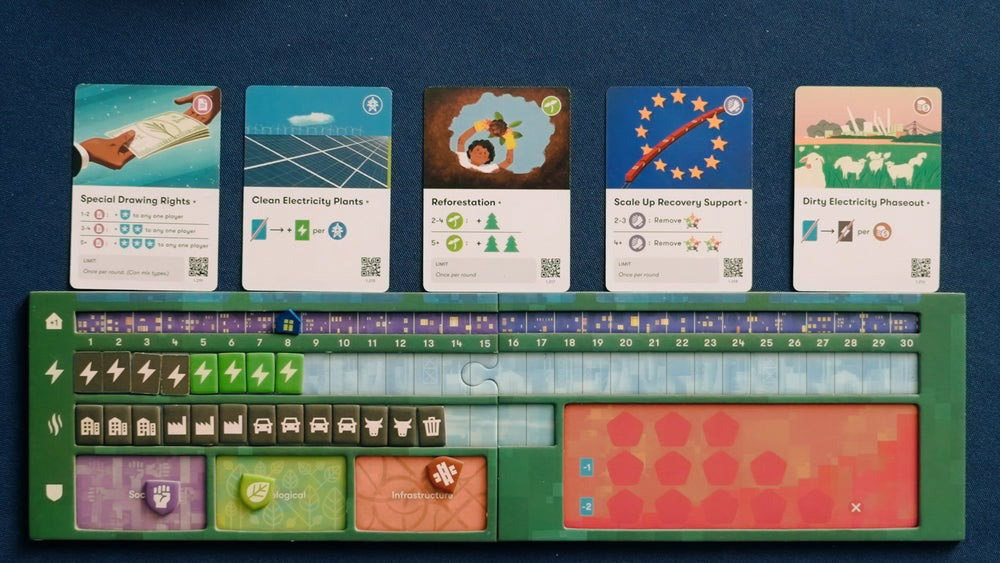
the components of the game Daybreak which has Game cards depicting Special Drawing Rights, Clean Electricity Plants, and Reforestation themed play cards
Daybreak, a cooperative board game about stopping climate change.
COURTESY OF CMYK

Daybreak is full of details, and I was struck by how many of them it gets right. Not only are there cards representing everything from walkable cities to methane removal, but each features a QR code players can use to learn more.

In each turn, players deploy technologies or enact policies to cut climate pollution. Just as in real life, emissions have negative effects. Winning requires slashing emissions to net zero (the point where whatever’s emitted can be soaked up by forests, oceans, or direct air capture). But there are multiple ways for the whole group to lose, including letting the global average temperature increase by 2 °C or simply running out of turns.

 In an embarrassing turn of events for someone who spends most of her waking hours thinking about climate change, nearly every round of Daybreak I played ended in failure. Adding insult to injury, I’m not entirely sure that I was having fun. Sure, the abstract puzzle was engaging and challenging, and after a loss, I’d be checking the clock, seeing if there was time to play again. But once all the pieces were back in the box, I went to bed obsessing about heat waves and fossil-fuel disinformation. The game was perhaps representing climate change a little bit too well.

I wondered if a new edition of a classic would fare better. Catan, formerly Settlers of Catan, and its related games have sold over 45 million copies worldwide since the original’s release in 1995. The game’s object is to build roads and settlements, setting up a civilization. 

In late 2023, Catan Studios announced that it would be releasing a version of its game called New Energies, focused on climate change. The new edition, out this summer, preserves the same central premise as the original. But this time, players will also construct power plants, generating energy with either fossil fuels or renewables. Fossil fuels are cheaper and allow for quicker expansion, but they lead to pollution, which can harm players’ societies and even end the game early.

Before I got my hands on the game, I spoke with one of its creators, Benjamin Teuber, who developed the game with his late father, Klaus Teuber, the mastermind behind the original Catan.

To Teuber, climate change is a more natural fit for a game than one might expect. “We believe that a good game is always around a dilemma,” he told me. The key is to simplify the problem sufficiently, a challenge that took the team dozens of iterations while developing New Energies. But he also thinks there’s a need to be at least somewhat encouraging. “While we have a severe topic, or maybe even especially because we have a severe topic, you can’t scare off the people by making them just have a shitty evening,” Teuber says.

In New Energies, the first to gain 10 points wins, regardless of how polluting that player’s individual energy supply is. But if players collectively build too many fossil-fuel plants and pollution gets too high, the game ends early, in which case whoever has done the most work to clean up their own energy supply is named the winner.

That’s what happened the first time I tested out the game. While I had been lagging in points, I ended up taking the win, because I had built more renewable power plants than my competitors.

This relatively rosy ending had me conflicted. On one hand, I was delighted, even if it felt like a consolation prize. 

But I found myself fretting over the messages that New Energies will send to players. A simple game that crowns a winner may be more playable, but it doesn’t represent how complicated the climate crisis is, or how urgently we need to address it. 

I’m glad climate change has a spot on my game shelf, and I hope these and other games find their audiences and get people thinking about the issues. But I’ll understand the impulse to reach for other options when game night rolls around, because I can’t help but dwell on the fact that in the real world, we won’t get to reset the pieces and try again.