These ran the gamut, and while we answered quite a few (and I’m keeping some in mind for future reporting), there were a bunch we couldn’t get to, at least not in the depth I would have liked.
So let’s answer a few of your questions about advanced nuclear power. I’ve combined similar ones and edited them for clarity.
How are the fuel needs for next-generation nuclear reactors different, and how are companies addressing the supply chain?
Many next-generation reactors don’t use the low-enriched uranium used in conventional reactors.
It’s worth looking at high-assay low-enriched uranium, or HALEU, specifically. This fuel is enriched to higher concentrations of fissile uranium than conventional nuclear fuel, with a proportion of the isotope U-235 that falls between 5% and 20%. (In conventional fuel, it’s below 5%.)
HALEU can be produced with the same technology as low-enriched uranium, but the geopolitics are complicated. Today, Russia basically has a monopoly on HALEU production. In 2024, the US banned the import of Russian nuclear fuel through 2040 in an effort to reduce dependence on the country. Europe hasn’t taken the same measures, but it is working to move away from Russian energy as well.
That leaves companies in the US and Europe with the major challenge of securing the fuel they need when their regular Russian supply has been cut off or restricted.
The US Department of Energy has a stockpile of HALEU, which the government is doling out to companies to help power demonstration reactions. In the longer term, though, there’s still a major need to set up independent HALEU supply chains to support next-generation reactors.
How is safety being addressed, and what’s happening with nuclear safety regulation in the US?
There are some ways that next-generation nuclear power plants could be safer than conventional reactors. Some use alternative coolants that would prevent the need to run at the high pressure required in conventional water-cooled reactors. Many incorporate passive safety shutoffs, so if there are power supply issues, the reactors shut down harmlessly, avoiding risk of meltdown. (These can be incorporated in newer conventional reactors, too.)
But some experts have raised concerns that in the US, the current administration isn’t taking nuclear safety seriously enough.
A recent NPR investigation found that the Trump administration had secretly rewritten nuclear rules, stripping environmental protections and loosening safety and security measures. The government shared the new rules with companies that are part of a program building experimental nuclear reactors, but not with the public.
I’m reminded of a talk during our EmTech MIT event in November, where Koroush Shirvan, an MIT professor of nuclear engineering, spoke on this issue. “I’ve seen some disturbing trends in recent times, where words like ‘rubber-stamping nuclear projects’ are being said,” Shirvan said during that event.
During the talk, Shirvan shared statistics showing that nuclear power has a very low rate of injury and death. But that’s not inherent to the technology, and there’s a reason injuries and deaths have been low for nuclear power, he added: “It’s because of stringent regulatory oversight.”
Are next-generation reactors going to be financially competitive?
Building a nuclear power plant is not cheap. Let’s consider the up-front investment needed to build a power plant.
Plant Vogtle in Georgia hosts the most recent additions to the US nuclear fleet—Units 3 and 4 came online in 2023 and 2024. Together, they had a capital cost of $15,000 per kilowatt, adjusted for inflation, according to a recent report from the US Department of Energy. (This wonky unit I’m using divides the total cost to build the reactors by their expected power output, so we can compare reactors of different sizes.)
That number’s quite high, partly because those were the first of their kind built in the US, and because there were some inefficiencies in the planning. It’s worth noting that China builds reactors for much less, somewhere between $2,000/kW and $3,000/kW, depending on the estimate.
The up-front capital cost for first-of-a-kind advanced nuclear plants will likely run between $6,000 and $10,000 per kilowatt, according to that DOE report. That could come down by up to 40% after the technologies are scaled up and mass-produced.
So new reactors will (hopefully) be cheaper than the ultra-over-budget and behind-schedule Vogtle project, but they aren’t necessarily significantly cheaper than efficiently built conventional plants, if you normalize by their size.
It’ll certainly be cheaper to build new natural-gas plants (setting aside the likely equipment shortages we’re likely going to see for years.) Today’s most efficient natural-gas plants cost just $1,600/kW on the high end, according to data from Lazard.
An important caveat: Capital cost isn’t everything—running a nuclear plant is relatively inexpensive, which is why there’s so much interest in extending the lifetime of existing plants or reopening shuttered ones.
Ultimately, by many metrics, nuclear plants of any type are going to be more expensive than other sources, like wind and solar power. But they provide something many other power sources don’t: a reliable, stable source of electricity that can run for 60 years or more.
This article is from The Spark, MIT Technology Review’s weekly climate newsletter. To receive it in your inbox every Wednesday, sign up here.
This is today’s edition of The Download, our weekday newsletter that provides a daily dose of what’s going on in the world of technology.
This is the most misunderstood graph in AI
Every time OpenAI, Google, or Anthropic drops a new frontier large language model, the AI community holds its breath. It doesn’t exhale until METR, an AI research nonprofit whose name stands for “Model Evaluation & Threat Research,” updates a now-iconic graph that has played a major role in the AI discourse since it was first released in March of last year.
The graph suggests that certain AI capabilities are developing at an exponential rate, and more recent model releases have outperformed that already impressive trend.
That was certainly the case for Claude Opus 4.5, the latest version of Anthropic’s most powerful model, which was released in late November. In December, METR announced that Opus 4.5 appeared to be capable of independently completing a task that would have taken a human about five hours—a vast improvement over what even the exponential trend would have predicted.
But the truth is more complicated than those dramatic responses would suggest. Read the full story.
—Grace Huckins
This story is part of MIT Technology Review Explains: our series untangling the complex, messy world of technology to help you understand what’s coming next. You can read more from the series here.
Three questions about next-generation nuclear power, answered
This article is from The Spark, MIT Technology Review’s weekly climate newsletter. To receive it in your inbox every Wednesday, sign up here.
The must-reads
I’ve combed the internet to find you today’s most fun/important/scary/fascinating stories about technology.
1 Anthropic’s new coding tools are rattling the markets Fields as diverse as publishing and coding to law and advertising are paying attention. (FT $) + Legacy software companies, beware. (Insider $) + Is “software-mageddon” nigh? It depends who you ask. (Reuters)
2This Apple setting prevented the FBI from accessing a reporter’s iPhone Lockdown Mode has proved remarkably effective—for now. (404 Media) + Agents were able to access Hannah Natanson’s laptop, however. (Ars Technica)
3 Last month’s data center outage disrupted all TikTok categories Not just the political content that some users claimed. (NPR)
4 Big Tech is pouring billions into AI in India A newly-announced 20-year tax break should help to speed things along. (WSJ $) + India’s female content moderators are watching hours of abuse content to train AI. (The Guardian) + Officials in the country are weighing up restricting social media for minors. (Bloomberg $) + Inside India’s scramble for AI independence. (MIT Technology Review)
5 YouTubers are harassing women using body cams They’re abusing freedom of information laws to humiliate their targets. (NY Mag $) + AI was supposed to make police bodycams better. What happened? (MIT Technology Review)
6 Jokers have created a working version of Jeffrey Epstein’s inbox Complete with notable starred threads. (Wired $) + Epstein’s links with Silicon Valley are vast and deep. (Fast Company $) + The revelations are driving rifts between previously-friendly factions. (NBC News)
7 What’s the last thing you see before you die? A new model might help to explain near-death experiences—but not all researchers are on board. (WP $) + What is death? (MIT Technology Review)
8 A new app is essentially TikTok for vibe-coded apps Words which would have made no sense 15 years ago. (TechCrunch) + What is vibe coding, exactly? (MIT Technology Review)
9 Rogue TV boxes are all the rage Viewers are sick of the soaring prices of streaming services, and are embracing less legal means of watching their favorite shows. (The Verge)
10 Climate change is threatening the future of the Winter Olympics Artificial snow is one (short term) solution. (Bloomberg $) + Team USA is using AI to try and gain an edge on its competition. (NBC News)
Quote of the day
“We’ve heard from many who want nothing to do with AI.”
—Ajit Varma, head of Mozilla’s web browser Firefox, explains why the company is reversing its previous decision to transform Firefox into an “AI browser,” PC Gamer reports.
One more thing
A major AI training data set contains millions of examples of personal data
Millions of images of passports, credit cards, birth certificates, and other documents containing personally identifiable information are likely included in one of the biggest open-source AI training sets, new research has found.
Thousands of images—including identifiable faces—were found in a small subset of DataComp CommonPool, a major AI training set for image generation scraped from the web. Because the researchers audited just 0.1% of CommonPool’s data, they estimate that the real number of images containing personally identifiable information, including faces and identity documents, is in the hundreds of millions.
The bottom line? Anything you put online can be and probably has been scraped. Read the full story.
—Eileen Guo
We can still have nice things
A place for comfort, fun and distraction to brighten up your day. (Got any ideas? Drop me a line or skeet ’em at me.)
For decades, enterprises reacted to shifting business pressures with stopgap technology solutions. To rein in rising infrastructure costs, they adopted cloud services that could scale on demand. When customers shifted their lives onto smartphones, companies rolled out mobile apps to keep pace. And when businesses began needing real-time visibility into factories and stockrooms, they layered on IoT systems to supply those insights.
Each new plug-in or platform promised better, more efficient operations. And individually, many delivered. But as more and more solutions stacked up, IT teams had to string together a tangled web to connect them—less an IT ecosystem and more of a make-do collection of ad-hoc workarounds.
That reality has led to bottlenecks and maintenance burdens, and the impact is showing up in performance. Today, fewer than half of CIOs (48%) say their current digital initiatives are meeting or exceeding business outcome targets. Another 2025 survey found that operations leaders point to integration complexity and data quality issues as top culprits for why investments haven’t delivered as expected.
Achim Kraiss, chief product officer of SAP Integration Suite, elaborates on the wide-ranging problems inherent in patchwork IT: “A fragmented landscape makes it difficult to see and control end-to-end business processes,” he explains. “Monitoring, troubleshooting, and governance all suffer. Costs go up because of all the complex mappings and multi-application connectivity you have to maintain.”
These challenges take on new significance as enterprises look to adopt AI. As AI becomes embedded in everyday workflows, systems are suddenly expected to move far larger volumes of data, at higher speeds, and with tighter coordination than yesterday’s architectures were built to sustain.
As companies now prepare for an AI-powered future, whether that is generative AI, machine learning, or agentic AI, many are realizing that the way data moves through their business matters just as much as the insights it generates. As a result, organizations are moving away from scattered integration tools and toward consolidated, end-to-end platforms that restore order and streamline how systems interact.
This content was produced by Insights, the custom content arm of MIT Technology Review. It was not written by MIT Technology Review’s editorial staff. It was researched, designed, and written by human writers, editors, analysts, and illustrators. This includes the writing of surveys and collection of data for surveys. AI tools that may have been used were limited to secondary production processes that passed thorough human review.
Whether it’s spring cleaning tips, peanut butter recipes, or honoring Mr. Spock, March 2026 is full of opportunities to use content to promote your company and its products.
The aim of content marketing is to attract, engage, and retain customers. It works on the principle of reciprocity. Provide valuable content to shoppers, and they may repay with purchases.
What follows are five content marketing ideas your shop can use in March 2026.
Spring Renewal
Spring invites small changes that make everyday life feel new again.
March marks the slow turn toward spring in the Northern Hemisphere. Days grow longer. The weather turns warmer. And we shift our focus.
Many of us begin thinking about small changes that lead to larger improvements.
For some, that means spring cleaning. For others, it means reorganizing, replacing worn items, or restarting habits that faded over winter.
This seasonal mindset can lead to useful, product-centered content. Shoppers browse for ideas and try to perform practical tasks.
Thus the best content could help folks complete a project or learn a skill that also aligns with what the store sells. A home goods retailer can explain how to refresh a kitchen or bedroom. A clothing merchant can address updating a wardrobe. A fitness brand might outline a plan for restarting workouts.
When it helps a potential customer accomplish something meaningful, a business builds trust. That trust often turns into future sales.
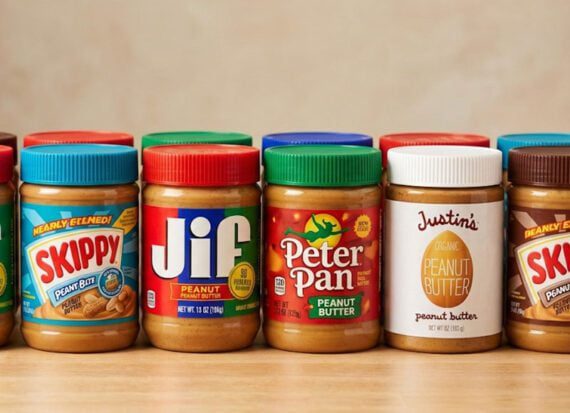
National Peanut Butter Lover’s Day
Peanut butter has many fans.
March 1, 2026, is National Peanut Butter Lover’s Day in the United States. The pseudo-holiday began appearing on calendars in the 1990s.
Food-focused content can perform well in search, social, and, presumably, AI
With this in mind, peanut butter-related articles will likely work best for merchants selling kitchenware, specialty foods, and fitness products such as protein powders and supplements.
For these merchants, the content ideas are straightforward.
“5 Peanut Butter Desserts to Make in Under 30 Minutes”
“Homemade Peanut Butter That’s Better Than Store-Bought”
“Easy Snacks for Peanut Butter Lovers”
Peanut butter has a broad cultural appeal. Creative content marketers in other niches can likely find ways to participate.
For example, a retailer specializing in science and math kits might publish educational or curiosity-driven content such as:
“Who Invented Peanut Butter?”
“Peanut Butter and the World’s Fair”
“10 Shocking Peanut Butter Patents”
The goal is to create timely, interesting content that aligns with the spirit of the day and introduces shoppers to the store.
Live Long and Prosper Day
Star Trek’s Mr. Spock, played by Leonard Nimoy, famously coined the phrase “live long and prosper.”
March 26, 2026, is Live Long and Prosper Day, a nod to Leonard Nimoy and his iconic portrayal of Mr. Spock in Star Trek, The Original Series.
“Live long and prosper” was a series phrase, but it has long become shorthand for science fiction’s hopeful view of the future and humanity’s relationship with technology.
Science fiction remains one of the most popular and influential genres in popular culture. Its ideas shape how people imagine innovation, design, and progress. That influence creates an opportunity for ecommerce content marketers to frame products through a science-fiction lens without needing licensed merchandise.
Content can focus on everyday products that feel futuristic, minimalist, or inspired by speculative design. Electronics, home office gear, tools, apparel, books, hobby supplies, and gift items can all fit this theme.
The age of AI means almost everything feels like science fiction.
Make Up Your Own Holiday Day
Create a holiday that fits your business.
If Star Trek’s Mr. Spock is not a great fit, March 26 is also Make Up Your Own Holiday Day, a lighthearted invitation to invent a celebration from scratch.
For ecommerce marketers, the date offers a chance to blend entertaining content with promotions.
Unlike regular holidays, this do-it-yourself occasion can focus on a product category, a use case, or a habit.
An online liquor store, for example, might introduce “Buy Your Spouse a Bottle Day.” A coffee merchant could launch “Perfect Cup of Coffee Day.” An office supply retailer might create “Organize Your Desk Day.” Or finally, a game shop could celebrate “Family Game Night Day.”
Each of those should include products. It’s a permission to have fun while driving sales.
America at 250
Content from U.S. merchants in 2026 can focus on craftsmanship and domestically-made products.
In 2026, the United States will celebrate its 250th year as a nation. It’s an opportunity for U.S. merchants to focus on product-centered storytelling.
One angle is to emphasize goods made in the United States or rooted in long-standing domestic craftsmanship. These products naturally connect to themes of durability, heritage, and continuity without requiring overt patriotic messaging.
Shoppers learn where products come from, how they are made, and why that matters today. Example article titles might include:
“15 Heritage Brands That Have Stood the Test of Time”
“American Craftsmanship in Everyday Products”
“5 American-Made Products Worth Paying For”
These pieces can become part of a continuing “America 250” series that expands through spring and into summer, gradually building a library of heritage-focused content tied to merchandise.
Google’s John Mueller was asked how many megabytes of HTML Googlebot crawls per page. The question was whether Googlebot indexes two megabytes (MB) or fifteen megabytes of data. Mueller’s answer minimized the technical aspect of the question and went straight to the heart of the issue, which is really about how much content is indexed.
GoogleBot And Other Bots
In the middle of an ongoing discussion in Bluesky someone revived the question about whether Googlebot crawls and indexes 2 or 15 megabytes of data.
It would be super useful to have more precisions, and real-life examples like “My page is X Mb long, it gets cut after X Mb, it also loads resource A: 15Kb, resource B: 3Mb, resource B is not fully loaded, but resource A is because 15Kb < 2Mb”.”
Panic About 2 Megabyte Limit Is Overblown
Mueller said that it’s not necessary to weigh bytes and implied that what’s ultimately important isn’t about constraining how many bytes are on a page but rather whether or not important passages are indexed.
Furthermore, Mueller said that it is rare that a site exceeds two megabytes of HTML, dismissing the idea that it’s possible that a website’s content might not get indexed because it’s too big.
He also said that Googlebot isn’t the only bot that crawls a web page, apparently to explain why 2 megabytes and 15 megabytes aren’t limiting factors. Google publishes a list of all the crawlers they use for various purposes.
How To Check If Content Passages Are Indexed
Lastly, Mueller’s response confirmed a simple way to check whether or not important passages are indexed.
“Google has a lot of crawlers, which is why we split it. It’s extremely rare that sites run into issues in this regard, 2MB of HTML (for those focusing on Googlebot) is quite a bit. The way I usually check is to search for an important quote further down on a page – usually no need to weigh bytes.”
Passages For Ranking
People have short attention spans except when they’re reading about a topic that they are passionate about. That’s when a comprehensive article may come in handy for those readers who really want to take a deep dive to learn more.
From an SEO perspective, I can understand why some may feel that a comprehensive article might not be ideal for ranking if a document provides deep coverage of multiple topics, any one of which could be a standalone article.
A publisher or an SEO needs to step back and assess whether a user is satisfied with deep coverage of a topic or whether a deeper treatment of it is needed by users. There are also different levels of comprehensiveness, one with granular details and another with an overview-level of coverage of details, with links to deeper coverage.
In other words, sometimes users require a view of the forest and sometimes they require a view of the trees.
Google has long been able to rank document passages with their passage ranking algorithms. Ultimately, in my opinion, it really comes down to what is useful to users and is likely to result in a higher level of user satisfaction.
If comprehensive topic coverage excites people and makes them passionate enough about to share it with other people then that is a win.
If comprehensive coverage isn’t useful for that specific topic then it may be better to split the content into shorter coverage that better aligns with the reasons why people are coming to that page to read about that topic.
Takeaways
While most of these takeaways aren’t represented in Mueller’s response, they do in my opinion represent good practices for SEO.
HTML size limits belie a concern for deeper questions about content length and indexing visibility
Megabyte thresholds are rarely a practical constraint for real-world pages
Counting bytes is less useful than verifying whether content actually appears in search
Searching for distinctive passages is a practical way to confirm indexing
Comprehensiveness should be driven by user intent, not crawl assumptions
Content usefulness and clarity matter more than document size
User satisfaction remains the deciding factor in content performance
Concern over how many megabytes are a hard crawl limit for Googlebot reflect uncertainty about whether important content in a long document is being indexed and is available to rank in search. Focusing on megabytes shifts attention away from the real issues SEOs should be focusing on, which is whether the topic coverage depth best serves a user’s needs.
Mueller’s response reinforces the point that web pages that are too big to be indexed are uncommon, and fixed byte limits are not a constraint that SEOs should be concerned about.
In my opinion, SEOs and publishers will probably have better search coverage by shifting their focus away from optimizing for assumed crawl limits and instead focus on user content consumption limits.
But if a publisher or SEO is concerned about whether a passage near the end of a document is indexed, there is an easy way to check the status by simply doing a search for an exact match for that passage.
Comprehensive topic coverage is not automatically a ranking problem, and it not always the best (or worst) approach. HTML size is not really a concern unless it starts impacting page speed. What matters is whether content is clear, relevant, and useful to the intended audience at the precise levels of granularity that serves the user’s purposes.
Based on survey data from nearly 1,000 businesses, this session highlights where confidence is rising, where caution remains, and how companies are balancing growth, efficiency, and focus.
What AI readiness looks like in practice for businesses like yours
Where business confidence is increasing, and what teams are prioritizing
Why Attend?
This webinar provides a practical benchmark for evaluating your 2026 plan against peer data. You will leave with clear context and takeaways to help refine growth, efficiency, and AI strategies for the year ahead.
Register now to see what real business data says about planning for 2026.
🛑 Can’t watch live? Register anyway, and we’ll send you the recording.
This one started with a question from Adorján-Csaba Demeter, a subscriber in Romania, who asked how big the behavior change could be after Google’s AI Mode Personal Search launch, and it pushed me to think past the product announcement and into the habit shift underneath it.
AI changing search is a foregone conclusion. The real story is what happens to people when search stops acting like a library and starts acting like a helper that knows what you meant, what you like, and what you have coming up next.
When effort drops, behavior changes first. Then business models change. Then the web scrambles to catch up.
Image Credit: Duane Forrester
What Google Actually Changed
Google did not just add another AI layer to results. It moved AI Mode from “answer from the web” toward “answer from the web plus your life,” starting with opt-in connections to Gmail and Google Photos for AI Pro and AI Ultra subscribers in the U.S., delivered as a Labs experiment.
That detail matters because it tells you what Google thinks the next battleground is.
Not faster answers, but stickier habits.
When the system can read your hotel confirmation in Gmail, it can plan. When it can see the kinds of trips you take in Photos, it can recommend. You stop doing the work of explaining context. You start delegating outcomes.
That is a bet on human behavior.
The three behavior shifts that will most likely follow, in order, are:
1. People ask more questions, and they ask harder questions.
Google already sees this pattern with AI Overviews. In major markets like the U.S. and India, Google says AI Overviews drive over a 10% increase in usage for the types of queries that show them. That is a habit signal, not a satisfaction claim.
When people believe the system will do more for them, they return more often, and they push further. Queries get longer. They get more specific. They get more outcome-oriented. People stop asking “what is” and start asking “what should I do.”
Personal context amplifies that shift. If the system already knows your reservations, your preferences, and your recent activity, the user has less friction and more confidence. That increases question volume.
2. Sessions end sooner, and fewer decisions happen on websites.
Here’s the part businesses need to internalize. AI does not just reduce clicks. It compresses the journey and ends sessions earlier.
Pew’s browsing-panel study found that when an AI summary appeared, users clicked a traditional search result in 8% of visits versus 15% when there was no AI summary. Pew also found users were more likely to end their browsing session after a page with an AI summary, 26% versus 16% without.
3. People shift from browsing to delegating.
This is where behavior becomes durable. Traditional search trained people to open tabs, compare sources, build their own plan, then act. AI Mode personalizes the plan inside search itself. It turns “find me information” into “help me decide.” If the system can use your life context, it can do the assembly work you used to do manually.
That is the transition from search sessions to decision sessions. A search session ends when you find information. A decision session ends when you have a recommended next step and you are ready to act.
Adoption Will Be Real, And Uneven, For A Simple Reason
People like convenience, but they do not always like the feeling of being summarized.
Pew found that among Americans who have seen AI summaries in search results, only one in five say they find them extremely or very useful. Most say somewhat useful, and 28% say not too or not at all useful.
Low-stakes categories will move fastest because the cost of being wrong is low. High-stakes categories will move slower because trust and liability show up quickly, even when the convenience is obvious.
Even with mixed sentiment, usage is already going mainstream. Deloitte’s 2025 Connected Consumer survey found 53% of surveyed consumers are either experimenting with gen AI or using it regularly, up from 38% in 2024.
The behavior change is already underway, and I think Google is trying to capture it inside its existing habit loop.
What This Does To Businesses, Even If Your SEO Is Perfect
This is where most teams get stuck. They see AI Mode and AI summaries and assume it is “just another ranking change.” It is not. It is a consumer behavior change that reshapes the economics of discovery. The shift is subtle at first, then it hits you all at once, because it changes what people consider a completed search experience.
When sessions complete in the answer layer, classic top-of-funnel traffic becomes less reliable, even if your rankings hold. The competitive line shifts to inclusion: being referenced, cited, recommended, or selected as the next step inside the plan the system generates.
To win there, build for next-step intent. Most marketing content assumes the user will land on your site and then decide. AI compresses that journey, so your content has to carry options, tradeoffs, and a clear “what to do next,” in a form that survives summarization.
Vertical Impacts, Where Behavior Shifts First
Healthcare
People already use search as a first stop for health. The Annenberg Public Policy Center found that most (79%) U.S. adults say they’re likely to look online for the answer to a question about a health symptom or condition.
And the way they search is predictable. A 2025 JMIR survey study found participants most often sought information on health conditions, 90.2%, and medication info came next, 60.3%.
As the answer layer feels more confident, people will use it for triage and next steps. It will influence which clinic they choose and how quickly they escalate a concern.
Healthcare businesses should expect:
Less website traffic for broad informational topics, and more pressure on “what do I do next” moments.
Increased competition to be the cited and trusted source inside AI answers.
Higher stakes for accuracy and clarity, because summarization can remove nuance.
There is also a revealing warning signal here. A study of health-related AI Overviews citations, found YouTube was the single most cited source, accounting for 4.43% of citations in that dataset.
That is not an argument against AI. It is a reminder that citation sources do not automatically align with medical rigor. Businesses in healthcare need to make their evidence, authorship, and care pathways machine-readable and unambiguous.
Financial Services
Finance is already living in an “assistant” world, and that matters because it shows how quickly consumers accept delegated help when it saves effort.
Bank of America reports that Erica (their consumer AI assistant) has surpassed 3.2 billion client interactions since its 2018 launch, and clients now interact with Erica more than 2 million times per day.
That is behavior change at scale.
Meanwhile, consumers are increasingly willing to use AI for financial advice and information. ABA Banking Journal reported in September 2025 that 51% of respondents said they turn to AI to get financial advice or information, and another 27% said they are considering it.
Now when we connect the dots…
If AI Mode personalizes search around a user’s life context, financial decision-making gets pulled earlier into the assistant layer. Budgeting questions, product comparisons, “should I refinance,” “how much house can I afford,” and “what happens if I miss a payment” all become conversational.
Financial services businesses should expect:
Increased competition for being the recommended next step, not just being discoverable.
More pressure to publish clear, plain-language product explanations that survive summarization.
A sharper separation between low-stakes guidance and regulated advice, with trust and compliance becoming part of how content gets used.
Retail And Ecommerce
Retail gets hit hard because the classic behavior pattern is tab sprawl, and AI collapses it into a shortlist.
Retail businesses should expect:
Fewer browsing sessions that start with generic research and end on a product page.
More “shortlist behavior,” where the system presents a handful of options and the user picks.
Higher importance for product data that can be summarized cleanly, including dimensions, compatibility, return policies, and warranty terms.
If your differentiation lives in fluffy copy, it dies in the summary. If it lives in measurable attributes, verified reviews, and clear tradeoffs, it survives.
Local Services
Local services are where this gets practical fast. People search when something broke, they need help now, and they do not want homework.
AI Mode personal context will steer choices based on urgency, location, constraints, and preferences. That means “best next step” routing becomes default behavior.
Local businesses should expect:
Less opportunity to win by content volume alone.
More emphasis on entity clarity, service area accuracy, availability, pricing ranges, and proof of credibility.
A rise in “invisible funnel” decisions, where the customer shows up ready to book because the plan already happened elsewhere.
What You Can Do Today, Without Waiting For The Dust To Settle
For Consumers
1. Decide where you want personalization, and where you do not. Personal AI is a trade. You get convenience, but you give context. Make that choice deliberately.
2. Use AI for options, then verify what has consequences. Health, money, legal, and safety decisions deserve a second look. If an answer influences a purchase, a medical step, or a contract, capture the source and key details so convenience does not erase accountability.
For Businesses
1. Stop treating clicks as the only signal that matters. Clicks will drop in many query classes, and sessions will end sooner. Measure presence in answers, citations, recommendations, and downstream conversions that happen after exposure.
2. Rebuild your content around next-step intent. Take your highest value pages and rewrite them for decision completion. Clear options. Clear tradeoffs. Clear “what to do next.”
3. Make your entity impossible to misunderstand. Clean organization signals, consistent naming, authoritative profiles, accurate locations, and structured data where relevant. When the machine layer tries to explain who you are, make it easy.
4. Publish proof, not fluff. In high-stakes verticals, show your sources, your credentials, your policies, and your constraints. AI can compress text, but it still needs real signals to anchor trust.
The Competitive Forecast, Google Versus The Rest
If AI Mode personal search takes off, the winners will not be determined by model quality alone. Distribution and habit will do most of the work.
Scenario one, Google accelerates
Google’s biggest advantage is not that it can build an assistant. It is that it can place the assistant inside a habit billions of people already have. (Android + Siri) It already sees increased usage when AI Overviews appear, over 10% in major markets for those query types.
If Google can move Personal Intelligence from paid opt-in into broader availability, and expand the connected sources beyond Gmail and Photos, it can turn search into a daily operating layer for planning and decisions. That is a habit engine.
Scenario two, the market stays plural
ChatGPT and other assistants will continue to grow because they do not live only in “search.” They live in work, writing, learning, and deep tasks. Many users will keep separate habits, one for web discovery, another for assistant workflows, at least for a while.
In a plural market, businesses must optimize for multiple answer layers, not just Google.
What To Watch In 2026
Whether Google keeps Personal Intelligence as a paid feature or uses it as a default habit builder.
Whether connected context expands, and which sources get added next.
Whether user sentiment shifts from lukewarm to reliant or stays mixed as Pew found.
How quickly session compression shows up by vertical, since that will reveal where business disruption hits first.
The Takeaway
The change to watch is not that AI can answer questions. That part is already here, and it will keep improving. The real change is that people will stop doing the assembly work they have always done in search. They will ask more, browse less, and increasingly accept plans that arrive pre-built, because it feels faster and it feels complete. Habits will change.
When that happens, power moves upward into the answer layer. Competition shifts from who ranks to who gets included, because inclusion is what influences the decision before a user ever lands on your site. The web does not disappear, but its role changes. It becomes the dependency that feeds answers, not the destination where discovery naturally occurs.
If you run a business, you cannot pause this shift. You can adapt. Build for decision completion. Make your proof easy to carry forward so it survives summarization and still earns trust. Measure what matters when the click often disappears.
Today’s question is about understanding internal linking and how it can help or hinder a search engine’s perception of a page’s topical relevance and authority.
“How do you technically assess whether a site’s internal linking is diluting topical authority rather than strengthening it?”
What Is Topical Authority
In essence, topical authority is the concept of how a search engine may view a website’s ability to provide an authoritative answer for a topic, inferred from how consistently it covers that topic and how signals reinforce that coverage.
Although there is no single standard defined metric for topical authority, it is, in essence, a measure of a page or a whole website’s relevance to a specific knowledge area, and trustworthiness as a source of information.
How Is It Affected By Internal Links
Internal links are crucial in shaping topical authority. They influence how authority, relevance, and intent signals are distributed across a website or folder. If we think of backlinks as bringing topical authority into a website, internal linking then helps to disperse it across the site. Internal linking determines where that authority accumulates and aids search engines in interpreting a page’s topical focus.
Links that connect topically relevant pages together help to strengthen the perception of the destination page’s authority on a subject. Lots of links from pages that aren’t seemingly relevant to each other can dilute the destination’s topical authority.
Something that is central to understanding the role of internal links in shaping topical authority is PageRank. PageRank is an algorithmic system developed in the late ’90s by Google founders Larry Page and Sergey Brin. It was used to measure the importance of a page based on the nature and volume of the links pointing to it. We need to keep this concept in mind when considering the use of internal links to shape the perception of a page’s topical authority.
How Important Are Internal Links In Regard To Topical Authority?
There are several factors of internal links that can affect how beneficial they are in strengthening a page’s topical authority.
Does The Link Pass Authority?
The first aspect is whether the link is followable, or if it is marked as “rel=nofollow.” This also applies to other variations of the “nofollow” tag, like “rel=sponsored.” Note, these tags are hints and not absolutes and Google might ignore them in some cases.
The URL that the link is on, and the page it is pointing to, also need to be crawlable. If those pages are disallowed via the robots.txt, then the value of the authority will not pass, as the page will not be crawled for the internal link to be picked up by the search bots.
Where Is It Placed On The Page?
Where a link is on the page could affect its authority. For example, links placed in the footer of every page on the site, get weighted differently than those that sit within the page’s main content. Google’s Martin Splitt has explained that Google does treat content in different parts of the page differently when trying to understand the topic of a page, and its content that is perceived to be main content that is used most to help with that.
Google’s John Muller recently answered a question about how links are valued in these different areas of a page. He said, “I don’t think there is anything quantifiably different about internal links in different parts of the page.” Although that may seem to contradict Splitt’s comments, remember that Muller is addressing how the value of a link may be affected by its location on a page, whereas Splitt is discussing how location of content affects how it is weighted to determine topic.
Following this logic, links appearing in the main content of a page may affect how that link passes topical relevancy.
What Is The Anchor Text?
The anchor text, or alt-text in cases where an image is linked, will help to inform the search engines of the nature of the page being linked to. The words that form the link are critical in helping the user and search engines know what to expect when they land on the page it takes them to. This context is another signal to the bots of the link destination’s relevancy to a subject.
What Is The Link Pointing From And To?
Similarly, if a link is on a page that is topically similar to the page being linked to, that also reinforces the topical authority of the destination page. If Page A on my fictitious hobby ecommerce site is about different craft hobbies, and Page B is about textile craft hobbies, it will help to reinforce Page B’s relevance to those seeking information about craft hobbies.
How To Assess Your Internal Linking Structure’s Effect On Topical Authority
Internal links can help a site’s topical authority by reinforcing the destination URLs’ topical relevance. They also help to ensure that any external authority signals are being passed to the correct internal pages.
There are calculations that could factor in the flow of link equity and authority through pages to assess the full impact of internal linking on a page’s topical authority. Calculations required include assigning value for position of link placement, click-depth from a topically relevant and authoritative page and topical authority of the links to the page where the link is coming from.
It’s a lot of math.
Instead, I’m in favor of keeping it simple, and defining a process that will allow you to get enough of an understanding of your website’s topical authority to make decisions from.
By looking at a sample of pages from your site across different topics, or if you are particularly focused, just one area of your topical authority, you can get an idea of any issues.
1. Identify Where Your Pages Are Getting Their Internal Links From
First of all, crawl your site, taking a sample of URLs. Export all of the internal links pointing to those pages, including their anchor text and URL the link is on.
2. Classify The URLs In Topic Clusters
Group all the pages into topical themes, i.e., for an ecommerce site that sells hobby equipment, “knitting, crochet, embroidery, and weaving” would all sit within “crafts” and the sub-category of “textile arts.” “Die cutting, digital cutting, laser cutting” would all sit within “crafts” and the sub-category of “cutting and engraving.”
3. Analyze What Proportion Of Each URL’s Followable Internal Links Are From Within The Same Topic And Outside Of The Topic
Using the exported links, for follow links only, match them against the URLs and mark them as “within” or “outside” their topical family
Divide the volume of links that are from the same topic by the volume of links in total. For example, for “examplehobbyshop.com/crafts/embroidery/intro-to-embroidery/, if the total number of internal links is 100 and the volume of internal links from categories that are within the “craft” family is 60, then it would be 60/100 = 60%
The rule I apply is, if the URL internal links from the same family are around 75% or higher, that suggests that internal links are helping solidify topical authority. If it is less than 74%, that suggests that there could be some improvement.
How To Assess How Your Links’ Anchor Text Is Contributing To Your Topical Authority
1. Extract The Anchor Text Of Links Pointing To Your URLs
When gathering the links pointing to a page, remove common links like static header navigation and footer links that stay the same on each page. Then, extract the anchor text or alt text for linked images.
2. Categorize The Relevance Of The Anchor Text Of Links
Next, you want to look at how on-topic the anchor text of the links is for the page they are linking to.
Classify each anchor text as “topically relevant,” “topically irrelevant,” or “generic.” Topically relevant anchor text will have great alignment with the subject of the linked-to page. Topically irrelevant anchor text will not show any useful reinforcement of the topic. “Generic” anchor text includes “click here” or pagination links.
For the URL, examplehobbyshop.com/crafts/embroidery/intro-to-embroidery/, the following internal links’ anchor text could be grouped as follows:
Topically relevant
Topically irrelevant
Generic
“get started with embroidery”
“learn the tools needed to pick up embroidery”
“want to try another fibre craft?”
“beginners’ guide”
“start a new hobby”
“try something new”
“click here”
“next”
“page 2”
The goal is to have a lot of links from topically relevant pages pointing to the URL using topically relevant anchor text.
Measure the relevance of the anchor text against the total volume of anchor text.
For example, if that page had 30 topically relevant anchor texts, 20 topically irrelevant, and 50 generic, of the total 100 internal links pointing to it, it would have a topically relevant anchor text score of 30%. So despite there being a high volume (60%) of relevant internal links pointing to it, only 30% of the links have topically relevant anchor text.
3. Identify The Intent Mix Of The Anchor Text
Next, you want to identify the intent of the anchor text.
When grouping the anchor text by topical relevancy, also consider the intent behind the anchor text. For example, is it suggesting the page you will go to after clicking on it is informational, commercial, or transactional?
This matters because it can lead to dilution of the page intent. If there is a wide spread of intent shown through the anchor text, it can lead to confusion as to the purpose of the page being linked to.
Following on from the previous example, if some of the internal links had the anchor text “learn more about embroidery,” but others were more akin to “buy all the tools you need for your first embroidery project,” it’s not clear if examplehobbyshop.com/crafts/embroidery/intro-to-embroidery/ is an informational, commercial, or transactional page. This suggests the anchor text has a high intent mix, which is not ideal. If the majority of the anchor text were aligned with informational intent, it would have low intent mix.
Together, you want the anchor text to show high topical relevance, and low intent mix.
Final Thoughts
By the end of your analysis, you should have an idea of the topical relevance of the source pages of the internal links and how their anchor text aligns to both the topic and intent of the page being linked to.
Scaling this across a larger volume of URLs means you can start to see how topical relevance and authority are being strengthened or diluted via internal linking.
Once you have an idea of weaker areas of your site, you can begin to optimize anchor text and link sources to reinforce the value of the linked-to page as a source of authority on a subject.
More Resources:
Featured Image: Paulo Bobita/Search Engine Journal
How Links, Mentions, and Authority Influence Rankings and AI Discovery
Authority and presence across the web continue to play a central role in search visibility, even as AI-driven experiences reshape how SERPs appear.
Links, brand mentions, and trust signals continue to influence how Google evaluates credibility, both in traditional rankings and in AI-powered SERPs. The challenge for SEO teams is determining which off-page efforts to prioritize in 2026.
It’s easy to waste effort on shortcuts that do little to build long-term authority, so in this session, Michael Johnson, Founder and CEO of GrowResolve.com, will share a practical framework for developing modern off-page SEO strategies that improve organic rankings and support AI visibility. The focus of this SEO webinar is on sustainable approaches that help brands earn trust, not chase tactics that no longer deliver value.
What You’ll Learn
Which off-page signals drive results in 2026, including links, mentions, topical authority, and trust.
How to build a diversified off-page strategy without relying on a single tactic or vendor.
Scalable link building approaches for in-house teams, including Digital PR, partnerships, and brand-led content.
Why Attend?
This webinar provides clear guidance on where to focus off-page SEO efforts as search continues to evolve. You will leave with a practical, decision-making framework to build authority, improve visibility, and avoid wasted effort in 2026.
Register now to learn how to build off-page SEO strategies that support long-term authority and visibility.
🛑 Can’t attend live? Register anyway, and we’ll send you the on-demand recording after the webinar.