SEO in 2025: 12 experts reveal key trends and insights
We love to say that SEO is always changing, and 2024 proved that true. There’s hardly been a year more challenging and exciting than that. But as we’re heading into 2025, we’re sure we have not seen the last of it. With everyone banking on AI, search, and the search industry are set for another sea change. In this post, we hear from twelve seasoned SEO experts for their insights on the future and how you can prepare.
A look back at SEO in 2024
2024 was a year with many newsworthy developments. We won’t review everything here, as that would need a book, but maybe someone will make a documentary about life as an SEO in 2024. Or maybe life at Google, as the search giant was central to almost all the big news.
Google deemed a monopoly
Let’s start with the biggest: Google faced a significant legal ruling when a federal judge declared it a monopoly in August. This landmark antitrust case found that Google’s dominance in the search engine market violated antitrust laws. Since then, there have been many discussions about potential regulatory changes and impacts on the broader search and tech industry. Currently, it looks like the DOJ will ask Google to sell off Chrome, among other things.
Google launched AI Overviews
In May, Google launched AI Overviews during its I/O event. This new feature uses AI to generate concise summaries in search results, aiming to make searches more efficient and user-friendly. This integration marked a significant advancement in using AI within search engines. AI Overviews are now available in most markets, but not the EU.
Google search documents leak
Around the same time, a massive leak of Google’s search API documentation occurred, revealing over 2,500 pages of internal documents. Although the leaked documents do not contain the algorithm’s secret recipe, they provide valuable insights into Google’s inner workings.
Core updates keeping everyone up at night
Throughout the year, Google’s core updates led to significant swings in search rankings and notable traffic changes for many websites. For many of us, it remains an ongoing challenge to adapt to evolving algorithms quickly.
Keep up to date with the Yoast newsletter
SEO is ever-changing. It can be hard to keep up with the latest changes and decide what’s best to focus on. But as a Yoast newsletter subscriber, you no longer need to worry! You’ll receive weekly emails with practical SEO tips and insights to help you quickly improve your site.
The end of Parasite SEO?
Additionally, in March, Google banned Parasite SEO, a practice that exploits high-authority domains for quick ranking. Google uses this ban to improve search quality and eliminate manipulative practices within its search ecosystem. This policy affected major sites like Time, Forbes, CNN, and the Wall Street Journal, as they were penalized for not adhering to Google’s guidelines.
OpenAI launches ChatGPT Search
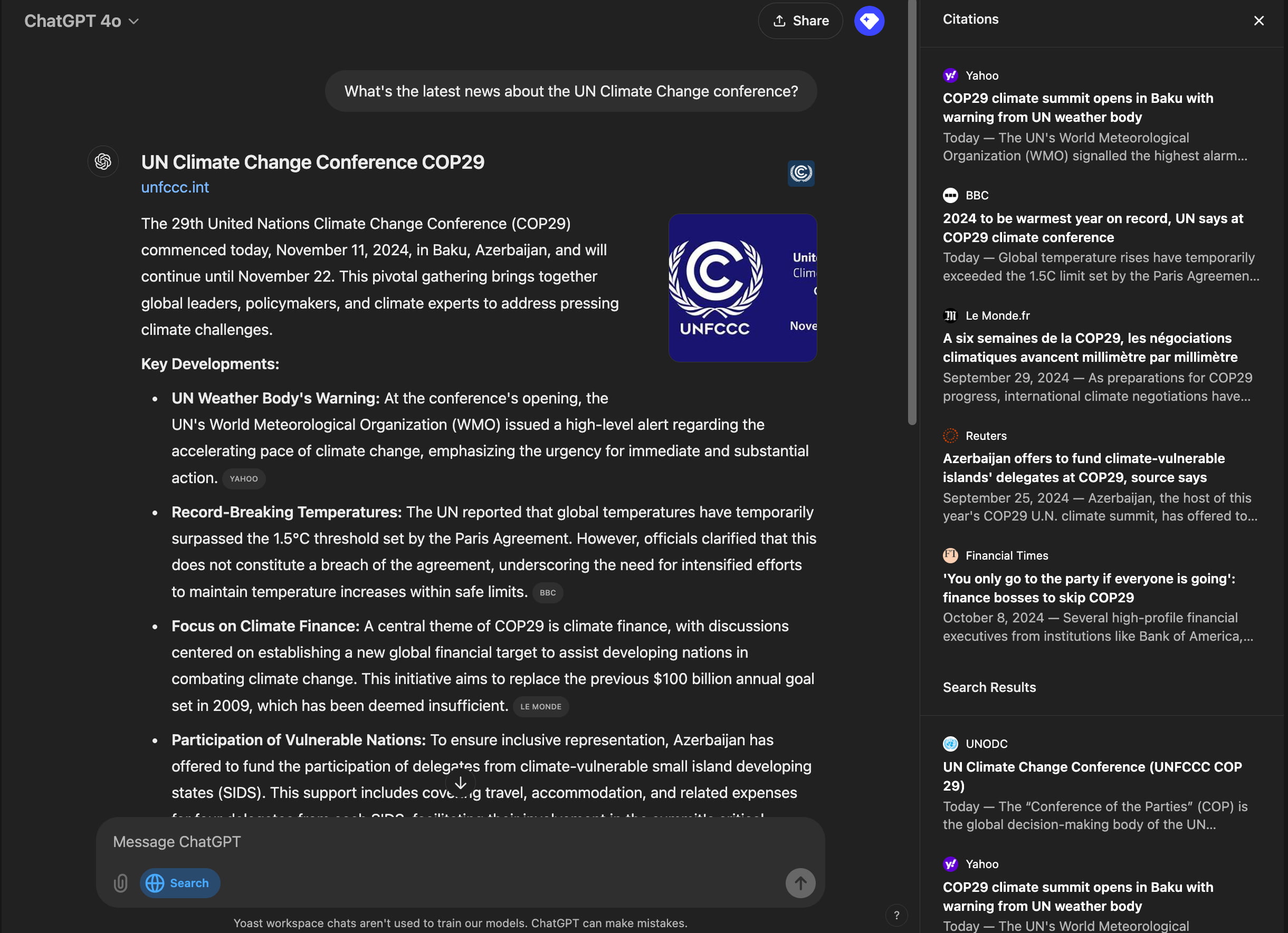
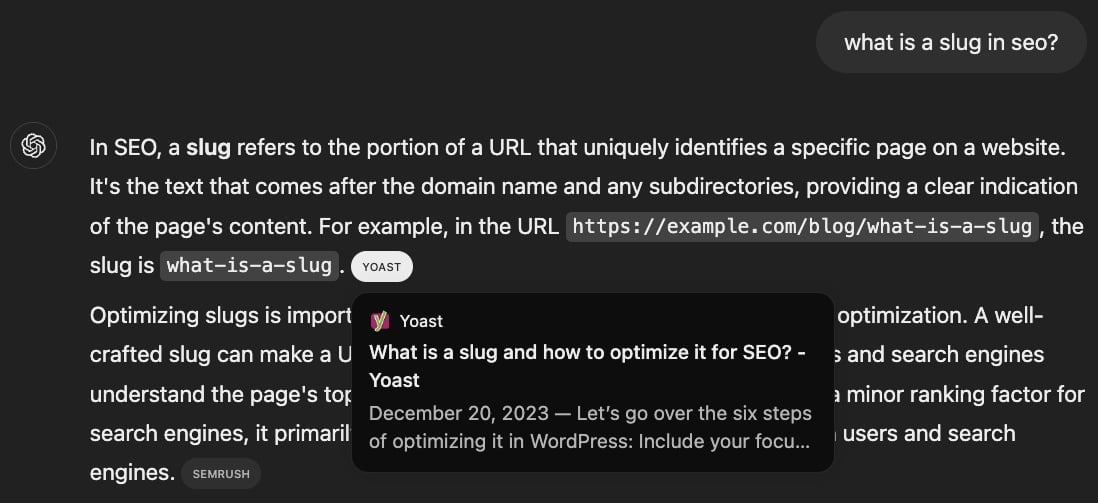
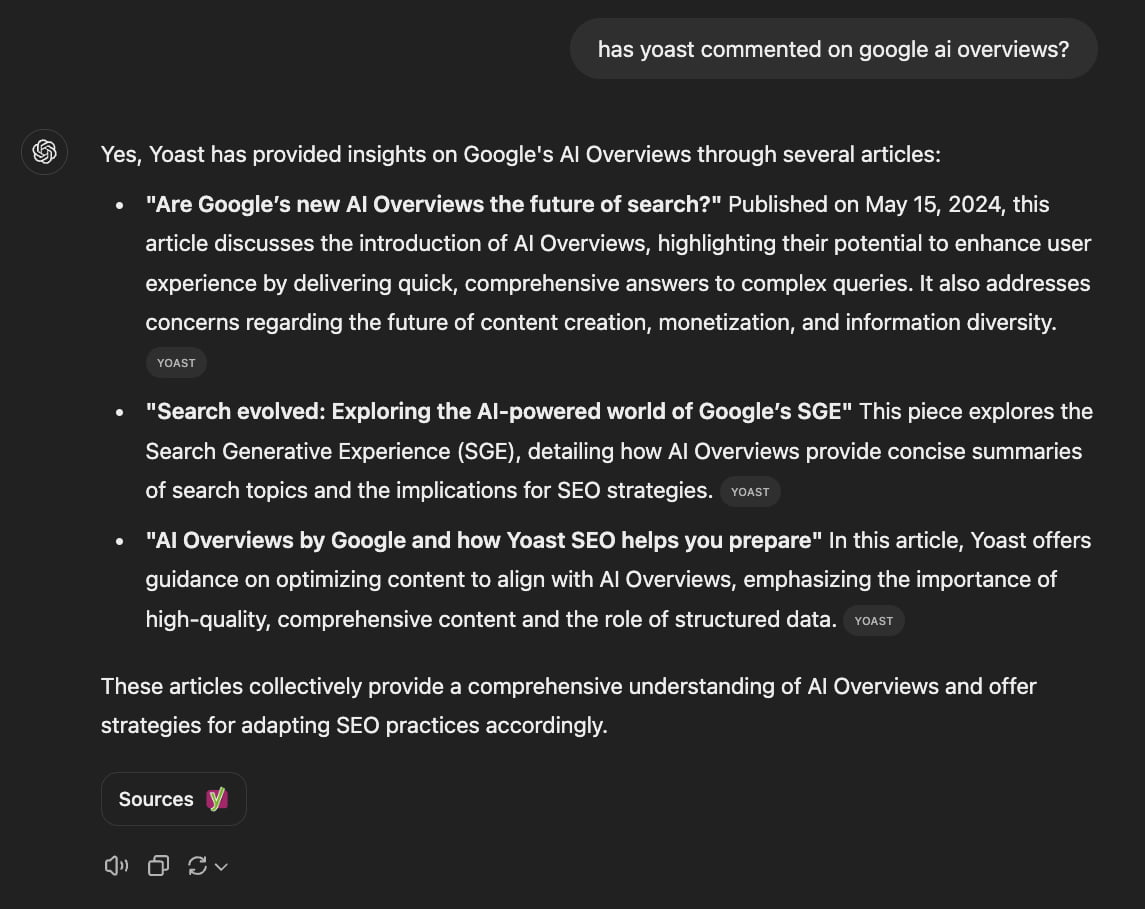
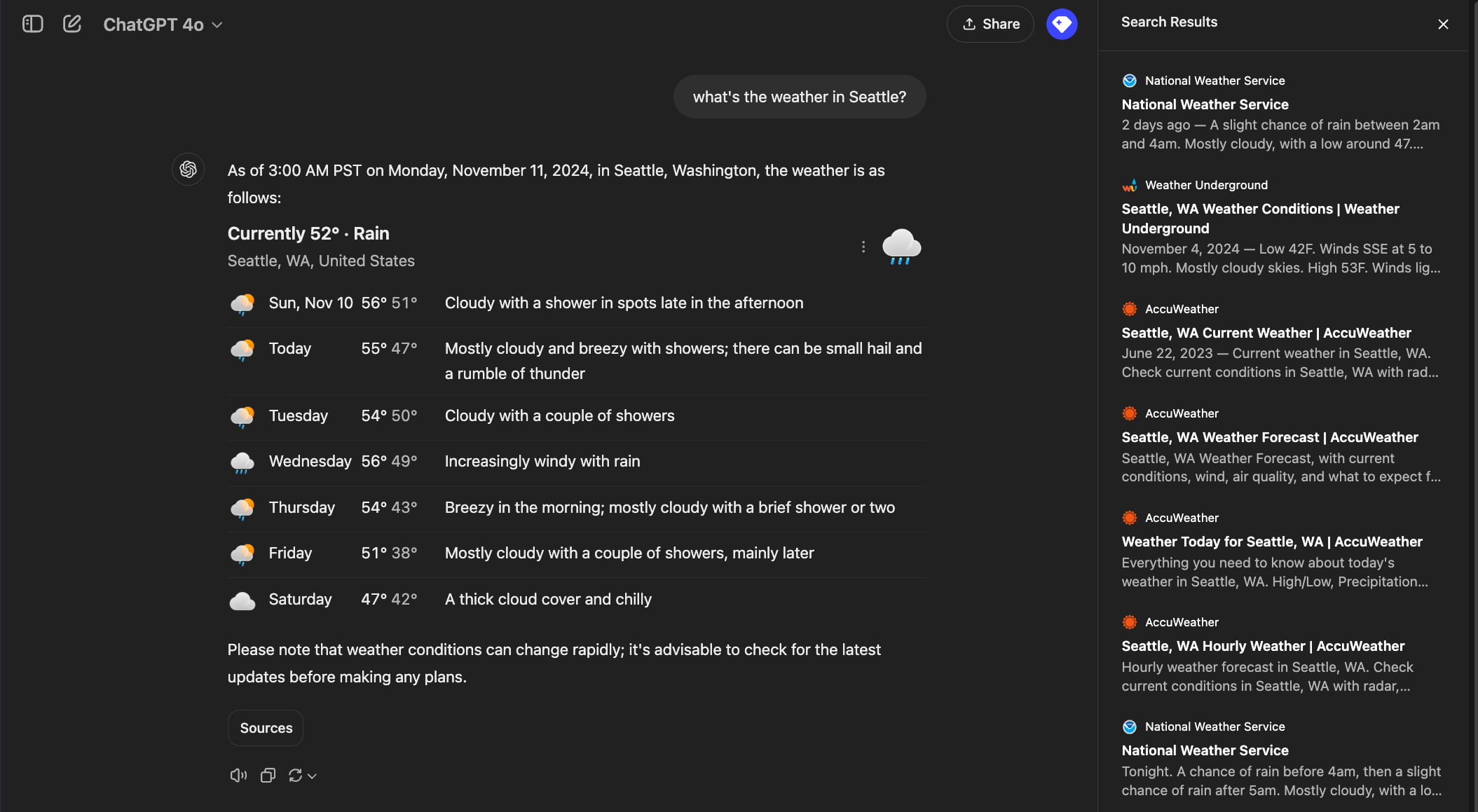
In non-Google news, OpenAI introduced a search feature within ChatGPT in October, which was another groundbreaking development. This addition allows users to access up-to-date web information directly through the chatbot. As a result, OpenAI became a direct competitor to traditional search engines and offered a new way to find information online.
These were just some of the big events that happened in 2024. SEO is one of the most dynamic industries — never a dull moment! But this also means that you must stay informed and be able to adapt to a rapidly changing environment.
The SEO experts in this article
Main themes and SEO insights for 2025
We’ve asked several trusted experts for their insights into what’s happening next in SEO in 2025. We’ll present their answers in themes, starting with the biggest one: the role of AI in SEO.
AI’s role in SEO
Artificial Intelligence is reshaping how businesses and professionals approach SEO. As AI tools become more advanced, they offer both opportunities and challenges.
Content generation and strategy
Arnout Hellemans (independent SEO consultant) believes AI will “massively” transform SEO strategies. However, he says, “The issue is that search engines will leave loads more content out of the index because it’s generic content already there.”
This means businesses must focus on creating unique and valuable content rather than relying solely on AI-generated text. AI can help keep content updated and assist in research, but human oversight remains critical. Hellemans suggests that while AI advances rapidly, “human oversight and rewriting is still really needed.” This balance ensures content remains relevant and engaging.
Streamlining content creation
Lily Ray (VP, SEO Strategy & Research at Amsive) points out that AI can make content creation much more efficient: “More and more companies will find ways to integrate AI into their content creation and optimization strategies. Outside of using AI to generate content, AI can create major efficiencies that streamline the content creation, such as analyzing and summarizing data, producing insights and text content at scale; generating metadata and structured data, and much more. While mass-producing AI content on a large scale can present SEO risks in some cases, using AI creatively and intelligently can dramatically speed up and improve the content ideation and creation process.”
Using AI for more than just content creation
Lily’s colleague Johnny Herge added that content writers will start using AI tools to do more than just produce content. “A new way many SEOs will succeed in 2025 is by using AI to help with the final product besides the copy itself. Coding is made infinitely easier with AI. Using AI will allow writers to make data analytics scripts or scripts that organize data and pull insights that would have previously required a writer to have a different skillset entirely. This likely will lead to writers being able to put forward much further quantifiable insights. ”
Kevin Indig (independent consultant) agrees: “AI + no-code offers SEO and other marketers powerful new workflows around building systems instead of working on single campaigns. I expect us to see many more examples of “systemization” next year, which will lead to smaller SEO teams with larger impact.”
AI and SEO tools will improve
As AI and SEO tools evolve, they will become much smarter. They don’t just identify issues but suggest fixes, making them incredibly valuable. As Kyle Risley (Senior SEO Lead at Shopify) says, “SEO tools will evolve to be more proactive, shifting from merely identifying issues to offering comprehensive solutions. For small businesses with limited time and resources, these recommendations can help improve site quality, even without specialized SEO knowledge. Instead of simply noting “Your title tag is too short,” tools will suggest “Your title tag is too short. Click here to implement a better one.”
AI agents and AI brandbuilding
Jes Scholz (independent Growth Marketing Consultant and SEO Futurist) says, “AI agents will be all the hype, but very few SEOs will actually change their strategy. Only the bold will have the buy-in to take tactics to the cutting edge. But this will be needed as LLM-powered surfaces (AI Overviews, ChatGPT, etc.) start slowly but steadily eating into traditional search. Quick win AI visibility tactics, like best of listicles, will rise and fall like the meta keyword tag of old. Brand building on popular RAGd platforms will likely emerge as a dependable strategy. But no matter what, now is the time you can win the HoM/CMO/CEOs attention.”
Google’s AI Overviews will evolve
Kevin Indig also comments on the evolution of Google’s AI Overviews: “I expect AIOs to morph into other formats next year, similar to how they contain products in shopping. Right now, they look like Featured Snippets, but I expect Google to keep iterating. I also expect them to roll AIOs out even further to monetizable queries, widening the gap between what’s measurable and what’s happening in the search results even more.”
Mark Williams-Cook (SEO Director at Candour) adds: “We’ve long seen the trend of Google trying to keep searchers on their SERP, and with their recent announcement they have reduced the cost of generating AIOs by 90%, I think it’s obvious we’re only going to see more of them. However, AI in the form of LLMs does open new doors, especially with content creation, without falling into the no-value trap of having AI write your content for you.”
Yoast SEO expert insights for 2025

Carolyn Shelby – Principal SEO at Yoast
The balancing act of SEO professionals
In 2025, the big shift in SEO will be balancing diversified visibility with unified messaging. As AI-powered platforms, alternative search engines, and social discovery tools like TikTok, ChatGPT Search, and even Reddit increasingly influence how users find information, businesses can no longer rely solely on Google to drive traffic. Success will come from creating a consistent, authoritative presence across these fragmented ecosystems.
SEO professionals will need to ensure brand messaging remains cohesive and trustworthy across all channels while adapting to each platform’s unique requirements. Structured data, multimedia content, and a deep understanding of user intent will become critical to connecting the dots between platforms and maintaining a seamless user experience. In 2025, SEO will evolve into an integrated marketing discipline where visibility and messaging work hand in hand to build lasting trust and engagement.
Adapting to zero-click searches
The rise of zero-click searches is changing how businesses approach SEO. Getting clicks can be harder as users find answers directly on search result pages.
Maintaining visibility
Arnout Hellemans suggests that you “start looking at other platforms (both search engines and AI interfaces) and try to understand how you can be included in their answers (think Claude, ChatGPT, Bing, Brave search engine). By doing this, you can ensure your business remains visible even when traditional clicks decrease.”
Building a brand following
Building a strong brand presence is essential. Arnout advises businesses to focus on “proper marketing, such as building a following or fans. Visibility will start shifting away from Google; I think this is where we will find plenty of opportunities.” Engaging with your audience on social media and other platforms helps maintain interest and loyalty, even if users don’t click through to your site directly.
Leveraging AI and alternative channels
Kyle Risley says, “As clicks become harder to come by in organic search, there are pretty much two options for organic acquisition: hang on to as much of your remaining click share as you can and activate new traffic acquisition channels.” This could mean looking at channels like TikTok and YouTube. These platforms are gaining traction as starting points for user journeys. Businesses can create engaging content on these channels to reach new audiences and drive traffic.
Becoming a source for AI Overviews
Gus Pergolia (Senior SEO Product Manager at Indeed) notes that being a source in AI Overviews can be more relevant than getting clicks: “Imagine searches displaying a brand’s blog as a source (e.g. software listicles). If one of the players is the main source for AI Overviews, they’ve more control over the message vs competitors. Could they change the wording to say better things about them?
“I’d guess many people will see an AI answer mentioning a few brands and what’s being said about them, and later, they will move to each brand’s website to evaluate their options. That specific search was a zero-click, but there’s a new one happening directly to your company’s website.”
“It’s interesting that clicks will decrease, but since AI Overviews are a RAG (AI answers validate with sources), many pages will still have a reason to exist since they’ll validate the AI answer. This is intent-dependent. Many informational, common-knowledge queries won’t require new articles or have a brand impact.”
Reddit is not going away; make use of it
Kevin Indig doesn’t expect Reddit’s growth to slow: “Searchers want connection and a non-commercialized space. I expect Google to improve at showing Reddit posts that are not outdated or thin. The implication is that domains must compete for one less spot since Reddit takes up many top spots in the search results. On the other hand, it becomes a valuable pool of audience insights and engagement. Brands that develop a playbook to grow their visibility on Reddit have a chance to improve their sentiment and create loyal customers.”
Expand your data tracking
Aleyda Solis expects that tracking pixels, SERP features, and clicks vs. no-clicks will become fundamental: “Start monitoring your overall SERP visibility and click behavior: Your SERP features shifts — AI overviews included — pixel visibility from the top, as well as clicks (and no-clicks) shifts per content type and SERP feature, to focus your SEO strategy accordingly.”
Yoast SEO expert insights for 2025

Alex Moss – Principal SEO at Yoast
The evolving role of the SEO: It’s more than just “SEO”
As an SEO professional, I’ve witnessed a dramatic shift in our field, particularly in 2024. While the traditional “SEO” title remains, it has become an increasingly outdated term. Our role is expanding, becoming more multifaceted, and demanding a broader skillset. We’re no longer solely focused on optimizing for Google; we’re becoming Discovery Optimization Experts responsible for ensuring brands are found across the entire digital landscape.
Several factors drive this shift, including the rise of AI-powered search engines like ChatGPT and Perplexity and the growing importance of platforms like TikTok and Reddit as legitimate discovery channels.
Furthermore, the perception of SEO as purely a marketing function is misguided. SEOs bring a unique understanding of the digital ecosystem far beyond traditional marketing. We should be more involved in high-level business decisions that shape a company’s online presence, influencing everything from website design to content strategy to product development.
The future of SEO is exciting, but our value still tends to be underrated. Our skillset will need to expand further yet again, practicing through experimentation.
The rising importance of video content
Video content is becoming a key component of SEO strategies. Its engaging nature offers a unique way to connect with audiences.
Video-first approach
Mark Williams-Cook says, “I expect we’ll see many smaller businesses take a ‘top-down’ approach with content now, meaning they will go video first – and I think this is really smart. Video content is cheap, fast to make, and a natural way to pull real insight out of people. With the tooling we have now, it’s easy to automatically produce transcripts, which in turn, LLMs can rewrite into a more traditional ‘article’ style. This approach means you’ll get the video to share over multiple platforms, which is not only hard for AI to replicate but how a lot of people prefer to engage in content.”
Google’s focus on video content
Lily Ray confirms that “video content is increasingly essential, as Google prominently features YouTube and sometimes TikTok across various surfaces, like Search, Discover, Google News, the Video tab, Short Videos, and more. Site owners should be well-versed in changes to how Google indexes video content and expands their text content into visual formats.”
“As it relates to video indexing, Google now requires that a video be the focus of an indexed watch page for the video to get indexed (“Google indexes videos only from indexed watch pages.”) Using YouTube to host the video is another way to ensure that the video is indexed, but be sure to use VideoObject structured data to “connect” your watch page to the YouTube video for the watch page to get video rich features in search results.”
Interactive engagement
Gareth Hoyle emphasizes that “video will also continue to gain importance due to its interactive nature and engagement. AI video will continue to grow, but like the EEAT signals above, curated and well-engaged real video will help businesses showcase themselves to Google’s algorithm and their current and potential new customers.”
E-commerce SEO shifts
The landscape of e-commerce SEO is evolving, particularly with changes in how Google handles shopping queries. Businesses need to adapt to these shifts to stay competitive.
Google Shopping tab focus
Kevin Indig expects “the new Shopping Tab experience to become the default experience for shopping queries. As we’ve seen before, Google often tests a new experience in the shopping tab and then moves it to the main tab. The implication is that e-commerce SEO becomes more about optimizing product pages as Google becomes the new category page.”
Optimizing product pages
As Google will likely integrate more e-commerce features directly into search results, businesses must optimize their product listings. With the emphasis on product pages, businesses should ensure that these pages are detailed and informative. This includes high-quality images, detailed product descriptions, customer reviews, and clear pricing information. Structured data markup can enhance how products appear in search results, increasing visibility and click-through rates.
Product feed accuracy
Accurate and organized product feeds are crucial. Kyle Risley highlights the importance of having “well-organized and error-free product feeds” as search engines increase the visibility of organic product listings. This requires regularly updating product information and ensuring consistency across platforms.
Adapting to new channels
As consumers begin their shopping journeys on platforms like TikTok and YouTube, businesses should consider expanding their presence on these channels. Creating engaging product videos and leveraging social commerce features can attract new customers and drive traffic.
Sign up for our monthly SEO news webinar
Prepare for the SEO challenges of 2025 with insights from industry experts. Join our free monthly installments of the SEO Update by Yoast to learn strategies that drive results. Reserve your spot today.
Building brand authority
Today, brand authority is vital if you want to perform well in search results. As search engines evolve, they will develop new ways of determining how valuable your brand is. Building a good — human — brand is one of the best ways to stand out from the crowd.
Targeting branded queries
Aleyda Solis emphasizes that it’s all about brand optimization: “Brand optimization becomes key. It’s clear that Google wants to feature real, authoritative brands at the top of the SERPs, which is also helpful for increasing CTR and optimizing conversions. Grow your brand authority by understanding your company brand positioning and considering it in your SEO strategy: Target your branded queries, specify your brand details with structured data, optimize your knowledge panel details, etc.”
Focusing on EEAT
Gareth Hoyle highlights the importance of EEAT (Experience, Expertise, Authoritativeness, Trustworthiness) referenced content: “As Google continues to improve its ability to weed out low-level, auto-produced AI content, EEAT-referenced content will become increasingly important and visible as Google increases trust based on what it knows about the author rather than just the words on the page. I am sure it will be an ongoing battle as spammers and content sites continue to churn out page after page of content, but the personal brand will help the cream rise to the top.”
Local SEO trends
Local SEO is essential for small and medium-sized businesses attracting nearby customers. As we move into 2025, businesses should focus on a few key areas.
Google Business Profile optimization
Keeping an updated and complete Google Business Profile is essential. Freelance SEO expert Arnout Hellemans emphasizes that a “regularly updated Google Business Profile and a fully completed profile will be extremely important.” This means ensuring that all business information is accurate and up-to-date. Regularly adding new photos, responding to customer questions, and posting updates can make your business more appealing to local searchers.
The power of reviews
Customer reviews significantly impact local search rankings. According to Arnout, reviews with the “right sentiment,” particularly those discussing “the services received and results,” are crucial. Encourage satisfied customers to leave positive reviews, highlighting their experiences with your services. Responding to positive and negative reviews shows that you value customer feedback and are committed to improving your business.
User experience (UX) enhancements
Improving user experience is key to boosting SEO performance. A smooth and intuitive website keeps visitors engaged and encourages them to explore more.
Form validation and friction reduction
Arnout Hellemans highlights the importance of “proper form validation on lead forms and checkout.” Ensuring that forms work correctly and are easy to use can prevent user frustration. Make sure users can easily fill out and submit forms without errors.
Removing distractions is also crucial. Arnout advises focusing on “the removal of distractions like pop-ups on every page.” Pop-ups can be annoying and disrupt the browsing experience. Limiting their use or ensuring they’re relevant and easy to close can help maintain user attention.
Leveraging SEO communities
Joining SEO communities can be a game-changer for businesses and professionals looking to enhance their knowledge and network. These communities offer support, insights, and opportunities that can drive growth.
Growth of global SEO communities
Jo Juliana Turnbull (Founder and Marketing Consultant at Turn Global) mentions that by 2025, there will be “the growth of global SEO and digital communities.” This growth is particularly beneficial for smaller brands aiming to build authority. Being part of a community provides access to shared experiences and advice from peers facing similar challenges.
Support and learning opportunities
SEO can often feel isolating, especially in smaller companies where one person handles most of the SEO tasks. Jo Juliana notes that these communities help individuals who “look for external support” as they navigate frequent updates and changes in SEO. Participating in events, webinars, and online forums provides valuable learning opportunities and informs members about the latest trends and techniques.
Building networks and careers
Being active in an SEO community can also open doors to career opportunities. Networking with other professionals can lead to collaborations, job offers, and new projects. Jo Juliana points out that people join communities to “feel and be supported,” learn from one another, and advance their careers.
Conclusion to SEO in 2025
As we move into 2025, staying on top of SEO developments is more important than ever. The events of 2024 have shown us how quickly the landscape can change, from legal rulings and algorithm leaks to shifts in digital strategies. These changes underscore the need for you to remain agile and informed.
Join our monthly SEO news webinar to keep up with these changes and gain deeper insights. Alex and Carolyn — our resident SEO experts — talk you through all the latest developments. It’s a great opportunity to stay informed about the latest trends and strategies. Please sign up today and learn how to navigate SEO in 2025. Let’s continue to learn and adapt together.
Would you happen to have any thoughts about SEO in 2025 to share? Please comment on this post!
Edwin is an experienced strategic content specialist. Before joining Yoast, he worked for a top-tier web design magazine, where he developed a keen understanding of how to create great content.