How People Use Copilot Depends On Device, Microsoft Says via @sejournal, @MattGSouthern

How people use Microsoft Copilot depends on whether they’re at a desk or on their phone.

That is the core theme in the company’s analysis of 37.5 million Copilot conversations sampled between January and September.

The research examines consumer Copilot usage patterns across device types and time of day. The authors say they used machine-based classifiers to categorize conversations by topic and intent without any human review of the messages.

What The Report Says

On mobile, Health and Fitness is the most common topic throughout the day

The authors summarize the split this way:

“On mobile, health is the dominant topic, which is consistent across every hour and every month we observed, with users seeking not just information but also advice.”

Desktop usage follows a different rhythm. Technology leads as the top topic overall, but the researchers report that work-related conversations rise during business hours.

They describe “three distinct modes of interaction: the workday, the constant personal companion, and the introspective night.”

During the workday, the paper says:

  • Between 8 a.m. and 5 p.m., “Work and Career” overtakes “Technology” as the top topic on desktop.
  • Education and science topics rise during business hours compared to nighttime.

Outside business hours, the paper describes a shift toward more personal and reflective topics. For example, it reports that “Religion and Philosophy” rises in rank during late-night hours through dawn.

Programming conversations are more common on weekdays, while gaming rises on weekends. They also note a spike in relationship conversations on Valentine’s Day.

Methodology Caveats

A few limitations are worth keeping in mind.

This is a preprint, so it hasn’t been peer reviewed. It also focuses on consumer Copilot usage and excludes enterprise-authenticated traffic, so it doesn’t describe how Copilot is used inside Microsoft 365 at work.

Finally, the topic and intent labels come from automated classifiers, which means the results reflect how Microsoft’s system groups conversations, not a human-coded review.

Why This Matters

This paper suggests that the use of AI chatbots varies with context. The researchers describe mobile behavior as consistently health-oriented, while desktop behavior is more tied to the workday.

The researchers connect the mobile health pattern to how people use their phones. They write:

“This suggests a device-specific usage pattern where the phone serves as a constant confidant for physical well-being, regardless of the user’s schedule.”

The big takeaway is that “Copilot usage” is not one uniform behavior. Device and time of day appear to shape what people ask for, and how they ask it.

Looking Ahead

Enterprise usage patterns may look different, especially inside Microsoft 365. Any follow-up research that includes workplace contexts, or that validates these patterns outside Microsoft’s own tooling and taxonomy, would help clarify how broadly these findings apply.

Google Releases December 2025 Core Update via @sejournal, @MattGSouthern

Google has released the December 2025 core update, the company confirmed through its Search Status Dashboard.

The rollout began at 9:25 a.m. Pacific Time on December 11, 2025.

This marks Google’s third core update of 2025, following the March and June core updates earlier this year.

What’s New

Google lists the update as an “incident affecting ranking” on its status dashboard.

The company states the rollout “may take up to three weeks to complete.”

Core updates are broad changes to Google’s ranking systems designed to improve search results overall. Unlike specific updates targeting spam or particular ranking factors, core updates affect how Google’s systems assess content across the web.

2025 Core Update Timeline

The December update follows two previous core updates this year.

The March 2025 core update rolled out from March 13-27, taking 14 days to complete. Data from SEO tracking providers suggested volatility similar to the December 2024 core update.

The June 2025 core update ran from June 30 to July 17, lasting about 16 days. SEO data providers indicated it was one of the larger core updates in recent memory. Some sites previously hit by the September 2023 Helpful Content Update saw partial recoveries during this rollout.

Documentation Update On Continuous Changes

Two days before this core update, Google updated its core updates documentation with new language about ongoing algorithm changes.

The updated documentation now states:

“However, you don’t necessarily have to wait for a major core update to see the effect of your improvements. We’re continually making updates to our search algorithms, including smaller core updates. These updates are not announced because they aren’t widely noticeable, but they are another way that your content can see a rise in position (if you’ve made improvements).”

Google explained that the addition was meant to clarify that content improvements can lead to ranking changes without waiting for the next announced update.

Why This Matters

If you notice ranking fluctuations over the coming weeks, this update is likely a major factor.

Core updates can shift rankings for pages that weren’t doing anything wrong. Google has consistently stated that pages losing visibility after a core update don’t necessarily have problems to fix. The systems are reassessing content relative to what else is available.

The documentation update is a reminder that rankings can change between major updates as Google rolls out smaller core changes behind the scenes.

Looking Ahead

Google will update the Search Status Dashboard when the rollout is complete.

Monitor your rankings and traffic over the next three weeks. If you see changes, document when they occurred relative to the rollout timeline.

Based on 2025’s previous updates, completion typically takes two to three weeks. Google will confirm completion through the dashboard and its Search Central social accounts.

YouTube Adds Comments To Shorts Ads, Expands To Mobile Web via @sejournal, @MattGSouthern

YouTube adds comment sections to eligible Shorts ads, lets creators link to brand websites, and expands Shorts ads to mobile web browsers.

  • Eligible Shorts ads can now display comment sections, matching the experience of organic Shorts content.
  • Shorts creators can link directly to brand websites when producing branded content.
  • Shorts ads now serve on mobile web browsers, extending beyond the mobile app.
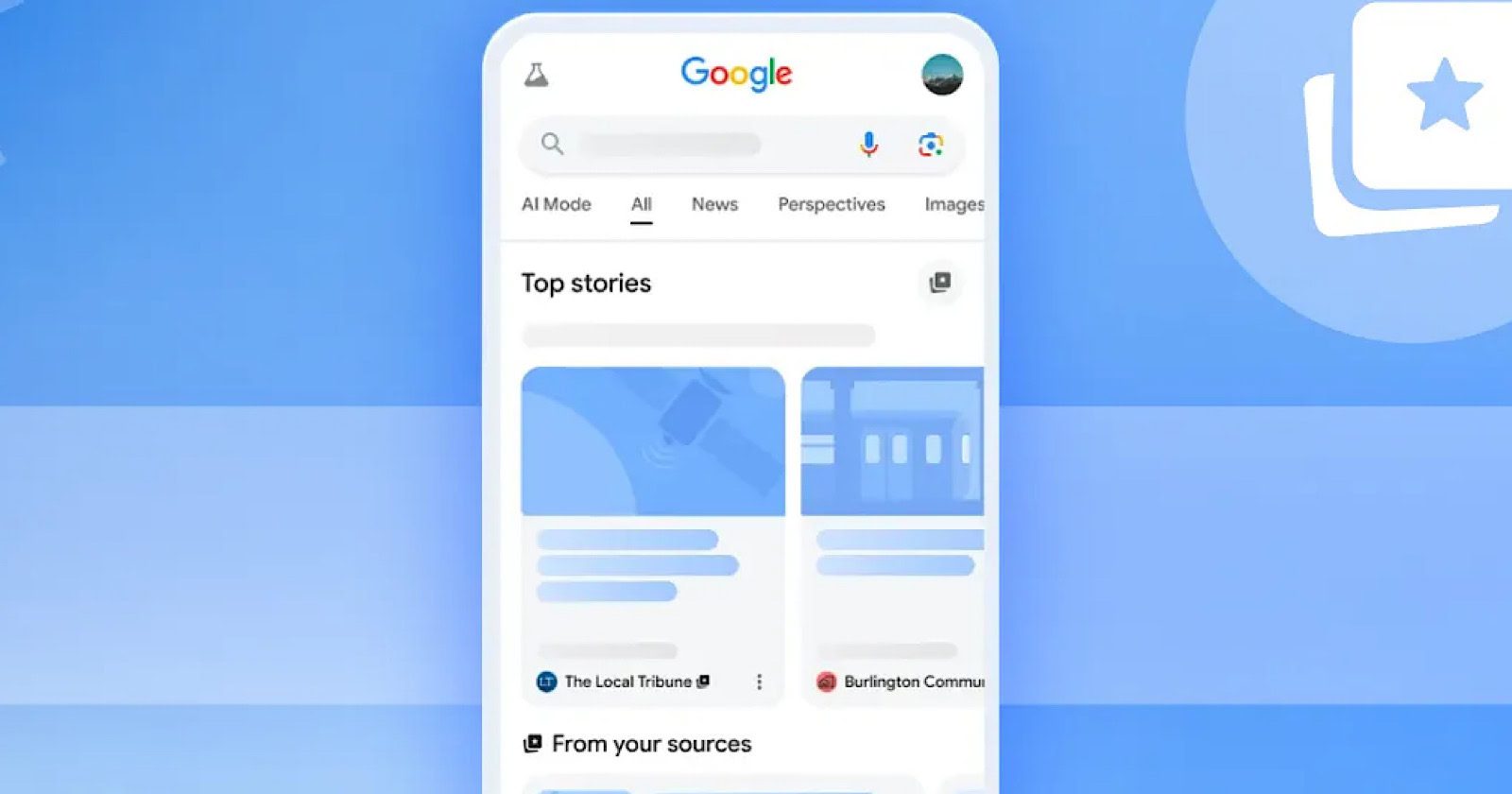
Google Expands Preferred Sources & Publisher AI Partnerships via @sejournal, @MattGSouthern

Google is expanding its Preferred Sources feature to English-language users worldwide and launching a pilot program to test AI-powered features with major news publishers.

The announcement includes updates to how links appear in AI Mode and a new feature that will highlight content from users’ news subscriptions.

Preferred Sources Goes Global

Preferred Sources in Search lets users customize Top Stories to see more from their favorite outlets. Google is now rolling it out globally for English-language users, with all supported languages following early next year.

Google shared usage data from the feature’s initial rollout. Nearly 90,000 unique sources have been selected by users, ranging from local blogs to global news outlets. Users who pick a preferred source click to that site twice as often on average.

Subscription Highlighting

A new feature will highlight links from users’ paid news subscriptions in search results. Google will also prioritize links from subscribed publications and show them in a dedicated carousel.

The feature launches first in the Gemini app in the coming weeks. AI Overviews and AI Mode will follow, though Google didn’t provide a timeline.

AI Mode Link Updates

Google is increasing the number of inline links in AI Mode and updating their design. The company is also adding contextual introductions to embedded links. These are short statements explaining why a particular link might be useful.

Web Guide, which organizes links into topic groups using AI, is now twice as fast and appearing on more searches for users opted into the experiment.

Publisher AI Pilot Program

Google announced a commercial partnership pilot with publishers including Der Spiegel, El País, Folha de S. Paulo, Infobae, Kompas, The Guardian, The Times of India, The Washington Examiner, and The Washington Post.

The pilot will test AI-powered features in Google News. These include article overviews on participating publications’ Google News pages and audio briefings for those who prefer listening. Google says these features will include attribution and link to articles.

Separate partnerships with Estadão, Antara, Yonhap, and The Associated Press will provide real-time information for the Gemini app.

Google says it has partnered with over 3,000 publications, platforms, and content providers in more than 50 countries in the last few years.

Why This Matters

If you’ve been watching how Google handles publisher relationships in the AI era, this announcement outlines their current approach. The Preferred Sources data suggests users who customize their sources engage more with those sites.

The subscription highlighting feature could affect how your subscribed audiences find your content across Google’s surfaces.

Looking Ahead

Preferred Sources is available now for English-language users globally. Full language support arrives early 2026.

The subscription highlighting feature starts in the Gemini app in the coming weeks. The publisher AI pilot has begun with participating publications in Google News. Google didn’t provide timelines for when AI Mode and AI Overviews will get subscription highlighting.

Google Hit By EU Probe Into Unfair Use Of Online Content via @sejournal, @martinibuster

The European Commission has launched an antitrust inquiry into Google to determine whether the company has violated EU competition rules, partly focusing on whether Google has used creator and publisher content in ways that leave publishers unable to refuse such use without risking their search traffic. It is also looking into whether Google is granting itself privileged access to YouTube content for AI in a way that leaves competitors at a disadvantage.

How Google’s Terms May Pressure Publishers and Creators

The Commission is focusing on publisher content is used by AI Overviews and AI Mode to generate answers but without a way to compensate the publishers or for them to opt out of having their content used to generate summaries.

They write:

“The Commission will investigate to what extent the generation of AI Overviews and AI Mode by Google is based on web publishers’ content without appropriate compensation for that, and without the possibility for publishers to refuse without losing access to Google Search. Indeed, many publishers depend on Google Search for user traffic, and they do not want to risk losing access to it.”

This raises concerns that Google may be using publisher content in its AI products without offering a workable opt-out, leaving publishers who rely on Search traffic with little choice but to accept this use.

Use of YouTube Content to Train Google’s AI Models

The Commission is also examining Google’s use of YouTube videos and other creator content for training its generative AI models. According to the announcement, creators “have an obligation to grant Google permission to use their data for different purposes, including for training generative AI models,” and cannot upload content while withholding that permission. Google provides no payment for this use while blocking rival AI developers from training on YouTube content under YouTube’s policies.

This mix of mandatory access for Google, limits on competitors, and no payment for creators underpins the Commission’s concern that Google may be giving itself preferred access to YouTube content in a way that may harm the wider AI market.

The Commission has notified Google that it has opened an investigation into whether they have breached EU competition rules prohibiting the abuse of a dominant position.

Featured Image by Shutterstock/Mo Arbid

Google Confirms Smaller Core Updates Happen Continuously via @sejournal, @MattGSouthern

Google updated its core updates documentation to say smaller core updates happen on an ongoing basis, so sites can improve without waiting for named updates.

  • Google explicitly confirms it makes “smaller core updates” beyond the named updates announced several times per year.
  • Sites that improve their content can see ranking gains without waiting for the next major core update to roll out.
  • The documentation change addresses whether recovery between named updates is possible.
YouTube AI Enforcement Questioned As Channels Get Restored via @sejournal, @MattGSouthern

YouTube creators are raising concerns about the platform’s AI-driven moderation system. Multiple accounts describe sudden channel terminations for “spam, deceptive practices and scams,” followed by rapid appeal rejections with templated responses.

In some cases, channels have been restored only after the creator generated attention on X or Reddit. YouTube’s message to creators states the company has “not identified any widespread issues” with channel terminations and says only “a small percentage” of enforcement actions are reversed.

There’s a gap between YouTube’s position and creator experiences that’s driving a debate.

What Creators Are Reporting

The pattern appearing across X and Reddit threads follows a similar sequence.

Channels receive termination notices citing “spam, deceptive practices and scams.” Appeals get rejected within hours, sometimes minutes, with generic language. When channels are restored, creators say they receive no explanation of what triggered the ban or how to prevent future issues.

One documented case comes from YouTube creator “Chase Car,” who runs an EV news channel. In a detailed post on r/YouTubeCreators, they describe a sequence where their channel was demonetized by an automated system, cleared by a human reviewer, then terminated months later for spam.

The creator says they escalated the case to an EU-certified dispute body under the Digital Services Act. According to their account, the decision found the termination “was not rightful.” As of their most recent update, YouTube had not acted on the ruling.

Channels Restored After Public Attention

A subset of terminated channels have been reinstated after their cases gained visibility on social media.

Film analysis channel Final Verdict shared a thread documenting a sudden spam-related termination and later reinstatement after posts on X gained traction.

True crime channel The Dark Archive had their channel removed and later restored after tagging TeamYouTube publicly.

Streamer ProkoTV said their channel was restricted from live streaming after a spam warning. TeamYouTube later acknowledged an error and restored access.

These reversals confirm that some enforcement actions are incorrect by YouTube’s own standards. They also suggest that escalation on X can function as a parallel appeal route.

YouTube Acknowledges Some Errors

In a few cases, YouTube or its representatives have publicly admitted mistakes.

Dexerto reported on a creator whose 100,000-plus subscriber channel was banned over a comment they wrote on a different account at age 13. YouTube eventually apologized, telling the creator the ban “was a mistake on our end.”

Tech YouTuber Enderman, with 350,000 subscribers, said an automated system shut down their channel after linking it to an unrelated banned account. Dexerto highlighted the case after it spread on X.

YouTube’s Official Position

YouTube frames its enforcement differently than creators describe.

The company’s spam, deceptive practices, and scams policy explains why it takes action on fraud, impersonation, fake engagement, and misleading metadata. The policy notes that YouTube may act at the channel level if an account exists “primarily” to violate rules.

In a FAQ post, YouTube says the “vast majority” of terminations are upheld on appeal. The company says it’s “confident” in its processes while acknowledging “a handful” of incorrect terminations that were later reversed.

YouTube also offers a “Second Chances” pilot program that allows some creators to start new channels if they meet specific criteria and were terminated more than a year ago. The program doesn’t restore lost videos or subscribers.

YouTube’s CEO recently indicated the company plans to expand AI moderation tools. In an interview with Time, he said YouTube will proceed with expanded AI enforcement despite creator concerns.

Why This Matters

If you rely on YouTube as a core channel, these accounts raise practical concerns. A channel termination removes your entire presence, including subscribers and revenue potential. When appeals feel automated, you have limited visibility into what triggered the enforcement.

The Chase Car timeline shows an AI system can overturn a positive human verdict months later. Creators without large followings may have fewer options for escalation if formal appeals fail.

Looking Ahead

The EU’s Digital Services Act gives European users access to certified dispute bodies for moderation decisions. The Chase Car case could test how platforms respond to unfavorable rulings under that system.

YouTube says its appeals process is the correct channel for enforcement disputes. The company has not announced changes to its moderation approach in response to creator complaints.

Monitor YouTube’s official help community for any updates to appeal procedures or policy clarifications.


Featured Image: T. Schneider/Shutterstock

Google Disputes Report Claiming Ads Are Coming To Gemini In 2026 via @sejournal, @MattGSouthern

Google is publicly pushing back on an Adweek report that claimed the company told advertising clients it plans to bring ads to its Gemini AI chatbot next year.

Dan Taylor, Google’s Vice President of Global Ads, responded directly on X shortly after the story published, calling the report inaccurate and denying any plans to monetize the Gemini app.

The Original Report

Adweek’s Trishla Ostwal reported that Google had informed advertising clients about plans to introduce ads to Gemini. According to the exclusive story, Google representatives held calls with at least two advertising clients indicating that ad placements in Gemini were targeted for a 2026 rollout.

The agency buyers who spoke to Adweek remained anonymous. They said details on ad formats, pricing, and testing were unclear, and that Google had not shared prototypes or technical specifications about how ads would appear in the chatbot.

Notably, the report said this plan would be separate from advertisements in AI Mode, Google’s AI-powered search experience.

Google’s Response

Taylor disputed the claims publicly on X, writing: “This story is based on uninformed, anonymous sources who are making inaccurate claims. There are no ads in the Gemini app and there are no current plans to change that.”

Google’s official AdsLiaison account amplified the denial, reiterating that there are no ads in the Gemini app and no current plans to add them, and pointing out that ads currently appear in AI Overviews in English in the US, with expansion to more English-speaking countries, and are being tested in AI Mode.

Logan Kilpatrick, who works on Google’s Gemini team, responded to Taylor’s post with “thanks for clarifying!!”

Where Google Is Monetizing AI

While the Gemini app itself remains ad-free according to Google, the company is actively monetizing other AI-powered search experiences.

Google began showing ads in AI Overviews earlier this year and has been expanding that program to additional English-speaking countries. The company also continues testing advertisements within AI Mode.

Why This Matters

The question of how AI chatbots will be monetized has become increasingly relevant as these products gain mainstream adoption. Google, OpenAI, and other AI companies face pressure to generate revenue from expensive-to-run conversational AI products.

Just last week, code discovered in ChatGPT’s Android app suggested OpenAI may be building an advertising framework, though the company has not confirmed any plans to introduce ads.

For now, Google maintains that Gemini users won’t see ads in the chatbot app. Whether that position changes as the AI landscape evolves remains to be seen.

What Google’s 2025 Year in Review Tells Us About the Future of PPC via @sejournal, @brookeosmundson

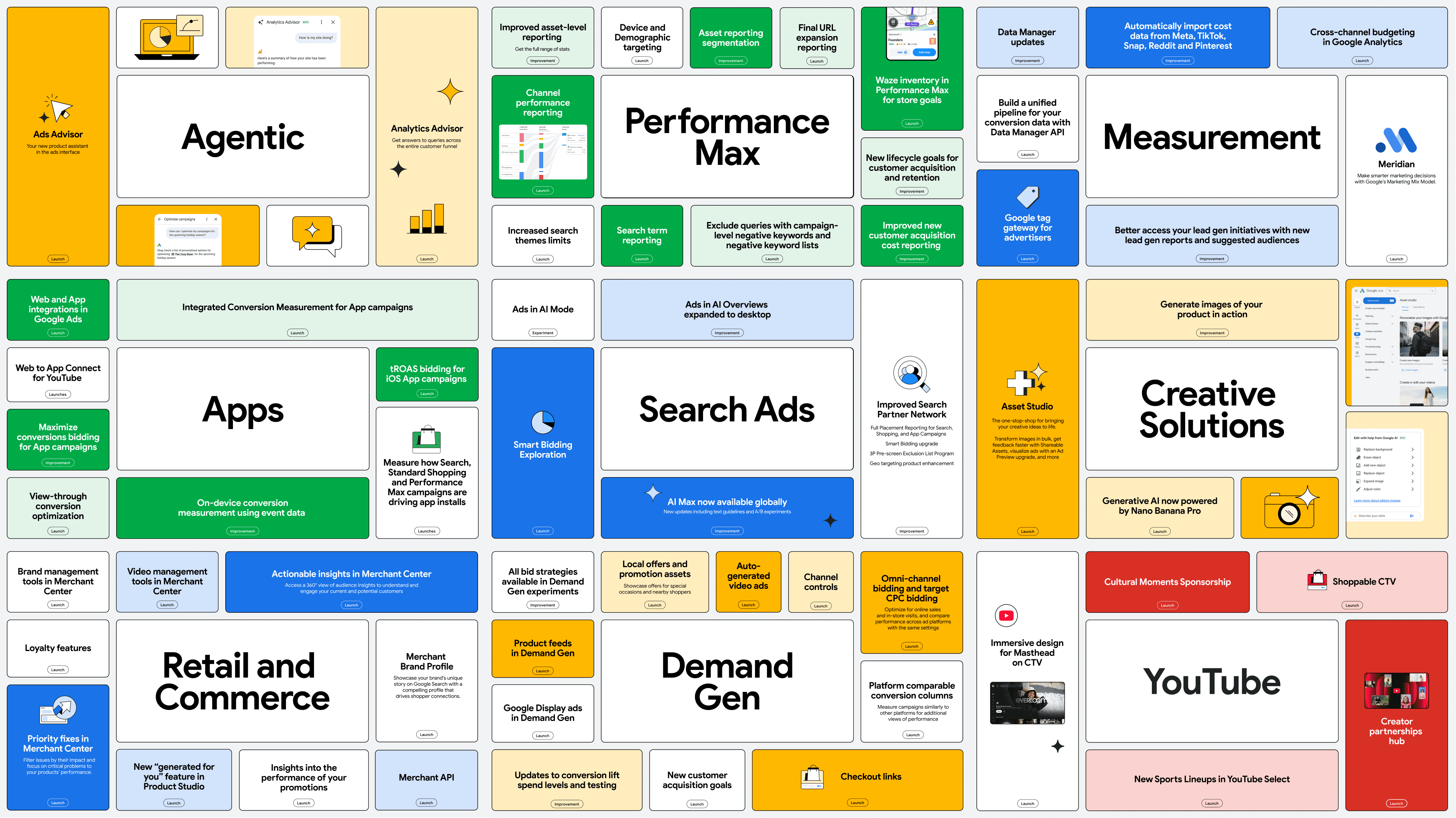
As December is quickly coming to a close, Google released its 2025 Year in Review, with a thorough list of product launches, upgrades, improvements all driven by AI.

These updates showed up across the board in Search, YouTube, Demand Gen, Performance Max, Merchant Center, and more.

Some updates felt like natural progressions from earlier releases. Others pushed Google’s vision for a more automated, more visual, and more data-informed ad system into clearer view.

For PPC managers and directors who spent the year testing generative AI, adjusting to new reporting controls, and rethinking creative workflows, Google’s recap is a useful way to understand what actually shaped paid media in 2025 and what still needs refinement.

The Biggest Releases of 2025

Before breaking down the themes and implications, here is a snapshot of the major updates Google highlighted in its year-end recap:

  • Ads in AI Overviews expanded to desktop and new global markets
  • AI Mode opened new mid-funnel inventory for deeper conversational queries
  • The launch of AI Max for Search, with new beta features being released in Q1 2026
  • Smart Bidding Exploration allowed for flexible ROAS targets
  • Full placement reporting expanded across the Search Partner Network
  • YouTube released Shoppable CTV, new Cultural Moments Sponsorship, new sports lineups, and a creator partnerships hub
  • Demand Gen added product feeds, target CPC bidding, campaign-level experiments, and channel controls
  • PMax gained channel-level reporting, full Search Terms, asset-level metrics, negative keyword lists, device targeting, and expanded search themes
  • App campaigns improved iOS measurement, Web-to-App flows, ROAS bidding, and conversion modeling
  • Merchant Center gained brand profiles, AI-powered visuals, loyalty tools, and priority fixes
  • Meridian introduced an open-sourced MMM approach with lower lift thresholds
  • Data Manager and Google tag gateway made data accuracy and consolidation easier
  • Asset Studio launched inside Google Ads with Nano Banana Pro powering image and video creation
  • Ads Advisor and Analytics Advisor delivered guided support for campaign building and analysis

Taken together, these updates show Google’s ongoing effort to blend automation with advertiser control, though some areas are maturing faster than others.

Below are details of some of the key updates worth digging into more.

How Google Repositioned Search for the Next Era

Google spent much of 2025 redefining how Search works, particularly around discovery moments and conversational intent. These shifts matter because they determine where ads can appear and how early advertisers can influence a buying journey.

Ads in AI Overviews

Google expanded Ads in AI Overviews across desktop and global markets. This placement sits inside AI-generated summaries and gives advertisers a chance to appear before users have clicked into a traditional results page. While Ads in AI Overviews was announced earlier this year, it wasn’t until the later part of 2025 where users were sharing their screenshots in the wild.

AI Mode

Still in testing, AI Mode answers multi-step or nuanced queries with structured responses. Google now allows ads to appear below and within these responses when relevant. These moments previously had no paid inventory, so this is a new mid-funnel opportunity for advertisers who want to influence complex decision-making.

AI Max for Search

AI Max extended its feature set and remains one of Google’s fastest-growing Search products. Experiments, creative guidelines, and text customization give advertisers more agency over AI-generated assets. The challenge is managing expectations. AI Max simplifies setup but still requires strategic human oversight to shape relevance and cost efficiency.

Smart Bidding Exploration

Google cited an average 18 percent increase in unique converting query categories and a 19 percent conversion lift when advertisers used flexible ROAS targets. For brands that struggle to expand reach without overspending, this may become one of the most practical levers in 2026.

YouTube and Demand Gen Continued Their Growth Spurt

YouTube delivered some of Google’s most impactful upgrades this year. Shoppable CTV allows viewers to browse products directly on the big screen or pass the experience to their phone.

Cultural Moments Sponsorships created a packaged approach for brands that want presence during tentpole events. With new sports lineups across college and women’s leagues, Google is betting heavily on live and fandom-driven environments.

Demand Gen also saw meaningful improvement. Google noted a 26 percent increase in conversions per dollar driven by more than 60 AI-powered enhancements.

Combined with product feeds, channel controls, and full compatibility with Custom Experiments, Demand Gen now feels like a maturing format rather than an experimental successor to Discovery.

Performance Max Became More Transparent and More Controllable

Performance Max received a set of long overdue reporting and control features that changed how many advertisers worked inside the platform.

Channel reporting, full Search terms, asset-level insights, customer acquisition visibility, and segmentation options let PPC managers understand where performance originates. Negative keyword lists, device targeting, demographic controls, and expanded search themes finally gave advertisers the ability to tighten or expand performance intentionally rather than reactively.

For many teams, this was the year PMax felt less like a ‘take-it-or-leave-it’ automation tool and more like a high-powered campaign framework that needs guidance rather than blind trust.

Creativity Became a Central Focus

One theme that Google emphasized more strongly this year was creative quality and workflow efficiency. With Asset Studio and Nano Banana Pro, Google is signaling that creative is no longer a side component of performance. It is a core lever.

Asset Studio

The new in-platform creative workspace lets advertisers generate, edit, and review creative directly inside Google Ads. Nano Banana Pro now supports:

  • Natural language editing
  • Seasonal variations
  • Photorealistic product scenes
  • Multi-product compositions
  • Bulk image generation
  • Shareable assets for team review

For lean teams that struggle to produce enough visual variation for PMax, Demand Gen, or YouTube, this removes a major bottleneck. The quality still varies depending on brand style, texture, or lighting, but Google is clearly positioning AI-assisted creative as a foundational element in campaign setup.

Ad Preview and Workflow Support

Updated previews show ads across channels without guesswork, and shareable previews remove a lot of friction with internal stakeholders. This is one of Google’s more underrated releases because it directly solves a common workflow challenge: aligning creative teams and media teams without lengthy back-and-forth.

Google also introduced Ads Advisor, a guided AI assistant for campaign building and troubleshooting, which reduces operational burden for teams who manage multiple accounts or frequent experiments.

Why the iOS Measurement Updates Are More Important Than It Looks

Buried within Google’s 2025 recap was an update most marketers will skim past, but app-focused advertisers immediately saw as one of the most meaningful improvements of the year.

Google expanded Web-to-App acquisition measurement for iOS, allowing advertisers to track when a user moves from a web campaign into an app install that ultimately leads to a valuable in-app action.

On the surface, this reads like a small reporting enhancement. In practice, it solves one of the most frustrating gaps in iOS app advertising since ATT went live in 2021.

For most advertisers who run traditional lead-gen or ecommerce campaigns, this update will feel distant. But for app marketers, it finally closes the loop on a user journey that used to look fragmented, inconsistent, or completely invisible.

Here’s what makes it so important:

  1. It brings back visibility that app advertisers lost years ago. After Apple’s App Tracking Transparency rollout, many advertisers lost the ability to see how web campaigns influenced app installs. That meant paid Search, Shopping, and even PMax often undervalued app growth, because installs and in-app actions didn’t get attributed correctly. Google’s new iOS Web-to-App measurement begins restoring that path, which helps app campaigns receive credit where it was previously impossible.
  2. It allows advertisers to optimize for higher-value actions, not just installs. Before this update, the disconnect between web traffic and app conversions often pushed advertisers toward shallow optimization goals. Now, Google can tie in-app action quality back to upstream campaigns. For app marketers, that means smarter bidding. For finance teams, it means cleaner forecasting.
  3. It makes cross-surface strategy practical again. Many app brands advertise across Search, YouTube, Shopping, and PMax but had to treat those touchpoints separately. This update reopens the door to a unified approach, where creative, bidding strategies, and budgets can align with actual user behavior instead of being fragmented by platform limitations.

App-focused teams have been navigating blind spots for years. They know how often web traffic influences app installs. They’ve seen how many high-value users start on mobile web before downloading. Without visibility, they’ve had to rely on directional data, blended reporting, or costly workarounds through MMP partners.

This update doesn’t solve every attribution limitation on iOS, but it does give app advertisers something they’ve wanted since ATT: a path to understanding the real value of web-driven app conversions.

It creates a more complete and realistic measurement loop, which is exactly what Google needs if it wants advertisers to invest confidently in App campaigns across Search, YouTube, Demand Gen, and Performance Max in 2026.

Where There’s Room for Improvement

A year-in-review should not only highlight progress but also acknowledge where advertisers still experience friction. My goal here is objective critique without negativity.

AI Overviews need clearer consistency

Advertisers still struggle to predict when AI Overviews will appear and how often ads surface within them. Before this becomes a must-have surface, Google needs more stability and clearer guidelines.

Creative control in AI Max is not fully predictable

Google is expanding customization settings, but advertisers still see unexpected rewrites or over-simplifications. More transparency around why AI chooses certain variations would help creative teams align expectations.

Asset Studio output varies by category

While the new tools are fast and flexible, certain product types still generate inconsistent or overly stylized visuals. This will improve, but brands that rely on strict visual identity may need hybrid workflows for now.

Measurement unification is still a challenge

Meridian is promising, but advertisers want easier alignment between Google’s lift results and those from Meta, Amazon, or independent MMM tools. The industry needs consistency, not isolated attribution logic.

These gaps do not diminish the significance of Google’s updates, but they remind us that AI-led advertising is still developing and requires both experimentation and skepticism.

Wrapping Up the Year

Google’s 2025 recap showed a platform that is evolving quickly but maturing steadily. Automation is no longer something advertisers fear or resist. The conversation has shifted to how PPC teams can direct these systems with clearer insight, smarter testing, and more intentional creative work.

If 2025 was about unlocking visibility and control, 2026 will be about applying those tools with discipline. Marketers who lean into experimentation, creative differentiation, and data strength will be the ones who stay ahead as Google’s ad ecosystem continues to change.

What was your biggest takeaway from Google’s updates this year?

Google Tests Social Channel Insights In Search Console via @sejournal, @MattGSouthern

Google Search Console is testing a feature that shows how linked social channels perform in Google Search, including clicks, impressions, and queries.

  • Search Console Insights now includes performance data for social channels Google has automatically linked to your website.
  • The feature shows clicks, impressions, top queries, and trending content for connected social profiles.
  • This is an early experiment available only to a limited set of sites with auto-detected social channels.