Jill Whalen’s SEO Legacy Still Shapes The Industry via @sejournal, @martinibuster

Jill Whalen, a true SEO pioneer, recently passed away. Although she has been retired for over ten years, her influence continues in the marketing-first SEO practices she advocated that are gradually gaining ground thirty years after she first championed that approach to ranking websites.

Contributions To SEO

As part of the first wave of SEO, her contribution to search marketing was to prove that a marketing-first approach was sustainable as a long-term strategy. While that style of SEO is described as white hat, that term has lost meaning as many of the SEOs with the biggest and whitest hats tended to be algorithm chasers jumping from strategy to strategy, something Whalen was not.

Many of the second-wave SEOs from my generation focused on testing the limits of search engine algorithms and reading research papers to better understand how search engines worked. Whalen remained steadily focused on creating the kind of content search engines were trying to rank and used responsible link building to promote it, which turned out to be a winning strategy.

Screenshot Of Jill Whalen On SEO Pioneers Show

Left to right: Jill Whalen, Shelley Walsh

Her approach may have felt old-fashioned to some in the industry at the time, but she recently observed in an interview on Shelley Walsh’s SEO Pioneers show that she felt vindicated after Google’s Panda and Penguin algorithms, which rocked the search marketing industry but left her clients’ top-ranked websites untouched. Indeed, the entire SEO industry is coming around to Jill’s approach to SEO.

Whalen retired in 2013 and turned her attention to subjects that mattered to her, but her influence has always been felt through the thousands of SEOs who learned from her and who continue to pass those traditions on.

How Jill Whalen Influenced Top SEOs

Christine Churchill

Christine Churchill (LinkedIn profile), a leading search marketer, explains how she met Jill Whalen and how she influenced her life and career.

“Wow, this loss really stings! I first met Jill at a speakers’ gathering that I almost skipped because I was dreading feeling out of place. I told myself to just go for five minutes, and when I walked in, I spotted Jill right away – the only other woman there. She flashed me a warm smile, and I found my way over to the bar where she was sitting. I was so nervous, but I was completely taken aback when she mentioned she had seen me speak at an earlier conference and actually knew who I was!

We ended up chatting until the bar closed, and from that night on, we bonded instantly. Jill had this incredible gift of helping us believe in ourselves and encouraging us to shine. Because of her, I also met amazing people like Debra Mastaler, Scottie Claibourne, Karon Thackston, Kim Krause Berg and so many more kindred spirits. We all became friendly faces in the crowd, supporting each other in countless ways.

Jill truly changed my life, and I got to travel the world alongside her! Even when she retired and we didn’t see each other as much, I always knew that if I needed a friend, she’d be just a call away.

I still remember that one conference (I think it was in Pennsylvania) where we met this fascinating guy who talked to ghosts. We ended up staying at the bar yet again, discussing spirits and the signs our departed loved ones send us. It feels like Jill is with all of us now, saying goodbye and cheering us on to keep blooming.

Thank you, Jill, for your incredible friendship and support. I’ll cherish my memories of you forever!”

Debra Mastaler

My good friend Debra Mastaler (LinkedIn profile) was one of Whalen’s early collaborators, handling link building. Debra shares how Jill was instrumental in shaping her career in SEO:

“I’ve been involved with the SEO industry since 1999, I started by owning a directory of organic food and clothing. When I started to rank well for a large number of money terms, business owners advertising in my directory asked if I could I help them “optimize” their sites. I had no clue what that meant so I started looking around for information and met Jill.

Jill took the time to explain what I was doing was called link building and how important it was. One thing led to another and she hired me to do all her link work and got me on the speaking circuit. About a year later, I felt confident enough to work on my own and I launched Alliance-Link.

Over the years, we traveled together, went to conferences, ran an SEO forum, published content together, shared family vacations and spoke almost every day. We drifted after she left the SEO industry but her mark on my life has never faded.”

Image of Debra Mastaler, Christine Churchill, and Jill WhalenLeft to right: Debra Mastaler, Christine Churchill, Jill Whalen

Michael Bonfils

Multilingual International SEO Michael Bonfils (LinkedIn profile), also an SEO pioneer himself, nce before SEO described who she was and how she influenced him.

“Twenty five years ago while attending one of the first SES (Search Engine Strategies) conferences in San Francisco, I noticed this incredibly enthusiastic lady who was leading a roundtable discussion about content. There were three things that struck me that I never forget.

  • First, she was one of the few women in a sea of nerdy dudes but as nerdy as she was, she fit perfectly in with everyone else.
  • Second, she was nervous about speaking, she didn’t say it, but I can see it. I could feel it. It made me happy to know that I wasn’t alone and it was that nervousness that drew me to be one of the first few that sat around her roundtable.
  • Third, she explained the power of content in SEO better than anyone else. While everyone was focused on tricking the search engines, she was focused on feeding the search engines exactly what they wanted (I was working for a search engine at the time, so this was important for me to hear.)

From the beginning of her career, I’ve had so much respect for Jill that her and I over the decades would often talk about the good old days when everyone and everything in SEO was so uncertain. When she retired, I told her how bummed I was and then I of course accused her of faking it.

I am really going to miss Jill and just broken hearted to learn of her passing. She was truly a legend.”

Duane Forrester

Duane Forrester (LinkedIn profile, formerly of Bing) described how Jill Whalen helped him understand how to explain complex ideas in ways that were understandable to a wide audience.

“Yeah, safe to say that Jill influenced my sense of direction. I mean, I knew it was about working for/with the algorithms, but there had to be a balance. Not just in terms of the work, but how we explained it. Jill helped set me, personally, on a path of trying to explain the complex in ways that everyday business people could understand and adapt to.

Jill was adept at looking through the complex and finding ways forward that not only worked, but were approachable by a wide variety of people with various skills and skill levels. She had a sharp mind and managed to recall volumes of relevant information seemingly effortlessly.

It was always a highlight of any conference to cross paths with Jill. We lost a treasure and I, and I’m sure many, will miss her.”

Bill Hartzer

Bill Hartzer (LinkedIn profile), one of the sharpest technical SEOs I know, remembered her as a centering voice, one who brought balance back to SEO.

He shared:

“She definitely was an influence, as she was more the “voice of reason” so to speak, when I was always trying to test the limits, test that “fine line” between white hat SEO and gray hat SEO.

She consistently advocated for doing SEO “the right way,” which is with integrity, transparency, and a focus on long-term value. Her work through High Rankings became a trusted symbol of ethical search marketing, long before it became the norm.”

Brett Tabke

Brett Tabke (LinkedIn profile), one of the leading founders of modern SEO, remembered her as a positive influence.

“She was always so nice. Had a smile on her face 90% of the time you were with her. I can’t remember a time when she didn’t appear happy to be with her friends. Even when she was presenting, she always made you feel good about what we were doing.”

Watch The SEO Pioneers Interview With Jill Whalen

Featured Image/Screenshot from SEO Pioneers interview
Sam Altman: ChatGPT Has Evolved Beyond A “Google Replacement” via @sejournal, @MattGSouthern

OpenAI CEO Sam Altman says ChatGPT has moved beyond being a Google alternative. Instead, the platform is increasingly focused on helping users complete complex tasks and workflows.

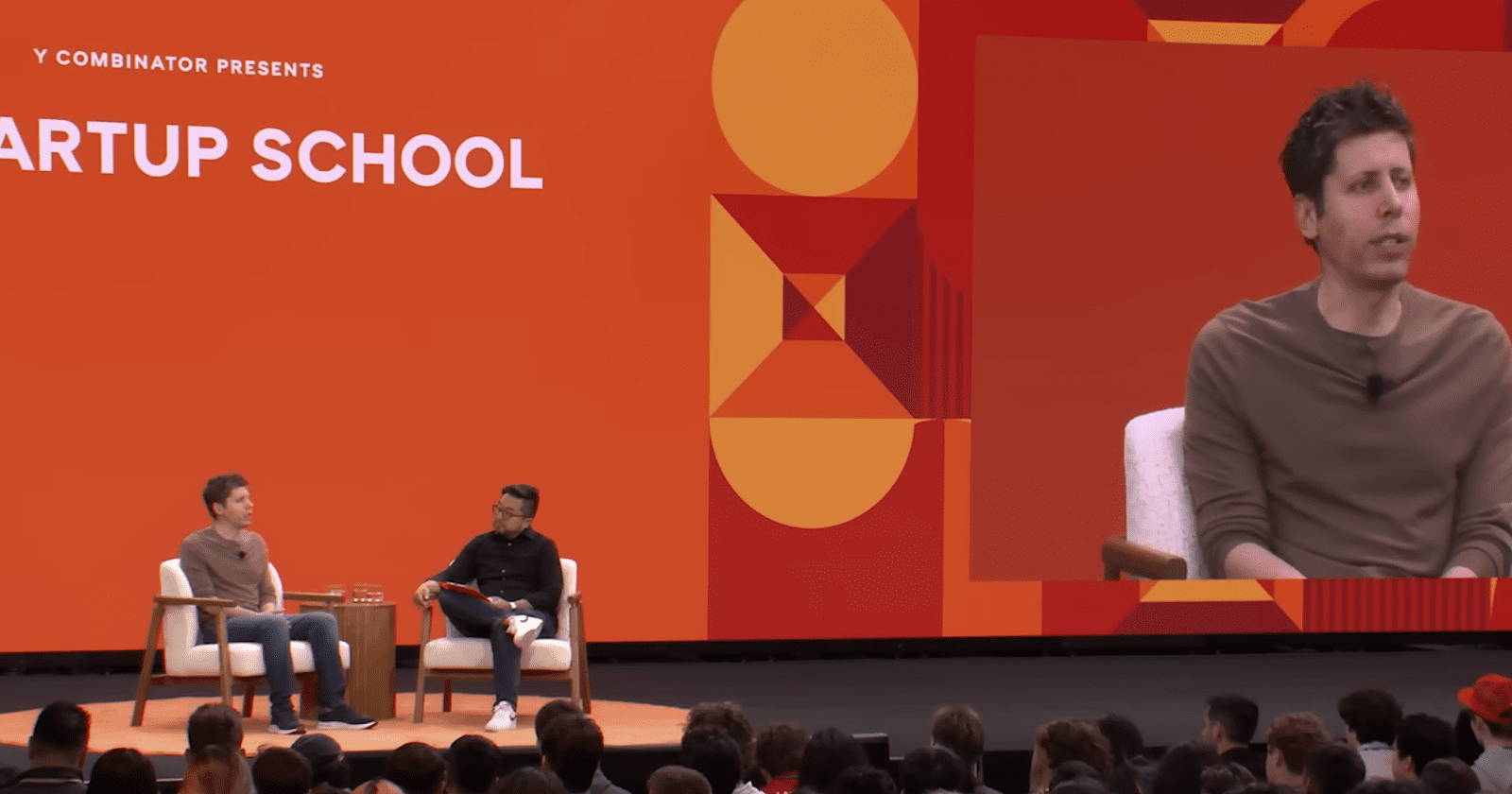
Speaking at Y Combinator, Altman described how ChatGPT has changed over time.

“For a long time ChatGPT was like a Google replacement… it still felt like a more advanced version of search.”

Now, he said, users can ask the AI to perform complex work like a junior employee.

“You can really give a task to code interpreter for example or to deep research… and come back to you with like a proposal.”

This shift signals a new direction for ChatGPT that could affect how businesses and marketers use AI.

Not Just Search Anymore

Altman emphasized that ChatGPT is no longer just about retrieving information. The goal now is to help users get work done.

Altman said:

“It’s like a very junior employee that can work on something for like a short period of time.”

While the platform gets considerable traffic, Altman said ChatGPT.com is now the fifth most visited site in the world, he downplayed the idea that it’s competing with Google Search.

Instead, OpenAI is building a tool that can connect to user data, complete tasks, and act proactively.

Memory & Persistent AI Assistants

A step toward this vision is ChatGPT’s memory feature. Altman called it his favorite feature so far this year.

This lets the AI remember previous conversations and user preferences, acting more like a personal assistant than a chatbot.

“I think memory is the first time where people can sort of see that coming.”

Altman described a future where the assistant knows when to notify users and when to take action automatically.

Reasoning & Workflow Automation

New models like GPT-4o and O3 are designed to handle more complex reasoning and workflows.

“Right now we’re in an interesting time where the product overhang relative to what the models are capable of is here…”

Altman said the technology is moving faster than most businesses can adapt to it. He sees untapped potential in how AI could support work like marketing, data analysis, and content development.

Balancing the Vision

While Altman outlined an ambitious vision, there’s reason to be cautious.

Tools like ChatGPT face limitations like hallucinated outputs, lack of persistent memory across all contexts, and occasional reasoning failures. This is all detailed in OpenAI’s own reports.

That means, even with tools like Code Interpreter or GPT-4o, complex tasks still require hands-on oversight.

The shift away from search competition may also reflect the difficulty of challenging Google’s market dominance. Instead, OpenAI may be trying to define a new space for AI-powered task automation.

Looking Ahead

As AI tools like ChatGPT gain new features, they may change how marketers, developers, and everyday users complete tasks.

However, much of this vision depends on overcoming current limitations and delivering reliable performance across different use cases.

Altman shared that ChatGPT will soon support the Model Context Protocol (MCP). This allows it to pull data directly from tools and platforms businesses already use.

These integrations further support ChatGPT’s positioning as an assistant platform rather than a search engine alternative.

For now, marketers should focus on utilizing AI tools alongside, not instead of, traditional platforms like search engines. The two can serve different purposes in the same strategy.

Listen to the full interview with Sam Altman below:

YouTube Analytics Updated With Saved Reports & New Interface via @sejournal, @MattGSouthern

YouTube is rolling out updates to its Advanced Mode analytics in YouTube Studio.

The changes are designed to make data easier to access and interpret, particularly for creators and marketers who may not use these tools regularly.

Among the new features are custom report saving and a simplified interface that reduces visual clutter without removing functionality.

YouTube’s Advanced Analytics: What’s New?

New Interface

YouTube’s analytics team walked through the updates in a recent video, which you can see below:

The redesigned layout includes a new sidebar that puts filters, breakdowns, and metric selectors in one place. This allows you to make changes from any analytics page.

Save Your Favorite Reports

You can now save custom report configurations. This feature eliminates the need to reset filters and metrics every time you check the same data.

After configuring a report, click the Save button and assign a name to the report. Saved reports are accessible from the top navigation and are private to the logged-in user on that channel.

For example, a creator monitoring traffic sources for long-form content can save that specific setup and return to it without rebuilding the report.

Smarter Search & Filtering

The update improves how you find and sort content in Advanced mode:

  • Search by title: Quickly locate specific videos within analytics.
  • New sorting options: Sort by video length or publish date.
  • Multi-metric selection: Add or remove several metrics at once.
  • Hide chart view: Focus on data tables without visual distractions.

The updated breakdown picker includes options like geography, content type, and revenue sources. New filters help narrow down data to the most useful metrics.

Easier Access to Common Reports

YouTube has added shortcuts to frequently used reports. These include:

  • First 24 Hours: Compare video performance during the first day after publishing.
  • Audience Retention: Access viewer engagement data more easily.
  • Comparison tools: Compare metrics, videos, content groups, or audience segments like age and gender.

Like other reports, these can also be saved for future use.

Why This Matters

These changes make it easier to track performance without needing to reconfigure data views.

For example, the ability to compare playlists and demographic groups can support more targeted content planning. Saved reports help streamline recurring tasks like client reporting or internal reviews.

Teams can also experiment with formats and strategies more efficiently by using the built-in comparison tools to analyze what works best.

Availabilitiy

The updates are rolling out to creators gradually. Once available, the redesigned Advanced Mode can be accessed from any analytics page in YouTube Studio.

How Much Code Should SEO Pros Know? Google Weighs In via @sejournal, @MattGSouthern

Google’s Martin Splitt and Gary Illyes recently addressed a common question in search marketing: how technical do SEO professionals need to be?

In a Search Off the Record podcast, they offered guidance on which technical skills are helpful in SEO and discussed the long-standing friction between developers and SEO professionals.

Splitt noted:

“I think in order to optimize a system or work with a system so deeply like SEOs do, you have to understand some of the characteristics of the system.”

However, he clarified that strong coding skills aren’t a requirement for doing effective SEO work.

The Developer-SEO Divide

Splitt, who regularly speaks at both developer and SEO events, acknowledged that the relationship between these groups can sometimes be difficult.

Splitt says:

“Even if you go to a developer event and talk about SEO, it is a strained relationship you’re entering.”

He added that developers often approach SEO conversations with skepticism, even when they come from someone with a developer background.

This disconnect can cause real-world problems.

Illyes shared an example of a large agency that added a calendar plugin across multiple websites, unintentionally generating “100 million URLs.” Google began crawling all of them, creating a major crawl budget issue.

What SEO Pros Need To Know

Rather than recommending that SEO professionals learn to code, Splitt advises understanding how web technologies function.

Splitt states:

“You should understand what is a header, how does HTTPS conceptually work, what’s the certificate, how does that influence how the connection works.”

He also advised being familiar with the differences between web protocols, such as HTTP/2 and HTTP/1.1.

While SEO pros don’t need to write in programming languages like C, C++, or JavaScript, having some awareness of how JavaScript affects page rendering can be helpful.

Context Matters: Not All SEOs Need The Same Skills

Google also pointed out that SEO is a broad discipline, and the amount of technical knowledge needed can vary depending on your focus.

Splitt gave the example of international SEO. He initially said these specialists might not need technical expertise, but later clarified that internationalization often includes technical components too.

“SEO is such a broad field. There are people who are amazing at taking content international… they specialize on a much higher layer as in like the content and the structure and language and localization in different markets.”

Still, he emphasized that people working in more technical roles, or in generalist positions, should aim to understand development concepts.

What This Means

Here’s what the discussion means for SEO professionals:

  • Technical understanding matters, but being able to code is not always necessary. Knowing HTTP protocols, HTML basics, and how JavaScript interacts with pages can go a long way.
  • Your role defines your needs. If you’re working on content strategy or localization, deep technical knowledge might not be essential. But if you’re handling site migrations or audits, that knowledge becomes more critical.
  • Context should guide your decisions. Applying advice without understanding the “why” can lead to problems. SEO isn’t one-size-fits-all.
  • Cross-team collaboration is vital. Google’s comments suggest there’s still a divide between developers and SEO teams. Improving communication between these groups could prevent technical missteps that affect rankings.

Looking Ahead

As websites become more complex and JavaScript frameworks continue to grow, technical literacy will likely become more important.

Google’s message is clear: SEOs don’t need to become developers, but having a working understanding of how websites function can make you far more effective.

For companies, closing the communication gap between development and marketing remains a key area of opportunity.

Listen to the full podcast episode below:


Featured Image: Roman Samborskyi/Shutterstock

TikTok Ban Delayed Again, Will Remain Active Until September via @sejournal, @MattGSouthern

TikTok will remain operational in the U.S. through September 17, as negotiations over a potential ownership deal continue.

President Donald Trump issued a third executive order delaying enforcement of the TikTok ban, giving the Chinese-owned platform another 90 days to operate in the U.S.

The move was confirmed in a White House briefing and TikTok’s official statement.

The extension allows continued access while the administration attempts to broker a U.S.-based ownership deal.

White House Confirms Platform Remains Active

White House Press Secretary Karoline Leavitt confirmed that the extension is meant to keep TikTok operational during negotiations.

Leavitt said:

“He’s making an extension so we can get this deal done. He also wants to protect Americans’ data and privacy… and he believes we can do both at the same time.”

Trump announced the order on Truth Social, continuing his pattern of last-minute executive actions.

TikTok briefly went offline in January when the congressional ban first took effect, but was reinstated.

Pattern Of Delays

This marks the third extension since the ban was passed by Congress. The second came in April when a deal seemed near, until China withdrew support following Trump’s tariff announcement.

By pausing enforcement, the order enables platform distributors and infrastructure providers to continue working with TikTok during negotiations.

TikTok acknowledged the extension with thanks:

“We are grateful for President Trump’s leadership and support… as we continue to work with Vice President Vance’s Office.”

Public Opinion Shifting

Support for a TikTok ban is softening. According to Pew Research data:

  • Only one-third of Americans now support a ban, down from 50% in 2023.
  • Another third oppose the ban, while the remaining third are undecided.
  • Among ban supporters, 80% cite data security as the top concern.

What This Means

TikTok’s ongoing availability gives marketers continued access to its audience.

Still, uncertainty persists. Marketers using TikTok should:

  • Continue investing in TikTok for short-term campaigns
  • Monitor the September 17 deadline closely
  • Prepare backup strategies across other social platforms

TikTok’s situation remains fluid, but the platform’s growth and political momentum suggest a negotiated outcome is likely, rather than an abrupt shutdown.


Featured Image: Charles-McClintock Wilson/Shutterstock

YouTube Reports 200 Billion Daily Views For Shorts Format via @sejournal, @MattGSouthern

YouTube CEO Neal Mohan announced that the platform’s short-form video format now generates 200 billion daily views during a keynote address at the Cannes Lions International Festival of Creativity.

The milestone comes as the Google-owned platform marks its 20th anniversary and faces increasing competition from TikTok and Instagram Reels in the short-form video space.

Key Platform Metrics Revealed

During his presentation, Mohan shared several performance metrics:

  • YouTube Shorts averages 200 billion daily views
  • One billion viewers watch podcasts monthly on the platform
  • Over one billion hours of YouTube content are viewed on television screens daily
  • TV screens are now the primary viewing method for more than half of the top 100 YouTube channels

The television viewing data represents an evolution from YouTube’s mobile-first origins, with creators increasingly producing content formatted for larger screens.

New AI Features Coming to Platform

YouTube will introduce Veo 3, Google DeepMind’s video generation model, to Shorts creators later this summer.

The tool enables users to create AI-generated backgrounds and video clips, building upon the existing Dream Screen feature.

The company also reported that its Auto Dubbing feature has processed over 20 million videos since launch six months ago. The tool currently translates content across nine languages, with 11 additional languages planned.

Industry Context

YouTube’s announcements come as the platform competes for creator attention and viewer time with TikTok, which popularized the short-form video format, and Meta’s Instagram Reels.

The emphasis on television viewing and longer-form content may represent an attempt to differentiate from mobile-first competitors.

While YouTube leads in platform breadth and viewing hours, TikTok still holds a cultural edge in mobile-native short video. YouTube’s push toward TV-based viewing and AI creation tools may help retain creator loyalty and expand monetization opportunities across formats.

The AI tools announcement follows similar features from competitors, including TikTok’s AI effects and Instagram’s creative tools.

Looking Ahead

The shift toward television viewing and serialized content marks a departure from YouTube’s roots as a platform for amateur video uploads.

As YouTube enters its third decade, the platform’s strategy appears focused on supporting professional content creation while expanding its technological capabilities through AI integration.


Featured Image: Screenshot from: blog.youtube/news-and-events/neal-mohan-cannes-2025/, June 2025. 

Yoast SEO Plugin Bug Injects Hidden AI HTML Classes via @sejournal, @martinibuster

Yoast SEO rushed out an update to fix a bug that introduced a known fingerprint of AI-generated content. The bug was highlighted on social media, and Yoast corrected the error within hours.

HTML Classes Injected By AI

It’s recently become known that highlighting then copying content generated ChatGPT and then pasting it directly into the WordPress will cause HTML classes to be added to the content code. An HTML “class” is something that’s added to an HTML element like a paragraph element

, which can then be used to attach a style to it, like specifying a font. This bug only happens when a ChatGPT user highlights generated text, copies it, then pastes it into the WordPress editor. It won’t happen if the user clicks the ChatGPT “copy” icon to copy the generated content.

The HTML classes injected into content are “data-start” and “data-end” which are only visible within the code, not on the published content.

This is what the AI-generated content looks like in the HTML code:

“He thought no one would notice—
the quiet hum of the AI
churning out words
like it knew something.
Google noticed.
Now he shelves canned beans at Safeway.”

This is what the content would look like in the visible version:

“He thought no one would notice—
the quiet hum of the AI
churning out words
like it knew something.
Google noticed.
Now he shelves canned beans at Safeway.”

The “data-start” and “data-end” classes are the telltale clues that the content was generated by AI. Savvy SEOs are using that knowledge as part of their SEO audits to indentify AI-generated content that was directly copied and pasted into their WordPress editor.

Yoast SEO Premium Injects AI Classes

Alan Bleiweiss, known for content audits, called attention to the fact that Yoast SEO was injecting the “data-start” and “data-end” HTML classes into content. Alan called them “wrappers” but they’re technically HTML classes.

He posted:

“UPDATE

Yoast Plug-in pushed live without proper QA. Injecting AI wrappers without site owner permission.

Fortunately, according to Carolyn Shelby they’re working on a fix.

But tool providers need to do better.”

Alan indicated that no clarification was given as to how those classes were injected but the bug was limited to Yoast SEO Premium because the free version does not contain the necessary AI text generation feature (Yoast AI Optimize).

Yoast Pushes Update To Fix Bug

Yoast swiftly pushed an update, version 25.3.1, to fix the issue so that AI-generated content created by Yoast SEO Premium does not contain the classes. Happily, the updated plugin also removes the telltale HTML classes.

According to the Yoast SEO blog post announcement:

“Recently, we announced the rollout of Yoast AI Optimize for the Classic Editor in WordPress. …During the initial rollout, we discovered a technical issue where unintended classes were being added to content for some users. While these added classes are harmless and do not impact the functionality or appearance of your content, they should not have been added, that’s on us.

We take this seriously, and to maintain the quality you expect, we’ve been actively working on a solution. We’re pleased to share that a fix has now been released, and the issue has been resolved. For users already affected, we are automatically cleaning up the unintended classes as part of the fix, no action is needed on your part.”

The functionality was rolled out on June 2nd, which means that sites with affected content have been out there for at most two weeks.

The free version of the plugin has also been updated. The changelog offers this explanation:

“This is a maintenance release which is required to align with changes to Yoast SEO Premium 25.3.1.”

Can This Have Impacted Rankings?

It’s probably unlikely that this has affected rankings but at this point it’s unknown if Google would have noticed.  Google would have to specifically look for those classes which in themselves do not indicate anything about content quality. So again, it’s probably unlikely that this bug had an effect on search rankings.

Nevertheless users of the premium version of the Yoast SEO Plugin should update immediately to version 25.3.1 to fix any potential issues from this bug and users of the free version should update their versions as well, even though it’s not affected.

Featured Image by Shutterstock/Jihan Nafiaa Zahri

Google Launches ‘Search Live’ Real-Time Voice Search In AI Mode via @sejournal, @MattGSouthern

Google is rolling out Search Live with voice features through its AI Mode Labs experiment.

You can now have natural, spoken conversations with Search while receiving web links in real-time.

The was previewed at Google I/O and is now available today for U.S. users.

How Search Live Voice Works

You can access the feature by opening the Google app on Android or iOS.

Tap the new “Live” icon under the search bar, as shown below.

Once started, you can ask questions out loud and get AI-generated audio responses. Google says it uses a custom version of Gemini with advanced voice features.

The system remembers what you talked about before, which lets you ask follow-up questions naturally. For example, you could ask about preventing wrinkles in linen clothing while packing. Then you could ask what to do if wrinkles still happen.

Key Features & Functionality

Search Live keeps working even when you switch to other apps. Your conversations continue while you check email, browse social media, or do other things on your phone.

A “transcript” button shows you text versions of the audio responses. This means you can switch between talking and typing in the same conversation.

The feature also saves your conversation history. You can go back to previous Search Live sessions through your AI Mode history.

Web links show up on your screen alongside voice responses. This gives you quick access to source content if you want to dig deeper.

Technology & Implementation

Google’s custom Gemini model for Search Live builds on the company’s existing search systems.

The setup uses what Google calls a “query fan-out technique” to find diverse web content. This aims to give you different sources and viewpoints during your search sessions.

Google plans to add more Search Live features in the coming months. This includes camera integration for real-time visual queries.

Visual search was also previewed at I/O. It would let you show Search what you’re seeing while talking about objects, locations, or situations around you.

Why This Matters

Voice-driven conversational search could be a big shift in how people use search engines.

Google’s continued focus on natural language queries means optimization must go beyond traditional keyword targeting.

Web links still appear with AI voice responses. Marketers should test it out and consider how their content appears in conversational situations. This matters more as people ask follow-up questions and explore topics through natural dialogue.

This change may also affect how we understand search intent. Conversational queries often show more detailed needs than regular typed searches.

Getting Started

To use Search Live, you must join the AI Mode experiment through Google Labs.

Once signed up, the Live icon appears right away in the Google app.

Wix Acquires AI Platform That Enables Anyone To Create Software via @sejournal, @martinibuster

Wix announced it is acquiring Base44, an AI-powered coding platform that enables users to create software and applications with natural language prompts, no coding experience necessary. The acquisition is a bold step because it reimagines what a content management system can be, enabling its users to do more with Wix than with any other platform.

Base44 provides an easy to use chat-based interface that enables users to create any kind of app without having to subscribe to third-party tools, all within the Wix platform. The acquisition is further establishes Wix as a leading platform for Internet entrepreneurship.

Maor Shlomo, CEO of Base44, commented:

“I honestly can’t think of a better fit. Wix is probably the only company that can help Base44 achieve the scale and distribution it needs while maintaining, if not accelerating, our product velocity. Our market is massive. It has the potential to replace entire software categories by enabling people to create software instead of buying it. Wix’s DNA – its customer obsession, innovation, and speed – perfectly aligns with ours, and its scale will catapult Base44 forward at exactly the right time.”

Avishai Abrahami, CEO and Co-founder of Wix observed:

“This acquisition marks a pivotal milestone in Wix’s commitment to transforming creation online. Maor and his team at Base44 bring cutting-edge technology, strong market penetration, and visionary leadership that seamlessly align with Wix’s dedication to enabling users at all levels of expertise to express their intent while intelligent agents manage execution.

Maor’s exceptional talent and innovative mindset will reinforce Wix’s mission to push the boundaries of AI-driven creation and accelerate the evolution of intuitive, intelligent tools that redefine how digital experiences are built and enjoyed.”

Featured Image by Shutterstock/Valery Brozhinsky

Yoast SEO WordPress Plugin Adds Support For LLMs.Txt via @sejournal, @martinibuster

Yoast announced the addition of llms.txt capability to both the premium and free versions of their SEO plugin. Users can now add llms.txt files to their sites to future-proof them for AI search engines.

LLMS.Txt

llms.txt is a proposal for a new standard that will enable large language models (LLMs) to access a publisher’s content in a way that is easy for LLMs. The main content is presented to LLMs without advertising and other page elements that target humans.

The proposed standard uses markdown in pages with the .md file name, duplicates of existing pages that only contain the main content. Google’s John Mueller has alluded to the inherently untrustworthiness of the proposed standard because there’s nothing to stop unscrupulous SEOs from adding whatever they want to the LLMs.txt web pages.

It simply makes more sense to just grab the content from the normal web pages. Additionally, LLMs aren’t currently looking for those pages and it’s quite likely that they will continue to use the normal web pages.

Yoast’s announcement states:

  • “Helps AI tools understand your site better: Guides large language models like ChatGPT and Gemini to your most relevant content.
  • Highlights your key content automatically: No need to decide what to include. Yoast SEO detects your most important and recently updated pages.
  • No technical setup required: The file is generated and refreshed weekly, no coding or manual work needed.
  • Future-proof your website for AI search: Make sure your site is ready for how people find information today, and tomorrow.
  • Built into Yoast SEO, free for everyone: Available in one click, no upgrade needed.”

Read the Yoast SEO announcement here:

Future proof your site for LLMs llms.txt

Featured Image by Shutterstock/Cagkan Sayin