Google’s frequent algorithm updates produce nonstop fluctuations in organic traffic and rankings. Content audits are essential to identify lost rankings, revive declining traffic, and find new topics.
Here’s how I audit content for better search engine optimization.
Evaluate Lost Traffic
Traffic declines from organic search can occur for multiple reasons.
Over time, new articles push current ones deep into the archives. Updating articles with substantially new info and a new date will likely help regain traffic.
Google’s core updates often focus on searchers’ intent. Many queries imply multiple intents. For example, a search for “backyard barbeque” could suggest a need for information (how to cook barbeque) or purchase options (where to buy a grill). This type of loss is not easy to fix, likely requiring a new landing page or article.
Rankings of competitors’ pages surpassed yours. Shifting from position 1 to 2 can result in huge traffic losses. That, too, is not easy to fix. Closely analyze your competitors’ pages and backlinks to identify what may have led to their ranking increase.
Changes by Google in search result pages, such as adding sections and lowering the visibility of organic results. There’s no fix.
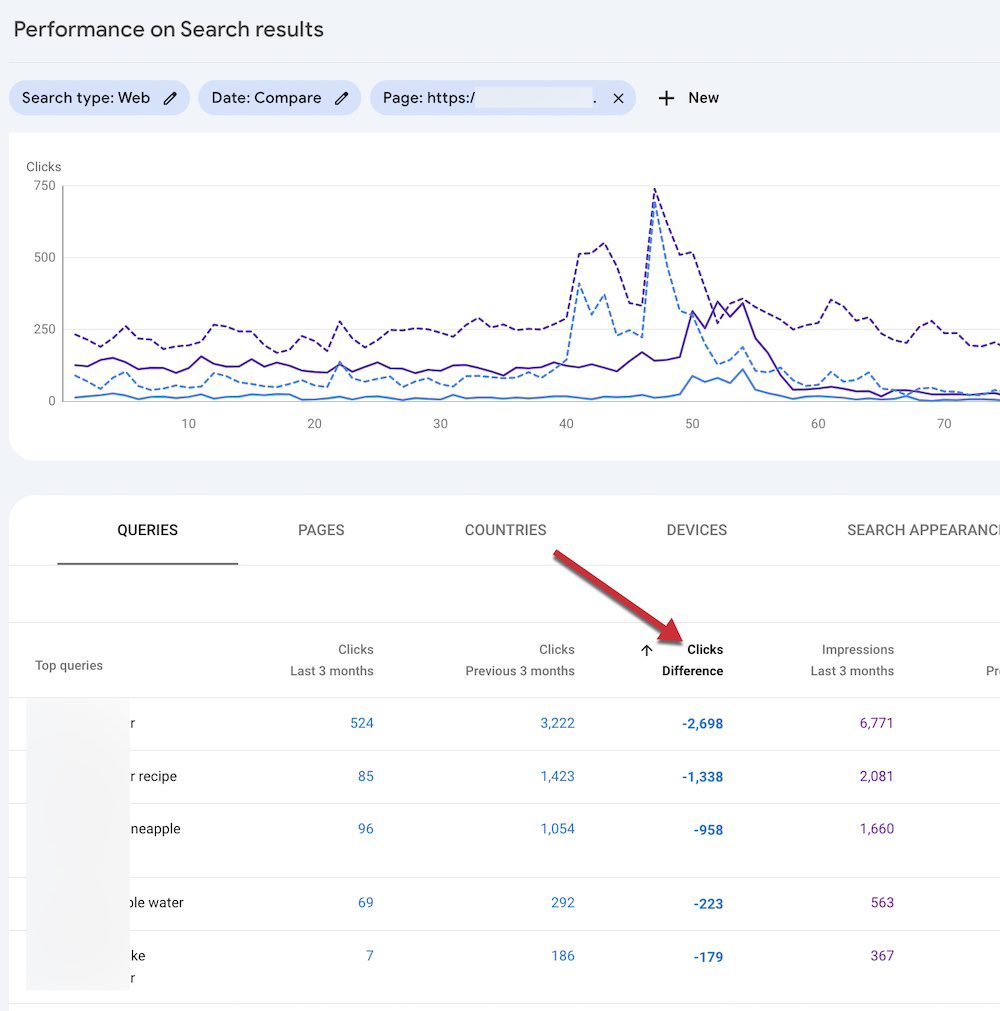
Regardless of the cause, the first step is to know which pages account for the loss. Search Console is an easy and free tool for diagnosing organic traffic drops.
Go to the “Performance” section.
Click “Search results” > “Date” > “Compare.”
Select “Compare last 3 months to previous period” or “Compare last 3 months year over year,” depending on your audit frequency.
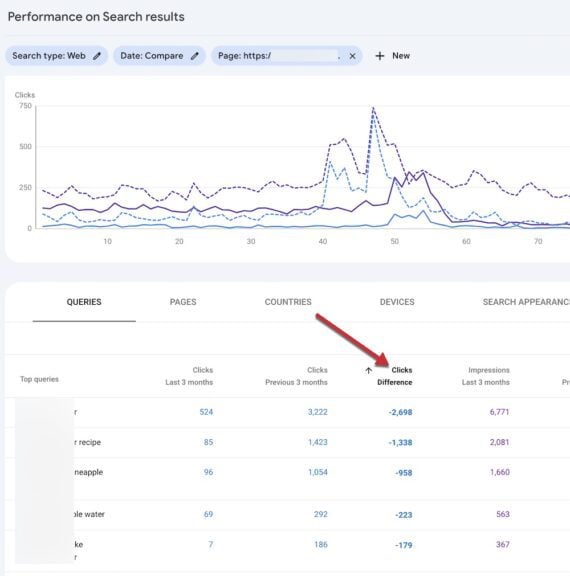
Click on the “Pages” and sort by “Clicks difference.”
Click any URL in the first column.
Click “Queries” and sort again by “Clicks difference” to see the search terms causing the biggest traffic drops.
Now search for those queries (keywords) in Google to evaluate what may have caused the decrease.
Search Console is an easy and free tool for diagnosing organic traffic drops. Click image to enlarge.
Even climbing one position on the first page will likely increase traffic substantially. Optimizing the page copy by adding more keywords and creating more internal backlinks will likely help.
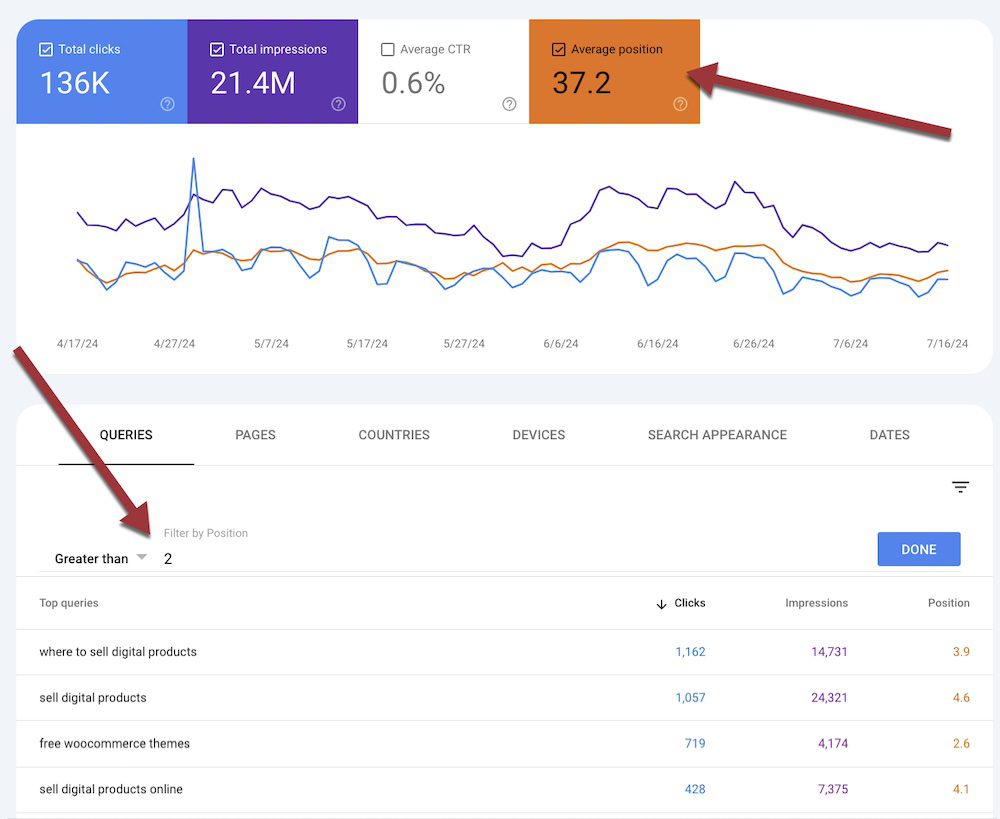
To identify these pages, use Search Console’s Performance section again.
Click “Search results” > “Average position” on top of the graph.
Click the filter option (inverted triangle) and select “Position.”
Click “Filter by Position” for “Greater than” 2.
Sort the queries by the number of clicks to see the top (and bottom) performers. Again, a page that climbs even one position will experience a huge traffic increase.
In Search Console, filter “Average Position” for “Greater than” 2. Click image to enlarge.
Identify and improve pages with external backlinks
Pages with many backlinks but few searchable keywords often fail to rank. For those pages, research keywords to help Google understand them.
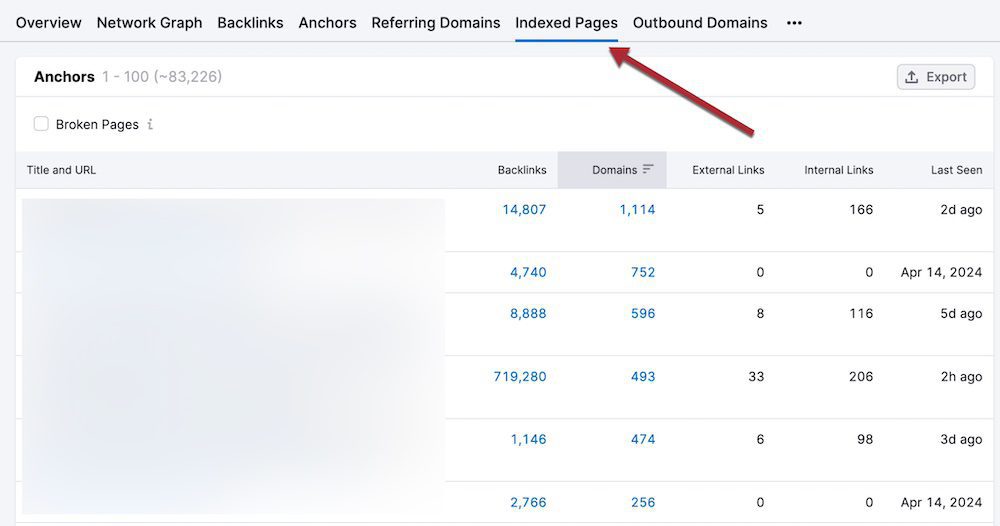
Semrush’s backlink research tool can identify top-linked pages:
Log in to Semrush and click “Backlink Analytics” under “Link Building.”
Paste your URL and select “Root domain.”
Click the “Indexed pages” tab.
The report is sorted by the number of linked domains for each page on your site. Heavily linked pages are easier to improve, rankings-wise.
Use Search Console for ranking opportunities, or run keyword research tools to find new queries.
Semrush’s backlink research tool can identify top-linked pages. Click image to enlarge.
Now, what about the content of the actual calls? Well, you can use that, too.
Let dive into how you can use call analysis to further inform your strategy.
How To Analyze Your Call Data
The insights you collect from customer phone interactions can have a game-changing impact on your business.
But you want to make sure the effort required to dig into those calls is worth it for your team.
This is where AI and machine learning technology can be utilized effectively to streamline your process and save time.
For example, Conversation Intelligence is an AI-powered tool by CallRail that constantly records, transcribes, and analyzes each inbound and outbound call.
With transcriptions that have near-human level accuracy, Conversation Intelligence goes a step further by spotting keywords, tagging calls automatically, and qualifying leads with powerful automation rules.
Plus, with multi-conversation insights, you can easily transform countless conversations into actionable insights at scale.
Not only does this analysis unlock deeper insights to help you catch customer trends and spot long-term shifts, but it also tells you what you should focus on in your content.
2. Website Form Submissions
Another effective way to gather essential audience insights is through website form tracking.
When this data is paired with deeper analytics, you can gain a clear understanding of what drives the most qualified leads for your business.
With Form Tracking, you can find out exactly which ad or keyword made someone click “submit” on your form.
Launched last year by CallRail, this tool allows you to build custom forms or integrate existing ones, pairing the data with inbound call conversions for a holistic view of your marketing efforts.
Combining Call Tracking And Form Tracking
Leads often connect with businesses through multiple channels, so focusing on just one source isn’t really enough.
By using Call Tracking and Form Tracking together, you get a comprehensive overview of your leads’ entire customer journey.
Both of these tools essentially work by installing a single line of JavaScript code on your site, which captures and relays information about each of your leads back to CallRail.
You can easily evaluate the various campaigns that you’re running, like paid ads, social media posts, email nurture campaigns, etc. – all of which could be opportunities to incorporate tracking numbers and links to your forms.
Using both a tracking number and a form tracking link gives your leads the option to choose how they prefer to contact your business.
And as they reach out, you’ll be able to measure which campaigns and which conversion type – calls or forms – is getting the best results.
3. Customer Feedback & Surveys
If you really want a deep dive into the minds of your customers, surveys are an incredibly effective way to get feedback directly from the source.
Surveys allow you to ask your users targeted questions and receive precise answers about their preferences, pain points, and expectations.
You can then leverage this comprehensive data to guide your marketing strategy and fill any content gaps you may have.
Discover the type of content your customers prefer, the topics they are most interested in, and how they like to consume information.
Once they point out areas where they feel your content is lacking or what they would like to see more of, you can then fill the gaps in your strategy to give them what they want.
Integrating Customer Feedback Into Your Content
Understanding your audience can help you tailor your content to better meet their needs and preferences.
Here are some tips for how you can effectively integrate customer feedback into your content creation process:
Create a Feedback Loop: Ask your audience to rate the usefulness, quality, and relevance of your content to gain a clear picture of where you can improve. Then establish a system where their feedback continuously informs your content. Regularly conduct surveys and update your strategy based on the latest insights.
Prioritize High-Impact Content: Identify the topics and formats that resonate most with your audience and prioritize them in your content calendar. For example, if customers indicate a preference for video tutorials over written guides, focus more on creating video content. This ensures that you’re always aligned with what your audience finds most valuable.
Test and Iterate: After publishing content based on customer feedback, monitor its performance to see if it meets the intended goals. Use analytics to track engagement, shares, and other metrics. Be prepared to refine your content based on ongoing feedback and performance data.
Communicate Changes: Let your audience know that their feedback has been heard and implemented. This not only builds trust but also encourages more customers to participate in future surveys.
Unlock Higher Search Rankings With CallRail’s Data Solutions
Google is constantly changing its algorithms to produce higher quality search results for users, which presents numerous challenges for marketers and website owners.
Between the upcoming phase-out of third-party cookies and the recent core update, the search engine is cracking down heavily on content it deems as unhelpful.
That’s why it’s time to take a user-first approach to your content strategy.
By leveraging first- and zero-party data through methods like call tracking, form submissions, and customer surveys, you can create high-quality, relevant content that meets your audience’s needs and boosts your Google rankings.
CallRail’s suite of tools makes it easier to gather and analyze this data, helping you refine your marketing strategy and drive sustainable growth.
Ready to see the impact for yourself?
Try CallRail free for 14 days and start transforming your data into actionable strategies for higher ranking content.
In this guide, you will learn about alternative text (known as alt text): what it is, why it is important for on-page SEO, how to use it correctly, and more.
It’s often overlooked, but every image on your website should have alt text. More information is better, and translating visual information into text is important for search engine bots attempting to understand your website and users with screen readers.
Alt text is one more source of information that relates ideas and content together on your website.
This practical and to-the-point guide contains tips and advice you can immediately use to improve your website’s image SEO and accessibility.
What Is Alt Text?
Alternative text (or alt text) – also known as the alt attribute or the alt tag (which is not technically correct because it is not a tag) – is simply a piece of text that describes the image in the HTML code.
What Are The Uses Of Alt Text?
The original function of alt text was simply to describe an image that could not be loaded.
Many years ago, when the internet was much slower, alt text would help you know the content of an image that was too heavy to be loaded in your browser.
Today, images rarely fail to load – but if they do, then it is the alt text you will see in place of an image.
Screenshot from Search Engine Journal, May 2024
Alt text also helps search engine bots understand the image’s content and context.
More importantly, alt text is critical for accessibility and for people using screen readers:
Alt text helps people with disabilities (for example, using screen readers) learn about the image’s content.
Of course, like every element of SEO, it is often misused or, in some cases, even abused.
Let’s now take a closer look at why alt text is important.
Why Alt Text Is Important
The web and websites are a very visual experience. It is hard to find a website without images or graphic elements.
That’s why alt text is very important.
Alt text helps translate the image’s content into words, thus making the image accessible to a wider audience, including people with disabilities and search engine bots that are not clever enough yet to fully understand every image, its context, and its meaning.
Why Alt Text Is Important For SEO
Alt text is an important element of on-page SEO optimization.
Proper alt text optimization makes your website stand a better chance of ranking in Google image searches.
Depending on your website’s niche and specificity, Google image search traffic may play a huge role in your website’s overall success.
For example, in the case of ecommerce websites, users very often start their search for products with a Google image search instead of typing the product name into the standard Google search.
Screenshot from search for [Garmin forerunner], May 2024
Google and other search engines may display fewer product images (or not display them at all) if you fail to take care of their alt text optimization.
Without proper image optimization, you may lose a lot of potential traffic and customers.
Why Alt Text Is Important For Accessibility
Visibility in Google image search is very important, but there is an even more important consideration: Accessibility.
Fortunately, in recent years, more focus has been placed on accessibility (i.e., making the web accessible to everyone, including people with disabilities and/or using screen readers).
Suppose the alt text of your images actually describes their content instead of, for example, stuffing keywords. In that case, you are helping people who cannot see this image better understand it and the content of the entire web page.
Let’s say one of your web pages is an SEO audit guide that contains screenshots from various crawling tools.
Would it not be better to describe the content of each screenshot instead of placing the same alt text of “SEO audit” into every image?
Let’s take a look at a few examples.
Alt Text Examples
Finding many good and bad examples of alt text is not difficult. Let me show you a few, sticking to the above example with an SEO audit guide.
Good Alt Text Examples
So, our example SEO guide contains screenshots from tools such as Google Search Console and Screaming Frog.
Some good examples of alt text may include:
Tip: It is also a good idea to take care of the name of your file. Using descriptive file names is not a ranking factor, but I recommend this as a good SEO practice.
Bad And/Or Spammy Alt Text Examples
I’ve also seen many examples of bad alt text use, including keyword stuffing or spamming.
Here is how you can turn the above good examples into bad examples:
As you can see, the above examples do not provide any information on what these images actually show.
You can also find examples and even more image SEO tips on Google Search Central.
Common Alt Text Mistakes
Stuffing keywords in the alt text is not the only mistake you can make.
Here are a few examples of common alt text mistakes:
Failure to use the alt text or using empty alt text.
Using the same alt text for different images.
Using very general alt text that does not actually describe the image. For example, using the alt text of “dog” on the photo of a dog instead of describing the dog in more detail, its color, what it is doing, what breed it is, etc.
Automatically using the name of the file as the alt text – which may lead to very unfriendly alt text, such as “googlesearchconsole,” “google-search-console,” or “photo2323,” depending on the name of the file.
Alt Text Writing Tips
And finally, here are the tips on how to write correct alt text so that it actually fulfills its purpose:
Do not stuff keywords into the alt text. Doing so will not help your web page rank for these keywords.
Describe the image in detail, but still keep it relatively short. Avoid adding multiple sentences to the alt text.
Use your target keywords, but in a natural way, as part of the image’s description. If your target keyword does not fit into the image’s description, don’t use it.
Don’t use text on images. All text should be added in the form of HTML code.
Don’t write, “this is an image of.” Google and users know that this is an image. Just describe its content.
Make sure you can visualize the image’s content by just reading its alt text. That is the best exercise to make sure your alt text is OK.
How To Troubleshoot Image Alt Text
Now you know all the best practices and common mistakes of alt text. But how do you check what’s in the alt text of the images of a website?
You can analyze the alt text in the following ways:
Inspecting an element (right-click and select Inspect when hovering over an image) is a good way to check if a given image has alt text.
However, if you want to check that in bulk, I recommend one of the below two methods.
Screenshot from Web Developer Extension, Chrome by author, May 2024
Next, open the page whose images you want to audit.
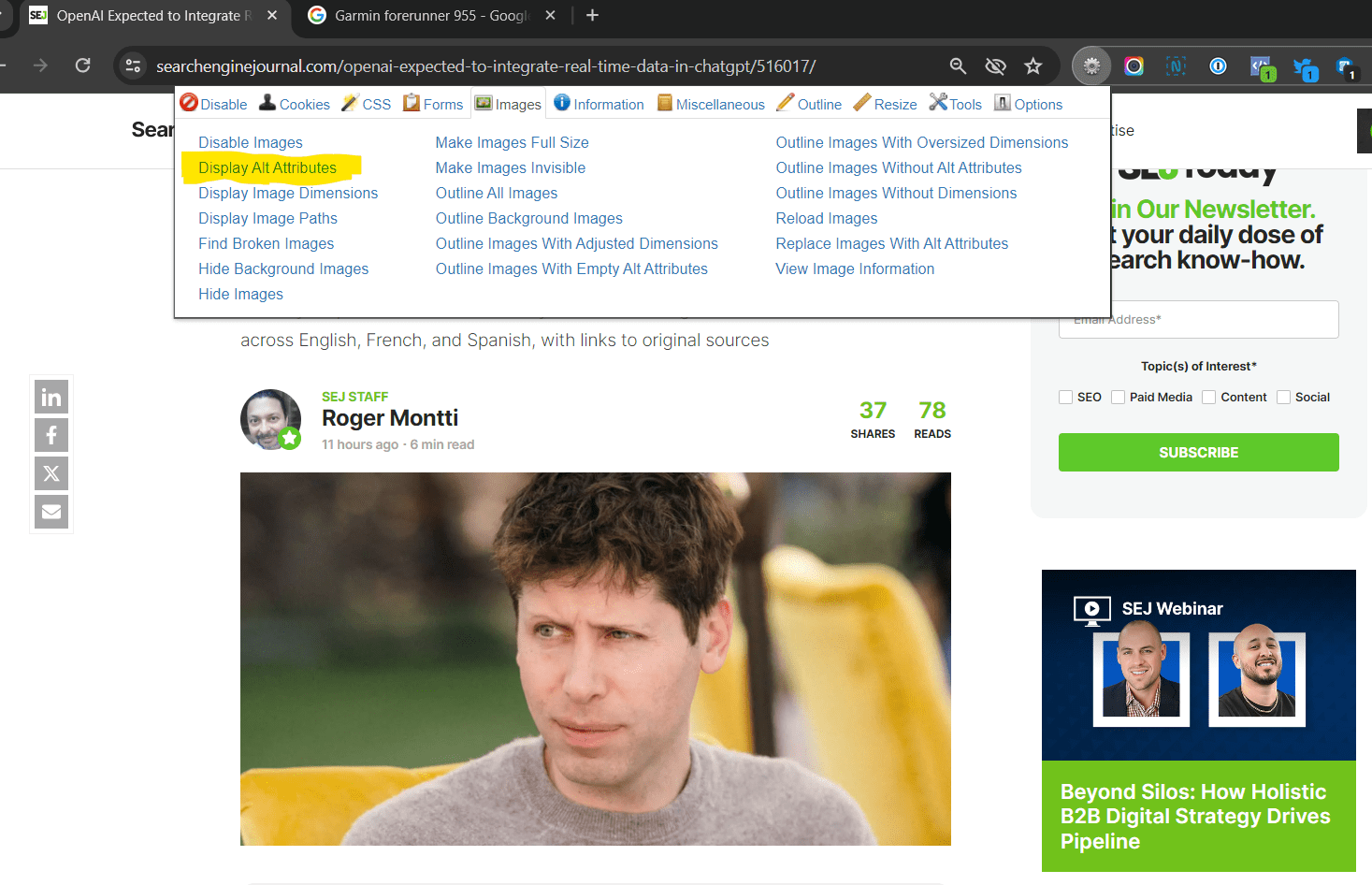
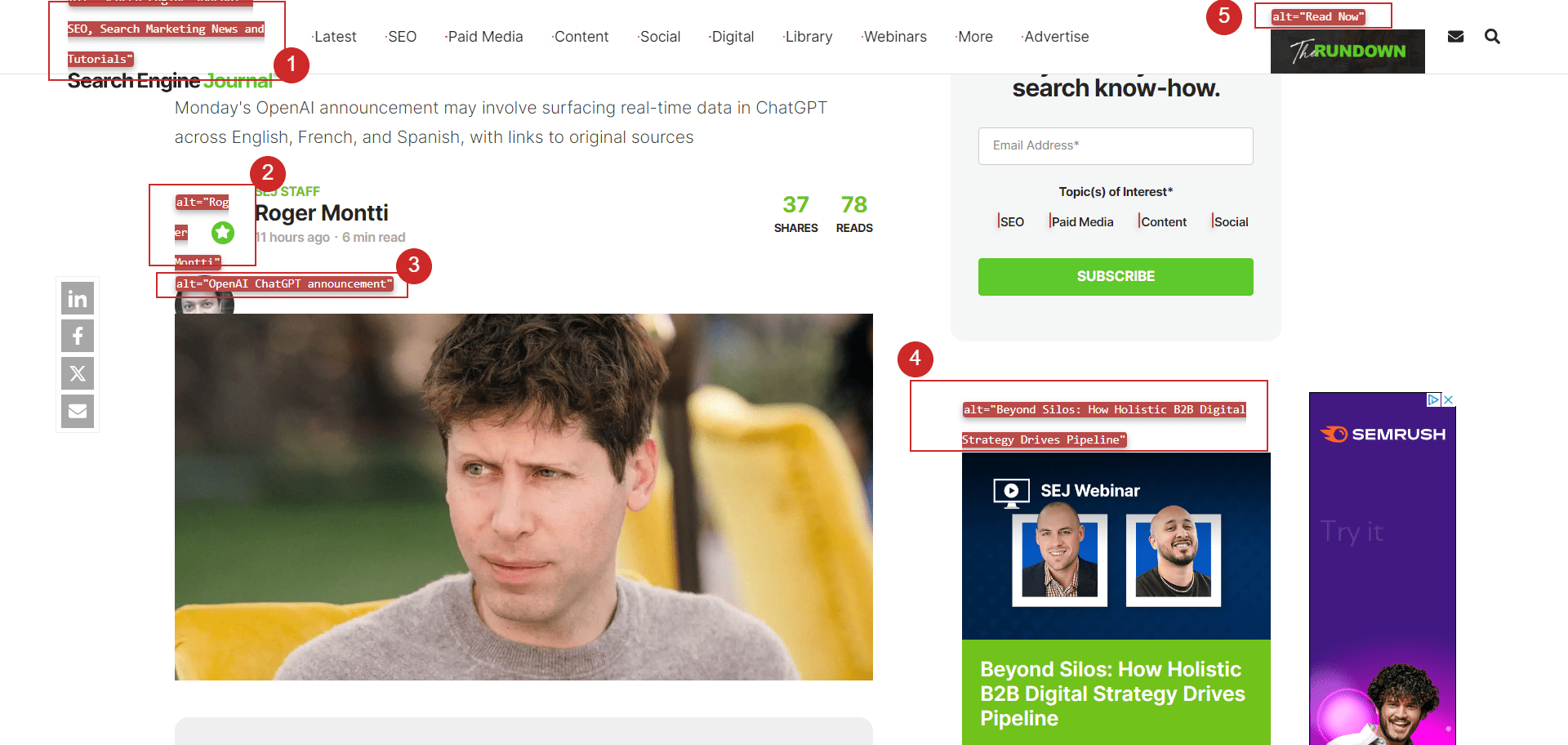
Click on Web Developer and navigate to Images > Display Alt Attributes. This way, you can see the content of the alt text of all images on a given web page.
Screenshot from Web Developer Extension, Chrome by author, May 2024
How To Find And Fix Missing Alt Text
To check the alt text of the images of the entire website, use a crawler like Screaming Frog or Sitebulb.
Crawl the site, navigate to the image report, and review the alt text of all website images, as shown in the video guide below.
You can also export only images that have missing alt text and start fixing those issues.
Alt Text May Not Seem Like A Priority, But It’s Important
Every source of information about your content has value. Whether it’s for vision-impaired users or bots, alt text helps contextualize the images on your website.
While it’s only a ranking factor for image search, everything you do to help search engines understand your website can potentially help deliver more accurate results. Demonstrating a commitment to accessibility is also a critical component of modern digital marketing.
FAQ
What is the purpose of alt text in HTML?
Alternative text, or alt text, serves two main purposes in HTML. Its primary function is to provide a textual description of an image if it cannot be displayed. This text can help users understand the image content when technical issues prevent it from loading or if they use a screen reader due to visual impairments. Additionally, alt text aids search engine bots in understanding the image’s subject matter, which is critical for SEO, as indexing images correctly can enhance a website’s visibility in search results.
Can alt text improve website accessibility?
Yes, alt text is vital for website accessibility. It translates visual information into descriptive text that can be read by screen readers used by users with visual impairments. By accurately describing images, alt text ensures that all users, regardless of disability, can understand the content of a web page, making the web more inclusive and accessible to everyone.

This post was sponsored by SOCi. The opinions expressed in this article are the sponsor’s own.
As a marketer, you may feel like the ground is shifting under your feet with so many changes in the world of search. From Google’s recent announcement to release AI Overviews to all U.S. users to OpenAI revealing GPT-4o, there’s a lot to keep up with.
How will these changes impact your search efforts? Do you need to shift your search strategy?
We have the answers for you and more!
In this blog, we’ll explain how search marketing has changed, what this means for your brand, and share tactics to improve your online visibility. At the end, we’ll also introduce our new game-changer for local search management.
Let’s get into it!
The Evolution Of Search Marketing
As search evolves, many marketers are worried about their brand remaining visible online. While AI-generated search experiences are so new, we do know that now isn’t the time to make any drastic changes to your search marketing strategies.
You can test how your brand appears in generative AI (genAI) results (what we’ve dubbed GAIRs), but there’s no reason to sound an alarm — at least not yet.
Today, nearly three-quarters of consumers conduct local searches at least once a week. Similarly, in the U.S., over 800 million monthly searches contain some variation of “near me,” and more than 5 million keywords are related to “near me.”
Focusing on conventional local SEO efforts is the best way for your brand to ensure its visibility in traditional and GAIRs.
Local SEO for businesses with multiple locations involves incorporating a local SEO strategy for each business location. A multi-location SEO strategy, when done correctly, will boost your local search rankings, help you gain local customers, and improve brand awareness.
If your business doesn’t have multiple locations, you can still follow the tactics below to ensure your business is visible to your target audience in your specific area.
5 Ways To Improve Your Online Visibility
Now that you understand how search has evolved and the importance of local SEO, let’s dive into five local SEO tactics your brand can leverage to boost online visibility.
1. Claim & Optimize Local Listings
Local listings are online profiles of local businesses. They appear on search engines, local directories, and platforms like Google, Apple Maps, Yelp, Bing, and Facebook.
To increase your visibility on Google and beyond, your brand must claim local listings across all major local directories and remove duplicate listings.
Additionally, you need consistent and accurate information across all listings. At a minimum, your local listings should include the following information:
Name, address, and phone number (NAP) citations.
Business categories. (Example: Sushi restaurant)
Business hours, especially during holidays and major events
Products and services your business offers.
Links to your website and social media profiles.
Attributes. (Example: Curbside pickup or wheelchair-accessible seating)
A local page, sometimes called a local landing page, is a web page you create for an individual store location or franchisee. It’s similar to local listings but lives on your site rather than an external directory like Yelp or Google.
Your multi-location business might have dozens or hundreds of local pages, each containing specific information about that store and the surrounding area.
Local pages should contain most of the business information found on your local listings. However, they’re also high-conversion pages. Therefore, they should also contain calls to action (CTAs) such as “order now” buttons or promotional sales and discounts.
Well-designed and optimized local pages can help your business appear high in local organic search results. As mentioned, these higher rankings often lead to more conversions and business for your stores!
3. Leverage A Store Locator
Store locators are similar to local pages. A store locator is a web page that lists all of your local stores or third-party dealers that sell your products.
Store locators help move website visitors through the customer journey by displaying valuable location information and unique details about each store. They make it easier for customers to purchase online and to contact or visit local stores.
Well-optimized and compatible store locators and local pages will help improve:
Local search rankings.
Website traffic and online conversions.
Analytics, such as where visitors are searching and coming from.
4. Implement An Online Reputation Management Strategy
While reputation management might not be something you’d consider when you think of improving your online visibility, you’d be surprised. According to local SEO experts, high numerical Google ratings are the sixth highest ranking factor in Google’s local pack and finder. At the same time, the quantity of native Google reviews (with text) is the eighth ranking factor.
A high quantity and quality of reviews don’t just affect local search rankings — they also impact conversion rates. According to our State of Google Reviews research report, an increase in one full star on a Google Business Profile (GBP) corresponds with a 44% increase in conversions.
To improve your reputation management strategy and gain more reviews:
Respond to existing reviews in a personalized manner to show customers you value their feedback.
Utilize social media to encourage customer feedback, ratings, and reviews.
Make leaving a review accessible! Include links to your GBP on your website and in emails.
Monitor the feedback that your business receives from reviews and make adjustments accordingly.
5. Create Unique Content
Generating localized content for your local pages, website, and listings is also essential. You want to ensure that your localized content optimizes and targets specific areas.
For instance, if you’re targeting the keyword “sporting goods store Seattle,” you want to update your URL, title tag, meta description, and headings with locally relevant keywords.
You should also leverage local images, including photos of your stores and products. Remember to include geo-targeted meta descriptions, alternative text, and descriptions within your images.
Types of local content your brand can create include but are not limited to:
Now that you understand what goes into creating a solid local search strategy, it’s time to boost your brand’s visibility. As marketers, you get how crucial search marketing is, but let’s be real, coming up with a plan to roll it out on a big scale is easier said than done.
That’s where SOCi comes in! We’ve built SOCi for more than a decade to ensure multi-location businesses rank well on local search and social media platforms, can create engaging content, and have the ability to manage each location’s online reputation.
We’ve enhanced our CoMarketing Cloud with SOCi Genius, an AI automation layer to help automate all of your daily localized marketing tasks. As part of SOCi Genius, we recently released Genius Search, a game-changer in search marketing!
As the newest innovation within the CoMarketing Cloud, Genius Search transcends traditional listings management by offering a dynamic, data-driven local search strategy that aligns with evolving consumer behaviors and market trends.
Genius Search uses the top data signals, such as reviews, search keywords and volume, weather, holidays, and others to deliver monthly AI-powered recommendations that can be accepted with the click of a button. Once accepted, these optimizations instantly improve your business listings’ rankings to directly relate to each location’s community.
It’s time to level up your local search strategy, and SOCi is here to help. Request a personalized demo today for more insight on Genius Search and our other Genius products!
Ready to start optimizing your website? Sign up for SOCi and get the data you need to deliver great user experiences.
This post was sponsored by Stay22. The opinions expressed in this article are the sponsor’s own.
The latest Google update hit our partners – travel bloggers – hard. Despite the challenges presented by this update, we are amazed by their resilience.
Although we cannot influence Google, we can definitely take charge of the things within our reach.
Here are five travel blogger-tested ways to increase website traffic after the latest Google update.
Pinterest’s tools make it a fantastic way to get visitors to your website.
How To Get Started With Pinterest
Create a new business account or link/convert a personal account to gain access to business tools like Pinterest Business Hub and Pinterest Analytics, which allow you to monitor searches and keywords.
Write a catchy bio for your profile. If you have niche keywords you use on your website, include them here.
Claim your website, allowing you to track whenever someone shares your website content on Pinterest. Additionally, it will automatically include your Pinterest profile and a follow button so you can attract more visitors.
How To Use Pinterest Like A Pro
Pinterest is built around pictures, so having great visuals is critical. You want to make yours stand out on the page.
When you travel, snap many pictures and pick the best ones later.
Use design tools like Canva to add text, create interesting layouts, and add branding elements.
Create boards to organize your content into categories, such as by destination or blog post type.
Just like any other search engine, keyword research is necessary on Pinterest. Use business tools like Pinterest Trends, which lets you see keyword search volume and which pins are most popular for them.
Use your selected keywords everywhere possible, including pin titles, pin descriptions, and board descriptions.
Email marketing is important because you own it. Instagram could ban your account, Google can derank you, but your email list is always yours.
Use this strategy to build less volatile, consistent traffic instead of new traffic.
How To Get Started With Email Marketing
Select an email marketing provider. Travel bloggers love MailerLite and MailChimp because they are low-cost and simple.
Start collecting email addresses. Create a mailing list signup form with your website host and insert it at the end of posts to collect your readers’ information.
How To Use Email Marketing Like A Pro
Create a lead magnet that entices readers to share their information in exchange for it. Popular lead magnets in the travel blogging community are travel guides, ebooks, and itineraries.
The goal of email is to get your reader onto your site. Keep your emails short and include impressive pictures and a clear link to your website. Leave them wanting more so that they click through.
“While SEO is often touted as the king of traffic, good email marketing is the absolute queen. We regularly see spikes in our web analytics when we email our audience, but those spikes aren’t just temporary. They help our users build habits. We simply wouldn’t have nearly the business we have today without activating our email list.”
3. Add Your Content To Flipboard To Grab More Website Visits
Flipboard is an article curation website that lets users flip through articles from different publications, like magazines.
How To Get Started With Flipboard
Download the Flipboard app on mobile and create an account and profile.
Create Flipboard magazines. These are topic categories that group your content (much like Pinterest boards).
Add your blog posts to them from the magazine page on Flipboard or the Flipit Chrome bookmark.
Screenshot taken from Flipboard, June 2024
How To Use Flipboard Like A Pro
Add your fresh blog posts to Flipboard right after publishing.
Add relevant content to your magazines that isn’t your own. Engaging with other bloggers’ content and maintaining new content in your magazines helps your reach.
Include your target keywords in your magazine descriptions, post captions, and profile.
“Flipboard has become a major traffic source for all 3 of my websites. They have fantastic tools for creators, like storyboards, scheduling, and RSS feeds for magazines, making creating and sharing compelling content easy.”
4. Get Discovered With Short-Form Videos On Social Media
Did you know 77% of travelers use social media when planning their trips? Get their eyes on your content with short-form videos on platforms like TikTok, Instagram, and YouTube shorts.
These platforms have algorithms to serve your content to people who don’t follow you, making them ideal for readers to discover you.
How To Get Started Making Videos
Create your accounts on YouTube, Instagram, and TikTok.
Download Capcut, a free mobile app for video editing. It’s better than the in-app editing functionality, with pre-installed templates and effects.
Create a Linktree account or an alternative. All three platforms make it difficult for users to leave and visit your site, so a place where users can go for all your links is necessary.
“PLACES ON EARTH WITH THE BLUEST WATER” by @thetravelshack, June 2024
How To Make Short Video Content Like A Pro
While traveling, keep video creation in the back of your mind. When you see eye-catching scenery or an interesting environment, be ready to capture it in video. Your video’s “wow” factor differentiates between a mediocre and a fantastic video.
On Instagram, write detailed captions. On YouTube and TikTok, keep captions as brief as possible.
Voice-over, on-screen text, and music are crucial to your engagement rate. You can add these with Capcut or in-app.
Pick your video thumbnails carefully. Make sure they stand out in a grid of other videos.
Finally, keep your short video short. The ideal length for a Reel is seven to eleven seconds, a TikTok 21 to 34 seconds, and a YouTube Short 25 to 35 seconds.
“TikTok helped us to get our second blog on Mediavine. We shared detailed videos about “how to do something” and always included a call to action, directing viewers to our blog for more information. In recent years, we’ve had videos go viral while encouraging followers to visit the link in our bio. This has resulted in thousands of clicks to our websites.”
5. Expose Yourself To New Audiences With Guest Posting
Having your writing published on another website gives you access to a whole new audience, making it an excellent strategy for attracting new readers.
How To Start Guest Posting
Find places that accept guest posts. Many publications have open submissions that you can submit to.
If you see a site that has guest posts but no open submissions, find their contact information and send an inquiry email.
Create a pitch by explaining your travel expertise and provide writing samples.
How To Guest Post Like A Pro
When creating your pitch, understand the site’s needs. What content gaps do they have? Focus your pitch there.
Organic guest posting opportunities arise if you take the time to network. Meeting and developing friendships with travel bloggers is a great way to share audiences. You can network on social media, as well as in-person events like TBEX, TravelCon, and Traverse.
Create a clear link back to your blog and include a catchy description so readers will be enticed to read more of your content.
Strategize by monitoring the traffic of potential sites with tools like SEMRush and pick the best option.
Screenshot from japan.travel, June 2024
“Creating content for another publication to share as a standalone article allows you to share new expertise about a certain area. Whether through the article itself or subsequent social shares, a new audience gets exposure to you as a writer.”
See how William Tang made travel blogging his full-time job with the help of Stay22’s revenue-boosting tools. Read the case study.
Compensate For Traffic Dips By Maximizing Your Revenue.
Maximize your conversions with strategic CTA placement and Stay22’s cutting-edge AI-powered affiliate tools! Skyrocket your affiliate sales with these proven tips:
The secret to your competitors’ SEO success might be as simple as targeting the appropriate keywords.
Since these keywords are successful for your competitors, there’s a good chance they could be valuable for you as well.
In this article, we’ll explore the most effective yet simple ways to find competitors’ keywords so that you can guide your own SEO strategy and potentially outperform your competitors in SERPs.
Benefits Of Competitor Keyword Analysis
Competitor keywords are the search terms your competitors target within their content to rank high in SERPs, either organically or through paid ads.
Collecting search terms that your competitors rely on can help you:
1. Identify & Close Keyword Gaps.
The list of high-ranking keywords driving traffic to your competitors may include valuable search terms you’re currently missing out on.
To close these keyword gaps, you can either optimize your existing content with these keywords or use them as inspiration for creating new content with high traffic potential.
2. Adapt To Market Trends & Customer Needs.
You may notice a shift in the keywords your competitors optimize content for. This could be a sign that market trends or customer expectations are changing.
Keep track of these keywords to jump on emerging trends and align your content strategy accordingly.
3. Enhance Visibility & Rankings.
Analyzing your competitors’ high-ranking keywords and pages can help you identify their winning patterns (e.g., content format, user intent focus, update frequency, etc).
Study what works for your rivals (and why) to learn how to adapt these tactics to your website and achieve higher SERP positions.
How To Identify Your Competitors’ Keywords
There are many ways to find keywords used by competitors within their content. Let’s weigh the pros and cons of the most popular options.
Use SE Ranking
SE Ranking is a complete toolkit that delivers unique data insights. These insights help SEO pros build and maintain successful SEO campaigns.
Here’s the list of pros that the platform offers for agency and in-house SEO professionals:
Huge databases. SE Ranking has one of the web’s largest keyword databases. It features over 5 billion keywords across 188 regions. Also, the number of keywords in their database is constantly growing, with a 30% increase in 2024 compared to the previous year.
Reliable data. SE Ranking collects keyword data, analyzes it, and computes core SEO metrics directly from its proprietary algorithm. The platform also relies on AI-powered traffic estimations that have up to a 100% match with GSC data.
Thanks to SE Ranking’s recent major data quality update, the platform boasts even fresher and more accurate information on backlinks and referring domains (both new and lost).
As a result, by considering the website’s backlink profile, authority, and SERP competitiveness, SE Ranking now makes highly accurate calculations of keyword difficulty. This makes it easy to see how likely your own website or page is to rank at the top of the SERPs for a particular query.
Broad feature set. Beyond conducting competitive (& keyword) research, you can also use this tool to track keyword rankings, perform website audits, handle all aspects of on-page optimization, manage local SEO campaigns, optimize your content for search, and much more.
Great value for money. The tool offers premium features with generous data limits at a fair price. This eliminates the need to choose between functionality and affordability.
Let’s now review how to use SE Ranking to discover the keywords your competitors are targeting for both organic search and paid advertising.
First, open the Competitive Research Tool and input your competitor’s domain name into the search bar. Select a region and click Analyze to initiate analysis of this website.
Image created by SE Ranking, May 2024
Depending on your goal, go either to the Organic Traffic Research or Paid Traffic Research tab on the left-hand navigation menu.
Here, you’ll be able to see data on estimated organic clicks, total number of keywords, traffic cost, and backlinks.
Image created by SE Ranking, May 2024
Upon scrolling this page down, you’ll see a table with all the keywords the website ranks for, along with data on search volume, keyword difficulty, user intent, SERP features triggered by keywords, ranking position, URLs ranking for the analyzed keyword, and more.
Image created by SE Ranking, May 2024
What’s more, the tool allows you to find keywords your competitors rank for but you don’t.
To do this, head to the Competitor Comparison tab and add up to two websites for comparison.
Image created by SE Ranking, May 2024
Within the Missing tab, you’ll be able to see existing keyword gaps.
Image created by SE Ranking, May 2024
While the platform offers many benefits, there are also some downsides to be aware of, such as:
Higher-priced plans are required for some features. For instance, historical data on keywords is only available to Pro and Business plan users.
Data is limited to Google only. SE Ranking’s Competitor Research Tool only provides data for Google.
Use Google Keyword Planner
Google Keyword Planner is a free Google service, which you can use to find competitors’ paid keywords.
Here’s the list of benefits this tool offers in terms of competitive keyword analysis:
Free access. Keyword Planner is completely free to use, which makes it a great option for SEO newbies and businesses with limited budgets.
Core keyword data. The tool shows core SEO metrics like search volume, competition, and suggested bid prices for each identified keyword.
Keyword categorization. Keyword Planner allows you to organize keywords into different groups, which may be helpful for creating targeted ad campaigns.
Historical data. The tool has four years of historical data available.
Once you log into your Google Ads account, navigate to the Tools section and select Keyword Planner.
Screenshot from Google Ads, May 2024
Now, click on the Discover new keywords option.
Screenshot from Google Ads, May 2024
Choose Start with a website option, enter your competitor’s website domain, region, and language, then choose to analyze the whole site (recommended for deeper insights) or a specific URL.
Screenshot from Google Ads, May 2024
And there you have it — a table with all keywords that your analyzed website uses in its Google Ads campaigns.
Screenshot from Google Ads, May 2024
Although Keyword Planner can be helpful, it’s not the most effective and data-rich tool for finding competitors’ keywords. Its main drawbacks are the following:
No organic data. The tool offers data on paid keywords, which is mainly suitable for advertising campaigns.
Broad search volume data. Since it’s displayed in ranges rather than exact numbers, it might be difficult to precisely assess the demand for identified keywords.
No keyword gap feature. Using this tool, you cannot compare your and your competitors’ keywords side-by-side and, therefore, find missing keyword options.
So, if you want to access more reliable and in-depth data on competitors’ keywords, you’ll most likely need to consider other dedicated SEO tools.
Use SpyFu
SpyFu is a comprehensive SEO and PPC analysis tool created with the idea of “spying” on competitors.
Its main pros in terms of competitor keyword analysis are the following:
Database with 10+ years of historical data. Although available only in a Professional plan, SpyFu offers long-term insights to monitor industry trends and adapt accordingly.
Keyword gap analysis. Using this tool, you can easily compare your keywords to those of your competitors using metrics like search volume, keyword difficulty, organic clicks, etc.
Affordability. It’s suitable for businesses on a tight budget.
To explore competitor data, simply visit their website and enter your competitor’s domain in the search bar.
You’ll be presented with valuable insights into their SEO performance, from estimated traffic to the list of their top-performing pages and keywords. Navigate to the Top Keywords section and click the View All Organic Keywords button to see the search terms they rank for.
Screenshot of SpyFu, May 2024
Yet, this free version provides an overview of just the top 5 keywords for a domain along with metrics like search volume, rank change, SEO clicks, and so on. To perform a more comprehensive analysis, you’ll need to upgrade to a paid plan.
When it comes to the tool’s cons, it would be worth mentioning:
Keyword data may be outdated. On average, SpyFu updates data on keyword rankings once a month.
Limited number of target regions. Keyword data is available for just 14 countries.
Wrapping Up
There’s no doubt that finding competitors’ keywords is a great way to optimize your own content strategy and outperform your rivals in SERPs.
By following the step-by-step instructions described in this article, we’re sure you’ll be able to find high-value keywords you haven’t considered before.
Ready to start optimizing your website? Sign up for SE Ranking and get the data you need to deliver great user experiences.
Google’s latest update aimed to improve search result quality by reducing unhelpful, unoriginal content by 40%.
So, what kind of content does Google deem high quality these days?
How can you ensure your content performs well on search engines in 2024?
The simple answer is to focus on user experience rather than the search engine itself – in other words: make human connection the priority.
While many businesses are taking advantage of AI tools to populate their sites, those who still see the value in human-created, user-centric content will ultimately win out.
In this guide, we’ll break down the key steps to creating high-quality content that ranks on Google in 2024.
Step 1: Align Your Content Strategy With Campaign & User Journey Goals
Delivering the right content to the right audience at the right time is crucial for SEO success.
And with Google’s latest core update, it’s more important than ever to provide a seamless and personalized experience for your audience throughout their user journey.
Here’s how you can use audience research and user insights to create content that drives results:
Identify Your Target Personas: Start by defining your ideal audience personas. Understand their demographics, preferences, pain points, and behaviors.
Map Out Your User Journey: Visualize the various stages your customers go through, and identify the touchpoints where they interact with your brand.
Tailor Your Content To Each Stage: Meet your audience at each stage of the user journey, and address their specific needs with content that’s relevant, targeted, and effective.
Pro Tip: Don’t have the time or bandwidth to tackle these tasks? You can still move your business forward by hiring a professional SEO strategist to help plan your campaigns and keep you on track.
Image created by Fiverr Pro, April 2024
Step 2: Analyze Real User Data & Identify Content Gaps
As you’re building your content strategy, you’ll need insights into your audience’s behavior, preferences, and engagement patterns.
Utilize analytics tools to gather valuable user data and track key metrics such as website traffic, click-through rates, and conversion rates.
With this information, you can conduct a thorough audit of your existing content and identify gaps and areas for improvement.
Here’s how you can adjust your strategy to a more user-centric approach:
Build credibility by honing in on E-E-A-T (Experience, Expertise, Authoritativeness, and Trustworthiness).
Try leveraging real experts as content creators, elevating their first-hand experience to create truly helpful content from a trustworthy source. (This is particularly helpful for subjects such as finance or medicine.)
Be sure to display the writer as an experienced, authoritative figure in your post, with a link to an author archive page.
Maintain relevance by keeping your content up to date and checking frequently for possible revamps.
Get started by outsourcing your audience research and content auditing needs to a Fiverr Pro freelancer.
Step 3: Plan Content That Matches User Intent
Once you gain a deeper understanding of your customer touchpoints, it’s time to plan your content accordingly.
Start by developing detailed outlines for each piece of content that match user intent and meet their needs and expectations.
“Understanding and aligning content with user intent is crucial for SEO success. With Google’s algorithm updates, it’s essential to create content that is not only helpful but also answers specific questions your target audience has. Focus on crafting content that resonates with your audience, addresses their needs, and communicates your message clearly, while ensuring it’s relevant, engaging, and directly addresses the concerns and interests of your readers.”
It’s also important to establish your own unique voice, as authentic and original content tends to rank higher on SERPS.
And make sure to avoid fluff and keep your content to the point – searchers want to see their questions answered and needs addressed with as little fuss as possible.
If content is not exactly your specialty but you’re ready to start laying out the process, try Fiverr Pro’s professional services to get the help you need.
Image created by Fiverr Pro, April 2024
Step 4: Write Content With Proactive Engagement In Mind
When you create content, the goal is to encourage interaction, discussion, and sharing among users, which boosts your brand awareness organically.
One effective strategy is to craft compelling headlines, introductions, and calls-to-action that prompt users to engage with your content.
You can also use interactive elements such as polls, quizzes, and surveys to encourage participation and feedback.
If you’re looking to maximize user engagement, a multichannel approach is key.
Choose the most appropriate content formats and channels for each stage of the user journey, and consider using blog posts, social media, email campaigns, etc. based on where your audience is most active.
Pro Tip: User Generated Content (UGC) can be beneficial for your overall search strategy. With Google favoring human insights, comment sections and other forms of human interactions are helpful for discoverability.
Ready to start getting the most out of your content and utilizing the multitude of channels available?
Whether you need a social media manager or an email marketer, Fiverr Pro has you covered.
Step 5: Analyze Performance & Pivot
Once you’ve implemented your content strategy, it’s essential to regularly monitor its performance and be prepared to make adjustments as needed.
Keep an eye on key performance indicators (KPIs) to gauge the effectiveness of your content, and pay attention to user feedback and comments to understand how your audience is responding.
Are they finding it helpful and engaging, or are there areas where you could improve?
Take note of any trends or patterns that emerge and use this information to inform future content decisions.
Image created by Fiverr Pro, April 2024
Embracing Human Talent In The AI Era
The human touch is essential to SEO success in today’s landscape, and Google’s latest update supports that.
As it stands, content that’s created for and by humans will outperform generic, AI-generated content every time.
So if you’re looking to set your website apart, it’s best to pivot away from sheer search volume and more towards what will resonate deeply with your target audience.
After all, the more value you provide to users, the more likely you are to beat the algorithm and boost your rankings.
But let’s say you’re a small business owner with a small team and limited hiring capacity.
How do you compete with organizations that have the in-house expertise necessary to implement this kind of content strategy?
How can you access the human talent needed to form genuine connections with your audience?
Whether you’re seeking an SEO professional to help you target your users, or a writer/artist to help you create content, it might help to start bringing on freelancers to fill in any talent gaps.
Fiverr Pro, for example, is a great solution for matching and collaborating with top-tier, pre-vetted freelance talent.
You can use it to find people with the right set of skills to help you execute your projects and add that much-needed human touch to your content.
In the meantime, use these tips to build out your content strategy, so that as you begin to expand your team, you’ll know which tasks to prioritize, moving forward.
Elevate Your Content Strategy With Fiverr Pro
With Google’s updates constantly shaking things up, the key to staying ahead is staying true to your audience and their needs.
While AI may be able to churn out content at lightning speed, it’s the authentic, user-centric content that truly stands out these days.
By creating content that connects with real people on a human level, you can ensure sustained SEO success in 2024 and beyond.
So if you’re looking for the right talent to bring that human touch to your content, Fiverr Pro is the ultimate solution.
Whether you’re a small business owner or a seasoned marketer, this subscription-free service offers a wealth of talented, pre-vetted professionals ready to elevate your content strategy.
Get started with Fiverr Pro today and let their experts find talent, plan, and manage projects for you.
Plus, you can hire with confidence, knowing that you’ll get a full refund if you’re not satisfied with the results.