Checking In: Where Are We With The Google Lawsuits? via @sejournal, @Kevin_Indig

We’ve been focused on the impact of AI on Search and how to still make gains in this competitive and volatile SEO world.

It’s easy to forget that two big lawsuits are deciding potential remedies against Google soon, which could affect organic traffic and the search landscape.

I know most of you don’t spend your free time reading up on antitrust law – I certainly don’t.

But the truth is, the rulings in these Google cases could impact your website’s traffic – which is a big deal for any business trying to grow online.

On one hand, a weakened Google could open the door for AI chatbots and other new players to shake up the landscape.

On the other, a strengthened Google would solidify its position as the gatekeeper of customer acquisition.
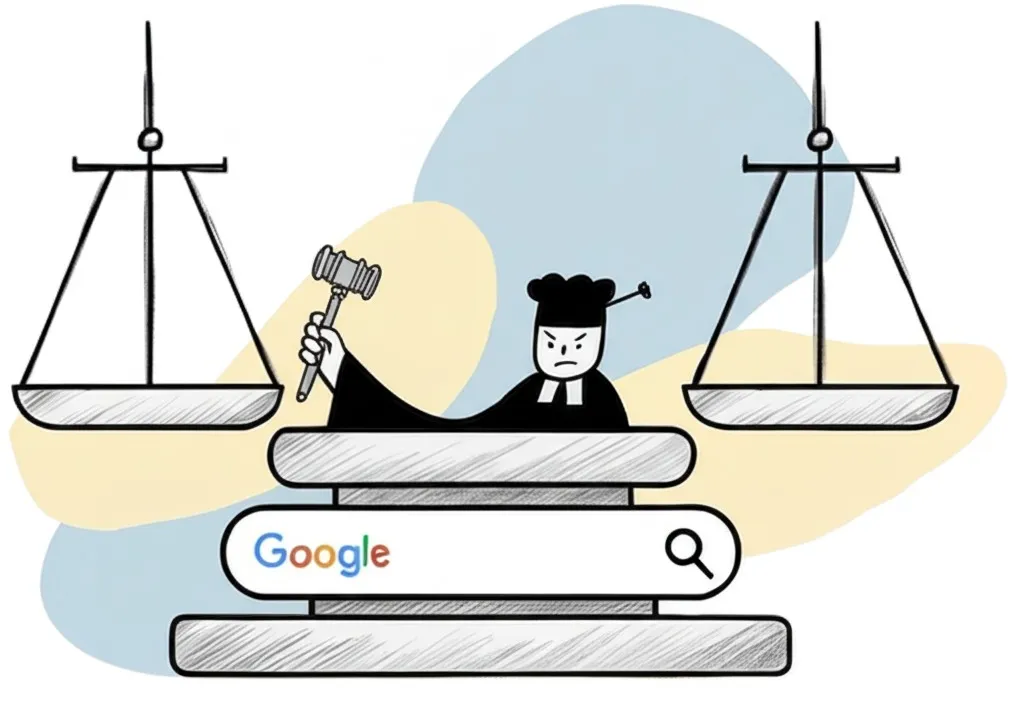
Image Credit: Lyna ™

Boost your skills with Growth Memo’s weekly expert insights. Subscribe for free!

Context

There are many lawsuits against Google, some of which come with the territory of being one of the biggest companies in the world.

However, two prominent cases stand out because they have the power to transform the company:

1. “Search Monopoly Lawsuit: United States v. Google LLC (2020)”

  1. The claim: Google unlawfully maintains monopolies in the search and search advertising markets by using exclusive agreements (e.g., with Apple) and paying device manufacturers to make Google the default search engine.
  2. Demanded remedies: Google should divest Chrome and Android (or remove mandatory Google services from Android), terminate exclusive agreements, add choice screens, and share data with competitors. Important: the judgment would last 10 years from its effective date, with the potential for early termination under certain circumstances.1
  3. Expected judgment: August 2025.

2. “Digital Advertising Lawsuit: United States v. Google LLC (2023)”

  1. The claim: Google has unlawfully monopolized key digital advertising technologies and markets, including ad exchanges and publisher ad servers. Google engages in exclusionary practices that stifle competition, such as acquiring competitors, manipulating auctions, and restricting publishers from using rival technology platforms.
  2. Demanded remedies: Google should sell Google Ad Exchange and Ad Publisher Server, allow advertisers and publishers to pick other services, and make auctions more transparent.
  3. Expected judgment: Early to mid-2025.

Each case will significantly change Google’s position if the remedies (consequences) come into rule. They already attract other lawsuits.

As I mentioned in my article, the Chegg lawsuit might have been strategically filed to build on top of these two DoJ lawsuits.

Two reasons: Trump and AI.

1. Administration

The Trump administration has cut the already dull teeth of many antitrust government bodies and runs a mafia/kleptocracy, which introduces a significant wildcard into both lawsuits.

  • Even though the first Google lawsuit started in Trump’s first term, Google understands that there is a chance the Trump administration will stop the DoJ lawsuit or weaken remedies and will do everything in its power to lobby for the outcome. Google tried to persuade Trump with a one-million-dollar gift from Sundar PichAI and complied with an executive Trump order to remove DEI programs and hiring goals for federal contractors.
  • Trump has spoken out against a break-up at an event in Chicago in October: “If you do that, are you going to destroy the company? What you can do without breaking it up is make sure it’s more fair.”2
  • Trump appointed Republican Andrew Ferguson as the new chairman of the Federal Trade Commission (FTC), making it more likely to steer the outcome in his favor. However, in March, the DoJ reaffirmed its position on divesting Chrome despite pulling back its ask for Google to divest its investments in AI (e.g., Anthropic).3

2. Competition From AI

AI hasn’t just threatened Google Search but also leveled the playing field.

Many products, from meta AI to ChatGPT & Co to Copilot, can answer questions now and are basically a search engine, which means Google’s monopoly position could be questioned.

  • Judge Mehta, who rules in the Search Monopoly case, addressed this point: “AI cannot replace the fundamental building blocks of search, including web crawling, indexing, and ranking.”
  • However, he could change his mind based on the rapid growth of many AI chatbots and the fact that so many new ones pop up left and right.

Conclusion: A Small Chance For The Open Web

Google is doing well: Search revenue has grown to almost $200 billion in 2024, up from $175 billion the year before.

Search ads still make up over 50% of Alphabet’s revenue, YouTube is stable, and Cloud offsets the dropping Network revenue.
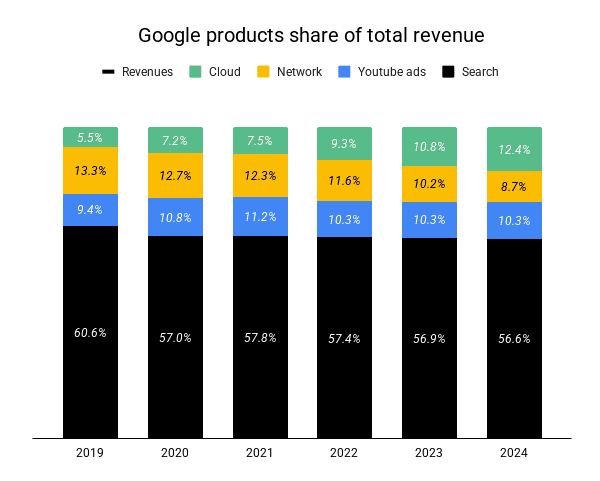
Alphabet still makes over 50% of revenue from Search ads (Image Credit: Kevin Indig)
  • Is Google doing well because people use it more or because advertisers have no alternative? Probably both: Sparktoro found that Google searches grew by 20% YoY in 2024. At the same time, “42% said Google and search engines are becoming less useful.” Maybe the explanation of the paradox is that more searches result from users not finding what they want.
  • Google is still the biggest source of traffic by a big margin, even if AI would mean 20-30% less referral traffic.

The lawsuit matters because if it goes through, it could accelerate or decelerate traffic from Google.

How the search ecosystem would change if the remedies went through as proposed:

  • Google will lose a significant data advantage from Chrome and competitors will benefit big time from Google’s data. I reported how Ecosia and QWANT are building their own search index to become independent of Google and Bing. Enforced data sharing would support this process and inspire competitors like DuckDuckGo.
  • Google would encounter a big hit in mobile traffic from Apple devices, similar to how it already sees a weakened market share in the EU (see the above article as well). Device manufacturers could pre-install different search engines, adding to the pain.
  • Google might make search better to compete harder, benefitting users. But it could also push Google to be even more aggressive about AI and send even less traffic to websites.

I concluded that one scenario is most likely to happen in my last post on the Search Monopoly case Monopoly:

Google must end its exclusivity deals immediately. Apple needs to let users choose a default search engine when setting up their devices. Google could get hefty fines for every year they keep the contract with Apple going.

Realistically, that still seems to be the most likely outcome. But for the web economy, it would be best if the judges in both lawsuits ruled against Google.


1 Source

2 Trump expected to shift course on antitrust, stop Google breakup

3 Trump’s Justice Department still wants to break up Google


Featured Image: Paulo Bobita/Search Engine Journal
Brand Visibility Is the New SEO

Brand visibility is becoming critical for AI search because consumers increasingly use ChatGPT, Gemini, Claude, and others for product and company recommendations.

As early as July 2023, a Capgemini study of consumers in 13 advanced economies (PDF) found that “generative AI tools such as ChatGPT are becoming the new go-to for 70% of consumers when it comes to seeking product or service recommendations, replacing traditional methods such as search.”

In other words, consumers’ use of genAI to discover brands and products is skyrocketing. Yet those platforms must be aware of your business or products to recommend them.

That’s where brand search comes into play. Search engines drive brand discovery for genAI platforms and research for humans.

In August 2024, SparkToro cited studies revealing that 99% of genAI users continued to use traditional search engines for details, such as specs, prices, and reviews. Hence consumers likely discover brands and products on genAI and go to Google, Bing, and others to learn more.

This trend will surely grow. The number and type of brand searches are now essential search metrics.

So what can we track and how?

Brand search volume

The easiest way to monitor brand visibility is via search engine data, tracking the number of queries on your company’s name and products.

There are a few options.

Search Console

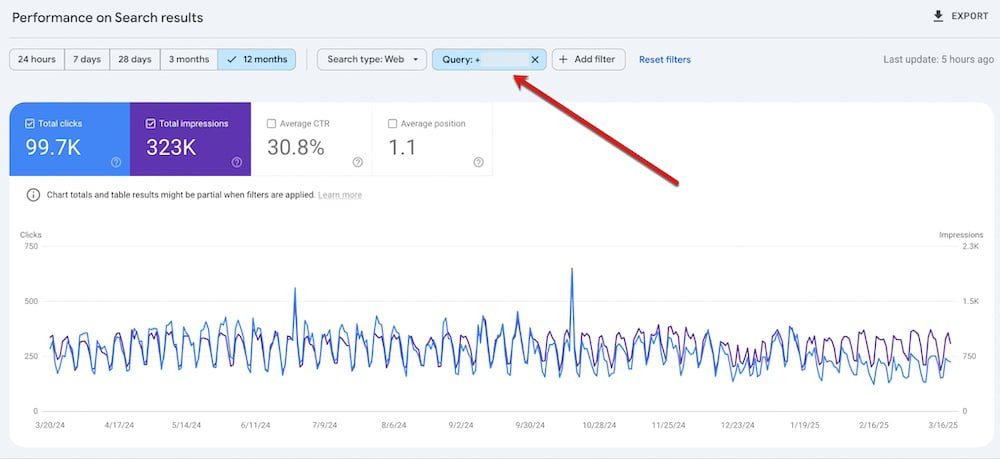
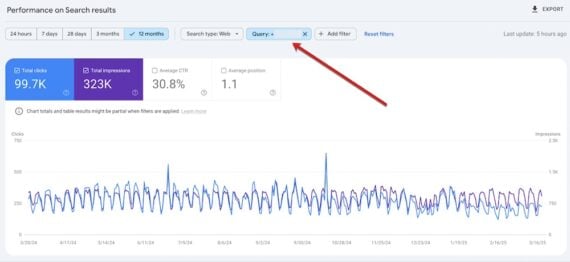
Search Console’s Performance section reports brand queries. Click Search results > Add filter > Query. Then enter your brand name for the number of impressions and clicks from searchers.

Screenshot of the Search Console report

Search Console reports impressions and clicks on any term, including a brand name. Click image to enlarge.

Google Trends

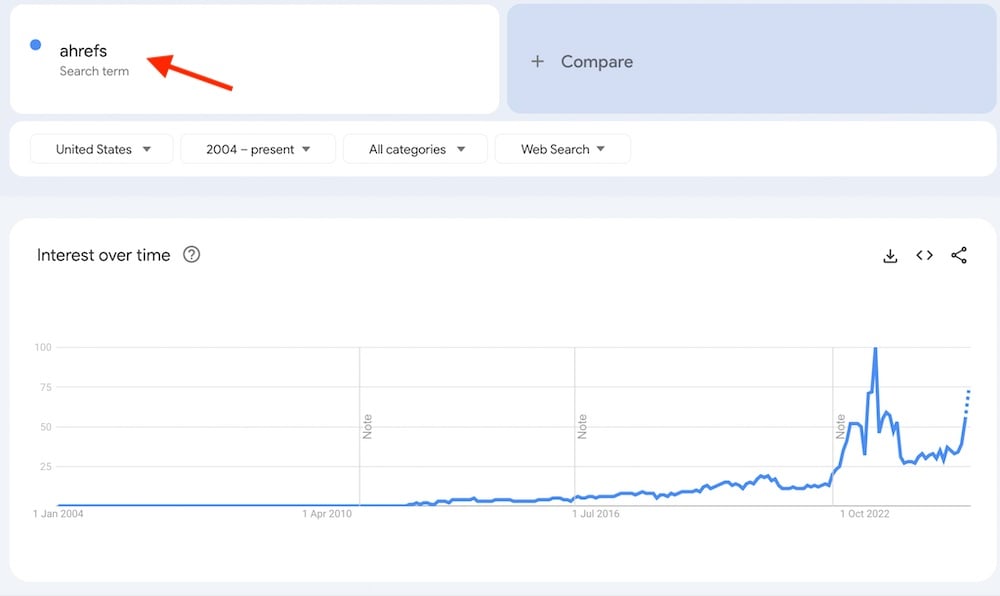
Unlike Search Console, Google Trends tracks competitors’ brands, too. Type your brand name or a competitor’s for trends.

Google Trends tracks any term — yours and a competitor’s. This example shows “ahrefs.” Click image to enlarge.

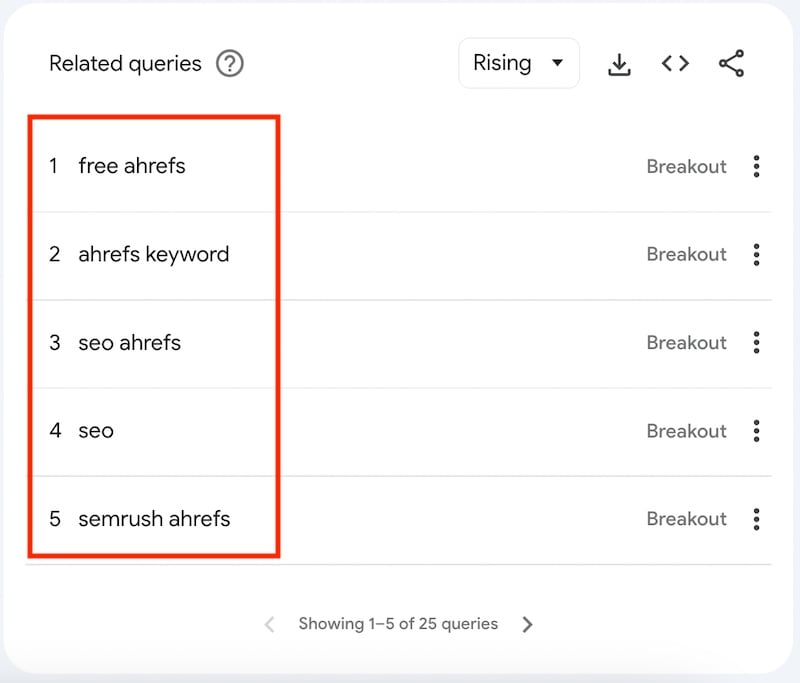
Google Trends will also report rising related queries that include a brand name. Glimpse, a freemium Chrome extension, overlays Google Trends data on important search metrics such as volume and long-tail queries containing your brand name and competitors’.

Google Trends reports rising queries that include a brand name, such as “ahrefs.” Click image to enlarge.

Semrush

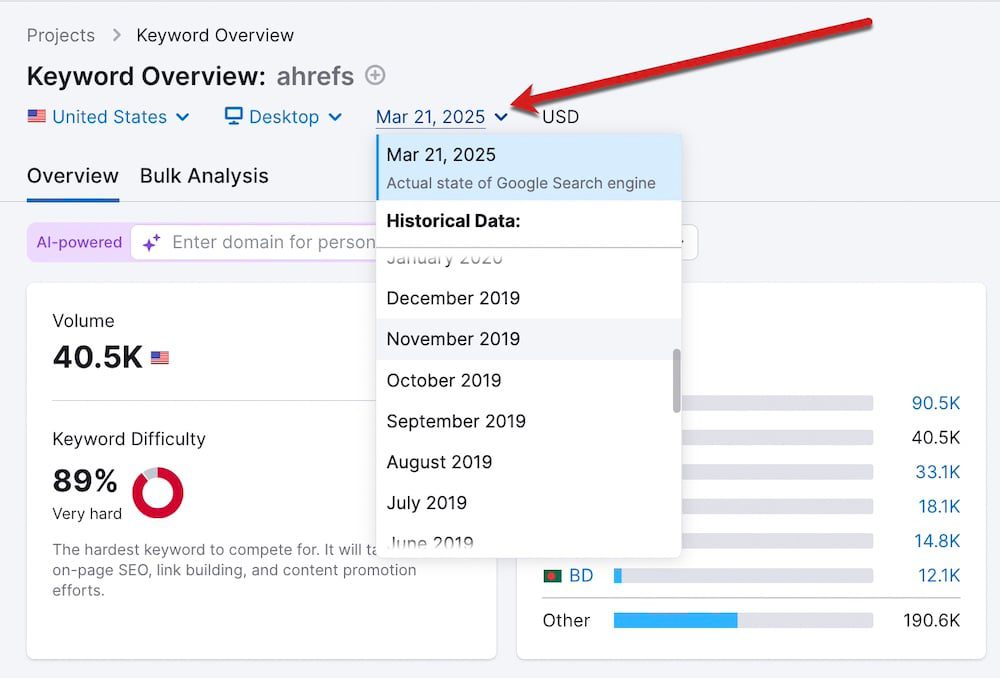
Semrush includes search volume for any keyword (versus a group of keywords in Google Ads reports) over time.

Use the “Keyword overview” tool in Semrush’s dashboard and select months and years in the dropdown menu.

Select months and years in Semrush’s “Keyword Overview” tool. Click image to enlarge.

Brand search impressions

Fewer queries in search engines result in clicks. Thus the number of brand impressions — searchers who view your organic brand listings — is now all-important.

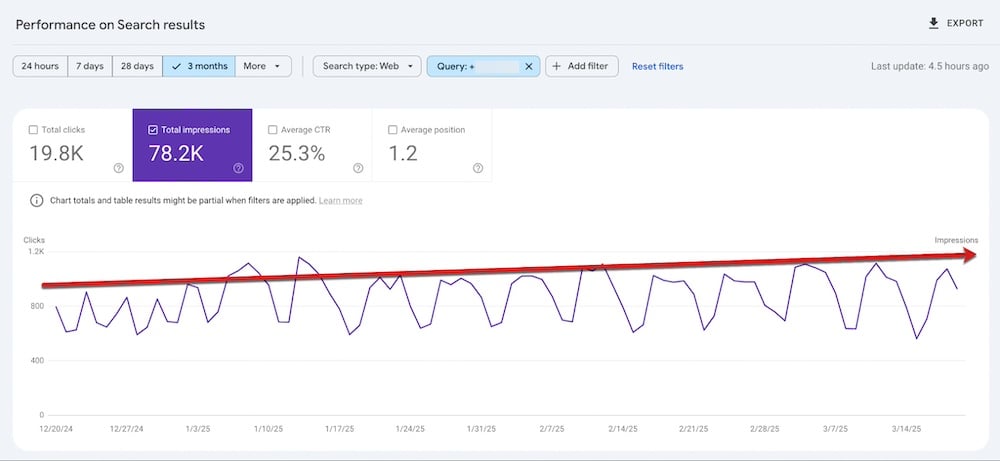
Use Search Console’s “Query” filter to track those impressions.

Screenshot a Search Console report for brand impressions.

Track brand-name impressions in Search Console. Click image to enlarge.

Google’s March Core Update: Early Observations From Initial Rollout via @sejournal, @MattGSouthern

Google’s March 2025 Core Update, announced on March 13th and expected to complete its rollout this week, is creating turbulence in search results according to multiple industry tracking tools.

Data from Local SEO Guide and SISTRIX indicate this may be a highly impactful update.

“Most Volatile” SERPs in 12 Months

According to tracking data from Local SEO Guide, which monitors 100,000 home services keywords, the week of March 10th showed the highest SERP volatility observed in over a year. This aligns with Google’s official announcement of the March Core Update on March 13th.

SISTRIX data confirms these findings, with its Google Update Radar showing movement beginning March 16th across both the UK and US markets. The company monitors one million SERPs daily to track the update’s impact.

Winners & Losers

Local SEO Guide identified several clear winners and losers in their tracking data. Sites gaining the most visibility include:

  • ThisOldHouse.com
  • Reddit.com
  • Yelp.com
  • HomeDepot.com
  • Quora.com

Conversely, sites experiencing the most significant drops in visibility include:

  • DIYChatroom.com
  • GarageJournal.com
  • Bluettipower.com
  • Everfence.com
  • MrHandyMan.com

SISTRIX’s analysis revealed additional impacted domains in the UK market, with significant losses for quora.com (-15.76%), vocabulary.com (-10.93%), and expedia.co.uk (-20.60%). Government sites weren’t spared either, with hmrc.gov.uk showing a dramatic 52.60% visibility decrease.

Retail Sector Impact

The retail sector has seen interesting shifts. SISTRIX data shows that notonthehighstreet.com experienced a 56.28% visibility increase in UK searches, while uniqlo.com saw a 76.12% gain.

On the negative side, several retailers lost ground, with zara.com dropping 24.00%, amazon.com declining 13.84%, and diy.com falling 7.75% in visibility.

Key Trends Emerging

Andrew Shotland, CEO of Local SEO Guide, identified several potential patterns in this update:

1. Forum Content Devaluation

Two forums, DIYChatroom and GarageJournal, saw visibility drops despite having experienced a 1,000%+ increase over the past year.

Shotland notes this may not be a direct demotion, but Google is elevating sites like Reddit alongside features like Discussions and Forums widgets and Popular Products grids.

2. Fight Against AI-Generated Content

Sites like Bluettipower.com, which appears to have created thousands of data-driven pages likely using AI, have seen visibility declines. Other sites with “kitchen-sink, made-it-for-SEO” content are similarly affected.

3. Cross-Sector Impact

Unlike some updates targeting specific niches, this core update affects sites across various sectors, including retail, government, forums, and content publishers.

What’s Next

Google has provided little information about the improvements to its search algorithm in this core update. The full effects may not be clear until the rollout is complete.

Google’s March Core algorithm update is still rolling out. Search Engine Journal will monitor changes and offer updates as more information becomes available. Please continue sending in your reports.


Featured Image: eamesBot/Shutterstock

Google Provides Timeline To Improve Publishers’ Search Visibility via @sejournal, @MattGSouthern

Google has publicly committed to December 31 as a deadline for improving how independent publishers appear in search results.

This timeline emerged during an exchange on X between Danny Sullivan, Google’s Search Liaison, and several concerned publishers.

A Turning Point for Independent Publishers?

The exchange began with Jonathan Jones sharing notes from a discussion where Google addressed concerns about independent content creators.

According to Jones’ post, Sullivan acknowledged Google’s need to “reward sites better” and expressed interest in helping “smaller independent sites to succeed.”

What made this conversation notable was publisher Nate Hake’s push for accountability, which resulted in Google providing a deadline. Something Google typically avoids when discussing ranking improvements.

“Can we take that to mean ‘December 31, 2025’ (if not before)?” Hake asked directly.

“Yes,” responded Google’s Search Liaison, adding the caveat that “this doesn’t mean all sites will go back up to wherever they were if they are down from a previous peak.”

Long-Standing Frustrations Come to a Head

The exchange highlighted the tension between Google and independent publishers, which have seen their search visibility decline in recent years.

“Honestly, everything you are saying sounds exactly like what you said when we visited Google HQ in October,” Hake wrote. “Same words, same inaction.”

Hake then detailed what he claims Google has done since October: “reduced independent publisher visibility even more” while continuing “to preference Reddit, Quora, and the 16 VC-backed media companies.”

Others joined the conversation, expressing similar frustrations with Google’s communication style. Mordy Oberstein characterized Google’s guidance as “ethereal” and “anything but concrete and consistent,” noting that publishers need more precise models of “what good sites look like.”

Google’s Response: Gradual Improvements, Not a Single Update

In response to these criticisms, Sullivan explained that improvements would be incremental rather than delivered in one major update:

“There’s no specific date because there’s no one specific thing that the teams are working on to improve. There are multiple things, because search has multiple things that are involved in ranking.”

He added:

“There have been some changes already launched with that goal. Some sites may have benefited from them; others might not, but that’s also because the sites themselves are all different.”

Sullivan acknowledged the need for better guidance, stating:

“I’d like to see us do a better job with guidance and documentation focused on content issues to add to our existing stuff that’s primarily about technical issues.”

Why This Matters

Many publishers have reported traffic declines following recent Google updates, with some claiming visibility has dropped despite maintaining high-quality content.

As Google’s March Core Update continues to roll out, publishers are anxious to see if it will resolve their ranking issues.

Some websites might notice changes with this update. However, we can expect improvements for more publishers by December.

Sullivan’s commitment is a small but notable victory for those who have pushed for greater transparency and accountability from Google.

Google Search Central Live NYC: Insights On SEO For AI Overviews via @sejournal, @martinibuster

Danny Sullivan, Google’s Search Liaison, shared insights about AI Overviews, explaining how predictive summaries, grounding links, and the query fan-out technique work together to shape AI-generated search results.

Optimizing For AIO

Danny Sullivan shared insights into how AI Overviews are generated, helping explain why Google may link to websites that don’t match the typical search results. While the links can differ, he emphasized that the fundamentals of search optimization remain unchanged.

This is what Danny Sullivan said, based on my notes:

“The core fundamental things haven’t really changed. If you’re doing things that are making you successful on search, those sorts of things should transfer into some of the things that you see in the generative AI kind of summaries.”

Google Explains Why AIO Results Are Different

One of the main takeaways from this part of Danny’s presentation was his explanation of why Google AIO search results are different. This is the clearest explanation of why the AIO search results are different, every SEO and publisher needs to know this.

He introduced two concepts to familiarize yourself with in order to better understand AIO search results.

  1. Predictive Summaries
  2. Grounding Links

Predictive Summaries

Danny solved the mystery behind AIO search results that show content and links that are different from what organic search results show, which makes it harder to understand how to optimize for that kind of AI search results.

He shared that the reason for that kind of AIO is something called predictive summaries. Predictive summaries show answers to a search query but also try to predict related variations of what a user will also want to see. This sounds a lot like Google’s patent about Information Gain. Information Gain is about predicting the next question that a searcher may ask after reading the answer to their present question. Information gain is a patent that is strictly to the context of AI Search and AI Assistants.

Here is what he said, according to my notes:

“One thing I think that people find really confusing sometimes is that they’ll do a query and especially you’ll see …these are the top 10 results, but I don’t see them in the AIO, what’s going on?

And it’s like, yeah, the query in the search box is the same query, but the model that’s going out there to try to understand what to show is kind of an overview, going beyond just the top 10 results. It’s understanding a lot of results and it’s understanding a lot of variations that you might kind of get and so that it’s coming back and it’s trying to provide its predictive summary of what the query is related to.”

Grounding Links

Sullivan also revealed that “grounding links” are another reason why AIO search results are different from the regular organic search results. An AIO search result is a summary of a topic that includes facts about multiple subtopics. The purpose of grounding is to anchor the entire summary to verifiable information from the web ecosystem.

In the context of AIO, grounding is the process of confirming the factual authenticity of the AI summaries so that a searcher can click to read about any subtopic discussed in the answer summary provided by AIO. This is the second reason why the links in AIO show a variety not normally seen in the organic search results.

One way to look at this is that the links are more contextual than the regular ten blue links of the organic search results. These contextual links are also referred to as qualified clicks or qualified links, links that are hyper-specific and more relevant in general than organic search results.

Danny appears to say that the grounding links are created from searches that are related to the initial search query, but are not the same. Like, if you want to explain how a conventional automobile runs, you need information about the powertrain which is made up of a gas combustion engine, a transmission, the axles and so on. Answering a complex question requires grounding from a wide array of information sources.

According to my notes, this is how Danny Sullivan explained it:

“And then on top of that, it’s then also trying to bring in the grounding links. And those grounding links, because it kind of comes from a broader set aren’t just going to match. The queries are going to be different and the overall set is going to be different.

Which is why it’s a great opportunity for diversity and whatever our query thing is that we say, but that’s why you can see different things that are showing there.”

Don’t Mess Up Your Rankings

Sullivan cautioned about trying to rank for both the organic and the different parts of the AIO summaries, saying that it’s likely to “mess things up” because “it doesn’t really work like that.”

Query Fan-Out Technique

Danny Sullivan also touched on the topic of AI Mode, saying that right now it’s not really something to optimize for because it’s still in Google Labs and it’s very likely to change and be something different if it ever gets out of Google Labs.

But he did say that AI Mode uses something called a query fan-out technique.

He said:

“…one of the things they talk about is like ‘we use an advanced query fan out technique with multiple related queries in it…’ And it’s basically that what I said before.

You issued a query. You try to understand the variations and things that are related. which by the way is not that much different to how search works at the moment even when you didn’t have the AI elements to it. Because when you would issue a query now we try to understand synonyms, we try to understand the meaning of the entire query. If it’s a sentence, we try to match it in all sorts of different ways …because sometimes it just brings you better results.”

Takeaways:

Google Search Liaison, aka Danny Sullivan, encouraged the use of the core SEO fundamentals, saying that they are still relevant for ranking. Danny explained why the links in AI Overviews can sometimes differ significantly from those in the organic search results, introducing three concepts that help understand AIO search results better.

Three concepts related to AIO search results to understand:

  1. Predictive Summaries
  2. Grounding Links
  3. Query Fan-Out Technique
Google Business Profile Suspensions Rise, But Appeals Are Delayed

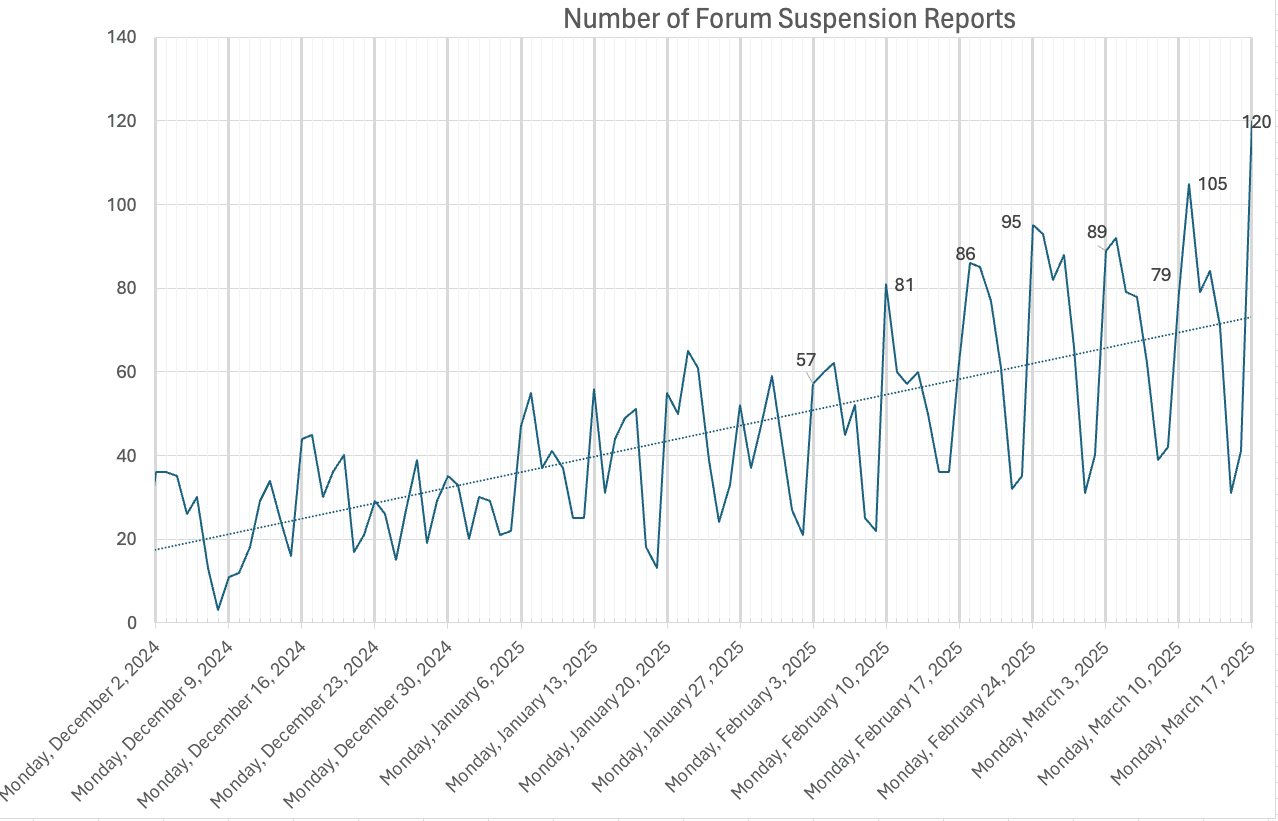
Google Business Profile (GBP) suspensions have steadily risen since January, and as they increase, appeal resolution times have grown significantly – from about five days to nearly five weeks.

As a Platinum Product Expert in the Google Business Profile Support Forums, I help small businesses navigate Google’s GBP platform.

For many of these SMBs, Google is a primary lead driver, and when their listing goes south due to a suspension, life can get very hard.

Image from author, March 2025

What We Know

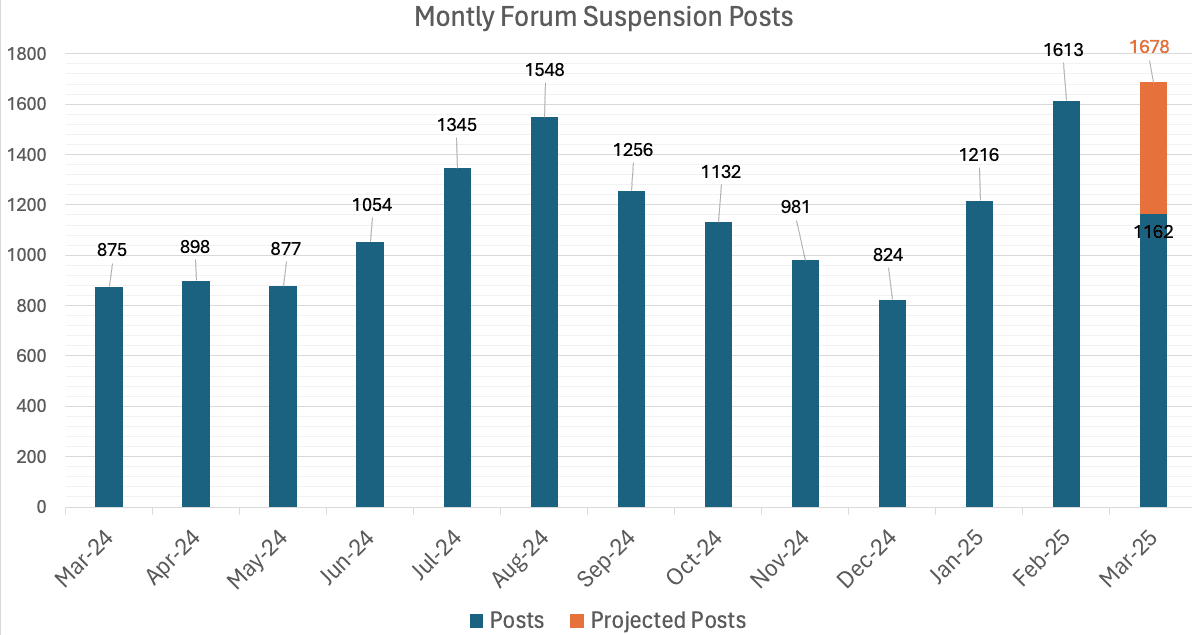
We noticed in February that forum complaints about suspensions reached their highest level since last August.

Users typically try support first but when frustrated, a subset of them find their way to the forums to see what their next steps are.

The forums provide a canary-in-the-coal-mine function allowing outside observers to understand problems that Google Business Profiles are currently experiencing.

Based on the current daily average posting rate, we estimate that March’s suspension-related posts will surpass February’s total. (Image from author, March 2025)

The weekly influx of these posts has not slowed. In fact, it’s accelerating.

Posts peak on either Mondays or Tuesdays, when business owners return to the office to deal with their suspensions and appeals.

You can see in the following chart that these daily high points and weekly totals continue to increase.

Image from author, March 2025

Why It’s Happening

Many others, who are managing local profiles, report an uptick in suspensions. The exact reason for this increase remains unclear.

As usual, Google has provided no explanation, despite overwhelming demand on both support channels and the forum.

When Google updates the algo, perhaps to increase trust in its listings, suspensions seem to be triggered – even when the user makes even minor changes to the profile.

Unfortunately, we do not yet know which attributes Google is finding unacceptable.

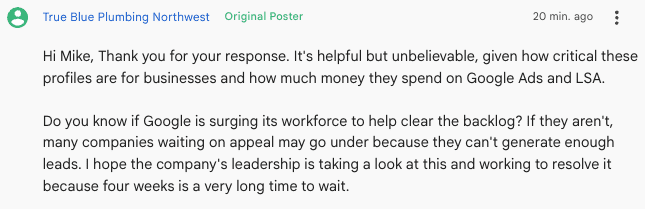
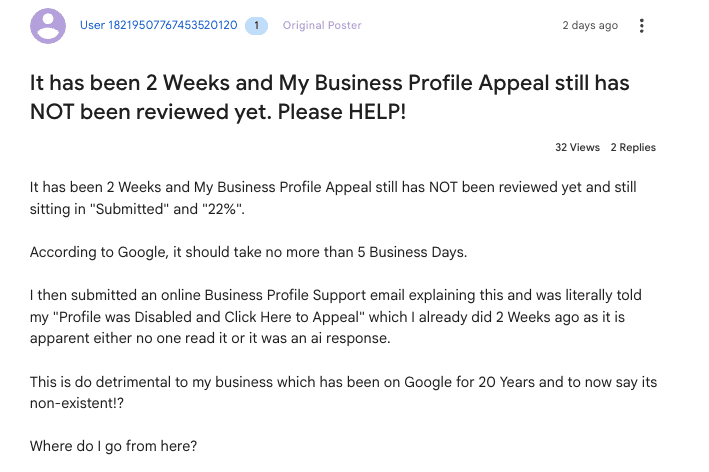
Google staffs their support for the “typical” level of suspensions. Appeals of those suspensions are handled by humans, and a suspension increase can cause the staff to get further and further behind.

These delays contribute to some of the “noise” we are seeing in the forum. At this point, the appeal process is taking somewhere on the order of 4 weeks or more, not the ~5 days noted by Google.

Image from author, March 2025

Bulk & API Accounts Also Impacted

GBP Bulk and API accounts – where a single corporate account can add new locations in bulk, with minimal additional verification or change information – have been impacted as well.

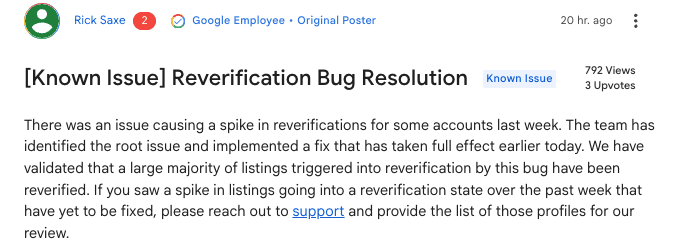
Several bulk and API account managers report that individual listings within bulk and API accounts now require manual re-verification even after minor edits, creating massive headaches for the corporate marketing teams trying to re-verify a listing in Peoria.

Late yesterday, Google confirmed the re-verification issues in a statement on the forum.

Our research indicates that the problem started much earlier than last week, and we are not convinced that the problem is yet solved.

Image from author, March 2025

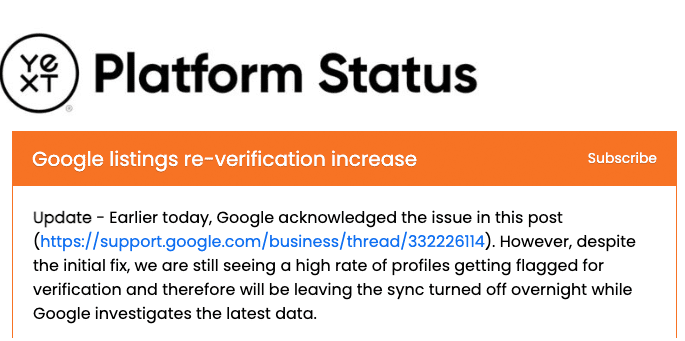
However, Yext was reporting continuing issues on their system update page.

Image from author, March 2025

Don’t Make Changes

We strongly advise not making any changes to your listing at this time.

It appears Google does not yet have a handle on whatever is causing the increase in suspensions and re-verifications.

It obviously doesn’t have a handle on dealing with the large number of appeals. Thus, if your listing gets suspended, you will experience significant delays in getting reinstated.

We recommend you pause making any changes to your individual, API-managed, and bulk listings, at least until Google clarifies the issues or, more importantly, until support addresses the appeals backlog.

More Resources:


Featured Image: voronaman/Shutterstock

Q2 SEO & AI Update: How To Track & Optimize AI Search Performance [Webinar] via @sejournal, @hethr_campbell

Are you ready to ensure your SEO tools deliver the most accurate, real-time data in 2025 and beyond?

With the constant evolution of Google’s search algorithms, staying ahead requires not just adapting to changes but anticipating them. Join us on March 27, 2025, for our in-depth webinar, “Q2 SEO & AI Update: How To Track & Optimize AI Search Performance,” where we’ll explore how SEO professionals and B2B companies can effectively navigate these changes.

In this session, you’ll learn:

  • SERP Data Accuracy: Why precise SERP data is essential for SEO success and strategic decision-making.
  • AI-Driven Search Impact: How AI is changing SEO tracking and the adaptive strategies you need to employ.
  • Evaluating SEO Data Providers: Key factors for assessing the reliability and long-term viability of your data sources.

Exclusive Insights from Industry Experts

Gain insights from Bright Data’s top specialists, who will share actionable strategies that you can implement immediately to keep your data accurate and powerful using APIs. Prepare for an enlightening discussion on adapting your strategies to leverage AI for enhanced SEO visibility.

Live Q&A: Get Your Questions Answered

The webinar concludes with a LIVE Q&A session, allowing you to ask our hosts about specific challenges and opportunities in optimizing for AI-enhanced SERPs.

Don’t Miss Out!

Prepare yourself for the future of SEO data collection and strategy with this powerful new webinar. Embrace the tools and knowledge necessary to dominate the new landscape of AI-driven search results.

Can’t attend live? No worries—register anyway, and we’ll send you the recording to ensure you don’t miss out on these crucial insights.

Google Explains Why Indexed Pages May Not Appear In Search via @sejournal, @MattGSouthern

Google’s Martin Splitt explains why indexed pages may not appear in search results, highlighting relevance and ranking competition.

  • Indexed pages may not appear if other pages are more relevant or user engagement is low.
  • Google’s process involves discovery, crawling, indexing, and ranking for visibility.
  • Focus on high-quality, user-focused content to improve search visibility.
How to Beat Amazon at SEO

Ted Kubaitis once managed organic search for a retailer with 25,000 SKUs and 500 categories. He feared competing against Amazon for rankings until he realized most of its product pages had zero external links. Then an epiphany hit.

“All it took was 25 backlinks,” he told me.

Ted is now the founder of SEO Tool Lab, a prominent agency and software provider, and the host of “SEO Fight Club,” a YouTube show.

He and I spoke last month at a conference. I asked him about today’s SERPs, keyword priorities, content marketing, and, yes, competing against ecommerce giants.

The entire audio of that conversation is embedded below. The transcript is edited for length and clarity.

Eric Schwartzman:  Search engine result pages have changed dramatically over the last few months.

Ted Kubaitis: Right. There are keywords now where the first organic result is below the fold — effectively page two. Those keywords aren’t worth targeting anymore.

The Google search result page is now a universal search. It’s multiple blended result sets — ads,  products, “People also ask,” local packs, all kinds of things are now above organic listings.

Search engine optimizers must consider two things: Where do I rank organically, and where does the listing appear among all those options?

Schwartzman: What are the best keywords to target for an online store?

Kubaitis: It’s an important question because if the targeting is wrong, the SEO is wrong. It requires a lot of time and effort to figure out. I would start with the names of products and categories. Names are so impactful.

Look at the links in SERPs; many are the actual search terms. A merchant might have a “Gifts and Delights” category, but how many people search for “gifts and delights”? What the heck is a delight? I guarantee “gifts and delights” is a zero-volume keyword.

So even if you rank number one, you’ve won nothing. But if you change the name to “Unique Gift Ideas,” you will now have a search term worth winning. Go through all of your categories and product names. Make sure they’re all named something that has search volume.

Google Trends can help identify those high-volume names. Look at the trending cluster topics for ideas. Consider, too, adding a widget or word cloud to a product page with keyword variants and even typos.

Merchants with multiple SKUs of a single item could name each with a top keyword variant.

Schwartzman: How did you learn ecommerce SEO?

Kubaitis: I was a web developer for a large online retailer. They saw that I was good with SEO, so I took it over as a primary responsibility. I ended up doing SEO for that retailer for almost 20 years. I helped them grow from $5 million in annual revenue to $65 million with a $40 average cart size. So a lot of carts. High volume, low margin. We had 25,000 SKUs across 500 product categories.

We competed against Amazon and all the big marketplaces. A lot of sellers think they can’t compete against those sites, but Amazon’s product pages often have zero external backlinks. You can beat them with 25 backlinks. I spent years being afraid to compete with Amazon. I finally mustered up the courage; all it took was 25 backlinks.

Don’t make my mistake.

Schwartzman: Let’s switch to content marketing. Ecommerce stores often launch blogs to attract traffic for products. What are your thoughts about that?

Kubaitis: Blogs can help, but executing the strategy is often flawed and ends up causing more harm. Most online retailers have a problem with keyword cannibalization between their home page, categories, and product pages. Then they publish blog posts that overlap with the same keywords.

A better ecommerce strategy involves multiple websites. For example, a seller of high-end poker tables could launch a blog site about poker rules, professional tournaments, and related — and then advertise the tables there. The seller would have multiple marketing assets and free advertising. The seller can test keywords that the store couldn’t otherwise target. And since they’re on different domains, they’re not cannibalizing each other.

I tell retailers a blog is helpful on a different domain, but four out of five have a problem when it’s on their ecommerce sites.

Schwartzman: Tell us about your company, SEO Tool Lab.

Kubaitis: Our primary tool is called Cora. It uses statistical analysis to determine which elements on your website and your competitors’ impact rankings for a keyword. Cora reduces the possibilities from thousands to a few dozen to focus on.

Plus, we host a weekly YouTube show called SEO Fight Club. It’s an open debate and peer review of SEO tactics, tools, and trends.

High-Quality Conversions: How To Optimize Your Website & Boost Growth via @sejournal, @lorenbaker

Ready to turn your site into a powerful growth engine in 2025? 

Watch on-demand as we unpack the strategies top brands use to optimize their sites for better search performance and more conversions in our exclusive webinar.

You’ll learn:

  • A comprehensive look at the five core focus areas of website optimization, and why they matter.
  • Practical tactics for improving keyword targeting, site structure, page speed, CTAs, and more.
  • The best tools and resources to track performance, identify opportunities, and refine your optimization strategy.

With Zack Kadish, Sr. SEO Strategy Director at Conductor, we’ll provide actionable optimization strategies you can start implementing on your website immediately.

Whether you’re new to website optimization or looking to fine-tune your approach, this webinar will equip you with the knowledge and tools to maximize your website’s potential.

View the slides below, or check out the full webinar for all the details.

Join Us For Our Next Webinar!

Unlock Local SEO: Online Review Trends Broken Down by Industry

Join us as we explore data-backed insights into the impact of reputation management, revealing key trends in customer feedback and review behaviors.