AI citations explained: how they work and how to get them

AI search is changing how visibility works. Users are getting direct answers instead of clicking links, which means fewer chances to drive traffic. In this shift, AI citations are becoming the new gatekeepers, deciding which sources get featured in answers. Over the past year, search has moved from ranking pages to selecting sources, pushing us from traditional SEO toward AI-driven visibility.

In this article, we’ll explain what AI citations are, how they work, and how you can earn them.

Table of contents

Key takeaways

  • AI citations are references that search engines include in AI-generated answers, enhancing credibility and visibility
  • This shift in visibility moves from traditional SEO ranking to AI-driven inclusion as a key factor for brand presence
  • AI tools retrieve information from diverse sources, with citations coming from both top-ranking and deeper pages
  • To earn AI citations, create valuable, structured content and establish topical authority across your niche
  • Tools like Yoast AI Brand Insights help track your AI visibility and citation presence across platforms

What are AI citations?

Citations have always been a way to show where information comes from and why it can be trusted. The same idea now applies to AI-generated answers.

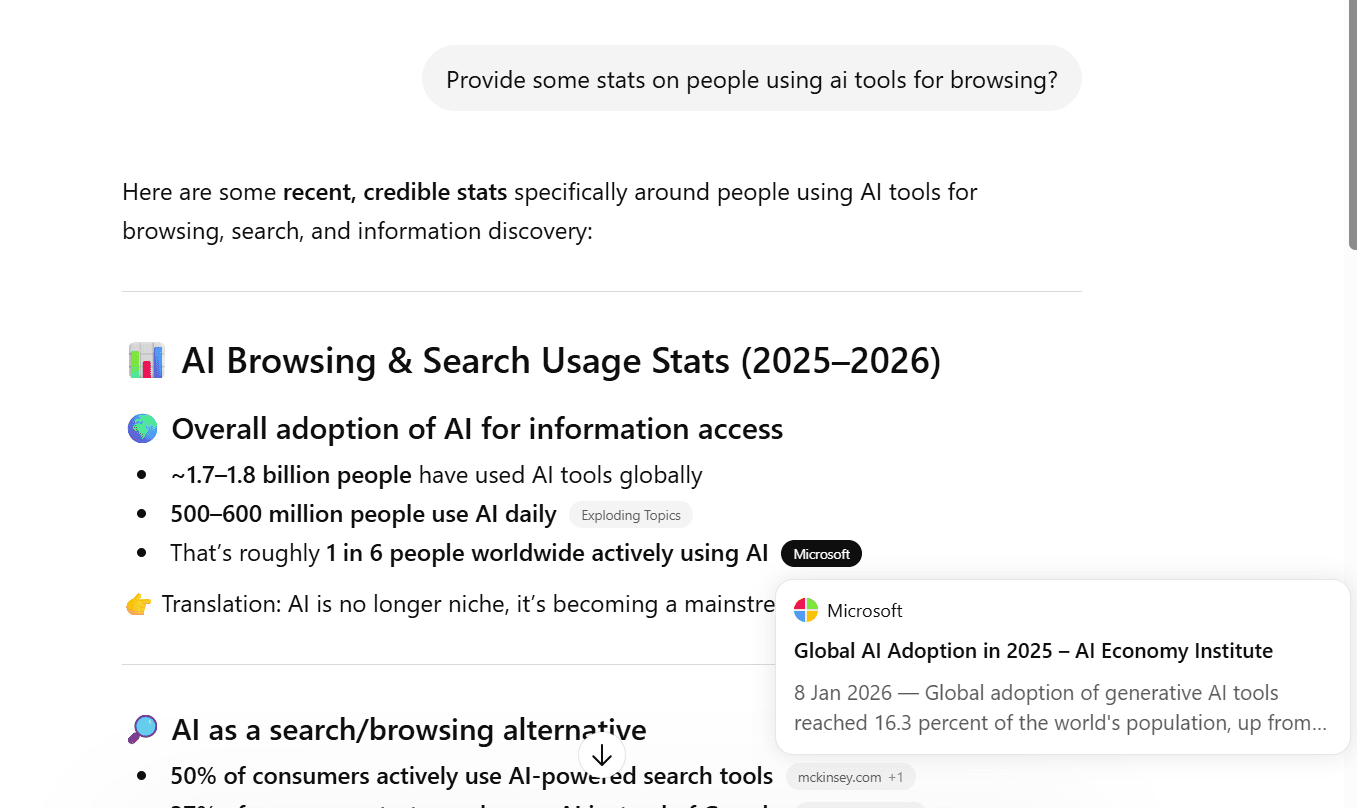
ChatGPT cites resources in its answer

AI citations are the references that search engines and AI tools include to support the answers they generate. When a tool like ChatGPT responds to a query, it often points to specific pages or sources that back up the information. These references act as signals of credibility, helping users understand where the answer is coming from and giving them a way to explore the original content.

In simple terms, if your content is cited, it becomes part of the answer itself, and not just another link in the results.

If AI citations determine what gets included in answers, it’s worth asking how this differs from how search used to work. Because this isn’t just a feature update, it’s a shift in how visibility itself is earned.

In the traditional model, ranking higher meant getting more clicks. In AI-driven search, being selected as a source matters just as much, if not more.

Aspect Traditional SEO AI citations
Visibility Blue links Ai-generated answers
Traffic Click-driven Influence-driven
Authority signal Backlinks Credibility and accuracy
User action Visit website Consume instant answers

This doesn’t mean traditional SEO is going away. Rankings, indexing, and backlinks still play a critical role. However, how that value gets surfaced is changing. Instead of just competing for position on a results page, you’re now competing to be part of the answer itself.

Do check out Alex Moss’s talk at BrightonSEO, 2025, on the evolution of search intent and discoverability.

Where do AI citations come from?

Before you try to earn AI citations, it’s important to understand where they actually come from. Because you’re not just competing with other blog posts, you’re competing with an entire information ecosystem.

AI models pull their answers from a mix of sources:

  • Web content: Blog posts, guides, landing pages, and long-form articles
  • Structured sources: Platforms like Wikipedia, documentation hubs, and product data feeds
  • Forums and UGC: Discussions from Reddit, Quora, and Stack Overflow
  • First-party data: Brand websites, help centers, and official resources

How the sources are selected is quite interesting. A recent analysis of Google’s AI Overviews found that citations don’t strictly come from top-ranking pages. In fact, only about 38% of cited sources rank in the top 10 results, meaning a large share comes from deeper pages or alternative formats.

Another key insight by CXL: AI models tend to prioritize clear, early answers within the content, with a significant portion of citations pulled from the top sections of a page rather than from deeper sections.

The takeaway is simple. AI systems are not just ranking content; they are selecting the most useful pieces of information across formats and sources. That means your content is competing not only for rankings but also for clarity, structure, and trustworthiness across this entire ecosystem.

Types of AI citations

Not all AI citations look the same. Depending on the query and intent, AI models pull in different types of sources to support their answers.

Broadly, you’ll see three main types:

Informational citations

These are the most common. AI tools refer to blog posts, guides, and educational content to explain concepts or answer questions. If someone asks, “what are AI citations,” the sources cited will typically be long-form, explanatory content.
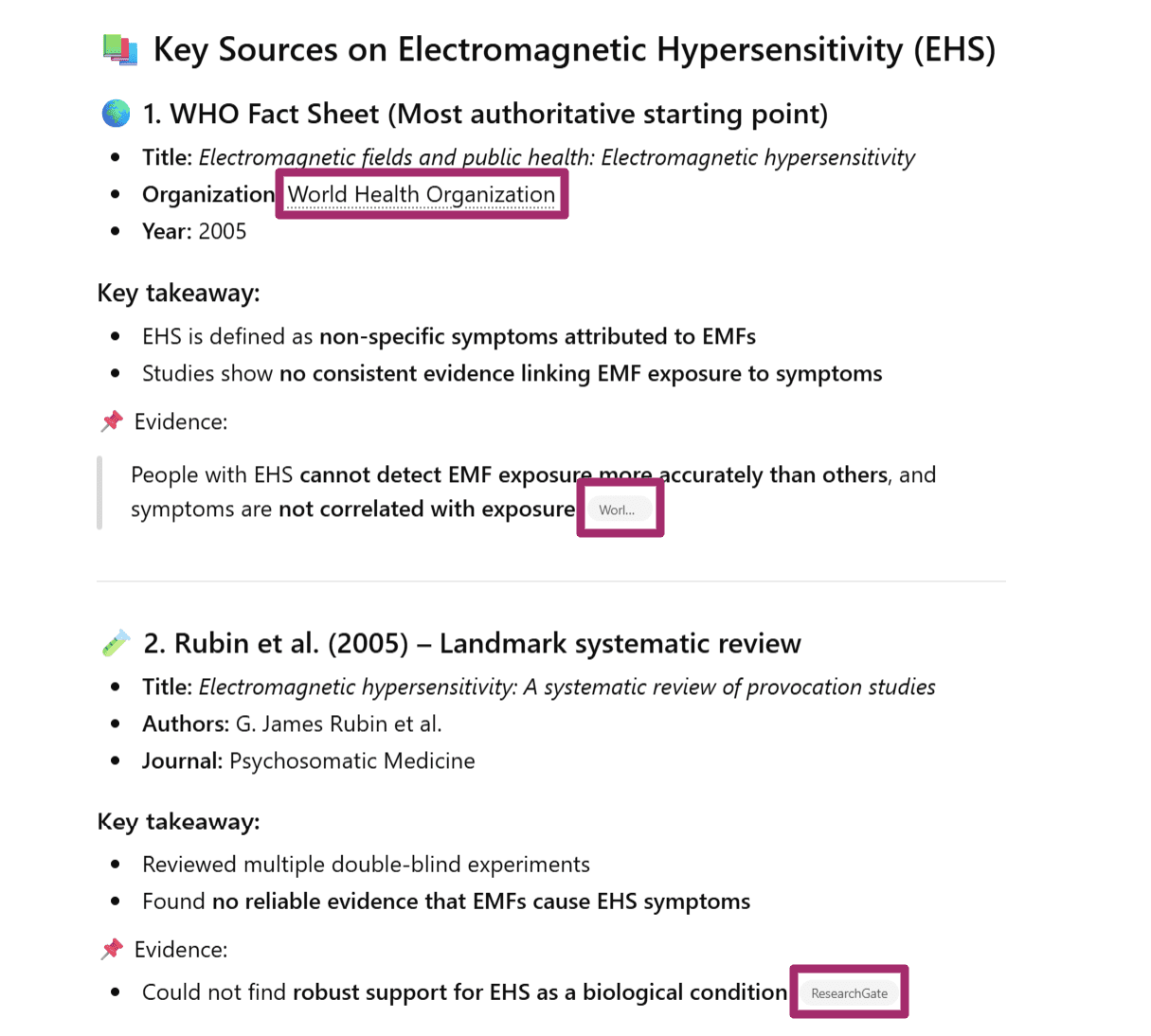
informational citation example
Informational citations made by ChatGPT

Product citations

These show up in commercial or comparison queries. For example, “best SEO tools” or “top project management software.” Here, AI models cite product pages, listicles, and review-based content to support recommendations.
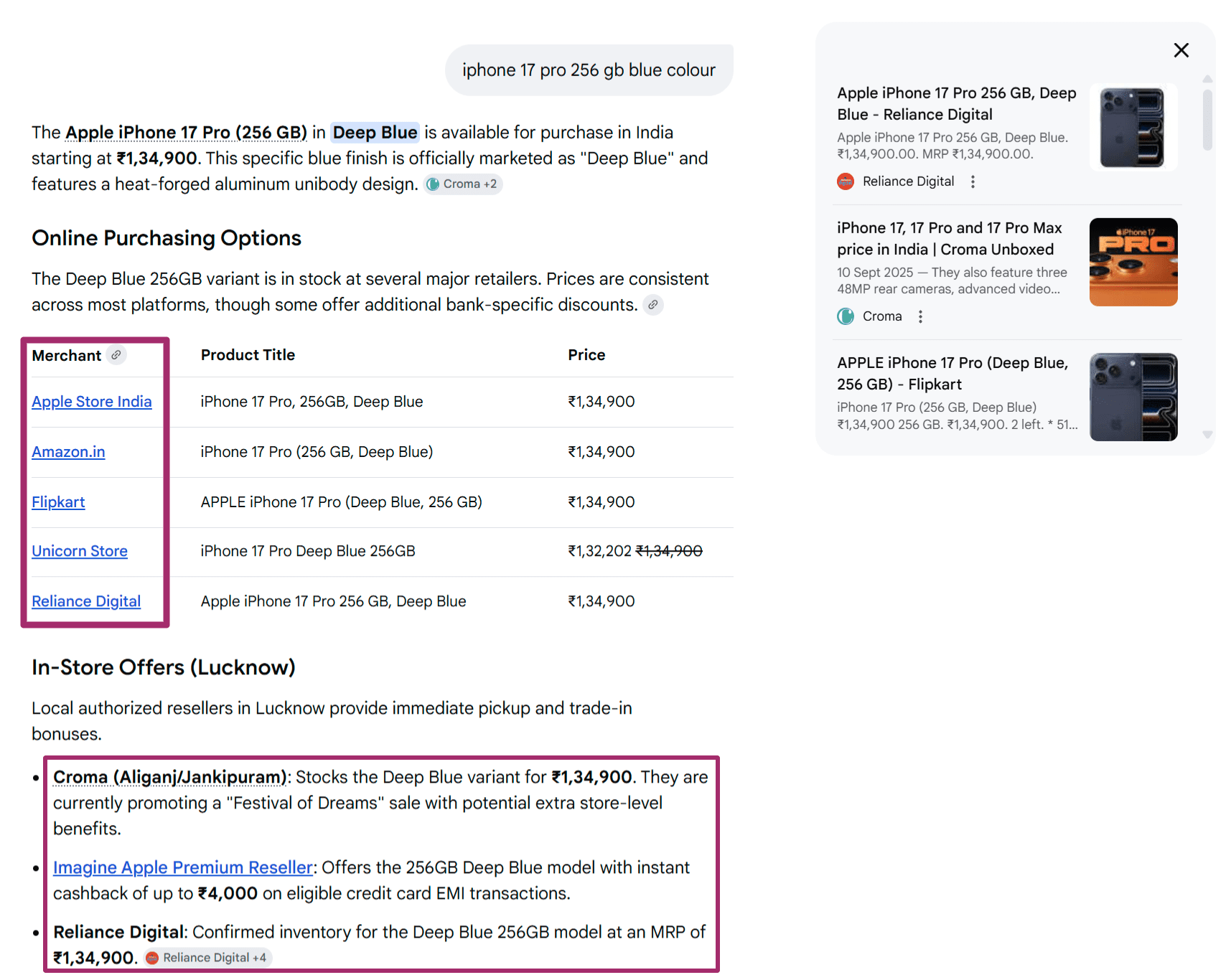
product citation example
Product citations by Google AI mode, the model shares both online and offline options

Multimedia citations

AI doesn’t rely solely on text. Videos, images, and other visual formats can also be cited, especially when they better explain something than text alone. Think tutorials, walkthroughs, or demonstrations.
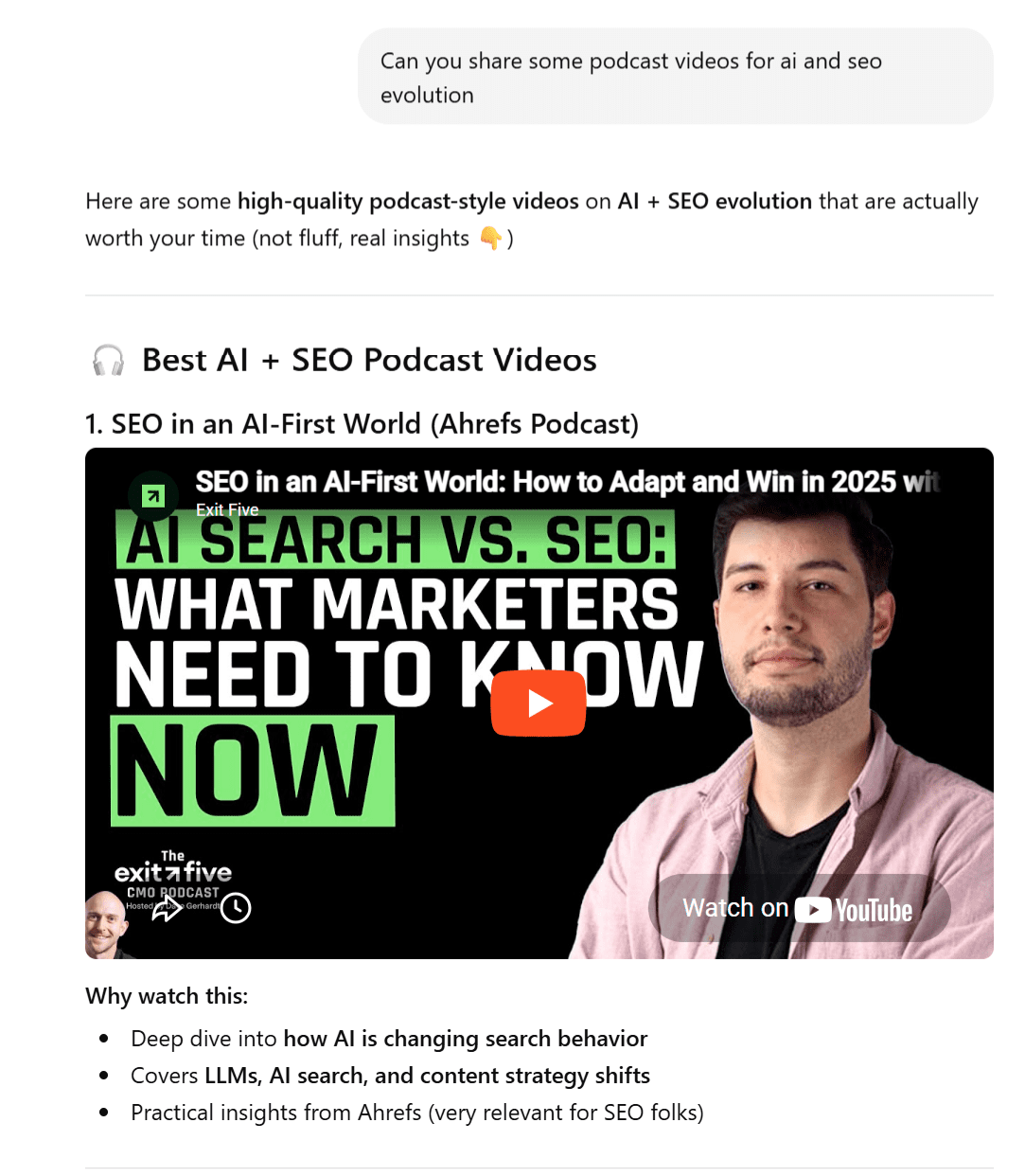
multimedia ai citation example
Multimedia citation for a query by ChatGPT

How AI citations impact brand credibility

AI citations don’t just drive visibility. They shape how your brand is perceived before a user even visits your website.

When your content is cited in an AI-generated answer, some of that trust transfers to your brand. You’re no longer just another result on a page; you’re part of the answer itself. And that changes how users interpret your authority.

This also means buyer decisions are starting earlier. Users may form opinions, shortlist options, or even make decisions directly from AI responses, without ever clicking through. If your brand isn’t cited, you’re not part of that consideration set.

There’s also a strong signal of relevance at play. Being included in AI answers suggests that your content is not just optimized, but genuinely useful in context. It tells both users and algorithms that your brand deserves to be surfaced.

Over time, this creates a compounding effect. The more your content is cited, the more your brand becomes associated with specific topics. That repeated exposure builds familiarity, authority, and trust.

How AI citations work: a complete breakdown

So far, we’ve talked about what AI citations are and where they come from. But how do AI systems actually decide what to cite?

Let’s break it down.
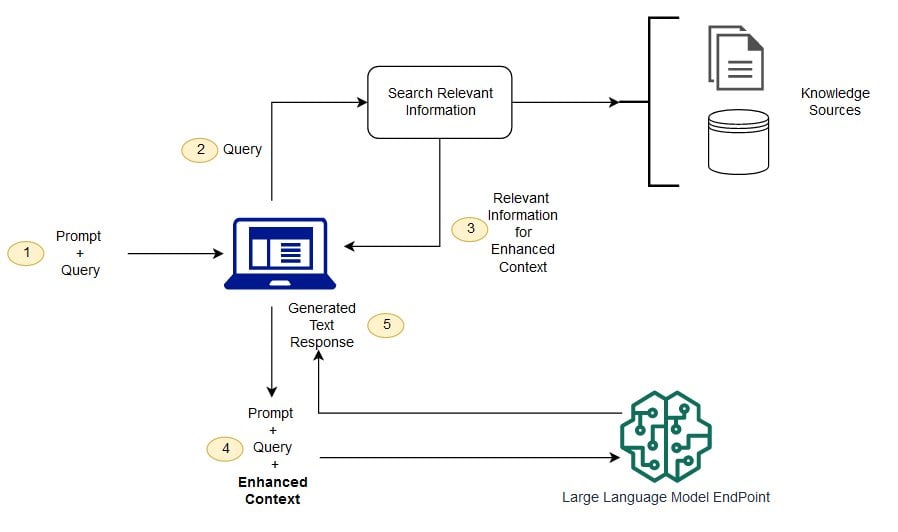
A diagram by AWS showing the conceptual flow of using RAG with LLMs

At a high level, most AI-powered search systems follow a retrieval-and-synthesis process, often powered by approaches such as Retrieval-Augmented Generation (RAG). In simple terms, they don’t just generate answers; they find, evaluate, and assemble information from multiple sources before deciding what to cite.

Here’s what that process looks like in practice:

1. Query understanding

Everything starts with intent. The AI interprets what the user is really asking, whether it’s informational, navigational, or commercial. This step shapes what kind of sources it will look for.

2. Retrieval of sources

Next, the system pulls in potential sources from multiple places:

  • Web indexes
  • Training data patterns
  • Live retrieval systems (depending on the model)

This is where your content first enters the consideration set.

3. Source evaluation

Not all sources are treated equally. AI models evaluate them based on:

  • Relevance to the query
  • Authority and trust signals
  • Clarity and structure of information
  • Entity-level trust (how credible the brand or author is)

When you look at these signals closely, they all point in one direction. Experience, Expertise, Authoritativeness, and Trustworthiness (E-E-A-T) play a central role in determining what gets cited. In other words, AI systems aren’t just looking for answers; they’re looking for reliable sources behind those answers.

4. Answer synthesis

Instead of showing individual links, AI combines insights from multiple sources into a single, cohesive answer. This is where your content may be used, even if it’s not directly cited.

5. Citation selection

Finally, the model decides which sources to:

  • Explicitly cite (with links or references)
  • Implicitly use (without direct attribution)

This is the step that ultimately determines your visibility.

How this differs across AI systems

While the core process is similar, different AI tools prioritize different parts of this pipeline.

AI systems How it handles citations
ChatGPT Leans more on third-party sources and consensus, such as directories, reviews, and aggregator sites, rather than relying heavily on brand-owned content.
Perplexity Focuses on retrieval-first behavior, pulling from a wide range of web sources and surfacing multiple citations to support transparency (strong emphasis on external validation).
Gemini Prioritizes brand-owned and structured content, especially pages that are clearly organized and easy to interpret.

Must read: Why does having insights across multiple LLMs matter for brand visibility?

Key signals AI models use for citing content

Even though the process is complex, the signals that increase your chances of being cited are surprisingly consistent:

  • Well-organized structure: Clear headings, bullet points, and logical flow make it easier for AI to extract information
  • Evidence-based reasoning: Content that references data, sources, or supporting claims is more likely to be trusted
  • Timeliness and relevance: Fresh, updated content often gets prioritized, especially for evolving topics
  • Authoritative voice and depth: Content that demonstrates expertise and covers a topic comprehensively stands out
  • Topical consistency: Brands that consistently publish around a topic are more likely to be recognized as reliable sources

The key takeaway here is simple: AI citations are not random. They are the result of a structured evaluation process in which clarity, trust, and relevance determine who is included in the final answer.

Must read: How to use headings on your site

Strategies to get cited by AI models

So far, we’ve looked at what AI citations are and how models decide what to cite. The next question is the one that matters most: how do you actually get cited?

Because this isn’t just about creating content, it’s about sending the right signals that your content is worth citing. Here are some strategies that can help you do exactly that:

1. Create citation-friendly content

Citation-worthy content goes beyond surface-level answers. It offers original thinking, clear explanations, and real value, helping AI models support their responses with confidence. In other words, it’s not just optimized, it earns references by being genuinely useful.

The following content types consistently get cited by AI models:

Content type What to write Why AI loves them
Original research Studies or data that answer new or unexplored questions Gives AI concrete evidence to support claims
Case studies Real-world examples showing how something works in practice Helps AI justify recommendations with proof
Thought leadership Opinion-led content with unique insights or perspectives Adds depth and diversity to AI-generated answers
News content Timely, accurate coverage of recent developments Fills gaps where training data falls short

2. Build topical authority (clusters)

AI models don’t just evaluate individual pages; they evaluate how consistently you cover a topic.

If you publish multiple pieces on a specific subject, each addressing different aspects, you signal depth, expertise, and reliability. That’s what topical authority is all about.

And this is where E-E-A-T naturally comes into play. The more consistently you demonstrate experience and expertise in a niche, the more likely your content is to be trusted and cited.

What to do in practice:

  • Create clusters around a core topic (pillar page/cornerstone content + supporting content)
  • Cover both broad and specific questions in your niche
  • Go beyond basic answers, add expert insights, examples, or real-world context
  • Keep your messaging and terminology consistent across content

3. Strengthen entity signals (brand, authorship, schema)

AI systems evaluate content, but they also evaluate who is behind it.

Strong entity signals help models understand your brand, your authors, and your credibility within a topic. The clearer these signals are, the easier it is for AI to trust and cite your content.

What to do in practice:

  • Build clear author profiles with expertise and credentials
  • Maintain consistent brand mentions across your site and the web
  • Use structured data (schema) to define authors, organizations, and content relationships
  • Ensure your “About” and author pages clearly establish credibility

4. Earn external validation signals across the web

AI models don’t rely on a single source of truth. They validate information by cross-referencing multiple sources across the web.

That means your credibility isn’t built only on your website. It’s shaped by how consistently your brand shows up across trusted platforms. The more aligned and authoritative those signals are, the easier it is for AI systems to trust and cite your content.

Think of this as building a web-wide validation layer that reinforces your brand through multiple independent sources.

This is also where traditional SEO practices like link building evolve. It’s no longer just about backlinks, but about earning consistent, high-quality mentions that strengthen your entity across the web.

What to do in practice:

  • Contribute insights to reputable publications in your niche
  • Earn consistent mentions across industry blogs, directories, and review platforms
  • Build high-quality backlinks through a strategic link-building approach
  • Be active in communities like Reddit, Quora, or niche forums
  • Run digital PR campaigns that reinforce your brand narrative across sources

5. Keep content fresh and updated

AI models prefer content that reflects current information.

Outdated content is less likely to be trusted, especially for topics that evolve quickly. Regular updates signal that your content is still relevant and reliable.

What to do in practice:

  • Refresh key articles with updated data, examples, and insights
  • Add new sections instead of rewriting from scratch where possible
  • Clearly indicate updates (timestamps, revised sections)
  • Prioritize high-performing or high-potential pages for updates

Must read: How to optimize content for AI LLM comprehension using Yoast’s tools

AI models don’t read content the way humans do. They extract answers.

Most AI-generated responses are built by identifying clear, concise answer blocks within content. And increasingly, users prefer this format. In fact, according to a poll by IWAI, 67% of users find AI tools more efficient than traditional search for getting answers. That shift makes one thing clear: if your content doesn’t directly answer questions, it’s less likely to be surfaced or cited.

This means it’s not enough to include answers. You need to structure your content so those answers are easy to find, interpret, and reuse.

What to do in practice:

  • Lead sections with direct, concise answers before expanding
  • Use headings that mirror real user queries and intent
  • Break down complex topics into scannable, extractable sections
  • Add summaries, definitions, or key takeaways at the start of sections
  • Anticipate follow-up questions and answer them within the same content

Tracking AI brand presence with Yoast

By now, we know what AI citations are, how they work, and how to earn them. But here’s the real question: how do you know if you’re already being cited? And if not, how do you understand where your competitors are showing up and where you’re missing out?

That’s the gap Yoast AI Brand Insights is built to solve.

As AI-generated answers become a key discovery layer, most traditional analytics tools fall short. They can tell you about traffic, but not whether your brand is being mentioned, how it’s being perceived, or which sources AI systems trust when referencing you. That’s a critical blind spot, especially as AI answers increasingly shape user decisions before a click even occurs.

Yoast AI Brand Insights helps you track and understand your AI visibility, citations, and brand mentions across platforms like ChatGPT, Gemini, and Perplexity, so you can move from guesswork to informed action.

Here’s what it enables you to do:

Sentiment tracking
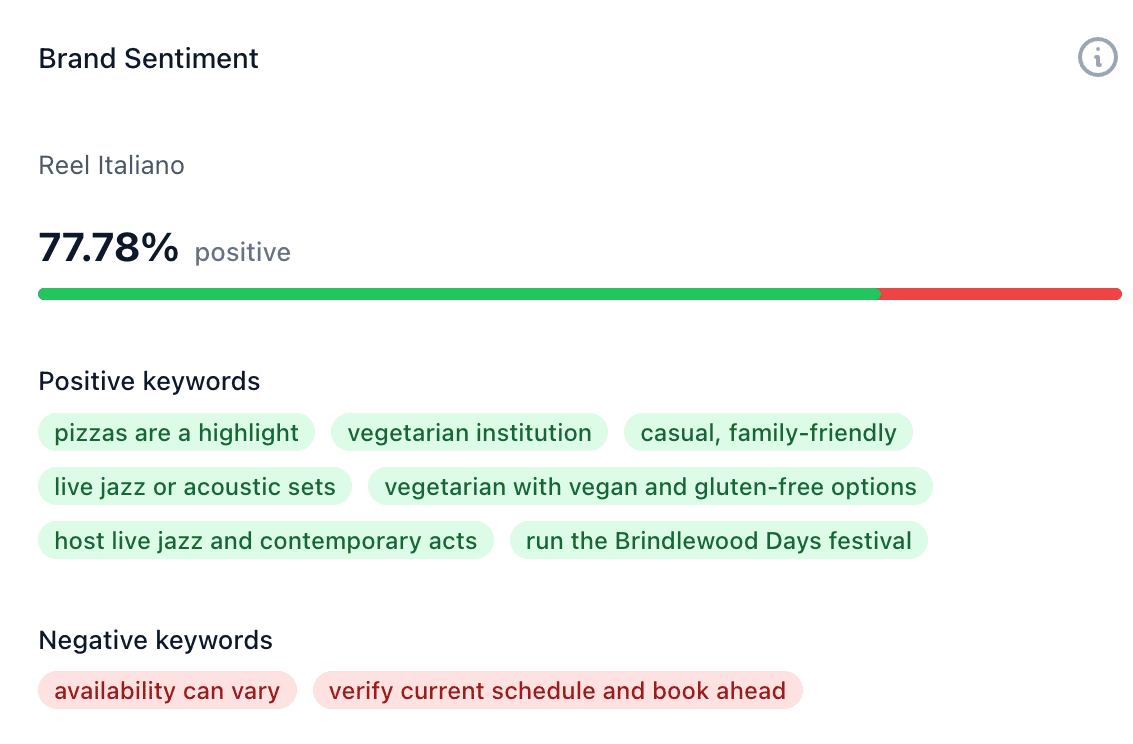
Understand how your brand is being perceived in AI-generated answers. The tool analyzes keywords associated with your brand and shows whether the overall sentiment is positive or negative, helping you spot tone issues and shifts over time.

Citation analysis (brand mentions)

See when and where your brand is being cited. More importantly, understand which sources AI platforms reference alongside your brand, so you can identify citation gaps and opportunities to improve your presence.

Competitor benchmarking
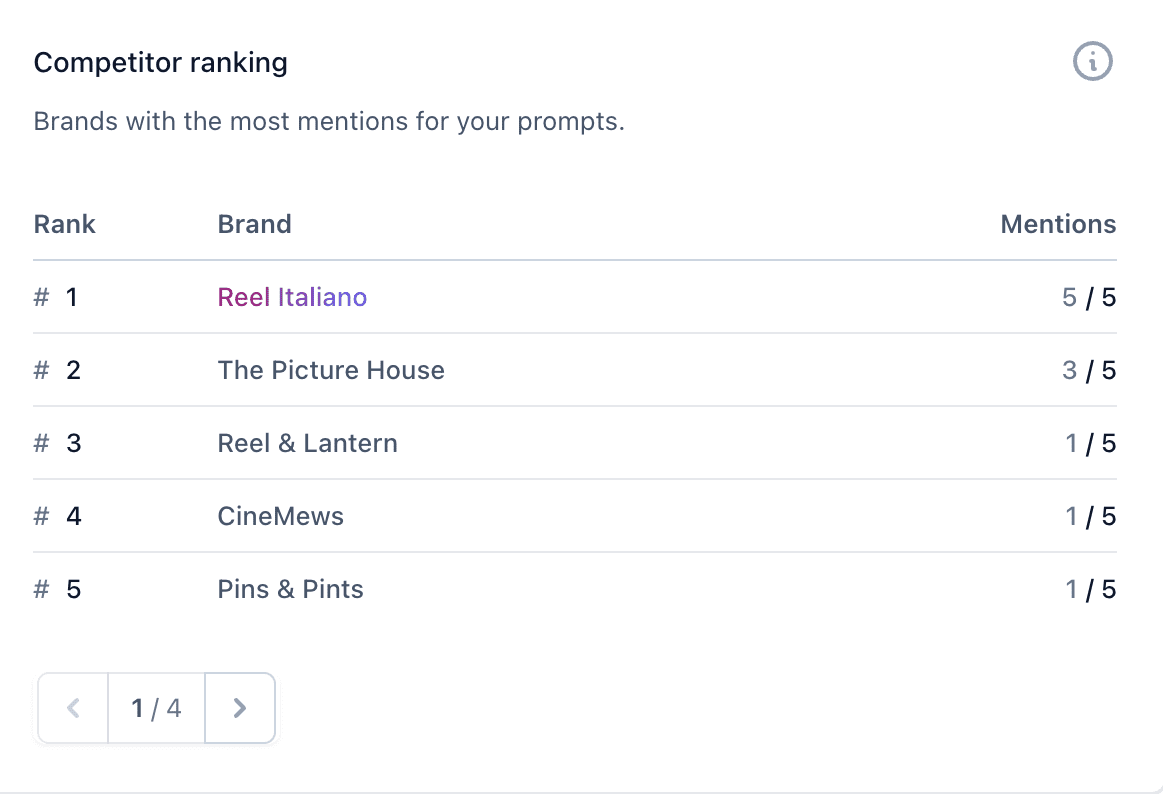
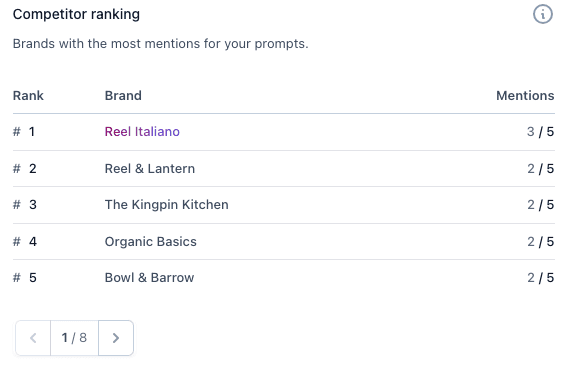
See how you stack up against other brands mentioned in your prompts

AI visibility is relative. This feature lets you compare your brand’s citations, mentions, and sentiment against competitors, helping you understand who is being surfaced more often and why.

Question monitoring

AI search is driven by queries. With question monitoring, you can track specific brand-related or industry questions and see whether your brand appears in the answers, giving you direct insight into where you’re visible and where you’re missing.

AI visibility index
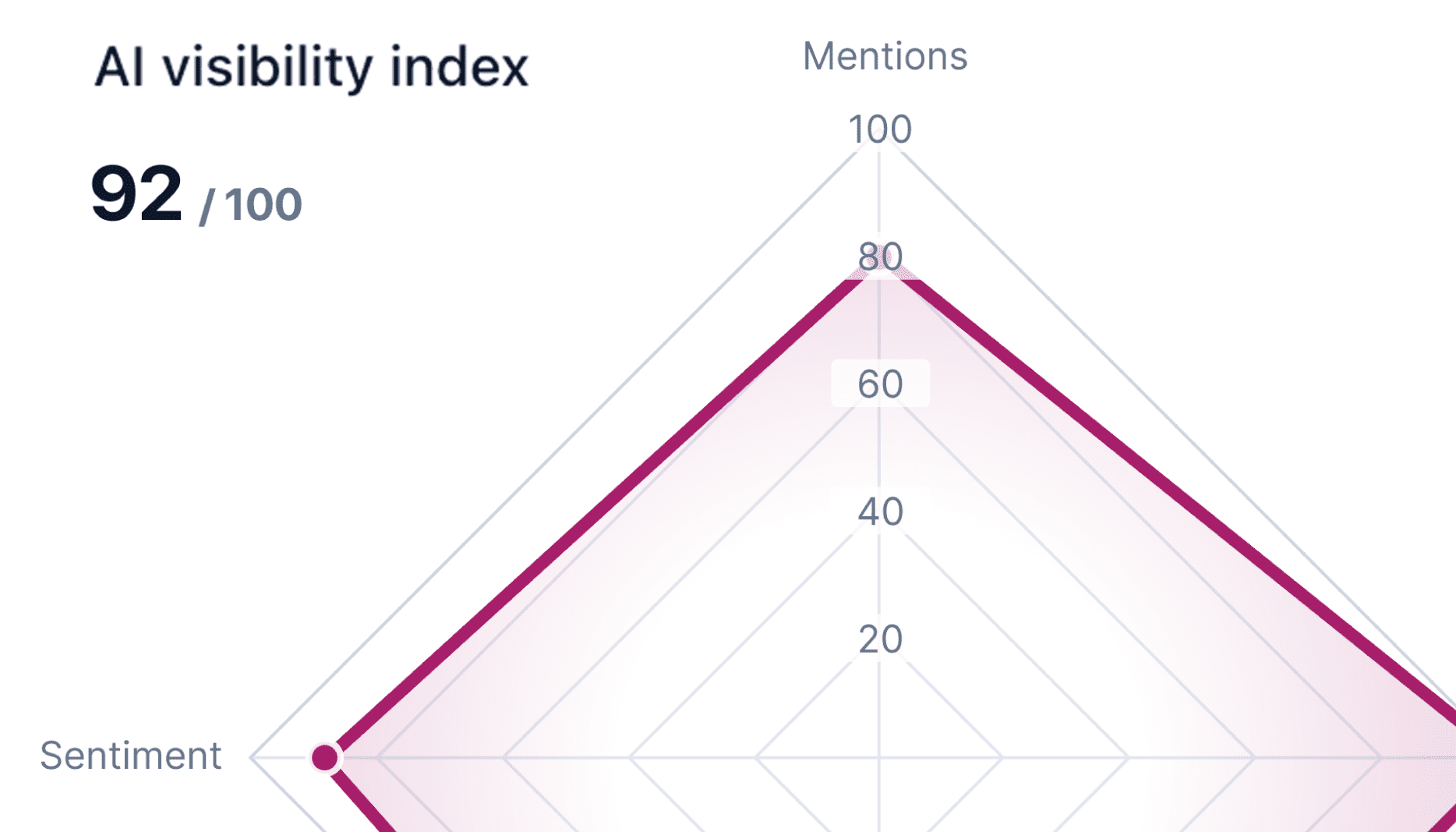
See your score, which is a representation of different AI signals

Instead of looking at isolated metrics, Yoast combines signals like citations, mentions, sentiment, and rankings into a single visibility score. This gives you a clearer picture of how your brand performs across AI systems over time.

The bigger picture here is simple: Yoast AI Brand Insights helps you understand your position in this new ecosystem, so you can strengthen your presence, close gaps, and ensure your brand is part of the answers your audience is already consuming.

FAQs on AI citations

AI citations can feel complex at first, especially as search continues to evolve. Here are answers to some of the most common questions to help you navigate them better.

Yes, they serve different purposes. Backlinks help your pages rank in traditional search, while AI citations determine whether your content gets included in AI-generated answers. In short, backlinks drive visibility on SERPs, while citations drive visibility within answers.

If you want a deeper breakdown, check out this guide on AI citations vs backlinks.

Do AI systems always provide citations?

No, AI systems don’t always include citations. When responses are generated purely from pre-trained knowledge rather than retrieved sources, citations may not appear.

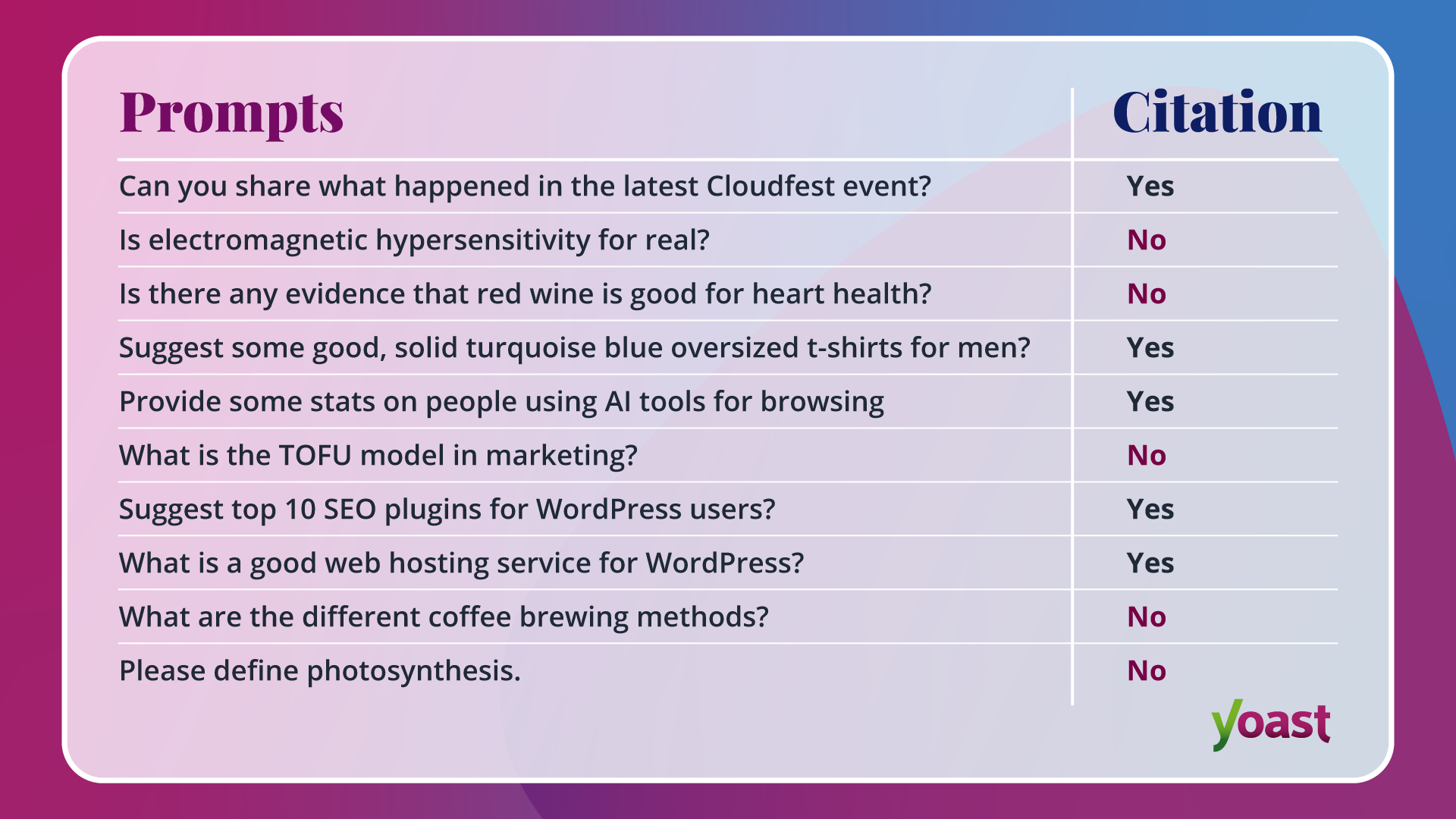
To test this, I tried the following prompts on ChatGPT:
ai prompts tried for citations

Out of these, citations appeared in about half of the responses.

A clear pattern emerged:

  • Queries involving products, recommendations, statistics, or recent events were more likely to trigger citations
  • Queries focused on definitions or general knowledge often did not include citations

This shows that citation behavior depends heavily on the query type, intent, and context. Not every answer requires a source, but the more specific or evidence-driven the query, the more likely citations are to appear.

How do I direct AI models to the most important content on my website?

You can’t directly control what AI models choose to cite, but you can make it easier for them to understand and prioritize your content.

One effective way to do this is by using llms.txt, a feature in Yoast SEO. It creates a structured, LLM-friendly markdown file that highlights your most important pages, helping LLMs better understand your site when generating answers.

A smarter analysis in Yoast SEO Premium

Yoast SEO Premium has a smart content analysis that helps you take your content to the next level!

Think of it as a way to clearly communicate which content matters most, so when AI systems look for reliable sources, your key pages are easier to interpret and surface.

AI citations: The currency of the AI-driven web

AI citations are changing how users discover and trust information. They don’t just complement rankings; they reshape them by deciding which sources become part of the answer itself. In many cases, users no longer need to click to explore. If your content is cited, you’re visible. If not, you’re invisible.

This shift also changes what we optimize for. It’s no longer just about traffic; it’s about trust, relevance, and inclusion in the answer layer. As we explored in our recent read, Rethinking SEO in the age of AI, the central question for SEO is evolving. It’s no longer just, “Can Google find my website?” It’s now, “Does the AI have a reason to remember my brand?”

Why does having insights across multiple LLMs matter for brand visibility?

Search today looks very different from what it did even a few years ago. Users are no longer browsing through SERPs to make up their own minds; instead, they are asking AI tools for conclusions, summaries, and recommendations. This shift changes how visibility is earned, how trust is formed, and how brands are evaluated during discovery. In AI-driven search, large language models interpret information, decide what matters, and present a narrative on behalf of the user.

Table of contents

Key takeaways

  • Search has evolved; users now rely on AI for conclusions instead of traditional SERPs
  • Conversational AI serves as a new discovery layer, users expect quick answers and insights
  • Brands must navigate varied interpretations of their presence across different LLMs
  • Yoast AI Brand Insights helps track brand mentions and identify gaps in AI visibility across models
  • Understanding LLM brand visibility is crucial for modern brand strategy and perception

The rise of conversational AI as a discovery layer

“Assistant engines and wider LLMs are the new gatekeepers between our content and the person discovering that content – our potential new audience.” — Alex Moss

Search is no longer confined to typing queries into a search engine and scanning a list of links. Today’s discovery journey frequently begins with a conversation, whether that’s a typed question in a chatbot, a voice prompt to an AI assistant, or an embedded AI feature inside a platform people use every day.

This shift has made conversational AI a new layer of discovery, where users expect direct answers, recommendations, and curated insights that help them make decisions and build brand perception more quickly and confidently.

Discovery is happening everywhere

Users are now encountering AI-powered discovery across a range of interfaces:

AI chat interfaces

Tools like ChatGPT allow users to ask open-ended questions and follow up in a conversational manner. These interfaces interpret intent and tailor responses in a way that feels natural, making them a go-to for exploratory search.

Also read: What is search intent and why is it important for SEO?

Answer engines

Platforms such as Perplexity synthesize information from multiple sources and often cite them. They act as research helpers, offering concise summaries or explanations to complex queries.

Embedded AI experiences

AI is increasingly built directly into search and discovery environments that people already use. Examples include AI-assisted summaries within search results, such as Google’s AI Overviews, as well as AI features embedded in browsers, operating systems, and apps. In these moments, users may not even think of themselves as “using AI,” yet AI is already influencing what information is surfaced first and how it is interpreted.

This broad distribution of AI discovery surfaces means users now expect accessibility of information regardless of where they are, whether in a chat, an app, or embedded in the places they work, shop, and explore online.

How people are using AI in their day-to-day discovery

Users interact with conversational AI for a wide range of purposes beyond traditional search. These models increasingly guide decisions, comparisons, and exploration, often earlier in the journey than classic search engines.

Here are some prominent ways people use LLMs today:

Product comparisons

ChatGPT gives a detailed brand comparison

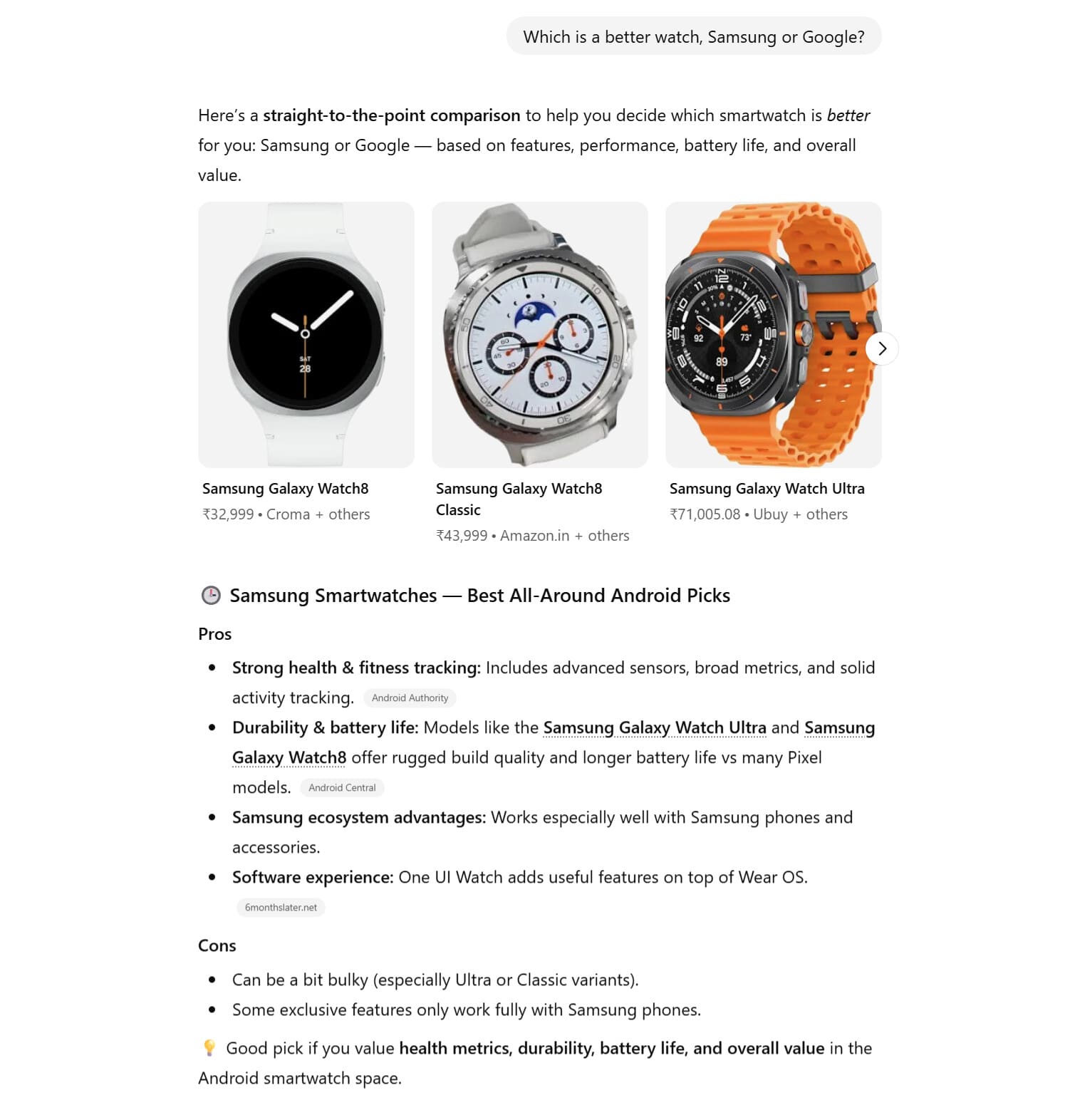
Rather than visiting multiple sites and aggregating reviews, there are 54% users who ask AI to compare products or services directly, for example, “How does Brand A compare to Brand B?” and “What are the pros and cons of X vs Y?” AI synthesizes information into a concise summary that often feels more efficient than browsing search results.

“Best tools for…” queries

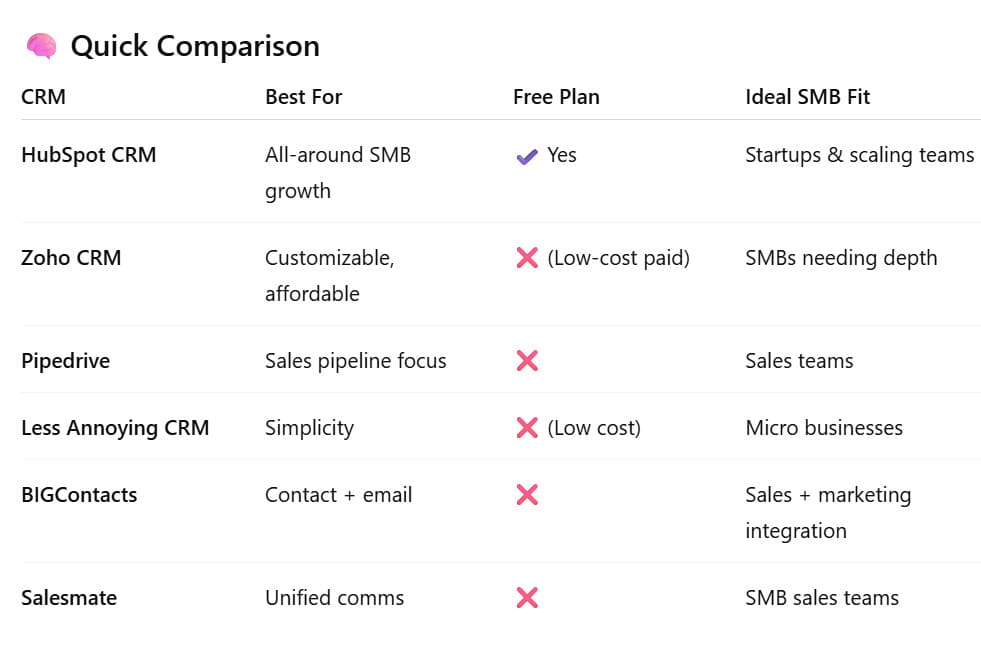
Result by ChatGPT for “best crm software for smbs.”

Did you know 47% of consumers have used AI to help make a purchase decision?

AI users frequently ask for ranked suggestions or curated lists such as “best SEO tools for small businesses” or “top content optimization software.” These queries serve as discovery moments, where brands can be suggested alongside context and reasoning.

Trust and validation checks

Many users prompt AI models to validate decisions or confirm perceptions, for example, “Is Brand X reputable?” or “What do people say about Service Y?” AI responses blend sentiment, context, and summarization into one narrative, affecting how trust is formed.

Also read: Why is summarizing essential for modern content?

Idea generation and research exploration

In a study by Yext, it was found that 42% users employ AI for early-stage exploration, such as brainstorming topics, gathering potential search intents, or understanding broad categories before narrowing down specifics. AI user archetypes range from creators who use AI for ideation to explorers seeking deeper discovery.

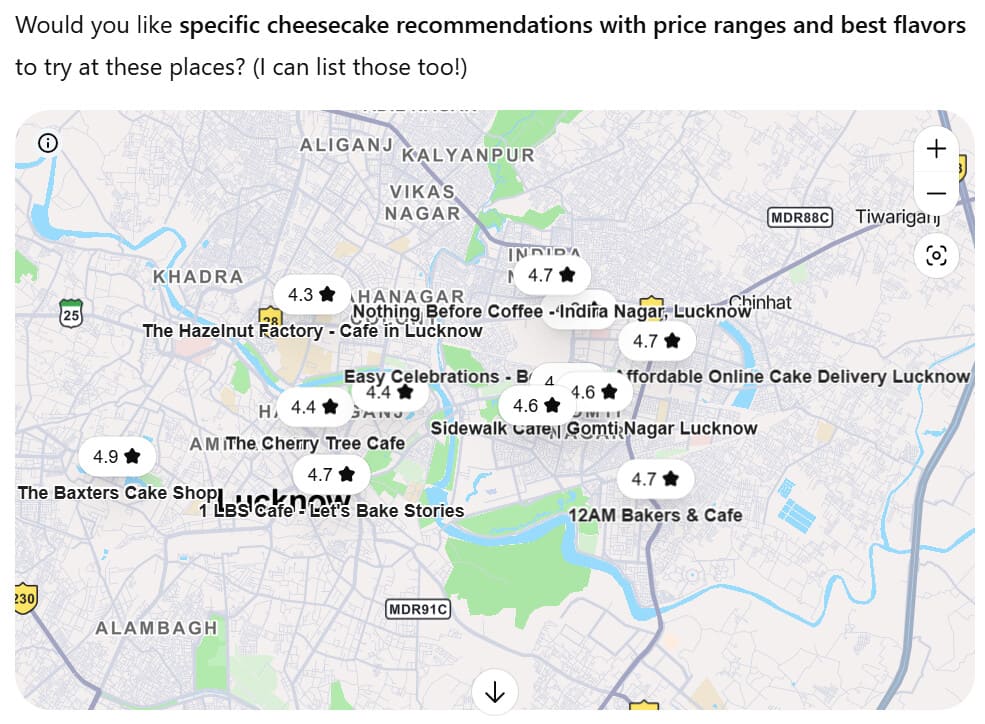
local search results on chatgpt
ChatGPT recommendations for “best cheesecake places in Lucknow, India.”

AI is also used for local searches. For example, many users turn to AI tools to research local products or services, such as finding nearby businesses, comparing local options, or understanding community reputations. In a recent AI usage study by Yext, 68% of consumers reported using tools like ChatGPT to research local products or services, even as trust in AI for local information remains lower than traditional search.

In each of these moments, conversational AI doesn’t just surface brands; it frames them by summarizing strengths, weaknesses, use cases, and comparisons in a single response. These narratives become part of how users interpret relevance, trust, and fit far earlier in the decision-making process than in traditional search.

Not all LLMs interpret brands the same way

As conversational AI becomes a discovery layer, one assumption often sneaks in quietly: if your brand shows up well in one AI model, it must be showing up everywhere. In reality, that’s rarely the case. Large language models interpret, retrieve, and present brand information differently, which means relying on a single AI platform can give a very incomplete picture of your brand’s visibility.

To understand why, it helps to look at how some of the most widely used models approach answers and brand mentions.

How ChatGPT interprets brands

ChatGPT is often used as a general-purpose assistant. People turn to it for explanations, comparisons, brainstorming, and decision support. When it mentions brands, it tends to focus on contextual understanding rather than explicit sourcing. Brand mentions are frequently woven into explanations, recommendations, or summaries, sometimes without clear attribution.

From a visibility perspective, this means brands may appear:

  • As examples in broader explanations
  • As recommendations in “best tools” or comparison-style prompts
  • As part of a narrative rather than a cited source

The challenge is that brand mentions can feel correct and authoritative, while still being outdated, incomplete, or inconsistent, depending on how the prompt is phrased.

How Gemini interprets brands

Gemini is deeply connected to Google’s ecosystem, which influences how it understands and surfaces brand information. It leans more heavily on entities, structured data, and authoritative sources, and its outputs often reflect signals familiar to traditional SEO teams.

For brands, this means:

  • Visibility is closely tied to how well the brand is understood as an entity
  • Clear, consistent information across the web plays a bigger role
  • Mentions often align more closely with established sources

Gemini can feel more predictable in some cases, but that predictability depends on strong foundational signals and accurate brand representation across trusted platforms.

How Perplexity interprets brands

Perplexity positions itself as an answer engine rather than a general assistant. It emphasizes citations and source-backed responses, which makes it popular for research and comparison queries. When brands appear in Perplexity answers, they are often tied directly to cited articles, reviews, or documentation.

This creates a different visibility dynamic:

  • Brands may be surfaced only if they are referenced in cited sources
  • Freshness and topical relevance matter more
  • Competitors with stronger editorial or PR coverage may appear more often

Here, brand presence is tightly coupled with external content and how frequently that content is used as a reference.

How these models differ at a glance

AI Model How brands are surfaced What influences the visibility
ChatGPT Contextual mentions within explanations and recommendations Prompt phrasing, training data, general relevance
Gemini Entity-driven, aligned with authoritative sources Structured data, brand consistency, trusted signals
Perplexity Citation-based mentions tied to sources Content coverage, freshness, external references

Why brands need insights across multiple LLMs?

Once you see how differently large language models interpret brands, one thing becomes clear: looking at just one AI model gives you an incomplete picture. AI-driven discovery does not produce a single, consistent version of your brand. It produces multiple interpretations, shaped by the model, its data sources, and users’ interactions with it.

Must read: When AI gets your brand wrong: Real examples and how to fix it

Therefore, tracking across your brand across multiple brands is essential because:

Brand visibility is fragmented by default

Across different LLMs, the same brand can show up in very different ways:

  • Correctly represented in one model, where information is accurate and well-contextualized
  • Completely missing in another, even for relevant queries
  • Partially outdated or misrepresented in a third, depending on the sources being used

This fragmentation happens because each model processes and prioritizes information differently. Without visibility across models, it’s easy to assume your brand is ‘covered’ when, in reality, it may only be visible in one corner of the AI ecosystem.

Different audiences use different AI tools

AI usage is not concentrated in a single platform. People choose tools based on intent:

  • Some use conversational assistants for exploration and ideation
  • Others rely on citation-led answer engines for research
  • Many encounter AI passively through search or embedded experiences

If your brand appears in only one environment, you are effectively visible only to a subset of your audience. This mirrors challenges SEO teams already recognize from traditional search, where performance varies by device, location, and search feature. The difference is that with AI, these variations are less obvious and more challenging to track without dedicated insights.

Blind spots create real business risks

Limited visibility across LLMs doesn’t just affect awareness; it also impairs learning. Over time, it can lead to:

  • Inconsistent brand narratives, where AI tools describe your brand differently depending on where users ask
  • Missed demand, especially for comparison or “best tools for” queries
  • Competitors are being recommended instead, simply because they are more visible or better understood by a specific model

These outcomes are rarely intentional, but they can quietly influence brand perception and decision-making long before users reach your website.

So all these points point to one thing: a broader, multi-model view helps build a more complete understanding of brand visibility.

The challenge: LLM visibility is hard to measure

As brands start paying attention to how they appear in AI-generated content, a new problem becomes obvious: LLM visibility doesn’t behave like traditional search visibility. The signals are fragmented, opaque, and constantly changing, which makes tracking and understanding brand presence across AI models far more complex than tracking rankings or traffic.

Below are some key challenges brand marketers might face when trying to understand how their brand appears to large language models.

1. Lack of visibility across AI platforms

Different LLMs, such as ChatGPT, Gemini, and Perplexity, rely on various data sources, retrieval methods, and citation logic. As a result, the same brand may be mentioned prominently in one model, inconsistently in another, or not at all elsewhere.

Without a unified view, it’s difficult to answer basic questions like where your brand shows up, which AI tools mention it, and where the gaps are. This fragmentation makes it easy to overestimate visibility based on a single platform.

2. No clear insight into how AI describes your brand

AI models often mention brands as part of explanations, comparisons, or recommendations, but traditional analytics tools don’t capture how those brands are described. Teams lack visibility into tone, context, sentiment, or whether mentions are positive, neutral, or misleading.

This makes it hard to understand whether AI is reinforcing your intended brand positioning or subtly reshaping it in ways you can’t see.

3. No structured way to measure change over time

AI-generated answers are inherently dynamic. Small changes in prompts, updates to models, or shifts in underlying data can all influence how brands appear. Without consistent, longitudinal tracking, it’s nearly impossible to tell whether visibility is improving, declining, or simply fluctuating.

One-off checks may offer snapshots, but they don’t reveal trends or patterns that matter for long-term strategy.

4. Limited ability to benchmark against competitors

Seeing your brand mentioned in AI answers is a start, but it doesn’t tell you the whole story. The real question is what’s happening around it: which competitors appear more often, how they’re described, and who AI recommends when users are ready to decide.

Without comparative insights, teams struggle to understand whether AI visibility represents a competitive advantage or a missed opportunity.

5. Missing attribution and source clarity

Some AI models summarize or paraphrase information without clearly attributing sources. When brands are mentioned, it’s not always obvious which pages, articles, or properties influenced the response.

This lack of source visibility makes it difficult to connect AI mentions back to specific content efforts, PR coverage, or SEO work, leaving teams guessing what is actually driving brand representation.

6. Existing tools weren’t built for AI visibility

Traditional SEO and analytics platforms are designed around clicks, impressions, and rankings. They don’t capture AI-powered mentions, sentiment, or visibility trends because AI platforms don’t expose those signals in a structured way.

As a result, teams are left without reliable reporting for one of the fastest-growing discovery channels.

Together, these challenges point to a clear gap: brands need a new way to understand visibility that reflects how AI models surface and interpret information. This is where tools explicitly designed for AI-driven discovery, such as Yoast AI Brand Insights, come into play.

How does Yoast AI Brand Insights help?

It won’t be wrong to say that the AI-driven brand discovery can be fragmented and opaque; therefore, leading us to our next practical question: how do brand marketing teams actually make sense of it?

Traditional SEO tools weren’t built to answer that, which is where Yoast AI Brand Insights comes in. It’s designed to help users understand how brands appear in AI-generated answers and is available as part of Yoast SEO AI+.

Rather than focusing on rankings or clicks, Yoast AI Brand Insights focuses on visibility and interpretation across large language models.

Track brand mentions across multiple AI models

One of the biggest gaps in AI visibility is fragmentation. Brands may appear in one AI model but not in another, without any obvious signal to explain why. Yoast AI Brand Insights addresses this by tracking brand mentions across multiple AI platforms, including ChatGPT, Gemini, and Perplexity.

This gives teams a clearer view of where their brand appears, rather than relying on isolated checks or assumptions based on a single model.

Identify gaps, inconsistencies, and opportunities

AI-generated answers don’t just mention brands; they frame them. Yoast AI Brand Insights helps surface patterns in how a brand is described, making it easier to spot:

  • Where mentions are missing altogether
  • Where descriptions feel outdated or incomplete
  • Where competitors appear more frequently or more favorably

These insights turn AI visibility into something teams can actually act on, rather than a black box.

Shared insights for SEO, PR, and content teams

AI-driven discovery sits at the intersection of SEO, content, and brand communication. One of the strengths of Yoast AI Brand Insights is that it provides a shared view of AI visibility that multiple teams can use. SEO teams can connect AI mentions back to site signals, content teams can understand how messaging is interpreted, and PR or brand teams can see how external coverage influences AI narratives.

Instead of working in silos, teams get a common reference point for how the brand appears across AI-driven search experiences.

A natural extension of Yoast’s SEO philosophy

Yoast AI Brand Insights builds on principles Yoast has long emphasized: clarity, consistency, and understanding how search systems interpret content. As AI becomes part of how people discover brands, those same principles now apply beyond traditional search results and into AI-generated answers.

In that sense, Yoast AI Brand Insights isn’t about chasing AI trends. It’s about giving teams a more straightforward way to understand how their brand is represented, where discovery is increasingly happening.

AI-driven discovery is no longer an edge case. It’s becoming a regular part of how people explore options, validate decisions, and form opinions about brands. As large language models continue to evolve, the question for brands is not whether they appear in AI-generated answers, but whether they understand how they appear, where they appear, and what story is being told on their behalf. Gaining visibility into that layer is quickly becoming a foundational part of modern brand and search strategy.

New: Track brand visibility in Gemini with Yoast AI Brand Insights

Yoast AI Brand Insights now lets you track how your brand appears in Google’s Gemini. You can see your Gemini data alongside ChatGPT and Perplexity, all in one dashboard. 

With a single analysis, you can see how different AI platforms describe your brand with the Yoast SEO AI+ plan. You’ll see which sources they use and how sentiment compares across the tools your customers use most. 

Why this matters 

AI platforms use different methods to answer questions about your brand, often leading to different results. Seeing these results side-by-side helps you spot gaps or missed opportunities in your brand’s AI presence. 

  • ChatGPT is designed as a conversational assistant, focusing on natural dialogue and using multi-step reasoning to explain complex topics. 
  • Perplexity positions itself as an “answer engine”, emphasizing transparency by grounding every response in cited web sources. 
  • Gemini presents itself as a search-driven LLM, leveraging Google’s vast index to show how your brand appears in real-time search contexts.

As these tools frame your brand differently, from conversational reasoning to source-heavy citations, you need a single dashboard which covers all to see which sources they rely on and how their sentiment compares. 

What’s new 

You can now: 

  • Run brand visibility analyses in Gemini, in addition to ChatGPT and Perplexity. 
  • Compare results across all three platforms with the added benefit of a built-in historical view. 
  • Track brand mentions, sentiment, and citations in one place. 
  • Monitor changes over time in your AI Visibility Index. 

How to get started 

If you’re already using Yoast SEO AI+, nothing changes in how you work. Log in and at your next analysis, Gemini data is now included automatically at no extra cost. You can select the AI platform from the dropdown, and your dashboard will show a broader view of how your brand appears across AI search and chat. 

To upgrade

If you don’t yet have Yoast SEO AI+, you’ll need to upgrade to access the Yoast AI Brand Insights tool. The AI+ plan brings brand visibility tracking together with on-page SEO tools, content optimization, and AI-powered insights in one package, so you can analyze how your brand is mentioned and act from the same workflow. 

Upgrade to Yoast SEO AI+ to start scanning your brand across Gemini, ChatGPT, and Perplexity. 

New to AI Brand Insights: Scan your brand visibility in Perplexity

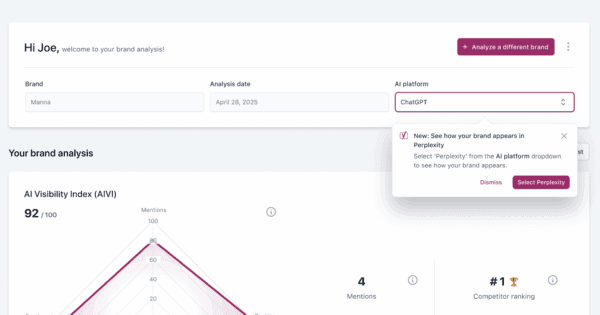
Today, we’re rolling out an improvement to Yoast AI Brand Insights, part of the Yoast SEO AI+ package. You can now scan how your brand appears in answers generated by Perplexity, in addition to ChatGPT at no extra cost. This builds on our mission to help marketers, bloggers, and business owners understand how their brand is represented across major AI platforms.  

AI powered answers are fast becoming a new gateway for discovery. People increasingly turn to AI tools to research, compare, and choose products or services. Those answers often mention brands as recommendations or sources. When someone asks a question in your niche, you should be able to see if your brand is part of the conversation. 

This update makes that possible across more platforms. 

AI Brand Insights now lets you see when and how your brand appears in AI generated answers for relevant search style queries. You can track sentiment, and compare your visibility to competitors. By adding support for Perplexity, you get a broader view of how AI systems describe your brand and which sources they rely on, helping you stay visible and confidently represented in AI driven discovery  

What’s new 

You can now:

  • Run brand visibility scans in Perplexity
  • Compare how ChatGPT and Perplexity talk about your brand
  • Track mentions, sentiment, and citations across both platforms
  • Monitor changes over time in your AI Visibility Index 

Nothing else changes in your workflow. The next time you log in, you’ll see a visual notification guiding you to run your first Perplexity scan. 

Why this matters 

Understanding how AI answers present your brand helps you move beyond guesswork and see the tone, accuracy, and sources AI chooses when mentioning you. With more customers relying on AI powered explanations than ever, visibility in these answers is now an important part of brand discovery and trust building. 

How to try it 

Log in through MyYoast, open AI Brand Insights, and run your next scan. Your dashboard now includes results from Perplexity alongside ChatGPT. This gives you a fuller, more accurate view of your brand’s presence in AI generated answers. 

If you’re already using Yoast SEO AI+, this enhancement is available to you immediately. If you’re not, upgrading gives you access to this feature along with a complete set of tools for brand visibility, AI insights, and on page SEO.

Introducing a new AI-powered package: Track your brand in AI search 

We’re excited to announce the beta release of Yoast AI Brand Insights, available as part of the Yoast SEO AI+ package. This new tool helps you understand how your brand appears in AI-powered answers, and where you can improve your visibility. Ideal for bloggers, marketers, and brand managers, Yoast AI Brand Insights gives you an overview of your brand presence across tools like ChatGPT, Perplexity, and Gemini.

For years, Yoast has helped you get found in search engines. Recently though, search is changing. People aren’t just using Google anymore, they’re turning to AI tools like ChatGPT for answers. Those answers often mention brand names as recommendations. So here’s the big question: when AI tools answer questions in your niche, does your brand show up? Our new tool, Yoast AI Brand Insights (beta), helps you find out. 

Yoast AI Brand Insights lets you see when and how your brand appears in AI-generated answers and helps you understand where you need to focus your effort to improve your visibility. 

Why Yoast AI Brand Insights matters, now 

AI-powered answers are shaping customer decisions faster than ever. Visitors from AI search are often more likely to convert than those from regular search. It’s no surprise, because asking an AI-powered chatbot can feel like getting a personal recommendation. Afterall, word of mouth remains one of the most powerful ways to build trust and spark interest. 

Most analytics tools can’t tell you how your brand appears in AI answers, or if it’s mentioned at all. With more people turning to tools like ChatGPT, Perplexity, and Gemini for advice, that’s a big blind spot if you are trying to get your name out there. 

Yoast AI Brand Insights aims to close that gap. You’ll see when and how your brand appears, what’s being said, and where the information comes from, so you can take action to ensure your brand is part of the conversation. 

See how you stack up against other brands mentioned in your prompts

With just a few clicks, you can: 

  • Check if your brand is mentioned in AI-generated answers for relevant search queries 
  • Benchmark against competitors: see how often your brand comes up 
  • Understand the sentiment connected to your brand: positive, neutral, or negative 
  • Find the sources AI tools use when they mention you 
  • Track your progress over time so you can respond to changes quickly 

Pricing & getting started 

Yoast SEO AI+ is priced at $29.90/month, billed annually ($358.80 plus VAT). The plan includes one automated brand analysis per week per brand, so you can track and compare how your brand is showing up in AI-powered search over time. With each purchase of Yoast SEO AI+ you recieve one extra brand.

With this package you also get the full value of Yoast WooCommerce SEO, which includes everything from Yoast SEO Premium, News SEO, Local SEO, and Video SEO, in addition to one free seat of the Yoast SEO Google Docs add-on.  

For marketers, this means you no longer need to patch together separate solutions for on-page SEO, ecommerce optimization, content creation, or LLM visibility. Everything you need to analyze, optimize, and grow your brand presence is included in one complete package. 

How to get started

  1. Login with MyYoast: secure, single sign-on for all your Yoast tools and products. 
  2. Open Yoast AI Brand Insights: You can find it near the Yoast SEO Academy
  3. Set up your brand: add your brand’s name and a short introduction to your business 
  4. Run your scan: we’ll find relevant AI search queries for you, you can use them or tweak them to your liking. 
  5. Review your results: see relevant mentions and their sources, your brand sentiment, and the AI Visibility Index in an easy-to-read dashboard

Want more details? Check out the full guide to getting started. 

Launching in beta

Yoast AI Brand Insights is now available in beta as part of Yoast SEO AI+. This is your chance to be among the first to explore how your brand shows up in AI-powered search. We’d love your thoughts as we refine the tool, your thoughts here.

See how your brand appears in AI search today 

Get Yoast SEO AI+ today to start your first brand scan. See if and how AI tools are talking about you.