A bionic knee restores natural movement

MIT researchers have developed a new bionic knee that is integrated directly with the user’s muscle and bone tissue. It can help people with above-the-knee amputations walk faster, climb stairs, and avoid obstacles more easily than they could with a traditional prosthesis, which is attached to the residual limb by means of a socket and can be uncomfortable.

For several years, Hugh Herr, SM ’93, co-director of the K. Lisa Yang Center for Bionics, has been working with his colleagues on techniques that can extract neural information from muscles left behind after an amputation and use that information to help guide a prosthetic limb. The approach, known as agonist-antagonist myoneuronal interface (AMI), has been shown to help people with below-the-knee amputations walk faster and navigate around obstacles much more naturally. 

model of bionic knees
The new system is anchored to the bone and controlled by the nervous system, offering more stability and easier navigation.
COURTESY OF THE RESEARCHERS

In the new study, the researchers developed a procedure to insert a titanium rod into the residual femur bone of people who had amputations above the knee. This implant allows for better mechanical control and load bearing than a traditional prosthesis. It also contains 16 wires that collect information from electrodes located on the AMI muscles inside the body, offering better neuroprosthetic control.

Two people who received the implant in a clinical study performed better on several types of tasks, including stair climbing, and reported that the limb felt more like a part of their own body, compared with people who had more traditional above-the-knee amputations and used conventional prostheses.

“A prosthesis that’s tissue-integrated—anchored to the bone and directly controlled by the nervous system—is not merely a lifeless, separate device,” says Herr, but rather “an integral part of self.” The system will need larger trials to receive FDA approval for commercial use, which he expects may take about five years. 

Biodiversity: A missing link in combating climate change

A lot of attention has been paid to how climate change can reduce biodiversity. Now MIT researchers have shown that the reverse is also true: Loss of biodiversity can jeopardize regrowth of tropical forests, one of Earth’s most powerful tools for mitigating climate change.

Combining data from thousands of previous studies and using new tools for quantifying interconnected ecological processes, the researchers analyzed numerous tropical sites where deforestation was being followed by natural regrowth, focusing on the role of animals such as birds and monkeys that spread plant seeds by eating them in one place and then defecating someplace else. Evan Fricke, a research scientist in the MIT Department of Civil and Environmental Engineering and the lead author of a paper on the work, has studied such animals for 15 years, showing that without their role, trees have lower survival rates and a harder time keeping up with environmental changes. 

Since tropical forests are Earth’s largest land-based carbon sink, such challenges make it harder to fight climate change. But the influence of biodiversity on forests’ ability to absorb carbon has not been fully quantified.

To do that, the researchers looked at data on where seed-dispersing animals live, how many seeds each animal disperses, and how they affect germination. Then they incorporated data revealing the impact of human activity such as hunting and forest degradation. They found, for example, that the animals move less, and thus spread seeds less widely, in areas with a bigger human footprint.

With the data, the researchers created an index that revealed a link between human activities and declines in seed dispersal. They analyzed the relationship between that index and records of carbon accumulation in naturally regrowing tropical forests over time, controlling for factors like droughts, fires, and livestock grazing.

“What’s particularly new about this study is we’re actually getting the numbers around these effects,” Fricke says. In particular, they found that naturally regrowing forests with healthy populations of seed-dispersing animals absorbed up to four times more carbon than those without as many. Meanwhile, in sites identified as suitable for reforestation, current levels of disruption to seed dispersal reduce the potential for regrowth by 57%.

These findings could help direct reforestation strategies. “In the discussion around planting trees versus allowing trees to regrow naturally, regrowth is basically free, whereas planting trees costs money, and it also leads to less diverse forests,” says César Terrer, a professor of civil and environmental engineering and a coauthor of the paper. “Now we can understand where natural regrowth can happen effectively because there are animals planting the seeds for free, and we also can identify areas where, because animals are affected, natural regrowth is not going to happen, and therefore planting trees actively is necessary.”

The researchers encourage action to protect or improve animal habitats, reduce pressures on seed-dispersing species, and potentially reintroduce them where they’ve been lost. Overall, they hope the study helps improve our understanding of the planet’s complex ecological processes.

“When we lose our animals, we’re losing the ecological infrastructure that keeps our tropical forests healthy and resilient,” Fricke says. 

A I-designed compounds can kill drug-resistant bacteria

With help from artificial intelligence, MIT researchers have designed novel antibiotics that can combat two hard-to-treat bacteria: multi-drug-­resistant Neisseria gonorrhoeae and Staphylococcus aureus (MRSA).

The team used two approaches. First, they directed generative AI to design molecules based on a chemical fragment their model had predicted would show antimicrobial activity, and second, they let the algorithms generate molecules without constraints. They designed more than 36 million possible compounds this way and computationally screened them for antimicrobial properties. 

The top candidates they discovered are structurally distinct from any existing antibiotics, and they appear to work by novel mechanisms that disrupt bacterial cell membranes. This makes them less vulnerable to antibiotic resistance, a growing problem: It is estimated that drug-­resistant bacterial infections cause nearly 5 million deaths per year worldwide.

Now that they can generate and evaluate compounds that have never been seen before, the researchers hope they can use the same strategy to identify and design drugs that attack other species of bacteria.

“We’re excited about the new possibilities that this project opens up for antibiotics development,” says James Collins, a professor of biological engineering and the senior author of the study. “Our work shows the power of AI from a drug design standpoint and enables us to exploit much larger chemical spaces that were previously inaccessible.”

Walking faster, hanging out less

City life is often described as “fast-paced.” A study coauthored by MIT scholars suggests that’s more true than ever: The average walking speed in three northeastern US cities increased 15% from 1980 to 2010, while the number of people lingering in public spaces declined by 14%.

The researchers used machine-learning tools to assess 1980s-era video footage captured in Boston, New York, and Philadelphia by William Whyte, an urbanist and social thinker best known as the author of The Organization Man. They compared the old material with newer videos from the same locations.

“Something has changed over the past 40 years,” says coauthor Carlo Ratti, director of MIT’s Senseable City Lab. “Public spaces are working in somewhat different ways, more as a thoroughfare and less a space of encounter.” The scholars speculate that some of the reasons may have to do with cell phones and Starbucks: People text each other to meet up instead of hanging around to encounter each other in public, and when they do get together, they often choose an indoor space like a coffee shop.

The results could help designers seeking to create new public areas or modify existing ones. “Public space is such an important element of civic life, and today partly because it counteracts the polarization of digital space,” says Arianna Salazar-Miranda, MCP ’16, PhD ’23, an assistant professor at Yale and another coauthor. “The more we can keep improving public space, the more we can make our cities suited for convening.” 

Estrada signs with the Dodgers

Like almost any MIT student, Mason Estrada wants to take what he learned on campus and apply it to the working world. Unlike any other current MIT student, Estrada’s primary workplace is a pitcher’s mound.

Estrada, the star pitcher for MIT’s baseball team, has signed a contract with the Los Angeles Dodgers, who selected him in the seventh round of the Major League Baseball draft on July 14. The right-hander, whose fastball has reached 96 miles per hour, is taking a leave of absence from the Institute and reported to the Dodgers’ instructional camp in Arizona.

An aero-astro major, Estrada says that pitching at MIT has never involved transferring aerodynamic knowledge from the classroom to the mound. Still, he says, he’s benefited as an athlete from “learning to think like an engineer generally, learning to think through problems the right way and finding the best solution.”

In the 2025 season Estrada went 6–0 with a 2.21 ERA, striking out 66. He is the fifth MIT undergraduate selected in baseball’s draft, of whom one—Jason Szuminski ’00—reached the majors, with the San Diego Padres. 

10 Books for Building Superb Teams

Teamwork is fundamental to ecommerce success. Even solopreneurs work with others — customers, suppliers, service providers, freelancers.

These new books aim to help leaders build effective teams.

Culture Design: How to Build a High-Performing, Resilient Organization with Purpose

Cover of Culture Design

Culture Design

by James D. White and Krista White

Combining decades of executive experience with a millennial entrepreneurial perspective, the father-daughter team shows how to apply design thinking to people, helping business leaders create the culture that best fits their customers and goals.

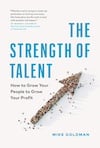
The Strength of Talent: How to Grow Your People to Grow Your Profit

Cover of Strength of Talent

Strength of Talent

by Mike Goldman

Asserting that “if you want to scale your company, you have to scale your people,” Goldman, a veteran leadership coach and consultant, provides a five-step framework for assessing, retaining, and growing talent, including moving underperformers out.

Team Intelligence: How Brilliant Leaders Unlock Collective Genius

Cover of Team Intelligence

Team Intelligence

by Jon Levy

Arguing that creating effective teams is the true measure of a leader, Levy aims to identify the skills that propel teams to exceptional results. Published just last week, “Team Intelligence” is already the top seller in two categories on Amazon.

In his bestselling 2021 book, You’re Invited: The Art and Science of Connection, Trust, and Belonging,” Levy shares his methods for connecting with others that he believes are the key to success in work and life.

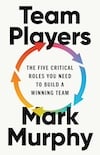
Team Players: The Five Critical Roles You Need to Build a Winning Team

Cover of Team Players

Team Players

by Mark Murphy

On a winning team, everyone plays their position, whether the competition is sports or business, asserts Murphy. He identifies five key functions of team members and explains how creating the right mix of people eliminates problems such as pointless meetings, uneven workloads, and clashing agendas.

Built on Belief: Why Cultures of Commitment Are the Competitive Advantage

Cover of Built on Belief

Built on Belief

by Matt Marcotte

According to Marcotte, “people — not products — are a brand’s secret sauce.” An MBA instructor on consumer and brand relationships and consultant for top global brands such as Apple and Tory Burch, he shares how impactful companies lead with purpose.

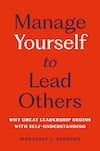
Manage Yourself to Lead Others: Why Great Leadership Begins with Self-Understanding

Cover of Manage Yourself to Lead Others

Manage Yourself to Lead Others

by Margaret C. Andrews

Andrews, who teaches an executive development course at Harvard, shows readers how to identify their personal leadership style and develop their abilities. Reviewers hail her book as “refreshingly practical” and “a masterclass.”

You and We: A Relational Rethinking of Work, Life, and Leadership

Cover of You and We

You and We

by Jim Ferrell

Human relationships are key ingredients of work and life, and crucial differentiators in a world where employees compete with machines. So says Ferrell, who uses storytelling to illuminate how business owners can foster connections, overcome divisions, and create community.

Unicorn Team: The Nine Leadership Types You Need to Launch Your Big Ideas with Speed and Success

Cover of Unicorn Team

Unicorn Team

by Jen Kem

A “next big thing” idea needs the right team to make it happen. The author, a brand strategist with a background in tech, retail, health, and consumer products, distills her experience into a road map for driving innovation and building an exceptional team..

How to Hire: The Essential Guide to Recruit and Retain the Right People

Cover of How to Hire

How to Hire

by Clint Smith

This standout guide to creating a culture that attracts and retains the best workers offers more than the usual hiring advice. Writing for managers without human resources expertise, Smith, a founder and CEO, shares his experiences and provides practical methods for building a team of high performers.

Surfer SEO Acquired By Positive Group via @sejournal, @martinibuster

The French technology group Positive acquired Surfer, the popular content optimization tool. The acquisition helps Positive create a “full-funnel” brand visibility solution together with its marketing and CRM tools.

The acquisition of Surfer extends Positive’s reach from marketing software to AI-based brand visibility. Positive described the deal as part of a European AI strategy that supports jobs and protects data. Positive’s revenue has grown fivefold in the past five years, rising from €50 million to an expected €70 million in 2025.

Surfer SEO

Founded in 2017, Surfer developed SEO tools based on language models that help marketers improve visibility on both search engines and AI assistants, which have become a growing source of website traffic and customers.

Sign Of Broader Industry Trends

The acquisition shows that search optimization continues to be an important part of business marketing as AI search and chat play a larger role in how consumers learn about products, services, and brands. This deal enables Positive to offer AI-based visibility solutions alongside its CRM and automation products, expanding its technology portfolio.

What Acquisition Means For Customers

Positive Group, based in France, is a technology solutions company that develops digital tools for marketing, CRM, automation, and data management. It operates through several divisions: User (marketing and CRM), Signitic (email signatures), and now Surfer (AI search optimization). The company is majority-owned by its executives, employs about 400 people, and keeps its servers in France and Germany. Surfer, based in Poland, brings experience in AI content optimization and a strong presence in North America. Together, they combine infrastructure, market knowledge, and product development within one technology-focused group.

Lucjan Suski, CEO and co-founder of Surfer, commented:

“SEO is evolving fast, and it matters more than ever before. We help marketers win the AI SEO era. Positive helps them grow across every other part of their digital strategy. Together, we’ll give marketers the complete toolkit to lead across AI search, email marketing automation, and beyond.”

According to Mathieu Tarnus, Positive’s founding president, and Paul de Fombelle, its CEO:

“Artificial intelligence is at the heart of our value proposition. With the acquisition of Surfer, our customers are moving from optimizing their traditional SEO positioning to optimizing their brand presence in the responses provided by conversational AI assistants. Surfer stands out from established market players by directly integrating AI into content creation and optimization.”

The acquisition adds Surfer’s AI optimization capabilities to Positive’s product ecosystem, helping customers improve visibility in AI-generated answers. For both companies, the deal is an opportunity to expand their capabilities in AI-based brand visibility.

Featured Image by Shutterstock/GhoST RideR 98

Brave Reveals Systemic Security Issues In AI Browsers via @sejournal, @MattGSouthern

Brave disclosed security vulnerabilities in AI browsers that could allow malicious websites to hijack AI assistants and access sensitive user accounts.

The issues affect Perplexity Comet, Fellou, and potentially other AI browsers that can take actions on behalf of users.

The vulnerabilities stem from indirect prompt injection attacks where websites embed hidden instructions that AI browsers process as legitimate user commands. Brave published the findings after reporting the issues to affected companies.

What Brave Found

Perplexity Comet Vulnerability

Comet’s screenshot feature can be exploited by embedding nearly invisible text in webpages.

When users take screenshots to ask questions, the AI extracts hidden text using what appears to be OCR and processes it as commands rather than untrusted content.

Brave notes Comet isn’t open-source, so this behavior is inferred and can’t be verified from source code.

The hidden instructions use faint colors that humans can barely see but AI systems extract and execute. This lets attackers issue commands to the AI assistant without the user’s knowledge.

Fellou Navigation Vulnerability

Fellou browser sends webpage content to its AI system when users navigate to a site.

Asking the AI assistant to visit a webpage causes the browser to pass the page’s visible content to the AI in a way that lets the webpage text override user intent.

This means visiting a malicious site could trigger unintended AI actions without requiring explicit user interaction with the AI assistant.

Access To Sensitive Accounts

The vulnerabilities become dangerous because AI assistants operate with user authentication privileges.

A hijacked AI browser can access banking sites, email providers, work systems, and cloud storage where users remain logged in.

Brave notes that even summarizing a Reddit post could result in attackers stealing money or private data if the post contains hidden malicious instructions.

Industry Context

Brave describes indirect prompt injection as a systemic challenge facing AI browsers rather than an isolated issue.

The problem revolves around AI systems failing to distinguish between trusted user input and untrusted webpage content when constructing prompts.

Brave is withholding details of one additional vulnerability found in another browser until next week.

Why This Matters

Brave argues that traditional web security models break when AI agents act on behalf of users.

Natural language instructions on any webpage can trigger cross-domain actions reaching banks, healthcare providers, corporate systems, and email hosts.

Same-origin policy protections become irrelevant because AI assistants execute with full user privileges across all authenticated sites.

The disclosure arrives the same day OpenAI launched ChatGPT Atlas with agent mode capabilities, highlighting the tension between AI browser functionality and security.

People using AI browsers with agent features face a tradeoff between automation capabilities and exposure to these systemic vulnerabilities.

Looking Ahead

Brave’s research continues with additional findings scheduled for disclosure next week.

The company indicated it’s exploring longer-term solutions to address the trust boundary problems in agentic browsing.


Featured Image: Who is Danny/Shutterstock

OpenAI Launches ChatGPT Atlas Browser For macOS via @sejournal, @MattGSouthern

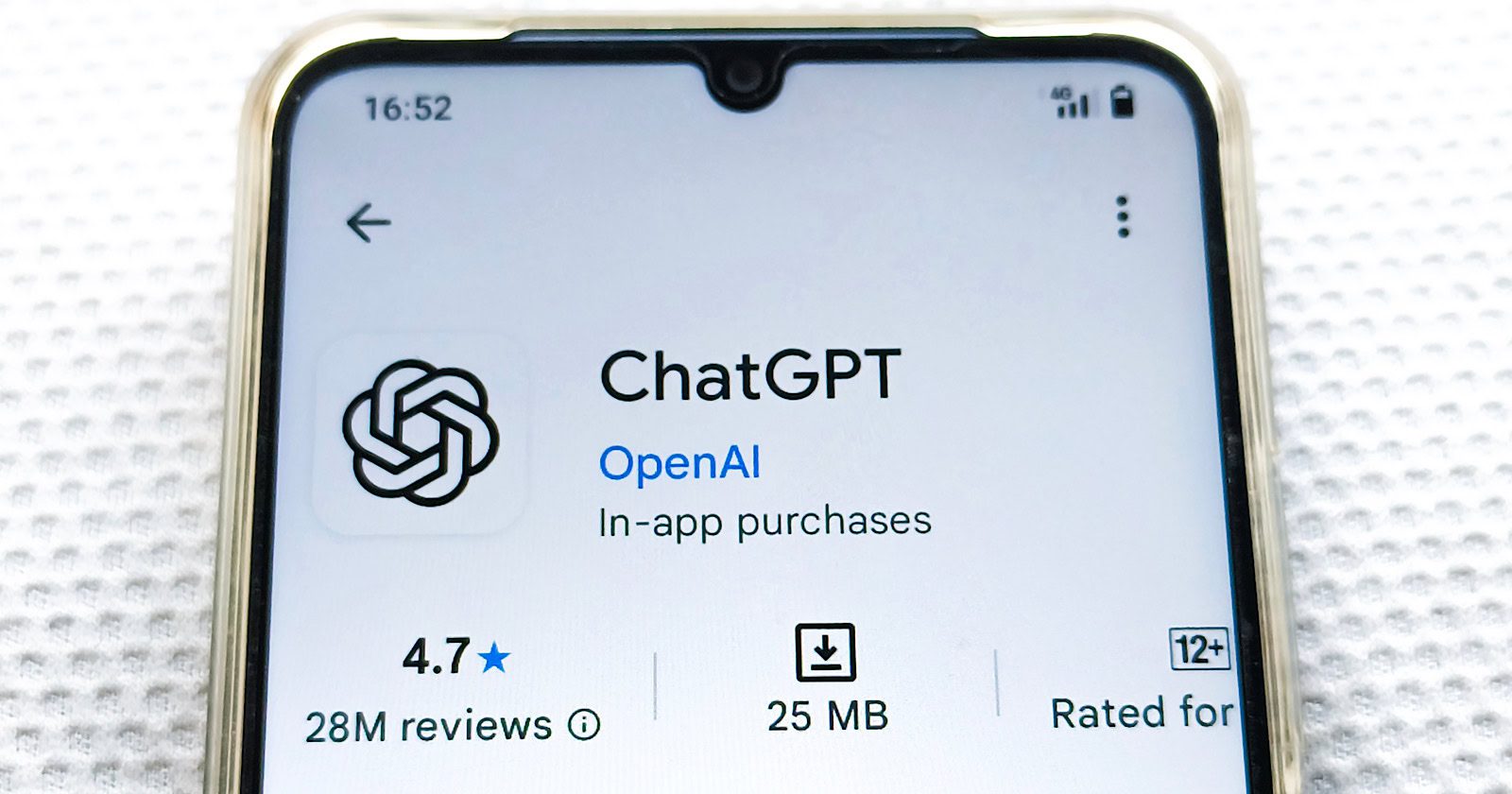
OpenAI released ChatGPT Atlas today, describing it as “the browser with ChatGPT built in.”

OpenAI announced the launch in a blog post and livestream featuring CEO Sam Altman and team members including Ben Goodger, who previously helped develop Google Chrome and Mozilla Firefox.

Atlas is available now on macOS worldwide for Free, Plus, Pro, and Go users. Windows, iOS, and Android versions are coming soon.

What Does ChatGPT Atlas Do?

Unified New Tab Experience

Opening a new tab creates a starting point where you can ask questions or enter URLs. Results appear with tabs to switch between links, images, videos, and news where available.

OpenAI describes this as showing faster, more useful results in one place. The tab-based navigation keeps ChatGPT answers and traditional search results within the same view.

ChatGPT Sidebar

A ChatGPT sidebar appears in any browser window to summarize content, compare products, or analyze data from the page you’re viewing.

The sidebar provides assistance without leaving the current page.

Cursor

Cursor chat lets you highlight text in emails, calendar invites, or documents and get ChatGPT help with one click.

The feature can rewrite selected text inline without opening a separate chat window.

Agent Mode

Agent mode can open tabs and click through websites to complete tasks with user approval. OpenAI says it can research products, book appointments, or organize tasks inside your browser.

The company describes it as an early experience that may make mistakes on complex workflows, but is rapidly improving reliability and task success rates.

Browser Memories

Browser memories let ChatGPT remember context from sites you visit and bring back relevant details when needed. The feature can continue product research or build to-do lists from recent activity.

Browser memories are optional. You can view all memories in settings, archive ones no longer relevant, and clear browsing history to delete them.

A site-level toggle in the address bar controls which pages ChatGPT can see.

Privacy Controls

Users control what ChatGPT can see and remember. You can clear specific pages, clear entire browsing history, or open an incognito window to temporarily log out of ChatGPT.

By default, OpenAI doesn’t use browsing content to train models. You can opt in by enabling “include web browsing” in data controls settings.

OpenAI added safeguards for agent mode. It cannot run code in the browser, download files, install extensions, or access other apps on your computer or file system. It pauses to ensure you’re watching when taking actions on sensitive sites like financial institutions.

The company acknowledges agents remain susceptible to hidden malicious instructions in webpages or emails that could override intended behavior. OpenAI ran thousands of hours of red-teaming and designed safeguards to adapt to novel attacks, but notes the safeguards won’t stop every attack.

Why This Matters

Atlas blurs the line between browser and search engine by putting ChatGPT responses alongside traditional search results in the same view. This changes the browsing model from ‘visit search engine, then navigate to sites’ to ‘ask questions and browse simultaneously.’

This matters because it’s another major platform where AI-generated answers appear before organic links.

The agent mode also introduces a new variable: AI systems that can navigate sites, fill forms, and complete purchases on behalf of users without traditional click-through patterns.

The privacy controls around site visibility and browser memories create a permission layer that hasn’t existed in traditional browsers. Sites you block from ChatGPT’s view won’t contribute to AI responses or memories, which could affect how your content gets discovered and referenced.

Looking Ahead

OpenAI is rolling out Atlas for macOS starting today. First-run setup imports bookmarks, saved passwords, and browsing history from your current browser.

Windows, iOS, and Android versions are scheduled to launch in the coming months without specific release dates.

The roadmap includes multi-profile support, improved developer tools, and guidance for websites to add ARIA tags to help the agent work better with their content.


Featured Image: Saku_rata160520/Shuterstock

A Smarter SEO Content Audit: Aligning For Performance, Purpose & LLM Visibility via @sejournal, @coreydmorris

A major category, focus, or pillar (as I have defined it for decades) of SEO is content. Influencing a range of on-page factors, but more so to develop authentic context and authority status over the years, content has been an engine of so much SEO and is a focal point in the shift from keyword-focused to visibility in the era of LLMs, AI search results, and organic search results in integrated thinking.

With a focus on content needs of today, combined with those from the past few years, a popular way to understand content’s effectiveness is to conduct SEO content audits. As we look at content auditing in a more versatile way for broader visibility, I believe it is important to address the fact that audits often fall into one of two extremes:

  • Too shallow to be useful – using an automated tool and lacking data and a point of view.
  • Too deep and detailed to be usable – so much data, so much crawling, and so many topics that it’s difficult for search engines and LLMs to understand the actual focus.

With AI and LLMs changing how content is discovered and interacted with, we can’t afford to rest on the content we have created in the past and to assume past performance will provide future positive results. I believe a better model is a performance and purpose-driven audit that prioritizes actions based on business impact and newer visibility models.

SEO content audits, which evolve to stay relevant in today’s search and AI environment, need to account for the fact that search behavior is shifting. I’m not going to unpack the stats or talk about search market share in this article, but trust that you’re seeing the impact in your stats and dashboards. As we shift with the market, we do have to think more about answers and authority signals.

Even if we have a finely tuned content machine that has every possible AI-driven efficiency built into it, we can’t afford wasted efforts and content bloat. Flooding search engines and LLMs with bloat, whether human-generated or AI-generated (or some combo), is wasted if it isn’t working for us. This is especially true for B2B and lead-generation-focused companies that have longer customer journeys and sales cycles.

Marketing and corporate executives expect performance and find out too late that outdated or ineffective content didn’t translate from keyword rankings to AI visibility. Leveraging a content audit that balances having enough depth, but being actionable and focused on business value, is as important as ever.

How To Conduct A Performance-Driven, LLM-Aware Content Audit

I’m advocating a modern and repeatable framework that replaces traditional SEO content audits with one that is more useful and aligned to how things work today.

1. Define Purpose

We have to start off by getting on the same page with what spurred us to do an audit and what our ultimate goal for the effort is. Whether we’re trying to clean up legacy content overall, to shift focus to LLM visibility that we want to improve, seeking to get more conversions out of existing content, or other noble goals.

It is important to understand what “good” looks like. Whether it is visibility, traffic, authority, engagement, or some other measurable outcome.

2. Segment By Type And Funnel Stage

A challenge of content reviews and analysis is how specific content is prioritized. We want to avoid a one-size-fits-all approach.

That means we need to break down the categories of content for the audit by type. That can include blog posts vs. core landing pages vs. gated assets. However you look and classify the types of content on your site and that your team creates, you’ll want to use this as a filter.

Additionally, you want to look at your content in the same way that you consider your funnel. Whether it is top, middle, and bottom-of-funnel content, or if you look in a different way at customer journeys and classifications, use this as a second important filter and prioritize what you want to analyze and why (going back to the defined purpose of the content audit).

3. Score Content 3P’s (Purpose, Performance, Potential)

This is where our audits and processes start to take a more custom approach based on the steps we’ve completed so far. You’ll need your own custom scoring system. It could be as simple as a 1-3 scale for the categories of Purpose, Performance, and Potential.

Purpose:

  • What is this content meant to do?
  • Is it aligned with:
    • Brand?
    • Positioning?
    • Goals?

Performance:

  • How does it drive:
    • Traffic?
    • Conversions?
    • Citations?
    • Engagement?
  • Does it actually:
    • Bring people in?
    • Move them forward?

Potential:

  • Could it rank or be rendered in answers in AI with updates?
  • Could it be:
    • Repurposed?
    • Repositioned?

As third-party tools continue to add to their data sets and measurement capabilities, you could do your own checks, combining Google Analytics 4, Google Search Console, and ChatGPT to see what content feels useful for LLMs.

4. Determine What Stays

At this juncture, it is time to add a business-focused or aligned lens. Considering content for things like it helps us get found for the right reasons, if it would resonate with our primary audience, and if it would be prominently perceived as expert and authoritative by further stakeholders (current client, journalist, industry colleagues).

For each piece of content that is reviewed within the audit and analysis, arrive at a final decision:

  • Remove: With no performance, future, or purpose, this content can be removed.
  • Combine: This category is typically for topics that are competing or have cannibalization.
  • Update: Whether it is a topic that isn’t optimized, is misaligned in the current iteration, or needs some other type of identified improvement. LLMs prefer sources that are timely, so refreshing content on a regular basis to stay as up-to-date as possible can help improve the longevity of a piece being sourced by AI.
  • Keep: This category is for content that needs no change and that you’ll keep as-is currently.

5. Optimize For Search & LLM Visibility

For the content you have determined that stays or gets updated, you’ll want to consider both search and LLMs and what they reward for your content and brand to be found.

For search engines, starting with intent can often help to not get bogged down in old-school thinking about keywords and help with thinking of topics and the opportunity that exists for visibility in organic search results.

For AI, while this article isn’t a primer for what matters for being found in LLMs, there are things like content structure, clear and authoritative answers, brand signals, and external validation (PR, etc.) that are important here, too, in the edits and updates that you make.

6. Create Prioritized Action Plan

While it might feel like, at this point, the heavy lifting is done and that you’ve got a solid spreadsheet, list, or way that you’ve organized the work so far, this is where the follow-through and implementation can get derailed quickly.

You need to work at this juncture to score or plan out what is required for implementation based on effort vs. impact. Additionally, you need to layer in your team’s capacity, skill sets, and cost (or opportunity cost) of resources. Lastly, you need to organize the effort into sprints or milestones to do over time so it doesn’t become a never-ending project or one that is too big to accomplish.

7. Track Business (Not Search) Metrics

As the content audit work wraps up and turns to implementation of the action plan, you need to make sure you’re set up to look beyond rankings and traffic.

Deeper business-aligned metrics include conversions, form submissions, and demo requests as the bridge from online to sales processes. Quality metrics and key performance indicators (KPIs) still apply as you weave in conversion rate optimization (CRO) efforts and mapping to expected aspects of the customer journey or funnel.

And, as you evolve from SEO metrics to visibility, third-party tools or your own qualification and quantification efforts in customizing GA4 or other data capture and analysis work will be important in understanding the impact of your content auditing and update efforts.

Final Thoughts

Content audits aren’t dead. However, the way we’ve done them in the past likely does need to change. There’s no such thing as a perfect process, tool, or spreadsheet, but we can leverage solid practices that integrate our own goals, potential, and value to our target audiences.

SEO this year and beyond is about visibility, usefulness, and what we can impact across search engines and LLMs.

Remembering that the right audit balances depth with being actionable, the steps I outlined and your team’s dedication and focus can help you see it through to measurable success.

More Resources:


Featured Image: Roman Samborskyi/Shutterstock