This is today’s edition of The Download, our weekday newsletter that provides a daily dose of what’s going on in the world of technology.
What we still don’t know about weight-loss drugs
Weight-loss drugs have been back in the news this week. First, we heard that Eli Lilly, the company behind Mounjaro and Zepbound, became the first healthcare company in the world to achieve a trillion-dollar valuation.
But we also learned that, disappointingly, GLP-1 drugs don’t seem to help people with Alzheimer’s disease. And that people who stop taking the drugs when they become pregnant can experience potentially dangerous levels of weight gain. On top of that, some researchers worry that people are using the drugs postpartum to lose pregnancy weight without understanding potential risks.
This article first appeared in The Checkup, MIT Technology Review’s weekly biotech newsletter. To receive it in your inbox every Thursday, and read articles like this first, sign up here.
If you’re interested in weight loss drugs and how they affect us, take a look at:
+ GLP-1 agonists like Wegovy, Ozempic, and Mounjaro might benefit heart and brain health—but research suggests they might also cause pregnancy complications and harm some users. Read the full story.
+ We’ve never understood how hunger works. That might be about to change. Read the full story.
+ This vibrating weight-loss pill seems to work—in pigs. Read the full story.
What we know about how AI is affecting the economy
There’s a lot at stake when it comes to understanding how AI is changing the economy right now. Should we be pessimistic? Optimistic? Or is the situation too nuanced for that?
Hopefully, we can point you towards some answers. Mat Honan, our editor in chief, will hold a special subscriber-only Roundtables conversation with our editor at large David Rotman, and Richard Waters, Financial Times columnist, exploring what’s happening across different markets. Register here to join us at 1pm ET on Tuesday December 9.
The event is part of the Financial Times and MIT Technology Review “The State of AI” partnership, exploring the global impact of artificial intelligence. Over the past month, we’ve been running discussions between our journalists—sign up here to receive future editions every Monday.
The must-reads
I’ve combed the internet to find you today’s most fun/important/scary/fascinating stories about technology.
1 Tech billionaires are gearing up to fight AI regulation By amassing multi-million dollar war chests ahead of the 2026 US midterm elections. (WSJ $) + Donald Trump’s “Manhattan Project” for AI is certainly ambitious. (The Information $)
2 The EU wants to hold social media platforms liable for financial scams New rules will force tech firms to compensate banks if they fail to remove reported scams. (Politico)
3 China is worried about a humanoid robot bubble Because more than 150 companies there are building very similar machines. (Bloomberg $) + It could learn some lessons from the current AI bubble. (CNN)+ Why the humanoid workforce is running late. (MIT Technology Review)
4 A Myanmar scam compound was blown up But its residents will simply find new bases for their operations. (NYT $) + Experts suspect the destruction may have been for show. (Wired $) + Inside a romance scam compound—and how people get tricked into being there. (MIT Technology Review)
5 Navies across the world are investing in submarine drones They cost a fraction of what it takes to run a traditional manned sub. (The Guardian) + How underwater drones could shape a potential Taiwan-China conflict. (MIT Technology Review)
6 What to expect from China’s seemingly unstoppable innovation drive Its extremely permissive regulators play a big role. (Economist $) + Is China about to win the AI race? (MIT Technology Review)
7 The UK is waging a war on VPNs Good luck trying to persuade people to stop using them. (The Verge)
8 We’re learning more about Jeff Bezos’ mysterious clock project He’s backed the Clock of the Long Now for years—and construction is amping up. (FT $) + How aging clocks can help us understand why we age—and if we can reverse it. (MIT Technology Review)
9 Have we finally seen the first hints of dark matter? These researchers seem to think so. (New Scientist $)
10 A helpful robot is helping archaeologists reconstruct Pompeii Reassembling ancient frescos is fiddly and time-consuming, but less so if you’re a dextrous machine. (Reuters)
Quote of the day
“We do fail… a lot.”
—Defense company Anduril explains its move-fast-and-break-things ethos to the Wall Street Journal in response to reports its systems have been marred by issues in Ukraine.
One more thing
How to build a better AI benchmark
It’s not easy being one of Silicon Valley’s favorite benchmarks.
SWE-Bench (pronounced “swee bench”) launched in November 2024 as a way to evaluate an AI model’s coding skill. It has since quickly become one of the most popular tests in AI. A SWE-Bench score has become a mainstay of major model releases from OpenAI, Anthropic, and Google—and outside of foundation models, the fine-tuners at AI firms are in constant competition to see who can rise above the pack.
Despite all the fervor, this isn’t exactly a truthful assessment of which model is “better.” Entrants have begun to game the system—which is pushing many others to wonder whether there’s a better way to actually measure AI achievement. Read the full story.
—Russell Brandom
We can still have nice things
A place for comfort, fun and distraction to brighten up your day. (Got any ideas? Drop me a line or skeet ’em at me.)
+ Aww, these sharks appear to be playing with pool toys. + Strange things are happening over on Easter Island (even weirder than you can imagine) + Very cool—archaeologists have uncovered a Roman tomb that’s been sealed shut for 1,700 years. + This Japanese mass media collage is making my eyes swim, in a good way.
Jeff Oxford is my go-to interview for ecommerce SEO. The founder of Oregon-based 180 Marketing, an agency, Jeff first appeared on the podcast in 2022 when he addressed SEO’s “four buckets.” I invited him back late last year to explain AI’s impact on search traffic and how merchants can adapt.
In this our latest interview, he shared optimization tactics for ChatGPT, with a caveat: Google’s AI Mode could eventually dominate.
The entire audio of our conversation is embedded below. The transcript is edited for length and clarity.
Eric Bandholz: Welcome back. Please introduce yourself.
Jeff Oxford: I’m the founder of 180 Marketing, an agency focusing exclusively on ecommerce SEO. A big part of that lately has been helping brands navigate AI-driven search.
We work with seven- and eight-figure ecommerce companies, helping them grow organic traffic and conversions through the fundamentals — search, content, link building — and now layering in what I call “AI SEO.” Basically, optimizing so you show up in places like ChatGPT and other large language models.
I’ve worked in ecommerce SEO for about 15 years. I ran my own ecommerce sites before then, but I learned I’m better at marketing than operations. So I shifted into ecommerce SEO. Over the past year, I’ve focused heavily on ChatGPT and AI-driven SEO because it’s changing how people discover products.
There’s confusion around what to call this new discipline. Entrepreneurs often say “AI SEO.” The SEO community prefers “GEO,” which stands for Generative Engine Optimization. I’ve also heard “AEO” for Answer Engine Optimization and “LLMO” for Large Language Model Optimization. I prefer the simplicity of AI SEO. My team focuses on where traditional SEO and AI-powered optimization overlap so brands can benefit from both.
Premium ecommerce brands face an uphill battle with Google. Higher prices often lead to higher bounce rates, and Google responds by pushing those sites off page one, regardless of quality. ChatGPT, however, focuses on semantic relevance and draws from multiple sources. Some merchants are now seeing more conversions from ChatGPT than from traditional Google search.
Bandholz: Is ChatGPT the Google of AI SEO?
Oxford: Yes. We work with many ecommerce sites, giving us a broad data set. When we review analytics for AI-driven referrals, about 90% come from ChatGPT. Perplexity is usually second, followed by Claude and Gemini.
But tracking performance is much harder than with Google. Traditional SEO is simple to measure — Shopify or Google Analytics clearly shows organic search traffic and revenue. ChatGPT works differently. Users ask a question, get recommendations, and may or may not click through directly.
Often, they copy the product or brand name and search it on Google. That behavior means ChatGPT rarely appears in analytics as a referral source. Instead, its influence shows up as branded search traffic, which makes attribution tricky.
Bandholz: Are companies moving toward direct sales inside ChatGPT?
Oxford: Shopify and OpenAI announced a collaboration for direct checkout through ChatGPT, but I haven’t seen it widely implemented. Shopify merchants will eventually allow customers to purchase directly inside ChatGPT. Stripe merchants will have similar options through new tools that let developers enable in-chat transactions.
However, I’m unaware of any tracking tools — no equivalent of Google Search Console or Bing Webmaster Tools. Unless ChatGPT introduces advertising, there’s little incentive to build detailed analytics. If ads become part of the platform, I could see them adding conversion pixels and performance tracking, but that’s speculative.
Looking ahead, I suspect Google’s AI Mode may ultimately dominate. ChatGPT accounts for roughly 90% of AI-driven search referrals, but Google is positioning AI Mode as the future. It began as a beta feature, moved into the main interface, and now appears as an “AI” tab alongside images and videos and in the Chrome search bar. If user engagement remains strong, Google could eventually make AI Mode the default over traditional search results.
Despite ChatGPT’s growth, Google search traffic hasn’t declined. Studies show that Google search volume has increased slightly. ChatGPT holds only 1–2% of the search market share — less than DuckDuckGo. Google still commands the vast majority of actual information-seeking queries.
Bandholz: How do I get Beardbrand ranking in ChatGPT?
Oxford: All AI search tools run on LLMs. Just as traditional SEO focuses on Google, we focus on ChatGPT because it holds the largest share of AI-driven discovery. Improvements made for ChatGPT usually help across the other platforms.
The process starts with prompt research, similar to keyword research. Target prompts tied to high-volume transactional keywords — such as “best beard oil” or “where to buy beard oil.” Informational prompts like “what is beard oil” are too top-of-funnel to convert. Once you identify the core prompts, optimize your site around them.
Begin with your About page. The first sentence should clearly state that Beardbrand is a leading provider of beard oil. Maintain your brand voice afterward, but clarity in the opening line helps LLMs understand your core identity.
Next, optimize category and product pages with conversational FAQs, detailed specification tables, clear unique selling points, and defined use cases or target audiences. These elements help LLMs parse and match your products to user prompts.
For blog posts, include expert quotes, statistics, citations, and simple language. Update old pieces. Recency heavily influences whether ChatGPT cites a page. However, maintain a hyper-focused site — remove outdated or off-topic content to improve your likelihood of being referenced in AI search results.
Bandholz: What else should we know?
Oxford: The biggest takeaway is that AI SEO relies heavily on brand mentions, similar to how traditional SEO relies on link building. In AI search, these mentions — often called citations — strongly correlate with whether ChatGPT recommends your products. Your first step is finding “best beard oil” articles across the web, especially those ChatGPT frequently cites. Then work to get your products included.
Send samples, offer substantial affiliate commissions, and accept break-even on those sales if it increases your presence in authoritative lists. These citations can meaningfully influence ChatGPT’s product recommendations.
Digital public relations also helps. Create data or stories journalists want to reference — for example, statistics about beard trends, grooming habits, or consumer preferences. Unique data tends to get picked up, generating high-value brand mentions.
Another helpful tool is Qwoted. It’s similar to Haro but with a paid model that filters out spam, so journalists actively use it. Reporters from Forbes, Inc., HuffPost, and even The Wall Street Journal post requests for expert quotes. Ecommerce founders can easily respond to topics such as tariffs, AI adoption, and hiring. These quotes often generate both brand mentions and backlinks, helping both AI SEO and traditional SEO. Paid plans start around $100 per month, and a single top-tier mention usually justifies the cost.
Bandholz: Where can people hire you, follow you, find you?
Google’s John Mueller says sites with low-quality AI content should rethink their purpose rather than manually rewrite pages. Starting fresh may be faster than recovering.
Manually rewriting AI content doesn’t automatically restore a site’s value or authenticity
Mueller recommends treating recovery as starting over with no content, not as a page-by-page editing task
Recovering from a “bad state” may take longer than launching on a new domain
Welcome to the week’s Pulse: updates affect how product discovery works, what drives visibility in ChatGPT, and how background assets impact Core Web Vitals.
OpenAI launched shopping research in ChatGPT, SE Ranking published the largest study yet on ChatGPT citation factors, and Google’s John Mueller clarified that background video loading won’t hurt SEO if content loads first.
Here’s what matters for you and your work.
ChatGPT Launches Shopping Research For All Users
OpenAI rolled out shopping research in ChatGPT on November 24, making personalized buyer’s guides available to all logged-in users across Free, Go, Plus, and Pro plans.
The feature works differently from standard ChatGPT responses. Users describe what they need, answer clarifying questions about budget and preferences, and receive a detailed buyer’s guide after a few minutes of research.
Key Facts: Powered by GPT-5 mini. Nearly unlimited usage through the holidays. Merchants can request inclusion through OpenAI’s allowlisting process.
Why SEOs Should Pay Attention
Shopping research pulls more of the product comparison journey inside ChatGPT before users click through to merchant sites. This changes where product discovery happens in the funnel.
Traditional search sent users to comparison sites, retailer pages, and review platforms to build their own shortlist. Shopping research does that work inside the chat interface, asking clarifying questions and surfacing product recommendations based on constraints like budget, features, and intended use.
Crystal Carter, Head of AI Search & SEO Communications at Wix, highlighted the personalization implications in a LinkedIn post:
Make sure your brand affinities, and communities are clearly stated on YOUR website, in your support documentations, FAQs, and make moves to get it cited on other websites, because for some customers, these considerations are make or break, and they will build it into their models.
Her testing showed ChatGPT delivering different restaurant recommendations to users with different profile preferences, pulling from Google Business Profiles and other sources to match stated affinities.
For retailers and affiliate publishers, visibility now depends partly on how products and pages appear in OpenAI’s shopping system. The allowlisting process means merchants need to opt in rather than relying solely on organic crawling.
Study Reveals Top 20 Factors Driving ChatGPT Citations
SE Ranking analyzed 129,000 unique domains across 216,524 pages in 20 niches to identify which factors correlate with ChatGPT citations.
Referring domains ranked as the single strongest predictor. Sites with up to 2,500 referring domains averaged 1.6 to 1.8 citations, while those with over 350,000 referring domains averaged 8.4 citations.
Key Facts: Domain traffic matters only above 190,000 monthly visitors. Content over 2,900 words averaged 5.1 citations versus 3.2 for articles under 800 words. Pages with 19 or more data points averaged 5.4 citations.
Why SEOs Should Pay Attention
The study suggests that traditional SEO fundamentals still align with AI citation likelihood, but the thresholds matter more than gradual improvements. A site with 20,000 monthly visitors performs similarly to one with 200 monthly visitors, but crossing 190,000 visitors doubles citation rates.
This creates different optimization priorities than traditional search. Building from zero to moderate traffic won’t improve ChatGPT visibility, but scaling from moderate to high traffic will. The same pattern holds for referring domains, where the jump happens at 32,000 domains.
Manidurga BLL, an IT student analyzing the research, broke down the implications in a LinkedIn post with video:
The AI revolution isn’t just changing how we search. It’s rewriting the entire playbook for digital authority. For us tech students and future developers, this means rethinking content strategy from day one. Building domain authority isn’t just about Google anymore. It’s about teaching AI systems to trust and cite your work.
The post includes a detailed video walkthrough of the study findings, highlighting that heavy Quora and Reddit presence correlates with 7 to 8 citations, while review platform listings average 4 to 6 citations.
The research also found that .gov and .edu domains don’t automatically outperform commercial sites despite common assumptions. What matters is content quality and domain authority, not domain extension.
Mueller: Background Video Loading Unlikely To Affect SEO
Google Search Advocate John Mueller says large video files loading in the background are unlikely to have a noticeable SEO impact if page content loads first.
A site owner on Reddit asked whether a 100MB video would hurt SEO if the page prioritizes loading a hero image and content before the video continues loading in the background. Mueller responded that he doesn’t expect a noticeable SEO effect.
Key Facts: Using preload=”none” on video elements prevents browsers from downloading video data until needed. Core Web Vitals metrics should verify implementation meets performance thresholds.
Why SEOs Should Pay Attention
The question addresses a common concern for sites using large hero videos or animated backgrounds. Site owners have avoided background video because of performance worries, but Mueller’s guidance clarifies that proper implementation won’t create SEO problems.
The key is load sequencing. If a page shows its hero image, text, and navigation immediately while a 100MB video loads in the background, users get a fast experience and search engines see content quickly.
The Reddit thread included debate about the guidance, with one commenter noting Mueller’s response contradicts concerns about network contention competing with critical resources. WebLinkr, an r/SEO moderator, defended Mueller’s position and noted web developers sometimes overstretch the impact of page speed factors on SEO.
This changes the calculation for sites considering background video. The decision now focuses on user experience and bandwidth costs rather than SEO penalties.
Technical implementation still matters. Using preload=”none” on video elements prevents the browser from downloading video data speculatively, saving bandwidth for users who never play the video.
Each story this week shows discovery happening earlier in the journey.
ChatGPT shopping research handles product comparison before users reach merchant sites. The SE Ranking study reveals what builds citation authority at scale rather than incremental gains. Mueller’s video guidance removes a technical barrier that kept sites from using rich media.
Taken together, this week is about where decisions really form, before anyone ever types a query into Google.
I’m not someone who’s drunk much of the AI Kool Aid. I have sipped it. Swilled it around my mouth like you would an 1869 Château Lafite Rothschild.
But I’ve seen enough cult documentaries to know you should spit it back into the glass.
Do I love the opportunities it’s provided me in a work sense? Absolutely. Do I think it’s fundamentally shifted the marketing ecosystem? No. I think it’s expedited what’s been happening for some time.
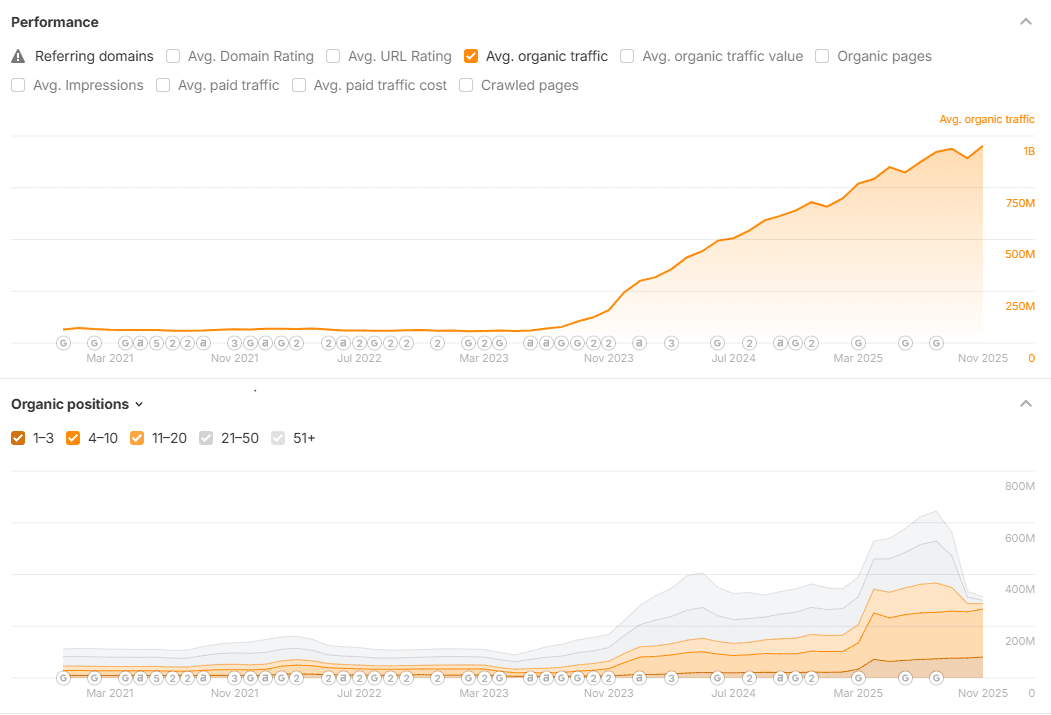
When you take a step back, Reddit’s traffic surge is absurd (Image Credit: Harry Clarkson-Bennett)
LLMs provide a good proxy as to how you’re seen online. And they really lean into review platforms and strong brands. Associating your brand with your core topics, removing ambiguity, and strengthening your product positioning is never a bad thing.
It’s not just about search anymore. In reality, it never should have been. It’s about connecting. Generating value from the different types of media.
TL;DR
The search customer journey spans TikTok, YouTube, Instagram, and everything in between.
Last-click attribution is outdated: BOFU platforms get the credit, but creators, communities, and discovery platforms do the heavy lifting.
AI hasn’t broken anything, it’s just exposing how messy, multi-platform, and people-driven it’s always been.
Brands win by understanding their audience, investing in creators, and building experiences that cut through an enshittified internet.
Image Credit: Harry Clarkson-Bennett
The Customer Journey Has Changed
True. But it’s been changing for a long time. Paid channels are becoming more expensive, owned channels like search send fewer clicks (mainly a Google-driven mechanic), and earned channels are looking more like the golden ticket to corporate stooges.
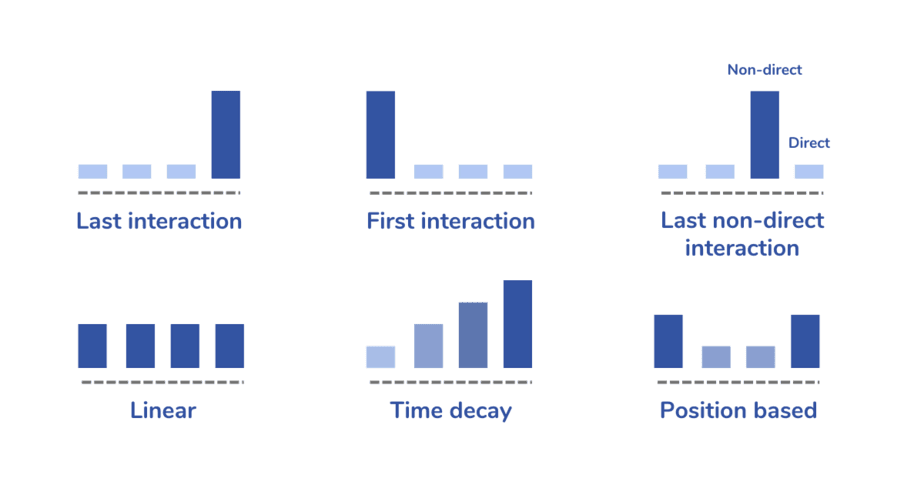
The majority of brands use last click attribution (gross, get away from me). A method that overvalues search. For the last decade or more, there have been discovery platforms that are more valuable than search – TikTok, YouTube, Instagram. Pick one.
I like time decay or a position-based/first and last touch model in the “new” world (Image Credit: Harry Clarkson-Bennett)
We tend to use search for finding products, brands, or stories we know exist. And for comparison, related searches. But as AI Mode rolls ever closer and Google looks to greedily take on middle of the funnel queries, Google’s role as a discovery platform will change. Theoretically, at least.
A buying journey can take anywhere from two days to 10 weeks, with up to 97 interactions along the way.
Google only accounts for just 34.5% of total search share.
YouTube (24%), TikTok (16.7%), and Instagram (20.9%) make up more than 60%.
The average consumer now uses 3.6 platforms before making a purchase.
But Google isn’t really a discovery platform. Maybe a bit. Google Shopping. Some comparison searches. But it’s not what anyone is there for.
Someone sees a product on Instagram or TikTok. They read a review of it on Reddit (probably through Google, albeit with a branded search) and watch videos of it on TikTok or YouTube.
They might even buy direct or via Amazon. At best, they perform a branded search in Google.
Now, tell me, last click attribution makes sense.
I think it’s worth noting here that so many of these other platforms are driven by a clickless algorithm. Google requires a click. A fundamental search. The others have homepages that stare directly into your soul.
I don’t think any of this is new. And I suspect it’s been a while since search was a single platform journey. But it depends on what you define as search, I suppose.
Google’s Messy Middle is about right. We have been living through an era of marketing desperately tied to trying to track every penny. Something that has been a near-impossible job for some time. At some point, you just have to sit down, try to know your audience better than anyone else, and have at it.
We need to influence clicks via search before that happens. Brands have to focus their time on the right channels for their audience. Not just search. That’s why knowing your audience and using an attribution model that doesn’t just value the BOFU click matters.
But Has AI Been The Catalyst?
Probably a bit. Behavior has been changing long before LLMs hit the public arena. It’s changed because people have better options. More visually decisive. More authentic. The creator economy has boomed because people trust people.
When I’m doomscrolling on the bog or on the tube (praise be to the 5G gods), I might get served a new product.
If I want real opinions or reviews about said product, I might go to Reddit (albeit through Google) to see what someone thinks. Well, I wouldn’t because I’m an adult with a wife and a mortgage, but you see my point.
I might subscribe to specific Substacks or creators who use and speak about the product.
My favorite LLM might give me product ideas (which I would check very carefully).
Hell, I might even see something IRL on the tube.
A lot of this ends with a Google search. Maybe all of it. Google is a navigational engine. Hence, the last click attribution issue. I suspect the last click isn’t the most important session in the majority of cases.
Unless you’re young, lazy, or both, AI just won’t cut the mustard. Hell, Google’s kingpin tells you not to blindly trust AI. Even the guys fundamentally selling us this stuff are telling us it has some pretty serious flaws.
It’s one of the reasons user journeys are so much more complex and elongated.
We have more effective platforms and opinions than ever.
We have more shitty platforms and opinions than ever.
Cutting through the noise is everything. For people and brands. So you have to learn how to build brands and products that are bold and get the right people talking and sharing.
Things don’t happen in a silo. Call me old-fashioned, but I think we’d all do well to work together as a marketing department. AIOs don’t just affect search. They have a knock-on effect on the entire ecosystem, and it’s important we understand the what and the why.
SEO
Where do we start? I’ll try and be brief. The most obvious and direct threat is zero-click search, which has been on the rise for some time. While AI hasn’t been the key driver of this, it has and will continue to reduce referral traffic.
AI Mode is there to steal middle of the funnel clicks to “help users make the right decision.”
LLMs offer something of an alternative to search. Although based on what people really use them for, I think they are complementary, rather than a replacement.
I think AI has done some very interesting things in the SEO space. Vibe engineering platforms like Cursor and prototyping platforms like Lovable have opened up new worlds.
If you can wade through the shit, you can do some brilliant things.
Then you have Profound’s Zero Click conference, where one of the speakers said he felt sorry for anyone working in SEO. According to this turdy savant, there’s very little crossover between SEO and insert favorite acronym before proceeding to discuss lots of SEO ideas from 2012.
People who just do not understand marketing, SEO, the internet, or people. These are the guys driving the enshittification of our day-to-day lives. (More on this later).
PPC
PPC and SEO are ugly cousins, really. We operate in the same space, we target the same traffic. So it stands to reason that AIOs and AI Mode significantly impact paid search.
If you can believe it, it’s broadly a negative.
I know. I, too, am stunned.
Thanks to Seer Interactive, we have near-conclusive data that proves how serious this impact has been. When an AIO is present, and you are not cited, clicks are down over 78%.
Even when there’s no AIO present, paid clicks are down 20%. This is disastrous. Customer acquisition becomes more expensive, and the blended CPAs are significantly more expensive.
This may show a real and significant shift in user behavior. Users are becoming so used to getting what they want from a TOFU search, they don’t even follow up when an AIO isn’t present.
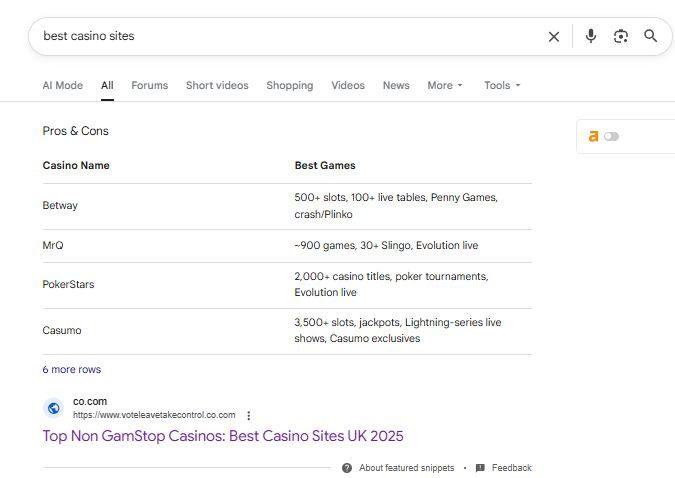
Some very good expired domains and PBN abuse here, post the 2025 SPAM update (Image Credit: Harry Clarkson-Bennett)
Thankfully, the Vote Leave Take Control team have put their talents to good use and can now tell me what casino site should I choose.
The scale is unprecedented. Bullshit flies everywhere.
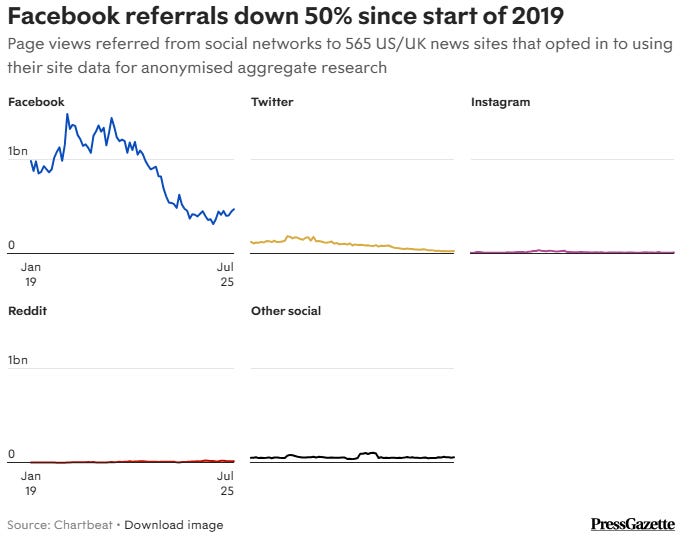
And that’s where social comes in. Globally, the average person spends 2 hours and 24 minutes on social media every day. That’s a lot of time to be hit by fake news. Personalized fake news, too. So maybe it’s not a surprise that social use has been on the decline for the last couple of years.
According to this study by the FT, social media use has decreased by 10% and has been driven by (*shakes fist*) the youth. I think these platforms are a shell of what they once were. The connections they provided have been replaced by absolute bullshit.
First, the platform attracts users with some bait, such as free access.
Then the activity is monetized, bringing in the business customers with no thought for the user experience.
Once everyone is “trapped,” the value is transferred to their executives and shareholders.
People with no understanding of marketing or people thinking that auto-generated comments will boost their profile on LinkedIn. Businesses using AI to cut corners to generate meaningless bullshit and throwing it at me. See Coca Cola advert for reference.
Nothing says happy holidays like being fired for an incompetent robot.
The lights are on, the wheels are turning, but nobody is home. Or cares. The Mark Zuckerburgs of the world are, hopefully, turning people off hyper addictive brain rot.
Impressive, I know. Thank god for Ryan Air.
Best social media strategy on the planet (Image Credit: Harry Clarkson-Bennett)
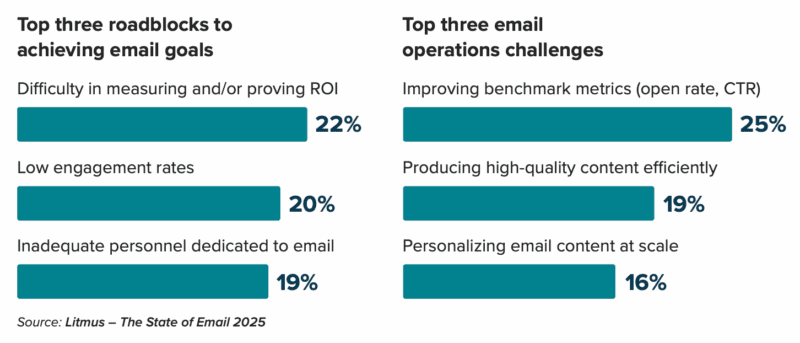
As email is an owned channel, there’s not an obvious issue with generative AI. However, the Litmus State of Email Report shows the top roadblocks and operational challenges encountered by teams.
Image Credit: Harry Clarkson-Bennett
AI makes all of these roadblocks worse. Crummy, personality-devoid content churned out at scale will lower engagement. And it doesn’t take a genius to figure out that execs would love to save on personnel.
Operationally, you’d think AI will help. But if producing high-quality content at scale and improving your core benchmarks are fundamental issues, I’m not sure AI is the answer.
Personalization, research, and distribution. Absolutely. Creating content that draws real people in and engages with them. Color me sceptical.
Paid Vs. Earned Vs. Owned
This is all about the funnel. If it becomes more expensive to acquire customers in their unaware/aware phase with paid campaigns, your owned and earned channels need to work harder. They need to work harder to increase your conversion rate.
Paid campaigns or projects are designed to do two things: reach a newer potential audience and retarget an existing, highly qualified one. But they’re becoming more expensive. Especially in a PPC sense.
Most sensible companies are trying to build their email databases off the back of search and organic social. Owned media is simultaneously under threat and incredibly valuable.
Earned media – public exposure through word of mouth and shared content – is arguably more important than ever. People really trust people’s opinions.
Never a truer word spoken (Image Credit: Harry Clarkson-Bennett)
What Should You Do?
As an SEO and a marketer, you should focus on creating real connections with people. Understanding your audience. Leveraging people that have influence over your audience. Build, work with, and promote brilliant creators and own your audience data internally.
Squeeze every last drop out of your content. Cut and share it in appropriate formats across multiple channels.
Email is almost certainly the most applicable channel for most brands. You actually own it. Then figure out the role your brand plays in that journey. Create a great user experience on and off-site. Make sure it’s well documented, and you own everything in your control. Speak to your PPC and social teams to understand the challenges they’re having.
Help Center.
FAQ and product pages.
ToV consistency and brand guidelines.
Reviews and complaints (On and off-site).
Technical site quality.
Content quality.
Large-scale, TOFU campaigns.
This isn’t just about marketing. Or LLMs. They are just a good proxy for how you are seen on the internet.
It’s about working together as a marketing department with a shared goal of creating and amplifying brilliant experiences to the right people. Maximising the value of your owned channels, to reduce the reliance on paid, and doing things that create brand advocates and cause your earned media to soar.
There’s an opportunity here to do great things!
But whatever you do, don’t forget about good quality SEO. It’s the primary purpose of our job and it still works.
Scheduling ads in Google or Microsoft Ads sounds simple until you realize how many hours you’re wasting showing them at the wrong time.
A campaign that performs well in one market might fall flat in another, not because your targeting or creative is off, but because of when your ads appear.
Managing time zones is one of the easiest ways to improve efficiency and stop unnecessary spend. Yet, many PPC managers still rely on default settings or assume their ad platform will “figure it out.”
In reality, effective ad scheduling requires strategy, testing, and an understanding of how local behavior differs across regions.
This guide breaks down how to identify true peak hours, segment campaigns by region, and use automation tools to make scheduling work in your favor, no matter where your audience is.
Understanding Time Zone Challenges In PPC
When advertising across multiple regions, time zone discrepancies can create challenges that impact ad delivery, engagement, and conversions.
A common pitfall is assuming that a single campaign schedule will work universally. In reality, what works in one location might be completely ineffective in another.
For example, if your Google Ads account is set to Eastern Time but your target audience is primarily on the West Coast, your ads might be running during off-hours, leading to suboptimal performance.
International campaigns require even more diligence to consider local business hours and consumer behavior patterns.
Another factor is peak engagement hours. While lunchtime or evening hours may be prime time in one country, those same hours could be completely irrelevant in another.
Understanding these nuances is essential for optimizing your ad scheduling strategy.
Advanced Strategies For Scheduling Ads Across Time Zones
Successfully managing ad scheduling across time zones requires a thoughtful approach that goes beyond the basics.
While many advertisers set simple schedules and hope for the best, the real wins come from leveraging automation, data-driven insights, and strategic segmentation.
Whether you’re running campaigns domestically across U.S. time zones or managing international PPC efforts, applying advanced techniques can help ensure your ads are served at the right time for the right audience.
Segmenting Campaigns By Time Zone For Better Control
If you’re running campaigns across multiple time zones, one of the best ways to stay in control is by creating separate campaigns for different regions.
This lets you adjust ad schedules, budgets, and bidding strategies based on local peak performance times rather than forcing a single schedule to work for every location.
For example, an ecommerce brand serving customers in the U.S. and Europe might run separate campaigns for each region.
The U.S. campaign can focus on morning and evening hours when engagement peaks, while the European campaign targets prime shopping hours in local time zones.
While this approach adds complexity, the benefits far outweigh the extra management effort. Automating adjustments with rules and scripts can help streamline this process, ensuring each campaign is optimized without constant manual oversight.
Leveraging Automated Bidding Over Fixed Schedules
Manual ad scheduling has its place, but automated bid strategies like Target ROAS or Maximize Conversions allow you to optimize bids dynamically rather than setting fixed hours.
These AI-driven approaches adjust bids in real time, ensuring ads appear when conversion probability is highest, regardless of time zone differences.
For instance, if data shows that users in one region convert at a higher rate between 9 a.m. and 11 a.m. but another region performs better in the evening, automated bidding will allocate more budget when it matters most.
Instead of manually adjusting bids every few weeks, let machine learning do the heavy lifting.
Optimizing Scheduling Based On Market-Specific Peak Hours
Different markets have different user behaviors, so it’s crucial to base your scheduling decisions on actual performance data rather than assumptions.
Google Ads’ ad schedule reports and Microsoft Ads’ time-of-day insights can help you identify when users in each region are most active.
For example, if analytics reveal that North American users are most engaged in the evening while European users peak in the morning, your campaigns should reflect that.
Instead of blanketing all markets with a generic ad schedule, tailor your approach based on real-time engagement trends.
Using Labels To Manage And Adjust Scheduling
One often overlooked yet powerful feature in Google and Microsoft Ads is the use of labels.
Labels let you group campaigns, ad groups, or keywords into easily manageable categories, making it simpler to track and adjust schedules.
For example:
Tagging campaigns by region allows for easy bulk adjustments when shifting schedules due to seasonal changes or promotional events.
Labeling time-sensitive ads ensures that you can quickly pause or resume campaigns as needed without sifting through dozens of settings.
Using automation scripts with labels enables automatic bid adjustments or scheduling changes based on real-time performance.
By applying labels effectively, you can streamline scheduling changes without manually editing each campaign, saving time and reducing errors.
Automating Scheduling Adjustments With Scripts
If you’re managing multiple time zones, Google Ads scripts can be a game-changer.
Rather than manually adjusting schedules, scripts can dynamically modify bids based on real-time performance data.
For example, a script could be set up to boost bids by 20% during high-converting hours and reduce them by 10% when conversions drop. This keeps campaigns optimized while freeing up time to focus on strategy rather than daily bid adjustments.
Scripts also work well with labels. You can program scripts to modify bid strategies for campaigns tagged with specific labels, ensuring changes are applied only to relevant ads.
Adjusting For Daylight Saving Time Changes
Another scheduling headache is Daylight Saving Time (DST), which varies by country and can cause misalignment in ad schedules.
A campaign that ran perfectly last month might suddenly be off by an hour if a region switches to DST.
To avoid this, maintain a calendar of DST changes in key markets and adjust schedules proactively.
Another option is using automated rules or machine learning-based bid adjustments to handle these shifts without manual intervention.
Budget Allocation Based On Regional Performance Trends
Rather than splitting your budget evenly across all time zones, consider allocating more spend to the highest-performing regions based on historical data.
By analyzing performance reports, you can determine which locations deliver the best ROI and adjust budgets accordingly.
For instance, if your data shows that conversions peak in the late evening for Pacific time zone users but decline in the early morning for Eastern time users, shift more budget toward the stronger-performing time periods.
This approach ensures ad spend is being used effectively rather than wasted on time slots that don’t generate conversions.
Turning Time Zones Into An Advantage
Ad scheduling is just one of many levers that can make or break your campaign performance. When your ads align with local customer behavior, your budget works harder, and engagement improves.
Use data to pinpoint when conversions actually happen, then adjust delivery windows to match those trends.
Lean on automation to keep schedules consistent, especially across multiple markets, and review reports often enough to spot shifting patterns.
Treat time zone planning as part of your optimization routine, not a one-time setup. The more precisely your ads reflect when people are active, the stronger your results will be.
Today’s IT leaders face competing mandates to do more (“make us an ‘AI-first’ enterprise—yesterday”) with less (“no new hires for at least the next six months”).
VMware has become a focal point of these dueling directives. It remains central to enterprise IT, with 80% of organizations using VMware infrastructure products. But shifting licensing models are prompting teams to reconsider how they manage and scale these workloads, often on tighter budgets.
For many organizations, the path forward involves adopting a LessOps model, an operational strategy that makes hybrid environments manageable without increasing headcount. This operational philosophy minimizes human intervention through extensive automation and selfservice capabilities while maintaining governance and compliance.
In practice, VMware-to-cloud migrations create a “two birds, one stone” opportunity. They present a practical moment to codify the automation and governance practices LessOps depends on—laying the groundwork for a leaner, more resilient IT operating model.
This content was produced by Insights, the custom content arm of MIT Technology Review. It was not written by MIT Technology Review’s editorial staff.
This content was researched, designed, and written by human writers, editors, analysts, and illustrators. This includes the writing of surveys and collection of data for surveys. AI tools that may have been used were limited to secondary production processes that passed thorough human review.
If we didn’t have pictures and videos, I almost wouldn’t believe the imagery that came out of this year’s UN climate talks.
Over the past few weeks in Belem, Brazil, attendees dealt with oppressive heat and flooding, and at one point a literal fire broke out, delaying negotiations. The symbolism was almost too much to bear.
While many, including the president of Brazil, framed this year’s conference as one of action, the talks ended with a watered-down agreement. The final draft doesn’t even include the phrase “fossil fuels.”
As emissions and global temperatures reach record highs again this year, I’m left wondering: Why is it so hard to formally acknowledge what’s causing the problem?
This is the 30th time that leaders have gathered for the Conference of the Parties, or COP, an annual UN conference focused on climate change. COP30 also marks 10 years since the gathering that produced the Paris Agreement, in which world powers committed to limiting global warming to “well below” 2.0 °C above preindustrial levels, with a goal of staying below the 1.5 °C mark. (That’s 3.6 °F and 2.7 °F, respectively, for my fellow Americans.)
Before the conference kicked off this year, host country Brazil’s president, Luiz Inácio Lula da Silva, cast this as the “implementation COP” and called for negotiators to focus on action, and specifically to deliver a road map for a global transition away from fossil fuels.
The science is clear—burning fossil fuels emits greenhouse gases and drives climate change. Reports have shown that meeting the goal of limiting warming to 1.5 °C would require stopping new fossil-fuel exploration and development.
The problem is, “fossil fuels” might as well be a curse word at global climate negotiations. Two years ago, fights over how to address fossil fuels brought talks at COP28 to a standstill. (It’s worth noting that the conference was hosted in Dubai in the UAE, and the leader was literally the head of the country’s national oil company.)
The agreement in Dubai ended up including a line that called on countries to transition away from fossil fuels in energy systems. It was short of what many advocates wanted, which was a more explicit call to phase out fossil fuels entirely. But it was still hailed as a win. As I wrote at the time: “The bar is truly on the floor.”
And yet this year, it seems we’ve dug into the basement.
At one point about 80 countries, a little under half of those present, demanded a concrete plan to move away from fossil fuels.
But oil producers like Saudi Arabia were insistent that fossil fuels not be singled out. Other countries, including some in Africa and Asia, also made a very fair point: Western nations like the US have burned the most fossil fuels and benefited from it economically. This contingent maintains that legacy polluters have a unique responsibility to finance the transition for less wealthy and developing nations rather than simply barring them from taking the same development route.
The US, by the way, didn’t send a formal delegation to the talks, for the first time in 30 years. But the absence spoke volumes. In a statement to the New York Times that sidestepped the COP talks, White House spokesperson Taylor Rogers said that president Trump had “set a strong example for the rest of the world” by pursuing new fossil-fuel development.
To sum up: Some countries are economically dependent on fossil fuels, some don’t want to stop depending on fossil fuels without incentives from other countries, and the current US administration would rather keep using fossil fuels than switch to other energy sources.
All those factors combined help explain why, in its final form, COP30’s agreement doesn’t name fossil fuels at all. Instead, there’s a vague line that leaders should take into account the decisions made in Dubai, and an acknowledgement that the “global transition towards low greenhouse-gas emissions and climate-resilient development is irreversible and the trend of the future.”
Hopefully, that’s true. But it’s concerning that even on the world’s biggest stage, naming what we’re supposed to be transitioning away from and putting together any sort of plan to actually do it seems to be impossible.
This article is from The Spark, MIT Technology Review’s weekly climate newsletter. To receive it in your inbox every Wednesday, sign up here.
This is today’s edition of The Download, our weekday newsletter that provides a daily dose of what’s going on in the world of technology.
This year’s UN climate talks avoided fossil fuels, again
Over the past few weeks in Belem, Brazil, attendees of this year’s UN climate talks dealt with oppressive heat and flooding, and at one point a literal fire broke out, delaying negotiations. The symbolism was almost too much to bear.
While many, including the president of Brazil, framed this year’s conference as one of action, the talks ended with a watered-down agreement. The final draft doesn’t even include the phrase “fossil fuels.”
This article is from The Spark, MIT Technology Review’s weekly climate newsletter. To receive it in your inbox every Wednesday, sign up here.
New noninvasive endometriosis tests are on the rise
Endometriosis inflicts debilitating pain and heavy bleeding on more than 11% of reproductive-age women in the United States. Diagnosis takes nearly 10 years on average, partly because half the cases don’t show up on scans, and surgery is required to obtain tissue samples.
But a new generation of noninvasive tests are emerging that could help accelerate diagnosis and improve management of this poorly understood condition.Read the full story.
—Colleen de Bellefonds
This story is from the last print issue of MIT Technology Review magazine, which is full of fascinating stories about the body. If you haven’t already, subscribe now to receive future issues once they land.
The must-reads
I’ve combed the internet to find you today’s most fun/important/scary/fascinating stories about technology.
1 OpenAI claims a teenager circumvented its safety features before ending his life It says ChatGPT directed Adam Raine to seek help more than 100 times. (TechCrunch) + OpenAI is strongly refuting the idea it’s liable for the 16-year old’s death. (NBC News) + The looming crackdown on AI companionship. (MIT Technology Review)
2 The CDC’s new deputy director prefers natural immunity to vaccines And he wasn’t even the worst choice among those considered for the role. (Ars Technica) + Meet Jim O’Neill, the longevity enthusiast who is now RFK Jr.’s right-hand man. (MIT Technology Review)
3 An MIT study says AI could already replace 12% of the US workforce Researchers drew that conclusion after simulating a digital twin of the US labor market. (CNBC) + Separate research suggests it could replace 3 million jobs in the UK, too. (The Guardian) + AI usage looks unlikely to keep climbing. (Economist $)
4 An Italian defense group has created an AI-powered air shield system It claims the system allows defenders to generate dome-style missile shields. (FT $) + Why Trump’s “golden dome” missile defense idea is another ripped straight from the movies. (MIT Technology Review)
5 The EU is considering a ban on social media for under-16s Following in Australia’s footsteps, whose own ban comes into power next month. (Politico) + The European Parliament wants parents to decide on access. (The Guardian)
6 Why do so many astronauts keep getting stuck in space? America, Russia and now China have had to contend with this situation. (WP $) + A rescue craft for three stranded Chinese astronauts has successfully reached them. (The Register)
7 Uploading pictures of your hotel room could help trafficking victims A new app uses computer vision to determine where pictures of generic-looking rooms were taken. (IEEE Spectrum)
8 This browser tool turns back the clock to a pre-AI slop web Back to the golden age of pre-November 30 2022. (404 Media) + The White House’s slop posts are shockingly bad. (NY Mag $) + Animated neo-Nazi propaganda is freely available on X. (The Atlantic $)
9 Grok’s “epic roasts” are as tragic as you’d expect Test it out at parties at your own peril. (Wired $)
10 Startup founders dread explaining their jobs at Thanksgiving Yes Grandma, I work with computers. (Insider $)
Quote of the day
“AI cannot ever replace the unique gift that you are to the world.”
—Pope Leo XIV warns students about the dangers of over-relying on AI, New York Magazine reports.
One more thing
Why we should thank pigeons for our AI breakthroughs
People looking for precursors to artificial intelligence often point to science fiction or thought experiments like the Turing test. But an equally important, if surprising and less appreciated, forerunner is American psychologist B.F. Skinner’s research with pigeons in the middle of the 20th century.
Skinner believed that association—learning, through trial and error, to link an action with a punishment or reward—was the building block of every behavior, not just in pigeons but in all living organisms, including human beings.
His “behaviorist” theories fell out of favor in the 1960s but were taken up by computer scientists who eventually provided the foundation for many of the leading AI tools. Read the full story.
—Ben Crair
We can still have nice things
A place for comfort, fun and distraction to brighten up your day. (Got any ideas? Drop me a line or skeet ’em at me.)
Adobe just paid $1.9 billion for Semrush. Not for the LLM tracking dashboards. For the platform, the customer relationships, and the distribution.
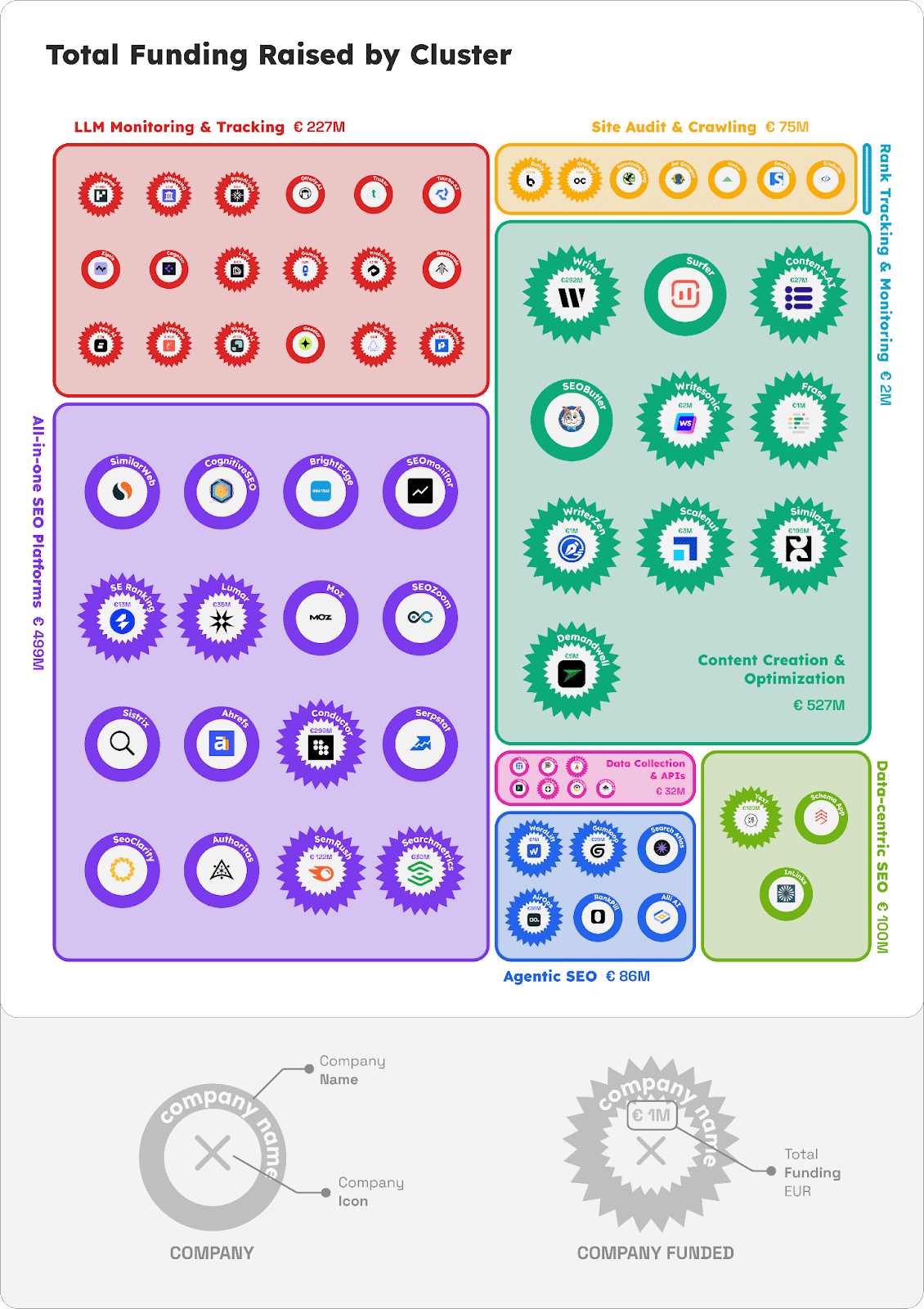
Contrast: Investors poured $227 million into AI visibility tracking. Most of that went to tracking dashboards. The companies shipping outputs from agentic SEO raised a third of that. Adobe’s acquisition proves dashboards were never the point.
Investors chased LLM monitoring because it looked like easy SaaS, but the durable value sits in agentic SEO tools that actually ship work. Why? Because agentic SEO goes beyond the traditional SEO tooling setup, and offers SEO professionals and agencies a completely new operational capability that can augment (or doom) their business.
Together with Wordlift, Growth Capital, Niccolo Sanarico, Primo Capital, and G2, I analyzed the funding data and the companies behind it. The pattern is clear: Capital chased what sounded innovative. The real opportunity hid in what actually works.
1. AI Visibility Monitoring Looked Like The Future
Image Credit: Kevin Indig
We looked at 80 companies and their collective $1.5 billion in venture funding:
Established platforms (five companies) captured $550 million.
LLM Monitoring (18 companies) split $227 million.
Agentic SEO companies got $86 million.
AI visibility tracking seemed like the obvious problem in 2024 because every CMO asked the same question: “How does my brand show up in ChatGPT?” It’s still not a solved problem: We don’t have real user prompts, and responses vary significantly. But measuring is not defensible. The vast number of startups providing the same product proves it.
Monitoring tools have negative switching costs. Agentic tools have high switching costs.
Low pain: If a brand turns off a monitoring dashboard, they lose historical charts.
High pain: If a brand turns off an agentic SEO platform, their marketing stops publishing.
Venture capital collectively invested +$200 million because companies care about how and where they show up on the first new channel since Alphabet, Meta, and TikTok. The AI visibility industry has the potential to be bigger than the SEO industry (~$75 billion) because Brand and Product Marketing departments care about AI visibility as well.
What they missed is how fast that trend becomes infrastructure. Amplitude proved it was commoditizable by offering monitoring for free. When Semrush added it as a checkbox, the category collapsed.
2. The Alpha Is In Outcomes, Not Insights
Outcomes trump insights. In 2025, the value of AI is getting things done. Monitoring is table stakes.
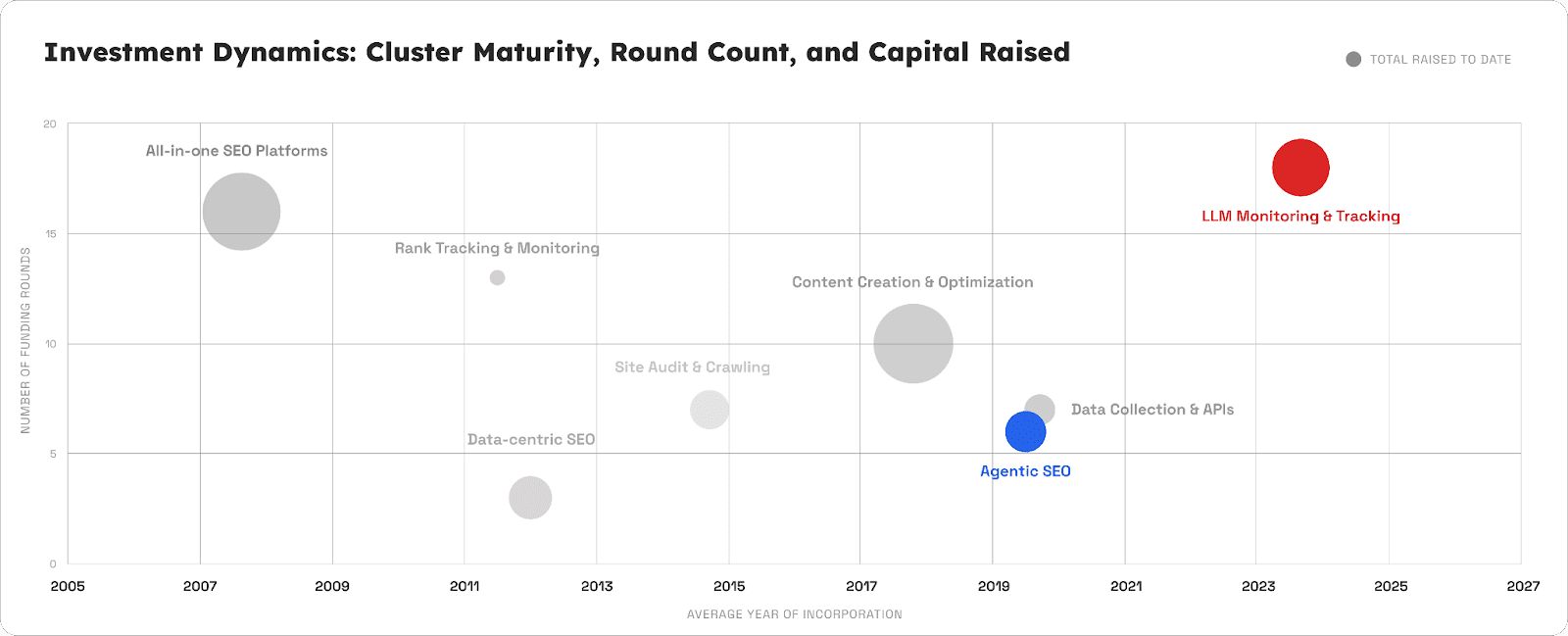
73% of AI visibility tracking companies were founded in 2024 and raised $12 million on average. That check size is typically reserved for scale-stage companies with proven market-fit.
Image Credit: Kevin Indig
Our analysis reveals a massive maturity gap between where capital flowed and where value lives.
Monitoring companies (average age: 1.3 years) raised seed capital at growth valuations.
Agentic SEO companies (average age: 5.5 years) have been building infrastructure for nearly a decade.
Despite being more mature, the agentic layer raised one-third as much capital as the monitoring layer. Why? Because investors missed the moat.
Investors dislike “shipping” tools at the seed stage because they require integration, approval workflows, and “human-in-the-loop” setup. To a VC, this looks like low-margin consulting. Monitoring tools look like perfect SaaS: 90% gross margins, instant onboarding, and zero friction.
Money optimized for ease of adoption and missed ease of cancellation.
The Monitoring Trap: You can turn off a dashboard with a click to save budget.
The Execution Moat: The “messy” friction of agentic SEO is actually the defensibility. Once an operational workflow is installed, it becomes infrastructure. You cannot turn off an execution engine without halting your revenue.
Capital flowed to the “clean” financials of monitoring, leaving the “messy” but durable execution layer underfunded. That is where the opportunity sits.
Three capabilities separate the winners from the features:
Execution Velocity: Brands need content shipped across Reddit, TikTok, Quora, and traditional search simultaneously. Winners automate the entire workflow from insight to publication.
Grounding in Context: Generic optimization loses to systems that understand your specific business logic and brand voice. (Ontology is the new moat).
Operations at Scale: Content generation without pipeline management is a toy. You need systems enforcing governance across dozens of channels. Point solutions lose; platform plays win.
The difference is simple: one group solves “how do I know?” and the other solves “how do I ship?”
3. The Next 18 Months Will Wipe Out The Weakest Part Of The AI Stack
The market sorts into three tiers based on defensibility:
1. Established platforms win by commoditizing. Semrush and Ahrefs have customer relationships spanning two decades. They’ve already added LLM monitoring as a feature. They now need to move faster on the action layer – the workflow automation that helps marketers create and distribute assets at scale. Their risk isn’t losing relevance. It’s moving too slowly while specialized startups prove out what’s possible.
The challenge: Established platforms are read-optimized; agentic operations require write-access. Semrush and Ahrefs built 20-year moats on indexing the web (Read-Only). Moving to agentic SEO requires them to write back to the customer’s CMS (Write-Access).
2. Agentic SEO platforms scale into the gap. They’re solving real operational constraints with sticky products. AirOps is proving the thesis: $40 million Series B, $225 million valuation. Their product lives in the action layer – content generation, maintenance, rich media automation. Underfunded today, they capture follow-on capital tomorrow.
3. Monitoring tools consolidate or disappear. Standalone AI visibility vendors have 18 months to either build execution layers on top of their dashboards or find an acquirer. The market doesn’t support single-function tracking at venture scale.
Q3/Q4 2026 could be an “Extinction Event.” This is when the 18-month runway from the early 2024 hype cycle runs out. Companies will go to market to raise more money, fail to show the revenue growth required to support their 2024 valuations, and be forced to:
Accept a “down-round” (raising money at a lower valuation, crushing employee equity).
Sell for parts (acqui-hire).
Fold.
Let’s do some basic “Runway Math”:
Assumption: The dataset shows the average “Last Funding Date” for this cluster is March 2025. This means the bulk of this €227 million hit bank accounts in Q1 2025.
Data Point: The average company raised ~€21 million.
The Calculation: A typical Series A/Seed round is calculated to provide 18 to 24 months of runway. With the last funding in Q1 2025 and 18 months of runway, we arrive at Q3 2026.
To raise their next round (Series B) and extend their life, AI visibility companies must justify the high valuation of their previous round. But to justify a Series A valuation (likely $50-$100 million post-money given the AI hype), they need to show roughly 3x-5x ARR growth year-over-year. Because the product is commoditized by free tools like Amplitude and bundled features from Semrush, they might miss that 5x revenue growth target.
Andrea Volpini, Founder and CEO of Wordlift:
After 25 years, the Semantic Web has finally arrived. The idea that agents can reach a shared understanding by exchanging ontologies and even bootstrap new reasoning capabilities is no longer theoretical. It is how the human-centered web is turning into an agentic, reasoning web while most of the industry is caught off guard. When Sir Tim Berners-Lee warns that LLMs may end up consuming the web instead of humans, he is signaling a seismic shift. It is bigger than AI Search. It is reshaping the business model that has powered the web for three decades. This AI Map is meant to show who is laying the foundations of the reasoning web and who is about to be left behind.
4. The Market Thesis: When $166 Billion Meets Behavioral Disruption
Let’s leave the funding data for a moment, and shift to the demand side of the market: on the one hand, Google integrating AI search results on its SERP, ChatGPT or Perplexity becoming the entry point for search and discovery, are phenomena that are creating a change in user behavior – and when users change behavior, new giants emerge. On the other hand, SEO has historically been a consulting-like, human-driven, tool-enabled effort, but its components (data monitoring & analysis, content ideation & creation, process automation) are the bread and butter of the current generation of AI, and we believe there is a huge space for emerging AI platforms to chip away at the consulting side of this business. Unsurprisingly, 42% of the companies in our dataset were founded on or after 2020, despite the oldest and greatest players dating back more than 20 years, and the key message they are passing is “let us do the work.”
The numbers validate this thesis at scale. Even though it is not always easy to size it, recent research finds that the SEO market represents a $166 billion opportunity split between tools ($84.94 billion) and services ($81.46 billion), growing at 13%+ annually. But the distribution reveals the disruption opportunity: agencies dominate with 55% market share in services, while 60% of enterprise spend flows to large consulting relationships. This $50+ billion consulting layer – built on manual processes, relationship-dependent expertise, and human-intensive workflows – sits directly in AI’s disruption path.
The workforce data tells the automation story. With >200,000 SEO professionals globally and median salaries in the US of $82,000 (15% above U.S. national average), we’re looking at a knowledge worker category ripe for productivity transformation. The job market shifts already signal this transition: content-focused SEO roles declined 28% in 2024 as AI automation eliminated routine work, while leadership positions grew 50-58% as the focus shifted to strategy and execution oversight. When 90% of new SEO positions come from companies with 250+ employees, and these organizations are simultaneously increasing AI tool budgets from 5% to 15% of total SEO spend, the path forward is clear: AI platforms that can deliver execution velocity will capture the value gap between high-cost consulting and lower-margin monitoring tools.
5. What This Means For You
For Tool Buyers
Stop asking “Is it AI-powered?” Ask instead:
Does this solve an operational constraint or just give me information? (If it’s information, Semrush will have it free in 18 months.)
Does this automate a workflow or create new manual work? (Sticky products are deeply integrated. Point solutions require babysitting.)
Can I get this from my existing platform eventually, or is this defensible? (If an established player can bundle it, they will.)
For Investors
You’re at an inflection point:
The narrative layer (monitoring) is collapsing in real-time.
The substance layer (execution) is still underfunded.
This gap closes fast.
When evaluating opportunities, ask: “What would need to happen for Semrush or Ahrefs to provide this?” If the answer is “not much,” it’s not defensible at venture scale. If they had to rebuild core infrastructure or cannibalize part of their product, you have a moat.
The best signal isn’t which companies are raising capital, but which categories are raising capital despite low defensibility. That’s where you find the upside.
For Builders
Your strategic question isn’t “Which category should I enter?” It’s “How deeply integrated will I be in my customers’ workflows?” If you’re building monitoring tools, you have 18 months. Either build an execution layer on top of your dashboard or optimize for acquisition.
If you’re building execution platforms, defensibility comes from three things:
Depth of integration in daily workflows
Required domain expertise
Operational leverage you provide relative to building in-house
The winning companies are those that solve problems needing continuous domain expertise and cannot be easily copied. Automated workflows that understand brand guidelines, customer segments, and channel-specific best practices aren’t.
Ask yourself: What operational constraint am I solving that requires judgment calls, not just better AI? If the answer is “I’m just generating better content faster,” you’re building a feature. If the answer is “I’m managing complexity across dozens of channels while enforcing consistency,” you’re building a platform.
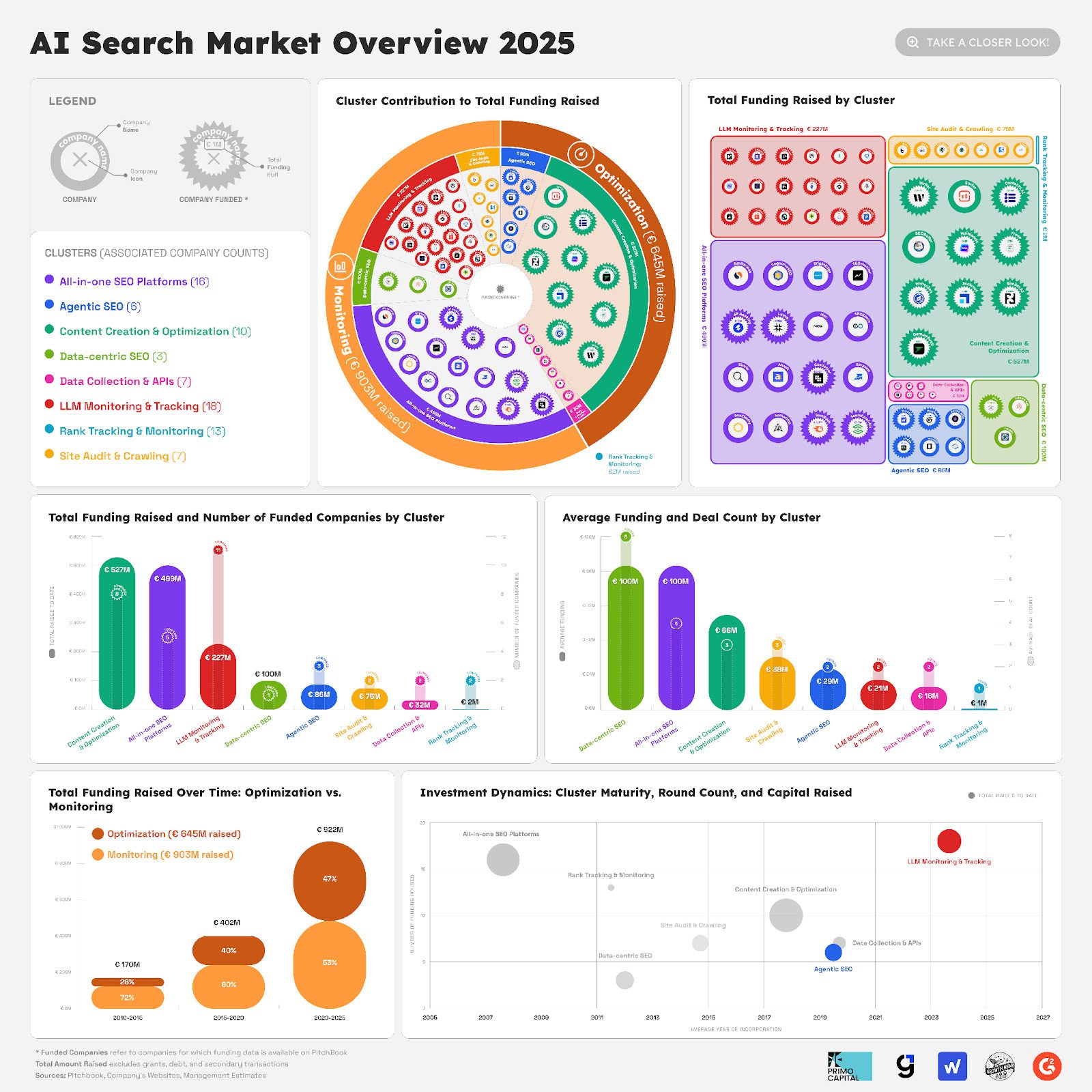
Full infographic of our analysis:
Image Credit: Kevin Indig
Boost your skills with Growth Memo’s weekly expert insights. Subscribe for free!
Featured Image: Paulo Bobita/Search Engine Journal











 (thanks Alice!)