The Download: AI doppelgängers in the workplace, and using lidar to measure climate disasters

This is today’s edition of The Download, our weekday newsletter that provides a daily dose of what’s going on in the world of technology.

 Can an AI doppelgänger help me do my job?

—James O’Donnell

Digital clones—AI models that replicate a specific person—package together a few technologies that have been around for a while now: hyperrealistic video models to match your appearance, lifelike voices based on just a couple of minutes of speech recordings, and conversational chatbots increasingly capable of holding our attention. 

But they’re also offering something the ChatGPTs of the world cannot: an AI that’s not smart in the general sense, but that ‘thinks’ like you do.

Could well-crafted clones serve as our stand-ins? I certainly feel stretched thin at work sometimes, wishing I could be in two places at once, and I bet you do too. To find out, I tried making a clone of myself. Read the full story to find out how it got on.

This story originally appeared in The Algorithm, our weekly newsletter on AI. To get stories like this in your inbox first, sign up here.

How lidar measures the cost of climate disasters

The wildfires that swept through Los Angeles County this January left an indelible mark on the Southern California landscape. The Eaton and Palisades fires raged for 24 days, killing 29 people and destroying 16,000 structures, with losses estimated at $60 billion. More than 55,000 acres were consumed, and the landscape itself was physically transformed.

Now, researchers are using lidar (light detection and ranging) technology to precisely measure these changes in the landscape’s geometry—helping them understand and track the cascading effects of climate disasters. Read the full story.

—Jon Keegan

This story is from our new print edition, which is all about the future of security. Subscribe here to catch future copies when they land.

Here’s how we picked this year’s Innovators Under 35

Next Monday we’ll publish our 2025 list of Innovators Under 35. The list highlights smart and talented people working across many areas of emerging technology. This new class features 35 accomplished founders, hardware engineers, roboticists, materials scientists, and others who are already tackling tough problems and making big moves in their careers. 

MIT Technology Review first published a list of Innovators Under 35 in 1999. It’s a grand tradition for us, and we often follow the work of various featured innovators for years, even decades, after they appear on the list. So before the big announcement, we’d like to take a moment to explain how we select the people we recognize each year. Read the full story.

—Amy Nordrum

The must-reads

I’ve combed the internet to find you today’s most fun/important/scary/fascinating stories about technology.

1 Meta created flirty chatbots of celebrities without their permission
To make matters worse, the bots generated risqué pictures on demand. (Reuters)
+ Meta’s relationship with Scale AI appears to be under pressure. (TechCrunch)
+ An AI companion site is hosting sexually charged conversations with underage celebrity bots. (MIT Technology Review)

2 The FTC has warned Big Tech not to comply with EU laws
If they jeopardize the freedom of expression or safety of US citizens, at least. (Wired $)

3 Ukraine is using drones to drop supplies to its troops in trenches
They’re delivering everything from cigarettes to roasted chicken. (WP $)
+ Meet the radio-obsessed civilian shaping Ukraine’s drone defense. (MIT Technology Review)

4 What the collapse of this AI company says about the wider industry
Builder.ai was an early industry darling. Its downfall is a dire warning. (NYT $)

5 US shoppers are racing to land an EV bargain
Federal tax credits on the vehicles expire at the end of the month. (WSJ $)
+ The US could really use an affordable electric truck. (MIT Technology Review)

6 A major new project will use AI to research vaccines
The Oxford Vaccine Group hopes the jabs will protect against deadly pathogens. (FT $)
+ Why US federal health agencies are abandoning mRNA vaccines. (MIT Technology Review)

7 A lot of people stop taking weight-loss drugs within one year
How should doctors encourage the ones who need to stay on them? (Undark)
+ We’re learning more about what weight-loss drugs do to the body. (MIT Technology Review)

8 Chatbots can be manipulated into breaking their own rules
It turns out they’re susceptible to both flattery and peer pressure. (The Verge)
+ Forcing LLMs to be evil during training can make them nicer in the long run. (MIT Technology Review)

9 Tennis is trying to reach a new generation of fans 🎾
Through…the metaverse? (The Information $)

10 The age of cheap online shopping is ending
And consumers are the ones paying the price. (The Atlantic $)
+ AI is starting to shake up the digital shopping experience, too. (FT $)
+ Your most important customer may be AI. (MIT Technology Review)

Quote of the day

“Stop being a clanker!”

—How Jay Pinkert, a marketing manager, scolds ChatGPT when it isn’t fulfilling his requests, he tells the New York Times.

One more thing
The algorithms around us

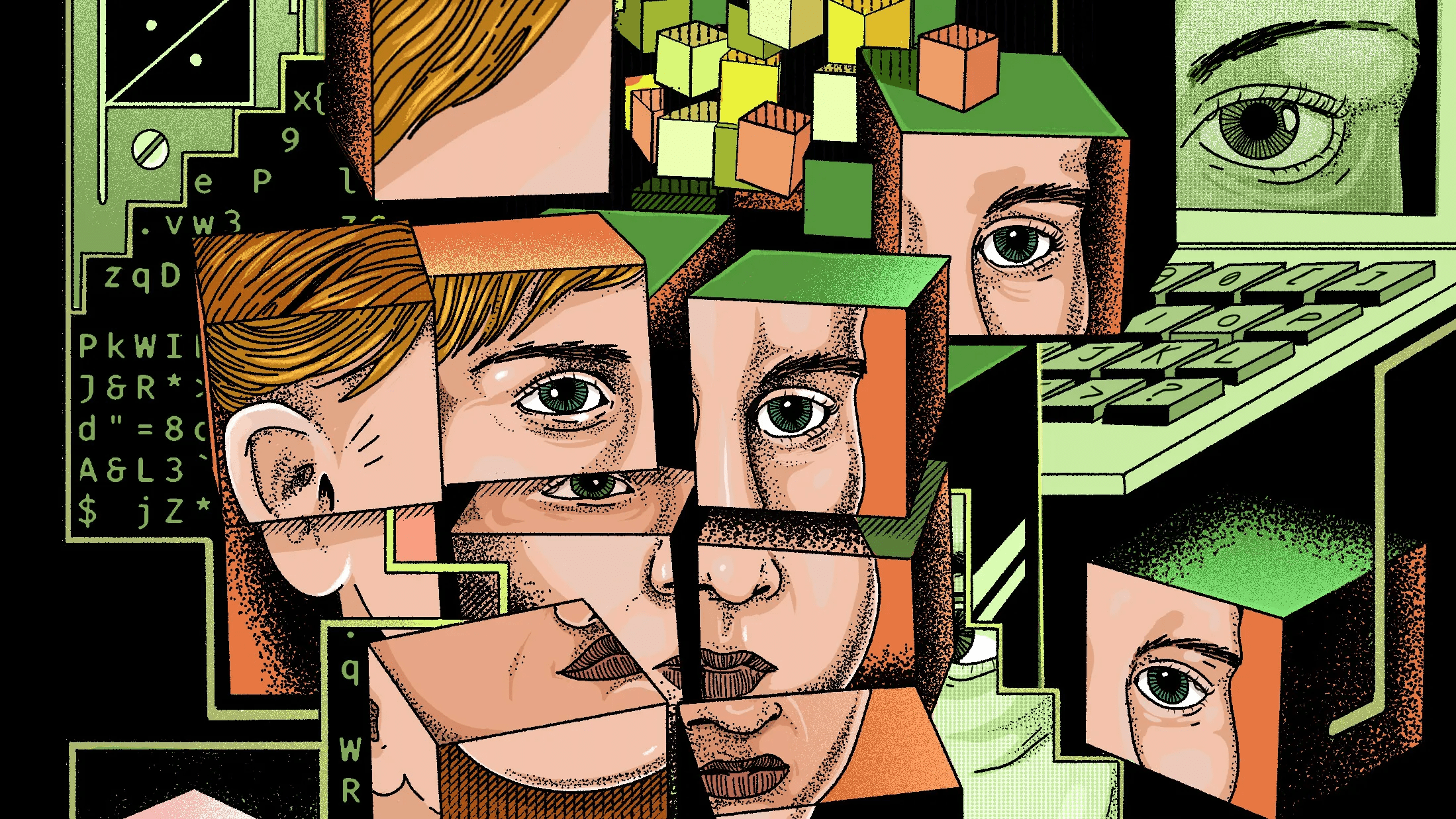
A metronome ticks. A record spins. And as a feel-good pop track plays, a giant compactor slowly crushes a Jenga tower of material creations. Paint cans burst. Chess pieces topple. Camera lenses shatter. An alarm clock shrills and then goes silent. A guitar neck snaps. But wait! The jaunty tune starts up again, and the jaws open to reveal … an iPad.

Watching Apple’s now-infamous “Crush!” ad, it’s hard not to feel uneasy about the ways in which digitization is remaking human life. Sure, we’re happy for computers to take over tasks we don’t want to do or aren’t particularly good at, like shopping or navigating. But what does it mean when the things we hold dear and thought were uniquely ours—our friendships, our art, even our language and creativity—can be reduced to software? Read the full story.

—Ariel Bleicher

We can still have nice things

A place for comfort, fun and distraction to brighten up your day. (Got any ideas? Drop me a line or skeet ’em at me.)

+ Minnesota’s Llama-Alpaca Costume Contest looks an utter delight  (thanks Amy!)
+ In fascinating collab news, David Byrne and Paramore’s Hayley Williams are working on a song for a Netflix adaptation of Roald Dahl’s The Twits.
+ Happy birthday to Gloria Estefan, 68 years old today!
+ M. Night Shyamalan’s oeuvre is a decidedly mixed bag. Check out this list of his movies to see where your favorites (and least-favorites) rank.

Control AI Answers about Your Brand

Search engine optimization has shifted from traditional organic rankings in AI-generated mentions, citations, and recommendations.

Success with AI optimization boils down to two questions:

  • What does the training data of large language models contain about a company?
  • What can the LLMs learn about the business when performing live searches?

LLM training data is fundamental to optimizing AI answers, even if the platform runs real-time searches, because the fan-out components stem from what the model already knows.

For example, if the training data indicates that a business is an organic skincare brand, the fan-out component might search for certifications.

Citations

AI answers often include citations (URLs of sources), which come from live searches, not training data. LLMs do not store URLs.

Citations (i) are branded responses that may influence buying decisions and (ii) likely impact the training data containing info on a brand. Thus citations are key to AI optimization.

A consumer considering a skincare brand may prompt Google’s AI Mode for reviews and certifications. The response will likely contain sources.

Here’s an example prompt addressing The Ordinary, a skincare brand:

Is The Ordinary skincare good and certified?

AI Mode’s answer included an advisory warning from the U.S. Food and Drug Administration, as well as links to a magazine article and influencer posts that questioned the ingredients.

A brand cannot control the sentiments of others, but it’s critical to address these concerns on-site to increase the chances of being cited.

Clicking each link in the AI Mode will usually highlight the relevant, sourced paragraph. Then address the question or concern on an FAQ page or a separate article.

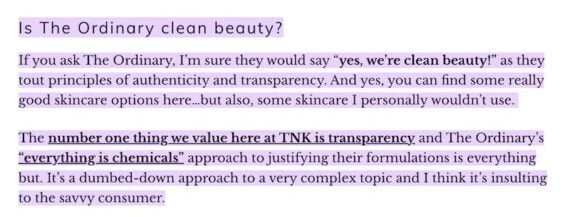
For example, the screenshot below is what a competitor stated about The Ordinary’s ingredients. In response, The Ordinary could create a page answering “Is The Ordinary clean beauty?”

Screenshot of a text excerpt from TNK Beautry questioning if The Ordinary, a competitor, is “clean beauty.”

Article from TNK Beauty criticizing the ingredients of The Ordinary, a competitor.

Better Content

Hence content marketing has changed. Only a year or so ago, consumers had to research to find answers about brands and products, such as certifications, alternative pricing or additional rates, and countries where products are manufactured or shipped from.

LLMs can reveal these answers in seconds. Brands that remain silent lose control over that sentiment and fail to contribute to the answers.

Moreover, by creating more brand and product knowledge content, companies increase their chances of being surfaced in answers to non-branded, generic prompts.

SEO for AI

Here’s what to do:

  • Prompt LLM platforms such as AI Mode, ChatGPT, Perplexity, and Claude about your business. (“What do you know about NAME?”)
  • Note the fan-out directions to signal your brand’s associations in training data.
  • Identify third-party citations and their contributions to the answer.
  • Ensure your site provides better answers than the third parties.
  • Address frequent confusion or irritation about your brand on social media channels.
  • Prompt LLMs for your direct competitors and compare the answers to yours.

A few solution providers can track citations for prompts containing your brand.

I use Peec AI, which monitors citations in ChatGPT, Perplexity, and AI Overviews. I can view a report in Peec AI to see the most-cited domains in answers to prompts that include my company.

According to Peec AI’s report, answers to prompts containing Smarty Marketing rarely include our own site! I need to create more content about my brand and products.

Stop Trying To Make GEO Happen! via @sejournal, @cshel

“Stop trying to make GEO happen. It’s not going to happen.”

With apologies to Gretchen Wieners and the writers of “Mean Girls,” the line feels like the only way to start this conversation about a buzzword making the rounds: GEO (which is now, allegedly, supposed to mean Generative Engine Optimization).

This article grew out of a LinkedIn post/open plea I wrote recently about this furore, which unexpectedly took off – approaching 10,000 impressions, four dozen comments, and plenty of laughter at bad acronym ideas. Clearly, this struck a nerve with the SEO and marketing community.

On the surface, to be fair, the concept makes sense. We’re in a new era where AI-driven search engines are shaping how content is retrieved, summarized, and delivered. Adapting SEO strategies for that reality is important; however…

Nobody Will Say “G-E-O”

Acronyms survive if they’re pronounceable. If they aren’t easy to say aloud, and also happen to spell an actual word, people will say it like a word.

To my point, no one is going to spell out “G-E-O” when talking about Generative Engine Optimization. It simply doesn’t roll off the tongue nicely. Inevitably, it becomes the word “geo” – and that’s where the trouble starts.

The word geo is ancient. It comes from the Greek word (γη), meaning earth or ground. It’s the root of hundreds of words we already use every day: geography, geology, geothermal, geopolitics, geospatial, geotracking, geotagging, geomapping. In technology, it’s baked into concepts like geo-targeting and geo-fencing, and in all cases, geo explicitly means “the earth” in some form or another.

The linguistic baggage here is too heavy. There is no amount of wishful thinking that will make “gee-ee-oh” mean something not related to the earth.

The Branding Problem: Words Have Meaning

Words and acronyms aren’t blank slates. They carry cultural, historical, and linguistic connotations and memories that can’t be erased by decree.

Try to rebrand “GEO” and people’s brains will still instantly (or at least initially) read it as “geography.” They might pause and look at the context, and then decide “Oh, this must be G-E-O which means generative engine optimization, which is like S-E-O but for AI.” That’s a lot of work we are asking the public to do for three little letters.

It’s the same reason I could never (not that I would ever) convince our marketing team to rebrand our SEO plugin as an “FBI” plugin. No matter how hard we try to make FBI mean For Better Indexing, we are not going to be able to overcome the decades of heavy usage that says FBI means Federal Bureau of Investigation.

In this case, GEO doesn’t have decades of historical usage; it has literally millennia of meaning that IS NOT THIS. Hijacking an acronym with multiple centuries of usage is not innovation; it is confusion.

The SEO Problem: Competing With Entrenched Meaning

Let’s set branding aside and look at this purely from an SEO perspective.

Search engines reward authority, longevity, and relevance. The word geo has decades of backlinks, established search volume, and deeply entrenched usage. Every authoritative signal in Google’s system points to geo = geography/geographical/earth-related or adjacent.

Generative Engine Optimization will be competing against that established meaning forever. It won’t matter how many blog posts declare that “GEO is the new SEO” – the search results for “geo” will belong to geography, not generative optimization.

Then we can look beyond Google’s index – the training data behind large language models (LLMs) already “knows” that geo refers to Earth and geography, because that’s what the word has meant in every corpus of text for thousands of years. The idea that we can overwrite that meaning in a few quarters of (AI-generated) blog posts and conference talks is, frankly, wishful thinking.

Acronym Soup: Why Hijacking Fails

This isn’t the first time people have tried to coin a buzzword by hijacking an acronym. It never works. Acronyms only stick when they are:

  • Unique (no heavy pre-existing baggage).
  • Clear (people know, or can easily surmise, what they stand for).
  • Pronounceable (people can easily say them in conversation).

When they aren’t, they dissolve into acronym soup. Everyone gets confused, nobody adopts the term consistently, and the idea dies.

Humor Break: Acronyms We Can Safely Reject Now

Since I’m sure there will be a scramble to come up with something “better” than GEO, let me save you the trouble and pre-remove a few tempting, but alas already in use, options from the list.

  • FBI – For Better Indexing (all your queries are under surveillance).
  • PDF – Prompt-Driven Framework (optimized for clients who never open them).
  • BIO – Bot Interaction Optimization (because the LLMs need to “like” you).
  • CEO – Crawl Efficiency Orchestration (manage your bots like a boss).
  • URL – Unified Retrieval Layer (ranking starts at the root).
  • GPS – Generative Prompt Sequencing (your AI still needs directions).
  • API – Automated Prompt Injection (though to be fair, my brain always defaults to “armor piercing incendiaries” but that’s probably just a me problem).
  • HTML – Human-Tuned Model Language (teach the bots to “speak search”).
  • INFO – Intelligent Neural Findability Optimization (make your content “discoverable” to AI).
  • PRO – Prompt Response Optimization (win the answer box in AI).
  • EV – Enhanced Visibility (because apparently that’s the whole point).
  • SEO – Synthetic Engine Optimization (yes, we’ve come full circle).

They’re funny, but none of them should happen for all of the reasons outlined above.

What Actually Works When Naming Concepts

So, if GEO is a lost cause, what should we be doing instead?

1. Start Unique

  • Don’t hijack a word or acronym already in heavy use.
  • The cleanest acronyms are invented, not repurposed.

2. Make It Pronounceable

  • SEO works because people can say it.
  • SaaS (Software as a Service) works because it’s short and phonetically easy (“sass” in case you didn’t know).

3. Anchor It In Authority

  • Google’s own acronyms, like E-E-A-T (Experience, Expertise, Authoritativeness, Trustworthiness), stuck because Google itself enforced them.
  • A community can rally around a term, but only if it feels backed by authority or usefulness.

4. Check The SERPs First

  • Before you try to coin an acronym, search it.
  • If the first three pages of results are about something else entirely, you might be sunk before you begin.

The Bottom Line: Stop Trying To Make GEO Happen

Generative Engine Optimization as a concept makes sense, but GEO as an acronym is doomed.

It fails linguistically (nobody will say “G-E-O”), historically (the word is ancient and already claimed), and strategically (search engines and LLMs already associate “geo” with geography, not generative search).

If you want a new term to catch on, start with one that isn’t already taken. Otherwise, you’re not innovating language – you’re just creating acronym soup … and sabotaging your own visibility from day one.

So please, stop trying to make GEO happen. It’s not going to happen.

More Resources:


Featured Image: CHIEW/Shutterstock

Ecommerce copywriting tips & frameworks that convert [+a free checklist]

Table of contents

Product pages. Ads. Emails. Headlines. Every word you publish either builds momentum or loses it. Great ecommerce copy does more than describe a product. It earns trust, sparks emotion, and clears doubt. Most importantly, it helps someone say yes with confidence. 

This guide includes 20 practical, proven tips to sharpen your copy across strategy, product pages, persuasion, and retention. They’re not theory. Just tested techniques from brands that convert. 

And there’s more: Want the full 40? 
Get the 20 bonus tips straight to your inbox by signing up here. 

How to choose the right copywriting framework and emotional trigger 

Before you write, choose two things: 

  1. A framework to guide structure 
  1. An emotional trigger to shape tone and persuasion 

These decisions will shape every line of your copy. 

Copywriting frameworks 

1. AIDA: Attention, Interest, Desire, Action 

AIDA is the foundational copywriting framework that guides prospects through a systematic journey from awareness to conversion. 

Best for: Landing pages, ads, hero sections. 

Why it works: It grabs attention quickly, builds curiosity, then shifts momentum toward a clear action. 

Example: Selling a portable espresso maker 

Attention: “Brew perfect espresso anywhere.”

Interest: “No plugs, no bulky machines, just fresh coffee in your backpack.”

Desire: “Get café-level crema in 90 seconds flat.” 

Action: “Order now and take 20% off your first brew.” 

2. PAS: Problem, Agitation, Solution 

PAS is the emotional powerhouse that transforms pain points into urgent buying decisions by first identifying problems and discomfort and presenting a solution.   

Best for: Pain-point-driven products or comparison pages.

Why it works: It starts by naming the problem and digging into the frustration, then offers your product as the fix. 

Example: Selling an anti-theft travel backpack 

Problem: “Worried about pickpockets on your next trip?” 

Agitation: “One stolen wallet can ruin your entire vacation and most zippers do not stand a chance.” 

Solution: “Our backpack has cut-proof fabric, hidden zippers, and lockable compartments to keep you safe on the move.” 

3. BAB: Before, After, Bridge 

BAB leverages aspirational storytelling to showcase transformation, painting a vivid picture of life improvement before positioning your solution as the bridge to that better future.   

Best for: Lifestyle or transformation-focused products.

Why it works: It shows life before and after the product, then connects the dots with your offer. 

Example: Selling a fitness app 

Before: “You used to skip workouts, feel sluggish, and waste time guessing what to do at the gym.” 

After: “Now your workouts are short, focused, and actually fun to stick with.” 

Bridge: “All it took was our guided 20-minute training plans built for real people and real schedules.” 

Emotional triggers 

Pathos: Emotion 

Best for: Beauty, lifestyle, wellness, identity-driven products.

Why it works: It speaks to how people want to feel or who they want to become. 

Example: Selling sustainable clothing 

“You are not just buying a shirt. You are choosing to show up for the planet and look good doing it.” 

Logos: Logic 

Best for: Tech, tools, performance-based products.

Why it works: It appeals to rational decision-making, like saving time, money, or hassle. 

Example: Selling noise-canceling headphones 

“Blocks 95% of background noise so you can focus faster and work smarter, backed by lab testing and a 2-year warranty.” 

Ethos: Trust and credibility 

Best for: Financial, health, professional, or safety-related products.

Why it works: People rely on authority or reputation to reduce risk.

Example: Selling skincare 

“Developed by dermatologists and trusted by over 1 million users worldwide because your skin deserves expert care.” 

Strategies for clearer copy 

Strategic copywriting transforms scattered messaging into focused communication that guides prospects smoothly through their buying journey.   

  1. Let structure guide flow: AIDA, PAS, BAB. Pick one and follow it through. Good copy is linear, not scattered. 
  1. Tone should match buyer intent: New visitor? Use clarity and reassurance. Returning shopper? Bring speed and confidence. 
  1. Give each section one job: Trying to explain, reassure, and upsell in a single block? Nothing will land. Break it up. 
  1. Answer doubts before they form: If shipping time, fit, or returns are common questions, surface them early in the copy. 
  1. Use a mix of logic, emotion, and visuals: Show how the product works, how it feels, and how it fits their life. 

Product copywriting prioritizes outcome-driven messaging that shows customers exactly how their lives improve. It moves beyond features to paint vivid pictures of real-world usage scenarios. 

  1. Lead with the outcome: Start with what changes for the customer. Then explain how. 
  1. Put the product in a real moment: Don’t say “compact.” Say, “Fits in your jacket pocket on a rainy commute.” 
  1. Use bullets to speed up decisions: List what is included, what it is made of, and who it is for. Keep it snappy. 
  1. Write purposeful alt text: Describe what the image shows and how it ties to the benefit. 
    Example: “Man hiking with a 40L waterproof pack. Rain visible, straps tight.” 
  1. Flag missing alt text during content analysis: It helps keep accessibility and SEO aligned without extra efforts.

What most ecommerce copy gets wrong 

A well-written text is polite. Descriptive. Sometimes clever. But it rarely decides or helps in conversion.

A Strong copy does not try to please everyone. It tells the right person, “This is for you.” It dares to be specific. It has an inviting glare and confidence to emphasize what matters and ignore what does not. 

Copywriting hooks and earns attention. It says, “Here it is, look.” SEO attracts keen onlookers. 

Good copy makes them stop and persuades them to be curious about more. The best ecommerce brands leverage both. Tools like Yoast SEO bridge the gap between conversion-driven copy and search visibility. 

Persuasion tips that feel natural 

Natural persuasion in copywriting focuses on building genuine connections through transparent communication rather than manipulative tactics.   

  1. Start strong: Put your main benefit above the fold. Do not hide the reason to care. 
  1. Use microcopy to ease tension: “No hidden fees” next to pricing. “We will never charge without asking” near the credit card field. 
  1. Only create urgency if it is real: “Only 3 left” works if it is true. False scarcity breaks trust. 
  1. Make subheads sell, not just organize: “Why 10,000 customers switched” says more than “Features.” 
  1. Precision beats cleverness: “Save 3 hours a week” converts better than “Boost productivity. 

Strategy Retention tips to boost trust 

Customer retention copywriting transforms one-time buyers into loyal advocates through strategic communication that demonstrates ongoing value and genuine care.  

  1. Make thank-you pages do more: Confirm next steps. Offer a bonus. Link to a useful guide. Do not waste attention. 
  1. Follow up with something useful: A setup guide, a pro tip, or a behind-the-scenes story is more valuable than a request for a review. 
  1. Treat onboarding like conversion 2.0: “You are 60 seconds away from setup” is better than “See instructions.” 
  1. Write policies with warmth and clarity: “If it does not fit, send it back. No stress.” Sounds like a human. That is the point. 
  1. Show loyalty some love: A personal thank-you after the third purchase can mean more than a 10 percent coupon. 

Final thoughts 

Forget clever. Go for clarity. Don’t be smart. Leverage curious questions. Think about what a customer wants.

Let them feel seen and heard. Forget perfection; strive for a connection. Keep your words simple. If your words help the right person say yes and the right searcher find your page, they have already done their job. That is where strong copy meets smart SEO. 

Want 20 more copywriting techniques that drive conversions? 

In Part 2, we’ll go deeper into: 

  • Advanced copywriting funnel;
  • High-impact product formatting ideas;
  • Persuasive phrasing that feels personal to the reader;
  • Loyalty copy that turns onlookers into trusted comrades.
Ecommerce after De Minimis Tariff Exemption

The aim of the 1930 U.S. Tariff Act was to eliminate low-cost imports from customs and duty processing, thereby saving money. Initially pegged at $1 per package, the so-called “de minimis” threshold gradually increased to $800. The exemption became crucial for cross-border dropshippers, fast-fashion brands, and other ecommerce sellers.

President Trump eliminated the de minimis exemption effective August 29, 2025. Most U.S.-bound shipments valued at $800 or less will incur applicable duties, taxes, fees, and other charges, although the change affected packages from China and Hong Kong as of May. The U.S. Postal Service, in collaboration with other domestic postal providers, has a six-month phase-in period.

President Trump eliminated the de minimis exemption, effective August 29, 2025, although the change took effect in May for China and Hong Kong.

President Trump eliminated the de minimis exemption effective August 29, 2025, although the change took effect in May for China and Hong Kong.

Nonetheless, the change represents a dramatic shift for ecommerce. For nearly a decade, cross-border sellers and platforms such as Shein and Temu leaned on the exemption to flood the U.S. with low-value packages.

Meanwhile, American retailers shipping to other countries paid tariffs, hired brokers, and navigated customs compliance. Now, with the exemption gone, the playing field looks different.

Some businesses will suffer due to import complexities and expenses, but others stand to gain.

Scope

The American de minimis rule had been unprecedented. Many countries have similar exemptions for relatively low-value imports, but none come close to an $800 ceiling.

European Union nations typically cap their customs duty at the equivalent of $175, but charge a value-added tax from the first penny. Canada’s exemptions for customs duties and taxes max out at $150 CAD, or approximately $100 USD. Mexico allows shipments of up to $50 USD for a de minimis value. China offers minimal exemptions, and most other countries peak at about $75.

America’s high exemption created an opportunity for foreign ecommerce businesses and some enterprising U.S.-based merchants.

According to the White House, the volume of shipments entering the U.S. duty-free rose from approximately 134 million packages in 2015 (when the limit was $200) to more than 1.36 billion last year.

An estimated 60% of these de minimis, duty-free packages entering the U.S. — hundreds of millions of parcels annually — originate from China.

Harm

The U.S. de minimis suspension will hurt three types of ecommerce companies:

  • Dropshippers. Merchants that manufacture, warehouse, or acquire products offshore for direct, per-item importing will now have to pay standard duty and taxes. This group includes large sellers, such as Temu, as well as many small and retail arbitrage businesses utilizing AliExpress and DSers.
  • Fast-fashion sellers. China’s Shein and similar brands that depend on producing rapidly trendy clothes could face relatively higher landed costs and, as a result, thinner margins.
  • Small ecommerce retailers. The de minimis exemption applied to both direct-to-consumer sales and bulk orders so long as the total value was $800 or less. Thus merchants that place tiny minimum orders from suppliers could also be impacted.

The suspension does not prevent any of these businesses from operating or shipping to the United States, but it does change their economics and presumably increase prices for consumers on goods that were previously duty-free.

Benefit

The suspension is not universally harmful, however, as many American businesses stand to gain.

First and foremost, the suspension could be a boon for merchants and brands that source products in America. This is particularly true for small direct-to-consumer businesses that pay U.S. wages while competing with goods manufactured offshore in markets with extremely low labor costs.

The second group to benefit could be every domestic retailer that already pays import duties.

A retail chain with 15 stores, an ecommerce website, and a requisite marketplace seller account is already paying standard import duties when importing a container load of goods.

In some cases, these retailers had to compete with foreign sellers or arbitrage operations that could offer an identical item at a lower cost due to the de minimis exemption.

Outlook

President Trump suspended the de minimis treatment discussed here on July 30, 2025, by executive order; however, he might change his mind.

The Trump administration often uses trade policy as a form of leverage. If foreign governments such as China make concessions to the United States, the administration could restore or modify the exemption.

Regardless, the de minimis treatment would have ended permanently in 2027. Earlier this year, the U.S. Congress voted to kill the exemption for the vast majority of small imports. The new law appears to aim to close what lawmakers believed was a loophole that has harmed American manufacturers and consumers while benefiting drug traffickers.

The suspension is disruptive for some ecommerce sellers. Yet the industry has adapted before, through sales tax implementations, shipping disruptions, and pandemic-era supply chain crises. It will adapt again.

What began as a convenience rule in the 1930s grew into a key component of global ecommerce. The end of the de minimis exemption may mark the start of something new and promising for American ecommerce businesses.

How to Use Google Ads Performance Max Channel Reporting via @sejournal, @brookeosmundson

For years, marketers have asked for better visibility into how individual channels contribute to Performance Max results.

Google has released a tutorial walking advertisers through its new Performance Max channel reporting. This reporting feature offers more transparency into how campaigns perform across Search, YouTube, Display, Gmail, Discover, and Maps.

With this new report, you can now dig deeper into performance by channel and format, making it easier to analyze results and troubleshoot.

Here’s a look at how to find the report and what you can do with it.

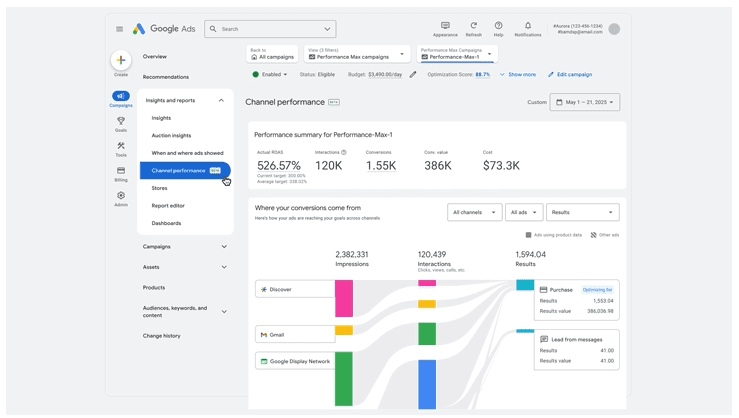
Where to Find Channel Performance Reporting

To find and access the channel reporting, head to your Google Ads account.

From there, navigate to: Campaign >> Insights & Reports >> Channel Performance

google ads performance max channel reportingImage credit: Google, April 2025

Once you’re there, you’ll see these items:

  • A performance summary overview
  • A channel-to-goals visualization
  • Channel distribution table.

These items provide more than just a static view of performance. You’re able to click on specific channels to drill down into related reports, like placements on the Google Display Network, or Search Terms from the Search channel.

Exploring the Reports and Visualizations

The channel performance page isn’t just a high-level dashboard. It provides several views and reports that give you more context on how your ads are performing across Google’s network. Here’s a closer look at the most useful areas:

Ad Format Views

Not every ad performs the same across channels, which is why Google lets you break results down by ad format.

For example, you can see how video ads perform on YouTube compared to product ads shown on Search. This helps you spot whether one creative type is pulling more weight and whether you need to adjust your creative mix or budgets to support higher-performing formats.

Product-Driven Insights

If you’re running Shopping or retail campaigns, this section shows how ads tied to product data perform across channels.

You can see Shopping ads on Search as well as dynamic remarketing ads on Display. This gives ecommerce advertisers a clearer picture of how product feeds contribute to results beyond just one channel.

Channel Distribution Table

This table is one of the most detailed reports in the new view. It includes impressions, clicks, interactions, conversions, conversion value, and cost, all broken down by channel.

You can customize the table to highlight the metrics that matter most to your goals, such as ROAS or CPA, and even segment results by ad format (like video versus product ads).

Since the table is downloadable, you can also share it with teams or clients for transparent reporting.

Status Column and Diagnostics

The status column acts as a built-in troubleshooting tool. It surfaces issues or recommendations related to specific channels or formats, such as diagnostic warnings if ads aren’t serving as expected.

By reviewing these, you can quickly identify where performance may be limited and take action to resolve issues before they affect results at scale.

Reviewing Single-Channel vs. Cross-Channel CPA

One important takeaway from Google’s tutorial is that looking at average CPA or ROAS for a single channel doesn’t tell the full story.

Performance Max uses marginal ROI optimization, bidding in real time for the most cost-efficient conversions across all channels.

Since users don’t interact with just one channel, this cross-channel view helps advertisers see the broader picture of how campaigns drive results.

That means when evaluating effectiveness, Google recommends to prioritize your goals and audiences over individual channel performance.

How Advertisers Can Benefit From Performance Max Channel Reporting

The new reporting doesn’t change how Performance Max works behind the scenes, but it does help you:

  • Understand which channels support your goals most effectively
  • Identify areas where specific ad formats or channels may need creative or budget adjustments
  • Communicate results more clearly with stakeholders by showing cross-channel contributions

With Search Partner Network reporting coming in the future, Google is signaling a continued investment in giving advertisers deeper visibility.

Performance Max remains a cross-channel campaign type, but channel reporting is a welcome step toward transparency. By digging into these reports, advertisers can better understand how ads perform across Google properties and make smarter optimization decisions.

Google Adds Guidance On JavaScript Paywalls And SEO via @sejournal, @martinibuster

Google is apparently having trouble identifying paywalled content due to a standard way paywalled content is handled by publishers like news sites. It’s asking that publishers with paywalled content change the way they block content so as to help Google out.

Search Related JavaScript Problems

Google updated their guidelines with a call for publishers to consider changing how they block users from paywalled content. It’s fairly common for publishers to use a script to block non-paying users with an interstitial although the full content is still there in the code. This may be causing issues for Google in properly identifying paywalled content.

A recent addition to their search documentation about JavaScript issues related to search they wrote:

“If you’re using a JavaScript-based paywall, consider the implementation.

Some JavaScript paywall solutions include the full content in the server response, then use JavaScript to hide it until subscription status is confirmed. This isn’t a reliable way to limit access to the content. Make sure your paywall only provides the full content once the subscription status is confirmed.”

The documentation doesn’t say what problems Google itself is having, but a changelog documenting the change offers more context about why they are asking for this change:

“Adding guidance for JavaScript-based paywalls

What: Added new guidance on JavaScript-based paywall considerations.

Why: To help sites understand challenges with the JavaScript-based paywall design pattern, as it makes it difficult for Google to automatically determine which content is paywalled and which isn’t.”

The changelog makes it clear that the way some publishers use JavaScript for blocking paywalled content is making it difficult for Google to know if the content is or is not paywalled.

The change was an addition to a numbered list of JavaScript problems publishers should be aware of, item number 10 on their “Fix Search-related JavaScript Problems” page.

Featured Image by Shutterstock/Kues

RFK Jr’s plan to improve America’s diet is missing the point

A lot of Americans don’t eat well. And they’re paying for it with their health. A diet high in sugar, sodium, and saturated fat can increase the risk of problems like diabetes, heart disease, and kidney disease, to name a few. And those are among the leading causes of death in the US.

This is hardly news. But this week Robert F Kennedy Jr., who heads the US Department of Health and Human Services, floated a new solution to the problem. Kennedy and education secretary Linda McMahon think that teaching medical students more about the role of nutrition in health could help turn things around.

“I’m working with Linda on forcing medical schools … to put nutrition into medical school education,” Kennedy said during a cabinet meeting on August 26. The next day, HHS released a statement calling for “increased nutrition education” for medical students.

“We can reverse the chronic-disease epidemic simply by changing our diets and lifestyles,” Kennedy said in an accompanying video statement. “But to do that, we need nutrition to be a basic part of every doctor’s training.”

It certainly sounds like a good idea. If more Americans ate a healthier diet, we could expect to see a decrease in those diseases. But this framing of America’s health crisis is overly simplistic, especially given that plenty of the administration’s other actions have directly undermined health in multiple ways—including by canceling a vital nutrition education program.

At any rate, there are other, more effective ways to tackle the chronic-disease crisis.

The biggest killers, heart disease and stroke, are responsible for more than a third of deaths, according to the US Centers for Disease Control and Prevention. A healthy diet can reduce your risk of developing those conditions. And it makes total sense to educate the future doctors of America about nutrition.

Medical bodies are on board with the idea, too. “The importance of nutrition in medical education is increasingly clear, and we support expanded, evidence-based instruction to better equip physicians to prevent and manage chronic disease and improve patient outcomes,” David H. Aizuss, chair of the American Medical Association’s board of trustees, said in a statement.

But it’s not as though medical students aren’t getting any nutrition education. And that training has increased in the last five years, according to surveys carried out by the American Association of Medical Colleges.

Kennedy has referred to a 2021 survey suggesting that medical students in the US get only around one hour of nutrition education per year. But the AAMC argues that nutrition education increasingly happens through “integrated experiences” rather than stand-alone lectures.

“Medical schools understand the critical role that nutrition plays in preventing, managing, and treating chronic health conditions, and incorporate significant nutrition education across their required curricula,” Alison J. Whelan, AAMC’s chief academic officer, said in a statement.

That’s not to say there isn’t room for improvement. Gabby Headrick, a food systems dietician and associate director of food and nutrition policy at George Washington University’s Institute for Food Safety & Nutrition Security, thinks nutritionists could take a more prominent role in patient care, too.

But it’s somewhat galling for the administration to choose medical education as its focus given the recent cuts in federal funding that will affect health. For example, funding for the National Diabetes Prevention Program, which offers support and guidance to help thousands of people adopt healthy diets and exercise routines, was canceled by the Trump administration in March.

The focus on medical schools also overlooks one of the biggest factors behind poor nutrition in the US: access to healthy food. A recent survey by the Pew Research Center found that increased costs make it harder for most Americans to eat well. Twenty percent of the people surveyed acknowledged that their diets were not healthy.

“So many people know what a healthy diet is, and they know what should be on their plate every night,” says Headrick, who has researched this issue. “But the vast majority of folks just truly do not have the money or the time to get the food on the plate.”

The Supplemental Nutrition Assistance Program (SNAP) has been helping low-income Americans afford some of those healthier foods. It supported over 41 million people in 2024. But under the Trump administration’s tax and spending bill, the program is set to lose around $186 billion in funding over the next 10 years.

Kennedy’s focus is on education. And it just so happens that there is a nutrition education program in place—one that helps people of all ages learn not only what healthy foods are, but how to source them on a budget and use them to prepare meals.

SNAP-Ed, as it’s known, has already provided this support to millions of Americans. Under the Trump administration, it is set to be eliminated.

It is difficult to see how these actions are going to help people adopt healthier diets. What might be a better approach? I put the question to Headrick: If she were in charge, what policies would she enact?

“Universal health care,” she told me. Being able to access health care without risking financial hardship not only improves health outcomes and life expectancy; it also spares people from medical debt—something that affects around 40% of adults in the US, according to a recent survey.

And the Trump administration’s plans to cut federal health spending by about a trillion dollars over the next decade certainly aren’t going to help with that. All told, around 16 million people could lose their health insurance by 2034, according to estimates by the Congressional Budget Office.

“The evidence suggests that if we cut folks’ social benefit programs, such as access to health care and food, we are going to see detrimental impacts,” says Headrick. “And it’s going to cause an increased burden of preventable disease.”

This article first appeared in The Checkup, MIT Technology Review’s weekly biotech newsletter. To receive it in your inbox every Thursday, and read articles like this first, sign up here.

RFK Jr’s plan to improve America’s diet is missing the point

A lot of Americans don’t eat well. And they’re paying for it with their health. A diet high in sugar, sodium, and saturated fat can increase the risk of problems like diabetes, heart disease, and kidney disease, to name a few. And those are among the leading causes of death in the US.

This is hardly news. But this week Robert F Kennedy Jr., who heads the US Department of Health and Human Services, floated a new solution to the problem. Kennedy and education secretary Linda McMahon think that teaching medical students more about the role of nutrition in health could help turn things around.

“I’m working with Linda on forcing medical schools … to put nutrition into medical school education,” Kennedy said during a cabinet meeting on August 26. The next day, HHS released a statement calling for “increased nutrition education” for medical students.

“We can reverse the chronic-disease epidemic simply by changing our diets and lifestyles,” Kennedy said in an accompanying video statement. “But to do that, we need nutrition to be a basic part of every doctor’s training.”

It certainly sounds like a good idea. If more Americans ate a healthier diet, we could expect to see a decrease in those diseases. But this framing of America’s health crisis is overly simplistic, especially given that plenty of the administration’s other actions have directly undermined health in multiple ways—including by canceling a vital nutrition education program.

At any rate, there are other, more effective ways to tackle the chronic-disease crisis.

The biggest killers, heart disease and stroke, are responsible for more than a third of deaths, according to the US Centers for Disease Control and Prevention. A healthy diet can reduce your risk of developing those conditions. And it makes total sense to educate the future doctors of America about nutrition.

Medical bodies are on board with the idea, too. “The importance of nutrition in medical education is increasingly clear, and we support expanded, evidence-based instruction to better equip physicians to prevent and manage chronic disease and improve patient outcomes,” David H. Aizuss, chair of the American Medical Association’s board of trustees, said in a statement.

But it’s not as though medical students aren’t getting any nutrition education. And that training has increased in the last five years, according to surveys carried out by the American Association of Medical Colleges.

Kennedy has referred to a 2021 survey suggesting that medical students in the US get only around one hour of nutrition education per year. But the AAMC argues that nutrition education increasingly happens through “integrated experiences” rather than stand-alone lectures.

“Medical schools understand the critical role that nutrition plays in preventing, managing, and treating chronic health conditions, and incorporate significant nutrition education across their required curricula,” Alison J. Whelan, AAMC’s chief academic officer, said in a statement.

That’s not to say there isn’t room for improvement. Gabby Headrick, a food systems dietician and associate director of food and nutrition policy at George Washington University’s Institute for Food Safety & Nutrition Security, thinks nutritionists could take a more prominent role in patient care, too.

But it’s somewhat galling for the administration to choose medical education as its focus given the recent cuts in federal funding that will affect health. For example, funding for the National Diabetes Prevention Program, which offers support and guidance to help thousands of people adopt healthy diets and exercise routines, was canceled by the Trump administration in March.

The focus on medical schools also overlooks one of the biggest factors behind poor nutrition in the US: access to healthy food. A recent survey by the Pew Research Center found that increased costs make it harder for most Americans to eat well. Twenty percent of the people surveyed acknowledged that their diets were not healthy.

“So many people know what a healthy diet is, and they know what should be on their plate every night,” says Headrick, who has researched this issue. “But the vast majority of folks just truly do not have the money or the time to get the food on the plate.”

The Supplemental Nutrition Assistance Program (SNAP) has been helping low-income Americans afford some of those healthier foods. It supported over 41 million people in 2024. But under the Trump administration’s tax and spending bill, the program is set to lose around $186 billion in funding over the next 10 years.

Kennedy’s focus is on education. And it just so happens that there is a nutrition education program in place—one that helps people of all ages learn not only what healthy foods are, but how to source them on a budget and use them to prepare meals.

SNAP-Ed, as it’s known, has already provided this support to millions of Americans. Under the Trump administration, it is set to be eliminated.

It is difficult to see how these actions are going to help people adopt healthier diets. What might be a better approach? I put the question to Headrick: If she were in charge, what policies would she enact?

“Universal health care,” she told me. Being able to access health care without risking financial hardship not only improves health outcomes and life expectancy; it also spares people from medical debt—something that affects around 40% of adults in the US, according to a recent survey.

And the Trump administration’s plans to cut federal health spending by about a trillion dollars over the next decade certainly aren’t going to help with that. All told, around 16 million people could lose their health insurance by 2034, according to estimates by the Congressional Budget Office.

“The evidence suggests that if we cut folks’ social benefit programs, such as access to health care and food, we are going to see detrimental impacts,” says Headrick. “And it’s going to cause an increased burden of preventable disease.”

This article first appeared in The Checkup, MIT Technology Review’s weekly biotech newsletter. To receive it in your inbox every Thursday, and read articles like this first, sign up here.