What will power AI’s growth?

It’s been a little over a week since we published Power Hungry, a package that takes a hard look at the expected energy demands of AI. Last week in this newsletter, I broke down the centerpiece of that package, an analysis I did with my colleague James O’Donnell. (In case you’re still looking for an intro, you can check out this Roundtable discussion with James and our editor in chief Mat Honan, or this short segment I did on Science Friday.)

But this week, I want to talk about another story that I also wrote for that package, which focused on nuclear energy. I thought this was an important addition to the mix of stories we put together, because I’ve seen a lot of promises about nuclear power as a saving grace in the face of AI’s energy demand. My reporting on the industry over the past few years has left me a little skeptical. 

As I discovered while I continued that line of reporting, building new nuclear plants isn’t so simple or so fast. And as my colleague David Rotman lays out in his story for the package, the AI boom could wind up relying on another energy source: fossil fuels. So what’s going to power AI? Let’s get into it. 

When we started talking about this big project on AI and energy demand, we had a lot of conversations about what to include. And from the beginning, the climate team was really focused on examining what, exactly, was going to be providing the electricity needed to run data centers powering AI models. As we wrote in the main story: 

“A data center humming away isn’t necessarily a bad thing. If all data centers were hooked up to solar panels and ran only when the sun was shining, the world would be talking a lot less about AI’s energy consumption.” 

But a lot of AI data centers need to be available constantly. Those that are used to train models can arguably be more responsive to the changing availability of renewables, since that work can happen in bursts, any time. Once a model is being pinged with questions from the public, though, there needs to be computing power ready to run all the time. Google, for example, would likely not be too keen on having people be able to use its new AI Mode only during daylight hours.

Solar and wind power, then, would seem not to be a great fit for a lot of AI electricity demand, unless they’re paired with energy storage—and that increases costs. Nuclear power plants, on the other hand, tend to run constantly, outputting a steady source of power for the grid. 

As you might imagine, though, it can take a long time to get a nuclear power plant up and running. 

Large tech companies can help support plans to reopen shuttered plants or existing plants’ efforts to extend their operating lifetimes. There are also some existing plants that can make small upgrades to improve their output. I just saw this news story from the Tri-City Herald about plans to upgrade the Columbia Generating Station in eastern Washington—with tweaks over the next few years, it could produce an additional 162 megawatts of power, over 10% of the plant’s current capacity. 

But all that isn’t going to be nearly enough to meet the demand that big tech companies are claiming will materialize in the future. (For more on the numbers here and why new tech isn’t going to come online fast enough, check out my full story.) 

Instead, natural gas has become the default to meet soaring demand from data centers, as David lays out in his story. And since the lifetime of plants built today is about 30 years, those new plants could be running past 2050, the date the world needs to bring greenhouse-gas emissions to net zero to meet the goals set out in the Paris climate agreement. 

One of the bits I found most interesting in David’s story is that there’s potential for a different future here: Big tech companies, with their power and influence, could actually use this moment to push for improvements. If they reduced their usage during peak hours, even for less than 1% of the year, it could greatly reduce the amount of new energy infrastructure required. Or they could, at the very least, push power plant owners and operators to install carbon capture technology, or ensure that methane doesn’t leak from the supply chain.

AI’s energy demand is a big deal, but for climate change, how we choose to meet it is potentially an even bigger one. 

The Download: the next anti-drone weapon, and powering AI’s growth

This is today’s edition of The Download, our weekday newsletter that provides a daily dose of what’s going on in the world of technology.

This giant microwave may change the future of war

Imagine: China deploys hundreds of thousands of autonomous drones in the air, on the sea, and under the water—all armed with explosive warheads or small missiles. These machines descend in a swarm toward military installations on Taiwan and nearby US bases, and over the course of a few hours, a single robotic blitzkrieg overwhelms the US Pacific force before it can even begin to fight back.

The proliferation of cheap drones means just about any group with the wherewithal to assemble and launch a swarm could wreak havoc, no expensive jets or massive missile installations required.

The US armed forces are now hunting for a solution—and they want it fast. Every branch of the service and a host of defense tech startups are testing out new weapons that promise to disable drones en masse. 

And one of these is microwaves: high-powered electronic devices that push out kilowatts of power to zap the circuits of a drone as if it were the tinfoil you forgot to take off your leftovers when you heated them up. Read the full story.

—Sam Dean

This article is part of the Big Story series: MIT Technology Review’s most important, ambitious reporting that takes a deep look at the technologies that are coming next and what they will mean for us and the world we live in. Check out the rest of them here.

What will power AI’s growth?

Last week we published Power Hungry, a series that takes a hard look at the expected energy demands of AI. Last week in this newsletter, I broke down its centerpiece, an analysis I did with my colleague James O’Donnell.

But this week, I want to talk about another story that I also wrote for that package, which focused on nuclear energy. As I discovered, building new nuclear plants isn’t so simple or so fast. And as my colleague David Rotman lays out in his story, the AI boom could wind up relying on another energy source: fossil fuels. So what’s going to power AI? Read the full story.

—Casey Crownhart

This article is from The Spark, MIT Technology Review’s weekly climate newsletter. To receive it in your inbox every Wednesday, sign up here.

The must-reads

I’ve combed the internet to find you today’s most fun/important/scary/fascinating stories about technology.

1 Elon Musk is leaving his role in the Trump administration 
To focus on rebuilding the damaged brand reputations of Tesla and SpaceX. (Axios)
+ Musk has complained that DOGE has become a government scapegoat. (WP $)
+ Tesla shareholders have asked its board to lay out a succession plan. (CNN)
+ DOGE’s tech takeover threatens the safety and stability of our critical data. (MIT Technology Review)

2 The US will start revoking the visas of Chinese students
Including those studying in what the US government deems “critical fields.” (Politico)
+ It’s also ordered US chip software suppliers to stop selling to China. (FT $)

3 The US is storing the DNA of migrant children
It’s been uploaded into a criminal database to track them as they age. (Wired $)
+ The US wants to use facial recognition to identify migrant children as they age. (MIT Technology Review)

4 RFK Jr is threatening to ban federal scientists from top journals
Instead, they may be forced to publish in state-run alternatives. (The Hill)
+ He accused major medical journals of being funded by Big Pharma. (Stat)

5 India and Pakistan are locked in disinformation warfare
False reports and doctored images are circulating online. (The Guardian)
+ Fact checkers are working around the clock to debunk fake news. (Reuters)

6 How North Korea is infiltrating remote jobs in the US
With the help of regular Americans. (WSJ $)

7 This Discord community is creating its own hair-growth drugs
Men are going to extreme lengths to reverse their hair loss. (404 Media)

8 Inside YouTube’s quest to dominate your living room 📺
It wants to move away from controversial clips and into prestige TV. (Bloomberg $)

9 Sergey Brin threatens AI models with physical violence
The Google co-founder insists that it produces better results. (The Register)

10 It must be nice to be a moving day influencer 🏠
They reap all of the benefits, with none of the stress. (NY Mag $)

Quote of the day

“I studied in the US because I loved what America is about: it’s open, inclusive and diverse. Now my students and I feel slapped in the face by Trump’s policy.”

—Cathy Tu, a Chinese AI researcher, tells the Washington Post why many of her students are already applying to universities outside the US after the Trump administration announced a crackdown on visas for Chinese students.

One more thing

The second wave of AI coding is here

Ask people building generative AI what generative AI is good for right now—what they’re really fired up about—and many will tell you: coding.

Everyone from established AI giants to buzzy startups is promising to take coding assistants to the next level. Instead of providing developers with a kind of supercharged autocomplete, this next generation can prototype, test, and debug code for you. The upshot is that developers could essentially turn into managers, who may spend more time reviewing and correcting code written by a model than writing it from scratch themselves.

But there’s more. Many of the people building generative coding assistants think that they could be a fast track to artificial general intelligence, the hypothetical superhuman technology that a number of top firms claim to have in their sights. Read the full story.

—Will Douglas Heaven

We can still have nice things

A place for comfort, fun and distraction to brighten up your day. (Got any ideas? Drop me a line or skeet ’em at me.)

+ If you’ve ever dreamed of owning a piece of cinematic history, more than 400 of David Lynch’s personal items are going up for auction.
+ How accurate are those Hollywood films based on true stories? Let’s find out.
+ Rest in peace Chicago Mike: the legendary hype man to Kool & the Gang.
+ How to fully trust in one another.

New Ecommerce Tools: May 29, 2025

This week’s rundown of new products from companies offering services to ecommerce merchants includes cross-border shipping, agentic commerce, virtual try-on, AI-powered store builders, embedded financing, fulfillment platforms, product summaries, and hosting.

Got an ecommerce product release? Email releases@practicalecommerce.com.

New Tools for Merchants

DHL Group partners with Shopify to accelerate cross-border shipping. DHL Group has expanded its shipping partnership with Shopify. DHL now integrates with the Shopify platform, enabling sellers worldwide to access the carrier’s global network and shipping services with just a few clicks. Sellers on Shopify will no longer need to onboard a logistics provider independently, per DHL, adding that the integration helps sellers manage complex customs, legal, and administrative tasks.

Web page on DHL Group announcing Shopify partnership

DHL Group

StellarWP launches StellarSites to build and launch a WordPress site. StellarWP, a provider of solutions for WordPress, has launched StellarSites to remove the complexity of traditional WordPress setups. According to StellarWP, publishing a full-featured site is now fast and easy with pre-built templates, premium plugins, and WordPress bundled in. Features include an AI setup wizard, automatic updates, backups, and built-in optimization. Premium plugins include KadenceWP (themes), The Events Calendar, GiveWP (fundraising), LearnDash (courses), IconicWP (WooCommerce tools), and SolidWP (security).

Shopify debuts an AI-powered store builder and new AI tools. At its semi-annual “Editions” showcase earlier this month, Shopify released an AI store builder and an AI element generator for banners and other creative. The platform also upgraded Sidekick, its AI assistant, with new voice chat and screen sharing capabilities. Shopify also introduced a new public theme called “Horizon,” which includes built-in AI to assist merchants with designs.

YouLend to finance sellers on eBay. YouLend, an embedded financing platform, has entered a partnership with eBay Germany to provide sellers with flexible access to capital. YouLend and eBay Germany will provide personalized, pre-approved financing offers to sellers, enabling them to determine their eligibility before applying. Via the integration, eBay Seller Capital will support sellers in accessing up to €2 million.

Home page of YouLend

YouLend

Google adds AI shopping features to search. At its annual I/O conference, Google announced several new AI features, including a new shopping experience in AI Mode with a virtual “try it on” feature and an agentic checkout experience within search. With Google Search’s AI Mode, shoppers can conversationally chat what they’re looking for, and the AI feature draws from Google’s visual images and Shopping Graph. Shoppers have the option to let the agentic agent pay autonomously.

Manhattan Associates integrates order management with Shopify. Manhattan Associates, a provider of supply chain commerce solutions, announced that a connector to its Active Order Management is now available in the Shopify App Store. Manhattan’s Order Management and Store Inventory and Fulfilment tool is available as part of Active Omni, which helps enterprises provide customer service, inventory visibility, and store fulfilment capabilities.

InfoSum integrates with Amazon Ads for first-party insights. InfoSum, a data collaboration platform, has announced a new set of integrations with Amazon Ads to enable first-party signals across Amazon DSP (Demand Side Platform) and Amazon Marketing Cloud. According to InfoSum, advertisers can push first-party signals directly to Amazon Ads using InfoSum’s secure user interface. Advertisers can also create custom audiences for targeting in Amazon DSP and leverage insights within Marketing Cloud for advanced analysis. Per InfoSum, advertisers can optimize their media strategies with real-time access to audience insights.

Home page of InfoSum

InfoSum

CommerceIQ launches agentic AI for ecommerce. CommerceIQ, an ecommerce platform, has released Ally, a suite of role-specific AI agents to help brands across ecommerce platforms. Trained on data across more than 1,400 retailers such as Amazon, Walmart, and Target, Ally provides ecommerce businesses with insights, performance recommendations, and instant optimizations. The suite offers a Sales Teammate, a Category Teammate to track and manage SKUs, and a Media Teammate to improve ad performance.

Worldpay partners with Yarbie for U.K. SMBs. Point-of-sale provider Yabie has partnered with payments platform Worldpay to power merchant tools within Worldpay 360, a management and payment platform for small to midsize businesses in the U.K. Available across retail, hospitality and service sectors, Yabie integrates with Worldpay’s payment hardware and technology. Worldpay 360 enables merchants to set up and access features such as inventory management, table management, and customizable receipts.

Amazon’s generative AI-powered audio feature synthesizes product summaries. Amazon is testing short-form audio summaries on select product detail pages, with AI-powered shopping experts discussing key product features. Shoppers can listen to the summaries by tapping the “Hear the highlights” button in the Amazon app. The initial test feature focuses on products that typically require consideration and is available to a subset of U.S. customers.

Bluehost launches open-source ecommerce plans for creators and businesses. Bluehost has announced its new WordPress eCommerce Hosting plans for content creators and businesses. The platform bundles hosting, plugins, and store management, including AI‑powered site building, payment integrations, paid courses and memberships, social logins, email templates, and search engine optimization tools.

Home page of Bluehost

Bluehost

Google: Database Speed Beats Page Count For Crawl Budget via @sejournal, @MattGSouthern

Google has confirmed that most websites still don’t need to worry about crawl budget unless they have over one million pages. However, there’s a twist.

Google Search Relations team member Gary Illyes revealed on a recent podcast that how quickly your database operates matters more than the number of pages you have.

This update comes five years after Google shared similar guidance on crawl budgets. Despite significant changes in web technology, Google’s advice remains unchanged.

The Million-Page Rule Stays The Same

During the Search Off the Record podcast, Illyes maintained Google’s long-held position when co-host Martin Splitt inquired about crawl budget thresholds.

Illyes stated:

“I would say 1 million is okay probably.”

This implies that sites with fewer than a million pages can stop worrying about their crawl budget.

What’s surprising is that this number has remained unchanged since 2020. The web has grown significantly, with an increase in JavaScript, dynamic content, and more complex websites. Yet, Google’s threshold has remained the same.

Your Database Speed Is What Matters

Here’s the big news: Illyes revealed that slow databases hinder crawling more than having a large number of pages.

Illyes explained:

“If you are making expensive database calls, that’s going to cost the server a lot.”

A site with 500,000 pages but slow database queries might face more crawl issues than a site with 2 million fast-loading static pages.

What does this mean? You need to evaluate your database performance, not just count the number of pages. Sites with dynamic content, complex queries, or real-time data must prioritize speed and performance.

The Real Resource Hog: Indexing, Not Crawling

Illyes shared a sentiment that contradicts what many SEOs believe.

He said:

“It’s not crawling that is eating up the resources, it’s indexing and potentially serving or what you are doing with the data when you are processing that data.”

Consider what this means. If crawling doesn’t consume many resources, then blocking Googlebot may not be helpful. Instead, focus on making your content easier for Google to process after it has been crawled.

How We Got Here

The podcast provided some context about scale. In 1994, the World Wide Web Worm indexed only 110,000 pages, while WebCrawler indexed 2 million. Illyes called these numbers “cute” compared to today.

This helps explain why the one-million-page mark has remained unchanged. What once seemed huge in the early web is now just a medium-sized site. Google’s systems have expanded to manage this without altering the threshold.

Why The Threshold Remains Stable

Google has been striving to reduce its crawling footprint. Illyes revealed why that’s a challenge.

He explained:

“You saved seven bytes from each request that you make and then this new product will add back eight.”

This push-and-pull between efficiency improvements and new features helps explain why the crawl budget threshold remains consistent. While Google’s infrastructure evolves, the basic math regarding when crawl budget matters stays unchanged.

What You Should Do Now

Based on these insights, here’s what you should focus on:

Sites Under 1 Million Pages:
Continue with your current strategy. Prioritize excellent content and user experience. Crawl budget isn’t a concern for you.

Larger Sites:
Enhance database efficiency as your new priority. Review:

  • Query execution time
  • Caching effectiveness
  • Speed of dynamic content generation

All Sites:
Redirect focus from crawl prevention to indexing optimization. Since crawling isn’t the resource issue, assist Google in processing your content more efficiently.

Key Technical Checks:

  • Database query performance
  • Server response times
  • Content delivery optimization
  • Proper caching implementation

Looking Ahead

Google’s consistent crawl budget guidance demonstrates that some SEO fundamentals are indeed fundamental. Most sites don’t need to worry about it.

However, the insight regarding database efficiency shifts the conversation for larger sites. It’s not just about the number of pages you have; it’s about how efficiently you serve them.

For SEO professionals, this means incorporating database performance into your technical SEO audits. For developers, it underscores the significance of query optimization and caching strategies.

Five years from now, the million-page threshold might still exist. But sites that optimize their database performance today will be prepared for whatever comes next.

Listen to the full podcast episode below:


Featured Image: Novikov Aleksey/Shutterstock

Google’s Gary Illyes Warns AI Agents Will Create Web Congestion via @sejournal, @MattGSouthern

A Google engineer has warned that AI agents and automated bots will soon flood the internet with traffic.

Gary Illyes, who works on Google’s Search Relations team, said “everyone and my grandmother is launching a crawler” during a recent podcast.

The warning comes from Google’s latest Search Off the Record podcast episode.

AI Agents Will Strain Websites

During his conversation with fellow Search Relations team member Martin Splitt, Illyes warned that AI agents and “AI shenanigans” will be significant sources of new web traffic.

Illyes said:

“The web is getting congested… It’s not something that the web cannot handle… the web is designed to be able to handle all that traffic even if it’s automatic.”

This surge occurs as businesses deploy AI tools for content creation, competitor research, market analysis, and data gathering. Each tool requires crawling websites to function, and with the rapid growth of AI adoption, this traffic is expected to increase.

How Google’s Crawler System Works

The podcast provides a detailed discussion of Google’s crawling setup. Rather than employing different crawlers for each product, Google has developed one unified system.

Google Search, AdSense, Gmail, and other products utilize the same crawler infrastructure. Each one identifies itself with a different user agent name, but all adhere to the same protocols for robots.txt and server health.

Illyes explained:

“You can fetch with it from the internet but you have to specify your own user agent string.”

This unified approach ensures that all Google crawlers adhere to the same protocols and scale back when websites encounter difficulties.

The Real Resource Hog? It’s Not Crawling

Illyes challenged conventional SEO wisdom with a potentially controversial claim: crawling doesn’t consume significant resources.

Illyes stated:

“It’s not crawling that is eating up the resources, it’s indexing and potentially serving or what you are doing with the data.”

He even joked he would “get yelled at on the internet” for saying this.

This perspective suggests that fetching pages uses minimal resources compared to processing and storing the data. For those concerned about crawl budget, this could change optimization priorities.

From Thousands to Trillions: The Web’s Growth

The Googlers provided historical context. In 1994, the World Wide Web Worm search engine indexed only 110,000 pages, whereas WebCrawler managed to index 2 million. Today, individual websites can exceed millions of pages.

This rapid growth necessitated technological evolution. Crawlers progressed from basic HTTP 1.1 protocols to modern HTTP/2 for faster connections, with HTTP/3 support on the horizon.

Google’s Efficiency Battle

Google spent last year trying to reduce its crawling footprint, acknowledging the burden on site owners. However, new challenges continue to arise.

Illyes explained the dilemma:

“You saved seven bytes from each request that you make and then this new product will add back eight.”

Every efficiency gain is offset by new AI products requiring more data. This is a cycle that shows no signs of stopping.

What Website Owners Should Do

The upcoming traffic surge necessitates action in several areas:

  • Infrastructure: Current hosting may not support the expected load. Assess server capacity, CDN options, and response times before the influx occurs.
  • Access Control: Review robots.txt rules to control which AI crawlers can access your site. Block unnecessary bots while allowing legitimate ones to function properly.
  • Database Performance: Illyes specifically pointed out “expensive database calls” as problematic. Optimize queries and implement caching to alleviate server strain.
  • Monitoring: Differentiate between legitimate crawlers, AI agents, and malicious bots through thorough log analysis and performance tracking.

The Path Forward

Illyes pointed to Common Crawl as a potential model, which crawls once and shares data publicly, reducing redundant traffic. Similar collaborative solutions may emerge as the web adapts.

While Illyes expressed confidence in the web’s ability to manage increased traffic, the message is clear: AI agents are arriving in massive numbers.

Websites that strengthen their infrastructure now will be better equipped to weather the storm. Those who wait may find themselves overwhelmed when the full force of the wave hits.

Listen to the full podcast episode below:


Featured Image: Collagery/Shutterstock

Ask An SEO: How Do We Shift Google From Our Old Brand Name to Our New One? via @sejournal, @MordyOberstein

The question for this edition of Ask An SEO comes from a reader who’s trying to make their rebrand stick in search:

“Our company recently went through a rebrand with a new name. We’re seeing our old brand name still dominating search results, while our new brand barely registers.

What’s the best approach to transition brand equity in search from our old name to our new one?”

Having your old brand name appear on Google can be extremely frustrating. You just launched a new brand name, spent a lot of time working on it, and here you are stuck on the search engine results page with the old name.

It’s genuinely frustrating.

There are essentially three steps here:

  1. Handle your own ecosystem.
  2. Request changes to third-party sites.
  3. Build up your new brand name so you don’t have to rely on No. 2 happening.

Aligning The Assets You Control

The first, and obvious thing to do, is ensure your new brand name appears consistently across all the assets you own.

Some of these places are entirely obvious, like your homepage. Obviously, you’re going to change how you refer to yourself on your homepage.

However, there can be a lot of nooks and crannies across your ecosystem that may still mention your brand’s former name.

This can include:

  • Title tags and meta descriptions.
  • Alt text.
  • Knowledge Base pages.
  • Structured data markup.
  • Unused social media accounts.
  • Employee bios (both on and off your site).

It’s a matter of crossing your i’s and dotting your t’s. If you’re a big brand with a broad ecosystem, this can be more complicated than it might seem.

Let’s imagine for a moment that what changed is not the main brand name but a product name or the name of a sub-brand.

There could be thousands of pages that you would never even think of that might reference the old naming.

In such a case, you should conduct an extensive audit. I recommend this in general, even if you are not a huge website – it’s so easy to forget a page that references your naming and that such a page even existed.

This should help ensure your own brand SERP is aligned with the new naming as much as possible.

However, there are still elements even on these SERPs that will need some help, such as your Knowledge Panel. For this, we need to think beyond your owned assets.

Align Third-Party Assets

Getting others to recognize your new brand name is a little tougher than just combing through your assets to ensure alignment (which, as I said earlier, might not be as straightforward as it may seem).

Getting third parties to pick up on your branding change is incredibly important.

The underlying goal or concept is: We want people to talk about you and to mention your new brand name when they do.

Within this task, there are things that are easier to accomplish and things that are much harder.

Start with the easier things. Getting these done will help you push areas that you have less influence over.

One easy place is author bios. If you, or anyone in your company, has contributed content to a third-party site (whether it be an article, webinar, podcast, etc.), there is often a bio that will mention, if not link to, your company.

Make sure these bios are up to date and reflect the current and only the current company name.

By the way, sometimes these bios have multiple places where the brand is mentioned; make sure all instances are up to date.

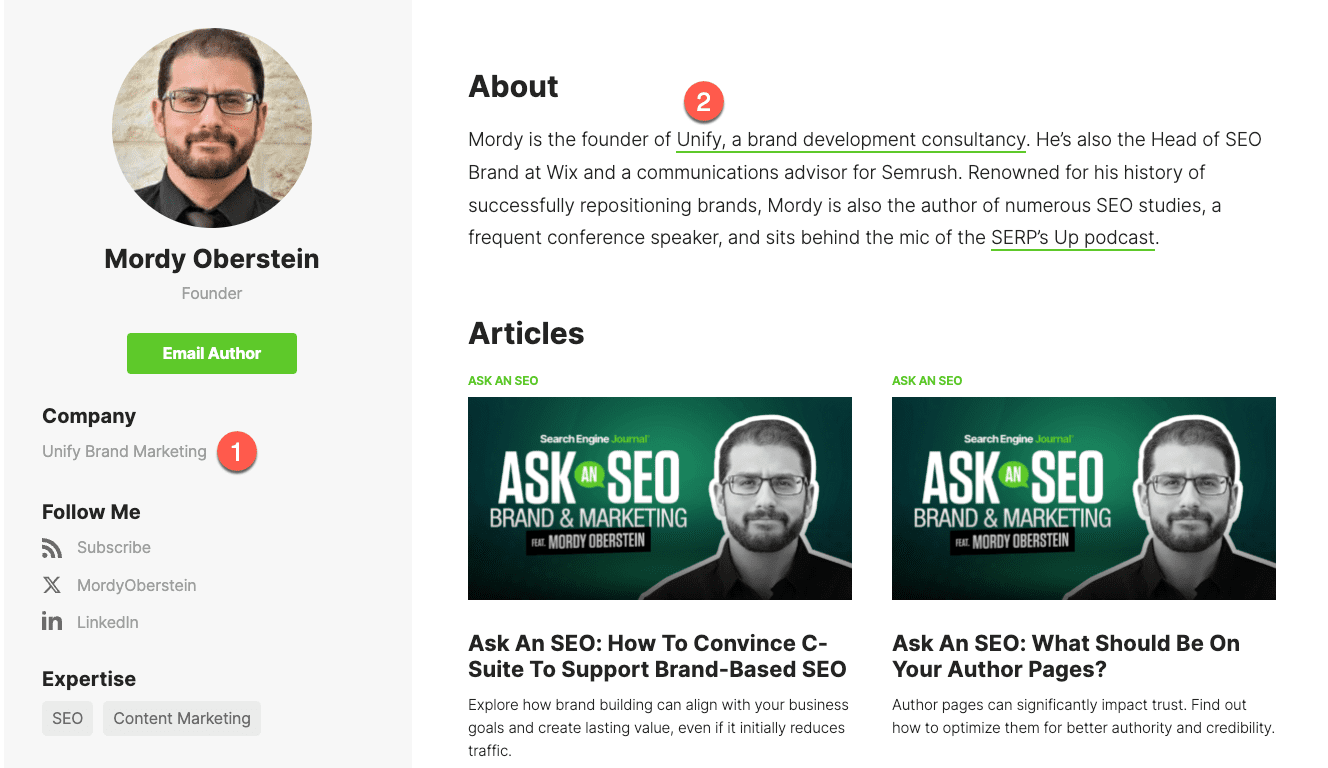
For example, in my Search Engine Journal bio, my company is mentioned twice:

Screenshot from Search Engine Journal, May 2025

Getting these updated should not be hard at all.

It’s easy to miss a few wins here.

But getting these citations right can help with the Google results.

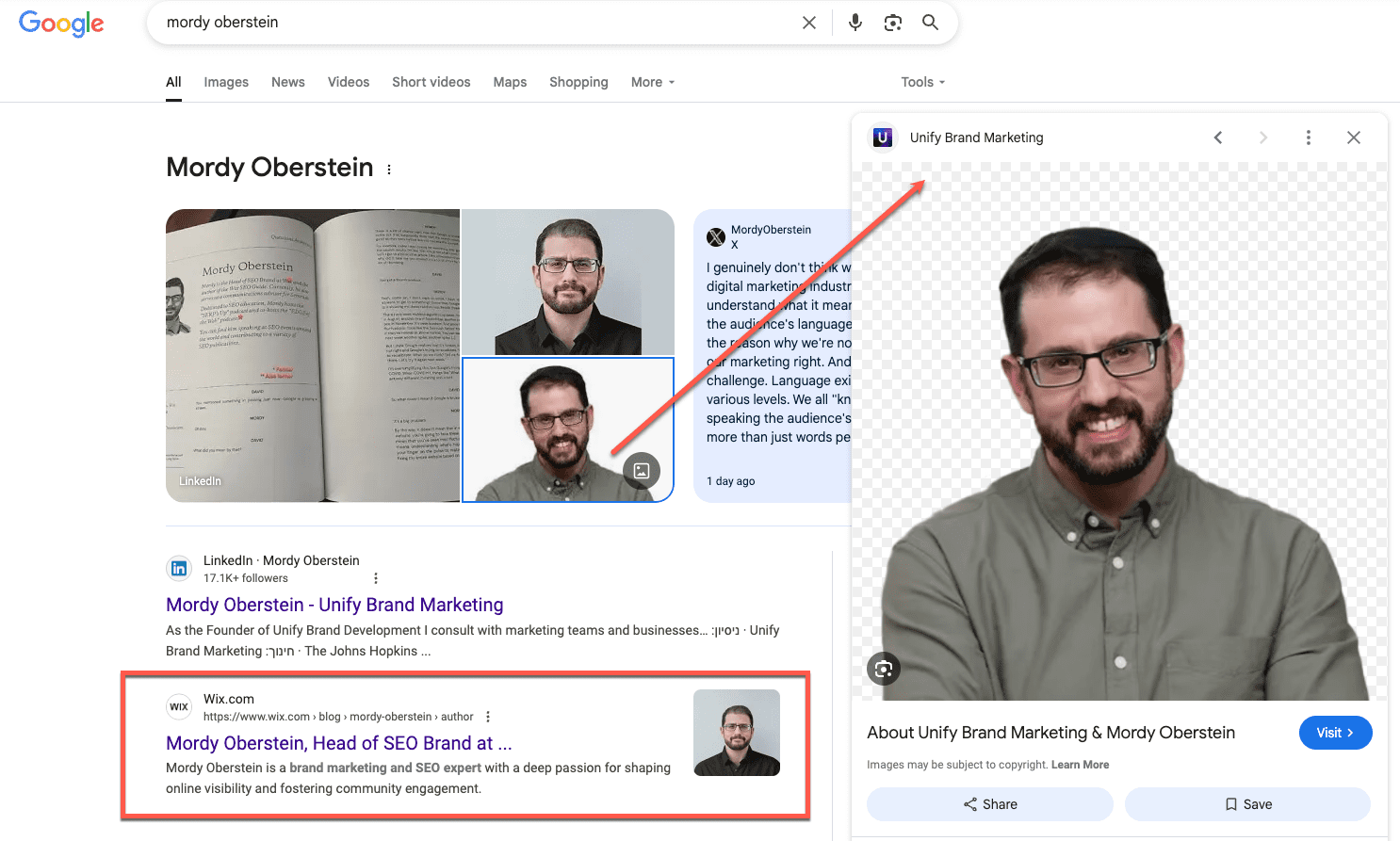
When I went around and had my current company added to all of my bios across the internet, Google’s Knowledge Panel took notice.

While my old Wix bio still often appears as the main URL in the Knowledge Panel and as a top organic result, Google started to pull in the images from my site as well:

Screenshot from search for [mordy oberstein], Google, May 2025

Notice, by the way, that because I took care of my social media. My current brand shows up as part of my LinkedIn profile, which is confusing considering what the Wix result says below it (i.e., that I work at Wix).

That’s exactly what I want. I want the person to ask, “Does he still really work at Wix?”

When Third-Parties Won’t Align

What happens when your brand is listed under its previous name on some random listicle that won’t respond to any of your requests to change the brand name?

What happens if on some forum (say Reddit), there are endless references to your previous brand name that you can’t remove?

For starters, it does show the logic behind running a campaign to announce your new branding.

Often, companies will run a campaign announcing the new branding to generate buzz and interest or even to gain more conversions.

Nothing wrong with that, at all. However, even if none of that happens, it still makes sense to run a campaign when you change the name of your brand.

If only to signal that the brand name that once was, is no longer. This way, the next time someone talks about your brand on Reddit, they may stop themselves and use the new name.

If you’re lucky, when someone posts using your previous name, another user will comment that the brand name has actually been changed.

This is one less place to figure out how to go about changing how your brand is referenced and one less person who will continue to go around spreading the wrong name across the internet. That’s one less Reddit thread ranking on Google that mentions your old brand naming.

Now, let’s go back to that listicle. Your company is listed as a top 10 best whatever, and when you contact the website to update the name, they ghost you. What do you do?

Nothing.

You keep moving on. You keep doing more public appearances, writing more content, meeting more people, and generally building up your presence across the planet and the internet to the point where your new brand name is the default.

Until the point where Google’s Knowledge Graph is overwhelmed with Mordy Oberstein, founder of Unify Brand Marketing, and not Mordy Oberstein, head of SEO Brand at Wix.

Because then, that one website that hasn’t updated its content with your new naming is the one going against the grain. Now the pressure is on them to show they aren’t stale and out of date.

Set Expectations

I don’t expect this process to happen in a day nor should you. It takes time. Think of it more as a process.

Are more and more places across the digital landscape referencing your new brand name? If yes, you’re doing great. Are more people asking if you changed your name? Also, a good sign.

As you continue to spread your new brand name across the web, Google’s own Knowledge Graph will have more signals that the name that once was has been replaced.

Once your new brand name starts taking hold, anyone who cares about the accuracy of their content will start to either make the edit or reach out to you to make the edit.

Anyone else, at this point, is just running poor content that shouldn’t be there anyway (all things being equal).

More Resources:


Featured Image: PauloBobita/Search Engine Journal

Google Discover, AI Mode, And What It Means For Publishers: Interview With John Shehata via @sejournal, @theshelleywalsh

With the introduction of AI Overviews and ongoing Google updates, it’s been a challenging few years for news publishers, and the announcement that Google Discover will now appear on desktop was welcome.

However, the latest announcement of AI Mode could mean that users move away from the traditional search tab, and so the salvation of Discover might not be enough.

To get more insight into the state of SEO for new publishers, I spoke with John Shehata, a leading expert in Discover, digital audience development, and news SEO.

Shehata is the founder of NewzDash and brings over 25 years of experience, including executive roles at Condé Nast (Vogue, New Yorker, GQ, etc.).

In our conversation, we explore the implications of Google Discover launching on desktop, which could potentially bring back some lost traffic, and the emergence of AI Mode in search interfaces.

We also talk about AI becoming the gatekeeper of SERPs and John offers his advice for how brands and publishers can navigate this.

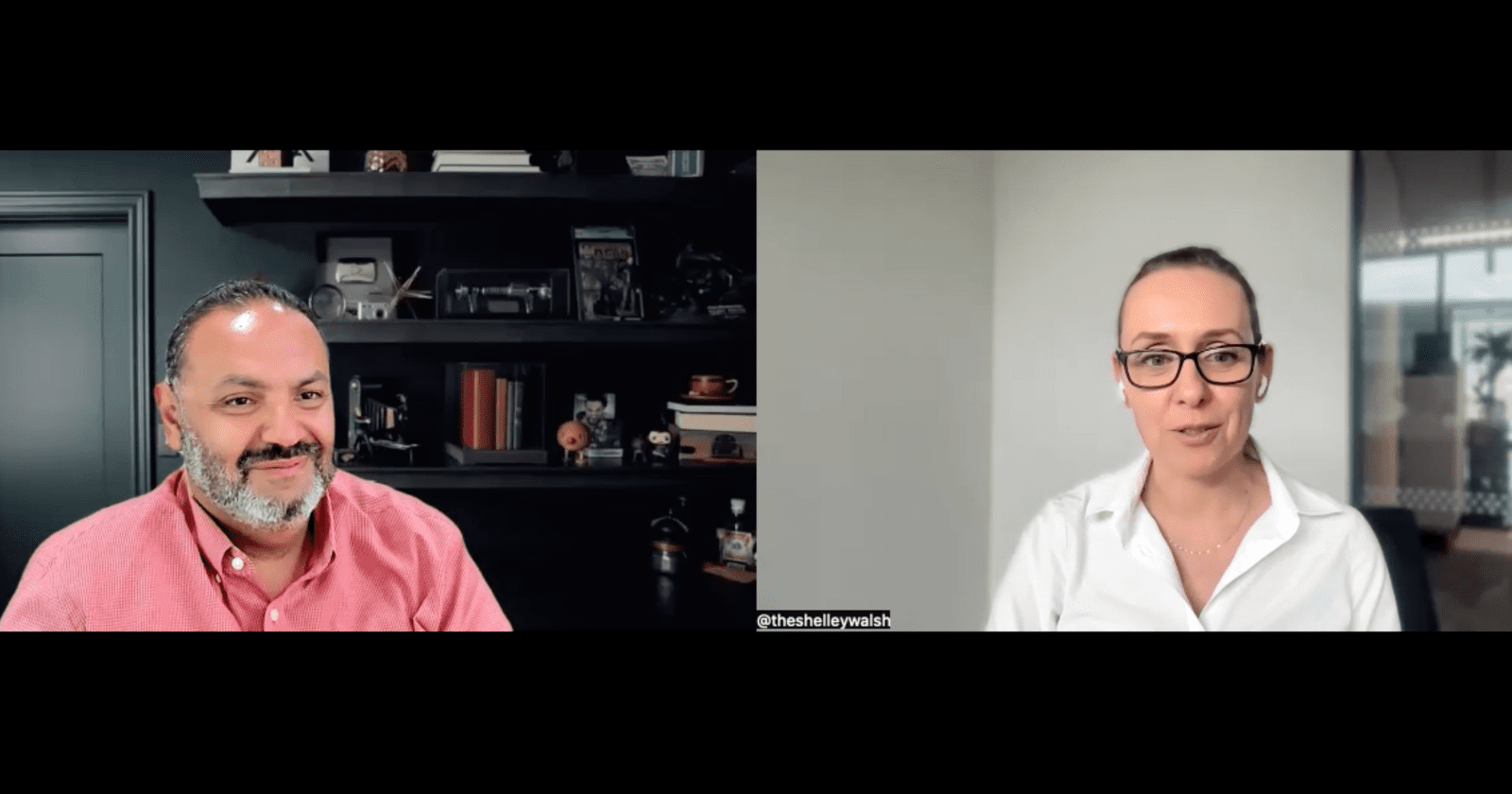
You can watch the full video here and find the full transcript below:

IMHO: Google Discover, AI, And What It Means For Publishers [Transcript]

Shelley Walsh: John, please tell me, in your opinion, how much traffic for news publishers do you think has been impacted by AIO?

John: In general, there are so many studies showing that sites are losing anywhere from 25 to 32% of all their traffic because of the new AI Overviews.

There is no specific study done yet for news publishers, so we are working on that right now.

In the past, we did an analysis about a year ago where we found that about 4% of all the news queries generate an AI Overview. That was like a year ago.

We are integrating a new feature in NewzDash where we actually track AI Overview for every news query as it trends immediately, and we will see. But the highest penetration we saw of AI Overview was in health and business.

Health was like 26% of all the news queries generated AI Overview. I think business, I can’t remember specifically, but it was like 8% or something. For big trending news, it was very, very small.

So, in a couple of months, we will have very solid data, but based on the study that I did a year ago, it’s not as integrated for news queries, except for specific verticals.

But overall, right now, the studies show there’s about a loss of anywhere from 25 to 32% of their traffic.

Can Google Discover Make Up The Loss?

Shelley: I know from my own experience as well that publishers are being really hammered quite hard, obviously not just by AIO but also the many wonderful Google updates that we’ve been blessed with over the last 18 months as well. I just pulled some stats while I was doing some research for our chat.

You said that Google Discover is already the No. 1 traffic source for most news publishers, sometimes accounting for up to 60% of their total Google traffic.

And based on current traffic splits of 90% mobile and 10% desktop, this update could generate an estimated 10-15% of additional Discover traffic for publishers.

Do you think that Discover can actually replace all this traffic that has been lost by AIO? And do you think Discover is enough of a strategy for publishers to go all in on and for them to survive in this climate?

John: Yeah, this is a great question. I have this conspiracy theory that Google is sending more traffic through Discover to publishers as they are taking away traffic from search.

It’s like, “You know what? Don’t get so sad about this. Just focus here: Discover, Discover, Discover.” Okay? And I could be completely wrong.

“The challenge is [that] Google Discover is very unreliable, but at the same time, it’s addictive. Publishers have seen 50-60% of their traffic coming through Discover.”

I think publishers are slowly forgetting about search and focusing more on Discover, which, in my opinion, is a very dangerous approach.

“I think Google Discover is more like a channel, not a strategy. So, the focus always should be on the content, regardless of what channel you’re pushing your content into – social, Discover, search, and so on.”

I believe that Discover is an extension of search. So, even if search is driving less traffic and Discover is driving more and more traffic, if you lose your status in search, eventually you will lose your traffic in Discover – and I have seen that.

We work with some clients where they went like very social-heavy or Discover-heavy kind of approach, you know – clicky headlines, short articles, publish the next one and the next one.

Within six months, they lost all their search traffic. They lost their Discover traffic, and [they] no longer appear in News.

So, Google went to a certain point where it started evaluating, “Okay, this publisher is not a news publisher anymore.”

So, it’s a word of caution.

You should not get addicted to Google Discover. It’s not a long-term strategy. Squeeze every visit you can get from Google Discover as much as you can, but remember, all the traffic can go away overnight for no specific reason.

We have so many complaints from Brazil and other countries, where people in April, like big, very big sites, lost all their traffic, and nothing changed in their technical, nothing changed in their editorial.

So, it’s not a strategy; it’s just a tactic for a short-term period of time. Utilize it as much as you can. I would think the correct strategy is to diversify.

Right now, Google is like 80% of publishers’ traffic, including search, Discover, and so on.

And it’s hard to find other sources because social [media] has kept diminishing over the years. Like Facebook, [it] only retains traffic on Facebook. They try as best as they can. LinkedIn, Twitter, and so on.

So, I think newsletters are very, very important, even if they’re not sexy or they won’t drive 80% [of] other partnerships, you know, and so on.

I think publishers need to seriously consider how they diversify their content, their traffic, and their revenue streams.

The Rise Of AI Mode

Shelley: Just shifting gears, I just wanted to have a chat with you about AI Mode. I picked up something you said recently on LinkedIn.

You said that AI Mode could soon become the default view, and when that happens, expect more impressions and much fewer clicks.

So on that basis, how do you expect the SERPs to evolve over the next year, obviously bearing in mind that publishers do still need to focus on SERPs?

John: If you think about the evolution of SERPs, we used to have the thin blue links, and then Google recognized that that’s not enough, so they created the universal search for us, where you can have all the different elements.

And that was not enough, so it started introducing featured snippets and direct answers. It’s all about the user at the end of the day.

And with the explosion of LLM models and ChatGPT, Perplexity, and all this stuff, and the huge adoption of users over the last 12 months, Google started introducing more and more AI.

It started with SGE and evolved to AI Overview, and recently, it launched AI Mode.

And if you listen to Sundar from Google, you hear the message is very clear: This is the future of search. AI is the future of search. It’s going to be integrated into every product and search. This is going to be very dominant and so on.

I believe right now they are testing the waters, to see how people interact with AI Overviews. How many of them will switch to AI Mode? Are they satisfied with the single summary of an answer?

And if they want to dig more, they can go to the citations or the reference sites, and so on.

I don’t know when AI Mode will become dominant, but if you think, if you go to Perplexity’s interface and how you search, it’s like it’s a mix between AI and results.

If you go to ChatGPT and so on, I think eventually, maybe sooner or later, this is going to be the new interface for how we deal with search engines and generative engines as well.

From all that we see, so I don’t know when, but I think eventually, we’re going to see it soon, especially knowing that Gen Z doesn’t do much search. It’s more conversational.

So, I think we’re going to see it soon. I don’t know when, but I think they are testing right now how users are interacting with AI Mode and AI Overviews to determine what are the next steps.

Visibility, Not Traffic, Is The New Metric

Shelley: I also picked up something else you said as well, which was [that] AI becomes the gatekeeper of SERPs.

So, considering that LLMs are not going to go away, AI Mode is not going to go away, how are you tackling this with the brands that you advise?

John: Yesterday, I had a long meeting with one of our clients, and we were talking about all these different things.

And I advised them [that] the first step is they need to start tracking, and then analyze, and then react. Because I think reacting without having enough data – what is the impact of AI on their platform, on their sites, and traffic – and traffic cannot be the only metric.

For generations now, it’s like, “How much traffic I’m getting?” This has to change.

Because in the new world, we will get less traffic. So, for publishers that solely depend on traffic, this is going to be a problem.

You can measure your transactions or conversions regardless of whether you get traffic or not.

ChatGPT is doing an integration with Shopify, you know.

Google AI Overview has direct links where you can shop through Google or through different sites. So, it doesn’t have to go through a site and then shop, and so on.

I think you have to track and analyze where you’re losing your traffic.

For publishers, are these verticals that you need to focus on or not? You need to track your visibility.

So now, more and more people are searching for news. I shared something on LinkedIn yesterday: If a user said, “Met Gala 2025,” Google will show the top stories and all the news and stuff like this.

But if you slightly change your query to say “What happened at Met Gala? What happened between Trump and Zelensky? What happened in that specific moment or event?”

Google now identifies that you don’t want to read a lot of stories to understand what happened. You want a summary.

It’s like, “Okay, yesterday this is what happened. That was the theme. These are the big moments,” and so on, and it gives you references to dive deeper.

More and more users will be like, “Just tell me the summary of what happened.” And that’s why we’re going to see less and less impressions back to the sites.

And I think also schema is going to be more and more important [in] how ChatGPT finds your content. I think more and more publishers will have direct relationships or direct deals with different LLMs.

I think ChatGPT and other LLMs need to pay publishers for the content that they consume, either for the training data or for grounded data like search data that they retrieve.

I think there needs to be some kind of an exchange or revenue stream that should be an additional revenue stream for publishers.

Prioritize Analysis Over Commodity News

Shelley: That’s the massive issue, isn’t it? That news publishers are working very hard to produce high-quality breaking news content, and the LLMs are just trading off that.

If they’re just going to be creating their summaries, it does take us back, I suppose, to the very early days of Google when everybody complained that Google was doing exactly the same.

Do you think news publishers need to change their strategy and the content they actually produce? Is that even possible?

John: I think they need to focus on content that adds value and adds more information to the user. And this doesn’t apply to every publisher because some publishers are just reporting on what happened in the news. “This celebrity did that over there.”

This kind of news is probably available on hundreds and thousands of sites. So, if you stop writing this content, Google and other LLMs will find that content in 100 different ways, and it’s not a quality kind of content.

But the other content where there’s deep analysis of a situation or an event, or, you know, like, “Hey, this is how the market is behaving yesterday. This is what you need to do.”

This kind of content I think will be valuable more than anything else versus just simply reporting. I’m not saying reporting will go away, but I think this is going to be available from so many originals and copycats that just take the same article and keep rewriting it.

And if Google and other LLMs are telling us we want quality content, that content is not cheap. Producing that content and reporting on that content and the media, and so on, is not cheap.

So, I believe there must be a way for these platforms to pay publishers based on the content they consume or get from the publisher, and even the content that they use in their training model.

The original model was Google: “Hey, we will show one or two lines from your article, and then we will give you back the traffic. You can monetize it over there.” This agreement is broken now. It doesn’t work like before.

And there are people yelling, “Oh, you should not expect anything from Google.” But that was the deal. That was the unwritten deal, that we, for the last two generations, the last two decades, were behaving on.

So, yeah, that’s I think, this is where we have to go.

The Ethical Debate Around LLMs And Publisher Content

Shelley: It’s going to be a difficult situation to navigate. I agree with you totally about the expert content.

It’s something we’ve been doing at SEJ, investing quite heavily in creating expert columns for really good quality, unique thought-leadership content rather than just news cycle content.

But, this whole idea of LLMs – they are just rehashing; they are trading fully off other people’s hard work. It’s going to be quite a contentious issue over the next year, and it’s going to be interesting to see how it plays out. But that’s a much wider discussion for another time.

You touched on something before, which was interesting, and it was about tracking LLMs. And you know, this is something that I’ve been doing with the work that I do, trying to track more and more references, citations in AI, and then referrals from AI.

John: I think one of the things I’m doing is I meet with a lot of publishers. In any given week, I will meet with maybe 10 to 15 publishers.

And by meeting with publishers and listening to what’s happening in the newsroom – what their pain points are, [what] efficiency that they want to work on, and so on, that motivates us – that actually builds our roadmap.

For NewzDash, we have been tracking AI Overview for a while, and we’re launching this feature in a couple of months from now.

So, you can imagine that this is every term that you’re tracking, including your own headlines and what they need to rank for, and then we can tell you, “For this term, AI Overview is available there,” and we estimate the visibility, how it’s going to drop over there.

But we can also tell you for a group of terms or a category, “Hey, you write a lot about iPhones, and this category is saturated with AI Overview. So, 50% of the time for every new iPhone trend – iPhone 16 launch date – yes, you wrote about it, but guess what? AI Overview is all over there, and it’s pushing down your visibility.”

Then, we’re going to expand into other LLMs. So, we’re planning to track mentions and prompts and citations and references in ChatGPT, which is the biggest LLM driver out of all, and then Perplexity and any other big ones.

I think it’s very important to understand what’s going on, and then, based on the data, you develop your own strategy based on your own niche or your content.

Shelley: I think the biggest challenge [for] publisher SEOs right now is being fully informed and finding attribution for connecting to the referrals that are coming from AI traffic, etc. It’s certainly an area I’m looking at.

John, it’s been fantastic to speak to you today, and thank you so much for offering your opinion. And I hope to catch you soon in person at one of your meetups.

John: Thank you so much. It was a pleasure. Thanks for having me.

Thank you to John Shehata for being a guest on the IMHO show.

Note: This was filmed before Google I/O and the announcement of the rollout of AI Mode in the U.S.

More Resources:


Featured Image: Shelley Walsh/Search Engine Journal

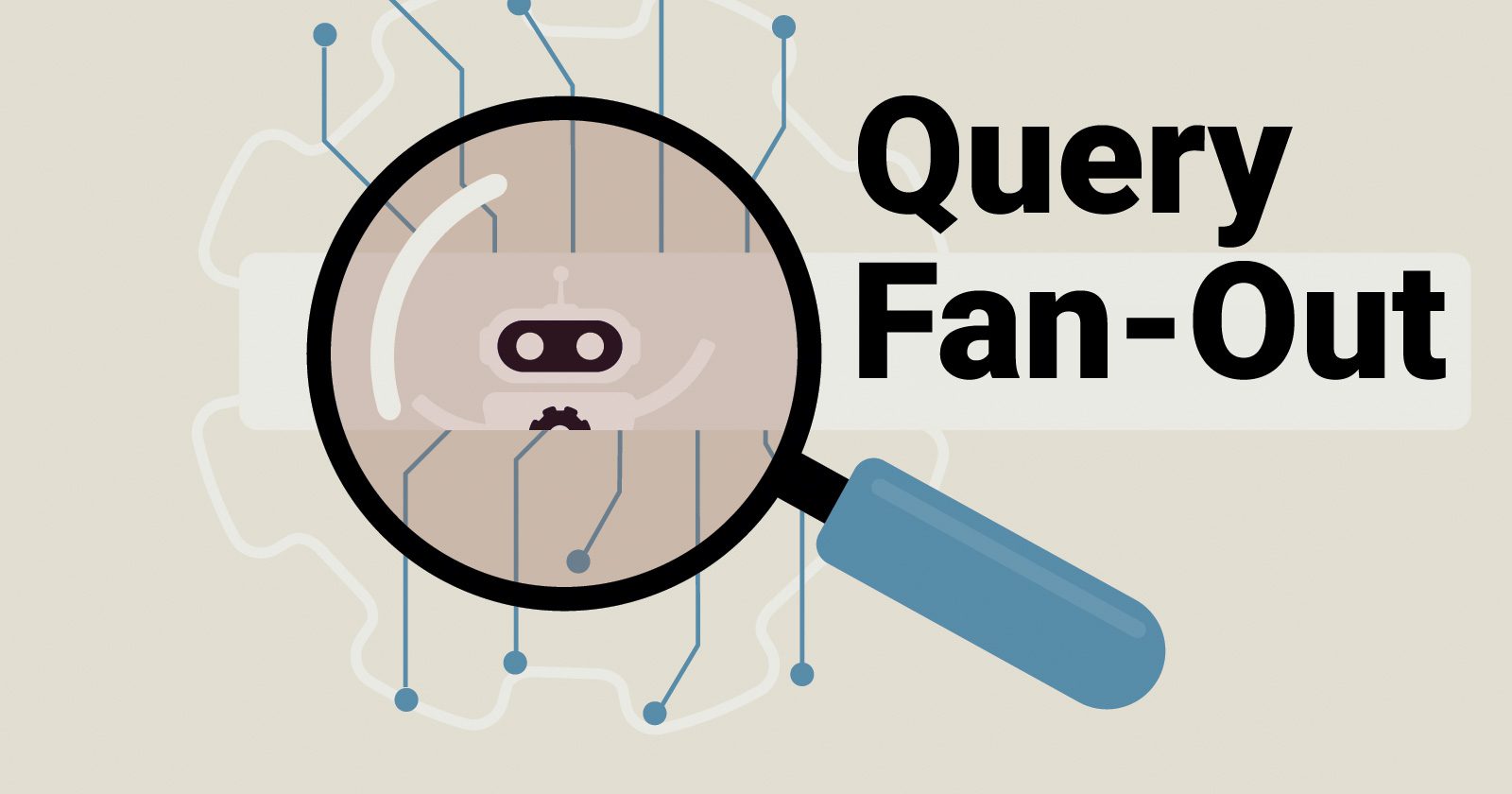
Google’s Query Fan-Out Patent: Thematic Search via @sejournal, @martinibuster

A patent that Google filed in December 2024 presents a close match to the Query Fan-Out technique that Google’s AI Mode uses. The patent, called Thematic Search, offers an idea of how AI Mode answers are generated and suggests new ways to think about content strategy.

The patent describes a system that organizes related search results to a search query into categories, what it calls themes, and provides a short summary for each theme so that users can understand the answers to their questions without having to click a link to all of the different sites.

The patent describes a system for deep research, for questions that are broad or complex. What’s new about the invention is how it automatically identifies themes from the traditional search results and uses an AI to generate an informative summary for each one using both the content and context from within those results.

Thematic Search Engine

Themes is a concept that goes back to the early days of search engines, which is why this patent caught my eye a few months ago and caused me to bookmark it.

Here’s the TL/DR of what it does:

  • The patent references its use within the context of a large language model and a summary generator.
  • It also references a thematic search engine that receives a search query and then passes that along to a search engine.
  • The thematic search engine takes the search engine results and organizes them into themes.
  • The patent describes a system that interfaces with a traditional search engine and uses a large language model for generating summaries of thematically grouped search results.
  • The patent describes that a single query can result in multiple queries that are based on “sub-themes”

Comparison Of Query Fan-Out And Thematic Search

The system described in the parent mirrors what Google’s documentation says about the Query Fan-Out technique.

Here’s what the patent says about generating additional queries based on sub-themes:

“In some examples, in response to the search query 142-2 being generated, the thematic search engine 120 may generate thematic data 138-2 from at least a portion of the search results 118-2. For example, the thematic search engine 120 may obtain the search results 118-2 and may generate narrower themes 130 (e.g., sub-themes) (e.g., “neighborhood A”, “neighborhood B”, “neighborhood C”) from the responsive documents 126 of the search results 118-2. The search results page 160 may display the sub-themes of theme 130a and/or the thematic search results 119 for the search query 142-2. The process may continue, where selection of a sub-theme of theme 130a may cause the thematic search engine 120 to obtain another set of search results 118 from the search engine 104 and may generate narrower themes 130 (e.g., sub-sub-themes of theme 130a) from the search results 118 and so forth.”

Here’s what Google’s documentation says about the Query Fan-Out Technique:

“It uses a “query fan-out” technique, issuing multiple related searches concurrently across subtopics and multiple data sources and then brings those results together to provide an easy-to-understand response. This approach helps you access more breadth and depth of information than a traditional search on Google.”

The system described in the patent resembles what Google’s documentation says about the Query Fan-Out technique, particularly in how it explores subtopics by generating new queries based on themes.

Summary Generator

The summary generator is a component of the thematic search system. It’s designed to generate textual summaries for each theme generated from search results.

This is how it works:

  • The summary generator is sometimes implemented as a large language model trained to create original text.
  • The summary generator uses one or more passages from search results grouped under a particular theme.
  • It may also use contextual information from titles, metadata, surrounding related passages to improve summary quality.
  • The summary generator can be triggered when a user submits a search query or when the thematic search engine is initialized.

The patent doesn’t define what ‘initialization’ of the thematic search engine means, maybe because it’s taken for granted that it means the thematic search engine starts up in anticipation of handling a query.

Query Results Are Clustered By Theme Instead Of Traditional Ranking

The traditional search results, in some examples shared in the patent, are replaced by grouped themes and generated summaries. Thematic search changes what content is shown and linked to users. For example, a typical query that a publisher or SEO is optimizing for may now be the starting point for a user’s information journey. The thematic search results leads a user down a path of discovering sub-themes of the original query and the site that ultimately wins the click might not be the one that ranks number one for the initial search query but rather it may be another web page that is relevant for an adjacent query.

The patent describes multiple ways that the thematic search engine can work (I added bullet points to make it easier to understand):

  • “The themes are displayed on a search results page, and, in some examples, the search results (or a portion thereof) are arranged (e.g., organized, sorted) according to the plurality of themes. Displaying a theme may include displaying the phrase of the theme.
  • In some examples, the thematic search engine may rank the themes based on prominence and/or relevance to the search query.
  • The search results page may organize the search results (or a portion thereof) according to the themes (e.g., under the theme of ‘cost of living”, identifying those search results that relate to the theme of ‘cost of living”).
  • The themes and/or search results organized by theme by the thematic search engine may be rendered in the search results page according to a variety of different ways, e.g., lists, user interface (UI) cards or objects, horizontal carousel, vertical carousel, etc.
  • The search results organized by theme may be referred to as thematic search results. In some examples, the themes and/or search results organized by theme are displayed in the search results page along with the search results (e.g., normal search results) from the search engine.
  • In some examples, the themes and/or theme-organized search results are displayed in a portion of the search results page that is separate from the search results obtained by the search engine.”

Content From Multiple Sources Are Combined

The AI-generated summaries are created from multiple websites and grouped under a theme. This makes link attribution, visibility, and traffic difficult to predict.

In the following citation from the patent, the reference to “unstructured data” means content that’s on a web page.

According to the patent:

“For example, the thematic search engine may generate themes from unstructured data by analyzing the content of the responsive documents themselves and may thematically organize the search results according to the themes.

….In response to a search query (“moving to Denver”), a search engine may obtain search results (e.g., responsive documents) responsive to that search query.

The thematic search engine may select a set of responsive documents (e.g., top X number of search results) from the search results obtained by the search engine, and generate a plurality of themes (e.g., “neighborhoods”, “cost of living”, “things to do”, “pros and cons”, etc.) from the content of the responsive documents.

A theme may include a phrase, generated by a language model, that describes a theme included in the responsive documents. In some examples, the thematic search engine may map semantic keywords from each responsive document (e.g., from the search results) and connect the semantic keywords to similar semantic keywords from other responsive documents to generate themes.”

Content From Source Pages Are Linked

The documentation states that the thematic search engine links to the URLs of the source pages. It also states that the thematic search result could include the web page’s title or other metadata. But the part that’s important for SEOs and publishers is the part about attribution, links.

“…a thematic search result 119 may include a title 146 of the responsive document 126, a passage 145 from the responsive document 126, and a source 144 of the responsive document. The source 144 may be a resource locator (e.g., uniform resource location (URL)) of the responsive document 126.

The passage 145 may be a description (e.g., a snippet obtained from the metadata or content of the responsive document 126). In some examples, the passage 145 includes a portion of the responsive document 126 that mentions the respective theme 130. In some examples, the passage 145 included in the thematic search result 119 is associated with a summary description 166 generated by the language model 128 and included in a cluster group 172.”

User Interaction Influences Presentation

As previously mentioned, the thematic search engine is not a ranked list of documents for a search query. It’s a collection of information across themes that are related to the initial search query. User interaction with those AI generated summaries influences which sites are going to receive traffic.

Automatically generated sub-themes can present alternative paths on the user’s information journey that begins with the initial search query.

Summarization Uses Publisher Metadata

The summary generator uses document titles, metadata, and surrounding textual content. That may mean that well-structured content may influence how summaries are constructed.

The following is what the patent says, I added bullet points to make it easier to understand:

  • “The summary generator 164 may receive a passage 145 as an input and outputs a summary description 166 for the inputted passage 145.
  • In some examples, the summary generator 164 receives a passage 145 and contextual information as inputs and outputs a summary description 166 for the passage 145.
  • In some examples, the contextual information may include the title of the responsive document 126 and/or metadata associated with the responsive document 126.
  • In some examples, the contextual information may include one or more neighboring passages 145 (e.g., adjacent passages).
  • In some examples, the contextual information may include a summary description 166 for one or more neighboring passages 145 (e.g., adjacent passages).
  • In some examples, the contextual information may include all the other passages 145 on the same responsive document 126. For example, the summary generator may receive a passage 145 and the other passages 145 (e.g., all other passages 145) on the same responsive document 126 (and, in some examples, other contextual information) as inputs and may output a summary description 166 for the passage 145.”

Thematic Search: Implications For Content & SEO

There are two way that AI Mode ends for a publisher:

  1. Since users may get their answers from theme summaries or dropdowns, zero-click behavior is likely to increase, reducing traffic from traditional links.
  2. Or, it could be that the web page that provides the end of the user’s information journey for a given query is the one that receives the click.

I think this means that we really need to re-think the paradigm of ranking for keywords and maybe consider what the question is that’s being answered by a web page, and then identify follow-up questions that may be related to that initial query and either include that in the web page or create another web page that answers what may be the end of the information journey for a given search query.

You can read the patent here:

Thematic Search (PDF)

Read Google’s Documentation Of AI Mode (PDF)

This startup wants to make more climate-friendly metal in the US

A California-based company called Magrathea just turned on a new electrolyzer that can make magnesium metal from seawater. The technology has the potential to produce the material, which is used in vehicles and defense applications, with net-zero greenhouse-gas emissions.

Magnesium is an incredibly light metal, and it’s used for parts in cars and planes, as well as in aluminum alloys like those in vehicles. The metal is also used in defense and industrial applications, including the production processes for steel and titanium.

Today, China dominates production of magnesium, and the most common method generates a lot of the emissions that cause climate change. If Magrathea can scale up its process, it could help provide an alternative source of the metal and clean up industries that rely on it, including automotive manufacturing.

The star of Magrathea’s process is an electrolyzer, a device that uses electricity to split a material into its constituent elements. Using an electrolyzer in magnesium production isn’t new, but Magrathea’s approach represents an update. “We really modernized it and brought it into the 21st century,” says Alex Grant, Magrathea’s cofounder and CEO.

The whole process starts with salty water. There are small amounts of magnesium in seawater, as well as in salt lakes and groundwater. (In seawater, the concentration is about 1,300 parts per million, so magnesium makes up about 0.1% of seawater by weight.) If you take that seawater or brine and clean it up, concentrate it, and dry it out, you get a solid magnesium chloride salt.

Magrathea takes that salt (which it currently buys from Cargill) and puts it into the electrolyzer. The device reaches temperatures of about 700 °C (almost 1,300 °F) and runs electricity through the molten salt to split the magnesium from the chlorine, forming magnesium metal.

Typically, running an electrolyzer in this process would require a steady source of electricity. The temperature is generally kept just high enough to maintain the salt in a molten state. Allowing it to cool down too much would allow it to solidify, messing up the process and potentially damaging the equipment. Heating it up more than necessary would just waste energy. 

Magrathea’s approach builds in flexibility. Basically, the company runs its electrolyzer about 100 °C higher than is necessary to keep the molten salt a liquid. It then uses the extra heat in inventive ways, including to dry out the magnesium salt that eventually goes into the reactor. This preparation can be done intermittently, so the company can take in electricity when it’s cheaper or when more renewables are available, cutting costs and emissions. In addition, the process will make a co-product, called magnesium oxide, that can be used to trap carbon dioxide from the atmosphere, helping to cancel out the remaining carbon pollution.

The result could be a production process with net-zero emissions, according to an independent life cycle assessment completed in January. While it likely won’t reach this bar at first, the potential is there for a much more climate-friendly process than what’s used in the industry today, Grant says.

Breaking into magnesium production won’t be simple, says Simon Jowitt, director of the Nevada Bureau of Mines and of the Center for Research in Economic Geology at the University of Nevada, Reno.

China produces roughly 95% of the global supply as of 2024, according to data from the US Geological Survey. This dominant position means companies there can flood the market with cheap metal, making it difficult for others to compete. “The economics of all this is uncertain,” Jowitt says.

The US has some trade protections in place, including an anti-dumping duty, but newer players with alternative processes can still face obstacles. US Magnesium, a company based in Utah, was the only company making magnesium in the US in recent years, but it shut down production in 2022 after equipment failures and a history of environmental concerns. 

Magrathea plans to start building a demonstration plant in Utah in late 2025 or early 2026, which will have a capacity of roughly 1,000 tons per year and should be running in 2027. In February the company announced that it signed an agreement with a major automaker, though it declined to share its name on the record. The automaker pre-purchased material from the demonstration plant and will incorporate it into existing products.

After the demonstration plant is running, the next step would be to build a commercial plant with a larger capacity of around 50,000 tons annually.

OpenAI: The power and the pride

In April, Paul Graham, the founder of the tech startup accelerator Y Combinator, sent a tweet in response to former YC president and current OpenAI CEO Sam Altman. Altman had just bid a public goodbye to GPT-4 on X, and Graham had a follow-up question. 

“If you had [GPT-4’s model weights] etched on a piece of metal in the most compressed form,” Graham wrote, referring to the values that determine the model’s behavior, “how big would the piece of metal have to be? This is a mostly serious question. These models are history, and by default digital data evaporates.” 

There is no question that OpenAI pulled off something historic with its release of ChatGPT 3.5 in 2022. It set in motion an AI arms race that has already changed the world in a number of ways and seems poised to have an even greater long-term effect than the short-term disruptions to things like education and employment that we are already beginning to see. How that turns out for humanity is something we are still reckoning with and may be for quite some time. But a pair of recent books both attempt to get their arms around it with accounts of what two leading technology journalists saw at the OpenAI revolution. 

In Empire of AI: Dreams and Nightmares in Sam Altman’s OpenAI, Karen Hao tells the story of the company’s rise to power and its far-reaching impact all over the world. Meanwhile, The Optimist: Sam Altman, OpenAI, and the Race to Invent the Future, by the Wall Street Journal’s Keach Hagey, homes in more on Altman’s personal life, from his childhood through the present day, in order to tell the story of OpenAI. Both paint complex pictures and show Altman in particular as a brilliantly effective yet deeply flawed creature of Silicon Valley—someone capable of always getting what he wants, but often by manipulating others. 

Hao, who was formerly a reporter with MIT Technology Review, began reporting on OpenAI while at this publication and remains an occasional contributor. One chapter of her book grew directly out of that reporting. And in fact, as Hao says in the acknowledgments of Empire of AI, some of her reporting for MIT Technology Review, a series on AI colonialism, “laid the groundwork for the thesis and, ultimately, the title of this book.” So you can take this as a kind of disclaimer that we are predisposed to look favorably on Hao’s work. 

With that said, Empire of AI is a powerful work, bristling not only with great reporting but also with big ideas. This comes across in service to two main themes. 

The first is simple: It is the story of ambition overriding ethics. The history of OpenAI as Hao tells it (and as Hagey does too) is very much a tale of a company that was founded on the idealistic desire to create a safety-focused artificial general intelligence but instead became more interested in winning. This is a story we’ve seen many times before in Big Tech. See Theranos, which was going to make diagnostics easier, or Uber, which was founded to break the cartel of “Big Taxi.” But the closest analogue might be Google, which went from “Don’t be evil” to (at least in the eyes of the courts) illegal monopolist. For that matter, consider how Google went from holding off on releasing its language model as a consumer product out of an abundance of caution to rushing a chatbot out the door to catch up with and beat OpenAI. In Silicon Valley, no matter what one’s original intent, it always comes back to winning.  

The second theme is more complex and forms the book’s thesis about what Hao calls AI colonialism. The idea is that the large AI companies act like traditional empires, siphoning wealth from the bottom rungs of society in the forms of labor, creative works, raw materials, and the like to fuel their ambition and enrich those at the top of the ladder. “I’ve found only one metaphor that encapsulates the nature of what these AI power players are: empires,” she writes.

“During the long era of European colonialism, empires seized and extracted resources that were not their own and exploited the labor of the people they subjugated to mine, cultivate, and refine those resources for the empires’ enrichment.” She goes on to chronicle her own growing disillusionment with the industry. “With increasing clarity,” she writes, “I realized that the very revolution promising to bring a better future was instead, for people on the margins of society, reviving the darkest remnants of the past.” 

To document this, Hao steps away from her desk and goes out into the world to see the effects of this empire as it sprawls across the planet. She travels to Colombia to meet with data labelers tasked with teaching AI what various images show, one of whom she describes sprinting back to her apartment for the chance to make a few dollars. She documents how workers in Kenya who performed data-labeling content moderation for OpenAI came away traumatized by seeing so much disturbing material. In Chile she documents how the industry extracts precious resources—water, power, copper, lithium—to build out data centers. 

She lands on the ways people are pushing back against the empire of AI across the world. Hao draws lessons from New Zealand, where Maori people are attempting to save their language using a small language model of their own making. Trained on volunteers’ voice recordings and running on just two graphics processing units, or GPUs, rather than the thousands employed by the likes of OpenAI, it’s meant to benefit the community, not exploit it. 

Hao writes that she is not against AI. Rather: “What I reject is the dangerous notion that broad benefit from AI can only be derived from—indeed will ever emerge from—a vision of the technology that requires the complete capitulation of our privacy, our agency, and our worth, including the value of our labor and art, toward an ultimately imperial centralization project … [The New Zealand model] shows us another way. It imagines how AI could be exactly the opposite. Models can be small and task-specific, their training data contained and knowable, ridding the incentives for widespread exploitative and psychologically harmful labor practices and the all-consuming extractivism of producing and running massive supercomputers.” 

Hagey’s book is more squarely focused on Altman’s ambition, which she traces back to his childhood. Yet interestingly, she also  zeroes in on the OpenAI CEO’s attempt to create an empire. Indeed, “Altman’s departure from YC had not slowed his civilization-building ambitions,” Hagey writes. She goes on to chronicle how Altman, who had previously mulled a run for governor of California, set up experiments with income distribution via Tools for Humanity, the parent company of Worldcoin. She quotes Altman saying of it, “I thought it would be interesting to see … just how far technology could accomplish some of the goals that used to be done by nation-states.” 

Overall, The Optimist is the more straightforward business biography of the two. Hagey has packed it full with scoops and insights and behind-the-scenes intrigue. It is immensely readable as a result, especially in the second half, when OpenAI really takes over the story. Hagey also seems to have been given far more access to Altman and his inner circles, personal and professional, than Hao did, and that allows for a fuller telling of the CEO’s story in places. For example, both writers cover the tragic story of Altman’s sister Annie, her estrangement from the family, and her accusations in particular about suffering sexual abuse at the hands of Sam (something he and the rest of the Altman family vehemently deny). Hagey’s telling provides a more nuanced picture of the situation, with more insight into family dynamics. 

Hagey concludes by describing Altman’s reckoning with his role in the long arc of human history and what it will mean to create a “superintelligence.” His place in that sweep is something that clearly has consumed the CEO’s thoughts. When Paul Graham asked about preserving GPT-4, for example, Altman had a response at the ready. He replied that the company had already considered this, and that the sheet of metal would need to be 100 meters square.