Ethically sourced “spare” human bodies could revolutionize medicine

Why do we hear about medical breakthroughs in mice, but rarely see them translate into cures for human disease? Why do so few drugs that enter clinical trials receive regulatory approval? And why is the waiting list for organ transplantation so long? These challenges stem in large part from a common root cause: a severe shortage of ethically sourced human bodies. 

It may be disturbing to characterize human bodies in such commodifying terms, but the unavoidable reality is that human biological materials are an essential commodity in medicine, and persistent shortages of these materials create a major bottleneck to progress.

This imbalance between supply and demand is the underlying cause of the organ shortage crisis, with more than 100,000 patients currently waiting for a solid organ transplant in the US alone. It also forces us to rely heavily on animals in medical research, a practice that can’t replicate major aspects of human physiology and makes it necessary to inflict harm on sentient creatures. In addition, the safety and efficacy of any experimental drug must still be confirmed in clinical trials on living human bodies. These costly trials risk harm to patients, can take a decade or longer to complete, and make it through to approval less than 15% of the time. 

There might be a way to get out of this moral and scientific deadlock. Recent advances in biotechnology now provide a pathway to producing living human bodies without the neural components that allow us to think, be aware, or feel pain. Many will find this possibility disturbing, but if researchers and policymakers can find a way to pull these technologies together, we may one day be able to create “spare” bodies, both human and nonhuman.

These could revolutionize medical research and drug development, greatly reducing the need for animal testing, rescuing many people from organ transplant lists, and allowing us to produce more effective drugs and treatments. All without crossing most people’s ethical lines.

Bringing technologies together

Although it may seem like science fiction, recent technological progress has pushed this concept into the realm of plausibility. Pluripotent stem cells, one of the earliest cell types to form during development, can give rise to every type of cell in the adult body. Recently, researchers have used these stem cells to create structures that seem to mimic the early development of actual human embryos. At the same time, artificial uterus technology is rapidly advancing, and other pathways may be opening to allow for the development of fetuses outside of the body. 

Such technologies, together with established genetic techniques to inhibit brain development, make it possible to envision the creation of “bodyoids”—a potentially unlimited source of human bodies, developed entirely outside of a human body from stem cells, that lack sentience or the ability to feel pain.

There are still many technical roadblocks to achieving this vision, but we have reason to expect that bodyoids could radically transform biomedical research by addressing critical limitations in the current models of research, drug development, and medicine. Among many other benefits, they would offer an almost unlimited source of organs, tissues, and cells for use in transplantation.

It could even be possible to generate organs directly from a patient’s own cells, essentially cloning someone’s biological material to ensure that transplanted tissues are a perfect immunological match and thus eliminating the need for lifelong immunosuppression. Bodyoids developed from a patient’s cells could also allow for personalized screening of drugs, allowing physicians to directly assess the effect of different interventions in a biological model that accurately reflects a patient’s own personal genetics and physiology. We can even envision using animal bodyoids in agriculture, as a substitute for the use of sentient animal species. 

Of course, exciting possibilities are not certainties. We do not know whether the embryo models recently created from stem cells could give rise to living people or, thus far, even to living mice. We do not know when, or whether, an effective technique will be found for successfully gestating human bodies entirely outside a person. We cannot be sure whether such bodyoids can survive without ever having developed brains or the parts of brains associated with consciousness, or whether they would still serve as accurate models for living people without those brain functions.

Even if it all works, it may not be practical or economical to “grow” bodyoids, possibly for many years, until they can be mature enough to be useful for our ends. Each of these questions will require substantial research and time. But we believe this idea is now plausible enough to justify discussing both the technical feasibility and the ethical implications. 

Ethical considerations and societal implications

Bodyoids could address many ethical problems in modern medicine, offering ways to avoid unnecessary pain and suffering. For example, they could offer an ethical alternative to the way we currently use nonhuman animals for research and food, providing meat or other products with no animal suffering or awareness. 

But when we come to human bodyoids, the issues become harder. Many will find the concept grotesque or appalling. And for good reason. We have an innate respect for human life in all its forms. We do not allow broad research on people who no longer have consciousness or, in some cases, never had it. 

At the same time, we know much can be gained from studying the human body. We learn much from the bodies of the dead, which these days are used for teaching and research only with consent. In laboratories, we study cells and tissues that were taken, with consent, from the bodies of the dead and the living.

Recently we have even begun using for experiments the “animated cadavers” of people who have been declared legally dead, who have lost all brain function but whose other organs continue to function with mechanical assistance. Genetically modified pig kidneys have been connected to, or transplanted into, these legally dead but physiologically active cadavers to help researchers determine whether they would work in living people

In all these cases, nothing was, legally, a living human being at the time it was used for research. Human bodyoids would also fall into that category. But there are still a number of issues worth considering. The first is consent: The cells used to make bodyoids would have to come from someone, and we’d have to make sure that this someone consented to this particular, likely controversial, use. But perhaps the deepest issue is that bodyoids might diminish the human status of real people who lack consciousness or sentience.

Thus far, we have held to a standard that requires us to treat all humans born alive as people, entitled to life and respect. Would bodyoids—created without pregnancy, parental hopes, or indeed parents—blur that line? Or would we consider a bodyoid a human being, entitled to the same respect? If so, why—just because it looks like us? A sufficiently detailed mannequin can meet that test. Because it looks like us and is alive? Because it is alive and has our DNA? These are questions that will require careful thought. 

A call to action

Until recently, the idea of making something like a bodyoid would have been relegated to the realms of science fiction and philosophical speculation. But now it is at least plausible—and possibly revolutionary. It is time for it to be explored. 

The potential benefits—for both human patients and sentient animal species—are great. Governments, companies, and private foundations should start thinking about bodyoids as a possible path for investment. There is no need to start with humans—we can begin exploring the feasibility of this approach with rodents or other research animals. 

As we proceed, the ethical and social issues are at least as important as the scientific ones. Just because something can be done does not mean it should be done. Even if it looks possible, determining whether we should make bodyoids, nonhuman or human, will require considerable thought, discussion, and debate. Some of that will be by scientists, ethicists, and others with special interest or knowledge. But ultimately, the decisions will be made by societies and governments. 

The time to start those discussions is now, when a scientific pathway seems clear enough for us to avoid pure speculation but before the world is presented with a troubling surprise. The announcement of the birth of Dolly the cloned sheep back in the 1990s launched a hysterical reaction, complete with speculation about armies of cloned warrior slaves. Good decisions require more preparation.

The path toward realizing the potential of bodyoids will not be without challenges; indeed, it may never be possible to get there, or even if it is possible, the path may never be taken. Caution is warranted, but so is bold vision; the opportunity is too important to ignore.

Carsten T. Charlesworth is a postdoctoral fellow at the Institute of Stem Cell Biology and Regenerative Medicine (ISCBRM) at Stanford University.

Henry T. Greely is the Deane F. and Kate Edelman Johnson Professor of Law and director of the Center for Law and the Biosciences at Stanford University.

Hiromitsu Nakauchi is a professor of genetics and an ISCBRM faculty member at Stanford University and a distinguished university professor at the Institute of Science Tokyo.

Ethically sourced “spare” human bodies could revolutionize medicine

Why do we hear about medical breakthroughs in mice, but rarely see them translate into cures for human disease? Why do so few drugs that enter clinical trials receive regulatory approval? And why is the waiting list for organ transplantation so long? These challenges stem in large part from a common root cause: a severe shortage of ethically sourced human bodies. 

It may be disturbing to characterize human bodies in such commodifying terms, but the unavoidable reality is that human biological materials are an essential commodity in medicine, and persistent shortages of these materials create a major bottleneck to progress.

This imbalance between supply and demand is the underlying cause of the organ shortage crisis, with more than 100,000 patients currently waiting for a solid organ transplant in the US alone. It also forces us to rely heavily on animals in medical research, a practice that can’t replicate major aspects of human physiology and makes it necessary to inflict harm on sentient creatures. In addition, the safety and efficacy of any experimental drug must still be confirmed in clinical trials on living human bodies. These costly trials risk harm to patients, can take a decade or longer to complete, and make it through to approval less than 15% of the time. 

There might be a way to get out of this moral and scientific deadlock. Recent advances in biotechnology now provide a pathway to producing living human bodies without the neural components that allow us to think, be aware, or feel pain. Many will find this possibility disturbing, but if researchers and policymakers can find a way to pull these technologies together, we may one day be able to create “spare” bodies, both human and nonhuman.

These could revolutionize medical research and drug development, greatly reducing the need for animal testing, rescuing many people from organ transplant lists, and allowing us to produce more effective drugs and treatments. All without crossing most people’s ethical lines.

Bringing technologies together

Although it may seem like science fiction, recent technological progress has pushed this concept into the realm of plausibility. Pluripotent stem cells, one of the earliest cell types to form during development, can give rise to every type of cell in the adult body. Recently, researchers have used these stem cells to create structures that seem to mimic the early development of actual human embryos. At the same time, artificial uterus technology is rapidly advancing, and other pathways may be opening to allow for the development of fetuses outside of the body. 

Such technologies, together with established genetic techniques to inhibit brain development, make it possible to envision the creation of “bodyoids”—a potentially unlimited source of human bodies, developed entirely outside of a human body from stem cells, that lack sentience or the ability to feel pain.

There are still many technical roadblocks to achieving this vision, but we have reason to expect that bodyoids could radically transform biomedical research by addressing critical limitations in the current models of research, drug development, and medicine. Among many other benefits, they would offer an almost unlimited source of organs, tissues, and cells for use in transplantation.

It could even be possible to generate organs directly from a patient’s own cells, essentially cloning someone’s biological material to ensure that transplanted tissues are a perfect immunological match and thus eliminating the need for lifelong immunosuppression. Bodyoids developed from a patient’s cells could also allow for personalized screening of drugs, allowing physicians to directly assess the effect of different interventions in a biological model that accurately reflects a patient’s own personal genetics and physiology. We can even envision using animal bodyoids in agriculture, as a substitute for the use of sentient animal species. 

Of course, exciting possibilities are not certainties. We do not know whether the embryo models recently created from stem cells could give rise to living people or, thus far, even to living mice. We do not know when, or whether, an effective technique will be found for successfully gestating human bodies entirely outside a person. We cannot be sure whether such bodyoids can survive without ever having developed brains or the parts of brains associated with consciousness, or whether they would still serve as accurate models for living people without those brain functions.

Even if it all works, it may not be practical or economical to “grow” bodyoids, possibly for many years, until they can be mature enough to be useful for our ends. Each of these questions will require substantial research and time. But we believe this idea is now plausible enough to justify discussing both the technical feasibility and the ethical implications. 

Ethical considerations and societal implications

Bodyoids could address many ethical problems in modern medicine, offering ways to avoid unnecessary pain and suffering. For example, they could offer an ethical alternative to the way we currently use nonhuman animals for research and food, providing meat or other products with no animal suffering or awareness. 

But when we come to human bodyoids, the issues become harder. Many will find the concept grotesque or appalling. And for good reason. We have an innate respect for human life in all its forms. We do not allow broad research on people who no longer have consciousness or, in some cases, never had it. 

At the same time, we know much can be gained from studying the human body. We learn much from the bodies of the dead, which these days are used for teaching and research only with consent. In laboratories, we study cells and tissues that were taken, with consent, from the bodies of the dead and the living.

Recently we have even begun using for experiments the “animated cadavers” of people who have been declared legally dead, who have lost all brain function but whose other organs continue to function with mechanical assistance. Genetically modified pig kidneys have been connected to, or transplanted into, these legally dead but physiologically active cadavers to help researchers determine whether they would work in living people

In all these cases, nothing was, legally, a living human being at the time it was used for research. Human bodyoids would also fall into that category. But there are still a number of issues worth considering. The first is consent: The cells used to make bodyoids would have to come from someone, and we’d have to make sure that this someone consented to this particular, likely controversial, use. But perhaps the deepest issue is that bodyoids might diminish the human status of real people who lack consciousness or sentience.

Thus far, we have held to a standard that requires us to treat all humans born alive as people, entitled to life and respect. Would bodyoids—created without pregnancy, parental hopes, or indeed parents—blur that line? Or would we consider a bodyoid a human being, entitled to the same respect? If so, why—just because it looks like us? A sufficiently detailed mannequin can meet that test. Because it looks like us and is alive? Because it is alive and has our DNA? These are questions that will require careful thought. 

A call to action

Until recently, the idea of making something like a bodyoid would have been relegated to the realms of science fiction and philosophical speculation. But now it is at least plausible—and possibly revolutionary. It is time for it to be explored. 

The potential benefits—for both human patients and sentient animal species—are great. Governments, companies, and private foundations should start thinking about bodyoids as a possible path for investment. There is no need to start with humans—we can begin exploring the feasibility of this approach with rodents or other research animals. 

As we proceed, the ethical and social issues are at least as important as the scientific ones. Just because something can be done does not mean it should be done. Even if it looks possible, determining whether we should make bodyoids, nonhuman or human, will require considerable thought, discussion, and debate. Some of that will be by scientists, ethicists, and others with special interest or knowledge. But ultimately, the decisions will be made by societies and governments. 

The time to start those discussions is now, when a scientific pathway seems clear enough for us to avoid pure speculation but before the world is presented with a troubling surprise. The announcement of the birth of Dolly the cloned sheep back in the 1990s launched a hysterical reaction, complete with speculation about armies of cloned warrior slaves. Good decisions require more preparation.

The path toward realizing the potential of bodyoids will not be without challenges; indeed, it may never be possible to get there, or even if it is possible, the path may never be taken. Caution is warranted, but so is bold vision; the opportunity is too important to ignore.

Carsten T. Charlesworth is a postdoctoral fellow at the Institute of Stem Cell Biology and Regenerative Medicine (ISCBRM) at Stanford University.

Henry T. Greely is the Deane F. and Kate Edelman Johnson Professor of Law and director of the Center for Law and the Biosciences at Stanford University.

Hiromitsu Nakauchi is a professor of genetics and an ISCBRM faculty member at Stanford University and a distinguished university professor at the Institute of Science Tokyo.

Why the world is looking to ditch US AI models

A few weeks ago, when I was at the digital rights conference RightsCon in Taiwan, I watched in real time as civil society organizations from around the world, including the US, grappled with the loss of one of the biggest funders of global digital rights work: the United States government.

As I wrote in my dispatch, the Trump administration’s shocking, rapid gutting of the US government (and its push into what some prominent political scientists call “competitive authoritarianism”) also affects the operations and policies of American tech companies—many of which, of course, have users far beyond US borders. People at RightsCon said they were already seeing changes in these companies’ willingness to engage with and invest in communities that have smaller user bases—especially non-English-speaking ones. 

As a result, some policymakers and business leaders—in Europe, in particular—are reconsidering their reliance on US-based tech and asking whether they can quickly spin up better, homegrown alternatives. This is particularly true for AI.

One of the clearest examples of this is in social media. Yasmin Curzi, a Brazilian law professor who researches domestic tech policy, put it to me this way: “Since Trump’s second administration, we cannot count on [American social media platforms] to do even the bare minimum anymore.” 

Social media content moderation systems—which already use automation and are also experimenting with deploying large language models to flag problematic posts—are failing to detect gender-based violence in places as varied as India, South Africa, and Brazil. If platforms begin to rely even more on LLMs for content moderation, this problem will likely get worse, says Marlena Wisniak, a human rights lawyer who focuses on AI governance at the European Center for Not-for-Profit Law. “The LLMs are moderated poorly, and the poorly moderated LLMs are then also used to moderate other content,” she tells me. “It’s so circular, and the errors just keep repeating and amplifying.” 

Part of the problem is that the systems are trained primarily on data from the English-speaking world (and American English at that), and as a result, they perform less well with local languages and context. 

Even multilingual language models, which are meant to process multiple languages at once, still perform poorly with non-Western languages. For instance, one evaluation of ChatGPT’s response to health-care queries found that results were far worse in Chinese and Hindi, which are less well represented in North American data sets, than in English and Spanish.   

For many at RightsCon, this validates their calls for more community-driven approaches to AI—both in and out of the social media context. These could include small language models, chatbots, and data sets designed for particular uses and specific to particular languages and cultural contexts. These systems could be trained to recognize slang usages and slurs, interpret words or phrases written in a mix of languages and even alphabets, and identify “reclaimed language” (onetime slurs that the targeted group has decided to embrace). All of these tend to be missed or miscategorized by language models and automated systems trained primarily on Anglo-American English. The founder of the startup Shhor AI, for example, hosted a panel at RightsCon and talked about its new content moderation API focused on Indian vernacular languages.

Many similar solutions have been in development for years—and we’ve covered a number of them, including a Mozilla-facilitated volunteer-led effort to collect training data in languages other than English, and promising startups like Lelapa AI, which is building AI for African languages. Earlier this year, we even included small language models on our 2025 list of top 10 breakthrough technologies

Still, this moment feels a little different. The second Trump administration, which shapes the actions and policies of American tech companies, is obviously a major factor. But there are others at play. 

First, recent research and development on language models has reached the point where data set size is no longer a predictor of performance, meaning that more people can create them. In fact, “smaller language models might be worthy competitors of multilingual language models in specific, low-resource languages,” says Aliya Bhatia, a visiting fellow at the Center for Democracy & Technology who researches automated content moderation. 

Then there’s the global landscape. AI competition was a major theme of the recent Paris AI Summit, which took place the week before RightsCon. Since then, there’s been a steady stream of announcements about “sovereign AI” initiatives that aim to give a country (or organization) full control over all aspects of AI development. 

AI sovereignty is just one part of the desire for broader “tech sovereignty” that’s also been gaining steam, growing out of more sweeping concerns about the privacy and security of data transferred to the United States. The European Union appointed its first commissioner for tech sovereignty, security, and democracy last November and has been working on plans for a “Euro Stack,” or “digital public infrastructure.” The definition of this is still somewhat fluid, but it could include the energy, water, chips, cloud services, software, data, and AI needed to support modern society and future innovation. All these are largely provided by US tech companies today. Europe’s efforts are partly modeled after “India Stack,” that country’s digital infrastructure that includes the biometric identity system Aadhaar. Just last week, Dutch lawmakers passed several motions to untangle the country from US tech providers. 

This all fits in with what Andy Yen, CEO of the Switzerland-based digital privacy company Proton, told me at RightsCon. Trump, he said, is “causing Europe to move faster … to come to the realization that Europe needs to regain its tech sovereignty.” This is partly because of the leverage that the president has over tech CEOs, Yen said, and also simply “because tech is where the future economic growth of any country is.”

But just because governments get involved doesn’t mean that issues around inclusion in language models will go away. “I think there needs to be guardrails about what the role of the government here is. Where it gets tricky is if the government decides ‘These are the languages we want to advance’ or ‘These are the types of views we want represented in a data set,’” Bhatia says. “Fundamentally, the training data a model trains on is akin to the worldview it develops.” 

It’s still too early to know what this will all look like, and how much of it will prove to be hype. But no matter what happens, this is a space we’ll be watching.

This story originally appeared in The Algorithm, our weekly newsletter on AI. To get stories like this in your inbox first, sign up here.

Why the world is looking to ditch US AI models

A few weeks ago, when I was at the digital rights conference RightsCon in Taiwan, I watched in real time as civil society organizations from around the world, including the US, grappled with the loss of one of the biggest funders of global digital rights work: the United States government.

As I wrote in my dispatch, the Trump administration’s shocking, rapid gutting of the US government (and its push into what some prominent political scientists call “competitive authoritarianism”) also affects the operations and policies of American tech companies—many of which, of course, have users far beyond US borders. People at RightsCon said they were already seeing changes in these companies’ willingness to engage with and invest in communities that have smaller user bases—especially non-English-speaking ones. 

As a result, some policymakers and business leaders—in Europe, in particular—are reconsidering their reliance on US-based tech and asking whether they can quickly spin up better, homegrown alternatives. This is particularly true for AI.

One of the clearest examples of this is in social media. Yasmin Curzi, a Brazilian law professor who researches domestic tech policy, put it to me this way: “Since Trump’s second administration, we cannot count on [American social media platforms] to do even the bare minimum anymore.” 

Social media content moderation systems—which already use automation and are also experimenting with deploying large language models to flag problematic posts—are failing to detect gender-based violence in places as varied as India, South Africa, and Brazil. If platforms begin to rely even more on LLMs for content moderation, this problem will likely get worse, says Marlena Wisniak, a human rights lawyer who focuses on AI governance at the European Center for Not-for-Profit Law. “The LLMs are moderated poorly, and the poorly moderated LLMs are then also used to moderate other content,” she tells me. “It’s so circular, and the errors just keep repeating and amplifying.” 

Part of the problem is that the systems are trained primarily on data from the English-speaking world (and American English at that), and as a result, they perform less well with local languages and context. 

Even multilingual language models, which are meant to process multiple languages at once, still perform poorly with non-Western languages. For instance, one evaluation of ChatGPT’s response to health-care queries found that results were far worse in Chinese and Hindi, which are less well represented in North American data sets, than in English and Spanish.   

For many at RightsCon, this validates their calls for more community-driven approaches to AI—both in and out of the social media context. These could include small language models, chatbots, and data sets designed for particular uses and specific to particular languages and cultural contexts. These systems could be trained to recognize slang usages and slurs, interpret words or phrases written in a mix of languages and even alphabets, and identify “reclaimed language” (onetime slurs that the targeted group has decided to embrace). All of these tend to be missed or miscategorized by language models and automated systems trained primarily on Anglo-American English. The founder of the startup Shhor AI, for example, hosted a panel at RightsCon and talked about its new content moderation API focused on Indian vernacular languages.

Many similar solutions have been in development for years—and we’ve covered a number of them, including a Mozilla-facilitated volunteer-led effort to collect training data in languages other than English, and promising startups like Lelapa AI, which is building AI for African languages. Earlier this year, we even included small language models on our 2025 list of top 10 breakthrough technologies

Still, this moment feels a little different. The second Trump administration, which shapes the actions and policies of American tech companies, is obviously a major factor. But there are others at play. 

First, recent research and development on language models has reached the point where data set size is no longer a predictor of performance, meaning that more people can create them. In fact, “smaller language models might be worthy competitors of multilingual language models in specific, low-resource languages,” says Aliya Bhatia, a visiting fellow at the Center for Democracy & Technology who researches automated content moderation. 

Then there’s the global landscape. AI competition was a major theme of the recent Paris AI Summit, which took place the week before RightsCon. Since then, there’s been a steady stream of announcements about “sovereign AI” initiatives that aim to give a country (or organization) full control over all aspects of AI development. 

AI sovereignty is just one part of the desire for broader “tech sovereignty” that’s also been gaining steam, growing out of more sweeping concerns about the privacy and security of data transferred to the United States. The European Union appointed its first commissioner for tech sovereignty, security, and democracy last November and has been working on plans for a “Euro Stack,” or “digital public infrastructure.” The definition of this is still somewhat fluid, but it could include the energy, water, chips, cloud services, software, data, and AI needed to support modern society and future innovation. All these are largely provided by US tech companies today. Europe’s efforts are partly modeled after “India Stack,” that country’s digital infrastructure that includes the biometric identity system Aadhaar. Just last week, Dutch lawmakers passed several motions to untangle the country from US tech providers. 

This all fits in with what Andy Yen, CEO of the Switzerland-based digital privacy company Proton, told me at RightsCon. Trump, he said, is “causing Europe to move faster … to come to the realization that Europe needs to regain its tech sovereignty.” This is partly because of the leverage that the president has over tech CEOs, Yen said, and also simply “because tech is where the future economic growth of any country is.”

But just because governments get involved doesn’t mean that issues around inclusion in language models will go away. “I think there needs to be guardrails about what the role of the government here is. Where it gets tricky is if the government decides ‘These are the languages we want to advance’ or ‘These are the types of views we want represented in a data set,’” Bhatia says. “Fundamentally, the training data a model trains on is akin to the worldview it develops.” 

It’s still too early to know what this will all look like, and how much of it will prove to be hype. But no matter what happens, this is a space we’ll be watching.

This story originally appeared in The Algorithm, our weekly newsletter on AI. To get stories like this in your inbox first, sign up here.

The Download: creating “spare” human bodies, and ditching US AI models

This is today’s edition of The Download, our weekday newsletter that provides a daily dose of what’s going on in the world of technology.

Ethically sourced “spare” human bodies could revolutionize medicine

Many challenges in medicine stem, in large part, from a common root cause: a severe shortage of ethically-sourced human bodies.

There might be a way to get out of this moral and scientific deadlock. Recent advances in biotechnology now provide a pathway to producing living human bodies without the neural components that allow us to think, be aware, or feel pain. 

Many will find this possibility disturbing, but if researchers and policymakers can find a way to pull these technologies together, we may one day be able to create “spare” bodies, both human and nonhuman.

These could revolutionize medical research and drug development, greatly reducing the need for animal testing, rescuing many people from organ transplant lists, and allowing us to produce more effective drugs and treatments. All without crossing most people’s ethical lines. Read the full story.

Why the world is looking to ditch US AI models

—Eileen Guo

A few weeks ago, when I was at the digital rights conference RightsCon in Taiwan, I watched in real time as civil society organizations from around the world, including the US, grappled with the loss of one of the biggest funders of global digital rights work: the United States government.

Some policymakers and business leaders—in Europe, in particular—are reconsidering their reliance on US-based tech and asking whether they can quickly spin up better, homegrown alternatives. This is particularly true for AI. Read the full story.

This story originally appeared in The Algorithm, our weekly newsletter on AI. To get stories like this in your inbox first, sign up here.

How to… delete your 23andMe data

Consumer DNA testing company 23andMe has filed for bankruptcy protection, following months of speculation around CEO Anne Wojcicki’s plans to take the firm private. The news means that 23andMe—and the genetic data of millions of its customers—could soon be put up for sale.

But although customers worried about the security of their DNA data can request its deletion, truly scrubbing your information from the company’s archives is easier said than done. Read the full story.

—Rhiannon Williams

The must-reads

I’ve combed the internet to find you today’s most fun/important/scary/fascinating stories about technology.

1 US security leaders accidentally added a journalist to a secret Signal chat
The group used the unapproved platform to discuss classified military strikes in Yemen. (The Atlantic $)
+ It raises questions over how the US government is handling sensitive information. (Vox)
+ The Trump administration has embraced the encrypted messaging app. (WP $)

2 Donald Trump’s H-1B visa crackdown could seriously harm US tech firms
Amazon is likely to be hit particularly hard. (Rest of World)
+ US visa and green-card holders are being detained and deported. (NY Mag $)
+ Tariffs, DOGE and scams are weighing heavily on the tech industry. (Insider $)
+ America relies heavily on skilled overseas workers. (The Conversation)

3 DeepSeek’s runaway success is shaking up China’s AI startups
They’re overhauling their business models in an effort to keep up. (FT $)
+ The AI development gap between China and the US is narrowing. (Reuters)
+ How DeepSeek ripped up the AI playbook—and why everyone’s going to follow its lead. (MIT Technology Review)

4 AI companies don’t want to be regulated anymore
Emboldened by the Trump administration, the industry’s biggest firms are lobbying for fewer rules. (NYT $)

5 Colorado is experimenting with psychedelic mushrooms
It plans to administer them in ‘healing centers’ across the state. (Undark)
+ Job titles of the future: Pharmaceutical-grade mushroom grower. (MIT Technology Review)

6 Tesla sales are plummeting in Europe
As customers turn to its Chinese rival BYD. (The Guardian)
+ Elon Musk’s companies are under increasing pressure from their rivals. (Economist $)
+ BYD was one of our 2024 Climate Tech Companies to Watch. (MIT Technology Review)

7 This Indian city relies on the wind to stay cool
Palava City is a living testbed of technological innovation. (WP $)
+ No power, no fans, no AC: The villagers fighting to survive India’s deadly heatwaves. (MIT Technology Review)

8 Filming your online routine is not for the faint of heart
Absurd clips are doing the rounds on social media yet again. (NY Mag $)

9 Floating wood could help to refreeze the Arctic
By helping to seed the formation of new ice. (New Scientist $)
+ Inside a new quest to save the “doomsday glacier.” (MIT Technology Review)

10 Silicon Valley workers are ditching dating apps
Instead, they’re attending carefully vetted dating meetups IRL. (Wired $)

Quote of the day

“The path to saving TikTok should run through Capitol Hill.”

—Three Democratic senators urge Donald Trump to work with Congress to save TikTok from shutting down in the US, the Verge reports.

The big story

How AI is changing gymnastics judging


January 2024

The 2023 World Championships last October marked the first time an AI judging system was used on every apparatus in a gymnastics competition. There are obvious upsides to using this kind of technology: AI could help take the guesswork out of the judging technicalities. It could even help to eliminate biases, making the sport both more fair and more transparent.

At the same time, others fear AI judging will take away something that makes gymnastics special. Gymnastics is a subjective sport, like diving or dressage, and technology could eliminate the judges’ role in crafting a narrative.

For better or worse, AI has officially infiltrated the world of gymnastics. The question now is whether it really makes it fairer. Read the full story.

—Jessica Taylor Price

We can still have nice things

A place for comfort, fun and distraction to brighten up your day. (Got any ideas? Drop me a line or skeet ’em at me.)

+ These plants are quite possibly math geniuses.
+ Inside the weird and wonderful world of animal art.
+ Get me on a (sustainable) trip to the Cook Islands immediately.
+ It’s officially cherry blossom season around the world! 🌸

The Download: creating “spare” human bodies, and ditching US AI models

This is today’s edition of The Download, our weekday newsletter that provides a daily dose of what’s going on in the world of technology.

Ethically sourced “spare” human bodies could revolutionize medicine

Many challenges in medicine stem, in large part, from a common root cause: a severe shortage of ethically-sourced human bodies.

There might be a way to get out of this moral and scientific deadlock. Recent advances in biotechnology now provide a pathway to producing living human bodies without the neural components that allow us to think, be aware, or feel pain. 

Many will find this possibility disturbing, but if researchers and policymakers can find a way to pull these technologies together, we may one day be able to create “spare” bodies, both human and nonhuman.

These could revolutionize medical research and drug development, greatly reducing the need for animal testing, rescuing many people from organ transplant lists, and allowing us to produce more effective drugs and treatments. All without crossing most people’s ethical lines. Read the full story.

Why the world is looking to ditch US AI models

—Eileen Guo

A few weeks ago, when I was at the digital rights conference RightsCon in Taiwan, I watched in real time as civil society organizations from around the world, including the US, grappled with the loss of one of the biggest funders of global digital rights work: the United States government.

Some policymakers and business leaders—in Europe, in particular—are reconsidering their reliance on US-based tech and asking whether they can quickly spin up better, homegrown alternatives. This is particularly true for AI. Read the full story.

This story originally appeared in The Algorithm, our weekly newsletter on AI. To get stories like this in your inbox first, sign up here.

How to… delete your 23andMe data

Consumer DNA testing company 23andMe has filed for bankruptcy protection, following months of speculation around CEO Anne Wojcicki’s plans to take the firm private. The news means that 23andMe—and the genetic data of millions of its customers—could soon be put up for sale.

But although customers worried about the security of their DNA data can request its deletion, truly scrubbing your information from the company’s archives is easier said than done. Read the full story.

—Rhiannon Williams

The must-reads

I’ve combed the internet to find you today’s most fun/important/scary/fascinating stories about technology.

1 US security leaders accidentally added a journalist to a secret Signal chat
The group used the unapproved platform to discuss classified military strikes in Yemen. (The Atlantic $)
+ It raises questions over how the US government is handling sensitive information. (Vox)
+ The Trump administration has embraced the encrypted messaging app. (WP $)

2 Donald Trump’s H-1B visa crackdown could seriously harm US tech firms
Amazon is likely to be hit particularly hard. (Rest of World)
+ US visa and green-card holders are being detained and deported. (NY Mag $)
+ Tariffs, DOGE and scams are weighing heavily on the tech industry. (Insider $)
+ America relies heavily on skilled overseas workers. (The Conversation)

3 DeepSeek’s runaway success is shaking up China’s AI startups
They’re overhauling their business models in an effort to keep up. (FT $)
+ The AI development gap between China and the US is narrowing. (Reuters)
+ How DeepSeek ripped up the AI playbook—and why everyone’s going to follow its lead. (MIT Technology Review)

4 AI companies don’t want to be regulated anymore
Emboldened by the Trump administration, the industry’s biggest firms are lobbying for fewer rules. (NYT $)

5 Colorado is experimenting with psychedelic mushrooms
It plans to administer them in ‘healing centers’ across the state. (Undark)
+ Job titles of the future: Pharmaceutical-grade mushroom grower. (MIT Technology Review)

6 Tesla sales are plummeting in Europe
As customers turn to its Chinese rival BYD. (The Guardian)
+ Elon Musk’s companies are under increasing pressure from their rivals. (Economist $)
+ BYD was one of our 2024 Climate Tech Companies to Watch. (MIT Technology Review)

7 This Indian city relies on the wind to stay cool
Palava City is a living testbed of technological innovation. (WP $)
+ No power, no fans, no AC: The villagers fighting to survive India’s deadly heatwaves. (MIT Technology Review)

8 Filming your online routine is not for the faint of heart
Absurd clips are doing the rounds on social media yet again. (NY Mag $)

9 Floating wood could help to refreeze the Arctic
By helping to seed the formation of new ice. (New Scientist $)
+ Inside a new quest to save the “doomsday glacier.” (MIT Technology Review)

10 Silicon Valley workers are ditching dating apps
Instead, they’re attending carefully vetted dating meetups IRL. (Wired $)

Quote of the day

“The path to saving TikTok should run through Capitol Hill.”

—Three Democratic senators urge Donald Trump to work with Congress to save TikTok from shutting down in the US, the Verge reports.

The big story

How AI is changing gymnastics judging


January 2024

The 2023 World Championships last October marked the first time an AI judging system was used on every apparatus in a gymnastics competition. There are obvious upsides to using this kind of technology: AI could help take the guesswork out of the judging technicalities. It could even help to eliminate biases, making the sport both more fair and more transparent.

At the same time, others fear AI judging will take away something that makes gymnastics special. Gymnastics is a subjective sport, like diving or dressage, and technology could eliminate the judges’ role in crafting a narrative.

For better or worse, AI has officially infiltrated the world of gymnastics. The question now is whether it really makes it fairer. Read the full story.

—Jessica Taylor Price

We can still have nice things

A place for comfort, fun and distraction to brighten up your day. (Got any ideas? Drop me a line or skeet ’em at me.)

+ These plants are quite possibly math geniuses.
+ Inside the weird and wonderful world of animal art.
+ Get me on a (sustainable) trip to the Cook Islands immediately.
+ It’s officially cherry blossom season around the world! 🌸

OpenAI’s new image generator aims to be practical enough for designers and advertisers

OpenAI has released a new image generator that’s designed less for typical surrealist AI art and more for highly controllable and practical creation of visuals—a sign that OpenAI thinks its tools are ready for use in fields like advertising and graphic design. 

The image generator, which is now part of the company’s GPT-4o model, was promised by OpenAI last May but wasn’t released. Requests for generated images on ChatGPT were filled by an older image generator called DALL-E. OpenAI has been tweaking the new model since then and will now release it over the coming weeks to all tiers of users starting today, replacing the older one. 

The new model makes progress on technical issues that have plagued AI image generators for years. While most have been great at creating fantastical images or realistic deepfakes, they’ve been terrible at something called binding, which refers to the ability to identify certain objects correctly and put them in their proper place (like a sign that says “hot dogs” properly placed above a food cart, not somewhere else in the image). 

It was only a few years ago that models started to succeed at things like “Put the red cube on top of the blue cube,” a feature that is essential for any creative professional use of AI. Generators also struggle with text generation, typically creating distorted jumbles of letter shapes that look more like captchas than readable text.

OPENAI

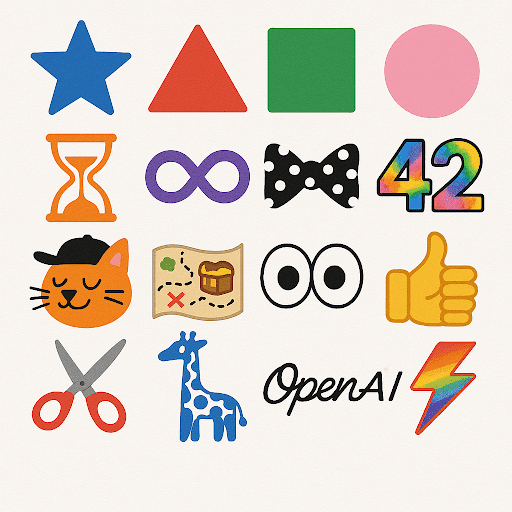
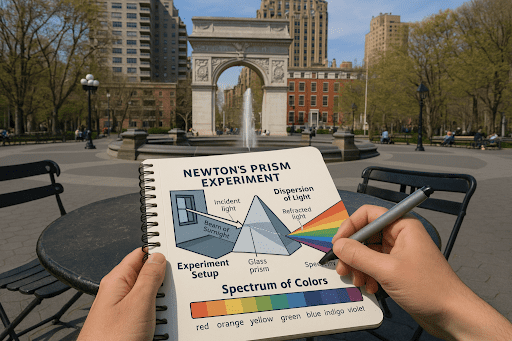
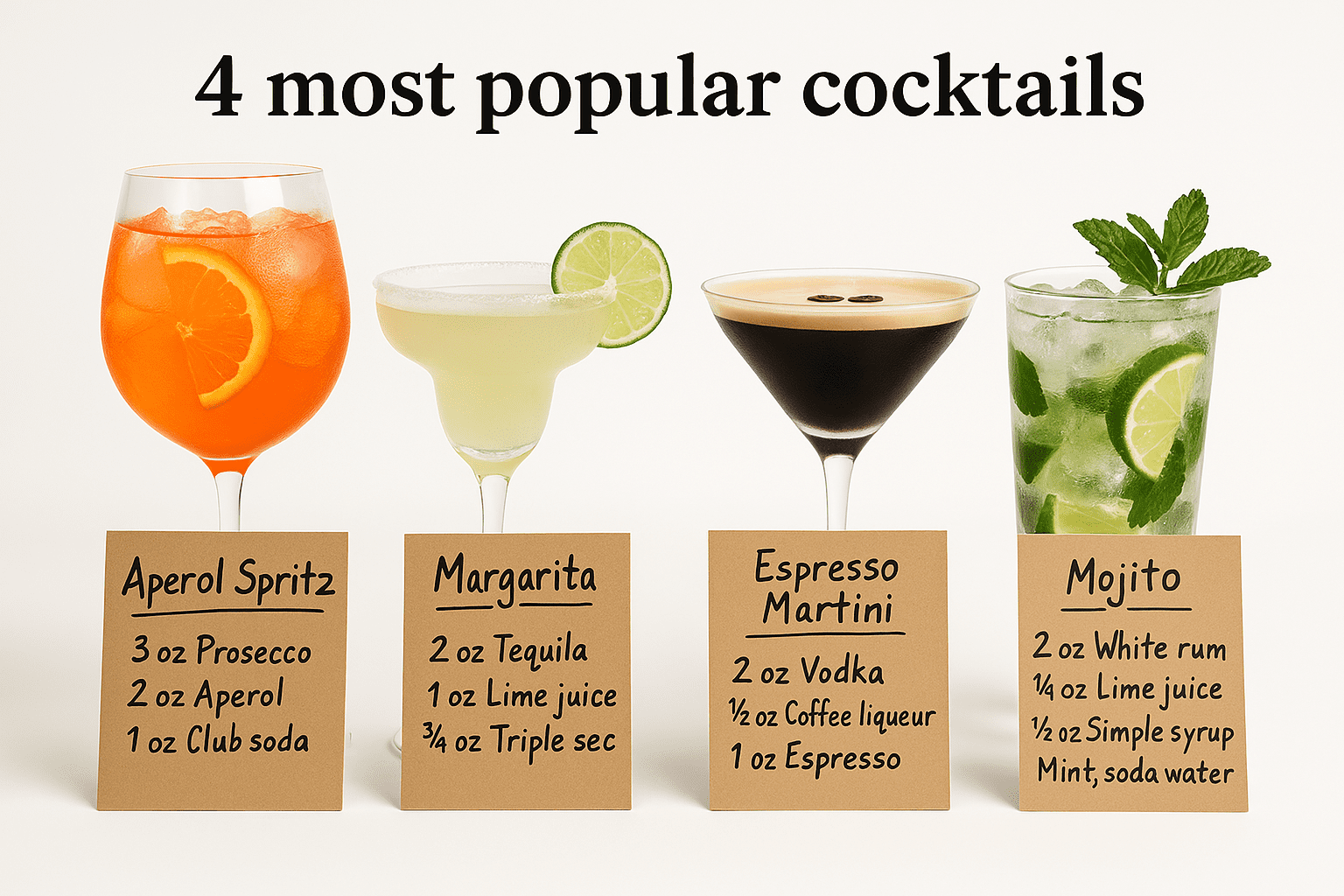
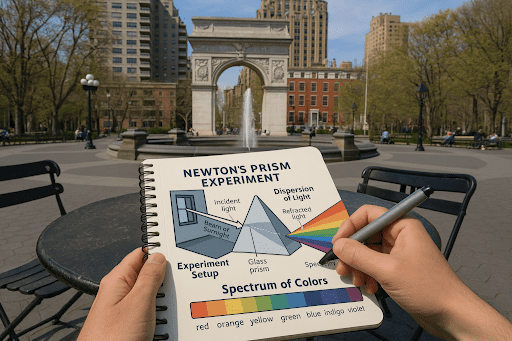
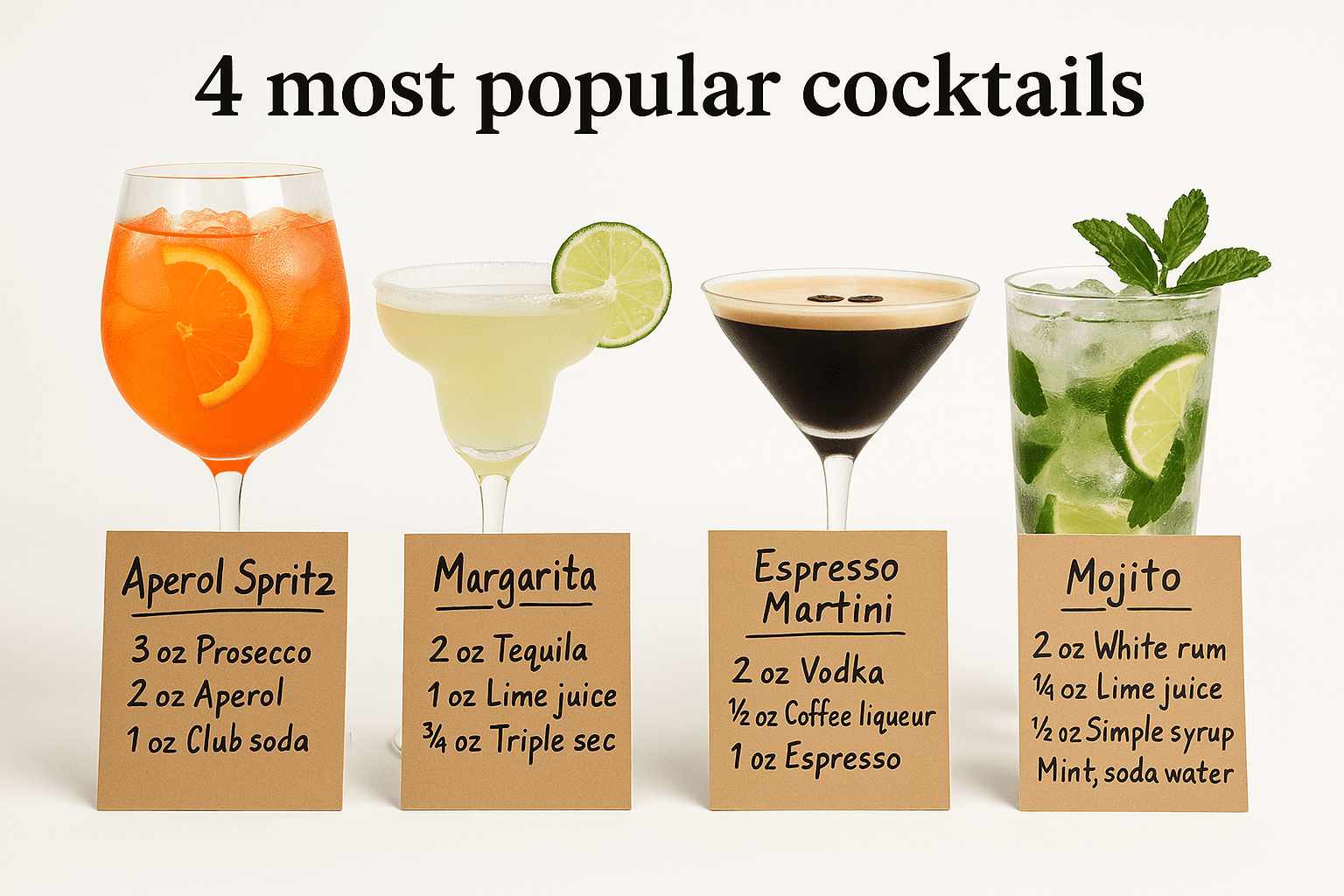
Example images from OpenAI show progress here. The model is able to generate 12 discrete graphics within a single image—like a cat emoji or a lightning bolt—and place them in proper order. Another shows four cocktails accompanied by recipe cards with accurate, legible text. More images show comic strips with text bubbles, mock advertisements, and instructional diagrams. The model also allows you to upload images to be modified, and it will be available in the video generator Sora as well as in GPT-4o. 

OPENAI

It’s “a new tool for communication,” says Gabe Goh, the lead designer on the generator at OpenAI. Kenji Hata, a researcher at OpenAI who also worked on the tool, puts it a different way: “I think the whole idea is that we’re going away from, like, beautiful art.” It can still do that, he clarifies, but it will do more useful things too. “You can actually make images work for you,” he says, “and not just just look at them.”

It’s a clear sign that OpenAI is positioning the tool to be used more by creative professionals: think graphic designers, ad agencies, social media managers, or illustrators. But in entering this domain, OpenAI has two paths, both difficult. 

One, it can target the skilled professionals who have long used programs like Adobe Photoshop, which is also investing heavily in AI tools that can fill images with generative AI. 

“Adobe really has a stranglehold on this market, and they’re moving fast enough that I don’t know how compelling it is for people to switch,” says David Raskino, the cofounder and chief technical officer of Irreverent Labs, which works on AI video generation. 

The second option is to target casual designers who have flocked to tools like Canva (which has also been investing in AI). This is an audience that may not have ever needed technically demanding software like Photoshop but would use more casual design tools to create visuals. To succeed here, OpenAI would have to lure people away from platforms built for design in hopes that the speed and quality of its own image generator would make the switch worth it (at least for part of the design process). 

It’s also possible the tool will simply be used as many image generators are now: to create quick visuals that are “good enough” to accompany social media posts. But with OpenAI planning massive investments, including participation in the $500 billion Stargate project to build new data centers at unprecedented scale, it’s hard to imagine that the image generator won’t play some ambitious moneymaking role. 

Regardless, the fact that OpenAI’s new image generator has pushed through notable technical hurdles has raised the bar for other AI companies. Clearing those hurdles likely required lots of very specific data, Raskino says, like millions of images in which text is properly displayed at lots of different angles and orientations. Now competing image generators will have to match those achievements to keep up.

“The pace of innovation should increase here,” Raskino says.

OpenAI’s new image generator aims to be practical enough for designers and advertisers

OpenAI has released a new image generator that’s designed less for typical surrealist AI art and more for highly controllable and practical creation of visuals—a sign that OpenAI thinks its tools are ready for use in fields like advertising and graphic design. 

The image generator, which is now part of the company’s GPT-4o model, was promised by OpenAI last May but wasn’t released. Requests for generated images on ChatGPT were filled by an older image generator called DALL-E. OpenAI has been tweaking the new model since then and will now release it over the coming weeks to all tiers of users starting today, replacing the older one. 

The new model makes progress on technical issues that have plagued AI image generators for years. While most have been great at creating fantastical images or realistic deepfakes, they’ve been terrible at something called binding, which refers to the ability to identify certain objects correctly and put them in their proper place (like a sign that says “hot dogs” properly placed above a food cart, not somewhere else in the image). 

It was only a few years ago that models started to succeed at things like “Put the red cube on top of the blue cube,” a feature that is essential for any creative professional use of AI. Generators also struggle with text generation, typically creating distorted jumbles of letter shapes that look more like captchas than readable text.

OPENAI

Example images from OpenAI show progress here. The model is able to generate 12 discrete graphics within a single image—like a cat emoji or a lightning bolt—and place them in proper order. Another shows four cocktails accompanied by recipe cards with accurate, legible text. More images show comic strips with text bubbles, mock advertisements, and instructional diagrams. The model also allows you to upload images to be modified, and it will be available in the video generator Sora as well as in GPT-4o. 

OPENAI

It’s “a new tool for communication,” says Gabe Goh, the lead designer on the generator at OpenAI. Kenji Hata, a researcher at OpenAI who also worked on the tool, puts it a different way: “I think the whole idea is that we’re going away from, like, beautiful art.” It can still do that, he clarifies, but it will do more useful things too. “You can actually make images work for you,” he says, “and not just just look at them.”

It’s a clear sign that OpenAI is positioning the tool to be used more by creative professionals: think graphic designers, ad agencies, social media managers, or illustrators. But in entering this domain, OpenAI has two paths, both difficult. 

One, it can target the skilled professionals who have long used programs like Adobe Photoshop, which is also investing heavily in AI tools that can fill images with generative AI. 

“Adobe really has a stranglehold on this market, and they’re moving fast enough that I don’t know how compelling it is for people to switch,” says David Raskino, the cofounder and chief technical officer of Irreverent Labs, which works on AI video generation. 

The second option is to target casual designers who have flocked to tools like Canva (which has also been investing in AI). This is an audience that may not have ever needed technically demanding software like Photoshop but would use more casual design tools to create visuals. To succeed here, OpenAI would have to lure people away from platforms built for design in hopes that the speed and quality of its own image generator would make the switch worth it (at least for part of the design process). 

It’s also possible the tool will simply be used as many image generators are now: to create quick visuals that are “good enough” to accompany social media posts. But with OpenAI planning massive investments, including participation in the $500 billion Stargate project to build new data centers at unprecedented scale, it’s hard to imagine that the image generator won’t play some ambitious moneymaking role. 

Regardless, the fact that OpenAI’s new image generator has pushed through notable technical hurdles has raised the bar for other AI companies. Clearing those hurdles likely required lots of very specific data, Raskino says, like millions of images in which text is properly displayed at lots of different angles and orientations. Now competing image generators will have to match those achievements to keep up.

“The pace of innovation should increase here,” Raskino says.

The Problem with Optimizing for GenAI

Optimizing for visibility in generative AI platforms seems easy enough. Enter a sitemap URL into Bing Webmaster Tools and Search Console, and, voilà, Microsoft Copilot, Google Gemini, and even ChatGPT access and reference the content.

But Clint Butler reminds us it’s not that simple. He says the problem is knowing which platform to optimize, as the tactics differ. And rarely do those platforms mention the source, much less link to it. Google, incredibly, uses one source to power AI Overviews but links to others in the citations.

Clint is a decorated, 20-year military veteran who now runs Digtalteer, a prominent search-engine-optimization agency. I spoke with him last month on the state of AI search, ecommerce optimization tactics, schema markup, and more.

Our entire audio dialog is embedded below. The transcript is edited for clarity and length.

Eric Schwartzman: What’s working now for search engine optimization?

Clint Butler: The elephant in the room is artificial intelligence, large language models, and the types of content you can make with them — text, video, audio — and how business owners can leverage that within their marketing, including search.

You and I are old school. We’ve written content by hand. Now we can put our knowledge into the models and get a nice content base. It doesn’t take us as long to push out articles because we can edit, review, and publish them more efficiently.

Schwartzman: Is it more about using AI to generate content, or should we optimize our existing content to appear in LLMs such as ChatGPT, Claude, or Gemini?

Butler: The problem with that is knowing which model to optimize. If you’re going for the Microsoft version, admission is simple. Add your stuff to Bing Webmaster Tools, and your site is in Copilot.

As far as I can tell, Google uses its top-ranking organic pages to generate AI Overviews. But it then links to other pages for citations!

It’s worth asking whether achieving a top organic ranking is worth it. Google should fix that citation practice.

Schwartzman: As for LLMs, we’ve got OpenAI, Gemini from Google, and Llama from Facebook. Presumably content would enter all of the training sets if it hit LinkedIn, Bing Webmaster Tools, and the web for Google, as well as Facebook and X.

Butler: That’s another misnomer. Let’s say you have an ecommerce site selling scented candles. You publish a lot of content about scented candles.

Just because the AI bots crawl you doesn’t mean you will be in the data sets or properly cited. Gemini is the most prominent AI to get in front of people because it powers AI Overviews.

And, again, just because Google uses your content doesn’t mean you get a link. The rules vary depending on the LLM. Bing and Copilot are a bit better at citing the source. You would more likely get a click to your scented candles out of Copilot than Google’s Gemini.

Schwartzman: Are you saying SEO becomes less important? Should merchants look at other channels for traffic?

Butler: The SEO priority for ecommerce merchants is Google Merchant Center. That’s what Google uses to populate many search snippets and product carousels where AI Overviews typically don’t appear.

Ecommerce merchants trying to generate traffic and awareness through informational marketing may have a problem, although the latest data that I’ve seen from AccuRanker and Sistrix suggests it’s not insurmountable if you’re in the top three listings. The click-through rate for those placements is only down from 26% to 24% with AI Overviews.

So long as you’re in the top three, you’re okay.

Schwartzman: You work with ecommerce clients. What are their common SEO mistakes?

Butler: It depends on the platform, but product names and category optimization are the two big ones. Say you have a scented Halloween candle and call it “Eric’s Freaky Friday Halloween Candle” versus simply “Jasmine Candle.”

People search for jasmine-scented candles but not for your fancy name. Use that fancy name in your product description but not the name.

Schwartzman: Is there a balance? Say I’m searching “jasmine candle,” and the SERP choices are “Jasmine Candle” and “Jasmine Candle: Eric’s Freaky Friday Jasmine Candle.” I’m likely going with the one that isn’t so vanilla.

Butler: That’s true. But the problem is that Google will likely truncate after “Jasmine Candle.” Searchers won’t see the “Freaky Friday” part. Experiment instead with inserting sizes or maybe even colors.

Schwartzman: What is a healthy click-through rate for a query such as “scented candles”?

Butler: Search Console suggests 2% to 5% is good, but keep in mind where that data comes from. It’s not 100% accurate. In my experience, take what you see in Search Console with a grain of salt. If you want 100% accurate data, run a Google Ads campaign.

Search Console is useful for basic decisions, however.

Schwartzman: You’re an expert on Schema.org structured data. You offer a course on how to write schema. You’ve even ranked blank pages just with schema. But it’s not practical for ecommerce merchants with large catalogs to write advanced schema for each item. What should they do?

Butler: Much of the advanced product variant data on Google search results come from Merchant Feed, not from schema inserted by the seller. So the first step for merchants is setting up Google Merchant Feed.

Beyond that, merchants can use schema selectively for rich snippets. Say a seller has 100 products, and 10 generate most of the revenue. Implement a nice product schema on just those 10.

There are helpful tools, too. Shopify users can leverage its Google & YouTube tool. Fill in the fields — pricing, shipping, categories, imagery — and the tool will populate Google Merchant Feed, which, again, drives SERP carousels.

Schwartzman: How can readers get in touch?

Butler: My agency is Digitalteer.com. I’m on LinkedIn and X.

OpenAI Rolls Out GPT-4o Image Creation To Everyone via @sejournal, @MattGSouthern

OpenAI has rolled out a new image generation system directly integrated with GPT-4o. This system allows the AI to access its knowledge base and conversation context when creating images.

This integration is said to enable more contextually relevant and accurate visual outputs.

OpenAI’s announcement reads:

“GPT‑4o image generation excels at accurately rendering text, precisely following prompts, and leveraging 4o’s inherent knowledge base and chat context—including transforming uploaded images or using them as visual inspiration. These capabilities make it easier to create exactly the image you envision, helping you communicate more effectively through visuals and advancing image generation into a practical tool with precision and power.”

Here’s everything else you need to know.

Technical Capabilities

OpenAI highlights the following capabilities of its new image generation system:

  1. It accurately renders text within images.
  2. It allows users to refine images through conversation while keeping a consistent style.
  3. It supports complex prompts with up to 20 different objects.
  4. It can generate images based on uploaded references.
  5. It creates visuals using information from GPT-4o’s training data.

OpenAI states in its announcement:

“Because image generation is now native to GPT‑4o, you can refine images through natural conversation. GPT‑4o can build upon images and text in chat context, ensuring consistency throughout. For example, if you’re designing a video game character, the character’s appearance remains coherent across multiple iterations as you refine and experiment.”

Examples

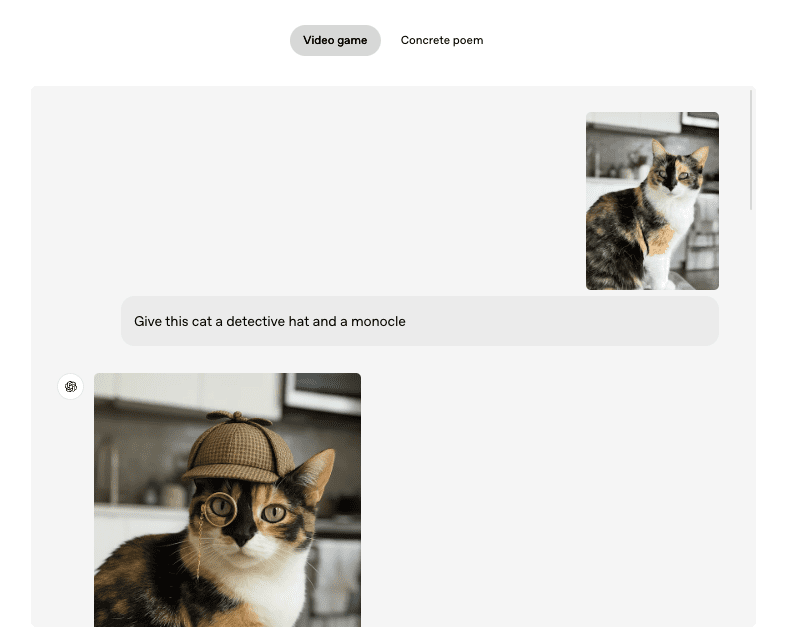
To demonstrate character consistency, here’s an example showing a cat and then that same cat with a hat and monocle.

Screenshot from: openai.com/index/introducing-4o-image-generation/, March 2025.

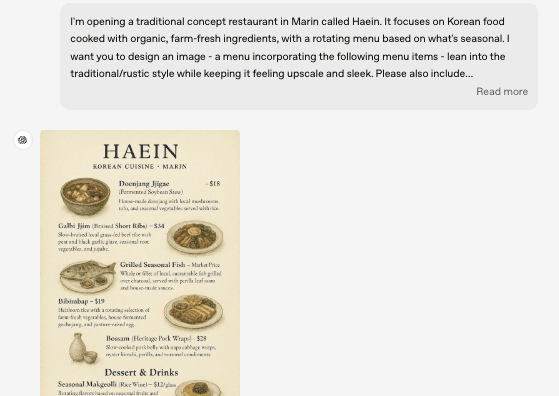
Here’s a more practical example for marketers, demonstrating text generation: a full restaurant menu generated with a detailed prompt.

Screenshot from: openai.com/index/introducing-4o-image-generation/, March 2025.

There are dozens more examples in OpenAI’s announcement post, many of which contain several prompts and follow-ups.

Limitations

OpenAI admits:

“Our model isn’t perfect. We’re aware of multiple limitations at the moment which we will work to address through model improvements after the initial launch.”

The company notes the following limitations of its new image generation system:

  • Cropping: GPT-4o sometimes crops long images, like posters, too closely at the bottom.
  • Hallucinations: This model can create false information, especially with vague prompts.
  • High Blending Problems: It struggles to accurately depict more than 10 to 20 concepts at once, like a complete periodic table.
  • Multilingual Text: The model can have issues showing non-Latin characters, leading to errors.
  • Editing: Requests to edit specific image parts may change other areas or create new mistakes. It also struggles to keep faces consistent in uploaded images.
  • Information Density: The model has difficulty showing detailed information at small sizes.

Search Implications

This update changes AI image generation from mainly decorative uses to more practical functions in business and communication.

Websites can use AI-generated images but with important considerations.

Google’s guidelines do not prohibit AI-generated visuals, focusing instead on whether content provides value regardless of how it’s produced.

Following these best practices is recommended:

  • Using C2PA metadata (which GPT-4o adds automatically) to maintain transparency
  • Adding proper alt text for accessibility and indexing
  • Ensuring images serve user intent rather than just filling space
  • Creating unique visuals rather than generic AI templates

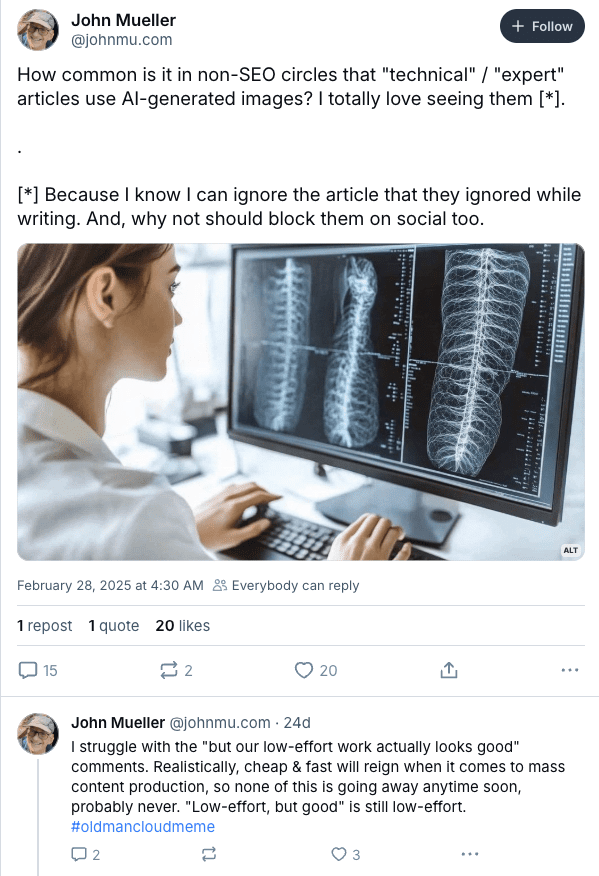
Google Search Advocate John Mueller has expressed a negative opinion regarding AI-generated images. While his personal preferences don’t influence Google’s algorithms, they may indicate how others feel about AI images.

Screenshot from: bsky.app/profile/johnmu.com, March 2025.

Note that Google is implementing measures to label AI-generated images in search results.

Availability

The feature is now available to ChatGPT users with Plus, Pro, Team, or Free plans. Access for Enterprise and Edu users will be available soon.

Developers can expect API access in the coming weeks. Because of higher processing needs, image generation takes about one minute on average.


Featured Image: PatrickAssale/Shutterstock