Google Updates Product Markup To Support Member Pricing & Sales via @sejournal, @MattGSouthern

Google updates structured data guidelines, enabling merchants to showcase sale, member, and strikethrough pricing in search results.

  • Google added support for new structured data properties to show different price types.
  • Merchants can now display loyalty program pricing tiers in their product markup.
  • These changes align Google Search with existing Merchant Center capabilities.
seo enhancements
Choosing the right platform for your business website

Every business needs an online presence. Building a business website could be one of your most important decisions. But after that decision comes another question: Which platform should you choose to build your business site on? This depends on what kind of website you need, your resources, and your expertise.

Table of contents

Define your website’s purpose

Before proceeding, begin by describing your website’s goal. What does your website need to do? Do you need an online store, a simple way to present your company, a blog, or a portfolio? Your main goal should influence the rest of your choices and help you find a platform with the features you need.

If you run an ecommerce site, you’ll need great shopping cart functionality, secure payment options, and features to manage your inventory. If you focus on blogging or need a portfolio site, you’ll probably want good content management options, a flexible design, and ease of use. Once you understand your needs, you can narrow down the list of platforms.

Thinking deeply about the purpose of your website can also help you plan for the future. If you think you’ll expand the site with more products or a wider range of services, choosing a platform that can scale and evolve with your business might be a good idea. 

Do you have technical expertise and resources?

One of the most important questions to answer when deciding on a platform for your business website is whether you have technical knowledge. Some of the website builders available right now have an easy-to-use interface that requires little to no coding skills. Some even use AI to help you build a website from scratch by simply describing it. Other platforms and CMSs give you direct influence on the appearance and workings of your website, which needs technical expertise. 

If you’re not technical or don’t have a technical team backing you, looking at online platforms with drag-and-drop editors and pre-designed templates might make sense. With these, you can have a professional-looking website without writing code or understanding backend systems. Brands like Wix, Duda, Web.com, and Squarespace are some options that function like this.

However, if you have the technical resources or plan to hire a developer, a content management system like WordPress gives you more flexibility and customization options. WordPress is a popular option — it powers over 40% of websites. It’s known for its extensive plugin ecosystem — with powerful tools such as Yoast SEO — and a vibrant community. 

Remember, though, that choosing a CMS that requires more technical input also requires maintenance and occasional troubleshooting, which could increase costs in the future. 

There are a couple of things you need to consider when building a website for a business. First, you must understand your skill level. Second, you’ll have to find out if you have resources and support. This helps you decide whether a simple site builder or something more open-ended is the better investment for you.

Types of website platforms

Building a proper website for a business means exploring various options. Experiment and find out which online platform matches your requirements and needs. Just remember that there is not a single “best” platform that works well for all businesses. Every tool has its strengths and weaknesses. 

Consider the  popular options

There are many tools to help you build company websites, but you do not need to try every one. You can probably make do with the most popular options, as these have proven their worth.

WordPress

WordPress is the most popular CMS and offers an amazing selection of themes and plugins. You can customize it in any way you think, giving you great control over the platform. WordPress is a great option if you want to create a website for a business that can adapt over time. The CMS performs well in the search results and can grow with your content needs. WordPress is great for:

  • Best for bloggers and content creators: Ideal for content-rich sites with robust publishing features.
  • Best for customization: Offers extensive themes and plugin support to tailor every aspect of your site.
  • Best for SEO and flexibility: It is highly adaptable for businesses and developers aiming to optimize and expand their online presence.
  • Best for ecommerce: Seamlessly integrate WooCommerce for powerful online store features and e-commerce capabilities.

Read more: 10 reasons why you should use WordPress

Shopify

Shopify is a great all-in-one ecommerce option for companies selling products online. It handles everything from hosting to security and from payments to integration. Shopify makes it easy to build an online store. It has lots of features to help you scale your business. Shopify is good if you want a solid option to get started quickly.

  • Best for online retailers: Ecommerce-friendly, easily set up to manage and grow an online store.
  • Best for secure transactions: Integrated payment gateways and reliable security features ensure peace of mind.
  • Easiest to scale: Intuitive interface helps startups and growing businesses manage stores efficiently.

Read more: Picking an ecommerce platform: WooCommerce or Shopify? 

Wix and Squarespace

These platforms are for users who want simplicity. They come with built-in templates and handy editors. Wix and Squarespace are good options for small businesses, creatives, and professionals who want to build a nice-looking portfolio or simple business website. These are the best options for users who want ease of use over extensive flexibility and customization options. 

Other options

Of the other platforms, Adobe Commerce (formerly Magento), Drupal, or Webflow may also be worth looking at if you have specific needs. Adobe Commerce is useful if you need a large-scale ecommerce environment. Drupal is great for handling larger sites with complex data needs (although the project recently launched a simplified option called Drupal CMS). Webflow is a middle ground with design flexibility and editing capabilities.

While we list several of the best platform options available, you should base your choice on your needs, requirements, security levels, and desired functionality. 

Scalability, customization, and security

Choosing the right platform to build your business site isn’t just about here and now. You should also think about scaling your sites once your business grows. 

Scalability

When selecting a platform, consider whether it can handle increased traffic and additional content you might need. Can you expand your capabilities as your business grows? For example, if you plan to add more products or expand your feature set, you need a website solution that scales without much work. Look for features, services, and plans that support growth.

Customization

Your business is unique, and so should your site reflect your unique brand. The platform you pick should give you plenty of options to customize your business site. It shouldn’t just let you pick from a selection of templates but also offer the options to change design elements, add custom code, and integrate tools you need to build your business. Platforms that offer much flexibility allow you to do what you want. This helps your site feel fresh and aligned with your brand. 

Security

Security is essential for a business website. As we hear more stories about data breaches and online threats, you should choose a platform that values security. You should consider SSL certificates, server security, software updates, and secure payment options for ecommerce sites. A reliable site builder should have proper security protocols to protect customer data. 

Managed hosting services or SaaS platforms like Shopify often handle WordPress security automatically for you, but you should double-check it. If you go the self-hosted route, you should make sure that you have the resources available to manage the security of your business site. 

Budget and cost considerations

For many, cost is the most important factor when choosing a website platform for a business. However, it’s important to consider both the short-term and long-term investments. Make sure that your budget evolves as your site does. 

Upfront and ongoing fees

Site builder platforms all work with subscriptions, but sometimes, one-time costs are involved for themes, plugins, or other features. For example:

  • Subscription fees: Site builders such as Squarespace and Wix charge a monthly fee for hosting the site, accessing features, and support.
  • Hosting and domain costs: If you choose a CMS like WordPress or Drupal, you must budget for web hosting, domain registration, and premium themes and plugins. Investing in a more premium hosting plan often leads to better performance. Of course, you can also have a custom theme built by an agency or solo developer, which would also cost money.
  • Transaction fees: Online stores need payment systems, and some platforms charge money for handling transactions. These costs can add up if you move a lot of volume. 

Value over time

Picking the cheapest option might sound sensible, but you should consider the costs over a longer time. A highly scalable platform with a long list of features and a good support team might cost more initially but could save time and money in the long run. Look at the full package and see which platform offers the best mix of price and functionality. 

Testing and trials

Be sure to try out the different options. Many website builders offer free trials or demo versions. Use these to explore the capabilities before you sign up for a specific plan. Testing the interface and features gives you a better understanding of whether this product meets your wishes. This is a good way to avoid making the wrong decision, which could lead to extra costs or limited growth.

Additional considerations and support

After you’ve crossed off the technical and monetary questions from your list, a few questions still need to be answered. 

Customer support

Your website is central to your business, so keeping it up and running is essential. For this, you need a platform with good support. Access to good customer service is a huge help if you run into issues or you’re trying to implement new things. Look for platforms with various ways of contacting support (email, phone, chat) and ample documentation available. Platforms with proper support can reduce downtime and help you on your way quickly.

Integrations and marketing tools

Websites are the centerpiece of a business strategy, and they should not live alone. Find out if your preferred platform integrates with business tools like CRM systems, email marketing services, and social media platforms. Many site builders now include built-in SEO tools to rank your site in search engines. And if they don’t, Yoast SEO has plugins for WordPress, WooCommerce, and Shopify. Choose something that matches your existing digital strategy.

Analytics and reporting

What would you do without knowing how your site is performing? Data is essential to make informed decisions. Analytic tools show how visitors behave on the site and which pages perform well. Some platforms come with built-in analytics tools, which help see how your site is doing.

Deciding on the business site platform

To recap, you can choose how to build your business website by answering these questions: 

  1. What is the goal of your website?
  2. What technical expertise and resources do you have?
  3. Which site builders have the features and scalability you need?
  4. Do the cost structure and support options fit into your budget?
  5. Can the platform integrate with your marketing and analytics tools?

Take the time to answer these questions. Then, read honest reviews of users of the various platforms and try out the demos — very important. It’s all about getting your hands dirty in this process. You need to determine which platform best fits your business while giving enough flexibility to scale when your business grows. 

We’re saying it again: there’s no one-size-fits-all solution. You should pick the platform that works today and will still work when your business has grown. It doesn’t matter if you pick an easy-to-use website builder or a highly customizable CMS, as long as it makes sense for you and your business — now and in the future. 

Now, choose a platform for your business website

It costs a lot of time and money to build a website for a business. You need to define your goals, evaluate the various platforms, and determine how you want your business to grow. Every decision you make affects how you support your business objectives. When you look at your technical know-how, budget, scalability needs, and support options, you should be able to decide which site builder to choose if you want to succeed.

The most important thing is to sign up for the free trials and demos. Don’t hesitate to contact experts or customer service for tailored advice. You should build a site that is ready for today and prepared for tomorrow. Choosing the right platform for your business helps you set up for success.

Key Elements Of Technical SEO For Large Companies via @sejournal, @TaylorDanRW

Working with large organizations to improve their technical SEO is, in my opinion, the best and most enjoyable time to practice technical skills.

More often than not, you’re faced with complex systems and infrastructures, a host of legacy issues, and different teams responsible for different sections of the website.

This means you need to work with a number of teams and prove business cases, including “the why,” to multiple stakeholders to enact change.

For this, you need strong technical SEO knowledge, but you also need the ability to make multiple people (and teams) care about why something is an issue, and the reasons why they should be invested in fixing it.

Juggling complex technical issues and maintaining communications with multiple stakeholders, ranging from C-level through to brand, product, and engineering teams (in addition to your direct contacts), can be an overwhelming experience.

But it also provides great experience and allows you to develop key technical SEO skills outside of checklists and best practices. These are valuable experiences you can then apply to the run-of-the-mill technical projects.

Issue Communication At Scale

Enterprise brands have large teams, and you’ll need to coordinate and work with multiple teams to get things done.

Some companies have these teams operating as one beat, with known overlaps and free-flowing communications.

Others operate teams in silos, with the website (or websites) and/or regions being carved up into different teams. This can make it more challenging to show results in the more “traditional” way and can make getting buy-in for website-wide technical issues to be resolved more challenging.

Each team within the business has its own set of priorities – and often its own key performance indicators (KPIs).

While the marketing teams may be broken up, engineering teams are usually a single resource in the business, so you’re competing against the other marketing teams, brands, and products.

This means you not only need to make sure your main point of contact cares about the issue but also communicate to the wider teams how resolving the issue is also in their best interests.

The way to do this is through effective, multi-department reporting.

This doesn’t mean producing one big report for all departments to pick and choose what they look at, but using the data available to you to create multiple reports that are simple, clean, and digestible that communicate to each stakeholder group the metrics that matter to them and influence their ability to be successful.

These can be as simple as Looker Studio reports or, if you’re API savvy, your own reporting dashboards.

Standard Operating Procedures (SOPs)

SOPs allow you to create a framework with the client to set benchmarks in consistency and scalability and document key changes, decisions, and implementations made.

Creating a knowledge center to document key changes is common practice, even outside of an enterprise, but developing SOPs that are reviewed and revised regularly goes one step further.

This also helps the client in onboarding new team members to bring them up to speed and smooth that process. It also provides frameworks for other client teams, reducing the risk or potential of them not adhering to an agreed best practice for the brand or experimenting with something they’ve read on a random blog or something that has been suggested by a large language model (LLM).

You can develop SOPs for all manner of scenarios, but from experience, there are three common SOPs that cover a range of basics and mitigate potential “SEO risk” from a technical SEO perspective:

  • Internal linking.
  • Image optimization.
  • URL structures.

Internal Linking

Internal links are crucial for SEO. Every content piece, except for landing pages, should include internal links where relevant. A simple SOP for this could be:

  • Avoid using non-descriptive anchor text, such as “here” or “this article,” and provide some context as to the page being linked to.
  • Avoid internal links without context, such as automating the first or second instance of a word or phrase on each page to point to one specific page.
  • Use Ahrefs’ Internal Link Opportunities tool or Google search (site:[yourdomain.com] “keyword”) to find linking opportunities.

Image Optimization

Many overlook image SEO, but optimizing images can improve page load speeds – and, if important to you, improve your visibility within image search. A good SOP should include:

  • Using descriptive file names, and not keyword stuffing them.
  • Writing alt text that accurately describes the image for accessibility, and not including sales messaging within them.
  • Choosing the right file format and compressing images to improve load speed.

URL Structures

Ensure URLs are optimized for search engines and users by making them clear, concise, and keyword-relevant. The SOP should cover:

  • Removing unnecessary stop words, punctuation, and white spaces (20%).
  • Using hyphens instead of underscores.
  • Not keyword stuffing the URLs.
  • Using parameters that don’t override the source or trigger a new session within Google Analytics 4.

Technical Auditing Nuances

One of the more complex elements of performing a technical audit on any enterprise website with a large number of URLs is crawling.

There a number of ways you can tackle enterprise website crawling, but two common nuances I come across are the need to perform routine sample crawls, or tackling the crawl of a multi-stack domain.

Sample Crawling

Sample crawling is an efficient way to diagnose large-scale SEO issues without the overhead of a full crawl.

By using strategic sampling methods, prioritizing key sections, and leveraging log data, you can gain actionable insights while preserving crawl efficiency.

Your sample should be large enough to reflect the site’s structure but small enough to be efficient.

I typically work to the following guidelines for the size of the website or the size of the subdomain or subfolder.

 Size  Number of URLs Sample Size
 Small  <10>

 Crawl all or 90%+ of the URLs.
 Medium  10,000 to 500,000  10% to 25%, depending on which end of the spectrum your number of URLs falls.
 Large  >500,000 A 1-5% sample, focusing on key sections.

You also want to choose your samples strategically, especially when your number of URLs enters hundreds of thousands or millions. There are four main types of sampling:

  • Random Sampling: Select URLs randomly to get an unbiased overview of site health.
  • Stratified Sampling: Divide the site into key sections (e.g., product pages, blog, category pages) and sample from each to ensure balanced insights.
  • Priority Sampling: Focus on high-value pages such as top-converting URLs, high-traffic sections, and newly published content.
  • Structural Sampling: Crawl the site based on the internal linking hierarchy, starting with the homepage and main category pages.

Crawling Multi-Stack Websites

Crawling websites built on multiple stacks requires a strategy that accounts for different rendering methods, URL structures, and potential roadblocks like JavaScript execution and authentication.

This also means you can’t just crawl the website in its entirety and make broad, sweeping recommendations for the “whole website.”

The following is a very top-line checklist that you should follow, and it covers a lot of the key areas and “bases” that you may encounter:

  1. Identify and map out which parts of the site are server-rendered vs. client-rendered.
  2. Determine which areas require authentication, such as user areas.
  3. If sections require login (e.g., product app), use session cookies or token-based authentication in Playwright/Puppeteer.
  4. Set crawl delays if rate-limiting exists.
  5. Check for lazy-loaded content (scrolling or clicking).
  6. Check if public API endpoints offer easier data extraction.

A good example of this is a website I worked on for a number of years. It had a complex stack that required different crawling methods to crawl and identify issues at a meaningful scale.

 Stack Component Approach 
Nuxt If using SSR or SSG, standard crawling works. If using client-side hydration, enable JavaScript rendering.
Ghost Typically SSR, so a normal crawl should work. If using its API, consider pulling structured data for better insights.
 Angular Needs JavaScript rendering. Tools like Puppeteer or Playwright help fetch content dynamically. Handle infinite scrolling or lazy loading carefully.
 Zendesk Zendesk often has bot restrictions. Check for API access, or RSS feeds for help center articles.

The above are extreme approaches to crawling. If your crawling tool allows you to render webpages and avoid using tools like Puppeteer to fetch content, you should do so.

Final Thought

Working on technical SEO for large organizations presents unique challenges, but it also offers some of the most rewarding experiences and learning opportunities that you can’t find elsewhere – and not all SEO professionals are fortunate enough to experience.

Making a lot of the “day-to-day” more manageable – and gaining buy-in from as many client stakeholders as possible – can lead to a better client-agency relationship, and lay the foundations for strong SEO campaigns.

More Resources:


Featured Image: Sammby/Shutterstock

DeepSeek And Its Impact On The Generative AI Global Race via @sejournal, @AlliBerry3

Since launching to the public on Jan. 20, 2025, Chinese startup DeepSeek’s open-source AI-powered chatbot has taken the tech world by storm.

As the top free app by downloads in the U.S. Apple app store since Jan. 26 – with 16 million app downloads in its first 18 days (ChatGPT had 9 million in the same timeframe) – DeepSeek’s performance and accompanying search feature is at least on par with OpenAI’s ChatGPT for a fraction of the cost.

Its launch led U.S.-based AI technology company, Nvidia, to the greatest drop in market value for a U.S. company in U.S. stock market history. That’s quite an entrance!

U.S. tech analysts and investors seem to all fear that the U.S. is falling behind in the generative AI global race.

This may be warranted considering how quickly and cost-effectively DeepSeek was able to get R1 developed and out the door.

DeepSeek utilizes reinforcement learning, meaning the model learns complex reasoning behaviors through reinforcement without supervised fine-tuning, which allows it to save significant computational resources.

But, is DeepSeek really going to emerge as the leader in AI? And what are the implications for this development for the future of search? Let’s dive in.

What Has Happened Since DeepSeek Launched?

While U.S. tech companies were humbled by the speed and claimed cost efficiency of this launch, DeepSeek’s arrival has not been without controversy.

A lot of questions lurk, ranging from suspected intellectual property violations to security, data privacy, Chinese censorship, and the true cost of its technology.

Legal Issues For Copyright And Data Protection

OpenAI and Microsoft are investigating whether DeepSeek used OpenAI’s API to integrate their AI models into DeepSeek’s own models.

OpenAI claims it has evidence of DeepSeek distilling the outputs of OpenAI to build a rival model, which is against OpenAI’s terms of service, but likely not against the law.

Distillation allows for the transfer of knowledge of a large pre-trained model into a smaller model, which enables the smaller model to achieve comparable performance to the large one while reducing costs.

This is more than a little ironic given the lawsuits against OpenAI for ignoring other site’s terms of service and using their copyrighted internet data to train its systems.

There are also questions about where user data is stored and how it is processed, given that DeepSeek is a Chinese-based startup.

For anyone handling customer information and payment details, integrating a tool like DeepSeek that stores data in a foreign jurisdiction could violate data protection laws and expose sensitive information to unauthorized access.

Given that DeepSeek has yet to provide its privacy policies, industry experts and security researchers advise using extreme caution with sensitive information in DeepSeek.

DeepSeek Security Breach

Wiz Research, a company specializing in cloud security, announced it was able to hack DeepSeek and expose security risks with relative ease on Jan. 29.

It found a publicly accessible database belonging to DeepSeek, which allowed it full control over database operations and access to user data and API keys.

Wiz alerted the DeepSeek team, and they took immediate action to secure the data. However, it is unclear who else accessed or downloaded the data before it was secured.

While it’s not uncommon for startups to move fast and make mistakes, this is a particularly large mistake and shows DeepSeek’s lack of focus on cybersecurity so far.

National Security Concerns Similar To TikTok

There are national security concerns about DeepSeek’s data collection policies reminiscent of fears about TikTok, which saw a similar rise in global prominence out of Chinese-based company ByteDance.

The U.S. government briefly banned TikTok in January 2025, which came out of concerns about how the company was collecting data about users. There were also fears that the Chinese government could use the platform to influence the public in the U.S.

A few incidents in the last several years that initiated that fear include TikTok employees utilizing location data from the app to track reporters to find a source of leaked information, and TikTok employees being reported to have plans to track specific U.S. citizens.

While TikTok is active in the U.S. right now, its future is unconfirmed.

For similar reasons to the TikTok concerns, a number of governments around the world, including Australia and Italy, are already working to ban DeepSeek from government systems and devices. The U.S. is also considering a ban on DeepSeek.

Chinese Censorship

Regardless of whether you run DeepSeek locally or in its app, DeepSeek’s censorship is present for queries deemed sensitive by the Chinese government, according to a Wired investigation.

However, because it is open source, there are ways of getting around the censorship, but it’s difficult.

Doing so would require running on your own servers using modified versions of the publicly available DeepSeek code, which means you’d need access to several highly advanced GPUs to run the most powerful version of R1.

Questions About Cost

Much has been written about the cost of building DeepSeek. Initial claims by DeepSeek were that it took under $6 million to build based on the rental price of Nvidia’s GPUs.

However, a report from SemiAnalysis, a semiconductor research and consulting firm, has since argued that DeepSeek’s hardware spend was higher than $500 million, along with additional R&D costs.

For context, OpenAI lost about $5 billion in 2024 and anticipates it will lose more than $11 billion in 2025. Even if DeepSeek did cost $500 million or more, it still cut costs compared to what leading competitors are spending.

So, how did they cut costs?

Before DeepSeek came along, the leading AI technologies were built on neural networks, which are mathematical systems that learn skills by analyzing huge amounts of data. This requires large amounts of computing power.

Specialized computer chips called graphics processing units (GPUs) are an effective way to do this kind of data analysis. This is how chipmaker Nvidia grew to prominence (and also had a huge fall in market value on the day DeepSeek launched).

GPUs cost around $40,000 and require considerable electricity, which is why leading AI technologies like OpenAI’s ChatGPT were so expensive to build.

Sending data between chips can also require more energy than running the chips themselves.

DeepSeek was able to reduce costs, most notably by using a method called “mixture of experts.”

Instead of creating one neural network that learned data patterns on the internet, they split the system into many neural networks and launched smaller “expert” systems paired with a “generalist” system, reducing the amount of data needed to travel between GPU chips.

The Implications Of Being Open Source

DeepSeek-R1 is as “open-source” as any LLM has been thus far, which means anyone can download, use, or modify its code.

Similar to Meta’s Llama, the code and technical explanations are shared, enabling developers and organizations to utilize the model for their own business needs, but the training data is not fully disclosed.

Many believe DeepSeek is a big step toward democratizing AI, allowing smaller companies and developers to build on DeepSeek-R1 and achieve greater AI feats faster.

This could lead to more innovation in places with more limited access to the tech needed to build AI solutions.

But, critics fear that open-source models can expose security vulnerabilities that could be exploited, which we’ve already seen in DeepSeek’s first weeks in the public.

DeepSeek And The Future of SEO

So, what does this all really mean for search professionals? The way I see it, DeepSeek is just the next splashy AI chatbot with search capabilities in the rapidly changing world of SEO.

It’s important to understand that while tools like DeepSeek and ChatGPT use advanced natural language processing (NLP) and machine learning, they still simply provide answers to real questions that real people ask.

Their responses heavily focus on semantic understanding, intent matching, and contextual analysis, but they ultimately serve the same core user need.

While we have years of experience testing optimization tactics on more established search engines like Google, we’re still at the beginning stages of understanding optimization for generative AI chatbots.

Final Thoughts

Whether DeepSeek will stick and grow in prominence remains to be seen.

Obviously, if other governments follow Australia, Italy, and potentially the U.S. to ban DeepSeek, that would limit its potential for growth.

And much as DeepSeek rose to prominence rapidly by providing a blueprint for others and significantly lowering costs, a new market-moving AI could always be just around the corner.

Regardless of what happens with DeepSeek, we are at the beginning of a very rapid period of innovation in AI technology.

As SEO professionals, we need to be prepared to test a surge of new platforms and reverse engineer how they arrive at their responses to user queries.

More Resources:


Featured Image: Phonlamai Photo/Shutterstock

Hackers Use Google Tag Manager to Steal Credit Card Numbers via @sejournal, @martinibuster

Hackers are actively exploiting a vulnerability to inject an obfuscated script into Magento-based eCommerce websites. The malware is loaded via Google Tag Manager, allowing them to steal credit card numbers when customers check out. A hidden PHP backdoor is used to keep the code on the site and steal user data.

The credit card skimmer was discovered by security researchers at Sucuri who advise that the malware was loaded from a database table, cms_block.content. The Google Tag Manager (GTM) script on a website looks normal because the malicious script is coded to evade detection.

Once the malware was active it would record credit card information from a Magento ecommerce checkout page and send it to an external server controlled by a hacker.

Sucuri security researchers also discovered a backdoor PHP file. PHP files are the ‘building blocks’ of many dynamic websites built on platforms like Magento, WordPress, Drupal, and Joomla. Thus, a malware PHP file, once injected, can operate within the content management system.

This is the PHP file that researchers identified:

./media/index.php.

According to the advisory published on the Sucuri website:

“At the time of writing this article, we found that at least 6 websites were currently infected with this particular Google Tag Manager ID, indicating that this threat is actively affecting multiple sites.

eurowebmonitortool[.]com is used in this malicious campaign and is currently blocklisted by 15 security vendors at VirusTotal.”

VirusTotal.com is a crowdsourced security service that provides free file scanning and acts as an aggregator of information.

Sucuri advises the following steps for cleaning an infected website:

  • “Remove any suspicious GTM tags. Log into GTM, identify, and delete any suspicious tags.
  • Perform a full website scan to detect any other malware or backdoors.
  • Remove any malicious scripts or backdoor files.
  • Ensure Magento and all extensions are up-to-date with security patches.
  • Regularly monitor site traffic and GTM for any unusual activity.”

Read the Sucuri advisory:

Google Tag Manager Skimmer Steals Credit Card Info From Magento Site

Featured Image by Shutterstock/sdx15

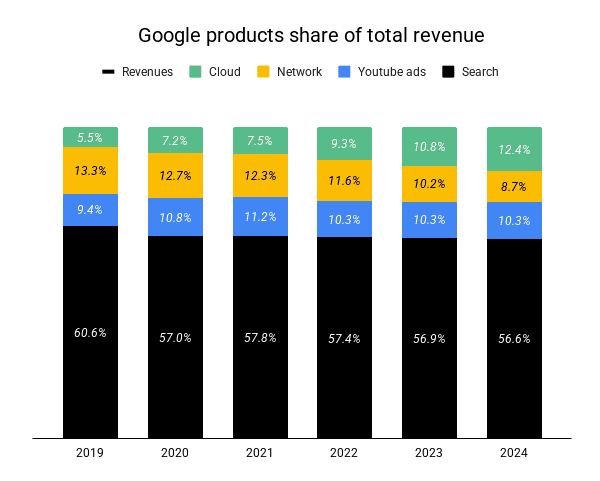
Why Google’s 4th Quarter Results Raise Questions for SEO & PPC via @sejournal, @martinibuster

Few professions can match a digital marketer’s perspective on what Google’s fourth-quarter results mean for SEO and online advertising. I asked six search marketers, each with over 20 years of experience in all areas of search for insights into what those results mean. What they shared indicates what SEO and advertising professionals should be paying attention to in 2025.

The six digital marketers who were separately interviewed all suggested that four general trends may be impacting Google search and advertising performance:

  1. Shifting User Behavior
  2. Changes To Google Search
  3. Google’s Not Immune To Competition
  4. Wider Economic & Market Conditions

Shifting User Behavior & Rising Competition

Although I interviewed each search marketer individually, they all agreed that user search habits were trending away from traditional search and migrating to AI and social platforms, indicating that Google is no longer immune to competitive pressure in both search and advertising.

Benu Aggarwal of Silicon Valley-based Milestone, Inc. (LinkedIn Profile) referenced the staggering investments in AI infrastructure as tangible proof of an ongoing shift in how people access information across consumer and business use cases.

“A lot of traffic is moving to LLMs such as ChatGPT, Perplexity (and Google’s Gemini). This is evidenced by Alphabet’s investments in AI, particularly in making compute inexpensive. They’re not alone, Meta, OpenAI, Nvidia, AWS, others are all investing in AI compute to support the surging demand.”

Michael Bonfils, of Digital International Group, (LinkedIn profile) shared that OpenAI was the leading disruptor to Google’s search platform, followed by a generational shift away from search toward visual social media platforms.

Michael said:

“I’ve been saying this since November 30, 2022 that this thing that OpenAI has just released has the potential to disrupt the intent of search users on Google, making it faster and more responsive with no ad disruptions and filtering out forum comments And the timing couldn’t be worse when you have an entire generation (Z/Alpha) who have moved to TikTok/IG for their search results.”

Chuck Price of Measurable SEO (LinkedIn profile) contributing additional nuance to the observation of user platform shift:

“Platform migration pressures play a role. Behavioral shifts toward visual/search hybrids (TikTok, Instagram) and answer-engine interfaces (Perplexity) suggest Google’s monopoly on search touchpoints is eroding, particularly among Gen Z and technical audiences.”

Duane Forrester, SVP, Search INDEXR.ai and formerly of Bing and Yext (LinkedIn profile) noted that the consumer journey is increasingly beginning somewhere other than Google Search:

“Search starts are down as consumers move to social platforms. Revenue is being impacted.

This is going to be our new normal in the search industry. With younger generations now aging and their habits being different, it’s natural to see them shift behavior from traditional search into new directions.

If you thought search engines were a forever thing, you were wrong. Reliance without diversification was always a recipe for disaster. This formula remains consistent. Change is also consistent and as people shift behavior, you better, too.”

Changes To Google Search

The fact that people are using other platforms for shopping ideas, inspiration and information gathering may be signs that Google’s search dominance is increasingly vulnerable to competition. That’s something that was unthinkable as recently as five years ago.

There were multiple changes to how search results are presented in Google Search, with the most notable being that AI Overviews and other search features reduced the need to click through to an answer. This trend to show answers and not links, often referred to as “zero-click” search results, is an ongoing trend that was previously limited to informational search queries.

The complaints from some SEOs about zero-click search results that initially greeted the introduction of Featured Snippets were arguably overstated. Informational searches that require one-dimensional answers (spelling, name of a person, etc.) don’t lead to meaningful traffic (for the website or the user). The traffic from Featured Snippets becomes very meaningful when people have a reason to dig deeper to learn more about a product, movie, a celebrity or a topic.

But Google AI Overviews (AIO) completely destroyed that useful tradeoff with the Internet ecosystem. The comprehensiveness of AIOs reduce the need to click to a website because they show the answer to the current question and enable users to view summaries to answers Google anticipated follow-up questions (read about Google’s Information Gain Patent).

While the complaints about zero-click search results for featured snippets were overstated, Google’s AIO and expanded layouts virtually eliminate the need to click through to websites. This not only disrupts the web ecosystem but may also introduce unanticipated shifts in search advertising trends.

Everett Sizemore, of eSizemore search marketing consultancy (LinkedIn Profile) offered his opinion on how changes to Google Search and external pressures are affecting Google’s earnings:

“The slowdown in Google’s growth doesn’t surprise me for several reasons.

First, what used to be a rumor of competition has grown into a measurable threat. According to Statcounter Global Statistics, Google’s global search market share dipped below 90% for the last three months of 2024. That hasn’t happened since 2015.

And those numbers likely don’t even account for the rising wave of AI-driven search alternatives like Perplexity and GPTSearch, the latter of which is conservatively projected to capture at least 1% of the search market by year’s end. Among younger users, the shift will likely be even more dramatic.

Second, Google’s search results pages (SERPs) are an absolute mess. Too many cluttered, disparate features have turned the once-streamlined UX into a Frankenstein-like disaster.

Remember those bloated Yahoo Search pages from the late ’90s? The ones Google originally disrupted with its clean, white background and ten blue links? Well, we’ve come full circle—back to the chaotic, overstuffed experience we were trying to escape in the first place. Frankly, it looks like someone puked up a bunch of widgets onto the page.

Google isn’t disappearing anytime soon, but its hold on search is weakening—one earnings quarter at a time.”

Google Is No Longer Immune To Competition

Chuck Price, founder of search consultancy Measurable SEO (LinkedIn profile), called attention to how multiple trends may be contributing to an erosion of search dominance and its concomitant effect on search advertising, putting some of the blame on the zero-click paradigm:

“The main takeaway, as I see it, is that the 0.2% YoY deficit doesn’t tell the full story.

What’s surprising for me in the Alphabet earnings report is the relative stability of search revenue, 12.5% growth versus 12.7% YoY. This seems counterintuitive, when considering how the SERPs have evolved over the past year with expanded answer boxes, AI-generated summaries and entity-driven knowledge panels. All of these features reduce the need to click on an ad or click through to a website.

Did Google’s advertising algorithms manipulate pricing to get that close? If one were to look at the YoY click data, I strongly suspect the deficit is far worse.”

Google is under pressure from ChatGPT Search, Perplexity AI and other AI search engines which introduce entirely new platforms that replace the 25+ year old Search Engine Paradigm. Google is competing platform to platform with AIO and their Gemini search assistant. Michael Bonfils suggested that those events have forced Google into a difficult position with limited options:

“They have reached a damned if I do damned if I don’t situation. They are either going to make the experience better for the user, worse for the publisher/advertiser or vice versa.”

Wider Economic And Advertising Pressure

Gabriella Sannino, founder of international marketing and SEO company Level343 (LinkedIn profile) shared a wider perspective of trends to interpret what Google’s fourth quarter results means for the search marketing community. Her answer, reflecting 20 years experience in all areas of digital marketing, included search advertiser sentiment and the worldwide economic situation.

Gabriella answered:

“When you look at the big picture and then the results, I don’t think the slower growth is entirely because of major SERP changes. I think it’s a mix of factors causing buyer behavior shifts:

First, ad and marketing budgets often get cut first when times get uncomfortable. So, slower growth may just be reflecting the sign of the times rather than anything Google’s done.

Second, ongoing privacy changes can affect ads in ways that have nothing to do with Google. Browser privacy settings can make ads less targeted or reduce how well they can be measured. Consequently, advertisers get less data for conversion improvements, retargeting, and ad optimization.

Third, you can’t review the advertising situation in isolation. The competition for ad dollars from TikTok, Amazon ads, Microsoft Advertising (especially with the AI-driven Bing hype), and so on must also be considered. A multi-channel mix means some of Google’s revenue goes bye-bye to other platforms.

Many businesses have tighter budgets, so ad ROI is under more scrutiny. And, there are many disillusioned business owners realizing that Google is changing too frequently to put their entire budget on it. AIOs were a real sign that things were changing, again. I wouldn’t be surprised if Google starts playing with ad space there fairly soon.”

Google’s Not In A Downward Spiral

Our panelist of search marketers interpret the fourth quarter results as signaling that Google is no longer immune from competition and is vulnerable to losing traffic to AI and social platforms as consumers increasingly begin their shopping and informational journeys outside of traditional search.

Google’s search results are perceived as cluttered and unstable because of constant changes to SERP layouts triggered by an increasing amount of keyword phrases. This may contribute to a sense of uncertainty. Nobody observed that Google is in a downward spiral. But the combination of the instability, changes in user behavior, and gains by other platforms are trends to look out for in 2025.

Stepping back for an overall view shows that continuing global economic issues and the attractiveness of advertising across multiple channels may be contributing to a shift in marketing spend. The search marketers I interviewed, who collectively have over 120 years of experience, hinted at concerns about deeper challenges in Google’s core businesses, with one search marketer questioning if there’s more paid search instability than is apparent in the most recent quarterly results.

Robots are bringing new life to extinct species

Paleontologists aren’t easily deterred by evolutionary dead ends or a sparse fossil record. But in the last few years, they’ve developed a new trick for turning back time and studying prehistoric animals: building experimental robotic models of them. In the absence of a living specimen, scientists say, an ambling, flying, swimming, or slithering automaton is the next best thing for studying the behavior of extinct organisms. Learning more about how they moved can in turn shed light on aspects of their lives, such as their historic ranges and feeding habits. 

Digital models already do a decent job of predicting animal biomechanics, but modeling complex environments like uneven surfaces, loose terrain, and turbulent water is challenging. With a robot, scientists can simply sit back and watch its behavior in different environments. “We can look at its performance without having to think of every detail, [as] in the simulation,” says John Nyakatura, an evolutionary biologist at Humboldt University in Berlin. 

The union of paleontology and robots has its roots in the more established field of bio-inspired robotics, in which scientists fashion robots based on modern animals. Paleo-roboticists, however, face the added complication of designing robotic systems for which there is no living reference. They work around this limitation by abstracting from the next best option, such as a modern descendant or an incomplete fossil record. To help make sure they’re on the right track, they might try to derive general features from modern fauna that radiated from a common ancestor on the evolutionary tree. Or they might turn to good ol’ physics to home in on the most plausible ways an animal moved. Biology might have changed over millions of years; the fundamental laws of nature, not so much. 

Modern technological advances are pulling paleo-inspired robotics into a golden age. Computer-aided design and leading-­edge fabrication techniques such as 3D printing allow researchers to rapidly churn out prototypes. New materials expand the avenues for motion control in an automaton. And improved 3D imaging technology has enabled researchers to digitize fossils with unprecedented detail. 

All this helps paleo-roboticists spin up more realistic robots—ones that can better attain the fluid motion associated with living, breathing animals, as opposed to the stilted movements seen in older generations of robots. Now, researchers are moving closer to studying the kinds of behavioral questions that can be investigated only by bringing extinct animals back to life—or something like it. “We really think that this is such an underexplored area for robotics to really contribute to science,” says Michael Ishida, a roboticist at Cambridge University in the UK who penned a review study on the field. 

Here are four examples of robots that are shedding light on creatures of yore.

The OroBot

In the late 2010s, John Nyakatura was working to study the gait of an extinct creature called Orobates pabsti. The four-limbed animal, which prowled Earth 280 million years ago, is largely a mysteryit dates to a time before mammals and reptiles developed and was in fact related to the last common ancestor of the two groups. A breakthrough came when Nyakatura met a roboticist who had built an automaton that was inspired by a modern tetrapoda salamander. The relationship started the way many serendipitous collaborations do: “We just talked over beer,” Nyakatura says. The team adapted the existing robot blueprint, with the paleontologists feeding the anatomical specs of the fossil to the roboticists to build on. The researchers christened their brainchild OroBot. 

fossilized tracks
Fossilized footprints, and features like step length and foot rotation, offer clues to how tetrapods walked.
A fossilized skeleton of Orobates pabsti, a four-limbed creature that lived some 280 million years ago.

OroBot’s proportions are informed by CT scans of fossils. The researchers used off-the-shelf parts to assemble the automaton. The large sizes of standard actuators, devices that convert energy into motion, meant they had to scale up OroBot to about one and a half yards (1.4 meters) in length, twice the size of the original. They also equipped the bot with flexible pads for tread instead of anatomically accurate feet. Feet are complex bodily structures that are a nightmare to replicate: They have a wide range of motion and lots of connective soft tissue. 

A top view of OroBot executing a waddle.
ALESSANDRO CRESPI/EPFL LAUSANNE

Thanks to the team’s creative shortcut, OroBot looks as if it’s tromping in flip-flops. But the robot’s designers took pains to get other details just so, including its 3D-printed faux bones, which were painted a ruddy color and given an osseous texture to more closely mimic the original fossil. It was a scientifically unnecessary design choice, but a labor of love. “You can tell that the engineers really liked this robot,” Nyakatura said. “They really fell in love with it.”

Once OroBot was complete, Nyakatura’s team put it on a treadmill to see how it walked. After measuring the robot’s energy consumption, its stability in motion, and the similarity of its tracks to fossilized footprints, the researchers concluded that Orobates probably sashayed like a modern caiman, the significantly punier cousin of the crocodile. “We think we found evidence for this more advanced terrestrial locomotion, some 50 million years earlier than previously expected,” Nyakatura says. “This changes our concept of how early tetrapod evolution took place.”

Robotic ammonites

Ammonites were shell-toting cephalopodsthe animal class that encompasses modern squids and octopusesthat lived during the age of the dinosaurs. The only surviving ammonite lineage today is the nautilus. Fossils of ammonites, though, are abundant, which means there are plenty of good references for researchers interested in studying their shellsand building robotic models. 

An illustration of an
ammonite shell cut in half.
PETERMAN, D.J., RITTERBUSH, K.A., CIAMPAGLIO, C.N., JOHNSON, E.H., INOUE, S., MIKAMI, T., AND LINN, T.J. 2021. “BUOYANCY CONTROL IN AMMONOID CEPHALOPODS REFINED BY COMPLEX INTERNAL SHELL ARCHITECTURE.” SCIENTIFIC REPORTS 11:90

When David Peterman, an evolutionary biomechanist, was a postdoctoral fellow at the University of Utah from 2020 to 2022, he wanted to study how the structures of different ammonite shells influenced the underwater movement of their owners. More simply put, he wanted to confirm “whether or not [the ammonites] were capable of swimming,” he says. From the fossils alone, it’s not apparent how these ammonites fared in aquatic environmentswhether they wobbled out of control, moved sluggishly, or zipped around with ease. Peterman needed to build a robot to find out. 

A peek at the internal arrangement of the ammonite robots, which span about half a foot in diameter.
PETERMAN, D.J., AND RITTERBUSH, K.A. 2022. “RESURRECTING EXTINCT CEPHALOPODS WITH BIOMIMETIC ROBOTS TO EXPLORE HYDRODYNAMIC STABILITY, MANEUVERABILITY, AND PHYSICAL CONSTRAINTS ON LIFE HABITS.” SCIENTIFIC REPORTS 12: 11287

It’s straightforward to copy the shell size and shape from the fossils, but the real test comes when the robot hits the water. Mass distribution is everything; an unbalanced creature will flop and bob around. To avoid that problem, Peterman added internal counterweights to compensate for a battery here or the jet thruster there. At the same time, he had to account for the total mass to achieve neutral buoyancy, so that in the water the robot neither floated nor sank. 

A 3D-printed ammonite robot gets ready to hit the water for a drag race. “We were getting paid to go play with robots and swim in the middle of a work day,” Peterman says. “It was a lot of fun.”
DAVID PETERMAN

Then came the fun partrobots of different shell sizes ran drag races in the university’s Olympic-sized swimming pool, drawing the curiosity of other gym-goers. What Peterman found was that the shells had to strike a tricky balance of stability and maneuverability. There was no one best structure, the team concluded. Narrower shells were stabler and could slice through the water while staying upright. Conches that were wider were nimbler, but ammonites would need more energy to maintain their verticality. The shell an ancient ammonite adopted was the one that suited or eventually shaped its particular lifestyle and swimming form. 

This bichir-inspired robot looks nothing like a bichir, with only a segmented frame (in black) that allows it to writhe and flap like the fish. The researchers gradually tweak the robot’s features, on the hunt for the minimum physiology an ancient fish would need in order to walk on land for the first time.
MICHAEL ISHIDA, FIDJI BERIO, VALENTINA DI SANTO, NEIL H. SHUBIN AND FUMIYA IIDA

Robofish

What if roboticists have no fossil reference? This was the conundrum faced by Michael Ishida’s team, who wanted to better understand how ancient marine animals first moved from sea to land nearly 400 million years ago and learned to walk. 

Lacking transitional fossils, the researchers looked to modern ambulatory fishes. A whole variety of gaits are on display among these scaly strollersthe four-finned crawl of the epaulette shark, the terrestrial butterfly stroke of a mudskipper. Like the converging roads in Rome, multiple ancient fishes had independently arrived at different ways of walking. Ishida’s group decided to focus on one particular gait: the half step, half slither of the bichir Polypterus senegalus

Admittedly, the team’s “robofish” looks nothing like the still-extant bichir. The body consists of rigid segments instead of a soft, flexible polymer. It’s a drastically watered-down version, because the team is hunting for the minimum set of features and movements that might allow a fishlike creature to push forward with its appendages. “‘Minimum’ is a tricky word,” Ishida says. But robotic experiments can help rule out the physically implausible: “We can at least have some evidence to say, yes, with this particular bone structure, or with this particular joint morphology, [a fish] was probably able to walk on land.” Starting with the build of a modern fish, the team simplified the robot further and further until it could no longer sally forth. It was the equivalent of working backwards in the evolutionary timeline. 

The team hopes to publish its results in a journal sometime soon. Even in the rush to finalize the manuscript, Ishida still recognizes how fortunate he is to be doing something that’s simultaneously futuristic and prehistoric. “It’s every kid’s dream to build robots and to study dinosaurs,” he says. Every day, he gets to do both. 

The Rhombot

Nearly 450 million years ago, an echinoderm with the build of an oversize sperm lumbered across the seafloor. The lineage of that creature, the pleurocystitid, has long since been snuffed out, but evidence of its existence lies frozen among numerous fossils. How it moved, though, is anyone’s guess, for no modern-­day animal resembles this bulbous critter. 

A fossil of a pleurocystitid, an extinct aquatic animal that lived some 450 million years ago.
CARNEGIE MELLON UNIVERSITY

Carmel Majidi, a mechanical engineer at Carnegie Mellon University, was already building robots in the likeness of starfish and other modern-day echinoderms. Then his team decided to apply the same skills to study their pleurocystitid predecessor to untangle the mystery of its movement.

CARNEGIE MELLON UNIVERSITY

Majidi’s team borrowed a trick from previous efforts to build soft robots. “The main challenge for us was to incorporate actuation in the organism,” he says. The stem, or tail, needed to be pliable yet go rigid on command, like actual muscle. Embedding premade motors, which are usually made of stiff material, in the tail wouldn’t work. In the end, Majidi’s team fashioned the appendage out of shape-memory alloy, a kind of metal that deforms or keeps its shape, depending on the temperature. By delivering localized heating along the tail through electrical stimulation, the scientists could get it to bend and flick. 

The researchers tested the effects of different stems, or tails, on their robot’s overall movement.
CARNEGIE MELLON UNIVERSITY

Both Majidi’s resulting Rhombot and computer simulations, published in 2023, showed that pleurocystitids likely beat their tails from side to side in a sweeping fashion to propel themselves forward, and their speeds depended on the tail stiffness and body angle. The team found that having a longer stemup to two-thirds of a foot longwas advantageous, adding speed without incurring higher energy costs. Indeed, the fossil record confirms this evolutionary trend. In the future, the researchers plan to test out Rhombot on even more surface textures, such as muddy terrain.  

Shi En Kim is a freelance science writer based in Washington, DC.

The Download: robot reanimation, and AI crawler wars

This is today’s edition of The Download, our weekday newsletter that provides a daily dose of what’s going on in the world of technology.

Robots are bringing new life to extinct species

In the last few years, paleontologists have developed a new trick for turning back time and studying prehistoric animals: building experimental robotic models of them. 

In the absence of a living specimen, scientists say, an ambling, flying, swimming, or slithering automaton is the next best thing for studying the behavior of extinct organisms. Here are four examples of robots that are shedding light on creatures of yore.

—Shi En Kim

This subscriber-only story is from an upcoming edition of our print magazine. Subscribe now to get a copy when it lands on February 26! 

AI crawler wars threaten to make the web more closed for everyone

Shayne Longpre is a PhD Candidate at MIT, where his research focuses on the intersection of AI and policy. He leads the Data Provenance Initiative.

We often take the internet for granted. It’s an ocean of information at our fingertips—and it simply works. But this system relies on swarms of “crawlers”—bots that roam the web, visit millions of websites every day, and report what they see. 

Crawlers are endemic. Now representing half of all internet traffic, they will soon outpace human traffic. This unseen subway of the web ferries information from site to site, day and night. And as of late, they serve one more purpose: Companies such as OpenAI use web-crawled data to train their artificial intelligence systems, like ChatGPT. 

Understandably, websites are now fighting back for fear that this invasive species—AI crawlers—will help displace them. But there’s a problem: This pushback is also threatening the transparency and open borders of the web. Read the full story.

The must-reads

I’ve combed the internet to find you today’s most fun/important/scary/fascinating stories about technology.

1 The US is not experiencing an AI energy crisis yet
We don’t know how much energy AI will end up needing. We do know fossil fuels are destroying our planet. (The Atlantic $)
AI is an energy hog. This is what it means for climate change. (MIT Technology Review)

2 The US and UK refused to sign an international AI declaration 
Despite its name, the AI Action Summit seems to have been a lot of talk and not much action. (BBC)
Anthropic’s CEO decried it as a ‘missed opportunity’. (TechCrunch)
JD Vance used his speech at the summit to rail against Europe’s ‘excessive’ AI regulations. (AP)
+ It seems to have worked—the EU’s already scrapping some proposed new rules. (Sifted)
And it’s committing to plow over $200 billion into AI development in a bid to try and compete. (Engadget)

3 DOGE’s latest target is the Consumer Financial Protection Bureau
The fact it was about to start regulating X is inconsequential, apparently. (NPR)
How Musk’s companies stand to benefit from his position leading DOGE. (NYT $)
+ Trump is expanding DOGE’s power to cut the federal workforce. (WP $)
Privacy advocates and labor unions have filed a lawsuit to try to block DOGE’s data access. (The Verge)
What if Trump just…refuses to comply with the law? (New Yorker $)

4 Apple is partnering with Alibaba to launch AI features in China
It decided against DeepSeek, citing a lack of experience. (The Information $)
+ Alibaba’s Qwen powers the world’s top ten open source large language models. (South China Morning Post)
Four Chinese AI startups to watch beyond DeepSeek. (MIT Technology Review)

5 A dairy worker in Nevada has been infected with a new strain of bird flu 
This marks the first time this new strain is known to have jumped from birds to cows to a person. (Ars Technica)
How the US is preparing for a potential bird flu pandemic. (MIT Technology Review)

6 Wikipedia is increasingly having to defend its US editors from attacks
This is what the erosion of free speech really looks like, by the way. (404 Media)

7 Some Temu sellers are using the US Postal Service for free
Counterfeit postage labels are being openly promoted on Chinese social media. (Rest of World)

8 How Meta ended up cancelling its commitment to diversity
Pretty easily, as Zuckerberg never really saw it as a priority to begin with. (The Guardian)

9 The Earth’s inner core is changing shape 🌎
Pretty wild! And it’s possible that it’s linked to changes in the magnetic field. (Scientific American $)

10 Pakistan’s rickshaws are at the forefront of its EV revolution
This makes so much sense, if they can overcome the cost barrier. (Rest of World)

Quote of the day

“So far, what we are seeing is a lot of cost and a lot of chaos.”

—Jim Farley, the CEO of Ford, bemoans the early impact of Trump’s tariffs at a conference in New York this week, Business Insider reports.

The big story

The quest to build wildfire-resistant homes

An aerial view of the burnline at the edge of The Crosby.

DON BARTLETTI/LOS ANGELES TIMES VIA GETTY IMAGES

April 2023

With each devastating wildfire in the US West, officials consider new methods or regulations that might save homes or lives the next time.

In the parts of California where the hillsides meet human development, and where the state has suffered recurring seasonal fire tragedies, that search for new means of survival has especially high stakes.

Many of these methods are low cost and low tech, but no less innovative. In fact, the hardest part to tackle may not be materials engineering, but social change. Read the full story.

—Susie Cagle

We can still have nice things

A place for comfort, fun and distraction to brighten up your day. (Got any ideas? Drop me a line or skeet ’em at me.)

+ This roundup of Victorian-era content made me giggle. I’m going to start using ‘the morbs’.
+ How to feel more alive. (NYT $)
+ Despite what society tells us, all the evidence shows that success does not have an age limit
+ Why does Hokusai’s Great Wave have such enduring mass appeal

Harnessing cloud and AI to power a sustainable future 

Organizations working toward ambitious sustainability targets are finding an ally in emerging technologies. In agriculture, for instance, AI can use satellite imagery and real-time weather data to optimize irrigation and reduce water usage. In urban areas, cloud-enabled AI can power intelligent traffic systems, rerouting vehicles to cut commute times and emissions. At an industrial level, advanced algorithms can predict equipment failures days or even weeks in advance. 

But AI needs a robust foundation to deliver on its lofty promises—and cloud computing provides that bedrock. As AI and cloud continue to converge and mature, organizations are discovering new ways to be more environmentally conscious while driving operational efficiencies. 

Data from a poll conducted by MIT Technology Review Insights in 2024 suggests growing momentum for this dynamic duo: 38% of executives polled say that cloud and AI are key components of their company’s sustainability initiatives, and another 35% say the combination is making a meaningful contribution to sustainability goals (see Figure 1). 

This enthusiasm isn’t just theoretical, either. Consider that 45% of respondents identified energy consumption optimization as their most relevant use case for AI and cloud in sustainability initiatives. And organizations are backing these priorities with investment—more than 50% of companies represented in the poll plan to increase their spending on cloud and AI-focused sustainability initiatives by 25% or more over the next two years. 

Download the full report.

This content was produced by Insights, the custom content arm of MIT Technology Review. It was not written by MIT Technology Review’s editorial staff.

Charts: Consumer Product Trends, Q1 2025

In 2025, most global consumer product executives expect stable prices in the near term. Many believe raising prices won’t drive revenue growth and could lead to retailer resistance while significantly reducing consumer demand. That’s according to Deloitte’s new “2025 Consumer Products Industry Outlook.”

Deloitte’s annual consumer products report assesses the global state of the industry. The firm analyzed the top 100 global consumer products companies by revenue and also surveyed (in October 2024) 250 consumer product executives worldwide at companies with annual revenue of at least $500 million — from food and beverage, household goods, personal care and beauty, and apparel verticals.

Also, according to the study, almost two-thirds of surveyed executives plan to allocate more of their innovation investments toward creating genuinely new products.


Most surveyed companies are allocating resources to digital and retail media.


Moreover, the surveyed executives anticipate marketing and sales will experience the best return on AI investments.