[Losing Traffic?] 4 Easy Steps To See How Google’s AIO Is Affecting Your SEO

SE Ranking sponsored this post. The opinions expressed in this article are the sponsor’s own.

Wondering how AI is affecting your traffic?

Want to learn how to get into the AI Overview at the top of SERPs?

Miss the days when you could appear as the top result on a SERP?

It’s possible to relive those SEO glory days by learning how tuned in your website is to AI.

What Is An AIO In SEO?

AI Overviews, or AIOs, are one of Google’s newest search features to grace the SERPs.

AI Overviews provide users with AI-generated answers and topic summaries, and they are gaining momentum. Google launched it as an experiment in May 2023, and since then changed the traditional search to kick off a new era of SEO.

Now the focus for SEO is on optimizing websites for AI Overviews.

According to SE Ranking’s studies, this feature is often observed for longer, mainly informational queries. These queries are common in niches like Relationships, Food and Beverage, Business, and more. While AI Overviews were initially only available in the US, they have recently expanded to six countries, where they can now hold top positions in search results.

No doubt, this is only the beginning of the rise of AI Overviews. To stay ahead in SEO, start tracking the impact of AIOs on your sites now. Let’s look at how to do this quickly and easily!

Step 1. Find Out Which Target Keywords Trigger AIOs

Begin by finding out which of your keywords trigger AIOs and which ones you can optimize your content for.

This will help you attract more traffic through the new search.

Doing this manually can take a long time, especially if you have a large project with thousands of keywords.

To automate this process, use SE Ranking’s Competitive Research tool. This tool contains 22 million AIO-triggering keywords in the US region and 2.2 million in the UK region.

  1. Go to the Organic Traffic Research section.
  2. Filter keywords by the AI Overviews feature, as shown in the screenshot below.
  3. The table will now only display keywords that trigger AIOs.
  4. Export the entire list.

Pro tip:

Explore the intent, search volume, position, and difficulty of all keywords triggering AIOs. This will help you prioritize content optimization for AIOs. For example, if a keyword is likely to bring in very little traffic, don’t focus too much on monitoring and optimizing content around it.

Step 2. Add Keywords To An AI Tracker To Monitor Them

The next step is to streamline how you monitor your presence in AIOs. Keeping track of every keyword manually is difficult and time-consuming, so having an automated tool is a must.

We suggest using the handy AI Tracker because it lets you add and monitor up to 1,500 keywords.

The AI Tracker is available to all users during the 14-day trial of SE Ranking. Access this tool and our complete SEO suite to outperform competitors and boost traffic.

To get started:

  1. Create a project in SE Ranking.
  2. Add all the keywords exported during the previous step.
  3. Head to the AI Tracker tool.
  4. Click Select keywords.
  5. Choose the ones to track for AI Overviews.

Once you’ve added the keywords, the tool will check their positions in AIOs daily. This makes it easy to monitor changes in AI results and your presence in them.

Step 3. Check Your Site’s Visibility On AIOs

Of course, many SEO specialists are concerned most about whether their site is included in the AI Overviews source list.

Consider using the AI Overview Presence graph in SE Ranking’s AI Tracker to understand the situation clearly and see how visible your site is in AIOs. This tool shows how many of your added keywords triggered AIOs and how many AIOs feature your site in Google’s list of resources.

Look at the table below to see which keywords triggered AIOs and which didn’t. If the icon has a gray strike-through, there are no AIOs for that keyword. If the icon is gray, there are AIOs present, but your site is not included. If the icon is purple, your site is featured in AIOs.

What do these numbers mean? If there are 100 AIOs but your site appears in only 10 of them, you’re likely losing traffic. When AIOs appear in search results, users often won’t scroll past them to find your site. This still holds even if it ranks first in regular results. Recent research from SE Ranking confirms this, stating that featured snippets show up alongside AI Overviews 45.39% of the time, while ads appear with AI Overviews a staggering 87% of the time.

This data helps you identify which keywords to focus on. You can then track how your new AIO strategy performs over time. If you take steps to get into AI snippets, each graph will show a rising curve.

But remember: AI Overviews are constantly shifting. AIOs might appear one day for a query and then disappear the next. You might even see your site in an AI snippet at the top one day only for it to disappear completely the next. Moreover, Google is constantly changing the appearance of its AI snippets.

When it was first released, the snippet looked like this:

Now, it looks like this:

There are currently fewer links, with Google shifting them to the right to give them less importance. This ensures they don’t distract users from the main AI-generated information. It’s important to keep an eye on AIOs in case other changes occur. You’ll need to understand what to expect and whether you’ll still be visible in AIOs, even if you’re included in them.

In these cases, the tool stores cached copies of every SERP it crawls. This allows you to see how the appearance of AIOs has changed over time. You can easily check if your website links were prominently displayed in the AIOs or if they were hidden behind a button.

Step 4. Learn Which Sites Are Chosen Over Yours As AIO Sources

Another important step is to monitor the sites that appear in AIOs where your site is missing. Why is this useful? It helps you identify gaps in your content and allows you to optimize it. This increases its chance of being included in AIOs.

You can use the Organic-AI Overlap graph to check how many sites from the top 20 are currently featured in AIOs for your keywords.

Use the AI SERP Competitors section to fully analyze this data. It will show you:

  • Which sites are included in the AI snippet
  • How the top 20 results for that keyword look

If you notice that the AI snippet includes many sites outside the top 20, focus on what these sites are doing to be cited by Google. Conversely, if Google favors the top 20 sites for certain keywords, continue optimizing your site. It may eventually reach the top and greatly increase your chances of being featured in AIOs.

AIOs may also disappear, so aiming for top rankings is always a winning strategy.

Track Your AI Overview Efforts With SE Ranking

The entire digital world is entering a new era of AI-driven search. What we are seeing now is just the beginning. While the future is a mystery and holds more changes, one thing is certain: AI is here to stay, and we must adapt to work with it.

Monitoring AIOs is an essential part of this new strategy. Setting up this process correctly will undoubtedly give you results.

Try SE Ranking’s AI Tracker for free for 14 days with a trial subscription to give your SEO strategy the boost it needs!

This article has been sponsored by SE Ranking, and the views presented herein represent the sponsor’s perspective.

Ready to start optimizing your website? Sign up for SE Ranking and get the data you need to deliver great user experiences.


Image Credits

Featured Image: Image by SE Ranking. Used with permission.

Keyword Volume: Google vs. Semrush vs. Ahrefs

Keyword search volume is a rough estimate of demand for a particular query. The primary sources of search volume info are Google Ads (and its API users), Semrush, and Ahrefs. But each of those differs from the others for a given keyword.

Take, for example, the keyword “reddit marketing.” Here’s what each provides for the number of monthly U.S. searches:

  • Google Ads: 880,000
  • Semrush: 590,000
  • Ahrefs: 100,000

The differences stem from where the data comes from and how it’s calculated.

Google Ads Keyword Planner

Google Ads Keyword Planner shows the average monthly searches for each keyword over the preceding 12 months. Thus Google Ads could report a low volume for a newly trending keyword if it wasn’t popular in the previous 11 months.

Moreover, Keyword Planner aggregates search volume for a query among phrases containing the term. For example, the broad-match volume for “pool” includes searches for “swimming pool,” “pool tables,” etcetera — not the single query.

Hence Google Ads’ search volume is often overestimated and inaccurate for a single word or phrase.

Semrush

Semrush’s explanation for its search volume calculations is vague:

Semrush takes sets of data from third-party providers and overlays it with historical clickstream data acquired from reliable sources.

There’s only one conclusion: Semrush is not solely using Google Ads data.

Semrush says an internal 2022 study proves its search volume estimate is the most accurate. The study compared the volume reported by Search Console to that of popular platforms — Semrush, Google Ads, Ahrefs, Moz, more. Semrush’s volume was closest. I’m wary, however, as Search Console shows exact monthly data, whereas search volume reported by those platforms is a 12-month average.

Ahrefs

Ahrefs is also vague in explaining its search volume calculation. Ahrefs cites multiple data sources, including “clickstream” info,  a digital record of searches and web activity.

Ahrefs allows customers to download the search volume history for any keyword. One can then blend that keyword and volume with Google Trends to gauge Ahrefs’ accuracy. I did that and received varying results.

In short, keyword search volume is imprecise and inconsistent among the leading sources. Other metrics, such as keyword difficulty and search intent, are also useful when assessing the likelihood of ranking for a word or phrase.

Search volume is only helpful for comparison and keyword sorting — not for estimating the number of clicks for a top ranking. Plus, search results are now fluid with many components. Clicks will likely depend on the query and the results pages it produces.

New Web Design Tools, November 2024

Resources from the design community can enhance an ecommerce site. Here is a collection of new web tools and design elements (free and paid) to explore. There are video editors and generators, page builders, analytics tools, whiteboards, drawing platforms, tools to test your designs, and a selection of new fonts.

New Design Tools

Scrintal is a mind-mapping and note-taking whiteboard for shaping ideas. Create Post-it-style note blocks. Zoom in or out to see the right details, and combine blocks to create the desired result. Price: $19.90 per month.

Home page of Scrintal

Scrintal

Magic Inspector lets you test designs and automate actions without technical know-how. Group your tests in suites to run on autopilot. Set up alerts for failed tests. Use built-in variables to write your test quickly. Access tests’ video recordings. Price: Plans start at $48 per month.

Wand is an AI-powered drawing tool to aid artists and creative professionals, whether drawing from scratch or simply making edits to an existing image. Upload images representing a style you want Wand to develop into a customized version. Save and apply as many custom AI styles as you want. Price: Basic plan is $9.99 per month.

Home page of Wand

Wand

Bloq AI is a Figma plugin that creates and maintains design systems. Generate entire systems from scratch, including customized color palettes, typography, spacing, and component kits. Automatically detect and assign brand guideline values to specific elements. Scan pages to detect all major sections for component kits. Price: Free.

Personno is an AI-powered market research tool to test design and product ideas, with AI respondents modeled after real individuals. Use AI-powered profiling to tailor your audience based on demographics, interests, and behaviors. Leverage AI to generate surveys, gather responses, and analyze data within minutes, no matter the sample size. Price: Free. Premium plans start at $68 per month.

Home page of Personno

Personno

Tevy connects influencers’ Instagram posts to your Shopify products. Anyone commenting on Instagram automatically gets your product links in their direct message. Get insights on which collaborations work. Automatically send recovery messages to commenters who haven’t purchased. Price: Plans start at $149 per month.

Overlap is an AI video tool that generates social clips and blog posts. Drop in a YouTube link, and Overlap will extract key insights and standout moments. Generate clips, articles, blog posts, and more. Customize and refine clips, then share or publish content directly across social media. Contact for pricing.

Glazed is an analytics platform that provides insights from Figma designs. Build funnels and analyze user behavior interactively from your product’s user interface. Select screens and design elements to view conversion rates in seconds. Glazed monitors design changes and user behavior, allowing you to correlate UI updates with engagement. Price: Plans start at $199 per month for five users.

Home page of Glazed

Glazed

CapCut Commerce Pro is a platform for ecommerce sellers, small businesses, and creators to produce and scale ads and branded content. Use the AI video generator to convert product URLs into video ads. AI-generated presenters assist with everything from product demonstrations to explainer videos. Select an AI model to try on products virtually and generate photos for showcasing. Price: Plans start at $20.84 per month.

RealMail is an email validation tool for SaaS platforms that increases signups and customer retention by ensuring a consistent style and preventing errors and incorrect addresses. Choose which features to allow or deny on your email addresses. Customize your settings in real-time to meet your specific needs. Price: Pay as you go, starting at $16 for 2,500 email validations.

Buzzabout is a quick audience research tool providing key insights from thousands of real-time social media discussions. Use it to refine content, product strategy, or ad campaigns. Enter a keyword and choose a data source. Price: Free to use on Reddit. Premium plans start at $79 per month.

New Fonts

Home page of Zybo Pop

Zybo Pop

Zybo Pop is a vibrant, bulbous graffiti font with a bold, chubby aesthetic. Featuring hollow characters with thick rounded edges, It creates a look reminiscent of classic pop art styles.

Home page of Kitchen Whisker

Kitchen Whisker

Kitchen Whisker is a handwritten display font with organic strokes and a warm vintage feel. It’s helpful for home or food-related content.

Home page of Palmore

Palmore

Palmore is a retro condensed display typeface combined with rounded letters. The condensed glyphs with large-rounded O and C create a unique design for headlines and titles.

Home page of Groutpix

Groutpix

Groutpix is a hyper-pixelated font that captures a modern (and 1980s) techno-artistry perspective for logos and other unique designs.

Home page of Radlush

Radlush

Radlush is a free sans-serif font that’s available in six weights. This semi-decorative font has a retro feel and is suitable for displays, especially in bolder styles.

Home page of Dreamglow Christmas

Dreamglow Christmas

Dreamglow Christmas is a joyful and fun iconic font for winter holiday campaigns.

Google November Core Update: 6 Insights From Millions of Queries via @sejournal, @martinibuster

Enterprise SEO platform BrightEdge is actively monitoring millions of keyword search results, detecting real-time trends in Google’s AI Overview and organic search tied to the ongoing November 2024 Core algorithm update. The data suggests six preliminary observations on the direction of Google’s algorithm and what publishers and SEOs need to know now.

AI Overviews is a search feature, so any changes to Google’s core ranking algorithm will be reflected in AIO, especially because there are several ways AIO and the organic search results overlap.

1. Overlap Between Organic And AIO Citations

One of the more interesting trends that continues this month is an overlap between the websites cited in AIO and the organic search results. This shift, first noticed in September, was highly noticeable, especially within the top ten organic search results. High ranking organic content has a high chance of becoming a citation in AIO. This trend suggests that Google is increasingly aligning AIO citations with the organic search algorithm.

How Google is aligning organic SERPs with AIO can only be speculated because Google has not commented on this trend. It may be that AIO is grounding itself in organic search results that themselves are increasingly more precisely aligned to search query topicality.

Google’s information gain patent describes a way to rank websites that closely links Google’s organic search ranking with an AI-based search interface. These trends that BrightEdge noticed align with that kind of symmetry between AI Search and organically ranked answers.

2. Shopping Queries Ranked Differently

The trend for overlap between organic and AIO SERPs doesn’t manifest in shopping related queries.

But this trend doesn’t hold for shopping queries. Organic shopping SERPs and AIO results are increasingly uncoupled and going in different different directions. BrightEdge interpreted the data to mean that additional supporting results in AIO are why organic and AIO for shopping queries increasingly don’t match.

Google’s algorithm update won’t be finished until about two weeks from now. However BrightEdge’s Generative Parser technology is showing how the search results are trending that hint at what’s going on under the surface of the search results.

3. Downward Trends In Overlap

BrightEdge shared that ranking overlap between organic and AIO initially experienced a slight increase in volatility (+2.3%) leading into November 8th but that it subsequently started trending downward (-3.7%) on the following two days and the downward trend continued as the update was announced.

4. Increased Volatility In Overlap

After the release of the update the volatility between organic search results and AIO began to seriously spike. BrightEdge interprets the changes as suggesting that there is a pattern of redistribution. In my opinion this may reflect changes to both AIO and organic rankings which at some point should stabilize. The scale of the changes at the lowest ranking levels (positions 21-30) indicate a high level of volatility.

How SERPs Are Currently Trending Since Update Announcement:

  • Top 10 positions: +10.6% increase in volatility
  • Positions 11-20: -5.9% decline in volatility
  • Positions 21-30: +23.3% increase in volatility

5. Industry Specific Changes

It must be stressed that what BrightEdge’s Generative Parser is reporting represents real-time changes across millions of search results which are indicative of the scale of changes within the search results. BrightEdge next looks at specific industries and at this time is seeing significant shifts in e-commerce queries and notable changes in Education related queries.

Here are changes by industry:

  • E-commerce showing -22.1% shift in top citations
  • Education observing moderate -7.3% adjustment
  • Healthcare maintaining stability at -1.5% shift
  • B2B Tech recording -0.4% change

6. Patterns In How AIO Cites Content

The volatility patterns give an early tentative indication of what kinds of queries Google is giving priority in this update. Again, these are real-time results that are subject to change as new parts of the update are rolled out.

BrightEdge’s Insights From Volatility Rates:

  • “Educational content maintaining stronger stability
  • Product-focused content showing higher volatility
  • Research-oriented sites demonstrating resilience
  • Industry expertise appearing to gain prominence”

Takeaway From Real-Time Volatility

BrightEdge gave Search Engine Journal their interpretation of what the real-time data might suggest for future AIO citations:

  • “Prioritize genuine user value in content creation over keyword optimization
  • Don’t ignore the importance of your content that may not be on page 1 for your target keywords
  • Carefully monitor your AIO citations as the data suggests there could be some fluctuations”

Reason For Optimism?

There’s a lot of negative sentiment to this update that is easily understandable because 2024 has been a bad year for many publishers. For example, a common complaint on X (formerly Twitter) is that Google shows too much Reddit content.

Google’s AI Overviews has not been welcomed by publishers at any level or in any industry because it’s brutal to see your content reworded by Google’s AI then added into a summary that includes reworded content from competitors, with just a tiny hard to see link for the citation.

Frank Pine, executive editor of Media News Group and Tribune Publishing (a network of 68 newspapers) was quoted earlier this year by the New York Times as remarking that Google’s AI Overviews is “cannibalizing” content and harming publishers.

The Times quoted him:

“It potentially chokes off the original creators of the content,” Mr. Pine said. The feature, AI Overviews, felt like another step toward generative A.I. replacing ‘the publications that they have cannibalized…’”

At this point in time it doesn’t do anyone good to sit around and grumble. Keep an eye on the search results to monitor changes as this update rolls out and follow the data.

Read more about the November 2024 Google Core Algorithm Update and learn more about AI Overviews here.

Featured Image by Shutterstock/Inkley Studio

Google SERPs Without Favicons Is A Glitch via @sejournal, @martinibuster

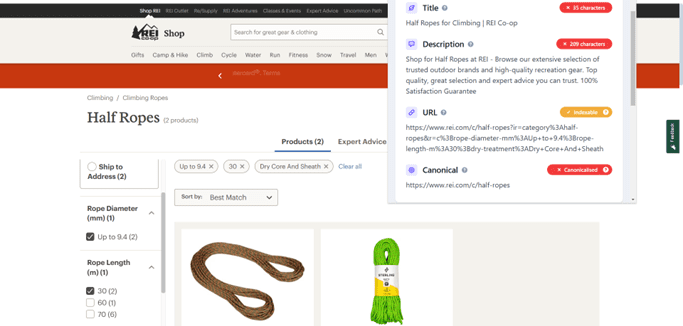
Last week, reports claimed Google was testing mobile search results without favicons or colors, eliminating any advantage conferred by a well optimized favicon. However, a Google representative confirmed this was not a test.

Favicons In Search Results

The word favicon is short for “favorite icons,” an image meant to be shown in browser tabs, in bookmarks and in Google search results. Google recently recommended that publishers use favicons that are at least 32×32 pixels in size.

Google shows favicons in search results, which makes it a subtle way for ranked websites to attract attention and traffic. For that reason it would be a blow for many websites should Google remove the favicons because it would further erode search visibility.

Favicons Missing?

Lily Ray tweeted a screenshot showing that the favicons were missing in search results.

The screenshot clearly shows that the favicons are missing from the search results. However the reason for that happening turned out to be something else entirely.

Googler Rajan Patel, VP of Engineering at Google, tweeted a response that explained that this was not the way the search results should be displaying. He explained that this kind of search result is meant for low end devices that can’t support rich results.

He tweeted:

This isn’t intended. @lilyraynyc Did you have JavaScript disabled on the device? What kind of device was it? The experience you’re showing is what we show for lower end devices that can’t support the richness of the search result page.”

Lily Ray responded:

“JS is not disabled. iPhone iOS 18.1 on an iPhone 15 pro. I was either using the Chrome app or Google app to search, can’t remember which.”

Rajan Patel speculated that it may have been a misconfigured experiment.

Glitches At Google

It turns out to be an example of Google glitching. Something that wasn’t explored is the whether the Internet connection or latency may have played a role in causing Google to react to the SERP request as if it was being made from a low quality device.  In any case, it’s an example of how complex serving search results can be.

Featured Image by Shutterstock/tomertu

Google Ad Manager Launches Curation Capabilities For Agencies via @sejournal, @brookeosmundson

Just in – Google announces launch of new curation capability for agency advertisers.

The updates in Google Ad Manager are designed to streamline workflow, reduce complexity, and drive efficiencies for agencies.

These changes offer agencies new tools and capabilities to improve ad operations and campaign management.

Per Ginny Marvin, Google Ads Liaison, curation with Google Ad Manager is launching in North America, and will roll out globally early next year.

Here’s a breakdown of the key updates, along with insights on how they’ll impact agency operations moving forward.

The Launch Of Curation

In the recent blog post, Google announced the launch of their curation tool.

Google recognizes the challenge advertisers currently face trying to reach the right audiences across multiple networks and platforms.

With curation, agencies will be able to connect more easily with partners to find curated auction inventory packages, along with activating data segments within their agency Ad Manager account.

Agencies in turn can expect more accurate forecasted and increased match rates for audience targeting.

Another item rolling out with this launch is more billing efficiency.

Now, Google Ad Manager will handle billing and payments to data providers and inventory curators, which frees up admin time that would be spent creating separate invoices or different payment processes.

As of the announcement, curation supports the following:

  • Audigent
  • IAS
  • Liveramp
  • Lotame
  • Multilocal
  • Permutive
  • PrimeAudience
  • Scope3

More Streamlined Programmatic Buying For Agencies

Google Ad Manager already has a streamlined user interface for agencies to report and analyze campaigns across different DSPs.

In addition, Google has one central location for agencies to discover new deals, advanced forecasting capabilities, and packaged deals across participating DSPs.

Google states that agencies can negotiate directly with publishers to create a single deal ID that works across all their buying platforms. It’s currently available for Preferred Deals and Private Auctions through Display & Video 360 and Yahoo.

Per the announcement, support for Programmatic Guaranteed and other DSPs are coming in future months.

The Importance of These Updates for Agencies

PPC marketers are currently juggling multiple platforms, increased client demands, and tighter deadlines.

Google’s new Ad Manager curation tool hopes to help ease this burden, allowing agencies to operate more efficiently and keep the focus on driving value.

For PPC agencies, these updates come with tangible benefits and strategic implications:

  • Improved Client Relationships: With more insightful and customizable reporting, agencies can offer clients a more transparent view. This enhanced visibility can strengthen client relationships by building trust through transparency. When clients are better informed, agencies can demonstrate value more efficiently.
  • Increased Focus on Strategy Over Operations: Automation in inventory management, order creation, and billing processes allows agencies to shift focus from operational tasks to higher-level strategy. Agencies can now allocate more resources to developing creative and more impactful campaigns, ultimately driving better results for clients.
  • Scalability Made Easier: As agencies grow, managing a large number of campaigns across multiple clients becomes challenging. These new Ad Manager tools provide a framework that makes it easier to scale operations.

Final Thoughts

Google’s curation with Ad Manager represent a step forward in meeting evolving needs of agencies.

For PPC agencies, the ability to automate processes, manage inventory, and access enhanced reporting with greater flexibility can lead to improved results and stronger client relationships.

These tools allow agencies to focus on what matters most – driving impactful campaigns and delivering meaningful results.

Google’s Martin Splitt: Duplicate Content Doesn’t Impact Site Quality via @sejournal, @MattGSouthern

Google’s Search Central team has released a new video in its “SEO Made Easy” series. In it, Search Advocate Martin Splitt addresses common concerns about duplicate content and provides practical solutions for website owners.

Key Takeaways

Despite concerns in the SEO community, Google insists that duplicate content doesn’t harm a site’s perceived quality.

Splitt states:

“Some people think it influences the perceived quality of a site but it doesn’t. It does cause some challenges for website owners though, because it’s harder to track performance of pages with duplicates.”

However, it can create several operational challenges that website owners should address:

  • Difficulty in tracking page performance metrics
  • Potential competition between similar content pieces
  • Slower crawling speeds, especially at scale

Splitt adds:

“It might make similar content compete with each other and it can cause pages to take longer to get crawled if this happens at a larger scale. So it’s not great and is something you might want to clean up, but it isn’t something that you should lose sleep over.”

Three Solutions

1. Implement Canonical Tags

Splitt recommends using canonical tags in HTML or HTTP headers to indicate preferred URLs for duplicate content.

While Google treats these as suggestions rather than directives, they help guide the search engine’s indexing decisions.

Splitt clarifies:

“This tag is often used incorrectly by website owners so Google search can’t rely on it and treats it as a hint but might choose a different URL anyway.”

2. Manage Internal Links and Redirects

When Google chooses different canonical URLs than specified, website owners should:

  • Review and update internal links to point to preferred canonical URLs
  • Consider implementing 301 redirects for external links
  • Ensure redirects are appropriately configured to maintain site performance

3. Consolidate Similar Content

The most strategic approach involves combining similar pages to:

  • Improve user experience
  • Streamline Search Console reporting
  • Reduce site clutter

Splitt explains:

“If you find that you have multiple very similar pages, even if Google doesn’t consider them duplicates, try to combine them. It makes information easier to find for your users, will make reporting in Google Search Console easier to work with, and will reduce clutter on your site.”

Search Console Notices

Google Search Console may flag pages with various duplicate content notices:

  • “Duplicate without user-selected canonical”
  • “Alternate page with proper canonical tag”
  • “Duplicate Google chose different canonical than user”

These notifications indicate that Google has indexed the content, possibly under different URLs than initially intended.

International SEO Considerations

Splitt addresses duplicate content in international contexts, noting that similar content across multiple language versions is acceptable and handled appropriately by Google’s systems.

He states:

“If you find that you have multiple very similar pages, even if Google doesn’t consider them duplicates, try to combine them. It makes information easier to find for your users, will make reporting in Google Search Console easier to work with, and will reduce clutter on your site.”

Why This Matters

This guidance represents Google’s current stance on duplicate content and clarifies best practices for content organization and URL structure optimization.

See the full video below:


Featured Image: AnnaKu/Shutterstock

Google Is Updating Its Customer Match Policy via @sejournal, @brookeosmundson

Google sent out an update to its Customer Match policy to advertisers yesterday, going into effect in January 2025.

Customer Match allows advertisers to use their first-party data to reach people across many different campaign types, making it one of the most valuable features available for brands.

The new policy change introduces new standards designed to protect user experience. Read on to learn more about the update and how advertisers can prepare for the change.

The Customer Match Policy Update

In its email, Google stated that advertisers who misuse Customer Match may have their access taken away.

Google Ads email to advertisers about Customer Match policy updates.

They cite items like:

  • Having the potential to cause harm to users
  • Creating a poor user experience

If advertisers receive repeat violation of these items, it could lead to an account suspension.

However, Google reiterated that account suspensions for violating Customer Match policies wouldn’t be immediate.

Advertisers will get a warning issued at least seven days before any type of Google Ads account suspension.

In the short email to Google Ads account managers, they were also clear on how they gather feedback for consideration of its Customer Match policy violations:

  • User feedback: Advertisers should expect Google to scrutinize feedback from users, especially if their ads receive negative interactions or reported concerns.
  • Prevalence or severity of abuse: Ads deemed abusive or misleading could lead to Customer Match restrictions.
  • Repeated violations of Customer Match policy: Consistent breaches of the policy will be grounds for account suspension.

This update is slated to go into effect on January 13, 2025.

What This Means For Advertisers

If you’re an advertiser who is using Customer Match for any Google Shopping campaigns, now is a great time to revisit how you’re collecting user data.

Below are a few examples to ensure you’re collecting user data within compliance policy:

  • Make sure you’re getting a user’s consent before collecting their email address (or any other type of data)
  • Check your targeting settings to ensure you’re not targeting anyone under the age of 18
  • Don’t overly personalize your ads and monitor user feedback
  • Educate your team to ensure everyone involved in managing Google Ads campaigns understands these changes.

Navah Hopkins from Optmyzr provided her perspective on the Customer Match policy, stating:

This email just went out to advertisers letting us know that Customer Match is a privilege, not a right.

This is a great reminder that these policies Google has in place is here to help us gain effectiveness in advertising. But if brands are caught misusing the policies in any way, it can be taken away at any time.

The upcoming policy change introduces new standards designed to protect user experience, which Google continues to emphasize as a priority across its platforms.

By focusing on relevance, quality, and compliance, brands can continue to leverage Customer Match without interruption.

SEO Trends For 2025 via @sejournal, @BennyJamminS

If there’s one thing that became clear throughout 2024, it’s that SEO volatility isn’t temporary.

Working with less traffic is the new normal as Google and Microsoft forge ahead with AI integrated into their search engines.

Sustained Changes In Search

The meaning of the word “search engine” seems to be changing, too.

Some audiences use social media platforms, such as TikTok, like search engines, and complete the same kinds of informational and transactional journeys.

Google’s business practices have been under heightened scrutiny this year. Trials and leaks have revealed information about its algorithms and business models.

At the same time, many users and publishers have drawn attention to declining search results quality.

Doing SEO is tough right now.

Google’s rules and guidelines don’t seem to be applied evenly, with spammy tactics working out just fine if you’re big enough and legitimate smaller websites getting pushed out.

We’re all wrestling with the fact that lower traffic is just a thing now.

And yet, the vibe from many of the contributors to this year’s SEO Trends ebook is hopeful.

What are the reasons for excitement and hope in such a difficult time?

The thing about user dissatisfaction is that they look for new avenues and platforms. Changing audience behavior means new opportunities.

And Google’s troubles in the courts could open up room for new, competitive platforms to gain market share. Google is still the dominant force in search, but in the coming years, there may be shifts in platforms as well as audiences.

This year’s contributors are:

  • Katie Morton, Editor-in-Chief, Search Engine Journal.
  • Mordy Oberstein, Head of SEO Brand, Wix.
  • Helen Pollitt, Head of SEO, Getty Images.
  • Matt G. Southern, Senior News Writer, Search Engine Journal.
  • Dan Taylor, Partner, SALT.agency.
  • Andrea Volpini, CEO, WordLift.

Strategy-Focused Insights

This year’s questions focus on the big picture: how to approach SEO, given all the developments and disruptions.

Instead of focusing on an individual technology or event, we asked the contributors to discuss how they think about the definition and effectiveness of SEO and its many strategies and tactics.

Here are the questions we asked:

Creating New SEO Strategies

The desire for information isn’t going away, but users are changing how they seek information.

In the past, SEO pros answered questions in order to lure in users. That might still be the case, but people are finding answers outside of the SERP (or staying in the SERP) for answers rather than going to websites.

Is that model broken completely, or is there still something to gain from it?

Alternatively, is there a more direct way for SEO professionals to find users that doesn’t involve pumping information onto the internet?

Is there a completely new way of doing things in SEO, or do we need to work within the wreckage that we have?

Are there other channels that you recommend for user acquisition strategy? How can SEO pros effectively integrate these new channels into their overall approach?

Keeping On Top Of Developing Trends & Technologies

What are the trends and technologies that SEO professionals should be aware of and/or using?

What skills and knowledge do SEO professionals need to develop to thrive in the current search and marketing environment?

Are there any predictions you would like to make?

Preparing For 2025

We feel there should always be an open question so that the contributors can talk about whatever is most pressing on their minds without specific prompting.

So, question three was a “free space” – an opportunity to talk about whatever they wanted.

As usual, the contributors don’t disappoint with their insightful thoughts, both to the prompted questions and to the open invitation.

Going into 2025, a lot is still up in the air, and the state of Google Search doesn’t seem likely to improve quickly.

The expert contributors to SEJ’s SEO Trends ebook have plenty to say about the direction of search and how to build agile, resilient SEO strategies in a tumultuous business climate.


Featured Image: Paulo Bobita/Search Engine Journal

Filter Bubble: What Playbooks No Longer Serve You? via @sejournal, @Kevin_Indig

Last week, I relived an experience I first had in 2016: I went to bed thinking I’d wake up to our first female president but woke up to Trump.

One personal takeaway from the election result that’s very transferrable to organic growth is the mismatch between perception and reality. You think you’re connected to reality, but you’re actually not. A filter bubble.

Confirmation bias is the juice that gives filter bubbles life.

The most dangerous bias is being married to tactics or beliefs that have worked for a long time but have lost their efficacy.

A question I’ve been thinking about a lot in the last two years as AI disrupts our industry head to toe: Where am I too romantic about my work? What tactics have become empty bullets?

Lost Efficacy

Image Credit: Kevin Indig

Stackoverflow and Chegg have suffered from a structural decline in the last three years. Their business model worked until it didn’t, proudly presented by AI.

In the same vein, many content marketers and SEO pros still operate like it’s 2014: Pump out evergreen content prioritized by search volume and supported by masses of mediocre backlinks.

You might feel a cocktail of “still works” and “not new” reading this line, but in my work as an advisor, I still see a lot of money flowing into this stuff. Too much.

The most common response after months of work and tens of thousands of dollars invested is “SEO takes time.” Just wait and spend more money. But the returns never come. The consequence: wasted effort and eroding trust in leadership.

I see five filter bubbles in organic growth:

  1. Evergreen-focused content marketing.
  2. Direct-response mindset.
  3. Low-brand organic traffic.
  4. Volume link building.
  5. Forgoing customer research.

Content marketing is still well and alive but not in its original form.

Content Marketing Institute’s 2025 B2B report shows that over half of content marketers struggle to measure the results of their efforts and create content that leads to the desired action.

User behavior is complex and not linear. But when so many smart people struggle to measure impact, it raises the question of whether the problem is technology and resources or efficacy.

It doesn’t help that Google updates create instability. The way I phrased it in (Hard)Core Algorithm Updates:

“Google updates have become unpredictable instead of enforcing a straight line, which makes SEO less predictable as a channel.”

SEO can still be very ROI-positive, but it cannot succeed in a silo anymore.

Attention shifted from the open web to (social) content platforms like YouTube and LinkedIn. The soundbite that 40% of Gen Z use TikTok for Search instead of Google is not a feature issue but a generational shift.

Content platforms are all about engagement (see more), not a direct response (click out). Many leaders make the mistake of expecting transactional referral traffic and get disappointed, eventually leaving the playing field for others.

When you look closely, all popular platforms are about engagement.

Google is the last holdout, but AI turns Search into an engagement channel that is not incentivized to send users away because the answer is right there. Users click out to validate and verify but not to get information in the first place.

Engagement leads to awareness, and Google rewards brands that get a lot of searches with more non-branded searches.

If Google’s algorithms taught us one thing over the last two years, it’s that massive amounts of non-branded organic traffic need to be carried by brand (traffic).

In Favoritism, I showed how Google gives brands more visibility in most verticals. “Brand” has replaced links as a factor. They still matter, but not in volume. The ones that are hard to get have the biggest impact. How do you get them? Brand building activities:

  1. Funding rounds lead to TechCrunch backlinks.
  2. YouTube advertising leads to homepage links (if the product is good).
  3. Good reputation leads to publisher coverage.

None of this works without deeply understanding who you want to engage with.

The sad reality is that most marketing teams have no idea where to find customer research or have built ties to customers because performance marketing (metrics) worked too well for too long.

But now that brand is actually important again because it drives engagement (and vice versa), content needs to be inspired by the source: customers.

New Formula

Image Credit: Kevin Indig

The formula for preventing a November 6 surprise in organic growth: connection + authenticity + surround sound.

Connection

The fact that NotebookLM’s traffic surpassed Perplexity in the U.S. when it launched its podcast feature shows the power connection.

Whether you sell to consumers or companies, you sell to people, and the number one thing we crave is connection.

The reason podcasts and Reddit are so successful is because they’re connecting. The opposite of connection is scripted corporate content.

Nobody is interested in generic, faceless content – especially when Gen AI can give an equally good or better answer. But first-person, high-expertise content resonates.

Hearing someone in your ear is much more intimate than reading (as I’m writing this, I painfully remind myself to pivot to video).

An estimated 100 million U.S. Americans listen to a podcast at least once a week.

The projected advertising market value of $2 billion in the U.S. and $4 billion globally in 2024 seems too low when comparing the 48 million views to date Trump’s three-hour podcast with Joe Rogan amassed with the average 3.5 million daily views Fox gets.

The growth of people appending “Reddit” to their queries had grown for years before Google lined the domain up with visibility that matches demand.

Many don’t like the visibility Reddit gets in Search, but it’s a direct result of the desire to connect instead of browse websites.

Marching orders: There’s no doubt companies should invest in Reddit and podcasts.

Whether it’s advertising or organic campaigns, starting your own company podcast is not as important as the question of how you can connect with your audience on these platforms. A few ideas:

  1. An unpolished video of the founder telling the story of the company.
  2. AMAs or behind the scenes on Reddit.
  3. Host-read podcast ads.

The foundation is a deep understanding of what your customers value, their problems, and how they perceive you.

Authenticity

Creating content on engaging channels is not enough. It needs to be “authentic.” But what does that even mean?

I like Seth Godin’s definition: It’s about consistently proofing that who you are is who you say you are. It’s very hard to sell a fake version of yourself in a three-hour podcast. That’s why the format works.

We call a brand or a person authentic when they’re consistent, when they act the same way whether or not someone is looking. Someone is authentic when their actions are in alignment with what they promise.

As sad as it is, Trump’s personality was more important than his policy to voters. Both candidates got very active on the content platform, knowing that 4/10 young adults get their news from TikTok and brands with a strong approach to social media are 8x more likely to exceed revenue goals by +25% than competitors with low social maturity.

But Trump gained double as many followers and hashtag posts than Harris by recording videos with Gen Z influences like Adin Ross or Logan Paul.

Elections, like company Growth, don’t fail or succeed because of one thing, but social media is a gateway to consistently show up with the same story.

Marching orders: Extend brand guidelines beyond just the written word or usage of the company logo.

There needs to be a script for story points, messaging, and audience personas.

Identify employees who have what it takes to be the face(s) of the company on channels like YouTube or Reddit and put them front and center.

Surround Sound

When I speak at conferences, I usually stare into a sea of laptops or smartphones. I do the same when I watch a presentation. We’re constantly distracted and semi-listening.

As a result, connecting and being authentic is not enough to win; you need to be everywhere.

Trump saying crazy things gets him free exposure, and it has worked for him.

HubSpot has one of the most visible blogs in SaaS, but it bought newsletters and built a podcast network for a good reason: to create surround sound.

As the traditional media industry crumbles, companies build small media empires to market themselves.

Marching orders: Figure out where your audience is and double down. YouTube and podcasts are no-brainers. Be smart about content repurposing. Stay on story > stay on brand.

On Target

Today’s Growth landscape is fragmented and disrupted. Strategies that once guaranteed growth may now lead us astray.

Just as the 2024 election revealed a gulf between perception and reality, many in marketing and SEO are trapped in outdated tactics that feel comfortable but yield diminishing returns.

As AI reshapes content, the winning formula is clear: genuine connection, unwavering authenticity, and relentless surround sound forged on deep audience knowledge.

The question is no longer whether organic growth evolves but how rapidly you’ll adapt.


B2B Content Marketing Benchmarks, Budgets, and Trends: Outlook for 2025 [Research]

Podcast Listening Hits Record Highs

U.S. Podcast Advertising Revenue Study

Defining Authenticity

Trump’s savvy memes and flashy edits trounce Harris in war for precious views from young voters


Featured Image: Paulo Bobita/Search Engine Journal