Top Resale Sites from Consumer Brands

Approximately 300 million pairs of shoes are thrown away annually in the United States alone. Many could be reused or recycled. Brands are catching on to the importance of becoming sustainable and circular, launching recycling programs to extend the life of their products and keeping them out of landfills.

Here is a list of branded resale shops. Most launched during this recommerce boom of the last few years, though a few have been around longer. There are trade-in programs, peer-to-peer marketplaces, white-glove sustainability programs for luxury items, and more. Many are parts of broader sustainability initiatives from eco-conscious companies.

To follow the recommerce boom, check out ThreadUp’s The Recommerce 100, which ranks resale shops by the number of monthly product listings.

Branded Resale Sites

RE/AE is the popular resale site for American Eagle. The site is powered by ThredUp, a resale-as-a-service platform. American Eagle teamed up with Snapchat on Earth Day 2023 (April 22) for a shoppable AR Lens showcasing select styles from a specially curated inaugural 200-piece RE/AE collection. RE/AE lists nearly 40,000 resale products, enabling American Eagle to recirculate over 1 million items.

Home page of RE/AE by American Eagle

RE/AE by American Eagle

Renew is the resale shop for women’s apparel brand Eileen Fisher. The program began in 2009 as an opportunity for employees to return their unwanted clothes. It then launched nationwide in 2013. Customers can bring Eileen Fisher clothes back to any U.S. Eileen Fisher or Renew store and receive $5 in Renew Rewards for each piece, no matter the condition. Quality items are cleaned and resold; the rest are recycled or turned into art.

ReGear is the trade-in and resale hub of Arc’teryx, an outdoor apparel and equipment company. ReGear inspects, repairs, and rejuvenates used Arc’teryx gear before making it available for sale through the online store. ReGear is just one part of ReBird, the home for Arc’teryx circularity initiatives. The other parts are ReCare, with care and repair tools to make gear last, and ReCut, a program for creating new products from recycled materials.

Worn Wear is a set of tools from Patagonia that extends the use of its products through responsible care, repair, resale, and recycling at the end of a garment’s life. For trade-ins, Worn Wear provides customers with a credit of up to $100 per item (whether or not the item sells) to be used at Patagonia retail stores, WornWear.com, and Patagonia.com. Among the first resale programs from brands, Worn Wear started in 2013 at Patagonia pop-up events and became a permanent program in 2017.

Home page of Worn Wear by Patagonia

Worn Wear by Patagonia

Like New is Lululemon’s trade-in program, which runs through resale technology provider Trove. The program allows customers to trade in used Lululemon clothing in exchange for an e-gift card to be used at the retail stores, online, or Likenew.lululemon.com. All profits on Like New go to the Apparel Impact Institute’s Fashion Climate Fund, with the goal of having an end-of-use solution for 100% of products by 2030. The program started in 2021 and expanded nationwide on Earth Day 2022.

Outerworn is a peer-to-peer resale marketplace for Outerknown, a sustainable clothing brand co-founded by surfing champion Kelly Slater. The brand’s mission, “For People & Planet,” is to make quality sustainable products that last a lifetime, keeping garments out of landfills. Launched in 2021, Outerworn enables the buying and selling of used pieces. Outerknown also pursues sustainability through socially responsible sourcing, organic materials, and upcycling textile waste.

Conscious Closet from Bergdorf Goodman is a service that extends the useful life of its customers’ luxury goods. The program has five focuses — edit, repair, alter, resell, and donate — and leverages a network of strategic partners and the retailer’s in-house services to assist clients at each stage. For the resell portion, Bergdorf Goodman has partnered with Fashionphile, a platform for pre-owned luxury accessories. The partnership offers customers circular services by enabling personal shoppers to facilitate the selling of clients’ luxury items in exchange for Bergdorf Goodman gift cards.

Home page of Conscious Closet by Bergdorf Goodman

Conscious Closet by Bergdorf Goodman

Carhartt Reworked is a trade-in program for the workwear and outdoor apparel maker. Powered by Trove, the resale site is dedicated to extending the life of workwear and keeping previously worn, slightly imperfect gear out of landfills. Carhartt Reworked accepts trade-ins by mail and in participating Carhartt retail stores. In the first 12 months of the resale site’s launch, Carhartt says it extended the life of over 43,000 garments and kept more than 68,000 products out of landfills.

Re/Supply is a used gear program that outdoor equipment co-op REI started in 2017, though it hosted “garage sales” for many years. Re/Supply offers members a more sustainable and affordable way to purchase gear and apparel. The program consists of items customers have returned or traded in. Members can trade in gently used gear for gift cards to help extend a product’s life for fellow members. REI estimates that buying a used item avoids 50% or more CO2 emissions from new product manufacturing.

Canada Goose Generations is the recommerce platform for Canada Goose, the maker of performance luxury outdoor apparel. The site is powered by Trove. Building on the brand’s mission of making quality outerwear, Generations keeps long-lasting Canada Goose products in circulation, giving them additional life by inviting customers to trade in. Generations supports the brand’s Sustainable Impact Strategy, helping to achieve its goal of achieving net zero emissions by 2025, reducing scope 1 and 2 greenhouse gas emissions by 80% from its 2019 baseline.

Athleta Preloved is a partnership between fitness brand Athleta and resale platform provider ThredUp. Athleta Preloved offers gently used Athleta products at a discount. The site lists more than 30,000 resale products. Trade-in participants can earn Athleta credit for eligible items that sell in the listing window. Unsold items are reused or responsibly recycled. According to its website, approximately 525,000 Athleta clothing items have been recirculated and reused.

Home page of Athleta Preloved

Athleta Preloved

Toms (re)Wear Good is a program from shoe company Toms, in partnership with ThredUp, that sells gently used shoes and accessories and allows customers to turn used clothes into a Toms shopping credit. Customers wishing to resell items on the resale platform can request a free “clean out” label via Toms website. The service determines which items are eligible for consignment. For the items sold, sellers get an e-gift card to use at Toms.com. Items not eligible for consignment will be reused or responsibly recycled.

Tea Rewear is a popular resale marketplace from San Francisco-based children’s clothing company Tea Collection. The Tea Rewear site is powered by Kidizen, a resale marketplace for kids’ fashion and essentials. Participants can list and sell items or work with Style Scouts, local representatives for parents who have merchandise but don’t want to list and sell it themselves.

Ikea Preowned is a new second-hand online marketplace where customers can sell Ikea products to each other rather than third-party marketplaces. The seller posts listings on Ikea Preowned, and Ikea’s algorithms generate the details of the item, including size and the original retail price. Ikea Preowned is up and running in Madrid and Oslo. The company plans a global roll-out by December.

Hanna-Me-Downs is a peer-to-peer marketplace to buy and sell pre-owned Hanna Andersson products. The marketplace is powered by Archive, a resale service platform, and is a part of Hanna Andersson’s sustainability drives that include (i) sourcing organic cotton, (ii) moving all cotton to regenerative farming by 2025, (iii) producing collections with at least 50% recycled content, and (iv) creating durable products with heavier-weight cotton and colors that last.

Home page of Hanna-Me-Downs by Hanna Andersson
Hanna-Me-Downs by Hanna Andersson

Meta Announces Updates To Business Tools Affecting Advertisers via @sejournal, @MattGSouthern

Meta is restricting data access in its Business Tools. Custom audiences and ad sets may be affected or paused. Advertisers need to adapt their tracking and reporting strategies.

Meta has informed businesses of upcoming changes to its Business Tools that may impact how you use the platforms for advertising.

Key Changes

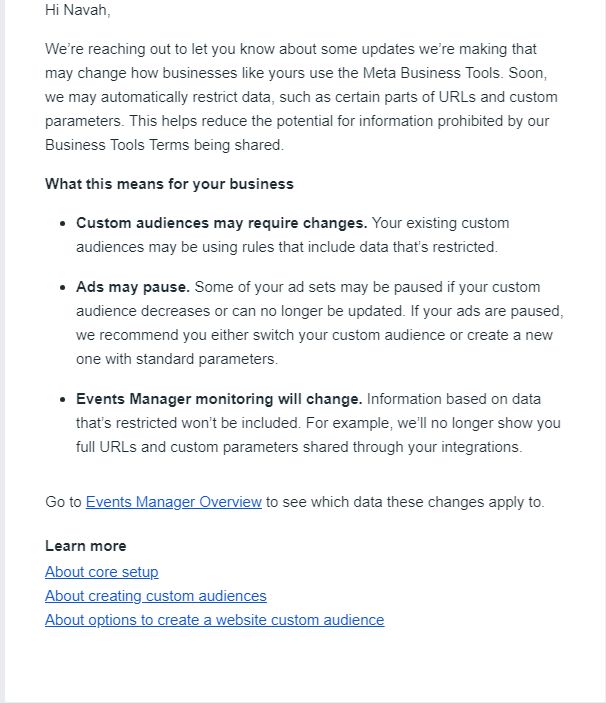
According to an email sent to advertisers, Meta plans to automatically restrict certain data, including parts of URLs and custom parameters.

The company states this reduces the potential for sharing information prohibited by its Business Tools Terms.

Potential Effects On Advertisers

The email outlines several ways these changes may affect businesses:

  1. Custom audiences may require adjustments if they use rules that include data that will be restricted.
  2. Some ad sets may be paused if custom audiences decrease or can no longer be updated.
  3. Events Manager monitoring will change, with restricted data no longer being included in reports.

Meta’s Recommendations

For advertisers whose ads are paused, Meta recommends either switching the custom audience or creating a new one with standard parameters.

The company advises businesses to check their Events Manager Overview to see which data these changes will affect.

Industry Response

Navah Hopkins, Optmyzr Brand Evangelist, commented on LinkedIn about the announcement.

Hopkins noted that the update indicates Meta is prioritizing privacy and that the ability to report and target based on ad interactions may be affected.

She states:

“Really important update on Meta ads: not only will data be restricted, ads with hyper targeted UTMs might be paused!

This is a critical reminder that Meta (Facebook/Instagram/WhatsApp) is taking privacy very seriously and our ability to report and target based on seeing/clicking ads is no longer a guaranteed state.”

Hopkins advised advertisers using UTMs to monitor for paused ads and be prepared to adjust their inclusions. She also suggested informing clients or stakeholders who expect detailed reporting about these upcoming changes.

She added:

“If your ads use UTMs, keep an eye out for paused ads and be prepared to make some compromises on what you include.

Most of us have been moving away from the “perfect” targeting world, towards a privacy compliant one. However, if your clients/stakeholders still hold you accountable for that reporting, be sure to keep them in the know!”

Hopkins shares a screenshot of the email she received from Meta:

Screenshot from: linkedin.com/in/navahhopkins/, September 2024.

Practical Steps For Businesses

In light of this change, and considering Hopkins’ advice, businesses can take several actions:

  • Audit UTMs: Review your tracking parameters for potentially restricted info.
  • Streamline tracking: Focus on core UTM elements like source, medium, and campaign name.
  • Set up ad pause alerts: Stay on top of affected campaigns.
  • Explore alternatives: Look into privacy-compliant analytics tools beyond Meta’s ecosystem.
  • Revamp reporting: Adjust your processes to account for limited data availability.
  • Communicate changes: Keep clients and teams informed about the impact on metrics and performance.
  • Develop privacy-friendly targeting: Test new strategies using broader audience segments.
  • Stay updated: Regularly check Meta’s policies to anticipate future changes.

Advertisers can adapt to Meta’s evolving privacy landscape by implementing these steps while minimizing campaign disruptions.

Context

These changes come amid a broader industry shift towards increased user privacy measures.

As digital platforms evolve their practices, advertisers may need to adapt their strategies to align with new data usage policies.

Meta hasn’t specified an exact date for implementing these changes. Advertisers are advised to stay informed and prepare for potential adjustments.


Featured Image: mundissima/Shutterstock

Google Ads To Phase Out Enhanced CPC Bidding Strategy via @sejournal, @MattGSouthern

Google has announced plans to discontinue its Enhanced Cost-Per-Click (eCPC) bidding strategy for search and display ad campaigns.

This change, set to roll out in stages over the coming months, marks the end of an era for one of Google’s earliest smart bidding options.

Dates & Changes

Starting October 2024, new search and display ad campaigns will no longer be able to select Enhanced CPC as a bidding strategy.

However, existing eCPC campaigns will continue to function normally until March 2025.

From March 2025, all remaining search and display ad campaigns using Enhanced CPC will be automatically migrated to manual CPC bidding.

Advertisers who prefer not to change their campaigns before this date will see their bidding strategy default to manual CPC.

Impact On Display Campaigns

No immediate action is required for advertisers running display campaigns with the Maximize Clicks strategy and Enhanced CPC enabled.

These campaigns will automatically transition to the Maximize Clicks bidding strategy in March 2025.

Rationale Behind The Change

Google introduced Enhanced CPC over a decade ago as its first Smart Bidding strategy. The company has since developed more advanced machine learning-driven bidding options, such as Maximize Conversions with an optional target CPA and Maximize Conversion Value with an optional target ROAS.

In an email to affected advertisers, Google stated:

“These strategies have the potential to deliver comparable or superior outcomes. As we transition to these improved strategies, search and display ads campaigns will phase out Enhanced CPC.”

What This Means for Advertisers

This update signals Google’s continued push towards more sophisticated, AI-driven bidding strategies.

In the coming months, advertisers currently relying on Enhanced CPC will need to evaluate their options and potentially adapt their campaign management approaches.

While the change may require some initial adjustments, it also allows advertisers to explore and leverage Google’s more advanced bidding strategies, potentially improving campaign performance and efficiency.


FAQ

What change is Google implementing for Enhanced CPC bidding?

Google will discontinue the Enhanced Cost-Per-Click (eCPC) bidding strategy for search and display ad campaigns.

  • New search and display ad campaigns can’t select eCPC starting October 2024.
  • Existing campaigns will function with eCPC until March 2025.
  • From March 2025, remaining eCPC campaigns will switch to manual CPC bidding.

How will this update impact existing campaigns using Enhanced CPC?

Campaigns using Enhanced CPC will continue as usual until March 2025. After that:

  • Search and display ad campaigns employing eCPC will automatically migrate to manual CPC bidding.
  • Display campaigns with Maximize Clicks and eCPC enabled will transition to the Maximize Clicks strategy in March 2025.

What are the recommended alternatives to Enhanced CPC?

Google suggests using its more advanced, AI-driven bidding strategies:

  • Maximize Conversions – Can include an optional target CPA (Cost Per Acquisition).
  • Maximize Conversion Value – Can include an optional target ROAS (Return on Ad Spend).

These strategies are expected to deliver comparable or superior outcomes compared to Enhanced CPC.

What should advertisers do in preparation for this change?

Advertisers need to evaluate their current reliance on Enhanced CPC and explore alternatives:

  • Assess how newer AI-driven bidding strategies can be integrated into their campaigns.
  • Consider transitioning some campaigns earlier to adapt to the new strategies gradually.
  • Leverage tools and resources provided by Google to maximize performance and efficiency.

This proactive approach will help manage changes smoothly and explore potential performance improvements.


Featured Image: Vladimka production/Shutterstock

Reddit’s Strategy To Attract Advertisers: Interest-Based Targeting via @sejournal, @MattGSouthern

As Reddit continues investing in its advertising platform, marketers and business owners can expect new ways to reach engaged audiences across various topics and communities.

In a recent episode of the AdExchanger Talks podcast, Jyotsna (Jyoti) Vaidee, Reddit’s VP of Ads Product, shared insights into how the platform is evolving to serve advertisers better while maintaining a positive user experience.

Authentic Conversations With Interested Consumers

One of Reddit’s key differentiators is its ability to facilitate authentic conversations among passionate users.

This presents a unique opportunity for marketers to connect with target audiences in a trusted and contextually relevant environment.

Vaidee highlights the potential for businesses to engage with interested users, stating:

“60% of Redditors actually want brands to participate in their communities and interact with them.”

By leveraging Reddit’s community-driven discussions, advertisers can deliver more targeted and impactful ad experiences that resonate with their desired demographics.

Reddit’s Interest-Based Ad Targeting

Vaidee discussed Reddit’s approach to ad targeting, which primarily relies on interest-based targeting derived from users’ interactions with content on the platform.

She mentioned moving towards auto-targeting, which leverages machine learning to analyze user behavior and deliver more relevant ads.

This means advertisers can reach audiences based on their demonstrated interests, even if those interests aren’t directly related to the advertiser’s product or service.

Vaidee states:

“On the targeting side… we have specific features we have launched, like keyword targeting. By our trajectory, what we’re moving towards is more and more, especially for the lower funnel specifically, is towards auto-targeting, and auto-targeting gives us the ability to not only build models on what we know about this specific user. But also, we’re learning and evolving as this user interacts with content on Reddit, as this user interacts with our ads, even.”

Vaidee gave the example of a yoga brand discovering that users interested in organic food are also likely to engage with their products.

Auto-targeting can help uncover these non-obvious connections, allowing advertisers to expand their reach effectively.

AI-Driven Advertising Solutions

Reddit heavily invests in AI-driven advertising solutions to help marketers achieve better results.

Vaidee emphasized the company’s focus on developing a full-funnel ad solution that leverages AI to enhance advertisers’ performance.

With the integration of AI capabilities, businesses can expect more advanced targeting options, auto-optimization of ad placements, and creative customization.

Vaidee states:

“We don’t have to make the same mistakes that I saw, you know, our other companies make, and then have to evolve and, you know, do, you know, migrations and whatnot to move towards this world of AI and Gen AI. I think we can quickly leapfrog to where we want to be. And I think technology, particularly Gen AI, is making it a more level playing field for smaller players.”

Expanding Ad Offerings While Prioritizing User Experience

As Reddit expands its ad offerings, it remains committed to ensuring a positive user experience.

Vaidee noted that Reddit balances monetization efforts with user controls and preferences.

Marketers can take advantage of new ad placements across various surfaces within Reddit, such as the feed, comments, and search results.

However, the platform also has user controls for ad categories like religious and political content, allowing individuals to tailor their ad experience.

This balance between monetization and user experience creates a win-win scenario for advertisers and Redditors.

Businesses can reach engaged audiences non-intrusively while users maintain control over the ads they see.

Measuring Ad Performance Across The Funnel

Vaidee discussed Reddit’s efforts to provide full-funnel measurement solutions.

The platform has launched features like Reddit Brand Lift and Conversion Lift, which help advertisers understand the impact of their campaigns on brand awareness and conversions.

Additionally, Reddit is working on integrating with advertisers more closely through third-party partnerships and the Conversions API (CAPI). These integrations will give advertisers more robust data to optimize their campaigns and measure ROI.

Vaidee states:

“We’re very focused on building for the full funnel of measurement. As you know, not too long ago, Reddit launched our Reddit Brand Lift, our in-house product, and we launched Conversion Lift. We are doing a lot in terms of integrating with advertisers more closely, whether through third parties or CAPI integration, so we can understand the signals better, which obviously translates to better performance and, you know, better measurement.”

Key Takeaways For Marketers & Business Owners

  1. Reddit’s unique audience targeting capabilities allow advertisers to reach users based on their demonstrated interests, even if they aren’t directly related to the advertiser’s product or service. This can help uncover new opportunities for audience expansion and engagement.
  2. The platform’s focus on facilitating authentic conversations within passionate communities provides a trusted environment for brands to connect with their target audiences. However, marketers should approach these communities with respect and aim to contribute value to the discussions.
  3. Reddit invests heavily in AI-driven advertising solutions, which can help marketers improve targeting, optimize ad placements, and enhance creative customization. Staying informed about new AI-powered features can help advertisers remain competitive on the platform.
  4. As Reddit expands its ad offerings, it remains committed to balancing monetization and user experience. Marketers should be mindful of this balance and aim to create non-intrusive ad experiences that align with user preferences.
  5. The platform offers full-funnel measurement solutions, such as Reddit Brand Lift and Conversion Lift, to help advertisers assess the impact of their campaigns. Advertisers should use these tools and closely monitor their campaign performance to optimize for better results.
  6. While Reddit presents exciting opportunities for advertisers, it is essential to approach the platform with a tailored strategy considering its user base’s unique characteristics and community dynamics. Marketers should invest time in understanding the platform’s ad offerings, targeting capabilities, and best practices to maximize their success on Reddit.

FAQ

How does Reddit’s interest-based ad targeting work?

Reddit’s interest-based ad targeting relies on user interactions with content on the platform. Advertisers can reach audiences based on demonstrated interests observed through their activities. This includes engagement with topics or communities, even if these interests don’t directly relate to the advertiser’s product or service.

  • Uses machine learning to analyze user behavior
  • Enables targeting beyond direct product interest
  • Allows discovery of non-obvious connections
  • Maximizes reach to interested users

For example, a yoga brand could target users interested in organic food, as they will likely engage with their products.

What is the role of AI in Reddit’s advertising solutions?

AI plays a significant role in Reddit’s advertising solutions. It helps enhance performance, productivity, and potential through advanced targeting options, auto-optimization of ad placements, and creative customization.

  • Targeting options: Advanced targeting allows for more focused ad delivery to relevant audiences.
  • Auto-optimization: AI optimizes ad placements for better performance.
  • Customization: AI helps create more tailored ad content.

This integration of AI allows marketers to deliver the right message at the right time, improving campaign effectiveness and ROI.

How is Reddit balancing ad offerings with user experience?

As Reddit expands its ad offerings, it commits to a positive user experience. The platform ensures this balance by implementing user controls and preferences for ads.

  • Ad placements: New ad placements across various surfaces like feed, comments, and search results.
  • User controls: Users can manage ad categories such as religious and political content.
  • Non-intrusive ads: Ads are designed to align with user preferences.

This approach benefits both advertisers and users. Businesses reach engaged audiences while users retain control over their ad experience.

What tools does Reddit offer for measuring ad performance?

Reddit provides several tools to help advertisers measure ad performance across the funnel. This includes in-house products and third-party integrations.

  • Reddit Brand Lift: Measures impact on brand awareness.
  • Conversion Lift: Assesses the effect on conversions.
  • Conversions API (CAPI): Integrates with third-party tools for better data insights.

These tools enable advertisers to optimize their campaigns and measure ROI effectively.


Featured Image: Tada Images/Shutterstock

8 Out Of 10 TikTok Videos By Brands Fail To Capture Attention via @sejournal, @gregjarboe

Despite TikTok’s increasing importance to marketers, the majority of brands are not getting it right, and their videos on the social media platform are under-performing.

According to new research, 84% of the video content released by brands on TikTok fails to generate strong positive emotions, capture attention, or enhance brand recall.

The mini-study conducted by DAIVID, which aids advertisers in assessing and enhancing the impact of their content on a large scale, also found that 24% of TikTok videos were triggering strong negative emotions, potentially damaging to brand reputations.

Their study evaluates the effectiveness of video content being shared on the social platform using a variety of metrics, including the positive and negative emotions elicited by each video, the attention they generated, and the impact the content had on various brand metrics, such as brand recall.

The study’s findings include:

  • Only 16% of the branded TikTok videos scored higher than the average Creative Effectiveness Score (CES) of 5.8 out of 10 – a composite metric created by DAIVID that combines the three main drivers of effectiveness: attention, emotions, and memory.
  • 60% of branded TikTok videos were simply forgettable, with below-average positive emotional responses and below-average brand recall. They also ranked above the global average for causing confusion and boredom.
  • 24% of branded TikTok videos triggered strong, extreme, negative emotions like anxiety, fear, discomfort, disgust, and shame.
  • Overall, branded TikTok content was 9% less likely to generate intense positive emotions than the global average and attracted 2.5% less attention.

In a press release, Ian Forrester, the CEO and founder of DAIVID, said:

“This research reveals that the vast majority of content being released on TikTok simply isn’t up to scratch. Sixty per cent of the creative is simply forgettable, under-indexing for positive emotions and over-indexing for negative emotions such as confusion and boredom. In one ear and out of the other for the viewer.”

He added:

“Yet, even more concerning for brands are the 24% of videos that evoked intense, extreme, negative emotions such as disgust, anxiety and shame. If these emotions are attached to the brand, they’re likely to do the brand damage, negatively impacting future sales potential.

This should be a wake-up call to brands and underlines the importance of analyzing the effectiveness of your social creative beyond just the basic reach, impressions and engagement rate data provided by the platforms to understand the real impact that it’s having.”

What Marketers Can Do To Avoid Negative Reactions

I realize that many marketers working at other big brands will ask, what should I do next?

For starters, read “39 Emotions Digital Marketers Can Use In Advertising.”

You’ll discover the latest research conducted at the University of California, Berkeley; Stanford University; and the Ehrenberg-Bass Institute for Marketing Science at the University of South Australia has uncovered: “Generally, it’s advisable for … brands to leave us with a positive emotion.”

Next, read “TikTok Trends 2024: The Most Important Trends To Watch.” Among other things, you’ll learn that TikTok launched its Creative Center earlier this year.

This can help you find inspiration by giving you insights into what type of content is trending in your country, broken down into hashtags, whether lip-syncing audio, popular creators, or specific video formats.

Finally, read the “10 Most Emotionally Engaging Olympics Ads (For Paris 2024 & For All Time).”

Yes, these video ads were uploaded to YouTube, not TikTok. But Procter & Gamble (P&G) dominates DAIVID’s all-time chart, with five of the top most emotionally engaging Olympics ads – including the top three tear-jerking positions.

So, you’ll want to figure out what they know that you don’t.

Spoiler alert: Brands should focus on creating more TikTok videos that generate intense positive emotions, including hope, admiration, amusement, and trust, as well as making fewer TikTok videos that evoke intense negative emotions, such as anger, disgust, fear, and anxiety.

We shouldn’t need new research to reinforce this important lesson. But, if 84% of TikTok videos by brands are underperforming and 24% generate a strong negative reaction, then I guess it’s time to ask some hard questions.

What SEO Pros Should Do To Seize This Opportunity

Some SEO professionals might mistakenly assume that they should “move along – nothing to see here” because they don’t optimize TikTok videos. But they should reconsider.

TikTok videos have been appearing in Google’s search results for a couple of years. If you need to verify this, then Google “most viewed TikTok videos in 24 hours.”

So, what should you do about this?

If you are a savvy SEO, then you’re already incorporating relevant keywords in your video title, caption, and hashtags, leveraging trending topics, engaging with your audience, and collaborating with other creators to increase visibility.

But if another group within your company or client is cranking out TikTok content without optimizing it first, then reach out and suggest that you get together and maybe suggest a “lunch and learn” session, where training can occur in an informal setting.

If you want to do a little homework to make suggestions on optimizing TikTok content, try reading the following.

For starters, read Video SEO: 10 Steps to Optimizing Videos for Search and Discovery.” It focuses on video SEO best practices for YouTube.

But if you plan to optimize videos for TikTok.com, which gets 2.7 billion visits a month worldwide, then you should also optimize videos for YouTube.com, which gets 73.0 billion visits a month worldwide, according to Semrush.

Next, read The Future of SEO Lies in the “Messy Middle” of the Purchase Journey.”

Among other things, you’ll learn that people look for information about products and brands in a looping process across a huge array of online sources, including search engines, social video platforms, and review websites, in two mental modes: exploration and evaluation.

Finally, check out “Customer Personas Can Transform SEO, PPC, and Content Marketing,” which was published in March 2021.

It says:

“… decision-making is not a rational process, but one driven mainly by how people feel. The rational brain layers on reasons for our choices only after they’re made.” This explains why video should be a critical component of any future SEO strategy.

It’s Time To Pay Attention To Video SEO

Many SEO professionals have been busy preparing for the threat of a “searchquake” that was supposed to be triggered by Search Generative Experiences (SGE), so they may have overlooked the opportunity of video SEO.

But TikTok does present an opportunity for many brands with huge potential if you are one of the brands getting it right.

It’s time for SEO professionals, as well as marketers, to pay attention to video marketing and to do their homework to understand why some brands are generating negative emotions. And to learn how they can be the ones that get the positive reactions.

The data from above was taken from a study conducted by DAIVID, a global creative effectiveness platform.

More resources: 


Featured Image: Pheelings Media/Shutterstock

7 Common Mistakes New Independent SEO Consultants Make (And How To Avoid Them) via @sejournal, @olgazarr

Many SEO pros dream of going solo, especially early in their careers. It’s tempting, right? More money, freedom, flexibility, and growth opportunities.

But here’s the deal: Just deciding to go independent doesn’t magically make all that happen.

I learned quickly that success as an independent SEO consultant requires more than just SEO skills. You also need business smarts, self-discipline, and the ability to overcome serious challenges.

During my journey, I’ve hit quite a few roadblocks. I’ve also seen other talented SEO professionals struggle with the same issues. Some even gave up and went back to full-time jobs. Ouch!

That’s why I’m writing this. I want to help you avoid these setbacks. I will share seven big mistakes I’ve seen new SEO consultants make. These are the kinds of errors that can stop your independent career before it even gets going.

But don’t worry! I’m not just here to point out problems. I’ll show you how to dodge these pitfalls and set yourself up for success from day one.

My goal? To help you fast-track your learning curve and build an incredible career as an independent SEO consultant. Let’s dive in!

Learn The Top Seven Mistakes To Avoid As A New Independent SEO Consultant

1. Not Building Your Brand First (Your Unique Selling Point)

When you start your solo SEO journey, building your personal brand is crucial. It’s not just about being visible – it’s about showing what makes you unique in the SEO world. From day one, you need to highlight your specific approach or focus.

Why? Your unique spin sets you apart in a crowded market. It helps potential clients understand why they should pick you over others.

You may be a tech SEO wizard or focus on local SEO for small businesses. Or you’ve developed a unique process for content optimization. Whatever it is, make it known!

A strong, distinctive brand makes attracting the right clients easier. It helps you build recognition and establish yourself as a go-to expert in your niche. You can build your brand through:

  • X and LinkedIn discussions.
  • Writing in-depth articles and tutorials about your specific area of expertise in SEO.
  • Being present on SEO podcasts or interviews on YouTube.
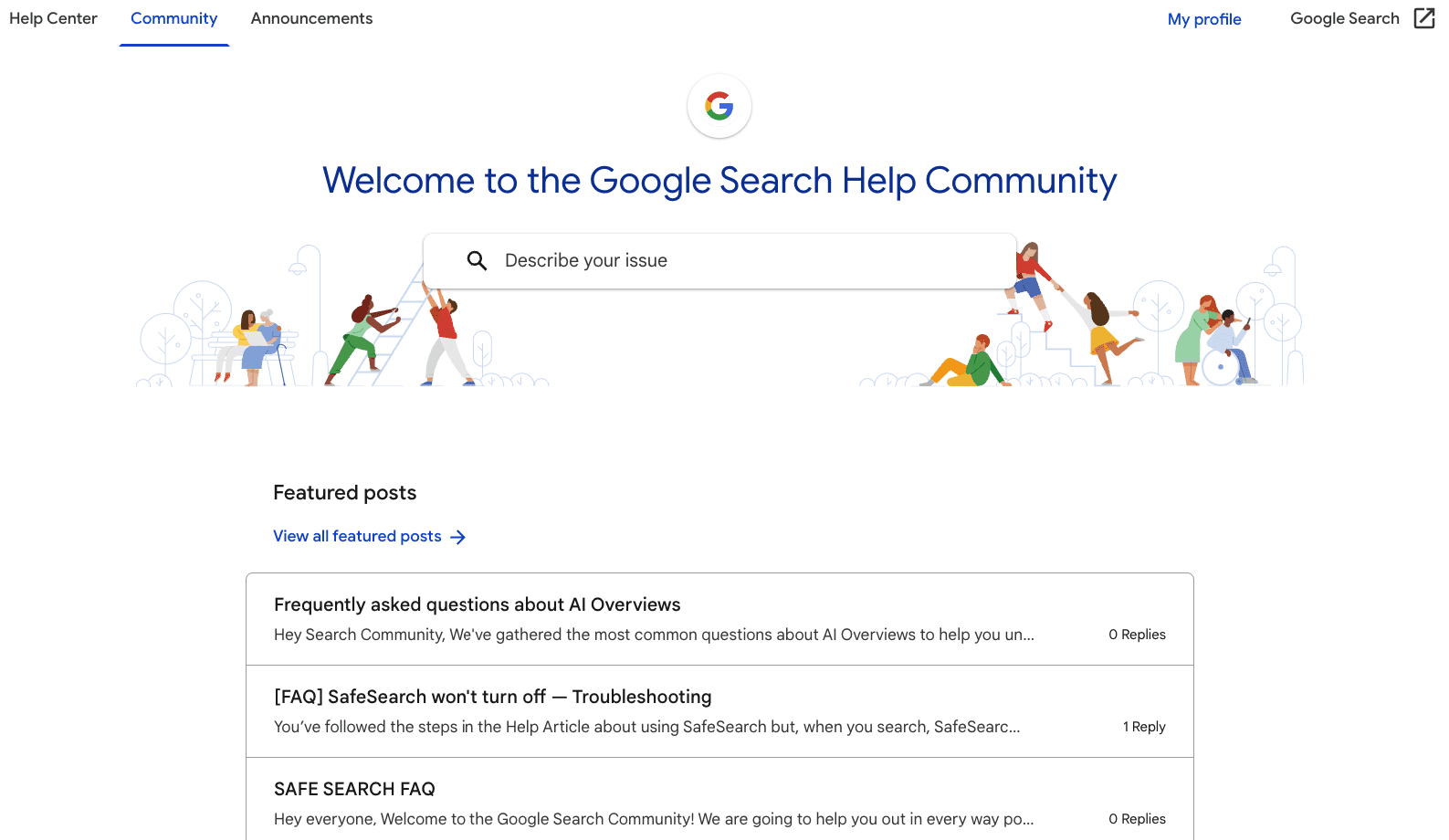
  • Offering advice in the Google Search Help Community or on SEO-specific Subreddits like r/SEO (also an excellent way to land new clients).
  • Sharing detailed breakdowns of your methods.
Google Search Help CommunityImage from Google Search Help Community, August 2024

The key? Always inject your unique perspective into these contributions and genuinely help other people. This will gradually build your reputation and attract clients who love your style.

Remember, effective brand-building takes time. Be patient, stay consistent, and clearly envision what you want to be known for in the SEO world.

My Experience: I focused on sharing my detailed approach to SEO auditing. I decided to be transparent about my process. I created in-depth guides that outlined my auditing methodology. By openly sharing this process, I showed my expertise and gave potential clients a clear picture of my value. While some consultants kept their methods secret, I chose to be open and educational.

It took a few months, but people started to recognize me as an SEO auditing expert. This approach became my unique selling point and the cornerstone of my personal brand.

2. Not Having A Website (Your Digital Business Card)

As an independent SEO consultant, setting up your own website should be your first priority. It’s a crucial mistake to overlook this step.

Your website is your digital business card. It’s where you showcase your SEO knowledge, unique approach, and specialty. Think of it as your own space on the internet, where you’re in control.

On your website, you set the rules. You control:

  • Your service offerings.
  • Your pricing structure.
  • Display of your expertise.
  • Presentation of your credentials.

It’s the ideal platform to demonstrate your SEO skills in action. Potential clients can see firsthand what you are up to in SEO.

Creating a website is easier than ever now. You can use WordPress or other content management systems to get started quickly. You don’t need advanced technical skills to set up a professional-looking site.

Remember, your website is often your first impression on potential clients. It reflects your brand and your capabilities. Don’t underestimate its importance in establishing your credibility as an SEO consultant.

A well-optimized, informative website can significantly accelerate your progress in attracting clients and building your reputation. It’s an investment in your business that pays dividends in the long run.

So, prioritize getting your website up and running. It’s a critical step in your journey as an independent SEO consultant.

3. Not Diversifying Your Income Sources (Financial Security 101)

Let me tell you something important: having just one job and one source of income is the least secure financial situation. If that job ends, you’re left with nothing. Zero income.

That’s why being an independent consultant can actually be more financially secure than a traditional job. I know many people fear going independent but trust me, it can offer greater stability if you do it right.

Want to secure yourself financially as an independent SEO consultant? Here’s how:

  • Work with multiple clients. There’s little chance all your clients will leave at the same time.
  • Start a newsletter or YouTube channel. Build an audience and accept sponsorships.
  • Be open to sponsorships from SEO companies or tool providers. If you’re good, they will reach out to you.
  • Create and sell a course. Share your expertise and create an additional income stream.
  • Keep exploring new possibilities. The sky’s the limit when it comes to creating income streams!

The key rule? Have multiple income sources that don’t depend on each other. This gives you a safety net and opens up more growth opportunities.

By diversifying your income streams, you’re not just increasing your earning potential. You’re building a more resilient business that can handle market ups and downs, and client turnover.

Remember, building multiple income streams takes time and effort. Start with your core consulting service, then gradually add other streams as you establish yourself in the industry.

Don’t put all your eggs in one basket. Diversify your income and build a more secure future for yourself!

4. Avoiding Sharing Your Knowledge Publicly (Your Expertise Showcase)

I’ve seen many SEO consultants hesitate to share their knowledge publicly.

They worry that if they reveal their “secrets,” clients will use this info and not need their services. But guess what? That’s totally wrong!

In reality, the more you share and the more detailed you are, the more clients will reach out to you. Here’s why:

  • Sharing shows off your expertise and builds trust with potential clients.
  • Detailed content proves how much you really know. This often sets you apart from others.
  • Public sharing makes you a thought leader in the SEO world.

Sure, some people, SEO professionals, or companies with in-house SEO experts might use your published knowledge. And that’s okay! Isn’t helping others part of why we do this?

The clients you want will be impressed by what you share but won’t be able to replicate your expertise. They’ll want you to implement these strategies for them. These are the clients who will come to you – you won’t need to chase them.

Clients who find you through your shared content are different. They understand the value of SEO and appreciate expertise. Working with these clients is usually super productive and enjoyable.

Remember, by sharing your knowledge, you’re not giving away your value – you’re showing it off. Your unique insights, experience, and ability to apply this knowledge are what clients are paying for.

So don’t be afraid to share what you know. It’s not just good for others – it’s great for your business too!

5. Underestimating Your SEO Projects (The Perfectionist’s Trap)

Let me tell you something: It doesn’t matter how experienced you are in SEO. If you’re new to being an independent consultant, you’re probably going to underestimate your projects.

This is especially true if you’re a perfectionist like me. You’ll want to go above and beyond for your clients, especially your first ones. And that’s great – it’s actually cool to be so dedicated.

But here’s the catch: You need to be careful. It’s super easy to underestimate a project and end up working for free. Trust me, I’ve done this more times than I’d like to admit.

Here’s what usually happens:

  • You want to impress your new clients, so you over-deliver.
  • You spend way more time than you planned on the project.
  • You end up working tons of unpaid hours.

Your clients will definitely love your effort. But this approach? It’s not sustainable for your business.

So, how do you avoid this trap? Simple: Clearly set the scope of work from the start and be super detailed about what’s included in your service.

For anything extra or outside the agreed scope, just charge on an hourly basis. This way, you can:

  • Meet your clients’ additional needs without working for free.
  • Keep your services flexible.
  • Make sure you’re fairly paid for all your work.

Remember, it’s awesome to be passionate about your work and want to deliver the best for your clients. But as an independent consultant, you must also protect your time and keep your business profitable.

My Experience: When I first started consulting, I often found myself working late into the night to deliver more than I’d promised. My clients were thrilled, but I was exhausted and underpaid. Learning to clearly define project scopes and charge properly for extra work was crucial for my mental health.

Don’t make the same mistakes I did. Value your time and expertise – your business depends on it!

6. Not Setting Boundaries With Your SEO Clients (Balancing Act)

Let’s talk about setting boundaries with clients. It’s tricky, right? You want to build friendly, professional relationships with your clients as an independent SEO consultant.

One of my unique selling points is treating clients as partners and friends. They don’t want just another SEO agency – they want a partner. Here’s what I offer:

  • Direct contact with me.
  • Easy accessibility.
  • Flexibility.
  • Fast response times.

These are things clients often don’t get from big SEO agencies, and they’re what set independent consultants like us apart.

But here’s the catch: this approach can cost you if you don’t set clear boundaries. Without them, you risk burning out and getting resentful.

At the very least, you should:

  • Not answer immediately on your off days.
  • Only respond to real emergencies during vacations.

You need to find that sweet spot that works for both you and your clients. It’s all about creating a sustainable working relationship.

Remember, setting boundaries doesn’t mean giving poor service. It means creating a framework that lets you consistently deliver top-notch work without sacrificing your well-being.

Be clear about these boundaries from the start. Most clients will respect them, especially when they understand that these boundaries help you provide better service in the long run.

My Experience: When I first started, I was available to clients 24/7. They loved it, but I burned out fast, and my work suffered. By setting clear boundaries – like specific office hours and response times for non-emergencies – I was able to provide better service and keep a healthier work-life balance. My clients respected these boundaries, and our relationships actually improved!

Don’t make the same mistake I did. Set clear boundaries from the start. Your clients will respect you for it, and you’ll be able to serve them better in the long run.

7. Not Starting Your Newsletter Immediately (Your Audience Awaits)

Listen up! Starting your own SEO newsletter should be a day one priority. When you set up your website, make sure to add a newsletter sign-up option right away.

This simple step can make a huge difference in your success as an independent SEO consultant.

Why is a newsletter so crucial? Here is why:

  • It makes you less dependent on Google for visibility. We all know how unpredictable search rankings can be, right?
  • Once you have a few thousand subscribers, it’s a great way to diversify your income. Consider creating premium content, promoting your services, or even accepting sponsorships.
  • Most importantly, it helps you build a base of fans you can always reach out to. These are people who know you and like your content. Their value is huge compared to people just discovering you for the first time.

You can use this list to:

  • Get opinions by running polls.
  • Find new clients.
  • Promote your products and services.

My Personal Experience

I recently launched my first SEO course, and wow, did it drive home the importance of having a loyal following. I promoted the course through:

  • Google Ads and Facebook Ads.
  • Other SEOs’ newsletters.
  • My own newsletter, social media channels, and YouTube.

The results? Eye-opening. Despite the broad reach of paid advertising, the only people who actually bought my course were those who had been following me for a while.

My newsletter, social media channels, and YouTube were the only ones that converted. All other channels? Zero customers.

I didn’t see this coming, but it clearly shows the power of having a base of fans and followers who trust you. These are your people, your tribe. That’s why it’s crucial to start building your tribe from day one.

Remember, your newsletter subscribers are more than just potential customers. They’re your community. Nurture this relationship by consistently providing value, and they’ll become your most loyal supporters and clients.

Starting a newsletter might seem like extra work when you’re just beginning, but trust me, it’s an investment in your future success as an independent SEO consultant. Don’t make the mistake of overlooking this powerful tool.

So, from day one, focus on growing your list. Encourage sign-ups on your website, promote your newsletter on social media, and always deliver value to your subscribers.

In time, this list will become one of your most valuable assets as an independent SEO consultant.

Final Words Of SEO Wisdom

Becoming a successful independent SEO consultant isn’t just about your SEO skills. It’s about avoiding common pitfalls that can hinder your progress.

Build your brand from day one. Create a professional website. Diversify your income sources. Share your knowledge publicly. Accurately estimate your projects. Set clear boundaries with clients. Start and grow your newsletter immediately.

These steps aren’t just good practices – they’re essential for long-term success. They’ll help you build a sustainable business, attract the right clients, and establish yourself as a respected SEO consultant.

The path of an independent consultant isn’t always easy, but it’s incredibly rewarding. By avoiding these common mistakes, you’re setting yourself up for a thriving, fulfilling career in SEO.

Start implementing these strategies today. Your future self will thank you.

Read more:


Featured Image: PeopleImages.com – Yuri A/Shutterstock

GenAI Is a Potent Ecommerce Coding Tool

Much is made of generative artificial intelligence’s impact on search, content, and processes, but it’s also a potent coding tool that could help ecommerce businesses of all sizes.

While they have yet to transform a novice into a master programmer, ChatGPT and its competitors can produce functional code that marketers and merchants can paste into apps and automation workflows.

An example can make the point.

Posting to Shopify Blog

The content-then-commerce model is big business. Content attracts readers to convert into buyers. However, Shopify merchants often encounter a problem.

While it excels at many things, Shopify’s default blog editor — think content engine — lacks robust features.

For instance, a YouTube URL in the blog editor produces nothing more than text. It does not automatically expand into a video, requiring merchants to paste HTML for that purpose.

In contrast, the same YouTube URL in the WordPress.com editor results in a responsive embedded video that shrinks and expands to match a visitor’s screen. This is the behavior most content marketers expect.

The Shopify blog editor requires users to paste HTML for an embedded video.

A solution is bypassing the Shopify editor altogether. What if a marketer could compose content in a tool such as Google Docs — with images, tables, and YouTube videos — and then auto-load it into a Shopify blog?

I prompted ChatGPT to generate the code for just such an app.

The AI Solution

ChatGPT’s solution had two parts.

Apps Script is accessible from any Google Doc and provides a development environment wherein Google application programming interfaces (APIs) are available as services. The code used is essentially JavaScript.

Screenshot of Apps Script menu item in Google Docs

Google Apps Script is a development environment available in Google Docs and other Google applications.

ChatGPT produced detailed code that could be copied and pasted into the Apps Script’s environment, listing the process step-by-step.

ChatGPT’s Apps Script had six functions.

  • postArticleToShopify() — this was the primary function. It calls the supporting functions and ultimately connects to the Shopify API.
  • convertBodyToHTML(body) — given the document body, this function does most of the work. It identifies if a particular element in the document body is a bulleted list, a table, or a paragraph. Paragraphs are tricky since they can contain text, headings, images, or a link.
  • extractYouTubeVideoId(url) — finds the YouTube ID in a URL string.
  • generateYouTubeEmbed(videoId) — given a YouTube video ID, this function builds a set of HTML tags that result in a responsive embedded video.
  • formatCurrentDate() — is a helper function that retrieves and formats the current date into the publication date for the blog post.
  • escapeHTML(text) — is a helper function that removes a set of characters that could cause problems when the HTML is sent to Shopify’s API.

The most surprising part of ChatGPT’s code generation was its familiarity with the App Script and Shopify API requirements. ChatGPT knew that Shopify’s API could not receive an image as a file but had to be encoded and passed as data.

Custom Shopify App

There was one last step. In Shopify, I had to navigate to the “Apps and sales channels” tab in the platform’s settings. From there, I created, authorized, and installed a custom app. The goal was to collect an API access token allowing the App Script to post content to the Shopify Blog.

Creating the custom app provided access to the API token.

Content Posted

In less than 30 minutes and ChatGPT’s code, I completed a working solution to compose content in a Google Doc and have it appear on Shopify.

Screenshot of the partial blog posts on Google Docs and Shopify

ChatGPT’s code transformed a Google Doc into a complete blog post in Shopify.

The process is repeatable. Anyone could compose content in Google Docs — with images, tables, and YouTube URLs — and produce a clean and responsive blog post in Shopify.

Here is a PDF of ChatGPT’s complete Apps Script.

Implications

ChatGPT’s initial solution had a few glitches.

  • ChatGPT did not understand precisely how Google Doc files are structured. Its initial code looked for images and links at the same level of the document hierarchy as a table or paragraph. In practice, these elements were inside a paragraph element, i.e., children of a paragraph element.
  • When it generated the function to create the responsive HTML for the YouTube video, ChatGPT loaded the image twice. Changing the variable assignment solved the issue.
  • The code is not perfect. In some places, it should be refactored to improve readability and function.
  • The Shopify API required a blog ID that was not easy to retrieve. Ultimately, I used the API and a development tool called Postman to obtain it.

Nonetheless, the example shows ChatGPT can generate useful code, especially for a user with some technical know-how. What’s more, the process was fast. I have written many Apps Scripts. This one would have taken much longer without ChatGPT.

A brief guide to the greenhouse gases driving climate change

This article is from The Spark, MIT Technology Review’s weekly climate newsletter. To receive it in your inbox every Wednesday, sign up here.

For the last week or so, I’ve been obsessed with a gas that I’d never given much thought to before. Sulfur hexafluoride (SF6) is used in high-voltage equipment on the grid. It’s also, somewhat inconveniently, a monster greenhouse gas. 

Greenhouse gases are those that trap heat in the atmosphere. SF6 and other fluorinated gases can be thousands of times more powerful at warming the planet than carbon dioxide, and yet, because they tend to escape in relatively small amounts, we hardly ever talk about them. Taken alone, their effects might be minor compared with those of carbon dioxide, but together, these gases add significantly to the challenge of addressing climate change. 

For more on the specifics of sulfur hexafluoride, check out my story from earlier this week. And in the meantime, here’s a quick cheat sheet on the most important greenhouse gases you need to know about. 

Carbon dioxide: The leading actor

I couldn’t in good conscience put together a list of greenhouse gases and not at least mention the big one. Human activities released 37.4 billion tons of carbon dioxide into the atmosphere in 2023. It’s the most abundant greenhouse gas we emit, and the most significant one driving climate change. 

It’s difficult to nail down exactly how long CO2 stays in the atmosphere, since the gas participates in a global carbon cycle—some will immediately be soaked up by oceans, forests, or other ecosystems, while the rest lingers in the atmosphere for centuries. 

Carbon dioxide comes from nearly every corner of our economy—the largest source is power plants, followed by transportation and then industrial activities. 

Methane: The flash in the pan

Methane is also a powerful contributor to climate change, making up about 30% of the warming we’ve experienced to date, even though carbon dioxide is roughly 200 times more abundant in the atmosphere. 

What’s most different about methane is that the gas is very short-lived, having a lifetime of somewhere around a decade in the atmosphere before it breaks down. But in that time, methane can cause about 86 times more warming than an equivalent amount of carbon dioxide. (Quick side note: Comparisons of greenhouse gases are usually made over a specific period of time, since gases all have different lifetimes and there’s no one number that can represent the complexity of atmospheric chemistry and physics.)

Methane’s largest sources are the fossil-fuel industry, agriculture, and waste. Cutting down leaks from the process of extracting oil and gas is one of the most straightforward and currently available ways to slim down methane emissions. There’s a growing movement to track methane more accurately—with satellites, among other techniques—and hold accountable the oil and gas companies that are releasing the most. 

Nitrous oxide: No laughing matter

You may have come across nitrous oxide at the dentist, where it might be called “laughing gas.” But its effects on climate change are serious, as the gas makes up about 6% of warming to date

Nitrous oxide emissions come almost entirely from agriculture. Applying certain nitrogen-based fertilizers can release the gas as bacteria break those chemicals down. Emissions can also come from burning certain agricultural wastes. 

Nitrous oxide emissions grew roughly 40% from 1980 to 2020. The gas lasts in the atmosphere for roughly a century, and over that time it can trap over 200 times more heat than carbon dioxide does in the same period. 

Cutting down on these emissions will largely require careful adjustment of soil management practices in agriculture. Decreasing use of synthetic fertilizers, applying the fertilizer we do use more efficiently, and choosing products that eliminate as many emissions as possible will be the main levers we can pull.

Fluorinated gases: The quiet giants

Last but certainly not least, fluorinated gases are some of the most powerful greenhouse gases that we emit. A variety of them fall under this umbrella, including hydrofluorocarbons (HFCs), perfluorocarbons (PFCs), and SF6. They last for centuries (or even millennia) in the atmosphere and have some eye-popping effects, with each having at least 10,000 times more global warming potential than carbon dioxide. 

HFCs are refrigerants, used in air conditioners, refrigerators, and similar appliances. One major area of research in heat pumps seeks alternative refrigerants that don’t have the same potential to warm the planet. The chemicals are also used in aerosol cans (think hair spray), as well as in fire retardants and solvents. 

SF6 is used in high-voltage power equipment, and it’s the single worst greenhouse gas that’s been covered by the International Panel on Climate change, clocking in at 23,500 times more powerful than carbon dioxide over the course of a century. Scientists are trying to find alternatives, but it’s turning out to be a difficult switch—as you’ll see if you read my latest story.

The good news is that we know change is possible when it comes to fluorinated gases. We’ve already moved away from one category, chlorofluorocarbons (CFCs). These were generally used in the same industries that use HFCs today, but they had the nasty habit of tearing a hole in the ozone layer. The 1987 Montreal Protocol successfully spurred a phaseout of CFCs, and we would be on track for significantly more warming without the change.


Now read the rest of The Spark

Related reading

Some scientists want to speed up or encourage chemical reactions that remove methane from the atmosphere, including researchers and companies who aim to spray iron particles above the ocean

Methane can come from food waste, and some companies want to capture that gas and use it for energy instead of allowing it to escape into the atmosphere.

Carbon dioxide emissions from aviation are only one source of the industry’s climate impact. Planes also emit clouds of water vapor and particulate matter called contrails, and they’re a huge cause of the warming from air travel. Rerouting planes could help.

Another thing

We’re inching closer to climate tipping points, thresholds where ecosystems and planetary processes can create feedback loops or rapid shifts. A UK research agency just launched a $106 million effort to develop early warning systems that could alert us if we get dangerously close to these tipping points. 

The agency will focus on two main areas: the melting of the Greenland Ice Sheet and the weakening of the North Atlantic Subpolar Gyre. Read more about the program’s goals in my colleague James Temple’s latest story.

Keeping up with climate  

Volkswagen has thrown over $20 billion at EV, battery, and software startups over the past six years. Experts aren’t sure this shotgun approach is helping the automaker compete on electric cars. (The Information)

We’re finally starting to understand how clouds affect climate change. Clouds reflect light back into space, but they also trap heat in the atmosphere. Researchers are starting to puzzle out how this will add up in our future climate. (New Scientist)

Vehicles in the US just keep getting bigger, and the trend is deadly. Larger vehicles are safer for their occupants but more dangerous for everyone around them. (The Economist)

→ Big cars can also be a problem for climate change, since they require bigger batteries and more power to get around. (MIT Technology Review)

The plant-based-meat industry has had trouble converting consumers in the US, and sales are on the decline. Now advocates are appealing to Congress for help. (Vox)

Last Energy wants to build small nuclear reactors, and the startup just secured $40 million in funding. The company is claiming that it can meet aggressive timelines and says it’ll bring its first reactor online as early as 2026 in Europe. (Canary Media)

There could be 43 million tons of wind turbine blades in landfills by 2050. Researchers say they’ve found alternative materials for the blades that could make them recyclable. (New York Times)

→ Other research aims to recycle the fiberglass in current blades using chemical methods. (MIT Technology Review)

The last coal-fired power plant in the UK is set to shut down at the end of the month. The facility just accepted its final fuel delivery. (BBC

How plants could mine metals from the soil

Nickel may not grow on trees—but there’s a chance it could someday be mined using plants. Many plant species naturally soak up metal and concentrate it in their tissues, and new funding will support research on how to use that trait for plant-based mining, or phytomining. 

Seven phytomining projects just received $9.9 million in funding from the US Department of Energy’s Advanced Research Projects Agency for Energy (ARPA-E). The goal is to better understand which plants could help with mining and determine how researchers can tweak them to get our hands on all the critical metals we’ll need in the future.

Metals like nickel, crucial for the lithium-ion batteries used in electric vehicles, are in high demand. But building new mines to meet that demand can be difficult because the mining industry has historically faced community backlash, often over environmental concerns. New mining technologies could help diversify the supply of crucial metals and potentially offer alternatives to traditional mines.  

“Everyone wants to talk about opening a new gigafactory, but no one wants to talk about opening a new mine,” says Philseok Kim, program director at ARPA-E for the phytomining project. The agency saw a need for sustainable, responsible new mining technologies, even if they’re a major departure from what’s currently used in the industry. Phytomining is a prime example. “It’s a crazy idea,” Kim says.

Roughly 750 species of plants are known to be hyperaccumulators, meaning they soak up large amounts of metals and hold them within their tissues, Kim says. The plants, which tend to absorb these metals along with other nutrients in the soil, have adapted to tolerate them.

Of the species known to take in and concentrate metals, more than two-thirds do so with nickel. While nickel is generally toxic to plants at high concentrations, these species have evolved to thrive in nickel-rich soils, which are common in some parts of the world where geologic processes have brought the metal to the surface. 

Even in hyperaccumulators, the overall level of nickel in a plant’s tissues would still be relatively small—something like one milligram of metal for every gram of dried plant material. But burning a dried plant (which largely removes the organic material) can result in ash that’s roughly 25% nickel or even higher.

The sheer number of nickel-tolerant plants, plus the metal’s importance for energy technologies, made it the natural focus for early research, Kim says.

But while plants already have a head start on nickel mining, it wouldn’t be feasible to start commercial operations with them today. The most efficient known hyperaccumulators might be able to produce 50 to 100 kilograms of nickel per hectare of land each year, Kim says. That would yield enough of the metal for just two to four EV batteries, on average, and require more land than a typical soccer field. The research program will aim to boost that yield to at least 250 kilograms per hectare in an attempt to improve the prospects for economical mining.

The seven projects being funded will aim to increase production in several ways. Some of the researchers are hunting for species that accumulate nickel even more efficiently than known species. One candidate is vetiver, a perennial grass that grows deep roots. It’s known to accumulate metals like lead and is often used in cleanup projects, so it could be a good prospect for soaking up other metals like nickel, says Rupali Datta, a biology researcher at Michigan Technological University and head of one of the projects.

Another awardee will examine over 100,000 herbarium samples—preserved and catalogued plant specimens. Using a technique called x-ray fluorescence scanning, the researchers will look for nickel in those plants’ tissues in the hopes of identifying new hyperaccumulator species. 

Other researchers are looking to boost the mining talents of known nickel hyperaccumulators. One problem with many of the established options is that they don’t have very high biomass—in other words, they’re small. So even if the plant has a relatively high concentration of nickel in its tissues, each plant will collect only a small amount of the metal. Researchers want to tweak the known hyperaccumulators to plump them up—for example, by giving them bigger root systems that would allow them to reach deeper into the soil for metal.

Another potential way to improve nickel uptake is to change the plants’ growth cycle. Most perennial plants will basically stop growing once they flower, says Richard Amasino, a biochemistry researcher at the University of Wisconsin–Madison. So one of his goals for the project is figuring out a way to delay flowering in Odontarrhena, a family of plants with bright yellow flowers, so they have more time to soak up nickel before they quit growing for the season.

Researchers are also working with these known target species to make sure they won’t become invasive in the places they’re planted. For example, Odontarrhena are native to Europe, and researchers want to make sure they wouldn’t run wild and disrupt natural ecosystems if they’re brought to the US or other climates where they’d grow well.

Hyperaccumulating plants are already used in mineral exploration, but they likely won’t be able to produce the high volumes of nickel we mine today, Simon Jowitt, director of the Center for Research in Economic Geology at the University of Nevada, Reno, said in an email. But plants might be a feasible solution for dealing with mine waste, he said. 

There’s also the question of what will happen once plants suck up the metals from a given area of soil. According to Jowitt, that layer may need to be removed to access more metal from the lower layers after a crop is planted and harvested. 

In addition to identifying and altering target species, researchers on all these projects need to gain a better understanding where plants might be grown and whether and how natural processes like groundwater movement might replenish target metals in the soil, Kim says. Also, scientists will need to analyze the environmental sustainability of phytomining, he adds. For example, burning plants to produce nickel-rich ash will lead to greenhouse-gas emissions. 

Even so, addressing climate change is all about making and installing things, Kim adds, and we need lots of materials to do that. Phytomining may be able to help in the future. “This is something we believe is possible,” Kim says, “but it’s extremely hard.”

Google’s Guidance About The Recent Ranking Update via @sejournal, @martinibuster

Google’s Danny Sullivan explained the recent update, addressing site recoveries and cautioning against making radical changes to improve rankings. He also offered advice for publishes whose rankings didn’t improve after the last update.

Google’s Still Improving The Algorithm

Danny said that Google is still working on their ranking algorithm, indicating that more changes (for the positive) are likely on the way. The main idea he was getting across is that they’re still trying to fill the gaps in surfacing high quality content from independent sites. Which is good because big brand sites don’t necessarily have the best answers.

He wrote:

“…the work to connect people with “a range of high quality sites, including small or independent sites that are creating useful, original content” is not done with this latest update. We’re continuing to look at this area and how to improve further with future updates.”

A Message To Those Who Were Left Behind

There was a message to those publishers whose work failed to recover with the latest update, to let them know that Google is still working to surface more of the independent content and that there may be relief on the next go.

Danny advised:

“…if you’re feeling confused about what to do in terms of rankings…if you know you’re producing great content for your readers…If you know you’re producing it, keep doing that…it’s to us to keep working on our systems to better reward it.”

Google Cautions Against “Improving” Sites

Something really interesting that he mentioned was a caution against trying to improve rankings of something that’s already on page one in order to rank even higher. Tweaking a site to get from position six or whatever to something higher has always been a risky thing to do for many reasons I won’t elaborate on here. But Danny’s warning increases the pressure to not just think twice before trying to optimize a page for search engines but to think three times and then some more.

Danny cautioned that sites that make it to the top of the SERPs should consider that a win and to let it ride instead of making changes right now in order to improve their rankings. The reason for that caution is that the search results continue to change and the implication is that changing a site now may negatively impact the rankings in a newly updated search index.

He wrote:

“If you’re showing in the top results for queries, that’s generally a sign that we really view your content well. Sometimes people then wonder how to move up a place or two. Rankings can and do change naturally over time. We recommend against making radical changes to try and move up a spot or two”

How Google Handled Feedback

There was also some light shed on what Google did with all the feedback they received from publishers who lost rankings. Danny wrote that the feedback and site examples he received was summarized, with examples, and sent to the search engineers for review. They continue to use that feedback for the next round of improvements.

He explained:

“I went through it all, by hand, to ensure all the sites who submitted were indeed heard. You were, and you continue to be. …I summarized all that feedback, pulling out some of the compelling examples of where our systems could do a better job, especially in terms of rewarding open web creators. Our search engineers have reviewed it and continue to review it, along with other feedback we receive, to see how we can make search better for everyone, including creators.”

Feedback Itself Didn’t Lead To Recovery

Danny also pointed out that sites that recovered their rankings did not do so because of they submitted feedback to Google. Danny wasn’t specific about this point but it conforms with previous statements about Google’s algorithms that they implement fixes at scale. So instead of saying, “Hey let’s fix the rankings of this one site” it’s more about figuring out if the problem is symptomatic of something widescale and how to change things for everybody with the same problem.

Danny wrote:

“No one who submitted, by the way, got some type of recovery in Search because they submitted. Our systems don’t work that way.”

That feedback didn’t lead to recovery but was used as data shouldn’t be surprising. Even as far back as the 2004 Florida Update Matt Cutts collected feedback from people, including myself, and I didn’t see a recovery for a false positive until everyone else also got back their rankings.

Takeaways

Google’s work on their algorithm is ongoing:
Google is continuing to tune its algorithms to improve its ability to rank high quality content, especially from smaller publishers. Danny Sullivan emphasized that this is an ongoing process.

What content creators should focus on:
Danny’s statement encouraged publishers to focus on consistently creating high quality content and not to focus on optimizing for algorithms. Focusing on quality should be the priority.

What should publishers do if their high-quality content isn’t yet rewarded with better rankings?
Publishers who are certain of the quality of their content are encouraged to hold steady and keep it coming because Google’s algorithms are still being refined.

Read the post on LinkedIn.

Featured Image by Shutterstock/Cast Of Thousands