How AI Shopping Impacts Main Street Retail

For stores in downtown shopping districts and suburban strip malls, AI shopping could be an opportunity to play to a merchant’s strengths.

Agentic commerce — the concept of AI agents shopping for humans — is a hot topic, in part because of commercial opportunity amid uncontrollable uncertainty.

Shopping Experience

“Agentic commerce is accelerating a bifurcation we’re already seeing,” said Andrew Stern, CEO and co-founder of Quilt Software, which makes operational tools for independent retailers.

This bifurcation, according to Stern, is at the separation of commodity buying and experience-based shopping.

On the one hand, if someone wants a commodity item or a widely available brand, almost any store will do. A shopper might ask ChatGPT to order more Tide laundry detergent, and not care who sells it. What matters is getting Tide delivered quickly at a low price.

On the other hand are the retailers that Stern’s company serves: mom-and-pop operations on Main Street.

These violin shops, wine boutiques, and pet stores offer a local experience. Shoppers talk to an expert in person or let a dog sniff out the right bone. And these companies are part of our local neighborhoods.

The extent to which specialty merchants can transfer that shopping experience into agentic commerce is either an opportunity or a danger.

Image of a male merchant wiht a beard in his wine shop

For brick-and-click shops, expertise and experience are advantages.

Parking Meters

A parking meter might seem like an odd analogy for AI. Yet both impact Main Street businesses.

Take the small downtown shop in Idaho that sold both specialty coffee and leather goods. It was a husband-and-wife operation. She was the barista. He was the one hand-sewing leather BBQ aprons while everyone watched.

The business was a destination. It was also profitable until the city added parking meters.

The extra $1.25 per hour it now costs to park outside the shop changed the dynamic. Sales declined.

Adapting

The coffee and leather business faced a danger that could also have been an opportunity. The company could have run a campaign offering to pay for parking when you buy a mocha or a latte.

Agentic AI is another external force that could harm independent retailers. Yet many of these business owners have shown they can adapt.

“The big moment for our customer type — the specialty retailers — was Covid, where suddenly if you didn’t have an online presence, you kind of didn’t exist,” Stern said. “That got a lot of our retailers online, and it was a very good thing in terms of modernizing the experience.”

The Wine Guy

Modernization did not erase what makes these stores valuable; it revealed it.

Stern described how agentic commerce might make shoppers even more aware of the difference between a synthetic and authentic experience.

“The synthetic experience that the large players are trying to create almost validates and drives people toward the authentic experience they’re having at their local merchant,” he said.

Consider the neighborhood wine shop. The owner knows your name. He remembers what you bought last time and whether you liked it. When you tell him you are grilling lamb for dinner, he doesn’t send you an algorithmic list; he smiles and says, “I have got just the thing.”

An AI agent cannot replicate that personal recognition and service, but it can point toward them.

If agentic commerce can quickly handle commodity buying, it frees consumers to spend more time and attention on experiential purchases — the human, high-touch moments that small retailers excel at.

Playing to Strengths

Independent retailers do not need to compete with AI for efficiency. They need to highlight what automation cannot offer.

For a pet store, this approach might mean hiring expert staff or hosting adoption events that become community rituals. For a jeweler, it is the conversation that starts with a birthday and ends with a story. For a café, it’s the warmth that can’t be downloaded.

In the coming years, AI will likely become the first point of contact for many shoppers. The agent will handle search and selection. The specialty merchants who succeed will be the ones discoverable within that system and differentiated once the customer walks through the door.

Agentic commerce may change how customers shop, but it will not change why they buy. The merchants who win will turn human touch into their strongest signal in an AI-driven world.

An AI app to measure pain is here

How are you feeling?

I’m genuinely interested in the well-being of all my treasured Checkup readers, of course. But this week I’ve also been wondering how science and technology can help answer that question—especially when it comes to pain. 
In the latest issue of MIT Technology Review magazine, Deena Mousa describes how an AI-powered smartphone app is being used to assess how much pain a person is in.

The app, and other tools like it, could help doctors and caregivers. They could be especially useful in the care of people who aren’t able to tell others how they are feeling.

But they are far from perfect. And they open up all kinds of thorny questions about how we experience, communicate, and even treat pain.

Pain can be notoriously difficult to describe, as almost everyone who has ever been asked to will know. At a recent medical visit, my doctor asked me to rank my pain on a scale from 1 to 10. I found it incredibly difficult to do. A 10, she said, meant “the worst pain imaginable,” which brought back unpleasant memories of having appendicitis.

A short while before the problem that brought me in, I’d broken my toe in two places, which had hurt like a mother—but less than appendicitis. If appendicitis was a 10, breaking a toe was an 8, I figured. If that was the case, maybe my current pain was a 6. As a pain score, it didn’t sound as bad as I actually felt. I couldn’t help wondering if I might have given a higher score if my appendix were still intact. I wondered, too, how someone else with my medical issue might score their pain.

In truth, we all experience pain in our own unique ways. Pain is subjective, and it is influenced by our past experiences, our moods, and our expectations. The way people describe their pain can vary tremendously, too.

We’ve known this for ages. In the 1940s, the anesthesiologist Henry Beecher noted that wounded soldiers were much less likely to ask for pain relief than similarly injured people in civilian hospitals. Perhaps they were putting on a brave face, or maybe they just felt lucky to be alive, given their circumstances. We have no way of knowing how much pain they were really feeling.

Given this messy picture, I can see the appeal of a simple test that can score pain and help medical professionals understand how best to treat their patients. That’s what is being offered by PainChek, the smartphone app Deena wrote about. The app works by assessing small facial movements, such as lip raises or brow pinches. A user is then required to fill a separate checklist to identify other signs of pain the patient might be displaying. It seems to work well, and it is already being used in hospitals and care settings.

But the app is judged against subjective reports of pain. It might be useful for assessing the pain of people who can’t describe it themselves—perhaps because they have dementia, for example—but it won’t add much to assessments from people who can already communicate their pain levels.

There are other complications. Say a test could spot that a person was experiencing pain. What can a doctor do with that information? Perhaps prescribe pain relief—but most of the pain-relieving drugs we have were designed to treat acute, short-term pain. If a person is grimacing from a chronic pain condition, the treatment options are more limited, says Stuart Derbyshire, a pain neuroscientist at the National University of Singapore.

The last time I spoke to Derbyshire was back in 2010, when I covered work by researchers in London who were using brain scans to measure pain. That was 15 years ago. But pain-measuring brain scanners are yet to become a routine part of clinical care.

That scoring system was also built on subjective pain reports. Those reports are, as Derbyshire puts it, “baked into the system.” It’s not ideal, but when it comes down to it, we must rely on these wobbly, malleable, and sometimes incoherent self-descriptions of pain. It’s the best we have.

Derbyshire says he doesn’t think we’ll ever have a “pain-o-meter” that can tell you what a person is truly experiencing. “Subjective report is the gold standard, and I think it always will be,” he says.

This article first appeared in The Checkup, MIT Technology Review’s weekly biotech newsletter. To receive it in your inbox every Thursday, and read articles like this first, sign up here.

What’s next for carbon removal?

MIT Technology Review’s What’s Next series looks across industries, trends, and technologies to give you a first look at the future. You can read the rest of them here.

In the early 2020s, a little-known aquaculture company in Portland, Maine, snagged more than $50 million by pitching a plan to harness nature to fight back against climate change. The company, Running Tide, said it could sink enough kelp to the seafloor to sequester a billion tons of carbon dioxide by this year, according to one of its early customers.

Instead, the business shut down its operations last summer, marking the biggest bust to date in the nascent carbon removal sector.

Its demise was the most obvious sign of growing troubles and dimming expectations for a space that has spawned hundreds of startups over the last few years. A handful of other companies have shuttered, downsized, or pivoted in recent months as well. Venture investments have flagged. And the collective industry hasn’t made a whole lot more progress toward that billion-ton benchmark.

The hype phase is over and the sector is sliding into the turbulent business trough that follows, warns Robert Höglund, cofounder of CDR.fyi, a public-benefit corporation that provides data and analysis on the carbon removal industry.

“We’re past the peak of expectations,” he says. “And with that, we could see a lot of companies go out of business, which is natural for any industry.”

The open question is: If the carbon removal sector is heading into a painful if inevitable clearing-out cycle, where will it go from there? 

The odd quirk of carbon removal is that it never made a lot of sense as a business proposition: It’s an atmospheric cleanup job, necessary for the collective societal good of curbing climate change. But it doesn’t produce a service or product that any individual or organization strictly needs—or is especially eager to pay for.

To date, a number of businesses have voluntarily agreed to buy tons of carbon dioxide that companies intend to eventually suck out of the air. But whether they’re motivated by sincere climate concerns or pressures from investors, employees, or customers, corporate do-goodism will only scale any industry so far. 

Most observers argue that whether carbon removal continues to bobble along or transforms into something big enough to make a dent in climate change will depend largely on whether governments around the world decide to pay for a whole, whole lot of it—or force polluters to. 

“Private-sector purchases will never get us there,” says Erin Burns, executive director of Carbon180, a nonprofit that advocates for the removal and reuse of carbon dioxide. “We need policy; it has to be policy.”

What’s the problem?

The carbon removal sector began to scale up in the early part of this decade, as increasingly grave climate studies revealed the need to dramatically cut emissions and suck down vast amounts of carbon dioxide to keep global warming in check.

Specifically, nations may have to continually remove as much as 11 billion tons of carbon dioxide per year by around midcentury to have a solid chance of keeping the planet from warming past 2 °C over preindustrial levels, according to a UN climate panel report in 2022.

A number of startups sprang up to begin developing the technology and building the infrastructure that would be needed, trying out a variety of approaches like sinking seaweed or building carbon-dioxide-sucking factories.

And they soon attracted customers. Companies including Stripe, Google, Shopify, Microsoft, and others began agreeing to pre-purchase tons of carbon removal, hoping to stand up the nascent industry and help offset their own climate emissions. Venture investments also flooded into the space, peaking in 2023 at nearly $1 billion, according to data provided by PitchBook.

From early on, players in the emerging sector sought to draw a sharp distinction between conventional carbon offset projects, which studies have shown frequently exaggerate climate benefits, and “durable” carbon removal that could be relied upon to suck down and store away the greenhouse gas for decades to centuries. There’s certainly a big difference in the price: While buying carbon offsets through projects that promise to preserve forests or plant trees might cost a few dollars per ton, a ton of carbon removal can run hundreds to thousands of dollars, depending on the approach. 

That high price, however, brings big challenges. Removing 10 billion tons of carbon dioxide a year at, say, $300 a ton adds up to a global price tag of $3 trillion—a year. 

Which brings us back to the fundamental question: Who should or would foot the bill to develop and operate all the factories, pipelines, and wells needed to capture, move, and bury billions upon billions of tons of carbon dioxide?

The state of the market

The market is still growing, as companies voluntarily purchase tons of carbon removal to make strides toward their climate goals. In fact, sales reached an all-time high in the second quarter of this year, mostly thanks to several massive purchases by Microsoft.

But industry sources fear that demand isn’t growing fast enough to support a significant share of the startups that have formed or even the projects being built, undermining the momentum required to scale the sector up to the size needed by midcentury.

To date, all those hundreds of companies that have spun up in recent years have disclosed deals to sell some 38 million tons of carbon dioxide pulled from the air, according to CDR.fyi. That’s roughly the amount the US pumps out in energy-related emissions every three days. 

And they’ve only delivered around 940,000 tons of carbon removal. The US emits that much carbon dioxide in less than two hours. (Not every transaction is publicly announced or revealed to CDR.fyi, so the actual figures could run a bit higher.)

Another concern is that the same handful of big players continue to account for the vast majority of the overall purchases, leaving the health and direction of the market dependent on their whims and fortunes. 

Most glaringly, Microsoft has agreed to buy 80% of all the carbon removal purchased to date, according to  CDR.fyi. The second-biggest buyer is Frontier, a coalition of companies that includes Google, Meta, Stripe, and Shopify, which has committed to spend $1 billion.

If you strip out those two buyers, the market shrinks from 16 million tons under contract during the first half of this year to just 1.2 million, according to data provided to MIT Technology Review by CDR.fyi. 

Signs of trouble

Meanwhile, the investor appetite for carbon removal is cooling. For the 12-month period ending in the second quarter of 2025, venture capital investments in the sector fell more than 13% from the same period last year, according to data provided by PitchBook. That tightening funding will make it harder and harder for companies that aren’t bringing in revenue to stay afloat.

Other companies that have already shut down include the carbon removal marketplace Nori, the direct air capture company Noya and Alkali Earth, which was attempting to use industrial by-products to tie up carbon dioxide.

Still other businesses are struggling. Climeworks, one of the first companies to build direct-air-capture (DAC) factories, announced it was laying off 10% of its staff in May, as it grapples with challenges on several fronts.

The company’s plans to collaborate on the development of a major facility in the US have been at least delayed as the Trump administration has held back tens of millions of dollars in funding granted in 2023 under the Department of Energy’s Regional Direct Air Capture Hubs program. It now appears the government could terminate the funding altogether, along with perhaps tens of billions of dollars’ worth of additional grants previously awarded for a variety of other US carbon removal and climate tech projects.

“Market rumors have surfaced, and Climeworks is prepared for all scenarios,” Christoph Gebald, one of the company’s co-CEOs, said in a previous statement to MIT Technology Review. “The need for DAC is growing as the world falls short of its climate goals and we’re working to achieve the gigaton capacity that will be needed.”

But purchases from direct-air-capture projects fell nearly 16% last year and account for just 8% of all carbon removal transactions to date. Buyers are increasingly looking to categories that promise to deliver tons faster and for less money, notably including burying biochar or installing carbon capture equipment on bioenergy plants. (Read more in my recent story on that method of carbon removal, known as BECCS, here.)

CDR.fyi recently described the climate for direct air capture in grim terms: “The sector has grown rapidly, but the honeymoon is over: Investment and sales are falling, while deployments are delayed across almost every company.”

“Most DAC companies,” the organization added, “will fold or be acquired.”

What’s next?

In the end, most observers believe carbon removal isn’t really going to take off unless governments bring their resources and regulations to bear. That could mean making direct purchases, subsidizing these sectors, or getting polluters to pay the costs to do so—for instance, by folding carbon removal into market-based emissions reductions mechanisms like cap-and-trade systems. 

More government support does appear to be on the way. Notably, the European Commission recently proposed allowing “domestic carbon removal” within its EU Emissions Trading System after 2030, integrating the sector into one of the largest cap-and-trade programs. The system forces power plants and other polluters in member countries to increasingly cut their emissions or pay for them over time, as the cap on pollution tightens and the price on carbon rises. 

That could create incentives for more European companies to pay direct-air-capture or bioenergy facilities to draw down carbon dioxide as a means of helping them meet their climate obligations.

There are also indications that the International Civil Aviation Organization, a UN organization that establishes standards for the aviation industry, is considering incorporating carbon removal into its market-based mechanism for reducing the sector’s emissions. That might take several forms, including allowing airlines to purchase carbon removal to offset their use of traditional jet fuel or requiring the use of carbon dioxide obtained through direct air capture in some share of sustainable aviation fuels.

Meanwhile, Canada has committed to spend $10 million on carbon removal and is developing a protocol to allow direct air capture in its national offsets program. And Japan will begin accepting several categories of carbon removal in its emissions trading system

Despite the Trump administration’s efforts to claw back funding for the development of carbon-sucking projects, the US does continue to subsidize storage of carbon dioxide, whether it comes from power plants, ethanol refineries, direct-air-capture plants, or other facilities. The so-called 45Q tax credit, which is worth up to $180 a ton, was among the few forms of government support for climate-tech-related sectors that survived in the 2025 budget reconciliation bill. In fact, the subsidies for putting carbon dioxide to other uses increased.

Even in the current US political climate, Burns is hopeful that local or federal legislators will continue to enact policies that support specific categories of carbon removal in the regions where they make the most sense, because the projects can provide economic growth and jobs as well as climate benefits.

“I actually think there are lots of models for what carbon removal policy can look like that aren’t just things like tax incentives,” she says. “And I think that this particular political moment gives us the opportunity in a unique way to start to look at what those regionally specific and pathway specific policies look like.”

The dangers ahead

But even if more nations do provide the money or enact the laws necessary to drive the business of durable carbon renewal forward, there are mounting concerns that a sector conceived as an alternative to dubious offset markets could increasingly come to replicate their problems.

Various incentives are pulling in that direction.

Financial pressures are building on suppliers to deliver tons of carbon removal. Corporate buyers are looking for the fastest and most affordable way of hitting their climate goals. And the organizations that set standards and accredit carbon removal projects often earn more money as the volume of purchases rises, creating clear conflicts of interest.

Some of the same carbon registries that have long signed off on carbon offset projects have begun creating standards or issuing credits for various forms of carbon removal, including Verra and Gold Standard.

“Reliable assurance that a project’s declared ton of carbon savings equates to a real ton of emissions removed, reduced, or avoided is crucial,” Cynthia Giles, a senior EPA advisor under President Biden, and Cary Coglianese, a law professor at the University of Pennsylvania, wrote in a recent editorial in Science. “Yet extensive research from many contexts shows that auditors selected and paid by audited organizations often produce results skewed toward those entities’ interests.”

Noah McQueen, the director of science and innovation at Carbon180, has stressed that the industry must strive to counter the mounting credibility risks, noting in a recent LinkedIn post: “Growth matters, but growth without integrity isn’t growth at all.”

In an interview, McQueen said that heading off the problem will require developing and enforcing standards to truly ensure that carbon removal projects deliver the climate benefits promised. McQueen added that to gain trust, the industry needs to earn buy-in from the communities in which these projects are built and avoid the environmental and health impacts that power plants and heavy industry have historically inflicted on disadvantaged communities.

Getting it right will require governments to take a larger role in the sector than just subsidizing it, argues David Ho, a professor at the University of Hawaiʻi at Mānoa who focuses  on ocean-based carbon removal.

He says there should be a massive, multinational research drive to determine the most effective ways of mopping up the atmosphere with minimal environmental or social harm, likening it to a Manhattan Project (minus the whole nuclear bomb bit).

“If we’re serious about doing this, then let’s make it a government effort,” he says, “so that you can try out all the things, determine what works and what doesn’t, and you don’t have to please your VCs or concentrate on developing [intellectual property] so you can sell yourself to a fossil-fuel company.”

Ho adds that there’s a moral imperative for the world’s historically biggest climate polluters to build and pay for the carbon-sucking and storage infrastructure required to draw down billions of tons of greenhouse gas. That’s because the world’s poorest, hottest nations, which have contributed the least to climate change, will nevertheless face the greatest dangers from intensifying heat waves, droughts, famines, and sea-level rise.

“It should be seen as waste management for the waste we’re going to dump on the Global South,” he says, “because they’re the people who will suffer the most from climate change.”

Correction (October 24): An earlier version of this article referred to Noya as a carbon removal marketplace. It was a direct air capture company.


The Download: carbon removal’s future, and measuring pain using an app

This is today’s edition of The Download, our weekday newsletter that provides a daily dose of what’s going on in the world of technology.

What’s next for carbon removal?

After years of growth that spawned hundreds of startups, the nascent carbon removal sector appears to be facing a reckoning.

Running Tide, a promising aquaculture company, shut down its operations last summer, and a handful of other companies have shuttered, downsized, or pivoted in recent months as well. Venture investments have flagged. And the collective industry hasn’t made a whole lot more progress toward Running Tide’s ambitious plans to sequester a billion tons of carbon dioxide by this year.

The hype phase is over and the sector is sliding into the turbulent business trough that follows, experts warn. 

And the open question is: If the carbon removal sector is heading into a painful if inevitable clearing-out cycle, where will it go from there? Read the full story.

—James Temple

This story is part of MIT Technology Review’s What’s Next series, which looks across industries, trends, and technologies to give you a first look at the future. You can read the rest of them here.

An AI app to measure pain is here

This week I’ve also been wondering how science and technology can help answer that question—especially when it comes to pain. 

In the latest issue of MIT Technology Review’s print magazine, Deena Mousa describes how an AI-powered smartphone app is being used to assess how much pain a person is in.

The app, and other tools like it, could help doctors and caregivers. They could be especially useful in the care of people who aren’t able to tell others how they are feeling.

But they are far from perfect. And they open up all kinds of thorny questions about how we experience, communicate, and even treat pain. Read the full story.

—Jessica Hamzelou

This article first appeared in The Checkup, MIT Technology Review’s weekly biotech newsletter. To receive it in your inbox every Thursday, and read articles like this first, sign up here.

The must-reads

I’ve combed the internet to find you today’s most fun/important/scary/fascinating stories about technology.

1 Meta’s lawyers advised workers to remove parts of its teen mental health research
Its counsel told researchers to block or update their work to reduce legal liability. (Bloomberg $)
+ Meta recently laid off more than 100 staff tasked with monitoring risks to user privacy. (NYT $) 

2 Donald Trump has pardoned the convicted Binance founder
Changpeng Zhao pleaded guilty to violating US money laundering laws in 2023. (WSJ $)
+ The move is likely to enable Binance to resume operating in the US. (CNN)
+ Trump has vowed to be more crypto-friendly than the Biden administration. (Axios)

3 Anthropic and Google Cloud have signed a major chips deal
The agreement is worth tens of billions of dollars. (FT $)

4 Microsoft doesn’t want you to talk dirty to its AI
It’ll leave that kind of thing to OpenAI, thank you very much. (CNBC)
+ Copilot now has its own version of Clippy—just don’t try to get erotic with it. (The Verge)
+ It’s pretty easy to get DeepSeek to talk dirty, however. (MIT Technology Review)

5 Big Tech is footing the bill for Trump’s White House ballroom
Stand up Amazon, Apple, Google, Meta, and Microsoft. (TechCrunch)
+ Crypto twins Tyler and Cameron Winklevoss are also among the donors. (CNN)

6 US investigators have busted a series of high-tech gambling schemes
Involving specially-designed contact lenses and x-ray tables. (NYT $)
+ The case follows insider bets on basketball and poker games rigged by the mafia. (BBC)
+ Automatic card shufflers can be compromised, too. (Wired $)

7 Deepfake harassment tools are easily accessible on social media
And simple web searches. (404 Media)
+ Bans on deepfakes take us only so far—here’s what we really need. (MIT Technology Review)

8 How algorithms can drive up prices online
Even benign algorithms can sometimes yield bad outcomes for buyers. (Quanta Magazine)
+ When AIs bargain, a less advanced agent could cost you. (MIT Technology Review)

9 How to give an LLM brain rot
Train it on short “superficial” posts from X, for a start. (Ars Technica)
+ AI trained on AI garbage spits out AI garbage. (MIT Technology Review)

10 Meet the tech workers using AI as little as possible
In a bid to keep their skills sharp. (WP $)
+ This professor thinks there are other ways to teach people how to learn. (The Atlantic $)

Quote of the day

“He was convicted. He’s not innocent.”

—Republican Senator Thom Tillis criticises Donald Trump’s decision to pardon convicted cryptocurrency mogul Changpeng Zhao, Politico reports.

One more thing

We’ve never understood how hunger works. That might be about to change.

When you’re starving, hunger is like a demon. It awakens the most ancient and primitive parts of the brain, then commandeers other neural machinery to do its bidding until it gets what it wants.

Although scientists have had some success in stimulating hunger in mice, we still don’t really understand how the impulse to eat works. Now, some experts are following known parts of the neural hunger circuits into uncharted parts of the brain to try and find out.

Their work could shed new light on the factors that have caused the number of overweight adults worldwide to skyrocket in recent years. And it could also help solve the mysteries around how and why a new class of weight-loss drugs seems to work so well. Read the full story.

—Adam Piore

We can still have nice things

A place for comfort, fun and distraction to brighten up your day. (Got any ideas? Drop me a line or skeet ’em at me.)

+  Middle aged men are getting into cliff-jumping. Should you?
+ Pumpkin spice chocolate chip cookies sounds like a great idea to me.
+ Christmas Island’s crabs are on the move! 🦀
+ Watch out if you’re taking the NY subway today: you might bump into these terrifying witches.

E-Bike Founder’s Path to Purpose

By late 2023 Aaron Powell had become disillusioned with Bunch Bikes, the electric cargo bicycle company he founded in 2017. Costs were rising, cash was scarce, and the supply chain was chaotic.

He contemplated chucking it all, selling the business, and moving his family to Europe from his base in Texas.

Then he reconsidered. Bunch Bikes had many positives, including a sense of purpose and meaning from improving customers’ lives. So he stayed.

Aaron first appeared on the podcast two years ago. In this latest conversation, he addressed business uncertainty, resilience, family, and more. Our entire audio is embedded below. The transcript is condensed and edited for clarity.

Eric Bandholz: Who are you, and what do you do?

Aaron Powell: I’m the founder and CEO of Bunch Bikes, an electric family cargo bike company based in Texas. Think of it as the minivan of bikes. It carries pets, groceries, and up to six kids, all with electric assistance and a fun, smooth ride.

I first saw the concept in Copenhagen in 2012. Cargo bikes are hugely popular in Denmark, Sweden, and the Netherlands, where cycling is central to daily life.

Here in the U.S., far fewer people use bikes for everyday transport, but the potential market is enormous given the population. Awareness of cargo bikes remains low, even within the industry.

Running a bike company over the past few years has been intense with the pandemic and supply chain chaos. By late 2023, my wife and I were reevaluating our lives. We wondered if we’d be happier living elsewhere and began planning a move to the Netherlands. We spent months exploring cities, hiring an immigration lawyer, and figuring out logistics.

During the process, we realized that moving would mean leaving behind friends, family, and community. Our network here in Texas is meaningful. Starting over in a new country, always feeling culturally out of place, didn’t feel worth it.

We decided to stay and focus on making the most of our current life.

Bandholz: You alluded to the business challenges. Did you consider selling the company?

Powell: Yes. I nearly sold it when contemplating the move. We went through the steps of finding a buyer, completing due diligence, and planning the close. I was motivated by fear of uncertainty and market changes.

But the process made me see the positives. We were acquiring customers without running ads, referrals were strong, and our brand equity was driving sales. My team is rock solid — competent, trustworthy, and experienced. I can step away, and the business runs smoothly. That made me question why I’d sell something so well-established.

I’ve found that true value comes from building something meaningful that impacts others. Starting over from scratch doesn’t excite me. Appreciating what we have now has made me excited to tackle new challenges. Demand for our products remains strong. People still want bikes, so why not trust that there’s a path forward and focus on what we already built?

Bandholz: Was your team aware you were considering selling the business?

Powell: No, they weren’t. I didn’t want to spook anyone; employees naturally worry about job security. During the process, it was important to keep operations steady and minimize disruption. I’m usually transparent, but not in this case. Afterward, I debriefed them, revealing that I almost sold, but didn’t, and why.

Their response was impressive. They stepped up, took on responsibilities I usually handle, and kept the business functioning without issues. It made me appreciate their capabilities and commitment even more.

In hindsight, I could have shared some of this context sooner, but the debrief built deeper trust.

Bandholz: How do you balance business risk with the ability to adapt?

Powell: I thrive when I’m constrained. Clear, specific problems trigger my creativity. Open-ended situations, where anything is possible, are more challenging for me.

For example, when tariffs increased recently, I became an idea machine, exploring every solution. I didn’t panic. That mindset helps me focus on actionable steps rather than fear.

Looking ahead, I anticipate sales slowing or retail prices becoming unsustainable. I’m tackling it by reducing debt and increasing cash. One approach is to tap our loyal customers through a Wefunder equity raise. I’d rather give up some ownership now to secure financial flexibility.

Having cash on hand gives me time to solve problems. Plus, it’s extra capital to grow the business. The key is to act proactively, turning uncertainty into a problem-solving opportunity rather than letting fear freeze you.

My first ecommerce business was selling kids’ jewelry on Amazon. I realized making money alone wasn’t fulfilling. I wanted purpose and meaning. I was working minimal hours, but it didn’t feel impactful.

When I started Bunch Bikes, I intentionally built something more complicated, capital-intensive, and slow to scale — but deeply meaningful. Improving our customers’ lives makes all the effort worth it.

Bandholz: Where can people follow you, buy the minivan of bikes?

Powell: Our site is Bunchbike.com. I’m on X and LinkedIn.

Perplexity Responds To Reddit Lawsuit Over Data Access via @sejournal, @MattGSouthern

Reddit sued Perplexity and three data-scraping firms in New York federal court, alleging the companies bypassed access controls to obtain Reddit content at scale, including by scraping Google search results.

Perplexity posted a public response, saying it summarizes Reddit discussions with citations and doesn’t train AI models on Reddit content.

The position is consistent with the company’s past statements. Whether it addresses the specific allegations in Reddit’s filing remains an open question.

The complaint names Oxylabs UAB, AWMProxy, and SerpApi as intermediaries. It alleges Perplexity is a SerpApi customer and purchased and/or utilized SerpApi services to circumvent controls and copy Reddit data.

Evidence In The Complaint

Perplexity’s argument is built around a technical distinction. The company says it summarizes and cites discussions rather than training models on Reddit posts.

Perplexity wrote in its Reddit response:

“We summarize Reddit discussions, and we cite Reddit threads in answers, just like people share links to posts here all the time.”

The complaint, however, presents technical claims that call that framework into question.

According to the filing, Reddit created a test post that was only crawlable by Google’s search engine and not accessible anywhere else on the internet. Within hours, that hidden content appeared in Perplexity’s results.

The filing also says that after Reddit sent a cease-and-desist letter, Perplexity’s citations to Reddit increased roughly forty-fold.

Similar Accusations From Publishers

Forbes previously accused Perplexity of republishing an exclusive and threatened legal action.

Wired reported that Perplexity used undisclosed IPs and spoofed user-agent strings to bypass robots.txt. Wired’s

Cloudflare later said Perplexity used “stealth, undeclared crawlers” that ignored no-crawl directives, based on tests it ran in August.

How Perplexity Has Responded

In previous disputes, Perplexity said issues stemmed from rough edges on new products and promised clearer attribution.

The company has also argued that some media organizations are trying to control “publicly reported facts.”

In this latest response, Perplexity frames Reddit’s lawsuit as leverage in broader training-data negotiations and writes:

“We summarize Reddit discussions… We won’t be extorted, and we won’t help Reddit extort Google.”

Why This Matters

This issue matters because it concerns how AI assistants use forum content that your audiences read and that publishers frequently cite.

The legal questions go beyond just training.

Courts may examine if technical controls have been bypassed, whether summarization infringes on protected expressions, and if using third-party scrapers could lead to legal liability for downstream products.

If courts accept Reddit’s anti-circumvention argument, it could lead to changes in how assistants cite or link Reddit threads.

On the other hand, if courts agree with Perplexity’s viewpoint, assistants might start relying more on forum discussions that are less restricted by licensing.

What We Don’t Know Yet

The filing alleges Perplexity obtained data via at least one scraping firm, but the public complaint doesn’t specify which vendor supplied which data or include transaction details.

This startup is about to conduct the biggest real-world test of aluminum as a zero-carbon fuel

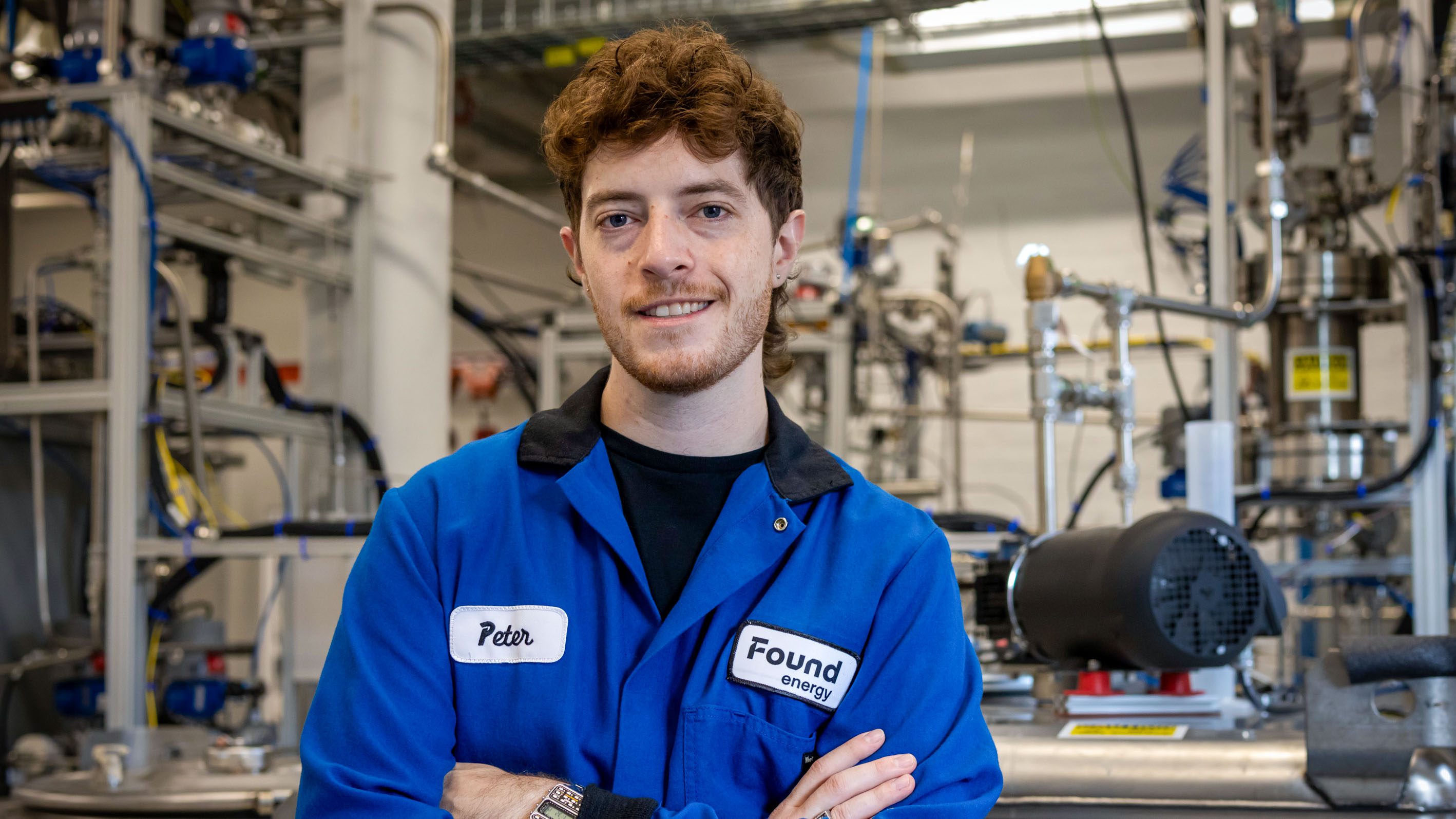
The crushed-up soda can disappears in a cloud of steam and—though it’s not visible—hydrogen gas. “I can just keep this reaction going by adding more water,” says Peter Godart, squirting some into the steaming beaker. “This is room-temperature water, and it’s immediately boiling. Doing this on your stove would be slower than this.” 

Godart is the founder and CEO of Found Energy, a startup in Boston that aims to harness the energy in scraps of aluminum metal to power industrial processes without fossil fuels. Since 2022, the company has worked to develop ways to rapidly release energy from aluminum on a small scale. Now it’s just switched on a much larger version of its aluminum-powered engine, which Godart claims is the largest aluminum-water reactor ever built. 

Early next year, it will be installed to supply heat and hydrogen to a tool manufacturing facility in the southeastern US, using the aluminum waste produced by the plant itself as fuel. (The manufacturer did not want to be named until the project is formally announced.)

If everything works as planned, this technology, which uses a catalyst to unlock the energy stored within aluminum metal, could transform a growing share of aluminum scrap into a zero-carbon fuel. The high heat generated by the engine could be especially valuable to reduce the substantial greenhouse-gas emissions generated by industrial processes, like cement production and metal refining, that are difficult to power with electricity directly.

“We invented the fuel, which is a blessing and a curse,” says Godart, surrounded by the pipes and wires of the experimental reactor. “It’s a huge opportunity for us, but it also means we do have to develop all of the systems around us. We’re redefining what even is an engine.”

Engineers have long eyed using aluminum as a fuel thanks to its superior energy density. Once it has been refined and smelted from ore, aluminum metal contains more than twice as much energy as diesel fuel by volume and almost eight times as much as hydrogen gas. When it reacts with oxygen in water or air, it forms aluminum oxides. This reaction releases heat and hydrogen gas, which can be tapped for zero-carbon power.

Liquid metal

The trouble with aluminum as a fuel—and the reason your soda can doesn’t spontaneously combust—is that as soon as the metal starts to react, an oxidized layer forms across its surface that prevents the rest of it from reacting. It’s like a fire that puts itself out as it generates ash. “People have tried it and abandoned this idea many, many times,” says Godart.

Some believe using aluminum as a fuel remains a fool’s errand. “This potential use of aluminum crops up every few years and has no possibility of success even if aluminum scrap is used as the fuel source,” says Geoff Scamans, a metallurgist at Brunel University of London who spent a decade working on using aluminum to power vehicles in the 1980s. He says the aluminum-water reaction isn’t efficient enough for the metal to make sense as a fuel given how much energy it takes to refine and smelt aluminum from ore to begin with: “A crazy idea is always a crazy idea.”

But Godart believes he and his company have found a way to make it work. “The real breakthrough was thinking about catalysis in a different way,” he says: Instead of trying to speed up the reaction by bringing water and aluminum together onto a catalyst, they “flipped it around” and “found a material that we could actually dissolve into the aluminum.”

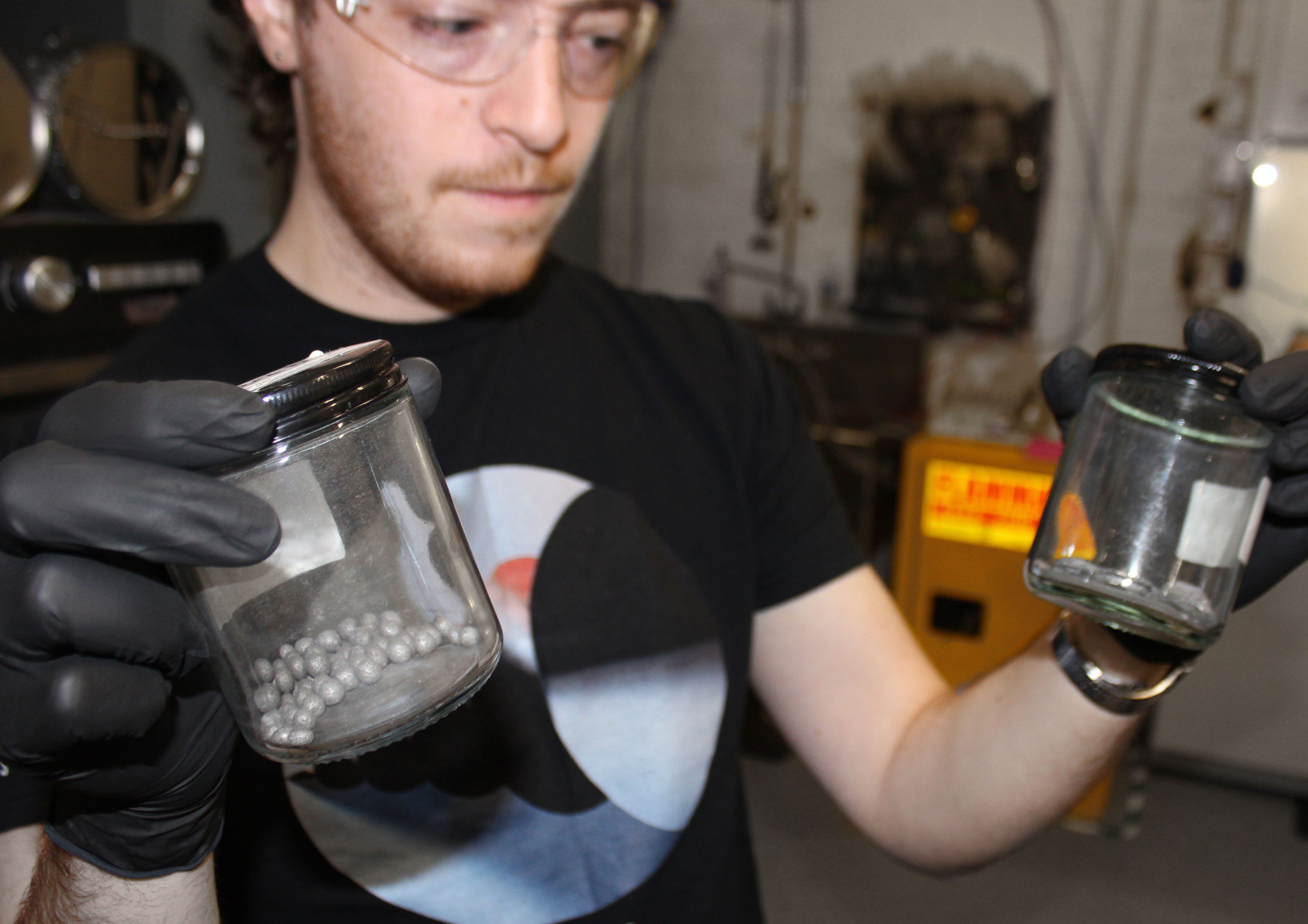
Petert Godart holding up two glass jars; one with metal spheres and the other with flat metal shapes

JAMES DINNEEN

The liquid metal catalyst at the heart of the company’s approach “permeates the microstructure” of the aluminum, says Godart. As the aluminum reacts with water, the catalyst forces the metal to froth and split open, exposing more unreacted aluminum to the water. 

The composition of the catalyst is proprietary, but Godart says it is a “low-melting-point liquid metal that’s not mercury.” His dissertation research focused on using a liquid mixture of gallium and indium as the catalyst, and he says the principle behind the current material is the same.

During a visit in early October, Godart demonstrated the central reaction in the Found R&D lab, which after the company’s $12 million seed round last year now fills the better part of two floors of an industrial building in Boston’s Charlestown neighborhood. Using a pair of tongs to avoid starting the reaction with the moisture on his fingers, he placed a pellet of aluminum treated with the secret catalyst in a beaker and then added water. Immediately, the metal began to bubble with hydrogen. Then the water steamed away, leaving behind a frothing gray mass of aluminum hydroxide.

“One of the impediments to this technology taking off is that [the aluminum-water reaction] was just too sluggish,” says Godart. “But you can see here we’re making steam. We just made a boiler.”

From Europa to Earth

Godart was a scientist at NASA when he first started thinking about fresh ways to unlock the energy stored in aluminum. He was working on building aluminum robots that could consume themselves for fuel when roving on Jupiter’s icy moon Europa. But that work was cut short when Congress reduced funding for the mission.

“I was sort of having this little mini crisis where I was like, I need to do something about climate change, about Earth problems,” says Godart. “And I was like, you know—I bet this aluminum technology would be even better for Earth applications.” After completing a dissertation on aluminum fuels at MIT, he started Found Energy in his house in Cambridge in 2022 (the next year, he earned a place on MIT Technology Review’s annual 35 Innovators under 35 list).

Until this year, the company was working at a tiny scale, tweaking the catalyst and testing different conditions within a small 10-kilowatt reactor to make the reaction release more heat and hydrogen more quickly. Then, in January, it began designing an engine that’s 10 times larger, big enough to supply a useful amount of power for industrial processes beyond the lab.

This larger engine took up most of the lab on the second floor. The reactor vessel resembled a water boiler turned on its side, with piping and wires connected to monitoring equipment that took up almost as much space as the engine itself. On one end, there was a pipe to inject water and a piston to deliver pellets of aluminum fuel into the reactor at variable rates. On the other end, outflow pipes carried away the reaction products: steam, hydrogen gas, aluminum hydroxide, and the recovered catalyst. Godart says none of the catalyst is lost in the reaction, so it can be used again to make more fuel.

The company first switched on the engine to begin testing in July. In September, it managed to power it up to its targeted power of 100 kilowatts—roughly as much as can be supplied by the diesel engine in a small pickup truck. In early 2026, it plans to install the 100-kilowatt engine to supply heat and hydrogen to the tool manufacturing facility. This pilot project is meant to serve as the proof of concept needed to raise the money for a 1-megawatt reactor, 10 times larger again.

The initial pilot will use the engine to supply hot steam and hydrogen. But the energy released in the reactor could be put to use in a variety of ways across a range of temperatures, according to Godart. The hot steam could spin a turbine to produce electricity, or the hydrogen could produce electricity in a fuel cell. By burning the hydrogen within the steam, the engine can produce superheated steam as hot as 1,300 °C, which could be used to generate electricity more efficiently or refine chemicals. Burning the hydrogen alone could generate temperatures of 2,400 °C, hot enough to make steel.

Picking up scrap

Godart says he and his colleagues hope the engine will eventually power many different industrial processes, but the initial target is the aluminum refining and recycling industry itself, as it already handles scrap metal and aluminum oxide supply chains. “Aluminum recyclers are coming to us, asking us to take their aluminum waste that’s difficult to recycle and then turn that into clean heat that they can use to re-melt other aluminum,” he says. “They are begging us to implement this for them.”

Citing nondisclosure agreements, he wouldn’t name any of the companies offering up their unrecyclable aluminum, which he says is something of a “dirty secret” for an industry that’s supposed to be recycling all it collects. But estimates from the International Aluminium Institute, an industry group, suggest that globally a little over 3 million metric tons of aluminum collected for recycling currently goes unrecycled each year; another 9 million metric tons isn’t collected for recycling at all or is incinerated with other waste. Together, that’s a little under a third of the estimated 43 million metric tons of aluminum scrap that currently gets recycled each year.

Even if all that unused scrap was recovered for fuel, it would still supply only a fraction of the overall industrial demand for heat, let alone the overall industrial demand for energy. But the plan isn’t to be limited by available scrap. Eventually, Godart says, the hope is to “recharge” the aluminum hydroxide that comes out of the reactor by using clean electricity to convert it back into aluminum metal and react it again. According to the company’s estimates, this “closed loop” approach could supply all global demand for industrial heat by using and reusing a total of around 300 million metric tons of aluminum—around 4% of Earth’s abundant aluminum reserves. 

However, all that recharging would require a lot of energy. “If you’re doing that, [aluminum fuel] is an energy storage technology, not so much an energy providing technology,” says Jeffrey Rissman, who studies industrial decarbonization at Energy Innovation, a think tank in California. As with other forms of energy storage like thermal batteries or green hydrogen, he says, that could still make sense if the fuel can be recharged using low-cost, clean electricity. But that will be increasingly hard to come by amid the scramble for clean power for everything from AI data centers to heat pumps.

Despite these obstacles, Godart is confident his company will find a way to make it work. The existing engine may already be able to squeeze out more power from aluminum than anticipated. “We actually believe this can probably do half a megawatt,” he says. “We haven’t fully throttled it.”

James Dinneen is a science and environmental journalist based in New York City. 

What a massive thermal battery means for energy storage

Rondo Energy just turned on what it says is the world’s largest thermal battery, an energy storage system that can take in electricity and provide a consistent source of heat.

The company announced last week that its first full-scale system is operational, with 100 megawatt-hours of capacity. The thermal battery is powered by an off-grid solar array and will provide heat for enhanced oil recovery (more on this in a moment).

Thermal batteries could help clean up difficult-to-decarbonize sectors like manufacturing and heavy industrial processes like cement and steel production. With Rondo’s latest announcement, the industry has reached a major milestone in its effort to prove that thermal energy storage can work in the real world. Let’s dig into this announcement, what it means to have oil and gas involved, and what comes next.

The concept behind a thermal battery is overwhelmingly simple: Use electricity to heat up some cheap, sturdy material (like bricks) and keep it hot until you want to use that heat later, either directly in an industrial process or to produce electricity.

Rondo’s new system has been operating for 10 weeks and achieved all the relevant efficiency and reliability benchmarks, according to the company. The bricks reach temperatures over 1,000 °C (about 1,800 °F), and over 97% of the energy put into the system is returned as heat.

This is a big step from the 2 MWh pilot system that Rondo started up in 2023, and it’s the first of the mass-produced, full-size heat batteries that the company hopes to put in the hands of customers.

Thermal batteries could be a major tool in cutting emissions: 20% of total energy demand today is used to provide heat for industrial processes, and most of that is generated by burning fossil fuels. So this project’s success is significant for climate action.

There’s one major detail here, though, that dulls some of that promise: This battery is being used for enhanced oil recovery, a process where steam is injected down into wells to get stubborn oil out of the ground.

It can be  tricky for a climate technology to show its merit by helping harvest fossil fuels. Some critics argue that these sorts of techniques keep that polluting infrastructure running longer.

When I spoke to Rondo founder and chief innovation officer  John O’Donnell about the new system, he defended the choice to work with oil and gas.  

“We are decarbonizing the world as it is today,” O’Donnell says. To his mind, it’s better to help an oil and gas company use solar power for its operation than leave it to continue burning natural gas for heat. Between cheap solar, expensive natural gas, and policies in California, he adds, Rondo’s technology made sense for the customer.

Having a willing customer pay for a full-scale system has been crucial to Rondo’s effort to show that it can deliver its technology.

And the next units are on the way: Rondo is currently building three more full-scale units in Europe. The company will be able to bring them online cheaper and faster because of what it’s learned from the California project, O’Donnell says. 

The company has the capacity to build more batteries, and do it quickly. It currently makes batteries at its factory in Thailand, which has the capacity to make 2.4 gigawatt-hours’ worth of heat batteries today.

I’ve been following progress on thermal batteries for years, and this project obviously represents a big step forward. For all the promises of cheap, robust energy storage, there’s nothing like actually building a large-scale system and testing it in the field.

It’s definitely hard to get excited about enhanced oil recovery—we need to stop burning fossil fuels, and do it quickly, to avoid the worst impacts of climate change. But I see the argument that as long as oil and gas operations exist, there’s value in cleaning them up.

And as O’Donnell puts it, heat batteries can help: “This is a really dumb, practical thing that’s ready now.”

This article is from The Spark, MIT Technology Review’s weekly climate newsletter. To receive it in your inbox every Wednesday, sign up here.

The Download: aluminium’s potential as a zero-carbon fuel, and what’s next for energy storage

This is today’s edition of The Download, our weekday newsletter that provides a daily dose of what’s going on in the world of technology.

This startup is about to conduct the biggest real-world test of aluminum as a zero-carbon fuel

Found Energy, a startup in Boston, aims to harness the energy in scraps of aluminum metal to power industrial processes without fossil fuels. Since 2022, the company has worked to develop ways to rapidly release energy from aluminum on a small scale.

Now it’s just switched on a much larger version of its aluminum-powered engine, which it claims is the largest aluminum-water reactor ever built.

Early next year, it will be installed to supply heat and hydrogen to a tool manufacturing facility in the southeastern US, using the aluminum waste produced by the plant itself as fuel.

If everything works as planned, this technology, which uses a catalyst to unlock the energy stored within aluminum metal, could transform a growing share of aluminum scrap into a zero-carbon fuel. Read the full story.

—James Dinneen

What a massive thermal battery means for energy storage

Rondo Energy just turned on what it says is the world’s largest thermal battery, an energy storage system that can take in electricity and provide a consistent source of heat.

The concept behind a thermal battery is overwhelmingly simple: Use electricity to heat up some cheap, sturdy material (like bricks) and keep it hot until you want to use that heat later, either directly in an industrial process or to produce electricity. 

Thermal batteries could be a major tool in cutting emissions: 20% of total energy demand today is used to provide heat for industrial processes, and most of that is generated by burning fossil fuels. But the company is using its battery for enhanced oil recovery—a process that critics argue keep polluting infrastructure running longer. Read the full story.

—Casey Crownhart

This article is from The Spark, MIT Technology Review’s weekly climate newsletter. To receive it in your inbox every Wednesday, sign up here.

The must-reads

I’ve combed the internet to find you today’s most fun/important/scary/fascinating stories about technology.

1 ChatGPT’s suicide discussion rules were loosened twice before a teen took his own life    
The parents of Adam Raine claim the changes OpenAI made equate to a weakening in its suicide protection for users. (WSJ $)
+ It did so to increase use of the chatbot, they allege in an amended lawsuit. (FT $)
+ The family is accusing OpenAI of intentional misconduct rather than reckless indifference. (Rolling Stone $)

2 Google claims its new quantum algorithm outperforms a supercomputer
It could accelerate advances in drug discovery and new building materials. (Ars Technica)
+ Its Willow chip is at the heart of the advance. (NYT $)
+ But real-world use of quantum computing is still likely to be years away. (The Guardian)

3 Reddit is suing AI search engine Perplexity
For allegedly illegally scraping its data to train the model powering Perplexity’s engine. (FT $)
+ Reddit’s also seeking a permanent injunction on companies selling its data. (Engadget)
+ What comes next for AI copyright lawsuits? (MIT Technology Review)

4 China has a five-year plan to become technologically self-reliant
And semiconductors and AI will play key roles. (Bloomberg $)
+ China is winning the trade war with America. (Economist $)

5 DeepSeek is taking off in Africa
Its decision to make its AI cheaper and less power-intensive is paying off. (Bloomberg $)
+ How DeepSeek ripped up the AI playbook. (MIT Technology Review)

6 Elon Musk is building a robot army
He envisions his Optimus robot becoming an “incredible surgeon.” (Wired $)
+ Will we ever trust robots? (MIT Technology Review)

7 Apple has pulled a pair of controversial dating apps from the App Store
Tea and TeaOnHer fell short of its privacy and content moderation rules. (TechCrunch)

8 Tesla’s profits are massively down
Even though it sold more cars than during its previous quarter. (NYT $)
+ The company has been forced to recall tens of thousands of Cybertrucks. (Reuters)
+ What happens when your EV becomes obsolete? (The Atlantic $)

9 An unexpected victim of the AWS outage? Smart beds 🛏
Some unlucky owners’ beds blared alarms and became unbearably warm. (WP $)
+ If the internet stays the way it is, more bed outages could be on their way. (The Atlantic $)

10 The appeal of incredibly basic software
Apple’s TextEdit does exactly what it says on the tin. (New Yorker $)

Quote of the day

“I’m very excited that nerds are having our moment.”

—Madhavi Sewak, a Google DeepMind researcher, says she’s glad that AI experts are being recognized, the Wall Street Journal reports.

One more thing

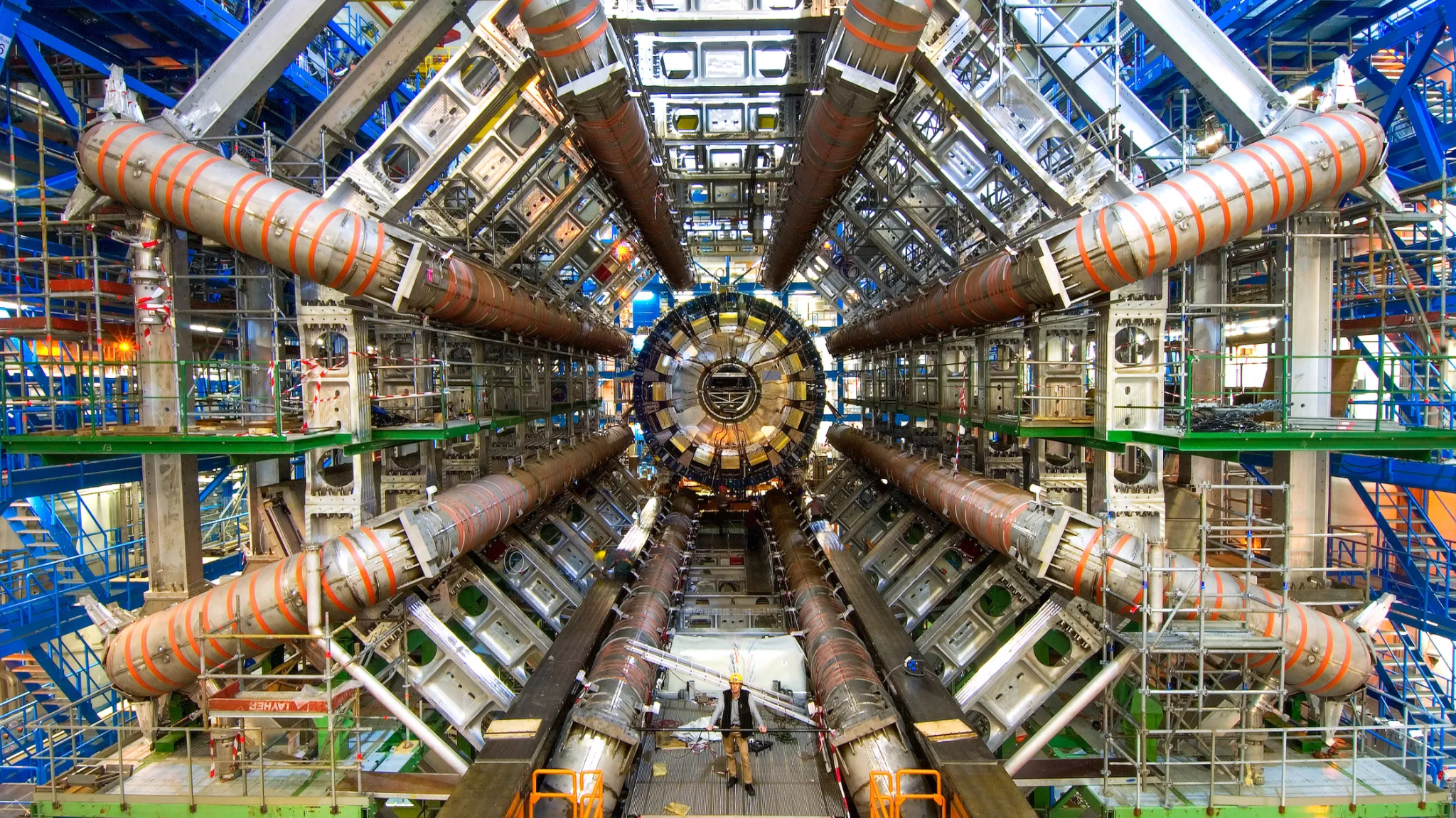
Inside the hunt for new physics at the world’s largest particle collider

In 2012, using data from CERN’s Large Hadron Collider, researchers discovered a particle called the Higgs boson. In the process, they answered a nagging question: Where do fundamental particles, such as the ones that make up all the protons and neutrons in our bodies, get their mass?

When the particle was finally found, scientists celebrated with champagne. A Nobel for two of the physicists who predicted the Higgs boson soon followed.

More than a decade later, there is a sense of unease. That’s because there are still so many unanswered questions about the fundamental constituents of the universe.

So researchers are trying something new. They are repurposing detectors to search for unusual-looking particles, squeezing what they can out of the data with machine learning, and planning for entirely new kinds of colliders. Read the full story.

—Dan Garisto

We can still have nice things

A place for comfort, fun and distraction to brighten up your day. (Got any ideas? Drop me a line or skeet ’em at me.)

+ Mexico City is already getting into the Halloween spirit: its annual zombie parade took place over the weekend.
+ Everything you need to know before travelling to Japan.
+ The most stylish people alive? I’ll be the judge of that.
+ Here’s something you don’t expect archeologists to uncover: Neolithic chewing gum.