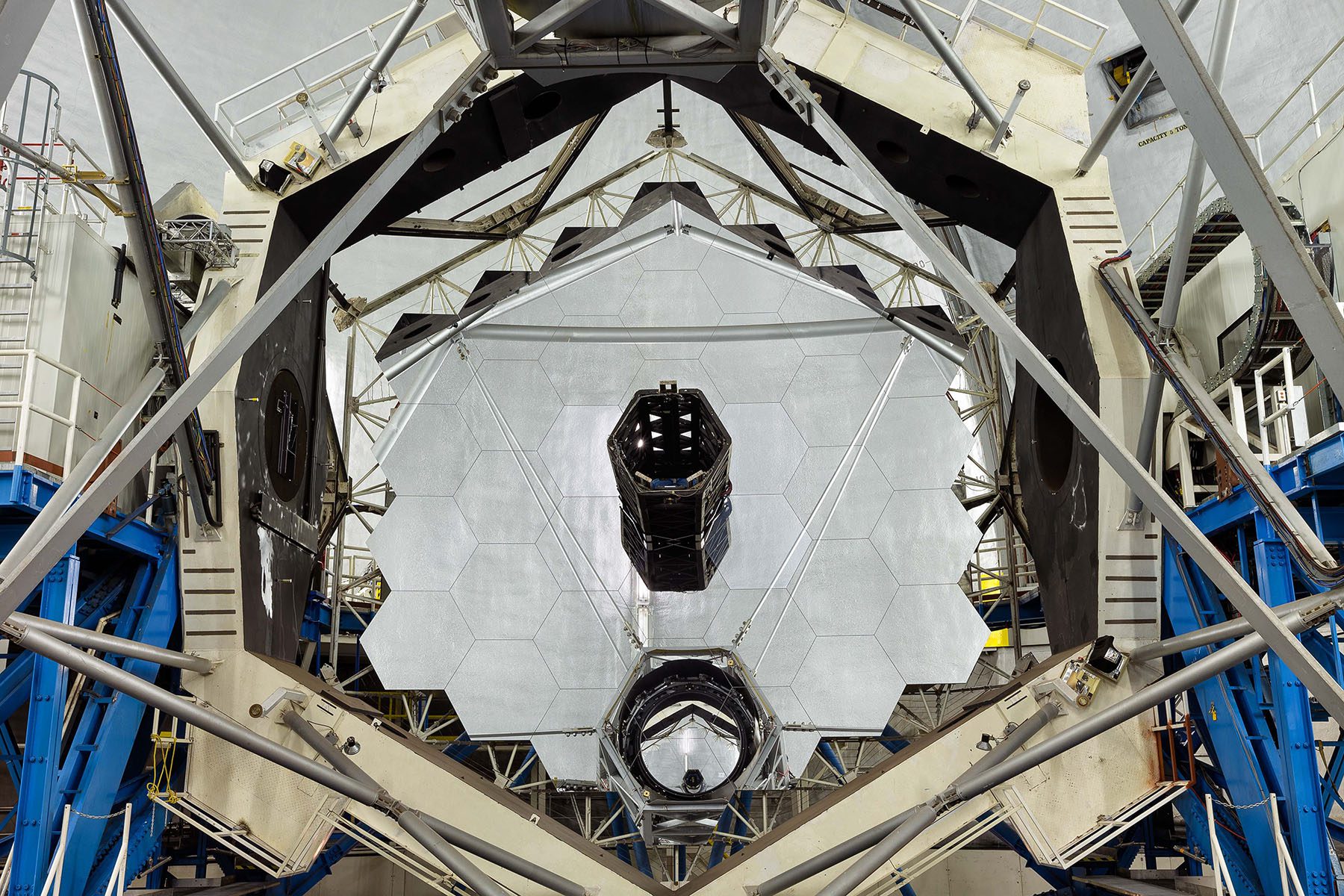
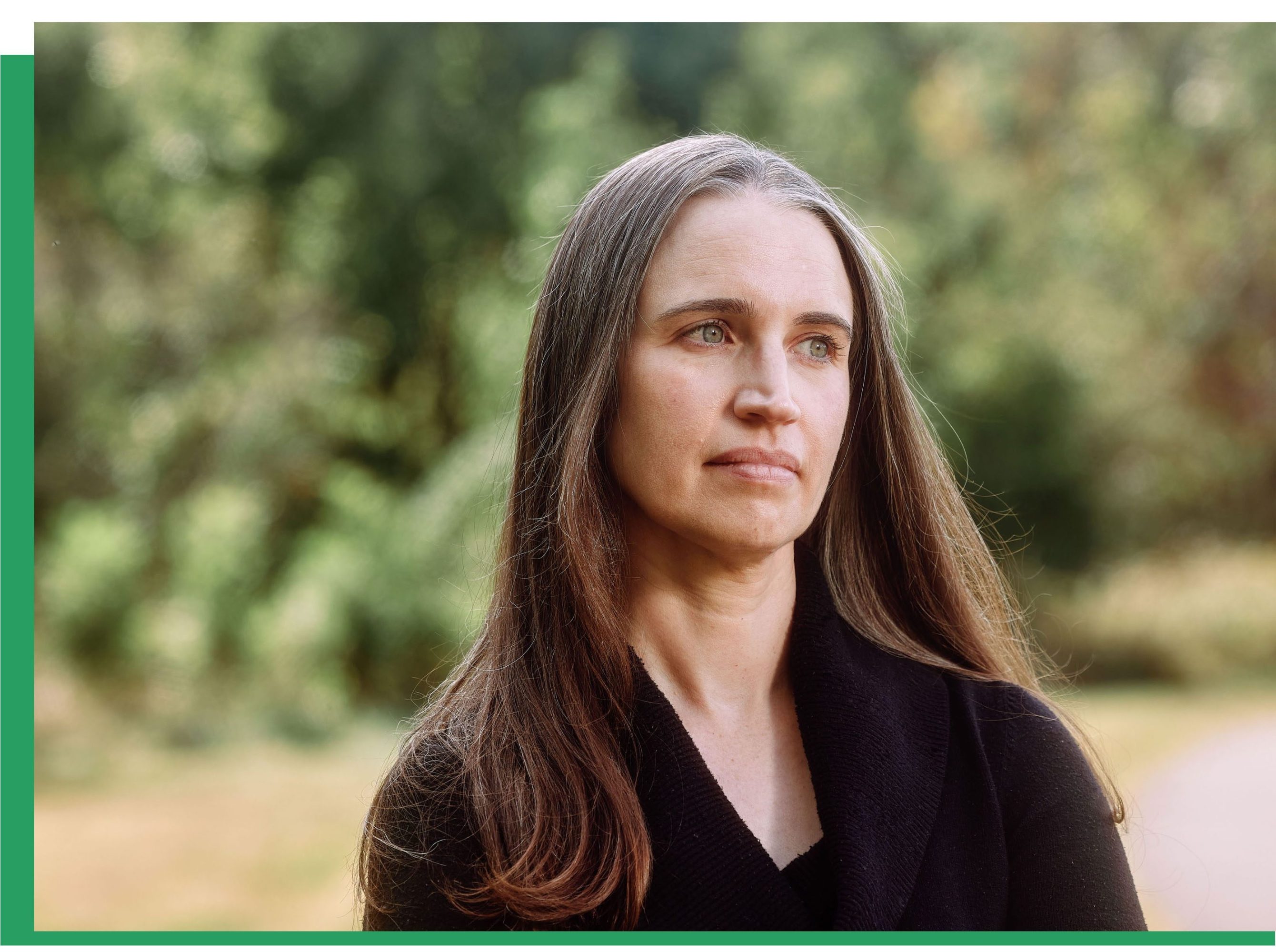
The pendant on Rebecca Jensen-Clem’s necklace is only about an inch wide, composed of 36 silver hexagons entwined in a honeycomb mosaic. At the Keck Observatory, in Hawaii, just as many segments make up a mirror that spans 33 feet, reflecting images of uncharted worlds for her to study.
Jensen-Clem, an astronomer at the University of California, Santa Cruz, works with the Keck Observatory to figure out how to detect new planets without leaving our own. Typically, this pursuit faces an array of obstacles: Wind, fluctuations in atmospheric density and temperature, or even a misaligned telescope mirror can create a glare from a star’s light that obscures the view of what’s around it, rendering any planets orbiting the star effectively invisible. And what light Earth’s atmosphere doesn’t obscure, it absorbs. That’s why researchers who study these distant worlds often work with space telescopes that circumvent Earth’s pesky atmosphere entirely, such as the $10 billion James Webb Space Telescope.
But there’s another way over these hurdles. At her lab among the redwoods, Jensen-Clem and her students experiment with new technologies and software to help Keck’s primary honeycomb mirror and its smaller, “deformable” mirror see more clearly. Using measurements from atmospheric sensors, deformable mirrors are designed to adjust shape rapidly, so they can correct for distortions caused by Earth’s atmosphere on the fly.
This general imaging technique, called adaptive optics, has been common practice since the 1990s. But Jensen-Clem is looking to level up the game with extreme adaptive optics technologies, which are aimed to create the highest image quality over a small field of view. Her group, in particular, does so by tackling issues involving wind or the primary mirror itself. The goal is to focus starlight so precisely that a planet can be visible even if its host star is a million to a billion times brighter.
In April, she and her former collaborator Maaike van Kooten were named co-recipients of the Breakthrough Prize Foundation’s New Horizons in Physics Prize. The prize announcement says they earned this early-career research award for their potential “to enable the direct detection of the smallest exoplanets” through a repertoire of methods the two women have spent their careers developing.
In July, Jensen-Clem was also announced as a member of a new committee for the Habitable Worlds Observatory, a concept for a NASA space telescope that would spend its career on the prowl for signs of life in the universe. She’s tasked with defining the mission’s scientific goals by the end of the decade.
The Keck Observatory’s 10-meter primary mirror features a honeycomb structure with 36 individual mirror segments.
ETHAN TWEEDIE
“In adaptive optics, we spend a lot of time on simulations, or in the lab,” Jensen-Clem says. “It’s been a long road to see that I’ve actually made things better at the observatory in the past few years.”
Jensen-Clem has long appreciated astronomy for its more mind-bending qualities. In seventh grade, she became fascinated by how time slows down near a black hole when her dad, an aerospace engineer, explained that concept to her. After starting her bachelor’s degree at MIT in 2008, she became taken with how a distant star can seem to disappear—either suddenly winking out or gently fading away, depending on the kind of object that passes in front of it. “It wasn’t quite exoplanet science, but there was a lot of overlap,” she says.
“If you just look up at the night sky and see stars twinkling, it’s happening fast. So we have to go fast too.”
During this time, Jensen-Clem began sowing the seeds for one of her prize-winning methods after her teaching assistant recommended that she apply for an internship at NASA’s Jet Propulsion Laboratory. There, she worked on a setup that could perfect the orientation of a large mirror. Such mirrors are more difficult to realign than the smaller, deformable ones, whose shape-changing segments cater to Earth’s fluctuating atmosphere.
“At the time, we were saying, ‘Oh, wouldn’t it be really cool to install one of these at Keck Observatory?’” Jensen-Clem says. The idea stuck around. She even wrote about it in a fellowship application when she was gearing up to start her graduate work at Caltech. And after years of touch-and-go development, Jensen-Clem succeeded in installing the system—which uses a technology called a Zernike wavefront sensor—on Keck’s primary mirror about a year ago. “My work as a college intern is finally done,” she says.
The system, which is currently used for occasional recalibrations rather than continuous adjustments, includes a special kind of glass plate that bends the light rays from the mirror to reveal a specific pattern. The detector can pick up a hairbreadth misalignment in that picture: If one hexagon is pushed too far back or forward, its brightness changes. Even the tiniest misalignment is important to correct, because “when you’re studying a faint object, suddenly you’re much more susceptible to little mistakes,” Jensen-Clem says.
She has also been working to perfect the craft of molding Keck’s deformable mirror. This instrument, which reflects light that’s been rerouted from the primary mirror, is much smaller—only six inches wide—and is designed to reposition as often as 2,000 times a second to combat atmospheric turbulence and create the clearest picture possible. “If you just look up at the night sky and see stars twinkling, it’s happening fast. So we have to go fast too,” Jensen-Clem says.
Even at this rapid rate of readjustment, there’s still a lag. The deformable mirror is usually about one millisecond behind the actual outdoor conditions at any given time. “When the [adaptive optics] system can’t keep up, then you aren’t going to get the best resolution,” says van Kooten, Jensen-Clem’s former collaborator, who is now at the National Research Council Canada. This lag has proved especially troublesome on windy nights.
Jensen-Clem thought it was an unsolvable problem. “The reason we have that delay is because we need to run computations and then move the deformable mirror,” she says. “You’re never going to do those things instantaneously.”
But while she was still a postdoc at UC Berkeley, she came across a paper that posited a solution. Its authors proposed that using previous measurements and simple algebra to predict how the atmosphere will change, rather than trying to keep up with it in real time, would yield better results. She wasn’t able to test the idea at the time, but coming to UCSC and working with Keck presented the perfect opportunity.
Around this time, Jensen-Clem invited van Kooten to join her team at UCSC as a postdoc because of their shared interest in the predictive software. “I didn’t have a place to live at first, so she put me up in her guest room,” van Kooten says. “She’s just so supportive at every level.”
After creating experimental software to try out at Keck, the team compared the predictive version with the more standard adaptive optics, examining how well each imaged an exoplanet without its drowning in starlight. They found that the predictive software could image even faint exoplanets two to three times more clearly. The results, which Jensen-Clem published in 2022, were part of what earned her the New Horizons in Physics Prize.
Thayne Currie, an astronomer at the University of Texas, San Antonio, says that these new techniques will become especially vital as researchers build bigger and bigger ground-based facilities to capture images of exoplanets—including upcoming projects such as the Extremely Large Telescope at the European Southern Observatory and the Giant Magellan Telescope in Chile. “There’s an incredible amount that we’re learning about the universe, and it is really driven by technology advances that are very, very new,” Currie says. “Dr. Jensen-Clem’s work is an example of that kind of innovation.”
In May, one of Jensen-Clem’s graduate students went back to Hawaii to reinstall the predictive software at Keck. This time, the program isn’t just a trial run; it’s there to stay. The new software has shown it can refocus artificial starlight. Next, it will have to prove it can handle the real thing.
And in about a year, Jensen-Clem and her students and colleagues will brace themselves for a flood of observations from the European Space Agency’s Gaia mission, which recently finished measuring the motion, temperature, and composition of billions of stars over more than a decade.
When the project releases its next set of data—slated for December 2026—Jensen-Clem’s team aims to hunt for new exoplanetary systems using clues like the wobbles in a star’s motion caused by the gravitational tugs of planets orbiting around it. Once a system has been identified, exoplanet photographers will then be able to shoot the hidden planets using a new instrument at Keck that can reveal more about their atmospheres and temperatures.
There will be a mountain of data to sort through, and an even steeper supply of starlight to refocus. Thankfully, Jensen-Clem has spent more than a decade refining just the techniques she’ll need: “This time next year,” she says, “we’ll be racing to throw all our adaptive optics tricks at these systems and detect as many of these objects as possible.”
Jenna Ahart is a science journalist specializing in the physical sciences.
Attentive readers might have noticed my absence over the last couple of weeks. I’ve been trying to recover from a bout of illness.
It got me thinking about the immune system, and how little I know about my own immune health. The vast array of cells, proteins, and biomolecules that works to defend us from disease is mind-bogglingly complicated. Immunologists are still getting to grips with how it all works.
Those of us who aren’t immunologists are even more in the dark. I had my flu jab last week and have no idea how my immune system responded. Will it protect me from the flu virus this winter? Is it “stressed” from whatever other bugs it has encountered in the last few months? And since my husband had his shot at the same time, I can’t help wondering how our responses will compare.
So I was intrigued to hear about a new test that is being developed to measure immune health. One that even gives you a score.
The test David took was developed by John Tsang at Yale University and his colleagues. The team wanted to work out a way of measuring how healthy a person’s immune system might be.
Tsang and his colleagues wanted to measure “deviation from health.” They looked at blood samples from 228 people who had immune diseases that were caused by single-gene mutations, as well as 42 other people who were free from disease. All those individuals could be considered along a health spectrum.
Another major challenge lies in trying to capture the complexity of the immune system, which involves hundreds of proteins and cells interacting in various ways. (Side note: Last year, MIT Technology Review recognized Ang Cui at Harvard University as one of our Innovators under 35 for her attempts to make sense of it all using machine learning. She created the Immune Dictionary to describe how hundreds of proteins affect immune cells—something she likens to a “periodic table” for the immune system.)
Tsang and his colleagues tackled this by running a series of tests on those blood samples. The vast scope of these tests is what sets them apart from the blood tests you might get during a visit to the doctor. The team looked at how genes were expressed by cells in the blood. They measured a range of immune cells and more than 1,300 proteins.
The team members used machine learning to find correlations between these measurements and health, allowing them to create an immune health score for each of the volunteers. They call it the immune health metric, or IHM.
When they used this approach to find the immune scores of people who had already volunteered in other studies, they found that the IHM seemed to align with other measures of health, such as how people respond to diseases, treatments, and vaccines. The study was published in the journal Nature Medicine last year.
The researchers behind it hope that a test like this could one day help identify people who are at risk of cancer and other diseases, or explain why some people respond differently to treatments or immunizations.
But the test isn’t ready for clinical use. If, like me, you’re finding yourself curious to know your own IHM, you’ll just have to wait.
This article first appeared in The Checkup, MIT Technology Review’s weekly biotech newsletter. To receive it in your inbox every Thursday, and read articles like this first, sign up here.
MIT Technology Review Explains: Let our writers untangle the complex, messy world of technology to help you understand what’s coming next. You can read more from the series here.
“Like riding a bike” is shorthand for the remarkable way that our bodies remember how to move. Most of the time when we talk about muscle memory, we’re not talking about the muscles themselves but about the memory of a coordinated movement pattern that lives in the motor neurons, which control our muscles.
Yet in recent years, scientists have discovered that our muscles themselves have a memory for movement and exercise.
When we move a muscle, the movement may appear to begin and end, but all these little changes are actually continuing to happen inside our muscle cells. And the more we move, as with riding a bike or other kinds of exercise, the more those cells begin to make a memory of that exercise.
When we move a muscle, the movement may appear to begin and end, but all these little changes are actually continuing to happen inside our muscle cells.
We all know from experience that a muscle gets bigger and stronger with repeated work. As the pioneering muscle scientist Adam Sharples—a professor at the Norwegian School of Sport Sciences in Oslo and a former professional rugby player in the UK—explained to me, skeletal muscle cells are unique in the human body: They’re long and skinny, like fibers, and have multiple nuclei. The fibers grow larger not by dividing but by recruiting muscle satellite cells—stem cells specific to muscle that are dormant until activated in response to stress or injury—to contribute their own nuclei and support muscle growth and regeneration. Those nuclei often stick around for a while in the muscle fibers, even after periods of inactivity, and there is evidence that they may help accelerate the return to growth once you start training again.
Sharples’s research focuses on what’s called epigenetic muscle memory. “Epigenetic” refers to changes in gene expression that are caused by behavior and environment—the genes themselves don’t change, but the way they work does. In general, exercise switches on genes that help make muscles grow more easily. When you lift weights, for example, small molecules called methyl groups detach from the outside of certain genes, making them more likely to turn on and produce proteins that affect muscle growth (also known as hypertrophy). Those changes persist; if you start lifting weights again, you’ll add muscle mass more quickly than before.
In 2018, Sharples’s muscle lab was the first to show that human skeletal muscle has an epigenetic memory of muscle growth after exercise: Muscle cells are primed to respond more rapidly to exercise in the future, even after a monthslong (and maybe even yearslong) pause. In other words: Your muscles remember how to do it.
Subsequent studies from Sharples and others have replicated similar findings in mice and older humans, offering further supporting evidence of epigenetic muscle memory across species and into later life. Even aging muscles have the capacity to remember when you work out.
At the same time, Sharples points to intriguing new evidence that muscles also remember periods of atrophy—and that young and old muscles remember this differently. While young human muscle seems to have what he calls a “positive” memory of wasting—“in that it recovers well after a first period of atrophy and doesn’t experience greater loss in a repeated atrophy period,” he explains—aged muscle in rats seems to have a more pronounced “negative” memory of atrophy, in which it appears “more susceptible to greater loss and a more exaggerated molecular response when muscle wasting is repeated.” Basically, young muscle tends to bounce back from periods of muscle loss—“ignoring” it, in a sense—while older muscle is more sensitive to it and might be more susceptible to further loss in the future.
Illness can also lead to this kind of “negative” muscle memory; in a study of breast cancer survivors more than a decade after diagnosis and treatment, participants showed an epigenetic muscle profile of people much older than their chronological age. But get this: After five months of aerobic exercise training, participants were able to reset the epigenetic profile of their muscle back toward that of muscle seen in an age-matched control group of healthy women.
What this shows is that “positive” muscle memories can help counteract “negative” ones. The takeaway? Your muscles have their own kind of intelligence. The more you use them, the more they can harness it to become a lasting beneficial resource for your body in the future.
Bonnie Tsui is the author of On Muscle: The Stuff That Moves Us and Why It Matters(Algonquin Books, 2025).
On Monday, we published our 2025 edition of Climate Tech Companies to Watch. This marks the third time we’ve put the list together, and it’s become one of my favorite projects to work on every year.
In the journalism world, it’s easy to get caught up in the latest news, whether it’s a fundraising round, research paper, or startup failure. Curating this list gives our team a chance to take a step back and consider the broader picture. What industries are making progress or lagging behind? Which countries or regions are seeing quick changes? Who’s likely to succeed?
This year is an especially interesting moment in the climate tech world, something we grappled with while choosing companies. Here are three of my takeaways from the process of building this list.
1. It’s hard to overstate China’s role in energy technology right now.
To put it bluntly, China’s progress on cleantech is wild. The country is dominating in installing wind and solar power and building EVs, and it’s also pumping government money into emerging technologies like fusion energy.
We knew we wanted this list to reflect China’s emergence as a global energy superpower, and we ended up including two Chinese firms in key industries: renewables and batteries.
In 2024, China accounted for the top four wind turbine makers worldwide. Envision was in the second spot, with 19.3 gigawatts of new capacity added last year. But the company isn’t limited to wind; it’s working to help power heavy industries like steel and chemicals with technology like green hydrogen.
Batteries are also a hot industry in China, and we’re seeing progress in tech beyond the lithium-ion cells that currently dominate EVs and energy storage on the grid. We represent that industry with HiNa Battery Technology, a leading startup building sodium-ion batteries, which could be cheaper than today’s options. The company’s batteries are already being used in electric mopeds and grid installations.
2. Energy demand from data centers and AI is on everyone’s mind, especially in the US.
Another trend we noticed this year was a fixation on the growing energy demand of data centers, including massive planned dedicated facilities that power AI models. (Here’s another nudge to check out our Power Hungry series on AI and energy, in case you haven’t explored it already.)
Even if their technology has nothing to do with data centers, companies are trying to show how they can be valuable in this age of rising energy demand. Some are signing lucrative deals with tech giants that could provide the money needed to help bring their product to market.
Kairos Power hopes to be one such energy generator, building next-generation nuclear reactors. Last year, the company signed an agreement with Google that will see the company buy up to 500 megawatts of electricity from Kairos’s first reactors through 2035.
In a more direct play, Redwood Materials is stringing together used EV batteries to build microgrids that could power—you guessed it—data centers. The company’s first installation fired up this year, and while it’s small, it’s an interesting example of a new use for old technology.
3. Materials continue to be an area that’s ripe for innovation.
In a new essay that accompanies the list, Bill Gates lays out the key role of innovation in making progress on climate technology. One thing that jumped out at me while I was reading that piece was a number: 30% of global greenhouse-gas emissions come from manufacturing, including cement and steel production.
I’ve obviously covered materials and heavy industry for years. But it still strikes me just how much innovation we still need in the most important materials we use to scaffold our world.
Several companies on this year’s list focus on materials: We’ve once again represented cement, a material that accounts for 7% of global greenhouse-gas emissions. Cemvision is working to use alternative fuel sources and starting materials to clean up the dirty industry.
And Cyclic Materials is trying to reclaim and recycle rare earth magnets, a crucial technology that underpins everything from speakers to EVs and wind turbines. Today, only about 0.2% of rare earths from recycled devices are recycled, but the company is building multiple facilities in North America in hopes of changing that.
Our list of 10 Climate Tech Companies to Watch highlights businesses we think have a shot at helping the world address and adapt to climate change with the help of everything from established energy technologies to novel materials. It’s a representation of this moment, and I hope you enjoy taking a spin through it.
The story is a collaboration between MIT Technology Review and Aventine, a non-profit research foundation that creates and supports content about how technology and science are changing the way we live.
It’s not often you get a text about the robustness of your immune system, but that’s what popped up on my phone last spring. Sent by John Tsang, an immunologist at Yale, the text came after his lab had put my blood through a mind-boggling array of newfangled tests. The result—think of it as a full-body, high-resolution CT scan of my immune system—would reveal more about the state of my health than any test I had ever taken. And it could potentially tell me far more than I wanted to know.
“David,” the text read, “you are the red dot.”
Tsang was referring to an image he had attached to the text that showed a graph with a scattering of black dots representing other people whose immune systems had been evaluated—and a lone red one. There also was a score: 0.35.
I had no idea what any of this meant.
The red dot was the culmination of an immuno-quest I had begun on an autumn afternoon a few months earlier, when a postdoc in Tsang’s lab drew several vials of my blood. It was also a significant milestone in a decades-long journey I’ve taken as a journalist covering life sciences and medicine. Over the years, I’ve offered myself up as a human guinea pig for hundreds of tests promising new insights into my health and mortality. In 2001, I was one of the first humans to have my DNA sequenced. Soon after, in the early 2000s, researchers tapped into my proteome—proteins circulating in my blood. Then came assessments of my microbiome, metabolome, and much more. I have continued to test-drive the latest protocols and devices, amassing tens of terabytes of data on myself, and I’ve reported on the results in dozens of articles and a book called Experimental Man. Over time, the tests have gotten better and more informative, but no test I had previously taken promised to deliver results more comprehensive or closer to revealing the truth about my underlying state of health than what John Tsang was offering.
Over the years, I’ve offered myself up as a human guinea pig for hundreds of tests promising new insights into my health and mortality. But no test I had previously taken promised to deliver results more comprehensive or closer to revealing the truth about my underlying state of health.
It also was not lost on me that I’m now 20-plus years older than I was when I took those first tests. Back in my 40s, I was ridiculously healthy. Since then, I’ve been battered by various pathogens, stresses, and injuries, including two bouts of covid and long covid—and, well, life.
But I’d kept my apprehensions to myself as Tsang, a slim, perpetually smiling man who directs the Yale Center for Systems and Engineering Immunology, invited me into his office in New Haven to introduce me to something called the human immunome.
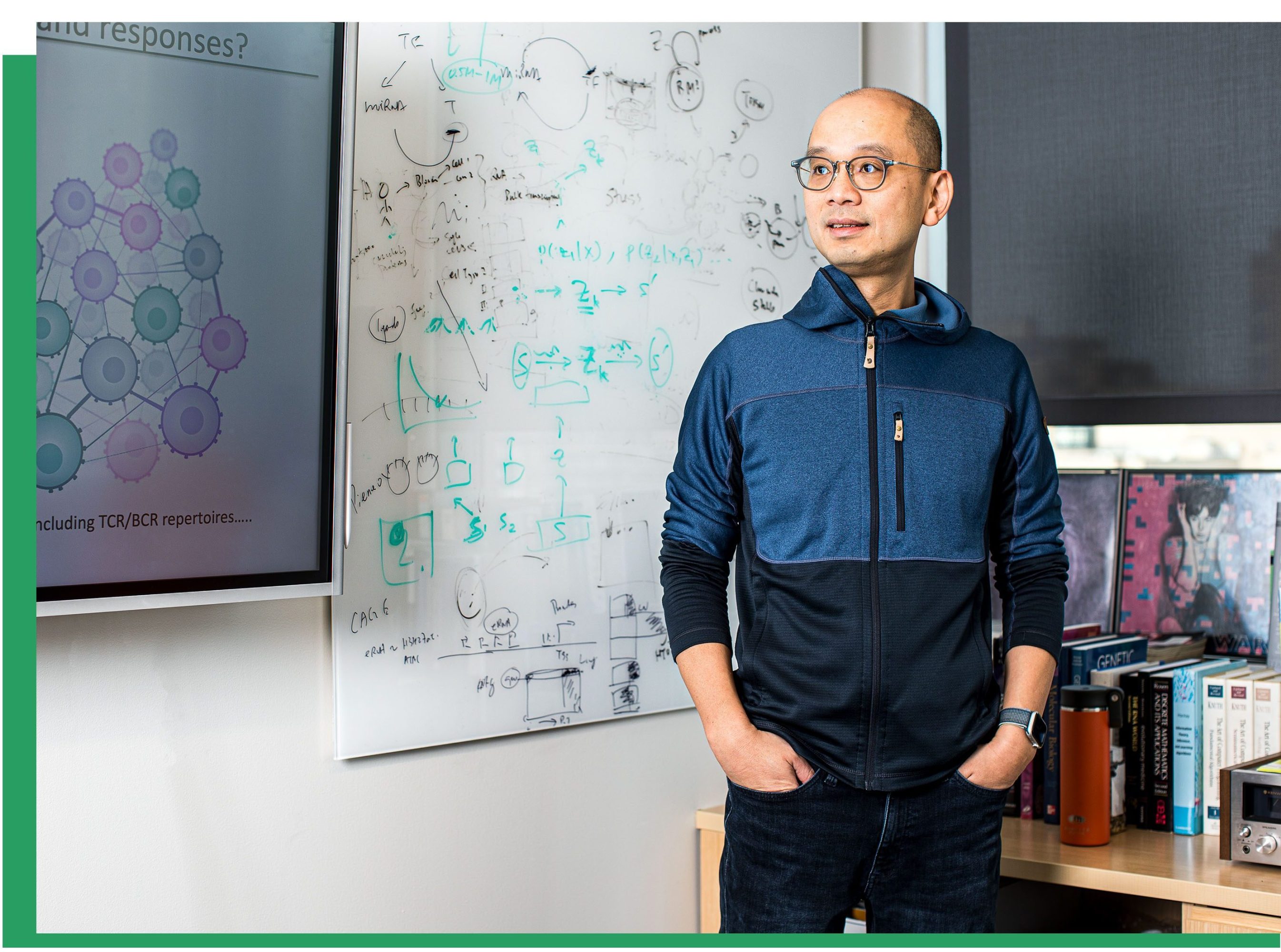
John Tsang has helped create a new test for your immune system.
JULIE BIDWELL
Made up of 1.8 trillion cells and trillions more proteins, metabolites, mRNA, and other biomolecules, every person’s immunome is different, and it is constantly changing. It’s shaped by our DNA, past illnesses, the air we have breathed, the food we have eaten, our age, and the traumas and stresses we have experienced—in short, everything we have ever been exposed to physically and emotionally. Right now, your immune system is hard at work identifying and fending off viruses and rogue cells that threaten to turn cancerous—or maybe already have. And it is doing an excellent job of it all, or not, depending on how healthy it happens to be at this particular moment.
Yet as critical as the immunome is to each of us, this universe of cells and molecules has remained largely beyond the reach of modern medicine—a vast yet inaccessible operating system that powerfully influences everything from our vulnerability to viruses and cancer to how well we age to whether we tolerate certain foods better than others.
Now, thanks to a slew of new technologies and to scientists like Tsang, who is on the Steering Committee of the Chan Zuckerberg Biohub New York, understanding this vital and mysterious system is within our grasp, paving the way for powerful new tools and tests to help us better assess, diagnose and treat diseases.
Already, new research is revealing patterns in the ways our bodies respond to stress and disease. Scientists are creating contrasting portraits of weak and robust immunomes—portraits that someday, it’s hoped, could offer new insights into patient care and perhaps detect illnesses before symptoms appear. There are plans afoot to deploy this knowledge and technology on a global scale, which would enable scientists to observe the effects of climate, geography, and countless other factors on the immunome. The results could transform what it means to be healthy and how we identify and treat disease.
It all begins with a test that can tell you whether your immune system is healthy or not.
Reading the immunome
Sitting in his office last fall, Tsang—a systems immunologist whose expertise combines computer science and immunology—began my tutorial in immunomics by introducing me to a study that he and his team wrote up in a 2024 paper published in Nature Medicine. It described the results of measurements made on blood samples taken from 270 subjects—tests similar to the ones Tsang’s team would be running on me. In the study, Tsang and his colleagues looked at the immune systems of 228 patients diagnosed with a variety of genetic disorders and a control group of 42 healthy people.
To help me visualize what my results might look like, Tsang opened his laptop to reveal several colorful charts from the study, punctuated by black dots representing each person evaluated. The results reminded me vaguely of abstract paintings by Joan Miró. But in place of colorful splotches, whirls, and circles were an assortment of scatter plots, Gantt charts, and heat maps tinted in greens, blues, oranges, and purples.
It all looked like gibberish to me.
Luckily, Tsang was willing to serve as my guide. Flashing his perpetually patient smile, he explained that these colorful jumbles depicted what his team had uncovered about each subject after taking blood samples and assessing the details of how well their immune cells, proteins, mRNA, and other immune system components were doing their job.
IBRAHIM RAYINTAKATH
The results placed people—represented by the individual dots—on a left-to-right continuum, ranging from those with unhealthy immunomes on the left to those with healthy immunomes on the right. Background colors, meanwhile, were used to identify people with different medical conditions affecting their immune systems. For example, olive-green indicated those with auto-immune disorders; orange backgrounds were designated for individuals with no known disease history. Tsang said he and his team would be placing me on a similar graph after they finished analyzing my blood.
Tsang’s measurements go significantly beyond what can be discerned from the handful of immune biomarkers that people routinely get tested for today. “The main immune cell panel typically ordered by a physician is called a CBC differential,” he told me. CBC, which stands for “complete blood count,” is a decades-old type of analysis that counts levels of red blood cells, hemoglobin, and basic immune cell types (neutrophils, lymphocytes, monocytes, basophils, and eosinophils). Changes in these levels can indicate whether a person’s immune system might be reacting to a virus or other infection, cancer, or something else. Other blood tests—like one that looks for elevated levels of C-reactive protein, which can indicate inflammation associated with heart disease—are more specific than the CBC. But they still rely on blunt counting—in this case of certain proteins.
Tsang’s assessment, by contrast, tests up to a million cells, proteins, mRNA and immune biomolecules—significantly more than the CBC and others. His protocol is designed to paint a more holistic portrait of a person’s immune system by not only counting cells and molecules but also by assessing their interactions. The CBC “doesn’t tell me as a physician what the cells being counted are doing,” says Rachel Sparks, a clinical immunologist who was the lead author of the Nature Medicine study and is now a translational medicine physician with the drug giant AstraZeneca. “I just know that there are more neutrophils than normal, which may or may not indicate that they’re behaving badly. We now have technology that allows us to see at a granular level what a cell is actually doing when a virus appears—how it’s changing and reacting.”
Tsang’s measurements go significantly beyond what can be discerned from the handful of immune biomarkers that people routinely get tested for today. His assessment tests up to a million cells, proteins, mRNA and immune biomolecules.
Such breakthroughs have been made possible thanks to a raft of new and improved technologies that have evolved over the past decade, allowing scientists like Tsang and Sparks to explore the intricacies of the immunome with newfound precision. These include devices that can count myriad different types of cells and biomolecules, as well as advanced sequencers that identify and characterize DNA, RNA, proteins, and other molecules. There are now instruments that also can measure thousands of changes and reactions that occur inside a single immune cell as it reacts to a virus or other threat.
Tsang and Spark’s’ team used data generated by such measurements to identify and characterize a series of signals distinctive to unhealthy immune systems. Then they used the presence or absence of these signals to create a numerical assessment of the health of a person’s immunome—a score they call an “immune health metric,” or IHM.
Clinical immunologist Rachel Sparks hopes new tests can improve medical care.
JARED SOARES
To make sense of the crush of data being collected, Tsang’s team used machine-learning algorithms that correlated the results of the many measurements with a patient’s known health status and age. They also used AI to compare their findings with immune system data collected elsewhere. All this allowed them to determine and validate an IHM score for each person, and to place it on their spectrum, identifying that person as healthy or not.
It all came together for the first time with the publication of the Nature Medicine paper, in which Tsang and his colleagues reported the results from testing multiple immune variables in the 270 subjects. They also announced a remarkable discovery: Patients with different kinds of diseases reacted with similar disruptions to their immunomes. For instance, many showed a lower level of the aptly named natural killer immune cells, regardless of what they were suffering from. Critically, the immune profiles of those with diagnosed diseases tended to look very different from those belonging to the outwardly healthy people in the study. And, as expected, immune health declined in the older patients.
But then the results got really interesting. In a few cases, the immune systems of unhealthy and healthy people looked similar, with some people appearing near the “healthy” area of the chart even though they were known to have diseases. Most likely this was because their symptoms were in remission and not causing an immune reaction at the moment when their blood was drawn, Tsang told me.
In other cases, people without a known disease showed up on the chart closer to those who were known to be sick. “Some of these people who appear to be in good health are overlapping with pathology that traditional metrics can’t spot,” says Tsang, whose Nature Medicine paper reported that roughly half the healthy individuals in the study had IHM scores that overlapped with those of people known to be sick. Either these seemingly healthy people had normal immune systems that were busy fending off, say, a passing virus, or their immune systems had been impacted by aging and the vicissitudes of life. Potentially more worrisome, they were harboring an illness or stress that was not yet making them ill but might do so eventually.
These findings have obvious implications for medicine. Spotting a low immune score in a seemingly healthy person could make it possible to identify and start treating an illness before symptoms appear, diseases worsen, or tumors grow and metastasize. IHM-style evaluations could also provide clues as to why some people respond differently to viruses like the one that causes covid, and why vaccines—which are designed to activate a healthy immune system—might not work as well in people whose immune systems are compromised.
Spotting a low immune score in a seemingly healthy person could make it possible to identify and start treating an illness before symptoms appear, diseases worsen, or tumors grow and metastasize.
“One of the more surprising things about the last pandemic was that all sorts of random younger people who seemed very healthy got sick and then they were gone,” says Mark Davis, a Stanford immunologist who helped pioneer the science being developed in labs like Tsang’s. “Some had underlying conditions like obesity and diabetes, but some did not. So the question is, could we have pointed out that something was off with these folks’ immune systems? Could we have diagnosed that and warned people to take extra precautions?”
Tsang’s IHM test is designed to answer a simple question: What is the relative health of your immune system? But there are other assessments being developed to provide more detailed information on how the body is doing. Tsang’s own team is working on a panel of additional scores aimed at getting finer detail on specific immune conditions. These include a test that measures the health of a person’s bone marrow, which makes immune cells. “If you have a bone marrow stress or inflammatory condition in the bone marrow, you could have lower capacity to produce cells, which will be reflected by this score,” he says. Another detailed metric will measure protein levels to predict how a person will respond to a virus.
Tsang hopes that an IHM-style test will one day be part of a standard physical exam—a snapshot of a patient’s immune system that could inform care. For instance, has a period of intense stress compromised the immune system, making it less able to fend off this season’s flu? Will someone’s score predict a better or worse response to a vaccine or a cancer drug? How does a person’s immune system change with age?
Or, as I anxiously wondered while waiting to learn my own score, will the results reveal an underlying disorder or disease, silently ticking away until it shows itself?
Toward a human immunome project
The quest to create advanced tests like the IHM for the immune systembegan more than 15 years ago, when scientists like Mark Davis became frustrated with a field in which research—primarily in mice—was focused mostly on individual immune cells and proteins. In 2007 he launched the Stanford Human Immune Monitoring Center, one of the first efforts to conceptualize the human immunome as a holistic, body-wide network in human beings. Speaking by Zoom from his office in Palo Alto, California, Davis told me that the effort had spawned other projects, including a landmark twin study showing that a lot of immune variation is not genetic, which was then the prevailing theory, but is heavily influenced by environmental factors—a major shift in scientists’ understanding.
Shai Shen-Orr sees a day when people will check their immune scores on an app.
COURTESY OF SHAI SHEN-ORR
Davis and others also laid the groundwork for tests like John Tsang’s by discovering how a T cell—among the most common and important immune players—can recognize pathogens, cancerous cells, and other threats, triggering defensive measures that can include destroying the threat. This and other discoveries have revealed many of the basic mechanics of how immune cells work, says Davis, “but there’s still a lot we have to learn.”
One researcher working with Davis in those early days was Shai Shen-Orr, who is now director of the Zimin Institute for AI Solutions in Healthcare at the Technion-Israel Institute of Technology, based in Haifa, Israel. (He’s also a frequent collaborator with Tsang.) Shen-Orr, like Tsang, is a systems immunologist. He recalls that in 2007, when he was a postdoc in Davis’s lab, immunologists had identified around 100 cell types and a similar number of cytokines—proteins that act as messengers in the immune system. But they weren’t able to measure them simultaneously, which limited visibility into how the immune system works as a whole. Today, Shen-Orr says, immunologists can measure hundreds of cell types and thousands of proteins and watch them interact.
Shen-Orr’s current lab has developed its own version of an immunome test that he calls IMM-AGE (short for “immune age”), the basics of which were published in a 2019 paper in Nature Medicine. IMM-AGE looks at the composition of people’s immune systems—how many of each type of immune cell they have and how these numbers change as they age. His team has used this information primarily to ascertain a person’s risk of heart disease.
Shen-Orr also has been a vociferous advocate for expanding the pool of test samples, which now come mostly from Americans and Europeans. “We need to understand why different people in different environments react differently and how that works,” he says. “We also need to test a lot more people—maybe millions.”
Tsang has seen why a limited sample size can pose problems. In 2013, he says, researchers at the National Institutes of Health came up with a malaria vaccine that was effective for almost everyone who got it during clinical trials conducted in Maryland. “But in Africa,” he says, “it only worked for about 25% of the people.” He attributes this to the significant differences in genetics, diet, climate, and other environmental factors that cause people’s immunomes to develop differently. “Why?” he asks. “What exactly was different about the immune systems in Maryland and Tanzania? That’s what we need to understand so we can design personalized vaccines and treatments.”
“What exactly was different about the immune systems in Maryland and Tanzania? That’s what we need to understand so we can design personalized vaccines and treatments.”
John Tsang
For several years, Tsang and Shen-Orr have advocated going global with testing, “but there has been resistance,” Shen-Orr says. “Look, medicine is conservative and moves slowly, and the technology is expensive and labor intensive.” They finally got the audience they needed at a 2022 conference in La Jolla, California, convened by the Human Immunome Project, or HIP. (The organization was originally founded in 2016 to create more effective vaccines but had recently changed its name to emphasize a pivot from just vaccines to the wider field of immunome science.) It was in La Jolla that they met HIP’s then-new chairperson, Jane Metcalfe, a cofounder of Wired magazine, who saw what was at stake.
“We’ve got all of these advanced molecular immunological profiles being developed,” she said, “but we can’t begin to predict the breadth of immune system variability if we’re only testing small numbers of people in Palo Alto or Tel Aviv. And that’s when the big aha moment struck us that we need sites everywhere to collect that information so we can build proper computer models and a predictive understanding of the human immune system.”
IBRAHIM RAYINTAKATH
Following that meeting, HIP created a new scientific plan, with Tsang and Shen-Orr as chief science officers. The group set an ambitious goal of raising around $3 billion over the next 10 years—a goal Tsang and Metcalfe say will be met by working in conjunction with a broad network of public and private supporters. Cutbacks in federal funding for biomedical research in the US may limit funds from this traditional source, but HIP plans to work with government agencies outside the US too, with the goal of creating a comprehensive global immunological database.
HIP’s plan is to first develop a pilot version based on Tsang’s test, which it will call the Immune Monitoring Kit, to test a few thousand people in Africa, Australia, East Asia, Europe, the US, and Israel. The initial effort, according to Metcalfe, is expected to begin by the end of the year.
After that, HIP would like to expand to some 150 sites around the world, eventually assessing about 250,000 people and collecting a vast cache of data and insights that Tsang believes will profoundly affect—even revolutionize—clinical medicine, public health, and drug development.
My immune health metric score is …
As HIP develops its pilot study to take on the world, John Tsang, for better or worse, has added one more North American Caucasian male to the small number of people who have received an IHM score to date. That would be me.
It took a long time to get my score, but Tsang didn’t leave me hanging once he pinged me the red dot. “We plotted you with other participants who are clinically quite healthy,” he texted, referring to a cluster of black dots on the grid he had sent, although he cautioned that the group I’m being compared with includes only a few dozen people. “Higher IHM means better immune health,” he wrote, referring to my 0.35 score, which he described as a number on an arbitrary scale. “As you can see, your IHM is right in the middle of a bunch of people 20 years younger.”
This was a relief, given that our immune system, like so many other bodily functions, declines with age—though obviously at different rates. Yet I also felt a certain disappointment. To be honest, I had expected more granular detail after having a million or so cells and markers tested—like perhaps some insights on why I got long covid (twice) and others didn’t. Tsang and other scientists are working on ways to extract more specific information from the tests. Still, he insists that the single score itself is a powerful tool to understand the general state of our immunomes, indicating the absence or presence of underlying health issues that might not be revealed in traditional testing.
To be honest, I had expected more granular detail after having a million or so cells and markers tested—like perhaps some insights on why I got long covid (twice) and others didn’t.
I asked Tsang what my score meant for my future. “Your score is always changing depending on what you’re exposed to and due to age,” he said, adding that the IHM is still so new that it’s hard to know exactly what the score means until researchers do more work—and until HIP can evaluate and compare thousands or hundreds of thousands of people. They also need to keep testing me over time to see how my immune system changes as it’s exposed to new perturbations and stresses.
For now, I’m left with a simple number. Though it tells me little about the detailed workings of my immune system, the good news is that it raises no red flags. My immune system, it turns out, is pretty healthy.
A few days after receiving my score from Tsang, I heard from Shen-Orr about more results. Tsang had shared my data with his lab so that he could run his IMM-AGE protocol on my immunome and provide me with another score to worry about. Shen-Orr’s result put the age of my immune system at around 57—still 10 years younger than my true age.
The coming age of the immunome
Shai Shen-Orr imagines a day when people will be able to check their advanced IHM and IMM-AGE scores—or their HIP Immune Monitoring Kit score—on an app after a blood draw, the way they now check health data such as heart rate and blood pressure. Jane Metcalfe talks about linking IHM-type measurements and analyses with rising global temperatures and steamier days and nights to study how global warming might affect the immune system of, say, a newborn or a pregnant woman. “This could be plugged into other people’s models and really help us understand the effects of pollution, nutrition, or climate change on human health,” she says.
“I think [in 10 years] I’ll be able to use this much more granular understanding of what the immune system is doing at the cellular level in my patients. And hopefully we could target our therapies more directly to those cells or pathways that are contributing to disease.”
Rachel Sparks
Other clues could also be on the horizon. “At some point we’ll have IHM scores that can provide data on who will be most affected by a virus during a pandemic,” Tsang says. Maybe that will help researchers engineer an immune system response that shuts down the virus before it spreads. He says it’s possible to run a test like that now, but it remains experimental and will take years to fully develop, test for safety and accuracy, and establish standards and protocols for use as a tool of global public health. “These things take a long time,” he says.
The same goes for bringing IHM-style tests into the exam room, so doctors like Rachel Sparks can use the results to help treat their patients. “I think in 10 years, with some effort, we really could have something useful,” says Stanford’s Mark Davis. Sparks agrees. “I think by then I’ll be able to use this much more granular understanding of what the immune system is doing at the cellular level in my patients,” she says. “And hopefully we could target our therapies more directly to those cells or pathways that are contributing to disease.”
Personally, I’ll wait for more details with a mix of impatience, curiosity, and at least a hint of concern. I wonder what more the immune circuitry deep inside me might reveal about whether I’m healthy at this very moment, or will be tomorrow, or next month, or years from now.
Last week OpenAI released Sora, a TikTok-style app that presents an endless feed of exclusively AI-generated videos, each up to 10 seconds long. The app allows you to create a “cameo” of yourself—a hyperrealistic avatar that mimics your appearance and voice—and insert other peoples’ cameos into your own videos (depending on what permissions they set).
To some people who believed earnestly in OpenAI’s promise to build AI that benefits all of humanity, the app is a punchline. A former OpenAI researcher who left to build an AI-for-science startup referred to Sora as an “infinite AI tiktok slop machine.”
That hasn’t stopped it from soaring to the top spot on Apple’s US App Store. After I downloaded the app, I quickly learned what types of videos are, at least currently, performing well: bodycam-style footage of police pulling over pets or various trademarked characters, including SpongeBob and Scooby Doo; deepfake memes of Martin Luther King Jr. talking about Xbox; and endless variations of Jesus Christ navigating our modern world.
Just as quickly, I had a bunch of questions about what’s coming next for Sora. Here’s what I’ve learned so far.
Can it last?
OpenAI is betting that a sizable number of people will want to spend time on an app in which you can suspend your concerns about whether what you’re looking at is fake and indulge in a stream of raw AI. One reviewer put it this way: “It’s comforting because you know that everything you’re scrolling through isn’t real, where other platforms you sometimes have to guess if it’s real or fake. Here, there is no guessing, it’s all AI, all the time.”
This may sound like hell to some. But judging by Sora’s popularity, lots of people want it.
So what’s drawing these people in? There are two explanations. One is that Sora is a flash-in-the-pan gimmick, with people lining up to gawk at what cutting-edge AI can create now (in my experience, this is interesting for about five minutes). The second, which OpenAI is betting on, is that we’re witnessing a genuine shift in what type of content can draw eyeballs, and that users will stay with Sora because it allows a level of fantastical creativity not possible in any other app.
There are a few decisions down the pike that may shape how many people stick around: how OpenAI decides to implement ads, what limits it sets for copyrighted content (see below), and what algorithms it cooks up to decide who sees what.
Can OpenAI afford it?
OpenAI is not profitable, but that’s not particularly strange given how Silicon Valley operates. What is peculiar, though, is that the company is investing in a platform for generating video, which is the most energy-intensive (and therefore expensive) form of AI we have. The energy it takes dwarfs the amount required to create images or answer text questions via ChatGPT.
This isn’t news to OpenAI, which has joined a half-trillion-dollar project to build data centers and new power plants. But Sora—which currently allows you to generate AI videos, for free, without limits—raises the stakes: How much will it cost the company?
OpenAI is making moves toward monetizing things (you can now buy products directly through ChatGPT, for example). On October 3, its CEO, Sam Altman, wrote in a blog post that “we are going to have to somehow make money for video generation,” but he didn’t get into specifics. One can imagine personalized ads and more in-app purchases.
Still, it’s concerning to imagine the mountain of emissions might result if Sora becomes popular. Altman has accurately described the emissions burden of one query to ChatGPT as impossibly small. What he has not quantified is what that figure is for a 10-second video generated by Sora. It’s only a matter of time until AI and climate researchers start demanding it.
How many lawsuits are coming?
Sora is awash in copyrighted and trademarked characters. It allows you to easily deepfake deceased celebrities. Its videos use copyrighted music.
Last week, the Wall Street Journalreported that OpenAI has sent letters to copyright holders notifying them that they’ll have to opt out of the Sora platform if they don’t want their material included, which is not how these things usually work. The law on how AI companies should handle copyrighted material is far from settled, and it’d be reasonable to expect lawsuits challenging this.
In last week’s blog post, Altman wrote that OpenAI is “hearing from a lot of rightsholders” who want more control over how their characters are used in Sora. He says that the company plans to give those parties more “granular control” over their characters. Still, “there may be some edge cases of generations that get through that shouldn’t,” he wrote.
But another issue is the ease with which you can use the cameos of real people. People can restrict who can use their cameo, but what limits will there be for what these cameos can be made to do in Sora videos?
This is apparently already an issue OpenAI is being forced to respond to. The head of Sora, Bill Peebles, posted on October 5 that users can now restrict how their cameo can be used—preventing it from appearing in political videos or saying certain words, for example. How well will this work? Is it only a matter of time until someone’s cameo is used for something nefarious, explicit, illegal, or at least creepy, sparking a lawsuit alleging that OpenAI is responsible?
Overall, we haven’t seen what full-scale Sora looks like yet (OpenAI is still doling out access to the app via invite codes). When we do, I think it will serve as a grim test: Can AI create videos so fine-tuned for endless engagement that they’ll outcompete “real” videos for our attention? In the end, Sora isn’t just testing OpenAI’s technology—it’s testing us, and how much of our reality we’re willing to trade for an infinite scroll of simulation.
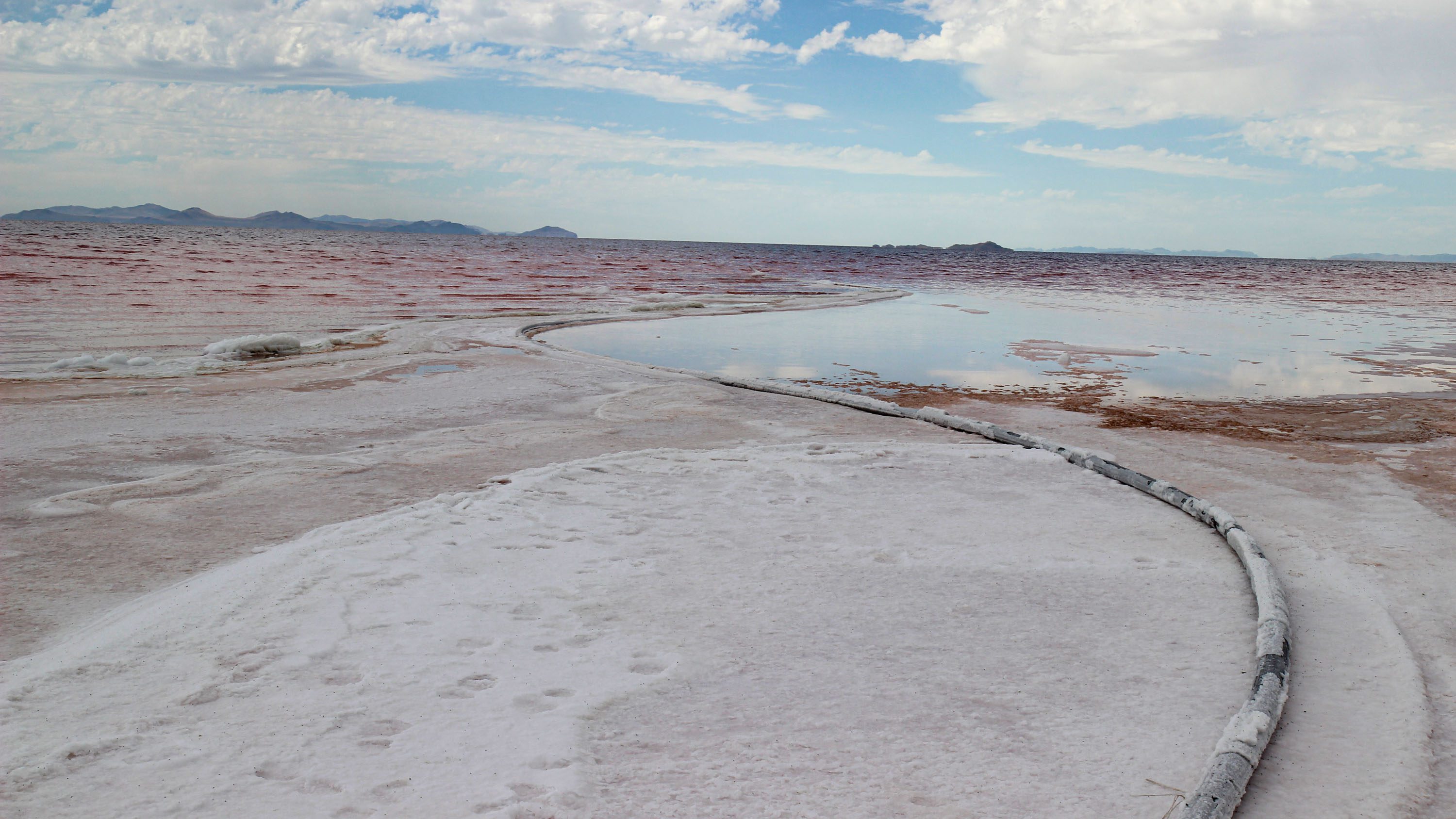
BOX ELDER COUNTY, Utah – On a bright afternoon in August, the shore on the North Arm of the Great Salt Lake looks like something out of a science fiction film set in a scorching alien world. The desert sun is blinding as it reflects off the white salt that gathers and crunches underfoot like snow at the water’s edge. In a part of the lake too shallow for boats, bacteria have turned the water a Pepto-Bismol pink. The landscape all around is ringed with jagged red mountains and brown brush. The only obvious sign of people is the salt-encrusted hose running from the water’s edge to a makeshift encampment of shipping containers and trucks a few hundred feet away.
This otherworldly scene is the test site for a company called Lilac Solutions, which is developing a technology it says will shake up the United States’ efforts to pry control over the global supply of lithium, the so-called “white gold” needed for electric vehicles and batteries, away from China. Before tearing down its demonstration facility to make way for its first commercial plant, due online next year, the company invited me to be the first journalist to tour its outpost in this remote area, a roughly two-hour drive from Salt Lake City.
The startup is in a race to commercialize a new way to extract lithium from rocks, called direct lithium extraction (DLE). This approach is designed to reduce the environmental damage caused by the two most common traditional methods of mining lithium: hard-rock mining and brining.
Australia, the world’s top producer of lithium, uses the first approach, scraping rocks laden with lithium out of the earth so they can be chemically processed into industrial-grade versions of the metal. Chile, the second-largest lithium source, uses the second: It floods areas of its sun-soaked Atacama Desert with water. This results in ponds rich in dissolved lithium, which are then allowed to dry off, leaving behind lithium salts that can be harvested and processed elsewhere.
An intake hose, used to pump water to Lilac Solutions’ demonstration site, snakes into the pink-hued Great Salt Lake.
ALEXANDER KAUFMAN
The range of methods known as DLE use lithium brine too, but instead of water-intensive evaporation, they all involve advanced chemical or physical filtering processes that selectively separate out lithium ions. While DLE has yet to take off, its reduced need for water and land has made it a prime focus for companies and governments looking to ramp up production to meet the growing demand for lithium as electric vehicles take off and even bigger batteries are increasingly used to back up power grids. China, which processes more than two-thirds of the world’s mined lithium, is developing its own DLE to increase domestic production of the raw material. New approaches are still being researched, but nearly a dozen companies are actively looking to commercialize DLE technology now, and some industrial giants already offer basic off-the-shelf hardware.
In August, Lilac completed its most advanced test yet of its technology, which the company says doesn’t just require far less water than traditional lithium extraction—it uses a fraction of what other DLE approaches demand.
The company uses proprietary beads to draw lithium ions from water and says its process can extract lithium using a tenth as much water as the alumina sorbent technology that dominates the DLE industry. Lilac also highlights its all-American supply chain. Technology originally developed by Koch Industries, for example, uses some Chinese-made components. Lilac’s beads are manufactured at the company’s plant in Nevada.
Lilac says the beads are particularly well suited to extracting lithium where concentrations are low.That doesn’t mean they could be deployed just anywhere—there won’t be lithium extraction on the Hudson River anytime soon. But Lilac’s tech could offer significant advantages over what’s currently on the market. And forgoing plans to become a major producer itself could enable the company to seize a decent slice of global production by appealing to lithium miners companies looking for the best equipment, says Milo McBride, a researcher at the Carnegie Endowment for International Peace who authored a recent report on DLE.
If everything pans out, the pilot plant Lilac builds next to prove its technology at commercial scale could significantly increase domestic supply at a moment when the nation’s largest proposed lithium project, the controversial hard-rock Thacker Pass mine in Nevada, has faced fresh uncertainty. At the beginning of October, the Trump administration renegotiated a federal loan worth more than $2 billion to secure a 5% ownership stake for the US government.
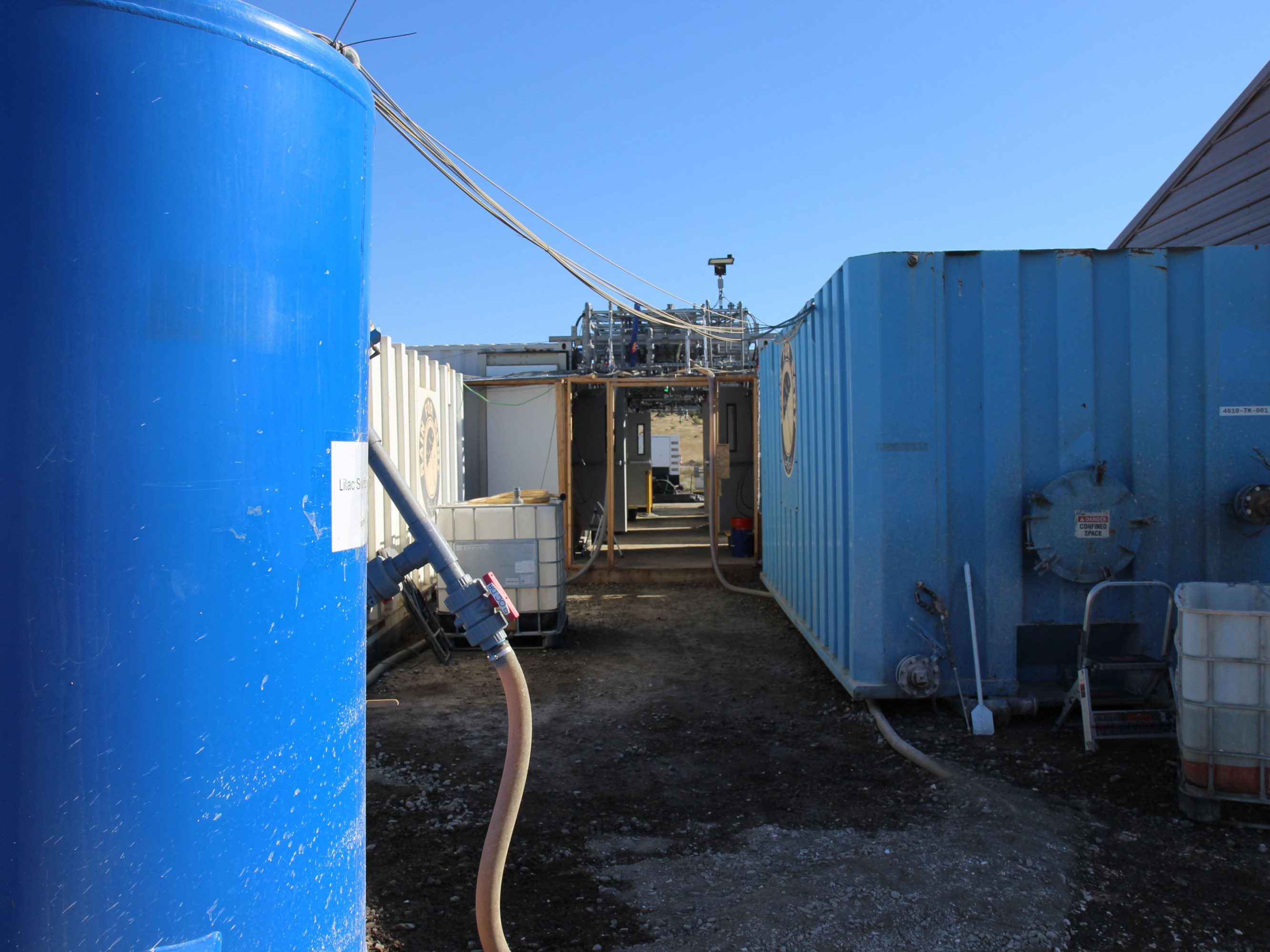
The blue tank on the left filters the brine from the Great Salt Lake to remove large particles before pumping the lithium-rich water into the ion-exchange systems located in the shipping containers.
ALEXANDER KAUFMAN
Despite bipartisan government support, the prospect of opening a deep gash in an unspoiled stretch of Nevada landscape has drawn fierce opposition from conservationists and lawsuits from ranchers and Native American tribes who say the Thacker Pass project would destroy the underground freshwater reservoirs on which they depend. Water shortages in the parched West have also made it difficult to plan on using additional evaporation ponds, the other traditional way of extracting lithium.
Lilac is not the only company in the US pushing for DLE. In California’s Salton Sea, developers such as EnergySource Minerals are looking to build a geothermal power plant to power a DLE facility pulling lithium from the inland desert lake. And energy giants such as Exxon Mobil, Chevron, and Occidental Petroleum are racing to develop an area in southwestern Arkansas called the Smackover region, where researchers with the US Geological Survey have found as much as 19 million metric tons of untapped lithium in salty underground water. In between, both geographically and strategically, is Lilac: It’s looking to develop new technology like the California companies but sell its hardware to the energy giants in Arkansas.
The Great Salt Lake isn’t an obvious place to develop a lithium mine. The Salton Sea boasts lithium concentrations of just under 200 parts per million. Argentina, where Lilac has another test facility, has resources of above 700 parts per million.
Here on the Great Salt Lake? “It’s 70 parts per million,” Raef Sully, Lilac’s Australia-born chief executive, tells me. “So if you had a football stadium with 45,000 seats, this would be three people.”
For Lilac, this is actually a feature of the location. “It’s a very, very good demonstration of the capability of our technology,” Sully says. Showing that Lilac’s hardware can extract lithium at high purity levels from a brine with low concentration, he says, proves its versatility. That wasn’t the reason Lilac selected the site, though. “Utah is a mining friendly state,” says Elizabeth Pond, the vice president of communications. And though the lake water has low concentrations of lithium, extracting the brine simply calls for running a hose into the water, whereas other locations would require digging a well at great cost.
When I accompanied Sully to the test site during my tour, our route following unpaved county roads lined with fields of wild sunflowers. The facility itself is little more than an assortment of converted shipping containers and two mobile trailers, one to serve as the main office and the other as a field laboratory to test samples. It’s off the grid, relying on diesel generators that the company says will be replaced with propane units once this location is converted to a permanent facility but could eventually be swapped for geothermal technology tapping into a hot rock resource located nearby. (Solar panels, Sully clarifies, couldn’t supply the 24-7 power supply the facility will need.) But it depends on its connection to the Great Salt Lake via that lengthy hose.
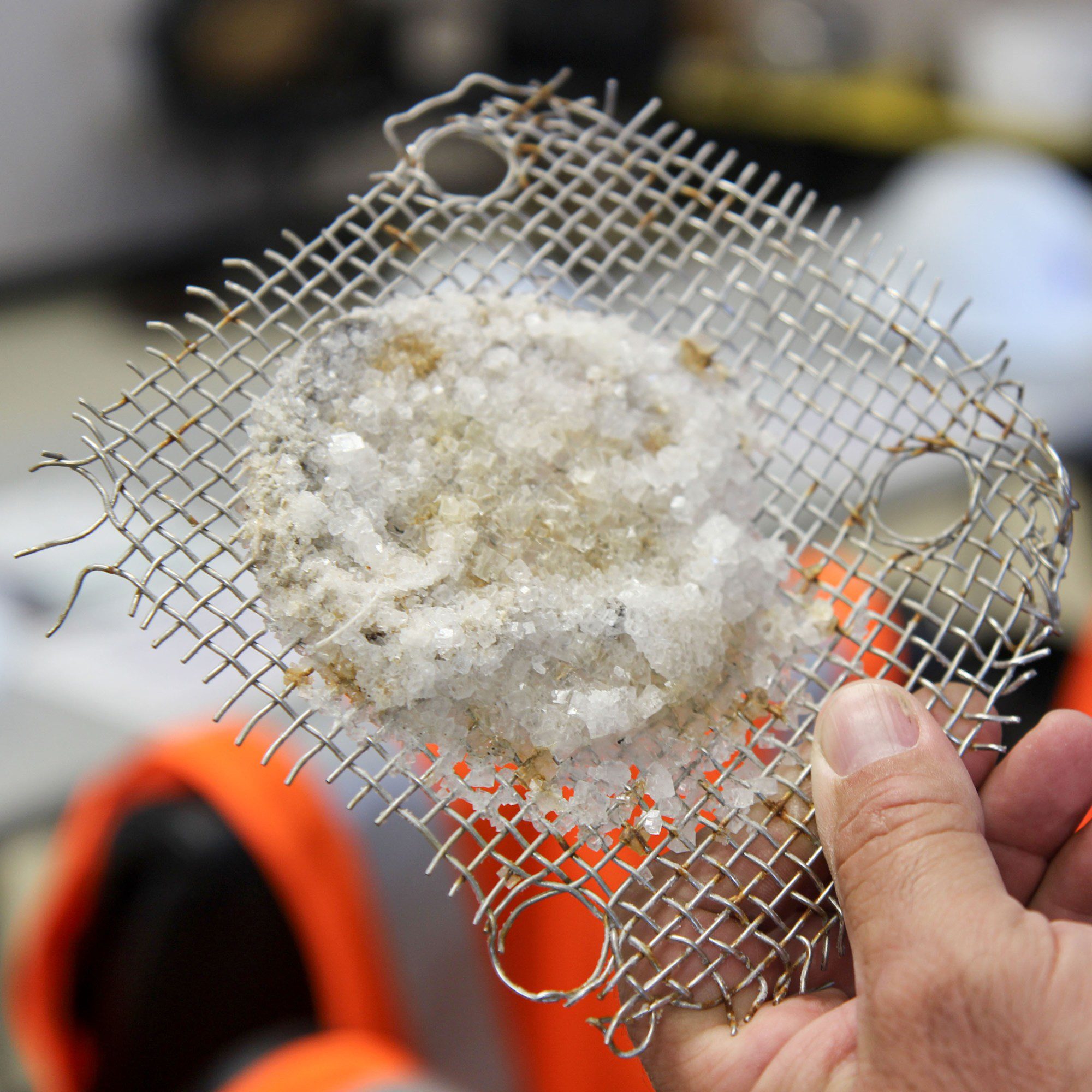
Hardened salt and impurities are encrusted on metal mesh that keeps larger materials out of Lilac’s water intake system.
ALEXANDER KAUFMAN
Pumped uphill, the lake water passes through a series of filters to remove solids until it ends up in a vessel filled with the company’s specially designed ceramic beads, made from a patented material that attracts lithium ions from the water. Once saturated, the beads are put through an acid wash to remove the lithium. The remaining brine is then repeatedly tested and, once deemed safe to release back into the lake, pumped back down to the shore through an outgoing tube in the hose. The lithium solution, meanwhile, is stockpiled in tanks on site before shipping off to a processing plant to be turned into battery-grade lithium carbonate, which is a white powder.
“As a technology provider in the long term, if we’re going to have decades of lithium demand, they want to position their technology as something that can tap a bunch of markets,” McBride says. “To have a technology that can potentially economically recover different types of resources in different types of environments is an enticing proposition.”
This testing ground won’t stay this way for long. During my visit, Lilac’s crew was starting to pack up the location after completing its demonstration testing. The results the company shared exclusively with me suggest a smashing success, particularly for such low-grade brine with numerous impurities: Lilac’s equipment recovered 87% of the available lithium, on average, with a purity rate of 99.97%.
The next step will be to clear the area to make way for construction of Lilac’s first permanent commercial facility at the same site. To meet the stipulations of Utah state permits for the new plant, the company had to cease all operations at the demonstration project. If everything goes according to plan, Lilac’s first US facility will begin commercial production in the second half of 2027. The company has lined up about two-thirds of its funding for the project. That could make the plant the first new commercial source of lithium in the US to come online in years, and the first DLE facility ever.
Once it’s fully online, the project should produce 5,000 tons per year—doubling annual US production of lithium. But a full-scale plant using Lilac’s technology would produce between three and five times that amount.
There are some potential snags. Utah regulators this year started cracking down on mineral companies pumping water from the Great Salt Lake, which is shrinking amid worsening droughts. (Lilac says it’s largely immune to the restrictions since it returns the water to the lake.) While the relatively low concentrations of lithium in the water make for a good test case, full-scale commercial production would likely prove far more economical in a place with more of the metal.
Wild sunflowers line the unpaved county roads that cut through ranching land en route to Lilac Solutions’ remote demonstration site.
ALEXANDER KAUFMAN
“The Great Salt Lake is probably the worst possible place to be doing this, because there are real challenges around pulling water from the lake,” says Ashley Zumwalt-Forbes, a mining engineer who previously served as the deputy director of battery minerals at the Department of Energy. “But if it’s just being used as a trial for the technology, that makes sense.”
What makes Lilac stand out among its peers is that it has no plans to design and manufacture its own DLE equipment and produce actual lithium. Lilac wants instead to sell its technology to others. The pilot plant is just intended to test and debut its hardware. Sully tells me it’s being built under a separate limited-liability corporation to make a potential sale easier if it’s successful.
It’s an unusual play in the lithium industry. Once most companies see success with their technology, “they go crazy and think they can vertically integrate and at the same time be a miner and an energy producer,” Kwasi Ampofo, the head of minerals and metals at the energy consultancy BloombergNEF, tells me.
“Lilac is trying to be a technology vendor,” he says. “I wonder why a lot more people aren’t choosing that route.”
If things work out the right way, Sully says, Lilac could become the vendor of choice to projects like the oil-backed sites in the Smackover and beyond.
“We think our technology is the next generation,” he says. “And if we end up working with an Exxon or a Chevron or a Rio Tinto, we want to be the DLE technology provider in their lithium project.”
Kids have always played with and talked to stuffed animals. But now their toys can talk back, thanks to a wave of companies that are fitting children’s playthings with chatbots and voice assistants.
It’s a trend that has particularly taken off in China: A recent report by the Shenzhen Toy Industry Association and JD.com predicts that the sector will surpass ¥100 billion ($14 billion) by 2030, growing faster than almost any other branch of consumer AI. According to the Chinese corporation registration database Qichamao, there are over 1,500 AI toy companies operating in China as of October 2025.
One of the latest entrants to the market is a toy called BubblePal, a device the size of a Ping-Pong ball that clips onto a child’s favorite stuffed animal and makes it “talk.” The gadget comes with a smartphone app that lets parents switch between 39 characters, from Disney’s Elsa to the Chinese cartoon classic Nezha. It costs $149, and 200,000 units have been sold since it launched last summer. It’s made by the Chinese company Haivivi and runs on DeepSeek’s large language models.
Other companies are approaching the market differently. FoloToy, another Chinese startup, allows parents to customize a bear, bunny, or cactus toy by training it to speak with their own voice and speech pattern. FoloToy reported selling more than 20,000 of its AI-equipped plush toys in the first quarter of 2025, nearly equaling its total sales for 2024, and it projects sales of 300,000 units this year.
But Chinese AI toy companies have their sights set beyond the nation’s borders. BubblePal was launched in the US in December 2024 and is now also available in Canada and the UK. And FoloToy is now sold in more than 10 countries, including the US, UK, Canada, Brazil, Germany, and Thailand. Rui Ma, a China tech analyst at AlphaWatch.AI, says that AI devices for children make particular sense in China, where there is already a well-established market for kid-focused educational electronics—a market that does not exist to the same extent globally. FoloToy’s CEO, Kong Miaomiao, told the Chinese outlet Baijing Chuhai that outside China, his firm is still just “reaching early adopters who are curious about AI.”
China’s AI toy boom builds on decades of consumer electronics designed specifically for children. As early as the 1990s, companies such as BBK popularized devices like electronic dictionaries and “study machines,” marketed to parents as educational aids. These toy-electronics hybrids read aloud, tell interactive stories, and simulate the role of a playmate.
The competition is heating up, however—US companies have also started to develop and sell AI toys. The musician Grimes helped to create Grok, a plush toy that chats with kids and adapts to their personality. Toy giant Mattel is working with OpenAI to bring conversational AI to brands like Barbie and Hot Wheels, with the first products expected to be announced later this year.
However, reviews from parents who’ve bought AI toys in China are mixed. Although many appreciate the fact they are screen-free and come with strict parental controls, some parents say their AI capabilities can be glitchy, leading children to tire of them easily.
Penny Huang, based in Beijing, bought a BubblePal for her five-year-old daughter, who is cared for mostly by grandparents. Huang hoped that the toy could make her less lonely and reduce her constant requests to play with adults’ smartphones. But the novelty wore off quickly.
“The responses are too long and wordy. My daughter quickly loses patience,” says Huang, “It [the role-play] doesn’t feel immersive—just a voice that sometimes sounds out of place.”
Another parent who uses BubblePal, Hongyi Li, found the voice recognition lagging: “Children’s speech is fragmented and unclear. The toy frequently interrupts my kid or misunderstands what she says. It also still requires pressing a button to interact, which can be hard for toddlers.”
Huang recently listed her BubblePal for sale on Xianyu, a secondhand marketplace. “This is just like one of the many toys that my daughter plays for five minutes then gets tired of,” she says. “She wants to play with my phone more than anything else.”
The US Department of Energy appears poised to terminate funding for a pair of large carbon-sucking factories that were originally set to receive more than $1 billion in government grants, according to a department-issued list of projects obtained by MIT Technology Review and circulating among federal agencies.
One of the projects is the South Texas Direct Air Capture Hub, a facility that Occidental Petroleum’s 1PointFive subsidiary planned to develop in Kleberg County, Texas. The other is Project Cypress in Louisiana, a collaboration between Battelle, Climeworks, and Heirloom.
The list features a “latest status” column, which includes the word “terminate” next to the roughly $50 million award amounts for each project. Those line up with the initial tranche of Department of Energy (DOE) funding for each development. According to the original announcement in 2023, the projects could have received $500 million or more in total grants as they proceeded.
It’s not clear if the termination of the initial grants would mean the full funding would also be canceled.
“It could mean nothing,” says Erin Burns, executive director of Carbon180, a nonprofit that advocates for the removal and reuse of carbon dioxide. “It could mean there’s a renegotiation of the awards. Or it could mean they’re entirely cut. But the uncertainty certainly doesn’t help projects.”
A DOE spokesman stressed that no final decision has been made.
“It is incorrect to suggest those two projects have been terminated and we are unable to verify any lists provided by anonymous sources,” Ben Dietderich, the department’s press secretary, said in an email, adding: “The Department continues to conduct an individualized and thorough review of financial awards made by the previous administration.”
Last week, the DOE announced it would terminate about $7.5 billion dollars in grants for more than 200 projects, stating that they “did not adequately advance the nation’s energy needs, were not economically viable, and would not provide a positive return on investment of taxpayer dollars.”
Battelle and 1PointFive didn’t respond to inquiries from MIT Technology Review.
“Market rumors have surfaced, and Climeworks is prepared for all scenarios,” Christoph Gebald, one of the company’s co-CEOs, said in a statement. He added later: “The need for DAC is growing as the world falls short of its climate goals and we’re working to achieve the gigaton capacity that will be needed.”
“We aren’t aware of a decision from DOE and continue to productively engage with the administration in a project review,” Heirloom said in a statement.
The rising dangers of climate change have driven the development of the direct-air capture industry in recent years.
Climate models have found that the world may need to suck down billions of tons of carbon dioxide per year by around midcentury, on top of dramatic emissions cuts, to prevent the planet from warming past 2˚ C.
Carbon-sucking direct-air factories are considered one of the most reliable ways of drawing the greenhouse gas out of the atmosphere, but they also remain one of the most expensive and energy-intensive methods.
Under former President Joe Biden, the US began providing increasingly generous grants, subsidies and other forms of support to help scale up the nascent sector.
The grants now in question were allocated under the DOE’s Regional Direct Air Capture Hubs program, which was funded through the Bipartisan Infrastructure Law. The goal was to set up several major carbon removal clusters across the US, each capable of sucking down and sequestering at least a million tons of the greenhouse gas per year.
“Today’s news that a decision to cancel lawfully designated funding for the [direct-air-capture projects] could come soon risks handing a win to competitors abroad and undermines the commitments made to businesses, communities, and leaders in Louisiana and South Texas,” said Giana Amador of the Carbon Removal Alliance and Ben Rubin of the Carbon Business Council in a joint statement.
This story was updated to include additional quotes, a response from the Department of Energy and added context on the development of the carbon removal sector.
It’s a foregone conclusion that the world will not meet the goals for limiting emissions and global warming laid out in the 2015 Paris Agreement. Many people want to blame politicians and corporations for this failure, but there’s an even more fundamental reason: We don’t have all the technological tools we need to do it, and many of the ones we do have are too expensive.
For all the progress the world has made on renewable energy sources, electric vehicles, and electricity storage, we need a lot more innovation on every front—from discovery to deployment—before we can hope to reach our ultimate goal of net-zero emissions.
But I don’t think this is a reason to be pessimistic. I see it as cause for optimism, because humans are very good at inventing things. In fact, we’ve already created many tools that are reducing emissions. In just the past 10 years, energy breakthroughs have lowered the global forecast for emissions in 2040 by 40%. In other words, because of the human capacity to innovate, we are on course to reduce emissions substantially by 2040 even if nothing else changes.
And I am confident that more positive changes are coming. I’ve been learning about global warming and investing in ideas to stop it for the past 20 years. I’ve connected with unbiased scientists and innovators who are committed to preventing a climate disaster. Ten years ago, some of them joined me in creating Breakthrough Energy, an investment group whose sole purpose is to accelerate clean energy innovation. We’ve supported more than 150 companies so far, many of which have blossomed into major businesses such as Fervo Energy and Redwood Materials, two of this year’s Companies to Watch. [Editor’s note: Mr. Gates did not participate in the selection process of this year’s companies and was not aware that two Breakthrough investments had been selected when he agreed to write this essay.]
Yet climate technologies offer more than just a public good. They will remake virtually every aspect of the world’s economy in the coming years, transforming energy markets, manufacturing, transportation, and many types of industry and food production. Some of these efforts will require long-term commitments, but it’s important that we act now. And what’s more, it’s already clear where the opportunities lie.
In the past decade, an ecosystem of thousands of innovators, investors, and industry leaders has emerged to work on every aspect of the problem. This year’s list of 10 Climate Tech Companies to Watch shows just a few of the many examples.
Although much of this innovation ecosystem has matured on American shores, it has become a global movement that won’t be stopped by new obstacles in the US. It’s unfortunate that governments in the US and other countries have decided to cut funding for climate innovations and reverse some of the policies that help breakthrough ideas get to scale. In this environment, we need to be more rigorous than ever about spending our time, money, and ingenuity on efforts that will have the biggest impact.
How do we figure out which ones those are? First, by understanding which activities are responsible for the most emissions. I group them into five categories: electricity generation, manufacturing, transportation, agriculture, and heating and cooling for buildings.
Of course, the zero-carbon tools we have today aren’t distributed evenly across these sectors. In some sectors, like electricity, we’ve made a great deal of progress. In others, like agriculture and manufacturing, we’ve made much less. To compare progress across the board, I use what I call the Green Premium, which is the difference in cost between the clean way of doing something and the conventional way that produces emissions.
For example, sustainable aviation fuel now costs more than twice as much as conventional jet fuel, so it has a Green Premium of over 100%. Solar and wind power have grown quickly because in many cases they’re cheaper than conventional sources of electricity—that is, they have a negative Green Premium.
The Green Premium isn’t purely financial. To be competitive, clean alternatives also need to be as practical as what they’re replacing. Far more people will buy EVs once you can charge one up as quickly as you can fill your tank with gasoline.
I think the Green Premium is the best way to identify areas of great impact. Where it’s high, as in the case of jet fuel, we need innovators and investors to jump on the problem. Where it’s low or even negative, we need to overcome the barriers that are keeping the technologies from reaching a global scale.
A new technology has to overcome a lot of challenges to beat the incumbents, but being able to compete on cost is absolutely essential. So if I could offer one piece of advice to every company working on zero-carbon technologies, it would be to focus on lowering and eliminating the Green Premium in whatever sector you’ve chosen. Think big. If your technology can be competitive enough to eventually eliminate at least 1% of global emissions per year—that’s 0.5 gigatons—you’re on the right track.
I’d encourage policymakers to bring this sector-by-sector focus on the Green Premium to their work, too. They should also protect funding for clean technologies and the policies that promote them. This is not just a public good: The countries that win the race to develop these breakthroughs will create jobs, hold enormous economic power for decades to come, and become more energy independent.
In addition, young scientists and entrepreneurs should think about how they can put their skills toward these challenges. It’s an exciting time—the people who begin a career in clean technology today will have an enormous impact on human welfare. If you need pointers, the Climate Tech Atlas published last month by Breakthrough Energy and other partners is an excellent guide to the technologies that are essential for decarbonizing the economy and helping people adapt to a warmer climate.
Finally, I’d encourage investors to put serious money into companies with technologies that can meaningfully reduce the Green Premium. Consider it an investment in what will be the biggest growth industry of the 21st century. Companies have made dramatic progress on better and cleaner solutions in every sector; what many of them need now is private-sector capital and partnerships to help them reach the scale at which they’ll have a real impact on emissions.
So if I could offer one piece of advice to every company working on zero-carbon technologies, it would be to focus on lowering and eliminating the Green Premium in whatever sector you’ve chosen.
Transforming the entire physical economy is an unprecedented task, and it can only be accomplished through markets—by supporting companies with breakthrough ideas that beat fossil fuels on cost and practicality. It’s going to take investors who are both patient and willing to accept the risk that some companies will fail. Of course, governments and nonprofits have a role in the energy transition too, but ultimately, our success will hinge on climate innovators’ ability to build profitable companies.
If we get this right—and I believe we will—then in the next decade, we’ll see fewer news stories about missed emissions targets and more stories about how emissions are dropping fast because the world invented and deployed breakthrough ideas: clean liquid fuels that power passenger jets and cargo ships; neighborhoods built with zero-emissions steel and cement; fusion plants that generate an inexhaustible supply of clean electricity.
Not only will emissions fall faster than most people expect, but hundreds of millions of people will be able to get affordable, reliable clean energy—with especially dramatic improvements for low-income countries. More people will have access to air-conditioning for extremely hot days. More children will have lights so they can do their homework at night. More health clinics will be able to keep their vaccines cold so they don’t spoil. We’ll have built an economy where everyone can prosper.
Of course, climate change will still present many challenges. But the advances we make in the coming years can ensure that everyone gets a chance to live a healthy and productive life no matter where they’re born, and no matter what kind of climate they’re born into.
Bill Gates is a technologist, business leader, and philanthropist. In 1975, he cofounded Microsoft with his childhood friend Paul Allen, and today he is chair of the Gates Foundation, a nonprofit fighting poverty, disease, and inequity around the world. Bill is the founder of Breakthrough Energy, an organization focused on advancing clean energy innovation, and TerraPower, a company developing groundbreaking nuclear energy and science technologies. He has three children.