2024 Climate Tech Companies to Watch: LanzaJet and its next-generation jet fuel

LanzaJet is making next-generation aviation fuel without fossil fuels. The company recently opened the world’s first commercial-scale production facility that turns alcohol into jet fuel and plans to produce up to 9 million gallons each year.

LanzaJet wants to cut aviation’s climate impact by rethinking where jet fuel comes from. 

Today, hopping on a plane means burning huge amounts of fossil fuels—the aviation industry accounts for about 3% of global greenhouse-gas emissions. 

LanzaJet’s technology makes jet fuel using alcohol, which can be sourced from a variety of materials, including corn and sugarcane. The company’s process starts with ethanol and then uses a series of steps that pull out water, string molecules together into longer chains, and add hydrogen. The result is a chemical mixture, which the company then processes further to separate out the components that can be burned as jet fuel. 

The company is a leader in this alcohol-to-jet-fuel pathway. Currently, nearly all commercially available alternative jet fuels use waste fats, oils, and greases as their starting material, but as the industry scales, there’s a growing concern about their limited supply. 

This new option for alternative fuels could drastically expand supply and help the industry scale more quickly, which will be crucial to meeting climate targets. LanzaJet opened the first commercial alcohol-to-jet-fuel factory in Georgia in January 2024 and has buyers secured for all the fuel produced at that facility through 2034. British Airways, one of LanzaJet’s investors, will be a customer. 


Key indicators

  • Industry: Aviation fuels 
  • Founded: 2020
  • Headquarters: Deerfield, Illinois, USA
  • Notable fact: LanzaJet spun out of LanzaTech, a company whose main technology uses microbes to convert waste materials into chemicals and fuels.

Potential for impact

Alternative fuels still produce carbon dioxide and other greenhouse gases when they’re burned in a plane’s engine. The difference is that they typically remove some carbon from the atmosphere first. In this case the corn or sugarcane used to make the ethanol soaks up carbon dioxide as it grows. The result is that at least some of the emissions from flying can be considered offset by the process of making the fuel.

LanzaJet’s fuels could cut the climate impacts from burning fuel roughly in half, though the exact amount will depend on the source of alcohol used. The company’s sugarcane-derived ethanol could cut emissions by between 54% and 66%, according to the US Environmental Protection Agency, which certifies low-emissions fuels under the country’s Renewable Fuel Standard program.

The company plans to test out its new Georgia factory using corn-based fuels, though it’s only certified to sell sugarcane-based fuels in the US so far. LanzaJet is also partnering with its former owner, LanzaTech, to take materials like municipal solid waste and industrial waste gas and transform them into ethanol, which LanzaJet will then make into jet fuel. This pathway could result in jet fuel that’s 85% less polluting than fossil fuels, the company claims.

Caveats 

Scaling could present a major challenge for LanzaJet, as it does for the industry as a whole. Alternative jet fuels made up just 0.17% of all global aviation fuel used in 2023. LanzaJet’s goal is to produce a billion gallons of alternative jet fuels annually by 2030, significantly more than the roughly 160 million gallons produced by the entire alternative fuels industry last year. To achieve that, the company will need to build many large facilities, and do it quickly.  

Cost is another major challenge for new fuels—on average, alternative jet fuels cost 2.8 times more than their fossil-fuel counterparts in 2023. Prices could come down as facilities scale, but fuel is a significant cost for airlines, making this a crucial consideration for future customers.

Experts also caution that fuels from biological sources still have environmental impacts. Those effects depend largely on the specific agricultural practices used to produce them. Clearing natural ecosystems to plant massive fields of single crops, for example, can on balance release more greenhouse gases into the atmosphere than those crops will ever capture. In the worst-case scenarios, some crop-based biofuels produce more emissions than fossil fuels. LanzaJet and other fuel makers will need to choose their source materials carefully and be transparent with regulators and the public about the effects of producing their products.

Next steps 

LanzaJet is working to validate and ramp up its first commercial facility, which the company hopes to have operating at full capacity by the end of 2024. Next, the company will begin building even larger facilities, including a 27-million-gallon-per-year facility in the UK in partnership with British Airways that should be operating by 2027.

Explore the 2024 list of 15 Climate Tech Companies to Watch.

2024 Climate Tech Companies to Watch: Rondo Energy and its hot bricks

Rondo Energy is supplying cheap, zero-emissions heat to factories to replace fossil-fuel-powered boilers, furnaces, and kilns. Its approach of using bricks and iron wire to provide a steady supply of hot air or steam stands out for its simplicity and potential to scale.

Finding a clean way to produce the large amounts of heat required for industrial processes is one of the biggest unsolved climate challenges. Widely discussed solutions, like carbon capture and green hydrogen, still struggle to compete economically with burning coal or gas.

Rondo offers an alternative approach: stacks of bricks, heated by electricity generated from the wind and sun. Inside Rondo’s heat batteries, cheap renewable electricity heats iron wires similar to those in a toaster oven, which warms hundreds of tons of bricks to temperatures of up to 1,500 °C. With four to six hours of charging a day, those bricks can turn intermittent renewable power into a 24-7 heat source for industrial facilities.

Among startups trying to commercialize zero-emissions heat batteries, Rondo stands out for its simple approach. Competitors’ heat batteries often involve some kind of new technique or engineered material that’s a few steps away from any current industrial technology. But the heat-resistant bricks inside a Rondo heat battery are similar to those that have been used in high-temperature steelmaking for over a century, meaning they are already produced cheaply and at industrial scales. That sales pitch is resonating with investors, who have poured $85 million into the startup over the past two years.


Key indicators

  • Industry: Energy storage 
  • Founded: 2020
  • Headquarters: Alameda, California, USA
  • Notable fact: The company’s name pays homage to the musical term for a type of composition with a recurring theme. Cofounders John O’Donnell and Pete von Behrens previously worked in concentrating solar thermal power; Rondo is their second venture into thermal storage.

Potential for impact

Industrial production of stuff, from clothing and food to cement and fertilizer, is responsible for about a third of global greenhouse-gas emissions. Most of those emissions come from burning fossil fuels to generate heat in factories. If Rondo’s heat batteries prove cost-competitive at scale, they could help eliminate billions of tons of carbon emissions that would otherwise enter the atmosphere each year.

Caveats 

While heat-resistant bricks are a proven industrial technology, using them as zero-emissions heat batteries will require building more wind and solar plants to generate huge amounts of cheap renewable energy. Electricity reforms would also be needed in many parts of the US to make heat batteries cost-competitive with other forms of industrial heat. These might include allowing heat battery users to purchase cheap wholesale power from the grid during times of the day when renewable energy is abundant—something that isn’t possible today in jurisdictions that only sell power to industries at a fixed daily rate. 

Next steps 

Rondo has a 2-megawatt-hour battery operating commercially at an ethanol plant in California. Its scale-up plans are ambitious: In partnership with Siam Cement Group, the company is already producing enough heat-resistant brick to store 2.4 gigawatt-hours of energy a year, which could power more than 200 American homes. It plans to boost production to 90 gigawatt-hours a year in the future. Between 2025 and 2027, recently announced customers in the food and beverage and chemical industries are expected to start using versions of Rondo’s commercial heat batteries in industrial facilities. 

Experts are looking forward to seeing how Rondo’s batteries perform over time, both in bigger installations and in very high-temperature applications like steel and cement making, which are considered among the most difficult processes to decarbonize.

Explore the 2024 list of 15 Climate Tech Companies to Watch.

2024 Climate Tech Companies to Watch: Gogoro and its battery-swapping network for electric scooters

Electric vehicles can take a long time to charge up, and places to do so can be hard to find. Gogoro’s innovative technology offers a quick and easy way to swap drained batteries for charged ones at a growing number of stations worldwide. 

When a magnitude 7.4 earthquake rolled through Taiwan in April, it was the biggest to hit the island in more than a century. Hundreds of Gogoro battery-charging stations did something pretty amazing in response: They automatically powered down to reduce strain on the grid. That saved enough electricity to power thousands of homes until the grid came fully back online. And it all happened without human intervention, thanks to the company’s network of AI-powered battery-swapping stations located all over the island. 

A big challenge with the transition to EVs is making sure it’s easy and fast to charge them up, no matter where you are. Charging stations can be hard to find, and if you plug into a wall (or even a standard charger), it can take hours to fully refill a battery. Gogoro has tackled these related issues by building out a network of hundreds of battery-swapping stations throughout Taiwan, where scooters (think Vespa, not Razr) far outnumber cars. Instead of recharging, customers roll up, grab a new battery, and get back on the road again in less time than it takes to fill up a tank with gas.

Now Gogoro is bringing that system online throughout the world, with locations in India, China, Colombia, and the Philippines, among other countries. Key to its success is the complete ecosystem it has created. Gogoro manufactures both scooters and batteries; the latter power not only its own vehicles but also those made by Yamaha, Suzuki, and various other local manufacturers worldwide. It also maintains a fleet of rideshare scooters available to rent (which the company made free in the aftermath of the earthquake until Taipei’s public transit system came back online). And the whole system is tied together by more than 13,000 battery-swapping stations found at 3,000 locations throughout the world.  


Key indicators

  • Industry: Electric vehicles
  • Founded: 2011
  • Headquarters: Taipei, Taiwan
  • Notable fact: Riders can exchange empty batteries for fully charged ones in less than six seconds at Gogoro’s battery-swapping stations.

Potential for impact

A key challenge of transitioning away from fossil fuels is competing with the price and ubiquity of gasoline. Thanks to its network, Gogoro has made electric micro mobility vehicles convenient, efficient, and affordable, so they offer a real alternative to filling up at the pump. In fact, there are now more Gogoro stations in Taipei than gas stations. 

Moreover, those stations are not only convenient but environmentally friendly. They’re able to act as virtual power plants: They can draw power during times when grid usage is low (such as at night), return power to the grid when usage is high, and even supply backup power in case of emergencies like an earthquake or typhoon. More than 1,000 Gogoro stations now do double duty in this way.  

Finally, when the company’s batteries reach the end of their life for powering scooters, they can be redeployed as backup power packs for traffic lights, streetlights, and other electrical infrastructure. 

Caveats

For the company to grow and have a real impact on global emissions, it has to build networks like the one in Taiwan throughout the rest of the world. That’s incredibly capital intensive. It also means Gogoro will need to work closely with local governments, adapt to varying international regulations, redesign its vehicles to meet local consumer preferences, and partner with other manufacturers and grid power providers. It’s a tall order. The company’s rollout in India is facing delays as it awaits clarity from regulators on which subsidies will be made available. And although Gogoro can start small in new markets, if the company’s infrastructure does not keep pace with demand there, customers could be hard pressed to find fully charged batteries. 

What’s more, while Gogoro’s model works well in densely populated urban areas, it faces significant challenges in suburbs and rural areas. And the company’s biggest competitor of all may be cheap gasoline—especially in countries like the US or Indonesia.  

Next steps 

Gogoro continues to push into new markets, according to Jason Gordon, the company’s vice president of communications. “Following launches in India and the Philippines in late 2023, Gogoro has continued our expansion in 2024 with launches in Bogota, Colombia; Singapore; and Nepal,” he says, “with Santiago, Chile, planned for later this year.” 

Explore the 2024 list of 15 Climate Tech Companies to Watch.

2024 Climate Tech Companies to Watch: BYD and its affordable EVs

It may not yet be a household name, but BYD is gaining recognition outside China for its affordable and accessible EVs. Despite regulatory scrutiny in the West, it’s determined to lower the boundaries to manufacturing and transporting its vehicles across the globe.

Five years ago, BYD was just another Chinese carmaker in a crowded field. Since then, the Shenzhen-based company has rapidly become the undisputed leader of China’s automotive industry, as well as the world’s biggest producer of electric vehicles (including both pure EVs and plug-in hybrids).  

Much of that growth is thanks to billions of dollars in government subsidies. The company also benefited enormously from the pandemic, when rising gas prices led to an EV boom. 

Another key to its success is its tightly controlled in-house production line. BYD can source everything through its own subsidiaries, from batteries and motors to the majority of the components required to make its affordably priced EVs and plug-in hybrid cars, electric buses, and monorails. This approach doesn’t just allow it to manufacture its vehicles at a lower cost than its competitors; the tight control also lets it innovate across its supply chain, rapidly incorporating new features into production.


Key indicators:

  • Industry: Electric vehicles
  • Founded: 1995
  • Headquarters: Shenzhen, China
  • Notable fact: BYD sold 3,024,417 “new energy” vehicles, which includes battery-only vehicles and hybrids, in 2023. That’s a year-on-year increase of 62%.

Potential for impact

Although sales of EVs are increasing globally, the majority of those new sales are being made in China. To expand its international market, which accounted for just 8% of its total sales last year, BYD is rapidly building factories across the world and investing heavily in a massive fleet of car-carrying ships

Over the past 18 months, the company has pushed into new markets, including Brazil, Australia, and Thailand, and announced that its new factory in Indonesia has produced its first batch of cars. It has begun work on its first European factory, in Hungary, and recently unveiled plans to invest $1 billion into a plant in Turkey, which will produce 150,000 electric and rechargeable hybrid cars a year. 

Caveats

BYD’s biggest challenges remain low brand awareness outside China and regulatory scrutiny in the West, which is becoming increasingly hostile toward Chinese companies. The US recently raised its already hefty tariffs on Chinese EVs in a bid to discourage companies from importing them into the US. It is poised to do even more. 

In a similar effort to protect the European motor industry from an influx of lower-cost Chinese-made EVs, the European Union has slapped the company and other Chinese automakers with tariffs in addition to an existing duty tax. To circumvent this, BYD’s Hungarian and Turkey production centers would allow it to export to the EU tariff-free.

These sorts of international economic tensions are likely to persist, if not worsen, as nations strive to dominate the clean industries that will define the coming century. 

Next steps

The affordability of BYD’s models is a key part of their appeal. The company’s cheapest car is the Seagull, which sells for less than $10,000 in China. BYD plans to start selling the Seagull in Europe starting next year. It also intends to open its Hungarian factory within three years. 

Better known for its batteries than for AI, BYD has long lagged behind the likes of Tesla when it comes to software. Now, it’s working on narrowing the gap. It recently unveiled the Xuanji smart car system, which includes automated parking and AI-powered voice recognition. In addition, it’s collaborating with chipmaker Nvidia to bring the next generation of car-focused chips to its models starting next year. 

BYD is also among the first automakers in China to obtain a license for testing cars equipped with Level 3 autonomous-driving capabilities, which means they can take over full control under certain conditions on designated highways. These self-driving capabilities will be put to the test in a partnership with Uber, in which future BYD driverless cars could be deployed to pick up customers—if they receive approval from governments across the world, that is.

Explore the 2024 list of 15 Climate Tech Companies to Watch.

2024 Climate Tech Companies to Watch: Pano AI and its fire-detecting AI

Pano AI is helping communities spot fires faster, enabling firefighters to put out small blazes before they grow into infernos. 

The four-year-old startup installs networks of rotating cameras in high vantage points throughout forests, grasslands, and other areas with high fire risk. Each station can capture ultra-high-definition video within a 10-mile radius, as well as infrared readings that can spot temperature fluctuations at night or through smoke.

Pano then uses its deep-learning systems to detect smoke or other signs of fire across these territories. Whenever they spot one, human analysts are available to review the images to confirm that a fire has broken out or reject false positives. 

When blazes are confirmed, Pano alerts fire monitoring agencies, providing images and location data that help them respond quickly.

As firefighters battle the blaze, the company continues to provide up-to-date, highly zoomable images of the shifting conditions, along with satellite imagery, weather information, and additional data feeds assembled from other sources.


Key indicators

  • Industry: Wildfire detection 
  • Founded: 2020
  • Headquarters: San Francisco, California, USA
  • Notable fact: Pano is helping several agencies monitor and control flames that wildfire specialists intentionally set to clear out brush and reduce risks in forests and grasslands, standing ready to send the alert if the fire should break out beyond the designated boundaries.

Potential for impact

The risks of devastating wildfires are growing, in part because we continue to build communities on the edge of wildlands, many of which we’ve allowed to become overgrown. Meanwhile, climate change is also making many areas hotter and drier, turning trees, shrubs, and grasses into kindling.

As the economic and human toll of fire rises, it’s become increasingly critical to develop better ways to prevent or extinguish them before they turn into conflagrations.

Typically, emergency responders rely on people to spot smoke or fires and report them. But in the time it takes agencies to verify those reports, tiny fires can grow into massive blazes that become far more destructive and much harder to put out.

The promise of Pano is that it can dramatically shorten that response time by spotting, confirming, and pinpointing the location of fires that might not be visible to humans for hours, because they are in remote areas or below tree cover, or ignited at night. That should reduce the number of uncontrollable fires as well as the death and damage they cause.

The company says that the real-time information it provides also helps fire departments combat the flames in safer and more effective ways. 

The company points to a number of case studies where its tools have helped to accelerate coordinated responses and contain wildfires. For instance, in the summer of 2023, Pano alerted Washington’s state fire division to the Jackson Road Fire, near Olympia. The response time was shortened by at least 20 minutes.

Firefighters still spent about a week battling the flames. But they restricted the blaze to 23 acres even as wind conditions worsened, and prevented any deaths and damage to structures. 

Caveats

Pano certainly didn’t invent the idea that cameras and computer software would be helpful in spotting and responding to fires. The ALERTCalifornia program has been leveraging similar technology for the same purpose for years. Other startups are also using sensors, satellites, cameras, and AI to improve wildfire detection, including Dryad and Robotics Cats.  

It’s still hard to say just how effective these tools will be, given continually shifting climate conditions and the many other measures that governments, utilities, and additional wildfire tech startups are now taking to reduce risks.

Next steps

But Pano has emerged as a clear leader in early fire detection. The startup has already deployed its cameras in nine states throughout the western US, including California, Oregon, Washington, and Colorado. It’s also set up stations in parts of Canada and Australia.

Pano AI’s customers include government agencies, power utilities, private forest owners, and ski resorts. It charges $50,000 per year as an all-in fee, covering its camera stations as well as software, maintenance, notifications, and services. 

The company says its systems now monitor nearly 20 million acres around the world and have spotted almost 100,000 fires. 

As heighted fire risk spreads to more regions and awareness of the danger grows, the company says, it’s also having more conversations with agencies from the Midwest, East Coast, and other areas where wildfire hasn’t traditionally been as much of a concern.

The company says that its effectiveness will only improve as its cameras monitor more areas around the world and its machine-learning systems get better at spotting the earliest signs of fire.

Explore the 2024 list of 15 Climate Tech Companies to Watch.

Why Microsoft made a deal to help restart Three Mile Island

This article is from The Spark, MIT Technology Review’s weekly climate newsletter. To receive it in your inbox every Wednesday, sign up here.

Nuclear power is coming back to Three Mile Island.

That nuclear power plant is typically associated with a very specific event. One of its reactors, Unit 2, suffered a partial meltdown in 1979 in what remains the most significant nuclear accident in US history. It has been shuttered ever since.

But the site, in Pennsylvania, is also home to another reactor—Unit 1, which consistently and safely generated electricity for decades until it was shut down in 2019. The site’s owner announced last week that it has plans to reopen the plant and signed a deal with Microsoft. The company will purchase the plant’s entire electric generating capacity over the next 20 years.  

This news is fascinating for so many reasons. Obviously this site holds a certain significance in the history of nuclear power in the US. There’s a possibility this would be one of the first reactors in the country to reopen after shutting down. And Microsoft will be buying all the electricity from the reactor. Let’s dig into what this says about the future of the nuclear industry and Big Tech’s power demand.  

Unit 2 at Three Mile Island operated for just a few months before the accident, in March 1979. At the time, Unit 1 was down for refueling. That reactor started back up, to some controversy, in the mid-1980s and produced enough electricity for hundreds of thousands of homes in the area for more than 30 years.

Eventually, though, the plant faced economic struggles. Even though it was operating at  relatively high efficiency and with low costs, it was driven out of business by record low prices for natural gas and the introduction of relatively cheap, subsidized renewable energy to the grid, says Patrick White, research director of the Nuclear Innovation Alliance, a nonprofit think tank. 

That situation has shifted in just the past few years, White says. There’s more money available now for nuclear, including new technology-agnostic tax credits in the Inflation Reduction Act. And there’s also rising concern about the increased energy demand on the power grid, in part from tech giants looking to power data centers like those needed to run AI.

In announcing its deal with Microsoft, Constellation Energy, the owner of Three Mile Island Unit 1, also shared that the plant is getting a rebrand—the site will be renamed the Crane Clean Energy Center. (Not sure if that one’s going to stick.)  

The confluence of the particular location of this reactor and the fact that the electricity will go to power data centers (and other infrastructure) makes this whole announcement instantly attention-grabbing. As one headline put it, “Microsoft AI Needs So Much Power It’s Tapping Site of US Nuclear Meltdown.”

For some people in climate circles, this deal makes a lot of sense. Nuclear power remains one of the most expensive forms of electricity today. But experts say it could play a crucial role on the grid, since the plants typically put out a consistent amount of electricity—it’s often referred to as “firm power,” in contrast with renewables like wind and solar that are intermittently available.

Without guaranteed money there’s a chance this reactor would simply have been decommissioned as planned. Reopening plants that shuttered recently could provide an opportunity to get the benefits of nuclear power without having to build an entirely new project. 

In March, the Palisades Nuclear Plant in Michigan got a loan guarantee from the US Department of Energy’s Loan Programs Office to the tune of over $1.5 billion to help restart. Palisades shut down in 2022, and the site’s owner says it hopes to get it back online by late 2025. It will be the first shuttered reactor in the US to come back online, if everything goes as planned. (For more details, check out my story from earlier this year.)

Three Mile Island may not be far behind—Constellation says the reactor could be running again by 2028. (Interestingly, the facility will need to separately undergo a relicensing process in just a few years, as it’s currently only licensed to run through 2034. A standard 20-year extension could have it running until 2054.)

If Three Mile Island comes back online, Microsoft will be the one benefiting, as its long-term power purchase agreement would secure it enough energy to power roughly 800,000 homes every year. Except in this case, it’ll be used to help run the company’s data center infrastructure in the region.

This isn’t the first recent sign Big Tech is jumping in on nuclear power: Earlier this year, Amazon purchased a data center site right next to the Susquehanna nuclear power plant, also in Pennsylvania.

While Amazon will use only part of the output of the Susquehanna plant, Microsoft will buy all the power that Three Mile Island produces. That raises the question of who’s paying for what in this whole arrangement. Ratepayers won’t be expected to shoulder any of the costs to restart the facility, Constellation CEO Joe Dominguez told the Washington Post. The company also won’t seek any special subsidies from the state, he added.

However, Dominguez also told the Post that federal money is key in allowing this project to go forward. Specifically, there are tax credits in the Inflation Reduction Act set aside for existing nuclear plants. 

The company declined to give the Post a value for the potential tax credits and didn’t respond to my request for comment, but I busted out a calculator and did my own math. Assuming an 835-megawatt plant running at 96.3% capacity (the figure Constellation gave for the plant’s final year of operation) and a $15-per-megawatt-hour tax credit, that could add up to about $100 million each year, assuming requirements for wages and price are met.

It’ll be interesting to see how much further this trend of restarting plants might go. The Duane Arnold nuclear plant in Iowa is one potential candidate—it shuttered in 2020 after 45 years, and the site’s owner has made public comments about the potential of reopening. 

Restarting any or all of these three sites could be the latest sign of an approaching nuclear resurgence. Big tech companies need lots of energy, and bringing old nuclear plants onto the grid—or, better yet, keeping aging ones open—seems to me like a great way to meet demand.

But given the relative rarity of opportunities to snag power from recently closed or closing plants, I think the biggest question for the industry is whether this wave of interest will translate into building new reactors as well.  


Now read the rest of The Spark

Related reading

Read my story from earlier this year for all the details on what it takes to reopen a shuttered nuclear power plant and what we might see at Palisades. 

In the latest in our virtual events series, my colleagues James Temple, Melissa Heikkilä, and David Rotman are having a discussion about AI’s climate impacts. Subscribers can join them for the discussion live at 12:30 p.m. Eastern today, September 25, or check out the recording later. 

AI is an energy hog, but the effects of the technology on emissions are a bit complicated, as I covered in this newsletter.  

Three more things

It’s been a busy week for the climate team here at MIT Technology Review, so let’s do a rapid-fire round: 

  1. Countries including Germany, Sweden, and New Zealand are ending EV subsidies. I wrote about why some experts are worried that the move is coming too soon for some of them
  2. A proposal to connect two of the US’s largest grids could be crucial to cleaning up our electricity system. The project just got a major boost in the form of hundreds of billions of dollars, and it could represent a long-awaited success for energy entrepreneur Michael Skelly, as my colleague James Temple covered in a new story.  
  3. Finally, there’s just one week until we drop our 2024 list of 15 Climate Tech Companies to Watch. Check out this preview story about the list, and keep your eyes peeled next week for the reveal. 

Keeping up with climate  

The US Department of Energy just announced $3 billion in funding to boost the battery and EV supply chain. (E&E News)

→ A single Minnesota mine could unlock billions of tax credits in the US. (MIT Technology Review)

Cheap solar panels are making that energy source abundantly available in Pakistan. But the boom also threatens making power pulled from the grid unaffordable. (Financial Times)

Individual action alone won’t solve the climate crisis, but there are some things people can do. Check out this package on how to decarbonize your life through choices about everything from food to transportation. (Heatmap News)

A group of major steel buyers wants a million tons of low-emissions steel in North America by 2028. These kinds of commitments from customers could help clean up heavy industry. (Canary Media)

This startup wants to use ground-up rocks and the ocean to soak up carbon dioxide. The result could transform the oceans. (New York Times)

North America’s largest food companies are struggling to cut emissions. The biggest culprit is their supply chains—the ingredients they use and the transportation needed to move them around. (Inside Climate News)
California is suing ExxonMobil, claiming the company misled consumers by perpetuating the myth that recycling could solve the plastic waste crisis. Only a small fraction of plastic waste is ever recycled. (The Verge)

Space travel is dangerous. Could genetic testing and gene editing make it safer?

This article first appeared in The Checkup, MIT Technology Review’s weekly biotech newsletter. To receive it in your inbox every Thursday, and read articles like this first, sign up here.

Recently, global news has been pretty bleak. So this week, I’ve decided to focus my thoughts beyond Earth’s stratosphere and well into space. A couple of weeks ago, SpaceX launched four private astronauts into orbit, where they performed the first ever spacewalk undertaken by private citizens (as opposed to astronauts trained by national agencies).

The company has more ambitious plans for space travel, and it’s not alone. Elon Musk, the founder of SpaceX, claimed on Sunday that he would launch uncrewed missions to Mars within two years, and crewed missions four years after that if the uncrewed missions were successful. (Other SpaceX timelines for reaching the Red Planet haven’t panned out.) NASA refers to Mars as its “​​horizon goal for human exploration.” China previously announced plans for a human mission as early as 2033 and recently moved up its timeline for an uncrewed sample return mission by two years. And the UAE has a 100-year plan to construct a habitable community on Mars by 2117.

None of this will be straightforward. Long-distance space travel can wreak havoc on human health. There’s radiation and microgravity to contend with, as well as the psychological toll of isolation and confinement. Research on identical twin astronauts has also revealed a slew of genetic changes that happen when a person spends a year in space.

That’s why some bioethicists are exploring the idea of radical treatments for future astronauts. Once we’ve figured out all the health impacts of space travel, they argue, we should edit the genomes of astronauts ahead of launch to offer them the best protection. Some have even suggested this might result in the creation of an all-new species: Homo spatialis. If this is starting to sound a bit like sci-fi, that’s because—for now, at least—it is. But there are biotechnologies we can use to help space travelers now, too.

Space travel is risky. When it comes down to it, a space launch essentially involves strapping humans into a capsule and exploding a bomb beneath them, says Paul Root Wolpe, who served as NASA’s senior bioethicist for 15 years.

Once you’re in space, you’re subject to far higher levels of radiation than you’d encounter on Earth. Too much radiation can increase a person’s risk of cancer and neurological disorders. It can also harm body tissues, resulting in cataracts or digestive diseases, for example. That’s why agencies like the US Department of Labor’s Occupational Safety and Health Administration set limits on radiation exposure. (NASA also sets limits on the amount of radiation astronauts can be exposed to.)

Then there’s microgravity. Our bodies have adapted to Earth’s gravity. Without that gravitational pull, strange things can happen. For one thing, internal fluids can start to pool at the top of the body. Muscles don’t need to work as hard when there’s no gravity, and astronauts tend to experience loss of muscle mass as well as bone.

Five years ago, scientists working with NASA published the results of a groundbreaking study comparing two identical twins—one of whom spent a year in space while the other remained on Earth. The twins, Mark and Scott Kelly, were both trained astronauts. And because they have the same set of genes, researchers were able to compare them to assess the impact of long-term space travel on how genes work.

The researchers found that both twins experienced some changes to the way their genes worked over that period, but they changed in different ways. Some of the effects in the space-faring brother lasted for more than six months. These changes are thought to be a response to the stress of space travel and perhaps a reaction to the DNA damage caused by space radiation.

Space travel comes with other risks, including weight loss, permanent eye damage caused by what is known as “spaceflight-associated neuro-ocular syndrome,” and psychological distress as a result of being far from friends and loved ones.

And if all that weren’t enough, injuries are also common on space missions, says Wolpe, who is now founding director of the Center for Peace Building and Conflict Transformation at Emory University. Tools and equipment can float around, knocking into people. Bungee cords snap. “Astronauts are supposed to wear safety goggles at all times, but they didn’t,” says Wolpe. “The injury list is lengthy … it’s really surprising how many injuries were [sustained] by astronauts on the space station.”

Commercial space travel brings a new set of dangers. Until very recently, the only people who traveled to space went through rigorous health tests and training programs overseen by national agencies. That isn’t the case for private space travel, where the rules are determined by the individual company, says Wolpe.

Astronauts are screened for common conditions like high blood pressure and diabetes. Space tourists might not be. We’re still learning the basics when it comes to the impact of space travel on health. We have no idea how it might affect a person who has various disorders and takes multiple medications.

Could gene editing protect astronauts from these potential problems? People who have adapted to high altitudes on Earth have genetic factors that allow them to thrive in low-oxygen environments—what if we could confer these factors to astronauts? And while we’re at it, why not throw in some more genetic changes—ones that might protect them from bone or muscle loss, for example?

Here’s where we get into Homo spatialis territory—the idea of a new species better suited to a life in space, or on a planet other than Earth. For the time being, this approach is not an option—there are currently no gene therapies that have been designed for people undertaking space travel. But one day “it might be in the best interests of the astronauts to undergo some genetic intervention, like gene editing, to safeguard them,” says Rosario Isasi, a bioethicist at the University of Miami. “It might be more than a duty, but a condition for an astronaut going on these missions.”

Wolpe is not keen on the idea. “There is some integrity to being human, and to the human body, that should not be breached,” he says. “These kinds of modifications are going to … end up with a number of disasters.” Isasi also hopes that advances in precision medicine, which will make possible bespoke treatments for individuals, might sidestep the need for genetic modifications.

In the meantime, genetic testing could be helpful for both astronauts and space tourists, says Wolpe. Some body tissues are more vulnerable to radiation damage, including the thyroid gland. Genetic tests that reveal a person’s risk of thyroid cancer might be useful for those considering space travel, he says.

Whether people are going into space as tourists, employees, scientists, or research subjects, figuring out how to send them safely is vitally important. After all, space tourism is nothing like regular tourism. “You’re putting [people] in a situation the human body was never designed to be in,” says Wolpe.


Now read the rest of The Checkup

Read more from MIT Technology Review’s archive

Scientists can test-drive space missions in extreme and remote environments here on Earth. “Analogue astronaut facilities,” which have been set up in deserts and in the Antarctic, simulate the isolating experience of real space travel, Sarah Scoles reports.

Astronaut meals could be set for a slightly weird overhaul. The prepackaged food currently used has a shelf life of around a year and a half. Making food from astronauts’ breath could one day be an alternative solution for longer space missions, writes Jonathan O’Callaghan.

Only 11 people can fit on the International Space Station at once. Perhaps a self-assembling space habitat—complete with a sea-anemone-inspired sofa—could provide alternative living quarters, writes Sarah Ward.

More than a dozen robotic vehicles are scheduled to land on the moon in the 2020s, and there are plans in the works for “lunar economies” and “permanent settlements,” reports Jonathan O’Callaghan in this piece that explores what’s next for the moon.

The International Space Station is getting old, and there are plans to destroy it by 2030. Now NASA is partnering with private companies to develop new commercial space stations for research, manufacturing, and tourism, reports David W. Brown.

From around the web

The team that earned the Nobel Prize for developing CRISPR is asking to cancel two of their own seminal patents. My colleague Antonio Regalado has the scoop. (MIT Technology Review)

In an attempt to protect young children from allergic reactions, did pediatricians inadvertently create an epidemic of peanut allergies? (Wall Street Journal)

Only 6% of the plastic produced in the US in 2021 ended up getting recycled, according to a Greenpeace report. It’s one of the reasons why microplastics are so ubiquitous. (National Geographic)

Axolotls age slowly, and no one really knows what they die. It now appears they pause at least one aspect of the aging process partway through their lives. (New Scientist)

“Mpox” has become the established name for a viral disease that has been responsible for over 200 deaths in the last couple of years—but only in the English language. Multiple names are still used in Spanish, French, and Portuguese, some of which have racist connotations. (The Lancet)

Being a living kidney donor today is less risky than it was a couple of decades ago. Data collected between 1994 and 2009 estimated 3.1 deaths within 90 days per 10,000 donations. This figure declined in the years between 2013 and 2022, to less than 1 death per 10,000 donations. (JAMA Network)

Why one developer won’t quit fighting to connect the US’s grids

Michael Skelly hasn’t learned to take no for an answer.

For much of the last 15 years, the Houston-based energy entrepreneur has worked to develop long-haul transmission lines to carry wind power across the Great Plains, Midwest, and Southwest, delivering clean electricity to cities like Albuquerque, Chicago, and Memphis. But so far, he has little to show for the effort. 

Skelly has long argued that building such lines and linking together the nation’s grids would accelerate the shift from coal- and natural-gas-fueled power plants to the renewables needed to cut the pollution driving climate change. But his previous business, Clean Line Energy Partners, shut down in 2019, after halting two of its projects and selling off interests in three more.

Skelly contends he was early, not wrong, about the need for such lines, and that the market and policymakers are increasingly coming around to his perspective. Indeed, the US Department of Energy just blessed his latest company’s proposed line with hundreds of millions in grants. 

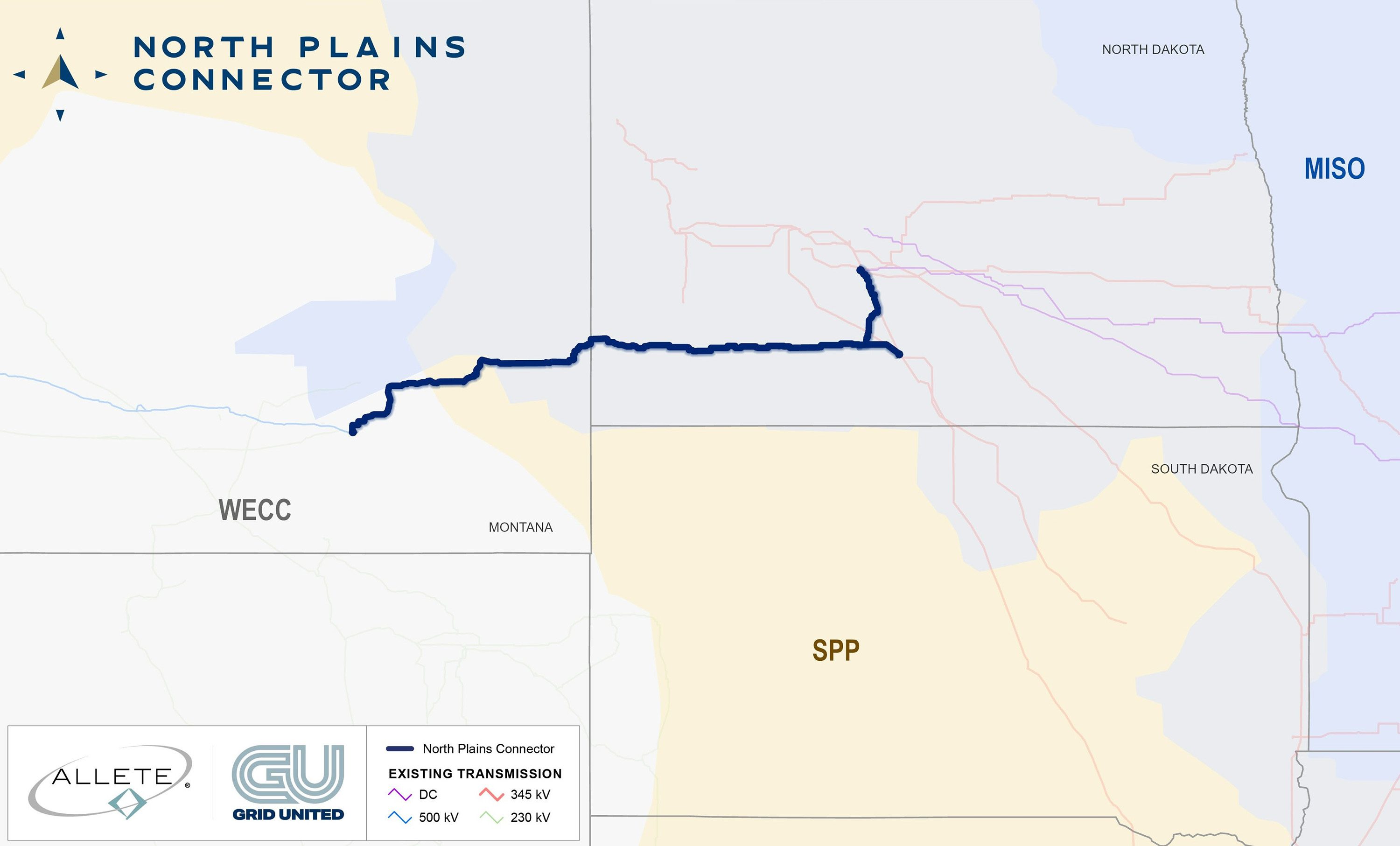
The North Plains Connector would stretch about 420 miles from southeast Montana to the heart of North Dakota and create the first major connection between the US’s two largest grids, enabling system operators to draw on electricity generated by hydro, solar, wind, and other resources across much of the country. This could help keep regional power systems online during extreme weather events and boost the overall share of electricity generated by those clean sources. 

Skelly says he’s already secured the support of nine utilities around the region for the project, as well as more than 90% of the landowners along the route.

Michael Skelly
Michael Skelly founded Clean Line Energy Partners in 2009.
GRID UNITED

He says that more and more local energy companies have come to recognize that rising electricity demands, the growing threat storms and fires pose to power systems, and the increasing reliance on renewables have hastened the need for more transmission lines to stitch together and reinforce the country’s fraying, fractured grids.

“There’s a real understanding, really, across the country of the need to invest more in the grid,” says Skelly, now chief executive of Grid United, the Houston-based transmission development firm he founded in 2021. “We need more wires in the air.” 

Still, proposals to build long transmission lines frequently stir up controversy in the communities they would cross. It remains to be seen whether this growing understanding will be enough for Skelly’s project to succeed, or to get the US building anywhere near the number of transmission lines it now desperately needs.

Linking grids

Transmission lines are the unappreciated linchpin of the clean-energy transition, arguably as essential as solar panels in cutting emissions and as important as seawalls in keeping people safe.

These long, high, thick wires are often described as the highways of our power systems. They connect the big wind farms, hydroelectric plants, solar facilities, and other power plants to the edges of cities, where substations step down the voltage before delivering electricity into homes and businesses along distribution lines that are more akin to city streets. 

There are three major grid systems in the US: the Western Interconnection, the Eastern Interconnection, and the Texas Interconnected System. Regional grid operators such as the California Independent System Operator, the Midcontinent Independent System Operator, and the New York Independent System Operator oversee smaller local grids that are connected, to a greater or lesser extent, within those larger networks.

Transmission lines that could add significant capacity for sharing electricity back and forth across the nation’s major grid systems are especially valuable for cutting emissions and improving the stability of the power system. That’s because they allow those independent system operators to draw on a far larger pool of electricity sources. So if solar power is fading in one part of the country, they could still access wind or hydropower somewhere else. The ability to balance out fluctuations in renewables across regions and seasons, in turn, reduces the need to rely on the steady output of fossil-fuel plants. 

“There’s typically excess wind or hydro or other resources somewhere,” says James Hewett, manager of the US policy lobbying group at Breakthrough Energy, the Bill Gates–backed organization focusing on clean energy and climate issues. “But today, the limiting constraint is the ability to move resources from the place where they’re excessive to where they’re needed.” 

(Breakthrough Energy Ventures, the investment arm of the firm, doesn’t hold any investments in the North Plains Connector project or Grid United.)

It also means that even if regional wildfires, floods, hurricanes, or heat waves knock out power lines and plants in one area, operators may still be able to tap into adjacent systems to keep the lights on and air-conditioning running. That can be a matter of life and death in the event of such emergencies, as we’ve witnessed in the aftermath of heat waves and hurricanes in recent years.  

Studies have shown that weaving together the nation’s grids can boost the share of electricity that renewables reliably provide, significantly cut power-sector emissions, and lower system costs. A recent study by the Lawrence Berkeley National Lab found that the lines interconnecting the US’s major grids and the regions within them offer the greatest economic value among transmission projects, potentially providing more than $100 million in cost savings per year for every additional gigawatt of added capacity. (The study presupposes that the lines are operated efficiently and to their full capacity, among other simplifying assumptions.)

Experts say that grid interconnections can more than pay for themselves over time because, among other improved efficiencies, they allow grid operators to find cheaper sources of electricity at any given time and enable regions to get by with fewer power plants by relying on the redundancy provided by their neighbors.

But as it stands, the meager links between the Eastern Interconnection and Western Interconnection amount to “tiny little soda straws connecting two Olympic swimming pools,” says Rob Gramlich, president of Grid Strategies, a consultancy in Washington, DC. 

A win-win-win”

Grid United’s North Plains Connector, in contrast, would be a fat pipe.

The $3.2 billion, three-gigawatt project would more than double the amount of electricity that could zip back and forth between those grid systems, and it would tightly interlink a trio of grid operators that oversee regional parts of those larger systems: the Western Electricity Coordinating Council, the Midcontinent Independent System Operator, and the Southwest Power Pool. If the line is developed, each could then more easily tap into the richest, cheapest sources at any given time across a huge expanse of the nation, be it hydropower generated in the Northwest, wind turbines cranking across the Midwest, or solar power produced anywhere.

The North Plains Connector transmission line would stretch from from southeast Montana to the heart of North Dakota, connecting the nation's two biggest grids.
The North Plains Connector transmission line would stretch from from southeast Montana to the heart of North Dakota, connecting the nation’s two biggest grids.
COURTESY: ALLETE

This would ensure that utilities could get greater economic value out of those energy plants, which are expensive to build but relatively cheap to operate, and it would improve the reliability of the system during extreme weather, Skelly says.

“If you’ve got a heat dome in the Northwest, you can send power west,” he says. “If you have a winter storm in the Midwest, you can send power to the east.”

Grid United is developing the project as a joint venture with Allete, an energy company in Duluth, Minnesota, that operates several utilities in the region. 

The Department of Energy granted $700 million to a larger regional effort, known as the North Plains Connector Interregional Innovation project, which encompasses two smaller proposals in addition to Grid United’s. The grants will be issued through a more than $10 billion program established under the Bipartisan Infrastructure Law, enacted by President Joe Biden in 2021. 

That funding will likely be distributed to regional utilities and other parties as partial matching grants, designed to incentivize investments in the project among those likely to benefit from it. That design may also help address a chicken-and-egg problem that plagues independent transmission developers like Grid United, Breakthrough’s Hewett says. 

Regional utilities can pass along the costs of projects to their electricity customers. Companies like Grid United, however, generally can’t sign up the power producers that will pay to use their lines until they’ve got project approval, but they also often can’t secure traditional financing until they’ve lined up customers.

The DOE funding could ease that issue by providing an assurance of capital that would help get the project through the lengthy permitting process, Hewett says. 

“The states are benefiting, local utilities are benefiting, and the developer will benefit,” he says. “It’s a win-win-win.”

Transmission hurdles

Over the years, developers have floated various proposals to more tightly interlink the nation’s major grid systems. But it’s proved notoriously difficult to build any new transmission lines in the US—a problem that has only worsened in recent years. 

The nation is developing only 20% of the transmission capacity per year in the 2020s that it did in the early 2010s. On average, interstate transmission lines take eight to 10 years to develop “if they succeed at all,” according to a report from the Niskanen Center.

The biggest challenge in adding connections between grids, says Gramlich of Grid Strategies, is that there’s no clear processes for authorizing lines that cross multiple jurisdictions and no dedicated regional or federal agencies overseeing such proposals. The fact that numerous areas may benefit from such lines also sparks interregional squabbling over how the costs should be allocated. 

In addition, communities often balk at the sight of wires and towers, particularly if the benefits of the lines mostly accrue around the end points, not necessarily in all the areas the wires cross. Any city, county, or state, or even one landowner, can hold up a project for years, if not kill it.

But energy companies themselves share much of the blame as well. Regional energy agencies, grid operators, and utilities have actively fought proposals from independent developers to erect wires passing through their territories. They often simply don’t want to forfeit control of their systems, invite added competition, or deal with the regulatory complexity of such projects. 

The long delays in building new grid capacity have become a growing impediment to building new energy projects.

As of last year, there were 2,600 gigawatts’ worth of proposed energy generation or storage projects waiting in the wings for transmission capacity that would carry their electricity to customers, according to a recent analysis by Lawrence Berkeley National Lab. That’s roughly the electricity output of 2,600 nuclear reactors, or more than double the nation’s entire power system. 

The capacity of projects in the queue has risen almost eightfold from a decade ago, and about 95% of them are solar, wind, or battery proposals.

“Grid interconnection remains a persistent bottleneck,” Joseph Rand, an energy policy researcher at the lab and the lead author of the study, said in a statement.

The legacy of Clean Line Energy

Skelly spent the aughts as the chief development officer of Horizon Wind Energy, a large US wind developer that the Portuguese energy giant EDP snapped up in 2007 for more than $2 billion. Skelly then made a spirited though ill-fated run for Congress in 2008, as the Democratic nominee for the 7th Congressional District of Texas. He ran on a pro-renewables, pro-education campaign but lost by a sizable margin in a district that was solidly Republican.

The following year, he founded Clean Line Energy Partners. The company raised tens of millions of dollars and spent a decade striving to develop five long-range transmission projects that could connect the sorts of wind projects Skelly had worked to build before.

The company did successfully earn some of the permits required for several lines. But it was forced to shut down or offload its projects amid pushback from landowner groups and politicians opposed to renewables, as well as from regional utilities and public utility commissions. 

“He was going to play in other people’s sandboxes and they weren’t exactly keen on having him in there,” says Russell Gold, author of Superpower: One Man’s Quest to Transform American Energy, which recounted Skelly’s and Clean Line Energy’s efforts and failures.

Ultimately, those obstacles dragged out the projects beyond the patience of the company’s investors, who declined to continue throwing more money at them, he says. 

The company was forced to halt the Centennial West line through New Mexico and the Rock Island project across the Midwest. In addition, it sold off its stake in the Grain Belt Express, which would stretch from Kansas to Indiana, to Invenergy; the Oklahoma portion of the Plains and Eastern line to NextEra Energy; and the Western Spirit line through New Mexico, along with an associated wind farm project, to Pattern Development. 

Clean Line Energy itself wound down in 2019.

The Western Spirit transmission line was electrified in late 2021, but the other two projects are still slogging through planning and permitting.

“These things take a long time,” Skelly says. 

For all the challenges the company faced, Gold still credits it with raising awareness about the importance and necessity of long-distance interregional transmission. He says it helped spark conversations that led the Federal Energy Regulatory Commission to eventually enact rules to support regional transmission planning and encouraged other big players to focus more on building transmission lines.

“I do believe that there is a broader social, political, and commercial awareness now that the United States needs to interconnect its grids,” Gold says. 

Lessons learned

Skelly spent a few years as a senior advisor at Lazard, consulting with companies on renewable energy. But he was soon ready to take another shot at developing long-haul transmission lines and started Grid United in 2021.

The new company has proposed four transmission projects in addition to the North Plains Connector—one between Arizona and New Mexico, one between Colorado and Oklahoma, and one each within Texas and Wyoming.

Asked what he thinks the legacy of Clean Line Energy is, Skelly says it’s mixed. But he soon adds that the history of US infrastructure building is replete with projects that didn’t move ahead. The important thing, he says, is to draw the right lessons from those failures.

“When we’re smart about it, we look at the past to see what we can learn,” he says. “We certainly do that today in our business.”

Skelly says one of the biggest takeaways was that it’s important to do the expensive upfront work of meeting with landowners well in advance of applying for permitting, and to use their feedback to guide the line of the route. 

Anne Hedges, director of policy and legislative affairs at the Montana Environmental Information Center, confirms that this is the approach Grid United has taken in the region so far.

“A lot of developers seem to be more focused on drawing a straight line on a map rather than working with communities to figure out the best placement for the transmission system,” she says. “Grid United didn’t do that. They got out on the ground and talked to people and planned a route that wasn’t linear.”

The other change that may make Grid United’s project there more likely to move forward has more to do with what the industry’s learned than what Skelly has.  

Gramlich says regional grid operators and utilities have become more receptive to collaborating with developers on transmission lines—and for self-interested reasons. They’ll need greater capacity, and soon, to stay online and meet the growing energy demands of data centers, manufacturing facilities, electric vehicles, and buildings, and address the risks to power systems from extreme weather events.

Industry observers are also hopeful that an energy permitting reform bill pending in Congress, along with the added federal funding and new rules requiring transmission providers to do more advance planning, will also help accelerate development. The bipartisan bill promises to shorten the approval process for projects that are determined to be in the national interest. It would also require neighboring areas to work together on interregional transmission planning.

Hundreds of environmental groups have sharply criticized the proposal, which would also streamline approvals for certain oil and gas operations.

“This legislation guts bedrock environmental protections, endangers public health, opens up tens of millions of acres of public lands and hundreds of millions of acres of offshore waters to further oil and gas leasing, gives public lands to mining companies, and would defacto rubberstamp gas export projects that harm frontline communities and perpetuate the climate crisis,” argued a letter signed by 350.org, Earthjustice, the Center for Biological Diversity, the Union of Concerned Scientists, and hundreds of other groups.

But a recent analysis by Third Way, a center-left think tank in Washington, DC, found that the emissions benefits from accelerating transmission permitting could significantly outweigh the added climate pollution from the fossil-fuel provisions in the bill. It projects that the bill would, on balance, reduce global emissions by 400 million to 16.6 billion tons of carbon dioxide through 2050. 

“Guardedly optimistic” 

Grid United expects to begin applying for county and state permits in the next few months and for federal permits toward the end of the year. It hopes to begin construction within the next four years and switch the line on in 2032.

Since the applications haven’t been made, it’s not clear what individuals or groups are or will be opposed to it—though, given the history of such projects, some will surely object.

Hedges says the Montana Environmental Information Center is reserving judgment until it sees the actual application. She says the organization will be particularly focused on any potential impact on water and wildlife across the region, “making sure that they’re not harming what are already struggling resources in this area.”

So if Skelly was too early with his last company, the obvious question is: Are the market, regulatory, and societal conditions now ripe for interregional transmission lines?

“We’re gonna find out if they are, right?” he says. “We don’t know yet.”

Skelly adds that he doesn’t think the US is going to build as much transmission as it needs to. But he does believe we’ll start to see more projects moving forward—including, he hopes, the North Plains Connector.

“You just can’t count on anything, and you’ve just got to keep going and push, push, push,” he says. “But we’re making good progress. There’s a lot of utility interest. We have a big grant from the DOE, which will help bring down the cost of the project. So knock on wood, we’re guardedly optimistic.”

A tiny new open-source AI model performs as well as powerful big ones

The Allen Institute for Artificial Intelligence (Ai2), a research nonprofit, is releasing a family of open-source multimodal language models, called Molmo, that it says perform as well as top proprietary models from OpenAI, Google, and Anthropic. 

The organization claims that its biggest Molmo model, which has 72 billion parameters, outperforms OpenAI’s GPT-4o, which is estimated to have over a trillion parameters, in tests that measure things like understanding images, charts, and documents.  

Meanwhile, Ai2 says a smaller Molmo model, with 7 billion parameters, comes close to OpenAI’s state-of-the-art model in performance, an achievement it ascribes to vastly more efficient data collection and training methods. 

What Molmo shows is that open-source AI development is now on par with closed, proprietary models, says Ali Farhadi, the CEO of Ai2. And open-source models have a significant advantage, as their open nature means other people can build applications on top of them. The Molmo demo is available here, and it will be available for developers to tinker with on the Hugging Face website. (Certain elements of the most powerful Molmo model are still shielded from view.) 

Other large multimodal language models are trained on vast data sets containing billions of images and text samples that have been hoovered from the internet, and they can include several trillion parameters. This process introduces a lot of noise to the training data and, with it, hallucinations, says Ani Kembhavi, a senior director of research at Ai2. In contrast, Ai2’s Molmo models have been trained on a significantly smaller and more curated data set containing only 600,000 images, and they have between 1 billion and 72 billion parameters. This focus on high-quality data, versus indiscriminately scraped data, has led to good performance with far fewer resources, Kembhavi says.

Ai2 achieved this by getting human annotators to describe the images in the model’s training data set in excruciating detail over multiple pages of text. They asked the annotators to talk about what they saw instead of typing it. Then they used AI techniques to convert their speech into data, which made the training process much quicker while reducing the computing power required. 

These techniques could prove really useful if we want to meaningfully govern the data that we use for AI development, says Yacine Jernite, who is the machine learning and society lead at Hugging Face, and was not involved in the research. 

“It makes sense that in general, training on higher-quality data can lower the compute costs,” says Percy Liang, the director of the Stanford Center for Research on Foundation Models, who also did not participate in the research. 

Another impressive capability is that the model can “point” at things, meaning it can analyze elements of an image by identifying the pixels that answer queries.

In a demo shared with MIT Technology Review, Ai2 researchers took a photo outside their office of the local Seattle marina and asked the model to identify various elements of the image, such as deck chairs. The model successfully described what the image contained, counted the deck chairs, and accurately pinpointed to other things in the image as the researchers asked. It was not perfect, however. It could not locate a specific parking lot, for example. 

Other advanced AI models are good at describing scenes and images, says Farhadi. But that’s not enough when you want to build more sophisticated web agents that can interact with the world and can, for example, book a flight. Pointing allows people to interact with user interfaces, he says. 

Jernite says Ai2 is operating with a greater degree of openness than we’ve seen from other AI companies. And while Molmo is a good start, he says, its real significance will lie in the applications developers build on top of it, and the ways people improve it.

Farhadi agrees. AI companies have drawn massive, multitrillion-dollar investments over the past few years. But in the past few months, investors have expressed skepticism about whether that investment will bring returns. Big, expensive proprietary models won’t do that, he argues, but open-source ones can. He says the work shows that open-source AI can also be built in a way that makes efficient use of money and time. 

“We’re excited about enabling others and seeing what others would build with this,” Farhadi says. 

Two Nobel Prize winners want to cancel their own CRISPR patents in Europe

In the decade-long fight to control CRISPR, the super-tool for modifying DNA, it’s been common for lawyers to try to overturn patents held by competitors by pointing out errors or inconsistencies.

But now, in a surprise twist, the team that earned the Nobel Prize in chemistry for developing CRISPR is asking to cancel two of their own seminal patents, MIT Technology Review has learned. The decision could affect who gets to collect the lucrative licensing fees on using the technology.

­­The request to withdraw the pair of European patents, by lawyers for Nobelists Emmanuelle Charpentier and Jennifer Doudna, comes after a damaging August opinion from a European technical appeals board, which ruled that the duo’s earliest patent filing didn’t explain CRISPR well enough for other scientists to use it and doesn’t count as a proper invention.

The Nobel laureates’ lawyers say the decision is so wrong and unfair that they have no choice but to preemptively cancel their patents, a scorched-earth tactic whose aim is to prevent the unfavorable legal finding from being recorded as the reason. 

“They are trying to avoid the decision by running away from it,” says Christoph Then, founder of Testbiotech, a German nonprofit that is among those opposing the patents, who provided a copy of the technical opinion and response letter to MIT Technology Review. “We think these are some of the earliest patents and the basis of their licenses.”

Discovery of the century

CRISPR has been called the biggest biotech discovery of the century, and the battle to control its commercial applications—such as gene-altered plants, modified mice, and new medical treatments—has raged for a decade.

The dispute primarily pits Charpentier and Doudna, who were honored with the Nobel Prize in 2020 for developing the method of genome editing, against Feng Zhang, a researcher at the Broad Institute of MIT and Harvard, who claimed to have invented the tool first on his own.

Back in 2014, the Broad Institute carried out a coup de main when it managed to win, and later defend, the controlling US patent on CRISPR’s main uses. But the Nobel pair could, and often did, point to their European patents as bright points in their fight. In 2017, the University of California, Berkeley, where Doudna works, touted its first European patent as exciting, “broad,” and “precedent” setting.

After all, a region representing more than 30 countries had not only recognized the pair’s pioneering discovery; it had set a standard for other patent offices around the world. It also made the US Patent Office look like an outlier whose decisions favoring the Broad Institute might not hold up long term. A further appeal challenging the US decisions is pending in federal court.

Long-running saga

But now the European Patent Office is also saying—for different reasons—that Doudna and Charpentier can’t claim their basic invention. And that’s a finding their attorneys think is so damaging, and reached in such an unjust way, that they have no choice but to sacrifice their own patents. “The Patentees cannot be expected to expose the Nobel-prize winning invention … to the repercussions of a decision handed down under such circumstances,” says the 76page letter sent by German attorneys on their behalf on September 20.

The chief intellectual-property attorney at the University of California, Randi Jenkins, confirmed the plan to revoke the two patents but downplayed their importance. 

“These two European patents are just another chapter in this long-running saga involving CRISPR-Cas9,” Jenkins said. “We will continue pursuing claims in Europe, and we expect those ongoing claims to have meaningful breadth and depth of coverage.”

The patents being voluntarily disavowed are EP2800811, granted in 2017, and EP3401400, granted in 2019. Jenkins added the Nobelists still share one issued CRISPR patent in Europe, EP3597749, and one that is pending. That tally doesn’t include a thicket of patent claims covering more recent research from Doudna’s Berkeley lab that were filed separately.

Freedom to operate

The cancellation of the European patents will affect a broad network of biotech companies that have bought and sold rights as they seek to achieve either commercial exclusivity to new medical treatments or what’s called “freedom to operate”—the right to pursue gene-slicing research unmolested by doubts over who really owns the technique. 

These companies include Editas Medicine, allied with the Broad Institute; Caribou Biosciences and Intellia Therapeutics in the US, both cofounded by Doudna; and Charpentier’s companies, CRISPR Therapeutics and ERS Genomics.

ERS Genomics, which is based in Dublin and calls itself “the CRISPR licensing company,” was set up in Europe specifically to collect fees from others using CRISPR. It claims to have sold nonexclusive access to its “foundational patents” to more than 150 companies, universities, and organizations who use CRISPR in their labs, manufacturing, or research products.

For example, earlier this year Laura Koivusalo, founder of a small Finnish biotech company, StemSight, agreed to a “standard fee” because her company is researching an eye treatment using stem cells that were previously edited using CRISPR.

Although not every biotech company thinks it’s necessary to pay for patent rights long before it even has a product to sell, Koivusalo decided it would be the right thing to do. “The reason we got the license was the Nordic mentality of being super honest. We asked them if we needed a license to do research, and they said yes, we did,” she says.

A slide deck from ERS available online lists the fee for small startups like hers at $15,000 a year. Koivusalo says she agreed to buy a license to the same two patents that are now being canceled. She adds: “I was not aware they were revoked. I would have expected them to give a heads-up.” 

A spokesperson for ERS Genomics said its customers still have coverage in Europe based on the Nobelists’ remaining CRISPR patent and pending application.

In the US, the Broad Institute has also been selling licenses to use CRISPR. And the fees can get big if there’s an actual product involved. That was the case last year, when Vertex Pharmaceuticals won approval to sell the first CRISPR-based treatment, for sickle-cell disease. To acquire rights under the Broad Institute’s CRISPR patents, Vertex agreed to pay $50 million on the barrelhead—and millions more in the future.

PAM problem

There’s no doubt that Charpentier and Doudna were first to publish, in a 2012 paper, how CRISPR can function as a “programmable” means of editing DNA. And their patents in Europe withstood an initial round of formal oppositions filed by lawyers.

But this August, in a separate analysis, a technical body decided that Berkeley had omitted a key detail from its earliest patent application, making it so that “the skilled person could not carry out the claimed method,” according to the finding. That is, it said, the invention wasn’t fully described or enabled.

The omission relates to a feature of DNA molecules called “protospacer adjacent motifs,” or PAMs. These features, a bit like runway landing lights, determine at what general locations in a genome the CRISPR gene scissors are able to land and make cuts, and where they can’t.

In the 76-page reply letter sent by lawyers for the Nobelists, they argue there wasn’t really any need to mention these sites, which they say were so obvious that “even undergraduate students” would have known they were needed. 

The lengthy letter leaves no doubt the Nobel team feels they’ve been wronged. In addition to disavowing the patents, the text runs on because it seeks to “make of public record the reasons for which we strongly disagree with [the] assessment on all points” and to “clearly show the incorrectness” of the decision, which, they say, “fails to recognize the nature and origin of the invention, misinterprets the common general knowledge, and additionally applies incorrect legal standards.”