A number of moments from my brief sit-down with Sam Altman brought the OpenAI CEO’s worldview into clearer focus. The first was when he pointed to my iPhone SE (the one with the home button that’s mostly hated) and said, “That’s the best iPhone.” More revealing, though, was the vision he sketched for how AI tools will become even more enmeshed in our daily lives than the smartphone.
“What you really want,” he told MIT Technology Review, “is just this thing that is off helping you.” Altman, who was visiting Cambridge for a series of events hosted by Harvard and the venture capital firm Xfund, described the killer app for AI as a “super-competent colleague that knows absolutely everything about my whole life, every email, every conversation I’ve ever had, but doesn’t feel like an extension.” It could tackle some tasks instantly, he said, and for more complex ones it could go off and make an attempt, but come back with questions for you if it needs to.
It’s a leap from OpenAI’s current offerings. Its leading applications, like DALL-E, Sora, and ChatGPT (which Altman referred to as “incredibly dumb” compared with what’s coming next), have wowed us with their ability to generate convincing text and surreal videos and images. But they mostly remain tools we use for isolated tasks, and they have limited capacity to learn about us from our conversations with them.
In the new paradigm, as Altman sees it, the AI will be capable of helping us outside the chat interface and taking real-world tasks off our plates.
Altman on AI hardware’s future
I asked Altman if we’ll need a new piece of hardware to get to this future. Though smartphones are extraordinarily capable, and their designers are already incorporating more AI-driven features, some entrepreneurs are betting that the AI of the future will require a device that’s more purpose built. Some of these devices are already beginning to appear in his orbit. There is the (widely panned) wearable AI Pin from Humane, for example (Altman is an investor in the company but has not exactly been a booster of the device). He is also rumored to be working with former Apple designer Jony Ive on some new type of hardware.
But Altman says there’s a chance we won’t necessarily need a device at all. “I don’t think it will require a new piece of hardware,” he told me, adding that the type of app envisioned could exist in the cloud. But he quickly added that even if this AI paradigm shift won’t require consumers buy a new hardware, “I think you’ll be happy to have [a new device].”
Though Altman says he thinks AI hardware devices are exciting, he also implied he might not be best suited to take on the challenge himself: “I’m very interested in consumer hardware for new technology. I’m an amateur who loves it, but this is so far from my expertise.”
On the hunt for training data
Upon hearing his vision for powerful AI-driven agents, I wondered how it would square with the industry’s current scarcity of training data. To build GPT-4 and other models, OpenAI has scoured internet archives, newspapers, and blogs for training data, since scaling laws have long shown that making models bigger also makes them better. But finding more data to train on is a growing problem. Much of the internet has already been slurped up, and access to private or copyrighted data is now mired in legal battles.
Altman is optimistic this won’t be a problem for much longer, though he didn’t articulate the specifics.
“I believe, but I’m not certain, that we’re going to figure out a way out of this thing of you always just need more and more training data,” he says. “Humans are existence proof that there is some other way to [train intelligence]. And I hope we find it.”
On who will be poised to create AGI
OpenAI’s central vision has long revolved around the pursuit of artificial general intelligence (AGI), or an AI that can reason as well as or better than humans. Its stated mission is to ensure such a technology “benefits all of humanity.” It is far from the only company pursuing AGI, however. So in the race for AGI, what are the most important tools? I asked Altman if he thought the entity that marshals the largest amount of chips and computing power will ultimately be the winner.
Altman suspects there will be “several different versions [of AGI] that are better and worse at different things,” he says. “You’ll have to be over some compute threshold, I would guess. But even then I wouldn’t say I’m certain.”
On when we’ll see GPT-5
You thought he’d answer that? When another reporter in the room asked Altman if he knew when the next version of GPT is slated to be released, he gave a calm response. “Yes,” he replied, smiling, and said nothing more.
I’m stressed and running late, because what do you wear for the rest of eternity?
This makes it sound like I’m dying, but it’s the opposite. I am, in a way, about to live forever, thanks to the AI video startup Synthesia. For the past several years, the company has produced AI-generated avatars, but today it launches a new generation, its first to take advantage of the latest advancements in generative AI, and they are more realistic and expressive than anything I’ve ever seen. While today’s release means almost anyone will now be able to make a digital double, on this early April afternoon, before the technology goes public, they’ve agreed to make one of me.
When I finally arrive at the company’s stylish studio in East London, I am greeted by Tosin Oshinyemi, the company’s production lead. He is going to guide and direct me through the data collection process—and by “data collection,” I mean the capture of my facial features, mannerisms, and more—much like he normally does for actors and Synthesia’s customers.
In this AI-generated footage, synthetic “Melissa” gives a performance of Hamlet’s famous soliloquy. (The magazine had no role in producing this video.)
SYNTHESIA
He introduces me to a waiting stylist and a makeup artist, and I curse myself for wasting so much time getting ready. Their job is to ensure that people have the kind of clothes that look good on camera and that they look consistent from one shot to the next. The stylist tells me my outfit is fine (phew), and the makeup artist touches up my face and tidies my baby hairs. The dressing room is decorated with hundreds of smiling Polaroids of people who have been digitally cloned before me.
Apart from the small supercomputer whirring in the corridor, which processes the data generated at the studio, this feels more like going into a news studio than entering a deepfake factory.
I joke that Oshinyemi has what MIT Technology Review might call a job title of the future: “deepfake creation director.”
“We like the term ‘synthetic media’ as opposed to ‘deepfake,’” he says.
It’s a subtle but, some would argue, notable difference in semantics. Both mean AI-generated videos or audio recordings of people doing or saying something that didn’t necessarily happen in real life. But deepfakes have a bad reputation. Since their inception nearly a decade ago, the term has come to signal something unethical, says Alexandru Voica, Synthesia’s head of corporate affairs and policy. Think of sexual content produced without consent, or political campaigns that spread disinformation or propaganda.
“Synthetic media is the more benign, productive version of that,” he argues. And Synthesia wants to offer the best version of that version.
Until now, all AI-generated videos of people have tended to have some stiffness, glitchiness, or other unnatural elements that make them pretty easy to differentiate from reality. Because they’re so close to the real thing but not quiteit, these videos can make people feel annoyed or uneasy or icky—a phenomenon commonly known as the uncanny valley. Synthesia claims its new technology will finally lead us out of the valley.
Thanks to rapid advancements in generative AI and a glut of training data created by human actors that has been fed into its AI model, Synthesia has been able to produce avatars that are indeed more humanlike and more expressive than their predecessors. The digital clones are better able to match their reactions and intonation to the sentiment of their scripts—acting more upbeat when talking about happy things, for instance, and more serious or sad when talking about unpleasant things. They also do a better job matching facial expressions—the tiny movements that can speak for us without words.
But this technological progress also signals a much larger social and cultural shift. Increasingly, so much of what we see on our screens is generated (or at least tinkered with) by AI, and it is becoming more and more difficult to distinguish what is real from what is not. This threatens our trust in everything we see, which could have very real, very dangerous consequences.
“I think we might just have to say goodbye to finding out about the truth in a quick way,” says Sandra Wachter, a professor at the Oxford Internet Institute, who researches the legal and ethical implications of AI. “The idea that you can just quickly Google something and know what’s fact and what’s fiction—I don’t think it works like that anymore.”
Tosin Oshinyemi, the company’s production lead, guides and directs actors and customers through the data collection process.
DAVID VINTINER
So while I was excited for Synthesia to make my digital double, I also wondered if the distinction between synthetic media and deepfakes is fundamentally meaningless. Even if the former centers a creator’s intent and, critically, a subject’s consent, is there really a way to make AI avatars safely if the end result is the same? And do we really want to get out of the uncanny valley if it means we can no longer grasp the truth?
But more urgently, it was time to find out what it’s like to see a post-truth version of yourself.
Almost the real thing
A month before my trip to the studio, I visited Synthesia CEO Victor Riparbelli at his office near Oxford Circus. As Riparbelli tells it, Synthesia’s origin story stems from his experiences exploring avant-garde, geeky techno music while growing up in Denmark. The internet allowed him to download software and produce his own songs without buying expensive synthesizers.
“I’m a huge believer in giving people the ability to express themselves in the way that they can, because I think that that provides for a more meritocratic world,” he tells me.
He saw the possibility of doing something similar with video when he came across research on using deep learning to transfer expressions from one human face to another on screen.
“What that showcased was the first time a deep-learning network could produce video frames that looked and felt real,” he says.
That research was conducted by Matthias Niessner, a professor at the Technical University of Munich, who cofounded Synthesia with Riparbelli in 2017, alongside University College London professor Lourdes Agapito and Steffen Tjerrild, whom Riparbelli had previously worked with on a cryptocurrency project.
Initially the company built lip-synching and dubbing tools for the entertainment industry, but it found that the bar for this technology’s quality was very high and there wasn’t much demand for it. Synthesia changed direction in 2020 and launched its first generation of AI avatars for corporate clients. That pivot paid off. In 2023, Synthesia achieved unicorn status, meaning it was valued at over $1 billion—making it one of the relatively few European AI companies to do so.
That first generation of avatars looked clunky, with looped movements and little variation. Subsequent iterations started looking more human, but they still struggled to say complicated words, and things were slightly out of sync.
The challenge is that people are used to looking at other people’s faces. “We as humans know what real humans do,” says Jonathan Starck, Synthesia’s CTO. Since infancy, “you’re really tuned in to people and faces. You know what’s right, so anything that’s not quite right really jumps out a mile.”
These earlier AI-generated videos, like deepfakes more broadly, were made using generative adversarial networks, or GANs—an older technique for generating images and videos that uses two neural networks that play off one another. It was a laborious and complicated process, and the technology was unstable.
But in the generative AI boom of the last year or so, the company has found it can create much better avatars using generative neural networks that produce higher quality more consistently. The more data these models are fed, the better they learn. Synthesia uses both large language models and diffusion models to do this; the former help the avatars react to the script, and the latter generate the pixels.
Despite the leap in quality, the company is still not pitching itself to the entertainment industry. Synthesia continues to see itself as a platform for businesses. Its bet is this: As people spend more time watching videos on YouTube and TikTok, there will be more demand for video content. Young people are already skipping traditional search and defaulting to TikTok for information presented in video form. Riparbelli argues that Synthesia’s tech could help companies convert their boring corporate comms and reports and training materials into content people will actually watch and engage with. He also suggests it could be used to make marketing materials.
He claims Synthesia’s technology is used by 56% of the Fortune 100, with the vast majority of those companies using it for internal communication. The company lists Zoom, Xerox, Microsoft, and Reuters as clients. Services start at $22 a month.
This, the company hopes, will be a cheaper and more efficient alternative to video from a professional production company—and one that may be nearly indistinguishable from it. Riparbelli tells me its newest avatars could easily fool a person into thinking they are real.
“I think we’re 98% there,” he says.
For better or worse, I am about to see it for myself.
Don’t be garbage
In AI research, there is a saying: Garbage in, garbage out. If the data that went into training an AI model is trash, that will be reflected in the outputs of the model. The more data points the AI model has captured of my facial movements, microexpressions, head tilts, blinks, shrugs, and hand waves, the more realistic the avatar will be.
Back in the studio, I’m trying really hard not to be garbage.
I am standing in front of a green screen, and Oshinyemi guides me through the initial calibration process, where I have to move my head and then eyes in a circular motion. Apparently, this will allow the system to understand my natural colors and facial features. I am then asked to say the sentence “All the boys ate a fish,” which will capture all the mouth movements needed to form vowels and consonants. We also film footage of me “idling” in silence.
The more data points the AI system has on facial movements, microexpressions, head tilts, blinks, shrugs, and hand waves, the more realistic the avatar will be.
DAVID VINTINER
He then asks me to read a script for a fictitious YouTuber in different tones, directing me on the spectrum of emotions I should convey. First I’m supposed to read it in a neutral, informative way, then in an encouraging way, an annoyed and complain-y way, and finally an excited, convincing way.
“Hey, everyone—welcome back to Elevate Her with your host, Jess Mars. It’s great to have you here. We’re about to take on a topic that’s pretty delicate and honestly hits close to home—dealing with criticism in our spiritual journey,” I read off the teleprompter, simultaneously trying to visualize ranting about something to my partner during the complain-y version. “No matter where you look, it feels like there’s always a critical voice ready to chime in, doesn’t it?”
Don’t be garbage, don’t be garbage, don’t be garbage.
“That was really good. I was watching it and I was like, ‘Well, this is true. She’s definitely complaining,’” Oshinyemi says, encouragingly. Next time, maybe add some judgment, he suggests.
We film several takes featuring different variations of the script. In some versions I’m allowed to move my hands around. In others, Oshinyemi asks me to hold a metal pin between my fingers as I do. This is to test the “edges” of the technology’s capabilities when it comes to communicating with hands, Oshinyemi says.
Historically, making AI avatars look natural and matching mouth movements to speech has been a very difficult challenge, says David Barber, a professor of machine learning at University College London who is not involved in Synthesia’s work. That is because the problem goes far beyond mouth movements; you have to think about eyebrows, all the muscles in the face, shoulder shrugs, and the numerous different small movements that humans use to express themselves.
The motion capture process uses reference patterns to help align footage captured from multiple angles around the subject.
DAVID VINTINER
Synthesia has worked with actors to train its models since 2020, and their doubles make up the 225 stock avatars that are available for customers to animate with their own scripts. But to train its latest generation of avatars, Synthesia needed more data; it has spent the past year working with around 1,000 professional actors in London and New York. (Synthesia says it does not sell the data it collects, although it does release some of it for academic research purposes.)
The actors previously got paid each time their avatar was used, but now the company pays them an up-front fee to train the AI model. Synthesia uses their avatars for three years, at which point actors are asked if they want to renew their contracts. If so, they come into the studio to make a new avatar. If not, the company will delete their data. Synthesia’s enterprise customers can also generate their own custom avatars by sending someone into the studio to do much of what I’m doing.
“” class=”wp-image-1091775″ srcset=”https://wp.technologyreview.com/wp-content/uploads/2024/04/David_Vintiner__A7A0695.jpg 3000w, https://wp.technologyreview.com/wp-content/uploads/2024/04/David_Vintiner__A7A0695.jpg?resize=300,232 300w, https://wp.technologyreview.com/wp-content/uploads/2024/04/David_Vintiner__A7A0695.jpg?resize=768,593 768w, https://wp.technologyreview.com/wp-content/uploads/2024/04/David_Vintiner__A7A0695.jpg?resize=1536,1187 1536w, https://wp.technologyreview.com/wp-content/uploads/2024/04/David_Vintiner__A7A0695.jpg?resize=2048,1582 2048w” sizes=”(max-width: 3000px) 100vw, 3000px” />The initial calibration process allows the system to understand the subject’s natural colors and facial features.
Synthesia also collects voice samples. In the studio, I read a passage indicating that I explicitly consent to having my voice cloned.
Between takes, the makeup artist comes in and does some touch-ups to make sure I look the same in every shot. I can feel myself blushing because of the lights in the studio, but also because of the acting. After the team has collected all the shots it needs to capture my facial expressions, I go downstairs to read more text aloud for voice samples.
This process requires me to read a passage indicating that I explicitly consent to having my voice cloned, and that it can be used on Voica’s account on the Synthesia platform to generate videos and speech.
Consent is key
This process is very different from the way many AI avatars, deepfakes, or synthetic media—whatever you want to call them—are created.
Most deepfakes aren’t created in a studio. Studies have shown that the vast majority of deepfakes online are nonconsensual sexual content, usually using images stolen from social media. Generative AI has made the creation of these deepfakes easy and cheap, and there have been several high-profile cases in the US and Europe of children and women being abused in this way. Experts have also raised alarms that the technology can be used to spread political disinformation, a particularly acute threat given the record number of elections happening around the world this year.
Synthesia’s policy is to not create avatars of people without their explicit consent. But it hasn’t been immune from abuse. Last year, researchers found pro-China misinformation that was created using Synthesia’s avatars and packaged as news, which the company said violated its terms of service.
Since then, the company has put more rigorous verification and content moderation systems in place. It applies a watermark with information on where and how the AI avatar videos were created. Where it once had four in-house content moderators, people doing this work now make up 10% of its 300-person staff. It also hired an engineer to build better AI-powered content moderation systems. These filters help Synthesia vet every single thing its customers try to generate. Anything suspicious or ambiguous, such as content about cryptocurrencies or sexual health, gets forwarded to the human content moderators. Synthesia also keeps a record of all the videos its system creates.
And while anyone can join the platform, many features aren’t available until people go through an extensive vetting system similar to that used by the banking industry, which includes talking to the sales team, signing legal contracts, and submitting to security auditing, says Voica. Entry-level customers are limited to producing strictly factual content, and only enterprise customers using custom avatars can generate content that contains opinions. On top of this, only accredited news organizations are allowed to create content on current affairs.
“We can’t claim to be perfect. If people report things to us, we take quick action, [such as] banning or limiting individuals or organizations,” Voica says. But he believes these measures work as a deterrent, which means most bad actors will turn to freely available open-source tools instead.
I put some of these limits to the test when I head to Synthesia’s office for the next step in my avatar generation process. In order to create the videos that will feature my avatar, I have to write a script. Using Voica’s account, I decide to use passages from Hamlet, as well as previous articles I have written. I also use a new feature on the Synthesia platform, which is an AI assistant that transforms any web link or document into a ready-made script. I try to get my avatar to read news about the European Union’s new sanctions against Iran.
Voica immediately texts me: “You got me in trouble!”
The system has flagged his account for trying to generate content that is restricted.
AI-powered content filters help Synthesia vet every single thing its customers try to generate. Only accredited news organizations are allowed to create content on current affairs.
COURTESY OF SYNTHESIA
Offering services without these restrictions would be “a great growth strategy,” Riparbelli grumbles. But “ultimately, we have very strict rules on what you can create and what you cannot create. We think the right way to roll out these technologies in society is to be a little bit over-restrictive at the beginning.”
Still, even if these guardrails operated perfectly, the ultimate result would nevertheless be an internet where everything is fake. And my experiment makes me wonder how we could possibly prepare ourselves.
Our information landscape already feels very murky. On the one hand, there is heightened public awareness that AI-generated content is flourishing and could be a powerful tool for misinformation. But on the other, it is still unclear whether deepfakes are used for misinformation at scale and whether they’re broadly moving the needle to change people’s beliefs and behaviors.
If people become too skeptical about the content they see, they might stop believing in anything at all, which could enable bad actors to take advantage of this trust vacuum and lie about the authenticity of real content. Researchers have called this the “liar’s dividend.” They warn that politicians, for example, could claim that genuinely incriminating information was fake or created using AI.
Claire Leibowicz, the head of the AI and media integrity at the nonprofit Partnership on AI, says she worries that growing awareness of this gap will make it easier to “plausibly deny and cast doubt on real material or media as evidence in many different contexts, not only in the news, [but] also in the courts, in the financial services industry, and in many of our institutions.” She tells me she’s heartened by the resources Synthesia has devoted to content moderation and consent but says that process is never flawless.
Even Riparbelli admits that in the short term, the proliferation of AI-generated content will probably cause trouble. While people have been trained not to believe everything they read, they still tend to trust images and videos, he adds. He says people now need to test AI products for themselves to see what is possible, and should not trust anything they see online unless they have verified it.
Never mind that AI regulation is still patchy, and the tech sector’s efforts to verify content provenance are still in their early stages. Can consumers, with their varying degrees of media literacy, really fight the growing wave of harmful AI-generated content through individual action?
Watch out, PowerPoint
The day after my final visit, Voica emails me the videos with my avatar. When the first one starts playing, I am taken aback. It’s as painful as seeing yourself on camera or hearing a recording of your voice. Then I catch myself. At first I thought the avatar was me.
The more I watch videos of “myself,” the more I spiral. Do I really squint that much? Blink that much? And move my jaw like that? Jesus.
It’s good. It’s really good. But it’s not perfect. “Weirdly good animation,” my partner texts me.
“But the voice sometimes sounds exactly like you, and at other times like a generic American and with a weird tone,” he adds. “Weird AF.”
He’s right. The voice is sometimes me, but in real life I umm and ahh more. What’s remarkable is that it picked up on an irregularity in the way I talk. My accent is a transatlantic mess, confused by years spent living in the UK, watching American TV, and attending international school. My avatar sometimes says the word “robot” in a British accent and other times in an American accent. It’s something that probably nobody else would notice. But the AI did.
My avatar’s range of emotions is also limited. It delivers Shakespeare’s “To be or not to be” speech very matter-of-factly. I had guided it to be furious when reading a story I wrote about Taylor Swift’s nonconsensual nude deepfakes; the avatar is complain-y and judgy, for sure, but not angry.
This isn’t the first time I’ve made myself a test subject for new AI. Not too long ago, I tried generating AI avatar images of myself, only to get a bunch of nudes. That experience was a jarring example of just how biased AI systems can be. But this experience—and this particular way of being immortalized—was definitely on a different level.
Carl Öhman, an assistant professor at Uppsala University who has studied digital remains and is the author of a new book, The Afterlife of Data, calls avatars like the ones I made “digital corpses.”
“It looks exactly like you, but no one’s home,” he says. “It would be the equivalent of cloning you, but your clone is dead. And then you’re animating the corpse, so that it moves and talks, with electrical impulses.”
That’s kind of how it feels. The little, nuanced ways I don’t recognize myself are enough to put me off. Then again, the avatar could quite possibly fool anyone who doesn’t know me very well. It really shines when presenting a story I wrote about how the field of robotics could be getting its own ChatGPT moment; the virtual AI assistant summarizes the long read into a decent short video, which my avatar narrates. It is not Shakespeare, but it’s better than many of the corporate presentations I’ve had to sit through. I think if I were using this to deliver an end-of-year report to my colleagues, maybe that level of authenticity would be enough.
And that is the sell, according to Riparbelli: “What we’re doing is more like PowerPoint than it is like Hollywood.”
Once a likeness has been generated, Synthesia is able to generate video presentations quickly from a script. In this video, synthetic “Melissa” summarizes an article real Melissa wrote about Taylor Swift deepfakes.
SYNTHESIA
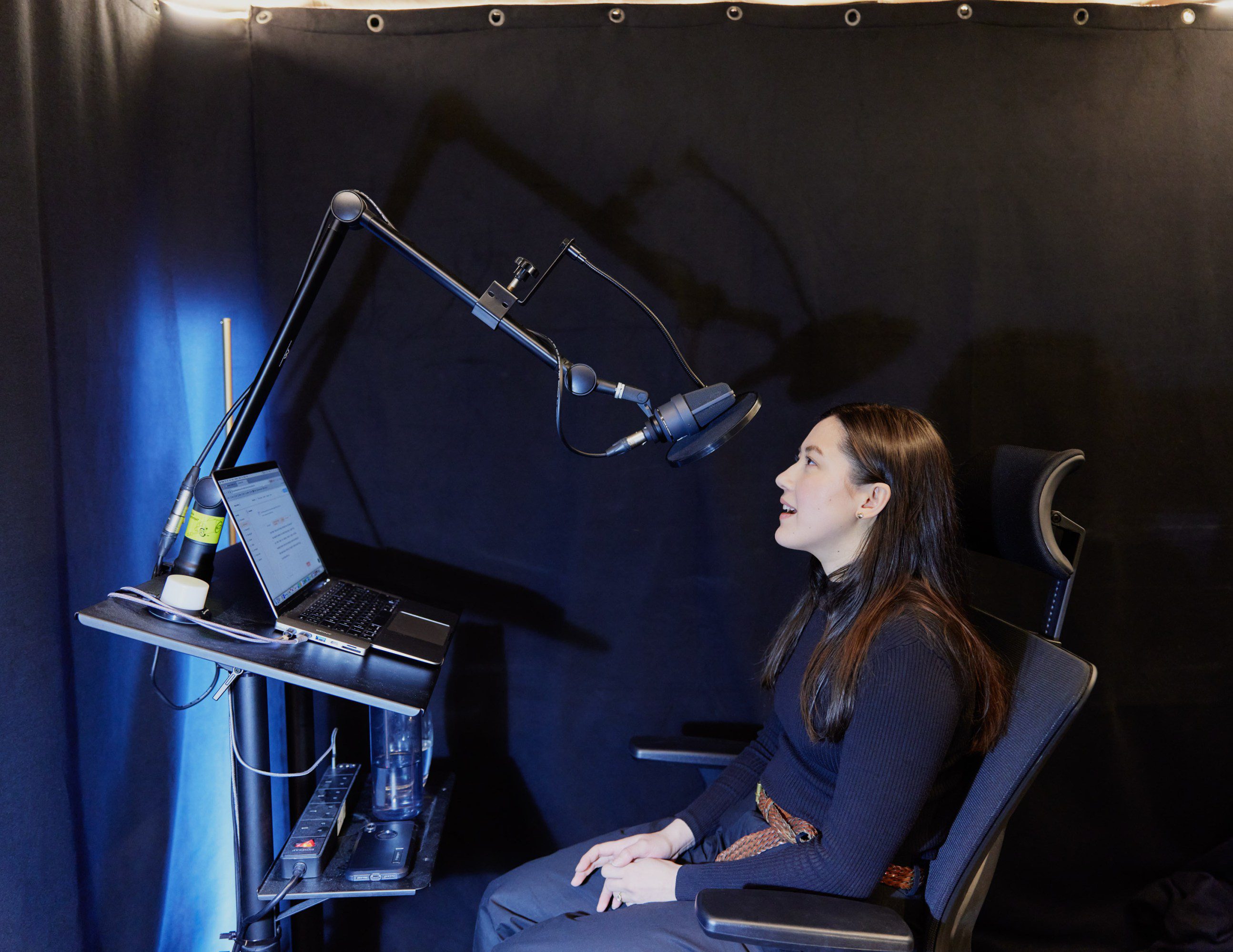
The newest generation of avatars certainly aren’t ready for the silver screen. They’re still stuck in portrait mode, only showing the avatar front-facing and from the waist up. But in the not-too-distant future, Riparbelli says, the company hopes to create avatars that can communicate with their hands and have conversations with one another. It is also planning for full-body avatars that can walk and move around in a space that a person has generated. (The rig to enable this technology already exists; in fact it’s where I am in the image at the top of this piece.)
But do we really want that? It feels like a bleak future where humans are consuming AI-generated content presented to them by AI-generated avatars and using AI to repackage that into more content, which will likely be scraped to generate more AI. If nothing else, this experiment made clear to me that the technology sector urgently needs to step up its content moderation practices and ensure that content provenance techniques such as watermarking are robust.
Even if Synthesia’s technology and content moderation aren’t yet perfect, they’re significantly better than anything I have seen in the field before, and this is after only a year or so of the current boom in generative AI. AI development moves at breakneck speed, and it is both exciting and daunting to consider what AI avatars will look like in just a few years. Maybe in the future we will have to adopt safewords to indicate that you are in fact communicating with a real human, not an AI.
But that day is not today.
I found it weirdly comforting that in one of the videos, my avatar rants about nonconsensual deepfakes and says, in a sociopathically happy voice, “The tech giants? Oh! They’re making a killing!”
Political fights over mining and minerals are heating up, and there are growing environmental and sociological concerns about how to source the materials the world needs to build new energy technologies.
But low-emissions energy sources, including wind, solar, and nuclear power, have a smaller mining footprint than coal and natural gas, according to a new report from the Breakthrough Institute released today.
The report’s findings add to a growing body of evidence that technologies used to address climate change will likely lead to a future with less mining than a world powered by fossil fuels. However, experts point out that oversight will be necessary to minimize harm from the mining needed to transition to lower-emission energy sources.
“In many ways, we talk so much about the mining of clean energy technologies, and we forget about the dirtiness of our current system,” says Seaver Wang, an author of the report and co-director of Climate and Energy at the Breakthrough Institute, an environmental research center.
In the new analysis, Wang and his colleagues considered the total mining footprint of different energy technologies, including the amount of material needed for these energy sources and the total amount of rock that needs to be moved to extract that material.
Many minerals appear in small concentrations in source rock, so the process of extracting them has a large footprint relative to the amount of final product. A mining operation would need to move about seven kilograms of rock to get one kilogram of aluminum, for instance. For copper, the ratio is much higher, at over 500 to one. Taking these ratios into account allows for a more direct comparison of the total mining required for different energy sources.
With this adjustment, it becomes clear that the energy source with the highest mining burden is coal. Generating one gigawatt-hour of electricity with coal requires 20 times the mining footprint as generating the same electricity with low-carbon power sources like wind and solar. Producing the same electricity with natural gas requires moving about twice as much rock.
Tallying up the amount of rock moved is an imperfect approximation of the potential environmental and sociological impact of mining related to different technologies, Wang says, but the report’s results allow researchers to draw some broad conclusions. One is that we’re on track for less mining in the future.
Other researchers have projected a decrease in mining accompanying a move to low-emissions energy sources. “We mine so many fossil fuels today that the sum of mining activities decreases even when we assume an incredibly rapid expansion of clean energy technologies,” Joey Nijnens, a consultant at Monitor Deloitte and author of another recent study on mining demand, said in an email.
That being said, potentially moving less rock around in the future “hardly means that society shouldn’t look for further opportunities to reduce mining impacts throughout the energy transition,” Wang says.
There’s already been progress in cutting down on the material required for technologies like wind and solar. Solar modules have gotten more efficient, so the same amount of material can yield more electricity generation. Recycling can help further cut material demand in the future, and it will be especially crucial to reduce the mining needed to build batteries.
Resource extraction may decrease overall, but it’s also likely to increase in some places as our demands change, researchers pointed out in a 2021 study. Between 32% and 40% of the mining increase in the future could occur in countries with weak, poor, or failing resource governance, where mining is more likely to harm the environment and may fail to benefit people living near the mining projects.
“We need to ensure that the energy transition is accompanied by responsible mining that benefits local communities,” Takuma Watari, a researcher at the National Institute for Environmental Studies and an author of the study, said via email. Otherwise, the shift to lower-emissions energy sources could lead to a reduction of carbon emissions in the Global North “at the expense of increasing socio-environmental risks in local mining areas, often in the Global South.”
Strong oversight and accountability are crucial to make sure that we can source minerals in a responsible way, Wang says: “We want a rapid energy transition, but we also want an energy transition that’s equitable.”
This article first appeared in The Checkup, MIT Technology Review’s weekly biotech newsletter. To receive it in your inbox every Thursday, and read articles like this first, sign up here.
Six weeks ago, I pre-ordered the “Firefly Petunia,” a houseplant engineered with genes from bioluminescent fungi so that it glows in the dark.
After years of writing about anti-GMO sentiment in the US and elsewhere, I felt it was time to have some fun with biotech. These plants are among the first direct-to-consumer GM organisms you can buy, and they certainly seem like the coolest.
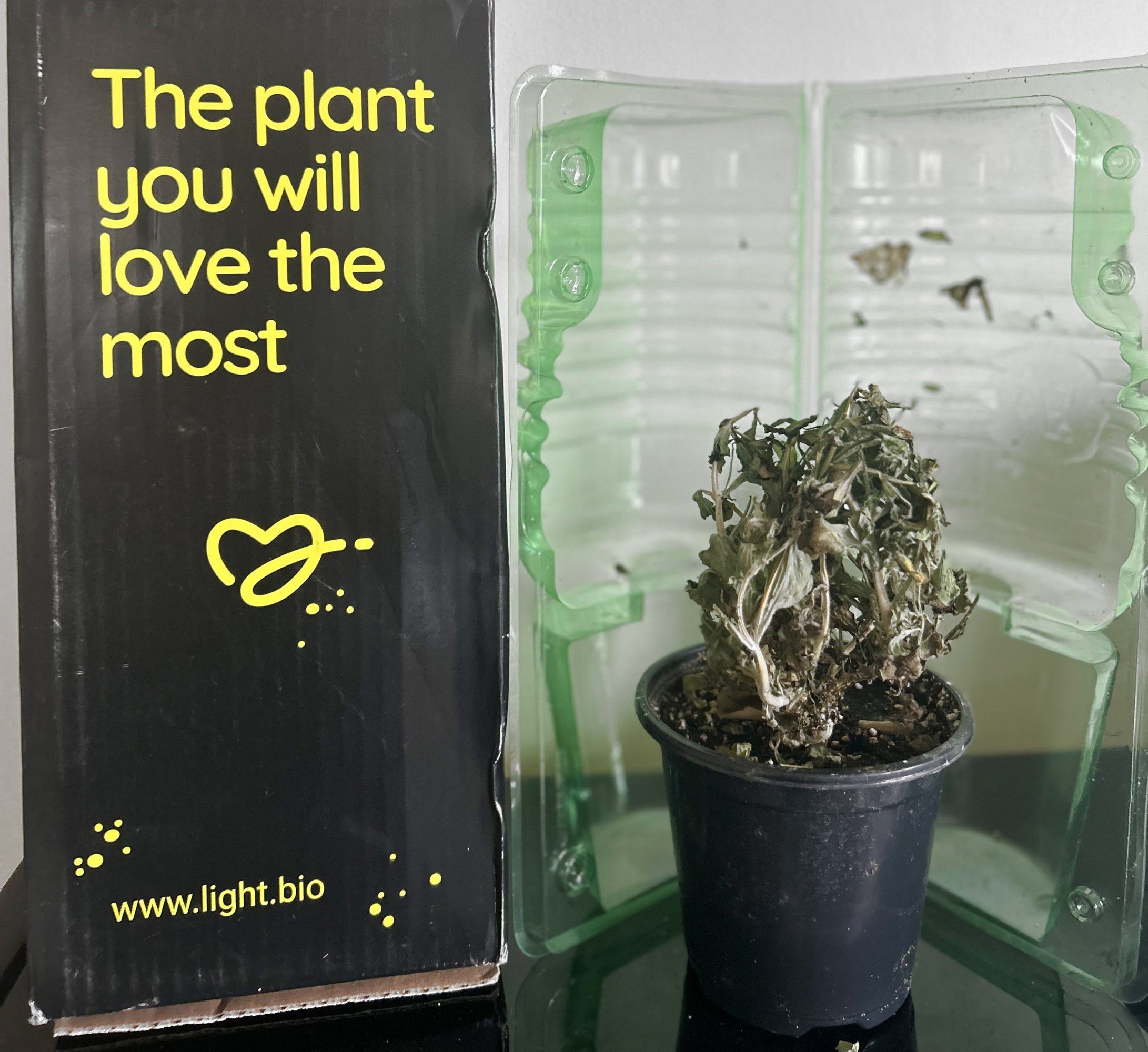
But when I unboxed my two petunias this week, they were in bad shape, with rotted leaves. And in a day, they were dead crisps. My first attempt to do biotech at home is a total bust, and it cost me $84, shipping included.
My plants did arrive in a handsome black box with neon lettering that alerted me to the living creature within. The petunias, about five inches tall, were each encased in a see-through plastic pod to keep them upright. Government warnings on the back of the box assured me they were free of Japanese beetles, sweet potato weevils, the snail Helix aspera, and gypsy moths.
The problem was when I opened the box. As it turns out, I left for a week’s vacation in Florida the same day that Light Bio, the startup selling the petunia, sent me an email saying “Glowing plants headed your way,” with a UPS tracking number. I didn’t see the email, and even if I had, I wasn’t there to receive them.
That meant my petunias sat in darkness for seven days. The box became their final sarcophagus.
My fault? Perhaps. But I had no idea when Light Bio would ship my order. And others have had similar experiences. Mat Honan, the editor in chief of MIT Technology Review, told me his petunia arrived the day his family flew to Japan. Luckily, a house sitter feeding his lizard eventually opened the box, and Mat reports the plant is still clinging to life in his yard.
One of the ill-fated petunia plants and its sarcophagus. Credit: Antonio Regalado
ANTONIO REGALADO
But what about the glow? How strong is it?
Mat says so far, he doesn’t notice any light coming from the plant, even after carrying it into a pitch-dark bathroom. But buyers may have to wait a bit to see anything. It’s the flowers that glow most brightly, and you may need to tend your petunia for a couple of weeks before you get blooms and see the mysterious effect.
“I had two flowers when I opened mine, but sadly they dropped and I haven’t got to see the brightness yet. Hoping they will bloom again soon,” says Kelsey Wood, a postdoctoral researcher at the University of California, Davis.
She would like to use the plants in classes she teaches at the university. “It’s been a dream of synthetic biologists for so many years to make a bioluminescent plant,” she says. “But they couldn’t get it bright enough to see with the naked eye.”
Others are having success right out of the box. That’s the case with Tharin White, publisher of EYNTK.info, a website about theme parks. “It had a lot of protection around it and a booklet to explain what you needed to do to help it,” says White. “The glow is strong, if you are [in] total darkness. Just being in a dark room, you can’t really see it. That being said, I didn’t expect a crazy glow, so [it] meets my expectations.”
That’s no small recommendation coming from White, who has been a “cast member” at Disney parks and an operator of the park’s Avatar ride, named after the movie whose action takes place on a planet where the flora glows. “I feel we are leaps closer to Pandora—The World of Avatar being reality,” White posted to his X account.
Chronobiologist Brian Hodge also found success by resettling his petunia immediately into a larger eight-inch pot, giving it flower food and a good soaking, and putting it in the sunlight. “After a week or so it really started growing fast, and the buds started to show up around day 10. Their glow is about what I expected. It is nothing like a neon light but more of a soft gentle glow,” says Hodge, a staff scientist at the University of California, San Francisco.
In his daily work, Hodge has handled bioluminescent beings before—bacteria mostly—and says he always needed photomultiplier tubes to see anything. “My experience with bioluminescent cells is that the light they would produce was pretty hard to see with the naked eye,” he says. “So I was happy with the amount of light I was seeing from the plants. You really need to turn off all the lights for them to really pop out at you.”
Hodge posted a nifty snapshot of his petunia, but only after setting his iPhone for a two-second exposure.
Light Bio’s CEO Keith Wood didn’t respond to an email about how my plants died, but in an interview last month he told me sales of the biotech plant had been “viral” and that the company would probably run out of its initial supply. To generate new ones, it hires commercial greenhouses to place clippings in water, where they’ll sprout new roots after a couple of weeks. According to Wood, the plant is “a rare example where the benefits of GM technology are easily recognized and experienced by the public.”
Hodge says he got interested in the plants after reading an article about combating light pollution by using bioluminescent flora instead of streetlamps. As a biologist who studies how day and night affect life, he’s worried that city lights and computer screens are messing with natural cycles.
“I just couldn’t pass up being one of the first to own one,” says Hodge. “Once you flip the lights off, the glow is really beautiful … and it sorta feels like you are witnessing something out of a futuristic sci-fi movie!”
It makes me tempted to try again.
Now read the rest of The Checkup
From the archives
We’re not sure if rows of glowing plants can ever replace streetlights, but there’s no doubt light pollution is growing. Artificial light emissions on Earth grew by about 50% between 1992 and 2017—and as much as 400% in some regions. That’s according to Shel Evergreen,in his story on the switch to bright LED streetlights.
It’s taken a while for scientists to figure out how to make plants glow brightly enough to interest consumers. In 2016, I looked at a failed Kickstarter that promised glow-in-the-dark roses but couldn’t deliver.
Another thing
Cassandra Willyard is updating us on the case of Lisa Pisano, a 54-year-old woman who is feeling “fantastic” two weeks after surgeons gave her a kidney from a genetically modified pig. It’s the latest in a series of extraordinary animal-to-human organ transplants—a technology, known as xenotransplantation, that may end the organ shortage.
From around the web
Taiwan’s government is considering steps to ease restrictions on the use of IVF. The country has an ultra-low birth rate, but it bans surrogacy, limiting options for male couples. One Taiwanese pair spent $160,000 to have a child in the United States. (CNN)
Communities in Appalachia are starting to get settlement payments from synthetic-opioid makers like Johnson & Johnson, which along with other drug vendors will pay out $50 billion over several years. But the money, spread over thousands of jurisdictions, is “a feeble match for the scale of the problem.” (Wall Street Journal)
A startup called Climax Foods claims it has used artificial intelligence to formulate vegan cheese that tastes “smooth, rich, and velvety,” according to writer Andrew Rosenblum. He relates the results of his taste test in the new “Build” issue of MIT Technology Review. But one expert Rosenblum spoke to warns that computer-generated cheese is “significantly” overhyped.
AI hype continued this week in medicine when a startup claimed it has used “generative AI” to quickly discover new versions of CRISPR, the powerful gene-editing tool. But new gene-editing tricks won’t conquer the main obstacle, which is how to deliver these molecules where they’re needed in the bodies of patients. (New York Times).
MIT Technology Review Explains: Let our writers untangle the complex, messy world of technology to help you understand what’s coming next. You can read more from the series here.
After weeks of drawn-out congressional debate over how much the United States should spend on conflicts abroad, President Joe Biden signed a $95.3 billion aid package into law on Wednesday.
The bill will send a significant quantity of supplies to Ukraine and Israel, while also supporting Taiwan with submarine technology to aid its defenses against China. It’s also sparked renewed calls for stronger crackdowns on Iranian-produced drones.
Though much of the money will go toward replenishing fairly standard munitions and supplies, the spending bill provides a window into US strategies around four key defense technologies that continue to reshape how today’s major conflicts are being fought.
For a closer look at the military technology at the center of the aid package, I spoke with Andrew Metrick, a fellow with the defense program at the Center for a New American Security, a think tank.
Ukraine and the role of long-range missiles
Ukraine has long sought the Army Tactical Missile System (ATACMS), a long-range ballistic missile made by Lockheed Martin. First debuted in Operation Desert Storm in Iraq in 1990, it’s 13 feet high, two feet wide, and over 3,600 pounds. It can use GPS to accurately hit targets 190 miles away.
Last year, President Biden was apprehensive about sending such missiles to Ukraine, as US stockpiles of the weapons were relatively low. In October, the administration changed tack. The US sent shipments of ATACMS, a move celebrated by President Volodymyr Zelensky of Ukraine, but they came with restrictions: the missiles were older models with a shorter range, and Ukraine was instructed not to fire them into Russian territory, only Ukrainian territory.
This week, just hours before the new aid package was signed, multiple newsoutlets reported that the US had secretly sent more powerful long-range ATACMS to Ukraine several weeks before. They were used on Tuesday, April 23, to target a Russian airfield in Crimea and Russian troops in Berdiansk, 50 miles southwest of Mariupol.
The long range of the weapons has proved essential for Ukraine, says Metrick. “It allows the Ukrainians to strike Russian targets at ranges for which they have very few other options,” he says. That means being able to hit locations like supply depots, command centers, and airfields behind Russia’s front lines in Ukraine. This capacity has grown more important as Ukraine’s troop numbers have waned, Metrick says.
Replenishing Israel’s Iron Dome
On April 13, Iran launched its first-ever direct attack on Israeli soil. In the attack, which Iran says was retaliation for Israel’s airstrike on its embassy in Syria, hundreds of missiles were lobbed into Israeli airspace. Many of them were neutralized by the web of cutting-edge missile launchers dispersed throughout Israel that can automatically detonate incoming strikes before they hit land.
One of those systems is Israel’s Iron Dome, in which radar systems detect projectiles and then signal units to launch defensive missiles that detonate the target high in the sky before it strikes populated areas. Israel’s other system, called David’s Sling, works a similar way but can identify rockets coming from a greater distance, upwards of 180 miles.
Both systems are hugely costly to research and build, and the new US aid package allocates $15 billion to replenish their missile stockpile. The missiles can cost anywhere from $100,000 to $10 million each, and a system like Iron Dome might fire them daily during intense periods of conflict.
The aid comes as funding for Israel has grown more contentious amid the dire conditions faced by displaced Palestinians in Gaza. While the spending bill worked its way through Congress, increasing numbers of Democrats sought to put conditions on the military aid to Israel, particularly after an Israeli air strike on April 1 killed seven aid workers from World Central Kitchen, an international food charity. The funding package does provide $9 billion in humanitarian assistance for the conflict, but the efforts to impose conditions for Israeli military aid failed.
Taiwan and underwater defenses against China
A rising concern for the US defense community—and a subject of “wargaming” simulations that Metrick has carried out—is an amphibious invasion of Taiwan from China. The rising risk of that scenario has driven the US to build and deploy larger numbers of advanced submarines, Metrick says. A bigger fleet of these submarines would be more likely to keep attacks from China at bay, thereby protecting Taiwan.
The trouble is that the US shipbuilding effort, experts say, is too slow. It’s been hampered by budget cuts and labor shortages, but the new aid bill aims to jump-start it. It will provide $3.3 billion to do so, specifically for the production of Columbia-class submarines, which carry nuclear weapons, and Virginia-class submarines, which carry conventional weapons.
Though these funds aim to support Taiwan by building up the US supply of submarines, the package also includes more direct support, like $2 billion to help it purchase weapons and defense equipment from the US.
The US’s Iranian drone problem
Shahed drones are used almost daily on the Russia-Ukraine battlefield, and Iran launched more than 100 against Israel earlier this month. Produced by Iran and resembling model planes, the drones are fast, cheap, and lightweight, capable of being launched from the back of a pickup truck. They’re used frequently for potent one-way attacks, where they detonate upon reaching their target. US experts say the technology is tipping the scales toward Russian and Iranian military groups and their allies.
The trouble of combating them is partly one of cost. Shooting down the drones, which can be bought for as little as $40,000, can cost millions in ammunition.
“Shooting down Shaheds with an expensive missile is not, in the long term, a winning proposition,” Metrick says. “That’s what the Iranians, I think, are banking on. They can wear people down.”
This week’s aid package renewed White House calls for stronger sanctions aimed at curbing production of the drones. The United Nations previously passed rules restricting any drone-related material from entering or leaving Iran, but those expired in October. The US now wants them reinstated.
Even if that happens, it’s unlikely the rules would do much to contain the Shahed’s dominance. The components of the drones are not all that complex or hard to obtain to begin with, but experts also say that Iran has built a sprawling global supply chain to acquire the materials needed to manufacture them and has worked with Russia to build factories.
“Sanctions regimes are pretty dang leaky,” Metrick says. “They [Iran] have friends all around the world.”
Large language models are famous for their ability to make things up—in fact, it’s what they’re best at. But their inability to tell fact from fiction has left many businesses wondering if using them is worth the risk.
A new tool created by Cleanlab, an AI startup spun out of a quantum computing lab at MIT, is designed to give high-stakes users a clearer sense of how trustworthy these models really are. Called the Trustworthy Language Model, it gives any output generated by a large language model a score between 0 and 1, according to its reliability. This lets people choose which responses to trust and which to throw out. In other words: a BS-o-meter for chatbots.
Cleanlab hopes that its tool will make large language models more attractive to businesses worried about how much stuff they invent. “I think people know LLMs will change the world, but they’ve just got hung up on the damn hallucinations,” says Cleanlab CEO Curtis Northcutt.
Chatbots are quickly becoming the dominant way people look up information on a computer. Search engines are being redesigned around the technology. Office software used by billions of people every day to create everything from school assignments to marketing copy to financial reports now comes with chatbots built in. And yet a study put out in November by Vectara, a startup founded by former Google employees, found that chatbots invent information at least 3% of the time. It might not sound like much, but it’s a potential for error most businesses won’t stomach.
Cleanlab’s tool is already being used by a handful of companies, including Berkeley Research Group, a UK-based consultancy specializing in corporate disputes and investigations. Steven Gawthorpe, associate director at Berkeley Research Group, says the Trustworthy Language Model is the first viable solution to the hallucination problem that he has seen: “Cleanlab’s TLM gives us the power of thousands of data scientists.”
In 2021, Cleanlab developed technology that discovered errors in 34 popular data sets used to train machine-learning algorithms; it works by by measuring the differences in output across a range of models trained on that data. That tech is now used by several large companies, including Google, Tesla, and the banking giant Chase. The Trustworthy Language Model takes the same basic idea—that disagreements between models can be used to measure the trustworthiness of the overall system—and applies it to chatbots.
In a demo Cleanlab gave to MIT Technology Review last week, Northcutt typed a simple question into ChatGPT: “How many times does the letter ‘n’ appear in ‘enter’?” ChatGPT answered: “The letter ‘n’ appears once in the word ‘enter.’” That correct answer promotes trust. But ask the question a few more times and ChatGPT answers: “The letter ‘n’ appears twice in the word ‘enter.’”
“Not only does it often get it wrong, but it’s also random, you never know what it’s going to output,” says Northcutt. “Why the hell can’t it just tell you that it outputs different answers all the time?”
Cleanlab’s aim is to make that randomness more explicit. Northcutt asks the Trustworthy Language Model the same question. “The letter ‘n’ appears once in the word ‘enter,’” it says—and scores its answer 0.63. Six out of 10 is not a great score, suggesting that the chatbot’s answer to this question should not be trusted.
It’s a basic example, but it makes the point. Without the score, you might think the chatbot knew what it was talking about, says Northcutt. The problem is that data scientists testing large language models in high-risk situations could be misled by a few correct answers and assume that future answers will be correct too: “They try things out, they try a few examples, and they think this works. And then they do things that result in really bad business decisions.”
The Trustworthy Language Model draws on multiple techniques to calculate its scores. First, each query submitted to the tool is sent to several different large language models. Cleanlab is using five versions of DBRX, an open-source model developed by Databricks, an AI firm based in San Francisco. (But the tech will work with any model, says Northcutt, including Meta’s Llama models or OpenAI’s GPT series, the models behind ChatpGPT.) If the responses from each of these models are the same or similar, it will contribute to a higher score.
At the same time, the Trustworthy Language Model also sends variations of the original query to each of the DBRX models, swapping in words that have the same meaning. Again, if the responses to synonymous queries are similar, it will contribute to a higher score. “We mess with them in different ways to get different outputs and see if they agree,” says Northcutt.
The tool can also get multiple models to bounce responses off one another: “It’s like, ‘Here’s my answer—what do you think?’ ‘Well, here’s mine—what do you think?’ And you let them talk.” These interactions are monitored and measured and fed into the score as well.
Nick McKenna, a computer scientist at Microsoft Research in Cambridge, UK, who works on large language models for code generation, is optimistic that the approach could be useful. But he doubts it will be perfect. “One of the pitfalls we see in model hallucinations is that they can creep in very subtly,” he says.
In a range of tests across different large language models, Cleanlab shows that its trustworthiness scores correlate well with the accuracy of those models’ responses. In other words, scores close to 1 line up with correct responses, and scores close to 0 line up with incorrect ones. In another test, they also found that using the Trustworthy Language Model with GPT-4 produced more reliable responses than using GPT-4 by itself.
Large language models generate text by predicting the most likely next word in a sequence. In future versions of its tool, Cleanlab plans to make its scores even more accurate by drawing on the probabilities that a model used to make those predictions. It also wants to access the numerical values that models assign to each word in their vocabulary, which they use to calculate those probabilities. This level of detail is provided by certain platforms, such as Amazon’s Bedrock, that businesses can use to run large language models.
Cleanlab has tested its approach on data provided by Berkeley Research Group. The firm needed to search for references to health-care compliance problems in tens of thousands of corporate documents. Doing this by hand can take skilled staff weeks. By checking the documents using the Trustworthy Language Model, Berkeley Research Group was able to see which documents the chatbot was least confident about and check only those. It reduced the workload by around 80%, says Northcutt.
In another test, Cleanlab worked with a large bank (Northcutt would not name it but says it is a competitor to Goldman Sachs). Similar to Berkeley Research Group, the bank needed to search for references to insurance claims in around 100,000 documents. Again, the Trustworthy Language Model reduced the number of documents that needed to be hand-checked by more than half.
Running each query multiple times through multiple models takes longer and costs a lot more than the typical back-and-forth with a single chatbot. But Cleanlab is pitching the Trustworthy Language Model as a premium service to automate high-stakes tasks that would have been off limits to large language models in the past. The idea is not for it to replace existing chatbots but to do the work of human experts. If the tool can slash the amount of time that you need to employ skilled economists or lawyers at $2,000 an hour, the costs will be worth it, says Northcutt.
In the long run, Northcutt hopes that by reducing the uncertainty around chatbots’ responses, his tech will unlock the promise of large language models to a wider range of users. “The hallucination thing is not a large-language-model problem,” he says. “It’s an uncertainty problem.”
Almost all keyboard apps used by Chinese people around the world share a security loophole that makes it possible to spy on what users are typing.
The vulnerability, which allows the keystroke data that these apps send to the cloud to be intercepted, has existed for years and could have been exploited by cybercriminals and state surveillance groups, according to researchers at the Citizen Lab, a technology and security research lab affiliated with the University of Toronto.
These apps help users type Chinese characters more efficiently and are ubiquitous on devices used by Chinese people. The four most popular apps—built by major internet companies like Baidu, Tencent, and iFlytek—basically account for all the typing methods that Chinese people use. Researchers also looked into the keyboard apps that come preinstalled on Android phones sold in China.
What they discovered was shocking. Almost every third-party app and every Android phone with preinstalled keyboards failed to protect users by properly encrypting the content they typed. A smartphone made by Huawei was the only device where no such security vulnerability was found.
In August 2023, the same researchers found that Sogou, one of the most popular keyboard apps, did not use Transport Layer Security (TLS) when transmitting keystroke data to its cloud server for better typing predictions. Without TLS, a widely adopted international cryptographic protocol that protects users from a known encryption loophole, keystrokes can be collected and then decrypted by third parties.
“Because we had so much luck looking at this one, we figured maybe this generalizes to the others, and they suffer from the same kinds of problems for the same reason that the one did,” says Jeffrey Knockel, a senior research associate at the Citizen Lab, “and as it turns out, we were unfortunately right.”
Even though Sogou fixed the issue after it was made public last year, some Sogou keyboards preinstalled on phones are not updated to the latest version, so they are still subject to eavesdropping.
This new finding shows that the vulnerability is far more widespread than previously believed.
“As someone who also has used these keyboards, this was absolutely horrifying,” says Mona Wang, a PhD student in computer science at Princeton University and a coauthor of the report.
“The scale of this was really shocking to us,” says Wang. “And also, these are completely different manufacturers making very similar mistakes independently of one another, which is just absolutely shocking as well.”
The massive scale of the problem is compounded by the fact that these vulnerabilities aren’t hard to exploit. “You don’t need huge supercomputers crunching numbers to crack this. You don’t need to collect terabytes of data to crack it,” says Knockel. “If you’re just a person who wants to target another person on your Wi-Fi, you could do that once you understand the vulnerability.”
The ease of exploiting the vulnerabilities and the huge payoff—knowing everything a person types, potentially including bank account passwords or confidential materials—suggest that it’s likely they have already been taken advantage of by hackers, the researchers say. But there’s no evidence of this, though state hackers working for Western governments targeted a similar loophole in a Chinese browser app in 2011.
Most of the loopholes found in this report are “so far behind modern best practices” that it’s very easy to decrypt what people are typing, says Jedidiah Crandall, an associate professor of security and cryptography at Arizona State University, who was consulted in the writing of this report. Because it doesn’t take much effort to decrypt the messages, this type of loophole can be a great target for large-scale surveillance of massive groups, he says.
After the researchers got in contact with companies that developed these keyboard apps, the majority of the loopholes were fixed. But a few companies have been unresponsive, and the vulnerability still exists in some apps and phones, including QQ Pinyin and Baidu, as well as in any keyboard app that hasn’t been updated to the latest version. Baidu, Tencent, iFlytek, and Samsung did not immediately reply to press inquiries sent by MIT Technology Review.
One potential cause of the loopholes’ ubiquity is that most of these keyboard apps were developed in the 2000s, before the TLS protocol was commonly adopted in software development. Even though the apps have been through numerous rounds of updates since then, inertia could have prevented developers from adopting a safer alternative.
The report points out that language barriers and different tech ecosystems prevent English- and Chinese-speaking security researchers from sharing information that could fix issues like this more quickly. For example, because Google’s Play store is blocked in China, most Chinese apps are not available in Google Play, where Western researchers often go for apps to analyze.
Sometimes all it takes is a little additional effort. After two emails about the issue to iFlytek were met with silence, the Citizen Lab researchers changed the email title to Chinese and added a one-line summary in Chinese to the English text. Just three days later, they received an email from iFlytek, saying that the problem had been resolved.
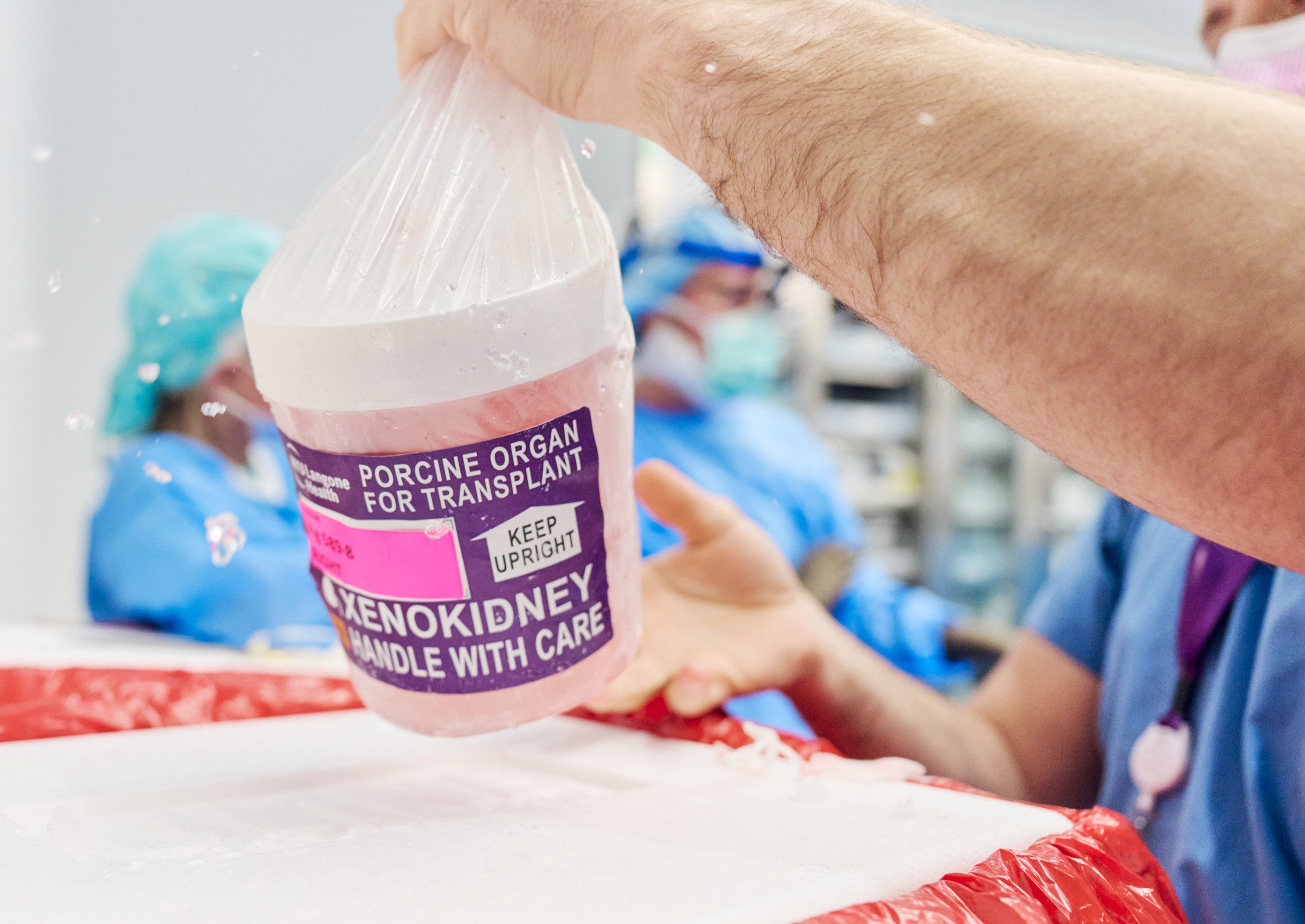
A month ago, Richard Slayman became the first living person to receive a kidney transplant from a gene-edited pig. Now, a team of researchers from NYU Langone Health reports that Lisa Pisano, a 54-year-old woman from New Jersey, has become the second. Her new kidney has just a single genetic modification—an approach that researchers hope could make scaling up the production of pig organs simpler.
Pisano, who had heart failure and end-stage kidney disease, underwent two operations, one to fit her with a heart pump to improve her circulation and the second to perform the kidney transplant. She is still in the hospital, but doing well. “Her kidney function 12 days out from the transplant is perfect, and she has no signs of rejection,” said Robert Montgomery, director of the NYU Langone Transplant Institute, who led the transplant surgery, at a press conference on Wednesday.
“I feel fantastic,” said Pisano, who joined the press conference by video from her hospital bed.
Pisano is the fourth living person to receive a pig organ. Two men who received heart transplants at the University of Maryland Medical Center in 2022 and 2023 both died within a couple of months after receiving the organ. Slayman, the first pig kidney recipient, is still doing well, says Leonardo Riella, medical director for kidney transplantation at Massachusetts General Hospital, where Slayman received the transplant.
“It’s an awfully exciting time,” says Andrew Cameron, a transplant surgeon at Johns Hopkins Medicine in Baltimore. “There is a bright future in which all 100,000 patients on the kidney transplant wait list, and maybe even the 500,000 Americans on dialysis, are more routinely offered a pig kidney as one of their options,” Cameron adds.
All the living patients who have received pig hearts and kidneys have accessed the organs under the FDA’s expanded access program, which allows patients with life-threatening conditions to receive investigational therapies outside of clinical trials. But patients may soon have another option. Both Johns Hopkins and NYU are aiming to start clinical trials in 2025.
In the coming weeks, doctors will be monitoring Pisano closely for signs of organ rejection, which occurs when the recipient’s immune system identifies the new tissue as foreign and begins to attack it. That’s a concern even with human kidney transplants, but it’s an even greater risk when the tissue comes from another species, a procedure known as xenotransplantation.
To prevent rejection, the companies that produce these pigs have introduced genetic modifications to make their tissue appear less foreign and reduce the chance that it will spark an immune attack. But it’s not yet clear just how many genetic alterations are necessary to prevent rejection. Slayman’s kidney came from a pig developed by eGenesis, a company based in Cambridge, Massachusetts; it has 69 modifications. The vast majority of those modifications focus on inactivating viral DNA in the pig’s genome to make sure those viruses can’t be transmitted to the patient. But 10 were employed to help prevent the immune system from rejecting the organ.
Pisano’s kidney came from pigs that carry just a single genetic alteration—to eliminate a specific sugar called alpha-gal, which can trigger immediate organ rejection, from the surface of its cells. “We believe that less is more, and that the main gene edit that has been introduced into the pigs and the organs that we’ve been using is the fundamental problem,” Montgomery says. “Most of those other edits can be replaced by medications that are available to humans.”
JOE CARROTTA/NYU LANGONE HEALTH
The kidney is implanted along with a piece of the pig’s thymus gland, which plays a key role in educating white blood cells to distinguish between friend and foe. The idea is that the thymus will help Pisano’s immune system learn to accept the foreign tissue. The so-called UThymoKidney is being developed by United Therapeutics Corporation, but the company has also created pigs with 10 genetic alterations. The company “wanted to take multiple shots on goal,” says Leigh Peterson,executive vice president of product development and xenotransplantation at United Therapeutics.
There’s one major advantage to using a pig with a single genetic modification. “The simpler it is, in theory, the easier it’s going to be to breed and raise these animals,” says Jayme Locke, a transplant surgeon at the University of Alabama at Birmingham. Pigs with a single genetic change can be bred, but pigs with many alterations require cloning, Montgomery says. “These pigs could be rapidly expanded, and more quickly and completely solve the organ supply crisis.”
But Cameron isn’t sure that a single alteration will be enough to prevent rejection. “I think most people are worried that one knockout might not be enough, but we’re hopeful,” he says.
So is Pisano, who is working to get strong enough to leave the hospital. “I just want to spend time with my grandkids and play with them and be able to go shopping,” she says.
Like a mirage speeding across the dusty desert outside Pueblo, Colorado, the first hydrogen-fuel-cell passenger train in the United States is getting warmed up on its test track. Made by the Swiss manufacturer Stadler and known as the FLIRT (for “Fast Light Intercity and Regional Train”), it will soon be shipped to Southern California, where it is slated to carry riders on San Bernardino County’s Arrow commuter rail service before the end of the year. In the insular world of railroading, this hydrogen-powered train is a Rorschach test. To some, it represents the future of rail transportation. To others, it looks like a big, shiny distraction.
In the quest to decarbonize the transportation sector—the largest source of greenhouse-gas emissions in the United States—rubber-tired electric vehicles tend to dominate the conversation. But to reach the Biden administration’s goal of net-zero emissions by 2050, other forms of transportation, including those on steel wheels, will need to find new energy sources too.
The best way to decarbonize railroads is the subject of growing debate among regulators, industry, and activists. Things are coming to a head in California, which recently enacted rules requiring all new passenger locomotives operating in the state to be zero-emissions by 2030 and all new freight locomotives to meet that threshold by 2035. Federal regulators could be close behind.
The debate is partly technological, revolving around whether hydrogen fuel cells, batteries, or overhead electric wires offer the best performance for different railroad situations. But it’s also political: a question of the extent to which decarbonization can, or should, usher in a broader transformation of rail transportation. For decades, the government has largely deferred to the will of the big freight rail conglomerates. Decarbonization could shift that power dynamic—or further entrench it.
So far, hydrogen has been the big technological winner in California. Over the past year, the California Department of Transportation, known as Caltrans, has ordered 10 hydrogen FLIRT trains at a cost of $207 million. After the Arrow service, the next rail line to receive hydrogen trains is scheduled to be the Valley Rail service in the Central Valley. That line will connect Sacramento to California High-Speed Rail, the under-construction system that will eventually link Los Angeles and San Francisco.
In its analysis of different zero-emissions rail technologies, Caltrans found that hydrogen trains, powered by onboard fuel cells that convert hydrogen into electricity, had better range and shorter refueling times than battery-electric trains, which function much like electric cars. Hydrogen was also a cheaper power source than overhead wire (or simply “electrification,” in industry parlance), which would cost an estimated $6.8 billion to install on the state’s three main intercity routes. (California High-Speed Rail and its shared track on the Bay Area’s Caltrain commuter service will both be powered by overhead wire, since electrification is necessary to reach speeds of over 100 miles per hour.)
Further complicating the electrification option, installing overhead wire on the rest of California’s passenger network would require the consent of BNSF and Union Pacific, the two major freight rail carriers that own most of the state’s tracks. The companies have long opposed the installation of wire above their tracks, which they say could interfere with double-stacked freight trains.
Electrifying all 144,000 miles of the nation’s freight rail tracks would cost hundreds of billions of dollars, according to a report by the Association of American Railroads (AAR), an industry trade group, and even electrifying smaller sections of track would result in ongoing disruptions to train traffic and shift freight customers from trains to trucks, the group claims. Electrification would also require the cooperation of electric utilities, leaving railroads vulnerable to the grid connection delays that plague renewable-energy developers.
“We have long stretches of track outside of urbanized areas,” says Marcin Taraszkiewicz, an engineer at the engineering and architecture firm HDR who has worked on Caltrans’s hydrogen train program. Getting power to those rugged places can be a challenge, he says, especially when infrastructure must be designed to resist natural disasters like wildfires and earthquakes: “If that wire goes down, you’re going to be in trouble.”
The AAR thinks California’s railroad emissions regulations are too much, too soon, especially given that freight rail is already three to four times more fuel efficient than trucking. Last year, the AAR sued the state over its latest railroad emissions regulations, in a case that is still pending. Though the group generally prefers hydrogen to electrification as a long-term solution, it contends that this alternative technology is not yet mature enough to meet the industry’s needs.
A group called Californians for Electric Rail also views hydrogen as an immature technology. “From an environmental as well as a cost perspective, it’s a really circular and indirect way of doing things,” says Adriana Rizzo, the group’s founder, who is an advocate for electrifying the state’s regional and intercity tracks with overhead wire.
Synthesizing, transporting, and using the tiny hydrogen molecule can be very inefficient. Hydrogen trains currently require roughly three times more energy per mile than trains powered by overhead wire. And the environmental benefits of hydrogen—the ostensible purpose of this new technology—remain largely theoretical, since the vast majority of hydrogen today is produced by burning fossil fuels like methane. Natural-gas utilities have been among the hydrogen industry’s biggest boosters, because they are already able to produce and transport the gas.
Opinions on the merits of hydrogen trains have been mixed. In 2022, following a pilot program, the German state of Baden-Württemberg determined that this technology would be 80% more expensive to operate over the long run than other zero-emissions alternatives.
Kyle Gradinger, assistant deputy director for rail at Caltrans, thinks there’s been some “Twittersphere exaggeration” about the problems with hydrogen trains. In tests, the hydrogen-powered Stadler FLIRT is “performing as well as we expected, if not better,” he says. Since they also use electric motors, hydrogen trains offer many of the same benefits as trains powered by overhead wire, Gradinger says. Both technologies will be quieter, cleaner, and faster than diesel trains.
Caltrans hopes to obtain all the hydrogen for its trains from zero-emissions sources by 2030—a goal bolstered by a draft clean-hydrogen rule issued by the Biden administration in 2023. California is one of seven “hydrogen hubs” in the US, public-private partnerships that will receive billions of dollars in subsidies from the Infrastructure Investment and Jobs Act for developing hydrogen technologies. It’s too early to say whether Caltrans will be able to procure funding for its hydrogen fueling stations and supply chains through these subsidies, Gradinger says, but it’s certainly a possibility. So far, California is the only US state to have purchased hydrogen trains.
Advocates like Rizzo fear, however, that all this investment in hydrogen infrastructure will get in the way of more transformative changes to passenger rail in California.
“Why are we putting millions of dollars into buying new trains and putting up all of this infrastructure and then expecting the same crappy service that we have now?” Rizzo says. “These systems could carry so many more passengers.”
Rizzo’s group, and allies like the Rail Passenger Association of California and Nevada, think decarbonization is an opportunity to install the type of infrastructure that supports the vast majority of fast passenger train services around the world. Though the up-front investment in overhead wire is high, electrification reduces operating costs by providing constant access to a cheap and efficient energy source. Electrification also improves acceleration so that trains can travel closer together, creating the potential for service patterns that function more like an urban metro system than a once-per-day Amtrak route.
Caltrans has a long-term plan to dramatically increase rail service and speeds, which might eventually require electrification by overhead wire, also known as a catenary system. But at least for the next couple of decades, the agency believes, hydrogen is the most feasible way to meet the state’s ambitious climate goals. The money, the political will, and the stomach for a fight with the freight railroads and utility companies just aren’t there yet.
“The gold standard is overhead catenary electrification, if you can do that,” Gradinger says. “But we aren’t going to get to a level of service on the intercity side for at least the next decade or two that would warrant investment in electrification.”
Rizzo hopes that as the federal government puts more railroad emissions regulations in place, the case for electrifying rail by overhead wire will get stronger. Other countries have come to that conclusion: a 2015 policy change in India resulted in the electrification of nearly half the country’s track mileage in less than a decade. The United Kingdom’s Decarbonising Transport Plan states that electrification will be the “main way” to decarbonize the rail industry.
These changes are still compatible with a robust freight industry. The world’s most powerful locomotives are electric, pulling ore-laden freight trains in South Africa and China. In 2002, Russia finished electrifying the 5,700-mile Trans-Siberian Railway, demonstrating that freight trains running on electric wire can travel very long distances over very harsh terrain.
Things may be starting to shift in the US as well, albeit slowly. BNSF appears to have softened its stance against electrification on a corridor it owns in Southern California, where it has agreed to allow California High-Speed Rail to construct overhead wire on its right of way. Rizzo and her group are looking to make these projects easier by sponsoring state legislation exempting overhead wire from the California Environmental Quality Act. That would prevent situations like a 2015 environmental lawsuit from the affluent Bay Area suburb of Atherton, over tree removal and visual impact, that delayed Caltrain’s electrification project for nearly two years.
New innovations could blur the lines between different kinds of green rail technologies. Caltrain has ordered a battery-equipped electrified train that has the potential to charge up while traveling from San Francisco to San Jose and then run on a battery onward to Gilroy and Salinas. A similar system could someday be deployed in Southern California, where trains could charge through the Los Angeles metro area and run on batteries over more remote stretches to Santa Barbara and San Diego.
New hydrogen technologies could also prove transformative for passenger rail. The FLIRT train doing laps in the Colorado desert is version 1.0. In the future, using ammonia as a hydrogen carrier could result in much longer range for hydrogen trains, as well as more seamless refueling. “With hydrogen, there’s a lot more room to grow,” Taraszkiewicz says.
But in a country that has invested little in passenger rail over the past century, new technology can only do so much, Taraszkiewicz cautions. America’s railroads all too often lack passing tracks, grade-separated road crossings, and modern signaling systems. The main impediment to faster, more frequent passenger service “is not the train technology,” he says. “It’s everything else.”
Benjamin Schneider is a freelance writer covering housing, transportation, and urban policy.
This article is from The Spark, MIT Technology Review’s weekly climate newsletter. To receive it in your inbox every Wednesday, sign up here.
The votes have been tallied, and the results are in. The winner of the 11th Breakthrough Technology, 2024 edition, is … drumroll please … thermal batteries!
While the editors of MIT Technology Review choose the annual list of 10 Breakthrough Technologies, in 2022 we started having readers weigh in on an 11th technology. And I don’t mean to flatter you, but I think you picked a fascinating one this year.
Thermal energy storage is a convenient way to stockpile energy for later. This could be crucial in connecting cheap but inconsistent renewable energy with industrial facilities, which often require a constant supply of heat.
I wrote about why this technology is having a moment, and where it might wind up being used, in a story published Monday. For the newsletter this week, let’s take a deeper look at the different kinds of thermal batteries out there, because there’s a wide world of possibilities.
Step 1: Choose your energy source
In the journey to build a thermal battery, the crucial first step is to choose where your heat comes from. Most of the companies I’ve come across are building some sort of power-to-heat system, meaning electricity goes in and heat comes out. Heat often gets generated by running a current through a resistive material in a process similar to what happens when you turn on a toaster.
Some projects may take electricity directly from sources like wind turbines or solar panels that aren’t hooked up to the grid. That could reduce energy costs, since you don’t have to pay surcharges built into grid electricity rates, explains Jeffrey Rissman, senior director of industry at Energy Innovation, a policy and research firm specializing in energy and climate.
Otherwise, thermal batteries can be hooked up to the grid directly. These systems could allow a facility to charge up when electricity prices are low or when there’s a lot of renewable energy on the grid.
Some thermal storage systems are soaking up waste heat rather than relying on electricity. Brenmiller Energy, for example, is building thermal batteries that can be charged up with heat or electricity, depending on the customer’s needs.
Depending on the heat source, systems using waste heat may not be able to reach temperatures as high as their electricity-powered counterparts, but they could help increase the efficiency of facilities that would otherwise waste that energy. There’s especially high potential for high-temperature processes, like cement and steel production.
Step 2: Choose your storage material
Next up: pick out a heat storage medium. These materials should probably be inexpensive and able to reach and withstand high temperatures.
Bricks and carbon blocks are popular choices, as they can be packed together and, depending on the material, reach temperatures well over 1,000 °C (1,800 °F). Rondo Energy, Antora Energy, and Electrified Thermal Solutions are among the companies using blocks and bricks to store heat at these high temperatures.
Crushed-up rocks are another option, and the storage medium of choice for Brenmiller Energy. Caldera is using a mixture of aluminum and crushed rock.
Molten materials can offer even more options for delivering thermal energy later, since they can be pumped around (though this can also add more complexity to the system). Malta is building thermal storage systems that use molten salt, and companies like Fourth Power are using systems that rely in part on molten metals.
Step 3: Choose your delivery method
Last, and perhaps most important, is deciding how to get energy back out of your storage system. Generally, thermal storage systems can deliver heat, use it to generate electricity, or go with some combination of the two.
Delivering heat is the most straightforward option. Typically, air or another gas gets blown over the hot thermal storage material, and that heated gas can be used to warm up equipment or to generate steam.
Some companies are working to use heat storage to deliver electricity instead. This could allow thermal storage systems to play a role not only in industry but potentially on the electrical grid as an electricity storage solution. One downside? These systems generally take a hit on efficiency, the amount of energy that can be returned from storage. But they may be right for some situations, such as facilities that need both heat and electricity on demand. Antora Energy is aiming to use thermophotovoltaic materials to turn heat stored in its carbon blocks back into electricity.
Some companies plan to offer a middle path, delivering a combination of heat and electricity, depending on what a facility needs. Rondo Energy’s heat batteries can deliver high-pressure steam that can be used either for heating alone or to generate some electricity using cogeneration units.
The possibilities are seemingly endless for thermal batteries, and I’m seeing new players with new ideas all the time. Stay tuned for much more coverage of this hot technology (sorry, I had to).
Now read the rest of The Spark
Related reading
Read more about why thermal batteries won the title of 11th breakthrough technology in my story from Monday.
I first wrote about heat as energy storage in this piece last year. As I put it then: the hottest new climate technology is bricks.
The state of Louisiana in the southeast US has lost over a million acres of its coast to erosion. A pilot project aims to save some homes in the state by raising them up to avoid the worst of flooding.
It’s an ambitious attempt to build a solution to a crisis, and the effort could help keep communities together. But some experts worry that elevation projects offer too rosy an outlook and think we need to focus on relocation instead. Read more in this fascinating feature story from Xander Peters.
Keeping up with climate
It can be easy to forget, but we’ve actually already made a lot of progress on addressing climate change. A decade ago, the world was on track for about 3.7 °C of warming over preindustrial levels. Today, it’s 2.7 °C with current actions and policies—higher than it should be but lower than it might have been. (Cipher News)
We’re probably going to have more batteries than we actually need for a while. Today, China alone makes enough batteries to satisfy global demand, which could make things tough for new players in the battery game. (Bloomberg)
2023 was a record year for wind power. The world installed 117 gigawatts of new capacity last year, 50% more than the year before. (Associated Press)
Coal power grew in 2023, driven by a surge of new plants coming online in China and a slowdown of retirements in Europe and the US. (New York Times)
People who live near solar farms generally have positive feelings about their electricity-producing neighbors. There’s more negative sentiment among people who live very close to the biggest projects, though. (Inside Climate News)
E-scooters have been zipping through city streets for eight years, but they haven’t exactly ushered in the zero-emissions micro-mobility future that some had hoped for. Shared scooters can cut emissions, but it all depends on rider behavior and company practices. (Grist)
The grid could use a renovation. Replacing existing power lines with new materials could double grid capacity in many parts of the US, clearing the way for more renewables. (New York Times)
The first all-electric tugboat in the US is about to launch in San Diego. The small boats are crucial to help larger vessels in and around ports, and the fossil-fuel-powered ones are a climate nightmare. (Canary Media)

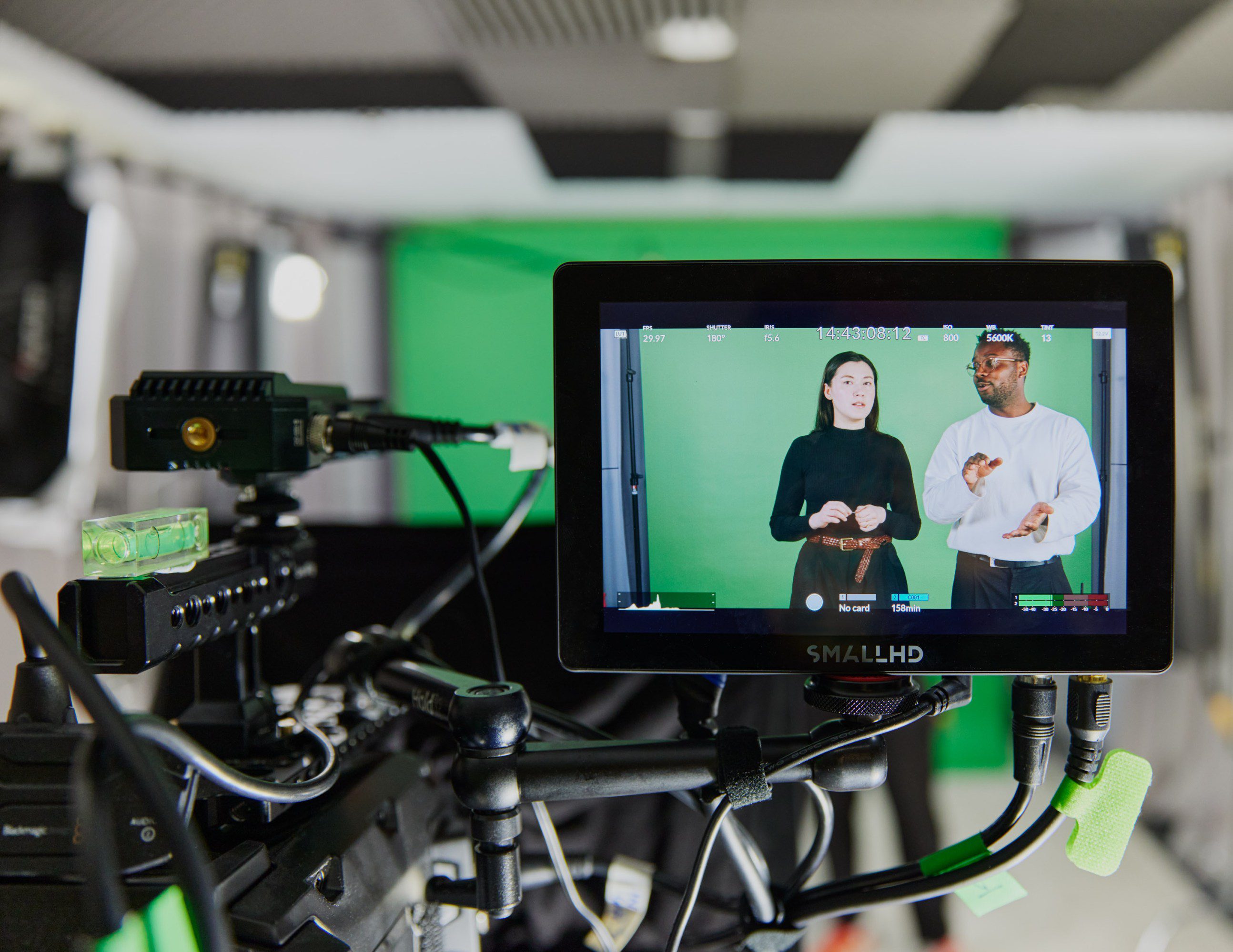
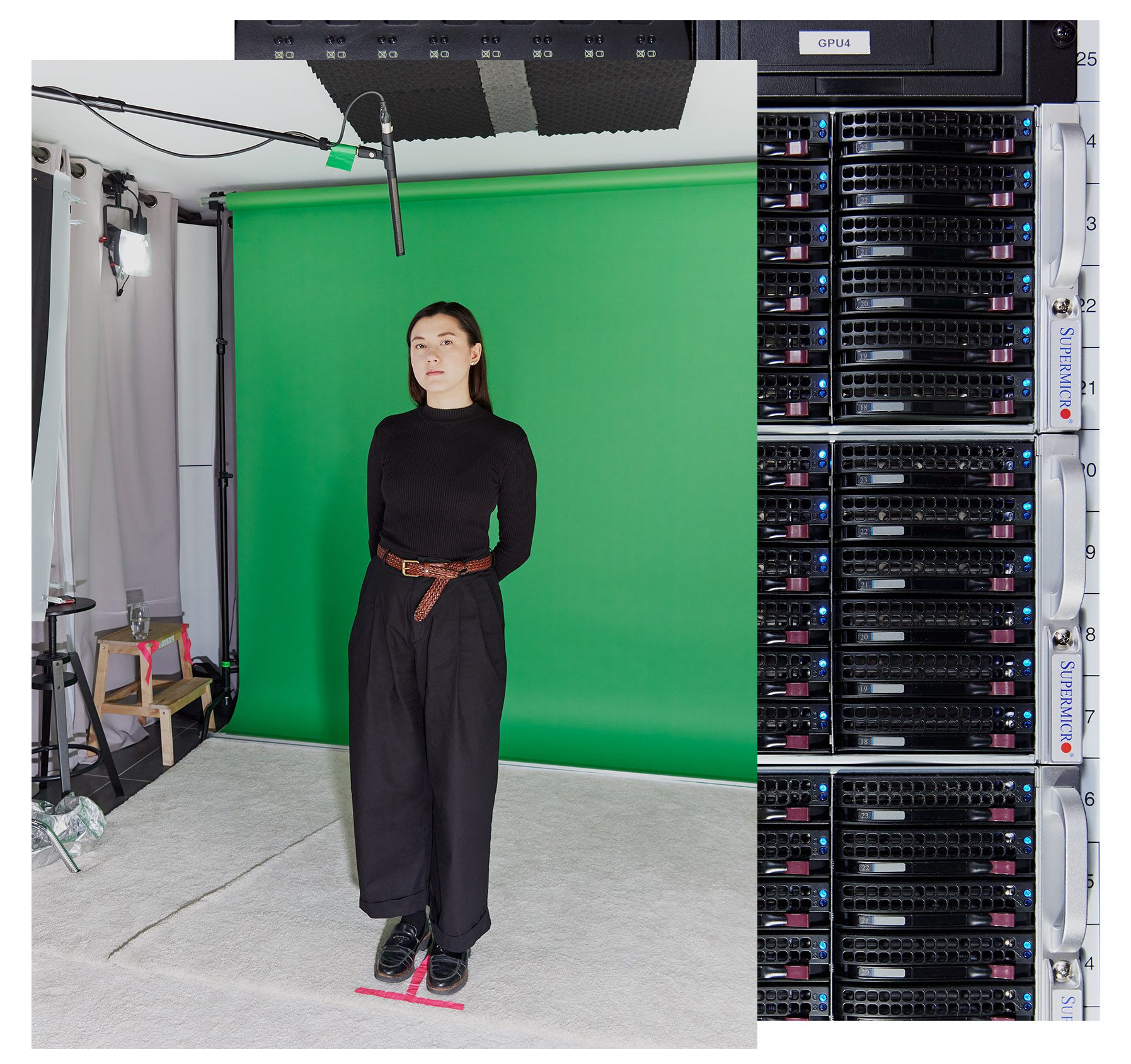
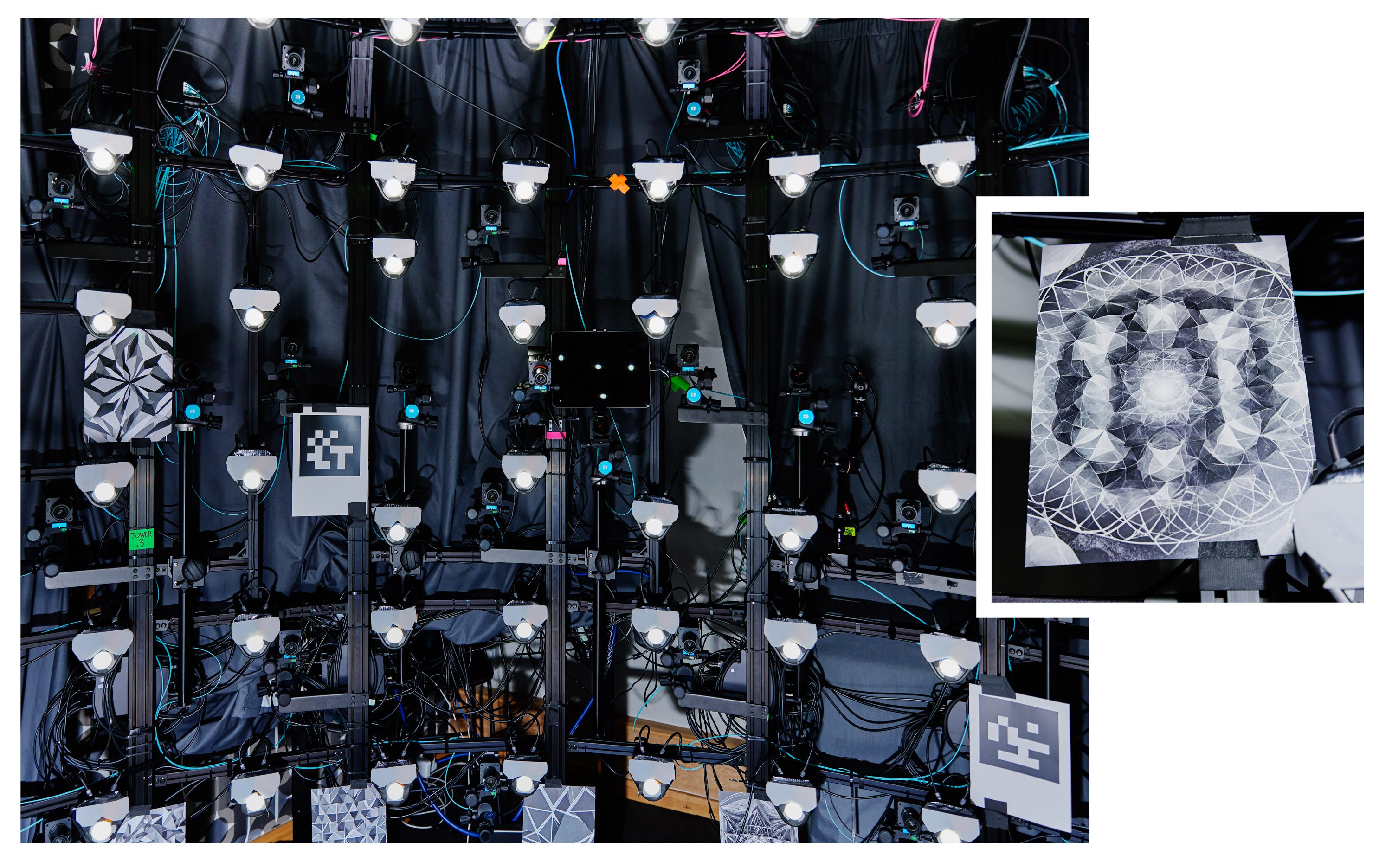
 “” class=”wp-image-1091775″ srcset=”https://wp.technologyreview.com/wp-content/uploads/2024/04/David_Vintiner__A7A0695.jpg 3000w, https://wp.technologyreview.com/wp-content/uploads/2024/04/David_Vintiner__A7A0695.jpg?resize=300,232 300w, https://wp.technologyreview.com/wp-content/uploads/2024/04/David_Vintiner__A7A0695.jpg?resize=768,593 768w, https://wp.technologyreview.com/wp-content/uploads/2024/04/David_Vintiner__A7A0695.jpg?resize=1536,1187 1536w, https://wp.technologyreview.com/wp-content/uploads/2024/04/David_Vintiner__A7A0695.jpg?resize=2048,1582 2048w” sizes=”(max-width: 3000px) 100vw, 3000px” />