A plan to make drugs in orbit is going commercial

<div data-chronoton-summary="

  • A big deal: Varda Space Industries says it has signed a pharmaceutical company as a commercial customer, marking what could be a landmark moment for in-orbit manufacturing.
  • Space as a lab: The bet is that microgravity causes drug molecules to crystallize into atomic arrangements impossible on Earth, potentially unlocking new versions of existing medicines.
  • Economics favor drugs: At $7,000 per kilogram to reach orbit, space manufacturing is impractical for most industries — but blockbuster drugs can be worth over $100 million per kilogram, making them a rare exception to the brutal math of rocket launches.
  • Still more experiment than factory: Despite the excitement, no product has ever been manufactured in space, brought back, and sold on Earth.

” data-chronoton-post-id=”1137153″ data-chronoton-expand-collapse=”1″ data-chronoton-analytics-enabled=”1″>

Varda Space Industries, a startup that’s been pitching its ability to perform drug experiments in space, says it has signed up the pharmaceutical company United Therapeutics in what may be remembered as a notable step toward in-orbit manufacturing.

The idea of building things in outer space for use on Earth has so far been explored mostly on board the International Space Station, and only in small-scale experiments backed by governments.

But Varda, based in El Segundo, California, is now telling drug companies it has a practical, and repeatable, way to produce novel molecules in microgravity. 

“This is the first commercial path to products made in space,” says Michael Reilly, Varda’s chief strategy officer.

The scientific idea is that chemical mixtures have different properties under weightless conditions. For instance, water will hang together in a wiggly sphere, since without gravity, surface tension is the strongest force present.

The plan is to launch versions of United Therapeutics’ drugs into orbit, where they can be allowed to form solid crystals. The hope is that in microgravity, they’ll take on atomic arrangements not seen on Earth, possibly leading to new versions with improved stability or other valuable properties.

United is led by CEO Martine Rothblatt, who worked on early telecommunications satellites. Since then, she’s built a multibillion-dollar health franchise with a succession of drugs to treat a lung disease called pulmonary arterial hypertension, which her daughter suffers from, and a subsidiary developing genetically modified pigs as a source of organs for transplantation.

Rothblatt says space could be the next step if orbital conditions permit United to identify “even more amazing” versions of its drugs.

Space to reformulate

Pharmaceutical companies often try to keep their blockbuster franchises alive by creating improved versions of drugs or reformulating them—for example, making the switch from a pill to an inhaled version, as United has done with some of its products. Doing so can keep imitators at bay and create extra decades of patent protection.

Assisting drugmakers are specialist companies, such as Halozyme and MannKind, that earn profits by helping to reformulate other companies’ drugs, often taking a royalty on future sales.

That’s the business Varda has been trying to break into—by using excursions into space instead of nebulizers, patches, or nanoparticles. The company was formed in 2021 by Delian Asparouhov, a partner at Peter Thiel’s Founders Fund, along with Will Bruey, a former avionics engineer with Elon Musk’s SpaceX who is now Varda’s CEO.

The pair’s bet is that space manufacturing will become viable once rocket launches become frequent enough—and cheap enough—to support a business model in which raw materials are sent into orbit, processed, and then returned to Earth in a new form.

And that’s starting to happen. To get into space, Varda has been purchasing rides from SpaceX—which now launches a rocket every two or three days, usually a reusable Falcon 9. 

Those rockets have a nose cone, or payload fairing, about the size of a moving truck that gets filled with satellites or instruments, which are then released into orbit.

Starting in 2023, Varda began sending up small satellites that have a boulder-size capsule attached. The capsule contains equipment to carry out experiments, and it can detach and fall back to Earth, entering the atmosphere at a speed of around Mach 25 before slowing via air resistance and eventually drifting to land with a parachute. (Varda lands its craft in the Australian outback.)

That speedy reentry has also drawn interest from the US military, including the Air Force, which has paid Varda to fly instruments and take measurements relevant to hypersonic missile technology. Of the six craft Varda has paid to put into orbit so far, half have been dedicated to military research and half carried drug-related demonstrations. 

At Varda, such “dual use” of technology is accepted as part of being in the space business, which remains reliant on government support. The company’s founders say Varda may be the only company that employs hypersonic engineers and pharmaceutical chemists under the same roof.

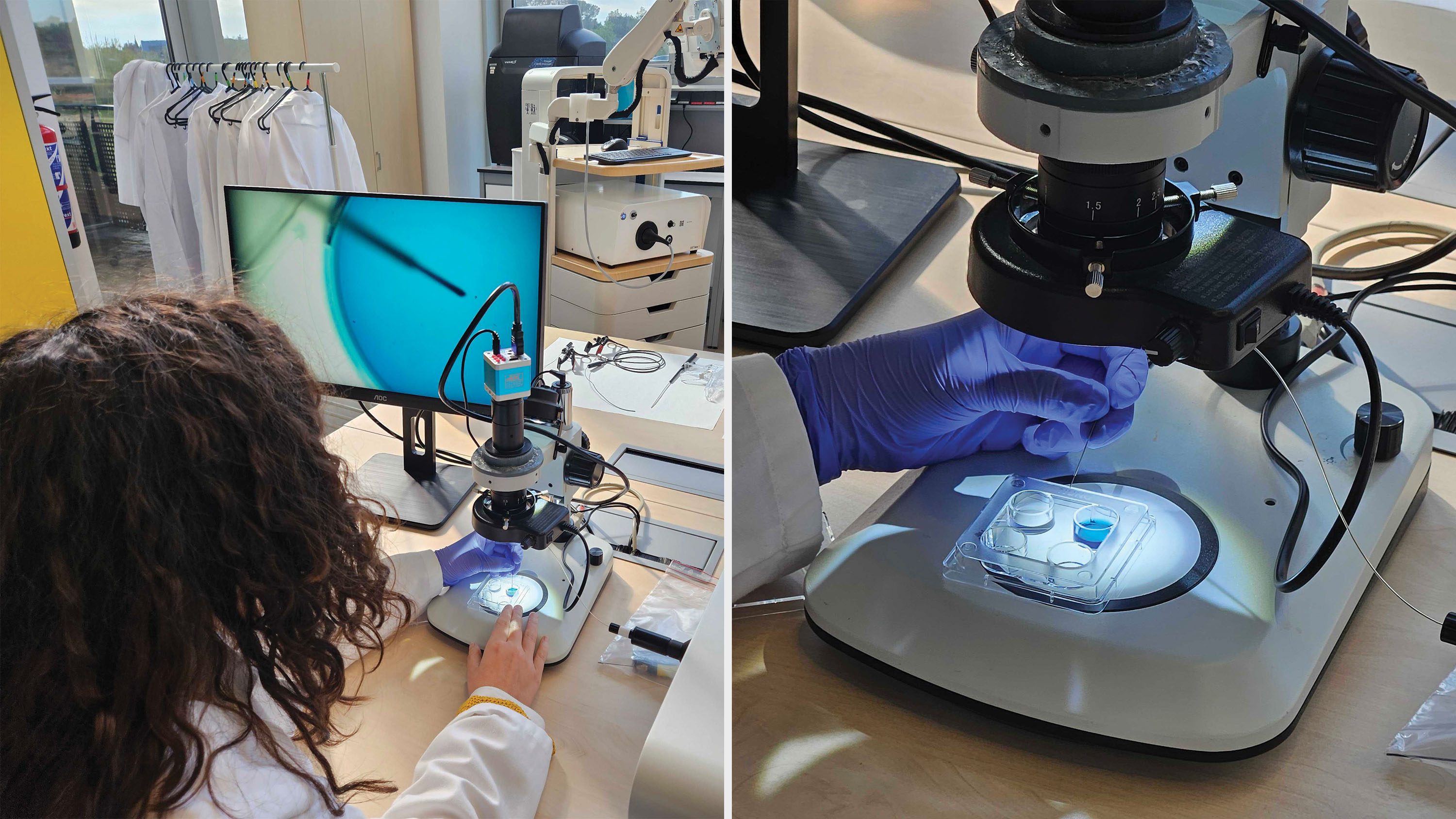
At Varda’s headquarters, drug samples are loaded into a spinning arm that creates extra-high g-forces. While that’s the opposite of microgravity, increased weight can provide clues into whether a drug will act differently under new conditions.
COURTESY VARDA

Launching industries

Actual space manufacturing still remains mostly an aspirational project. In 2021, Jeff Bezos, after his first trip aloft in a rocket, suggested that polluting industries should be moved beyond the atmosphere. “We need to take all heavy industry, all polluting industry, and move it into space. And keep Earth as this beautiful gem of a planet that it is,” he told MSNBC.

Weight is the big obstacle to such dreams. It still costs around $7,000 to launch a single kilogram of payload into orbit, which makes it impractical to, say, send cotton into space to be dyed there, or even to launch the acids and solvents needed to make a semiconductor chip.

But drugs may be among the few exceptions to this economic rule, since pound for pound, they can be as valuable as rare radioactive isotopes and fine-cut diamonds.

For instance, just one kilogram of the weight-loss drug Ozempic is worth more than $100 million at retail. (The reason your Ozempic bill is only $1,000 a month is that minute quantities of the active ingredient are present in the shots.)

That’s why Varda thinks it may eventually be able to manufacture drugs in orbit. However, its effort with United is more of a flying experiment to learn whether the company’s lung medicines will crystallize differently in microgravity.  

The terms of the deal between Varda and United aren’t public, and the companies haven’t said which specific drugs the collaboration will study. But Rothblatt did confirm that United is paying Varda to help it identify new crystal forms of its drugs (also called polymorphs), which it hopes could have improved properties.

“One has to do the experiment to find out if that is so. The first part of the experiment is to see what polymorphs of these molecules can be made without the influence of gravity,” she says. “Then, once we have those polymorphs, we will test them.” 

There is good evidence that crystals form differently in space. For instance, in 2017 the pharmaceutical giant Merck sent samples of its cancer immunotherapy drug Keytruda to the International Space Station, where it was found to form crystals of a single size. On Earth, the drug tended to form two different sizes at once.

That experiment offered clues for how to formulate the drug as a shot instead of administering it intravenously. Still, when Merck introduced a Keytruda injection last year, it ended up using a different approach. That means there’s still no straight-line connection between orbital discoveries and any drug here on Earth. Actual space factories are another step further from reality. 

“We’ve been learning from space for years, but I can’t name anything manufactured in space, brought down to Earth, and sold,” says Reilly. “So that is a first—or it will be a first.”

Reilly says that Varda anticipates launching United Therapeutics’ drugs into orbit sometime early next year. 

Here’s how technology transformed babymaking

Technology is changing the way we make babies. The pioneering work of the scientists who invented IVF led to the birth of the first “test tube baby” in 1978. We’ve come a long, long way since then.

This week, I’ve been working on a piece about the cutting edge of IVF technologies and what’s coming next. Think AI and robots and, potentially, gene-edited embryos.

My reporting has also made me think about just how much progress has been made in the last five decades. Clinicians have improved hormonal treatments. Embryologists have devised ways to culture embryos in the lab for longer. IVF clinics today offer multiple genetic tests for embryos.

In recent years, we’ve had reports of babies born with DNA from three people, babies born following “IVF on wheels,” babies born from decades-old embryos, and even babies “conceived” with the aid of a sperm-injecting robot.

The technology has also had a huge social impact. It has allowed for changes in the structure of families and provided more reproductive choices for would-be parents. So this week, let’s consider the technologies that have transformed babymaking.

Alan Penzias, a reproductive endocrinologist at Boston IVF, has been working in IVF since the early 1990s. In those days, his lab at Yale would collect a person’s eggs, fertilize them, and culture any resulting embryos for two days, until the embryos had two or four cells.

The embryos couldn’t survive any longer outside a body, so they’d be transferred to the uterus at that point. All of them. Even if there were, say, five embryos in total. Typical healthy patients could expect a live birth rate of 12% to 15%, he says.

Then Penzias heard that other teams were managing to culture embryos for three days. “We thought, No, that’s not possible,” he recalls. He learned that scientists had achieved this by tinkering with the culture medium—the nutrient-rich fluid the embryos are grown in.

Those three-day embryos, which had around six to 10 cells, seemed to have a better chance of resulting in a live birth. The teams culturing embryos for longer saw their success rates climb to 25% among similar patient groups, says Penzias. Again, he couldn’t believe it. “We thought they were making it up,” he says.

In the years since, teams have made more improvements to culture medium. Today, most IVF embryos are cultured for five or six days—a point at which they have 80 to 100 cells. The culturing process can act a little like a stress test—the embryos that make it to day six are generally more likely to go all the way and develop into a healthy baby.

Over the same period, advances in other technologies have opened up the options for what we can do with those embryos. Scientists learned they were able to freeze embryos and use them at a later date. A little over a decade ago, clinics shifted to a “vitrification” approach that rapidly cools the embryos to a glassy state. Vitrified embryos are more likely to survive freezing and thawing, so this approach quickly caught on.

As a result, doctors no longer needed to transfer multiple embryos at once. This made it less likely that patients would have twins or triplets, which can increase the risk of pregnancy complications.

Vitrification has also made IVF safer in other ways, including by affording patients a bit of time between fertility treatments. The hormonal treatments used in the first phase of IVF are designed to increase the production of mature eggs that can be collected. These treatments carry a small risk of a condition called ovarian hyperstimulation syndrome (OHSS), which in rare cases can be life-threatening. The ability to freeze all your embryos and use them at a later date is thought to give the body a chance to recover from hormonal treatment and reduces the risk of OHSS.

And because clinics are now able to culture embryos for up to a week, they can take a few of the 100 or so cells and send them for genetic testing before freezing the embryos. People undergoing IVF can get genetic readouts of all the embryos before deciding which to implant. (It is worth noting, however, that these testing technologies are not perfect.)

“Those are really radical changes, and we take them for granted,” says Penzias.

These technologies have also changed the function of IVF. What was once a treatment for infertility is now used to preserve fertility. People who want to delay parenthood can opt to freeze their eggs or embryos and use them later. They might opt to transfer one embryo in a year’s time and a second several years later. “We’ve been able to empower women to be able to have much more reproductive choice and get more reproductive mileage from a single IVF cycle,” says Penzias.

People who are about to undergo cancer treatments that might damage the testes or ovaries can opt to store their eggs or sperm ahead of time, too. Scientists have even been able to preserve pieces of ovarian and testicular tissue and reimplant them later, enabling recipients to have healthy babies.

Today, more people than ever have access to safe IVF options that offer multiple paths to parenthood. Those options look set to expand. But if you want to find out more about the AI and IVF robots, you’ll have to read this week’s story, here!

This article first appeared in The Checkup, MIT Technology Review’s weekly biotech newsletter. To receive it in your inbox every Thursday, and read articles like this first, sign up here.

Here’s what you need to know about the cruise ship hantavirus outbreak

MIT Technology Review Explains: Let our writers untangle the complex, messy world of technology to help you understand what’s coming next. You can read more from the series here.

Eight passengers aboard a Dutch-flagged cruise ship have contracted a type of hantavirus, a rare virus transmitted by rats. Three of them have died. As the ship prepares to dock in the Canary Islands, plans are being finalized to let the remaining passengers and crew disembark safely.

The virus in question appears to have a high fatality rate. Read on for answers to the big questions surrounding the outbreak—and to hear why health experts don’t expect a rerun of the covid-19 pandemic.

What is hantavirus?

Hantaviruses are a group of viruses that typically infect rodents but can be transmitted to humans through exposure to the animals or their droppings, urine, or saliva. The viruses don’t seem to cause illness in rodents, but they can make people very unwell. The symptoms can depend on the type of hantavirus a person has been exposed to. Varieties found in the Americas can cause hantavirus cardiopulmonary syndrome, which affects the lungs and heart and has a fatality rate of up to 50%.

That condition made headlines last year when it caused the death of pianist Betsy Arakawa, the wife of actor Gene Hackman

How many cases have there been so far?

On April 6, a man aboard the MV Hondius developed respiratory symptoms. He became very unwell and died just five days later. His wife, who left the ship at the island of Saint Helena, also developed symptoms. Her health deteriorated during a flight to Johannesburg, South Africa, and she died the following day, on April 26. South Africa’s National Institute of Communicable Diseases tested samples taken from the woman and confirmed that she had hantavirus.

A third person aboard the ship, who developed symptoms on April 28, died on May 2. Four other passengers who became ill were evacuated—one to South Africa and three to the Netherlands.

An eighth person had disembarked in Saint Helena and reported similar symptoms once he was in Zurich, Switzerland. A team at Geneva University Hospitals confirmed that he had become ill from the Andes virus—a form of hantavirus that can be spread between people.

Could this be the start of the next pandemic?

Health experts don’t believe so. They stress that the situation is nothing like the one the coronavirus that causes covid-19 presented in 2020. For a start, the Andes virus is not a mysterious new virus—scientists already have an understanding of it, and Argentina is sharing diagnostic kits it has already developed.

The virus also doesn’t spread in the same way. Officials at the World Health Organization emphasized that the spread of hantavirus requires close contact—the kind a person might have with a partner, household member, or medical caregiver.

The cruise ship outbreak represents “a specific confined setting where people are interacting in a prolonged close contact,” Abdirahman Mahamud, the alert and response director for the WHO’s health emergency program, said at a press event on Thursday. “With the experience our member states have, and the actions they have taken, we believe that this will not lead to a subsequent chain of transmission.”

What about the rest of the people onboard the ship?

All the remaining passengers have been asked to stay in their cabins, which the WHO says are being disinfected. Doctors and health professionals from the WHO and the European Center for Disease Prevention and Control have boarded the ship and are assessing everyone on board.

So far, no one else on board has developed symptoms, Maria Van Kerkhove, WHO acting director for epidemic and pandemic management, said at the press event. That’s “a good sign,” she said, but she added that the Andes virus has a long incubation period (around six weeks). Passengers are being advised to wear a medical mask when they leave their rooms.

At the same event, WHO director general Tedros Adhanom Ghebreyesus said he was in regular contact with the ship’s captain, who was reporting that “morale had increased significantly” since the ship started its journey to the Canary Islands.

What do we know about the Andes virus?

The Andes virus is the only hantavirus that is known to be transmitted between people. That transmission seems to rely on prolonged, intimate contact.

There was an Andes virus outbreak in Argentina around eight years ago. Between November 2018 and February 2019, there were 34 confirmed cases of infection, and 11 deaths. That outbreak was triggered when a person with symptoms attended a social gathering, said Tedros. “We are in a similar situation right now,” he said. “A cluster in a confined space with close contact.”

The fact that the 2018 outbreak was limited to 34 cases should be somewhat reassuring, he implied. “We believe this will be a limited outbreak if the public health measures are implemented and solidarity is shown across all countries,” he said.

How is hantavirus treated?

Unfortunately, we don’t have any specific antiviral treatments or vaccines for hantavirus. The WHO recommends early intensive care for people who develop symptoms. “This can save lives,” Anaïs Legand, WHO technical lead on viral hemorrhagic fevers, said on Thursday.

How did people get infected in the first place?

We don’t yet have an answer to that. But we do know that the couple who died had traveled through Argentina, Chile, and Uruguay on a birdwatching trip before they boarded the ship. That trip included visits to areas where species of rats that carry the Andes virus are known to live. The WHO is working with authorities in Argentina to try to retrace the couple’s movements on that trip.

Has the virus spread beyond the ship?

We don’t yet know for sure. The WHO is receiving reports of “potential suspect cases,” Van Kerkhove said at the Thursday briefing. Some of them have links to the ship or its passengers. Each “alert” will be followed up by health authorities in the relevant country, she said.

Has the US withdrawal from WHO affected anything?

Five US states have said they are monitoring US nationals who have disembarked from the ship. WHO officials are stressing that they are still sharing technical information with the US Centers for Disease Control and Prevention. “Things are … as they used to be,” Tedros said. “WHO’s mission is to help the world to be safe … and we want the American people to be safe as well.”

But it’s worth noting that cuts made by the Trump administration aren’t exactly putting the US in a good position for events like these. Last year, all full-time employees in the CDC’s Vessel Sanitation Program—which helps prevent and control illness outbreaks on cruise ships—were laid off. Further cuts to the CDC have left public health experts worried about how ill prepared the US is to deal with future disease outbreaks.

What will happen next?

Any suspected cases will be monitored by health authorities. Passengers are due to disembark in Tenerife in the Canary Islands on Sunday, May 10, and the WHO has said it will work with the Spanish government to ensure that the risk to residents remains low and that the passengers are treated with dignity and respect.

In the meantime, scientists are working to fully sequence the genome of the virus from patient samples. They want to find out if it is different from the viruses involved in the previous cases. “So far, we haven’t seen anything unusual,” said Van Kerkhove.

What’s next for IVF

<div data-chronoton-summary="

  • Helping embryos stick: Even healthy-looking embryos only implant 40–60% of the time. Researchers in Spain are trialing a device that physically injects embryos directly into the uterine lining at the press of a button.
  • AI and robots are taking over the lab: Automated systems can now select sperm, fertilize eggs, and culture embryos without human hands. At least 19 children have already been born through fully automated IVF.
  • Genetic testing is getting complicated: Standard embryo screening helps reduce miscarriage, but newer tests claiming to predict IQ or height are gaining ground in the US—and making many fertility doctors deeply uncomfortable.
  • Gene editing is quietly creeping back: Years after He Jiankui went to prison for editing human embryos, startups are revisiting CRISPR as a way to prevent serious inherited disease—raising hopes, and familiar fears about a slippery slope.

” data-chronoton-post-id=”1136946″ data-chronoton-expand-collapse=”1″ data-chronoton-analytics-enabled=”1″>

MIT Technology Review’s What’s Next series looks across industries, trends, and technologies to give you a first look at the future. You can read the rest of them here.

Forty-eight years ago this July, Louise Joy Brown became the world’s first person born with the help of in vitro fertilization. Millions more IVF babies have entered the world since then. And that’s partly thanks to advances in technology that have made IVF safer and more effective.

But it’s still not perfect. The process can be slow, painful, and expensive—and that’s for the lucky people who are able to access it in the first place. And by at least one measure, IVF success rates have been declining in recent years.

Reproduction is complex, and there’s a lot that embryologists and gynecologists still don’t know and can’t control. They don’t know why many healthy-looking embryos don’t “stick” in the uterus, for example. They don’t always have an explanation for why their patients can’t get pregnant. And they can’t always account for vast differences in IVF success rates between individuals and between fertility clinics.

Scientists are working on all those questions and more. They’re wrestling with complex ethical questions about how new genetic tools will be used to analyze or even alter embryos. Meanwhile, technologies designed to standardize treatment, eliminate human error, boost success rates, and make IVF more accessible are already beginning to usher in a new era for assisted reproduction—one aided by AI and robots.

1. Helping embryos stick

Some of those technologies are being developed at the Carlos Simon Foundation in Valencia, Spain. When I visited in March, researchers gave me a tour of the labs and showed me a device that had been used to keep a human uterus alive outside the body for the first time.

While some members of the team dream of building artificial uteruses that might one day be able to carry a fetus to term, they first want to use such devices to learn more about implantation—the moment at which a fertilized egg makes contact with the lining of the uterus, burrows inside, and essentially “hatches,” triggering the start of a pregnancy.

Despite decades of advances in IVF, that process is still poorly understood. Even healthy-looking embryos stick no more than 40% to 60% of the time.

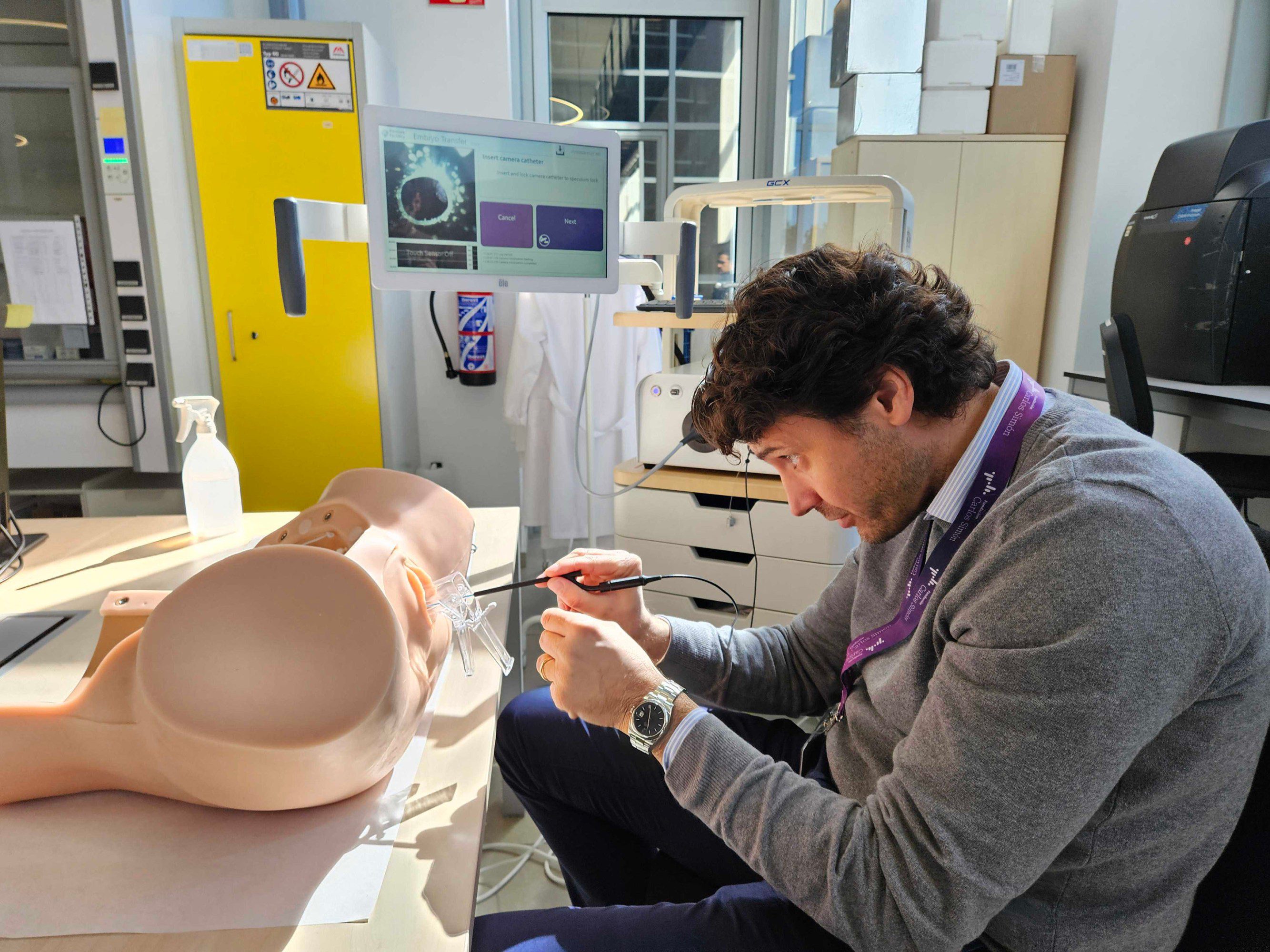
In IVF techniques used today, clinics can create early-stage embryos and wait until the uterus is deemed most receptive, but once they insert the embryo into the uterus, it’s on its own. Xavier Santamaria, senior clinical scientist at the Carlos Simon Foundation, and his colleagues are trialing a different approach. They’ve developed a device that, at the press of a button, injects the embryo into the uterine lining.

Scientists in Valencia showcase Transfer Direct.

JESS HAMZELOU / MITTR

In a demonstration I watched with a prototype, Santamaria picked up his speculum and turned to face the vaginal opening of his “patient,” which in this case was just a model of the real thing—a plastic bottom with labia, a vagina, a uterus, and ovaries, two short stumps representing what would normally be a pair of legs held in stirrups.

He hunched over and peered inside. “Embryo,” he called. His colleague Maria Pardo, an embryologist, passed him a thin needle containing a mouse embryo she had recently collected from a petri dish.

Santamaria’s device allows for the embryo-containing needle to be connected to a delivery tube. This tube also has a camera, a light, and a sensor that lets the doctor know when the needle reaches the uterine lining. Once it has been fed into the uterus, the gynecologist can see the inside of the organ and direct the tube to the lining.

Scientists in Valencia showcase Transfer Direct.

JESS HAMZELOU / MITTR

“When everything is ready, you just press the button,” Santamaria said as he activated it using a foot pedal, allowing the embryo to be injected. “There it goes.”

The team has just started a trial of the device; so far, fewer than 10 women have undergone the procedure, and none of those have become pregnant. But foundation director Carlos Simon is hopeful, noting that the inventors of IVF had to perform over 160 cycles before Louise Brown was born (between 1969 and 1978, that team performed 457 cycles in 250 people, resulting in only two live births). “The trial is ongoing,” he says.

2. Picking the “best” eggs, sperm, and embryos

One long-running challenge of IVF has been selection. Say you manage to collect 10 eggs from one partner and a decent-looking semen sample from the other. How do you choose which cells to use? The same question comes up once the resulting embryos have been cultured in a dish for a few days: Which should you transfer to the uterus?

Traditionally, these judgments have been made by eye. Embryologists literally pick the ones that look the best in terms of their shape or, in the case of sperm, how they move. But scientists have been working on alternatives. And over the last decade or so, many have turned to genetic testing to hint at which embryos have the best chances of creating a healthy baby.

The most commonly used test is called PGT-A, which stands for preimplantation genetic testing for aneuploidy. Aneuploidy essentially means having an “incorrect” number of chromosomes, and it is thought that embryos with such characteristics are more likely to be lost through miscarriage or potentially develop into babies with genetic conditions.

Once embryologists have created embryos in the lab, they can pinch off a few cells and test them for aneuploidies. The tests are especially beneficial for women over the age of 38, says Alan Penzias, a reproductive endocrinologist at Boston IVF. “You start to see an improvement: more babies and fewer miscarriages,” he says. The tests can shorten the time to pregnancy.

This type of genetic testing is possible thanks to multiple advances in technology—not just in genomics, but also in the ability to keep embryos alive in a dish for five to six days and the technique of freezing embryos while the cells undergo testing and thawing them once the results are in. And it has become hugely popular—some clinics do PGT-A tests on all their embryos.

But PGT-A won’t give you a perfect readout of a future baby’s genetics, says Sonia Gayete-Lafuente, a reproductive endocrinologist at the Center for Human Reproduction in New York City. And some of the abnormalities might be able to self-correct with time. Gayete-Lafuente and her colleagues have transferred some of those “abnormal” embryos into patients’ uteruses and seen them develop into perfectly healthy children, she says.

Other forms of PGT are even more controversial. PGT-P tests are designed to predict an embryo’s chances of developing complex traits that rely on multiple genes, including medical disorders but also physical characteristics like height or cognitive factors like IQ. These tests are new, and they are illegal in some countries, including the UK. But they are gaining ground in the US. Nucleus Genomics—a company that invites customers to “have [their] best baby”—promises to predict traits running the gamut from eye color and intelligence to left-handedness and risk of Alzheimer’s.

When I asked IVF practitioners how they might respond if a patient asked for this service, most dodged the question and told me there’s not enough evidence that any of these tests actually work. They also cautioned that selecting for one trait might inadvertently introduce new risks. None seemed especially keen on the idea of using genetic testing for anything other than preventing serious disease.

3. Speeding things up with AI

Some seemed more excited about the potential for AI. After all, AI tools are generally good at recognizing patterns. Many researchers have attempted to train tools to spot healthy sperm, eggs, and embryos.

And they’ve had some success. A team at Columbia University Medical Center in New York has developed a device that uses AI to examine semen samples from men who have only tiny numbers of healthy sperm. An embryologist might struggle to find a single healthy sperm in such a sample. But the Sperm Tracking and Recovery (STAR) system can analyze over a million microscope images in an hour. It has already been used to create healthy embryos. The team behind the work announced the first pregnancy resulting from the treatment in November last year.

Other teams are using AI tools to advance IVF in more dramatic ways. Around a decade ago, a reproductive endocrinologist named Alejandro Chavez-Badiola began developing an AI tool trained to rank embryos, another to rank eggs, and another to select sperm. He recalls being struck by a realization that these tools were “the brains that have the potential to drive robots in the future,” he says.

4. Using robots to standardize IVF

In the early 2020s, Chavez-Badiola and his colleagues decided to combine technologies and develop an automated system for IVF. In theory, a robotic system loaded up with AI tools could undertake most of the steps required in the IVF process: selecting the eggs and sperm, fertilizing eggs to create embryos, culturing those embryos in a dish, and selecting the “best” one for transfer. Such a system could “do everything in a standard way” without ever getting tired, he says.

Chavez-Badiola, who is now founder and chief medical officer at Conceivable, started building prototypes by motorizing regular IVF equipment and connecting it to computers. He and his colleagues started testing their system with animal cells before eventually moving on to human ones. “We were able to prove that integrating robots to automate different steps in IVF is doable,” he says.

The device is now being used to prepare sperm and eggs and create embryos. At least 19 children have been born following the automated IVF. It is early days, but Chavez-Badiola is hoping that future iterations of the machine could each process thousands of IVF cycles in a year, potentially making the procedure more affordable and accessible.

Many in the field are excited about the potential for automated devices like Conceivable’s. “This is all time saved for the embryologists,” says Laura Rienzi, a clinical embryologist and scientific director of the IVIRMA network of fertility centers in Italy. She also hopes it will help standardize IVF treatments. “Automation [will allow for] every patient to be treated in the same way in every single lab in the world,” she says.

5. Controversial edits are on the table

There’s a catch, however: All these technologies rely on the availability of at least some healthy sperm, eggs, and embryos at the outset. Embryologists and IVF patients have to work with what they’ve got. And sometimes, what they’ve got won’t result in a healthy baby. 

That’s why some scientists are proposing a controversial idea: using gene-editing technologies like CRISPR to tinker with the genome of an IVF embryo before it is implanted. The biophysicist He Jiankui infamously took this approach to create embryos that resulted in the births of three children in the late 2010s. He was widely condemned by the scientific community and ultimately spent three years in a Chinese prison

His former romantic partner Cathy Tie, who now leads startup Origin Genomics, is pursuing the technology as a potential way to prevent serious disease in children. At a recent event held at the Hastings Center for Bioethics, Tie made the case for using embryo editing to prevent diseases like cystic fibrosis, Huntington’s, and sickle-cell.

It won’t be straightforward from a technical, legal, or ethical perspective. Diseases that are known to be caused by single-gene mutations are good first candidates, but as the Center for Human Reproduction’s Gayete-Lafuente points out, most diseases are much more complicated than that. “I wish we could understand the genetic basis of every disease to be able to prevent it,” she says. So far, we can’t. Besides, most diseases can be influenced by our diets, behaviors, and environments as well as our genes.

As things stand, no one knows if editing a human embryo to eliminate the risk of one disease might increase a future child’s risk of some other disorder. And some scientists worry that such edits might be a slippery slope to genetic enhancement or eugenics.

Rienzi hopes that the technology might be developed in a safe way with regulatory oversight, and only for a specific list of diseases. “It has to be within a legal context,” she says. “But to me, it’s a dream.”

In the meantime, the field looks set to keep transforming with the development of new technologies that are already creating healthy babies. Watch this space. 

Tailoring AI solutions for health care needs

The AI market is full of big promises of grand transformation. Health care is a prime target for those promises, beset as it is by financial pressures, labor shortages, and the growing burden of caring for an aging population. AI developers are targeting functions that vary widely, from curing cancer and performing surgery to streamlining routine administrative tasks.

The opportunity is genuine, but execution can be difficult. Numerous software vendors have tried to “fix” health care challenges but failed because they misunderstood the environment. “Health care is very complex,” says Steve Bethke, vice president of the solution developer market for Mayo Clinic Platform, which supports the buildout and deployment of digital solutions for health care companies through data-based insights and expert validation. “Solution developers must have a deep focus on clinical and technical capabilities, and then align their solutions to the relevant business impacts. If they miss any dimension, the solution will not be adopted or drive value.”

AI applications for health care are proliferating rapidly. The U.S. Food and Drug Administration has approved more than 1,300 AI-enabled medical devices, mostly for interpreting diagnostic images. More than half of these were approved in the past three years, with the earliest dating as far back as 1995. Non-radiological applications carry out tasks as diverse as tracking sleep apnea, analyzing heart rhythms, and planning orthopedic surgeries.

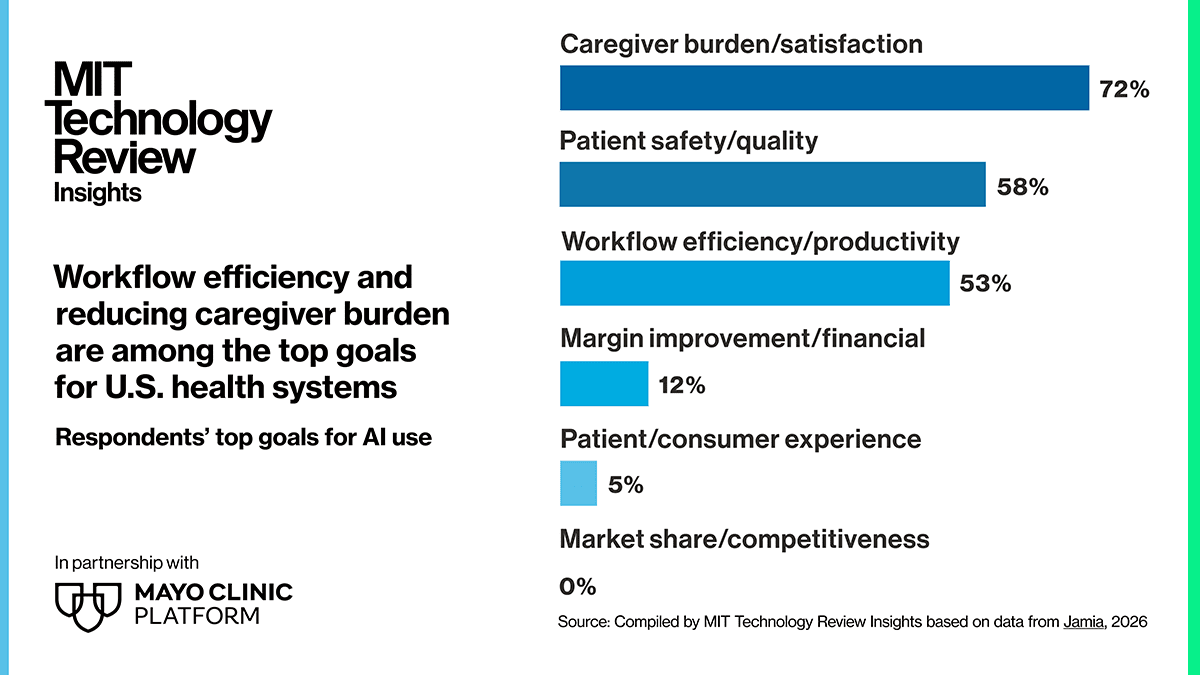
AI applications that do not count as medical devices— for example, those that handle scheduling and administrative tasks—are more difficult to track but are also rapidly increasing. AI can help coordinate complex tasks and workflows that are often conventionally managed by whiteboards and sticky notes. Such functions may well outstrip clinical uses in their impact on health systems. A recent survey of technology leaders found that 72% said their top priority for AI was reducing caregiver burden and improving caregiver satisfaction, while over half (53%) cited workflow efficiency and productivity.

Any health care-related application can potentially impact patient care, whether directly or indirectly, and AI apps that are poorly designed or inadequately trained and validated can put patients at risk. Providers recognize that risk: In the same survey, 77% said immature AI tools are a significant barrier to adoption. Regulators and lawmakers are also keeping an eye on the risks as development and adoption burgeon, though the U.S. regulatory picture is still in flux, as a 2024 report to Congress on AI in health care observes.

To tackle some of the technical challenges, many health care providers are partnering with application developers to build AI solutions. In a recent study, McKinsey found that 61% of health care organizations intend to pursue partnerships with third-party vendors to develop customized generative AI solutions as a primary strategy as opposed to building them in-house or buying off-the-shelf products.

But health care-specific AI applications must also be tailored to the nuanced clinical needs of medical providers as well as the complex business and regulatory considerations of the wider sector. This is where developers can benefit from working with a partner with a deep understanding of the health care environment to tailor applications to what providers want and need most. Doing so helps to position AI products for maximum impact and value, avoiding the pitfalls unique to the health care environment.

Download the report.

This content was produced by Insights, the custom content arm of MIT Technology Review. It was not written by MIT Technology Review’s editorial staff. It was researched, designed, and written by human writers, editors, analysts, and illustrators. This includes the writing of surveys and collection of data for surveys. AI tools that may have been used were limited to secondary production processes that passed thorough human review.

Health-care AI is here. We don’t know if it actually helps patients.

I don’t need to tell you that AI is everywhere.

Or that it is being used, increasingly, in hospitals. Doctors are using AI to help them with notetaking. AI-based tools are trawling through patient records, flagging people who may require certain support or treatments. They are also used to interpret medical exam results and X-rays.

A growing number of studies suggest that many of these tools can deliver accurate results. But there’s a bigger question here: Does using them actually translate into better health outcomes for patients?

We don’t yet have a good answer.

That’s what Jenna Wiens, a computer scientist at the University of Michigan, and Anna Goldenberg of the University of Toronto, argue in a paper published in the journal Nature Medicine this week.

Wiens tells me she has spent years investigating how AI might benefit health care. For the first decade of her career she tried to pitch the technology to clinicians. Over the last few years, she says, it’s as though “a switch flipped.” Health-care providers not only appear much more interested in the promise of these technologies, they have also begun rapidly deploying them.

The problem is that many providers aren’t rigorously assessing how well they actually work.

Take “ambient AI” tools, for example. Also known as AI scribes, they “listen” to conversations between doctors and patients, then transcribe and summarize them. Multiple tools are available, and they are already being widely adopted by health-care providers.

A few months ago, a staffer at a major New York medical center who develops AI tools for doctors told me that, anecdotally, medics are “overjoyed” by the technology—it allows them to focus all their attention on their patients during appointments, and it saves them from a lot of time-consuming paperwork. Early studies support these anecdotes and suggest that the tools can reduce clinician burnout.

That’s all well and good. But what about patient health outcomes? “[Researchers] have evaluated provider or clinician and patient satisfaction, but not really how these tools are affecting clinical decision-making,” says Wiens. “We just don’t know.”

The same holds true for other AI-based technologies used in health-care settings. Some are used to predict patients’ health trajectories, others to recommend treatments. They are designed to make health care more effective and efficient.

But even a tool that is “accurate” won’t necessarily improve health outcomes. AI might speed up the interpretation of a chest X-ray, for example. But how much will a doctor rely on its analysis? How will that tool affect the way a doctor interacts with patients or recommends treatment? And ultimately: What will this mean for those patients?

The answers to those questions might vary between hospitals or departments and could depend on clinical workflows, says Wiens. They might also differ between doctors at various stages of their careers.

Take the AI scribes, as another example. Some research on AI use in education suggests that such tools can impact the way people cognitively process information. Could they affect the way a doctor processes a patient’s information? Will the tools affect the way medical students think about patient data in a way that impacts care? These questions need to be explored, says Wiens. “We like things that save us time, but we have to think about the unintended consequences of this,” she says.

In a study published in January 2025, Paige Nong at the University of Minnesota and her colleagues found that around 65% of US hospitals used AI-assisted predictive tools. Only two-thirds of those hospitals evaluated their accuracy. Even fewer assessed them for bias.

The number of hospitals using these tools has probably increased since then, says Wiens. Those hospitals, or entities other than the companies developing the tools, need to evaluate how much they help in specific settings. There’s a possibility that they could leave patients worse off, although it’s more likely that AI tools just aren’t as beneficial as health-care providers might assume they are, says Wiens.

“I do believe in the potential of AI to really improve clinical care,” says Wiens, who stresses that she doesn’t want to stop the adoption of AI tools in health care. She just wants more information about how they are affecting people. “I have to believe that in the future it’s not all AI or no AI,” she says. “It’s somewhere in between.”

This article first appeared in The Checkup, MIT Technology Review’s weekly biotech newsletter. To receive it in your inbox every Thursday, and read articles like this first, sign up here.
 

Colossal Biosciences said it cloned red wolves. Is it for real?

If you want to capture something wolflike, it’s best to embark before dawn.

So on a morning this January, with the eastern horizon still pink-hued, I drove with two young scientists into a blanket of fog. Forty miles to the west, the industrial sprawl of Houston spawned a golden glow. Tanner Broussard’s old Toyota Tacoma bumped over the levee-top roads as killdeer, flushed from their rest, flew across the beams of his headlights. 

Broussard peered into the darkness, looking for traps. “I have one over here,” he said, slowing slightly. A master’s student at McNeese State University, he was quiet and contemplative, his bearded face half-hidden under a black ball cap. “Nothing on it,” he said, blandly. The truck rolled on.

Wolves and their relations—dogs, jackals, coyotes, and so on—are classed in the family Canidae, and the canid that dominated this landscape in eastern Texas was once the red wolf. But as soon as white settlers arrived on the continent, Canis rufus found itself under siege. The war on wolves “lasted 200 years,” federal researchers once put it, in a surprisingly evocative report. “The wolf lost.” By 1980, the red wolf was declared extinct in the wild, its population reduced to a small captive breeding population.

Still, for decades afterward, people noted that strange wolflike creatures persisted along the Gulf Coast. Finally, in 2018, scientists confirmed that some local coyotes were more than coyotes: They were taller, long-legged, their coats shaded with hints of cinnamon. These animals contained relict red wolf genes. They became known as the ghost wolves.

Broussard grew up in southwest Louisiana, watching coyotes trot across his parents’ ranch. The thrilling fact that these might have been not just coyotes but something more? That reset a rambling academic career. In 2023, Broussard had recently returned to college after a seven-year pause, and his budding obsession with wolves narrowed his focus. Before he finished his bachelor’s degree, he began to supply field data to a prominent conservation nonprofit.

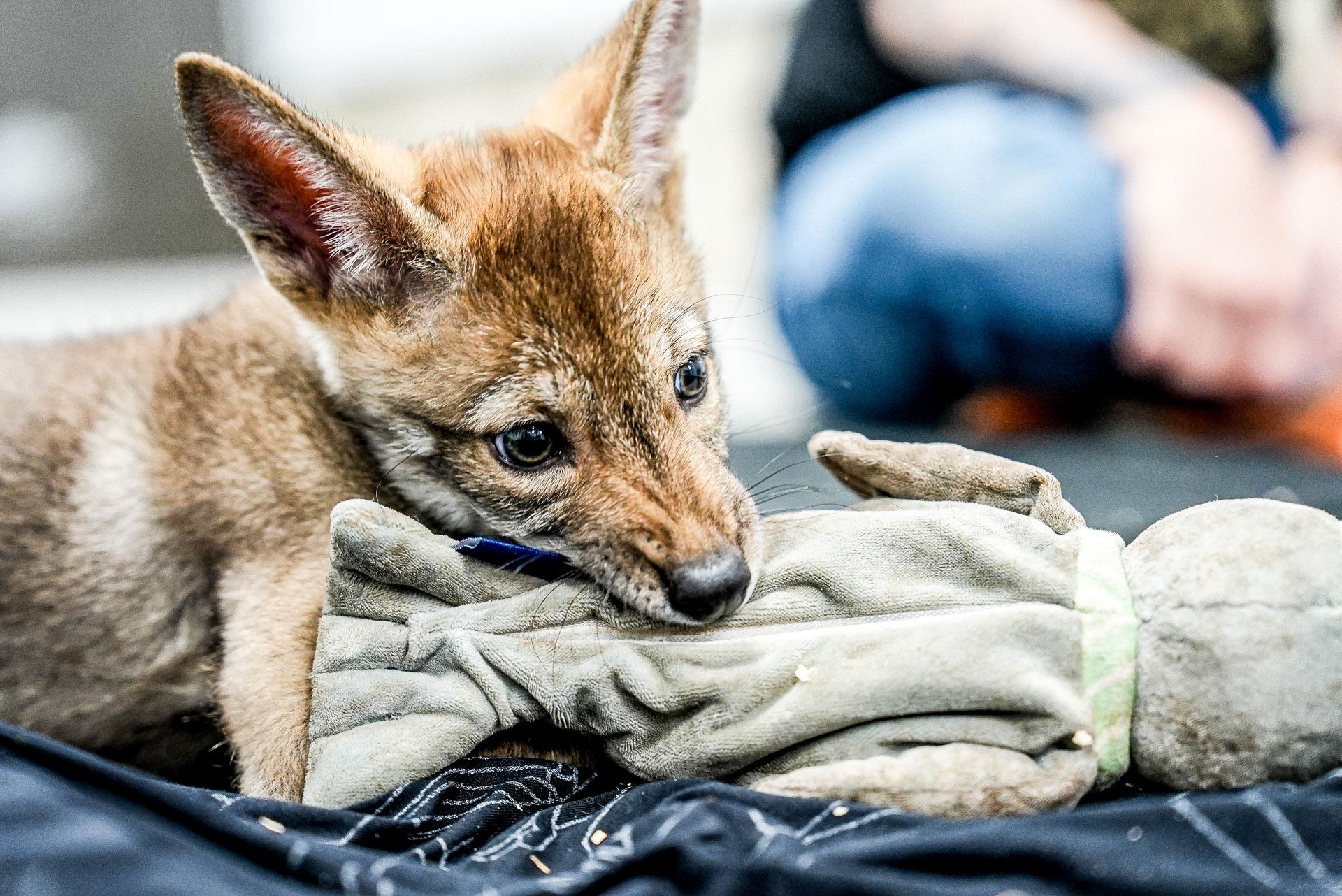
a wolf pup chews on a terrycloth toy
The American red wolf, Canis rufus, is the most endangered wolf species in the world. This pup is one of four animals said to be clones of this native North American species.
COURTESY OF COLOSSAL BIOSCIENCES

Then, last year, just before he began his master’s studies, he woke to disconcerting news. A startup called Colossal Biosciences claimed to have resuscitated the dire wolf, a large canid that went extinct more than 10,000 years ago. Pundits debated the utility of the project and whether the clones—technically, gray wolves with some genetic tweaks—could really be called dire wolves. But what mattered to Broussard was Colossal’s simultaneous announcement that it had cloned four red wolves.  

“That surprised pretty much everybody in the wolf community,” Broussard said as we toured the wildlife refuge where he’d set his traps. The Association of Zoos and Aquariums runs a program that sustains red wolves through captive breeding; its leadership had no idea a cloning project was underway. Nor did ecologist Joey Hinton, one of Broussard’s advisors, who had trapped the canids Colossal used to source the DNA for its clones. Some of Hinton’s former partners were collaborating with the company, but he didn’t know that clones were on the table.

There was already disagreement among scientists about the entire idea of de-extinction. Now Colossal had made these mystery clones, whose location was kept secret. Even the purpose of the clones was murky to some scientists; just how they might restore red wolf populations was unclear. 

Red wolves had always been a contentious species, hard for scientists to pin down. The red wolf research community was already marked by the inevitable interpersonal tensions of a small and passionate group. Now Colossal’s clones became one more lightning rod. Perhaps the most curious question, though, was whether the company had cloned red wolves at all. 


You can think of the red wolf as the wolf of the East—an apex predator that once roamed the forests and grasslands and marshes everywhere from Texas to Illinois to New York. Smaller than a gray wolf (though a good bit larger than a coyote), this was a sleek beast, with, according to one old field guide, a “cunning fox-like appearance”: long body, long legs; clearly built to run across long distances. Its coat was smooth and flat and came in many colors: a reddish tone that comes out in the right light, yes, but also, despite the name, white and gray and, in certain regions and populations, an ominous all black.

We know these details thanks to a few notes from early naturalists. As writer Andrew Moore writes in his new book, The Beasts of the East, by the time a mammalogist decided to class these eastern wolves as a standalone species in the 1930s, the red wolf had been extirpated from the East Coast and was rapidly dwindling across its range. Working with remnant skulls and other specimens, the mammalogist chose the name red wolf—which was later enshrined with the Latinate Canis rufus—because that’s what these wolves were called in the last place they survived. 

The looming extinction of the red wolf turned out to be a good thing for coyotes. Canis latrans is a distant relative of wolves that split away from a common ancestor thousands of years ago and might be considered, as one canid biologist put it to me, the “wolf of the Anthropocene.” Their smaller size means they need less food and can survive in smaller and more fragmented territory, the kind that modern humans tend to build. 

The last red wolves, which lived in Louisiana and Texas, decided a strange and smaller mate was preferable to no mate at all.

Red wolves had kept coyotes out of eastern America, outcompeting them for prey. Now, as the wolves declined, the coyotes began to slip in. The last red wolves, which lived in Louisiana and Texas, decided a strange and smaller mate was preferable to no mate at all. Soon the territory became a genetic jumble, home to both wolves and coyotes and hybrids that, after several generations of intermixing, came in every shade between. Scientists call such a population a “hybrid swarm,” and it poses a genetic threat to the declining species: As more coyotes poured east, and as all the canids kept interbreeding, there would be nothing that was “purely” wolf. 

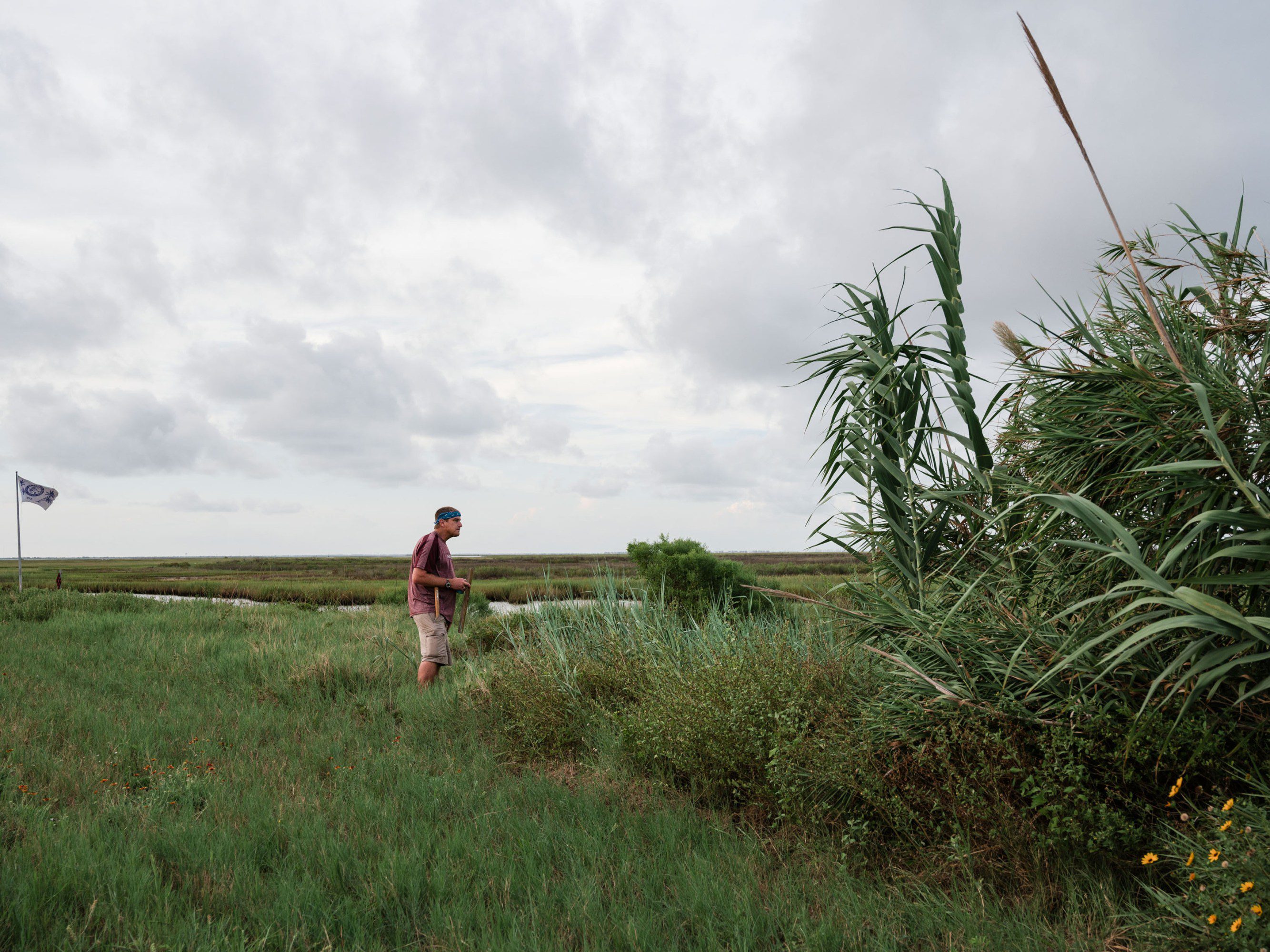
Ron Wooten surveys a location on the edge of Galveston Island State Park in Texas. In 2016, Wooten’s photographs of oversized local coyotes got the attention of Joey Hinton, then a postdoctoral researcher at the University of Georgia.
TRISTAN SPINSKI

For years, no one seemed to notice. Perhaps trappers in the region mistook the new hybrids for wolves—or were happy to take the higher bounty that a wolf pelt earned. Finally, though, by the 1960s, as the concept of endangered species first emerged, biologists began to worry for the disappearing wolf. 

The best solution they could come up with was a program of mass extermination. Over several years, trappers rounded up hundreds of canids in Texas and Louisiana. Those deemed true red wolves (on the basis of their howls and skull shape) were whisked away to breed in captivity. Most of the rest were euthanized. In 1980, the red wolf was declared extinct in the wild. To put it plainly: The red wolf was wiped out intentionally, in a roundabout effort to keep it alive.

Just 14 individuals survived this gauntlet; today’s wolves descend from 12 of those. They became the ark, the source material for the few hundred red wolves that live today. There are about 280 in the “Species Survival Plan” population, living in captivity, and another 30 or so that roam a federal refuge in coastal North Carolina, and that the government deems “nonessential” and “experimental.” According to the US Fish and Wildlife Service, to be classified as a representative of the protected entity known as Canis rufus, an animal must trace at least 87.5% of its lineage to the 12 founders. 

The scientist who led this trapping-and-breeding program understood that the federal government would be narrowing the red wolf’s gene pool precipitously—so much so that the result could be an entirely new species. None of those notably black wolves persisted in the new population, for example. But what other choice existed? A new kind of wolf, free of the taint of the invading coyote, seemed better than no wolf at all.


After I learned about Colossal’s clones, I decided to travel to eastern Texas. The clones were hidden away on an unnamed refuge, but on this coastline, I might be able to at least see the animals that provided their genetic material. I arrived in the small town of Winnie on a balmy afternoon in January and met up with Broussard and another graduate student, Patrick Cunningham, at a Tex-Mex joint to discuss the challenges of studying red wolves.

“We don’t have a good reference genome,” Cunningham said. We can collect DNA from the descendants of the 12 founders, but not from the countless wolves that had been killed. It’s difficult to extract usable DNA from old samples. So our picture of what the species used to look like is limited. 

Studies of the genes we do have, meanwhile, have proved controversial. When a Princeton geneticist named Bridgett vonHoldt dug into the genome of the Species Survival Plan population, she found little about their DNA that could set them apart from other wolflike American canids. In 2016, in a paper in Science Advances, vonHoldt and her coauthors wondered if there ever really was a separate southern wolf species. Perhaps the 12 founders were just coyotes injected with some smaller portion of wolf.

It’s long been clear that North America’s soup of Canis genes is something less like a family tree and more like a river—one that’s broken by islands and sandbars into many braided channels that split and merge and re-split.

Her paper called for complex new interpretations of the Endangered Species Act. We should, she wrote, focus less on species and more on the function a group of animals performs. The red wolves deserved protection, then, as creatures that filled the same role as truly endangered wolves and carried some of their genetics. Nonetheless, for Canis rufus, the timing of the paper was bad news.

The red wolves roaming that federal reserve in North Carolina are supposed to be a first step toward the species’ return to the wild. But some locals never liked the idea of living alongside wolves. By 2016, state officials had turned against the recovery program and were requesting its termination. The wild population, which had included as many as 120 a few years earlier, was falling. But the US Fish and Wildlife Service had paused further releases of wolves. Now a group of scientists, led by vonHoldt, was saying that the red wolf showed “a lack of unique ancestry.” Why spend money, some people wondered, on a species that does not exist? 

Part of the problem was that the concept of a “species” is less sturdy than your high school biology teacher might have led you to believe. The most familiar definition is that a species consists of animals that can produce fertile offspring. But that’s a rule various species of canids violate all the time; it’s long been clear that North America’s soup of Canis genes is something less like a family tree and more like a river—one that’s broken by islands and sandbars into many braided channels that split and merge and re-split.

VonHoldt suggested that the modern red wolf is a channel in that river, part wolf and part coyote, that appeared surprisingly recently. But a year after her study came out, other researchers claimed that her data, if interpreted differently, could suggest that the red wolf braid had emerged tens of thousands of years ago, meaning this was a species that had long been on its own evolutionary journey. 

These nuances were confusing for the policymakers who oversaw actual, living animals. “Congress was just like, ‘What is going on?’” Cunningham said. “‘Why is there not just a simple explanation for what this thing is?’”

Given the policy implications, the National Academies of Science, Engineering, and Medicine tasked a panel of scientists with finding that simple answer. Their report, published in 2019, declared that the red wolf is, by virtue of its appearance and seemingly long-standing isolated population, a species. As their study got underway, though, a new question was arising: What to make of the strange canids on the Gulf Coast, those today called the ghost wolves?


The path to that name began in 2008, when a photographer from Galveston Island, Texas, grew obsessed with the oversized local coyotes. He began to take photos of the packs, which he distributed to scientists, seeking answers: What were they? By 2016, the photos had reached Joey Hinton, then a postdoctoral researcher at the University of Georgia.

Hinton had spent more than a decade trapping wolves and coyotes in North Carolina, and his work has always focused on live animals, especially visual ways to distinguish red wolves and coyotes. So he was a good choice for helping the photographer, Ron Wooten, figure out the status of the canids. In his freezer Wooten also had tissue samples he’d collected from road-killed coyotes. These could be used by a geneticist to give a fuller picture of the canids’ ancestry. So vonHoldt was brought in too. The result was a 2018 paper, with Hinton as a coauthor, that identified the Galveston Island canids as at least part red wolf.

These canids were not, to be clear, actual red wolves; no canid on the Gulf Coast is descended from the government’s 12 canonical founders, so under current policy, none can be officially classified as a wolf. Subsequent studies have found that, on average, the ancestry of the region’s canids is less than half red wolf, and often far less. In scientific terms, the red wolf had introgressed into the Gulf Coast population—its genes had leaked across the species boundary and lodged themselves in a different population.

Hinton, vonHoldt, and their coauthors also noted the presence of what they called “ghost alleles”—DNA sequences unknown in any other named species. The Occam’s razor assumption was that, in these already wolfy coyotes, these sequences likely represented Canis rufus genetics that had not been captured in the sweep of the marsh that yielded the Species Survival Plan population. Since so much of the red wolf gene pool had been lost, these genes seemed to be a potential resource for the species—a way to expand its diversity. When the New York Times covered this discovery a few years later, the headline popularized the “ghost wolf” moniker that has proved so indelible. 

As it happened, a separate team, focused on canids in and around federally protected marsh in Louisiana, published a similar paper in 2018, at nearly the same time. The twin discoveries raised new questions—What should we make of these creatures, the latest branch in the canid river? What do they mean for the wolves in North Carolina?—and helped researchers secure new funding.

In 2020, vonHoldt and Kristin Brzeski, a former postdoc under vonHoldt and now a professor at Michigan Technological University, launched what they called the Gulf Coast Canine Project. Brzeski, who led the field work, hired Hinton to do much of the canid trapping and sample collection. In 2022, vonHoldt, Hinton, and Brzeski were all coauthors of another paper that identified even more red-wolf-descended canids in Louisiana and noted a positive correlation between red wolf ancestry and body mass—the more red wolf genes, the bigger the animal. The paper also suggested that given this newly discovered reservoir of red wolf DNA, “genomic technologies” could prove useful in the long-term survival of the species.

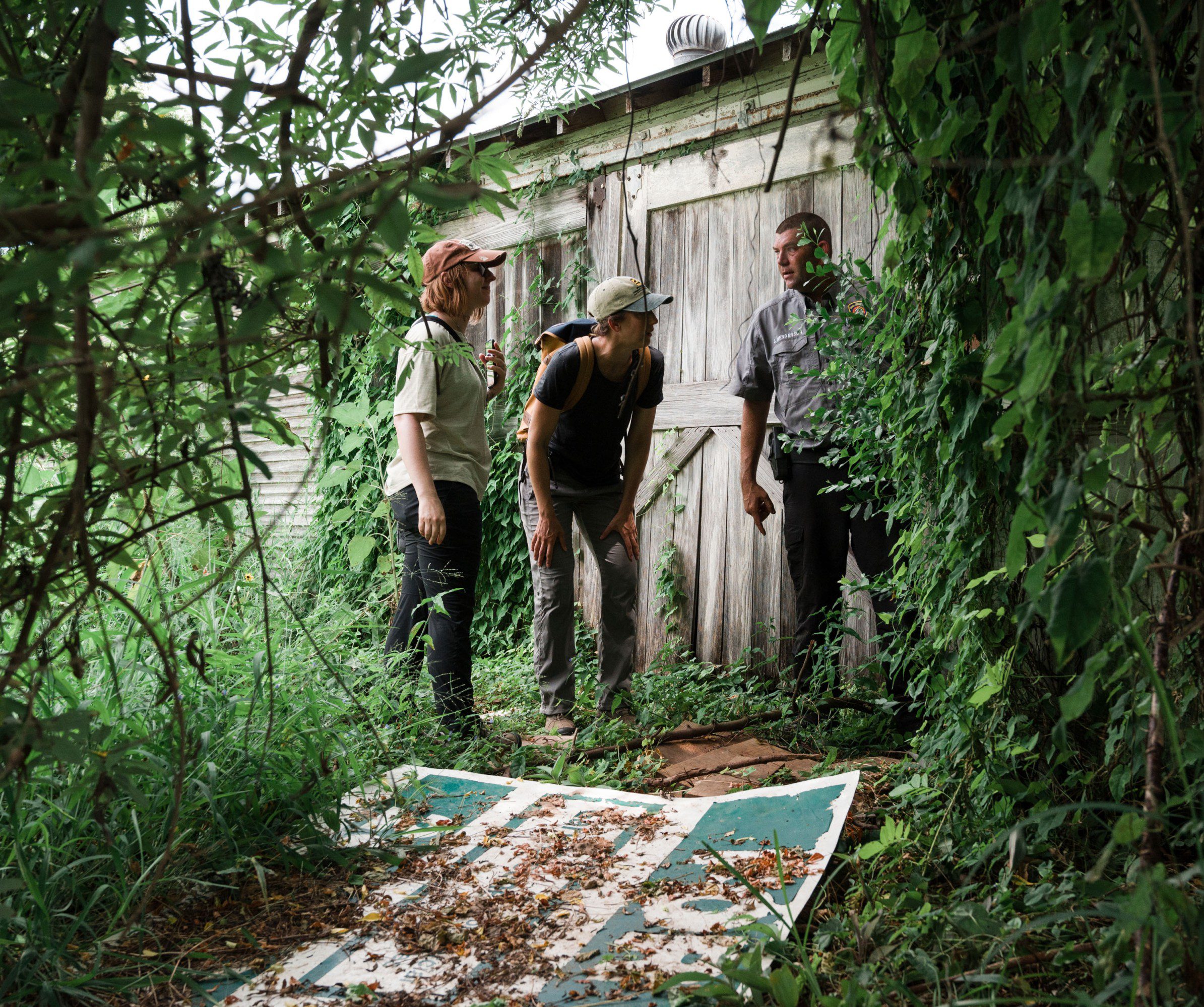
Bridgett vonHoldt (left) and Kristin Brzeski (center) visit a location where canids have been spotted with an animal control worker.
TRISTAN SPINSKI

VonHoldt and Brzeski eventually conceived of an ambitious project. They hoped that by carefully matching the most wolf-­descended canids and breeding them together, over three generations they’d increase the proportion of red wolf genes—de-introgression. “I’m expecting, based on these pairings of animals, that I can stitch together the puzzle pieces,” vonHoldt told me recently. “We are very likely to get puppies each generation that are higher and higher red wolf content”—enough wolf content, she hopes, to eventually win her permission to breed the resulting animals with the Species Survival Plan population of red wolves. They’d essentially be adding a new founder to the limited lineage.

Hinton told me he felt he’d been kept in the dark about the de-introgression idea. He was also worried, he says, to learn that Colossal Biosciences hovered in the background. (In a draft proposal for the project, vonHoldt indicated that Colossal would be in charge of “live capture.”) Hinton says he was not comfortable collecting materials for a for-profit company that has to keep its shareholders happy. 

Hinton says he reached out to state and federal officials and found they knew little about the project. (The US Fish and Wildlife Service declined to make anyone available for an interview for this story, and the Louisiana Department of Wildlife and Fisheries did not reply to requests for comment.) He knew the group’s next phone call would be difficult, and indeed it was. He wound up speaking one-on-one with vonHoldt for at least half an hour.

“We didn’t reach an agreement,” he says. After the call, he sent her a text: He was exiting the project. He believes that had Colossal not been involved, they’d all still be working as a team. Both vonHoldt and Brzeski declined to comment on what felt to them like a matter of interpersonal relationships rather than a scientific dispute. “There were challenges over time, and the tone and manner of the interactions became increasingly difficult to navigate productively,” Brzeski said in an email. 


Colossal was cofounded in 2021 by George Church, an eminent Harvard geneticist who, thanks to investors, could finally embark on a long-discussed dream. He wanted to make de-extinction a reality—using CRISPR gene-editing technology to, say, turn a modern elephant into something like the extinct woolly mammoth. The concept has drawn skepticism from the beginning—at best it would only be possible to make something like a woolly mammoth. Was there any point to that? Some scientists note that genes alone do not teach an animal how to exist in the world; indeed, since social structures affect how genes are expressed, an animal without parents may not effectively fill its ecological niche.

Less reproachable, though, was Colossal’s interest in partnering with scientists who, like vonHoldt and Brzeski, focus on extant species that are endangered. This gave more heft to Colossal’s gee-whiz de-extinction projects: They would, along the way, supply technology that could save our natural world.

For red wolves, such technologies could offer a quick way to expand the limited gene pool. Through genetic engineering, Colossal could take clones of the Gulf Coast canids and tune up the wolf, tune down the coyote. It would be a high-tech shortcut past vonHoldt and Brzeski’s careful breeding program. “You can do the same thing much more precisely, much more quickly, much more efficiently, in vitro,” says Matt James, Colossal’s chief animal officer and the executive director of the Colossal Foundation, the company’s nonprofit arm. VonHoldt notes that the old-fashioned approach, with breeding, means she has to take a few individual canids out of the wild, into captivity—never ideal but, in her view, a worthwhile price for progress. The advantage of cloning, which Colossal has managed to do with blood samples alone, is that the wild canid populations can be kept intact. 

VonHoldt has always been an advocate for wolves. Indeed, when she hypothesized that the red wolf had hybrid origins, in 2016, she’d framed it as an argument for protecting the gray wolf, which the federal government was considering removing from the Endangered Species List. (In short: If all wolves were one wolf, then it was undeniable that the species’ range had contracted precipitously.) But she’d grown frustrated with the federal government’s efforts to restore the red wolf, which after half a century had seen few meaningful successes, she says. 

VonHoldt joined Colossal’s scientific advisory board in 2023. “I love the bold, the shock and awe,” she told me, explaining her decision. She saw the fact that Colossal sparked controversy as an asset, given the problems she sees in conservation: “Get something out there. Start pushing buttons and start forcing these conversations,” she says. The red wolf was akin to a terminal patient who was ready to accept any and all therapies, however experimental. Why not embrace biotech? 

She also notes that the federal budget for endangered species conservation is incredibly limited. Rely only on that money and “we can kiss our world goodbye,” she said in an e-mail. The $100 million raised by the Colossal Foundation is essential, then, she says. As for the samples the team had collected on the Gulf Coast, she says, limited freezer space is often devoted to animals that are officially categorized as threatened or endangered, which the Gulf Coast canids are not. Colossal could take the samples, and the team passed them along to the company.

Dr. Joey Hinton
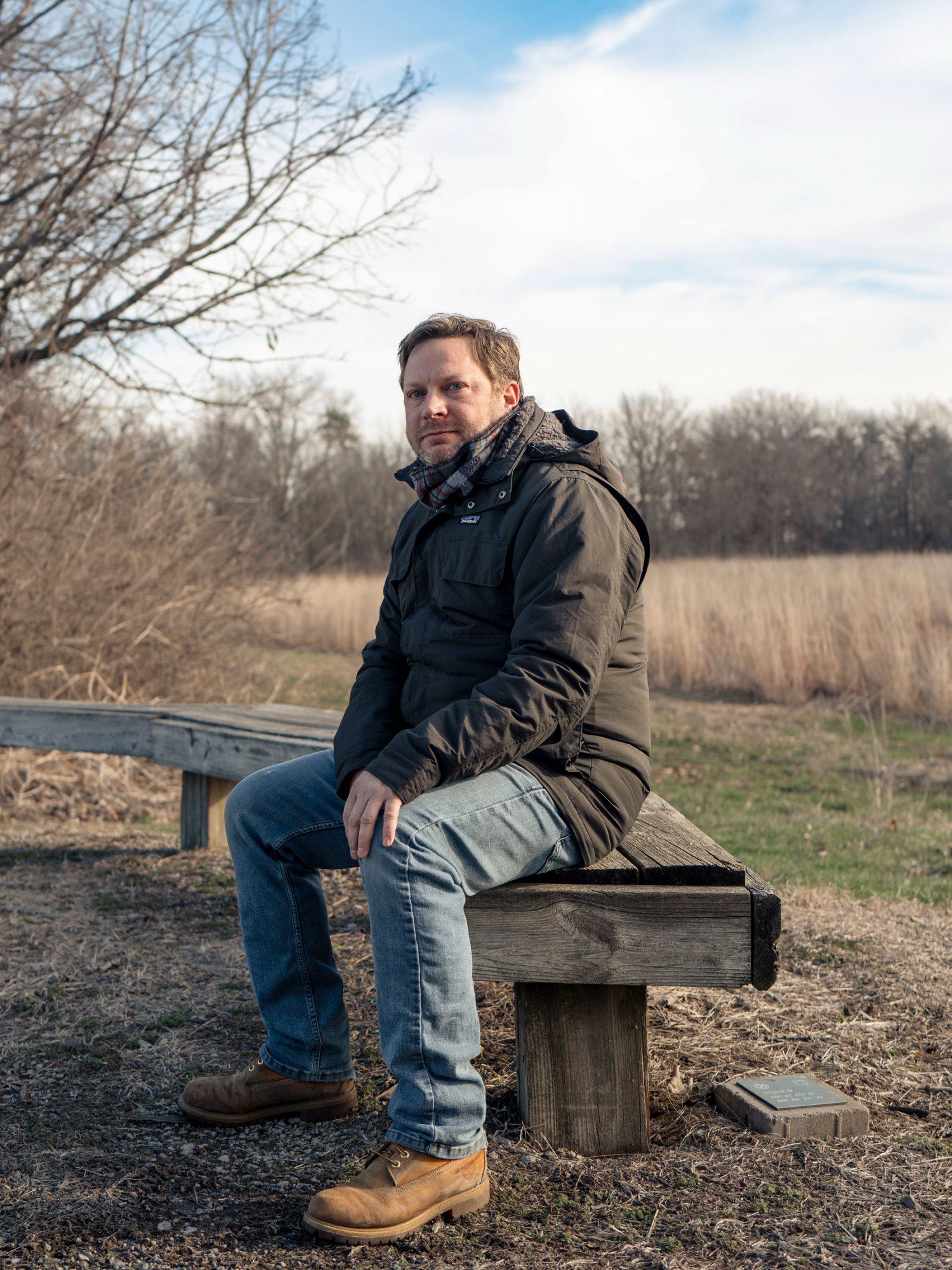
Ecologist Joey Hinton trapped the canids that Colossal Biosciences used to source the DNA for its clones. He dismisses the clones as a way for the company to earn headlines and attract funding.
RICH SAAL

It was Hinton—a source for a former story—who first alerted me to Colossal’s work on red wolves; he described vonHoldt and Brzeski’s de-introgression project, which won federal funding in late 2024, as nefarious-sounding work to “disappear” canids off the Gulf Coast. But he did not have all the details of the project, which had changed after he left the team. He suggested they’d be “just throwing animals together,” whereas vonHoldt described a careful program of observing the canids in the wild so she could determine which acted most wolflike, findings she’d cross-­reference with their genetic data.

 Colossal did not wind up participating in the de-­introgression project. But the company is doing work on the red wolf that ­vonHoldt views as complementary: Its scientists are assembling a “pangenome” of North American canids by studying samples pulled from museums, universities, zoos, and other institutions. This data set is expected to clarify both what genetic sequences are shared across the entire canid family and what snippets differ in certain populations. The hope is that this will provide a clearer picture of the red wolf in its early days, before the coyotes arrived and the gene pool narrowed. That might shift what Colossal’s James calls the government’s arbitrary definition of the red wolf, to encompass more of the species’ full former diversity. 

The pangenome, then, might allow vonHoldt’s de-­introgressed canids, descended from the Gulf coast canids, to qualify as actual red wolves. Indeed, James suggested to me that more information about historic red wolves might force the government to take a new look at the Gulf Coast canids; some individuals might have high enough red wolf ancestry to be classified as red wolves. (“That has management implications that terrify state and federal government,” he added.)

hair in Zip-Loc bags on a metal tray
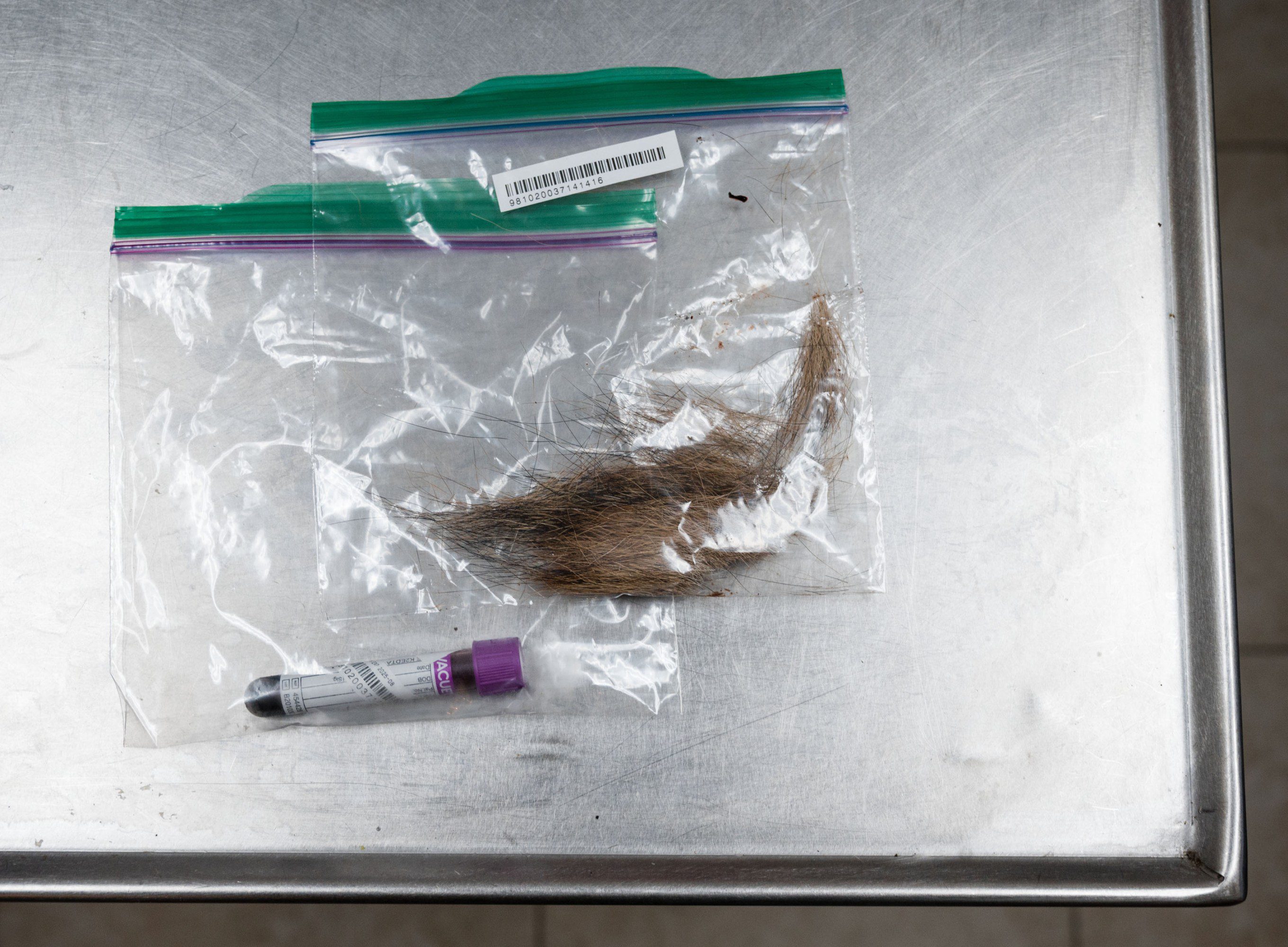
Blood and tissue samples collected by the Galveston Island Humane Society from canid roadkill will be shipped to Princeton University for DNA analysis.
TRISTAN SPINSKI

The purpose of vonHoldt’s de-introgression project is to bring back certain lost red wolf genes—to create a whole new wolf lineage. But she has also pushed against the idea of “genetic purity,” which she thinks limits what we protect with conservation laws; she told me emphasizing it reminds her of the human history of eugenics and “makes every part of my soul hurt.” She cares less about what species are out there, in the landscape, than what ecological function the animals play, and she sees coyotes and red wolves as closely related animals that may have a role to play in one another’s future survival.


As for Colossal’s clones, even vonHoldt seems to describe them as something less than a conservation breakthrough. They are a “proof of principle that we, collectively, as a scientific community, know how to do it,” she told me. If an urgent need arises to clone red wolves, the groundwork has been laid. 

Hinton, meanwhile, is one of several scientists I spoke with who were skeptical Colossal was doing good science, given that so much is conducted behind closed doors. He implied that the clones were nothing but an empty showpiece, a way to earn headlines and attract funders. “The work is anything but symbolic,” James responded via e-mail. “It expands the genetic toolkit available for critically endangered species, demonstrates scalable approaches to biodiversity restoration, and contributes directly to preserving imperiled lineages.” He noted that Colossal had intentionally decided to avoid the “snail’s pace” of the peer review process and suggested that the skepticism from scientists may actually be a “panicked response to being outpaced.”

Until some evidence confirms that the Gulf Coast canids—the source material for the clones—are red wolves, they can’t legally be classified as such for federal conservation purposes. Nonetheless, Colossal’s press release claimed that the company had “birthed two litters of cloned red wolves, the most critically endangered wolf in the world.” On the same day that press release dropped, Colossal’s CEO and cofounder, Ben Lamm, appeared on The Joe Rogan Experience and claimed that he had offered to create hundreds of red wolves for the federal government to use in recovery—for free! He was miffed when the government, under the Biden administration, replied that it wanted to spend several years and many millions of dollars to study the potential for cloning before it would take any action. (The company has gotten more traction with the Trump administration, Lamm said.)

When I first spoke to James at Colossal, he said that he was “cognizant” of the concerns over the names and labels and that the company’s own materials described the clones as “red ‘ghost’ wolves.” He suggested that if anyone assumed the clones were actual red wolves, that was because journalists had failed to grasp the nuances of the science. But this phrase appears so late in a long document that it was cut off in some versions. Later, over email, James indicated that further analysis had convinced him that what the company had created were red wolves, and that anyone who disagreed either could not grasp the science or is “so ideologically opposed to Colossal’s conservation revolution that they are willing to compromise their scientific integrity.”

VonHoldt has had her own issues with the company’s communications; she told me it was “stressful” when Lamm described the clones as red wolves—which, she notes, “federally, they’re not.” But she values the company’s work, she says, and “the thing that I value the most is shaking things up.” People are paying attention to red wolves. If it’s hard to decide what to call the animals on the Gulf Coast—where some heavily wolfy animals live alongside others that are more coyote—that’s just proof that our concept of a “species” does not capture the complex realities on the ground. 


In 2025, the same year as Colossal’s wolf announcement, Hinton launched the Texas-Louisiana Canid Project. He’s working in partnership with Broussard, the master’s student at McNeese, in slightly different territory from vonHoldt and Brzeski—and focusing more on the animals’ appearance and behavior than their genes. The Gulf Coast canids are stable and faring better than the North Carolina red wolves, and his hope is that if we learn why they’ve been successful for so many years, we might be able to help the official red wolf population, which is only just limping along. 

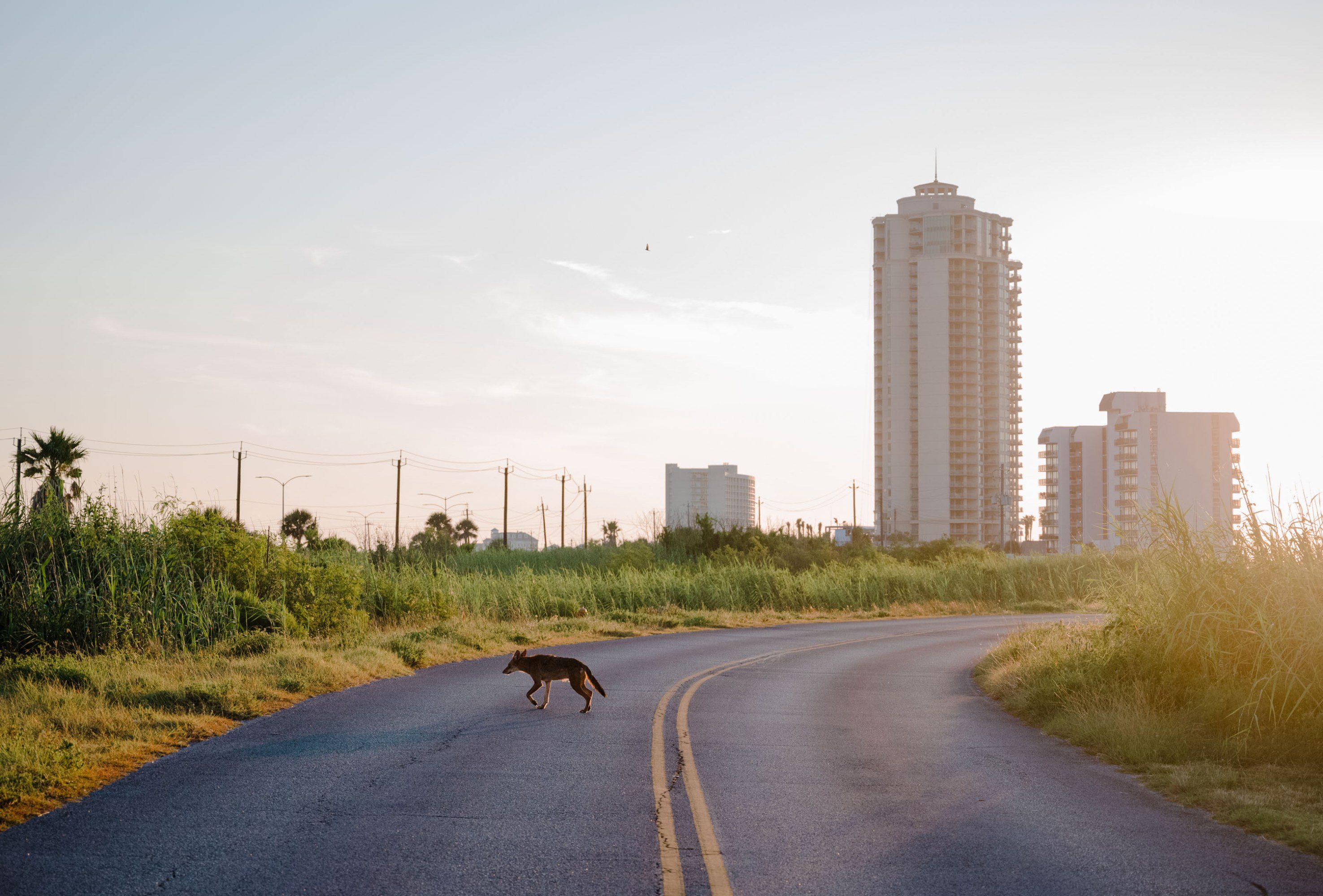
a wolf crosses a road outside of the city
Galveston locals hope that the presence of these remarkable creatures—red wolves or not—might rein in the rapid development of the island’s last stands of green.
TRISTAN SPINSKI

I had planned to join Hinton in the field, but by the time I was able to visit, he’d had to go home to his family. So I joined Broussard on his last days trapping in Texas that season. Before I’d left for Winnie, I’d told my friends I’d be out chasing the last surviving red wolves. But there, on the Gulf Coast, I came to understand that this was just as much a story about coyotes.

That’s what Broussard and Cunningham both called the creatures. Hinton does too; he considers the animals to be a specific “ecotype” of coyote, featuring an injection of wolf DNA that has helped them adapt to the local marshes. 

At vonHoldt’s behest, I drove an hour down the coast to Galveston Island, where she and Brzeski began working with the island’s animal control department; when locals find a coyote, the animal is captured so its blood can be collected and a GPS collar fitted on its neck. A small group of locals who support the project have come to call themselves the “ghost wolf team.” They hoped that the presence of these remarkable creatures might rein in the rapid development of the island’s last stands of green. Still, the people I spoke to in Galveston conceded that the animals were, if special, nonetheless a form of coyote. 

VonHoldt describes Galveston Island as a potential model for what conservation could look like in the future. Top-down recovery hasn’t been working, but helping more places fall in love with their local animals might. And for that to happen, we need to stop obsessing over whether or not something is a “pure” wolf. What matters, she argues, is that an animal is doing what a larger predator does in an ecosystem. She embraces the “ghost wolf” name because, more than “Gulf Coast canid,” it makes clear that there’s something special on the coast—something worth protecting. 

Her vision is enticing: Focus on function over purity. Let evolution proceed. Stop protecting the wolf of the past and consider the wolf of the future. Such rapid genetic exchange may be necessary to help predators adapt to a hotter, increasingly shattered world, she says. 

If we throw out the concept of “endangered species,” will we really protect “endangered functions” instead?

Then again, we already know what’s adapted to the world we’re building: coyotes. The argument against genetic purity can sound like giving up on wolves entirely, with the possible exception of whatever specimens we produce in cloning facilities. And there is the matter of politics: If we throw out the concept of “endangered species,” will we really protect “endangered functions” instead? Under an administration already rolling back environmental protections, the likeliest outcome may be protecting nothing at all.

I tried in Galveston, too, to see the coyotes. Ron Wooten, the local resident who helped alert scientists to this population, dropped some pins on a map, pointing me toward several likely spots. That evening, after the sun set, I chose a quiet road that passed through marshes until it reached the island’s eastern beach. It was mating season, Wooten had noted. The animals should be on the move, he said; look to the bushes. As I drove up and down the road, my headlights revealed only empty darkness. No coyote. No wolf. Fitting, perhaps—isn’t absence the essence of a ghost? But whether this was a good omen was less clear. As individuals, these animals do best by avoiding us humans. As a group, their survival—like the survival of the red wolves—depends on our knowing that they are here, and were here, and deciding that is reason enough to care.

In Winnie the next morning, I went out one last time with Broussard, and we struck out again. With no coyotes in his traps and the new semester looming, he decided to take down his game cameras. Back at the hotel, I caught at least an image of what I’d been chasing: In black and white, the animals were appropriately silver, spectral, dashing across the midnight fields. In one clip, a canid paused and howled. “That’s super cool,” Broussard said quietly, as an echoing, interweaving chorus responded from somewhere deeper in the marsh. 

Boyce Upholt is a journalist based in New Orleans and founding editor of Southlands, a magazine about Southern nature. 

No one’s sure if synthetic mirror life will kill us all

For four days in February 2019, some 30 synthetic biologists and ethicists hunkered down at a conference center in Northern Virginia to brainstorm high-risk, cutting-­edge, irresistibly exciting ideas that the National Science Foundation should fund. By the end of the meeting, they’d landed on a compelling contender: making “mirror” bacteria. Should they come to be, the lab-created microbes would be structured and organized like ordinary bacteria, with one important exception: Key biological molecules like proteins, sugars, and lipids would be the mirror images of those found in nature. DNA, RNA, and many other components of living cells are chiral, which means they have a built-in rotational structure. Their mirrors would twist in the opposite direction. 

Researchers thrilled at the prospect. “Everybody—everybody—thought this was cool,” says John Glass, a synthetic biologist at the J. Craig Venter Institute in La Jolla, California, who attended the 2019 workshop and is a pioneer in developing synthetic cells. It was “an incredibly difficult project that would tell us potentially new things about how to design and build cells, or about the origin of life on Earth.” The group saw enormous potential for medicine, too. Mirror microbes might be engineered as biological factories, producing mirror molecules that could form the basis for new kinds of drugs. In theory, such therapeutics could perform the same functions as their natural counterparts, but without triggering unwelcome immune responses. 

After the meeting, the biologists recommended NSF funding for a handful of research groups to develop tools and carry out preliminary experiments, the beginnings of a path through the looking glass. The excitement was global. The National Natural Science Foundation of China funded major projects in mirror biology, as did the German Federal Ministry of Research, Technology, and Space.

By five years later, in 2024, many researchers involved in that NSF meeting had reversed course. They’d become convinced that in the worst of all possible futures, mirror organisms could trigger a catastrophic event threatening every form of life on Earth; they’d proliferate without predators and evade the immune defenses of people, plants, and animals. 

“I wish that one sunny afternoon we were having coffee and we realized the world’s about to end, but that’s not what happened.”

Kate Adamala, synthetic biologist, University of Minnesota

Over the past two years, they’ve been ringing alarm bells. They published an article in Science in December 2024, accompanied by a 299-page technical report addressing feasibility and risks. They’ve written essays and convened panels and cofounded the Mirror Biology Dialogues Fund (MBDF), a broadly funded nonprofit charged with supporting work on understanding and addressing the risk. The issue has received a blaze of media attention and ignited dialogues among not only chemists and synthetic biologists but also bioethicists and policymakers.  

What’s received less attention, however, is how we got here and what uncertainties still remain about any potential threat. Creating a mirror-life organism would be tremendously complicated and expensive. And although the scientific community is taking the alarm seriously, some scientists doubt whether it’s even possible to create a mirror organism anytime soon. “The hypothetical creation of mirror-­image organisms lies far beyond the reach of present-day science,” says Ting Zhu, a molecular biologist at Westlake University, in China, whose lab focuses on synthesizing mirror-image peptides and other molecules. He and others have urged colleagues not to let speculation and anxiety guide decision-making and argued that it’s premature to call for a broad moratorium on early-stage research, which they say could have medical benefits. 

But the researchers who are raising flags describe a pathway, even multiple pathways, to bringing mirror life into existence—and they say we urgently need guardrails to figure out what kinds of mirror-biology research might still be safe. That means they’re facing a question that others have encountered before, multiple times over the last several decades and with mixed results—one that doesn’t have a neat home in the scientific method. What should scientists do when they see the shadow of the end of the world in their own research? 

Looking-glass life

The French chemist and microbiologist Louis Pasteur was the first to recognize that biological molecules had built-in handedness. In the late 19th century, he described all living species as “functions of cosmic asymmetry.” What would happen, he mused, if one could replace these chiral components with their mirror opposites? 

Scientists now recognize that chirality is central to life itself, though no one knows why. In humans, 19 of the 20 so-called “standard” amino acids that make up proteins are chiral, and all in the same way. (The outlier, glycine, is symmetrical.) The functions of proteins are intricately tied to their shapes, and they mostly interact with other molecules through chiral structures. Almost all receptors on the surface of a cell are chiral. During an infection, the immune system’s sentinels use chirality to detect and bind to antigens—substances that trigger an immune response—and to start the process of building antibodies. 

By the late 20th century, researchers had begun to explore the idea of reversing chirality. In 1992, one team reported having synthesized the first mirror-image protein. That, in turn, set off the first clarion call about the risk: In response to the discovery, chemists at Purdue University pointed out, briefly, that mirror-life organisms, if they escaped from a lab, would be immune to any attack by “normal” life. A 2010 story in Wired highlighting early findings in the area noted that if a such a microbe developed the ability to photosynthesize, it could obliterate life as we know it. 

The synthetic biology community didn’t seriously weigh those threats then, says David Relman, a specialist who bridges infectious disease and microbiology at Stanford University and a trailblazer in studying the gut and oral microbiomes. The idea of a mirror microbe seemed too far beyond the actual progress on proteins. “This was almost a solely theoretical argument 20 years ago,” he says. 

Now the research landscape has changed. 

Scientists are quickly making progress on mirror images of the machinery cells use to make proteins and to self-replicate. Those components include DNA, which encodes the recipes for proteins; DNA polymerases, which help copy genetic material; and RNA, which carries recipes to ribosomes, the cell’s protein factories. If researchers could make self-replicating mirror ribosomes, then they would have an efficient way to produce mirror proteins. That could be used as a biological manufacturing method for therapeutics. But embedded in a self-­replicating, metabolizing synthetic cell, all these pieces could give rise to a mirror microbe. 

When synthetic biologists convened in Northern Virginia in 2019, they didn’t recognize how quickly the technology was advancing, and if they saw a threat at all, it may have been obscured by the blinding appeal of pushing the science forward. What’s become apparent now, says Glass, is that scientists in different disciplines, all related to mirror life, were largely unaware of what other scientists had been doing. Chemists didn’t know that synthetic biologists had made so much progress on creating mirror cells with natural chirality from scratch. Biologists didn’t appreciate that chemists were building ever-larger mirror macromolecules. “We tend to be siloed,” Glass says. And nobody, he says, had thought to seriously examine the immune system concerns that had already been raised in response to earlier work. “There was not an immunologist or an infectious disease person in the room,” Glass says, reflecting on the 2019 meeting. “I may have come closest, given that I work with pathogenic bacteria and viruses,” he adds, but his work doesn’t address how they cause infections in their hosts.

on the left, a hand with petri dish and the same image inverted on the right

GETTY IMAGES

These scientists also didn’t know that around the same time as their meeting, another conversation about mirror life was happening—a darker dialogue that was as focused on danger as it was on discovery. Starting around 2016, researchers with a nonprofit called Open Philanthropy had begun compiling research files on catastrophic biological risks. The organization, which rebranded as Coefficient Giving in 2025, funds projects across a range of focus areas; it adheres to a divisive philanthropic philosophy called effective altruism, which advocates giving money to projects with the highest potential benefit to the most people. While that might not sound objectionable, critics point out that the metrics devotees use to gauge “effectiveness” can prioritize long-term solutions while neglecting social injustices or systemic problems. 

Someone in Open Philanthropy’s bio­security group had suggested looking into the risks posed by mirror life. In 2019 the organization began funding research by Kevin Esvelt, who leads the Sculpting Evolution group at the MIT Media Lab, on biosecurity issues, including mirror life. He began reading up to see whether mirror life was something to worry about.

Esvelt made waves in 2013 for pioneering the use of CRISPR to develop a gene drive, a technology that could spread genetic changes introduced into a living organism through a whole population. Researchers are exploring its use, for example, to make mosquitoes hostile to the parasite that causes malaria—and, as a result, lower their chance of spreading it to humans. But almost immediately after he developed the tool, Esvelt argued against using it for profit, at least until proper safeguards could be set and its use in fighting malaria had been established. “Do you really have the right to run an experiment where if you screw up, it affects the whole world?” he asked, in this magazine, in 2016. At the Media Lab, Esvelt leads efforts to safely develop gene drives that can be deployed locally but prevented from spreading globally. 

Esvelt says he’s often thinking about the security risks posed by self-sustaining genetically engineered technologies, and research led him to suspect that the threat of mirror organisms hadn’t been seriously interrogated. The more he learned about microbial growth rates, predator-prey and microbe-microbe interactions, and immunology, the more he began to worry that mirror organisms, if impervious to the innate defenses of natural ones, could cause unstoppable infections in the event that they escaped the lab. 

Even if the first experimental iteration of such a germ were too fragile to survive in the environment or a human body, Esvelt says, it would be a light lift to genetically engineer new, more resilient versions with existing technology. Even worse, he says, the results could be weaponized. The possible path from 2019 to global annihilation seemed almost too direct, he found. 

But he wasn’t an expert in all the scientific fields involved in research on mirror life, so he started making calls. He first described his concerns to Relman one night in February 2022, at a restaurant outside Washington, DC. Esvelt hoped Relman would tell him he was wrong, that he’d missed something over the years of gathering data. Instead, he was troubled. 

The concern spreads

When Relman returned to California, he read more about the technology, the risks, and the role of chirality in the immune system and the environment. And he consulted experts he knew well—ecologists, other microbiologists, immunologists, all of them leaders in their fields—in an attempt to assuage his concerns. “I was hoping that they’d be able to say, I’ve thought about this, and I see a problem with your logic. I see that it’s really not so bad,” he says. “At every turn, that did not happen. Something about it was new to every person.” 

The concern spread. Relman worked with Jack Szostak, a professor of chemistry at the University of Chicago, and a group of researchers to see if it was possible to make an argument that mirror life wasn’t going to wipe out humanity. Included in that group was Kate Adamala, a synthetic biologist at the University of Minnesota. She was a natural choice: Adamala had shared the initial grant from the NSF, in 2019, to explore mirror-life technologies. 

She also became convinced the risk was real—and was dumbfounded that she hadn’t seen it earlier. “I wish that one sunny afternoon we were having coffee and we realized the world’s about to end, but that’s not what happened,” she says. “I’m embarrassed to admit that I wasn’t even the one that brought up the risks first.” Through late 2023 and early 2024, the endeavor began to take on the form of a rigorous scientific investigation. Experts were presented with a hypothesis—namely, that if mirror cells were built, they would pose an existential threat—and asked to challenge it. The goal was to falsify the hypothesis. “It would be great if we were wrong,” says Vaughn Cooper, a microbiologist at the University of Pittsburgh and president-elect of the American Society for Microbiology. 

Relman says that as the chemists and biologists learned more about one another’s work and began to understand what immunologists know about how living things defend themselves, they started to connect the dots and see an emerging picture of an unstoppable synthetic threat.

Some scientists have pushed back against the doomsday scenario, suggesting that the case against mirror life offers an “inflated view of the danger.”

Timothy Hand, an immunologist at the University of Pittsburgh who hadn’t participated in the 2019 NSF meeting, wasn’t initially worried when he heard about mirror life, in 2024. “The mammalian immune system has this incredible capability to make antibodies against any shape,” he says. “Who cares if it’s a mirror?” But when he took a closer look at that process, he could see a cascade of potential problems far upstream of antibody production. Start with detection: Macrophages, which are cells the immune system uses to identify and dispatch invaders, use chiral sensing receptors on their surfaces. The proteins they use to grab on to those invaders, too, are chiral. That suggests the possibility that an organism could be infected with a mirror organism but not be able to detect it or defend against it. “The lack of innate immune sensing is an incredibly dangerous circumstance for the host,” Hand says.

By early 2024, Glass had become concerned as well. Relman and James Wagstaff, a structural biologist from Open Philanthropy, visited him at the Venter Institute to talk about the possibility of using synthetic cell technology—Glass’s specialty—to build mirror life. “At first I thought, This can’t be real,” Glass says. They walked through arguments and counterarguments. “The more this went on, the more I started feeling ill,” he says. “It made me realize that work I had been doing for much of the last 20 years could be setting the world up for this incredible catastrophe.” 

In the second half of 2024, the growing group of scientists assembled the report and wrote the policy forum for Science. Relman briefed policymakers at the White House and members of the national security community. Researchers met with the National Institutes of Health and the National Science Foundation. “We briefed the United Nations, the UK government, the government of Singapore, scientific funding organizations from Brazil,” says Glass. “We’ve talked to the Chinese government indirectly. We were trying to not blindside anybody.” 

A year and a half on, the push has had an impact. UNESCO has recommended a precautionary global moratorium on creating mirror-life cells, and major philanthropic organizations that fund science, including the Alfred P. Sloan Foundation, have announced they will not finance research leading to a mirror microorganism. The Bulletin of the Atomic Scientists highlighted considerations about mirror life in its most recent report on the Doomsday Clock. In March, the United Nations Secretary-General’s Scientific Advisory Board issued a brief highlighting the risks—noting, for example, that recent progress on building mirror molecules could reduce the cost of creating a mirror microbe. 

“I think no one really believes at this stage that we should make mirror life, based on the evidence that’s available,” says James Smith, the scientist who leads the MBDF, the nonprofit focused on assessing the risks of mirror life, which is funded by Coefficient Giving, the Sloan Foundation, and other organizations. The challenge now, Smith says, is for scientists to work with policymakers and bioethicists to figure out how much research on mirror life should be permitted—and who will enforce the rules.

Drawing the line

Not everyone is convinced that mirror organisms pose an existential threat. It’s difficult to verify predictions about how mirror microbes would fare in the immune system—or the larger world—without running experiments on them. Some scientists have pushed back against the doomsday scenario, suggesting that the case against mirror life offers an “inflated view of the danger.” Others have noted that carbohydrates called glycans already exist in both left- and right-handed forms—even in pathogens—and the immune system can recognize both of them. Experiments focused on interactions between the immune system and mirror molecules, they say, could help clarify the risks of mirror organisms and reduce uncertainty. 

Even among those convinced that the worst-case scenario is possible, researchers still disagree over where to draw the line. What inquiries should be allowed and what should be prohibited?

Andy Ellington, a biotechnologist and synthetic biologist at the University of Texas at Austin, doesn’t think mirror organisms will come to fruition anytime soon. Even if they do, he isn’t sure they will pose a threat. “If there is going to be harm done to the human race, this is about position 382 on my list,” he says. But at the same time, he says it’s a complicated issue worth studying more, and he wants to see the conversations continue: “We’re operating in a space where there’s so much unknown that it’s very difficult for us to do risk assessment.” 

Even among those convinced that the worst-case scenario is possible, researchers still disagree over where to draw the line. What inquiries should be allowed and what should be prohibited? 

Adamala, of the University of Minnesota, and others see a natural line at ribosomes, the cellular factories that transform chains of amino acids into proteins. These would be a critical ingredient in creating a self-replicating organism, and Adamala says the path to getting there once mirror ribosomes are in place would be pretty straightforward. But Zhu, at Westlake, and others counter that it’s worth developing mirror ribosomes because they could possibly produce medically useful peptides and proteins more efficiently than traditional chemical methods. He sees a clear distinction, and a foundational gap, between that kind of technology and the creation of a living synthetic organism. “It is crucial to distinguish mirror-image molecular biology from mirror-image life,” he says. That said, he points out that many synthetic molecules and organisms containing unnatural components, including but not limited to the mirror-image subset, might pose health risks. Researchers, he says, should focus on developing holistic guidelines to cover such risks—not just those from mirror molecules. 

Even if the exact risk remains uncertain, Esvelt remains more convinced than ever that the work should be paused, perhaps indefinitely. No one has taken a meaningful swing at the hypothesis that mirror life could wipe out everything, he says. The primary uncertainties aren’t around whether mirror life is dangerous, he points out; they have more to do with identifying which bacterium—including what genes it encodes, what it eats, how it evades the immune system’s sentinels—could lead to the most serious consequences. “The risk of losing everything, like the entire future of humanity integrated over time, is not worth any small fraction of the economy. You just don’t muck around with existential risk like that,” he says. 

In some ways, scientists have been here before, working out rules and limits for research. Two years after the start of the covid-19 pandemic, for example, the World Health Organization published guidelines for managing risks in biological research. But the history is much deeper: Horrific episodes of human experimentation led to the establishment of institutional review boards to provide ethical oversight. In the early 1970s, in response to concerns over lab-acquired infections and growing use of biological warfare, the US Centers for Disease Control and Prevention established biohazard safety levels (BSLs), which govern work on potentially dangerous biological experiments.

And in 1975—at the dawn of recombinant DNA research, which allows researchers to put genetic material from one organism into another—geneticists met at the Asilomar conference center in Pacific Grove, California, to hammer out rules governing the work. There were concerns over what would happen if some virus or bacterium, genetically engineered to have traits that would make it particularly dangerous for people, escaped from a lab. Scientists agreed to self-imposed restrictions, like a moratorium on research until new safety guidelines were in place. As a result of the meeting, in June 1976 the NIH issued rules that, among other things, categorized the risks associated with rDNA experiments and aligned them with the newly adopted BSL system.

Asilomar is often hailed as a successful model for scientific self-governance. But that perception reflects a tendency to recall the meeting through a nostalgic haze. “In fact, it was incredibly messy and human,” says Luis Campos, a historian of science at Rice University. Equally brilliant Nobelists argued on either side of the question of whether to rein in rDNA research. Technical discussions dominated; talks about who would be affected by the technology were missing. The meeting didn’t start establishing guidelines, says Campos, until the lawyers mentioned liability and lab leaks. 

For now it’s unclear whether these examples of self-­governance, which arose from the demonstrated risks of existing technologies, hold useful lessons for the mirror-life community. Three competing images of the future are coming into focus: Mirror life might not be possible, it might be possible but not threatening, or it might be possible and capable of obliterating all life on Earth. 

Scientists may be censoring themselves out of fear and speculation. To some, shutting down the work seems necessary and urgent; to others, it is unnecessarily limiting. What’s clear is that the question of what to do about mirror life has been both illuminating and disorienting, pushing scientists to interrogate not only their current research but where it might lead. This is uncharted territory. 

Stephen Ornes is a science writer based in Nashville, Tennessee.

Correction (April 15): An earlier version of this article incorrectly stated that David Relman briefed the National Security Agency. Relman says he briefed members of the national security community.

What’s in a name? Moderna’s “vaccine” vs. “therapy” dilemma

Is it the Department of Defense or the Department of War? The Gulf of Mexico or the Gulf of America? A vaccine—or an “individualized neoantigen treatment”?

That’s the Trump-era vocabulary paradox facing Moderna, the covid-19 shot maker whose plans for next-generation mRNA vaccines against flus and emerging pathogens have been dashed by vaccine skeptics in the federal government. Canceled contracts and unfriendly regulators have pushed the Massachusetts-based biotech firm to a breaking point. Last year, Robert F. Kennedy Jr., head of the Department of Health and Human Services, zeroed in on mRNA, unwinding support for dozens of projects—including a $776 million award to Moderna for a bird flu vaccine. By January, the company was warning it might have to stop late-stage programs to develop vaccines against infections altogether.

That raises the stakes for a second area of Moderna’s research. In a partnership with Merck, it’s been using its mRNA technology to destroy tumors through a very, very promising technique known as a cancer vacc—

“It’s not a vaccine,” a spokesperson for Merck jumped in before the V-word could leave my mouth. “It’s an individualized neoantigen therapy.”

Oh, but it is a vaccine. And here’s how it works. Moderna sequences a patient’s cancer cells to find the ugliest, most peculiar molecules on their surface. Then it packages the genetic code for those same molecules, called neoantigens, into a shot. The patient’s immune system has its orders: Kill any cells with those yucky surface markers.

Mechanistically, it’s similar to the covid-19 vaccines. What’s different, of course, is that the patient is being immunized against a cancer, not a virus.

And it looks like a possible breakthrough. This year, Moderna and Merck showed that such shots halved the chance that patients with the deadliest form of skin cancer would die from a recurrence after surgery.

In its formal communications, like regulatory filings, Moderna hasn’t called the shot a cancer vaccine since 2023. That’s when it partnered up with Merck and rebranded the tech as individualized neoantigen therapy, or INT. Moderna’s CEO said at the time that the renaming was to “better describe the goal of the program.” (BioNTech, the European vaccine maker that’s also working in cancer, has shifted its language too, moving from “neoantigen vaccine” in 2021 to “mRNA cancer immunotherapies” in its latest report.)

The logic of casting it as a therapy is that patients already have cancer—so it’s a treatment as opposed to a preventive measure. But it’s no secret what the other goal is: to distance important innovation from vaccine fearmongering, which has been inflamed by high-ranking US officials. “Vaccines are maybe a dirty word nowadays, but we still believe in the science and harnessing our immune system to not only fight infections, but hopefully to also fight … cancers,” Kyle Holen, head of Moderna’s cancer program, said last summer during BIO 2025, a big biotech event in Boston.

Not everyone is happy with the word games. Take Ryan Sullivan, a physician at Massachusetts General Hospital who has enrolled patients in Moderna’s trials. He says the change raises questions over whether trial volunteers are being properly informed. “There is some concern that there will be patients who decline to treat their cancer because it is a vaccine,” Sullivan told me. “But I also felt it was important, as many of my colleagues did, that you have to call it what it is.”

But is it worth going to the mat for a word? Lillian Siu, a medical oncologist at the Princess Margaret Cancer Centre, in Toronto, who has played a role in safety testing for the new shots, watches US politics from a distance. She believes name change is acceptable “if it allows the research to continue.”

Holen told me the doctors complaining to Moderna were basically motivated by a desire to defend vaccines—which are, of course, among the greatest public health interventions of all time. They wanted the company to stand strong. 

But that’s not what’s happening. When Moderna’s latest results were published in February, the paper’s main text didn’t use the word “vaccine” at all. It was only in the footnotes that you could see the term—in the titles of old papers and patents.

All this could be a sign that Kennedy’s strategy is working. His agencies often appear to make mRNA vaccines a focus of people’s worries, impede their reach, devalue them for companies, and sideline their defenders. 

Still, Moderna’s strategy may be working too. So far, at least, the government hasn’t had much to say about the company’s cancer vacc— I mean, its individualized neoantigen therapy.

This article first appeared in The Checkup, MIT Technology Review’s weekly biotech newsletter. To receive it in your inbox every Thursday, and read articles like this first, sign up here.

Inside the stealthy startup that pitched brainless human clones

After operating in secrecy for years, a startup company called R3 Bio, in Richmond, California, suddenly shared details about its work last week—saying it had raised money to create nonsentient monkey “organ sacks” as an alternative to animal testing.

In an interview with Wired, R3 listed three investors: billionaire Tim Draper, the Singapore-based fund Immortal Dragons, and life-extension investors LongGame Ventures.

But there is more to the story. And R3 doesn’t want that story told.

MIT Technology Review discovered that the stealth startup’s founder John Schloendorn also pitched a startling, medically graphic, and ethically charged vision for what he’s called “brainless clones” to serve the role of backup human bodies.

Imagine it like this: a baby version of yourself with only enough of a brain structure to be alive in case you ever need a new kidney or liver.

Or, alternatively, he has speculated, you might one day get your brain placed into a younger clone. That could be a way to gain a second lifespan through a still hypothetical procedure known as a body transplant.

The fuller context of R3’s proposals, as well as activities of another stealth startup with related goals, have not previously been reported. They’ve been kept secret by a circle of extreme life-extension proponents who fear that their plans for immortality could be derailed by clickbait headlines and public backlash.

And that’s because the idea can sound like something straight from a creepy science fiction film. One person who heard R3’s clone presentation, and spoke on the condition of anonymity, was left reeling by its implications and shaken by Schloendorn’s enthusiastic delivery. The briefing, this person said, was like a “close encounter of the third kind” with “Dr. Strangelove.”

A key inspiration for Schloendorn is a birth defect in which children are born missing most of their cortical hemispheres; he’s shown people medical scans of these kids’ nearly empty skulls as evidence that a body can live without much of a brain. 

And he’s talked about how to grow a clone. Since artificial wombs don’t exist yet, brainless bodies can’t be grown in a lab. So he’s said the first batch of brainless clones would have to be carried by women paid to do the job. In the future, though, one brainless clone could give birth to another.

Last Monday, the same day it announced itself to the world in Wired, R3 sent us a sweeping disavowal of our findings. It said Schloendorn “never made any statement regarding hypothetical ‘non-sentient human clones’ [that] would be carried by surrogates.” The most overarching of these challenges was its insistence that “any allegations of intent or conspiracy to create human clones or humans with brain damage are categorically false.”

But even Schloendorn and his cofounder, Alice Gilman, can’t seem to keep away from the topic. Just last September, the pair presented at Abundance Longevity, a $70,000-per-ticket event in Boston organized by the anti-aging promoter Peter Diamandis. Although the presentation to about 40 people was not recorded and was meant to be confidential, a copy of the agenda for the event shows that Schloendorn was there to outline his “final bid to defeat aging” in a session called “Full Body Replacement.”

According to a person who was there, both animal research and personal clones for spare organs were discussed. During the presentation, Gilman and Schloendorn even stood in front of an image of a cloning needle. Pressed on whether this was a talk about brainless clones, Gilman told us that while R3’s current business is replacing animal models, “the team reserves the right to hold hypothetical futuristic discussions.”

MIT Technology Review found no evidence that R3 has cloned anyone, or even any animal bigger than a rodent. What we did find were documents, additional meeting agendas, and other sources outlining a technical road map for what R3 called “body replacement cloning” in a 2023 letter to supporters. That road map involved improvements to the cloning process and genetic wiring diagrams for how to create animals without complete brains. 

light passing through an infant's skull
A child with hydranencephaly, a rare condition in which most of the brain is missing. Could a human clone also be created without much of a brain as an ethical source of spare organs?
DIMITRI AGAMANOLIS, M.D. VIA WIKIPEDIA

A main purpose of the fundraising, investors say, was to support efforts to try these techniques in monkeys from a base in the Caribbean. That offered a path to a nearer-term business plan for more ethical medical experiments and toxicology testing—if the company could develop what it now calls monkey “organ sacks.” However, this work would clearly inform any possible human version. 

Though he holds a PhD, Schloendorn is a biotech outsider who has published little and is best known for having once outfitted a DIY lab in his Bay Area garage. Still, his ties to the experimental fringe of longevity science have earned him a network in Silicon Valley and allies at a risk-taking US health innovation agency, ARPA-H. Together with his success at raising money from investors, this signals that the brainless-clone concept should be taken seriously by a wider community of scientists, doctors, and ethicists, some of whom expressed grave concerns. 

“It sounds crazy, in my opinion,” said Jose Cibelli, a researcher at Michigan State University, after MIT Technology Review described R3’s brainless-clone idea to him. “How do you demonstrate safety? What is safety when you’re trying to create an abnormal human?”

Twenty-five years ago, Cibelli was among the first scientists to try to clone human embryos, but he was trying to obtain matched stem cells, not make a baby. “There is no limit to human imagination and ways to make money, but there have to be boundaries,” he says. “And this is the boundary of making a human being who is not a human being.” 

“Feasibility research”

Since Dolly the sheep was born in 1996, researchers have cloned dogs, cats, camels, horses, cattle, ferrets, and other species of mammal. Injecting a cell from an existing animal into an egg creates a carbon-copy embryo that can develop, although not always without problems. Defects, deformities, and stillbirths remain common. 

Those grave risks are why we’ve never heard of a human clone, even though it’s theoretically possible to create one. 

But brainless clones flip the script. That’s because the ultimate aim is to create not a healthy person but an unconscious body that would probably need life support, like a feeding tube, to stay alive. Because this body would share the DNA of the person being copied, its organs would be a near-perfect immunological match. 

Backers of this broad concept argue that a nonsentient body would be ethically acceptable to harvest organs from. Some also believe that swapping in fresh, young body parts—known as “replacement”—is the likeliest path to life extension, since so far no drug can reverse aging. 

And then there’s the idea of a complete body transplant. “Certainly, for the cryonics patients, that sounds like something really promising,” says Anders Sandberg, a prominent Swedish transhumanist and expert in the ethics of future technologies. He notes that many people who opt to be stored in cryonic chambers after death choose the less expensive “head only” option, so “there might be a market for having an extra cloned body.”

MIT Technology Review first approached Schloendorn two years ago after learning he’d led a confidential online seminar called the Body Replacement Mini Conference, in which he presented “recent lab progress towards making replacement bodies.” 

According to a copy of the agenda, that 2023 session also included a presentation by a cloning expert, Young Gie Chung. And there was another from Jean Hébert, who was then a professor at the Albert Einstein College of Medicine and is now a program manager at ARPA-H, where he oversees a project to use stem cells to restore damaged brain tissue. Hébert popularized the so-called replacement solution to avoiding death in a 2020 book called Replacing Aging

In an interview prior to joining the government in 2024, Hébert described an informal but “very collaborative” relationship with Schloendorn. The overall idea was that to stop aging, one of them would determine how to repair a brain, while the other would figure out how to create a body without one. “It’s a perfect match, right? Body, brain,” Hébert told MIT Technology Review at the time. 

Schloendorn, by working outside the mainstream, had the huge advantage of “not being bound by getting the next paper out, or the next grant,” Hébert said, adding, “It’s such a wonderful way of doing research. It’s just clean and pure.” R3 now appears on the ARPA-H website on a list of prospective partners for Hébert’s program.

In a LinkedIn message exchanged with Schloendorn that same year, he described his work as “feasibility research in body replacement.”

“We will try to do it in a way that produces defined societal benefits early on, and we need to be prepared to take no for an answer, if it turns out that this cannot be done safely,” Schloendorn wrote at the time. He declined an interview then, saying that before exiting stealth mode, he wants to be sure the benefits are “reasonably grounded in reality.”

That could prove challenging. While body-part replacement sounds logical, like swapping the timing belt on an old car, in reality there’s scant evidence that receiving organs from a younger twin would make you live any longer. 

A complete body transplant, meanwhile, would probably be fatal, at least with current techniques. In the latest test of the concept, published last July, Russian surgeons removed a pig’s head and then sewed it back on. The animal did live—breathing weakly and lapping water from a syringe. But because its spinal cord had been cut, it was otherwise totally paralyzed. (As yet, there’s no proven method to rejoin a severed spinal cord.) In an act of mercy, the doctors ended the pig’s life after about 12 hours. 

Even some of R3’s investors say the endeavor is a risky, low-odds project, on par with colonizing Mars. Boyang Wang, head of Immortal Dragons, has spoken at longevity conferences about body-swapping technology, referring to the chance that “when the time comes, you can transplant your brain into a new body.” Wang confirmed in a January Zoom call that he’d been referring to R3 and that he invested $500,000 in the company during a 2024 fundraising round.

But since making his investment, Wang says, he’s become less bullish. He now views whole-body transplant as “very infeasible, not even very scientific” and “far away from hope for any realistic application.” 

Still, he says, the investment in R3 fits with his philosophy of making unorthodox bets that could be breakthroughs against aging. “What can really move the needle?” he asks. “Because time is running out.”

Stealth mode

Clonal bodies sit at the extreme frontier of an advancing cluster of technologies all aimed at growing spare parts. Researchers are exploring stem cells, synthetic embryos, and blob-like organoids, and some companies are cloning genetically engineered pigs whose kidneys and hearts have already been transplanted into a few patients. Each of these methods seeks to harness development—the process by which animal bodies naturally form in the womb—to grow fully functional organs. 

There’s even a growing cadre of mainstream scientists who say nonsentient bodies could solve the organ shortage, if they could be grown through artificial means. Two Stanford University professors, calling these structures “bodyoids,” published an editorial in favor of manufacturing spare human bodies in MIT Technology Review last year. While that editorial left many details to the imagination, they called the idea “at least plausible—and possibly revolutionary.” 

“There are a lot of variations on this where they’re trying to find a socially acceptable form,” says George Church, a Harvard University professor who advises startups in the field. But Church says gestating an entire body is probably taking things too far, especially since nearly all patients on transplant lists are waiting for just a single organ, like a heart or kidney. 

“There’s almost no scenario where you need a whole body,” he says. “I just think even if it’s someday acceptable, it’s not a good place to start.” For the moment, Church says, brainless human bodies are “not very useful, in addition to being repulsive.”

That’s arguably why body replacement technology still feels risky to talk about, even among life-extension enthusiasts who are otherwise ready to inject Chinese peptides or have their bodies cryogenically frozen. “I think it’s exciting or interesting from a scientific perspective, but I think the world is not fully ready for it yet,” says Emil Kendziorra, CEO of Tomorrow Bio, a company in Berlin that stores bodies at -196 °C in the hope they can be restored to life in the future. 

“Everybody’s like, yeah, you know, cryopreservation makes total sense,” he says. “And then you talk about total body replacement. And then everybody’s like, Whoa, whoa, whoa.”

Even so, “replacement” technology has found a fervent base of support among a group of self-described “hardcore” longevity adherents who follow a philosophy called Vitalism, which holds that society should redirect resources toward achieving unlimited lifespans. The growing influence of this movement, achieved through lobbying, investment, recruiting, and public messaging, was detailed earlier this year in MIT Technology Review.

Last spring, during a meetup for this community, Kendziorra was among the attendees at an invite-only “Replacement Day” gathering that took place off the public schedule. It was where more radical ideas could be discussed freely, since to some in the Vitalist circle, replacing body parts has emerged as the most plausible, least expensive way to beat death. 

At least that was the conclusion of a road map for anti-aging technology produced by one Vitalist group, the Longevity Biotech Fellowship, which reckoned that a proof-of-concept human clone lacking a neocortex would cost $40 million to create—a tiny amount, relatively speaking. 

Its report cited the existence of two stealth companies working on cloning whole nonsentient bodies, although it took care not to name them. If these companies’ activities become public, “there will be a huge backlash—people will hate it,” the entrepreneur Kris Borer said while presenting the road map at a French resort last August. 

“There are a ton of dystopian movies and novels about this kind of stuff. That is why I didn’t talk about any of the companies working on it. They are trying to hide from public attention,” he said. “We have to have the angel investors and other people invest kind of in secret until things are ready.” 

Borer did say what he sees as the best way to go public: first, to slowly ease body replacement into society’s awareness by disclosing more limited aims, which will be palatable. “We are not going to start with Let’s clone you and give you a body. We are going to start with Let’s solve the organ shortage,” he said. “Eventually people will warm up to it, and then we can go to the more hardcore stuff.”

In an interview earlier this month, Borer declined to name the companies involved in his immortality road map, or to say if R3 is one of them. But we did identify one additional stealthy startup, this one focused on replacing a person’s internal organs, not the whole body. Called Kind Biotechnology, it is a New Hampshire–based company headed by the anti-aging researcher Justin Rebo, a sometime collaborator of Schloendorn’s.

Fig 13 from a patent application
A patent image from Kind Biotechnology shows a mouse pup engineered to lack anatomical features (left) next to a normal animal. The company’s goal is to grow organ “sacks” with a “complete lack of ability to feel, think, or sense.”
WO2025260099 VIA WIPO

According to patent applications filed by the company, Rebo’s team is working to create animals with a “complete lack of ability to feel, think, or sense the environment.” Images included in the patents show mice the company produced that lack a complete brain, and others that don’t have faces or limbs. They did that by deleting genes in embryos using the gene-editing technology CRISPR with the goal of creating a “sack of organs that grows mostly on its own,” with only a minimal nervous system. A cartoon rendering submitted to the patent office shows what looks like a fleshy duffel bag connected to life support tubes. 

In an email, Rebo said his company is working on an “ethical and scalable” way to create animal organs for experimental transplant to humans. He notes that “thousands die while waiting” for an organ. 

Some of Kind’s patent applications do cover the possibility of producing these organ sacks from human cells. Rebo says that’s more of a speculative possibility. But he does see his work as part of the “replacement” approach to longevity. Firstly, that’s because a “scalable production of young, high-quality organs” would let surgeons try transplants in more types of patients, including many with heart disease in old age who aren’t candidates for a transplant now. 

“With abundant high-quality organs, replacement could become a direct form of rejuvenation by replacement of failing parts,” he says. 

And Rebo imagines that simultaneously replacing multiple internal organs (grown together in the sack) could have even broader rejuvenating effects. “Ultimately, replacing failing parts is a direct path to extending healthy human lifespan,” he says. 

Church, who agreed earlier this year to advise Kind Bio, sees this work as part of an effort to “nudge” these technologies “toward something that is more useful and more acceptable from the get-go,” he says. “And then let’s see how society responds to that—rather than jumping to the most repulsive and most useless form, which some of them seem to be aiming for.” 

“There’s one way to find out”

People who know Schloendorn describe a dynamo-like presence who is “100% dedicated” to the goal of extreme life extension. In 2006, he penned a paper in a bioethics journal outlining why the “desire to live forever” is rational, and his doctoral research at the University of Arizona was sponsored by a longevity research organization called the SENS Foundation.  

He’s also well connected. In an interview, Aubrey de Grey, the influential and controversial fundraiser and prognosticator who cofounded SENS, called Schloendorn “one of my protégés.” And around 2010, Peter Thiel reportedly invested $1.5 million in ImmunePath, a company started by Schloendorn to develop stem-cell treatments, though it soon failed. (A representative for Thiel did not respond to a request to confirm the figure.)

By 2021, Schloendorn had moved on, founding R3 Biotechnologies. He began to circulate the body replacement idea and discuss a step-by-step scheme to get there: assess techniques in the lab first, then in monkeys, and maybe eventually in humans. 

A 2023 “letter to stakeholders” signed by Schloendorn begins by saying that “body replacement cloning will require multicomponent genetic engineering on a scale that has never been attempted in primates.” Fortunately, it adds, molecular techniques for “brain knockout” are well known in mice and should also be expected to function in “birthing whole primates,” a class that includes both monkeys and humans. 

Would it work? “There’s one way to find out,” the letter says. 

Wang, the investor at Immortal Dragons, says he put money into R3 after it showed him it is possible to create mice without complete brains. “There were imperfections, but the resulting mice survived, grew up, and to me, that is a pretty strong experiment,” he says; it was evidence enough for him to fund R3’s attempt to “replicate the result in primates.” 

(In its emailed statement, R3 said the company and its founders “never produced any degree of brain alterations in any species, did not attempt to do so, did not hire another party to do so, and have no specific plans to do so in the future.” It added: “We do not work with live non-human primates.”) 

The bigger technical obstacle, though, remains the cloning. Out of 100 attempts to clone an animal, only a few typically succeed. That fact alone makes cloning a human—or a monkey—almost infeasible.

But R3 does seem to have made an effort to tackle the efficiency problem. In one document reviewed by MIT Technology Review, it claims to have implemented improvements to the basic procedure in rodents, referencing a protein, called a histone demethylase, that helps erase a cell’s genetic memory. Adding it can greatly increase the chance that the cell will form a cloned embryo after being injected into an egg in the lab.

Those molecules were used in the first successful cloning of a monkey, which occurred in 2018 in China. But it still wasn’t easy—in fact, it was a huge and costly effort to handle a crowd of monkeys in estrus and perform IVF on them. According to Michigan State’s Cibelli, monkey cloning remains nearly impossible, at least on US territory, just because it’s “unaffordable.”

Nevertheless, success in monkeys did help prove, at least biologically, that human reproductive cloning could be possible. 

The company may also have tried to tackle a second long-standing obstacle to cloning: defects in how the placenta works. Because of such problems, some cloned animals die quickly after birth.

The R3 document refers to a “birthing fix” it developed to further improve the cloning success rate. While MIT Technology Review didn’t learn what R3’s process entails, we found a reference to it on the LinkedIn page of Maitriyee Mahanta, a scientist who cosigned the 2023 letter to R3 stakeholders and is a former research assistant to Hébert. (We were unable to reach Mahanta for comment.)

Her page described her current role as “molecular lead” studying cloning, “birth rate fixing,” and cortical development using cells from nonhuman primates. Her job affiliation is given as the Longevity Escape Velocity Foundation, a nonprofit where de Grey is the president and chief science officer. But de Grey says his foundation only arranged a work visa for Mahanta as part of a partnership “with the company she actually spends her time at.”

Like several other people interviewed for this article, de Grey made a resourceful effort to avoid directly confirming the existence of R3 when we spoke, while at the same time freely discussing theoretical aspects of body cloning technology. For instance, he talked about ways to shorten the wait for your double to grow up to a size suitable for organ harvesting; a further genetic mutation could be added to cause “central precocious puberty” in the clone, he said. This condition causes a growth spurt, even pubic hair, in a toddler. 

Cloning dictators

Who would clone a body and pay to keep it alive for years, until it’s needed? The first customers for this costly technology (if it ever proves feasible) would likely be the ultra-rich or the ultra-powerful. 

Indeed, somehow the world’s top dictators seem to have gotten the memo about replacement parts. In September, a hot mic picked up a conversation between Russian president Vladimir Putin and Chinese leader Xi Jinping as they walked through Beijing with North Korean autocrat Kim Jong Un; in the exchange, the Russian speculated on life extension.  

“Biotechnology is continuously developing. Human organs can be continuously transplanted. The longer you live, the younger you become, and [you can] even achieve immortality,” Putin said through an interpreter.

“Some predict that in this century, humans will live to 150 years old,” Xi responded agreeably.

How the leaders learned of these possibilities is unknown. But scenarios involving dictators are a constant topic among body replacement enthusiasts. 

“There are companies working on this. They are in stealth—we can’t reveal too much about them—but the general concept on this is if you didn’t have any ethical qualms, you could do most of it today,” Will Harborne, the chief investment officer of LongGame Advisors, said last year, during an interview with the podcaster Julian Issa. “If you were the dictator of some country and wanted a clone of yourself, you can already go grow one. You can create a cloned embryo of yourself, you can get a surrogate to carry it to term, and you can grow [a] body until age 18 with a brain, and eventually, if you were a dictator, you could kill them and try to transplant your head on their body.”

“And now no one is suggesting you do that—it’s very unethical—but most of the technology is there,” he said. He noted that the reason for removing the cortex of a clone created for such a purpose is that “we don’t want to kill other people to live forever.” 

Harborne subsequently confirmed to MIT Technology Review that the fund invested $1 million in R3 about a year and a half ago.

In order to make the body replacement process ethical, the clone’s brain needs to be stunted so it lacks consciousness. That is where the interest in birth defects comes in. Remarkable medical scans of kids with a rare condition, hydranencephaly, show a total absence of the cerebral hemispheres. Yet if they are cared for, they may be able to live into their 20s, even though they cannot speak or engage in purposeful movement. 

The technical question, then, is how to intentionally produce such a condition in a clone. Sandberg, the futurist, says he’s visited R3’s lab, talked to Gilman, and sat through a presentation about how genetic engineering can be used to shape brain growth. Previous work has shown that by adding a toxic gene, it is possible to kill specific cell types in a growing embryo but spare others, leading to a mouse without a neocortex.

While Sandberg isn’t an expert in biotechnology, he says R3’s theory looked sensible to him. “I think it’s possible to actually prevent the development of the brain well enough that you can say ‘Yeah, there is almost certainly no consciousness here,’” Sandberg says. “Hence, there can’t be any suffering, or any individual, in a practical sense.”

“I think the overall aim—actually, it looks ethically pretty good,” he says. 

Two monkeys with stuffed animals in a plastic research container
Monkeys were successfully cloned in China for the first time in 2018. Although it was was a costly and difficult undertaking, the feat suggested human cloning is biologically possible.
QIANG SUN AND MU-MING POO/CHINESE ACADEMY OF SCIENCES VIA AP

Yet it could be difficult to really determine where consciousness starts and ends. Under current medical standards, taking the organs of people with hydranencephaly isn’t allowed because they don’t meet the standard of brain death: They have a functioning brain stem. An even more serious problem is evidence that the brain stem alone produces a basic form of consciousness. If that is so, says Bjorn Merker, a neuroscientist who surveyed caretakers of more than a hundred children with hydranencephaly, a plan “to harvest organs from organisms modeled on this condition would be unethical.”

Of course, the most extreme version of the replacement dream isn’t just to take organs. It’s to take over the body entirely. Sergio Canavero, a controversial Italian surgeon who has proposed head and brain transplants, says he was approached for advice by Schloendorn and others a few years ago. “They told me they were looking at a head transplant on a two- or three-year-old,” he says. “I stopped short. How could you even conceive of that? The biomechanical compatibility is not there. You have to wait until at least 14. And I would say 16. It was very clear to me these guys are not surgeons—they are biologists.” 

Canavero says he’s not opposed to cloning bodies for transplant—he thinks it could work. “But if you want to use a clone,” he says, “it must be a nonsentient clone. Otherwise it’s murder, a homicide.”    

MIT Technology Review has not found any evidence that R3 has yet created an “organ sack,” much less a brainless human clone. And there are many reasons to believe their hypothetical future of “full body replacement” will never come to pass—that it is just a live-forever fantasy.

“There are so many barriers,” says Cibelli. It’s a long list: Human cloning is illegal in many countries, it’s unsafe, and few competent experts would want, or dare, to participate. And then there’s the inconvenient fact that for now, there’s no way to grow a brainless clone to birth, except in a woman’s body. Think about it, Cibelli says: “You’d have to convince a woman to carry a fetus that is going to be abnormal.”

Sandberg agrees that is where things could start to get tricky. “The problem here, of course,” he says, “is that the yuck factor is magnificent.”